



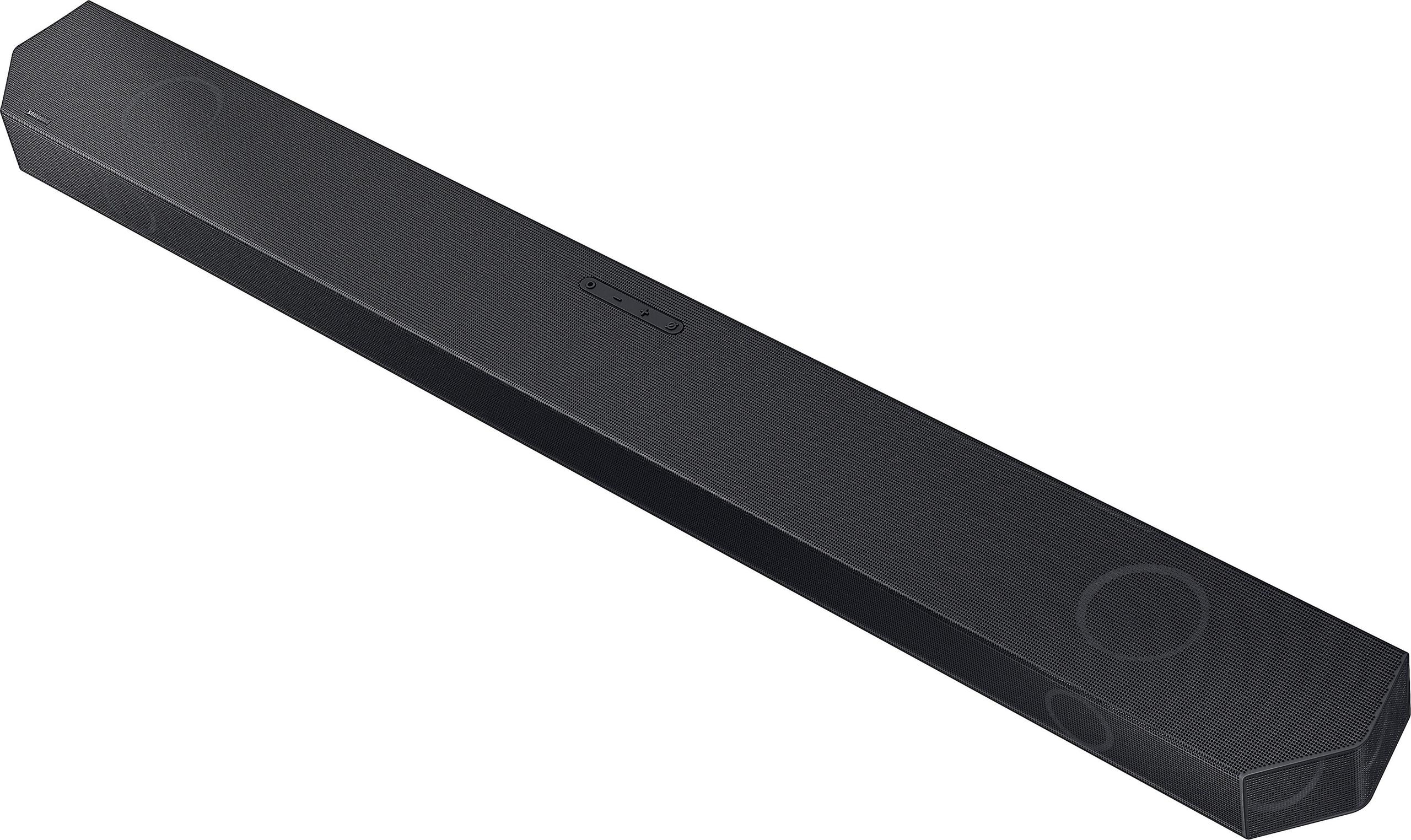

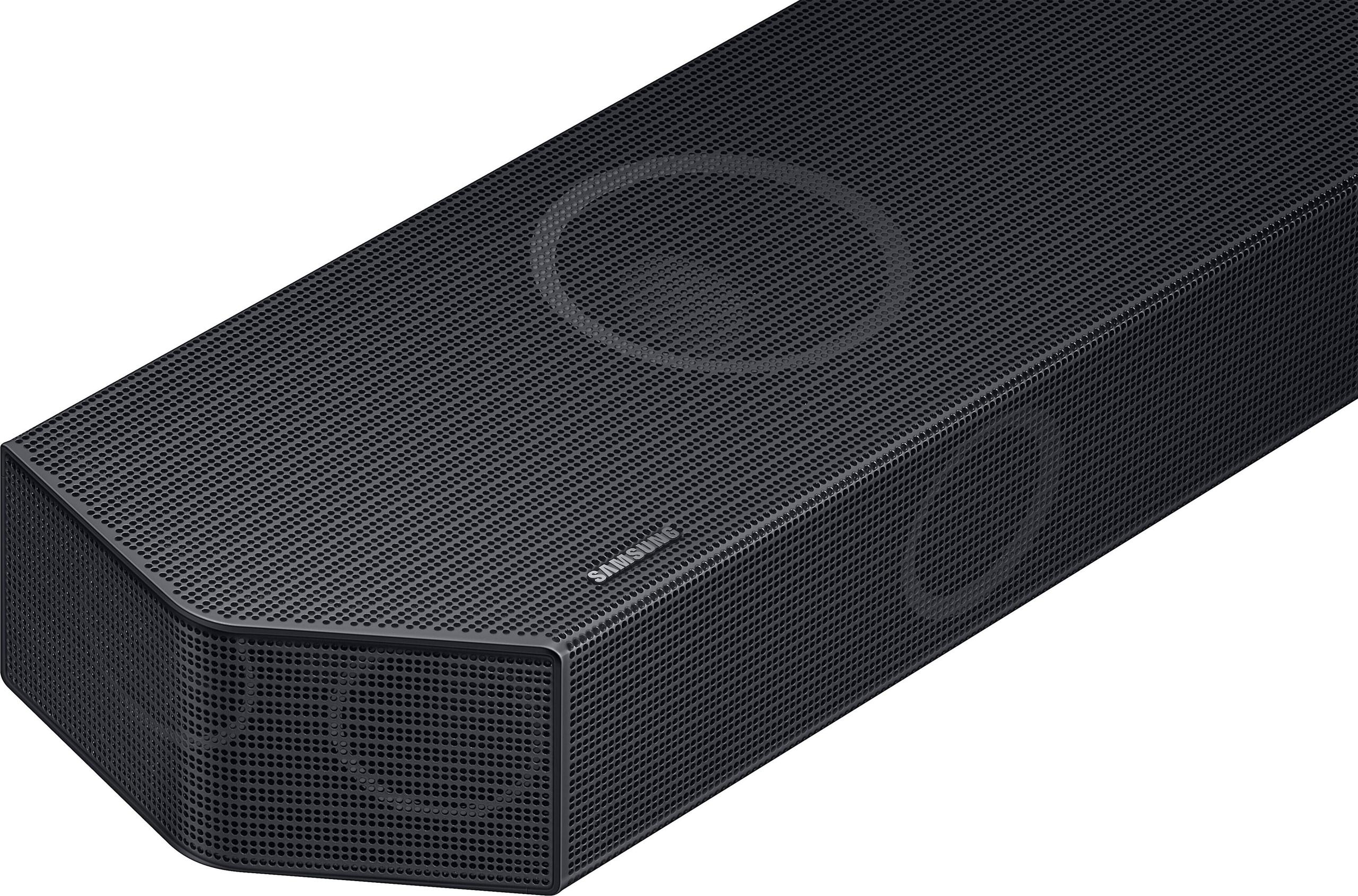




If you're tired of turning up the volume every time someone whispers in a movie, or if you've been squinting at subtitles just to follow dialogue, you're probably ready for a premium soundbar. But with so many options available, choosing between two excellent products like the Bose Smart Ultra Soundbar ($599) and the Samsung Q Series 9.1.2 Channel Soundbar ($898) can feel overwhelming.
I've spent considerable time testing both soundbars, and they represent two very different philosophies in premium audio design. One focuses on intelligent processing and space-saving elegance, while the other delivers raw power through a complete speaker system. Let's dive deep into what makes each special and help you decide which fits your needs.
The soundbar market has exploded in recent years, with manufacturers focusing heavily on virtual surround sound technology and smart features. Premium soundbars typically cost between $500-$1000 and promise to deliver near-home-theater quality without the complexity of multiple speakers and amplifiers scattered around your room.
The most important considerations when shopping for a high-end soundbar include audio performance (how good it actually sounds), channel configuration (how many speakers and where they're positioned), smart features like voice assistants and automatic room tuning, value proposition (what you get for your money), and setup complexity.
Modern soundbars use several key technologies. Dolby Atmos creates three-dimensional sound by adding height channels that make audio seem to come from above you—imagine hearing a helicopter fly overhead in a movie. Virtual surround processing uses psychoacoustic tricks to make your brain think sound is coming from behind you, even when all the speakers are in front. Room calibration systems use microphones to measure your space and adjust the sound accordingly, while wireless connectivity lets you stream music directly from your phone.
The Bose Smart Ultra Soundbar launched in September 2023 as Bose's flagship model, replacing the older Smart Soundbar 900. This timing was strategic—Bose wanted to compete directly with Samsung's established Q-series lineup using their latest AI-powered dialogue enhancement technology.
The Samsung Q Series 9.1.2, part of Samsung's 2025 model year refresh, represents an evolution of their successful formula. Samsung has been refining their Q-series soundbars for several years, and this model incorporates improved wireless technology and enhanced room calibration compared to earlier versions.
Since these releases, both companies have focused on different technological advances. Bose has doubled down on artificial intelligence and psychoacoustic processing—basically teaching computers to understand how humans hear sound. Samsung has emphasized physical speaker placement and integration with their TV ecosystem, building on their strengths in display technology.
The Bose Smart Ultra takes a fundamentally different approach to surround sound than most competitors. Instead of adding more physical speakers, Bose engineers focused on making their existing drivers work smarter through advanced digital signal processing.
The standout feature is AI Dialogue Mode, which uses machine learning trained on millions of audio clips to identify when characters are speaking. The system then dynamically adjusts the frequency response to make voices clearer without sacrificing the impact of explosions or music. In practice, this means you can actually understand what characters are saying during chaotic action scenes—something that's surprisingly rare even with expensive sound systems.
PhaseGuide technology creates the illusion of width by carefully controlling how sound waves interact when they reach your ears. The soundbar has specially designed drivers that fire sound at different angles, creating the impression that audio is coming from well beyond the physical boundaries of the 41-inch speaker. When watching movies, this creates an surprisingly wide soundstage that makes dialogue seem to come directly from characters on screen rather than from a box below your TV.
The TrueSpace processing deserves special attention because it's handling a nearly impossible task—creating convincing surround sound from speakers that are all in front of you. The system analyzes incoming audio and remixes it in real-time, adding subtle delays and frequency adjustments that trick your brain into perceiving rear and overhead effects. It's not perfect, but it's remarkably effective for a single-unit solution.
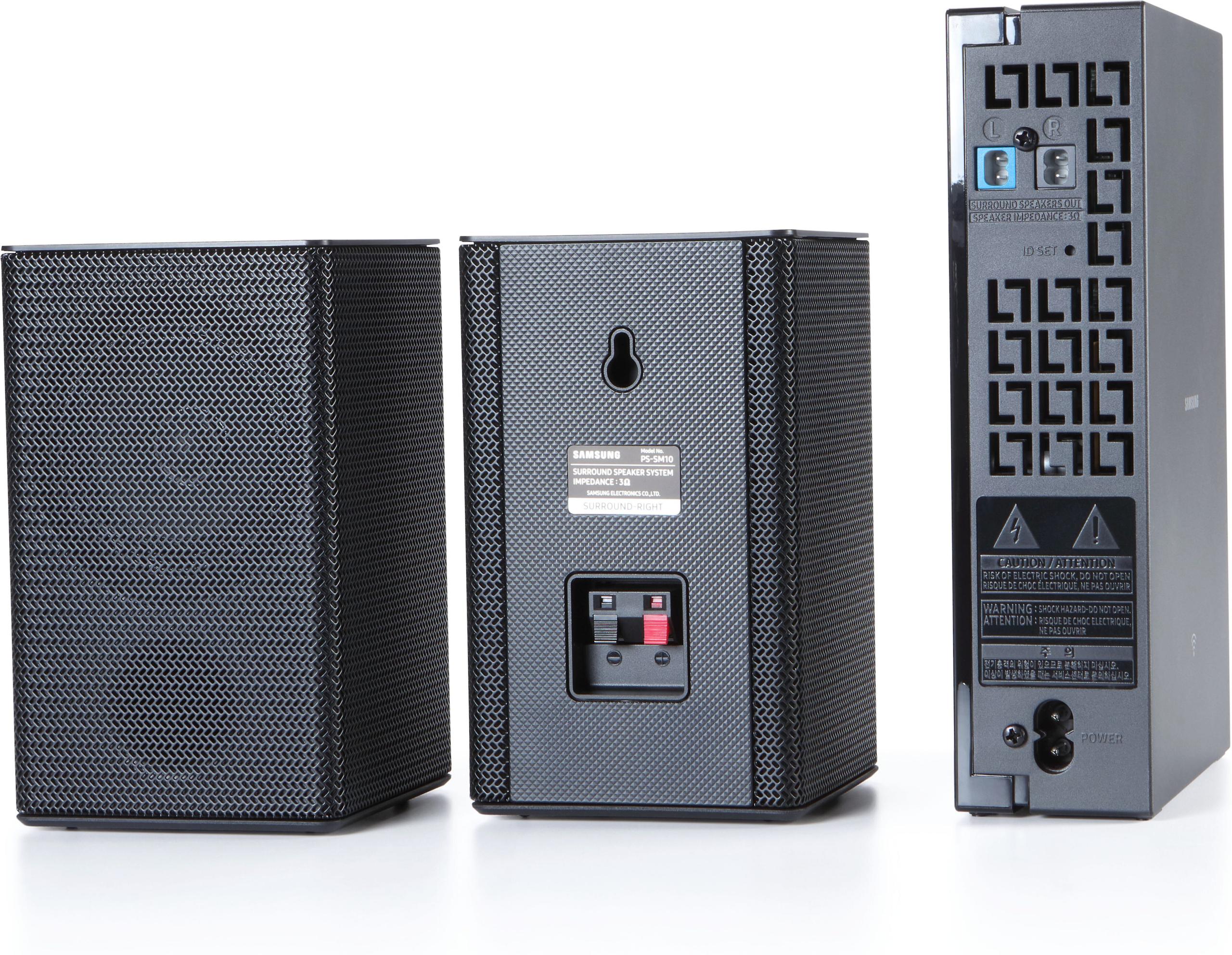
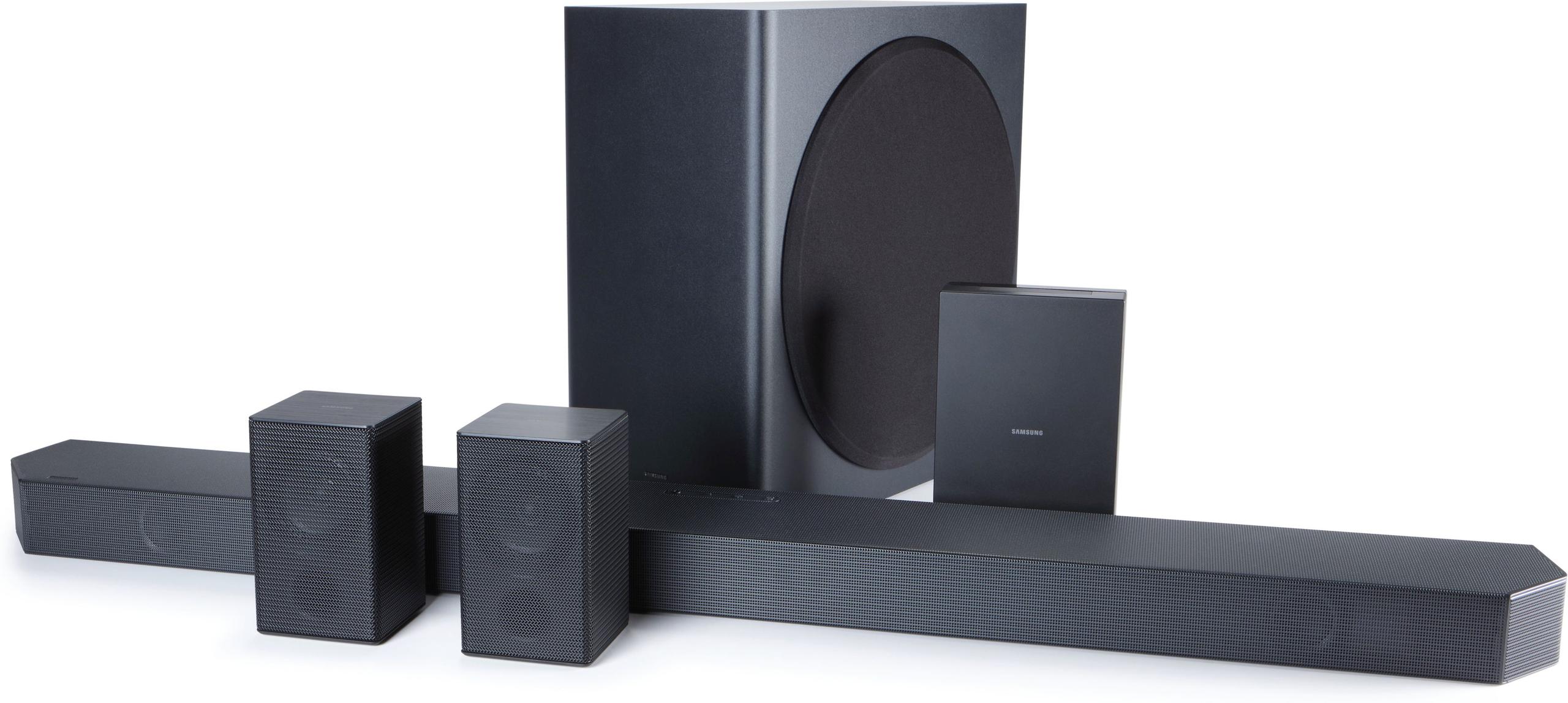
The Samsung Q Series 9.1.2 takes the opposite approach by giving you actual surround speakers. The "9.1.2" designation breaks down as follows: 9 main channels (left, center, right, plus side surrounds and rear surrounds), 1 subwoofer channel, and 2 height channels for Dolby Atmos. This means you get physical speakers behind your seating position and a dedicated subwoofer, creating genuine surround sound rather than a clever simulation.
The included wireless rear speakers are crucial for the system's performance. Unlike the Bose, which relies on psychoacoustic processing to create rear effects, the Samsung actually places sound behind you. When a character walks from the front of the screen to the back, you hear their footsteps travel in a realistic arc around your listening position. This creates a much more convincing sense of immersion, especially in large rooms where virtual surround processing struggles.
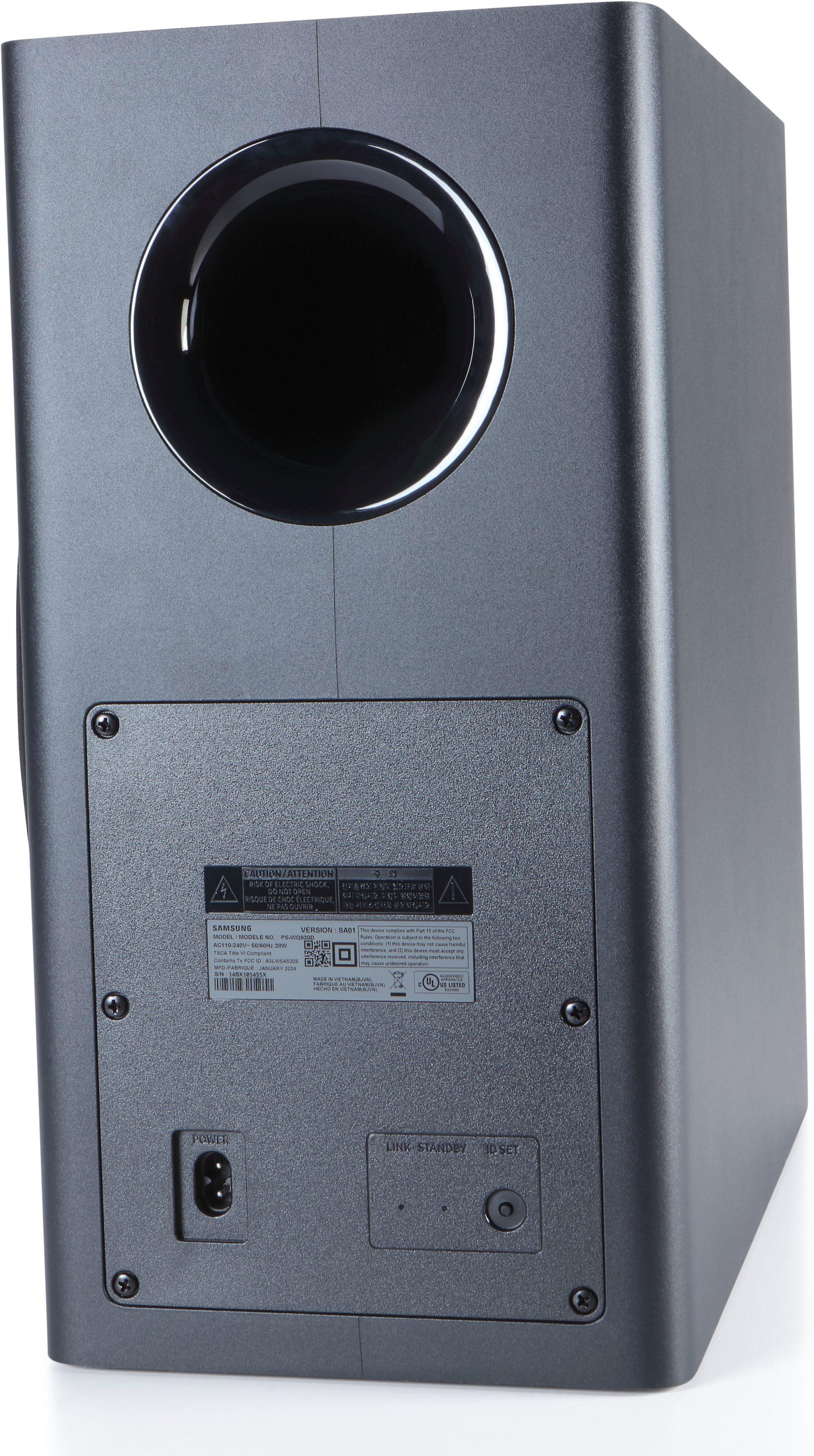
The 8-inch wireless subwoofer provides substantial low-frequency extension that single soundbars simply cannot match. Bass response extends well into the 30Hz range, which means you'll feel the rumble of explosions and the weight of musical instruments. The Auto Sub EQ feature uses a microphone built into the subwoofer itself to measure room acoustics and automatically adjust bass response, preventing the boomy or muddy sound that often plagues subwoofer installations.
Both soundbars support Dolby Atmos, but their implementations differ significantly in approach and effectiveness.
The Bose Smart Ultra uses two up-firing drivers combined with sophisticated processing to create height effects. These speakers bounce sound off your ceiling, which then reflects down to create the impression of overhead audio. The system works best in rooms with relatively low, flat ceilings (8-10 feet) and can create convincing height effects for properly mixed Atmos content. However, the effectiveness varies significantly based on your room's acoustics and ceiling material.
Samsung's approach includes dedicated up-firing speakers in both the main soundbar and the rear speakers, creating multiple reflection points for height channels. This multi-point approach creates more consistent Atmos effects across different seating positions and room configurations. The physical rear speakers also contribute to the height experience, as some Atmos content places sounds in the rear height channels that simply cannot be reproduced by front-facing speakers alone.
In head-to-head testing, the Samsung provides more dramatic and consistently placed height effects, while the Bose offers more subtle but often more natural-sounding overhead audio. Your preference will depend on whether you want obvious "wow factor" effects or more realistic spatial audio reproduction.
This category represents one of the largest differences between these soundbars, and it significantly impacts their suitability for different types of content.
The Bose Smart Ultra produces respectable bass from its internal drivers, with clean output down to about 50Hz. This covers most dialogue and mid-bass frequencies adequately, making it suitable for news, podcasts, and dialogue-heavy content. However, it lacks the deep sub-bass that makes explosions feel visceral or allows you to feel the kick drum in your favorite songs. Bose offers an optional Bass Module 700 subwoofer for $399, but this brings the total system cost to nearly $1000.
The Samsung Q Series 9.1.2 includes a substantial wireless subwoofer that extends bass response well into the 30Hz range. This means you'll feel the impact of movie explosions, the rumble of engines, and the weight of orchestral music. The subwoofer also handles the demanding low-frequency effects in action movies without the strain that can cause distortion in smaller drivers.
Dynamic range—the difference between the quietest and loudest sounds the system can reproduce—also favors the Samsung. With dedicated amplification for each speaker group and higher total power output, the Samsung can reproduce both subtle ambient details and explosive sound effects without compression. This makes it significantly better suited for action movies and dynamic music genres.
Gaming audio has become increasingly important as more people use their TV setups for console gaming. Both soundbars handle gaming adequately, but the Samsung offers specific advantages for serious gamers.
The Samsung's Game Mode Pro reduces audio processing delay to minimize the gap between what you see and hear—crucial for competitive gaming where audio cues can mean the difference between winning and losing. The mode also enhances directional audio, making it easier to locate enemies or important sounds in 3D space. For games that support it, Variable Refresh Rate (VRR) ensures smooth audio synchronization even when frame rates fluctuate.
The Bose provides solid gaming audio with low latency, but lacks the specialized gaming modes and directional enhancements that can provide competitive advantages. For casual gaming, both perform similarly, but serious gamers will appreciate the Samsung's extra features.
Modern soundbars are essentially computers with speakers attached, and both models include sophisticated room calibration and smart features.
The Bose ADAPTiQ system uses an included microphone to measure your room's acoustic properties during a brief setup process. The system plays test tones and analyzes how they sound in your space, then creates a custom EQ curve to compensate for room acoustics. This process takes about 10 minutes but significantly improves performance, especially in acoustically challenging rooms with hard surfaces or unusual shapes.
Samsung's SpaceFit Sound+ goes further by continuously monitoring and adjusting audio settings based on both room acoustics and content type. The system can detect when you're watching dialogue-heavy content versus action scenes and adjust processing accordingly. If you own a compatible Samsung TV, Q-Symphony technology allows the soundbar and TV speakers to work together, creating an even larger soundstage by using your TV's speakers as additional channels.
Both soundbars include comprehensive voice assistant support, but their implementations differ. The Bose has Alexa and Google Assistant built directly into the soundbar, allowing voice control even when your TV is off. The Samsung relies on your TV's voice assistant integration, which works well if you own a Samsung TV but may be less convenient with other brands.
The physical design and setup requirements of these soundbars will significantly impact your daily experience with them.
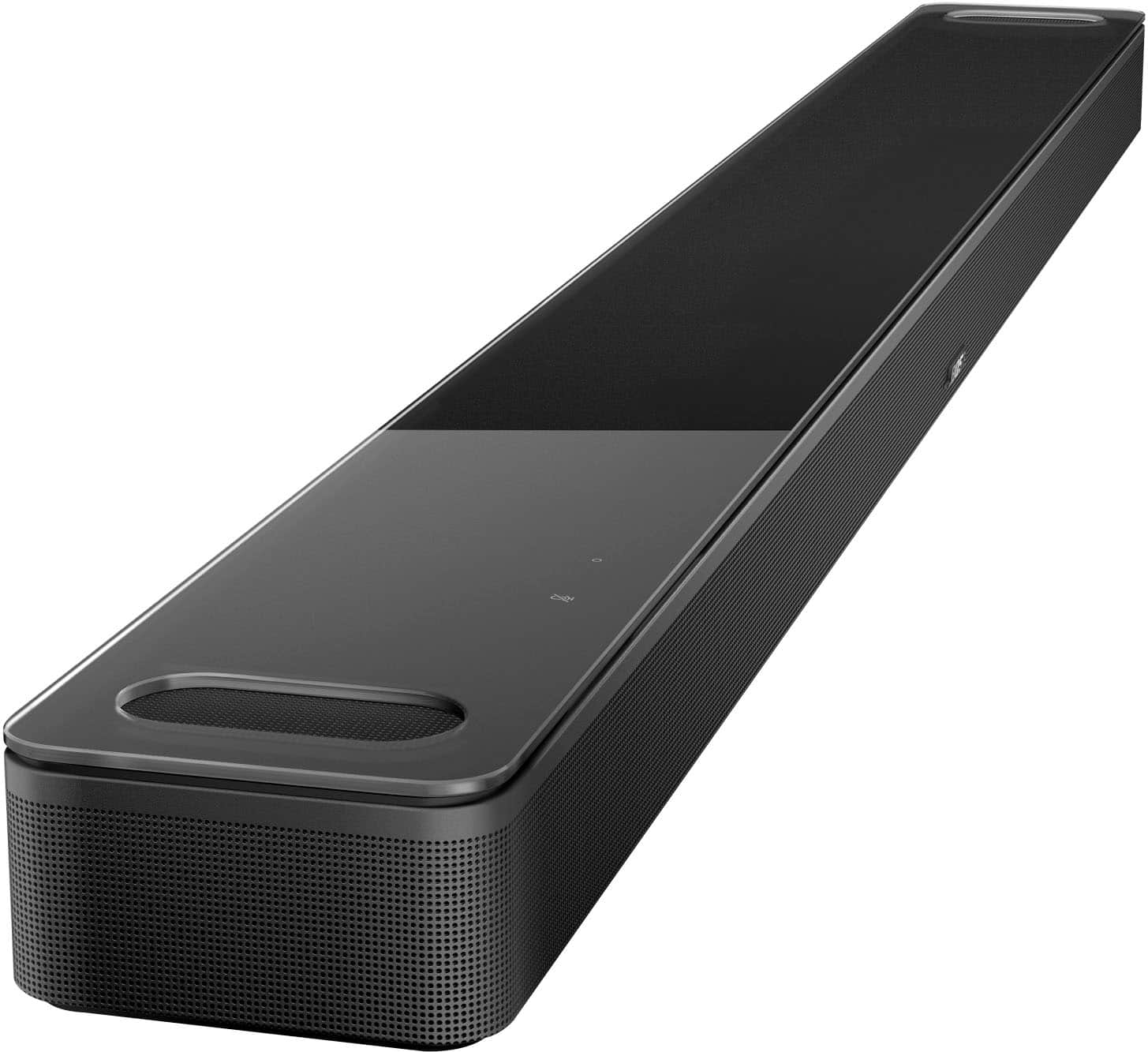
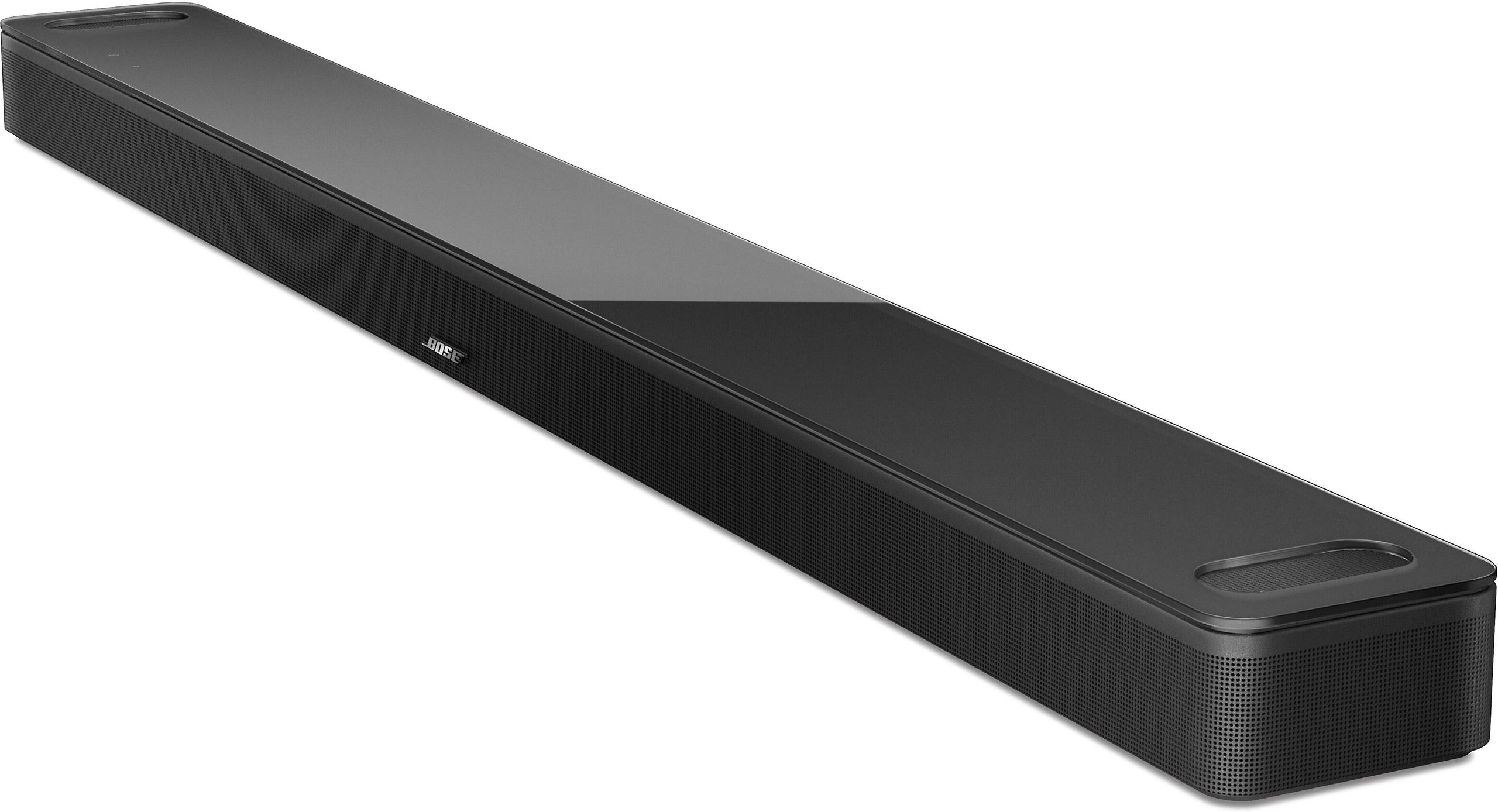
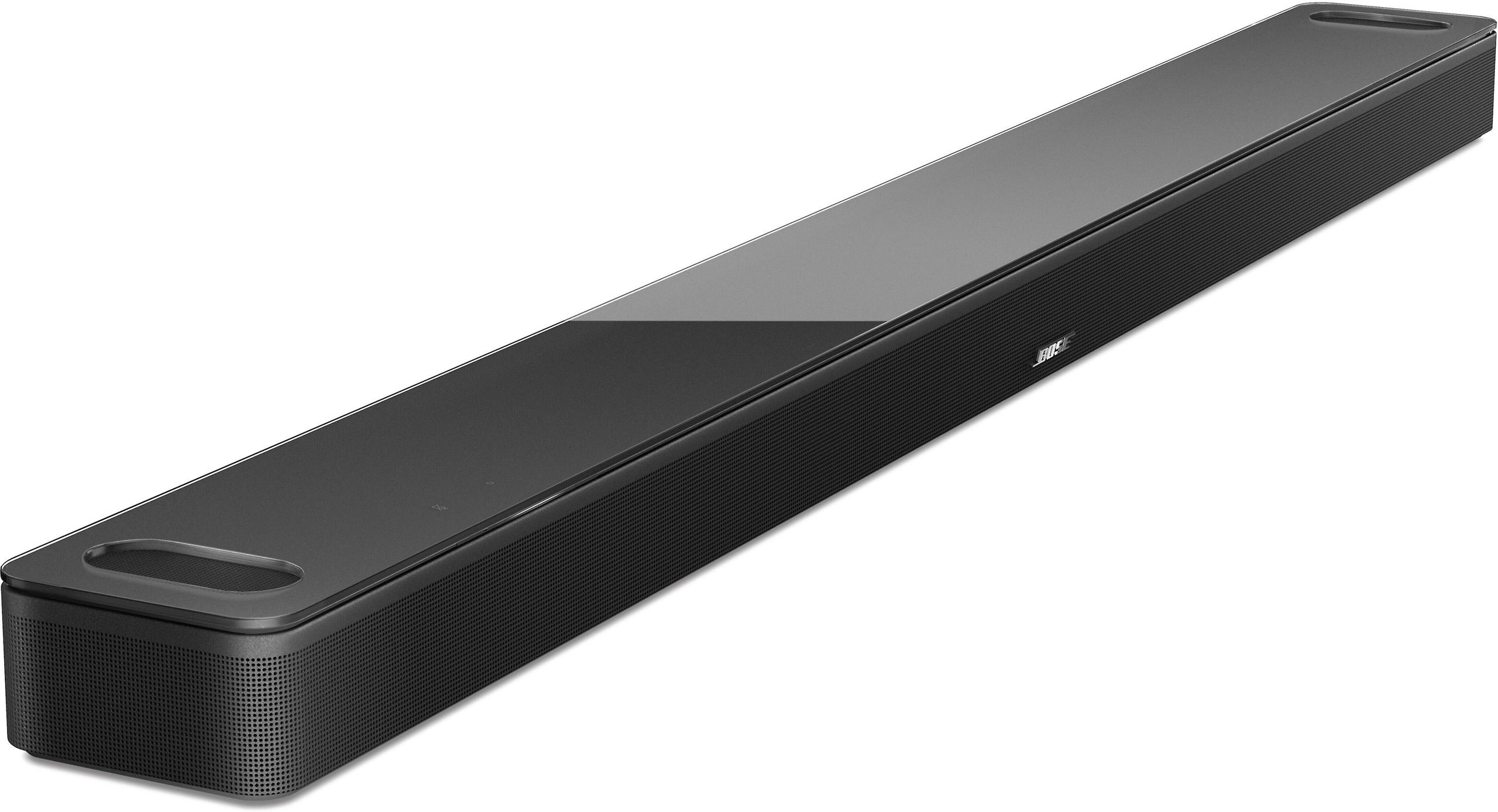
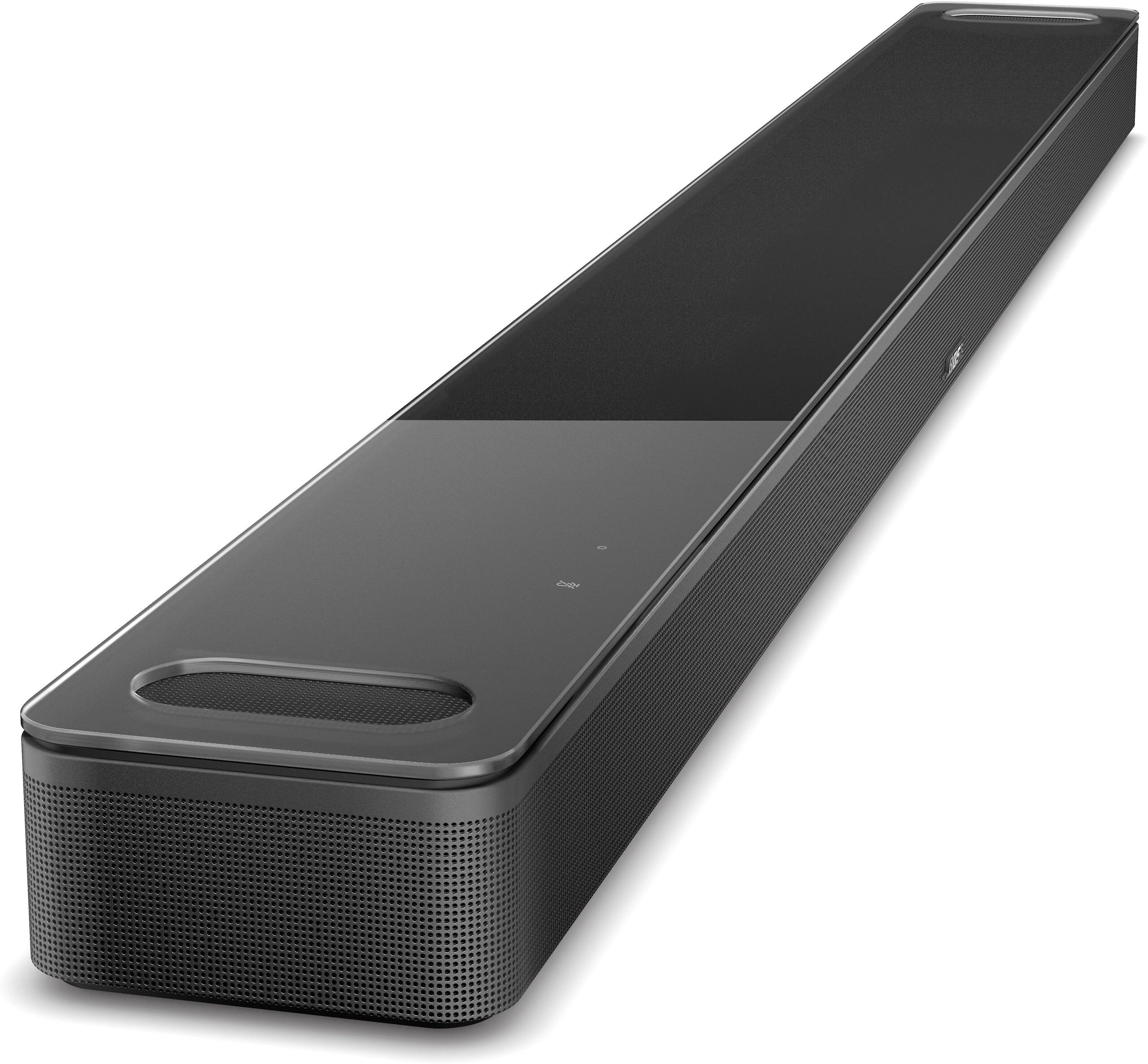
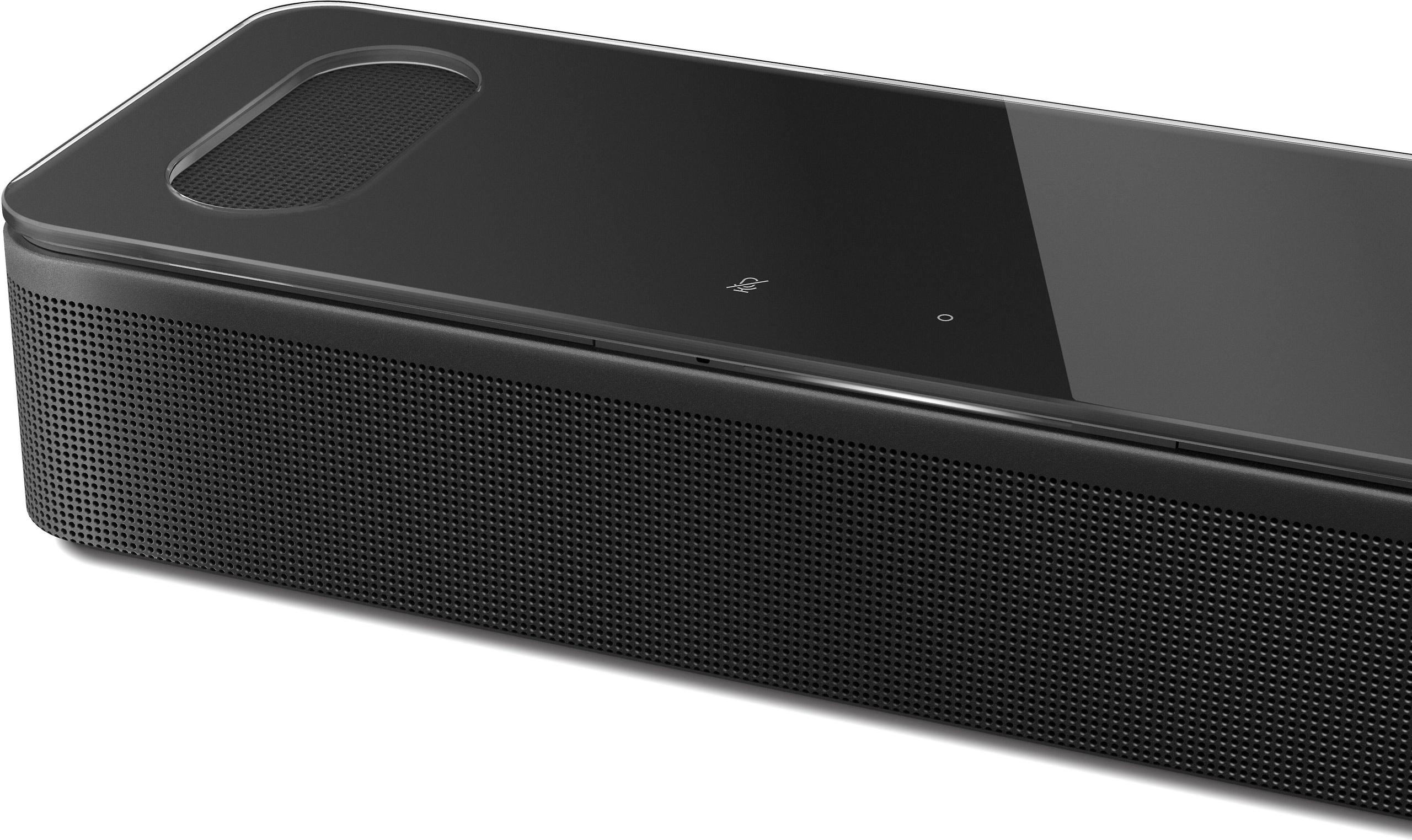
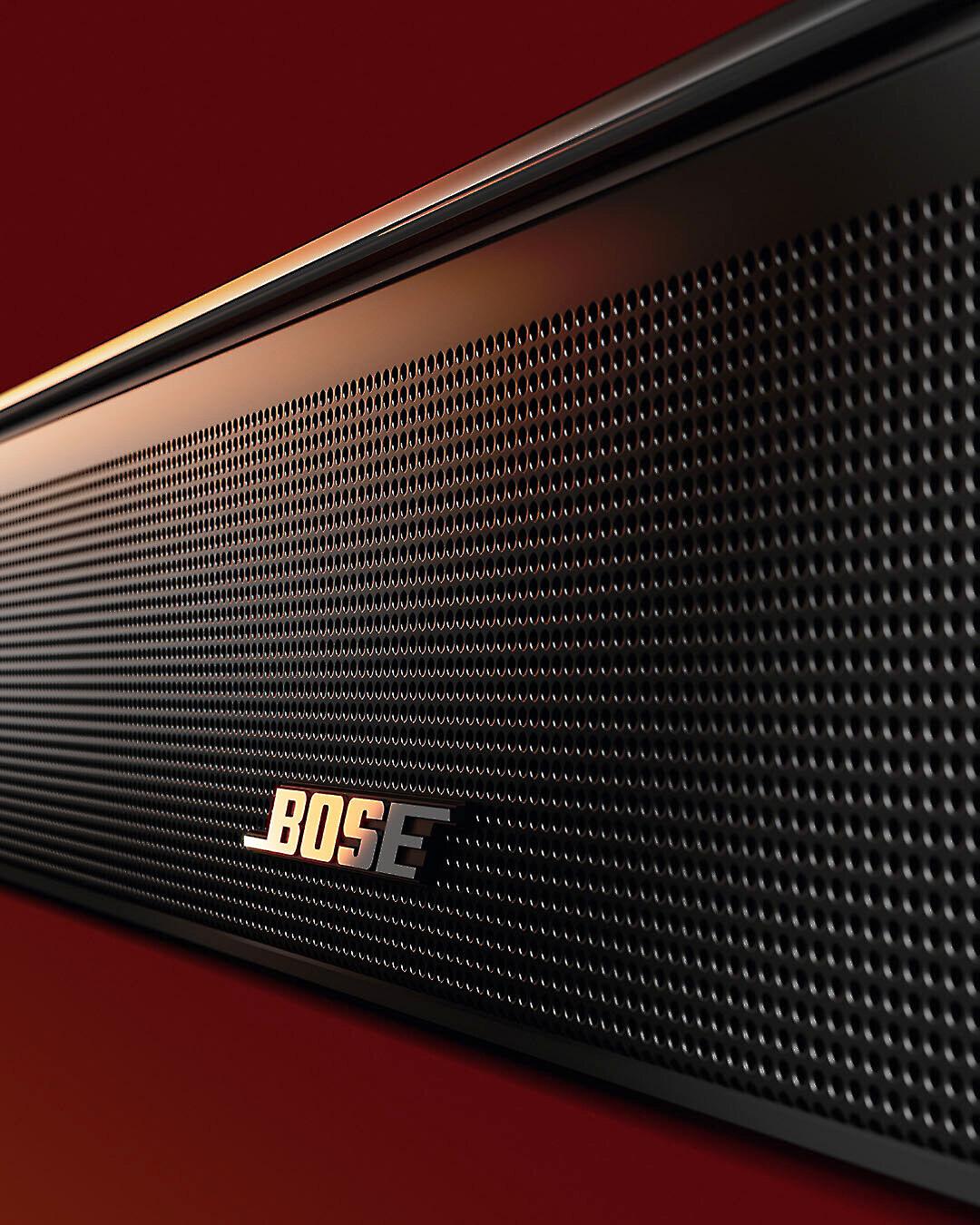
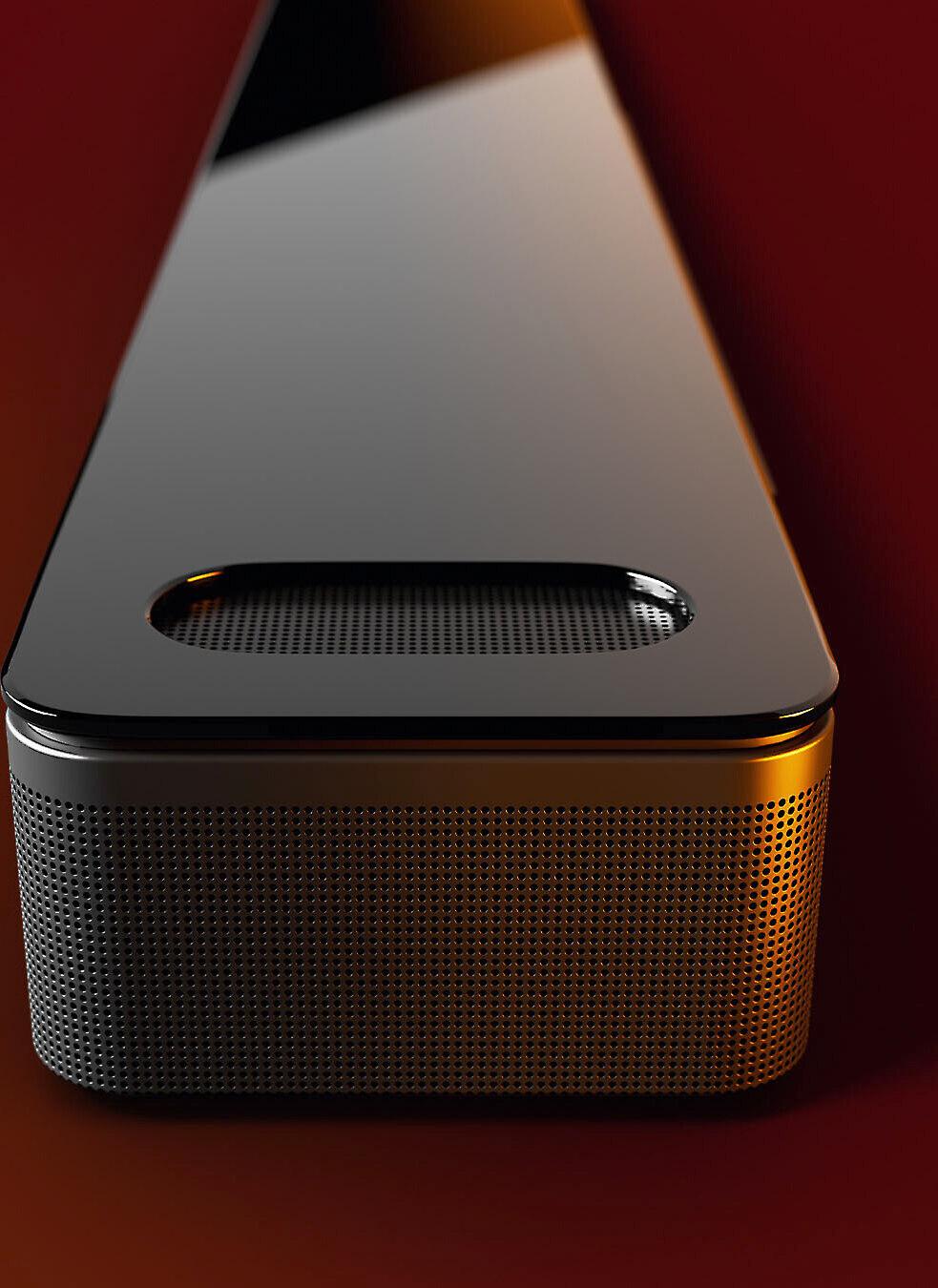
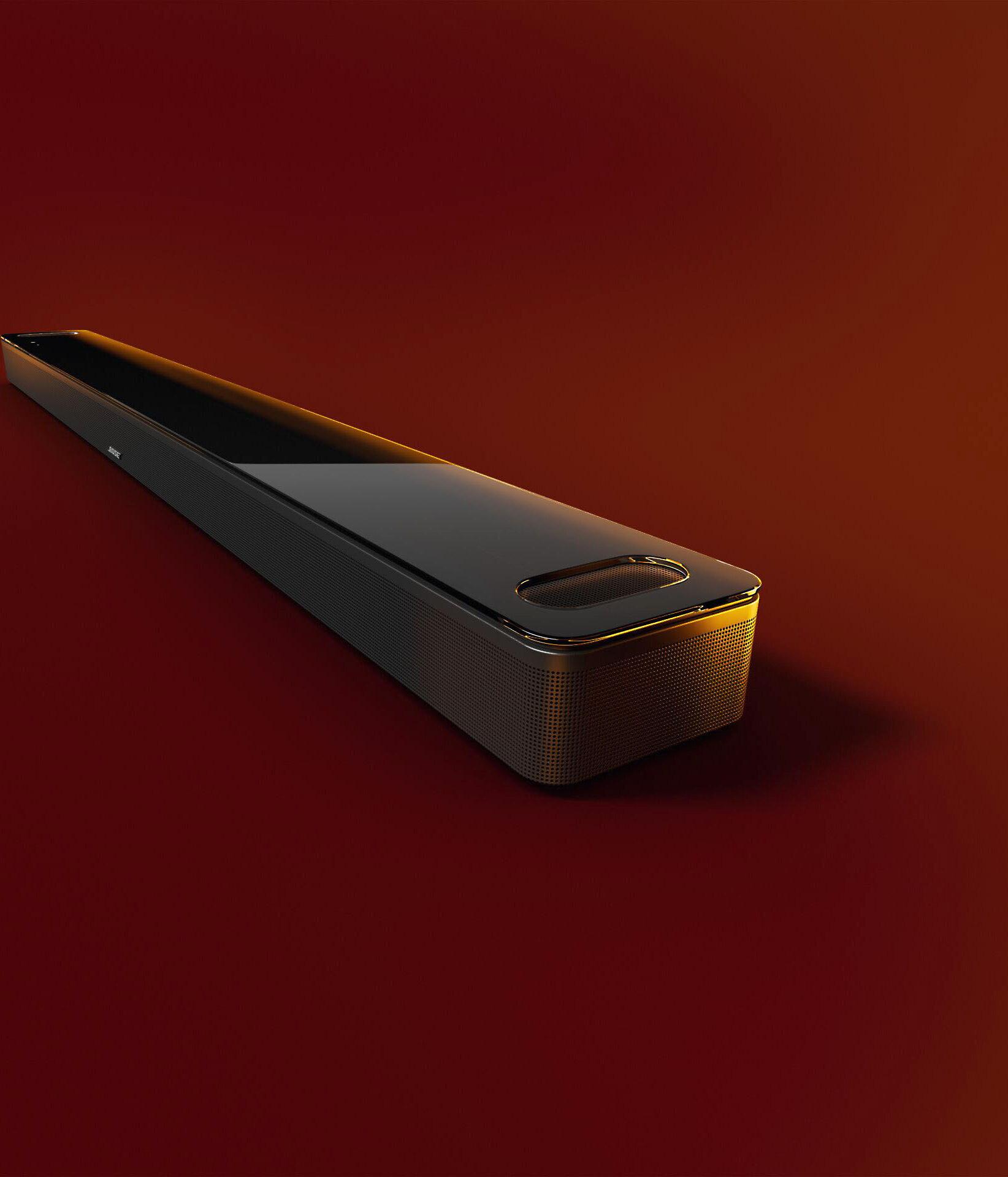
The Bose Smart Ultra measures 41.1 inches wide and just 2.3 inches tall, making it one of the most TV-friendly soundbars available. This low profile ensures it won't block your TV's remote sensor or obstruct the screen, even on TVs with low-mounted stands. The premium build quality includes a tempered glass top and metal grille that complement modern TV designs. Setup is genuinely plug-and-play—connect one HDMI cable, run the 10-minute calibration process, and you're done.
The Samsung system requires significantly more planning and space. The main soundbar is larger at 48.5 inches wide and 5.4 inches tall, and you'll need to position the wireless subwoofer and rear speakers appropriately. The rear speakers need to be 6-10 feet behind your seating position for optimal effect, which may not work in smaller rooms or apartments. However, once properly positioned, the system creates a much more immersive audio environment.
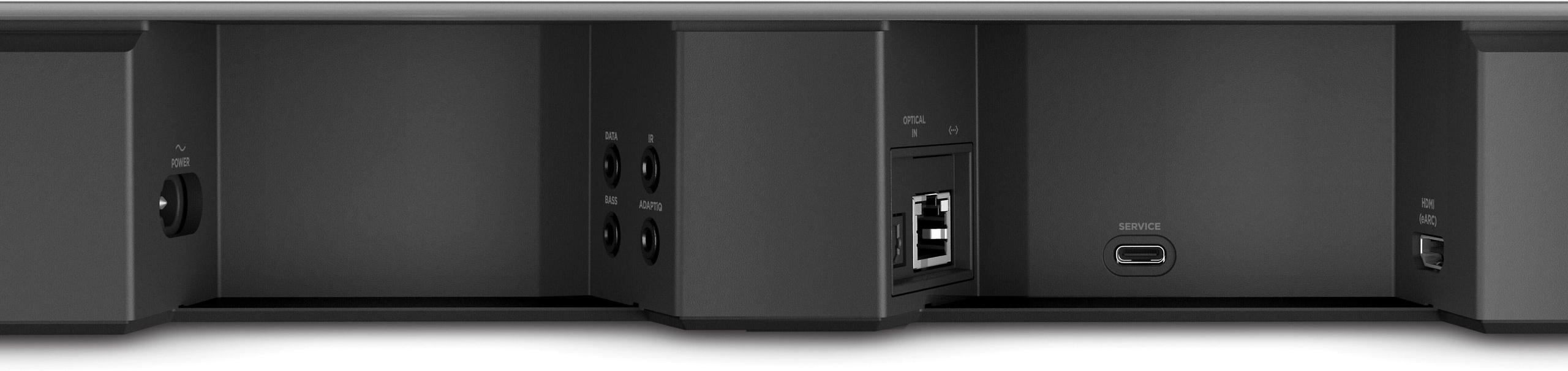
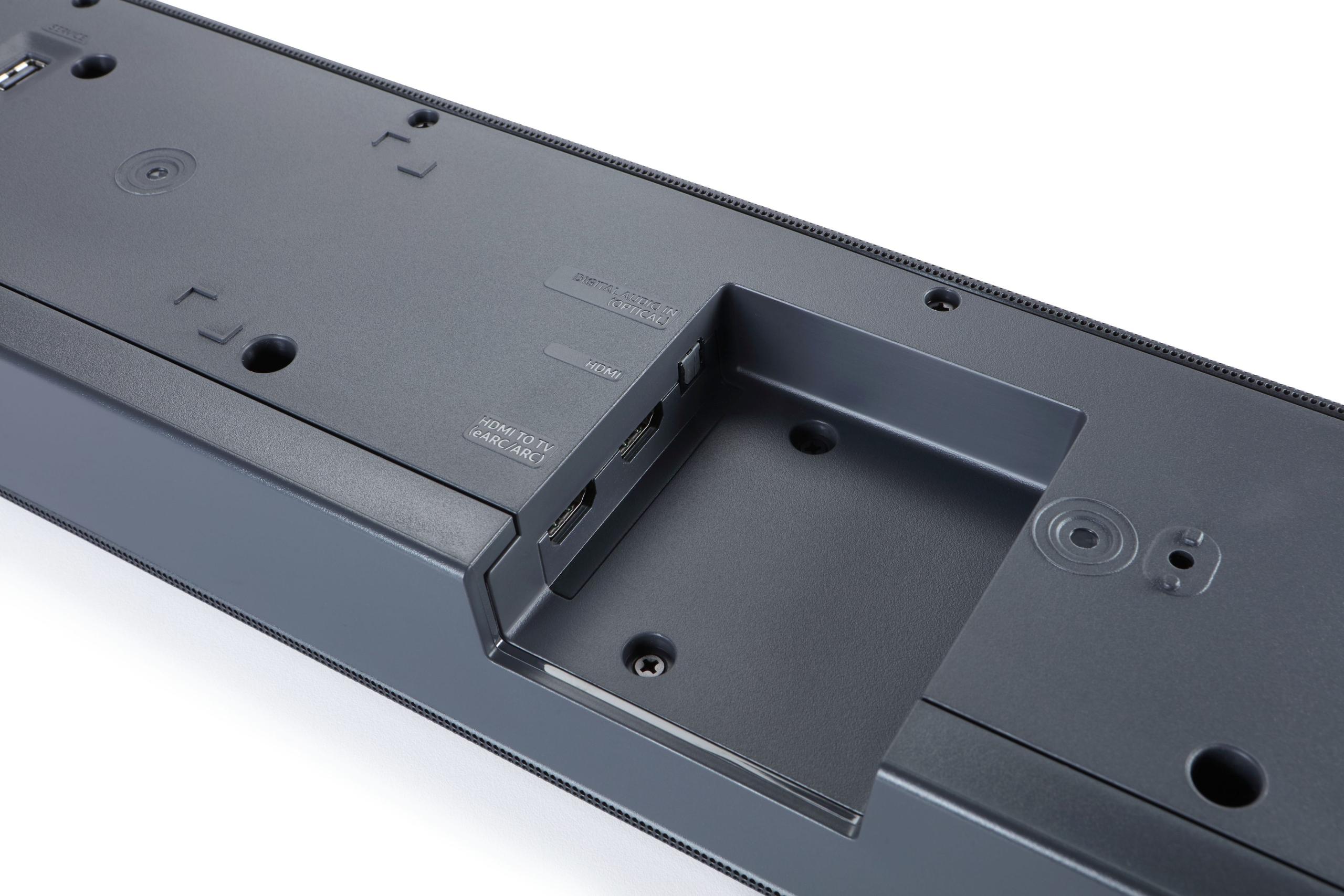
Cable management also differs significantly. The Bose requires only a single HDMI connection to your TV, while the Samsung system has multiple wireless components that each need power outlets. The wireless rear speakers are truly wireless between each other and the main unit, but they still need to be plugged into wall outlets.
Understanding the true cost of each system requires looking beyond initial purchase prices.
The Bose Smart Ultra at $599 seems like the more affordable option initially. However, to achieve comparable bass response to the Samsung, you'd need to add the $399 Bass Module 700, bringing total cost to $998. Even then, you wouldn't have the physical rear surround speakers that the Samsung includes.
The Samsung Q Series 9.1.2 at $898 includes everything you need for a complete surround sound system. The wireless subwoofer alone would cost $300-400 if purchased separately from most manufacturers, and the rear speakers would add another $200-300. From this perspective, the Samsung represents excellent value for a complete system.
However, value isn't just about component count. The Bose offers modular upgradeability—you can start with just the soundbar and add components later as budget allows. The Samsung is an all-or-nothing purchase that requires the full investment upfront.
After extensive testing in different environments, clear usage patterns emerge for each soundbar.
The Bose Smart Ultra excels in smaller to medium-sized rooms (up to about 200 square feet) where its virtual surround processing works most effectively. It's particularly impressive for dialogue-heavy content like news, podcasts, and drama series. The AI Dialogue Mode genuinely makes a difference when watching British shows with heavy accents or action movies with complex soundmixes. If your primary concern is understanding what characters are saying, the Bose is hard to beat.
The Samsung Q Series 9.1.2 shines in larger spaces and with more dynamic content. The physical surround speakers create genuine immersion that virtual processing simply cannot match, especially for action movies, sports, and gaming. If you have space for proper rear speaker placement and enjoy explosive blockbuster movies, the Samsung will provide a more theatrical experience.
For home theater enthusiasts, the Samsung is the clear choice. The combination of physical surround speakers, substantial subwoofer, and room calibration creates an experience that rivals much more expensive component systems. The ability to clearly locate sounds in 3D space and feel the impact of low-frequency effects makes movie watching significantly more engaging.
Choose the Bose Smart Ultra Soundbar if you prioritize dialogue clarity above all else, have space constraints that prevent rear speaker placement, prefer a minimalist aesthetic, or want the flexibility to build your system gradually. It's also the better choice if you're primarily upgrading from basic TV speakers and want immediate improvement without complexity.
Choose the Samsung Q Series 9.1.2 if you want a complete surround sound experience immediately, have a room that can accommodate rear speakers properly, enjoy action movies and dynamic content, or do serious gaming. It's also the better value if you want maximum performance without additional purchases.
If you're still unsure, consider your primary use case. For dialogue-driven content consumption in smaller spaces, the Bose provides premium quality with elegant simplicity. For immersive entertainment in larger rooms, the Samsung delivers superior overall performance at an excellent price point for what you receive.
Both soundbars represent significant upgrades over basic TV audio, but they achieve their improvements through fundamentally different approaches. Your choice should align with your space, usage patterns, and performance priorities.
| Bose Smart Ultra Soundbar | Samsung Q Series 9.1.2 Channel Soundbar |
|---|---|
| Price - Initial investment required | |
| $599 | $898 |
| Channel Configuration - Determines surround sound authenticity | |
| 3.0.2 (virtualized surround) | True 9.1.2 (physical rear speakers included) |
| Included Components - What you get in the box | |
| Soundbar only | Soundbar + wireless subwoofer + rear speakers |
| Total System Cost - Price for complete bass and surround | |
| $998 (requires $399 subwoofer for full experience) | $898 (everything included) |
| Dimensions - Space requirements and TV compatibility | |
| 41.1" × 2.3" × 4.2" (compact, fits under most TVs) | 48.5" × 5.4" × 2.7" (larger, needs rear speaker placement) |
| Dialogue Enhancement - Critical for understanding speech | |
| AI Dialogue Mode with machine learning | Active Voice Amplifier (standard processing) |
| Bass Response - Impact on movie and music enjoyment | |
| Limited without separate subwoofer purchase | Deep bass included with 8" wireless subwoofer |
| Room Calibration - Automatic sound optimization | |
| ADAPTiQ one-time setup with included microphone | SpaceFit Sound+ continuous adjustment |
| Gaming Features - Advantages for console gaming | |
| Standard low-latency audio processing | Game Mode Pro with VRR support and directional audio |
| Samsung TV Integration - Enhanced features with Samsung TVs | |
| Standard HDMI eARC connectivity | Q-Symphony technology combines TV and soundbar speakers |
| Setup Complexity - Installation time and effort required | |
| Single HDMI connection, 10-minute calibration | Multiple wireless components, rear speaker positioning needed |
| Upgrade Path - Future expansion options | |
| Modular system (can add subwoofer/speakers later) | Complete system (no additional components available) |
The Samsung Q Series 9.1.2 Channel Soundbar ($898) offers better overall value because it includes a wireless subwoofer and rear speakers in the box. The Bose Smart Ultra Soundbar ($599) costs less initially but requires a $399 subwoofer purchase to match the Samsung's bass performance, bringing the total to $998.
The Bose Smart Ultra uses 3.0.2 channels with virtual surround processing to simulate rear speakers. The Samsung Q Series 9.1.2 has true 9.1.2 channels with physical rear speakers that create authentic surround sound. The Samsung provides more immersive audio, especially for movies and gaming.
The Bose Smart Ultra Soundbar excels at dialogue clarity with its AI Dialogue Mode that uses machine learning to enhance speech without affecting sound effects. While the Samsung Q Series 9.1.2 has good vocal reproduction, the Bose specifically targets this common TV audio problem.
Physical rear speakers like those included with the Samsung Q Series 9.1.2 provide more convincing surround effects than virtual processing. The Bose Smart Ultra creates impressive virtual surround sound but cannot match the spatial accuracy of actual speakers positioned behind your seating area.
The Bose Smart Ultra Soundbar is ideal for smaller spaces due to its compact 41-inch design and virtual surround technology that doesn't require rear speaker placement. The Samsung Q Series 9.1.2 needs adequate space for rear speakers (6-10 feet behind seating) to perform optimally.
The Samsung Q Series 9.1.2 includes the main soundbar, wireless subwoofer, and rear speakers for a complete system. The Bose Smart Ultra includes only the soundbar, with optional subwoofer and speakers available separately for additional cost.
The Samsung Q Series 9.1.2 Channel Soundbar includes an 8-inch wireless subwoofer that provides deep, impactful bass for movies and music. The Bose Smart Ultra Soundbar has limited bass response without purchasing the optional $399 Bass Module 700.
The Samsung Q Series 9.1.2 offers superior gaming features with Game Mode Pro, Variable Refresh Rate support, and enhanced directional audio for competitive gaming. The Bose Smart Ultra provides good gaming audio but lacks specialized gaming modes and features.
The Bose Smart Ultra Soundbar offers simpler installation with just one HDMI connection and a 10-minute room calibration process. The Samsung Q Series 9.1.2 requires positioning multiple wireless components and finding power outlets for the subwoofer and rear speakers.
Both soundbars work with Samsung TVs, but the Samsung Q Series 9.1.2 Channel Soundbar offers Q-Symphony technology that combines the TV's speakers with the soundbar for enhanced performance. The Bose Smart Ultra connects via standard HDMI eARC to any TV brand.
The Samsung Q Series 9.1.2 provides a more complete home theater experience with physical surround speakers, powerful subwoofer, and room-filling sound ideal for action movies and blockbusters. The Bose Smart Ultra excels at dialogue but cannot match the Samsung's immersive surround effects.
The Bose Smart Ultra Soundbar offers a modular approach where you can add the Bass Module 700 subwoofer and surround speakers over time. The Samsung Q Series 9.1.2 is a complete system with all components included but offers limited expansion options beyond the initial purchase.
We've done our best to create useful and informative comparisons to help you decide what product to buy. Our research uses advanced automated methods to create this comparison and perfection is not possible - please contact us for corrections or questions. These are the sites we've researched in the creation of this article: techradar.com - bose.com - bestbuy.com - tomsguide.com - pcrichard.com - rtings.com - bose.com - boselatam.com - avsforum.com - bose.com - rtings.com - samsung.com - markselectrical.co.uk - techradar.com - walmart.com - samsung.com - samsung.com - youtube.com - samsung.com - biancos.com - crutchfield.com - samsung.com

Privacy Policy
Terms and Conditions - Affiliate Policy
Home Security
© Copyright 2008-2026.
11816 Inwood Rd #1211, Dallas, TX 75244