





If you've been struggling to hear dialogue clearly on your TV or want that cinematic sound experience without filling your room with speakers, you're probably considering a premium soundbar. The audio world has seen incredible advances in recent years, with soundbars now capable of creating truly immersive surround sound experiences that rival traditional speaker systems.
Two standout options represent very different philosophies: the Sony HT-A3000 at $429 and the Sennheiser AMBEO Soundbar at $1,999. While both deliver exceptional audio experiences, they take fundamentally different approaches to achieving premium sound quality.
Today's premium soundbars are sophisticated audio systems that use advanced digital processing to create immersive sound experiences. The key technologies you'll encounter include Dolby Atmos (which adds height channels for overhead sound effects), DTS:X (a competing surround format), and various virtualization techniques that use psychoacoustics—basically tricks your brain into perceiving sounds coming from directions where there aren't actual speakers.
The main considerations when choosing between premium soundbars include how effectively they create that "surround sound bubble" around you, how well they adapt to your specific room, whether you can expand the system over time, and ultimately, what kind of value they deliver for your investment.
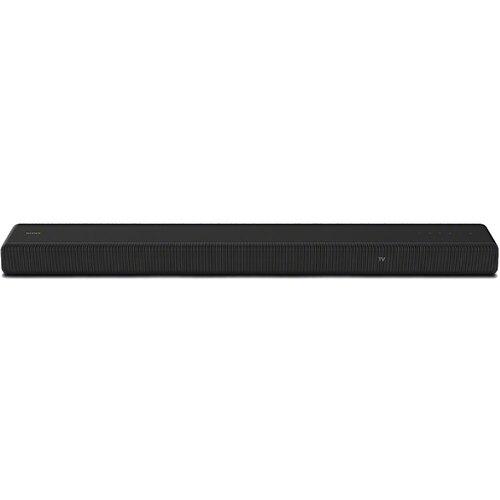
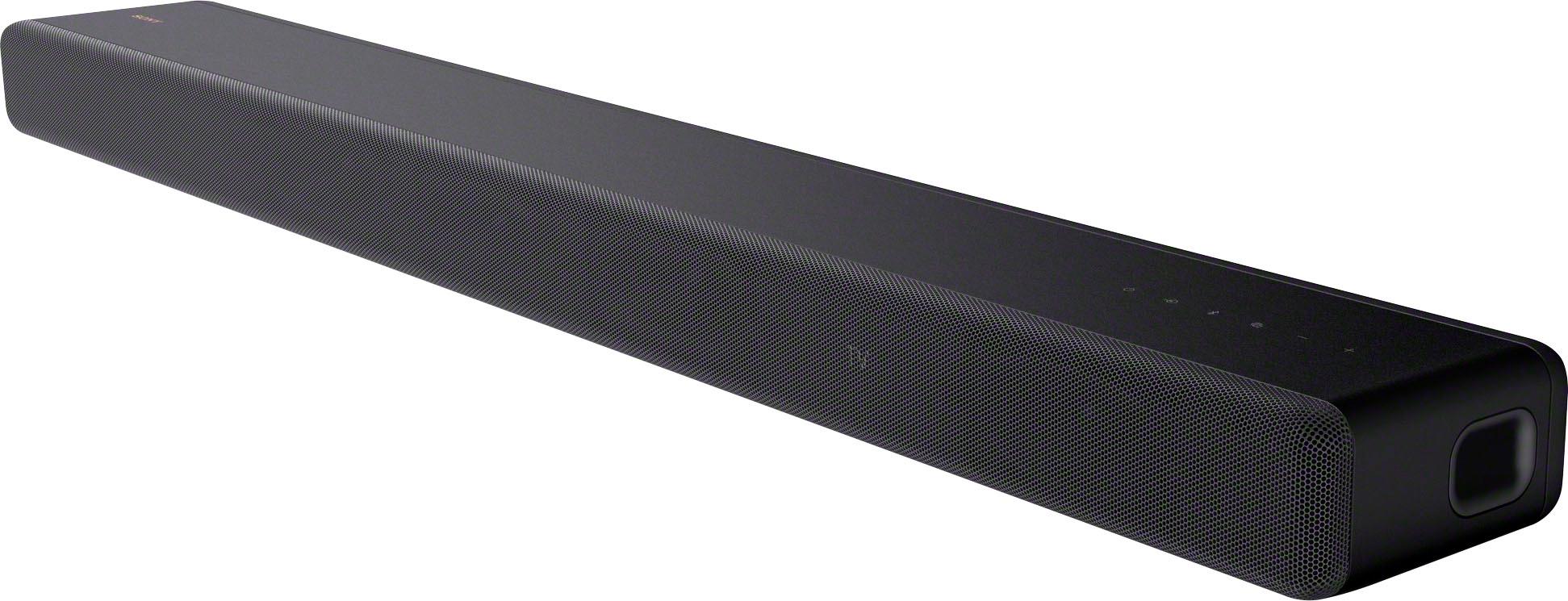
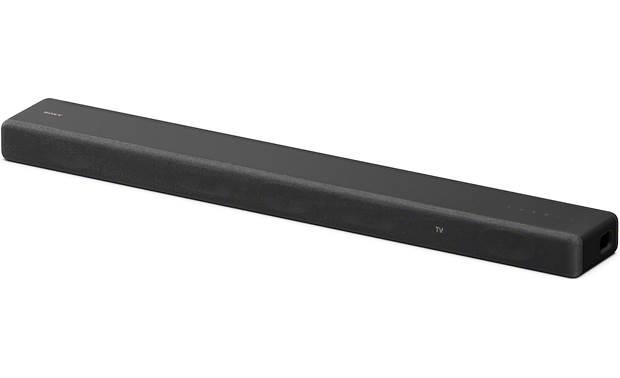
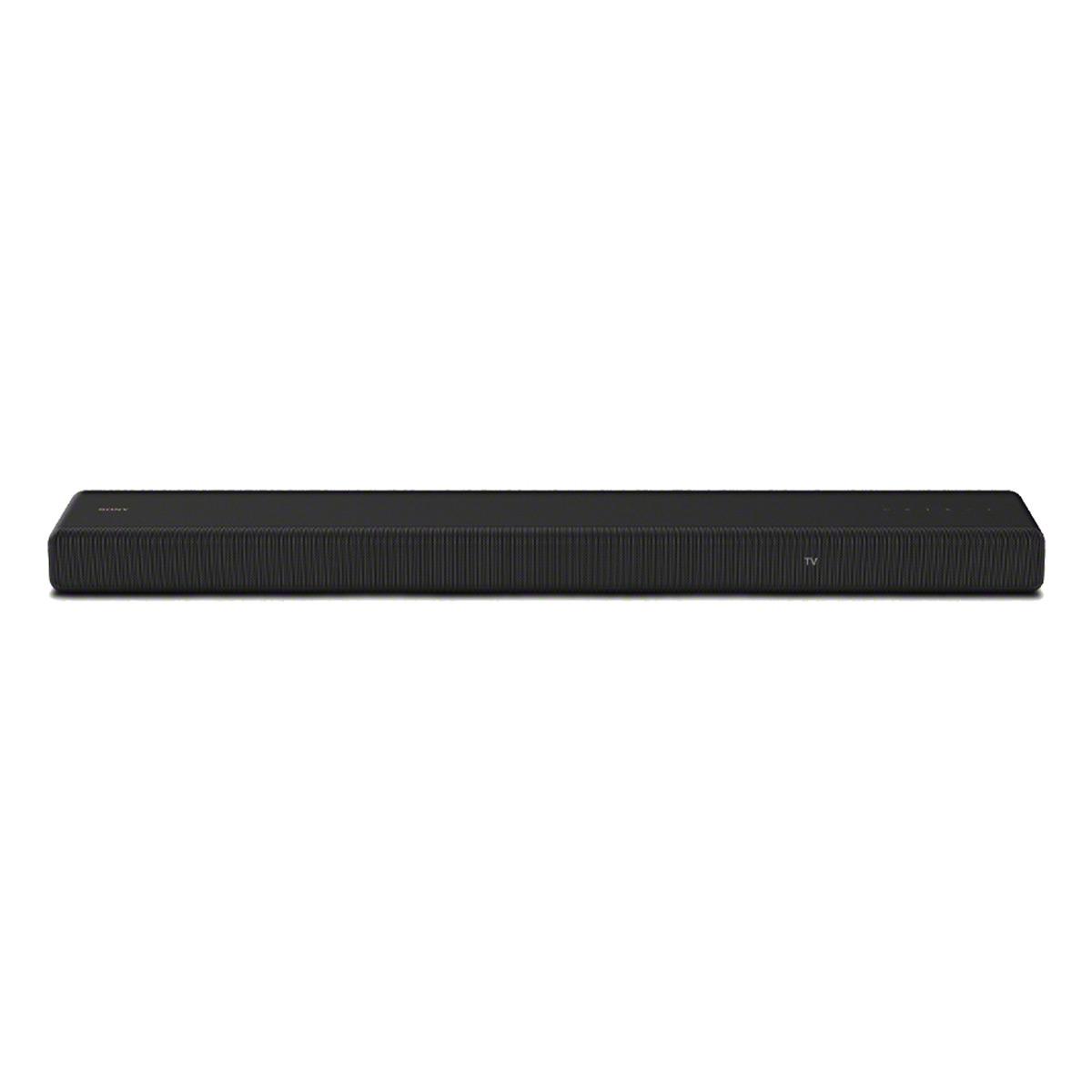
The Sony HT-A3000 launched in 2022 as Sony's "goldilocks" soundbar—not their cheapest option, but far from their most expensive. It represents what I'd call the "foundation and expansion" approach. You start with a solid 3.1-channel system (left, right, center speakers plus built-in subwoofers) that delivers great performance on its own, then add optional components over time if you want more.
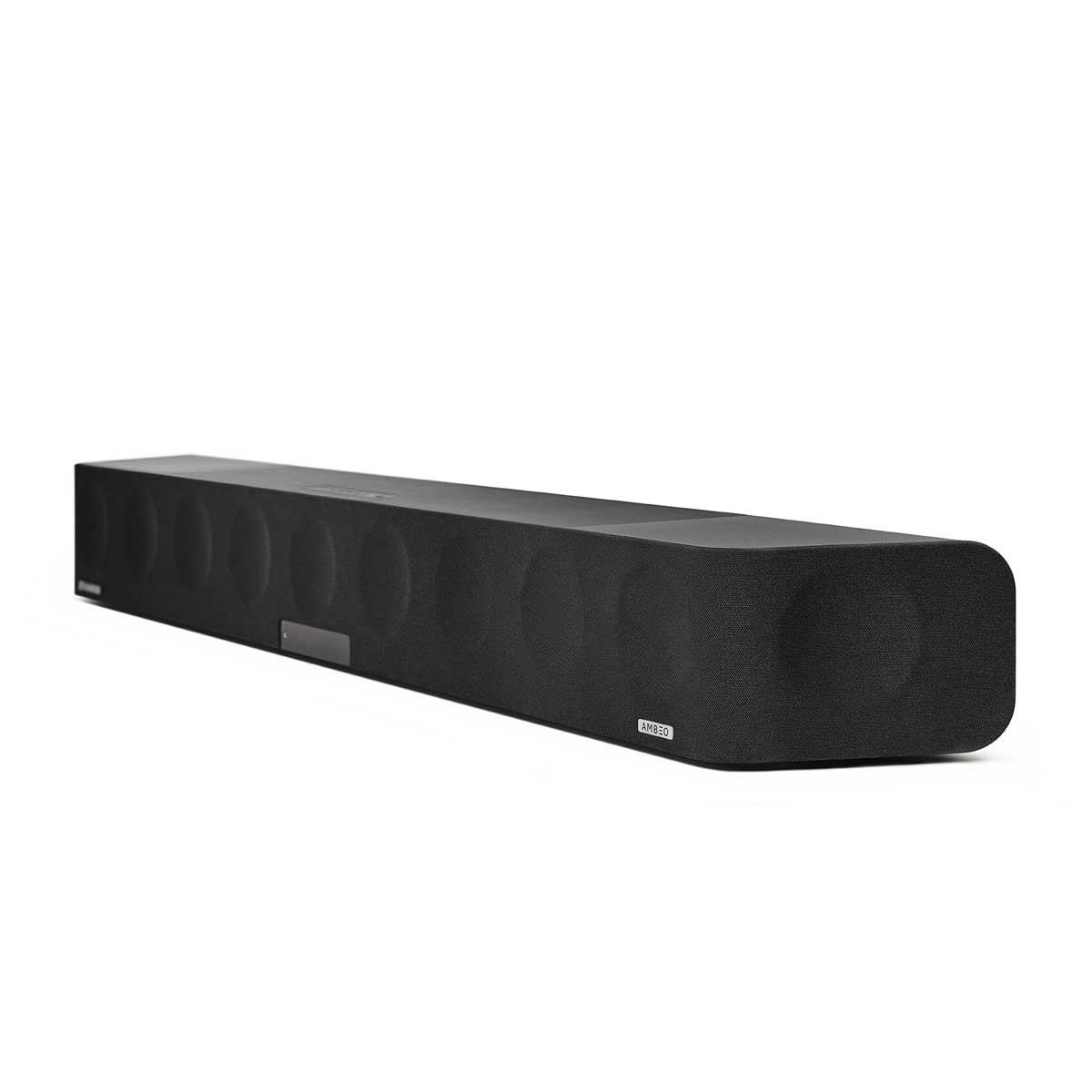
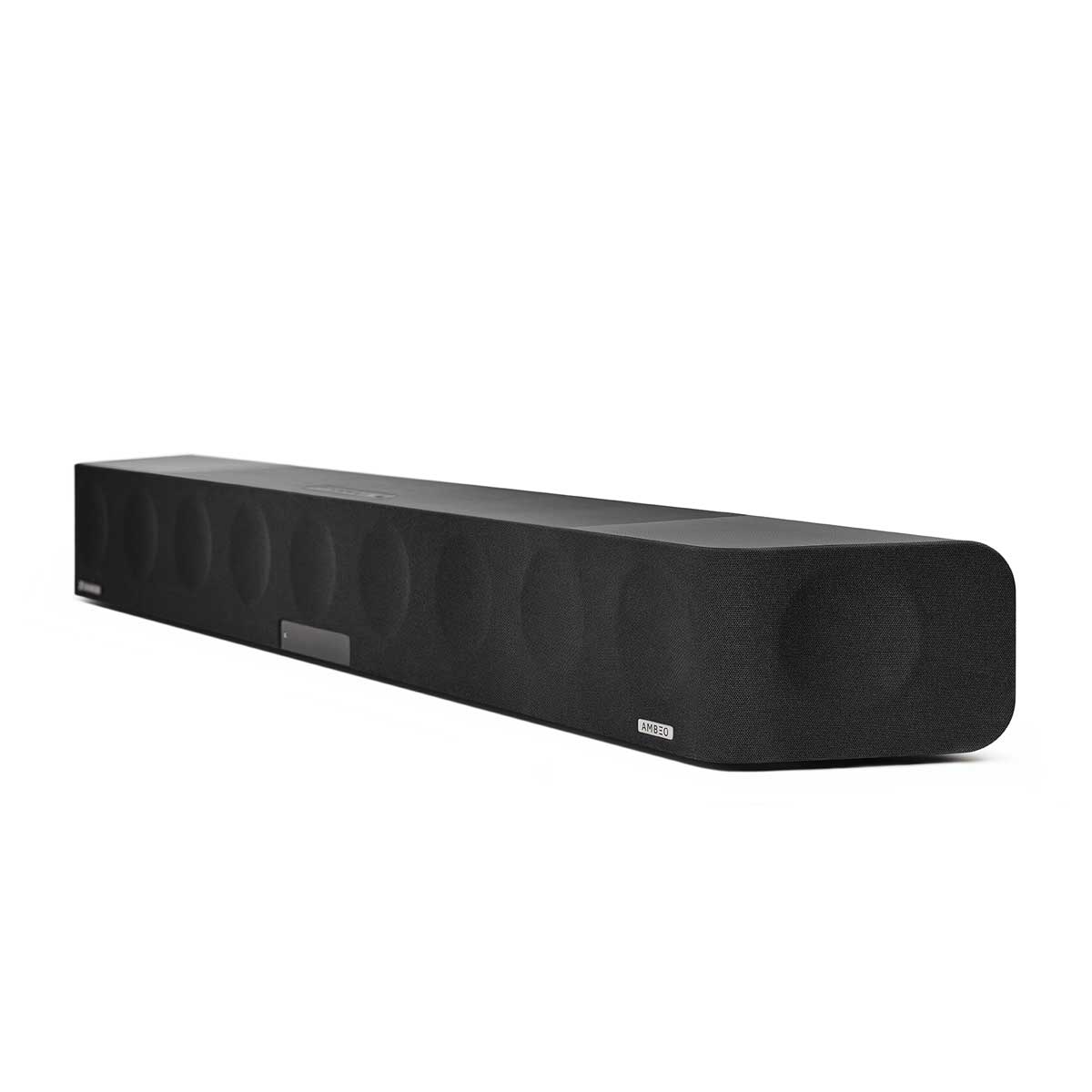
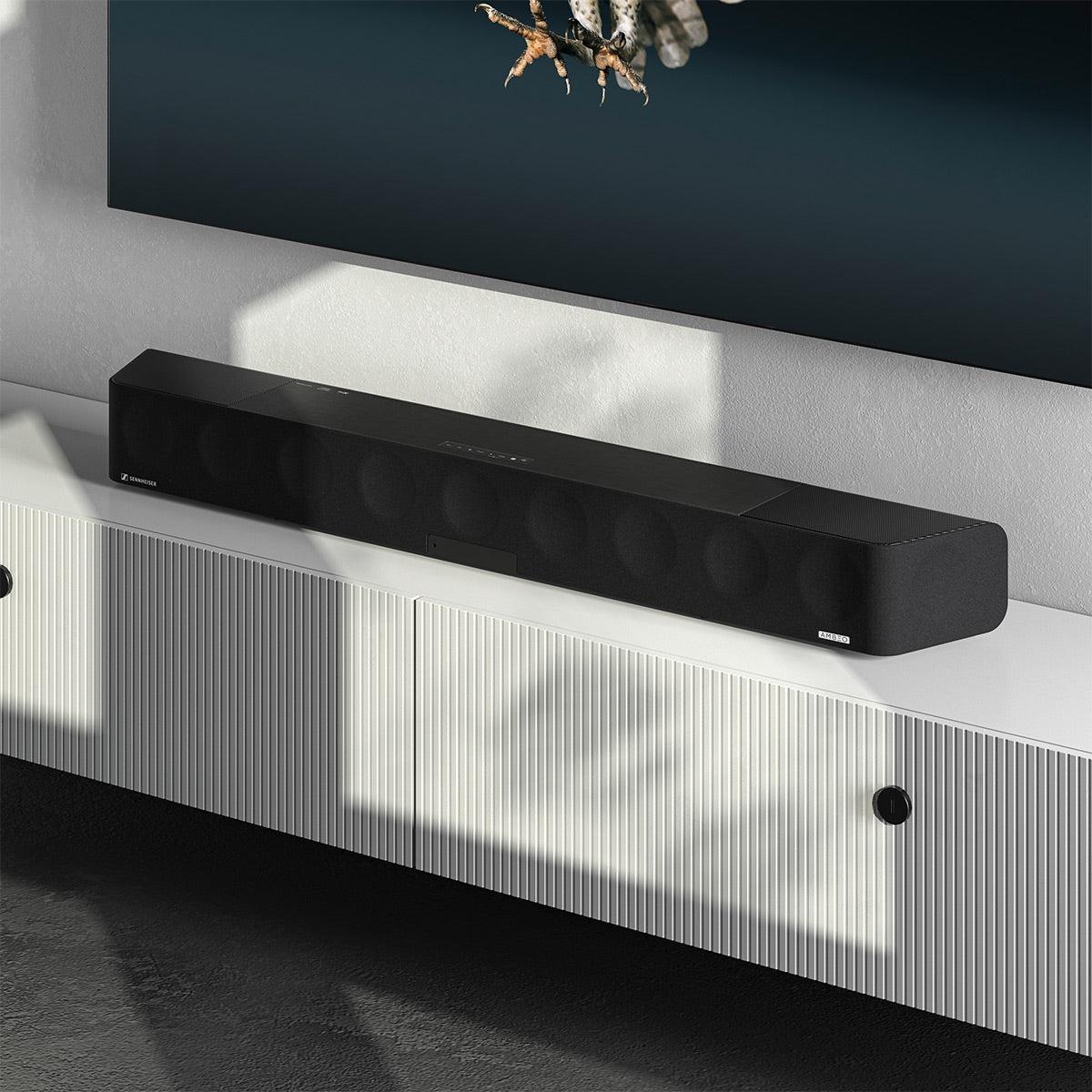
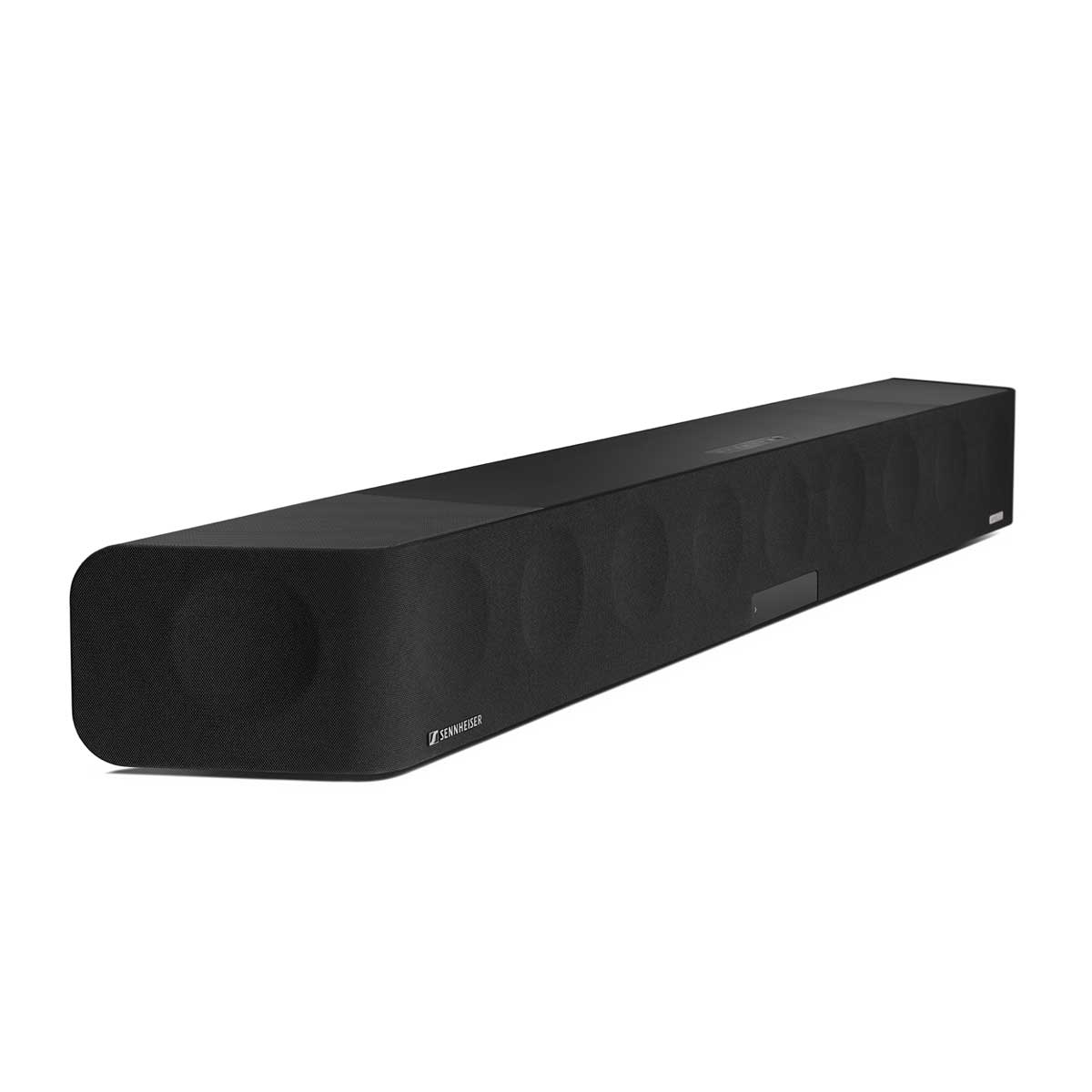
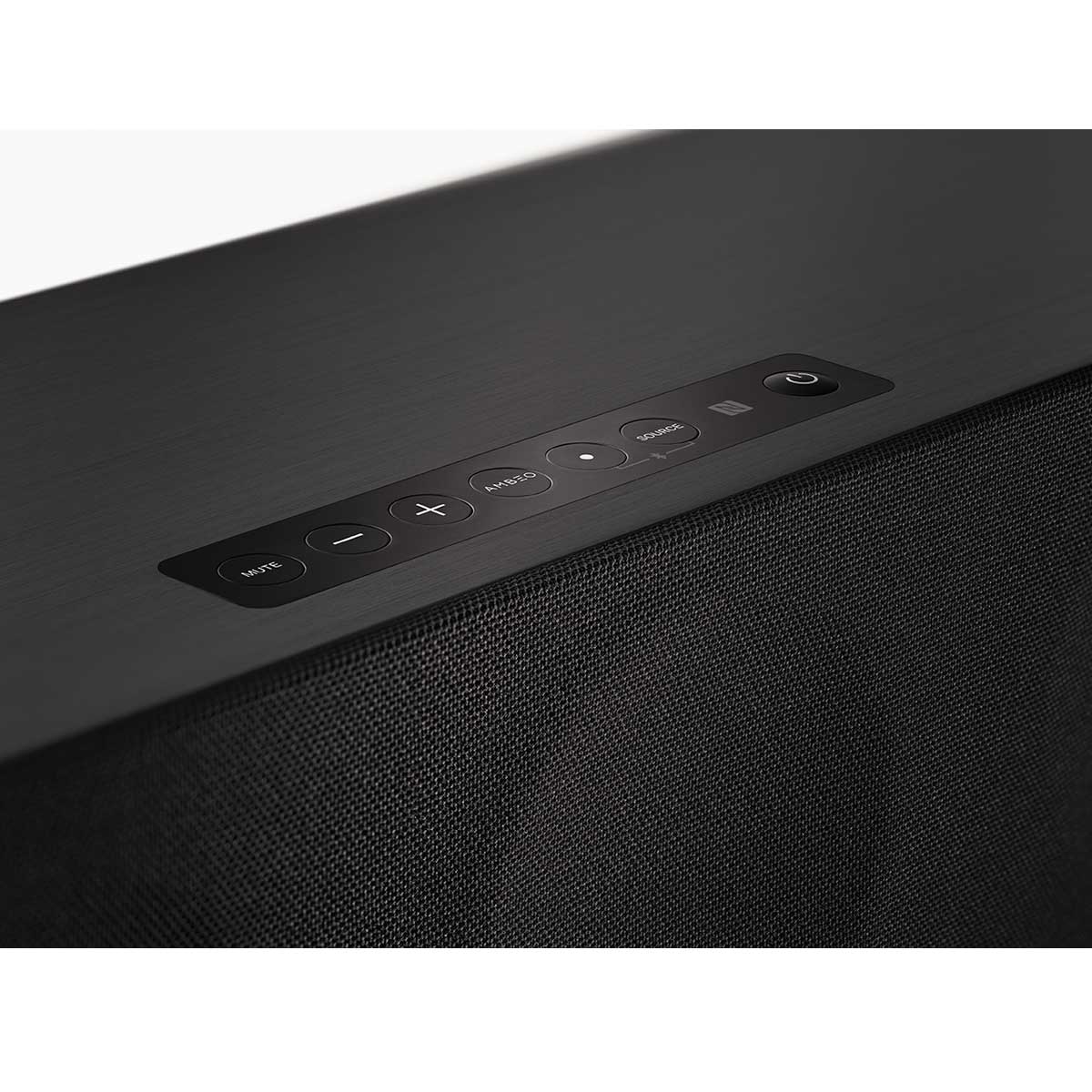
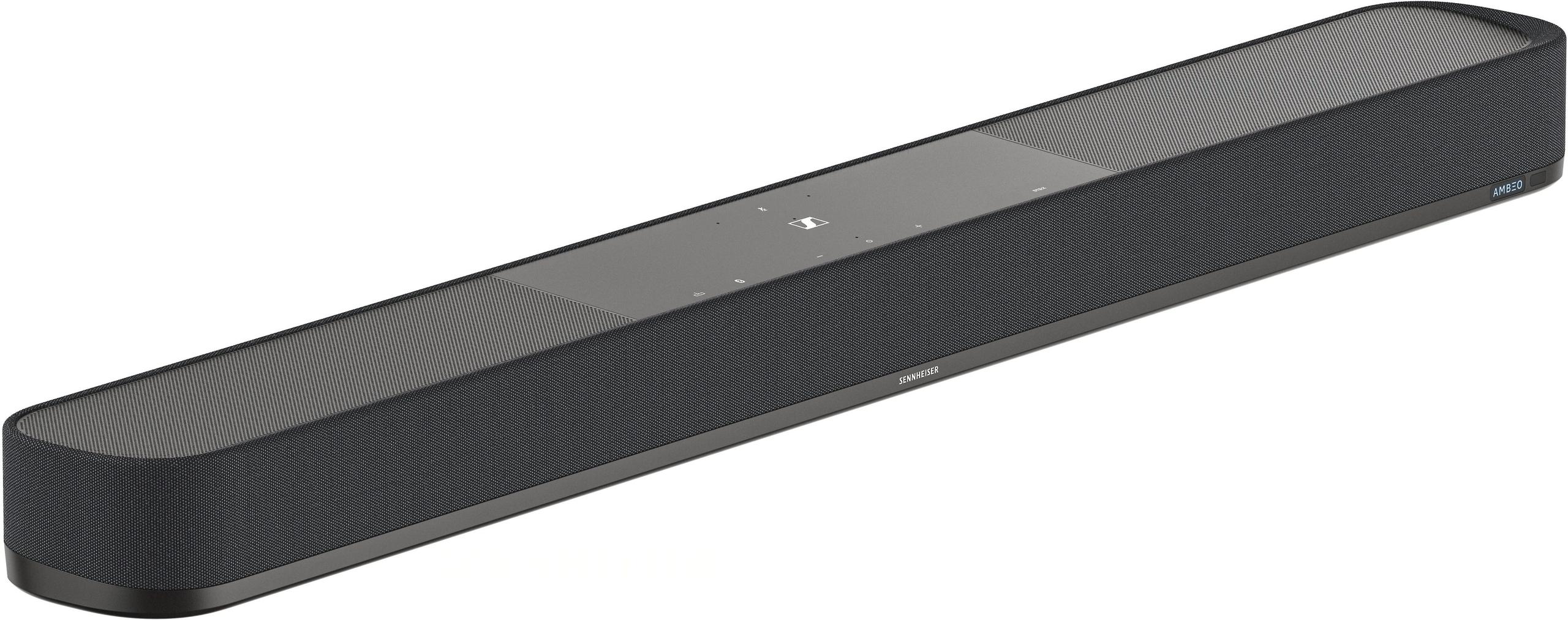
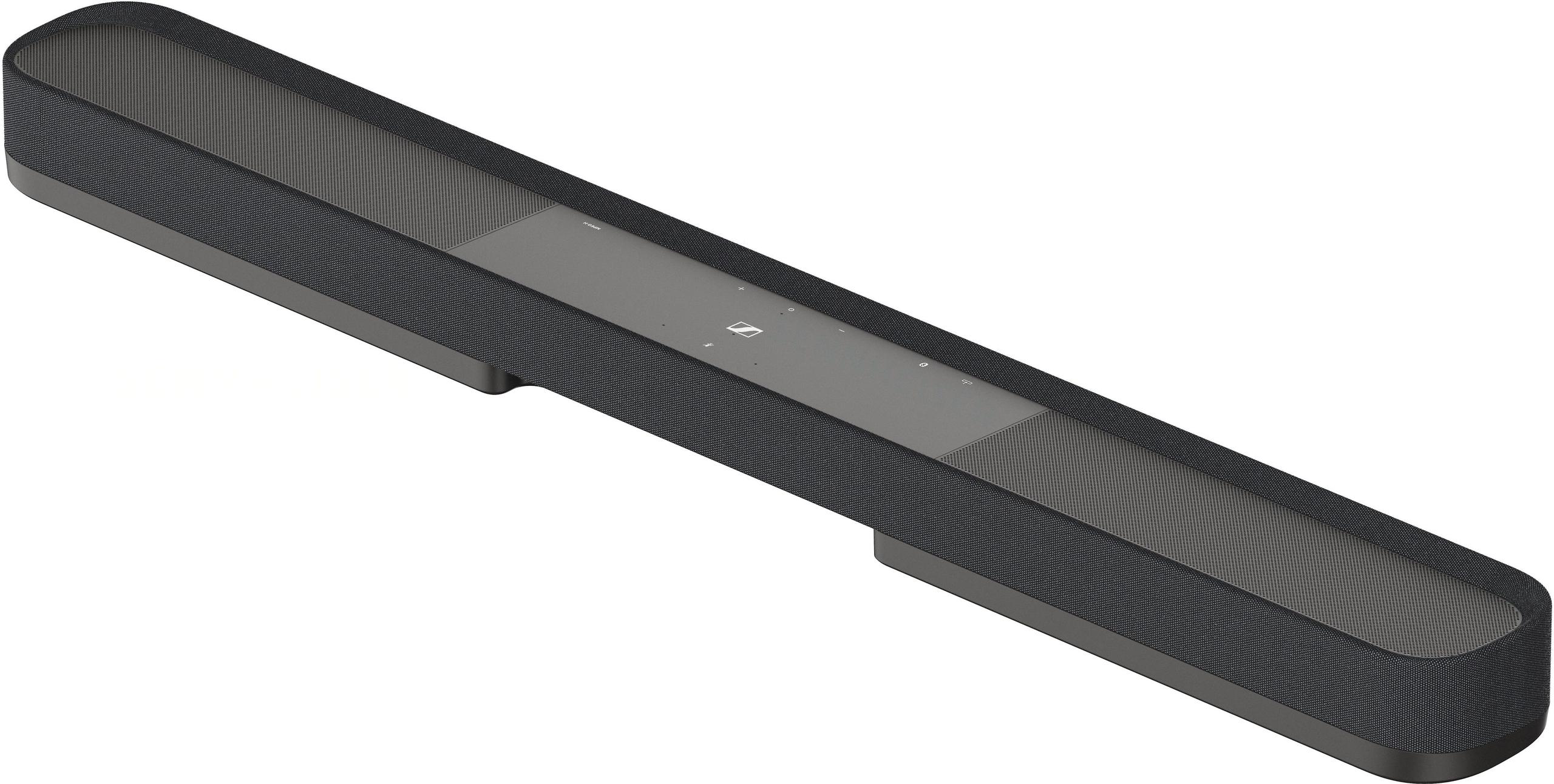
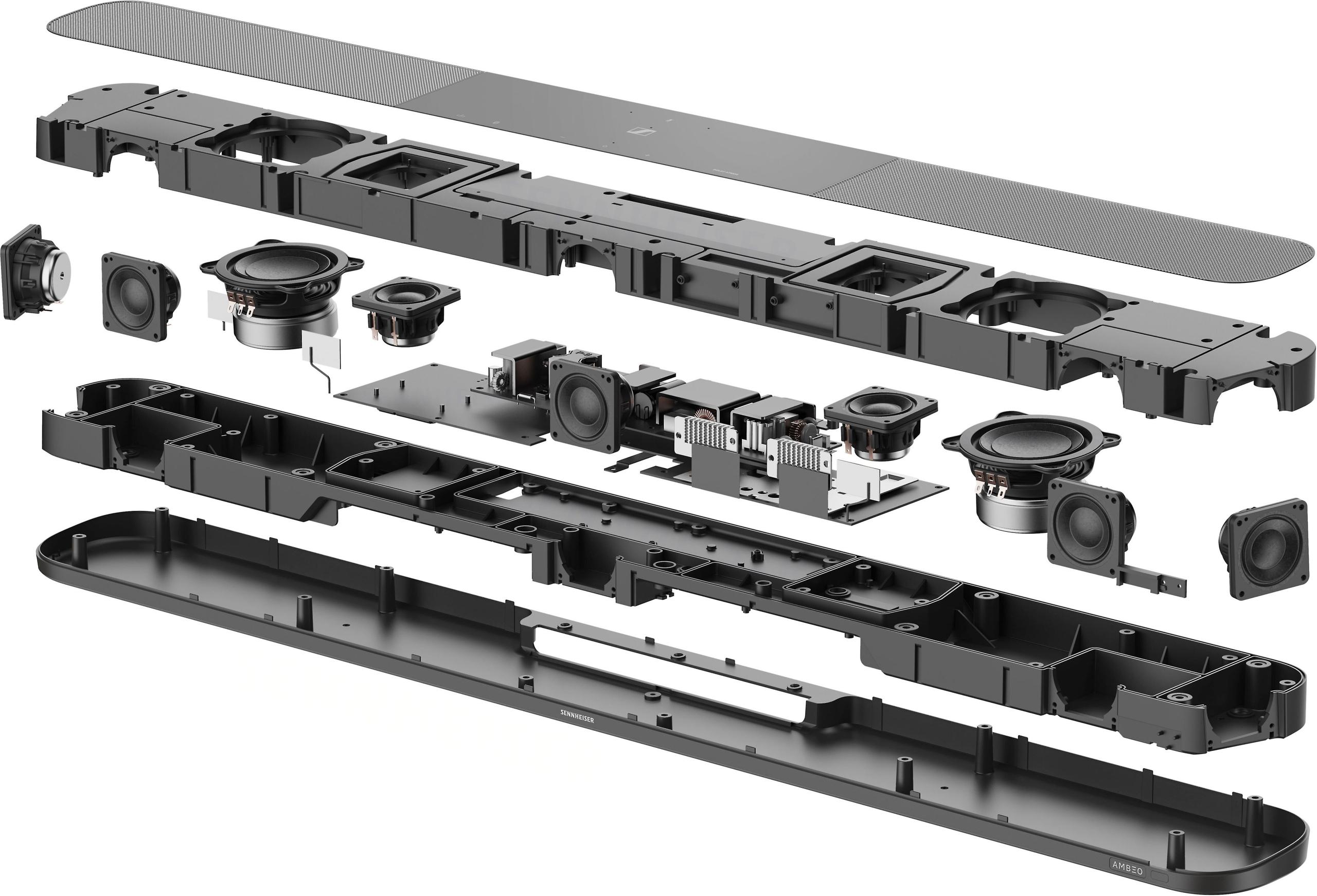
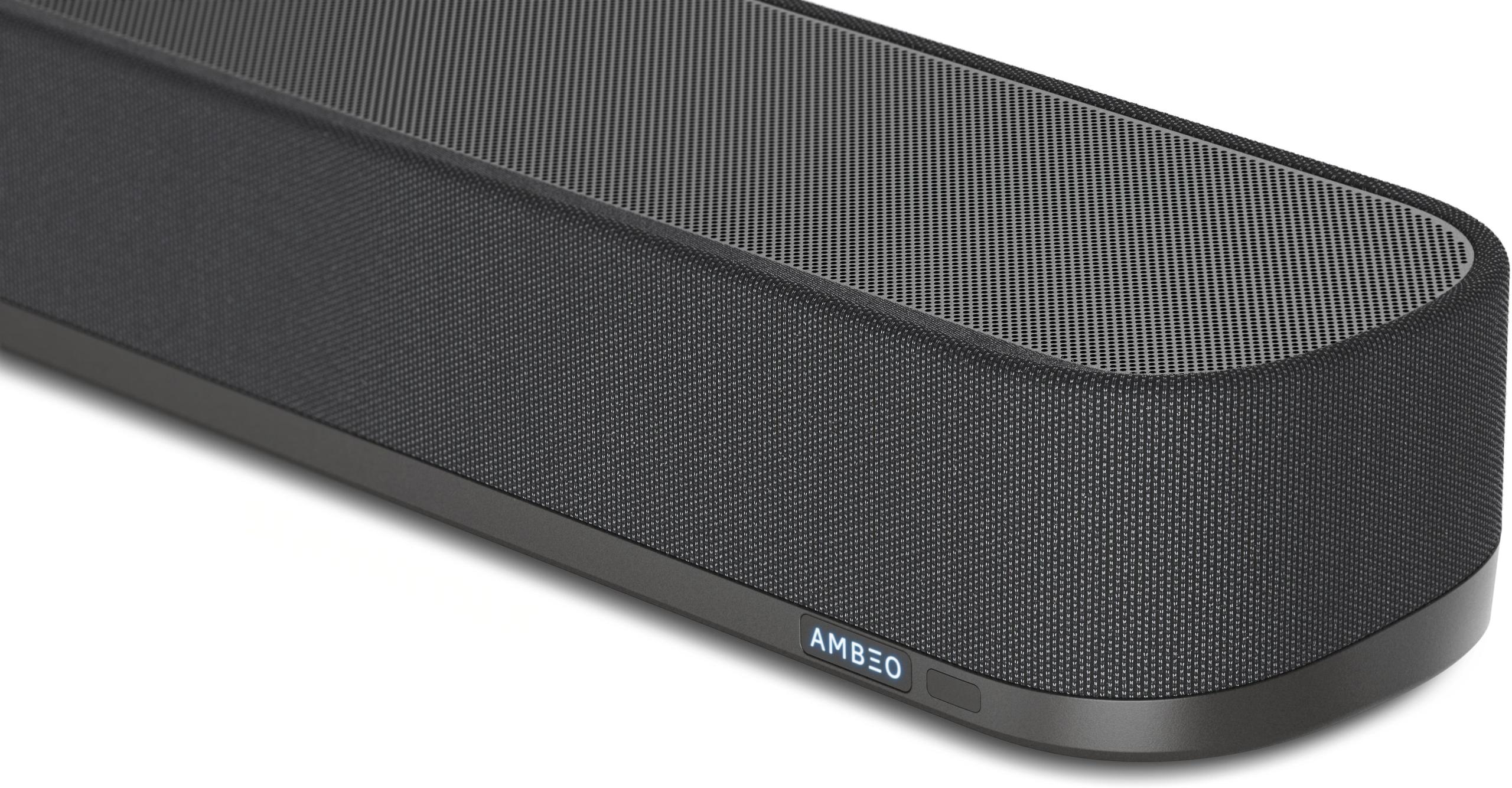
The Sennheiser AMBEO Soundbar, on the other hand, embodies the "everything at once" philosophy. This massive 49.6-inch beast packs 13 individual drivers and uses incredibly sophisticated processing to create a complete 7.1.4 surround sound experience from a single unit. When Sennheiser originally launched this concept, it was revolutionary—the idea that one soundbar could truly replicate the experience of having speakers all around your room.
Here's where things get really interesting. The Sony HT-A3000 takes a more traditional approach with its discrete center channel—that's a dedicated speaker specifically for dialogue and vocals. In my experience testing various soundbars, having that dedicated center channel makes an enormous difference for TV watching. When characters are speaking, their voices come from exactly where they should: the center of your screen, with remarkable clarity.
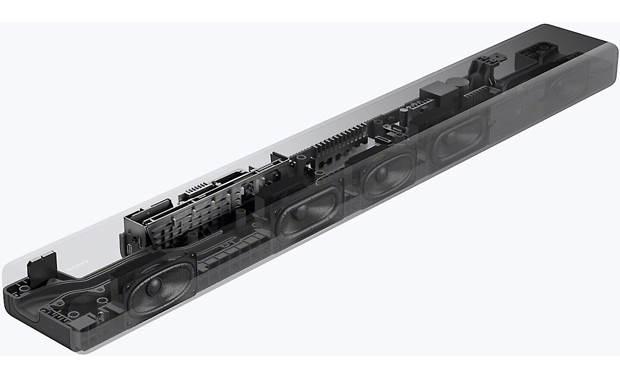
The dual built-in subwoofers in the Sony are particularly impressive. These aren't tiny afterthought drivers—they're substantial 4.375" x 1.8125" units that deliver genuinely room-filling bass. When you're watching an action movie and there's an explosion, you feel that thump in your chest. It's the kind of bass response that makes you forget you're not using a separate subwoofer.
The Sennheiser takes a completely different approach with its 13-driver array. Instead of relying on discrete channels, it uses advanced beamforming—a technique that precisely controls where sound waves go by adjusting the timing and phase of multiple drivers working together. The result is genuinely spooky good. Sounds seem to come from specific locations around and above you, even though all the drivers are in front of you.
I've had moments testing the AMBEO where I've actually turned around to see if there was a speaker behind me during helicopter scenes in movies. The AMBEO 3D technology creates what audio engineers call a "holographic soundstage"—sounds don't just come from left and right, but from specific points in three-dimensional space around you.
Both systems use room calibration, but they approach it very differently. The Sony uses a single microphone system called Sound Field Optimization. You place the included microphone at your listening position, press a button, and the soundbar sends out test tones to measure how sound reflects off your walls, ceiling, and furniture. It's effective and straightforward—most people will get good results without much fuss.
The Sennheiser's calibration system is far more sophisticated, using multiple microphones to create a detailed acoustic map of your room. It analyzes reflection patterns, identifies the materials your walls are made from (hard surfaces like glass versus soft surfaces like curtains), and adjusts its processing accordingly. The trade-off is that the AMBEO is much more finicky about placement. Get it right, and the results are spectacular. Get it wrong, and you might wonder what all the fuss is about.
This is where personal preference really comes into play. The Sony HT-A3000's dual subwoofers deliver what I'd call "crowd-pleasing" bass—punchy, impactful, and immediately satisfying. When you're watching the latest Marvel movie, those superhero landings have real weight and impact. It's the kind of bass that makes you smile the first time you hear it.
The Sennheiser's six long-throw woofers take a more refined approach. They can reach down to 30Hz—that's genuinely deep bass territory—but they prioritize accuracy over impact. The bass is articulate and controlled, never overwhelming other frequencies. In classical music or jazz recordings, you can hear the texture and tone of acoustic bass instruments with remarkable clarity. For movies, it provides excellent foundation, though it might not have quite the visceral punch that some people crave.
Here's where the Sony's philosophy really shines. That initial $429 investment gets you a system that's genuinely satisfying on its own. But if you catch the audio bug (and trust me, it's contagious), you can add Sony's optional wireless subwoofer for $349 and rear speakers for $599. With the rear speakers connected, the system unlocks 360 Spatial Sound Mapping, which creates a more enveloping surround experience.
What's clever about Sony's approach is that you can spread these purchases over time. Maybe you start with just the soundbar, add the subwoofer six months later when you move to a larger room, then add the rears when you really want that full surround experience. The total system cost of $1,377 is still less than the Sennheiser, but you have the flexibility to stop at any point where you're satisfied.
The Sennheiser AMBEO doesn't expand because it doesn't need to—it's already a complete 7.1.4 system. This is both a strength and a limitation. You get everything upfront, but there's no upgrade path if your needs or room change.
Since its 2022 launch, the Sony has received several firmware updates that have improved its virtual surround processing and added support for new streaming formats. Sony's S-Master HX digital amplification has proven particularly effective—it's clean, efficient, and runs cool even during demanding passages.
The Sennheiser's AMBEO technology, developed in partnership with Fraunhofer (the research institute behind MP3), continues to be refined through software updates. The latest versions include improved dialogue enhancement and more precise height channel rendering. What's particularly impressive is how the system uses machine learning to analyze the acoustic signature of your room and continuously optimize its performance.
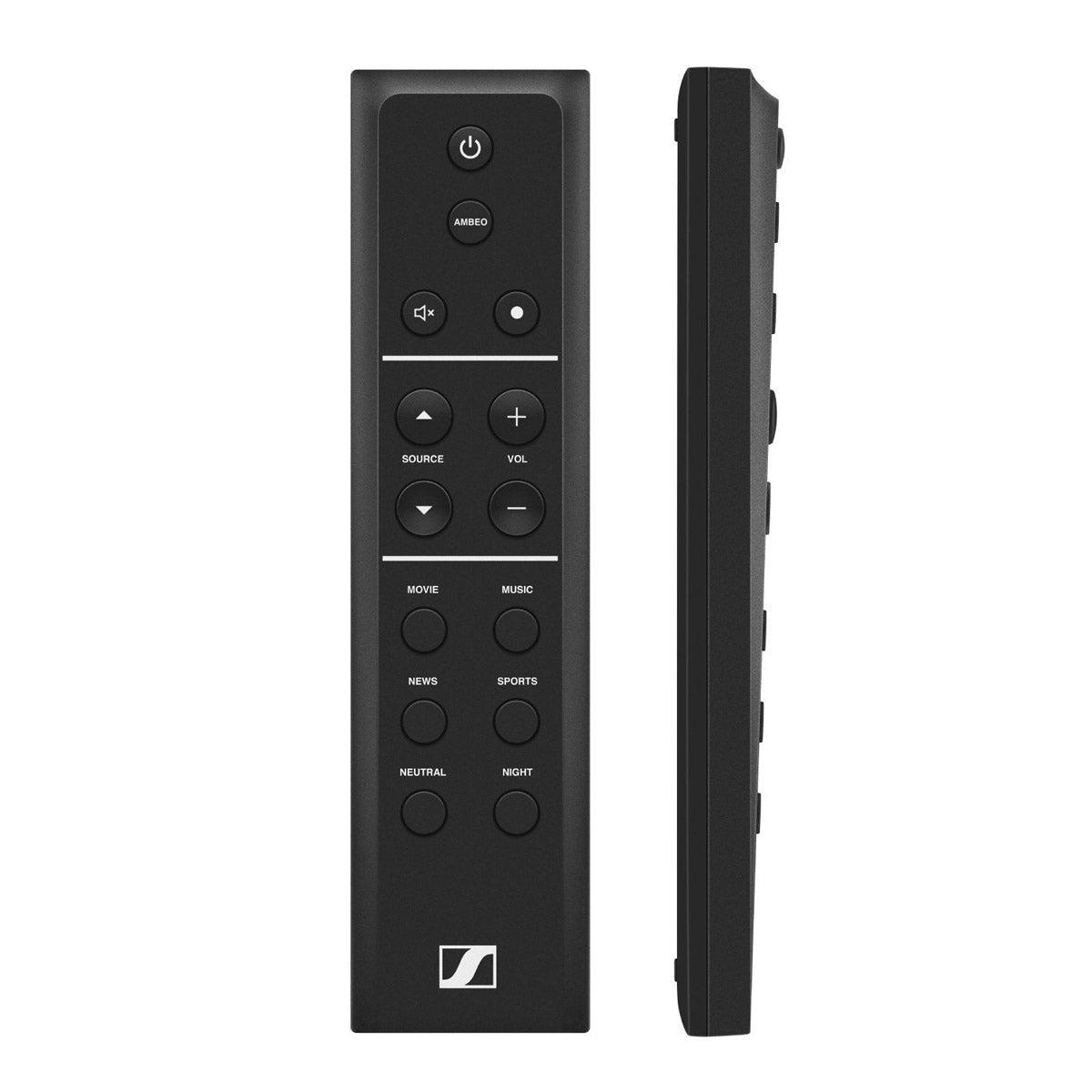
In typical living room scenarios, the Sony HT-A3000 excels with everyday content. That dedicated center channel makes watching the news, sitcoms, or dramas a pleasure—you'll never strain to hear what characters are saying again. The built-in Night Mode is particularly thoughtful, compressing the dynamic range so explosions don't wake the neighbors while keeping dialogue clear.
The Sennheiser truly shines with premium content designed to showcase surround sound. When you're watching a Dolby Atmos movie on Netflix or a nature documentary with immersive audio, the AMBEO creates an almost mystical experience where sounds seem to move through your room with precision and realism.
Here the differences become even more pronounced. The Sony sounds good with music—clear, engaging, and with that satisfying bass response—but it's clearly optimized for TV and movie content. The Sennheiser AMBEO, however, reveals layers of detail in music recordings that you might never have noticed. Its 360 Reality Audio support and advanced streaming capabilities make it genuinely compelling for serious music listening.
If you're setting up a dedicated home theater room, the choice becomes more complex. The Sony's expandability means you can create a true surround system that rivals traditional speakers, especially with the addition of rear channels. The modular approach also means you can optimize speaker placement for your specific room layout.
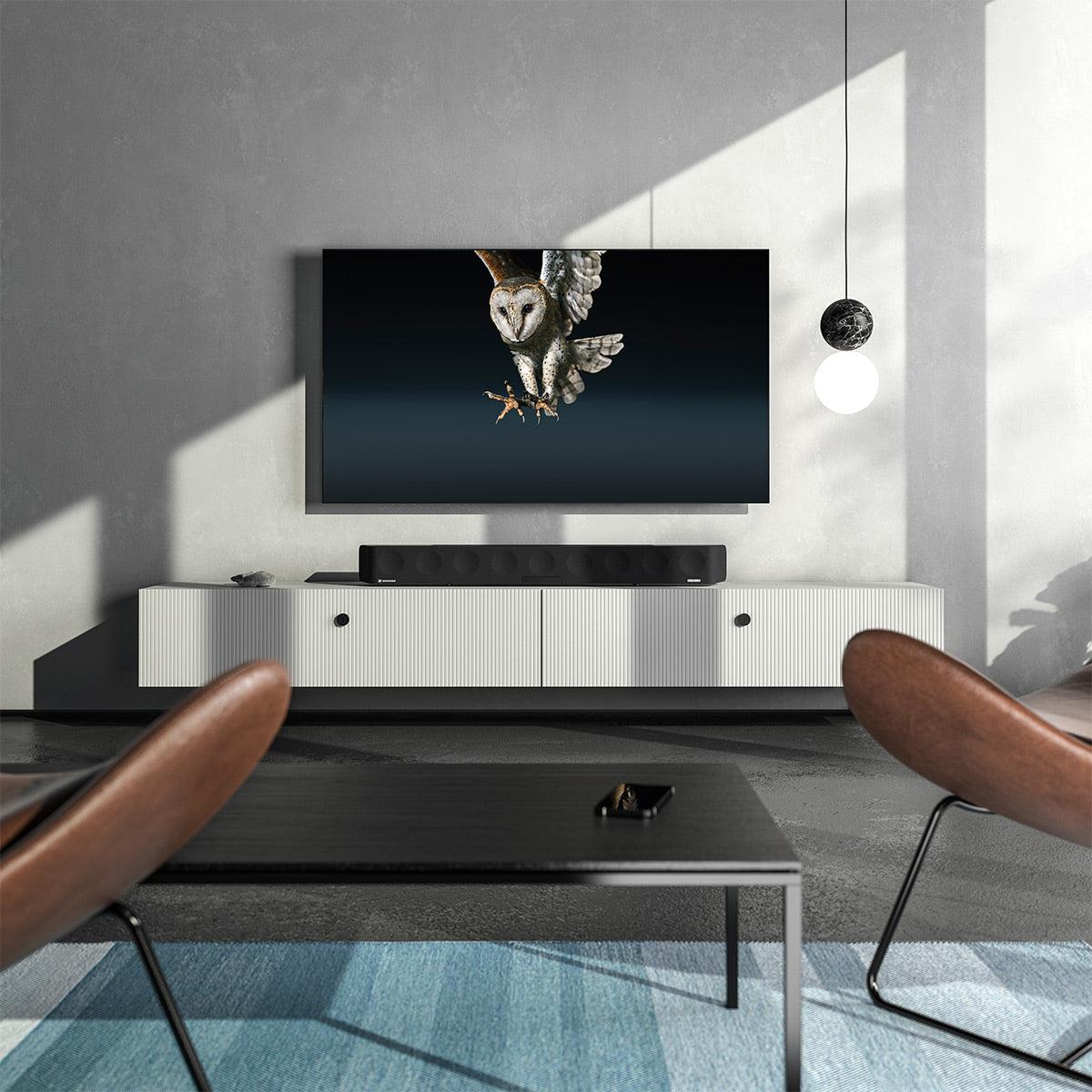
The Sennheiser requires more careful consideration of room acoustics and placement, but when properly set up in a good room, it can create a more seamless, enveloping experience than many traditional speaker systems. The lack of visible rear speakers is a significant aesthetic advantage for many people.
At $429, the Sony HT-A3000 represents exceptional value in the premium soundbar category. You get genuinely high-quality sound, solid build quality, and the option to expand later. Even if you never buy additional components, you're getting performance that would have cost significantly more just a few years ago.
The $1,999 Sennheiser AMBEO asks a much bigger upfront investment, but you're paying for cutting-edge technology and a complete, no-compromises experience. When I consider the engineering that goes into creating convincing 7.1.4 surround from a single bar, the price starts to make more sense.
Choose the Sony HT-A3000 if you want immediate satisfaction with room to grow. It's perfect for most living rooms, offers outstanding dialogue clarity, and gives you flexibility for the future. The expandability means you're never locked into your initial decision—you can always add more components if your enthusiasm (or budget) grows.
Choose the Sennheiser AMBEO if you want the most advanced soundbar technology available and have the budget for a premium experience. It's ideal for larger rooms with good acoustics, and if you value the aesthetic of a single-unit solution, it's hard to beat.
The bottom line? Both represent excellent approaches to premium audio, just with different philosophies. The Sony offers flexibility and exceptional value, while the Sennheiser delivers cutting-edge technology and uncompromising performance. Your choice ultimately depends on your budget, room, and how you prioritize immediate satisfaction versus long-term flexibility.
| Sony HT-A3000 | Sennheiser AMBEO Soundbar |
|---|---|
| Price - Major factor in deciding between these tiers | |
| $429 (excellent value for expandable system) | $1,999 (premium pricing for flagship technology) |
| Channel Configuration - Determines surround sound capability | |
| 3.1 channels (expandable to 5.1.2 with optional speakers) | 7.1.4 channels (complete surround from single unit) |
| Total Drivers - More drivers typically mean better sound separation | |
| 5 drivers including dual built-in subwoofers | 13 high-end drivers with dedicated amplifiers |
| Power Output - Affects maximum volume and dynamic range | |
| 250W total (S-Master HX digital amplification) | 500W total (significantly more headroom) |
| Bass Performance - Critical for movie impact and music enjoyment | |
| Dual 4.375" subwoofers (punchy, room-filling bass) | 6 long-throw woofers to 30Hz (refined, deep extension) |
| Immersive Audio Technology - Key differentiator for 3D sound | |
| Vertical Surround Engine + S-Force PRO (virtual height) | AMBEO 3D + advanced beamforming (true spatial audio) |
| Room Calibration - Essential for optimal sound in your space | |
| Single-mic Sound Field Optimization (simple, effective) | Advanced multi-microphone system (sophisticated adaptation) |
| Expandability - Important for future upgrades | |
| Optional subwoofer ($349) and rears ($599) available | No expansion options (complete system as-is) |
| Connectivity - Affects compatibility with devices and streaming | |
| HDMI eARC, optical, Bluetooth 5.0 LDAC, Wi-Fi streaming | HDMI eARC, optical, Bluetooth 4.0, advanced streaming |
| Physical Size - Consider your TV stand and room aesthetics | |
| 37.4" x 2.5" x 5.0" (fits most TV stands) | 49.6" x 5.3" x 6.7" (requires substantial space) |
| Best For - Target user and use case | |
| Budget-conscious buyers wanting upgrade flexibility | Premium experience seekers with large, dedicated spaces |
The Sony HT-A3000 at $429 offers exceptional value with genuine 3.1-channel performance and expandability options. The Sennheiser AMBEO at $1,999 provides premium technology but costs nearly five times more. For most buyers, the Sony delivers better performance per dollar, especially considering you can add components later if desired.
The Sony HT-A3000 uses a traditional 3.1-channel design with discrete speakers and built-in subwoofers that you can expand over time. The Sennheiser AMBEO employs advanced virtualization technology with 13 drivers to create a complete 7.1.4 surround experience from a single bar without any additional components needed.
The Sony HT-A3000 excels at dialogue clarity thanks to its dedicated center channel speaker. This discrete center channel ensures voices come directly from the screen with exceptional clarity. While the Sennheiser AMBEO uses virtualization for center channel audio, the Sony's physical center speaker provides more consistent dialogue performance across different listening positions.
The Sony HT-A3000 includes dual built-in subwoofers that provide satisfying bass for most rooms, though you can add Sony's optional wireless subwoofer for $349. The Sennheiser AMBEO has six built-in woofers that reach down to 30Hz but may lack the physical impact some users want for action movies - though no separate subwoofer options are available.
The Sony HT-A3000 is ideal for small to medium rooms due to its compact 37.4-inch width and effective virtual surround processing. The Sennheiser AMBEO at nearly 50 inches wide requires more space and relies on room reflections for optimal performance, making it better suited for larger rooms with proper acoustics.
Yes, the Sony HT-A3000 can be expanded with optional rear speakers ($599) and a wireless subwoofer ($349), growing from 3.1 to 5.1.2 channels. The Sennheiser AMBEO cannot be expanded as it's designed as a complete all-in-one system - you get the full 7.1.4 experience immediately but no upgrade path.
For home theater use, the Sennheiser AMBEO provides more convincing surround effects with sounds appearing to come from all around you, making it exceptional for Dolby Atmos movies. The Sony HT-A3000 offers excellent movie performance with clear dialogue and impactful bass, plus the option to add rear speakers for a more traditional surround setup.
The Sony HT-A3000 delivers clear, engaging music with solid bass but is optimized primarily for TV content. The Sennheiser AMBEO excels at music reproduction with superior detail retrieval, spatial imaging, and support for high-resolution audio formats like 360 Reality Audio, making it more suitable for serious music listening.
The Sony HT-A3000 offers straightforward setup with simple room calibration using one microphone. The Sennheiser AMBEO requires more careful placement and uses advanced multi-microphone calibration that takes longer but provides more precise room optimization - it's more complex but potentially more rewarding when done correctly.
Yes, both the Sony HT-A3000 and Sennheiser AMBEO support Dolby Atmos and DTS:X. The Sony uses virtual height processing to simulate overhead effects, while the Sennheiser uses upward-firing drivers and advanced beamforming to create more convincing height effects that seem to come from above your listening position.
For large living rooms, the Sennheiser AMBEO is better suited with its 500W power output, 49.6-inch width, and room-filling 13-driver array. The Sony HT-A3000 works well in medium-sized spaces but may struggle to fill very large rooms unless you add the optional rear speakers and subwoofer components.
Both the Sony HT-A3000 and Sennheiser AMBEO work with any TV brand through HDMI eARC/ARC or optical connections. However, the Sony integrates particularly well with Sony BRAVIA TVs for seamless control and optimized audio processing, while the Sennheiser provides universal compatibility with premium performance regardless of TV brand.
We've done our best to create useful and informative comparisons to help you decide what product to buy. Our research uses advanced automated methods to create this comparison and perfection is not possible - please contact us for corrections or questions. These are the sites we've researched in the creation of this article: rtings.com - electronics.sony.com - crutchfield.com - store.sony.com.au - digitaltrends.com - videoandaudiocenter.com - abt.com - sony.com - merlinstv.com - crutchfield.com - youtube.com - bestbuy.com - rtings.com - techradar.com - audioxpress.com - whathifi.com - upscaleaudio.com - soundstagesimplifi.com - global.sennheiser-hearing.com - sennheiser-hearing.com - audioadvice.com - abt.com - moon-audio.com

Privacy Policy
Terms and Conditions - Affiliate Policy
Home Security
© Copyright 2008-2026.
11816 Inwood Rd #1211, Dallas, TX 75244