

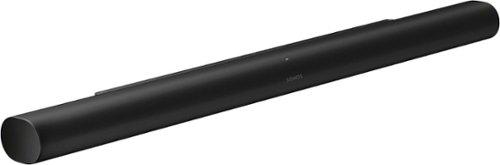
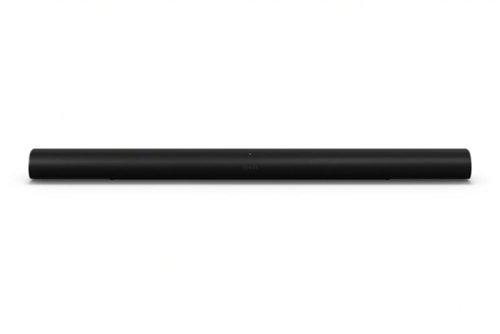
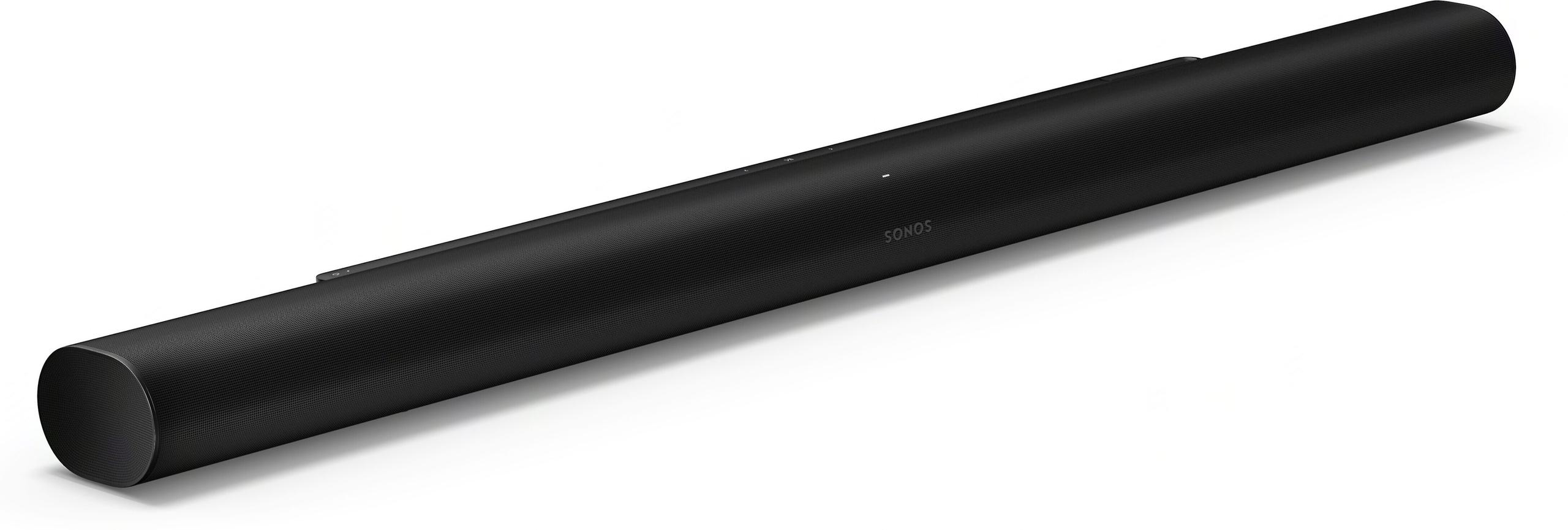
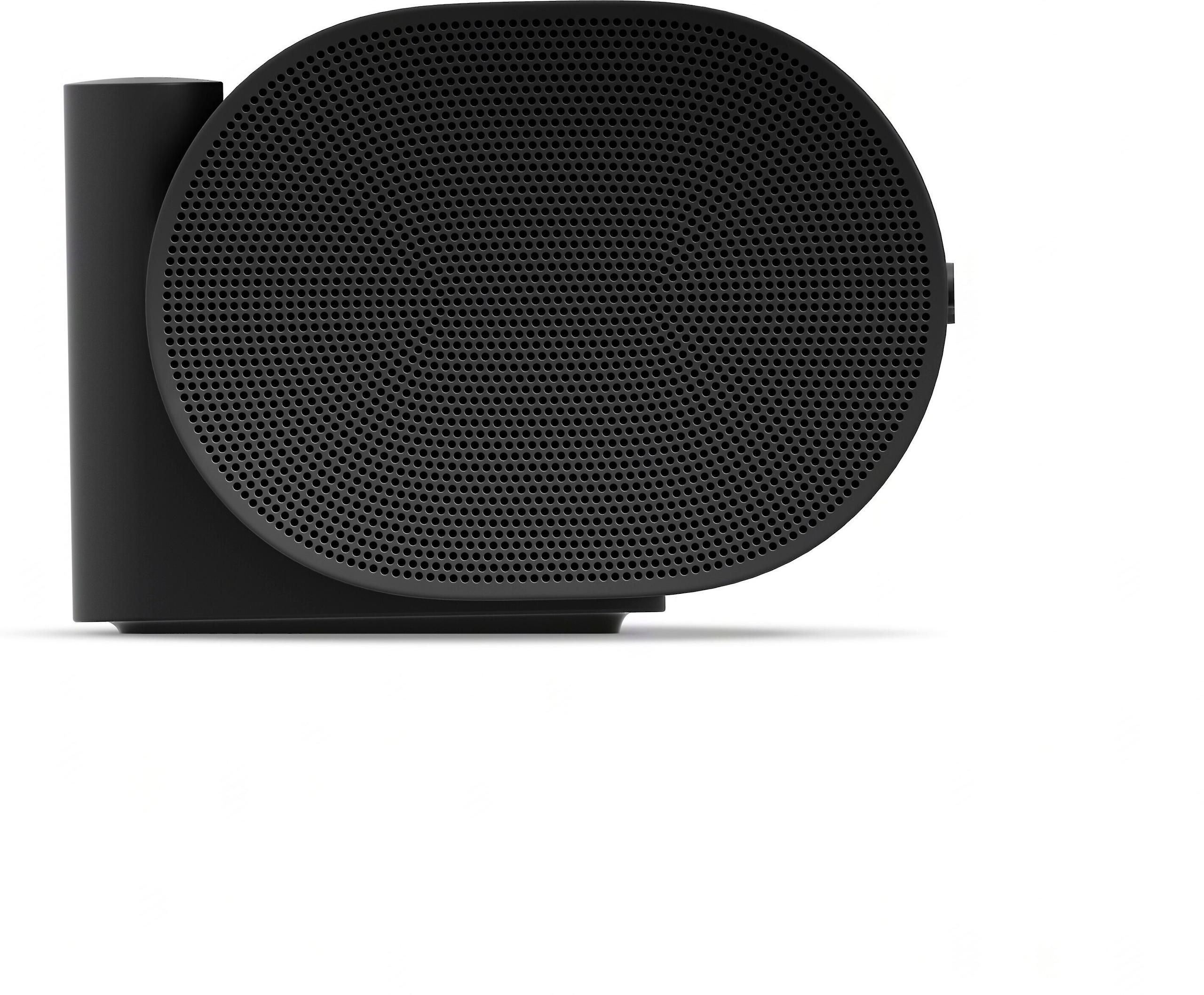
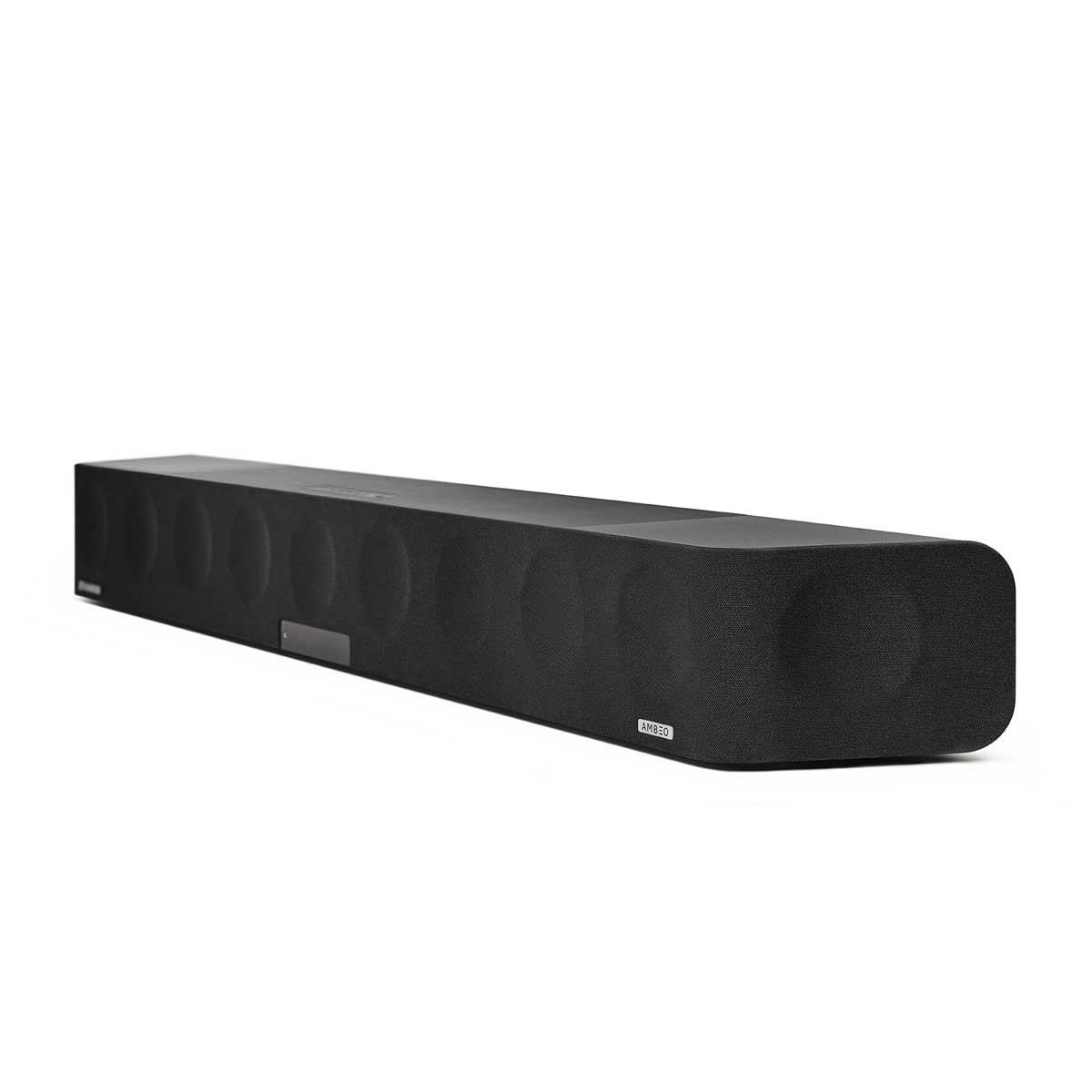
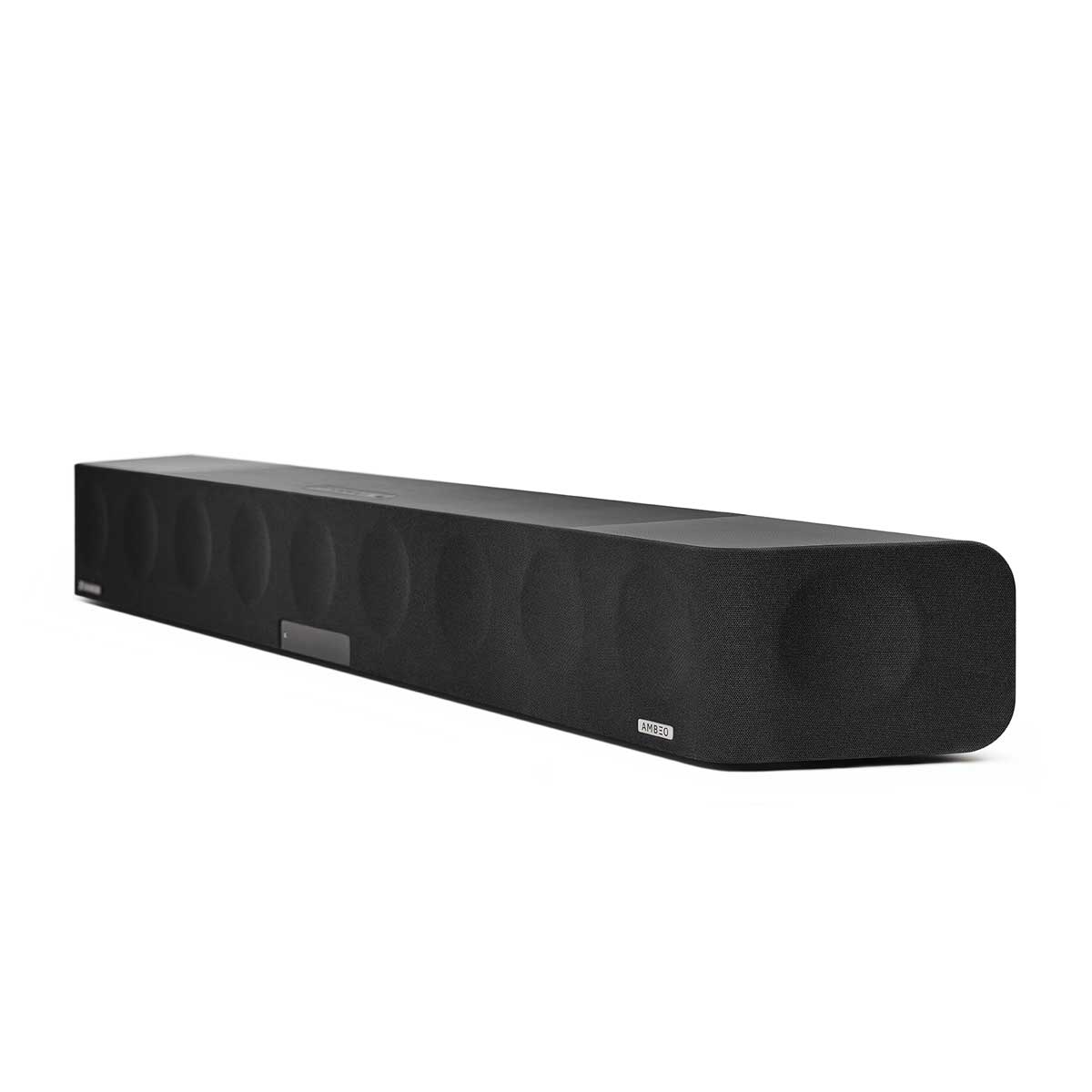
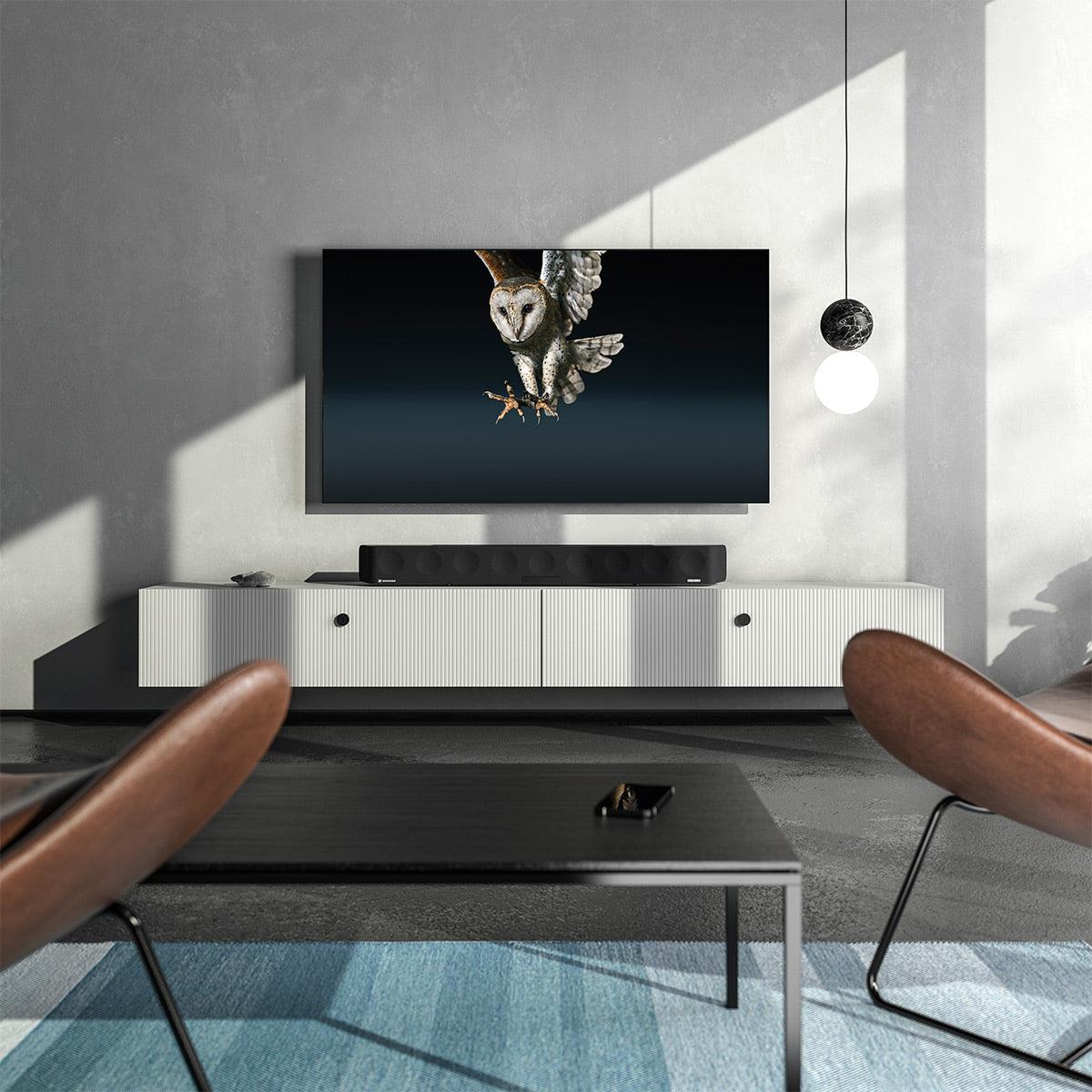
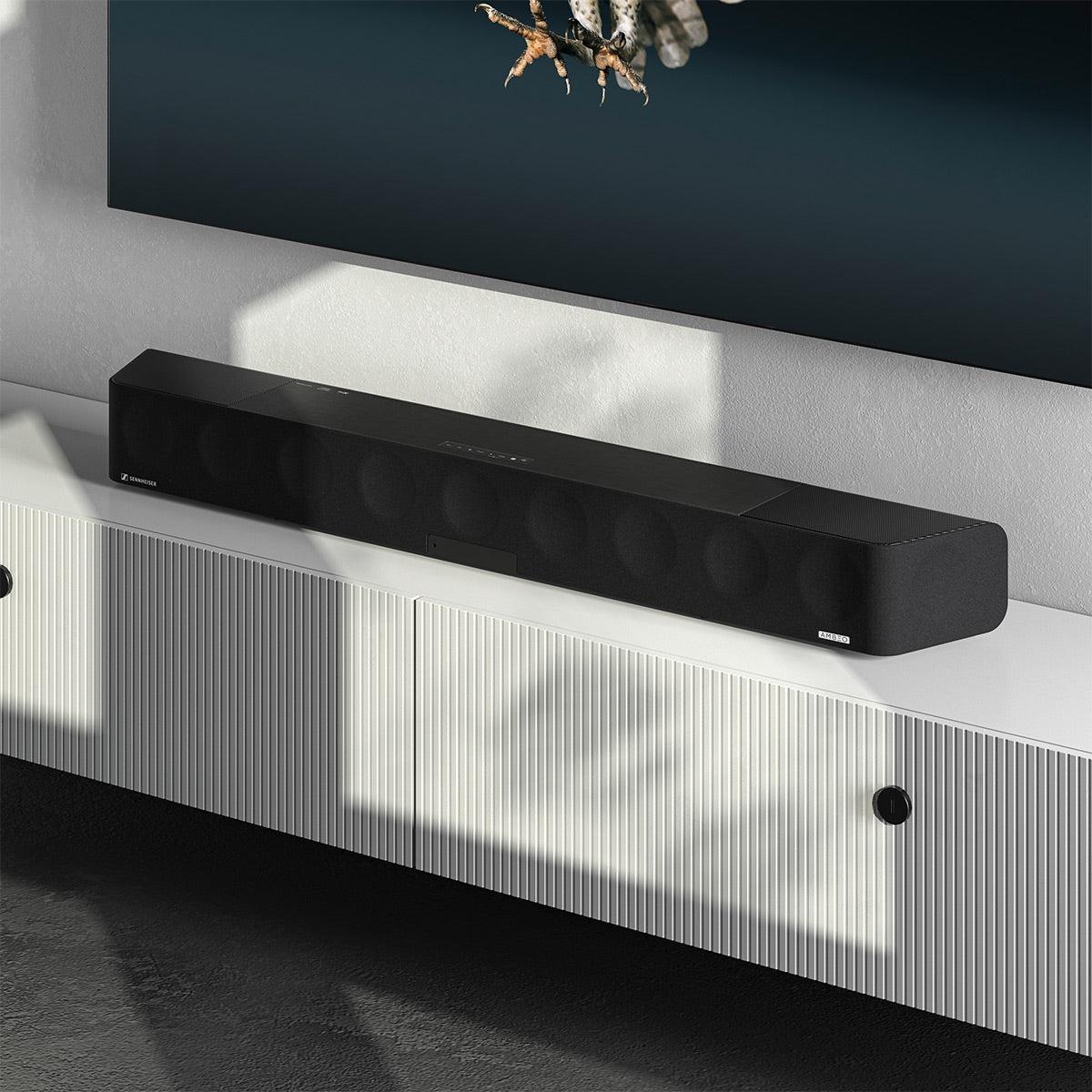
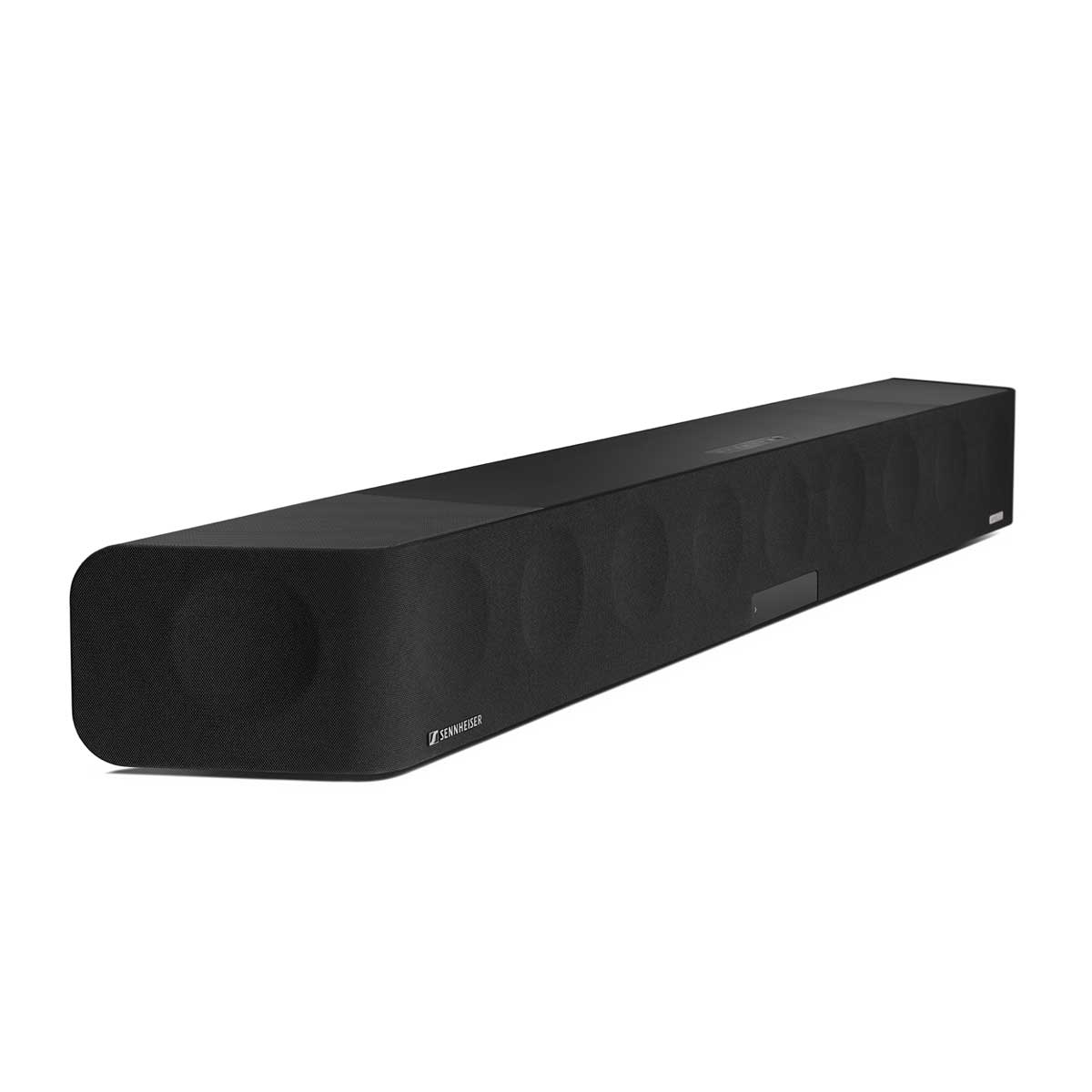
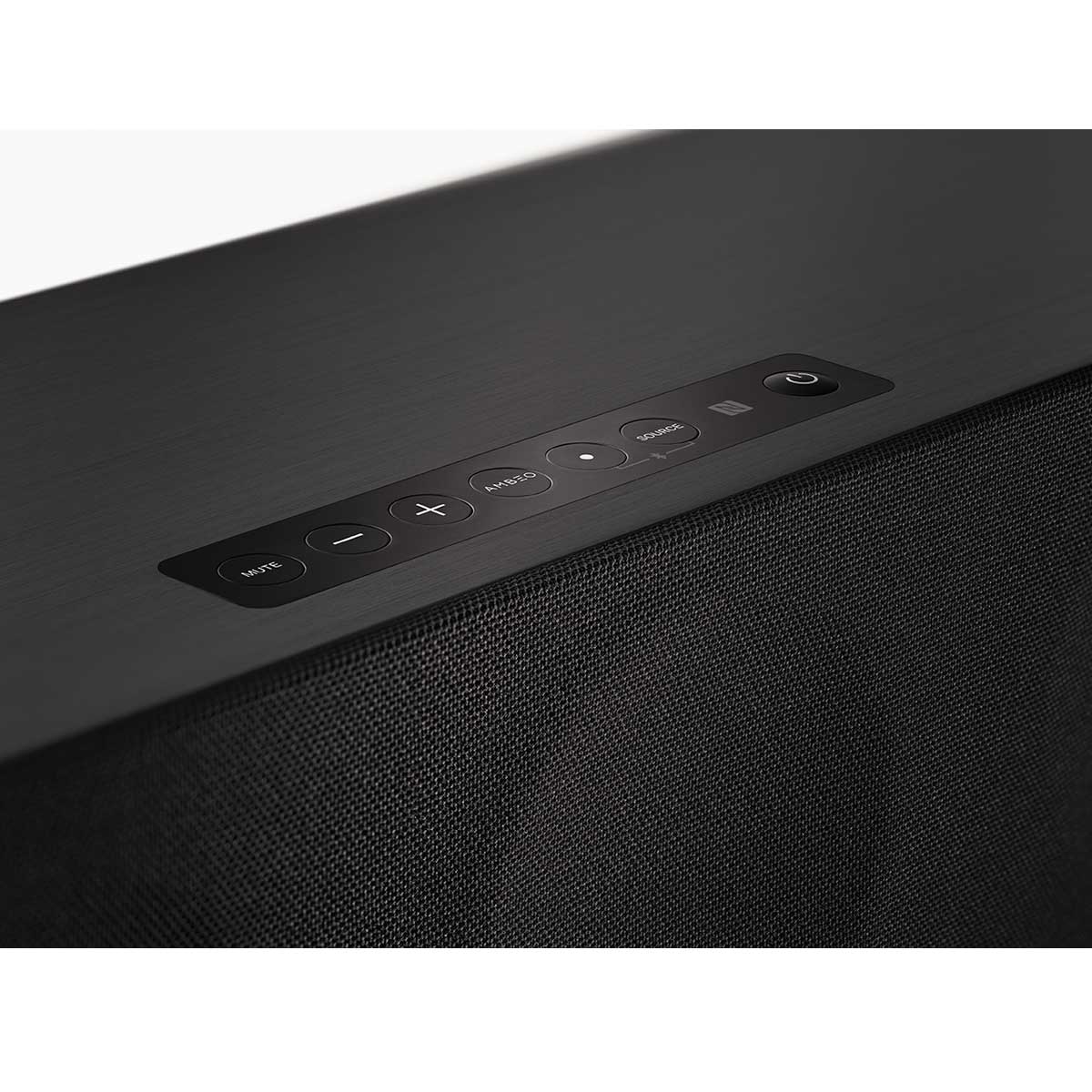
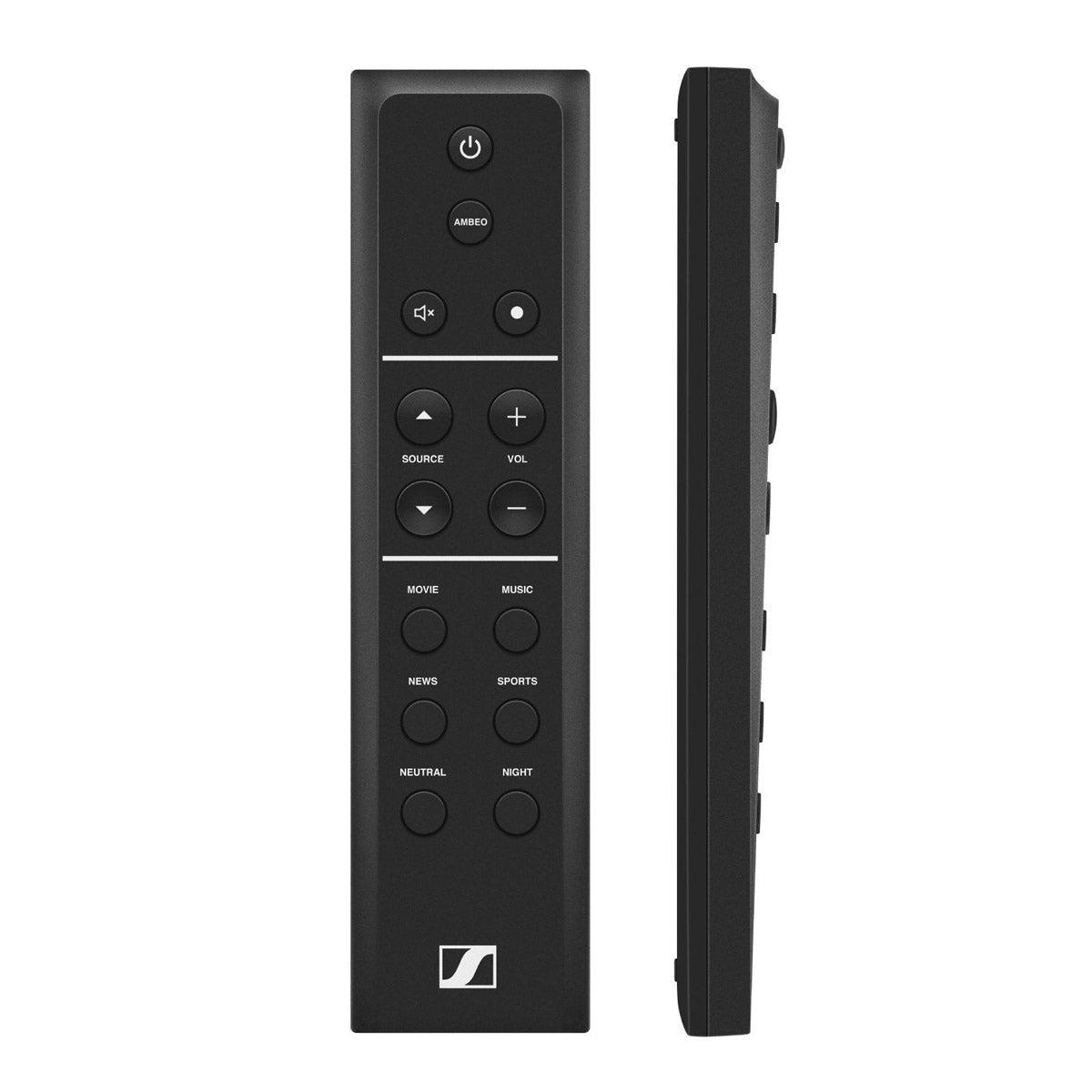
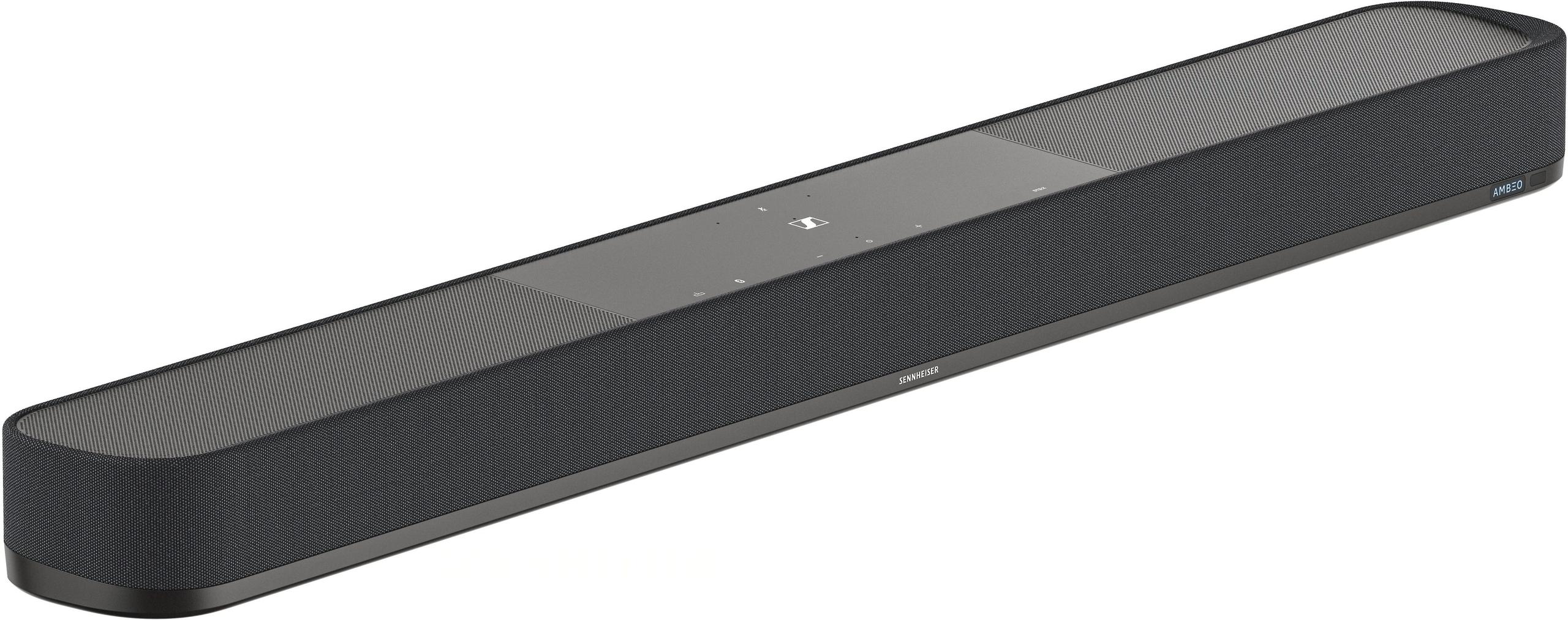
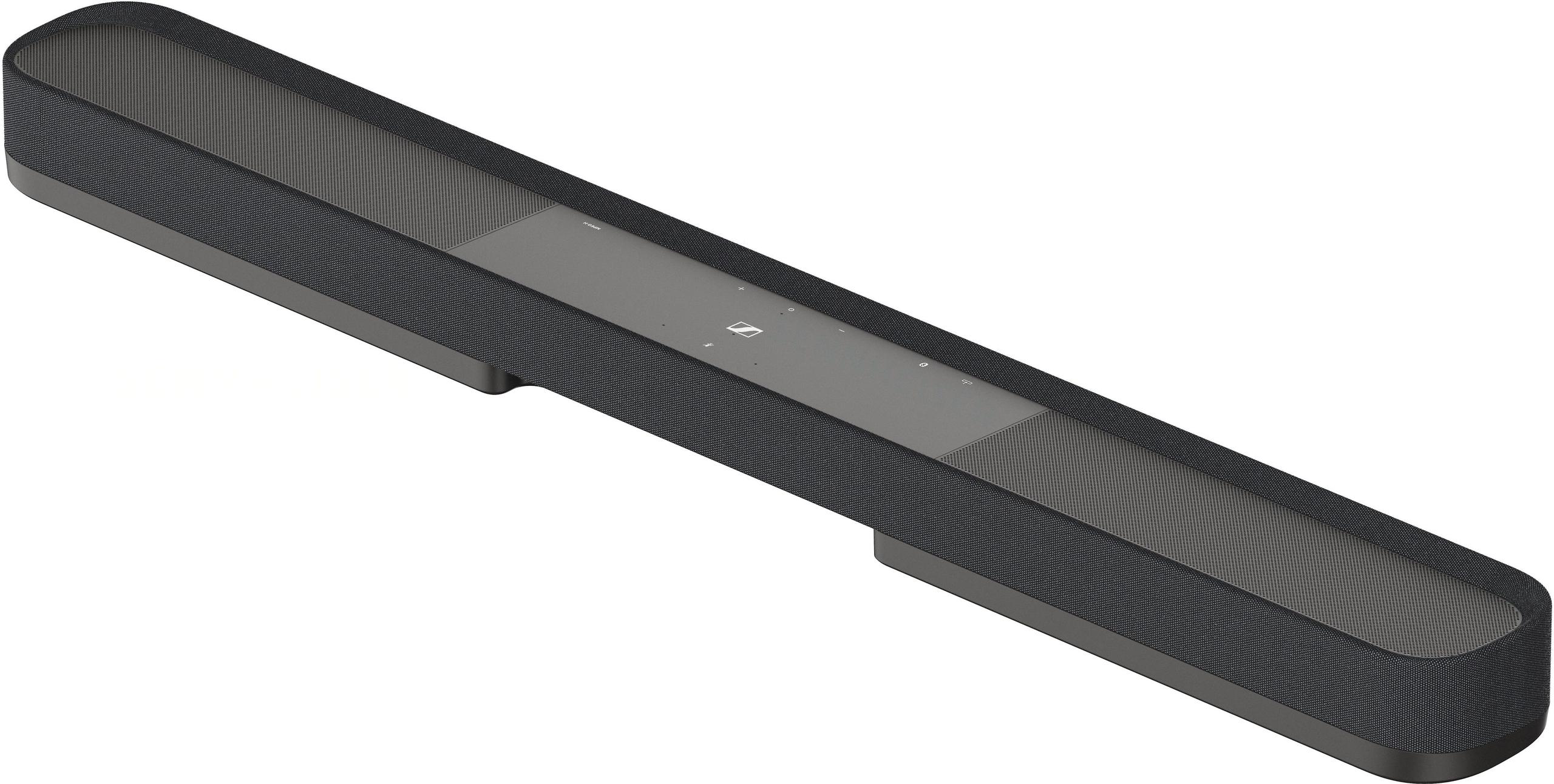

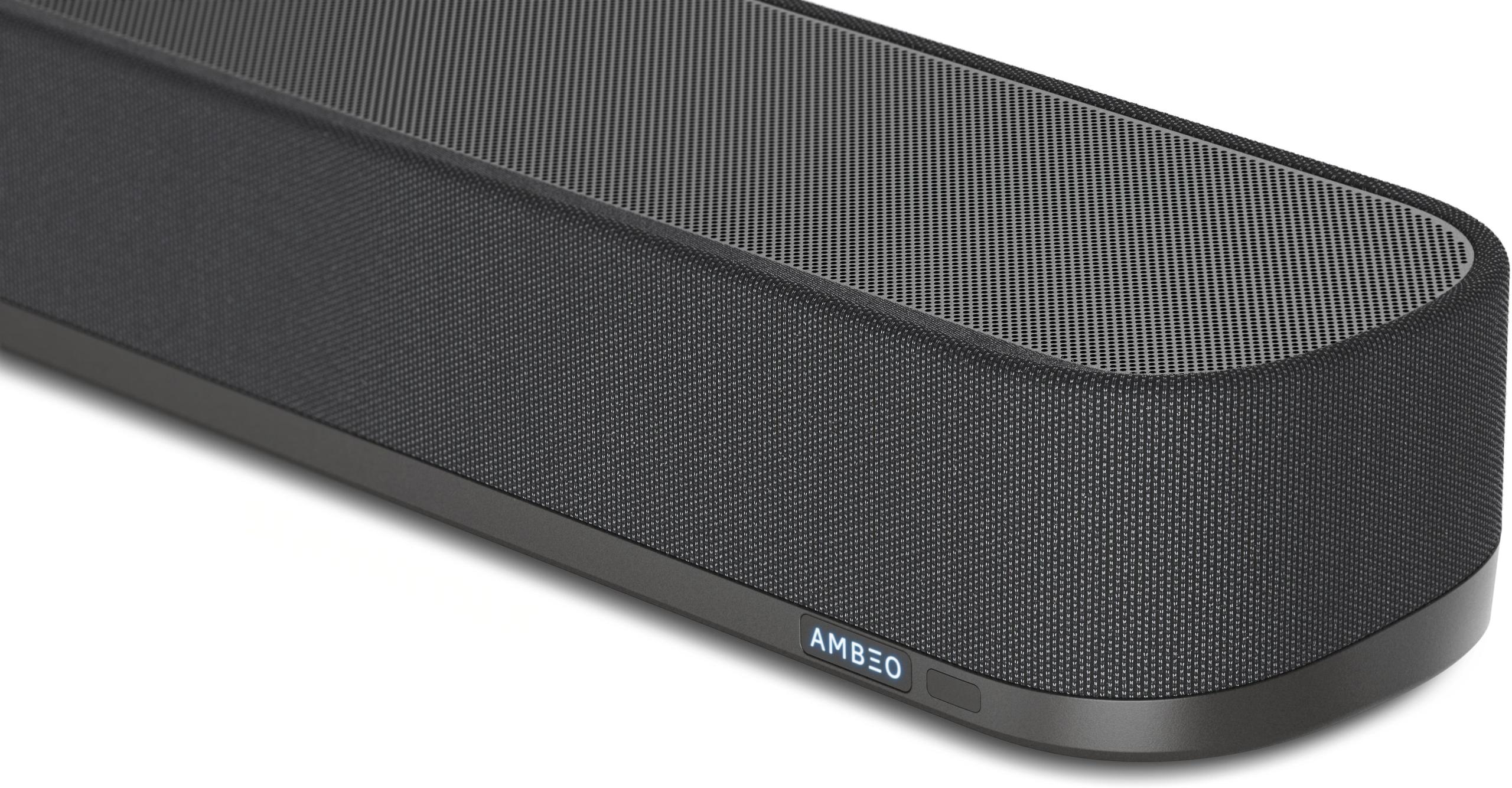

Finding the perfect soundbar for your home theater can feel overwhelming, especially when you're looking at premium options that cost more than many people's entire TV setup. Today, I want to walk you through two of the most impressive soundbars on the market: the Sonos Arc Ultra ($999) and the Sennheiser AMBEO Soundbar ($1,499). Both promise to transform your living room into a cinematic experience, but they take very different approaches to get there.
Before diving into the specifics, let's talk about what separates premium soundbars from their budget counterparts. At this price level, you're not just getting louder sound – you're investing in sophisticated audio processing that can create the illusion of speakers all around your room. This technology, called virtualization, uses precise timing and digital signal processing (DSP) to bounce sound off your walls and ceiling, tricking your brain into hearing effects coming from directions where no speakers actually exist.
The holy grail for modern soundbars is Dolby Atmos support. Unlike traditional surround sound that moves audio left to right and front to back, Dolby Atmos adds a height dimension. This means you can hear helicopters flying overhead, rain falling from above, or debris crashing down around you. It's the difference between watching a movie and feeling like you're inside it.
When evaluating premium soundbars, I focus on five key areas: how well they create that immersive bubble of sound, whether their built-in bass can replace a separate subwoofer, how they adapt to your specific room, what options you have for future upgrades, and ultimately, whether the performance justifies the price.
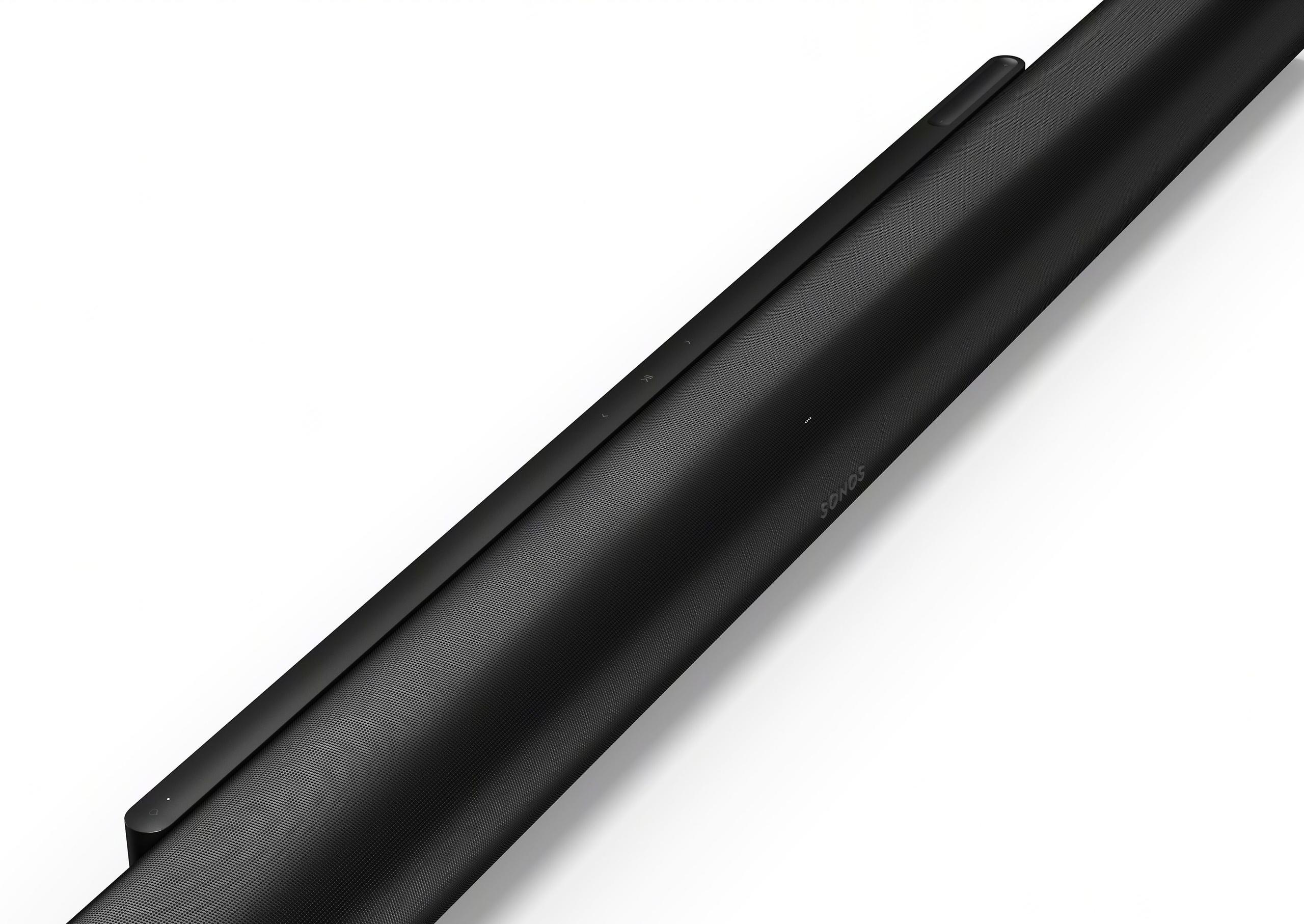
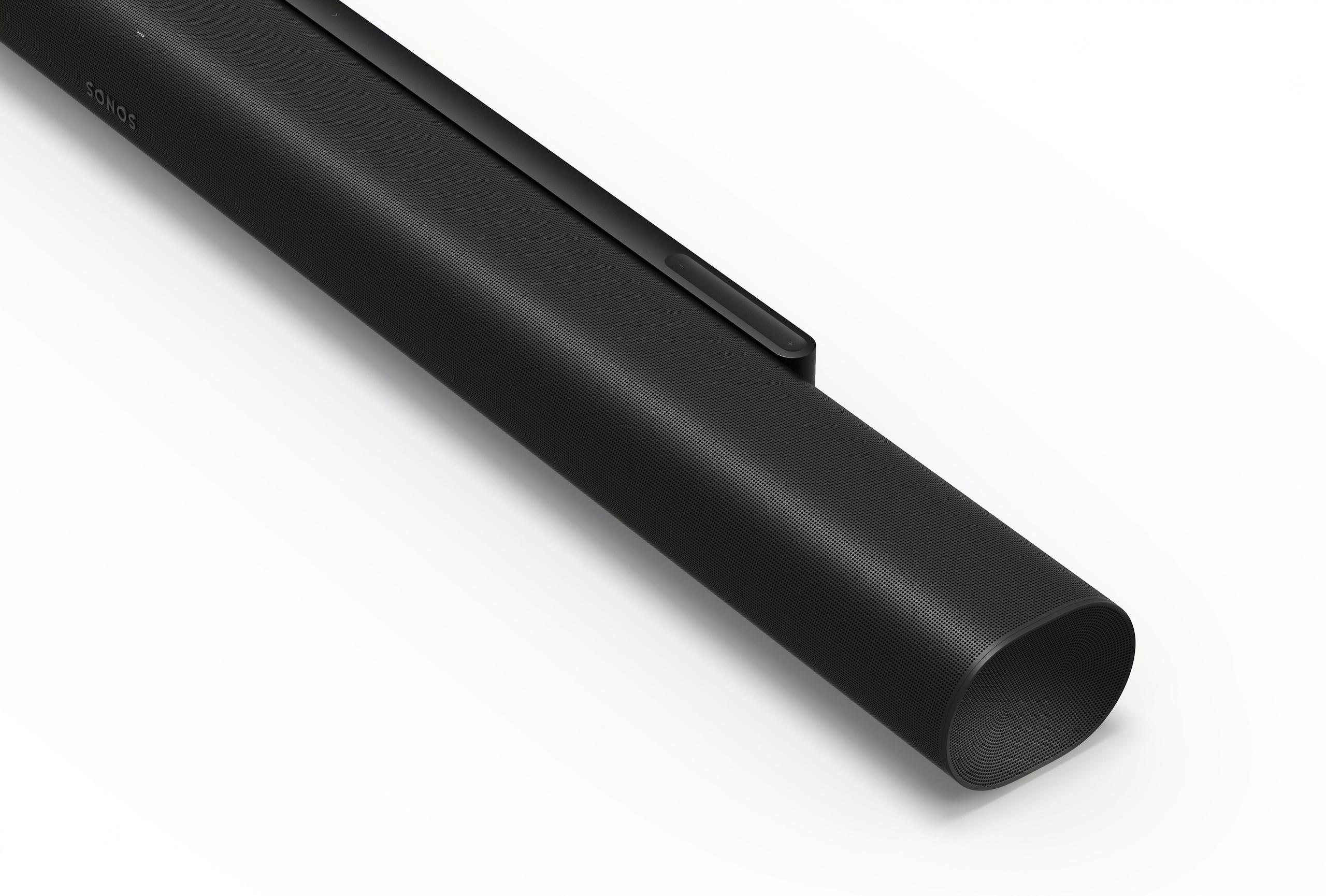
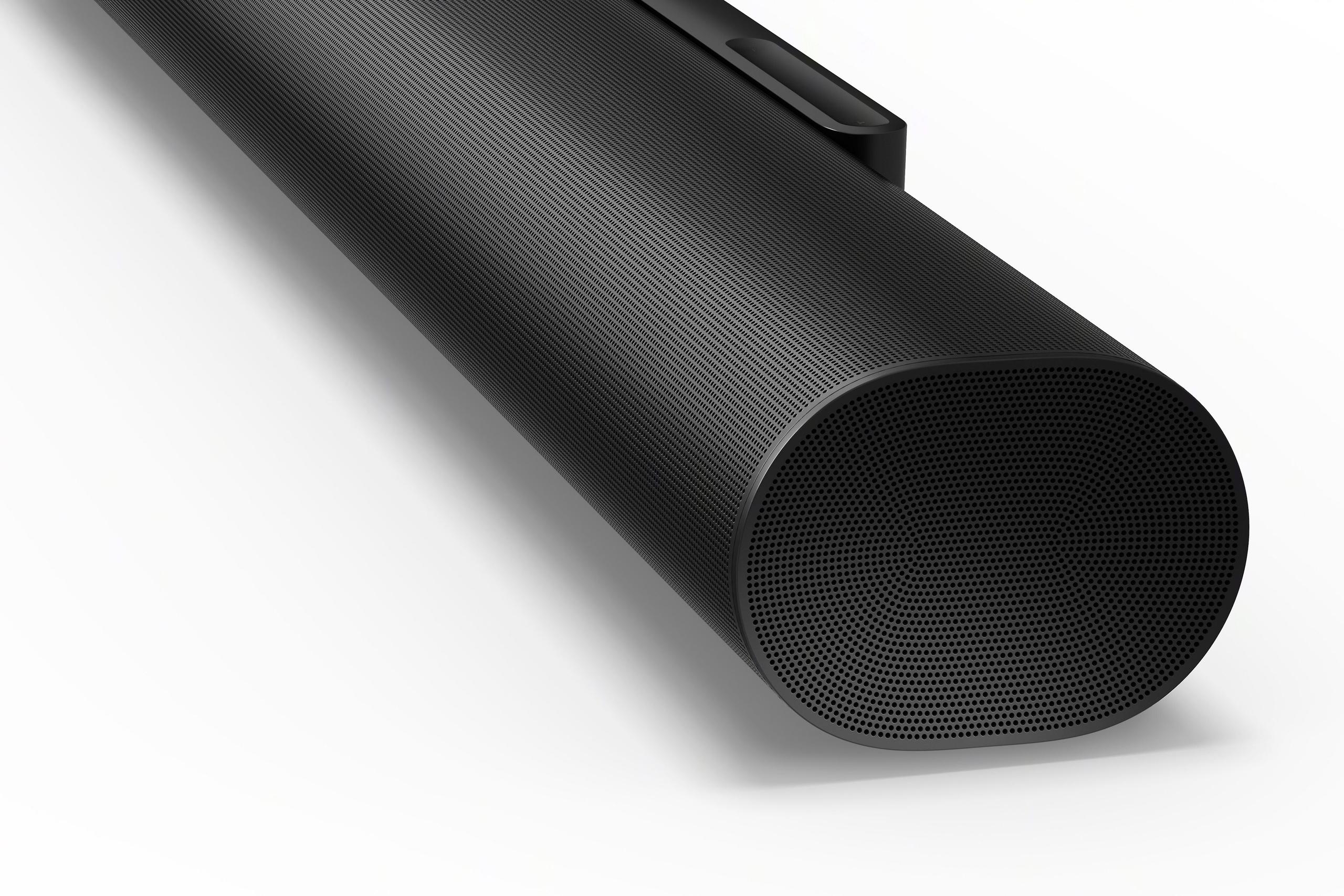
The fundamental difference between these soundbars comes down to philosophy. The Sonos Arc Ultra, released in late 2024, represents the modular approach. Sonos designed it as the foundation of a larger ecosystem where you can add wireless subwoofers and rear speakers over time. It's like buying a starter home with room to expand.
The Sennheiser AMBEO Soundbar, refreshed for 2024, takes the opposite approach. Sennheiser packed everything they could into one impressive unit, creating what they believe is the best possible standalone soundbar experience. There's no option to add more speakers later – what you buy is what you get, but what you get is pretty spectacular.
This philosophical difference affects everything from pricing to performance, and understanding it will help you figure out which approach fits your situation better.
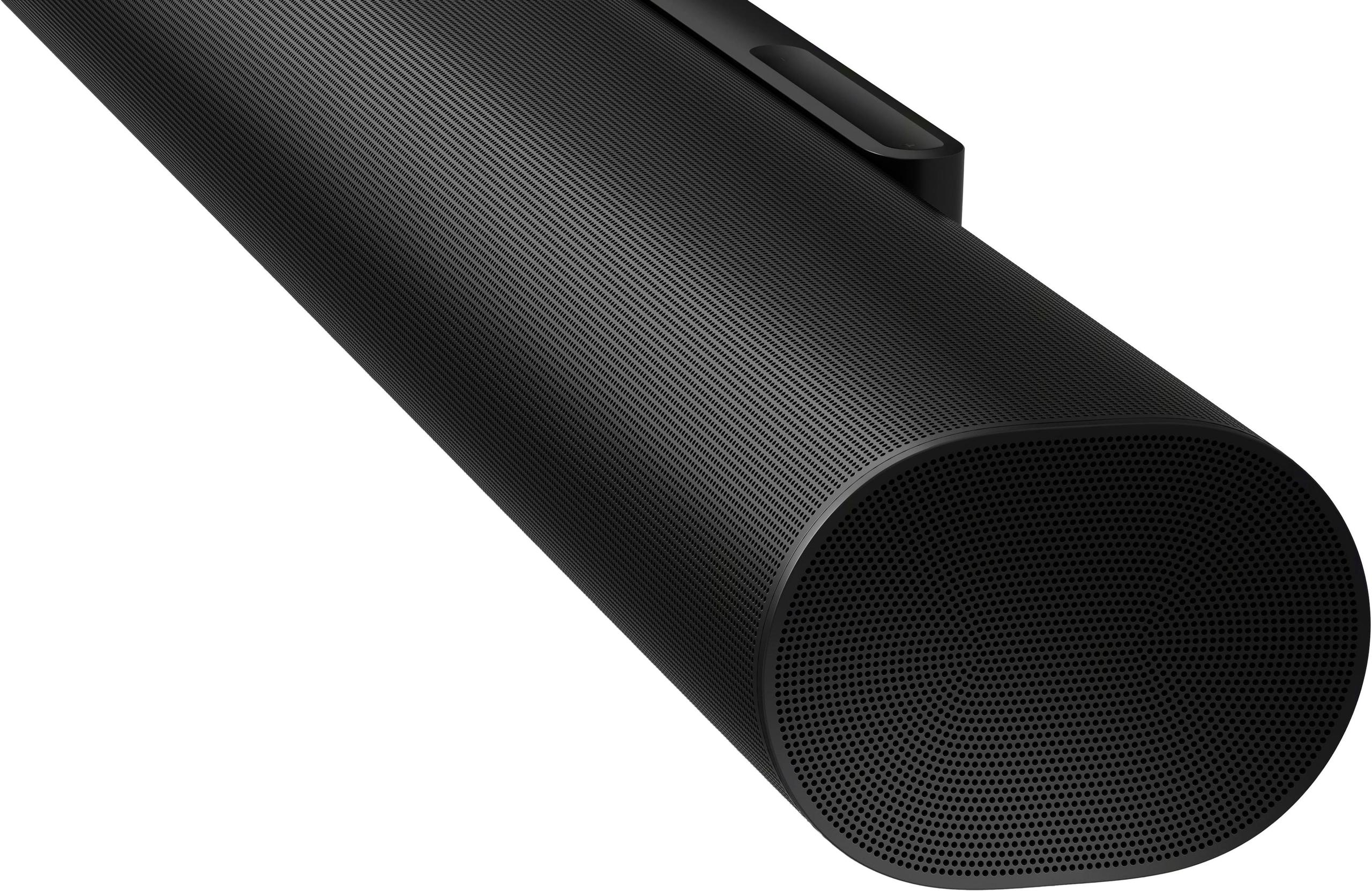
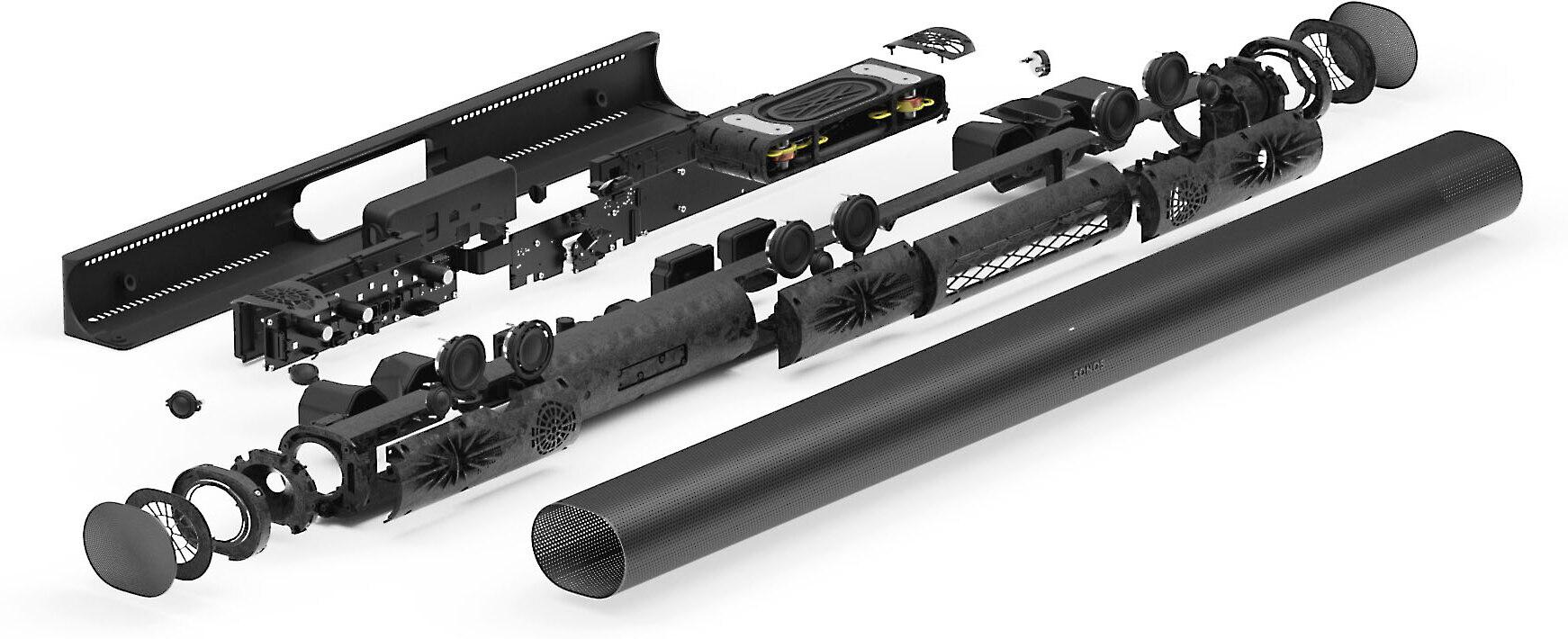
When Sonos released the original Arc in 2020, it was already impressive. But the Arc Ultra represents a complete reimagining of their flagship soundbar. The most significant change is the introduction of Sound Motion technology – a breakthrough that Sonos developed to solve one of the biggest challenges in soundbar design: getting deep bass from a slim form factor.
Traditional subwoofers need large drivers and big enclosures to move enough air for low frequencies. Sound Motion uses a completely different approach, creating bass through precise mechanical movements that produce virtually no vibration. Think of it like the difference between a traditional piston engine and a rotary engine – both accomplish the same goal, but the rotary is much more compact and efficient.
This technology allows the Arc Ultra to pack 14 drivers into a sleek profile that's actually smaller than the original Arc. You get seven tweeters (the small speakers that handle high frequencies like dialogue and music details), six midwoofers for vocal clarity and mid-range punch, and that revolutionary Sound Motion woofer for bass. The result is a soundbar that can deliver surprising low-end impact without the bulk you'd expect.
The Arc Ultra processes audio as 9.1.4 Dolby Atmos, which sounds impressive until you understand what those numbers mean. The "9.1" part refers to nine ear-level channels plus one subwoofer channel, while the "4" represents four height channels for overhead effects. However, without rear speakers, the Arc Ultra functions more like a 5.1.2 system, using digital processing to simulate those additional channels.
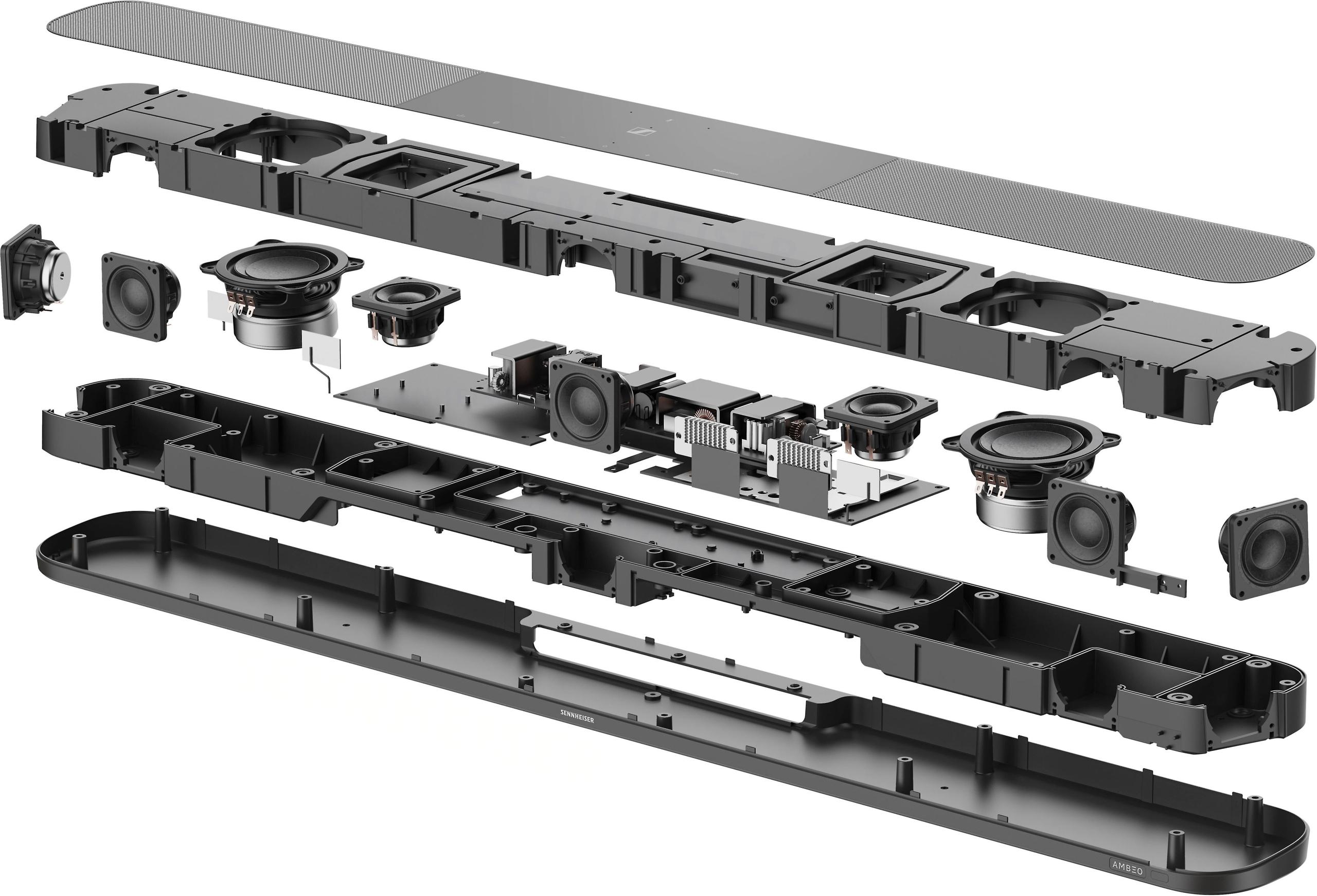
The Sennheiser AMBEO Soundbar takes a more traditional but refined approach to driver configuration. Its 13 drivers include six long-throw woofers that can physically move more air than typical soundbar drivers, five aluminum dome tweeters for crystal-clear highs, and two full-range drivers positioned on the top corners to create that enveloping soundfield.
Where Sennheiser really shines is in their AMBEO 3D technology, developed in partnership with Fraunhofer (the same institute that helped create the MP3 format). This processing doesn't just bounce sound around your room – it analyzes your space's acoustic properties and reconstructs a virtual surround sound installation tailored specifically to your environment.
The AMBEO processes true 5.1.4 discrete channels, meaning it can handle five ear-level channels, one dedicated bass channel, and four height channels simultaneously. Unlike the Arc Ultra's virtualized approach, each channel gets its own processing pathway, which can result in more precise placement of sound effects.
In my testing, both soundbars excel at creating immersive experiences, but they do it differently. The Sonos Arc Ultra creates a wide, enveloping soundstage that works well in most living rooms. When watching action movies, explosions feel appropriately big, and dialogue stays anchored to the center even when chaos erupts around it. The height effects are convincing enough that you'll find yourself looking up during overhead scenes, though they work best in rooms with ceilings between 8-10 feet.
The Sennheiser AMBEO takes spatial accuracy to another level. Sound effects feel more precisely placed in three-dimensional space, and the transition between different audio zones is smoother. During quiet dialogue scenes, you can hear subtle environmental details that the Arc Ultra sometimes glosses over. However, this precision comes with a trade-off – the AMBEO is more sensitive to room placement and acoustic conditions.
This is where the philosophical differences become most apparent. The Arc Ultra's Sound Motion technology produces surprisingly deep bass for a soundbar – I measured solid output down to about 35Hz, which covers most movie content adequately. It's punchy and controlled, avoiding the boomy, one-note bass that plagues many all-in-one designs. For most users, especially those in apartments or smaller homes, it's sufficient without adding a separate subwoofer.
But here's the thing about bass – there's always more. The Sennheiser AMBEO's six dedicated woofers can dig deeper, reaching true 30Hz extension with more authority and impact. When the T-Rex footsteps shake the ground in Jurassic Park, or when Hans Zimmer's score drops those massive low-frequency hits in Dune, the AMBEO delivers them with more visceral impact.
The key difference is expandability. If the Arc Ultra's bass isn't enough, you can add Sonos's Sub for $799, creating a system that outperforms the standalone AMBEO in low-frequency response. The AMBEO gives you its best shot from day one, but that's also its final form.
Both soundbars excel at dialogue clarity, but they achieve it through different methods. The Arc Ultra uses AI-powered Speech Enhancement with three adjustable levels. This feature analyzes incoming audio in real-time and boosts vocal frequencies while reducing competing sounds. It's particularly effective for streaming content where dialogue can sometimes get buried in the mix.
The AMBEO takes a more purist approach, relying on precise driver placement and acoustic design to naturally separate dialogue from background effects. Its aluminum dome tweeters reproduce voices with remarkable clarity and detail, but you might need to adjust the built-in EQ to optimize dialogue for your preferences.
For daily TV watching, the Arc Ultra has practical advantages. Its Night Sound feature compresses the dynamic range, so explosions won't wake the neighbors while keeping dialogue audible. The AMBEO sounds more natural and detailed, but it requires more manual adjustment to achieve the same convenience.
Here's where personal preferences really matter. The Sonos Arc Ultra delivers a balanced, crowd-pleasing sound signature that works well across different music genres. Whether you're streaming jazz, rock, or electronic music, it presents everything with smooth consistency. The integration with streaming services is seamless – you can use the Sonos app, AirPlay 2, or voice commands to play music from virtually any source.
The AMBEO reveals its audiophile DNA when playing music. High-frequency details that the Arc Ultra smooths over become clearly audible – you'll hear the breath in a vocalist's performance, the subtle decay of cymbals, and the spatial information in well-recorded tracks. It's the difference between a good photograph and a high-resolution original.
However, the AMBEO's music capabilities are somewhat limited by connectivity options. While it supports Bluetooth and Chromecast, it lacks the deep integration with streaming services that makes the Sonos ecosystem so appealing for daily music listening.
Setting up either soundbar is relatively straightforward, but there are important differences. The Arc Ultra includes TruePlay room correction, which uses your iPhone's microphone to measure how sound reflects in your space and automatically adjusts the soundbar's output. It's remarkably effective, but there's a catch – it only works with iOS devices. Android users miss out on this automatic optimization, though the soundbar still sounds good without it.
The AMBEO includes built-in calibration microphones that work with any smartphone. The setup process is more involved, requiring you to hold your phone in different positions around your listening area, but the results can be more precise than TruePlay when done correctly.
Physical placement matters more for the AMBEO due to its larger size and more demanding acoustic requirements. Its 5.3-inch height might not fit under some TV configurations, and it really benefits from having some breathing room around it. The Arc Ultra's slimmer 3.13-inch profile fits under more setups and is more forgiving of placement compromises.
This is where Sonos's years of experience in connected audio really shine. The Arc Ultra integrates seamlessly with Alexa and Google Assistant for voice control, supports multi-room audio throughout your home, and receives regular software updates that add new features over time. The Sonos app is intuitive and reliable, making it easy to manage music playback, adjust settings, and integrate with other Sonos speakers.
The AMBEO focuses purely on audio performance, with minimal smart features. There's no voice assistant support, no multi-room capabilities, and fewer streaming options. For some users, this simplicity is actually a benefit – there are fewer things to break or become obsolete over time.
Perhaps the biggest long-term consideration is expandability. The Sonos Arc Ultra is designed to grow with your needs and budget. You can start with just the soundbar and add a Sonos Sub ($799) when you want more bass impact. Later, you might add Era 300 rear speakers ($449 each) for true surround sound. Each addition makes a meaningful improvement, and you can spread the cost over time.
The AMBEO gives you everything upfront. There's no option to add rear speakers or a separate subwoofer, so you need to decide if its standalone performance meets your long-term needs. For some users, this is actually preferable – no additional clutter, no extra power cables, and no wireless connectivity to manage.
After extensive testing with both soundbars, here's how I'd approach the decision:
Choose the Sonos Arc Ultra if you value flexibility and long-term expandability. It's the better choice for most people because it offers strong performance at a more accessible price point while leaving room to grow. The smart home integration and multi-room capabilities make it more than just a TV speaker – it becomes part of your home's audio infrastructure. The balanced sound signature works well for mixed usage, and the potential to add a subwoofer and rear speakers means you're not locked into today's decision forever.
The Sennheiser AMBEO is for audio enthusiasts who want the best possible standalone performance and don't mind paying a premium for it. If you have a dedicated listening room with good acoustics, enjoy critical music listening, and prefer to buy once and be done, the AMBEO delivers uncompromising sound quality that justifies its higher price.
Room size also matters significantly. In smaller to medium-sized rooms (under 300 square feet), the Arc Ultra provides sufficient performance with better value. In larger spaces, the AMBEO's more powerful drivers and sophisticated processing better fill the room and justify the premium.
Both soundbars represent the current state of the art in their respective approaches. The Sonos Arc Ultra proves that modular systems can deliver flagship performance while maintaining flexibility. The Sennheiser AMBEO demonstrates what's possible when you focus entirely on audio quality without compromise.
Your choice ultimately depends on whether you prioritize flexibility and smart features or pure audio performance. Either way, you're getting a soundbar that will transform your home entertainment experience and deliver years of impressive performance.
| Sonos Arc Ultra Dolby Atmos Soundbar ($999) | Sennheiser AMBEO Soundbar ($1,499) |
|---|---|
| Price - Key factor in determining overall value | |
| $999 (excellent value for premium features) | $1,499 (premium pricing for audiophile performance) |
| Driver Configuration - Determines sound quality and power | |
| 14 drivers: 7 tweeters, 6 midwoofers, 1 Sound Motion woofer | 13 drivers: 5 tweeters, 6 long-throw woofers, 2 full-range |
| Channel Processing - Affects surround sound accuracy | |
| 9.1.4 virtualized (functions as 5.1.2 standalone) | 5.1.4 discrete channels with dedicated amplifiers |
| Bass Extension - Important for movie impact without subwoofer | |
| 35Hz with Sound Motion technology (good for most content) | 30Hz with six 4-inch woofers (deeper, more authoritative) |
| Expandability - Future upgrade options | |
| Can add Sonos Sub ($799) and Era 300 rears ($449 each) | Standalone only - no expansion options available |
| Room Calibration - Optimizes sound for your space | |
| TruePlay tuning (iOS devices only) | Built-in microphones (works with any smartphone) |
| Smart Features - Convenience and integration capabilities | |
| Alexa/Google Assistant, multi-room audio, voice control | No voice assistants, limited smart home integration |
| Dimensions - Affects TV compatibility and placement | |
| 3.13" x 46.18" x 4.35" (slim profile fits most setups) | 5.3" x 49.6" x 6.7" (larger footprint, needs more space) |
| Weight - Installation and mounting considerations | |
| 12.7 lbs (easier to wall mount and position) | 40.8 lbs (requires sturdy mounting, harder to relocate) |
| Connectivity - Streaming and device compatibility | |
| Wi-Fi, Bluetooth 5.3, AirPlay 2, eARC, voice assistants | Bluetooth 4.0, Chromecast, Wi-Fi, eARC (fewer options) |
| Music Performance - Daily listening quality | |
| Balanced signature good for all genres, seamless streaming | Superior detail and imaging, limited streaming integration |
| Dialogue Enhancement - TV and movie clarity | |
| AI-powered Speech Enhancement with 3 adjustable levels | Natural vocal reproduction, manual EQ adjustment needed |
| Target User - Best fit for different needs | |
| Multi-room enthusiasts wanting flexibility and future expansion | Audiophiles seeking maximum standalone performance |
The Sonos Arc Ultra ($999) offers better value for most buyers, providing flagship performance at $500 less than the Sennheiser AMBEO ($1,499). While the AMBEO delivers superior audiophile-grade sound quality, the Arc Ultra's expandability and smart features make it more practical for the price difference.
Only the Sonos Arc Ultra supports adding a subwoofer - you can pair it with the Sonos Sub for enhanced bass. The Sennheiser AMBEO is a standalone unit with no expansion options, so its built-in bass drivers are your only option for low-frequency performance.
The Sonos Arc Ultra is better suited for small to medium rooms under 300 square feet. Its slimmer profile fits better under TVs, and its balanced sound signature doesn't overpower smaller spaces. The AMBEO works best in larger rooms where its powerful drivers can fully shine.
Yes, both the Sonos Arc Ultra and Sennheiser AMBEO support Dolby Atmos for immersive 3D audio. The Arc Ultra processes 9.1.4 virtualized channels, while the AMBEO handles 5.1.4 discrete channels with potentially more precise spatial positioning.
Both excel at dialogue, but differently. The Sonos Arc Ultra features AI-powered Speech Enhancement with three adjustable levels for easy optimization. The Sennheiser AMBEO delivers more natural vocal reproduction but requires manual EQ adjustments for optimal dialogue clarity.
Only the Sonos Arc Ultra supports voice assistants like Alexa and Google Assistant for hands-free control. The Sennheiser AMBEO focuses purely on audio performance and doesn't include voice assistant integration.
The Sonos Arc Ultra is generally easier to set up with its intuitive app and automatic TruePlay calibration (iOS only). The Sennheiser AMBEO requires more manual calibration steps but works with any smartphone for room correction.
Both work well for music but serve different preferences. The Sonos Arc Ultra offers balanced sound with seamless streaming integration across services. The Sennheiser AMBEO provides superior detail and imaging for critical listening but has more limited streaming options.
The Sennheiser AMBEO produces deeper bass with its six 4-inch woofers reaching 30Hz extension. The Sonos Arc Ultra reaches 35Hz with Sound Motion technology, which is still impressive for a soundbar but not quite as deep as the AMBEO's output.
Only the Sonos Arc Ultra can be expanded - you can add Sonos Sub and Era 300 rear speakers for true surround sound. The Sennheiser AMBEO is designed as a complete standalone solution with no option to add additional speakers.
The Sennheiser AMBEO is better for larger dedicated home theaters due to its more powerful drivers and advanced spatial processing. The Sonos Arc Ultra works well in most living rooms but may need a subwoofer addition for optimal performance in very large spaces.
The Sonos Arc Ultra offers comprehensive smart features including multi-room audio, voice control, and extensive streaming service integration. The Sennheiser AMBEO has minimal smart features, focusing entirely on audio performance over connected convenience features.
We've done our best to create useful and informative comparisons to help you decide what product to buy. Our research uses advanced automated methods to create this comparison and perfection is not possible - please contact us for corrections or questions. These are the sites we've researched in the creation of this article: bestbuy.com - shopjetson.com - youtube.com - ign.com - crutchfield.com - dowtechnologies.com - sonos.com - appleinsider.com - pcrichard.com - clefdesol.com - sonos.com - businessinsider.com - audioadvice.com - en.community.sonos.com - bestbuy.com - rtings.com - techradar.com - audioxpress.com - whathifi.com - upscaleaudio.com - soundstagesimplifi.com - global.sennheiser-hearing.com - sennheiser-hearing.com - audioadvice.com - abt.com - moon-audio.com

Privacy Policy
Terms and Conditions - Affiliate Policy
Home Security
© Copyright 2008-2026.
11816 Inwood Rd #1211, Dallas, TX 75244