

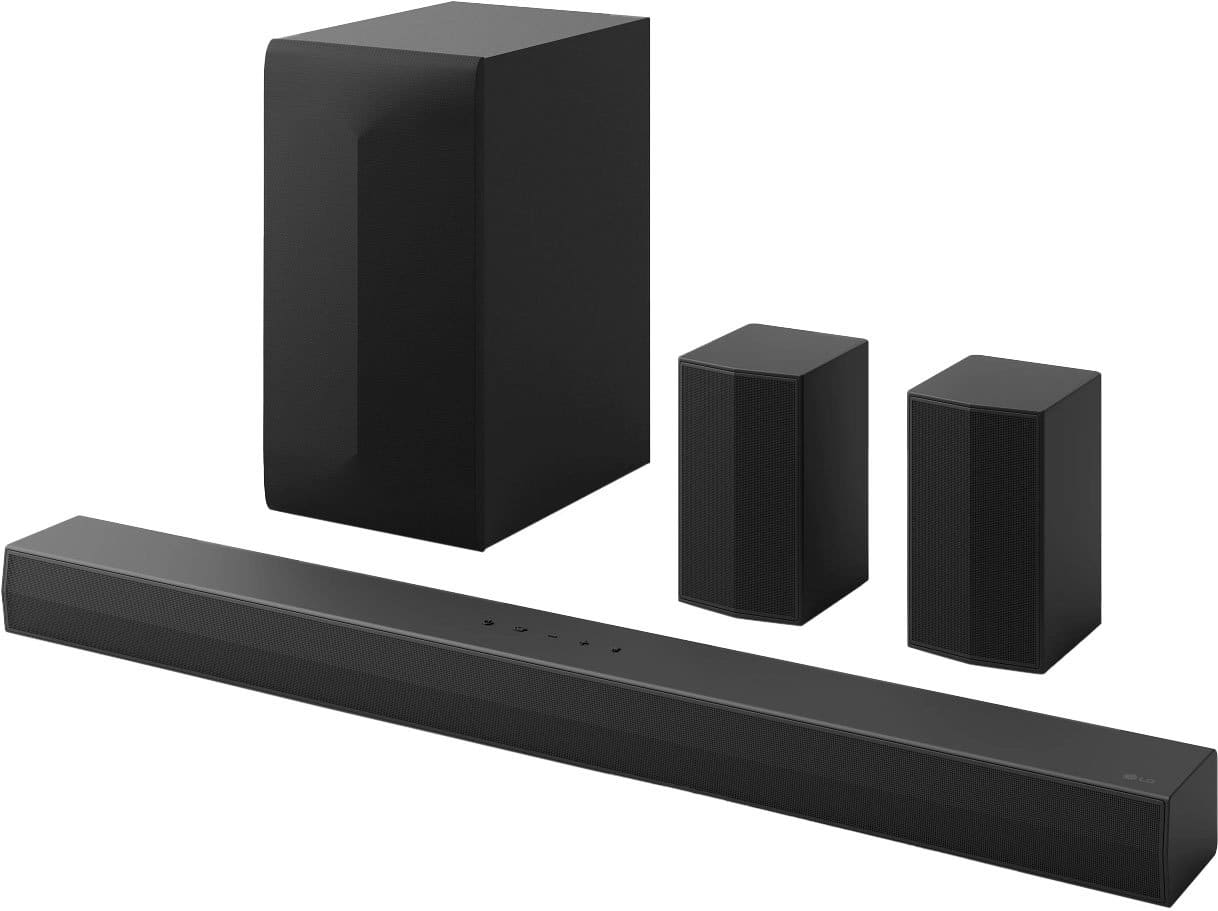
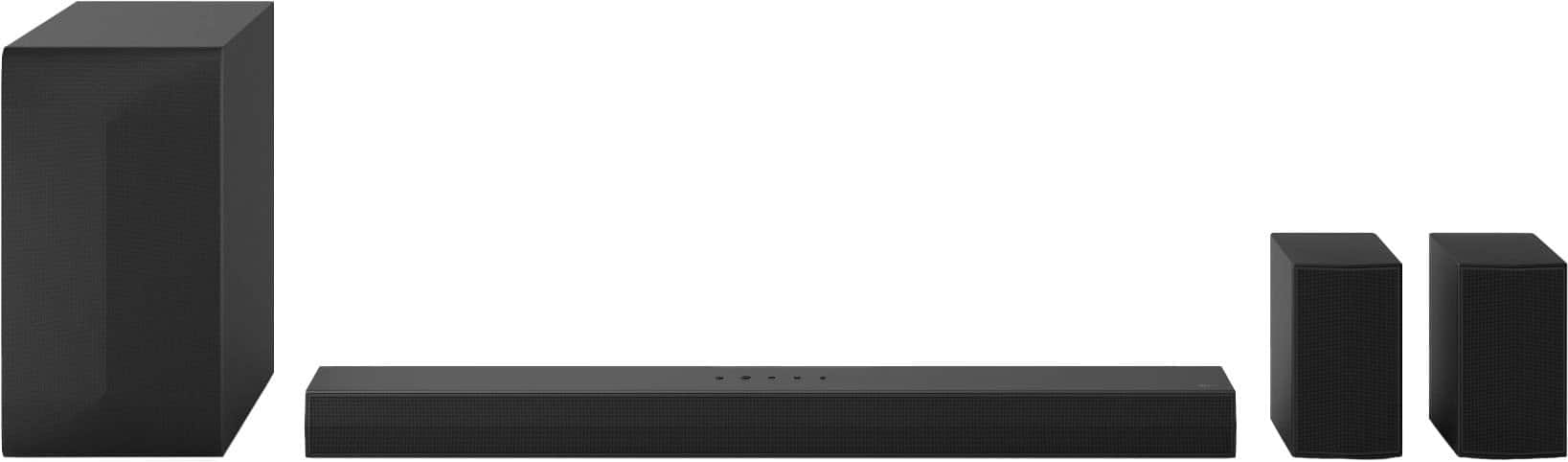
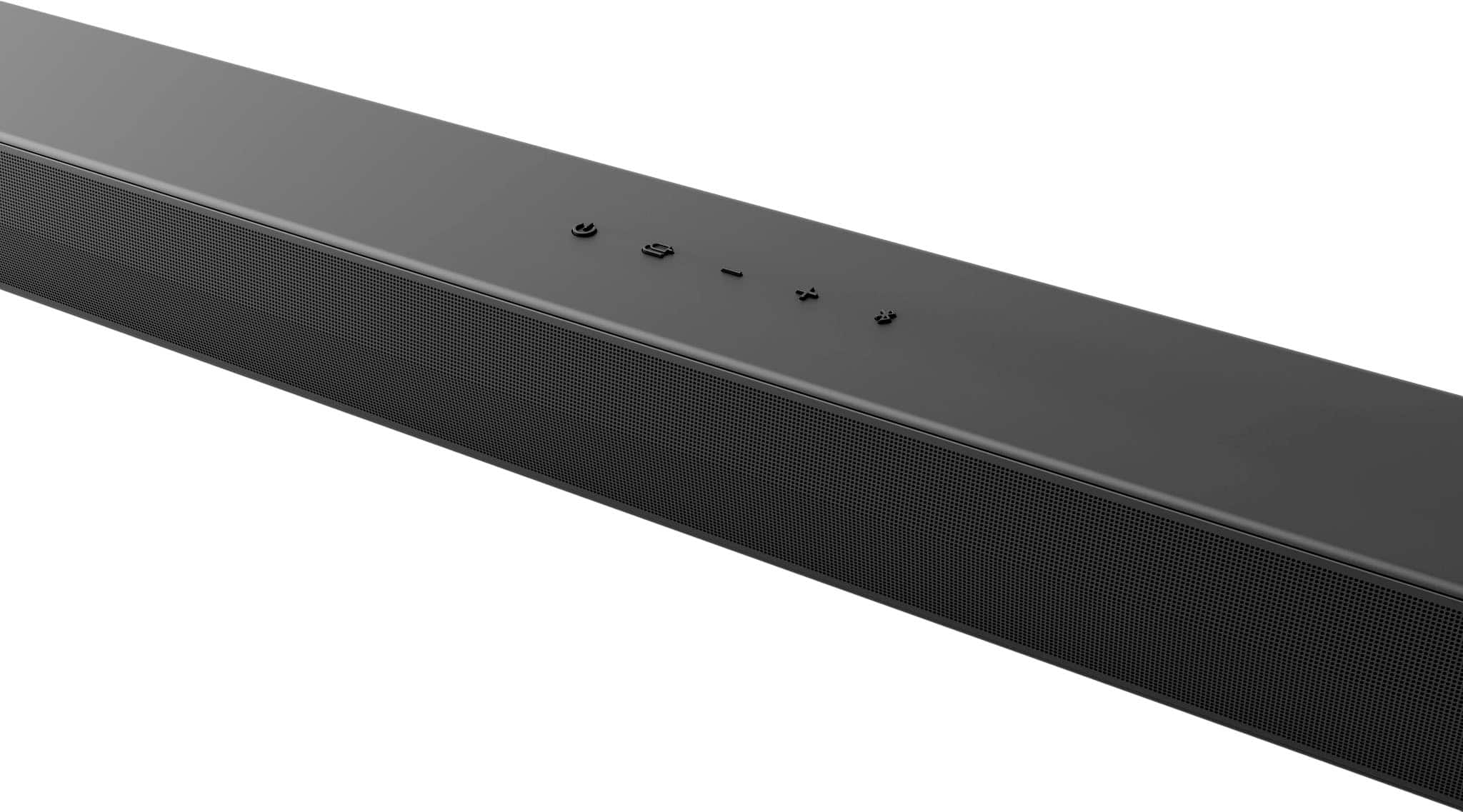


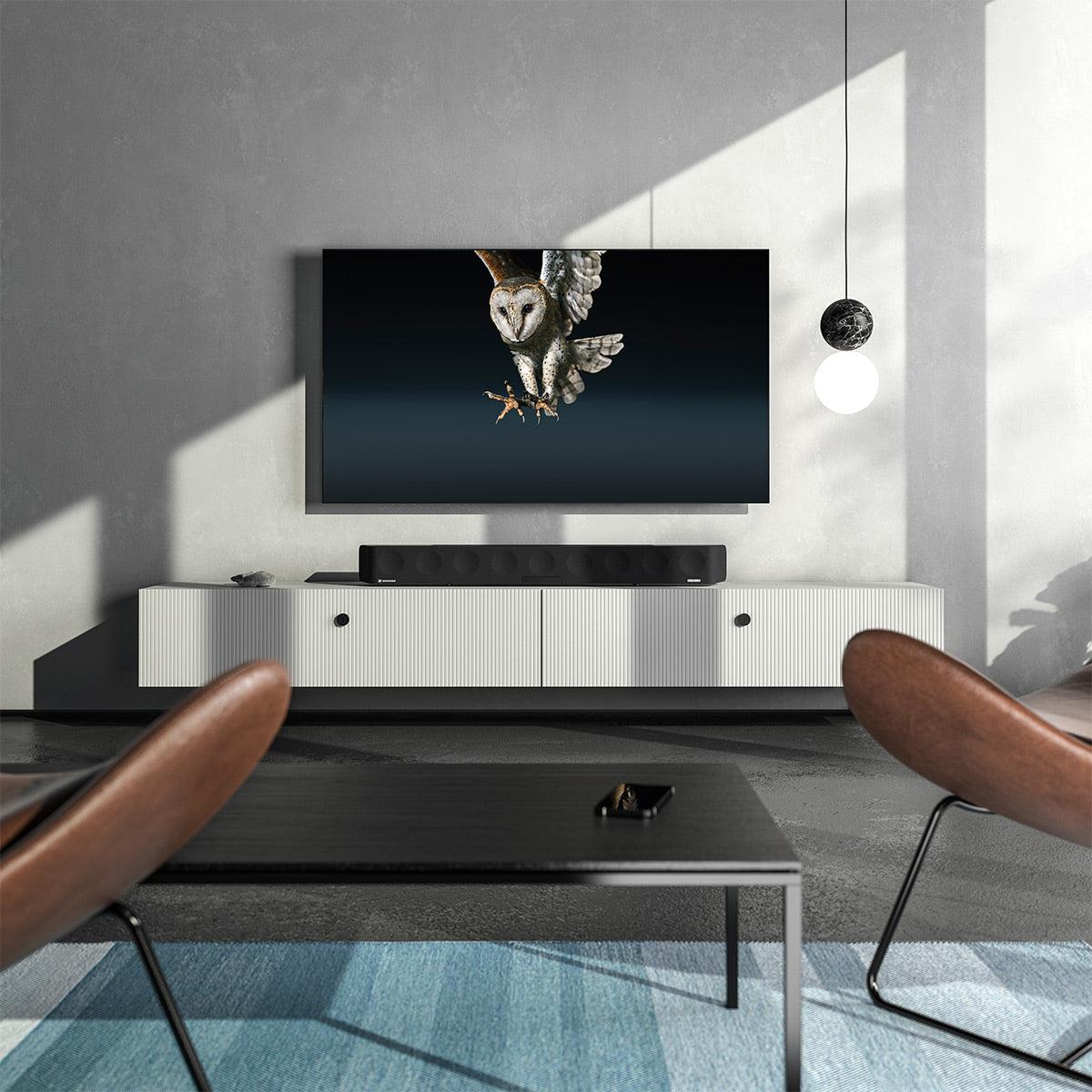
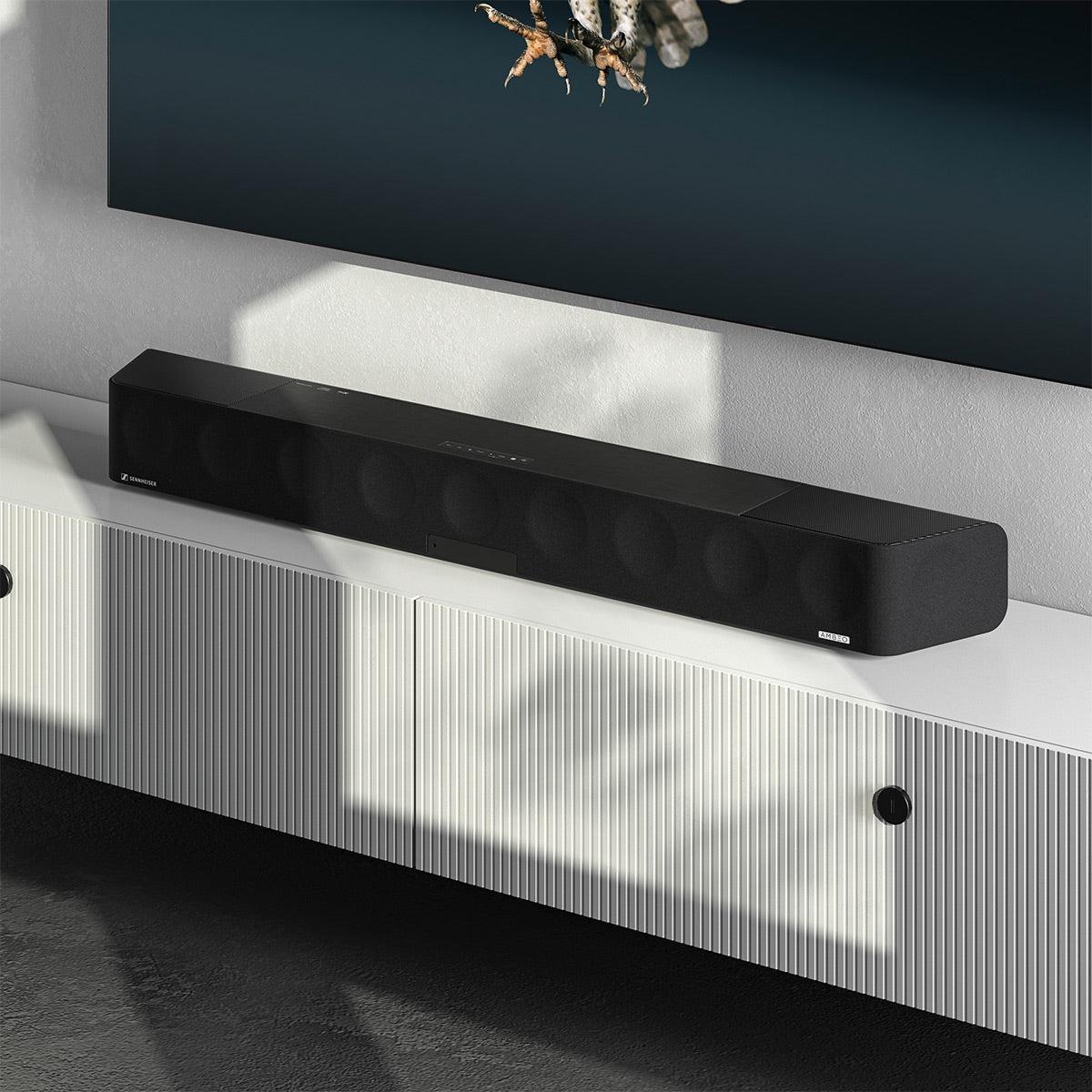
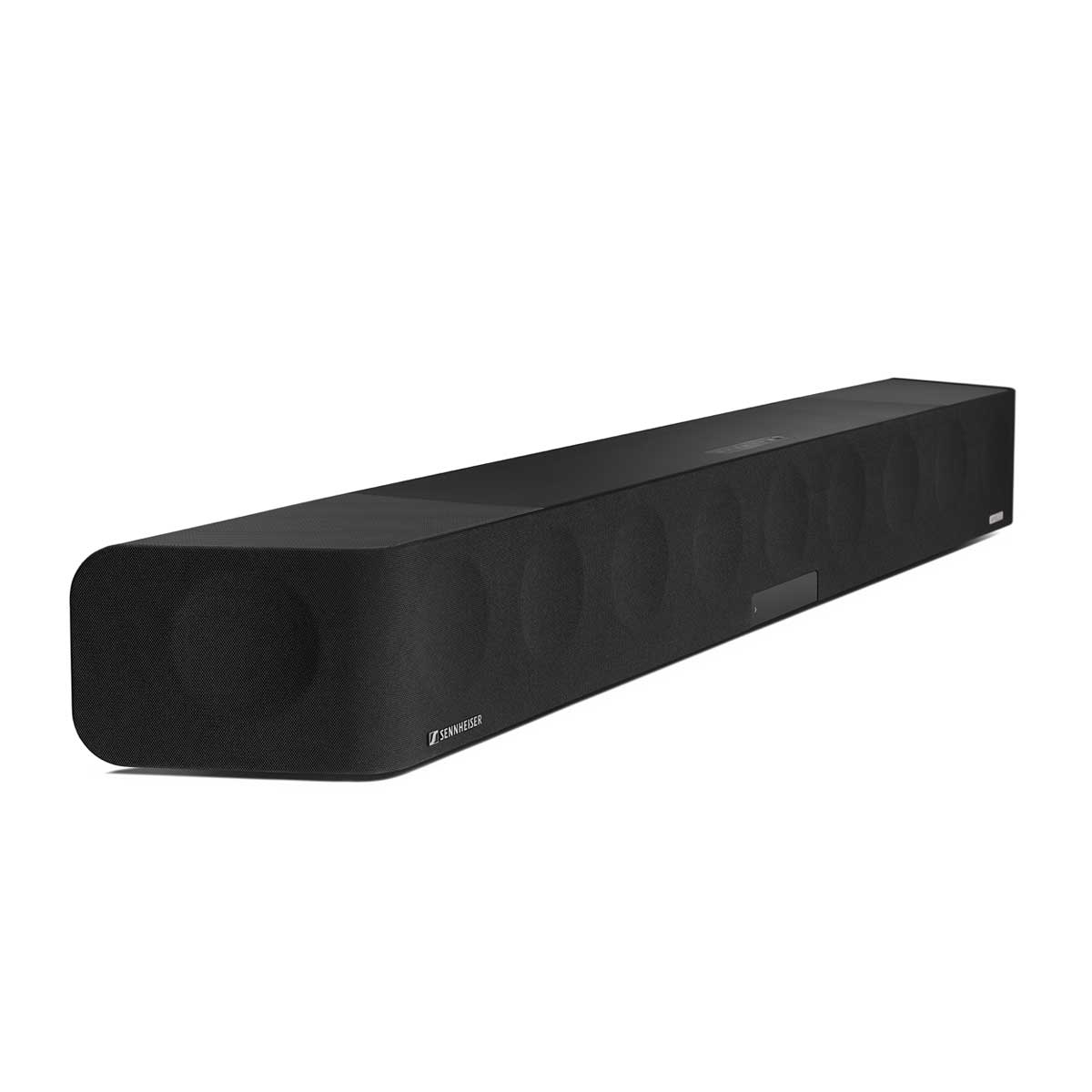
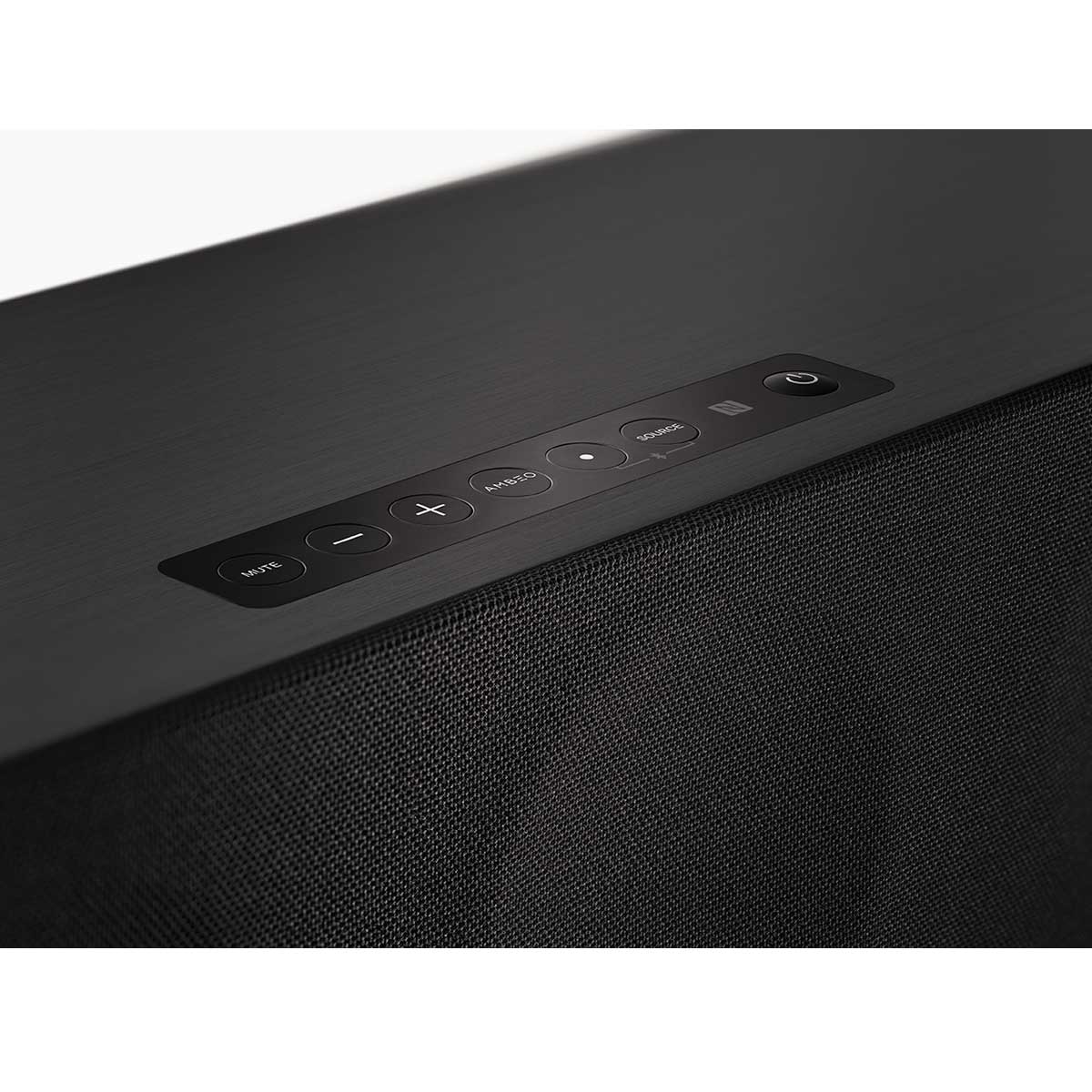
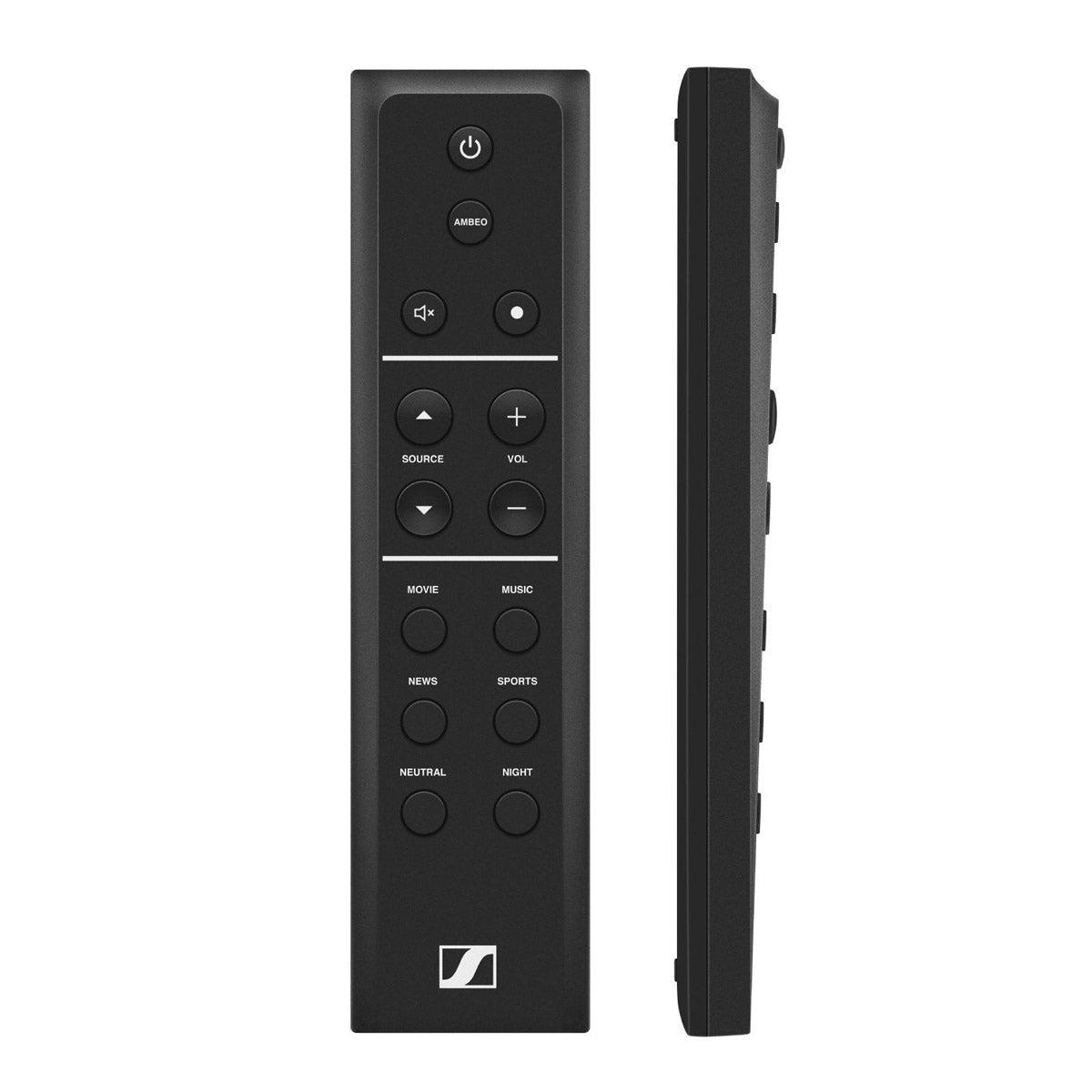
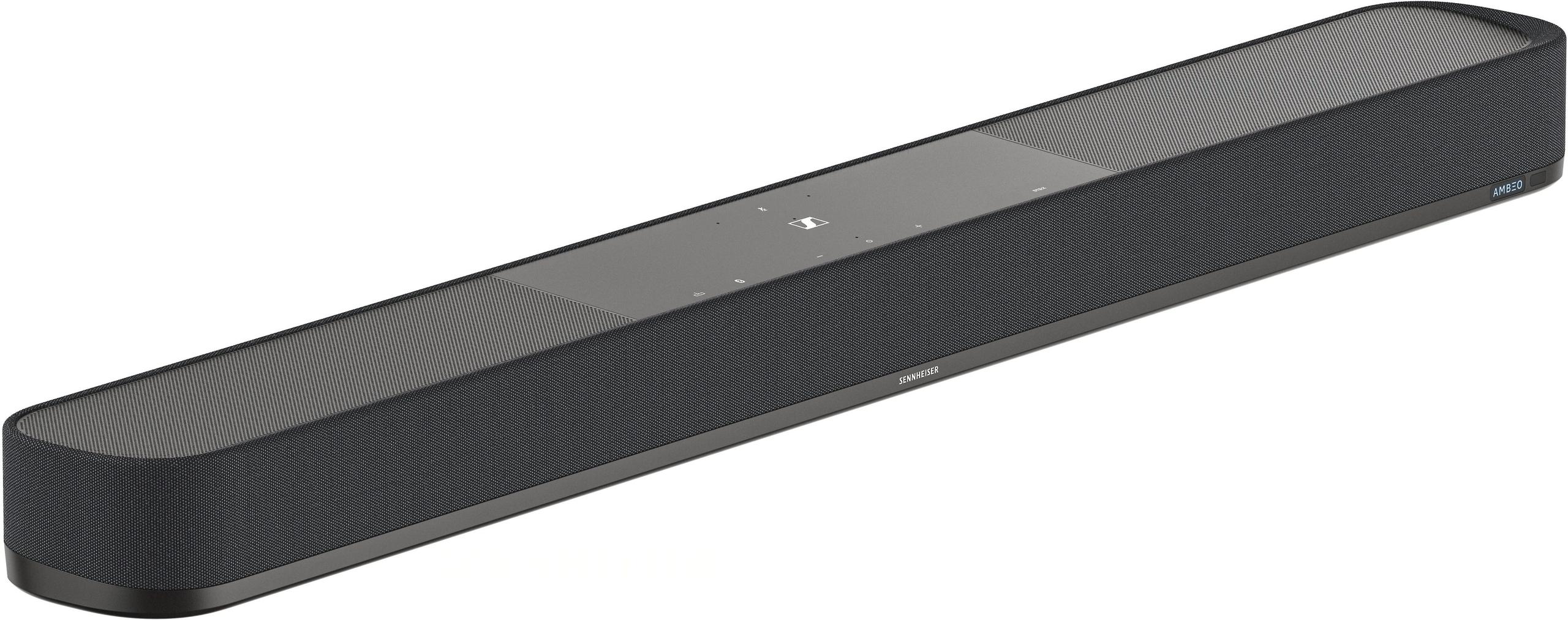
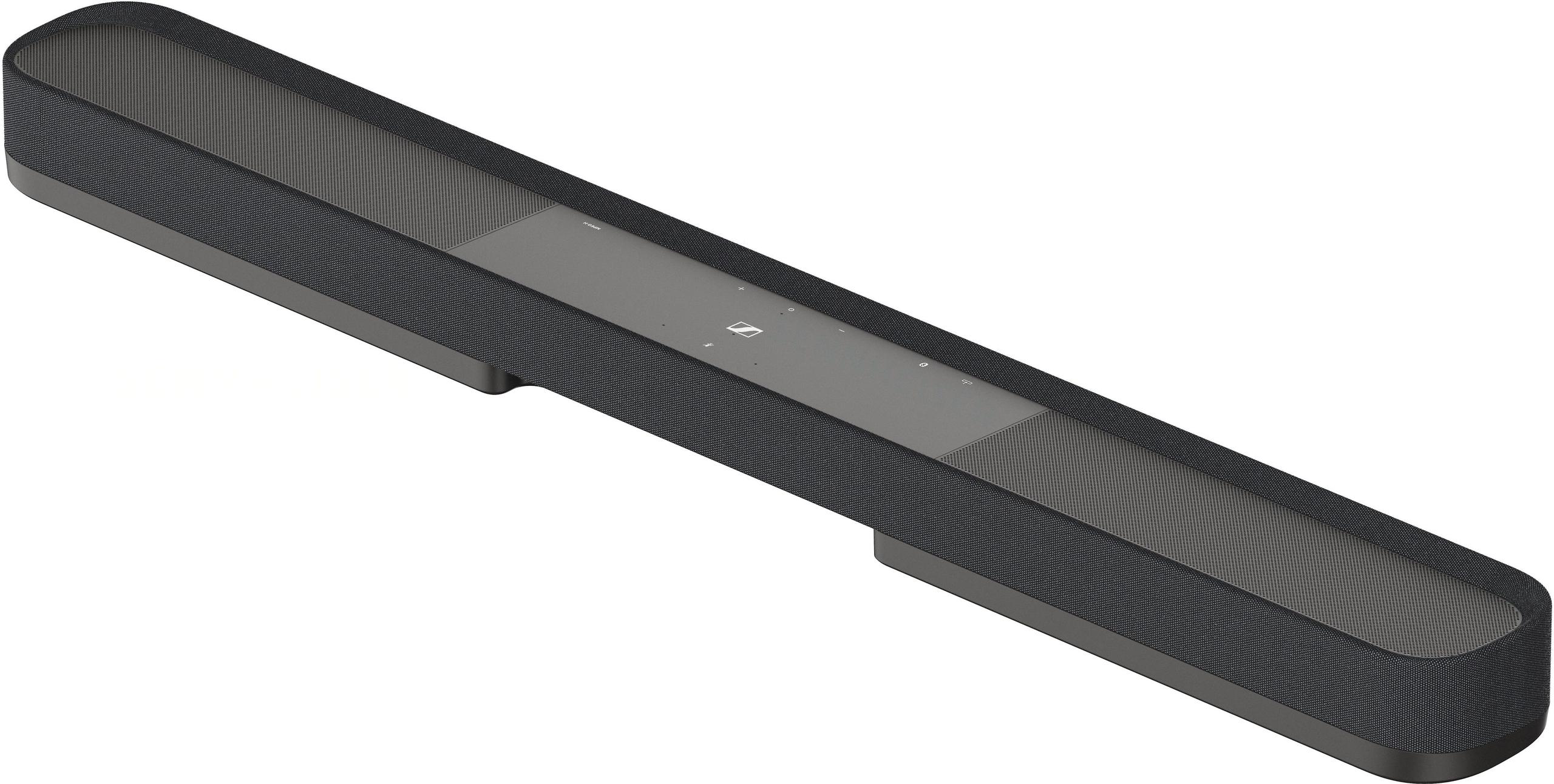

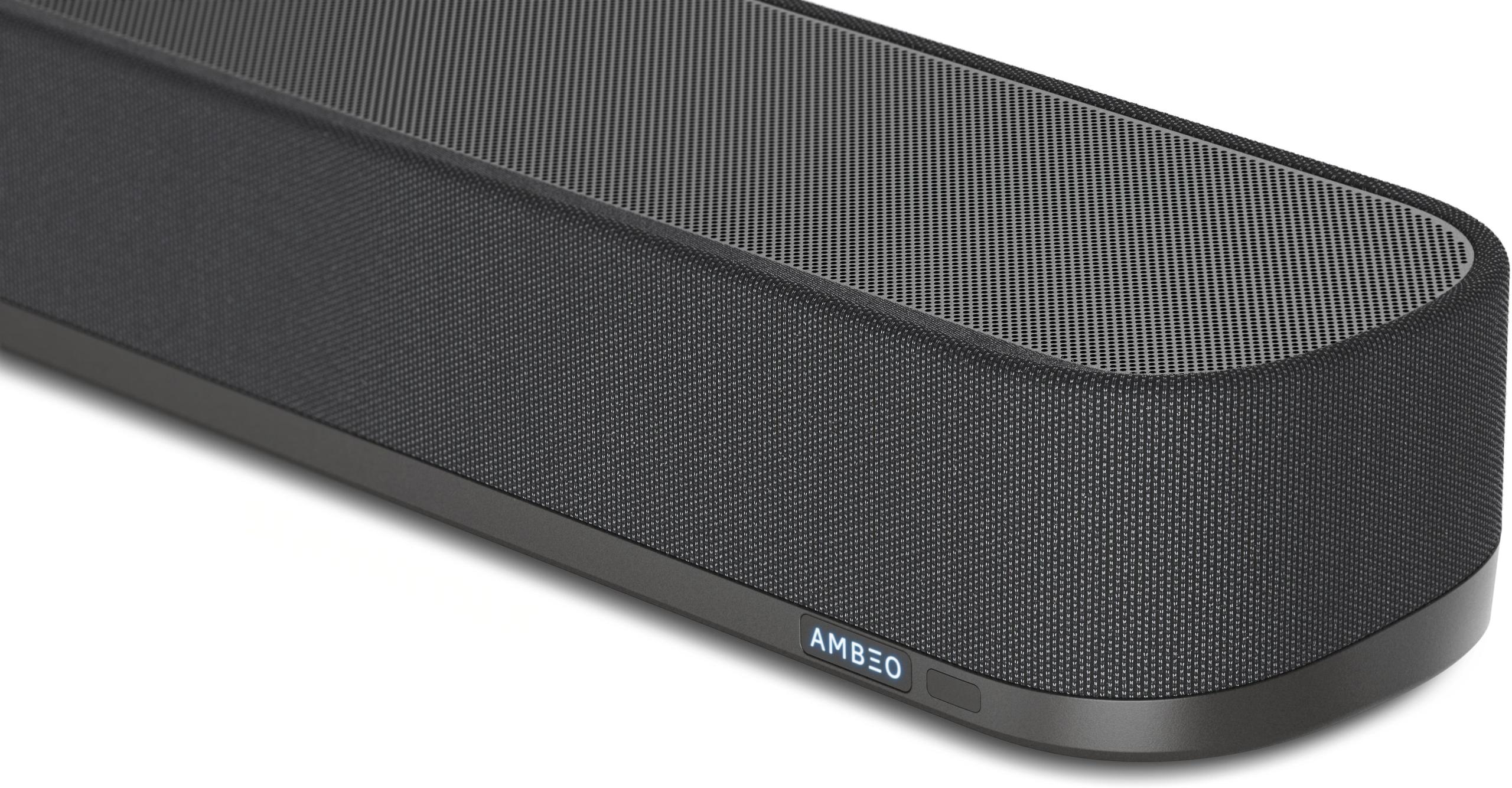

If you've ever tried watching a movie with just your TV's built-in speakers, you know the struggle. Dialogue seems muffled, explosions sound like weak pops, and forget about feeling immersed in the action. That's where soundbars come in, but choosing between different approaches can be confusing. Today, we're comparing two fundamentally different philosophies: the LG S60TR ($300) with its traditional multi-component setup versus the Sennheiser AMBEO ($1,500-2,000) and its cutting-edge single-unit virtualization technology.
Before diving into these specific products, it's worth understanding what we're dealing with. Modern premium soundbars essentially take two different approaches to solving the same problem: how to create convincing surround sound without installing speakers all around your room.
The traditional approach uses multiple physical components – a main soundbar, separate subwoofer, and rear speakers – to create what's called "discrete surround sound." Each audio channel (like left rear or center) gets its own dedicated speaker. It's straightforward and works exactly like a full home theater system, just more compact.
The virtualization approach uses advanced digital signal processing (DSP) and carefully positioned drivers within a single unit to trick your brain into hearing sounds coming from directions where there aren't actually any speakers. Think of it like an audio optical illusion – your ears perceive surround effects, but it's all coming from one device in front of you.
Both methods have evolved significantly in recent years, with major improvements in wireless connectivity, room calibration technology, and audio processing power. The question is which approach works better for your specific situation.
The LG S60TR represents LG's 2024-2025 entry into the competitive mid-range market. Released as part of LG's updated soundbar lineup, it incorporates lessons learned from previous generations while keeping costs accessible. LG has focused on improving wireless connectivity reliability and adding AI-powered sound optimization – features that were often problematic in earlier budget soundbars.
The Sennheiser AMBEO, first launched in 2022 and continuously updated through firmware, takes a completely different approach. Sennheiser, known primarily for professional audio and high-end headphones, entered the soundbar market with this flagship product that showcases their decades of acoustic research. Rather than competing on price, they've positioned the AMBEO as a technology showcase, incorporating processing algorithms developed in partnership with the renowned Fraunhofer Institute.
Since their respective launches, both products have seen important updates. The LG has benefited from improved app functionality and better integration with LG's TV ecosystem, while the AMBEO has received multiple firmware updates adding new audio formats, improved room calibration, and enhanced streaming capabilities.
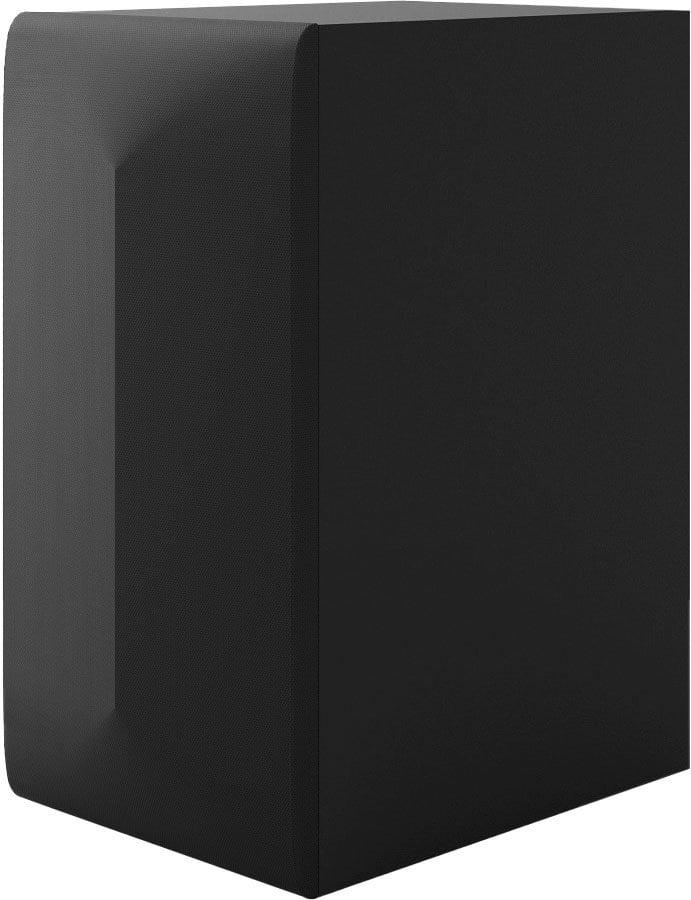
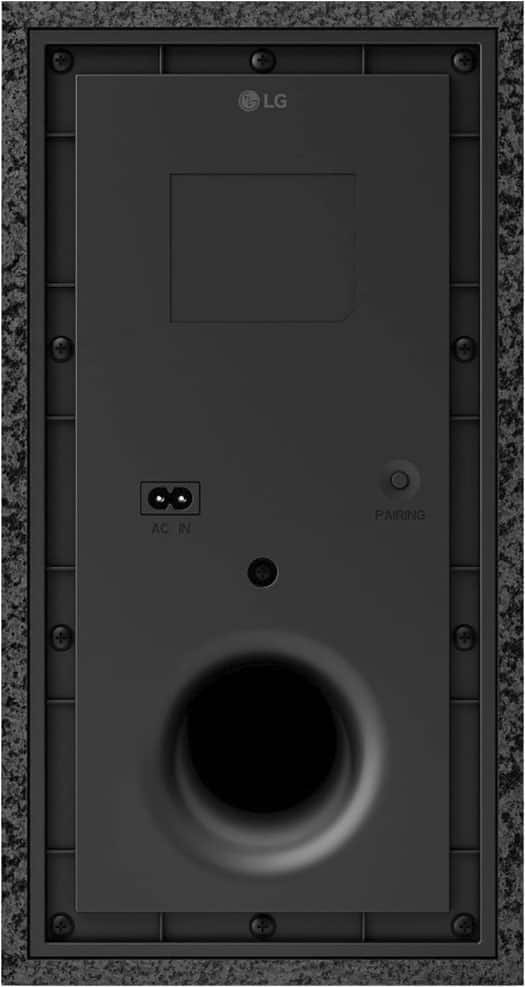
Let's start with bass, because it's often the most immediately noticeable difference between these systems. The LG S60TR includes a dedicated 220-watt wireless subwoofer – essentially a separate box designed specifically to move lots of air and create those deep, room-shaking low frequencies that make action movies exciting.
This physical separation is crucial. Subwoofers work by moving large amounts of air, which requires substantial internal volume and powerful amplification. When you have a dedicated sub, you can place it optimally in your room (usually on the floor, often in a corner where room boundaries help reinforce the bass). The LG's subwoofer connects wirelessly to the main bar, eliminating the need to run cables across your room while maintaining that direct, impactful bass response.
I've found that dedicated subwoofers like the LG's consistently deliver more satisfying bass for movies and music. When a T-Rex stomps in Jurassic Park or when you're listening to bass-heavy music, you feel it in your chest rather than just hearing it. The separation also means the bass doesn't interfere with dialogue clarity – the main bar handles vocals while the sub focuses purely on low-end impact.
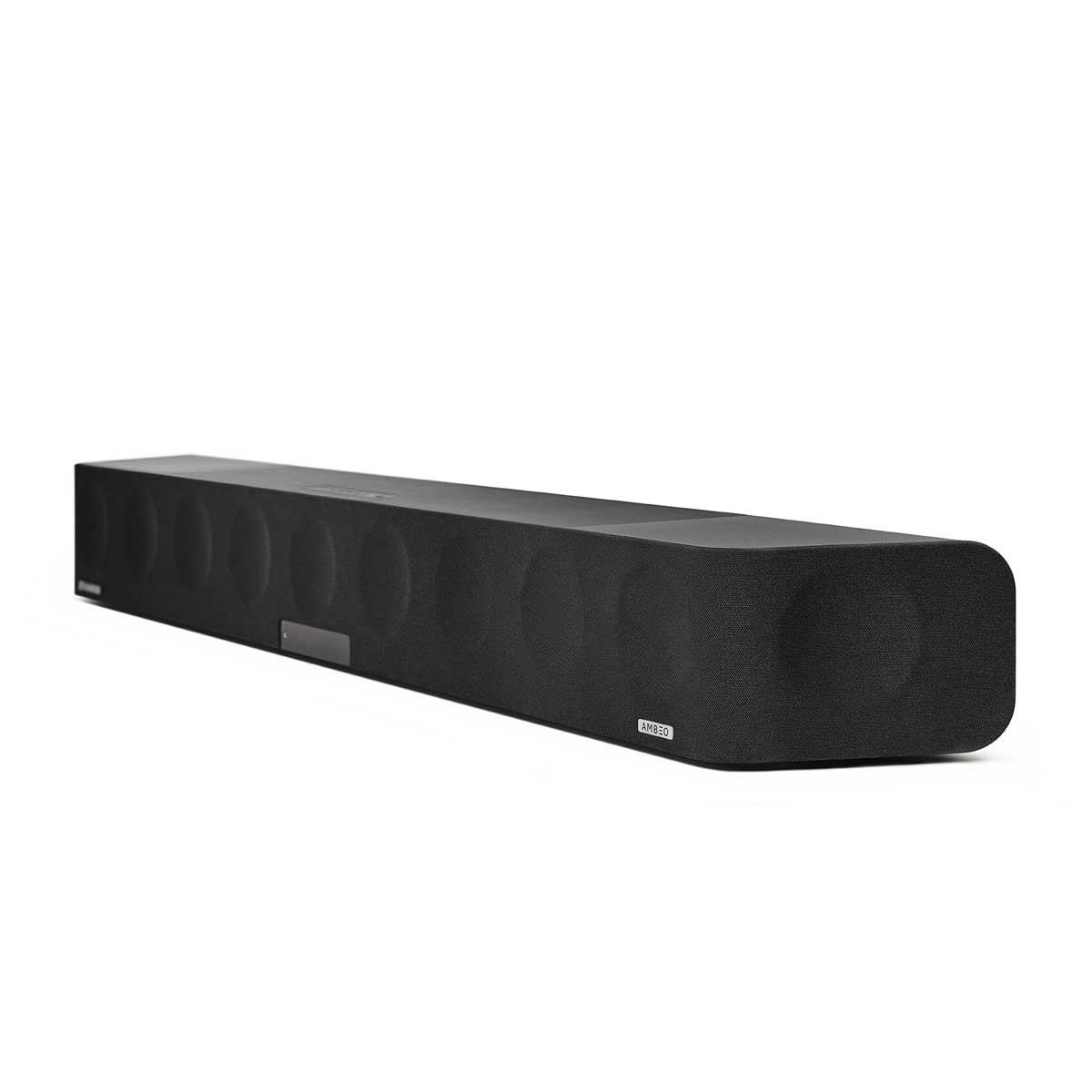
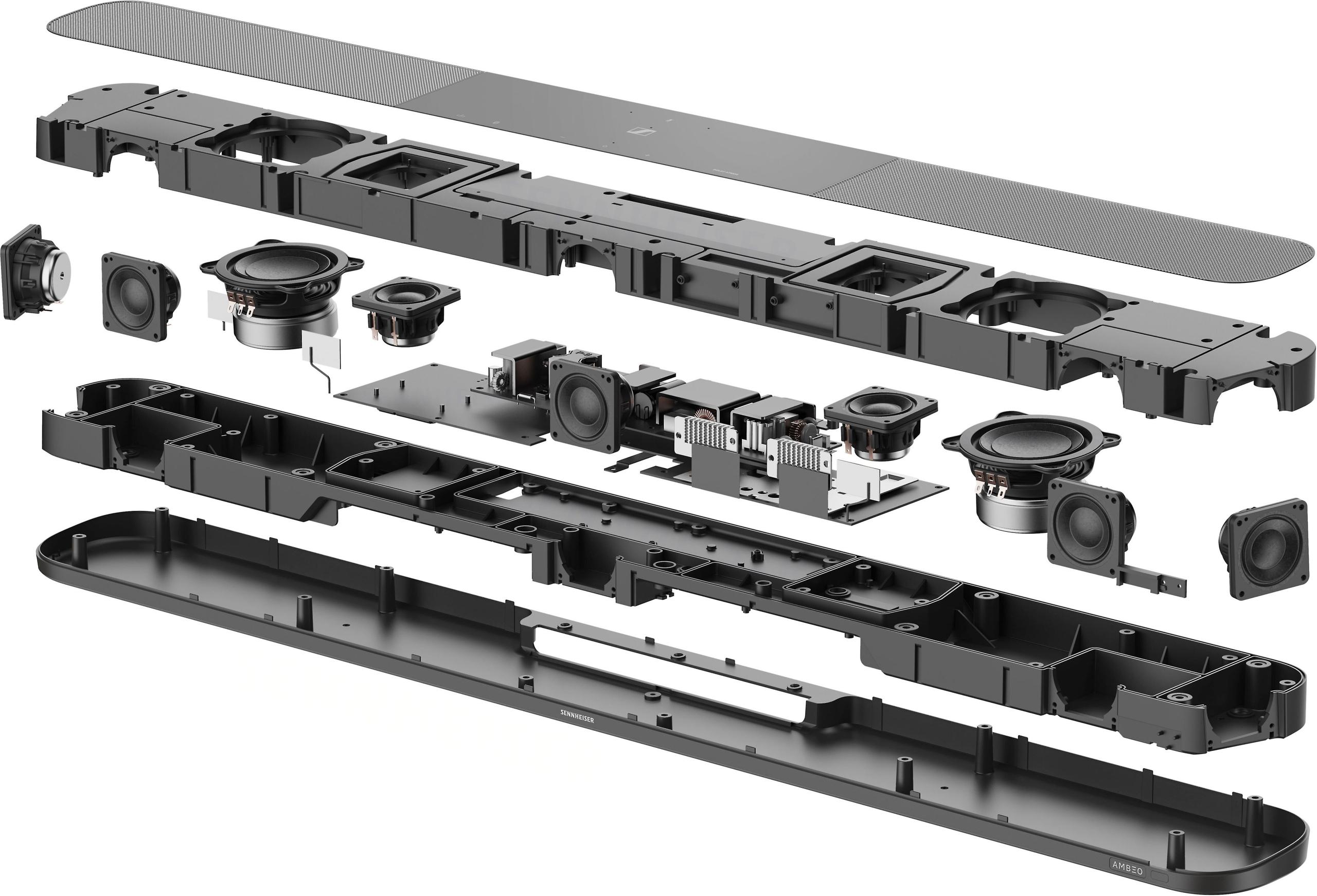
The Sennheiser AMBEO takes a different approach with built-in bass drivers. It uses six 4-inch woofers integrated into the main unit, which is impressive engineering but faces physical limitations. These drivers can produce adequate bass, but they're constrained by the soundbar's cabinet size and the need to coexist with mid-range and high-frequency drivers.
However, the AMBEO's bass integration is more sophisticated. Instead of just playing low frequencies, it uses advanced processing to blend bass seamlessly with the rest of the audio spectrum. The result is more controlled and precise, though potentially less visceral than a dedicated subwoofer. For critical music listening, this integration can actually be preferable – you get bass that's perfectly timed and balanced rather than potentially boomy or overwhelming.
The AMBEO also offers expandability – you can add up to four wireless Sennheiser subwoofers if you want more low-end power, though this significantly increases the total system cost.
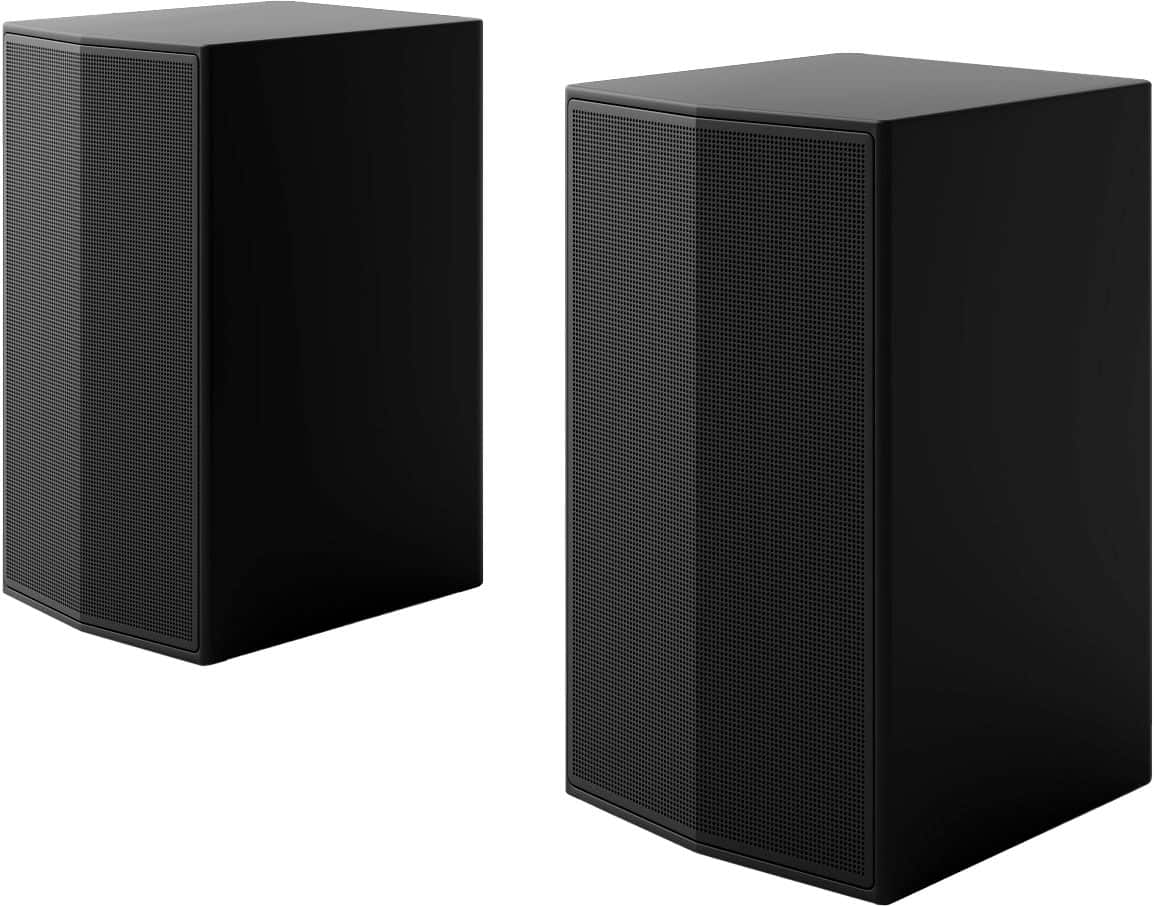
This is where the fundamental philosophical difference becomes most apparent. The LG S60TR uses what I call the "honest" approach – it puts actual speakers behind you. The system includes two wireless rear speakers that you position around your seating area, creating genuine 5.1 surround sound where effects actually originate from multiple directions.
When a helicopter flies overhead in a movie, or when footsteps approach from behind in a video game, those sounds literally come from speakers positioned behind you. There's no processing trickery involved – your brain receives authentic directional audio cues. This works consistently regardless of where you're sitting (within reason) and doesn't depend on your room's acoustic properties.
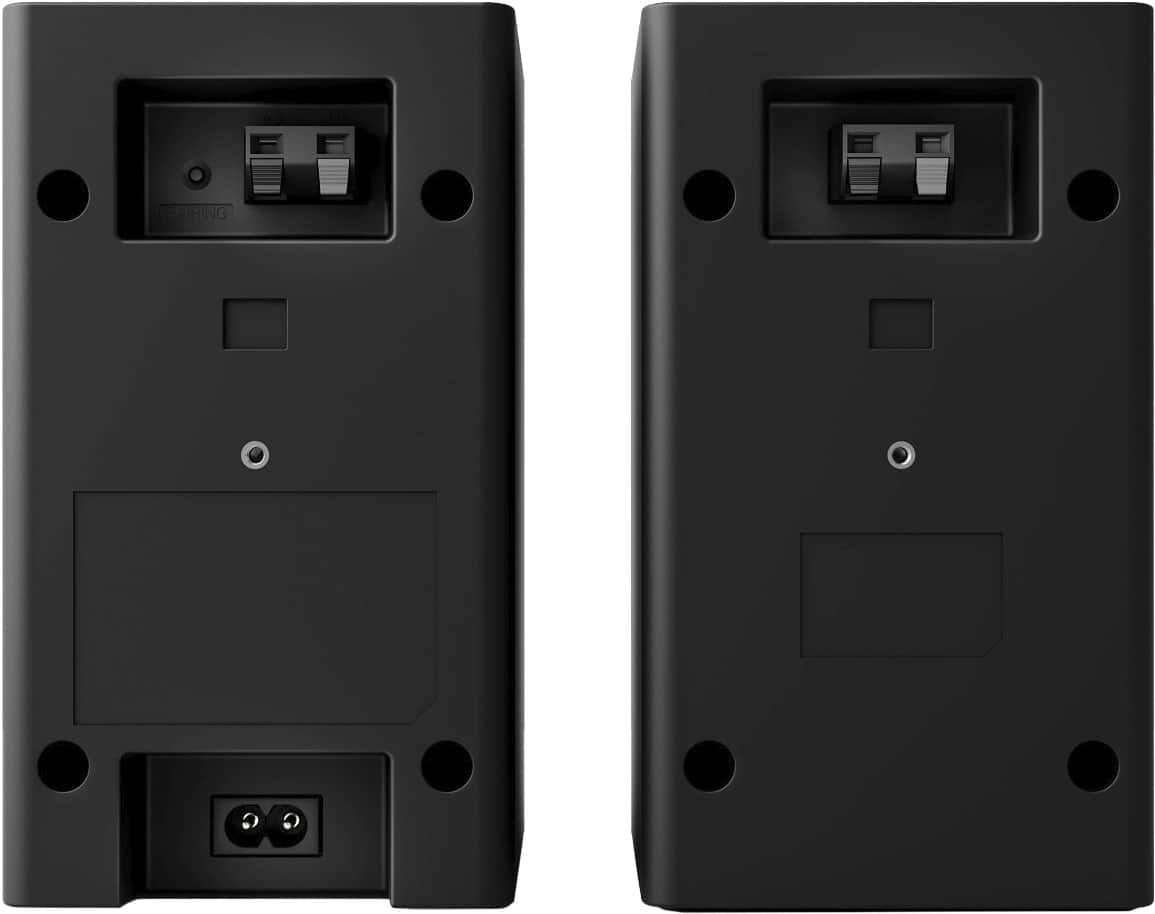
I've consistently found that people immediately "get" physical surround sound. There's no learning curve or sweet spot optimization required. You sit down, sounds come from around you, and it just works. The LG's rear speakers connect to each other with a wire (one plugs into power, the other connects to it), but they communicate with the main soundbar wirelessly, giving you placement flexibility without running cables to the front of the room.
The Sennheiser AMBEO represents the cutting edge of virtual surround technology. Using 13 individual drivers and sophisticated AMBEO 3D processing (developed with Fraunhofer, the same institute that helped create the MP3 format), it attempts to recreate the experience of having speakers all around your room using just the single soundbar.
This works through a combination of techniques. Some drivers fire upward to bounce sound off your ceiling, creating height effects. Others are precisely angled to create reflections off your side walls. Advanced DSP then processes the audio to account for your room's specific acoustic properties – the system actually listens to how sound behaves in your space during its calibration process.
When it works well, the AMBEO can create genuinely impressive surround effects. Sounds seem to come from beside and even behind you, despite originating from a single unit in front. The height effects can be particularly convincing, with helicopters and aircraft seeming to pass overhead.
However, this technology is highly dependent on your room and seating position. You need a relatively standard rectangular room with a decent ceiling height and minimal acoustic interference. The "sweet spot" for optimal surround effects is more limited than with physical speakers. Move too far off-center, and the illusion begins to break down.
Clear dialogue is crucial for any home theater system – what good is impressive surround sound if you can't understand what the characters are saying? Both systems handle this differently, with implications for how they perform in real-world situations.
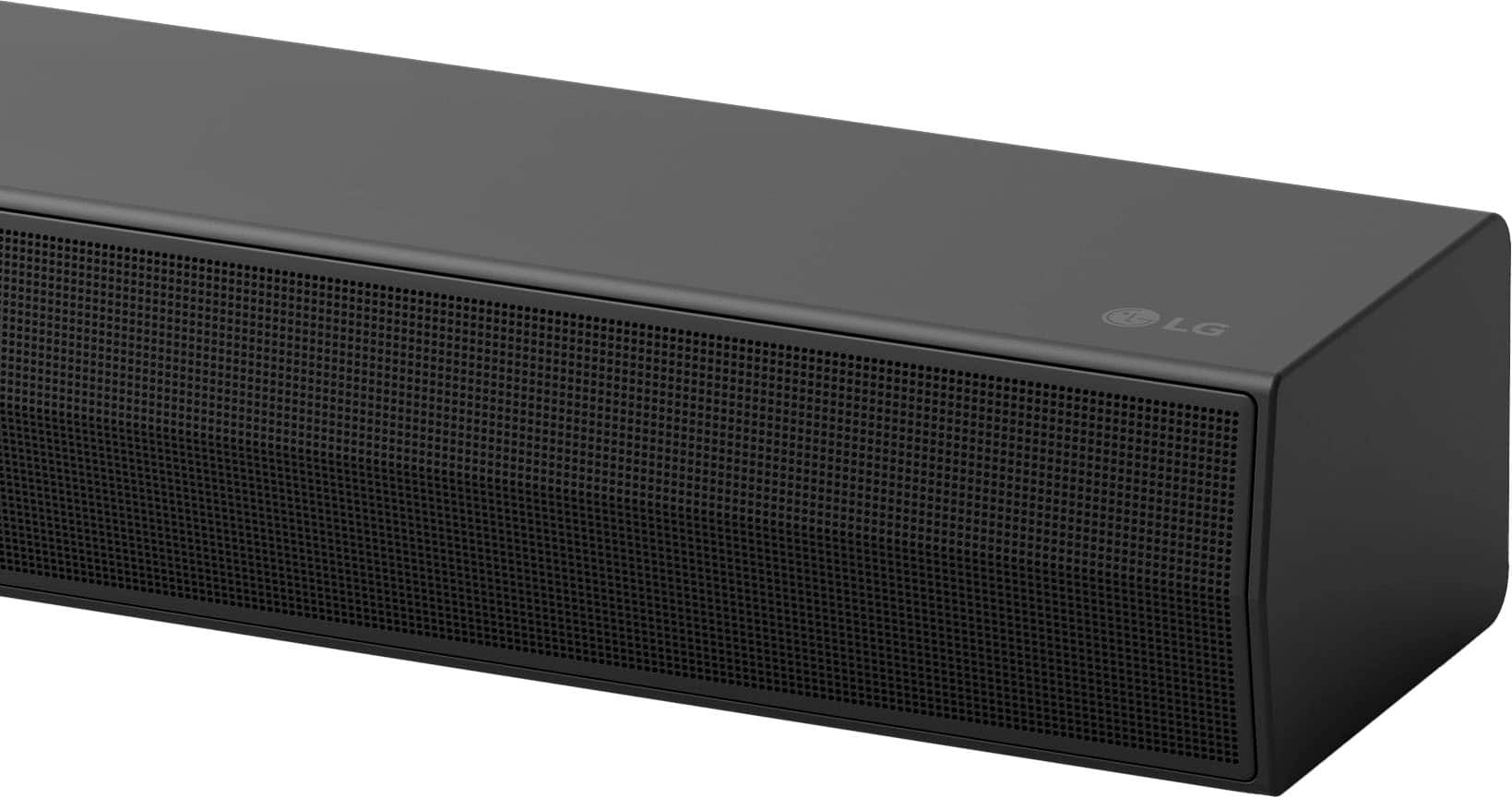
The LG S60TR uses a dedicated center channel driver in the main soundbar specifically for dialogue. This is the traditional home theater approach – center channel speakers are positioned directly below or above your TV screen, ensuring that voices appear to come from the characters' mouths rather than from the sides. The dedicated driver can be optimized specifically for the frequency range of human speech, typically around 300Hz to 3kHz.
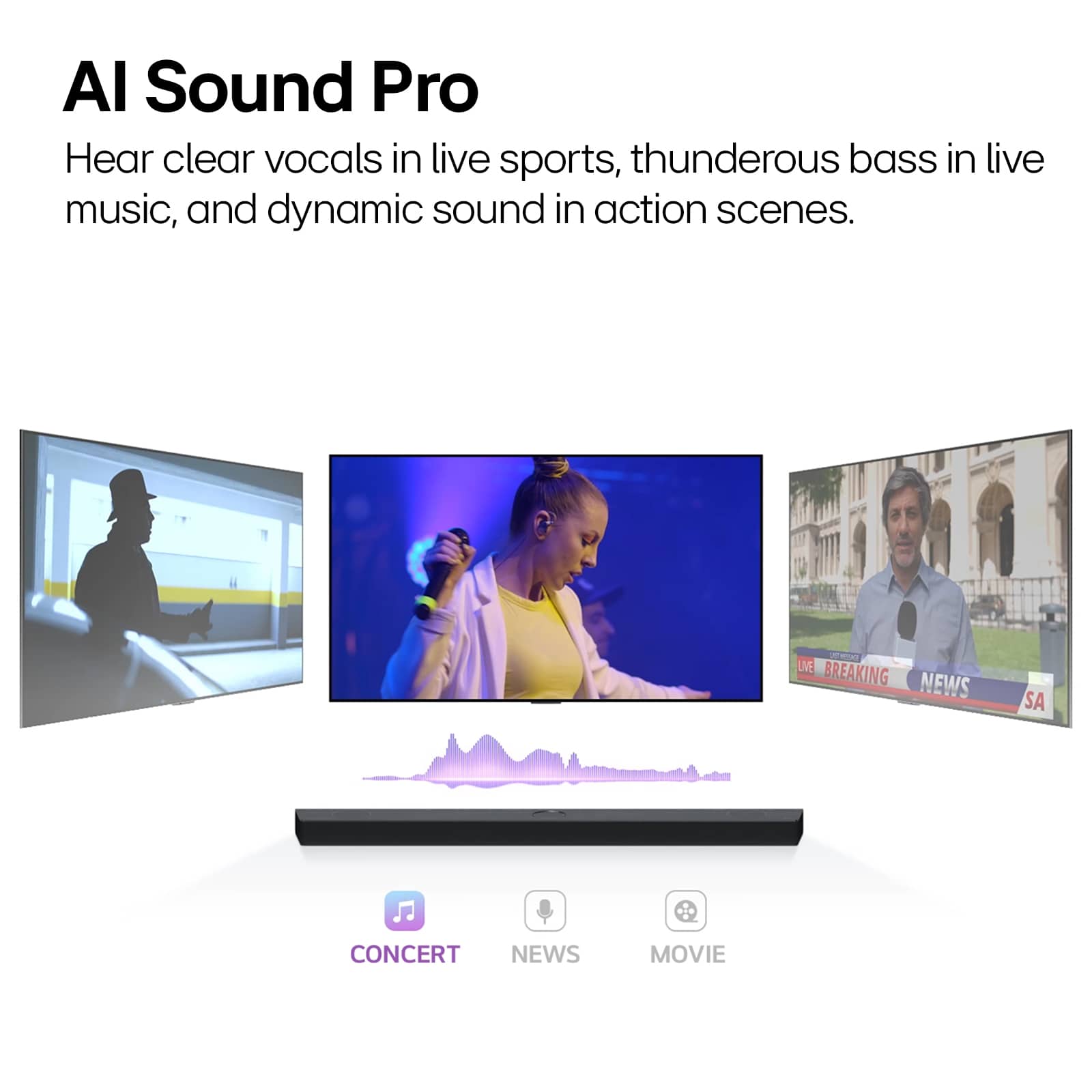
LG has also incorporated AI-powered dialogue enhancement that analyzes content in real-time and boosts vocal frequencies when needed. During my testing, I found this particularly helpful with content that has inconsistent audio mixing – older movies or streaming content where dialogue levels vary significantly.
The physical center channel approach works well for multiple listeners. Whether you're sitting directly in front of the TV or off to one side, dialogue clarity remains consistent because there's actually a speaker reproducing those frequencies in the center of your TV.
The Sennheiser AMBEO uses what's called "phantom center" imaging – it creates the illusion of a center channel using the left and right drivers in the soundbar. This is more sophisticated than it sounds; the processing ensures that dialogue appears to come from the center even though it's actually being reproduced by speakers positioned to the left and right.
For a single listener positioned centrally, phantom center imaging can actually sound more precise and focused than a physical center channel. The AMBEO's processing is sophisticated enough to maintain dialogue clarity even during complex scenes with lots of simultaneous audio elements.
However, phantom center imaging is more sensitive to listening position. Move significantly off-center, and dialogue can start to sound like it's coming from the nearest main driver rather than from the center. This is less of an issue for solo viewing but can be problematic for families or groups.
Modern gaming has become increasingly sophisticated in its use of spatial audio, making soundbar choice particularly important for gamers. The performance differences between these systems become quite pronounced in gaming scenarios.
The LG S60TR's physical rear speakers provide unambiguous directional audio cues that can give competitive gamers a real advantage. In first-person shooters, you can precisely locate enemy footsteps, gunfire, or approaching vehicles. The bass from the dedicated subwoofer adds impact to explosions and environmental effects without muddying the crucial mid-range frequencies where most game audio cues exist.
The system's relatively low latency (the delay between game audio being generated and you hearing it) makes it suitable for competitive gaming where split-second reactions matter. Physical speakers don't require the complex processing that can introduce delays.
The Sennheiser AMBEO excels with games designed for spatial audio, particularly single-player adventures and immersive experiences. Modern game engines like those used in recent Assassin's Creed or Call of Duty titles can take advantage of the AMBEO's height processing to create convincing overhead effects – arrows whistling past, aircraft flying overhead, or environmental ambience that seems to surround you.
The AMBEO also offers multiple HDMI inputs, allowing you to connect gaming consoles directly to the soundbar rather than routing everything through your TV. This can reduce latency and ensures you're getting the full audio signal without TV processing interference.
For streaming and casual gaming, both systems perform well, but the choice depends on whether you prioritize competitive accuracy (LG) or immersive atmosphere (Sennheiser).
Real-world performance depends heavily on how well these systems integrate with your specific living space. The LG S60TR requires more physical accommodation but offers more predictable results.
You'll need to position three separate components: the main soundbar (typically mounted below your TV or placed on a stand), the subwoofer (somewhere on the floor, often in a corner for bass reinforcement), and the rear speakers (behind or beside your seating area). This requires multiple power outlets and some consideration of sight lines and room aesthetics.
However, once positioned, the system's performance is largely independent of your room's acoustic properties. Hard or soft furnishings, ceiling height, and wall materials don't dramatically affect how the system sounds. This makes it more forgiving for unusual room layouts or spaces with challenging acoustics.
The Sennheiser AMBEO offers the obvious advantage of single-unit simplicity. It sits in one location (typically centered below your TV) and requires only one power connection. For apartment dwellers, minimalists, or anyone who wants to avoid multiple components, this is a significant practical advantage.
But the AMBEO's acoustic performance is much more dependent on your room. The initial setup process includes a room calibration routine where the soundbar plays test tones and listens to how they reflect around your space. This calibration is crucial for optimal performance – skip it or do it poorly, and you'll miss much of what makes the system special.
The calibration process requires a relatively quiet environment and takes about 10 minutes. The system is listening for ceiling height, wall distances, furniture placement, and surface materials. Rooms with very high ceilings, unusual shapes, or excessive soft furnishings (which absorb sound reflections) can limit the effectiveness of the virtual surround processing.
At $300, the LG S60TR represents exceptional value in the soundbar market. You're getting a complete 5.1 surround system with all necessary components included. Compare this to buying separate components – a decent soundbar, subwoofer, and rear speakers individually would typically cost significantly more.
The value proposition extends beyond just component count. LG has engineered this system to deliver satisfying results without requiring expertise or extensive setup. It's designed for mainstream consumers who want significantly better audio than TV speakers without becoming audio enthusiasts.
The Sennheiser AMBEO asks a different value question entirely. At $1,500-2,000 (depending on the specific model), you're paying for cutting-edge audio processing, premium build quality, and the convenience of a single-unit solution. The value here is less about component count and more about technological sophistication and space efficiency.
For urban dwellers or anyone where space is at a premium, the AMBEO's single-unit design might justify its premium pricing. You're also investing in a platform that receives regular firmware updates, adding new features and capabilities over time – something that's impossible with purely hardware-based systems.
The expandability factor also plays into long-term value. While the LG system is essentially complete as purchased, the AMBEO can grow with additional Sennheiser components. However, this expandability comes at Sennheiser's premium pricing – additional subwoofers or rear speakers cost significantly more than equivalent third-party options.
Both systems represent different approaches to staying current with evolving audio standards. The LG S60TR focuses on compatibility with current mainstream formats – Dolby Digital, DTS, and basic Dolby Atmos support through your TV's processing. This covers the vast majority of content people actually watch, from streaming services to Blu-ray discs.
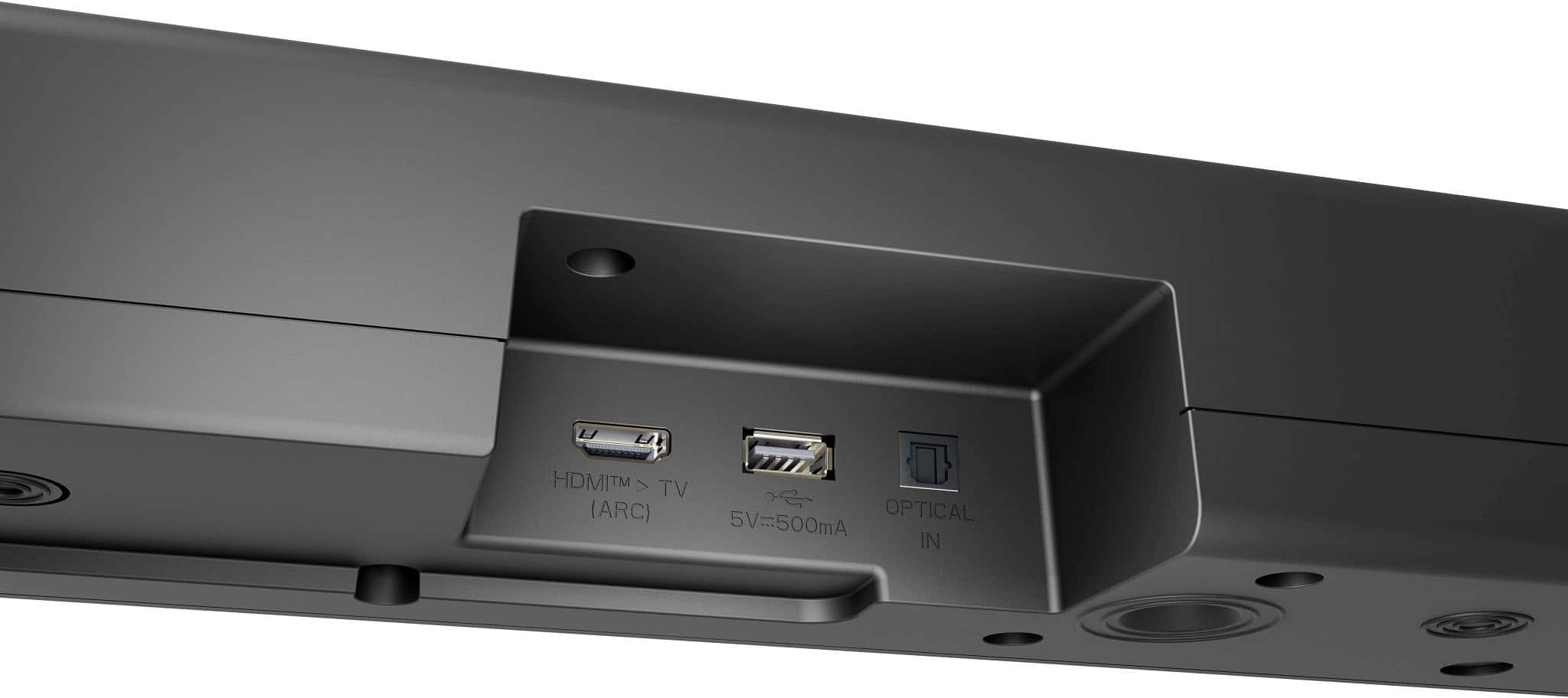
However, the LG's reliance on standard ARC (Audio Return Channel) rather than eARC (enhanced ARC) limits its ability to receive the highest-quality audio formats directly from your TV. This is less of a limitation than it might sound – most streaming content uses compressed audio formats anyway – but it does represent a potential bottleneck for future high-quality content.
The Sennheiser AMBEO is more thoroughly future-proofed with full eARC support, enabling uncompressed Dolby Atmos, DTS:X, and other advanced formats. It also supports emerging formats like MPEG-H Audio and 360 Reality Audio, positioning it well for whatever audio innovations come next.
The AMBEO's firmware updateability means it can potentially gain new capabilities over time. Since its launch, Sennheiser has added new streaming services, improved room calibration algorithms, and enhanced audio processing modes through software updates – capabilities that hardware-based systems simply can't match.
After extensive experience with both approaches, I'd recommend the LG S60TR for most people, particularly those new to upgrading from TV speakers. The combination of immediate satisfaction, authentic surround sound, and exceptional value makes it an ideal first step into better home audio. If you have adequate space for the components and want room-filling sound without complexity, the LG delivers exactly what it promises.
The system particularly excels for families or groups who watch together, as its performance doesn't depend on sitting in a specific location. Movie nights, sports viewing, and casual gaming all benefit from the system's straightforward approach to surround sound.
Choose the Sennheiser AMBEO if you're specifically constrained by space, have a dedicated primary listening position, and value technological sophistication over immediate impact. It's the better choice for audiophiles who want to explore the cutting edge of soundbar technology and don't mind paying premium prices for premium engineering.
The AMBEO also makes sense if you're planning to build a more complex audio system over time, as its expandability and advanced connectivity provide a solid foundation for future upgrades.
Ultimately, both systems solve the same fundamental problem – making your TV audio dramatically better than built-in speakers – but they do so in fundamentally different ways. The LG takes the proven path of multiple components and physical surround sound, while the Sennheiser pushes the boundaries of what's possible from a single unit. Your choice should align with your space constraints, technical preferences, and long-term audio ambitions.
| LG S60TR 5.1 Channel Soundbar ($300) | Sennheiser AMBEO Soundbar ($1,500-2,000) |
|---|---|
| Price - The biggest factor for most buyers | |
| $299.99 (exceptional value for complete 5.1 system) | $1,500-2,000 (premium pricing for cutting-edge technology) |
| Audio Channels - How surround sound is delivered | |
| 5.1 physical channels (true discrete surround) | 7.1.4 virtual channels (AMBEO 3D processing) |
| Bass System - Critical for movie impact and music enjoyment | |
| 220W dedicated wireless subwoofer (impactful, room-filling bass) | Built-in woofers with optional expansion (more controlled, less visceral) |
| Surround Technology - Determines immersion quality | |
| Physical rear speakers (authentic directional effects) | AMBEO virtualization (impressive but room-dependent) |
| Setup Complexity - How much effort required | |
| Multi-component setup (3 pieces, multiple outlets needed) | Single-unit installation (one device, includes room calibration) |
| Audio Format Support - Future-proofing for high-quality content | |
| Standard ARC, Dolby Digital/DTS (covers most content) | eARC, Dolby Atmos, DTS:X, MPEG-H (premium format support) |
| Room Requirements - How picky about placement and acoustics | |
| Flexible placement, works in most rooms consistently | Requires optimal room acoustics and positioning for best results |
| Total Power Output - Overall volume and dynamic range capability | |
| 440W total system power (adequate for most rooms) | 500W from 13 individual drivers (refined power distribution) |
| Connectivity Options - How you connect devices and stream content | |
| HDMI ARC, optical, Bluetooth, Wi-Fi (standard options) | eARC, multiple HDMI inputs, advanced streaming, Chromecast built-in |
| Expandability - Ability to add components later | |
| Complete system as-is, no expansion options | Can add up to 4 wireless subwoofers and other Sennheiser components |
| Dialogue Clarity - Essential for understanding speech | |
| Dedicated center channel with AI enhancement | Phantom center imaging with advanced DSP processing |
| Gaming Performance - Important for console and PC gaming | |
| Physical surround ideal for competitive gaming | Advanced spatial processing excellent for immersive single-player games |
| App Control and Customization - How much you can fine-tune the sound | |
| Basic LG app with preset modes | Comprehensive Sennheiser Smart Control app with detailed EQ |
| Firmware Updates - Long-term feature additions | |
| Limited update capability (hardware-focused system) | Regular firmware updates adding new features and improvements |
The LG S60TR ($300) offers exceptional value with a complete 5.1 surround system including wireless subwoofer and rear speakers for under $300. The Sennheiser AMBEO ($1,500-2,000) costs 5-7 times more but provides premium single-unit convenience and cutting-edge virtualization technology. For most buyers, the LG delivers better bang for your buck.
The fundamental difference is approach: the LG S60TR uses physical rear speakers and a separate subwoofer for true 5.1 surround sound, while the Sennheiser AMBEO uses advanced processing and 13 drivers in a single unit to create virtual surround effects. The LG provides authentic directional audio, while the AMBEO offers space-saving sophistication.
The LG S60TR typically delivers more impactful bass thanks to its dedicated 220W wireless subwoofer that can be positioned optimally in your room. The Sennheiser AMBEO has built-in woofers that provide more controlled, precise bass but may lack the room-shaking impact that movie lovers prefer. The LG wins for pure bass power.
This depends on your priorities. The LG S60TR's physical rear speakers provide authentic surround sound that works consistently regardless of room acoustics or seating position. The Sennheiser AMBEO can create convincing virtual surround from a single unit, but performance varies based on your room layout and where you sit.
The Sennheiser AMBEO is simpler to install since it's one unit with one power cable, though it requires a 10-minute room calibration process. The LG S60TR needs positioning of three components (soundbar, subwoofer, rear speakers) and multiple power outlets, but works immediately without calibration. Choose based on whether you prefer physical simplicity or setup simplicity.
Yes, both the LG S60TR and Sennheiser AMBEO work with any TV brand through HDMI ARC, optical, or Bluetooth connections. However, the LG offers enhanced integration features when paired with LG TVs, while the Sennheiser provides broader compatibility with premium audio formats through its eARC support.
For competitive gaming, the LG S60TR excels with its physical rear speakers providing precise directional audio cues for locating enemies or effects. The Sennheiser AMBEO is better for immersive single-player games with its advanced spatial processing and multiple HDMI inputs for direct console connection. Consider your gaming style when choosing.
The Sennheiser AMBEO requires minimal space as a single 49.6-inch unit that sits below your TV. The LG S60TR needs room for three components: the main bar, floor space for the subwoofer, and positioning for rear speakers behind your seating area. The Sennheiser is ideal for smaller rooms or apartments.
The Sennheiser AMBEO supports premium formats like uncompressed Dolby Atmos, DTS:X, and MPEG-H through eARC connectivity. The LG S60TR handles standard formats like Dolby Digital and DTS through regular ARC, which covers most streaming content and Blu-rays. The Sennheiser is more future-proof for high-quality audio.
The LG S60TR is a complete system with no official expansion options beyond what's included. The Sennheiser AMBEO can be expanded with up to four additional wireless subwoofers and other Sennheiser components, though at premium pricing. The Sennheiser offers more upgrade flexibility for future system growth.
Both excel at dialogue but differently. The LG S60TR uses a dedicated center channel that ensures consistent vocal clarity from any seating position. The Sennheiser AMBEO uses phantom center imaging with advanced processing that can sound more precise when seated centrally but may vary off-axis. The LG is more forgiving for multiple viewers.
Choose the LG S60TR if you want authentic surround sound, powerful bass, and exceptional value for a complete home theater upgrade. Pick the Sennheiser AMBEO if you prioritize space efficiency, cutting-edge technology, and have the budget for premium engineering. Most home theater enthusiasts will be satisfied with the LG's traditional approach and impressive performance per dollar.
We've done our best to create useful and informative comparisons to help you decide what product to buy. Our research uses advanced automated methods to create this comparison and perfection is not possible - please contact us for corrections or questions. These are the sites we've researched in the creation of this article: bestbuy.com - mynavyexchange.com - youtube.com - consumerreports.org - avsforum.com - rentacenter.com - bestbuy.com - homechoicestores.com - oconsommateur.com - lg.com - bestbuy.com - samsung.com - bestbuy.com - rtings.com - techradar.com - audioxpress.com - whathifi.com - upscaleaudio.com - soundstagesimplifi.com - global.sennheiser-hearing.com - sennheiser-hearing.com - audioadvice.com - abt.com - moon-audio.com

Privacy Policy
Terms and Conditions - Affiliate Policy
Home Security
© Copyright 2008-2026.
11816 Inwood Rd #1211, Dallas, TX 75244