

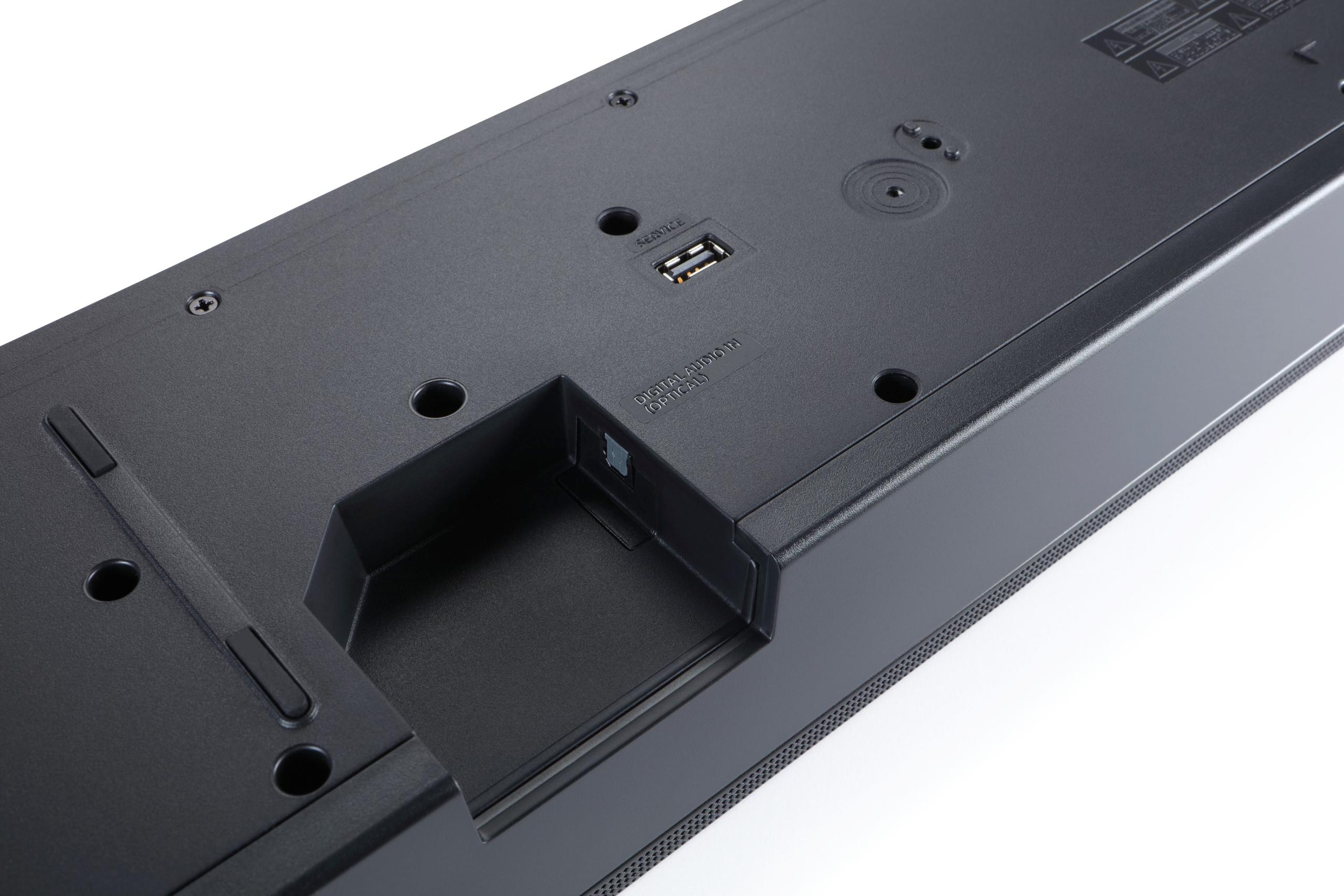
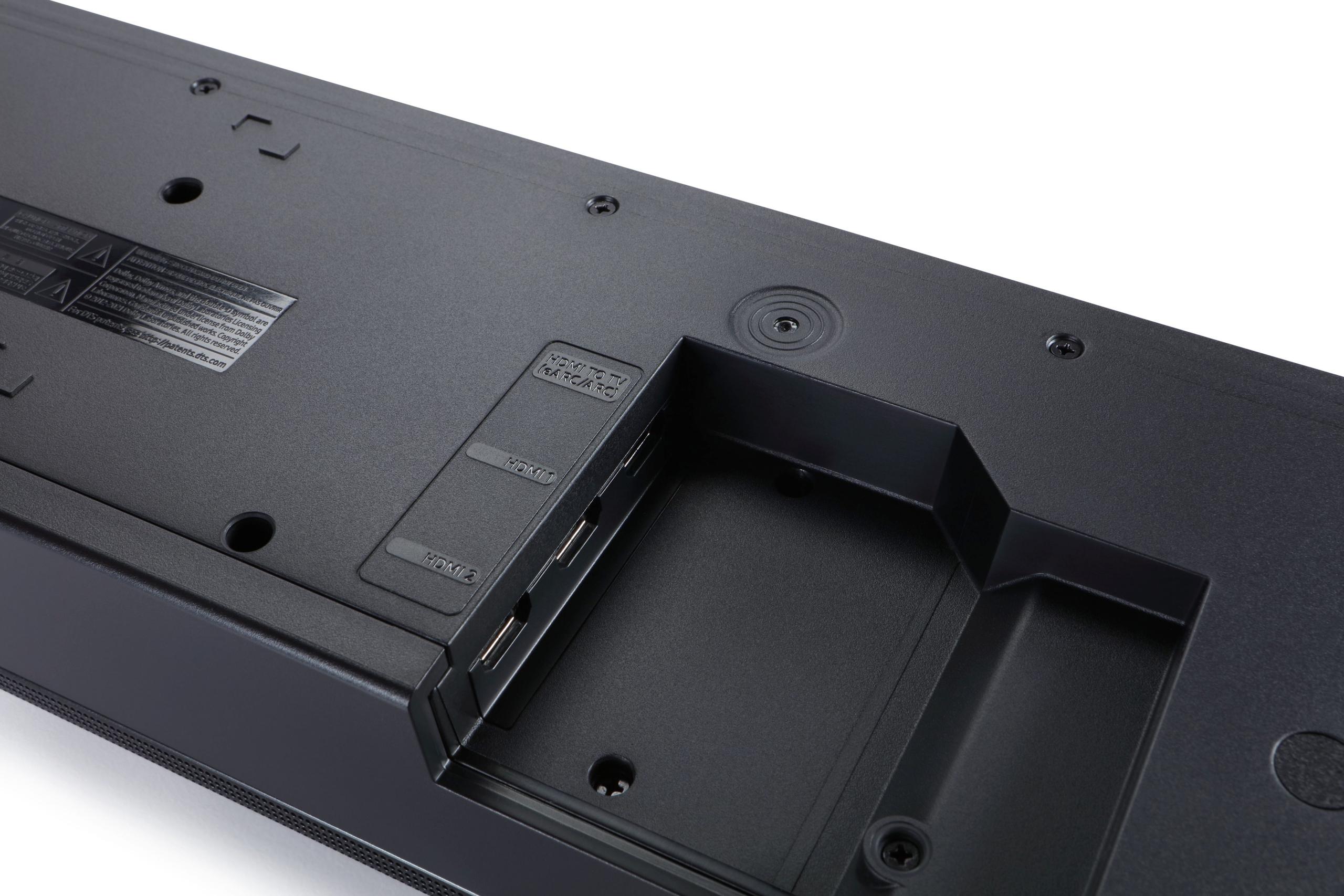
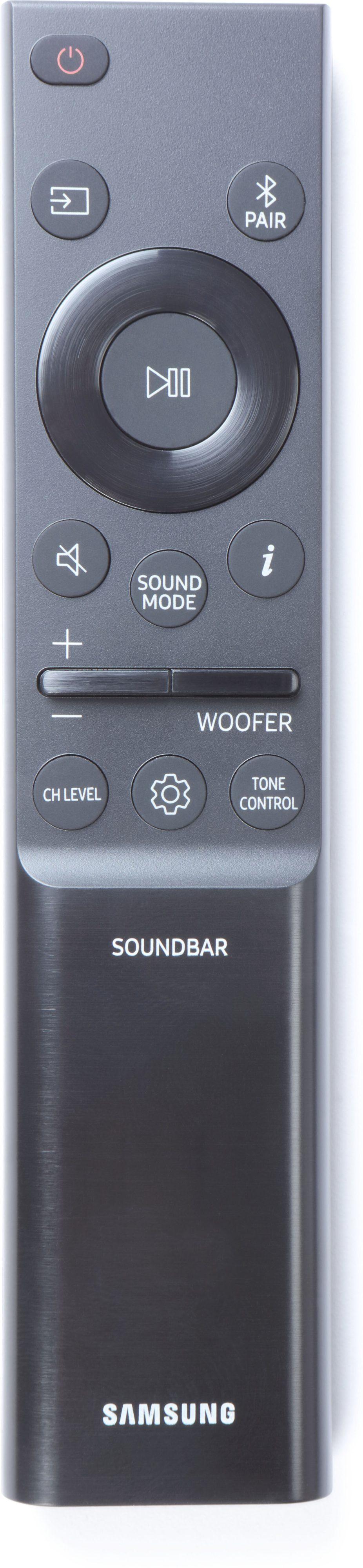
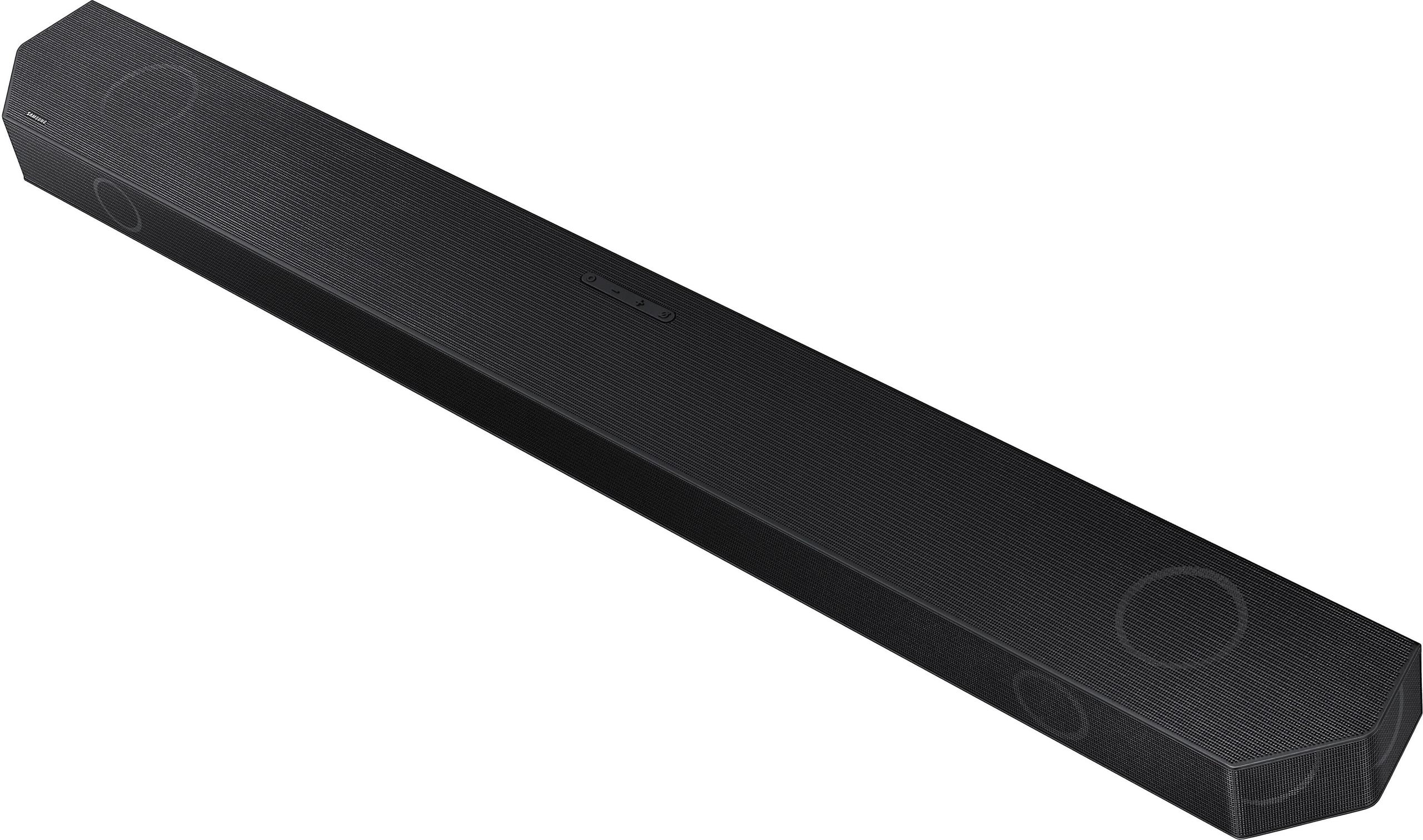


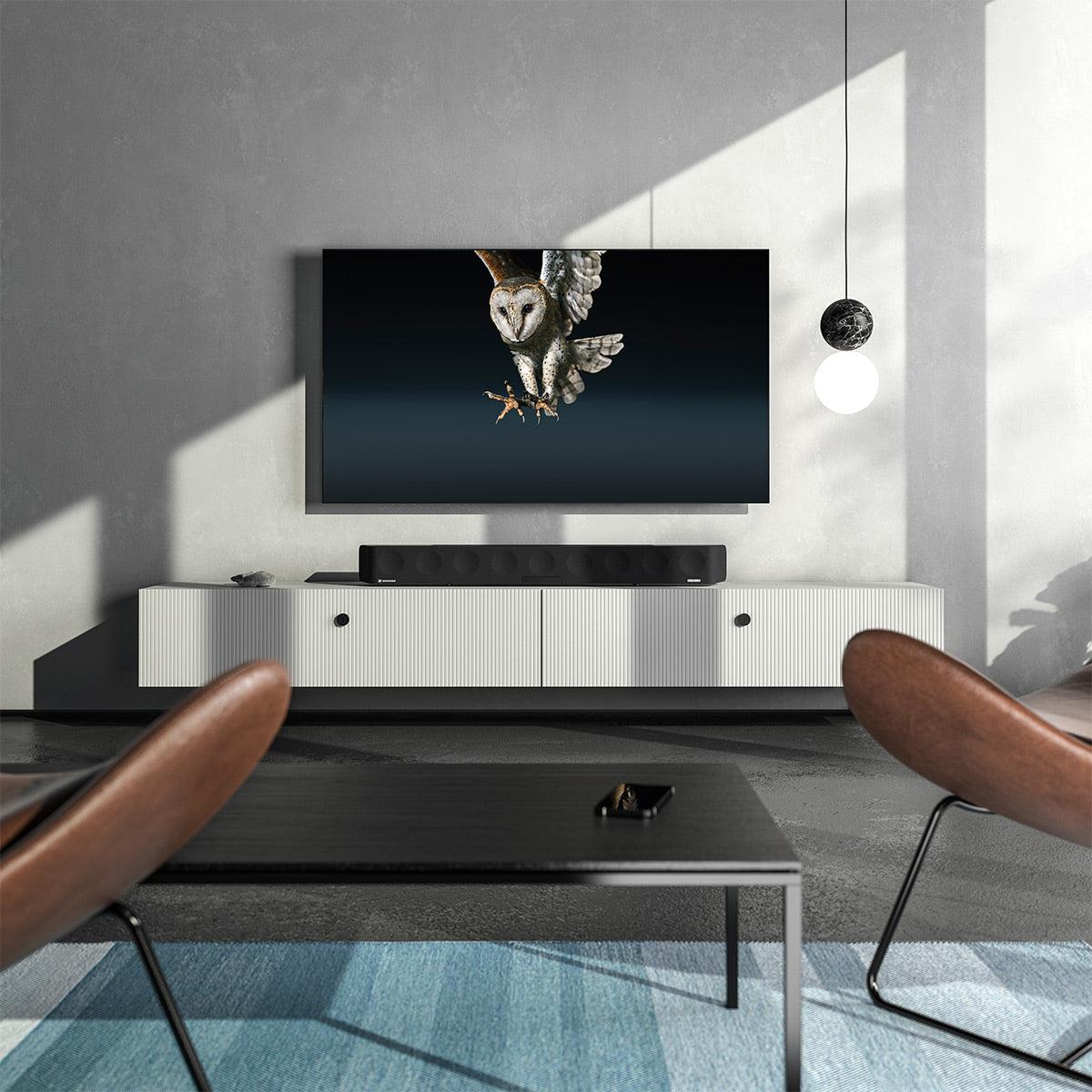

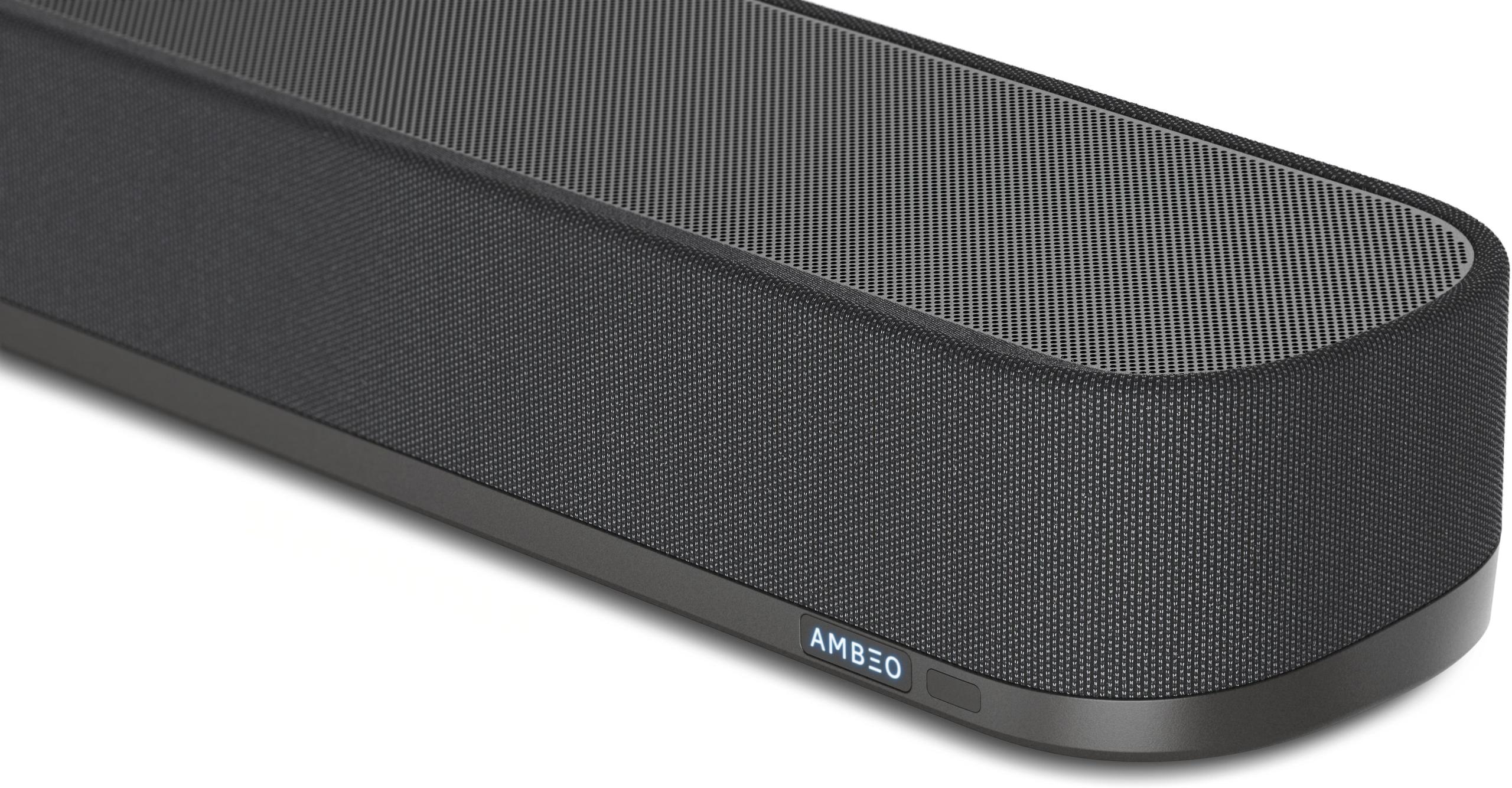

When you're ready to upgrade from your TV's built-in speakers, the world of premium soundbars can feel overwhelming. You've got two fundamentally different approaches here: the Samsung HW-Q990D ($847.99) with its full surround sound setup, and the Sennheiser AMBEO Max ($1,999.95) with its single-unit virtualization technology. Both promise to transform your living room into a home theater, but they take completely different paths to get there.
The premium soundbar market has exploded over the past few years, driven by our growing appetite for cinematic experiences at home. These aren't your basic TV sound upgrades – we're talking about sophisticated audio systems that can decode and reproduce the most advanced surround sound formats like Dolby Atmos and DTS:X. The key question isn't just "which sounds better," but "which approach works better for your specific situation."
Before diving into the specifics, let's establish what separates premium soundbars from the pack. At this level, you're paying for several key capabilities that budget options simply can't deliver.
Immersive Audio Processing is the big one. Both Dolby Atmos and DTS:X create what's called "object-based audio" – instead of just sending sound to specific channels, the audio contains metadata that tells your system exactly where sounds should appear in 3D space. When a helicopter flies overhead in a movie, these formats can make it sound like it's actually moving above your head, not just coming from speakers around you.
Room Adaptation Technology has become crucial because every living room is different. Hard surfaces reflect sound differently than soft furniture, and the size of your space dramatically affects how audio behaves. Modern premium soundbars use built-in microphones and sophisticated processing to measure your room's acoustics and adjust their output accordingly.
Connectivity and Gaming Support matter more than ever. With the PlayStation 5 and Xbox Series X pushing 4K gaming at 120 frames per second, your soundbar needs HDMI 2.1 support to handle these signals without compromise. Variable Refresh Rate (VRR) and Auto Low Latency Mode (ALLM) ensure your audio stays perfectly synced with fast-paced gaming action.
The main consideration when evaluating premium soundbars comes down to architecture: do you want a system with physical speakers placed around your room, or a single unit that uses advanced processing to create virtual surround sound? Each approach has distinct advantages, and your choice will significantly impact both performance and daily usability.
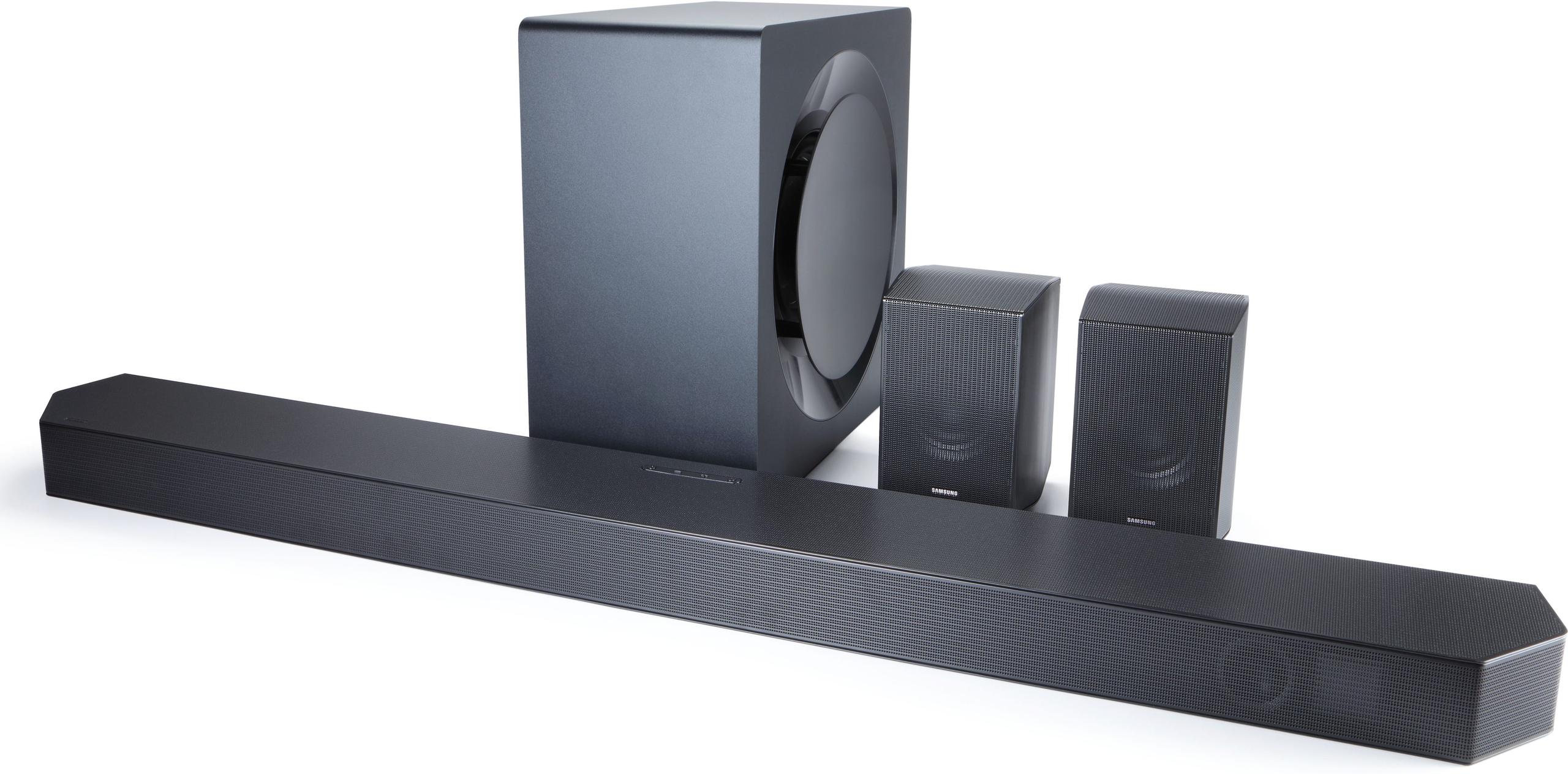
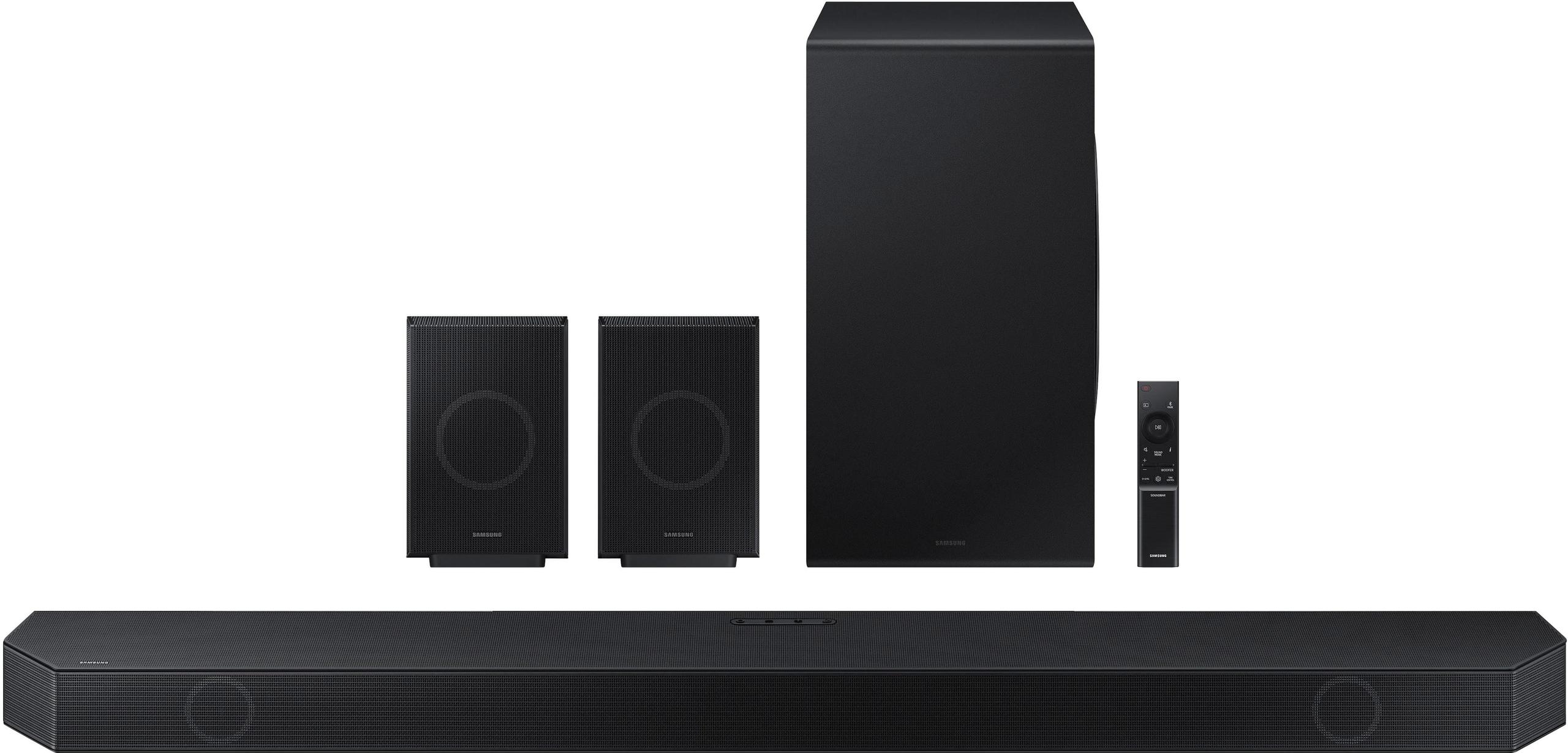
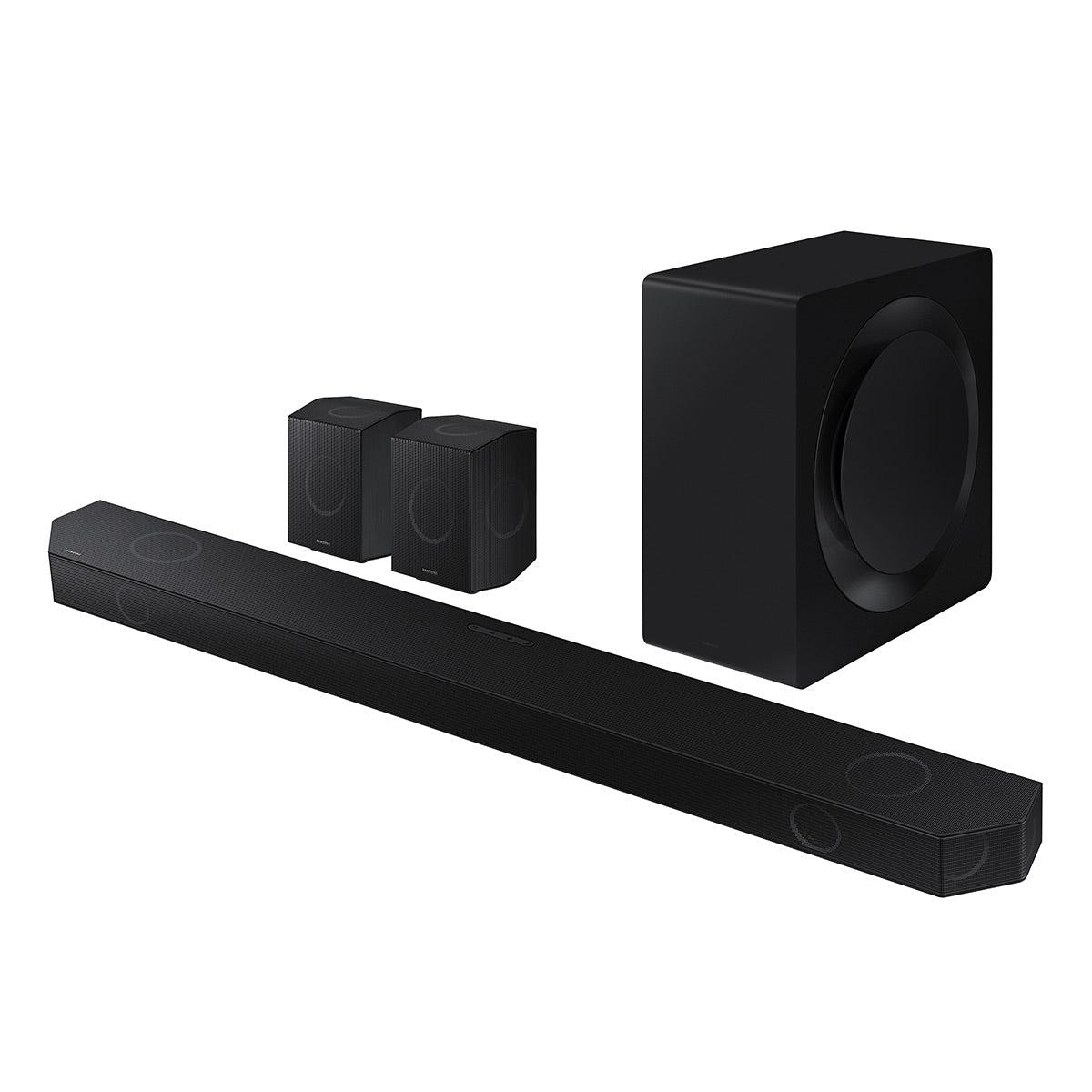
Samsung released the HW-Q990D in early 2024 as their flagship soundbar, and it represents the culmination of years of refinement in multi-speaker home audio. Originally priced at $1,999, it's now available for $847.99, making it an exceptional value proposition in the premium soundbar space.
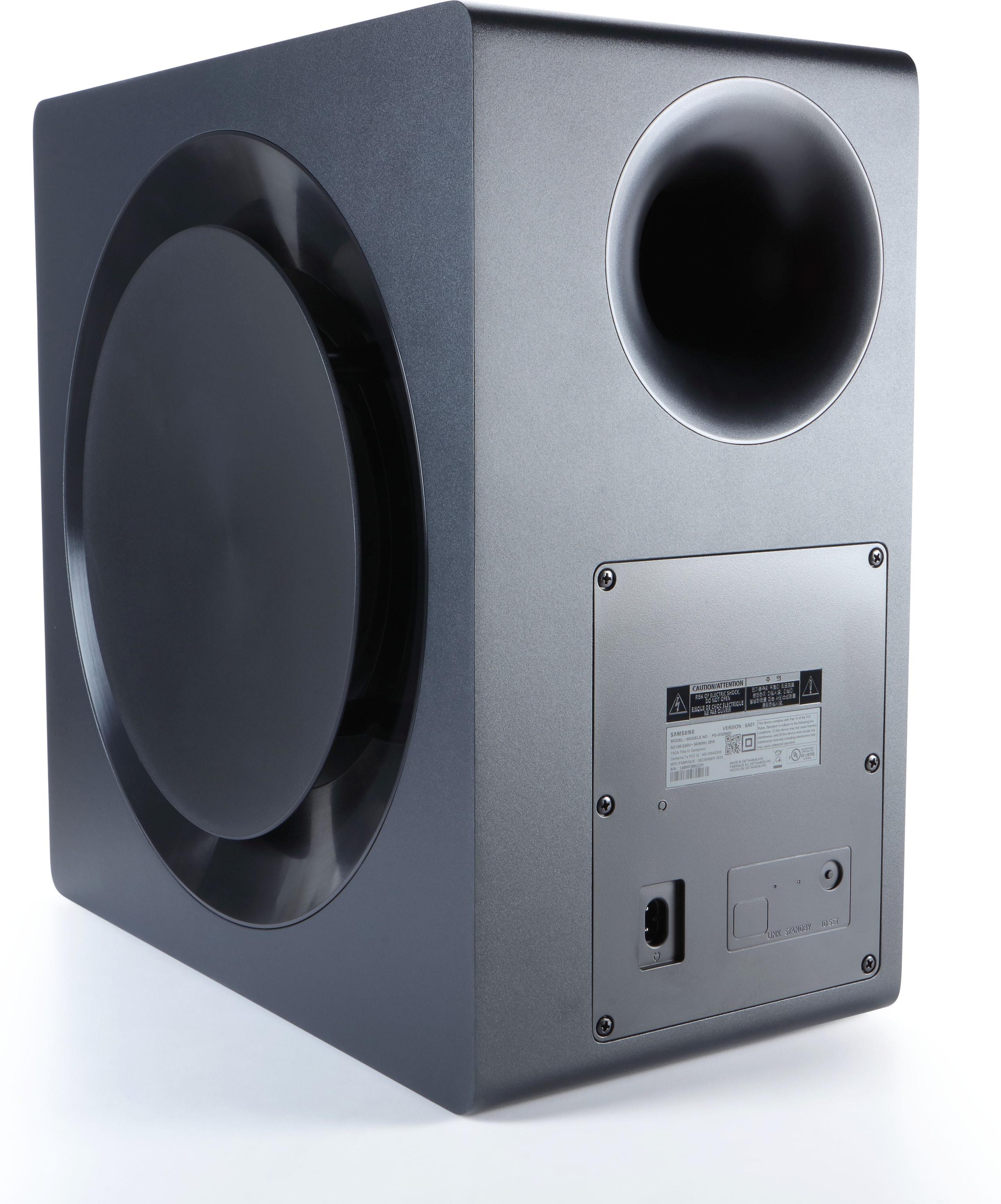
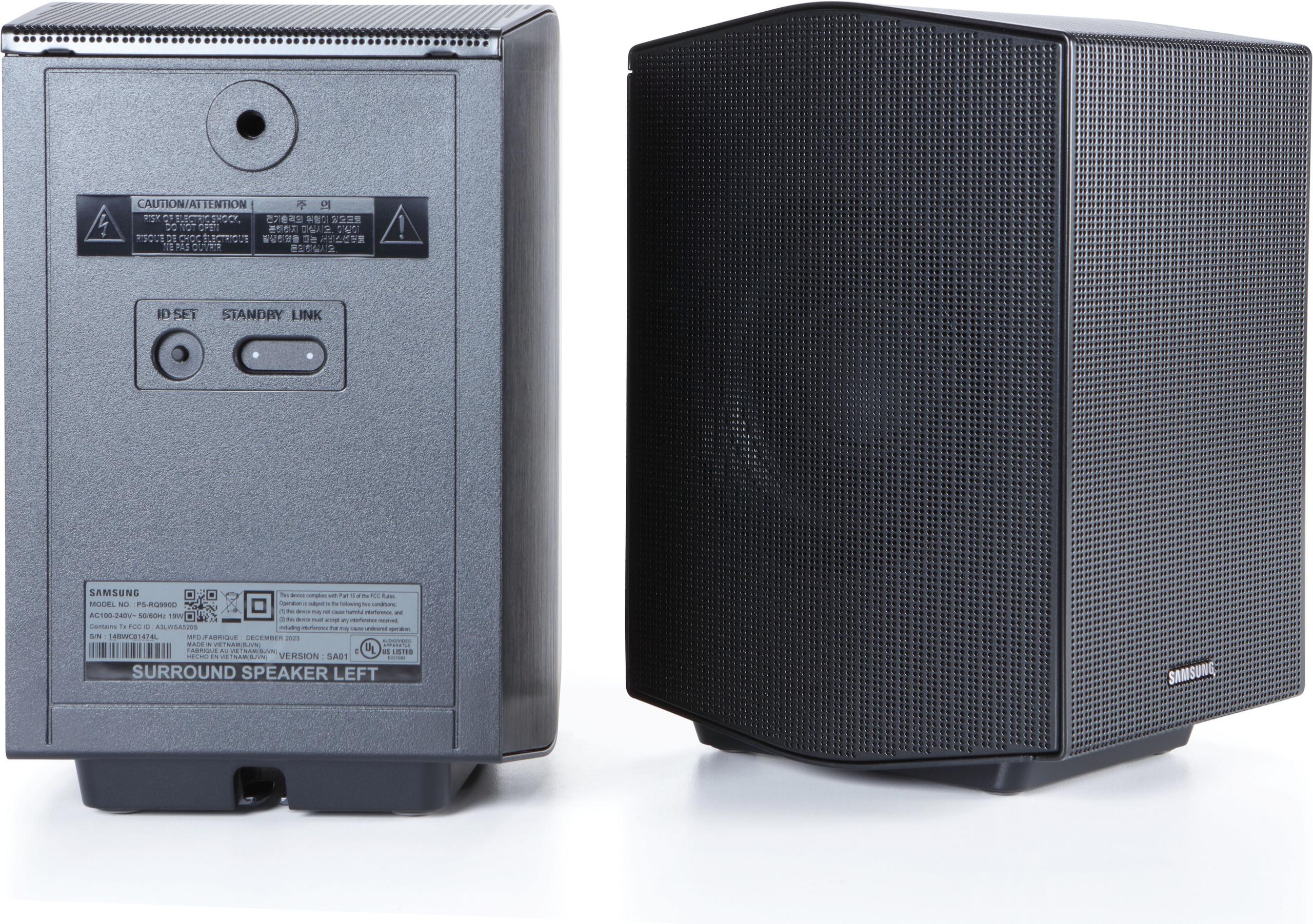
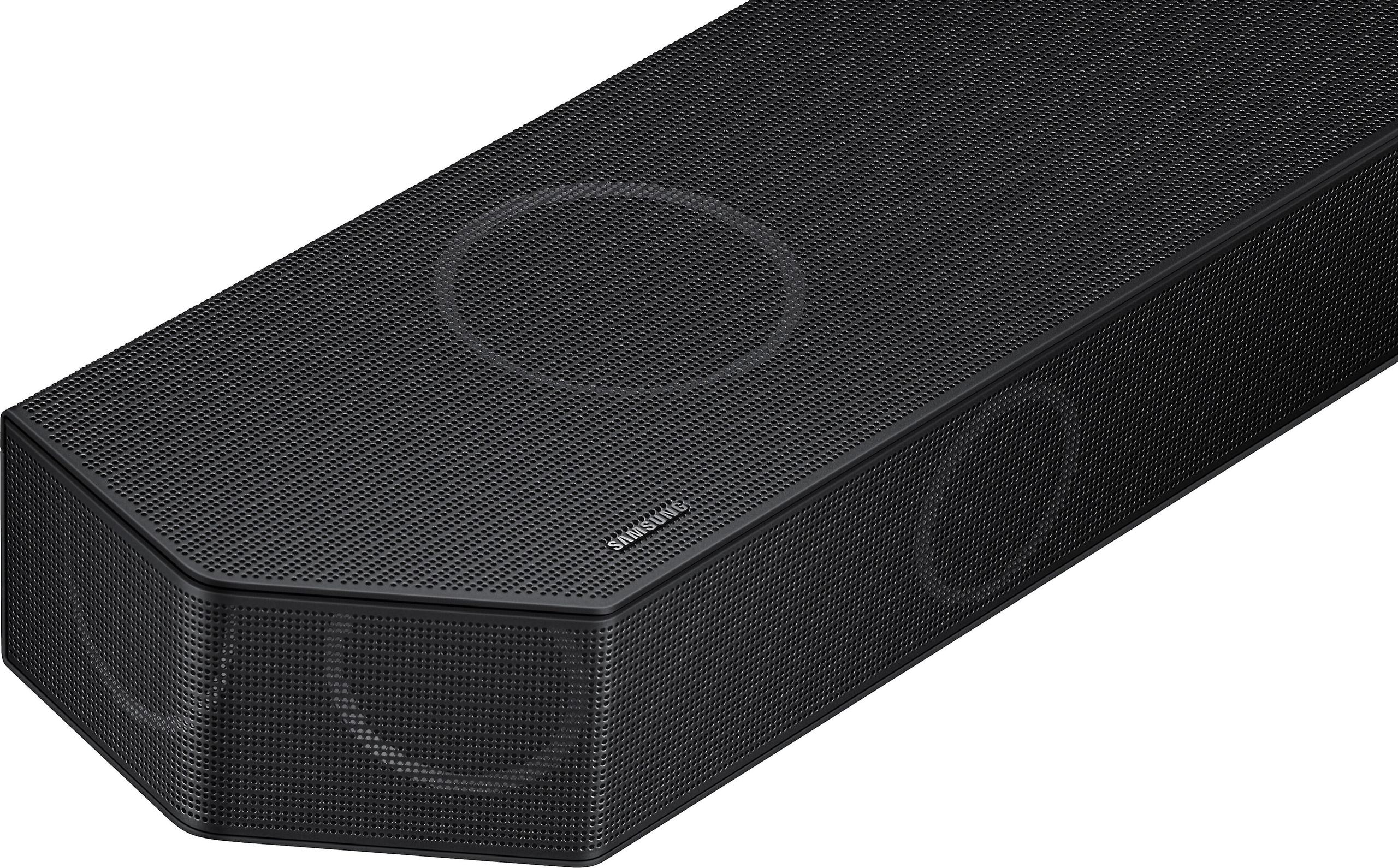
The system's 11.1.4 channel configuration means you get 11 main channels, one subwoofer channel, and four height channels – that translates to 22 individual drivers spread across four separate components. The main soundbar houses the front left, center, and right channels, plus side-firing drivers for width and up-firing drivers for height effects. Two wireless rear speakers each contain forward-firing, side-firing, and up-firing drivers, creating genuine surround sound. The wireless subwoofer handles the low-frequency effects that give movies their visceral impact.
What makes this system special is Samsung's recent focus on AI-enhanced processing. The SpaceFit Sound Pro feature uses the soundbar's built-in microphone to constantly analyze your room's acoustics and adjust the sound in real-time. This isn't a one-time calibration – it's continuously optimizing based on changing conditions, like whether you've rearranged furniture or how many people are in the room.
The Active Voice Amplifier Pro deserves special mention because dialogue clarity is often where soundbars struggle. This feature analyzes incoming audio and dynamically boosts vocal frequencies when it detects speech, ensuring you can always understand what characters are saying without cranking up the volume and disturbing neighbors.
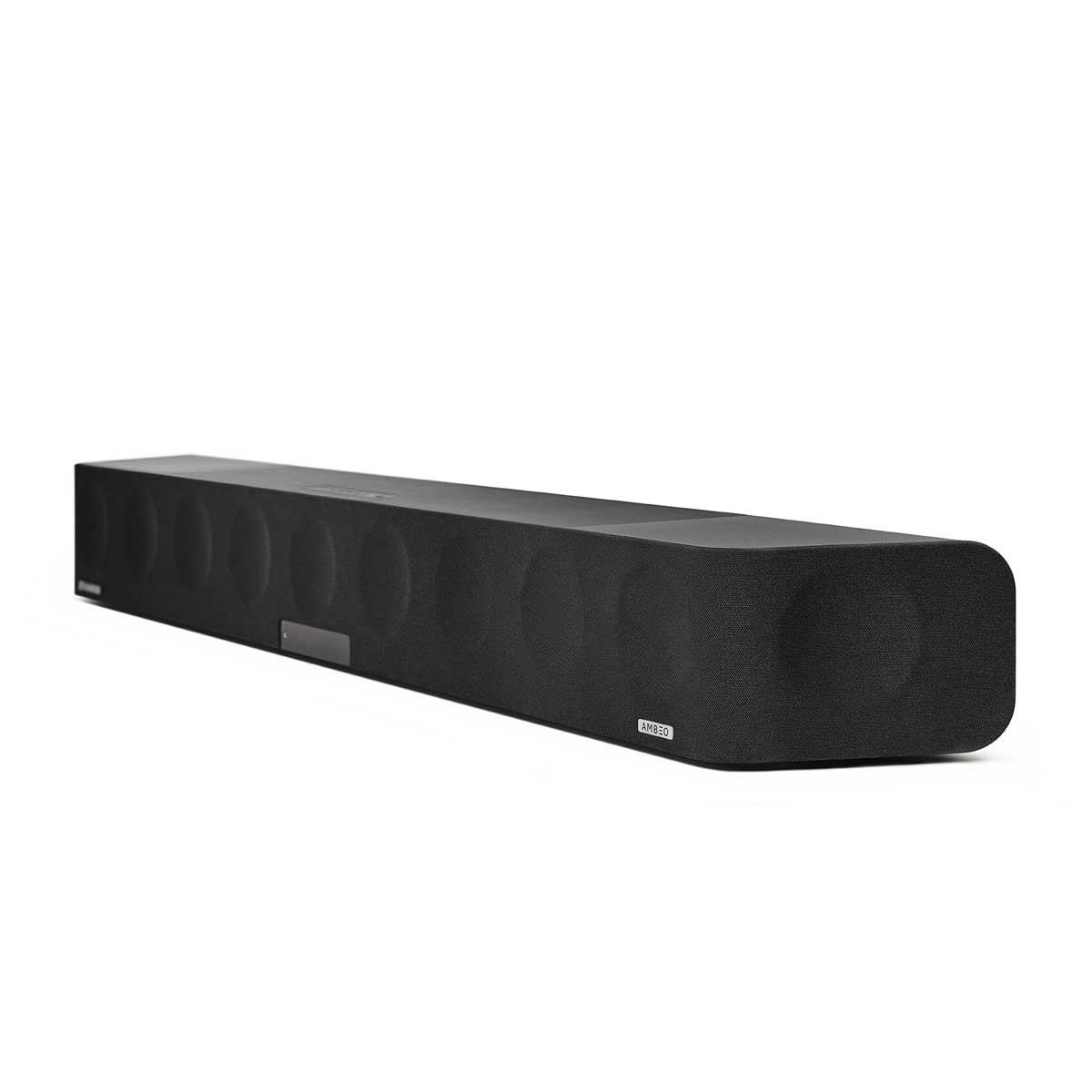
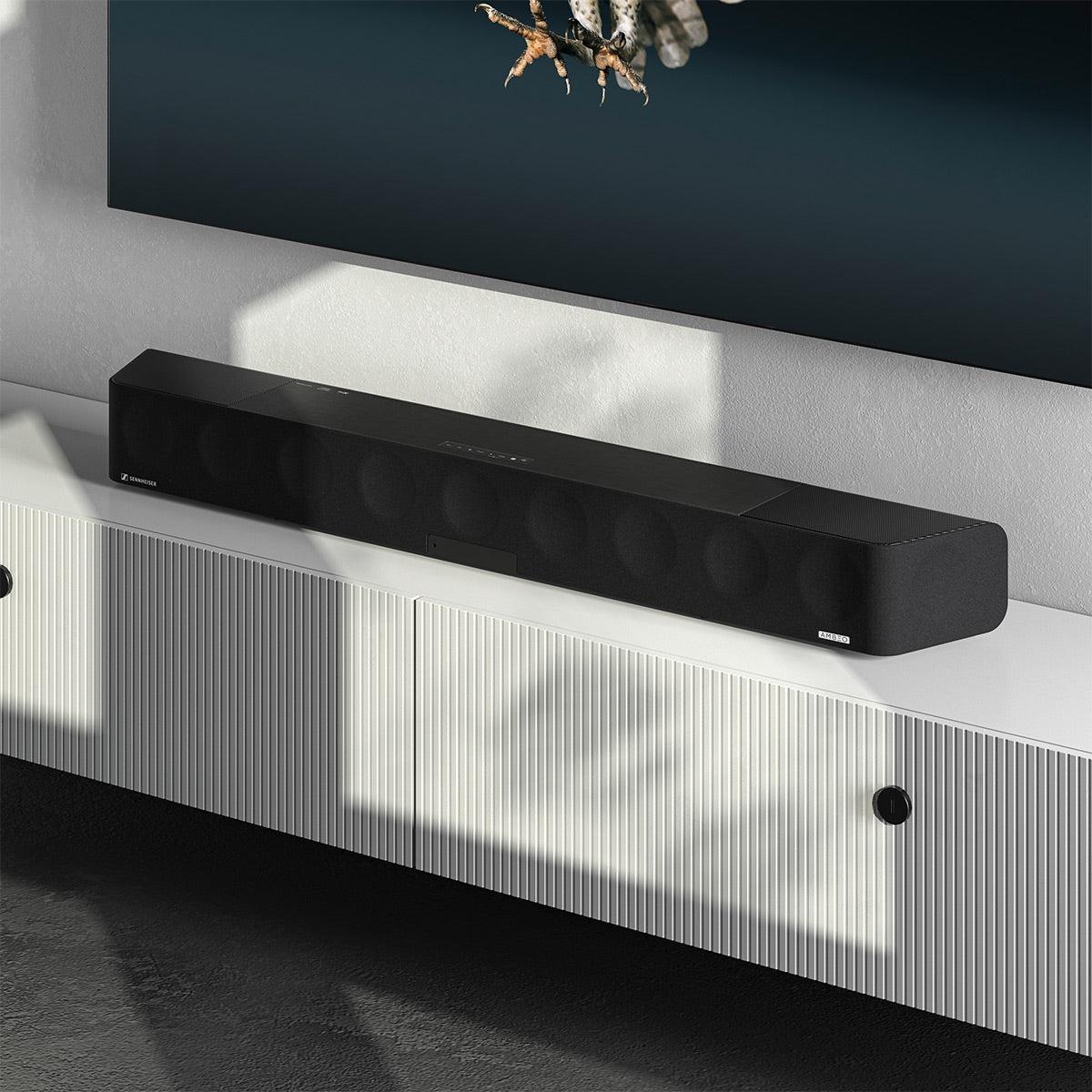
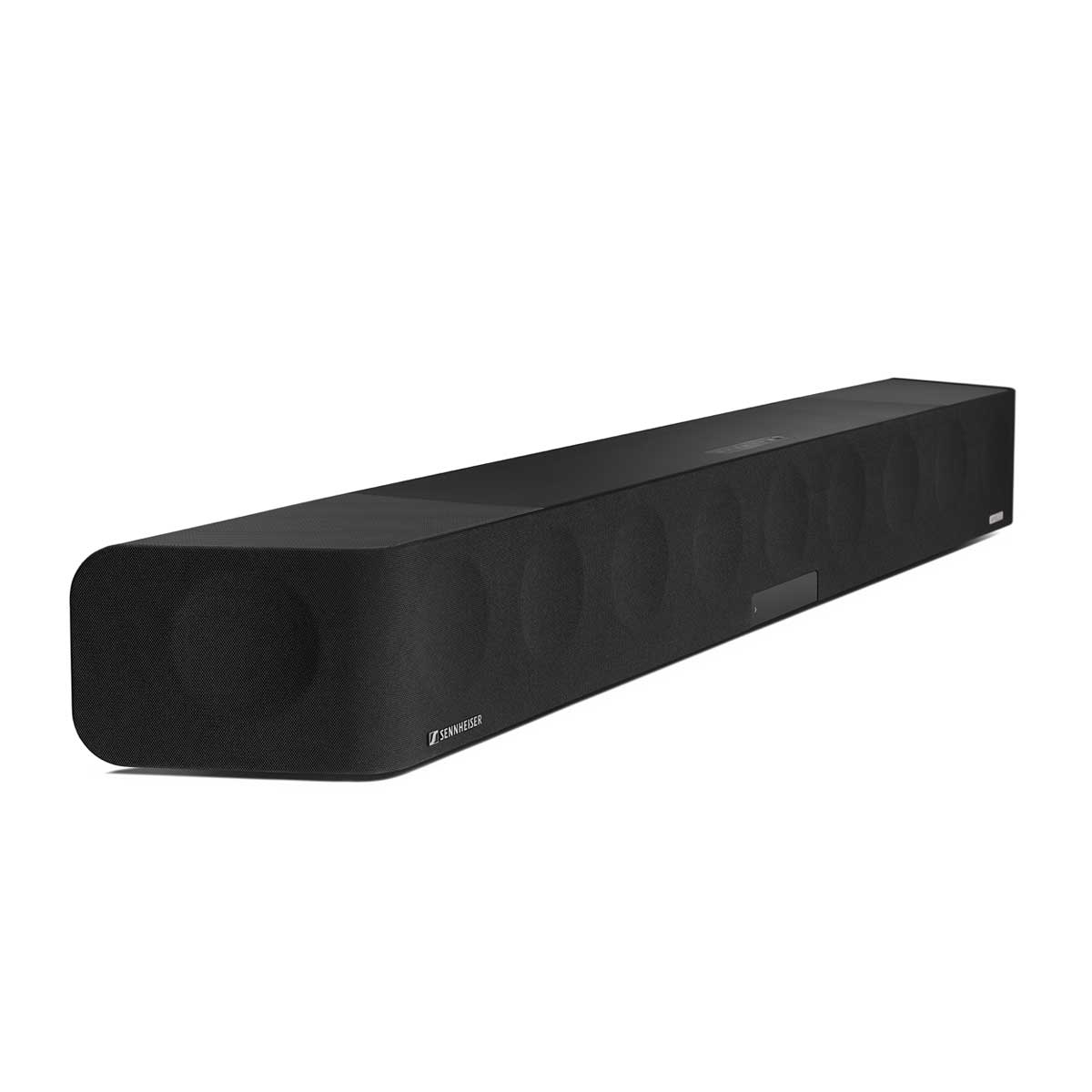
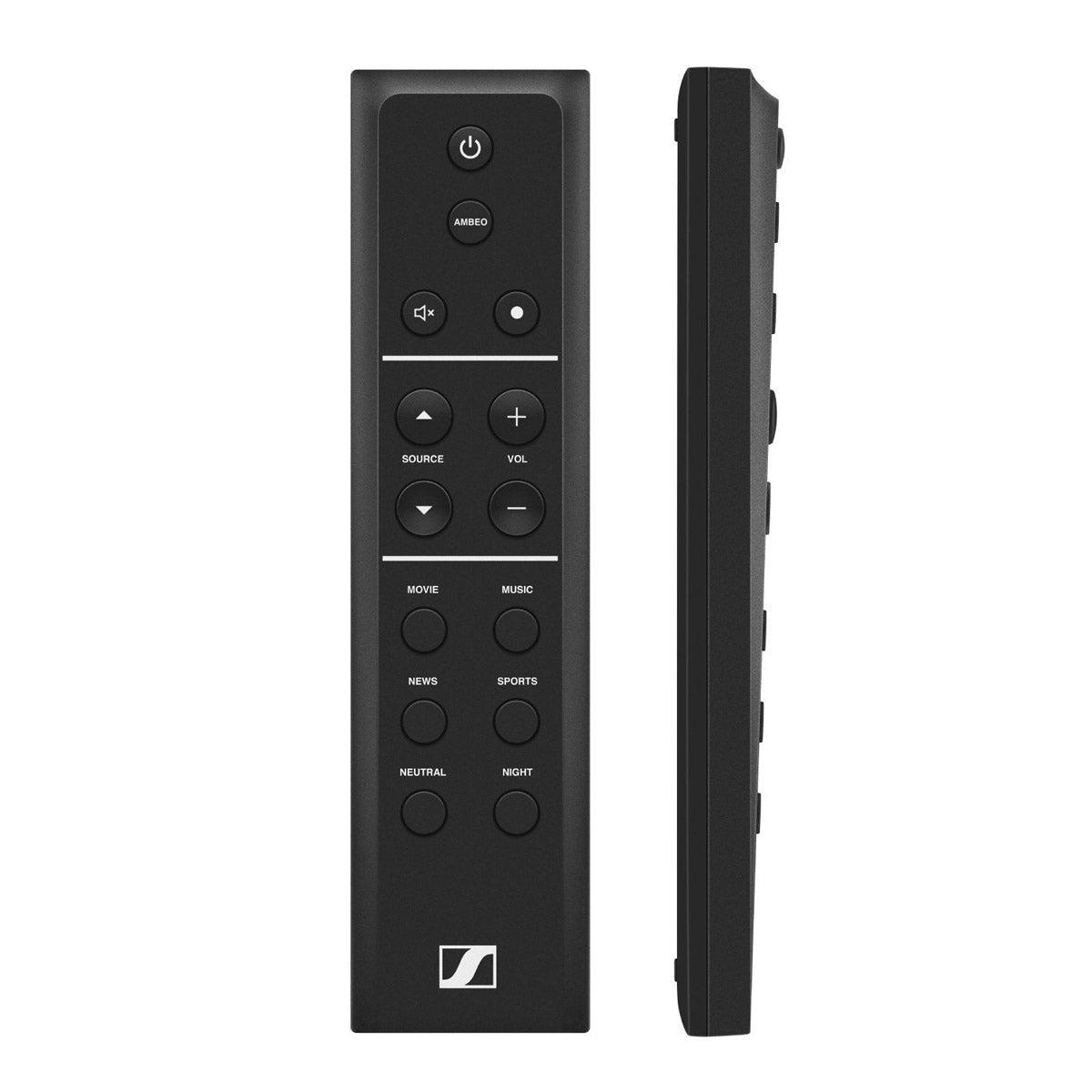
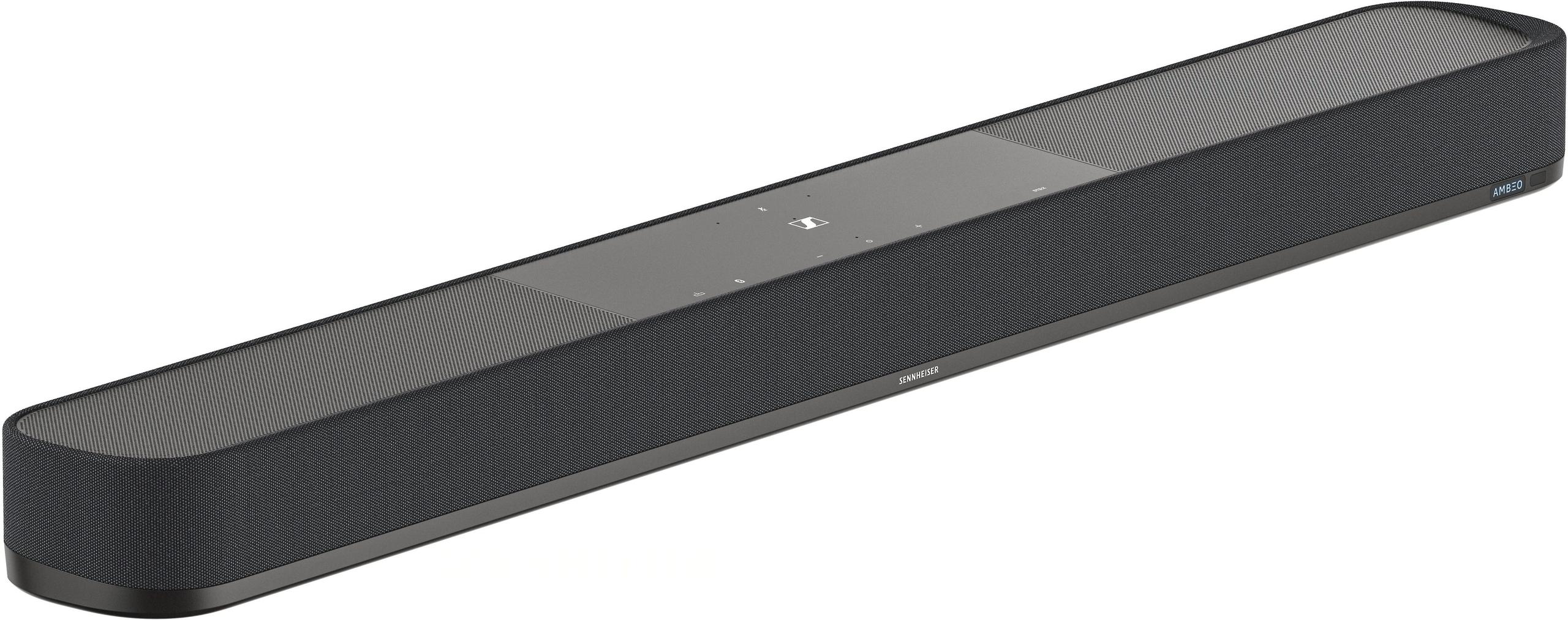
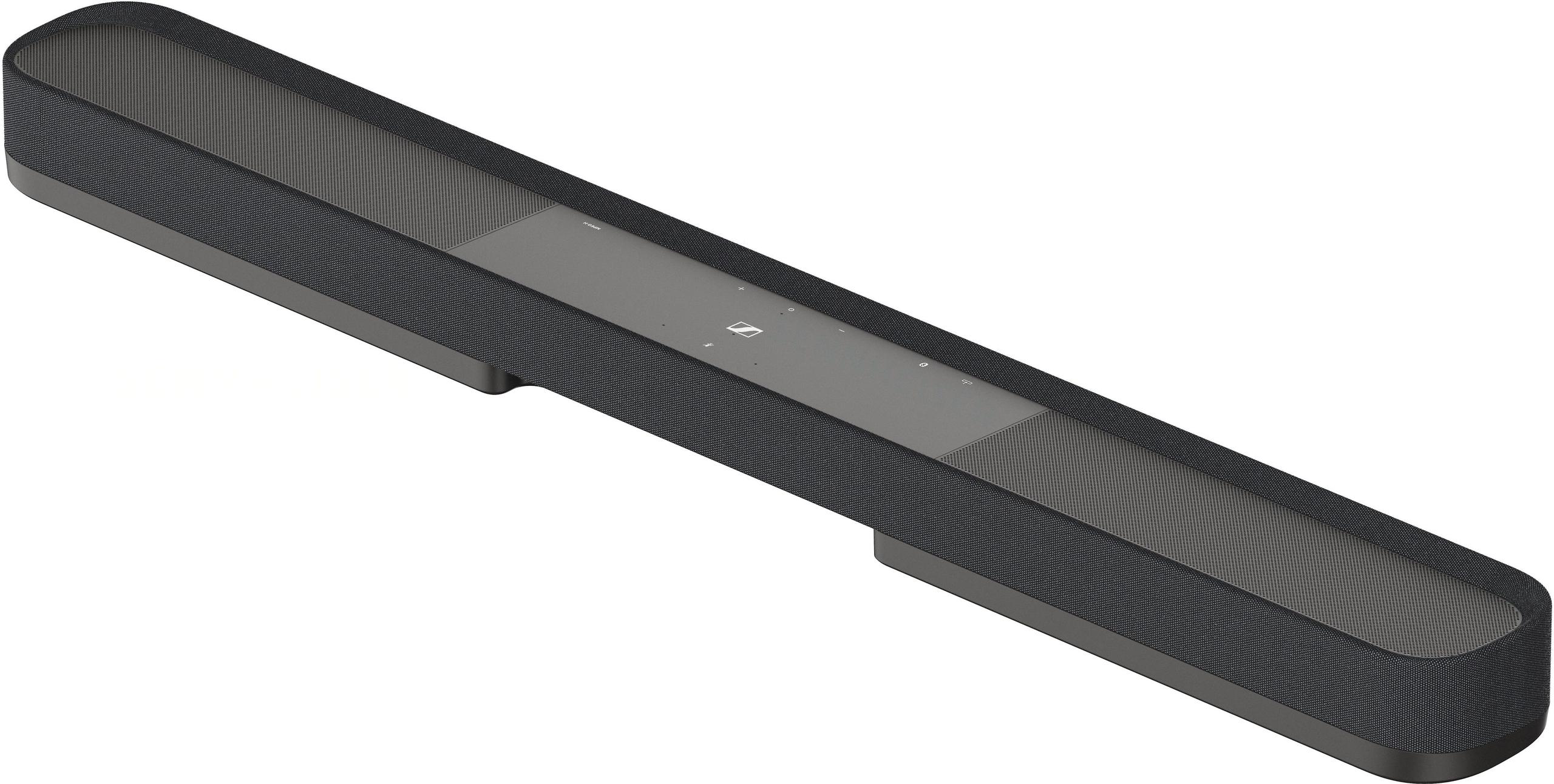
Sennheiser launched the AMBEO Max in 2023, building on decades of professional audio expertise. Originally priced at $2,499 and now at $1,999.95, this soundbar represents a completely different philosophy: instead of placing speakers around your room, it uses advanced virtualization to create the illusion of surround sound from a single unit.
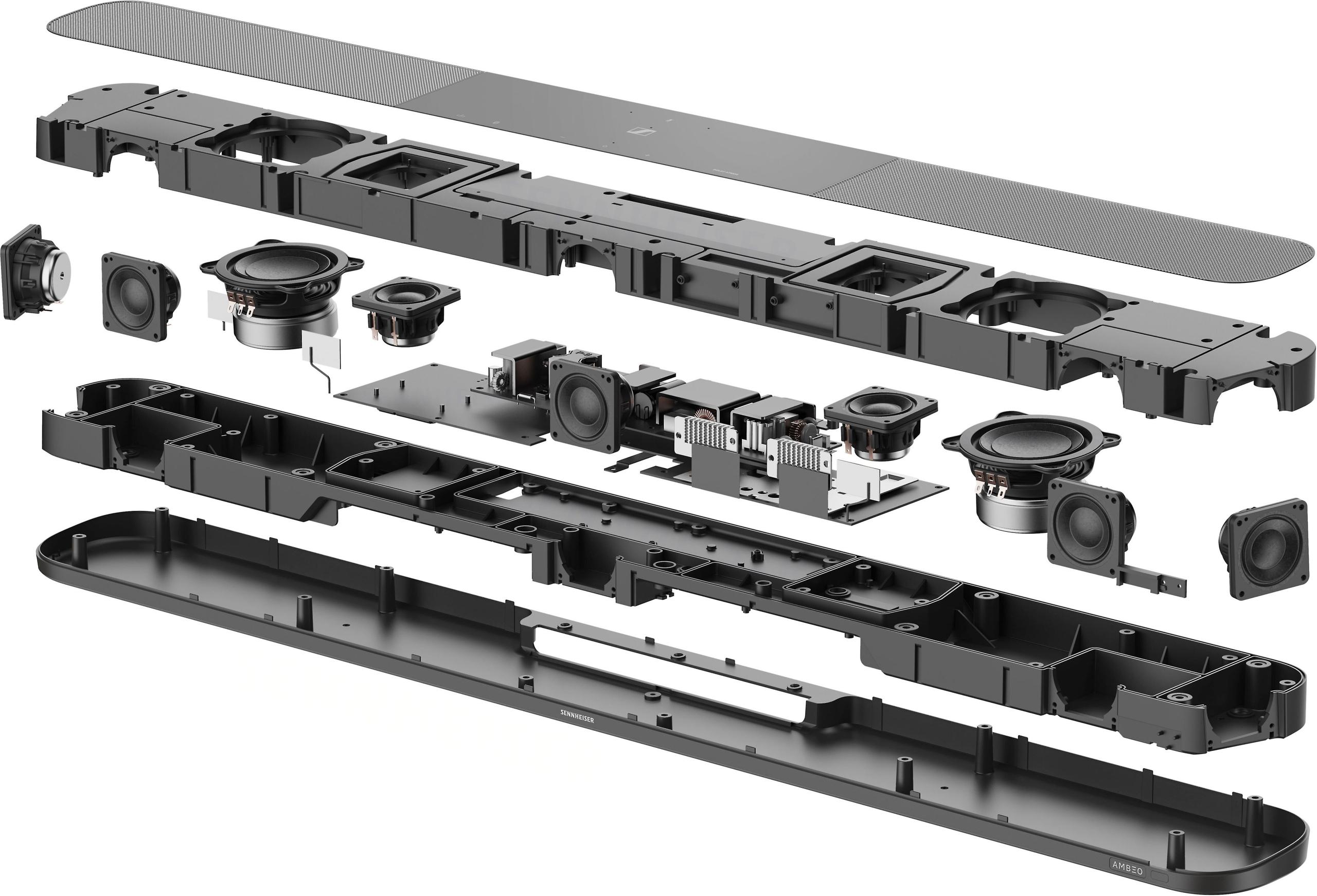
The AMBEO Max contains 13 precisely engineered drivers: six long-throw woofers for bass extension down to 30Hz, five aluminum dome tweeters for crystal-clear highs, and two full-range drivers positioned on top for height effects. But the real magic happens in the processing.
Sennheiser's AMBEO 3D technology, developed in partnership with the Fraunhofer Institute (the same organization that created the MP3 format), analyzes your room's acoustic characteristics and uses psychoacoustic principles to trick your brain into perceiving sounds coming from locations where no speakers exist. This virtualization can be remarkably convincing, especially for height effects where sound appears to come from above and around you.
The room calibration process is more sophisticated than most competitors. Using built-in microphones, the system maps your room's reflective surfaces and absorption characteristics, then creates a custom processing profile. This calibration runs automatically every time you power on the system, ensuring optimal performance regardless of environmental changes.
Having spent considerable time with both systems, the difference in immersion approaches is immediately apparent. The Samsung HW-Q990D creates what I call "true surround sound" – when a character walks behind you in a movie, the sound genuinely comes from behind your listening position. This physical placement of rear speakers provides an authenticity that virtualization can't quite match, especially for dramatic directional effects.
During my testing with action sequences like the helicopter chase in Mission: Impossible, the Samsung's ability to pan sounds seamlessly from front to rear speakers created a convincing sense of being inside the action. The wireless subwoofer adds genuine room-shaking bass that you feel as much as hear. However, this system requires careful speaker placement – the rear speakers need clear line-of-sight to the main unit and proper positioning relative to your seating area.
The Sennheiser AMBEO Max takes a more subtle approach, but one that can be equally impressive in the right circumstances. Its AMBEO processing creates what feels like a "sound bubble" around your listening position. Height effects are particularly convincing – rainfall or aircraft sounds genuinely appear to come from above, even though all drivers are contained in the single soundbar unit.
Where the Sennheiser struggles is with behind-the-listener effects. While it can create a sense of width and height, sounds that should originate from directly behind you often appear to come from the sides instead. This limitation is inherent to single-unit designs, no matter how sophisticated the processing.
For music listening, the difference between these systems becomes stark, and it highlights Sennheiser's professional audio heritage. The AMBEO Max delivers what I can only describe as audiophile-grade music reproduction from a soundbar form factor. Its frequency response is remarkably neutral, meaning it doesn't artificially boost bass or treble to create a "wow factor" that might impress in short demonstrations but becomes fatiguing over extended listening sessions.
Vocal reproduction is where the Sennheiser truly shines. Whether you're listening to intimate acoustic performances or complex orchestral pieces, instruments and voices maintain their natural timbre and spatial relationships. The soundstage – the perceived width and depth of the musical performance – extends well beyond the physical boundaries of the soundbar itself.
The Samsung HW-Q990D, while capable with music, shows its home theater optimization. It excels with dynamic, percussion-heavy music where its powerful subwoofer and multi-speaker setup can showcase their capabilities. However, some listeners might find a slight "haziness" in the midrange frequencies that can make acoustic music sound less precise than through the Sennheiser.
This is where the timing of each product's release becomes crucial. The Samsung HW-Q990D was designed with current-generation gaming in mind, featuring full HDMI 2.1 support with 4K/120Hz passthrough, Variable Refresh Rate (VRR), and Auto Low Latency Mode (ALLM). These features are essential for PlayStation 5 and Xbox Series X gaming, where visual fidelity and response time can impact your competitive performance.
Game Mode Pro goes beyond basic audio processing, analyzing the type of game you're playing and adjusting the audio profile accordingly. Racing games get enhanced engine sounds and spatial cues for approaching opponents, while first-person shooters receive boosted directional audio for enemy positioning.
The Sennheiser AMBEO Max, designed before the current gaming generation was fully established, lacks HDMI 2.1 support. While it still handles gaming audio well, you'll be limited to 4K/60Hz signals, potentially missing out on the full capabilities of modern gaming systems.
In a dedicated home theater environment, both systems reveal their true character, but they cater to different priorities. The Samsung HW-Q990D creates what feels like a genuine cinema experience. The physical separation of channels means dialog comes clearly from the center, effects pan smoothly across the front soundstage, and surround effects genuinely envelop the listening area.
The system's ability to handle complex, multi-layered soundtracks is impressive. During intense action sequences with overlapping explosions, dialog, and musical score, the Samsung maintains clarity and separation between elements. The wireless subwoofer provides the kind of tactile bass response that makes you feel like you're in a commercial theater.
However, this comes with setup complexity. Positioning four separate components optimally can be challenging, especially in smaller rooms or spaces with furniture constraints. The rear speakers need to be placed at specific angles and distances from your seating position, and wireless connectivity, while convenient, occasionally experiences brief dropouts during extended listening sessions.
The Sennheiser AMBEO Max offers a more refined, analytical approach to home theater audio. Its strength lies in reproducing the subtle details and spatial cues that create atmosphere and emotional engagement. Dialog is exceptionally clear and natural, while ambient effects create convincing environmental immersion.
Where it excels is in consistency – there are no "sweet spots" where the audio sounds dramatically better or worse. The AMBEO processing creates a wide listening area where multiple viewers can enjoy optimal sound quality, making it ideal for family movie nights.
At current pricing, the Samsung HW-Q990D ($847.99) represents extraordinary value in the premium soundbar market. The 57% discount from its original $1,999 price point means you're getting flagship-level performance at mid-range pricing. For users who want maximum immersion and don't mind the setup complexity, it's difficult to find better bang for your buck.
The complete system includes everything needed for true surround sound – no additional purchases required. The HDMI 2.1 support future-proofs your investment for current and next-generation gaming systems, while the advanced room calibration ensures optimal performance regardless of your space's acoustics.
The Sennheiser AMBEO Max ($1,999.95) commands a significant premium, but it's targeting a different buyer. You're paying for exceptional build quality, refined audio engineering, and the convenience of a single-unit solution. For audiophiles who prioritize music listening and want a premium soundbar that doubles as a capable home theater system, the price reflects genuine engineering excellence.
The question isn't whether the Sennheiser costs more – it's whether the superior music performance, premium construction, and setup simplicity justify the additional investment for your specific use case.
Both manufacturers have incorporated cutting-edge technologies that point toward the future of home audio. Samsung's AI-enhanced processing represents a shift toward adaptive, intelligent audio systems that continuously optimize performance. The Q Symphony integration with Samsung TVs creates an expanded soundstage using both TV and soundbar speakers simultaneously, pointing toward more integrated home entertainment ecosystems.
Sennheiser's AMBEO technology showcases the potential of advanced virtualization. As processing power increases and psychoacoustic research advances, single-unit systems may eventually approach the immersion levels of physical multi-speaker setups while maintaining their convenience advantages.
Both systems support the latest audio codecs and streaming protocols, ensuring compatibility with current and future content sources. However, the Samsung's HDMI 2.1 support provides a clear advantage for users who prioritize gaming or want maximum future compatibility.
Your choice between these systems should align with how you'll primarily use your soundbar and what tradeoffs you're willing to accept.
Choose the Samsung HW-Q990D if you want the most immersive home theater experience possible and have space for a multi-component system. It's ideal for action movie enthusiasts, gamers using current-generation consoles, and anyone who prioritizes maximum impact and immersion over convenience. The current pricing makes it an exceptional value for flagship-level performance.
Choose the Sennheiser AMBEO Max if you prioritize exceptional music reproduction, need a single-unit solution due to space constraints, or value premium build quality and simplicity above all else. It's perfect for audiophiles who want a soundbar that excels at both music and movies, even if it means sacrificing some surround sound authenticity.
Consider your space carefully – the Samsung requires room for optimal rear speaker placement, while the Sennheiser works well in more constrained environments. Think about your primary content types: if gaming and action movies dominate your viewing, the Samsung's advantages are clear. If music listening and dialogue-heavy content are priorities, the Sennheiser's refined approach may be worth the premium.
Both systems represent significant upgrades over basic TV audio and will transform your home entertainment experience. The decision ultimately comes down to whether you prefer the authentic surround sound and exceptional value of the Samsung HW-Q990D, or the refined audio quality and elegant simplicity of the Sennheiser AMBEO Max. Either choice will deliver years of exceptional audio performance that justifies the investment.
| Samsung HW-Q990D ($847.99) | Sennheiser AMBEO Max ($1,999.95) |
|---|---|
| Audio Architecture - Determines surround sound authenticity | |
| 11.1.4 channels with physical rear speakers and subwoofer (22 total drivers) | 5.1.4 virtual channels in single unit (13 drivers with AMBEO virtualization) |
| Setup Complexity - Time and space requirements | |
| 4-component system requiring rear speaker placement and wireless pairing | Single soundbar with plug-and-play setup and automatic room calibration |
| Gaming Connectivity - Essential for PS5/Xbox Series X | |
| HDMI 2.1 with 4K/120Hz, VRR, ALLM, and Game Mode Pro | HDMI 2.0 only (limited to 4K/60Hz, no gaming optimizations) |
| Music Performance - Audio quality for critical listening | |
| Good dynamics but some mid-range haziness noted by reviewers | Audiophile-grade neutral frequency response, exceptional vocal clarity |
| Bass Extension - Low-frequency impact and depth | |
| Dedicated wireless subwoofer with room-shaking bass output | Built-in woofers down to 30Hz (optional $799 subwoofer available) |
| Room Requirements - Physical space needed | |
| Requires space for rear speakers 6+ feet behind seating position | Single 49.6" soundbar fits under most TVs with minimal footprint |
| Surround Sound Accuracy - Behind-the-listener effects | |
| True rear channel separation with physical speakers behind listener | Virtual rear effects that appear more from sides than directly behind |
| Price Value - Performance per dollar at current pricing | |
| Exceptional value at 57% discount from $1,999 original price | Premium pricing for audiophile quality and German engineering |
| Smart Features - AI processing and room adaptation | |
| SpaceFit Sound Pro with continuous room optimization and Active Voice Amplifier Pro | Advanced AMBEO 3D processing with automatic calibration on startup |
| Build Quality - Construction and materials | |
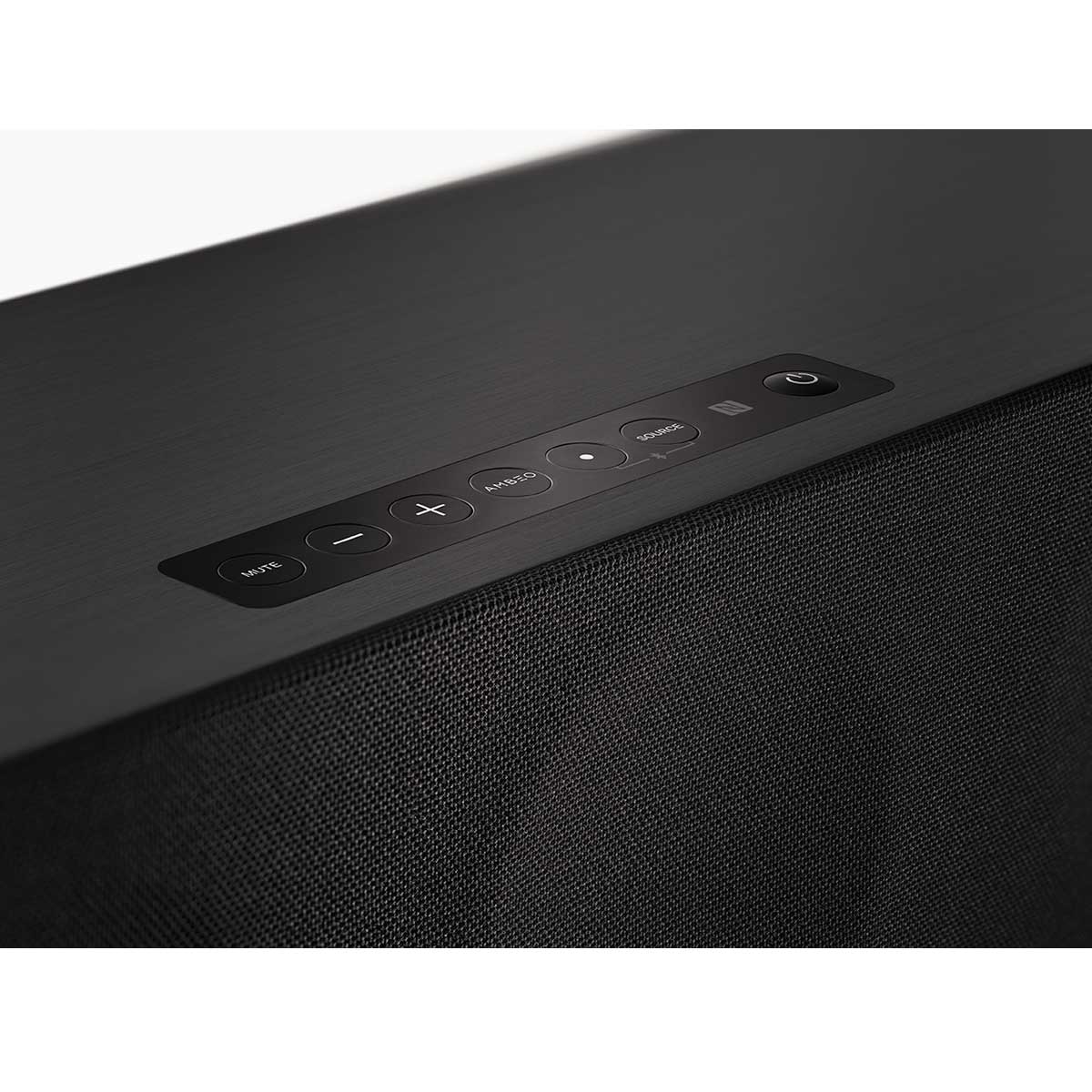
| Solid but consumer-grade plastic construction across 4 components | Premium single-unit construction with high-end materials and OLED display |
The Samsung HW-Q990D ($847.99) is superior for movies and TV shows due to its physical rear speakers that create authentic surround sound effects. When characters move behind you or explosions happen off-screen, you'll hear genuine directional audio from the rear speakers. The Sennheiser AMBEO Max ($1,999.95) uses virtualization technology that works well but can't match the immersion of true surround sound for cinematic content.
The Samsung HW-Q990D costs $847.99 (originally $1,999), while the Sennheiser AMBEO Max costs $1,999.95. This makes the Samsung about $1,150 less expensive and exceptional value considering it includes rear speakers and a subwoofer. The Sennheiser commands a premium for its single-unit design and audiophile-grade sound quality.
The Sennheiser AMBEO Max is significantly better for music listening. It delivers audiophile-grade sound quality with neutral frequency response and exceptional vocal clarity. The Samsung HW-Q990D is good for music but optimized for home theater use, with some reviewers noting mid-range haziness that can affect acoustic music reproduction.
It depends on your priorities. The Samsung HW-Q990D includes physical rear speakers that provide authentic behind-the-listener effects that virtualization cannot replicate. The Sennheiser AMBEO Max uses advanced AMBEO technology to create virtual surround sound from a single unit, which works well for height effects but struggles with true rear channel separation.
The Samsung HW-Q990D is much better for gaming, especially with PlayStation 5 or Xbox Series X. It supports HDMI 2.1 with 4K/120Hz passthrough, Variable Refresh Rate (VRR), and Auto Low Latency Mode (ALLM). It also features Game Mode Pro for optimized gaming audio. The Sennheiser AMBEO Max only supports HDMI 2.0, limiting you to 4K/60Hz gaming.
The Sennheiser AMBEO Max requires minimal space - just the 49.6-inch soundbar under your TV. The Samsung HW-Q990D needs significantly more space for its four components: the main soundbar, wireless subwoofer, and two rear speakers that should be placed 6+ feet behind your seating position.
The Samsung HW-Q990D has superior bass impact thanks to its dedicated wireless subwoofer that delivers room-shaking low frequencies. The Sennheiser AMBEO Max has built-in woofers that extend down to 30Hz, which is respectable for a single unit, but can't match the physical impact of a separate subwoofer. Sennheiser offers an optional subwoofer for $799.
The Sennheiser AMBEO Max is much easier to set up - it's essentially plug-and-play with automatic room calibration. The Samsung HW-Q990D requires positioning four separate components, wireless pairing, and careful placement of rear speakers for optimal performance, making setup more complex but rewarding.
The Samsung HW-Q990D offers exceptional value at $847.99, representing a 57% discount from its original price. You get a complete surround sound system with true rear speakers and subwoofer. The Sennheiser AMBEO Max costs over twice as much but targets audiophiles willing to pay premium pricing for superior sound quality and single-unit convenience.
Yes, both the Samsung HW-Q990D and Sennheiser AMBEO Max work with any TV that has HDMI ARC or optical audio output. However, the Samsung offers additional benefits when paired with Samsung TVs through Q Symphony technology, which uses both TV and soundbar speakers simultaneously for an expanded soundstage.
The Sennheiser AMBEO Max is ideal for small apartments due to its single-unit design that doesn't require rear speaker placement. It creates impressive virtual surround sound without needing multiple components. The Samsung HW-Q990D requires space for rear speakers and a subwoofer, making it challenging to implement properly in cramped living spaces.
Yes, both the Samsung HW-Q990D and Sennheiser AMBEO Max support Dolby Atmos and DTS:X for immersive 3D audio. The Samsung uses physical up-firing drivers in its soundbar and rear speakers for height effects, while the Sennheiser uses advanced AMBEO virtualization to create convincing overhead sound placement from its single unit.
We've done our best to create useful and informative comparisons to help you decide what product to buy. Our research uses advanced automated methods to create this comparison and perfection is not possible - please contact us for corrections or questions. These are the sites we've researched in the creation of this article: techradar.com - avsforum.com - valueelectronics.com - samsung.com - rtings.com - samsung.com - avsforum.com - samsung.com - cdwg.com - youtube.com - whathifi.com - bestbuy.com - rtings.com - techradar.com - audioxpress.com - whathifi.com - upscaleaudio.com - soundstagesimplifi.com - global.sennheiser-hearing.com - sennheiser-hearing.com - audioadvice.com - abt.com - moon-audio.com

Privacy Policy
Terms and Conditions - Affiliate Policy
Home Security
© Copyright 2008-2026.
11816 Inwood Rd #1211, Dallas, TX 75244