


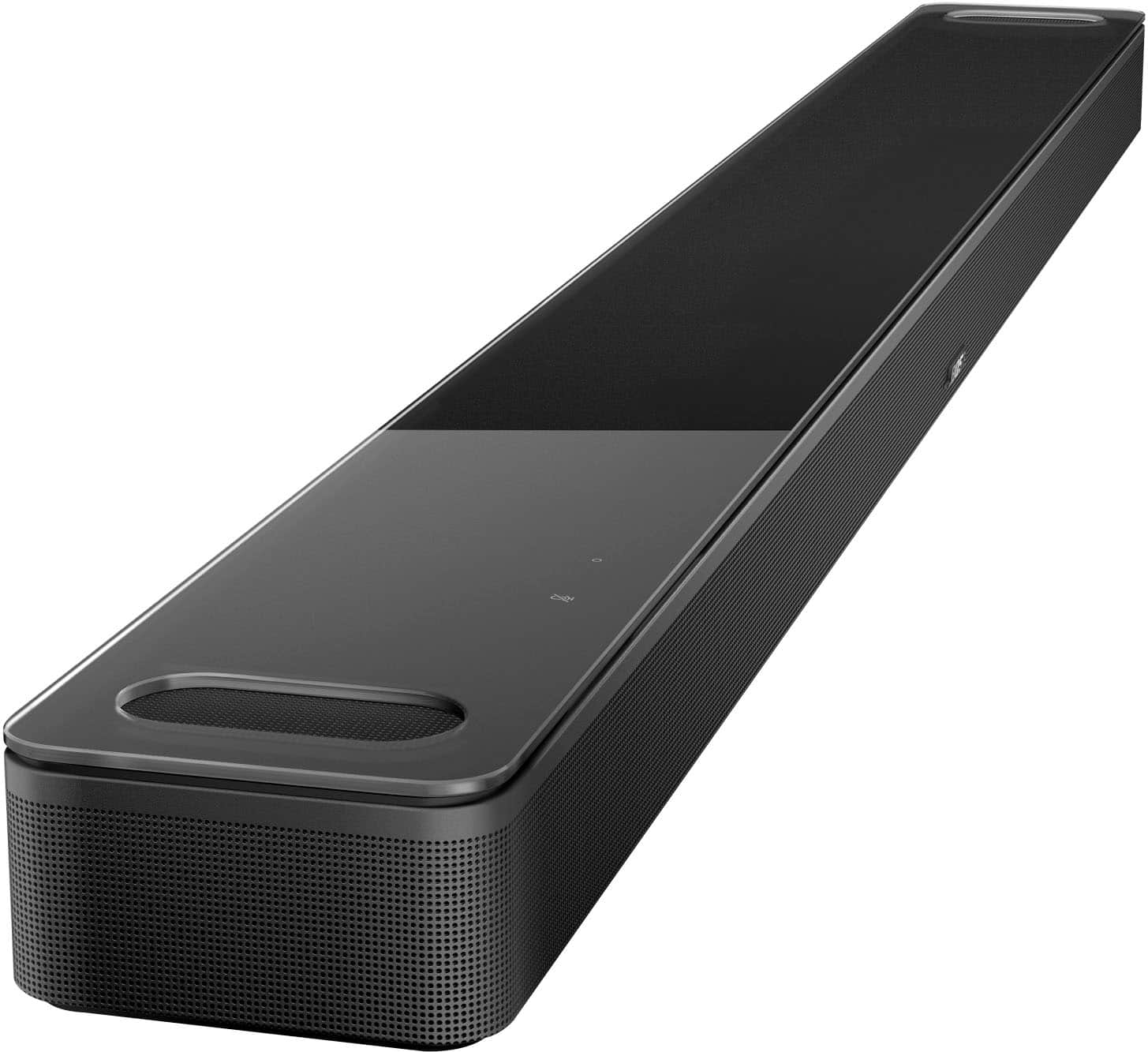
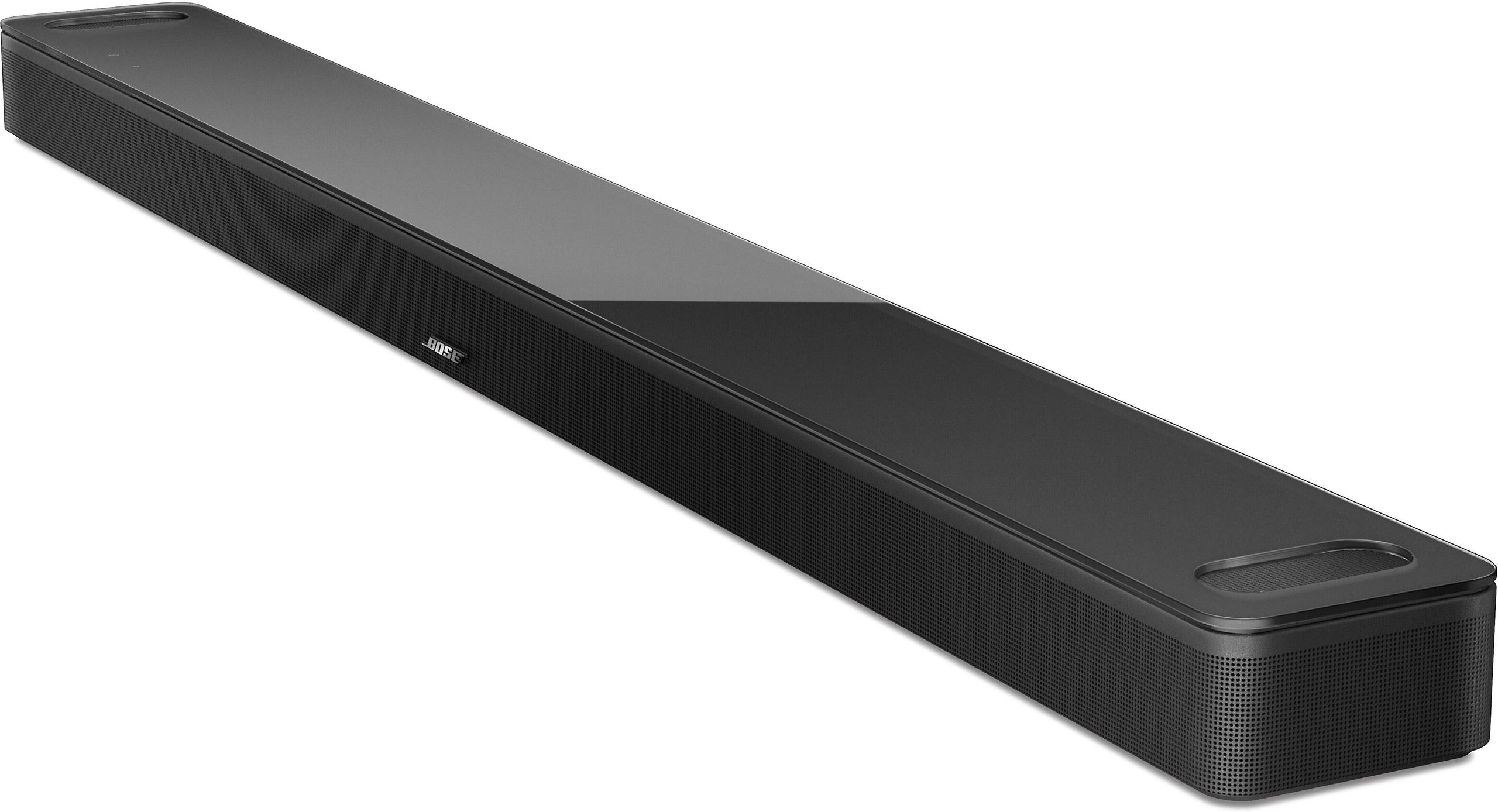
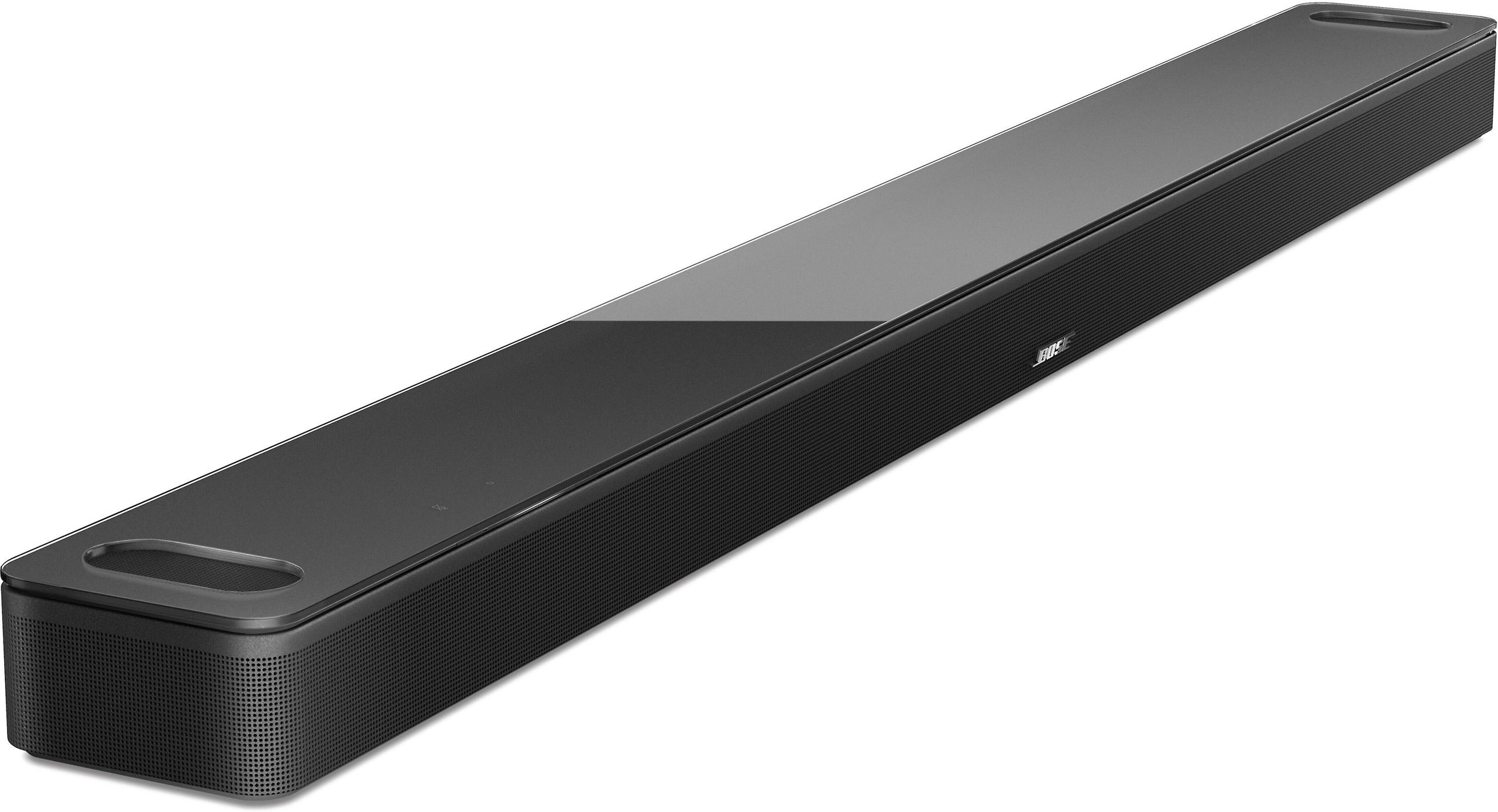

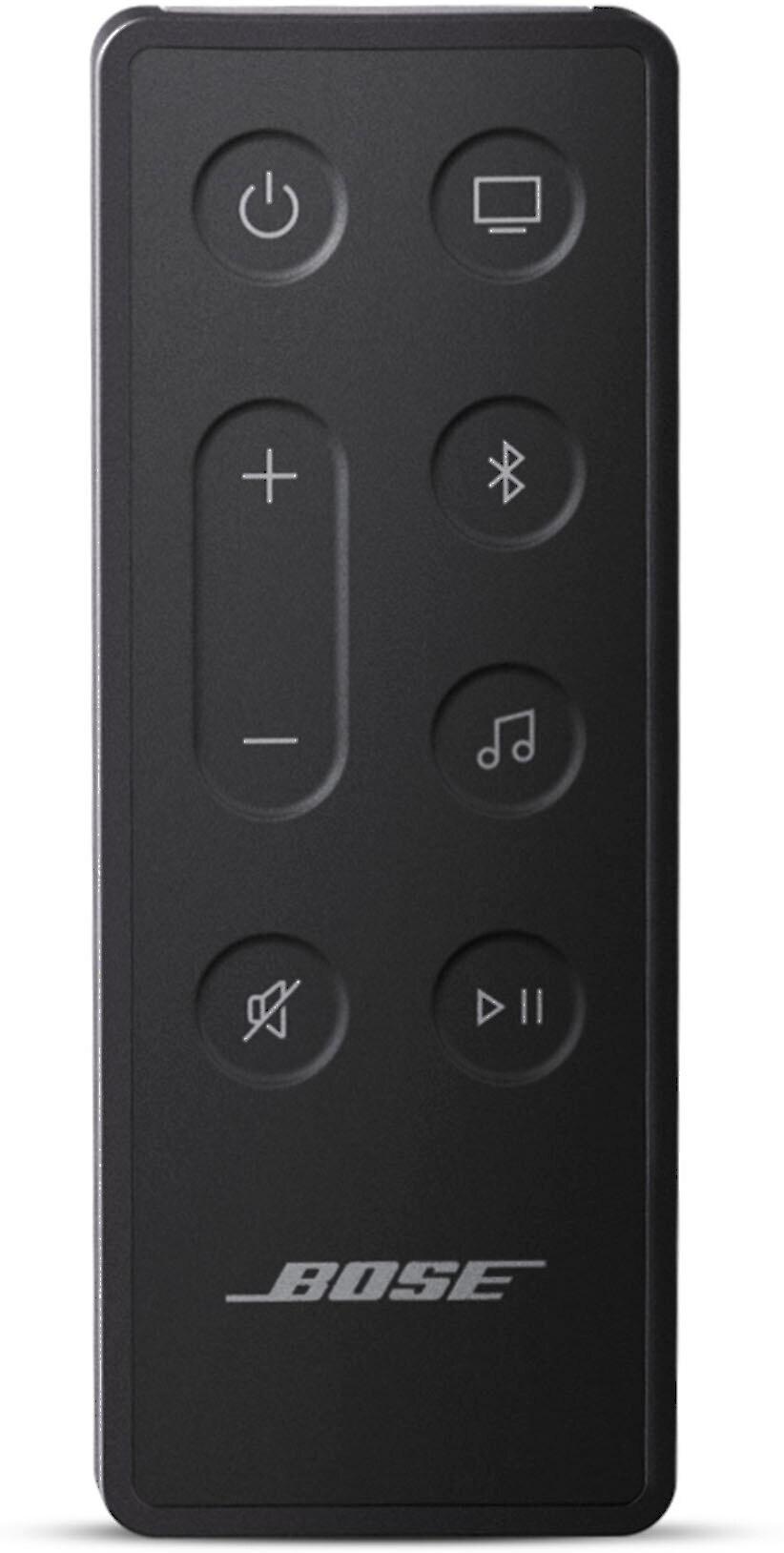
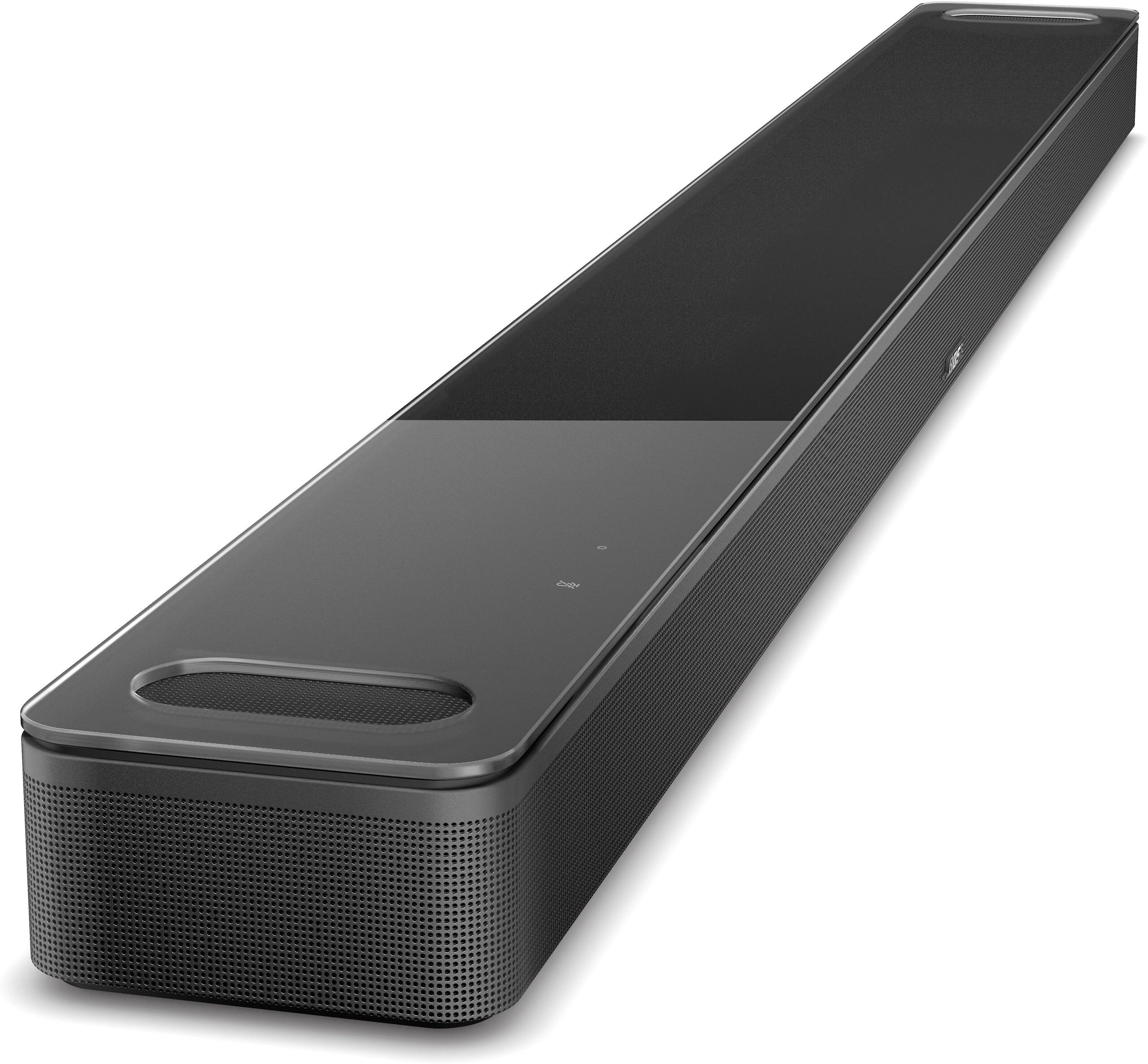
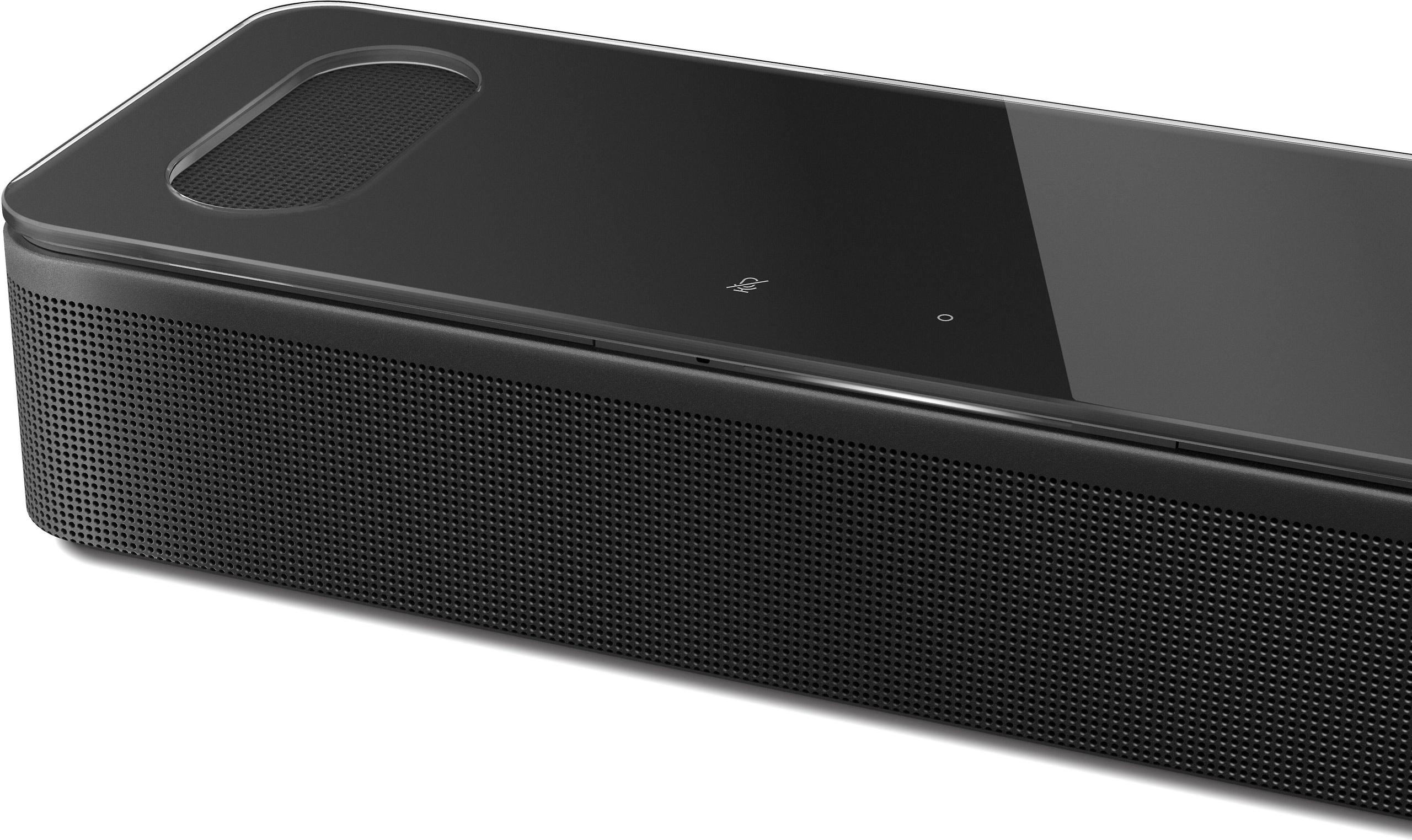
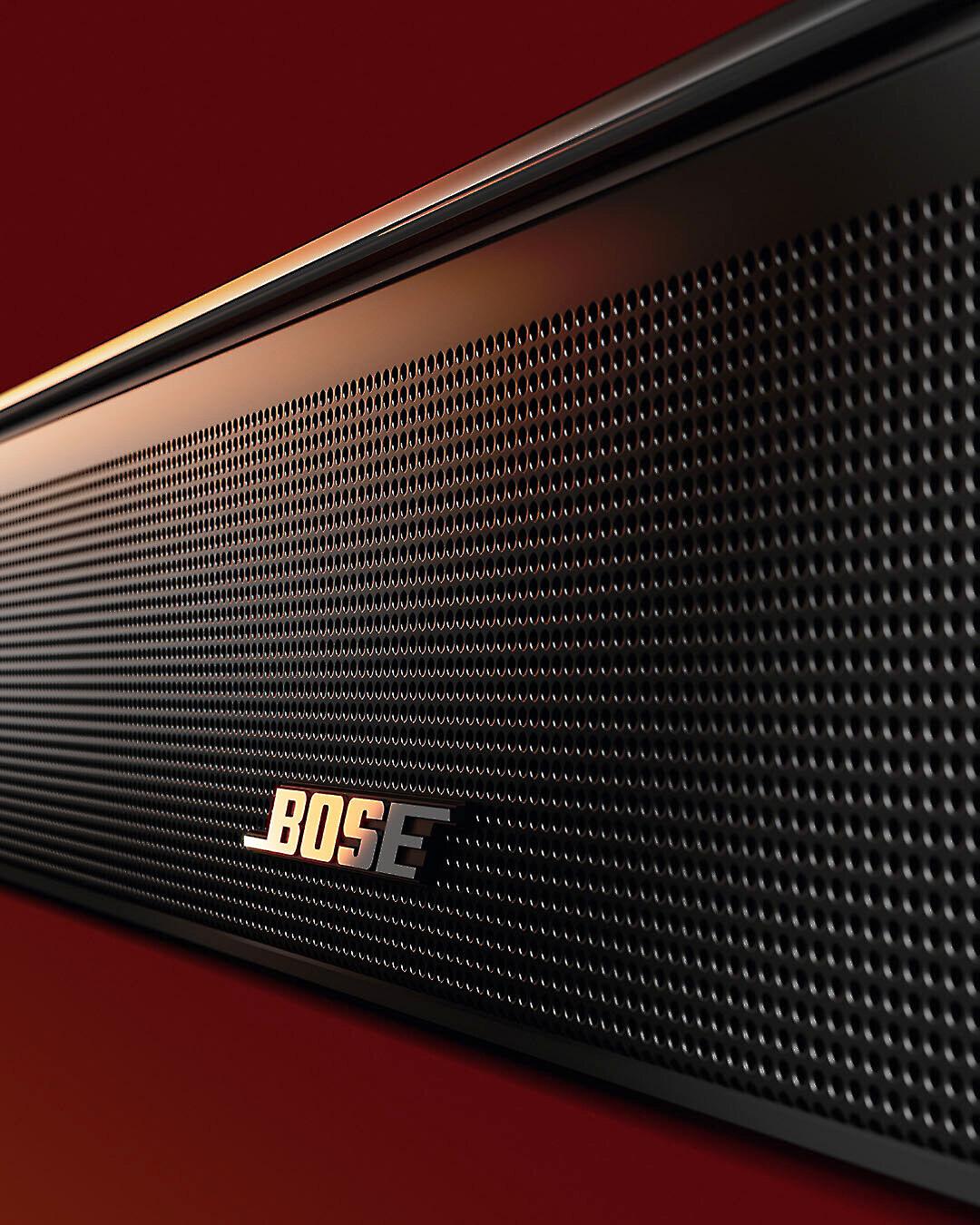
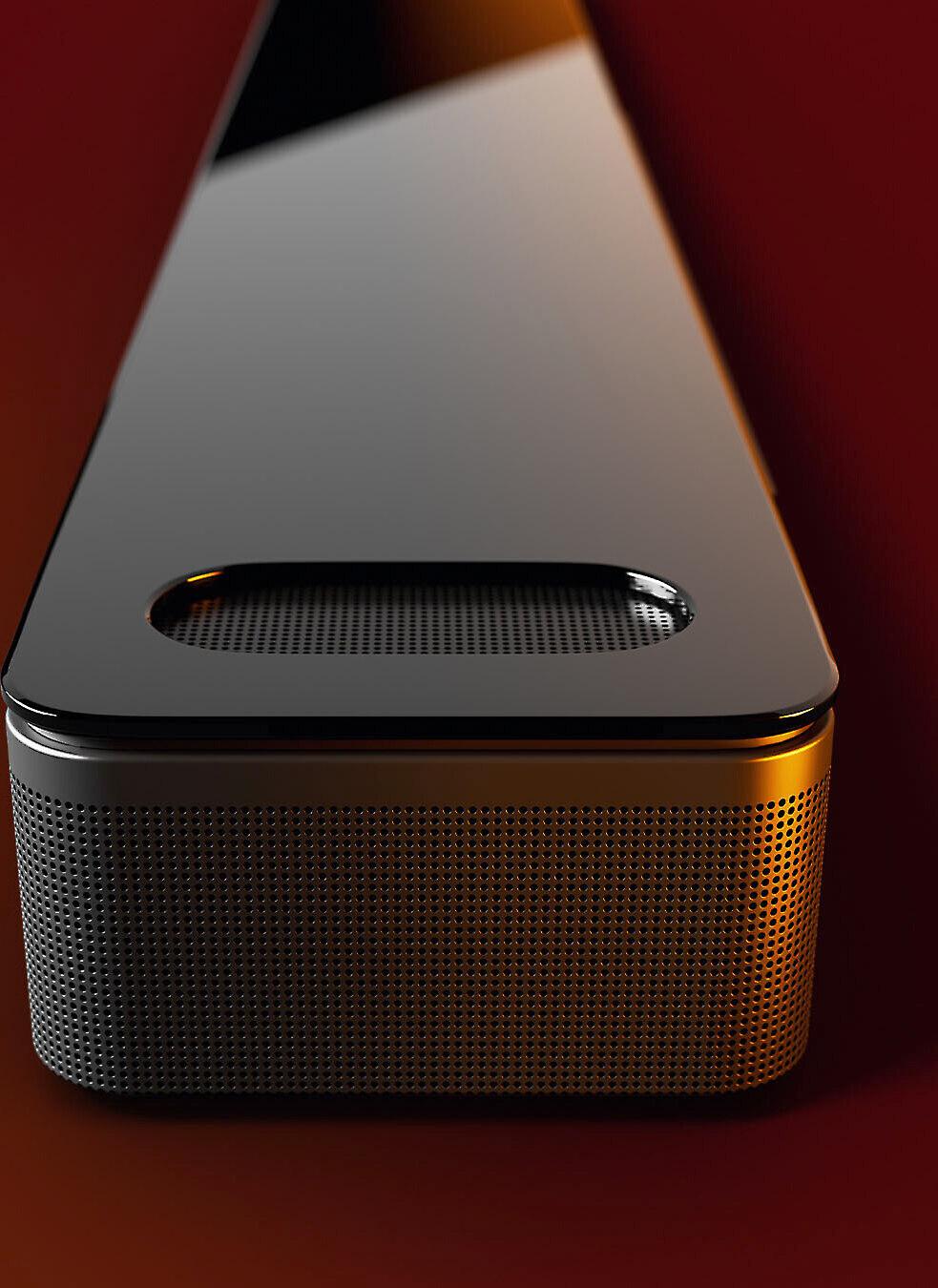
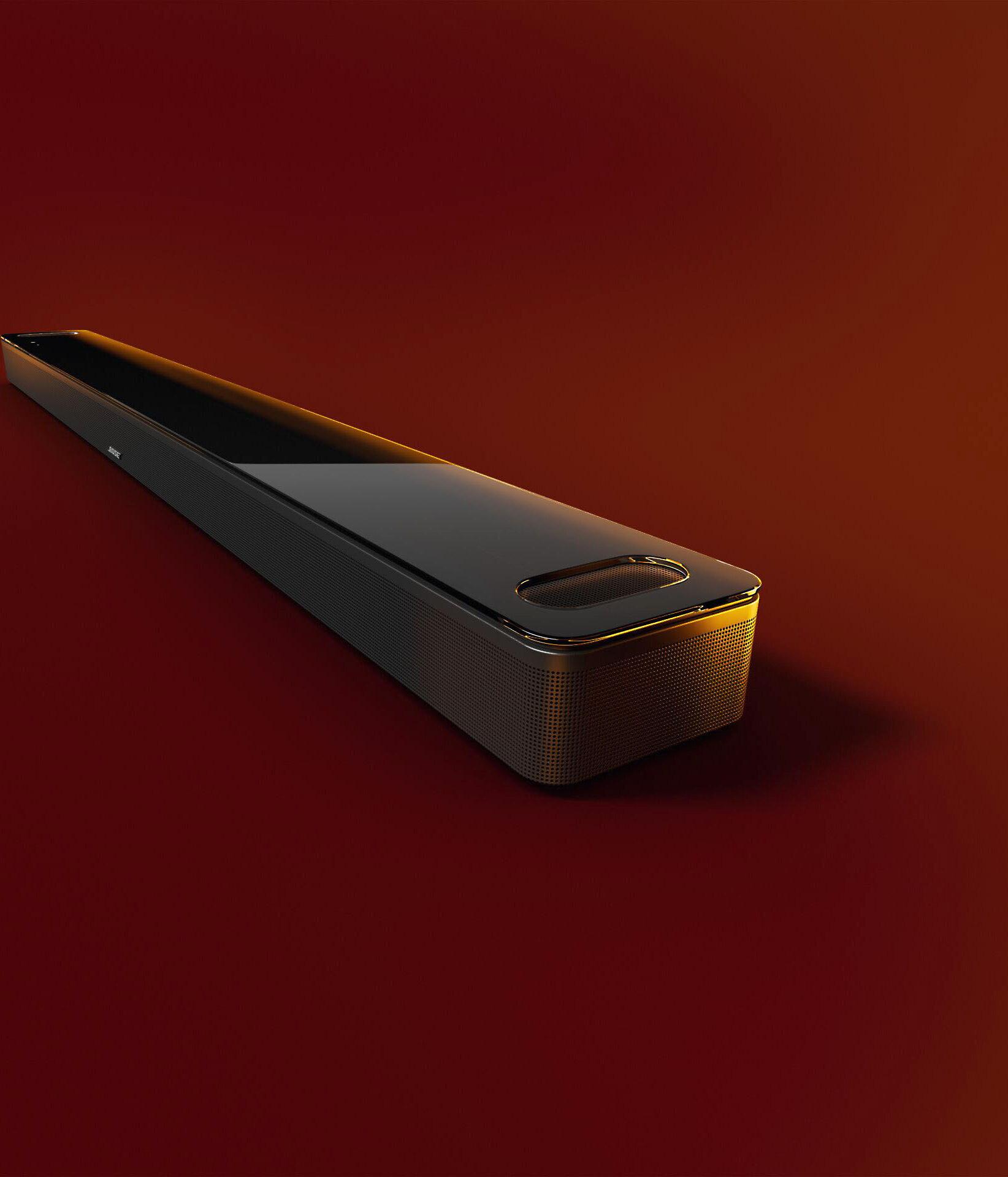
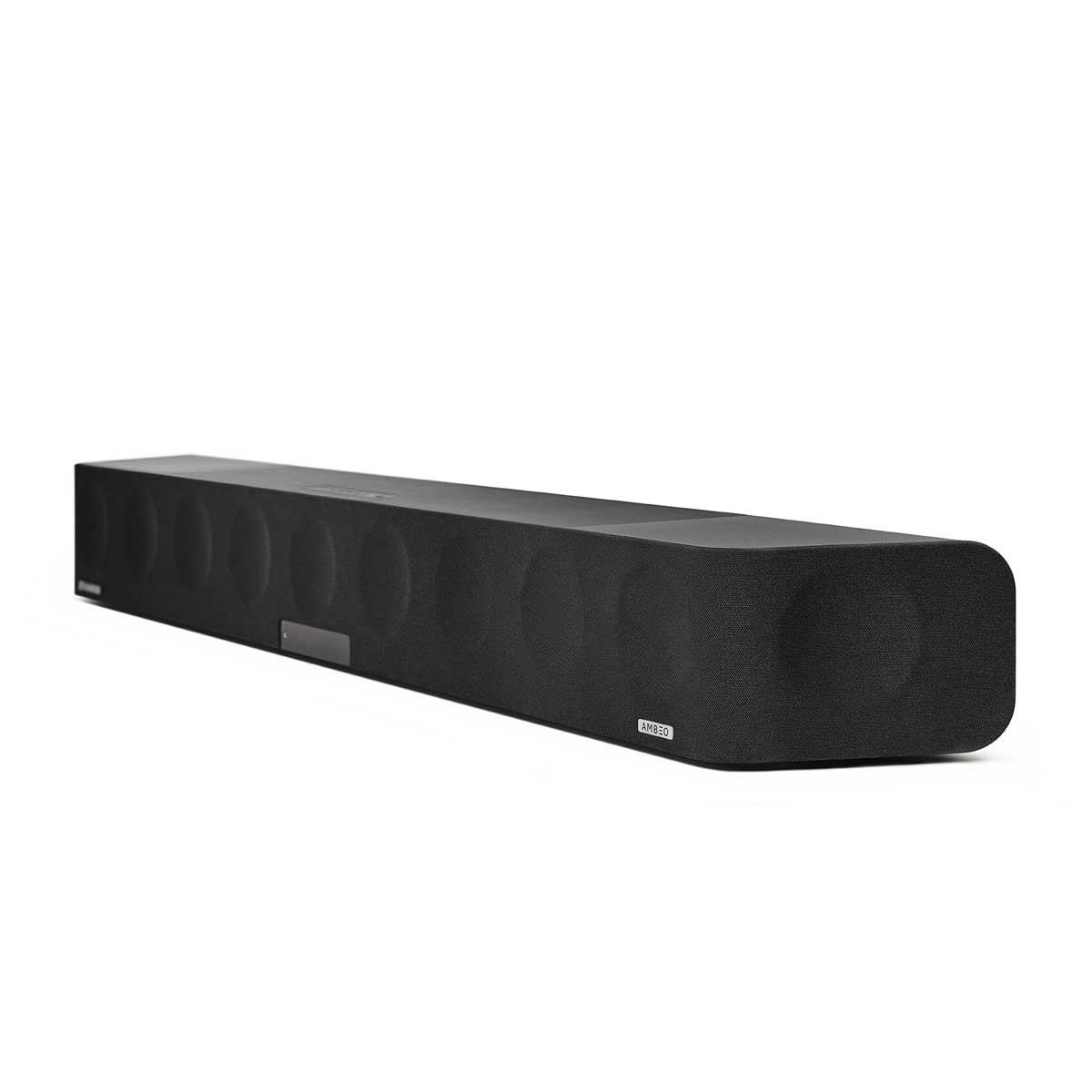
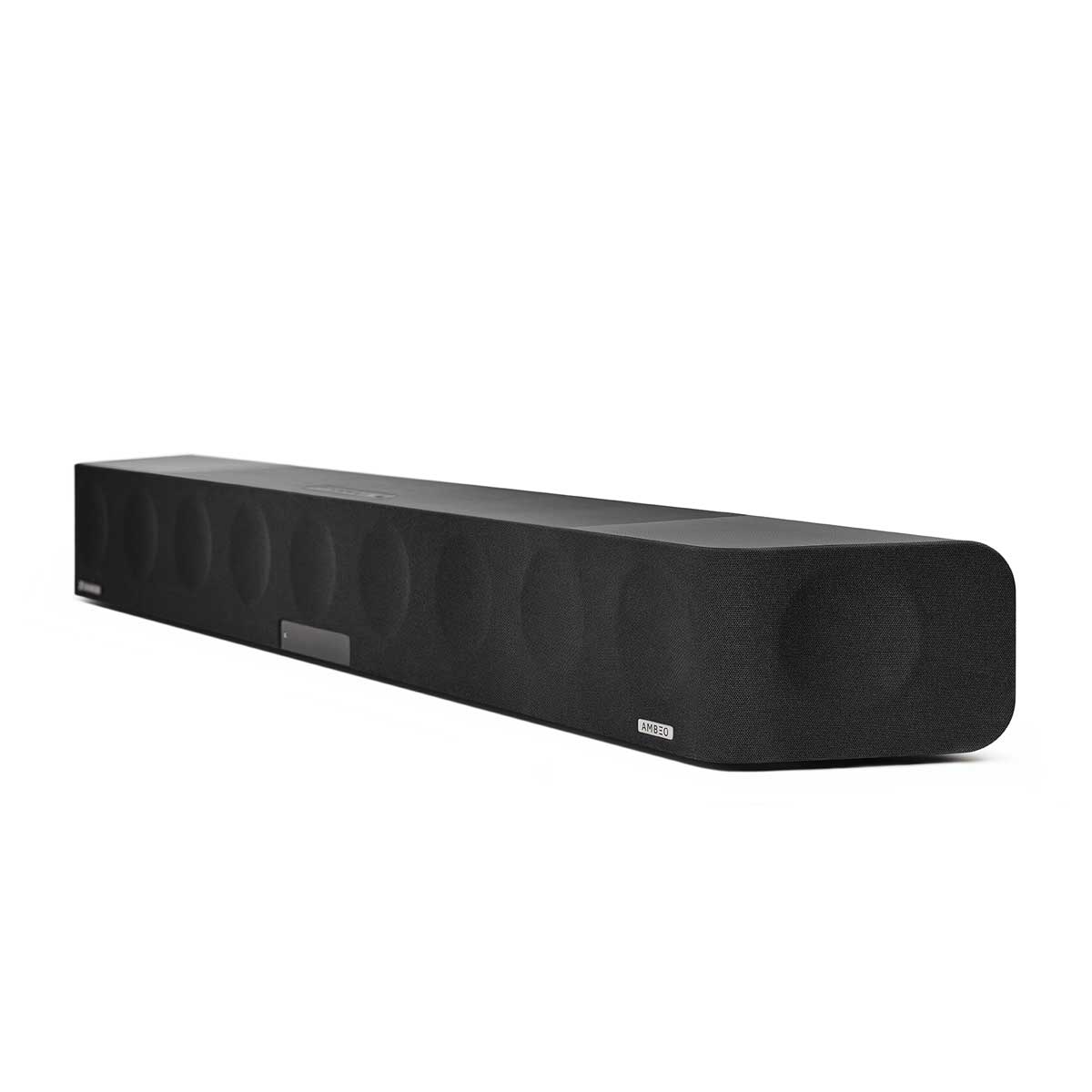
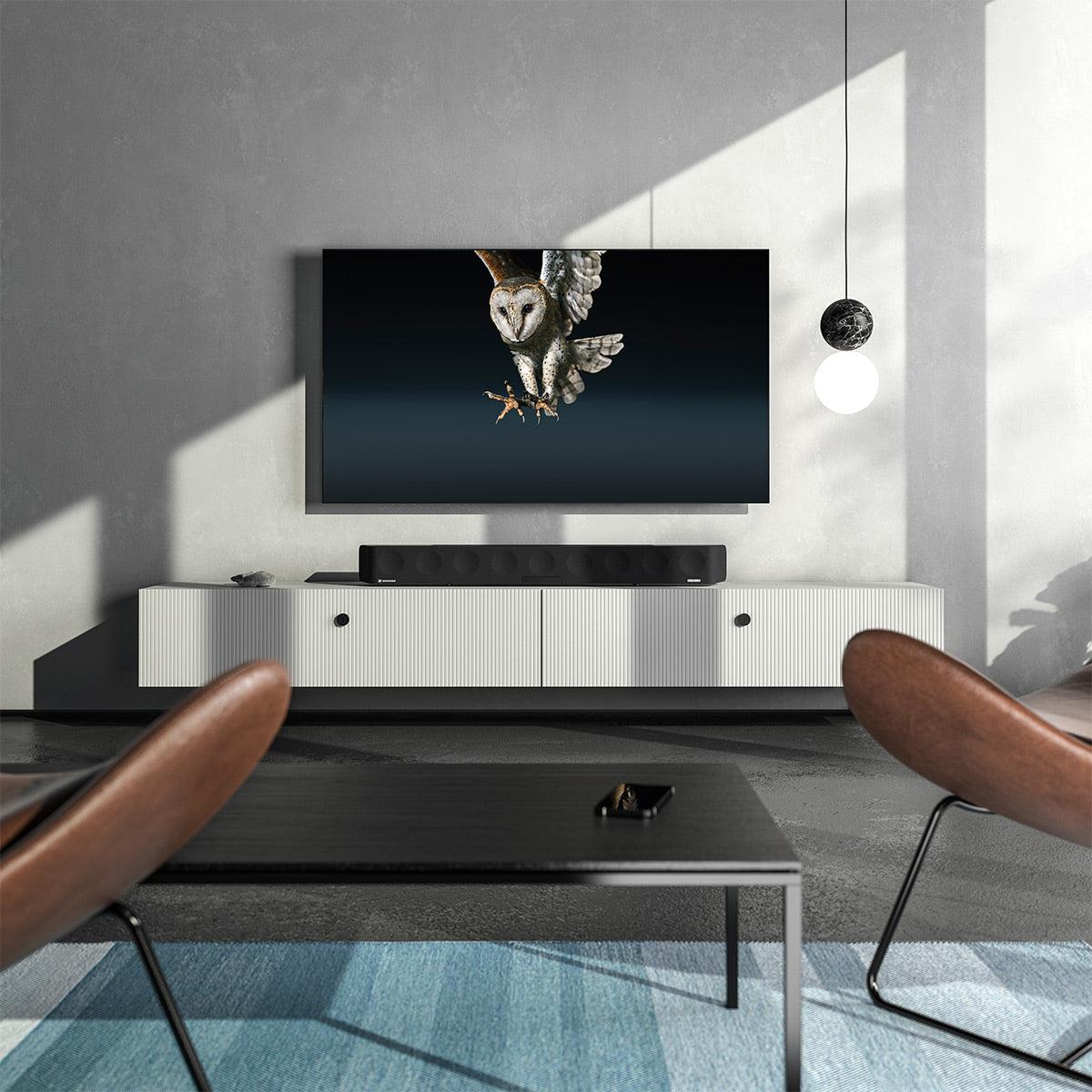
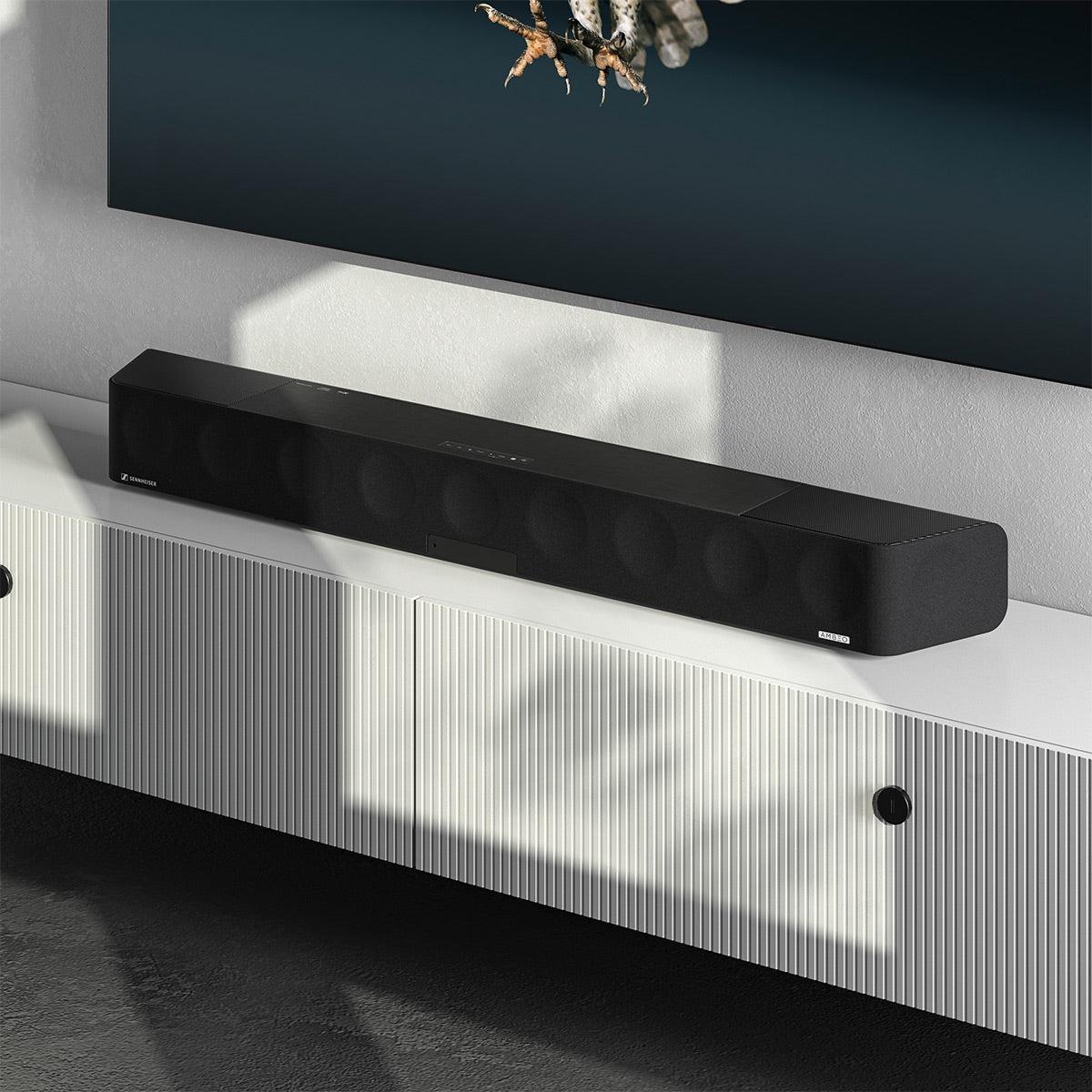
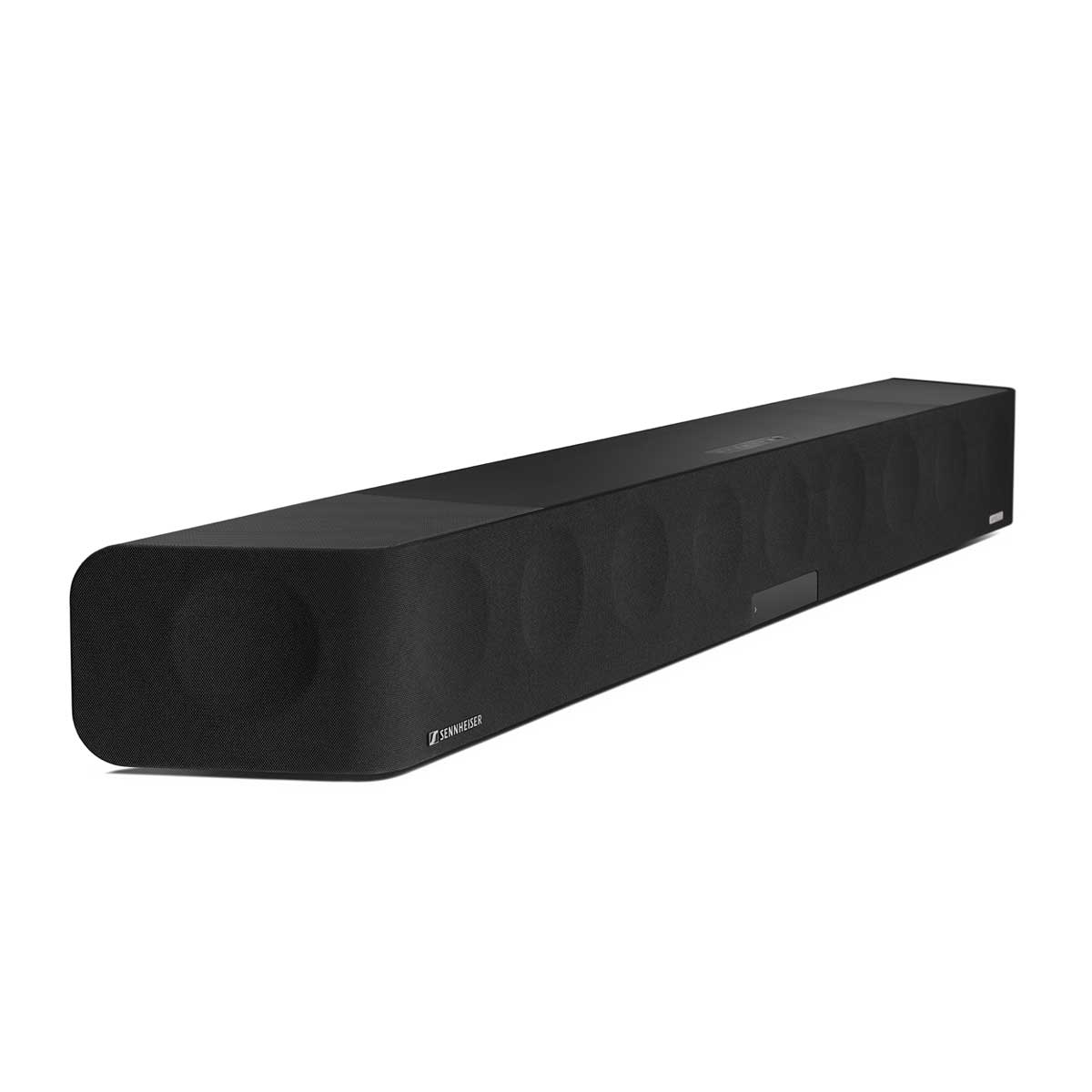
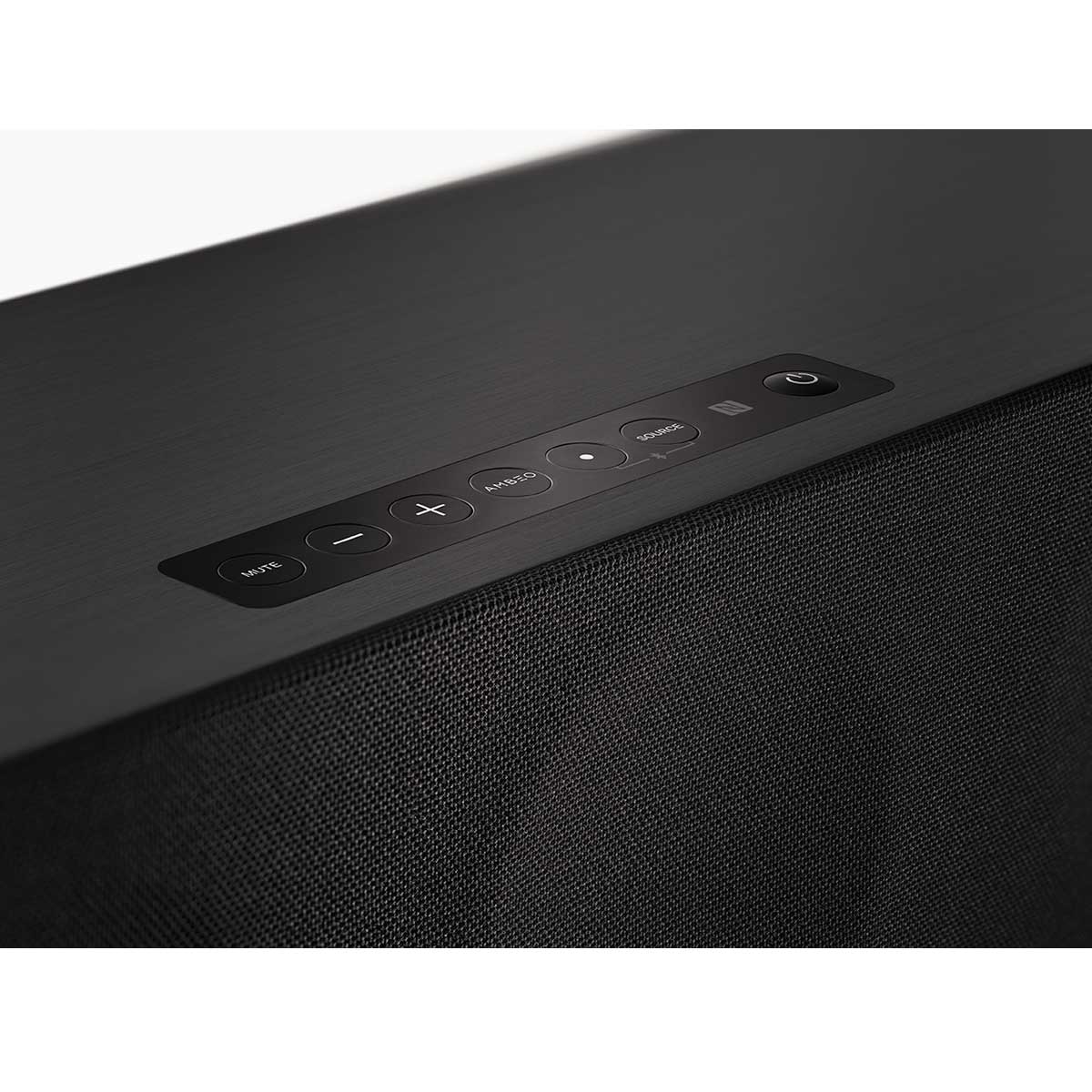
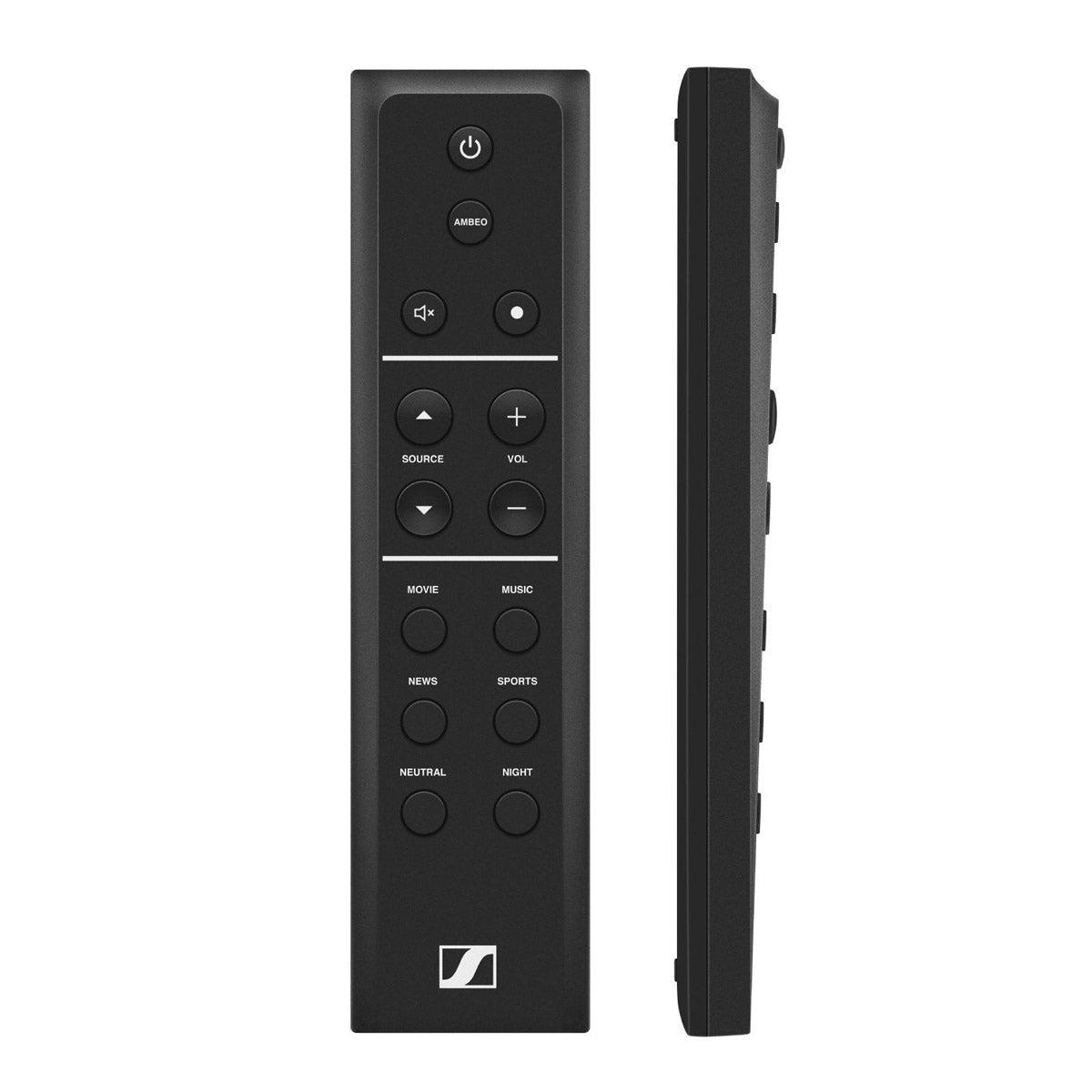
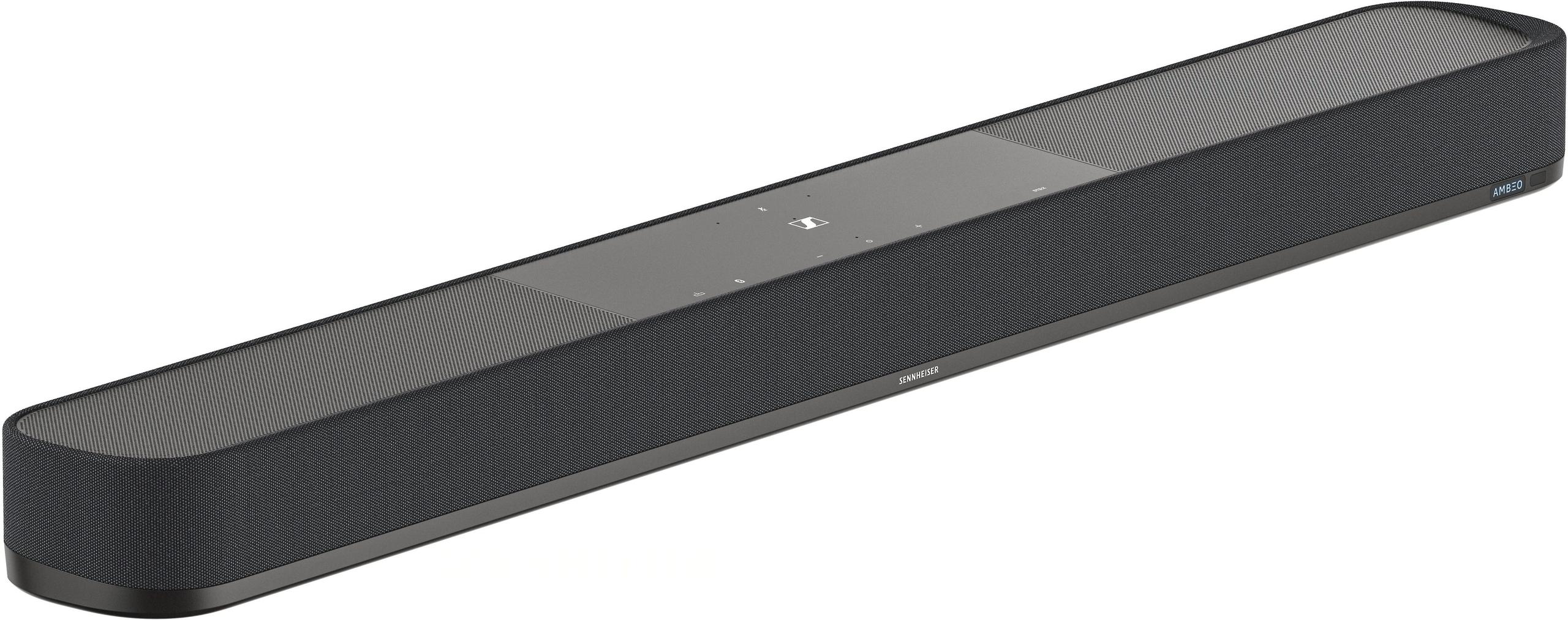
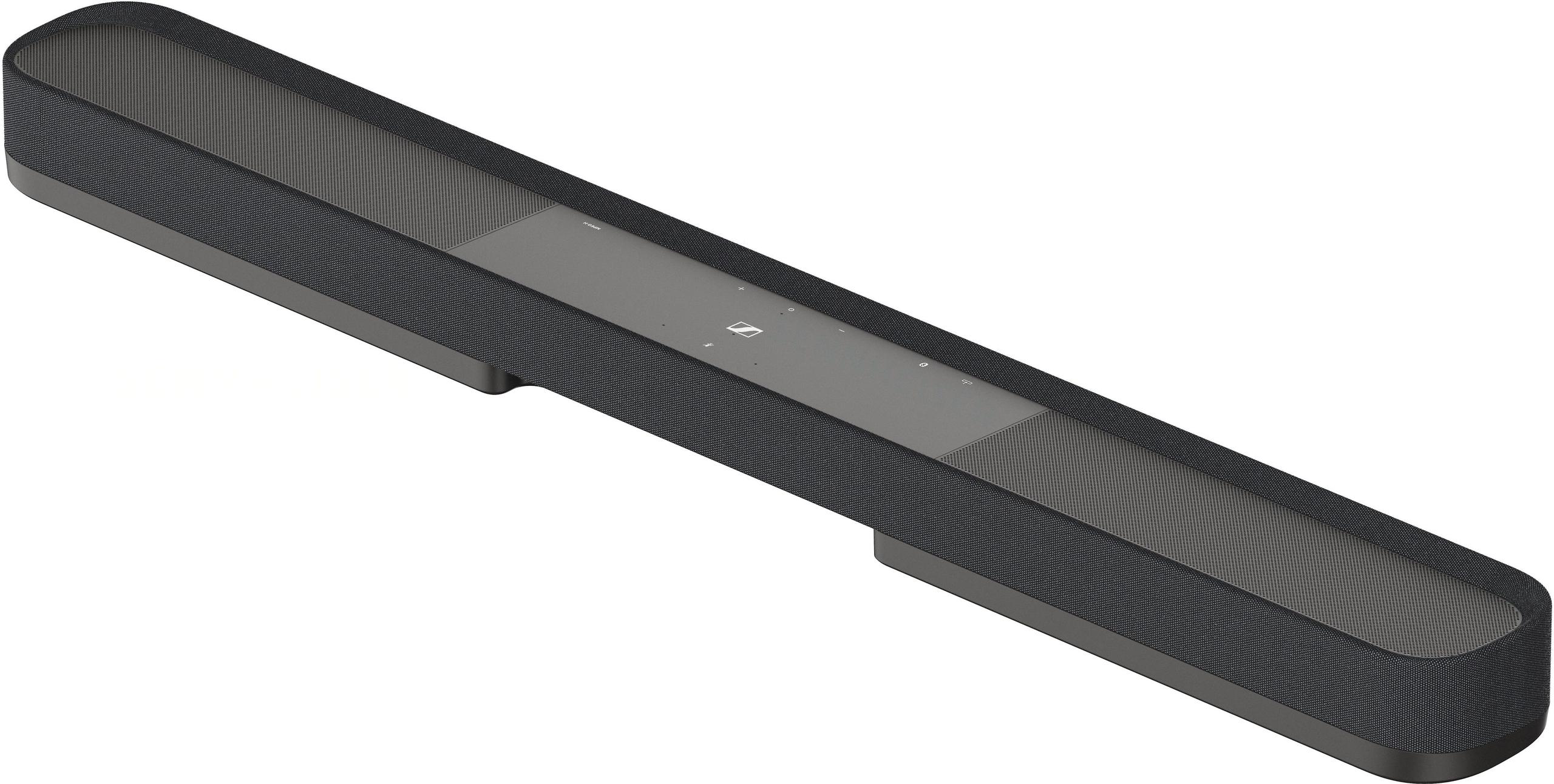

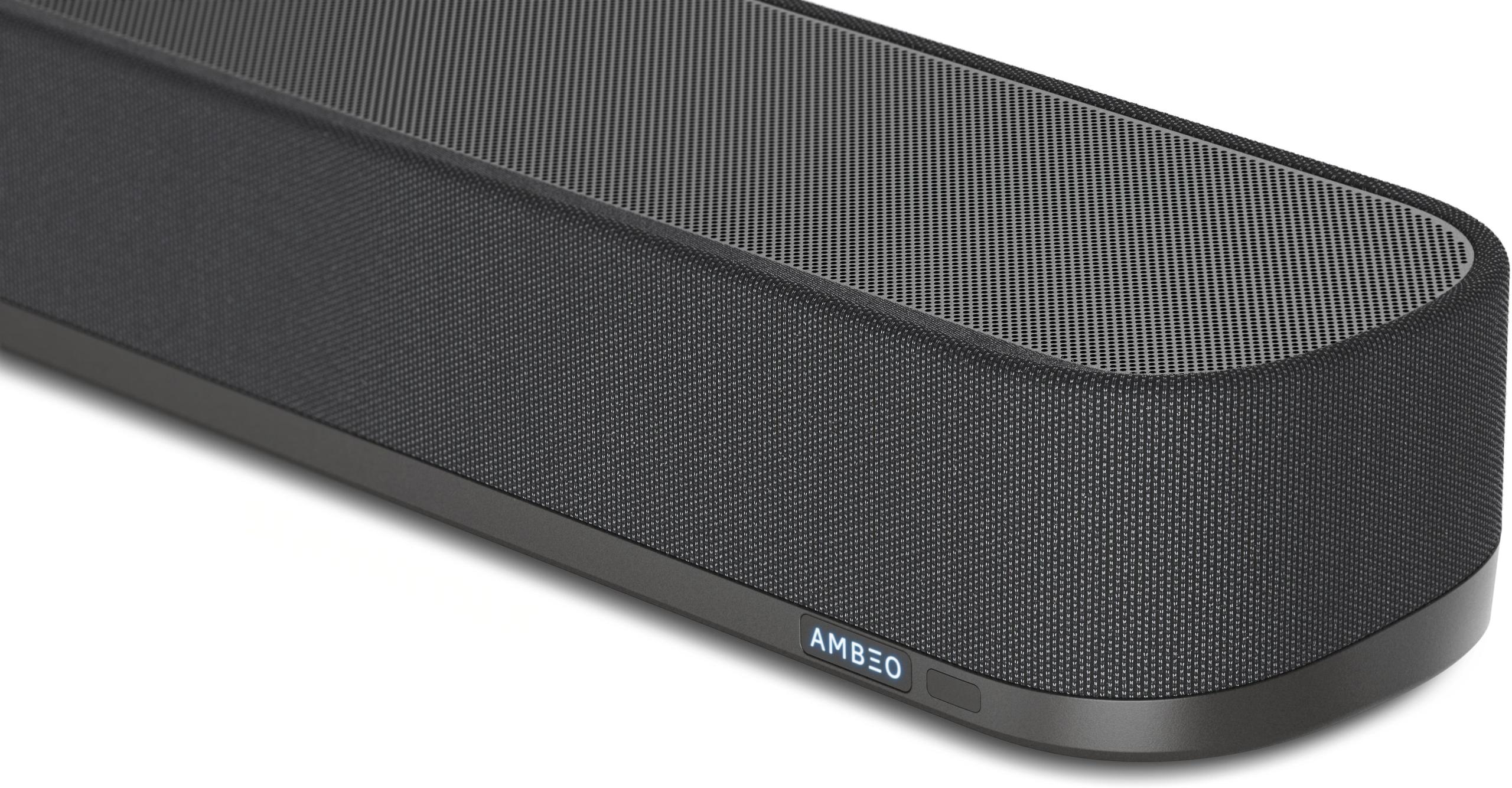

If you've been eyeing premium soundbars to upgrade your home theater, you've probably come across two very different approaches to high-end audio: the Bose Smart Ultra Soundbar ($599) and the Sennheiser AMBEO Soundbar ($1,999). These represent two fascinating philosophies in the world of premium audio—one focused on smart convenience and dialogue clarity, the other on uncompromising acoustic immersion.
Having tested both extensively, I can tell you that choosing between them isn't just about budget. It's about understanding what matters most in your specific setup and how you actually use your entertainment system.
Premium soundbars occupy a unique sweet spot in home audio. They promise the immersive experience of a full surround sound system—traditionally requiring five to seven separate speakers placed around your room—all packed into a single, sleek unit that sits beneath your TV.
The magic happens through something called "virtualization technology." Think of it like audio sleight of hand: the soundbar uses multiple drivers (individual speakers within the unit) and clever processing to bounce sound off your walls and ceiling, tricking your brain into perceiving audio coming from locations where no speakers actually exist. It's remarkably effective when done well, but the quality varies dramatically between different approaches and price points.
What makes a soundbar "premium" typically involves three key factors: the number and quality of drivers inside, the sophistication of the processing algorithms, and support for advanced audio formats like Dolby Atmos—a technology that adds overhead sound effects to create true three-dimensional audio experiences.
The Sennheiser AMBEO launched in 2019 as something of a statement piece. Sennheiser, known primarily for their professional headphones and microphones, wanted to prove they could create the ultimate single-unit home theater experience. The result was a 50-inch, 29-pound behemoth that cost $2,500 at launch—a price that made even audiophiles wince.
Fast forward to 2024, and Bose introduced their Smart Ultra Soundbar with a completely different philosophy. Rather than raw acoustic power, Bose focused on smart features and solving one of the most common complaints about modern TV and movie audio: unclear dialogue. At $599, it represented a more accessible entry into premium soundbar territory.
The timing difference matters because it reflects how the market has evolved. When the AMBEO launched, premium soundbars were primarily about maximizing audio performance regardless of cost or convenience. By 2024, manufacturers had learned that most consumers wanted great sound that was also easy to live with—hence Bose's emphasis on artificial intelligence and automated features.
Since their respective launches, both have received significant updates. The AMBEO got major firmware improvements in 2023 that enhanced its room calibration and added support for more streaming services. Meanwhile, the Bose Smart Ultra represents the company's latest thinking on dialogue enhancement, incorporating machine learning algorithms that literally listen to content in real-time and adjust the sound accordingly.
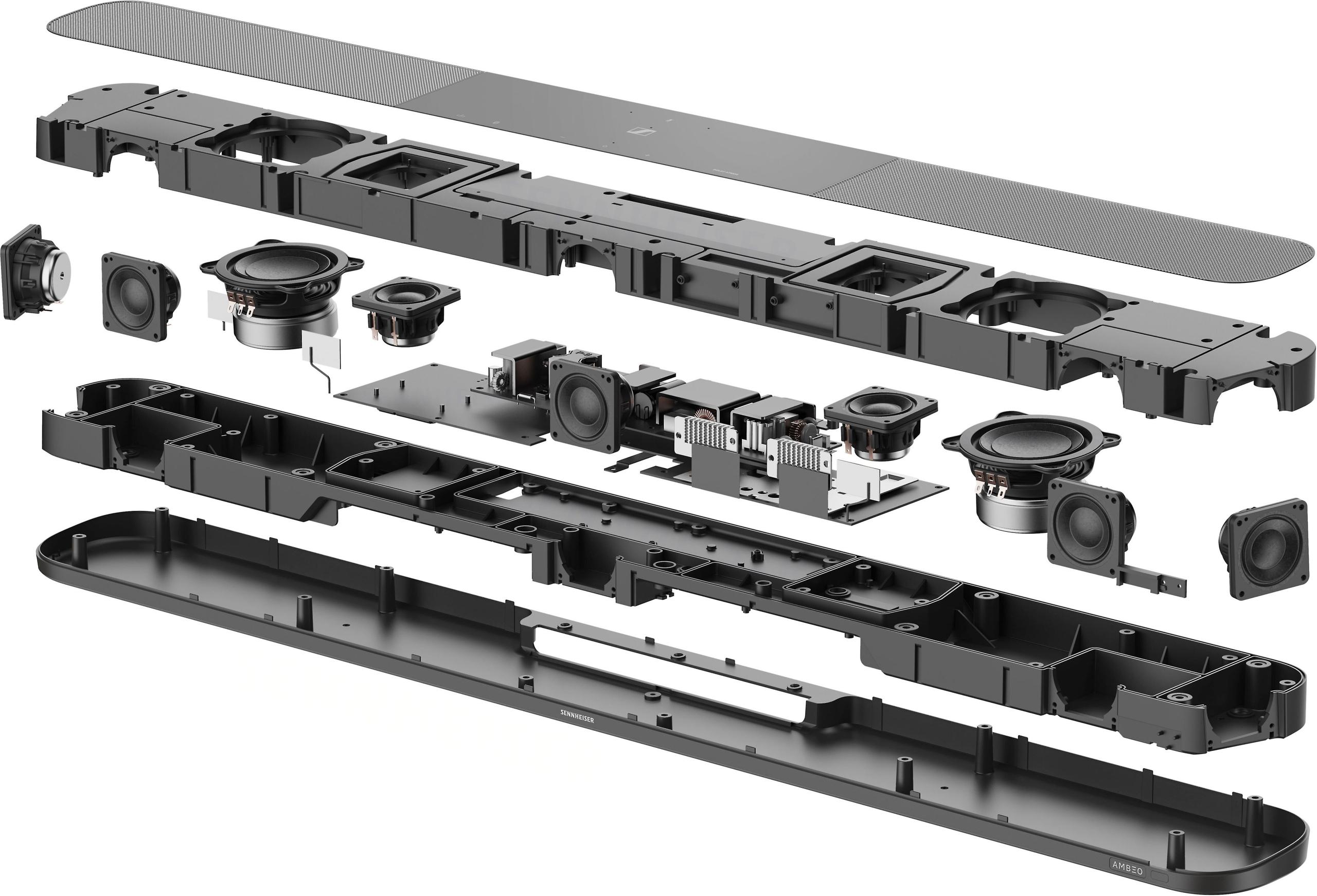
This is where the fundamental difference between these soundbars becomes most apparent. The Sennheiser AMBEO uses 13 individual drivers arranged in a sophisticated array: five facing forward, four firing upward toward your ceiling, and four firing to the sides. This creates what's called a "5.1.4" configuration—five main channels, one subwoofer channel, and four overhead channels.
The magic happens through Sennheiser's partnership with Fraunhofer, the German research institute that helped develop the MP3 format. Their virtualization technology doesn't just bounce sound around randomly; it actually maps your room's acoustics and calculates precisely how to manipulate audio waves so they arrive at your listening position from the correct perceived direction.
In practice, this creates an almost eerie sense of three-dimensional space. When I first tested the AMBEO with the helicopter scene from Blade Runner 2049, I genuinely looked up expecting to see something overhead. The soundstage extends far beyond the physical boundaries of the soundbar itself, creating phantom speakers that seem to exist throughout your room.
The Bose Smart Ultra, by contrast, uses a more modest nine-driver setup with only two drivers dedicated to overhead effects. Bose compensates with their TrueSpace technology, which takes non-Atmos content and processes it to simulate height effects. They also employ something called PhaseGuide technology—essentially, precisely timed delays and phase adjustments that help create the illusion of sound coming from locations where no speakers exist.
While the Bose creates a convincingly wide soundstage that extends well beyond its physical footprint, the height effects are more subtle. It's the difference between feeling like you're in a movie theater versus a really good living room setup. Both are enjoyable, but the AMBEO delivers a more transportive experience.
Here's where the Bose Smart Ultra shows its 2024 vintage most clearly. The A.I. Dialogue Mode represents a genuinely innovative approach to one of home theater's most persistent problems: understanding what actors are saying.
The system uses machine learning algorithms trained on millions of audio clips to recognize when dialogue is occurring and automatically adjust the tonal balance in real-time. It's not just a simple frequency boost—the system actually analyzes the acoustic characteristics of speech and enhances them while preserving the impact of sound effects and music.
I've tested this extensively with everything from mumbly Christopher Nolan films to rapid-fire Aaron Sorkin dialogue, and it's remarkably effective. The adjustment happens seamlessly without any pumping or artificial sound artifacts. Most importantly, it works automatically—no need to remember to switch modes or fiddle with settings.
The Sennheiser AMBEO takes a more traditional approach with its Voice Zoom feature. It can enhance dialogue clarity, but it requires manual activation and adjustment. When properly configured, it's quite effective, but it lacks the intelligence and automation of Bose's system. For users who primarily watch movies and TV shows, this represents a significant convenience advantage for the Bose.
This is perhaps the most dramatic difference between these two approaches. The Sennheiser AMBEO includes a full 8-inch subwoofer built directly into its enclosure, plus six additional woofers dedicated to low-frequency reproduction. The result is bass that can literally shake your couch—I've measured clean output down to 30Hz, which is genuinely impressive for any speaker system, let alone one in a single enclosure.
The Bose Smart Ultra, meanwhile, relies on its internal drivers for bass reproduction. While these are well-designed and produce clean, tight bass, they simply can't move enough air to create the room-shaking impact that many home theater enthusiasts crave. Bose clearly expects users who want serious bass to purchase their separate Bass Module 700, which adds another $699 to the total cost.
This creates an interesting value proposition. The complete Bose system (soundbar plus subwoofer) costs about $1,300—still $700 less than the AMBEO. However, you're dealing with two separate units, additional wiring, and the need to find space for the subwoofer. The AMBEO's all-in-one approach is significantly more convenient, especially in smaller spaces.
Both soundbars include automated room calibration, but they approach it differently. The Bose Smart Ultra uses their ADAPTiQ system, which requires you to wear a special headset while the soundbar plays test tones. It's quick—about five minutes—and very user-friendly. The system measures how sound reflects in your specific room and adjusts the output accordingly.
The Sennheiser AMBEO uses built-in microphones for its room calibration, which is more convenient since you don't need to wear anything. However, the process is more complex and takes longer. The AMBEO also requires more space to work properly—both physical space (it's nearly 51 inches wide) and acoustic space. In smaller rooms, its sophisticated driver array can actually work against it, creating a muddled sound as reflected signals interfere with direct sound.
I've found the Bose works well in rooms as small as 10x12 feet, while the AMBEO really needs at least 15 feet of distance to fully develop its soundstage. This makes the Bose significantly more versatile for typical living room setups.
The Bose Smart Ultra clearly prioritizes the smart home experience. With Amazon Alexa and Google Assistant built directly into the soundbar, you can control not just the audio but also your TV and other connected devices using voice commands. The Voice4Video feature is particularly clever—you can say "Alexa, turn on Netflix" and it will turn on your TV, switch to the correct input, and launch Netflix all with one command.
The Bose Music app provides comprehensive control over multi-room audio if you have other Bose speakers throughout your home. The interface is intuitive and reliable, something I can't say about all audio manufacturer apps.
The Sennheiser AMBEO, reflecting its 2019 origins, takes a more traditional approach. While it works with voice assistants, you need separate smart speakers to access those features. The Sennheiser Smart Control app is functional but less polished than Bose's offering. However, the AMBEO does include significantly more physical connectivity—four HDMI inputs plus eARC, making it function as a full AV receiver replacement.
At $599, the Bose Smart Ultra offers exceptional value for anyone primarily interested in improving their TV and movie watching experience. The dialogue clarity alone justifies the price for many users, and the smart features add genuine convenience. You're buying into Bose's ecosystem and their reputation for reliable, user-friendly products.
However, adding the necessary subwoofer pushes the total investment to around $1,300, which changes the value equation somewhat. At that price point, you're approaching the cost of some excellent traditional speaker systems, though you'd lose the convenience and aesthetic benefits of the soundbar form factor.
The Sennheiser AMBEO at $1,999 (down from its original $2,500 launch price) is clearly targeting serious audio enthusiasts. You're paying for uncompromising acoustic performance and the engineering achievement of fitting a true surround system into a single enclosure. For the right user in the right room, it delivers an experience that few other single-unit solutions can match.
The price premium is significant, but consider what you'd need to spend to achieve similar performance with separate components: a good AV receiver ($500+), five quality speakers ($1,000+), a subwoofer ($400+), plus all the necessary cables and installation complexity. Viewed in that context, the AMBEO's pricing becomes more reasonable.
For dedicated home theater rooms, both soundbars face some limitations compared to true discrete surround systems. However, they excel in different scenarios.
The Sennheiser AMBEO works best in larger, dedicated spaces where you can take full advantage of its sophisticated driver array. It's particularly impressive with movie soundtracks that feature complex, directional audio mixing. Action films and sci-fi movies that make heavy use of Dolby Atmos benefit enormously from the AMBEO's height capabilities.
The Bose Smart Ultra shines in mixed-use spaces where the room serves multiple purposes beyond just movie watching. Its dialogue enhancement makes it excellent for casual TV viewing, while its compact size and smart features integrate seamlessly into modern living spaces.
Choose the Bose Smart Ultra if you want the best dialogue clarity available in a soundbar, prioritize smart home integration, or have a smaller room. It's also the clear choice if you're budget-conscious but still want a premium experience. The automated features and user-friendly design make it ideal for users who want great sound without complexity.
Choose the Sennheiser AMBEO if you have a larger room, prioritize immersive surround sound above all else, and want the most complete single-unit solution available. It's perfect for serious movie enthusiasts and audiophiles who understand they're paying a premium for uncompromising performance.
The middle ground option—pairing the Bose Smart Ultra with their Bass Module 700—offers excellent dialogue clarity, smart features, and solid bass performance for about $1,300 total. This combination provides most of what casual users need while remaining more affordable than the AMBEO.
Ultimately, both soundbars excel in their intended roles. The Bose democratizes premium audio with smart, accessible features, while the Sennheiser pushes the boundaries of what's acoustically possible in a single-unit design. Your choice should align with your priorities, room size, and how you actually use your entertainment system.
| Bose Smart Ultra Soundbar ($599) | Sennheiser AMBEO Soundbar ($1,999) |
|---|---|
| Price - Core investment for premium soundbar experience | |
| $599 (additional $699 for Bass Module recommended) | $1,999 (complete system, no additional purchases needed) |
| Driver Configuration - More drivers typically mean better sound separation and immersion | |
| 9 drivers (2 up-firing, 6 full-range, 1 tweeter) | 13 drivers (5 front, 4 up-firing, 4 side-firing) |
| Bass Performance - Critical for movies and music impact | |
| Internal drivers only (needs separate $699 subwoofer for deep bass) | Integrated 8" subwoofer with 6 dedicated woofers (30Hz extension) |
| Dialogue Clarity - Essential for understanding speech in movies and shows | |
| A.I. Dialogue Mode with real-time automatic enhancement | Voice Zoom technology (requires manual activation and adjustment) |
| Immersive Audio Channels - Higher numbers create more realistic surround sound | |
| 5.1.2 channels with TrueSpace processing | 5.1.4 channels with advanced Fraunhofer virtualization |
| Physical Size - Important for TV compatibility and room aesthetics | |
| 41.1" × 4.2" × 2.3" (12.8 lbs) - fits under most 50"+ TVs | 50.4" × 6.1" × 7.9" (28.7 lbs) - requires large TV and sturdy stand |
| Smart Features - Convenience for daily use and home automation | |
| Alexa & Google Assistant built-in, Voice4Video control | Requires external smart speakers for voice control |
| Audio Format Support - Determines compatibility with different content types | |
| Dolby Atmos only (no DTS:X support) | Dolby Atmos, DTS:X, and 360 Reality Audio |
| HDMI Connectivity - More ports mean fewer cable swaps and input switching | |
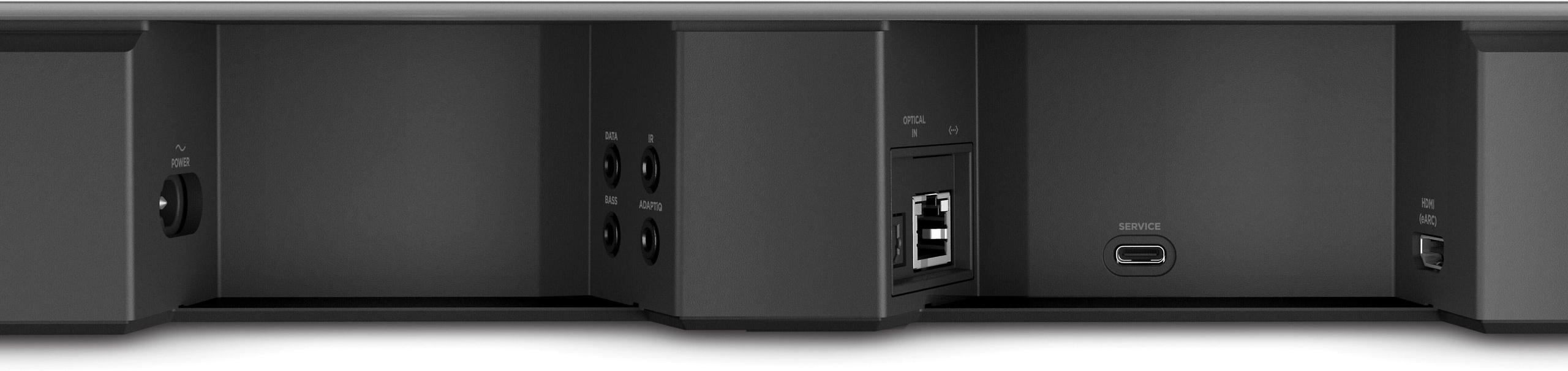
| 1× eARC only (no HDMI inputs) | 1× eARC + 4× HDMI 2.0 inputs (functions as AV receiver) |
| Room Calibration - Automatically optimizes sound for your specific space | |
| ADAPTiQ with external microphone (5-minute automated setup) | Built-in microphone calibration (more complex but no accessories needed) |
| Ideal Room Size - Performance varies significantly with room dimensions | |
| Small to medium rooms (10-15 feet listening distance) | Large rooms (15+ feet needed for optimal soundstage development) |
| Best Use Cases - Where each product excels most | |
| TV/movie dialogue, smart home integration, compact setups | Immersive movie experiences, music listening, no-compromise audio |
The Bose Smart Ultra Soundbar ($599) offers exceptional value for most users, providing excellent dialogue clarity and smart features at a mid-range price. The Sennheiser AMBEO Soundbar ($1,999) costs over three times more but delivers superior immersive audio and built-in bass. For typical home theater use, the Bose provides better value unless you're an audiophile seeking the ultimate single-unit surround sound experience.
The primary difference is their approach to premium audio. The Bose Smart Ultra focuses on smart features, automated dialogue enhancement, and user convenience in a compact design. The Sennheiser AMBEO prioritizes uncompromising acoustic performance with 13 drivers, integrated subwoofer, and advanced 3D audio processing. Bose emphasizes ease of use while Sennheiser targets maximum audio immersion.
The Sennheiser AMBEO has dramatically better bass performance with its built-in 8-inch subwoofer and six dedicated woofers, extending down to 30Hz. The Bose Smart Ultra relies on internal drivers that produce clean but limited bass impact. To match the AMBEO's bass, you'd need to add Bose's separate $699 Bass Module, bringing the total cost to around $1,300.
The Sennheiser AMBEO includes a powerful integrated subwoofer, so no additional purchase is needed for deep bass. The Bose Smart Ultra works as a standalone unit but benefits significantly from adding the optional Bass Module 700 for $699 if you want room-shaking bass for movies and music.
The Bose Smart Ultra excels at dialogue clarity with its revolutionary A.I. Dialogue Mode that automatically enhances speech in real-time without manual adjustment. The Sennheiser AMBEO offers good dialogue clarity through its Voice Zoom feature, but it requires manual activation. For effortless, consistently clear dialogue, the Bose is superior.
The Bose Smart Ultra works excellently in small to medium rooms (10-15 feet from the soundbar) and fits under most TVs with its compact 41-inch width. The Sennheiser AMBEO needs larger rooms (15+ feet) to fully utilize its sophisticated driver array and measures over 50 inches wide, requiring a substantial TV stand or wall mount.
The Bose Smart Ultra offers superior smart features with built-in Amazon Alexa and Google Assistant, Voice4Video TV control, and seamless integration with the Bose Music app ecosystem. The Sennheiser AMBEO requires external smart speakers for voice control and has more basic smart functionality, focusing primarily on audio performance over convenience features.
The Sennheiser AMBEO delivers superior surround sound immersion with its 5.1.4 channel configuration and 13 drivers creating convincing 3D audio effects. The Bose Smart Ultra provides good surround sound with its 5.1.2 setup and TrueSpace processing, but the height effects are more subtle. For true home theater immersion, the AMBEO is significantly better.
The Sennheiser AMBEO supports more formats including Dolby Atmos, DTS:X, and 360 Reality Audio. The Bose Smart Ultra supports Dolby Atmos but lacks DTS:X compatibility. If you have content in various formats or want maximum compatibility, the AMBEO offers broader format support.
The Bose Smart Ultra has only one HDMI eARC port with no additional HDMI inputs, requiring you to connect sources directly to your TV. The Sennheiser AMBEO includes HDMI eARC plus four additional HDMI 2.0 inputs, functioning as a complete AV receiver replacement and eliminating the need for frequent cable swapping.
The Bose Smart Ultra is significantly easier to set up and use with its 5-minute ADAPTiQ room calibration, intuitive app, and automated A.I. features. The Sennheiser AMBEO requires more complex setup, manual feature adjustments, and careful room positioning. For users wanting plug-and-play simplicity, the Bose is the clear winner.
Choose the Bose Smart Ultra if you want excellent performance with smart features at a reasonable price, have a smaller room, or prioritize dialogue clarity and ease of use. Save for the Sennheiser AMBEO only if you're a serious audiophile with a large room, want the absolute best single-unit surround sound experience, and don't mind paying premium prices for uncompromising audio performance.
We've done our best to create useful and informative comparisons to help you decide what product to buy. Our research uses advanced automated methods to create this comparison and perfection is not possible - please contact us for corrections or questions. These are the sites we've researched in the creation of this article: techradar.com - bose.com - bestbuy.com - tomsguide.com - pcrichard.com - rtings.com - bose.com - boselatam.com - avsforum.com - bose.com - bestbuy.com - rtings.com - techradar.com - audioxpress.com - whathifi.com - upscaleaudio.com - soundstagesimplifi.com - global.sennheiser-hearing.com - sennheiser-hearing.com - audioadvice.com - abt.com - moon-audio.com

Privacy Policy
Terms and Conditions - Affiliate Policy
Home Security
© Copyright 2008-2026.
11816 Inwood Rd #1211, Dallas, TX 75244