

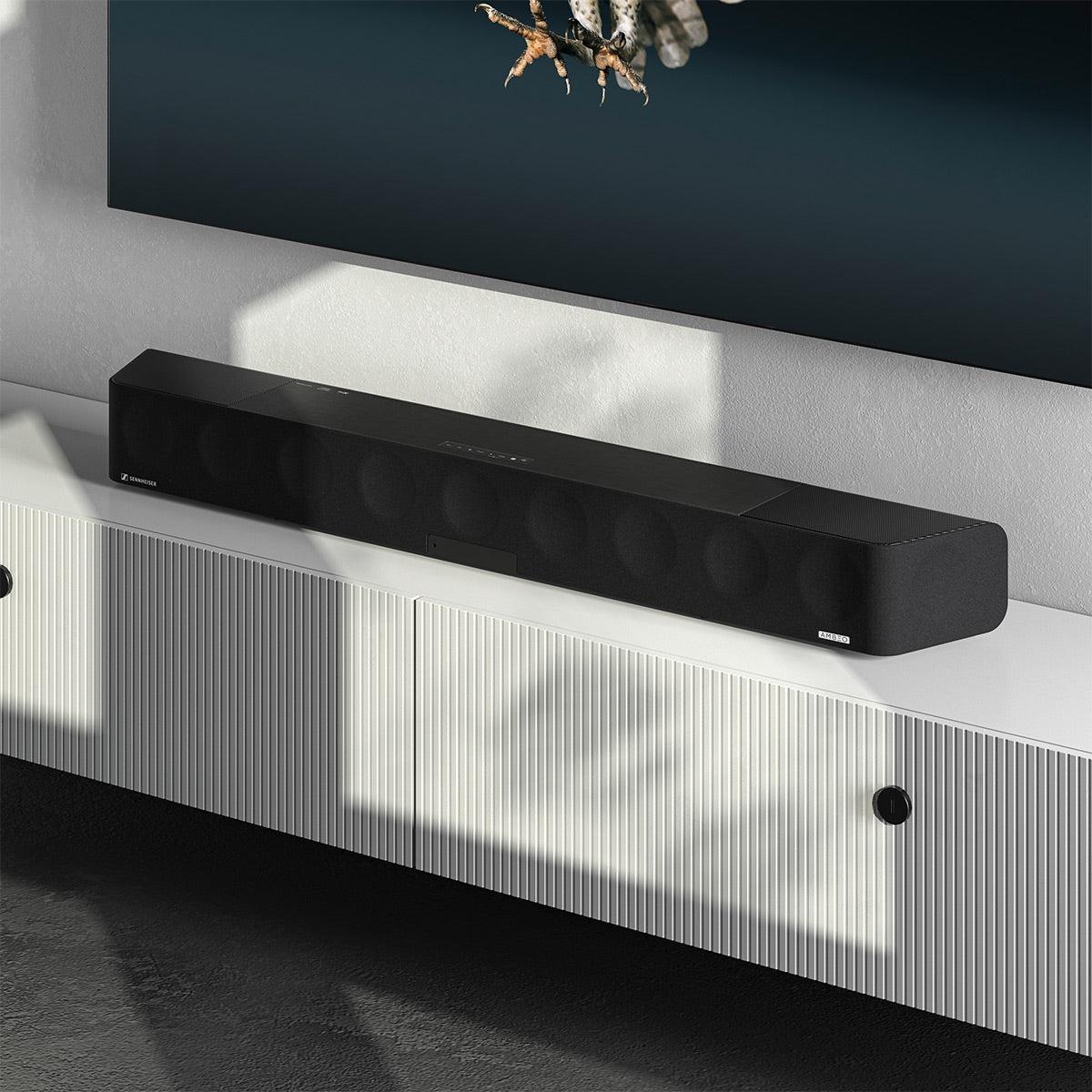
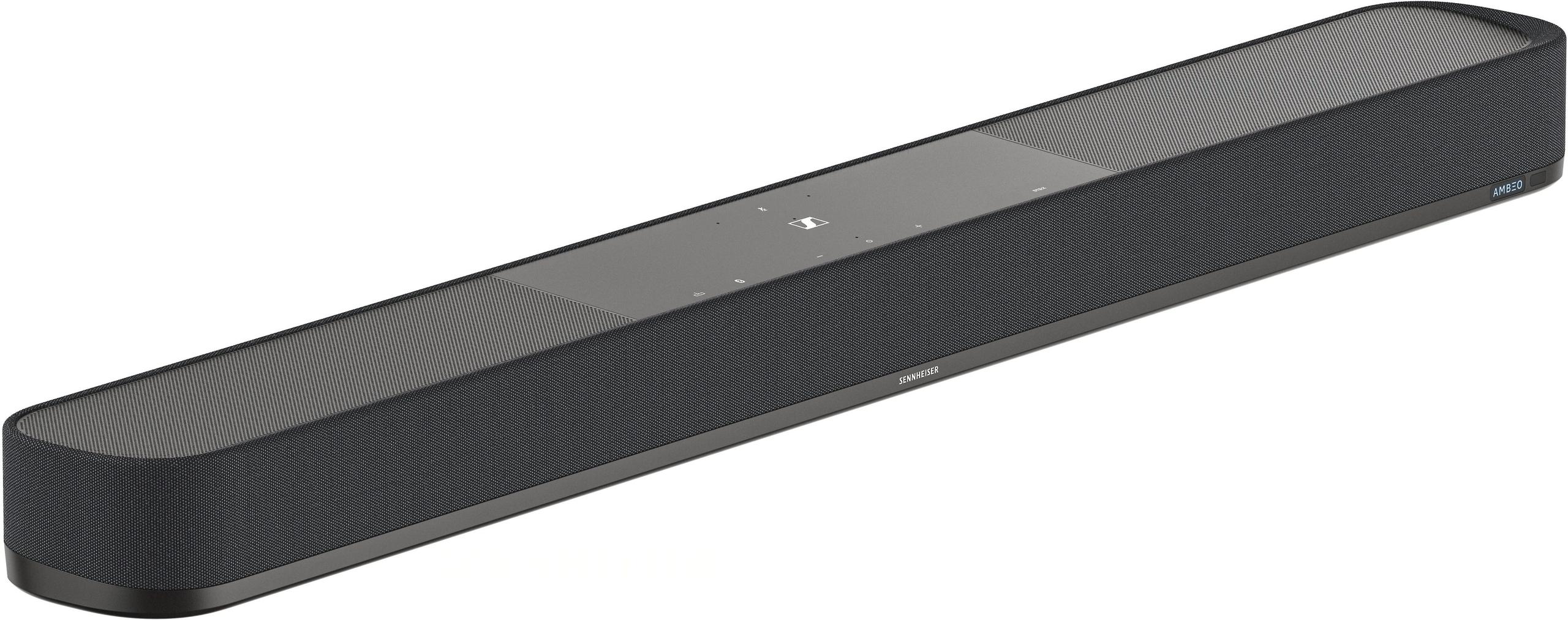
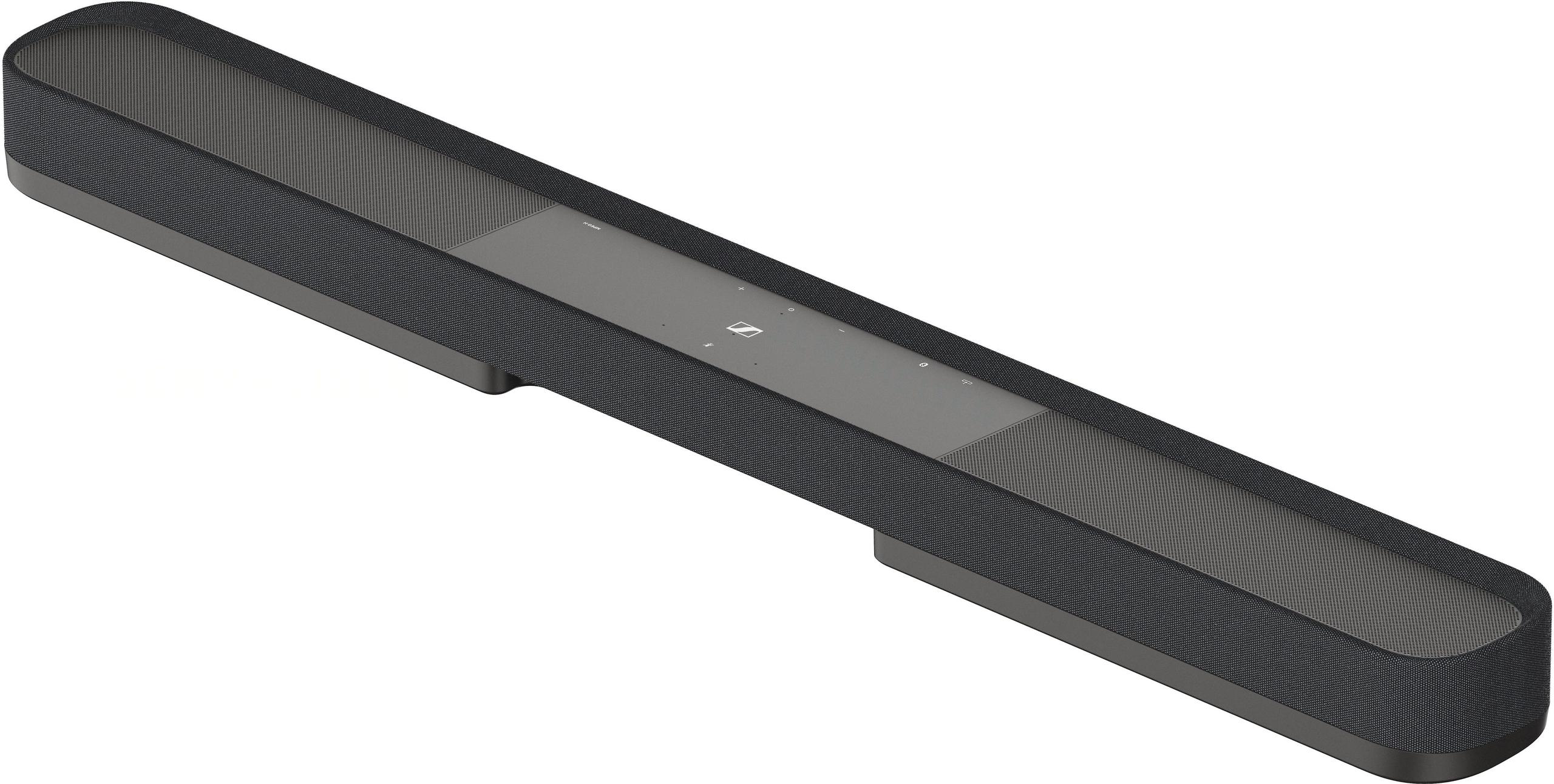


When you're ready to upgrade from your TV's built-in speakers, the world of premium soundbars can feel overwhelming. Two standouts have caught my attention recently: the Klipsch Flexus Core 300 ($1,199) and the Sennheiser AMBEO Soundbar ($1,999). Both promise cinema-quality sound from a single sleek unit, but they take dramatically different approaches to get there.
I've spent considerable time with both systems, and the differences are fascinating. One focuses on cutting-edge room correction technology that was previously only available in high-end audio receivers. The other takes an all-in-one approach with integrated bass that eliminates the need for a separate subwoofer entirely. Let me break down what makes each special and help you figure out which one deserves a spot under your TV.
Before diving into specifics, it's worth understanding what separates premium soundbars from budget options. These aren't just wider speakers with more drivers—they're sophisticated audio processors that use advanced algorithms to create the illusion of surround sound from a single chassis.
The key innovation here is Dolby Atmos processing, which adds height information to traditional surround sound. Instead of just left, right, center, and surround channels, Atmos can place sounds above you—like a helicopter flying overhead or rain falling from the sky. Premium soundbars achieve this through "psychoacoustic processing" (essentially tricking your brain into hearing sounds from directions where no speakers exist) and carefully angled drivers that bounce sound off your ceiling.
Room acoustics play a huge role in how well this works. Your ceiling height, wall materials, furniture placement, and even carpet versus hardwood floors all affect how sound travels and reflects. This is where room correction becomes crucial—it's like having a sound engineer tune your system specifically for your living space.
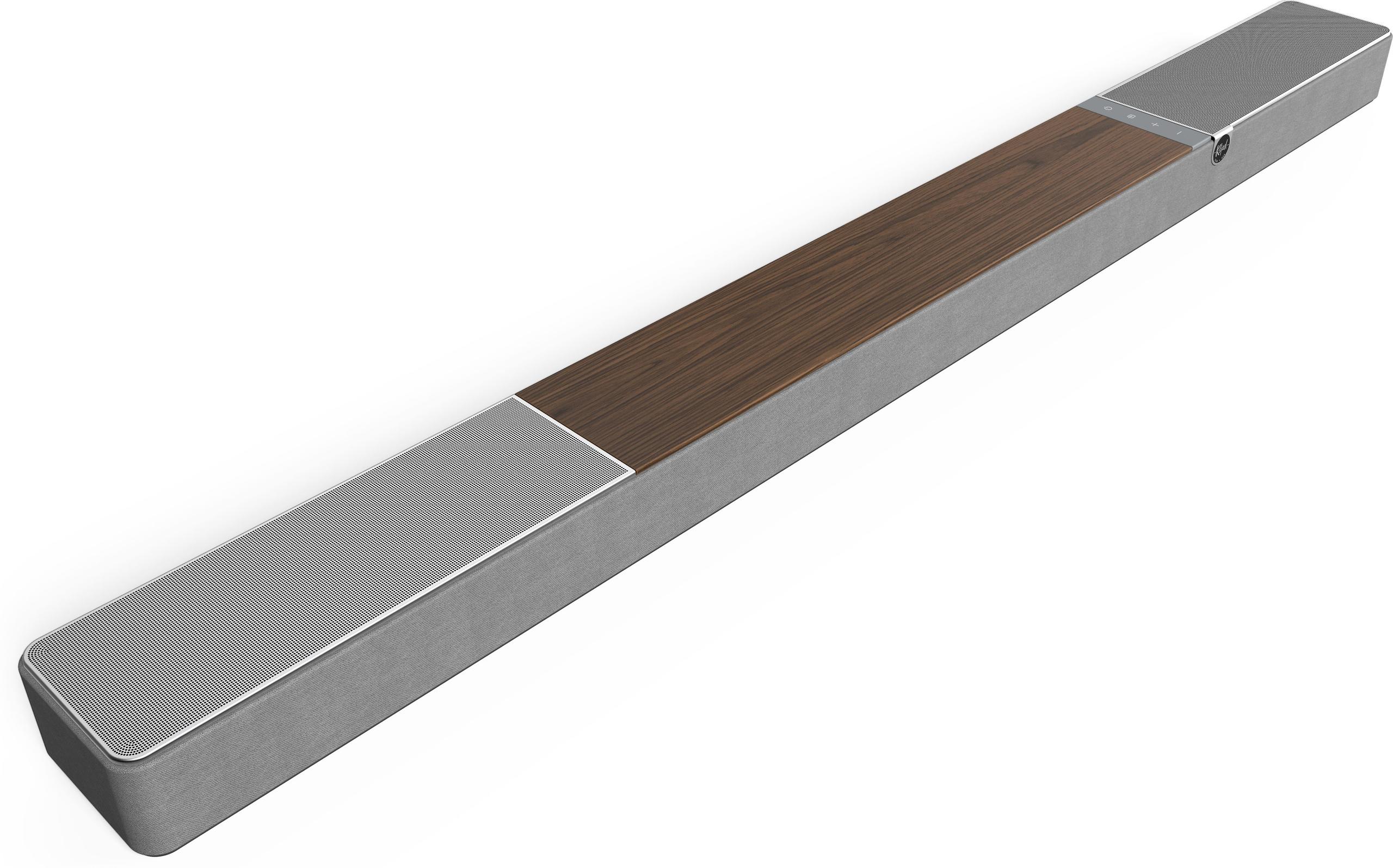
The Klipsch Flexus Core 300 launched in July 2024 with something unprecedented: Dirac Live room correction built right into a soundbar. This technology has been transforming high-end home theaters for years, but Klipsch is the first to make it accessible in this format.
Dirac Live works by playing test tones through your speakers and using a calibration microphone (included with the Flexus Core 300) to measure how your room affects the sound. It then creates a custom filter that corrects both the volume levels at different frequencies and the timing of when those frequencies reach your ears. The result is remarkably clean, balanced audio that sounds like it was mixed specifically for your room.
I was skeptical at first—how much difference could room correction really make in a soundbar? The answer surprised me. After running the Dirac calibration in my living room, dialogue became noticeably clearer, bass tightened up considerably, and the overall soundstage opened up in a way I hadn't experienced with other soundbars.
The Flexus Core 300 houses an impressive array of 13 drivers in its 54-inch chassis. Four 2.25-inch drivers handle front-channel duties, supported by Klipsch's signature horn-loaded tweeter—a technology borrowed from their high-end speakers that delivers exceptional vocal clarity. Two more 2.25-inch drivers fire upward for Atmos height effects, while another pair fires sideways to create width and surround impressions.
Perhaps most importantly, four 4-inch woofers are built into the soundbar itself. These aren't just small drivers trying to push bass—they're legitimate subwoofer elements that extend down to 43Hz. In my testing, this setup provided surprisingly full bass response without feeling boomy or undefined, something many soundbars struggle with.
The modular design philosophy sets Klipsch apart here. While the Core 300 works excellently on its own, you can add wireless surrounds (the Flexus Surr 200) and up to two wireless subwoofers (Flexus Sub 200) as your budget and room allow. This scalability means you're not locked into a single configuration—you can start with the soundbar and build a complete 5.1.4 Atmos system over time.
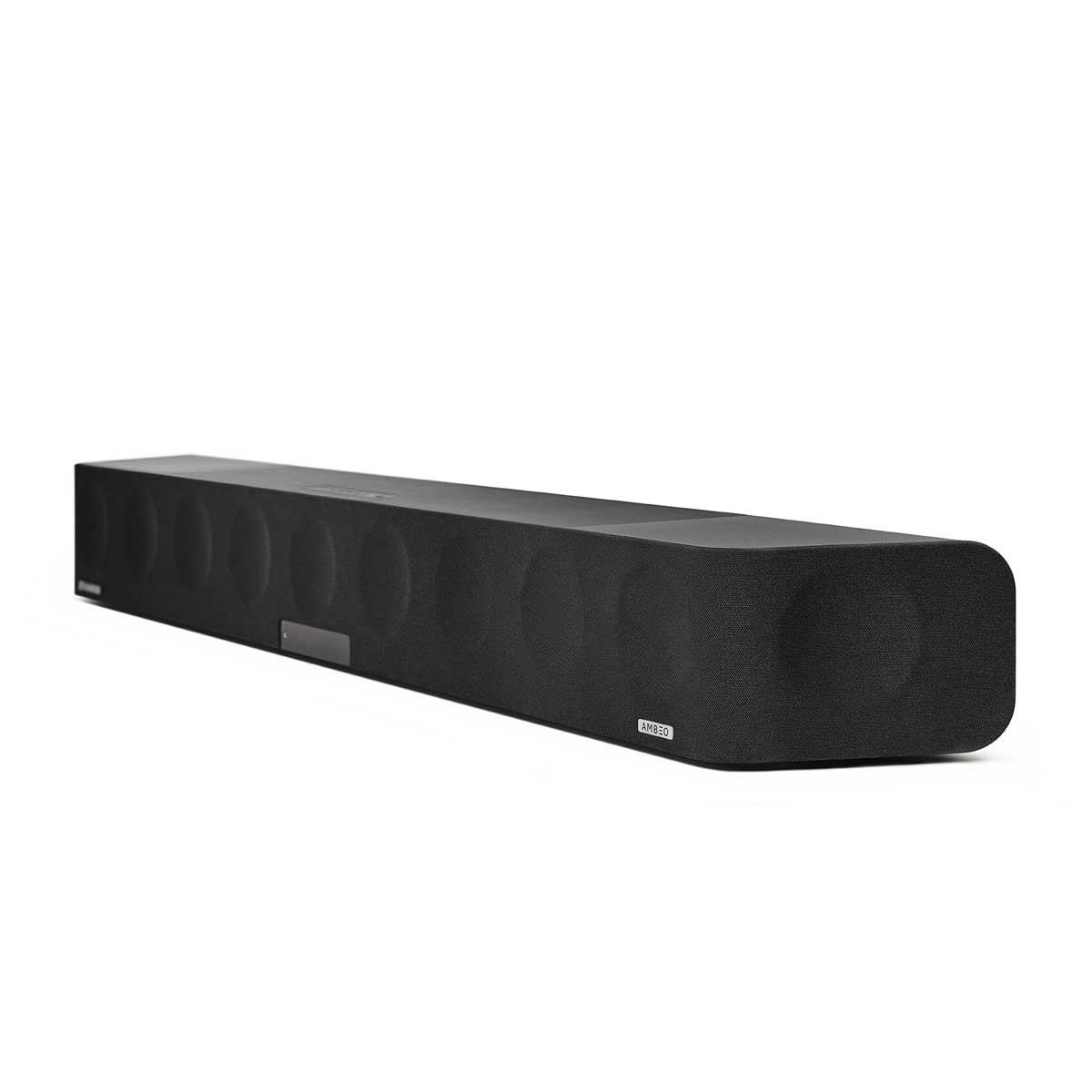
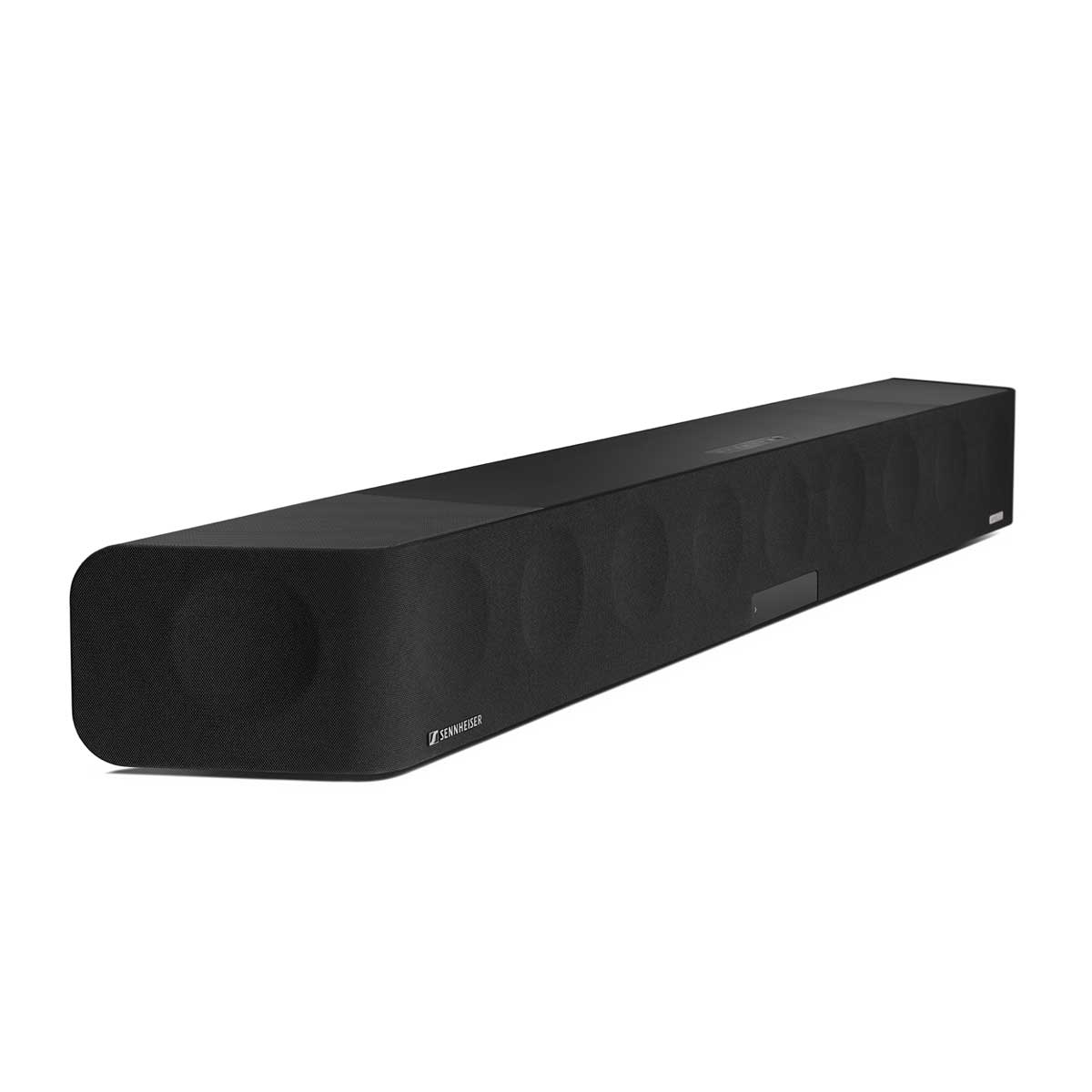
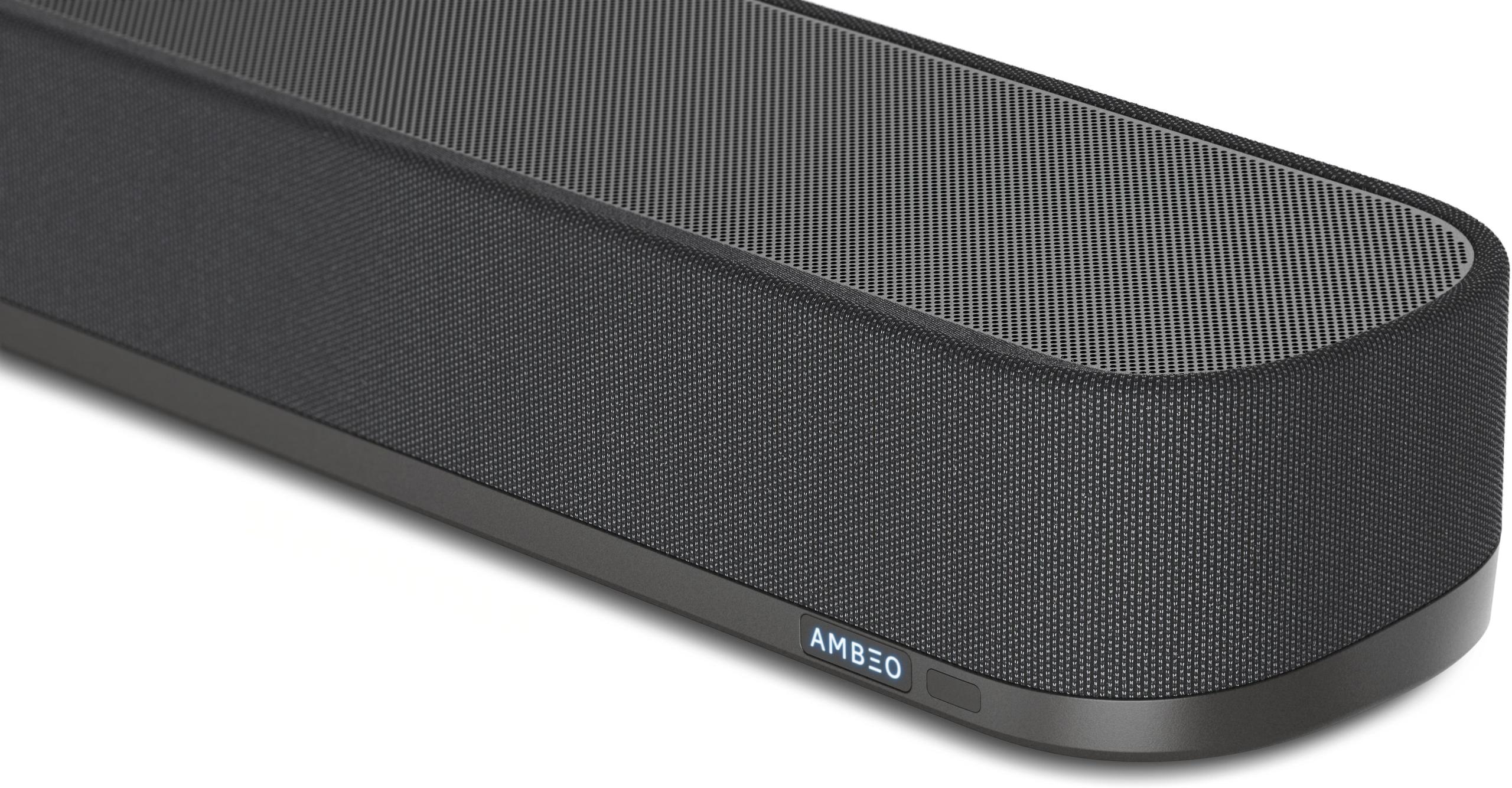
The Sennheiser AMBEO Soundbar, which has been refined since its initial release, takes the opposite approach. Rather than expandability, Sennheiser focuses on delivering a complete audio experience from day one. At nearly 50 inches wide and weighing over 40 pounds, this is a substantial piece of equipment that doesn't apologize for its presence.
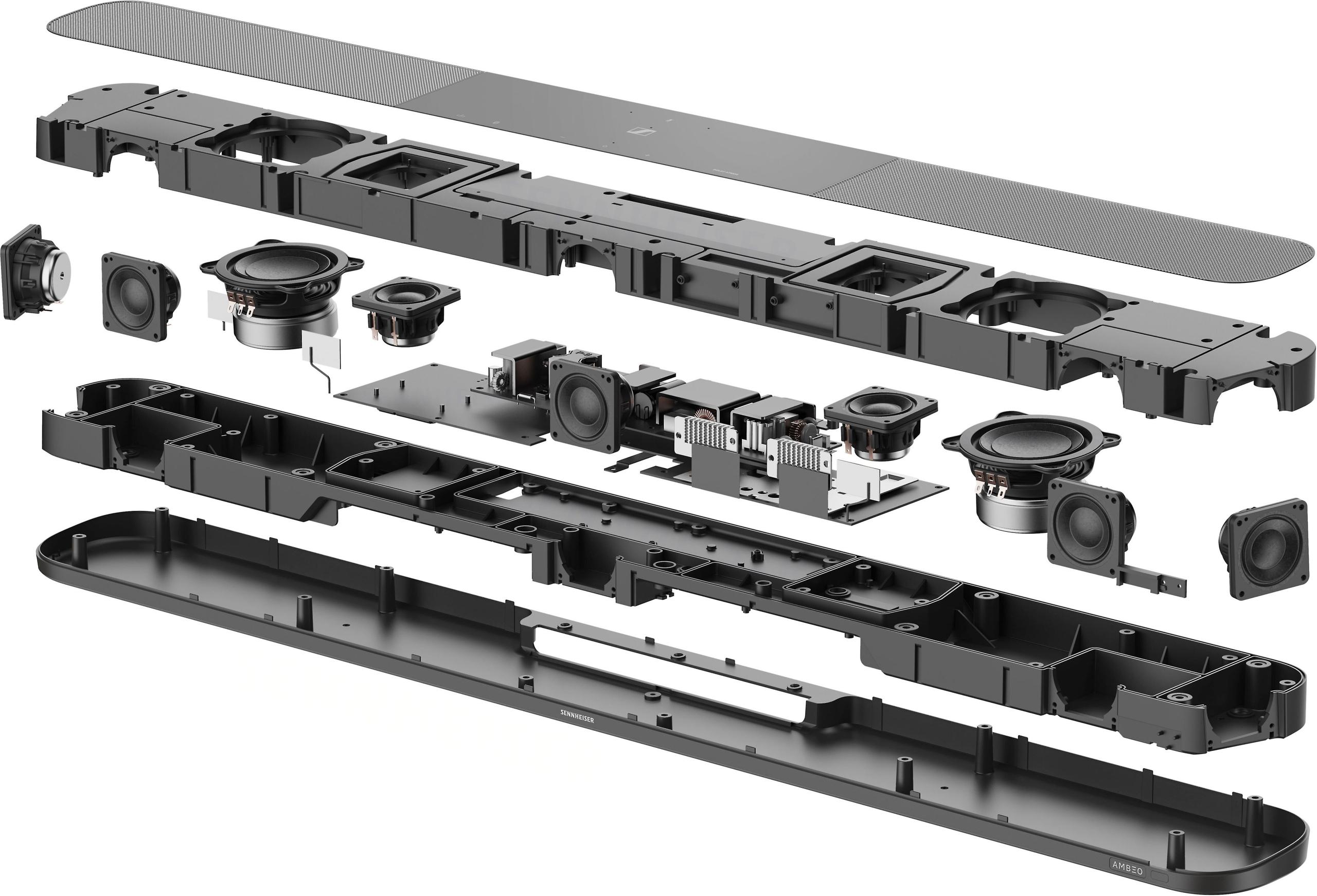
What immediately struck me about the AMBEO was its bass response. Sennheiser has engineered genuine subwoofer performance into this single unit, with six long-throw woofers that extend down to an impressive 30Hz. That's deeper than many dedicated subwoofers achieve, and it means you're getting full-range audio without any additional boxes cluttering your entertainment center.
The AMBEO 3D technology represents Sennheiser's approach to creating immersive sound. Rather than relying purely on physical driver placement, it uses sophisticated signal processing developed with Fraunhofer (the research institute behind MP3 technology) to analyze your room's acoustic signature and create virtual speaker locations all around you. The system actually listens to how sound reflects off your walls and ceiling, then uses that information to place audio elements convincingly in 3D space.
In my experience, this virtualization works remarkably well for creating a sense of envelopment. Watching movies like "Mad Max: Fury Road," the AMBEO managed to place engine sounds and explosions convincingly around the room, even behind the listening position where no physical speakers exist. It's not quite the same as having actual rear speakers, but for a single-box solution, it's impressively effective.
The build quality here is exceptional. Those 13 drivers include five aluminum dome tweeters and multiple full-range elements, all powered by dedicated amplifiers. Sennheiser's engineering background in professional audio is evident in the coherent, balanced sound signature that works well across different content types.
This is where the Klipsch Flexus Core 300 really shines. That horn-loaded tweeter isn't just for show—it's specifically designed to reproduce human voices with exceptional clarity and efficiency. In side-by-side testing with action movies and dialogue-heavy dramas, the Klipsch consistently delivered clearer, more intelligible speech, even at moderate volume levels.
The Dirac Live calibration enhances this further by correcting phase issues that can muddy vocal reproduction. After calibration, I noticed that dialogue seemed to come from a more precise location (the center of the TV screen) rather than diffusely from the general direction of the soundbar.
The Sennheiser AMBEO performs well here too, but its strength lies more in overall balance than specific vocal optimization. Dialogue is clear and natural, but without the same laser-focused precision that Klipsch achieves.
This is where the Sennheiser AMBEO takes a clear lead. Those six long-throw woofers deliver genuine deep bass that you can feel as much as hear. Watching "Blade Runner 2049," the massive synthesizer drones and explosion impacts had physical presence that most soundbars simply can't match.
The Klipsch Core 300's four 4-inch woofers are impressive for their size, but physics ultimately wins here. The AMBEO's larger drivers and optimized enclosure design simply move more air and reach deeper frequencies. If you're someone who loves action movies and bass-heavy music, this difference is significant.
However, the Klipsch system's expandability changes this equation. Adding one of the optional Flexus Sub 200 wireless subwoofers would likely match or exceed the AMBEO's bass performance while maintaining the modular flexibility.
Both systems create convincing surround effects, but through different methods. The Klipsch uses discrete up-firing and side-firing drivers combined with Dirac Live's room correction to create precise phantom imaging. In my testing, helicopter flyovers in action scenes had convincing height and movement, with clear differentiation between sounds coming from different directions.
The Sennheiser's AMBEO 3D processing is more holistic, creating an overall sense of being surrounded by sound rather than discrete directional effects. This approach works particularly well with music and ambient content where the goal is immersion rather than precise localization.
For home theater use specifically, I found the Klipsch approach more effective at creating the discrete channel separation that makes action movies exciting. The AMBEO excelled at creating atmosphere and musical enjoyment.
The Klipsch system's 106 dB maximum output gives it a clear advantage in larger rooms or for listeners who like reference-level playback. Those horn tweeters remain clean and undistorted even at high volumes, something that becomes important during intense movie scenes with sudden dynamic peaks.
The AMBEO is no slouch in this department, but it's optimized more for balanced output across its frequency range rather than maximum SPL capability. In rooms under 300 square feet, both systems provide more than adequate volume. Larger spaces favor the Klipsch system's higher output capability.
Both soundbars embrace modern connectivity, but with different philosophies. The Klipsch Flexus Core 300 includes HDMI 2.1 with 8K passthrough capability—future-proofing that will matter as 8K content becomes more common. The system also supports the latest Bluetooth 5.3 standard and includes comprehensive streaming options: AirPlay 2, Google Cast, Spotify Connect, and Tidal Connect.
The Smart Control app deserves special mention for its integration of Dirac Live calibration. The setup wizard walks you through the measurement process clearly, and the app provides ongoing control over EQ settings, input selection, and firmware updates. It's rare to find soundbar software that feels this polished and comprehensive.
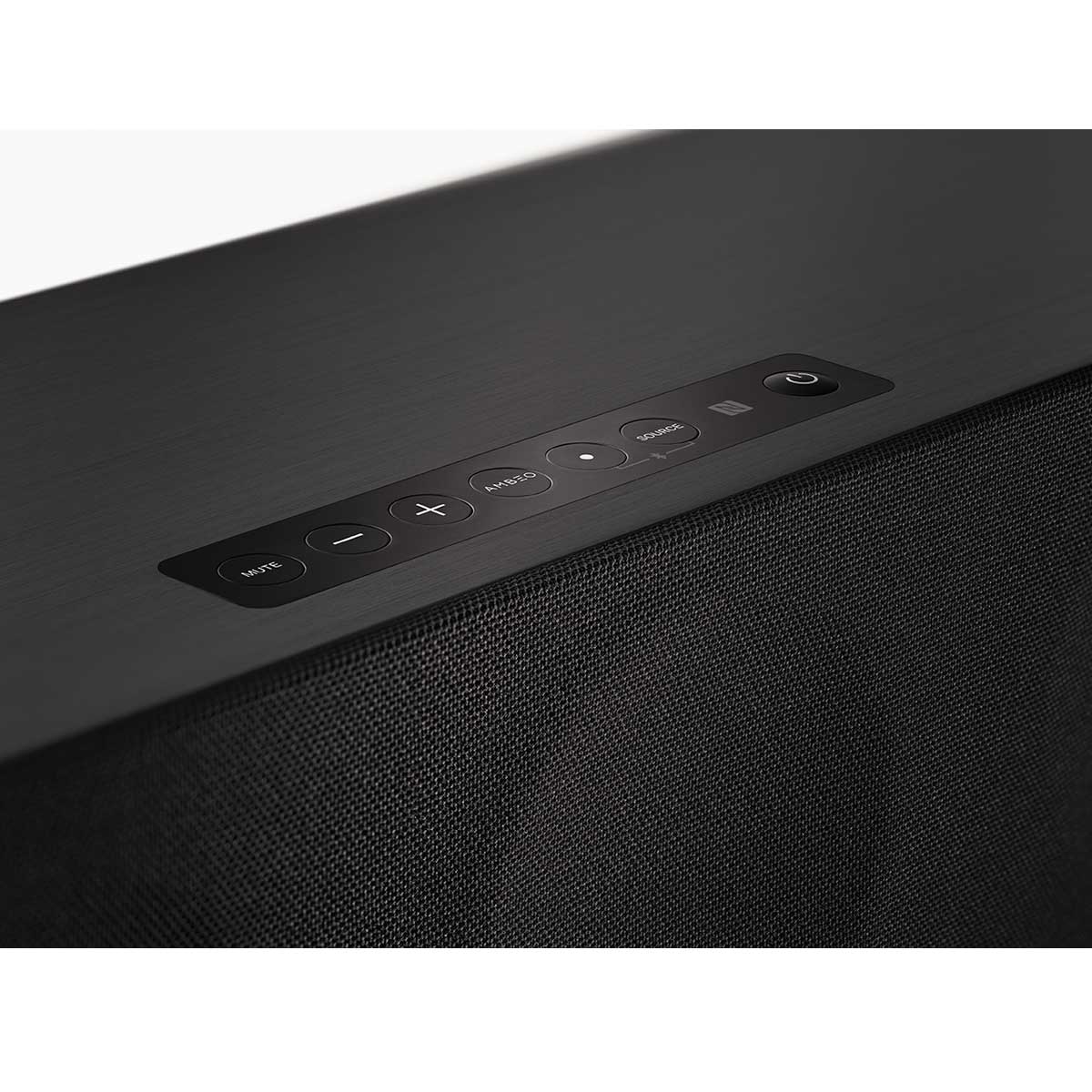
The Sennheiser AMBEO takes a more streamlined approach to connectivity. While it includes the essential HDMI eARC and optical inputs, along with Chromecast built-in and Bluetooth, the focus is on simplicity rather than cutting-edge specs. The NFC pairing feature is a nice touch—just tap your phone to the soundbar to connect instantly.
Here's where personal preference really matters. The Klipsch system requires more initial investment in setup time. The Dirac Live calibration process takes about 20-30 minutes, involving multiple test tone measurements from your primary listening position. While the app guides you through this clearly, it's definitely more involved than typical soundbar setup.
That extra effort pays dividends in performance, but I understand it's not for everyone. If you're the type who wants to plug in and start watching TV immediately, this might feel excessive.
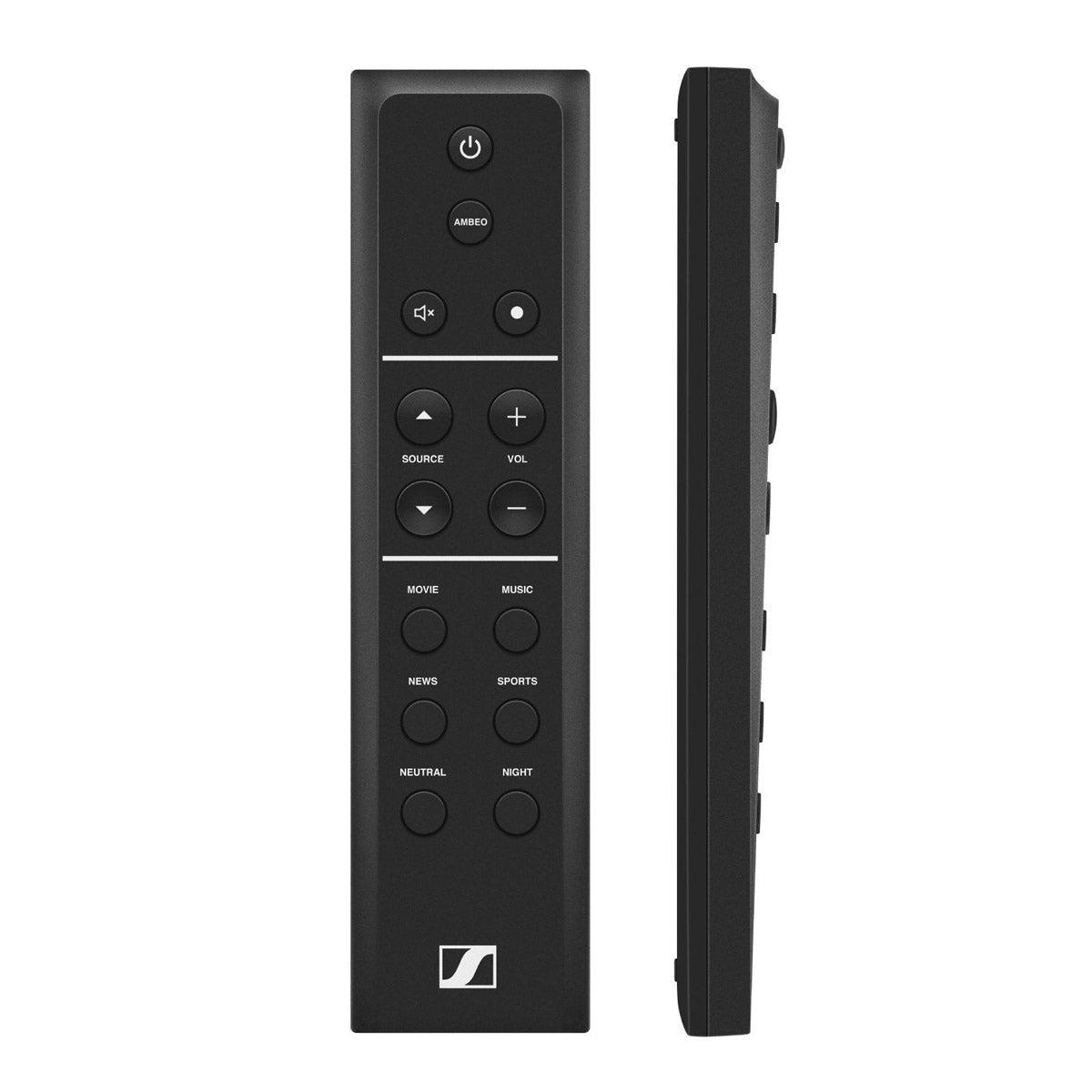
The Sennheiser AMBEO is refreshingly straightforward in comparison. Connect the cables, power it on, and you're essentially ready to go. The automatic room correction runs in the background without requiring user interaction. For many people, this simplicity is exactly what they want from a soundbar.
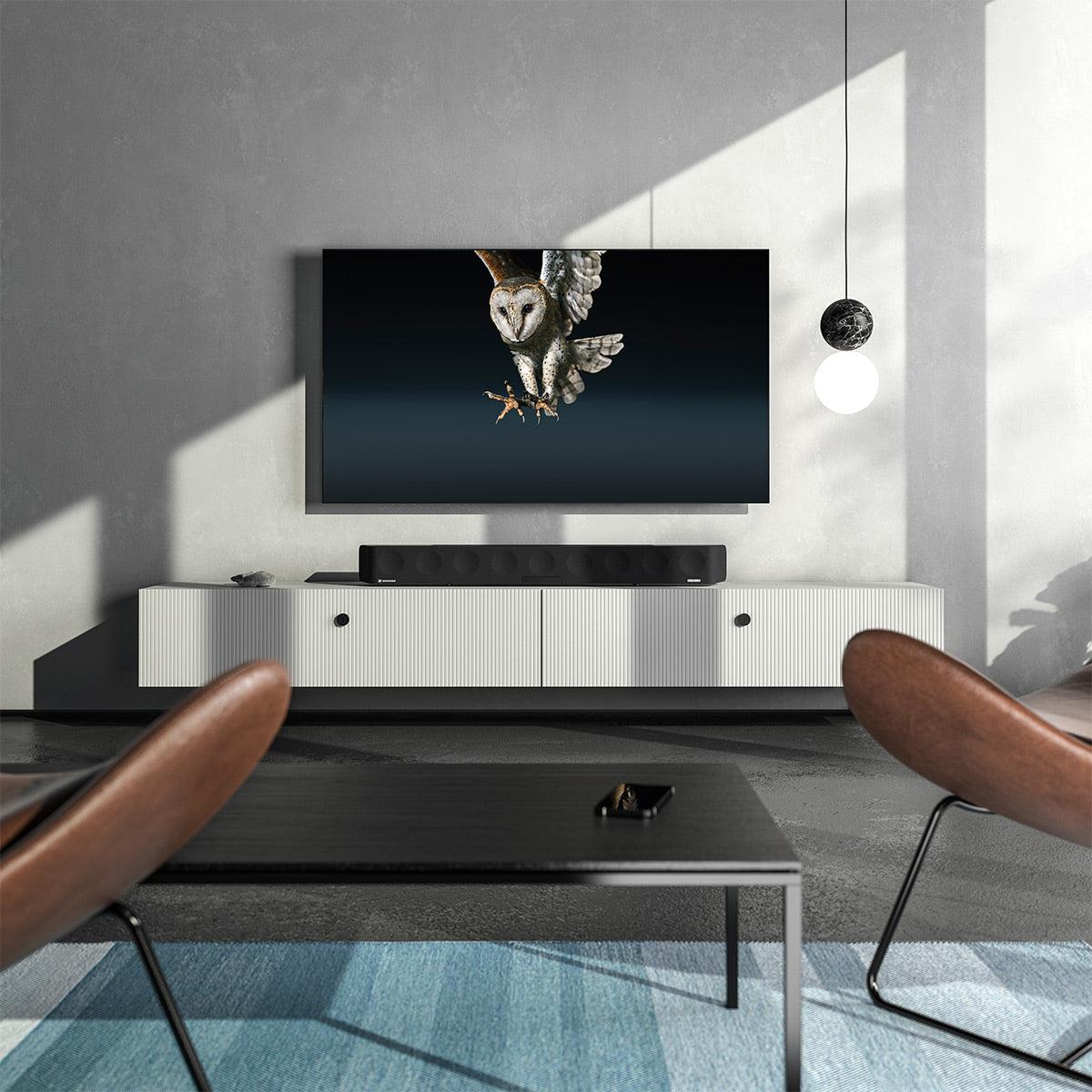
In my home theater setup, both systems integrated well with my 65-inch TV and streaming devices. The Klipsch system's ability to expand proved valuable—starting with just the soundbar and adding wireless surrounds later created a noticeably more immersive experience for movie watching.
The AMBEO's all-in-one design meant no additional components to worry about, but also no room to grow. For apartment living or situations where simplicity trumps everything else, this constraint actually becomes a feature.
Gaming performance deserves mention too. Both soundbars handle game audio well, but the Klipsch system's lower latency and more precise imaging made competitive gaming slightly more enjoyable. The AMBEO's deeper bass gave single-player, story-driven games more impact.
After extensive testing, my recommendation comes down to your priorities and situation. Choose the Klipsch Flexus Core 300 ($1,199) if you value cutting-edge technology, want the option to expand your system later, and don't mind spending time on setup optimization. The Dirac Live room correction alone makes this soundbar special, and the modular design means your investment can grow with your needs.
The Sennheiser AMBEO Soundbar ($1,999) makes more sense if you want the deepest possible bass from a single unit, prefer plug-and-play simplicity, or have space constraints that rule out additional components. The premium price reflects genuine engineering excellence and materials quality.
For most home theater enthusiasts, I lean slightly toward the Klipsch system. The combination of advanced room correction, expandability, and future-proof connectivity provides better long-term value, especially considering the $800 price difference. However, if deep bass is your priority and you don't want to think about adding components later, the AMBEO's integrated approach has clear appeal.
Both represent the current state-of-the-art in soundbar design, just with different philosophies. Your choice ultimately depends on whether you prefer the flexibility and technology showcase of the Klipsch or the refined, all-in-one excellence of the Sennheiser. Either way, you're getting a significant upgrade over basic TV audio that will transform your viewing experience.
| Klipsch Flexus Core 300 ($1,199) | Sennheiser AMBEO Soundbar ($1,999) |
|---|---|
| Price - Significant $800 difference affects overall value proposition | |
| $1,199 (excellent value for included tech) | $1,999 (premium pricing for all-in-one design) |
| Room Correction Technology - Critical for optimizing sound in your specific room | |
| Dirac Live with calibration microphone (industry-leading precision, first in soundbar category) | Proprietary room correction with graphic EQ (good but less advanced) |
| Bass Performance - Determines if you need a separate subwoofer | |
| Four 4" built-in woofers, 43Hz extension (good but expandable with wireless sub) | Six long-throw woofers, 30Hz extension (deeper bass, no external sub needed) |
| Channel Configuration - Affects surround sound realism | |
| True 5.1.2 with physical up-firing drivers | 5.1.4 virtual configuration with AMBEO 3D processing |
| Maximum Output - Important for large rooms or loud listening | |
| 106 dB SPL (excellent for large spaces) | Not specified (optimized for balanced output) |
| Expandability - Determines if system can grow over time | |
| Modular design: add wireless surrounds ($400) and subwoofer ($500) | Fixed configuration, no expansion options |
| Connectivity - Future-proofing and device compatibility | |
| HDMI 2.1 (8K passthrough), Bluetooth 5.3, AirPlay 2, multiple streaming services | HDMI eARC, Bluetooth 4.0, Chromecast built-in, NFC pairing |
| Driver Array - Affects dialogue clarity and frequency response | |
| 13 drivers including horn-loaded tweeter for vocal clarity | 13 high-end drivers with aluminum dome tweeters |
| Setup Complexity - Time investment vs. performance gains | |
| Requires 20-30 minute Dirac calibration for optimal performance | Plug-and-play with automatic background optimization |
| Physical Size - Space requirements and visual impact | |
| 54" W × 3" H × 5" D, 34.5 lbs (sleek profile) | 49.6" W × 5.3" H × 6.7" D, 40.8 lbs (substantial presence) |
| Total System Cost - Real-world pricing with full setup | |
| $1,199 standalone, $2,099 with surrounds and sub | $1,999 complete system (no additional components needed) |
The Klipsch Flexus Core 300 ($1,199) offers better value with its advanced Dirac Live room correction technology and future-proof connectivity at $800 less than the Sennheiser AMBEO ($1,999). However, the Sennheiser includes integrated deep bass that would otherwise require a separate subwoofer, making the price gap smaller when considering complete system costs.
The Sennheiser AMBEO Soundbar includes powerful integrated subwoofers that extend down to 30Hz, eliminating the need for additional bass. The Klipsch Flexus Core 300 has four built-in 4-inch woofers that provide good bass to 43Hz, but you can add an optional wireless subwoofer for deeper extension if desired.
The Klipsch Flexus Core 300 performs better in large rooms with its 106 dB maximum output and expandable design that can add wireless surround speakers. The Sennheiser AMBEO works well in medium-sized rooms but may lack the power and coverage needed for spaces over 300 square feet.
The Sennheiser AMBEO Soundbar offers plug-and-play simplicity with automatic room correction that runs in the background. The Klipsch Flexus Core 300 requires a 20-30 minute Dirac Live calibration process using an included microphone, but this extra effort delivers superior room optimization.
The Klipsch Flexus Core 300 excels at dialogue clarity thanks to its horn-loaded tweeter technology and Dirac Live room correction, which precisely optimizes vocal frequencies. The Sennheiser AMBEO delivers clear dialogue as well, but focuses more on overall balanced sound rather than vocal-specific optimization.
The Klipsch Flexus Core 300 can expand to a complete 5.1.4 system with optional wireless surround speakers and subwoofer modules. The Sennheiser AMBEO Soundbar is designed as a fixed, all-in-one solution with no expansion options, relying on virtualization for surround effects.
Both excel for home theater, but differently. The Klipsch Flexus Core 300 provides more precise directional effects and dialogue clarity ideal for action movies, while the Sennheiser AMBEO creates better overall immersion and atmosphere with its AMBEO 3D processing and deeper bass response.
The Klipsch Flexus Core 300 offers more comprehensive streaming with AirPlay 2, Google Cast, Spotify Connect, Tidal Connect, plus HDMI 2.1 with 8K passthrough. The Sennheiser AMBEO Soundbar includes Chromecast built-in, Bluetooth, and NFC pairing, focusing on essential connectivity rather than cutting-edge features.
The Sennheiser AMBEO Soundbar produces deeper bass, extending down to 30Hz with its six integrated long-throw woofers. The Klipsch Flexus Core 300 reaches 43Hz with its four built-in woofers, which is good but not as deep as the Sennheiser's integrated subwoofer system.
The Sennheiser AMBEO typically performs better for music with its deeper bass extension and balanced frequency response optimized for stereo content. The Klipsch Flexus Core 300 offers excellent music performance too, especially after Dirac Live calibration, with the ability to fine-tune the sound signature to your preferences.
The Klipsch Flexus Core 300 is more future-proof with HDMI 2.1 supporting 8K passthrough, Bluetooth 5.3, and modular expandability that allows system upgrades over time. The Sennheiser AMBEO Soundbar focuses on current technology standards and delivers a complete experience now rather than future upgradeability.
The Sennheiser AMBEO ($1,999) is complete out of the box with no additional purchases needed. The Klipsch Flexus Core 300 ($1,199) starts lower but adding wireless surrounds ($400) and subwoofer ($500) brings the total to $2,099, making the pricing competitive when comparing full systems.
We've done our best to create useful and informative comparisons to help you decide what product to buy. Our research uses advanced automated methods to create this comparison and perfection is not possible - please contact us for corrections or questions. These are the sites we've researched in the creation of this article: crutchfield.com - whathifi.com - avnirvana.com - hometechnologyreview.com - ecoustics.com - gearpatrol.com - klipsch.com - avsforum.com - youtube.com - avsforum.com - listenup.com - chowmain.software - klipsch.com - novis.ch - avsforum.com - klipsch.ca - lefflers.se - abt.com - sweetwater.com - wifihifi.com - klipsch.com - dirac.com - bestbuy.com - rtings.com - techradar.com - audioxpress.com - whathifi.com - upscaleaudio.com - soundstagesimplifi.com - global.sennheiser-hearing.com - sennheiser-hearing.com - audioadvice.com - abt.com - moon-audio.com

Privacy Policy
Terms and Conditions - Affiliate Policy
Home Security
© Copyright 2008-2026.
11816 Inwood Rd #1211, Dallas, TX 75244