

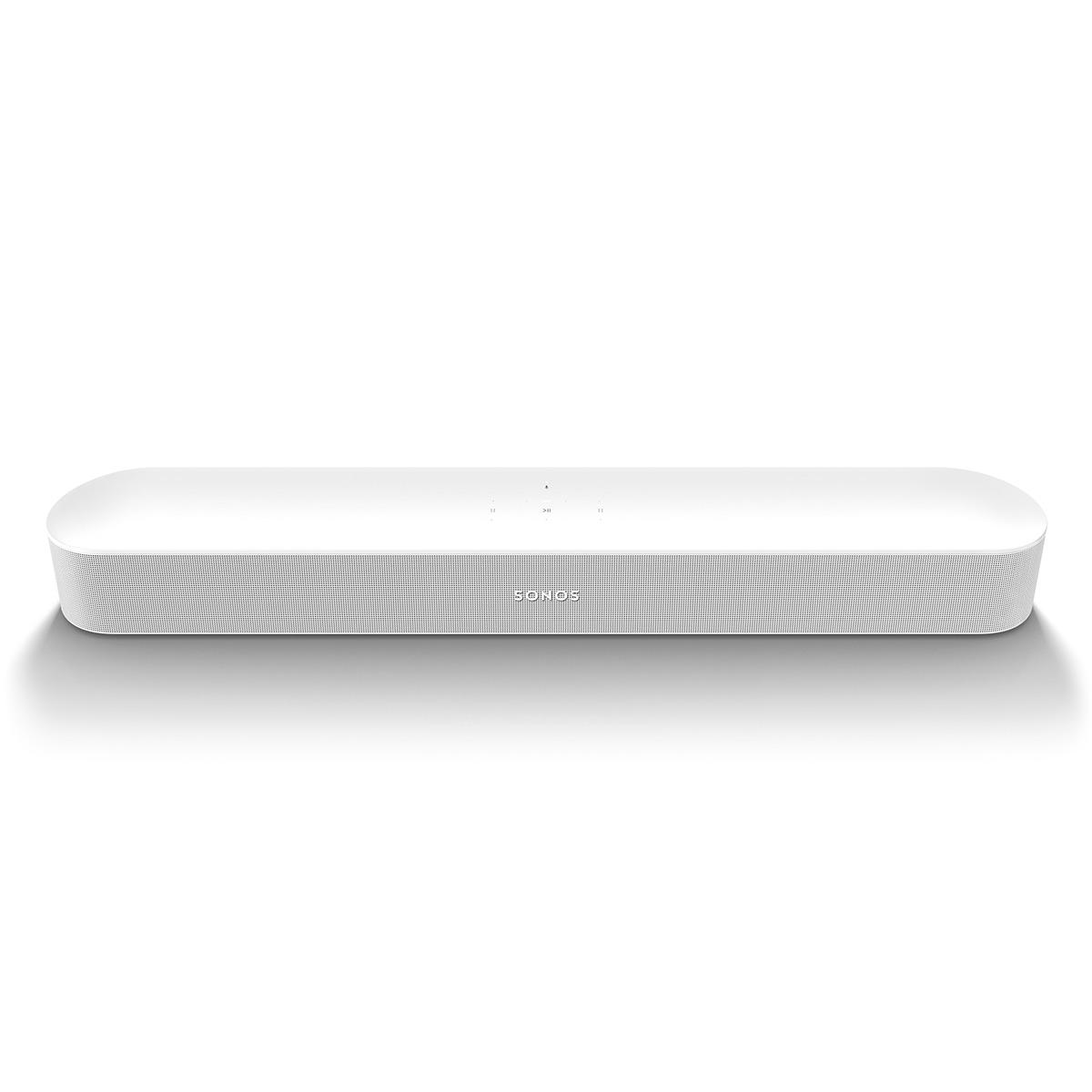
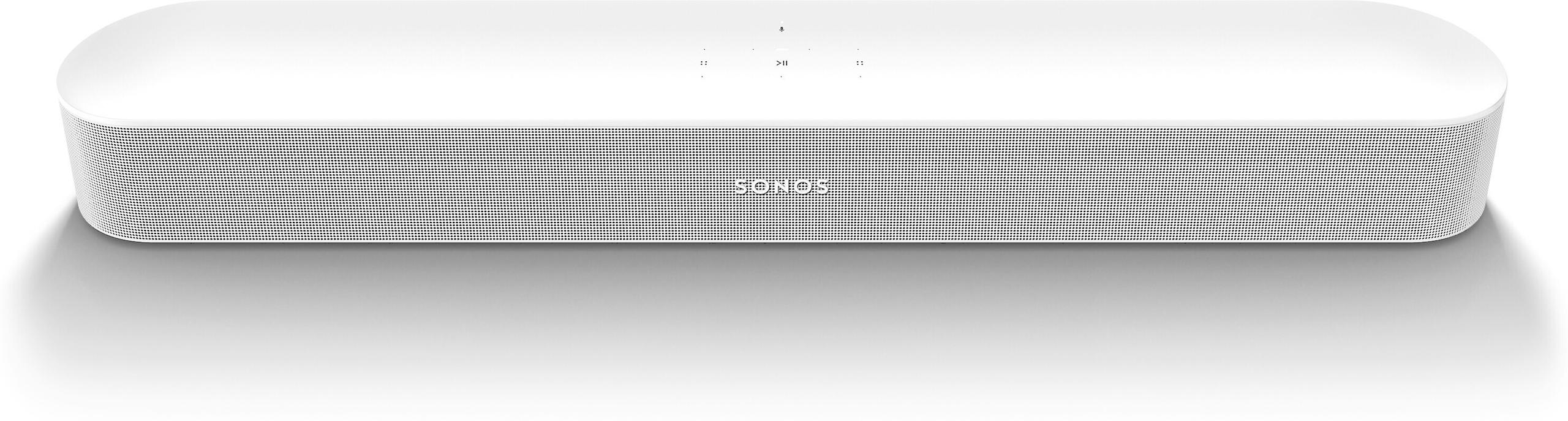
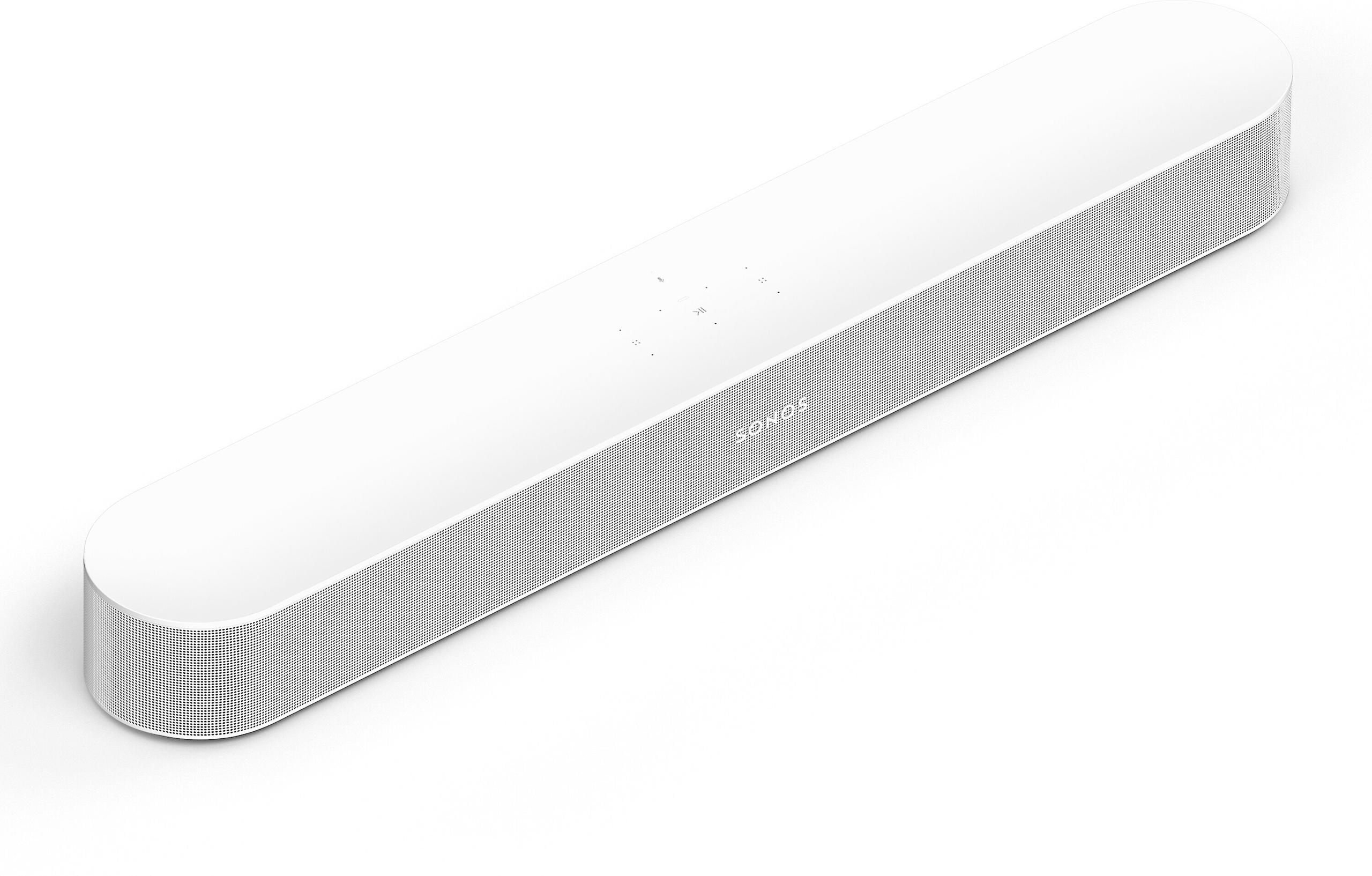



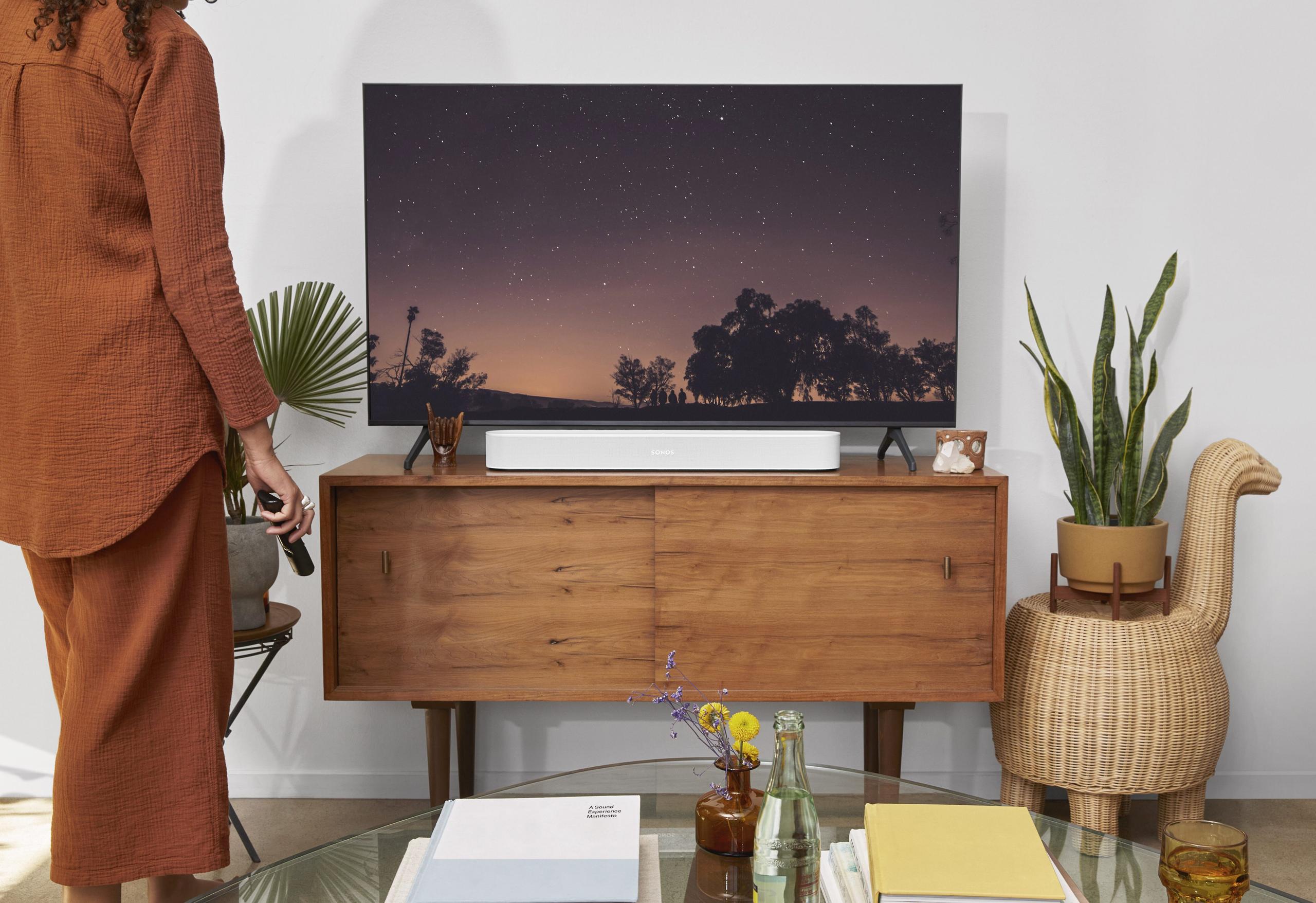
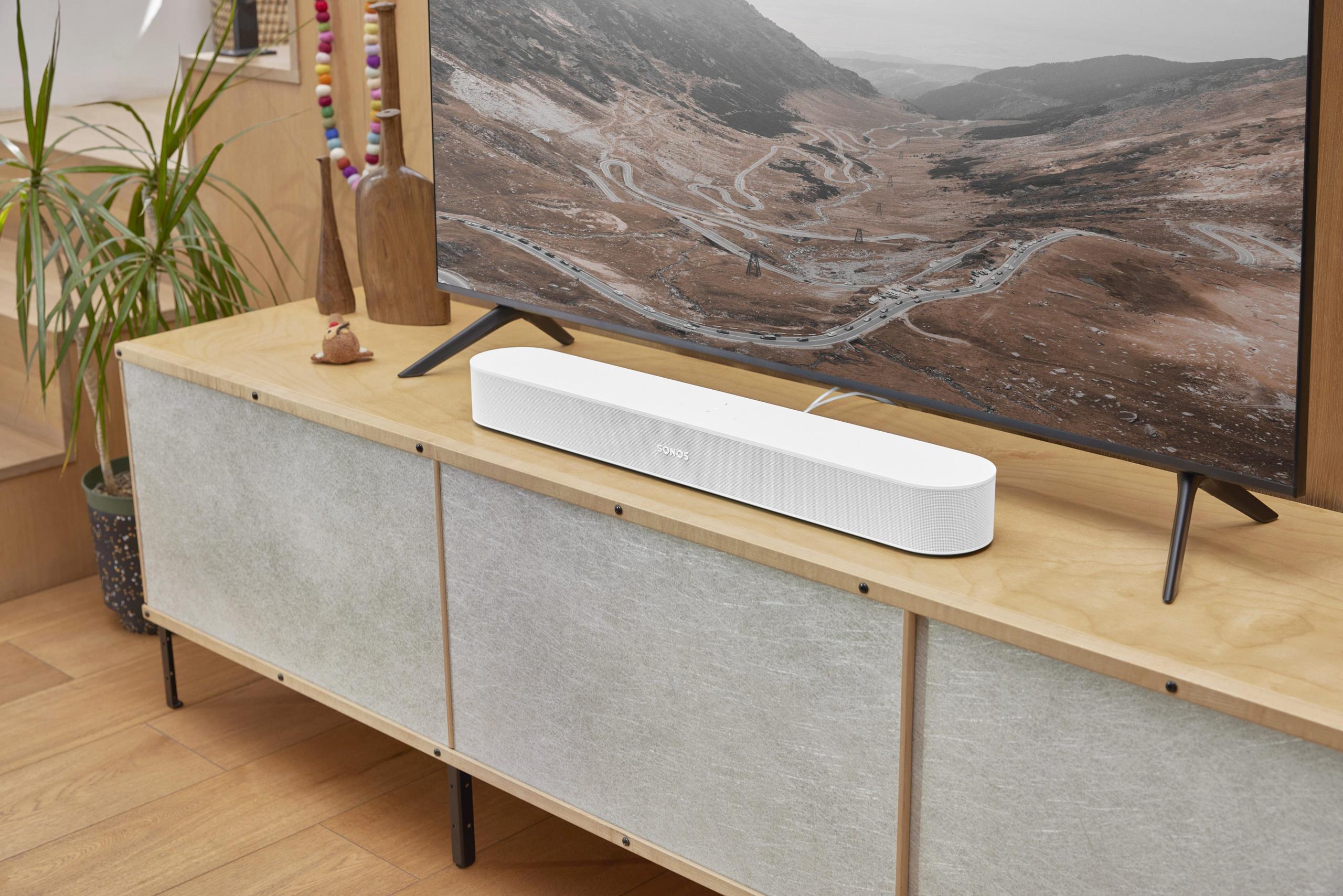
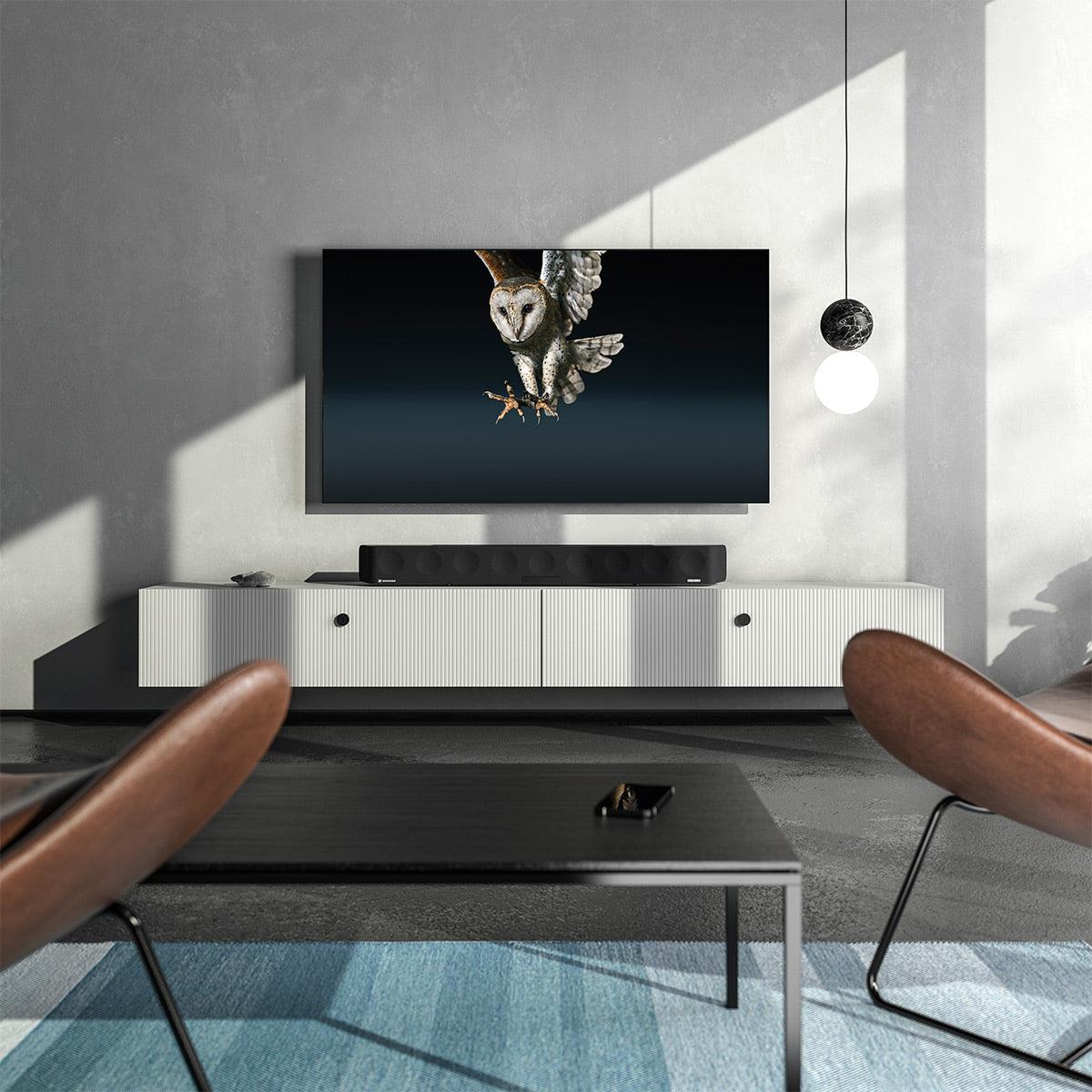
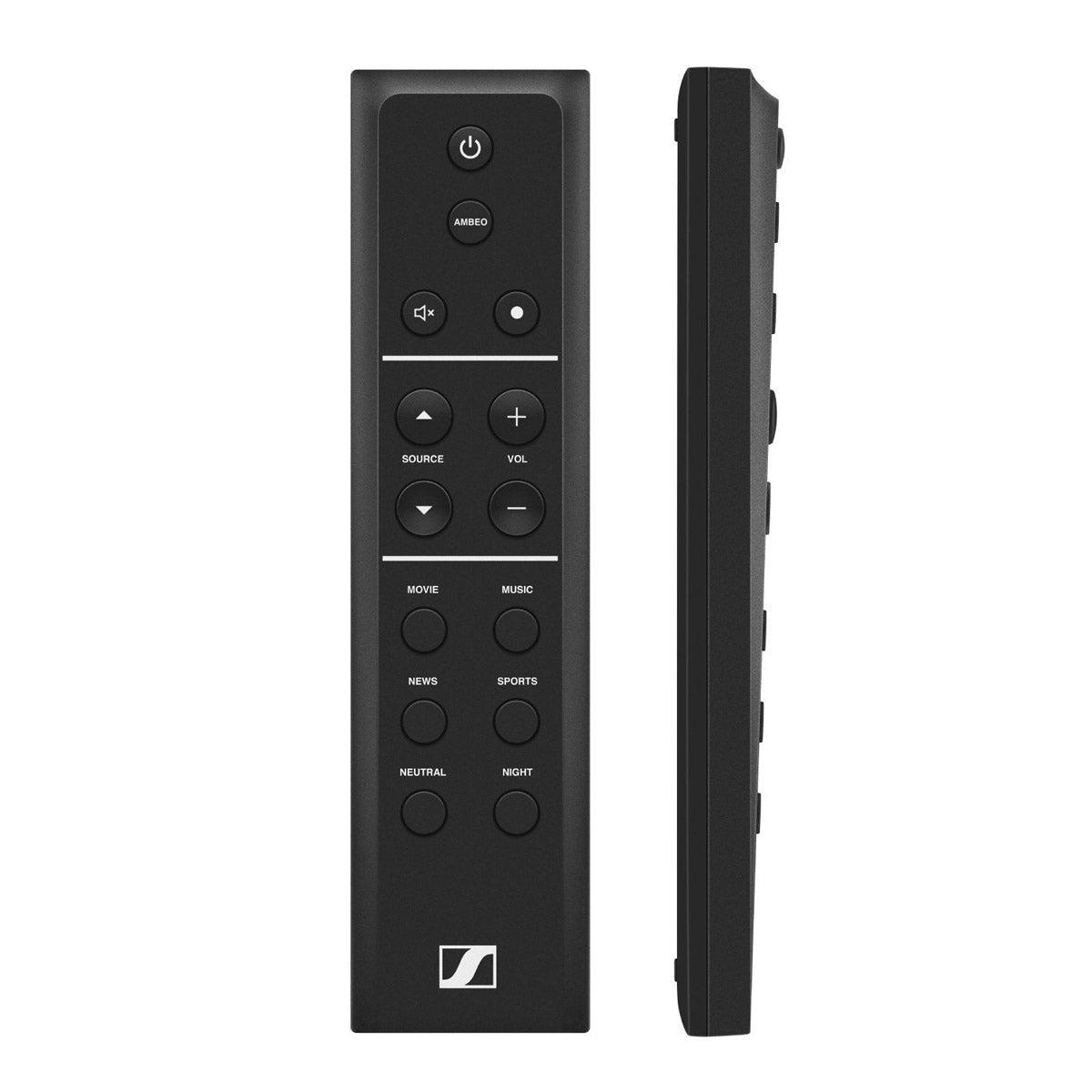
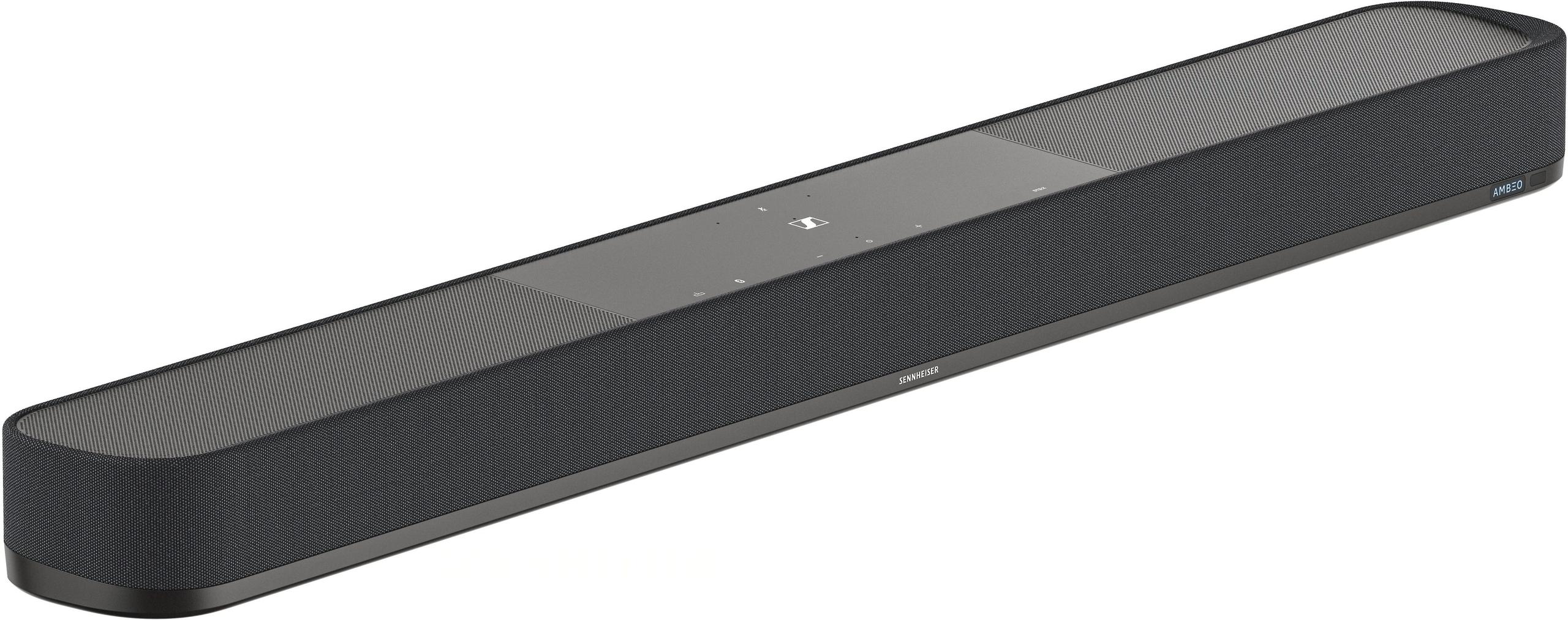
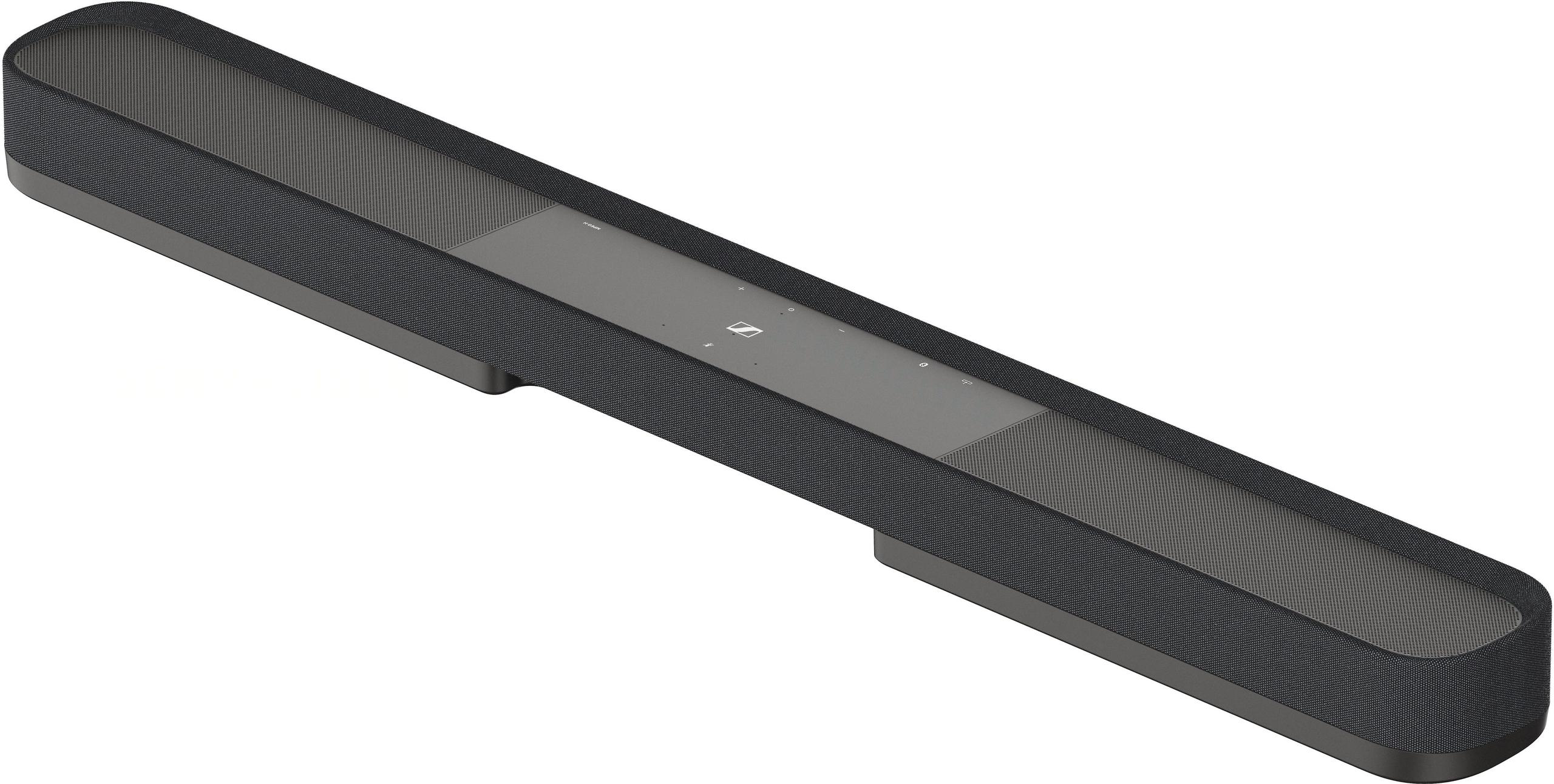

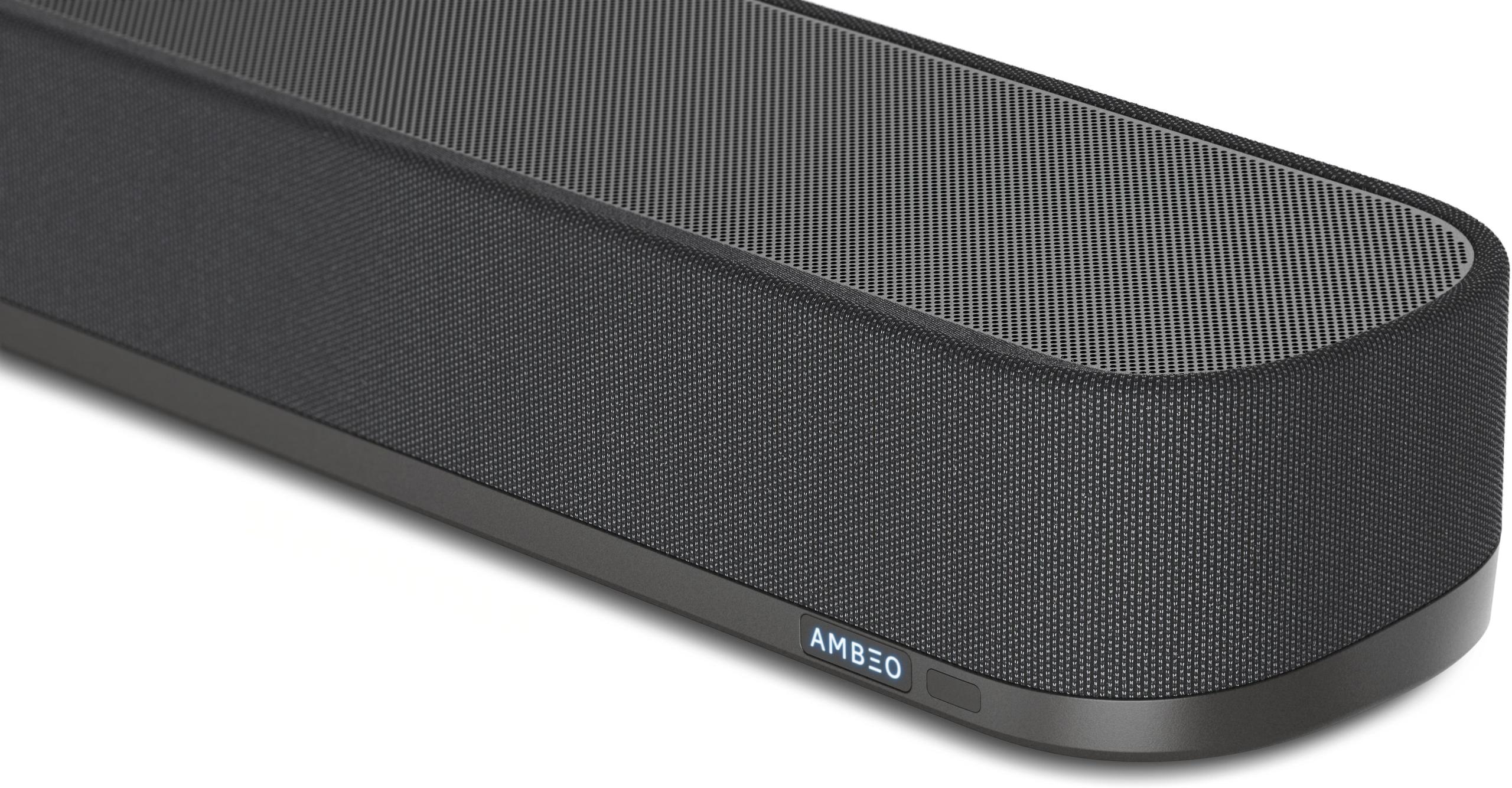

If you've ever sat down to watch a movie and found yourself constantly adjusting the volume—turning it up for quiet dialogue, then scrambling for the remote when an explosion rattles your windows—you know exactly why soundbars exist. The Sonos Beam Gen 2 at $449 and the Sennheiser AMBEO Soundbar at $1,999 both promise to solve this problem, but they take dramatically different approaches to delivering premium audio.
Before diving into these specific models, it's worth understanding what makes a soundbar "premium." Unlike the basic soundbars you'll find for under $200, premium models use sophisticated digital signal processing (DSP)—essentially computer algorithms that manipulate sound waves—to create the illusion of speakers positioned all around your room. This virtual surround sound technology has become remarkably convincing, though it still requires some acoustic sleight of hand.
The key considerations when shopping for a premium soundbar include how well it matches your room size, its audio processing capabilities, connectivity options, and whether you can expand the system later. Most importantly, you'll want to consider the total cost of ownership—some soundbars work great on their own, while others really need additional components to shine.
The Sonos Beam Gen 2 launched in October 2021 as an evolution of Sonos's popular compact soundbar formula. The major upgrade was adding Dolby Atmos support—a 3D audio format that places sounds above, below, and around you—plus HDMI eARC connectivity for higher-quality audio transmission from your TV. Sonos achieved this without making the soundbar significantly larger, which was no small engineering feat.
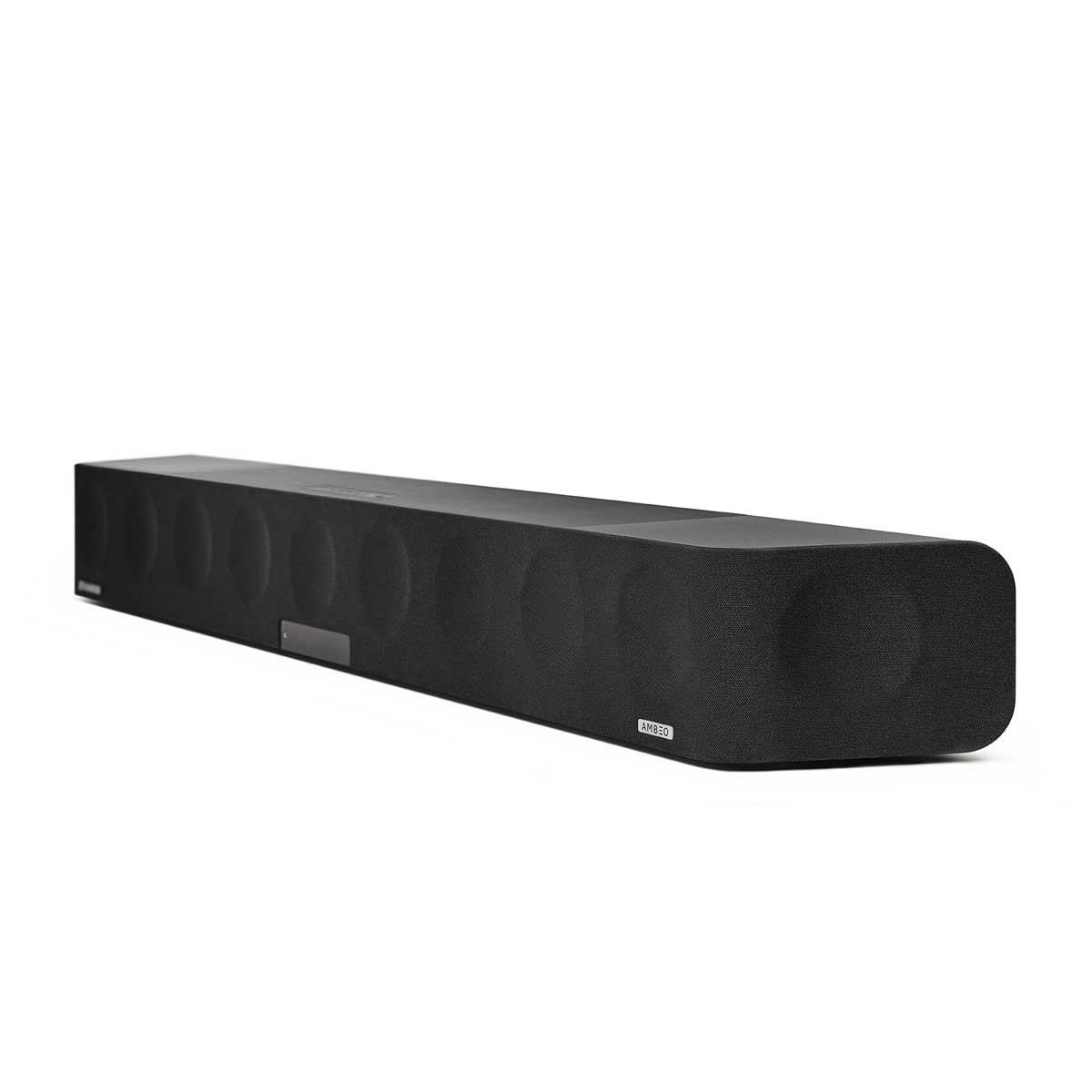
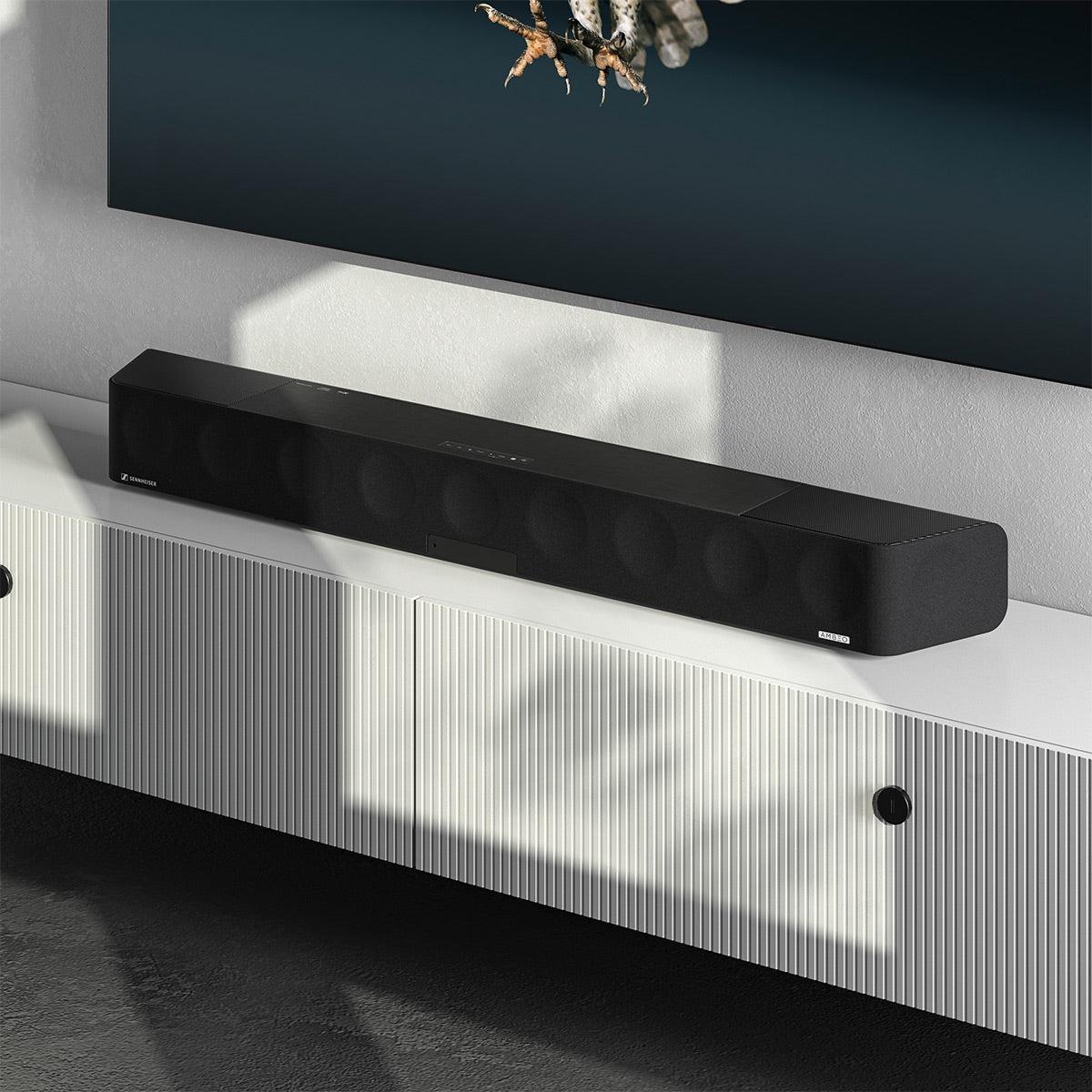
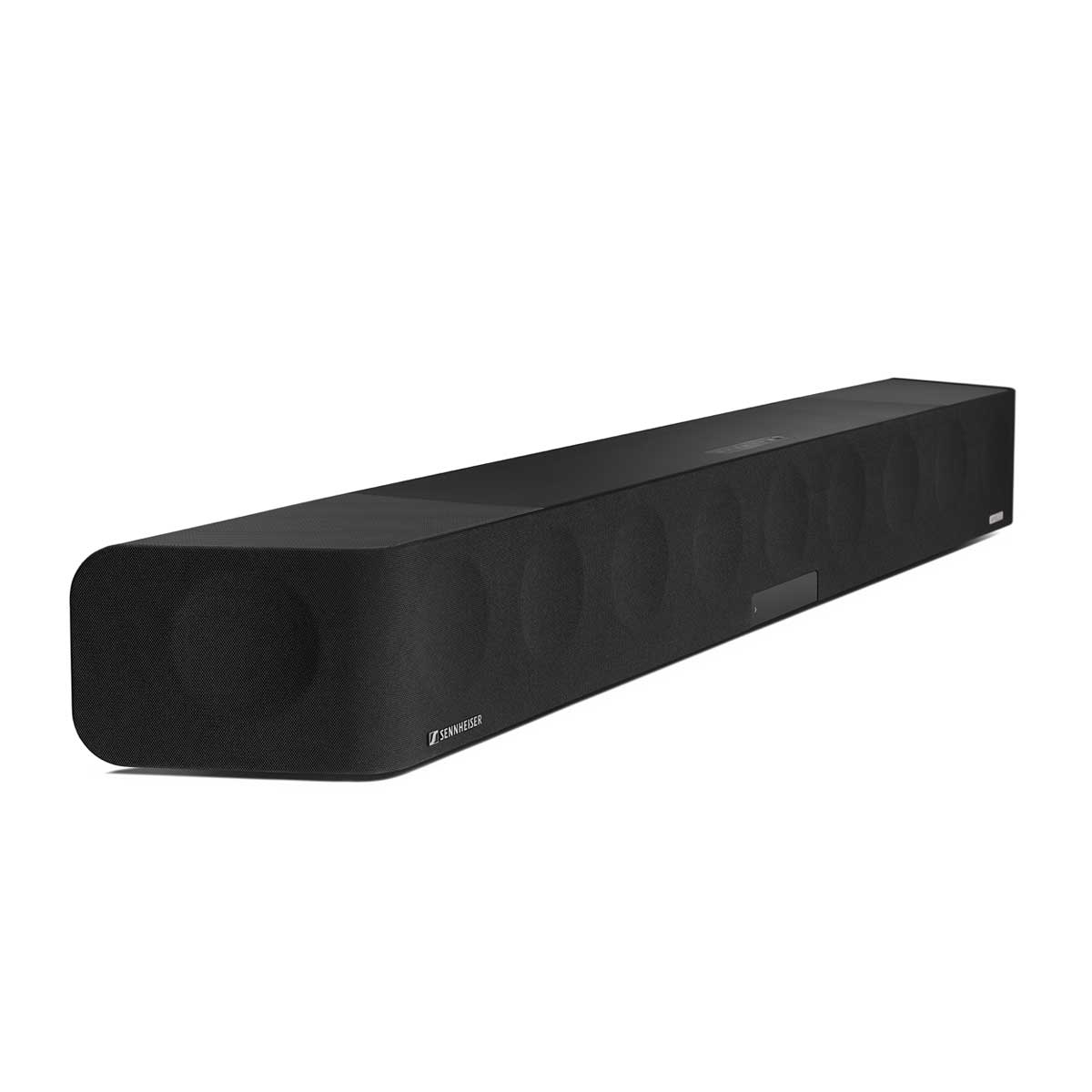
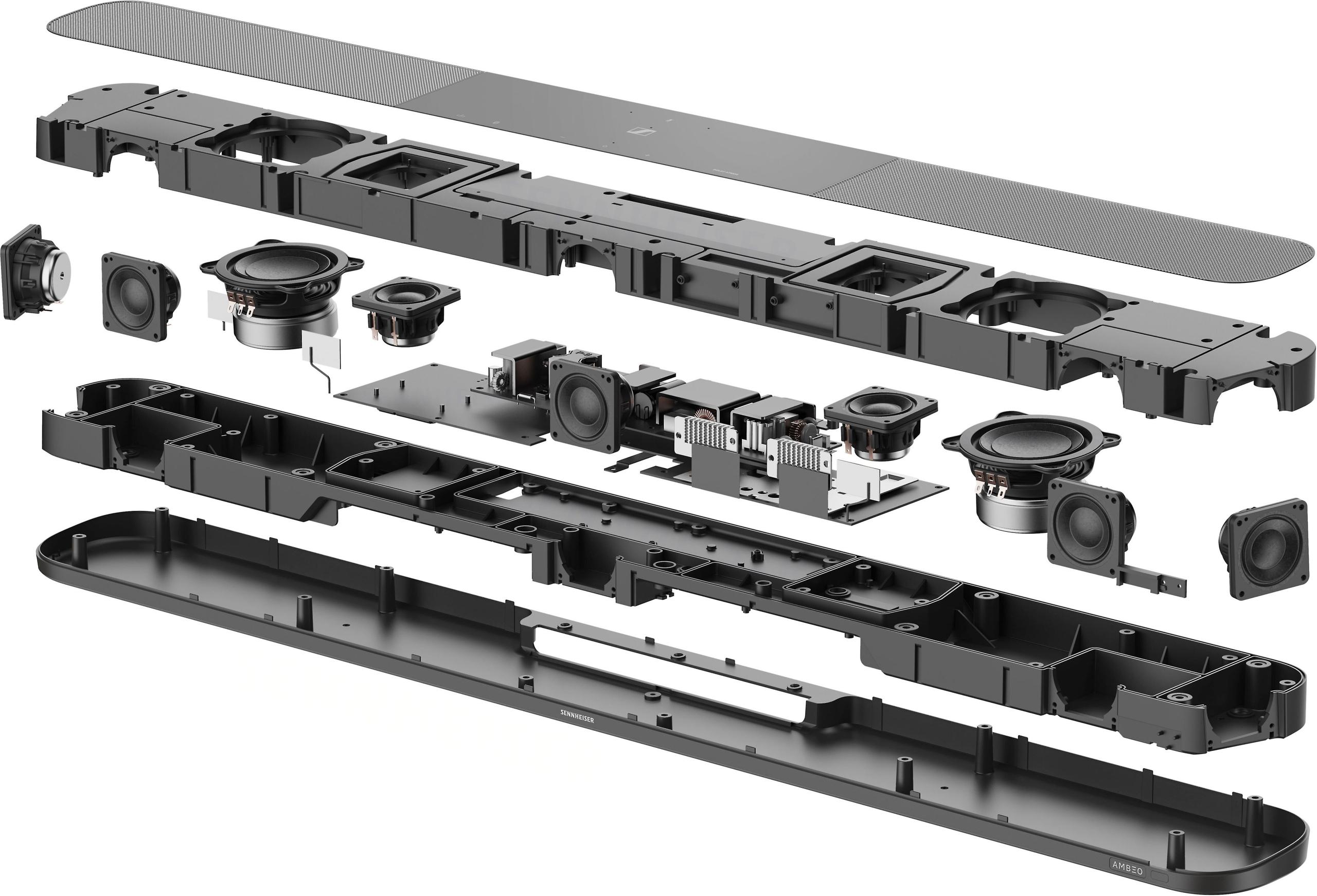
The Sennheiser AMBEO Soundbar first appeared in 2019, making it the older design, but Sennheiser has continued refining the technology through software updates. The AMBEO represents Sennheiser's "go big or go home" philosophy: pack 13 individual speakers into a nearly 50-inch-wide chassis and use proprietary AMBEO 3D technology—developed in partnership with audio research institute Fraunhofer—to create the most convincing virtual surround sound possible from a single unit.
Since their releases, both have received important updates. Sonos has expanded streaming service compatibility and improved voice recognition, while Sennheiser has enhanced room calibration algorithms and added support for newer audio formats like 360 Reality Audio.
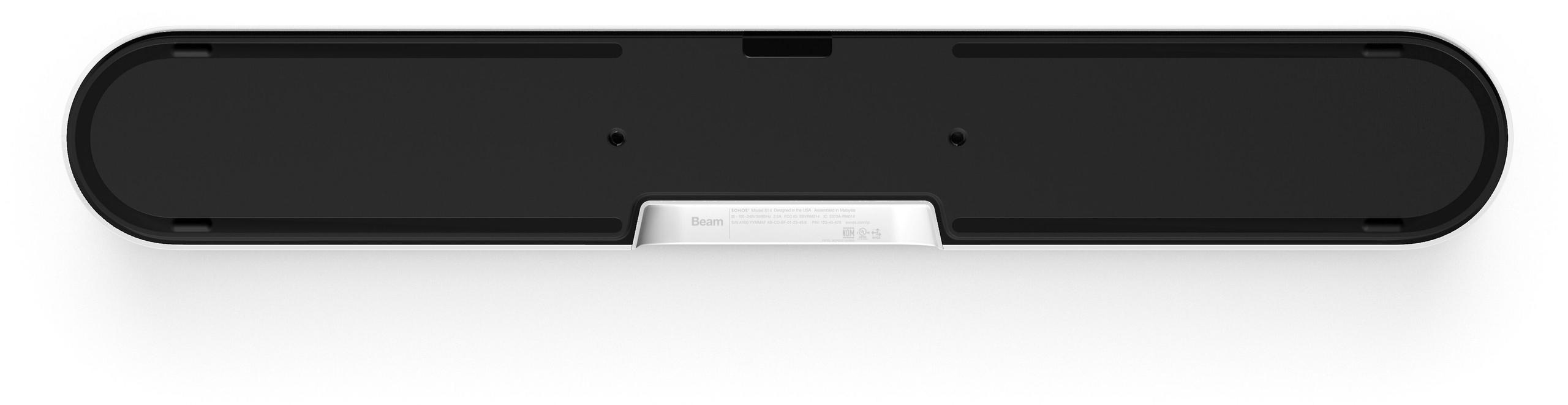
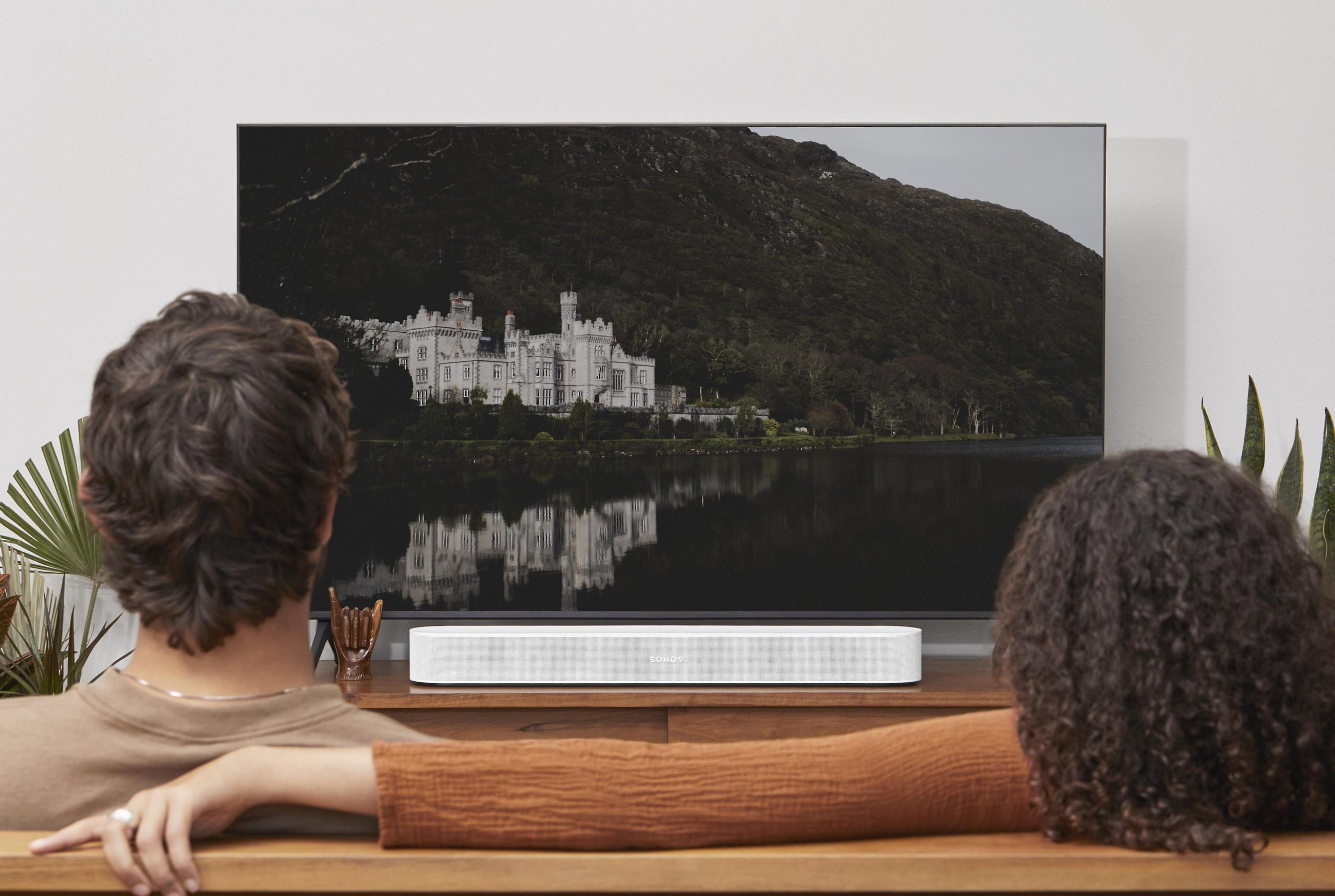
The most obvious difference between these soundbars is their physical presence. The Beam Gen 2 measures just 25.6 inches wide—compact enough to sit under most TVs without looking oversized. At 6.35 pounds, it's also light enough for easy wall mounting. This compact design makes it perfect for apartments, bedrooms, or kitchens where a massive soundbar would dominate the space.
The AMBEO, by contrast, stretches nearly four feet wide and weighs over 40 pounds. This isn't a soundbar you casually move around; it's a statement piece that demands a dedicated entertainment center. However, this size serves a purpose: those 13 drivers need physical space to create separation between audio channels, and the larger cabinet provides better bass resonance.
From my experience testing both in different environments, room size dramatically affects performance. The Beam Gen 2 works beautifully in spaces under 300 square feet, where its balanced sound signature never feels inadequate. Push it into a large living room, and you'll start noticing its limitations—particularly in bass depth and overall volume capabilities.
Here's where things get technically fascinating. Both soundbars create virtual surround sound, but through completely different methods that reveal their design philosophies.
The Beam Gen 2 uses psychoacoustic processing—essentially tricking your brain into hearing sounds from directions where no speakers actually exist. It analyzes incoming Dolby Atmos audio streams and uses precise timing, frequency, and phase adjustments across its five speakers (four woofers and one tweeter) to create the illusion of height and surround effects. This works surprisingly well, especially for dialogue-heavy content where precise left-center-right imaging matters more than dramatic overhead effects.
Sennheiser's AMBEO technology takes a more brute-force approach. Those 13 drivers include six long-throw woofers for bass, five aluminum dome tweeters for highs, and two full-range drivers positioned on the top corners specifically for height effects. The AMBEO processing doesn't just create virtual speakers—it actually maps your room's acoustic characteristics using built-in microphones during calibration, then uses that information to bounce sound off your ceiling and walls with surgical precision.
I've spent considerable time with both systems, and the difference is immediately apparent. The Beam Gen 2 creates a convincing front-to-back soundstage but struggles with true overhead effects. The AMBEO, when properly calibrated, can genuinely fool you into looking up during helicopter flyovers or rain scenes.
For everyday TV viewing, the Sonos Beam Gen 2 is remarkably impressive. Its Speech Enhancement feature uses dynamic range compression and frequency boosting to ensure dialogue cuts through background music and sound effects. This isn't just marketing speak—I've found myself using subtitles far less frequently since switching to the Beam Gen 2. The center channel imaging is precise enough that voices seem to come directly from actors' mouths on screen, rather than from a speaker sitting below the TV.
The AMBEO also handles dialogue well, but its strength lies more in creating an expansive soundstage. Voices are clear and well-positioned, but the soundbar's real magic happens during action sequences where its superior processing power becomes apparent.
This is where the price difference becomes most apparent. The AMBEO's superior driver array and more powerful amplification create a noticeably richer, more detailed musical experience. Bass extends down to 30Hz—deep enough to feel kick drums and bass guitars without external subwoofers. The high-frequency response from those aluminum tweeters reveals details in recordings that the Beam Gen 2 simply can't reproduce.
That said, the Beam Gen 2 punches well above its weight class for music listening. Its balanced tuning works well across genres, though you'll definitely want to add Sonos's Sub ($699) if bass-heavy music is a priority.
For dedicated home theater use, the AMBEO justifies its premium pricing. During movie scenes with complex soundscapes—think the opening of "Blade Runner 2049" or any Marvel action sequence—the AMBEO creates a convincingly three-dimensional audio environment. Sound effects pan smoothly around the room, height information feels authentic, and the overall sense of immersion rivals some discrete surround sound systems I've tested.
The Beam Gen 2 provides a more modest but still satisfying home theater experience. Its Dolby Atmos processing works best with ceiling heights between 8-9 feet and relatively reflective surfaces. In ideal conditions, you'll get a clear sense of height and width expansion, but it's more about enhancing the TV's built-in speakers than replacing a full surround system.
Both soundbars include room calibration features, but they work quite differently. Sonos's Trueplay system requires an iOS device (sorry, Android users) and has you walk around your room while the app plays test tones. The system analyzes how sound reflects off your walls, furniture, and ceiling, then adjusts the soundbar's output accordingly. It's simple and effective, though the iOS requirement is frustrating.
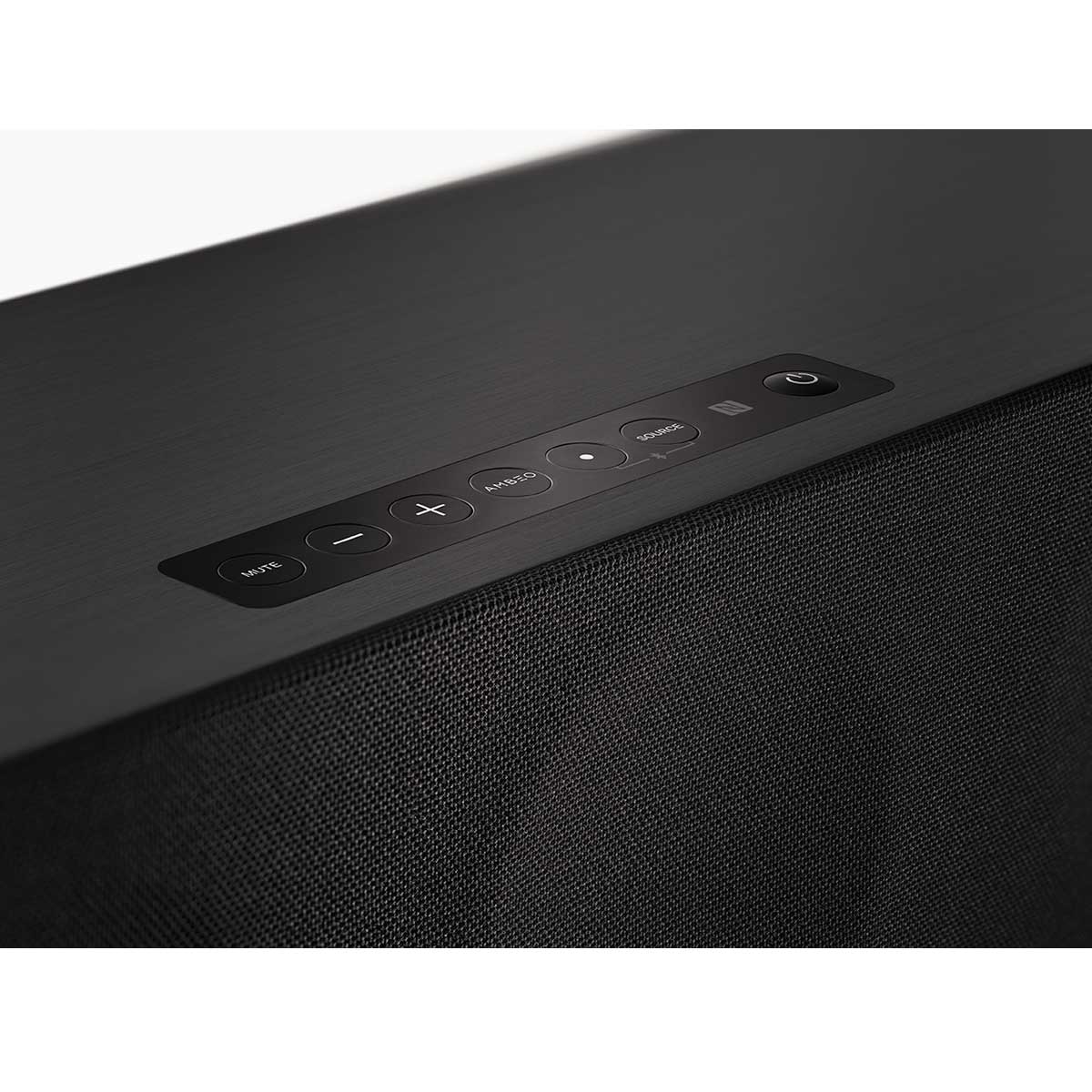
The AMBEO's calibration process is more sophisticated but also more complex. Built-in microphones measure your room's acoustics automatically, and the system can adapt to challenging environments like rooms with high ceilings, open floor plans, or lots of soft furnishings that absorb sound. You can fine-tune the results using three different AMBEO intensity levels: Light mode for subtle enhancement, Standard for balanced processing, and Boost for maximum surround effect.
Here's an area where the Sonos Beam Gen 2 shows both strengths and a notable weakness. It supports Wi-Fi, AirPlay 2, and integrates with over 100 streaming services directly. Voice control through Amazon Alexa and Google Assistant works reliably, and the multi-room capabilities with other Sonos products remain unmatched in the industry.
However, the Beam Gen 2 lacks Bluetooth connectivity—a decision that still puzzles me. While Sonos argues that Wi-Fi provides better audio quality, Bluetooth offers convenient connectivity for guests or quick music playback from any device.
The Sennheiser AMBEO takes a more inclusive approach with Wi-Fi, Bluetooth 4.0, Chromecast built-in, and even NFC pairing for compatible devices. This flexibility makes it easier to use with various source devices, though it lacks the extensive smart home integration that Sonos provides.
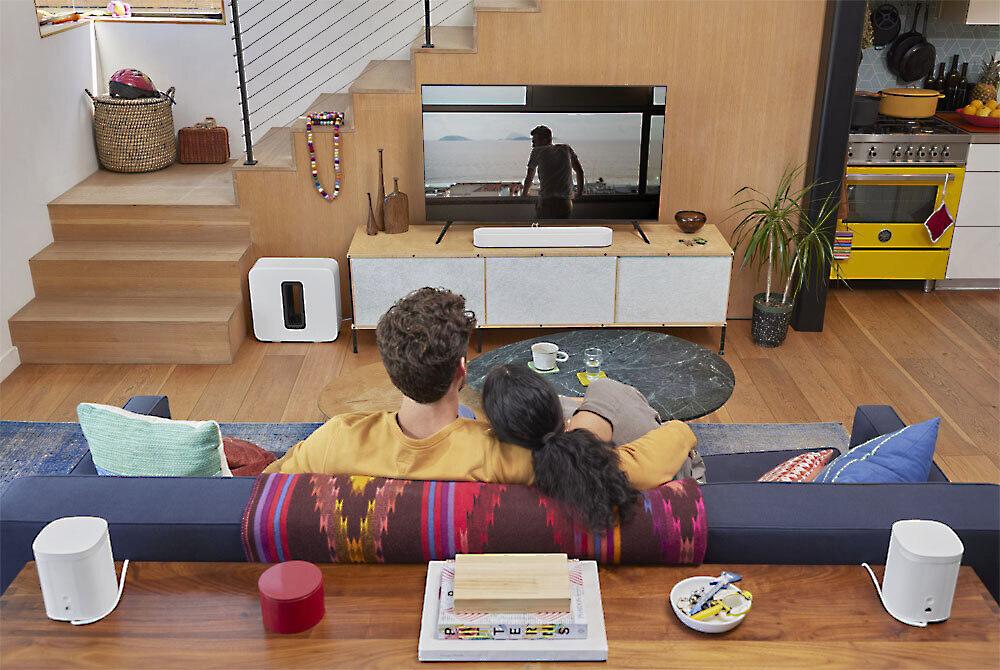
Sonos has built its reputation on system expandability, and the Beam Gen 2 continues this tradition. You can add a Sonos Sub for deeper bass, pair it with Sonos One SL speakers for true rear surround channels, or integrate it into a whole-home audio system. This modular approach lets you start small and grow the system over time—though costs add up quickly.
The AMBEO takes a different philosophy: deliver everything you need in a single unit. While Sennheiser offers the AMBEO Sub as an optional addition, the soundbar is designed to work exceptionally well on its own. This approach has merit—you get premium performance immediately without planning future purchases.
At $449, the Beam Gen 2 represents exceptional value for users who prioritize dialogue clarity, compact design, and ecosystem integration. However, to unlock its full potential, you might find yourself adding a Sub ($699) and rear speakers ($358 for a pair of One SLs), bringing the total investment to over $1,500.
The AMBEO's $1,999 price tag is undeniably steep, but consider what you're getting: premium drivers, advanced processing, built-in bass capabilities, and room-filling sound that doesn't require additional components. For users who want the best possible single-unit performance and have appropriate room size, it can actually represent better value than a fully expanded Sonos system.
Choose the Sonos Beam Gen 2 if you're working with a smaller space, prioritize ease of use and voice control, want the option to expand your system gradually, or need excellent dialogue clarity for TV viewing. It's also the clear winner if you're already invested in the Sonos ecosystem or planning to build a multi-room audio system.
Choose the Sennheiser AMBEO if you have a larger room (300+ square feet), want the most immersive single-unit experience possible, prioritize music listening quality, or have a dedicated home theater space where audio quality justifies the premium price.
Consider room acoustics carefully—the AMBEO needs space to breathe and works best with reflective surfaces for optimal height effects. The Beam Gen 2 is more forgiving of challenging room layouts and smaller spaces.
Both soundbars represent significant upgrades over TV speakers and basic soundbars, but they serve different users and use cases. The Beam Gen 2 delivers remarkable performance per dollar for most users, while the AMBEO provides uncompromising audio quality for those willing to invest in premium performance. Your choice ultimately depends on your room, budget, and priorities—but either way, you'll be getting a substantial upgrade to your audio experience.
| Sonos Beam Gen 2 | Sennheiser AMBEO Soundbar |
|---|---|
| Price - Major factor in value proposition | |
| $449 (excellent value for compact performance) | $1,999 (premium pricing for reference-grade audio) |
| Physical Size - Must fit your space and TV setup | |
| 25.6" wide, 6.35 lbs (perfect for small-medium rooms) | 49.6" wide, 40.8 lbs (requires large TV stand, big rooms) |
| Audio Channels - Determines surround sound capability | |
| Virtual 5.1 with Dolby Atmos (psychoacoustic processing) | Virtual 7.1.4 with Dolby Atmos/DTS:X (physical driver array) |
| Speaker Configuration - Directly impacts sound quality | |
| 5 drivers: 4 woofers + 1 tweeter | 13 drivers: 6 woofers + 5 tweeters + 2 full-range |
| Bass Performance - Whether you need a separate subwoofer | |
| Adequate for size, benefits from Sonos Sub addition | Powerful built-in bass to 30Hz, no subwoofer needed |
| Room Calibration - Optimizes sound for your specific space | |
| Trueplay tuning (iOS devices only) | Advanced AMBEO 3D with built-in microphones |
| Connectivity Options - Affects device compatibility | |
| Wi-Fi, AirPlay 2, HDMI eARC (no Bluetooth) | Wi-Fi, Bluetooth 4.0, Chromecast, HDMI eARC, NFC |
| Voice Control - Smart home integration capabilities | |
| Built-in Alexa & Google Assistant | Compatible via connected devices |
| Expandability - Whether you can build a larger system | |
| Full Sonos ecosystem (Sub, rear speakers, multi-room) | Standalone design, optional AMBEO Sub available |
| Ideal Room Size - Where each performs best | |
| Under 300 sq ft (apartments, bedrooms, small living rooms) | 300+ sq ft (dedicated home theaters, large living spaces) |
| Best Use Case - Primary strength of each model | |
| TV/movie dialogue clarity and compact convenience | Music listening and maximum surround immersion |
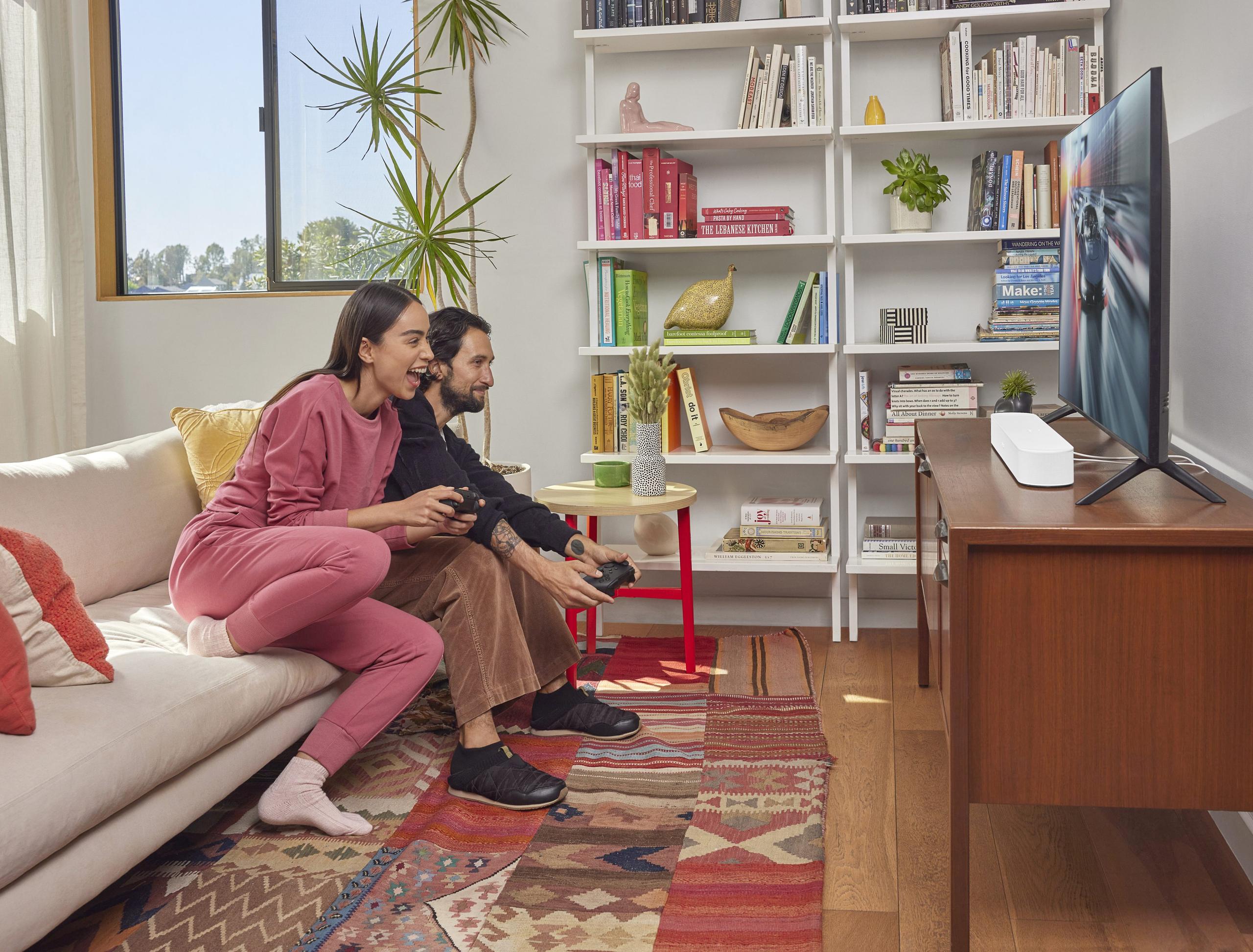
The Sonos Beam Gen 2 is ideal for small rooms under 300 square feet. Its compact 25.6-inch width fits perfectly under most TVs without overwhelming the space, while still delivering excellent dialogue clarity and virtual surround sound for apartments, bedrooms, and kitchens.
The Sonos Beam Gen 2 costs $449, while the Sennheiser AMBEO Soundbar is priced at $1,999. This $1,550 difference reflects the AMBEO's premium drivers, advanced processing, and larger scale designed for bigger rooms and audiophile-grade performance.
The Sennheiser AMBEO Soundbar includes powerful built-in bass that extends to 30Hz, eliminating the need for a separate subwoofer for most users. The Sonos Beam Gen 2 has adequate bass for its size but benefits significantly from adding the optional Sonos Sub ($699) for deeper, more impactful low-end response.
The Sonos Beam Gen 2 excels at dialogue clarity with its dedicated Speech Enhancement feature that cuts through background music and effects. While both soundbars handle voices well, Sonos specifically optimized the Beam Gen 2 for TV and movie dialogue, making it the better choice for speech-focused content.
Only the Sennheiser AMBEO Soundbar supports Bluetooth connectivity along with Wi-Fi, Chromecast, and NFC pairing. The Sonos Beam Gen 2 notably lacks Bluetooth, relying instead on Wi-Fi, AirPlay 2, and direct streaming service integration for audio sources.
The Sennheiser AMBEO Soundbar delivers superior Dolby Atmos performance with its 13-driver array and advanced AMBEO 3D processing that creates more convincing overhead and surround effects. The Sonos Beam Gen 2 offers good virtual Dolby Atmos through psychoacoustic processing, but lacks the physical drivers needed for truly immersive height effects.
The Sonos Beam Gen 2 measures 25.6 inches wide and works well in compact setups, while the Sennheiser AMBEO Soundbar stretches 49.6 inches wide and weighs over 40 pounds, requiring a substantial TV stand or wall mount and performing best in rooms over 300 square feet.
The Sennheiser AMBEO Soundbar significantly outperforms the Beam Gen 2 for music with its superior driver quality, extended frequency response, and powerful amplification. Its 13 speakers deliver audiophile-grade detail and dynamics that the Sonos Beam Gen 2 cannot match, though the Sonos still provides respectable musical performance for its price range.
The Sonos Beam Gen 2 offers extensive expandability within the Sonos ecosystem, allowing you to add a Sub, rear surround speakers, and multi-room audio throughout your home. The Sennheiser AMBEO Soundbar is designed as a standalone solution with limited expansion options, though you can add an optional AMBEO Sub.
The Sennheiser AMBEO Soundbar features more advanced room calibration with built-in microphones that automatically analyze your space and adapt the sound accordingly. The Sonos Beam Gen 2 uses Trueplay tuning, which works well but requires an iOS device and manual setup process.
Both work well for home theater, but serve different needs. The Sennheiser AMBEO Soundbar delivers reference-grade home theater performance with immersive surround effects ideal for dedicated theater rooms. The Sonos Beam Gen 2 provides excellent home theater audio for smaller spaces and living rooms where dialogue clarity and balanced sound matter most.
The Sonos Beam Gen 2 offers exceptional value at $449 for users with smaller rooms who prioritize dialogue clarity and ecosystem integration. The Sennheiser AMBEO Soundbar justifies its $1,999 price for audiophiles with large rooms who want the best possible single-unit performance without needing additional components.
We've done our best to create useful and informative comparisons to help you decide what product to buy. Our research uses advanced automated methods to create this comparison and perfection is not possible - please contact us for corrections or questions. These are the sites we've researched in the creation of this article: whathifi.com - en.community.sonos.com - techradar.com - youtube.com - consumerreports.org - bestbuy.com - youtube.com - sonos.com - wave-electronics.com - en.community.sonos.com - epicsystems.tech - tomsguide.com - bestbuy.com - bestbuy.com - rtings.com - techradar.com - audioxpress.com - whathifi.com - upscaleaudio.com - soundstagesimplifi.com - global.sennheiser-hearing.com - sennheiser-hearing.com - audioadvice.com - abt.com - moon-audio.com

Privacy Policy
Terms and Conditions - Affiliate Policy
Home Security
© Copyright 2008-2026.
11816 Inwood Rd #1211, Dallas, TX 75244