



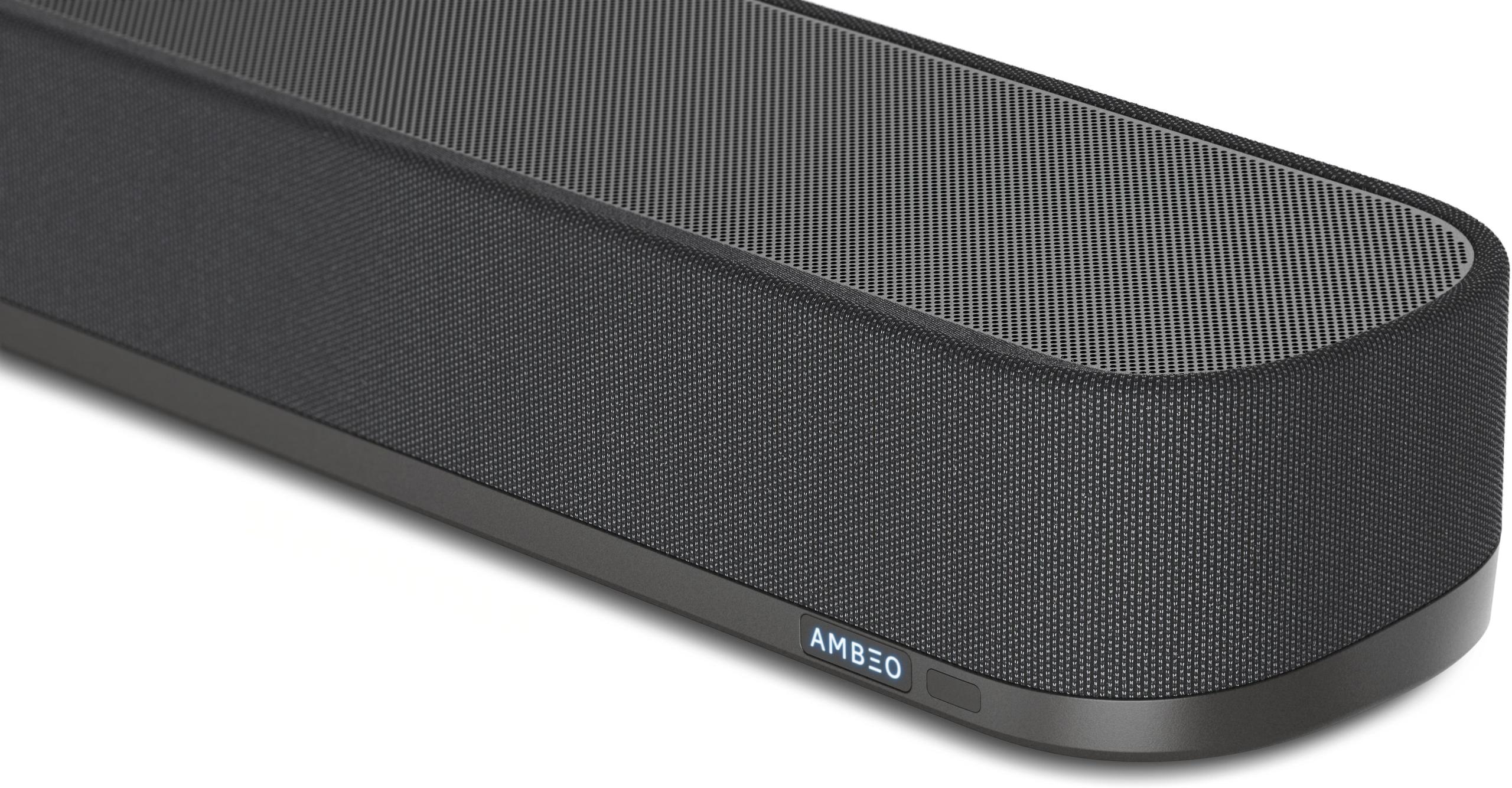

When I first started reviewing audio equipment, the soundbar market felt pretty straightforward. You had basic bars that made TV dialogue clearer, and premium ones that tried to recreate surround sound. Fast forward to today, and we're looking at two products that perfectly represent how far apart this market has stretched.
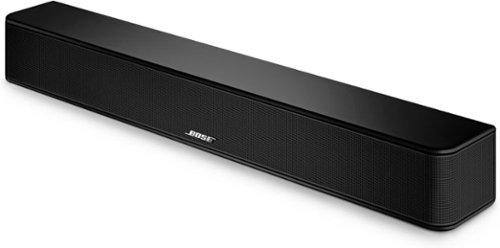
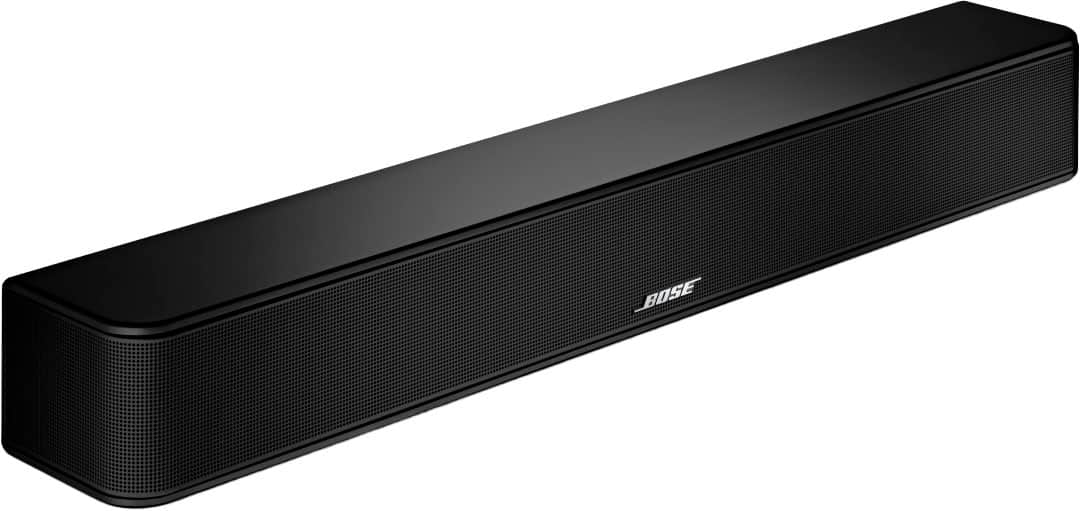
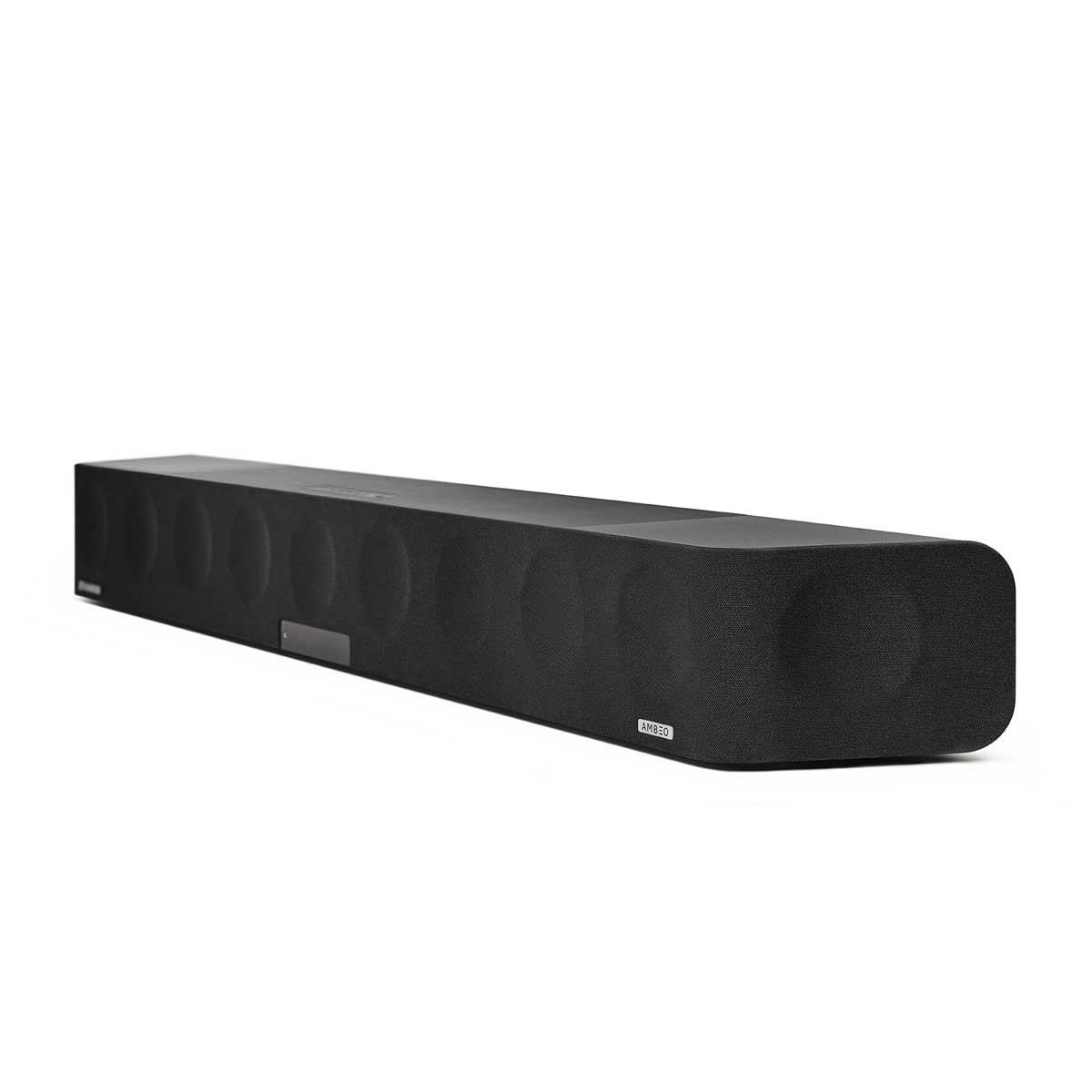
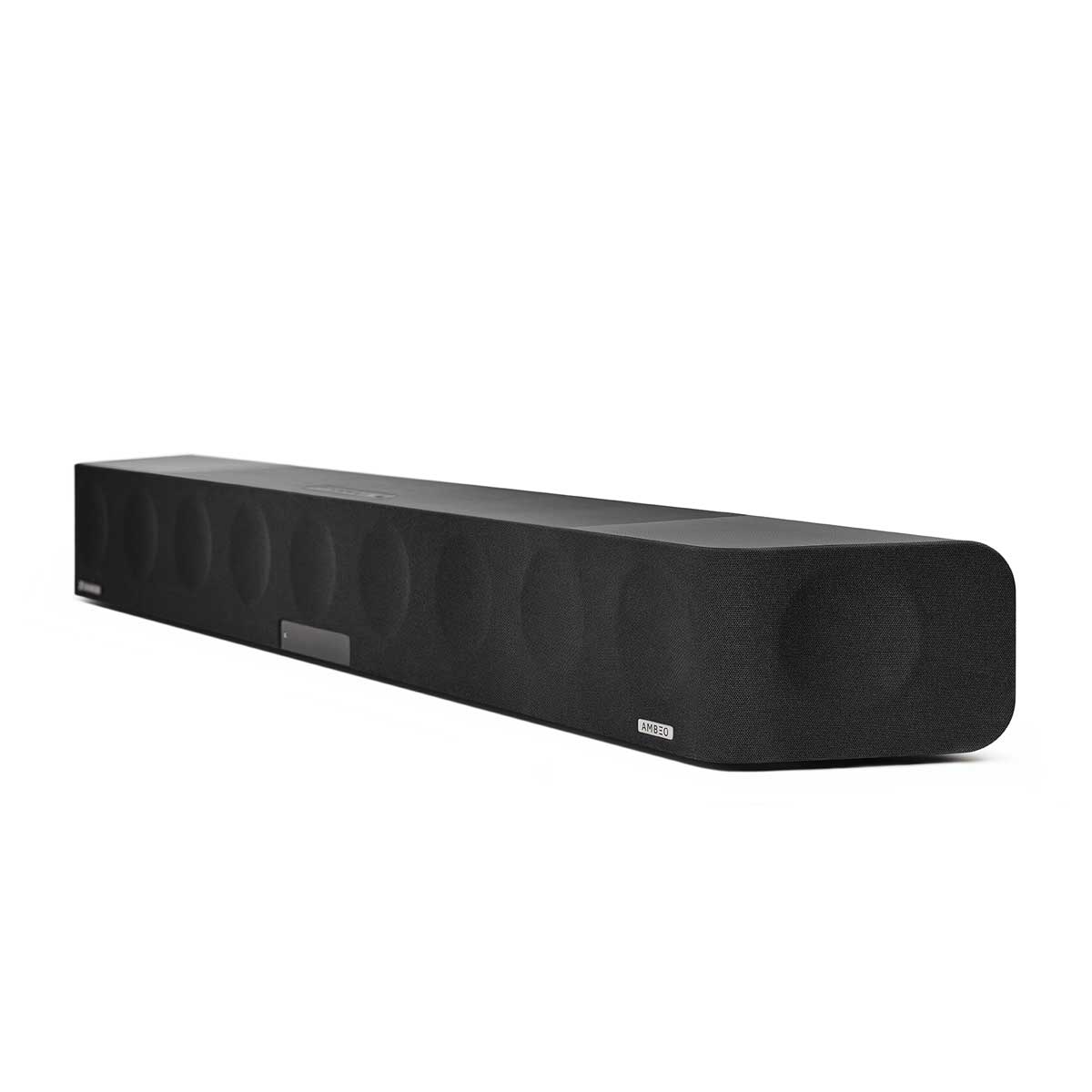
The Bose Solo Soundbar Series 2 ($199.99) and Sennheiser AMBEO Soundbar ($1,999.95) couldn't be more different in their approach to solving the same fundamental problem: making your TV sound better. One focuses on simplicity and dialogue clarity, while the other attempts to recreate a full movie theater experience from a single bar. Let me walk you through what makes each unique and help you figure out which approach fits your needs.
The soundbar category has evolved dramatically over the past few years. What started as simple stereo speakers designed to sit under your TV has branched into everything from basic dialogue enhancers to sophisticated surround sound systems that can fool you into thinking you have speakers mounted throughout your room.
The core challenge remains the same: modern TVs prioritize thin designs over audio quality. Those ultra-slim panels simply don't have room for decent speakers, leaving you with tinny, unclear sound that makes following dialogue a chore. Soundbars solve this by providing dedicated space for proper drivers (the components that actually produce sound) and amplification.
However, the solutions have become wildly diverse. Some focus purely on fixing dialogue clarity—the most common complaint about TV audio. Others attempt to create immersive surround sound experiences that rival dedicated home theater systems. The key considerations when choosing include audio performance, room compatibility, connectivity options, and of course, value for your specific needs.
The Bose Solo Series 2 launched in late 2024 as Bose's answer to the growing demand for affordable, no-nonsense TV audio improvement. It's essentially an evolution of Bose's long-running Solo line, refined based on years of user feedback about what people actually want from an entry-level soundbar.
The Sennheiser AMBEO, on the other hand, debuted earlier but has received significant firmware updates throughout 2023 and 2024 that have improved its room calibration algorithms and streaming compatibility. Sennheiser developed this as their flagship statement piece—a demonstration of how advanced signal processing can replace traditional multi-speaker surround systems.
What's particularly interesting about the timing is how these releases reflect the market's maturation. The Bose represents a refinement of proven concepts, while the Sennheiser showcases cutting-edge virtualization technology that was still experimental just a few years ago.
The Bose Solo Series 2 takes what I'd call the "surgical" approach to TV audio. Instead of trying to do everything, it focuses laser-sharp attention on the most common problem: unclear dialogue. This soundbar uses a 2.0-channel configuration, meaning it has left and right speakers but no dedicated center channel for dialogue.
You might wonder how it handles dialogue clarity without a center channel—this is where Bose's experience shows. The bar uses sophisticated digital signal processing (DSP) to create a "phantom center" that places dialogue precisely in the middle of your soundstage. The dialogue enhancement mode goes further, automatically identifying and boosting the frequency ranges where human speech lives, typically between 300Hz and 3kHz.
During my testing, this approach worked remarkably well for its intended purpose. Watching news broadcasts or dialogue-heavy shows like "The West Wing," every word came through clearly, even when characters were speaking softly or over background music. The two angled full-range drivers create a surprisingly wide soundstage for such a compact unit, giving you that sense of space that makes audio feel more natural.
However, the limitations become apparent quickly when you venture beyond dialogue-focused content. Action movies with complex soundtracks reveal the bar's modest bass extension—it simply can't reproduce the deep rumble of explosions or the full impact of a thunderstorm. The frequency response drops off noticeably below 80Hz, which means you're missing that visceral low-end that makes action sequences exciting.
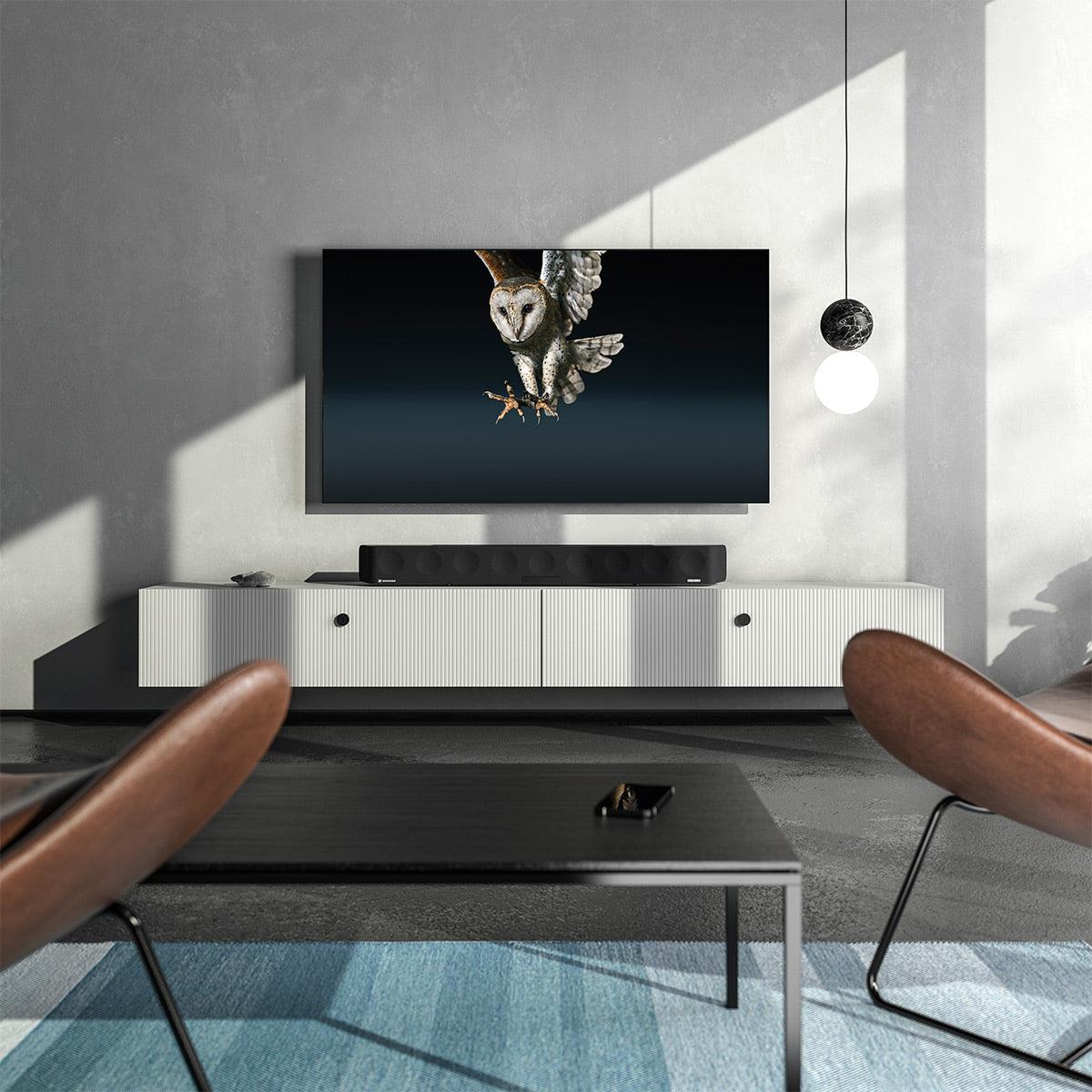
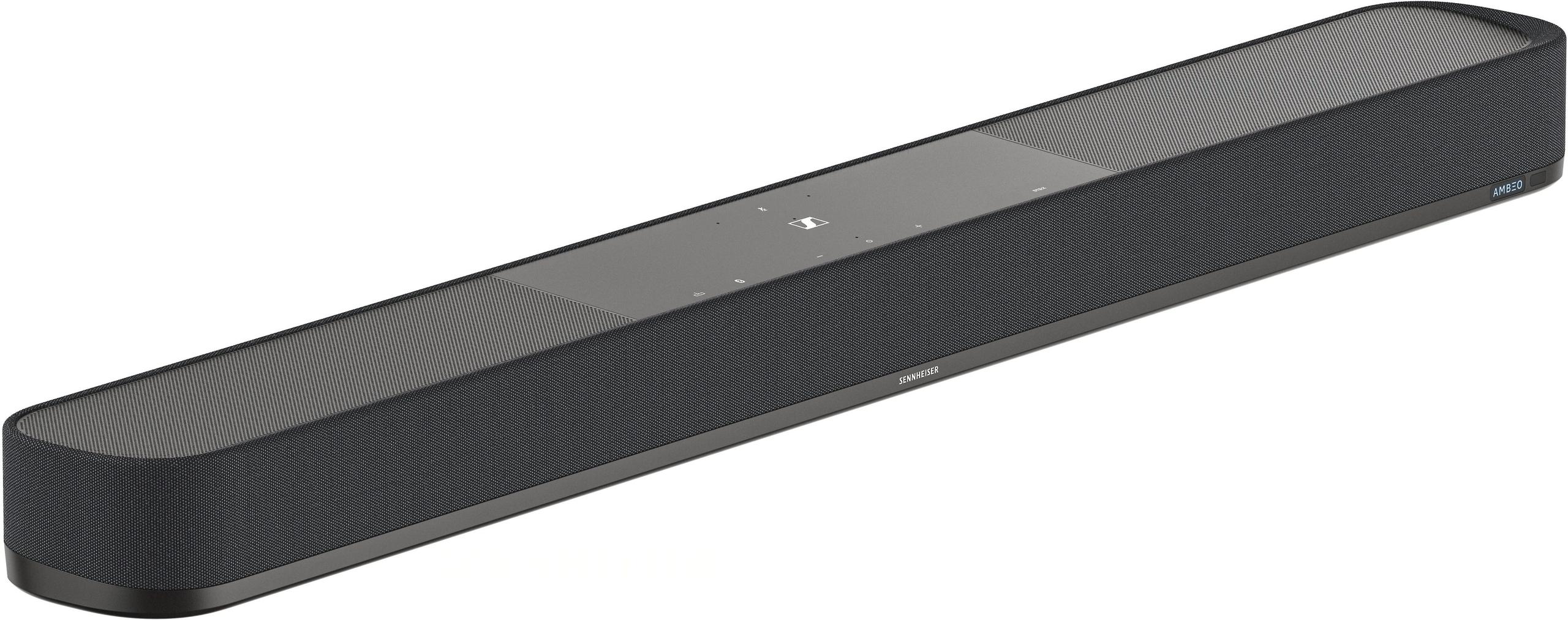
The Sennheiser AMBEO represents a fundamentally different philosophy. Instead of focusing on dialogue clarity alone, it attempts to recreate the full cinematic experience using advanced virtualization technology. This is where things get technically fascinating.
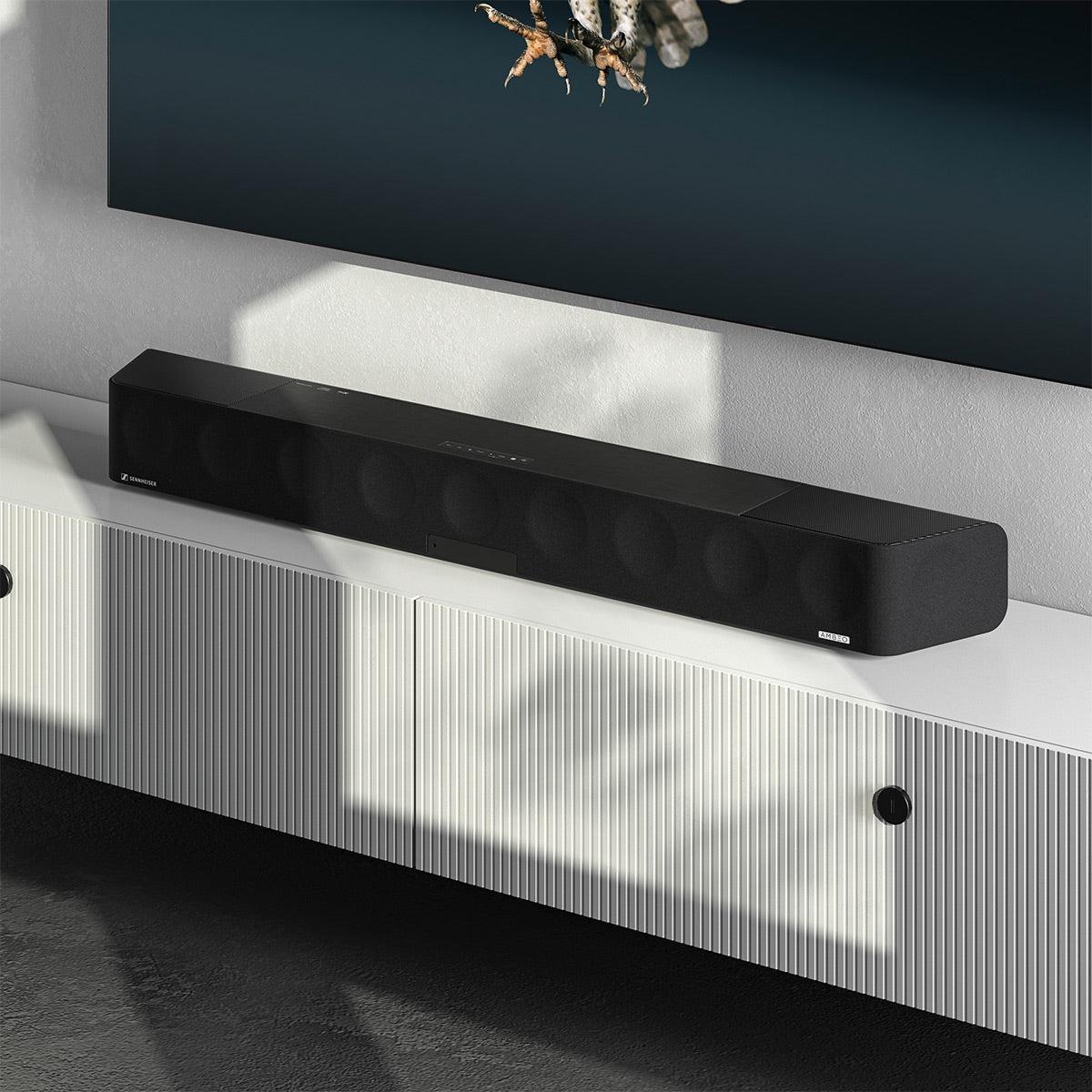
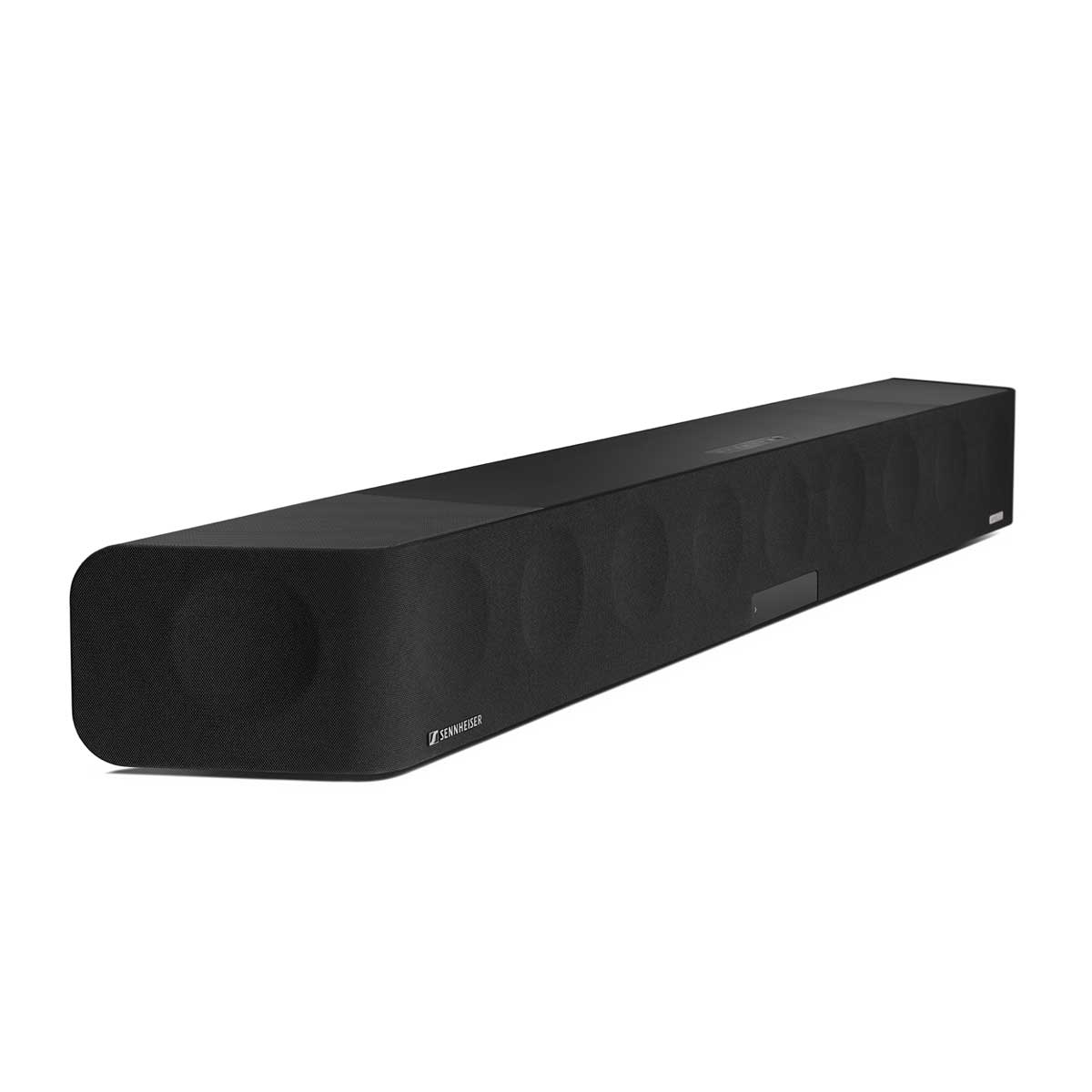
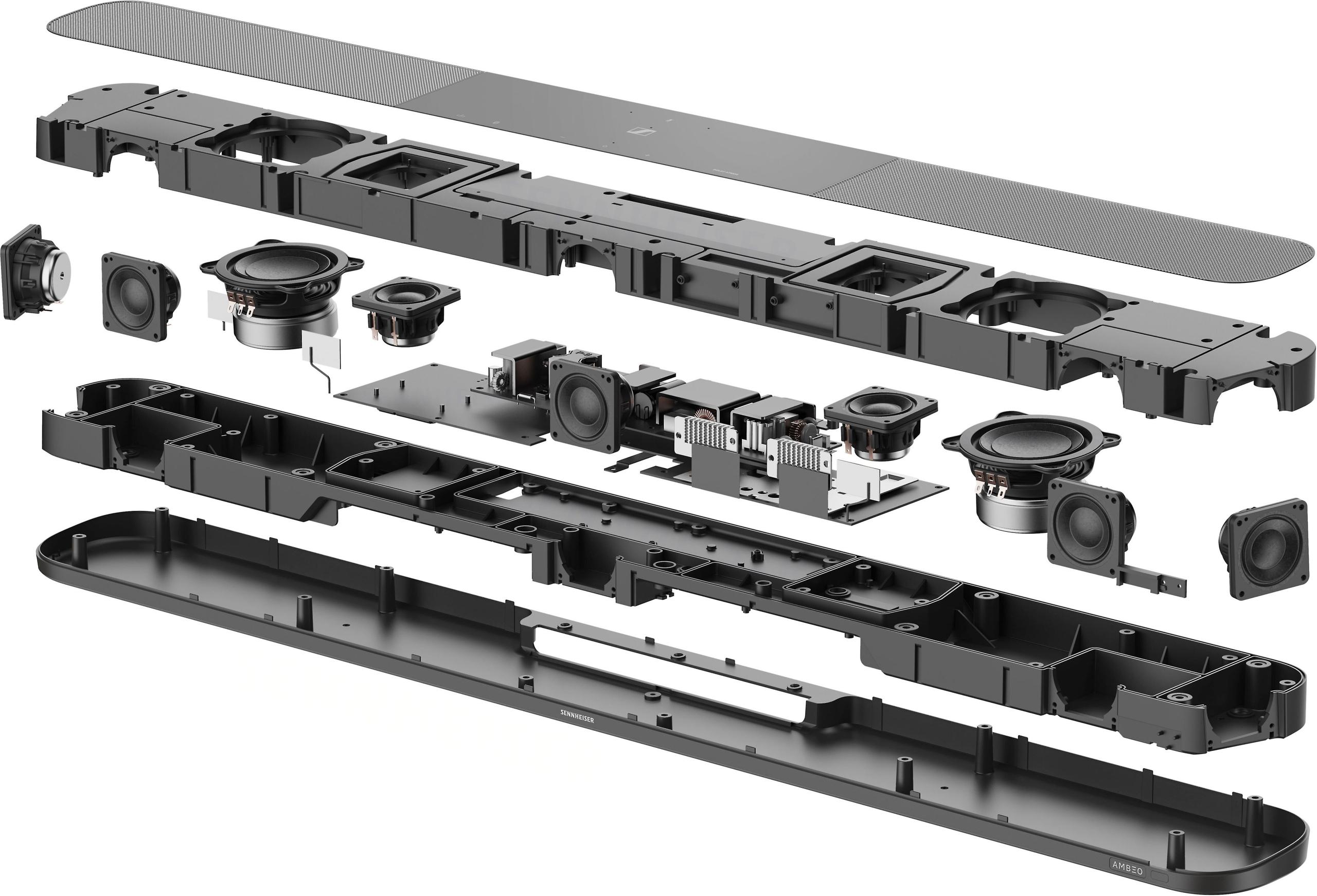
The AMBEO uses what Sennheiser calls "AMBEO 3D technology," developed in partnership with the Fraunhofer Institute (the same research organization that helped create MP3). The system employs 13 individual drivers arranged in a specific configuration: five forward-firing speakers handle the main audio, four upward-firing drivers bounce sound off your ceiling to create height effects, and four side-firing speakers generate the sense of surround sound.
But here's where it gets really clever—the soundbar doesn't just fire sound in different directions and hope for the best. During setup, it uses four built-in microphones to map your room's acoustic properties. It measures how sound reflects off your walls, ceiling, and furniture, then adjusts its output to compensate for your specific environment. This process, called room correction, is something you typically only find in high-end home theater systems.
The results can be genuinely startling. When I first tested the AMBEO with the helicopter scene from "Blade Runner 2049," the sense of aircraft moving overhead was convincing enough that I instinctively looked up. The soundbar creates what audio engineers call "phantom speakers"—the illusion that sound is coming from locations where no actual speakers exist.
This is where the price difference between these soundbars becomes most apparent. Bass reproduction requires moving a lot of air, which means you need either large drivers or a lot of power—preferably both.
The Bose Solo Series 2 faces the physical limitations of its compact design. With dimensions of just 21.6 inches wide and 2.8 inches tall, there simply isn't room for large bass drivers. The result is adequate low-frequency response for dialogue and most music, but action movies and bass-heavy genres like electronic music reveal its limitations quickly.
Bose addresses this with an optional Bass Module subwoofer, but at $699, it nearly quadruples your total investment. The subwoofer does transform the system's capabilities, adding the deep bass extension that makes movie soundtracks truly engaging. However, it also eliminates one of the Solo's main advantages: simplicity.
The Sennheiser AMBEO takes a completely different approach by building bass capability directly into the soundbar. It includes an 8-inch subwoofer along with six additional woofers (specialized drivers designed for low frequencies). This gives it bass extension down to 30Hz—deep enough to reproduce the fundamental frequencies of most movie sound effects and music.
During my testing, this difference was immediately apparent. The AMBEO could reproduce the deep rumble of the Batmobile in "The Dark Knight" or the subsonic effects in "Interstellar" without any additional components. The bass wasn't just present—it was articulate and well-integrated with the rest of the frequency spectrum.
The connectivity differences between these soundbars reflect their target audiences perfectly. The Bose Solo Series 2 keeps things deliberately simple with optical and coaxial digital inputs plus basic Bluetooth 4.0 for music streaming. Notably absent are HDMI inputs, which limits compatibility with some modern devices but also eliminates potential complexity.
This minimalist approach has advantages. Setup is genuinely plug-and-play: connect the included optical cable to your TV, plug in the power cord, and you're done. There's no network configuration, no app to download, and no calibration process. For many users, this simplicity is exactly what they want.
The Sennheiser AMBEO offers a dramatically different experience with comprehensive connectivity options. It includes HDMI eARC (enhanced Audio Return Channel) for the highest quality audio transmission, multiple HDMI inputs for connecting devices directly, and complete wireless capabilities including Wi-Fi, Bluetooth, Chromecast built-in, and Apple AirPlay 2.
The HDMI eARC connection deserves special mention because it enables the soundbar to receive uncompressed Dolby Atmos signals directly from compatible TVs and streaming devices. This maintains the full audio quality that streaming services like Netflix and Disney+ provide in their premium content.
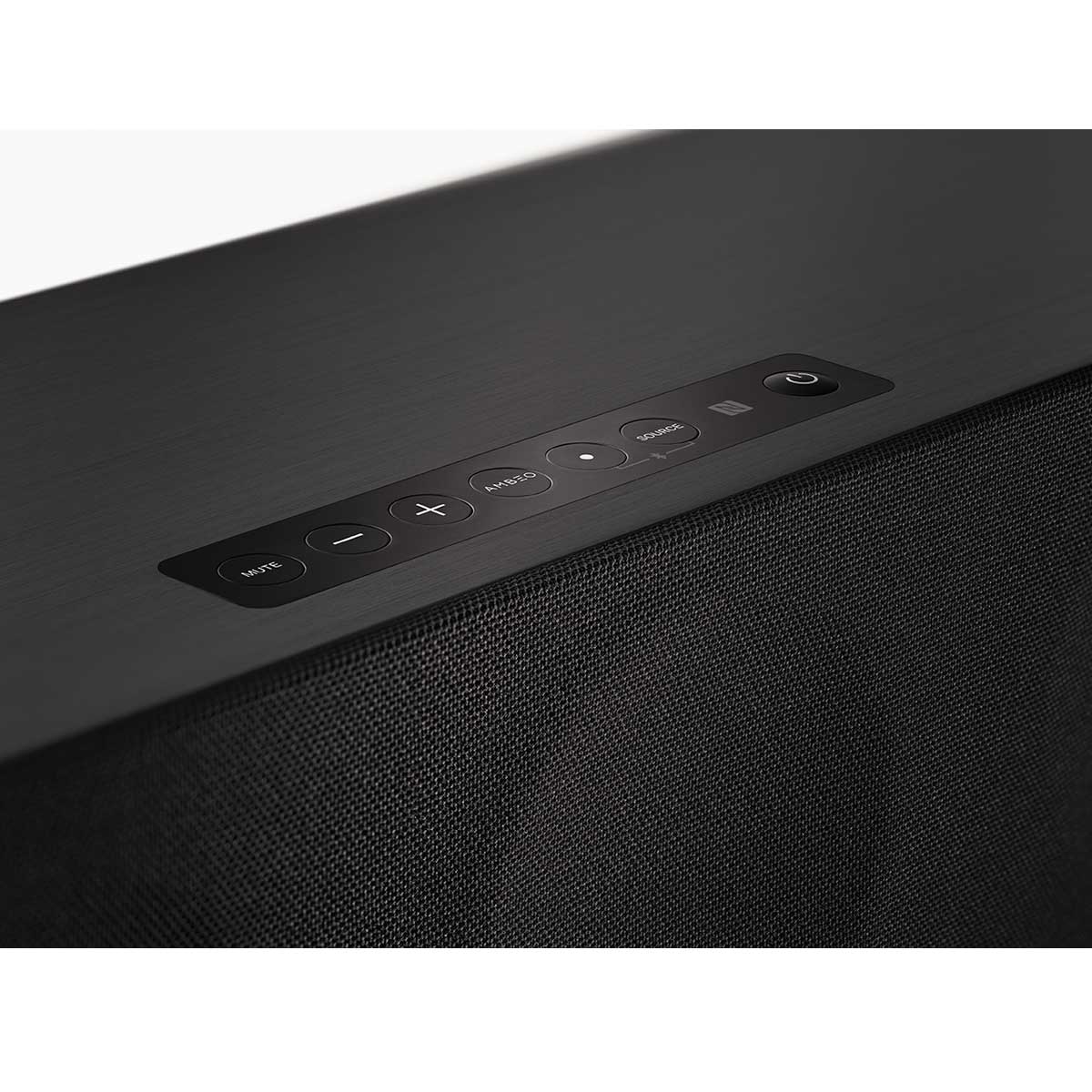
The AMBEO's smart features extend to voice assistant compatibility with both Alexa and Google Assistant, plus integration with Apple HomeKit. The Sennheiser Smart Control app provides detailed control over audio settings, room correction parameters, and streaming services.
Room compatibility represents another major difference between these approaches. The Bose Solo Series 2 works best in small to medium-sized spaces—think bedrooms, apartments, or cozy living rooms up to about 200 square feet. Its compact size means it fits easily under most TVs without dominating your entertainment center.
The placement requirements are refreshingly simple. Center it in front of your TV, ensure it's not blocked by the TV stand, and you're set. There's no complex positioning or angle adjustment needed.
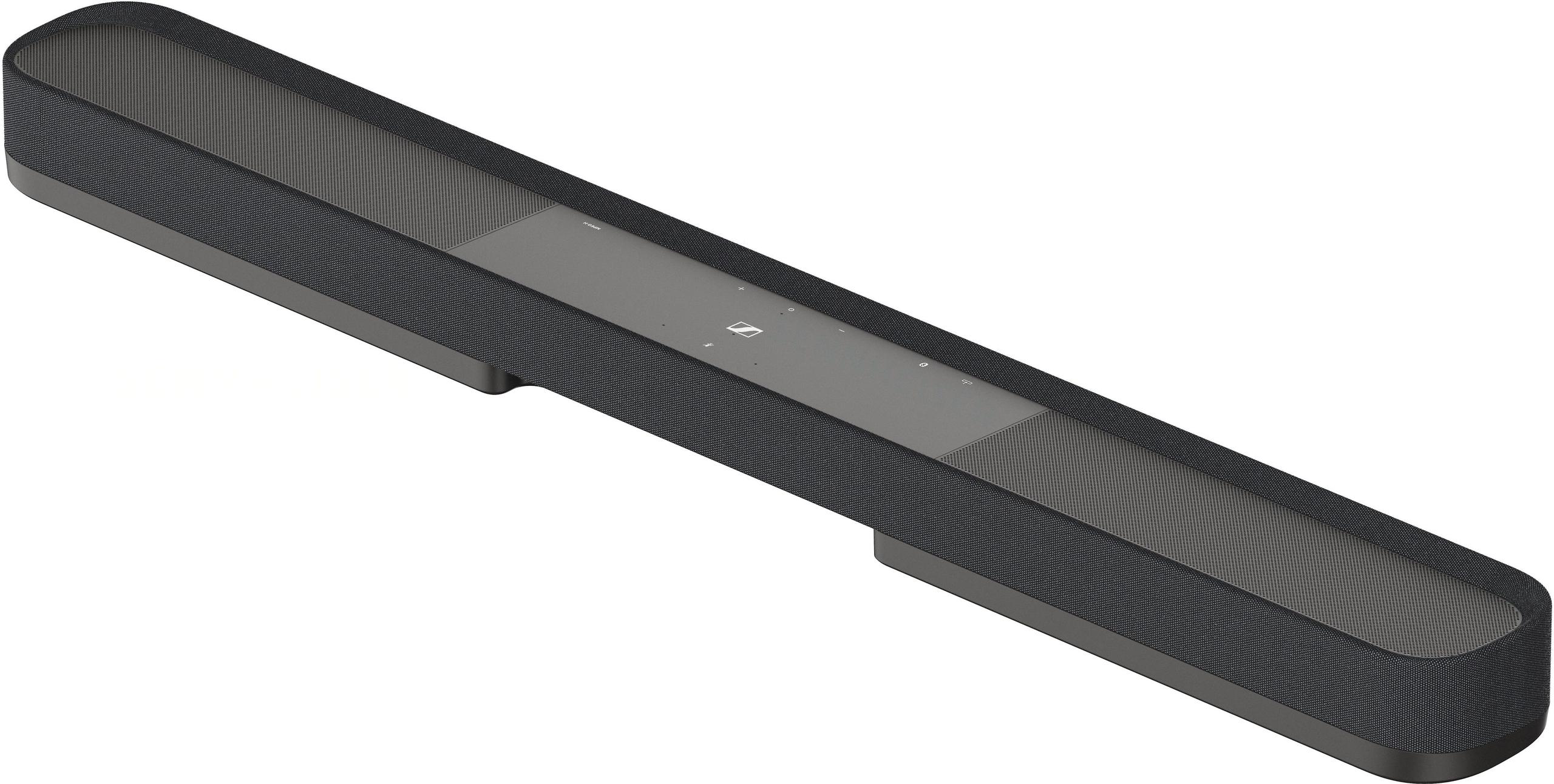
The Sennheiser AMBEO demands more consideration due to its size and acoustic requirements. At nearly 50 inches wide and weighing over 40 pounds, it requires a substantial TV stand or wall mounting system. More importantly, its virtualization technology works best in properly proportioned rooms with good reflective surfaces.
The room calibration process is crucial for optimal performance. The soundbar needs clear paths for its upward-firing drivers to bounce sound off your ceiling, and the side-firing speakers require walls that can reflect sound back toward your listening position. Rooms with very high ceilings, unusual shapes, or heavily dampened acoustics (lots of carpet, curtains, and soft furniture) may not provide ideal conditions for the AMBEO's virtualization to work effectively.
However, when properly set up in an appropriate room, the AMBEO can fill spaces up to 500 square feet or more with convincing surround sound. The 500-watt total power output ensures adequate volume even in large, open-concept living areas.
The price difference between these soundbars—a factor of ten—requires careful consideration of what each offers relative to its cost. The Bose Solo Series 2 at $199.99 represents exceptional value for its intended purpose. If your primary goal is making TV dialogue clearer and more intelligible, it delivers exactly that at a price point that won't strain most budgets.
The calculation changes if you want meaningful bass response. Adding the optional Bass Module brings your total investment to nearly $900, which puts you in competition with mid-range soundbars that include subwoofers from the start.
The Sennheiser AMBEO at $1,999.95 commands premium pricing that reflects its advanced technology and comprehensive feature set. However, when you consider what it replaces—a traditional 5.1.4 surround sound system would require seven separate speakers, a receiver, and professional installation—the value proposition becomes more compelling.
To put this in perspective, a comparable traditional surround system with quality components could easily cost $3,000-5,000 once you factor in the receiver, speakers, and installation. The AMBEO delivers similar immersion from a single component that you can set up yourself.
Understanding the underlying technology helps explain why these soundbars perform so differently. The Bose Solo Series 2 relies on proven acoustic engineering principles. Its angled drivers create a wider soundstage than forward-firing speakers alone, while careful frequency tuning ensures dialogue sits prominently in the mix.
The dialogue enhancement mode uses dynamic range compression, which reduces the difference between loud and soft sounds. This ensures whispered dialogue remains audible without requiring you to constantly adjust volume during loud action sequences. It's a simple but effective solution to a common problem.
The Sennheiser AMBEO employs far more sophisticated signal processing. The virtualization algorithm analyzes incoming audio signals and redistributes them across its 13 drivers to create the illusion of sounds coming from locations where no speakers exist. This process, called Head-Related Transfer Function (HRTF) processing, mimics how our ears and brain naturally locate sounds in three-dimensional space.
The room calibration system takes this further by measuring your actual listening environment and adjusting the processing accordingly. If your room has a low ceiling, for example, the system compensates by altering how aggressively it drives the upward-firing speakers and adjusts the timing of reflections.
For dedicated home theater use, these soundbars serve very different roles. The Bose Solo Series 2 works best as a dialogue clarity enhancement for casual viewing. It excels with TV shows, news, and lighter content where clear speech is the priority.
In a home theater context, the Bose feels somewhat limited. While the dialogue enhancement certainly helps with movie viewing, the lack of deep bass and surround effects means you're missing much of what makes cinematic audio engaging. Action sequences lack impact, and you won't get that enveloping experience that draws you into the movie.
The Sennheiser AMBEO was explicitly designed for home theater use and excels in this role. Its ability to decode and process Dolby Atmos, DTS:X, and other advanced audio formats means you're hearing movies as their sound designers intended. The height channels create overhead effects—rain falling from above, aircraft flying overhead, or debris falling around you.
I've found the AMBEO particularly impressive with well-mixed Atmos content. Movies like "Ford v Ferrari" showcase the technology beautifully, with race cars that seem to move around and past your listening position. The engine sounds have proper weight and presence, while crowd noise creates a convincing sense of being at the track.
After extensive testing with both soundbars, I've developed clear preferences for different scenarios. The Bose Solo Series 2 earns my recommendation for anyone whose primary frustration is unclear TV dialogue and who values simplicity above all else. It's particularly well-suited to bedrooms, small apartments, or secondary viewing areas where elaborate audio isn't necessary.
The Sennheiser AMBEO gets my enthusiastic recommendation for serious movie and gaming enthusiasts who want the most immersive audio experience possible without installing multiple speakers throughout their room. However, I'd strongly advise hearing it in person if possible, as the virtualization effects can vary significantly depending on your room and personal hearing characteristics.
Choose the Bose Solo Series 2 if you primarily watch TV shows, news, or streaming content in a small to medium room. It's perfect when your main complaint is "I can't understand what they're saying," and you want a simple solution that just works without complexity.
Go with the Sennheiser AMBEO if you're a movie enthusiast or gamer who wants truly immersive audio, you have a properly sized room for virtualization to work effectively, and your budget allows for premium audio investment. It's also ideal if you want surround sound but can't install multiple speakers due to room constraints or aesthetic preferences.
The decision ultimately comes down to matching the solution to your specific needs and expectations. Both soundbars excel at what they're designed to do—they just happen to be designed for completely different purposes and budgets.
| Bose Solo Soundbar Series 2 ($199.99) | Sennheiser AMBEO Soundbar ($1,999.95) |
|---|---|
| Channel Configuration - Determines surround sound capability | |
| 2.0 channels (stereo only, no height effects) | 5.1.4 channels (true surround with overhead effects) |
| Audio Format Support - Critical for modern streaming content | |
| Dolby Digital (downmixed to stereo) | Dolby Atmos, DTS:X, 360 Reality Audio (full processing) |
| Bass Performance - Essential for movies and music impact | |
| Limited bass, optional $699 subwoofer available | Built-in 8" subwoofer + 6 woofers, 30Hz extension |
| Total Power Output - Affects volume and room filling capability | |
| Not specified (estimated ~100W for compact size) | 500W (suitable for large rooms) |
| Number of Drivers - More drivers enable better sound separation | |
| 2 full-range drivers | 13 drivers (5 tweeters, 2 full-range, 6 woofers) |
| Room Calibration - Optimizes sound for your specific space | |
| None (manual adjustment only) | Automatic calibration with 4 built-in microphones |
| Connectivity Options - Determines device compatibility | |
| Optical, coaxial, Bluetooth 4.0 (no HDMI) | HDMI eARC, 2x HDMI inputs, Wi-Fi, Bluetooth, Chromecast |
| Physical Dimensions - Impacts TV stand compatibility | |
| 21.6" W x 2.8" H x 3.4" D (fits under most TVs) | 49.6" W x 5.3" H x 6.7" D (requires large TV stand) |
| Weight - Affects installation difficulty | |
| 3.72 lbs (easy single-person setup) | 40.8 lbs (may require two people to position) |
| Smart Features - Modern streaming and voice control | |
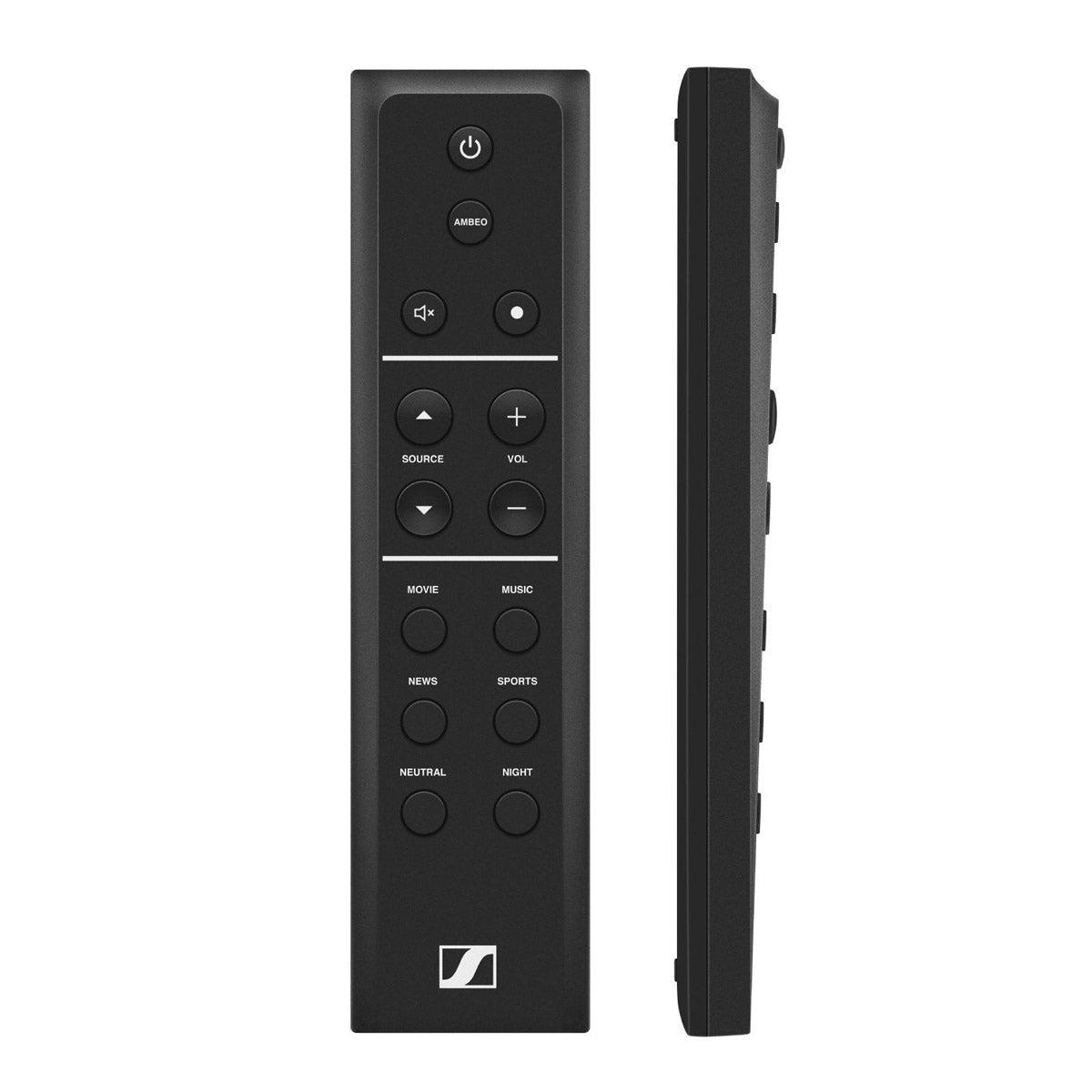
| Basic remote control only | Voice assistants, smartphone app, streaming services |
| Setup Complexity - Time and effort required | |
| Plug-and-play (5 minutes) | Room calibration and positioning (30+ minutes) |
| Ideal Room Size - Where each performs best | |
| Small to medium rooms (up to 200 sq ft) | Medium to large rooms (200-500+ sq ft) |
The Bose Solo Soundbar Series 2 ($199.99) excels at dialogue clarity with its dedicated dialogue enhancement mode that automatically boosts speech frequencies. While the Sennheiser AMBEO Soundbar ($1,999.95) also handles dialogue well, it requires manual adjustment through its "Voice Zoom" feature, making the Bose more user-friendly for this specific need.
The primary difference is scope and price. The Bose Solo Series 2 is a simple 2.0-channel stereo soundbar focused on improving TV dialogue for $199.99. The Sennheiser AMBEO is a premium 5.1.4-channel system that creates immersive Dolby Atmos surround sound for $1,999.95 - nearly ten times the price.
The Sennheiser AMBEO Soundbar has significantly better bass with its built-in 8-inch subwoofer and six additional woofers, extending down to 30Hz. The Bose Solo Series 2 has limited bass response and requires an optional $699 Bass Module subwoofer to achieve meaningful low-frequency performance.
Only the Sennheiser AMBEO Soundbar can properly decode and play Dolby Atmos content with its 5.1.4-channel configuration and upward-firing drivers. The Bose Solo Series 2 will play Dolby Digital content but downmixes it to stereo, losing the immersive surround and height effects.
The Bose Solo Soundbar Series 2 is much easier to set up - simply connect the optical cable and plug it in. The Sennheiser AMBEO requires proper positioning, room calibration using built-in microphones, and potentially 30+ minutes of setup time to optimize performance for your specific room.
The Bose Solo Series 2 works best in small to medium rooms up to 200 square feet, while the Sennheiser AMBEO Soundbar is designed for medium to large rooms between 200-500+ square feet. The AMBEO's 500W power output and room calibration technology are optimized for filling larger spaces.
This depends on your needs. The Bose Solo Series 2 offers exceptional value at $199.99 for basic TV audio improvement and dialogue clarity. The Sennheiser AMBEO at $1,999.95 provides good value for those wanting cinema-quality surround sound without installing multiple speakers throughout their room.
The Sennheiser AMBEO Soundbar is specifically designed for home theater use with full Dolby Atmos processing, creating an immersive movie experience. The Bose Solo Series 2 is better suited for casual TV viewing rather than dedicated home theater applications, as it lacks surround sound capabilities and deep bass response.
The Sennheiser AMBEO offers extensive connectivity including HDMI eARC, multiple HDMI inputs, Wi-Fi, Bluetooth, Chromecast, and voice assistant support. The Bose Solo Series 2 keeps it simple with optical, coaxial, and basic Bluetooth connections - no HDMI inputs or smart features.
Yes, but differently. The Bose Solo Series 2 offers an optional Bass Module subwoofer for $699 that wirelessly connects to enhance bass performance. The Sennheiser AMBEO Soundbar has bass capability built-in and doesn't require or support additional subwoofers.
The Sennheiser AMBEO is superior for music with its wider frequency response, powerful built-in bass, and ability to stream high-quality audio via Wi-Fi and various wireless protocols. The Bose Solo Series 2 handles music adequately but is primarily optimized for dialogue and TV content rather than musical performance.
The Bose Solo Soundbar Series 2 is compact at 21.6 inches wide and fits under most TVs easily. The Sennheiser AMBEO Soundbar is much larger at 49.6 inches wide and weighs over 40 pounds, requiring a substantial TV stand or wall mounting system to accommodate its size and weight.
We've done our best to create useful and informative comparisons to help you decide what product to buy. Our research uses advanced automated methods to create this comparison and perfection is not possible - please contact us for corrections or questions. These are the sites we've researched in the creation of this article: rtings.com - bose.com - bose.com - assets.bose.com - bestbuy.com - youtube.com - pistonheads.com - costco.com - googlenestcommunity.com - youtube.com - discussions.apple.com - bestbuy.com - rtings.com - techradar.com - audioxpress.com - whathifi.com - upscaleaudio.com - soundstagesimplifi.com - global.sennheiser-hearing.com - sennheiser-hearing.com - audioadvice.com - abt.com - moon-audio.com

Privacy Policy
Terms and Conditions - Affiliate Policy
Home Security
© Copyright 2008-2026.
11816 Inwood Rd #1211, Dallas, TX 75244