



If you're tired of constantly asking "what did they just say?" while watching TV, you're probably ready for a serious soundbar upgrade. Premium soundbars promise to transform your living room into a home theater without the hassle of running wires to rear speakers or finding space for a massive subwoofer. But with options ranging from compact smart bars to audiophile behemoths, choosing the right one requires understanding what you're actually getting for your money.
Today we're comparing two very different approaches to premium sound: the Bose Smart Soundbar 1100, released in 2023 as Bose's latest compact powerhouse, and the Sennheiser AMBEO Soundbar, which launched in 2019 and has remained largely unchanged—a testament to its ambitious original design. These represent opposite philosophies in soundbar engineering, and understanding their differences will help you make the right choice for your space and priorities.
Before diving into specifics, let's clarify what separates premium soundbars from budget options and why certain features command higher prices. The fundamental challenge with any soundbar is physics: creating immersive, room-filling sound from a single horizontal enclosure that fits under your TV.
Dolby Atmos represents the current pinnacle of home theater audio, adding height channels to traditional surround sound. Instead of sound coming only from left, right, and center, Atmos content includes audio objects that can move freely in three-dimensional space—imagine a helicopter flying overhead or rain falling around you. Premium soundbars attempt to recreate this using "up-firing drivers" (speakers that point toward the ceiling) to bounce sound down from above, creating the illusion of ceiling-mounted speakers.
Driver count and quality directly impact a soundbar's capabilities. More drivers typically mean better frequency separation and more precise sound placement. The size and materials of these drivers determine everything from bass depth to treble clarity. Premium models use specialized tweeters (for high frequencies), midrange drivers (for vocals), and woofers (for bass), rather than relying on generic full-range speakers.
Digital signal processing (DSP) is where the real magic happens. Modern soundbars use sophisticated algorithms to analyze incoming audio and optimize it for their specific driver configuration and your room's acoustics. This processing can make a compact soundbar sound much larger than its physical dimensions suggest.
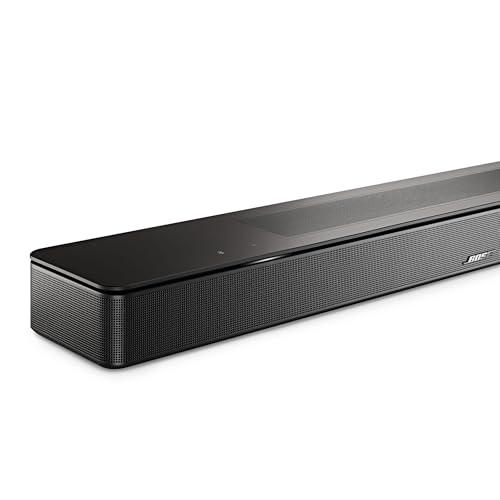
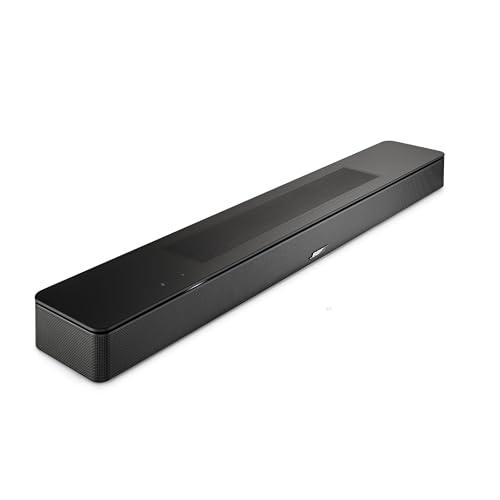
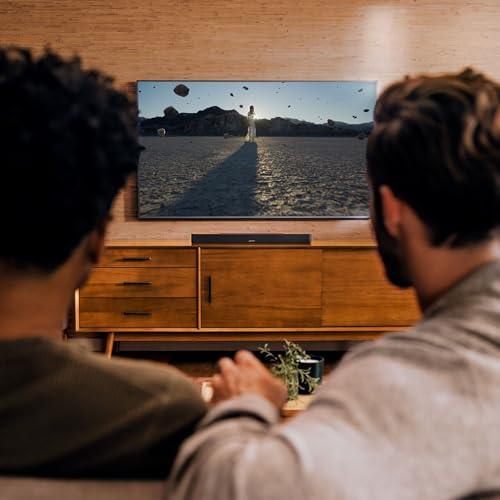
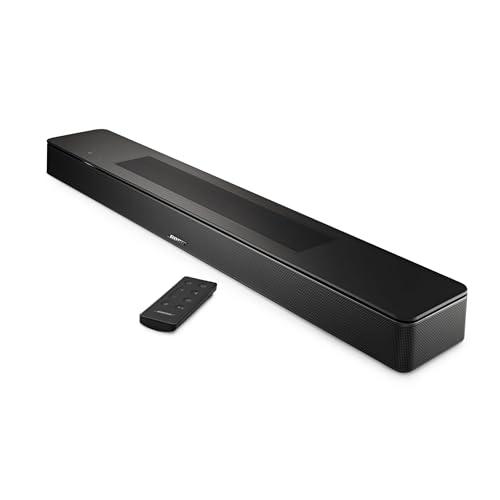
The Bose Smart Soundbar 1100 represents Bose's philosophy of maximum performance from minimal footprint. At just 27 inches wide and weighing under 7 pounds, it's designed for modern living spaces where discretion matters as much as performance.
Bose built this soundbar around their TrueSpace technology, which analyzes any audio content—whether it's stereo music, traditional 5.1 surround sound, or Dolby Atmos—and creates spatial effects even when the original content wasn't designed for it. Think of it as intelligent audio enhancement that makes everything sound more immersive without requiring specially encoded content.
The star feature is A.I. Dialogue Mode, which uses artificial intelligence to detect when people are speaking and automatically adjusts the frequency balance to make voices clearer. This isn't just a simple treble boost; it's dynamic processing that adapts in real-time. If you've ever found yourself constantly adjusting volume because explosions are too loud but dialogue is too quiet, this addresses that exact problem.
PhaseGuide Technology is Bose's approach to creating a wide soundstage from a compact enclosure. Using precisely timed phase relationships between drivers, it directs sound beams throughout the room rather than just straight forward. Combined with QuietPort Technology—which reduces the turbulence and distortion that typically plague small speakers trying to produce bass—the Bose Smart Soundbar 1100 achieves surprisingly full sound from its modest dimensions.
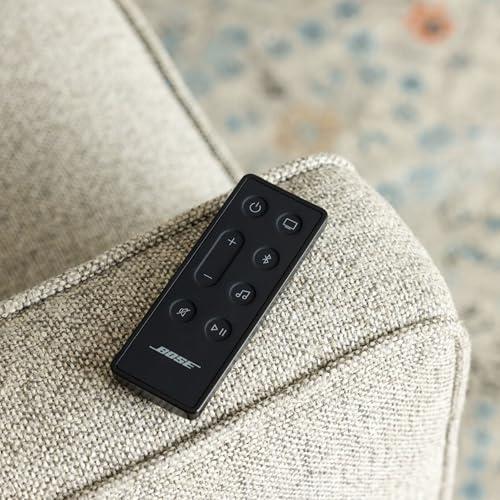
The smart features deserve equal attention. Built-in Amazon Alexa with Voice4Video capability means you can control not just the soundbar, but your entire TV setup with voice commands. The soundbar learns your devices' IR codes and can power on your TV, switch inputs, and adjust volume—all from voice commands. It's genuinely convenient in daily use.
For connectivity, you get everything modern: Wi-Fi for streaming services like Spotify and Apple Music directly to the bar, Bluetooth 5.0 for phone connections, Apple AirPlay 2, and Chromecast built-in. The SimpleSync feature lets you pair it with compatible Bose headphones or earbuds for private listening—imagine watching late-night movies with full surround sound in your ears while your family sleeps.
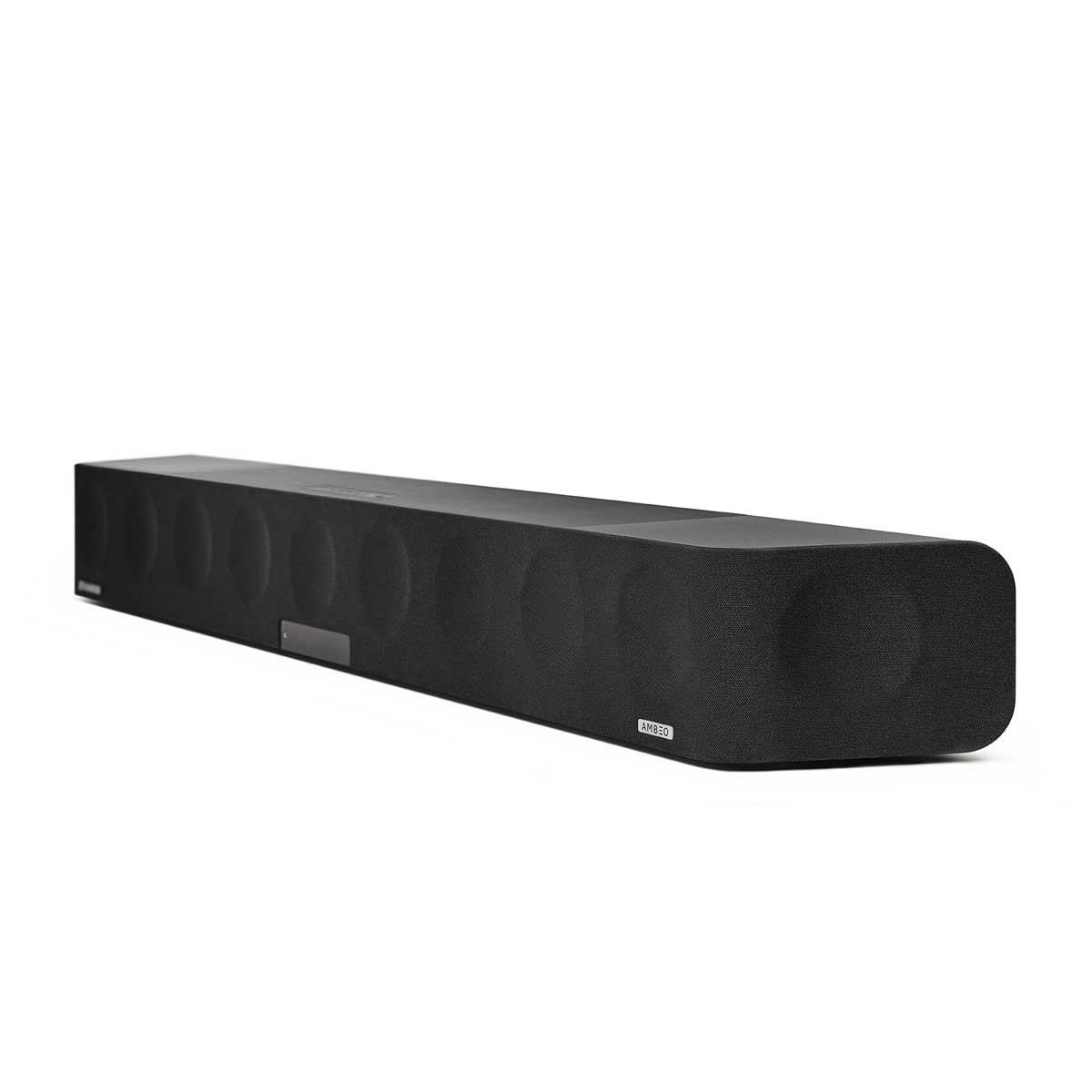
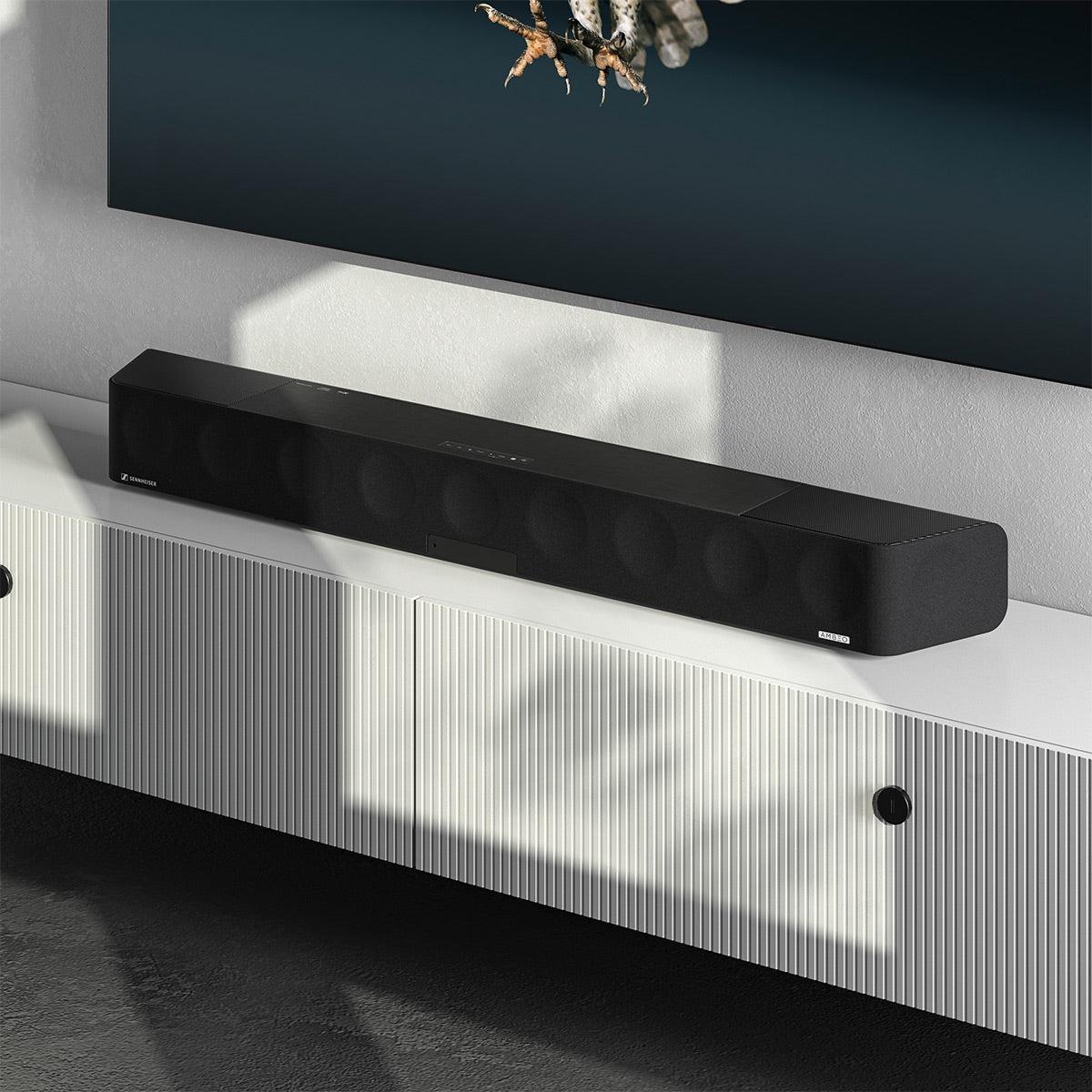
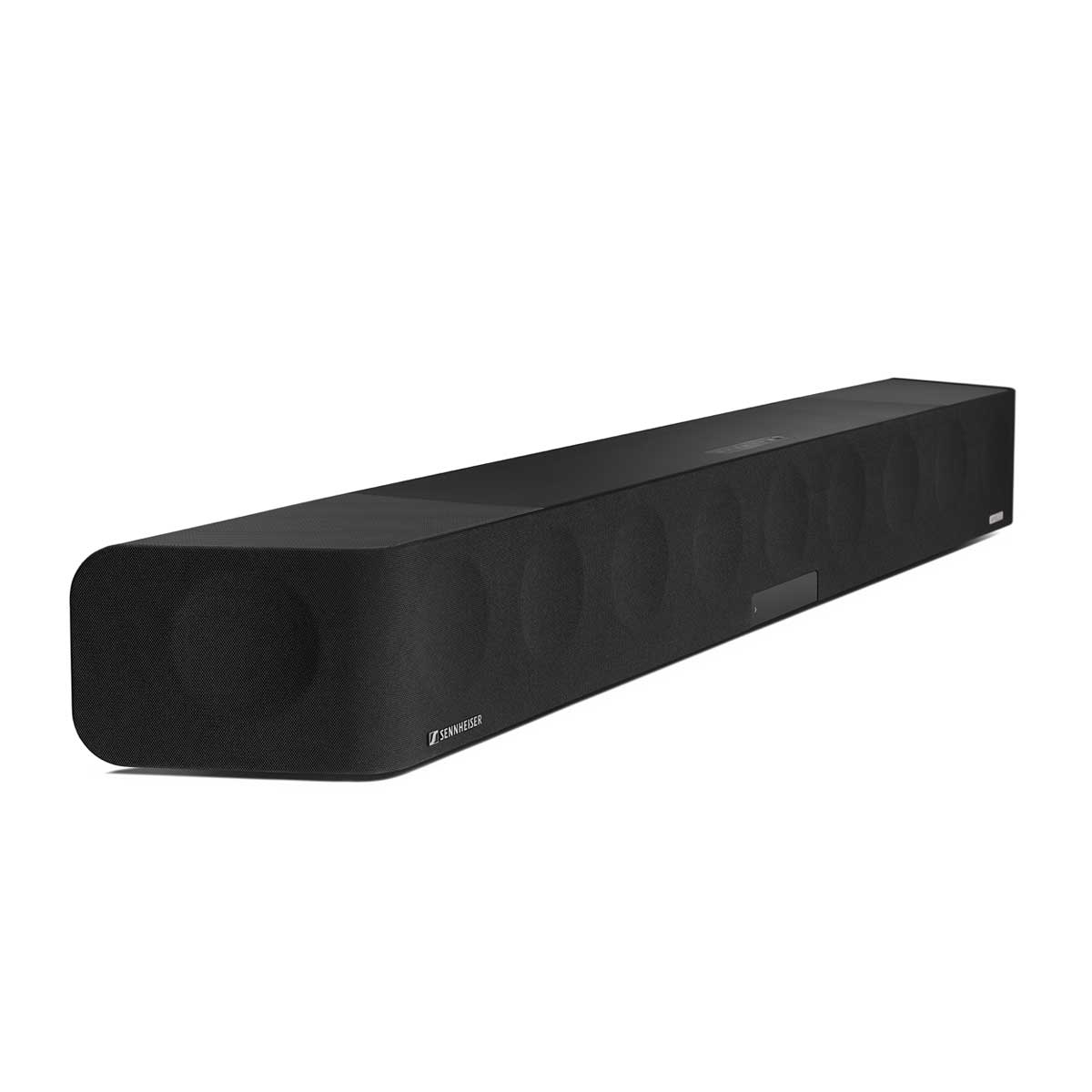
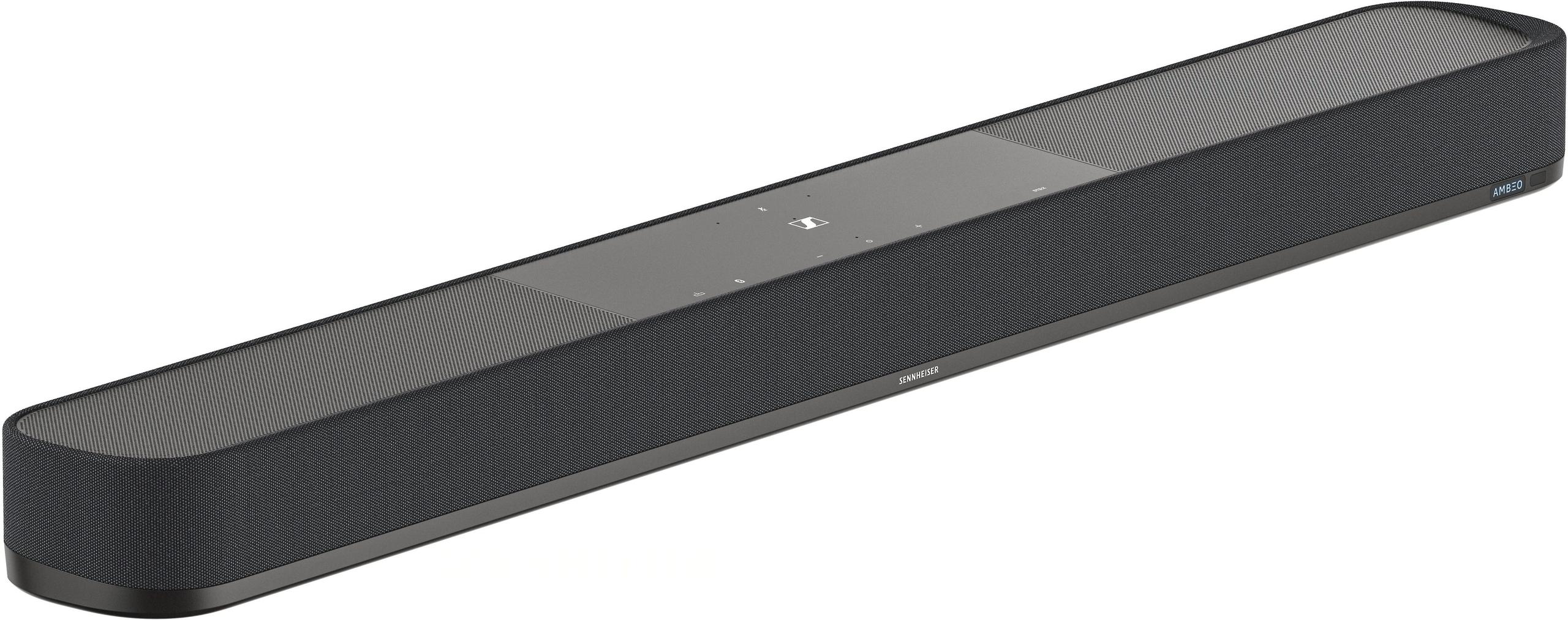
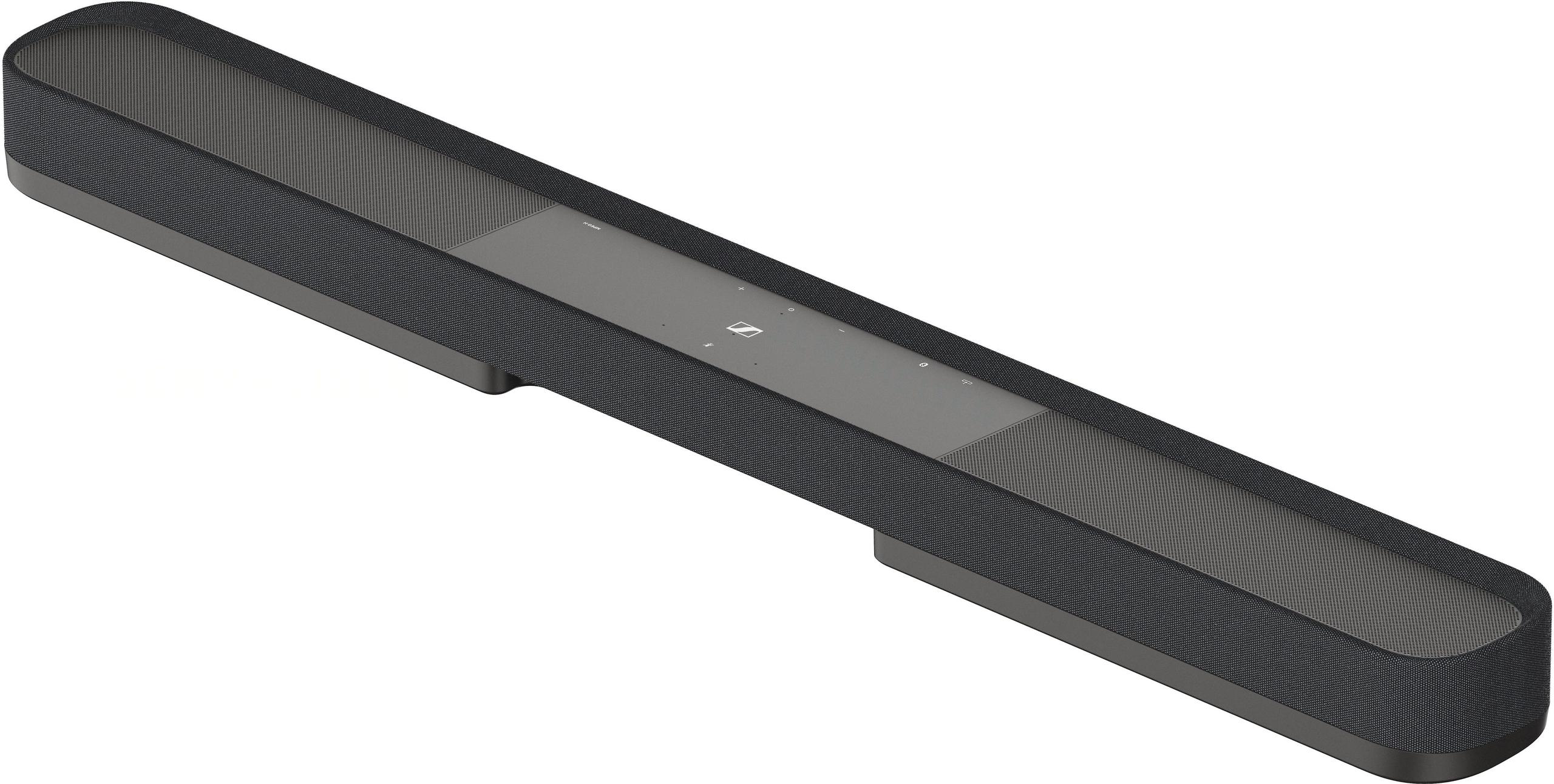
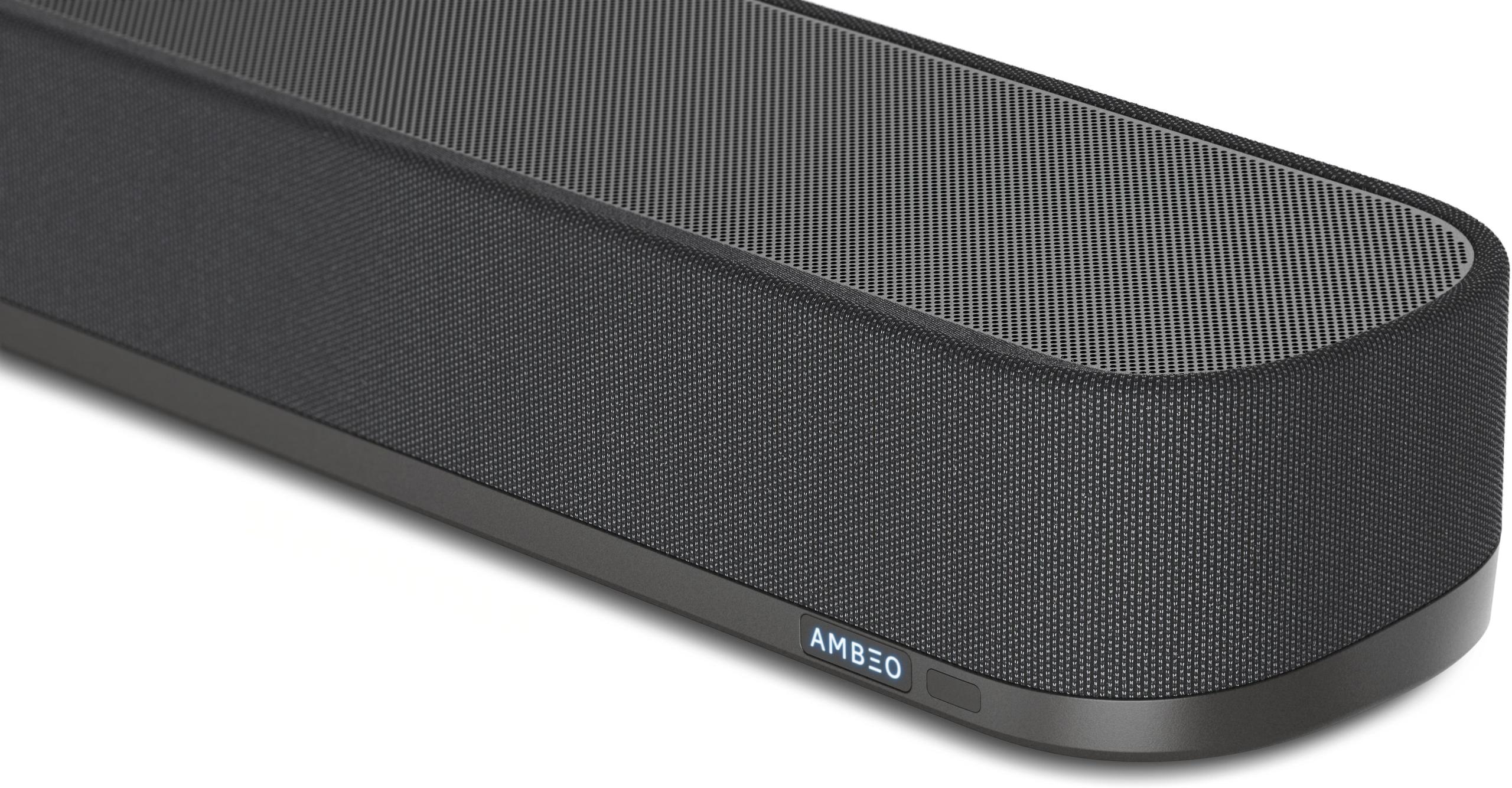
The Sennheiser AMBEO Soundbar takes an entirely different approach: what if we just built the best possible single-unit audio system, regardless of size or convenience constraints? At nearly 50 inches wide and weighing over 40 pounds, it's less a soundbar and more a horizontal speaker cabinet that happens to fit under large TVs.
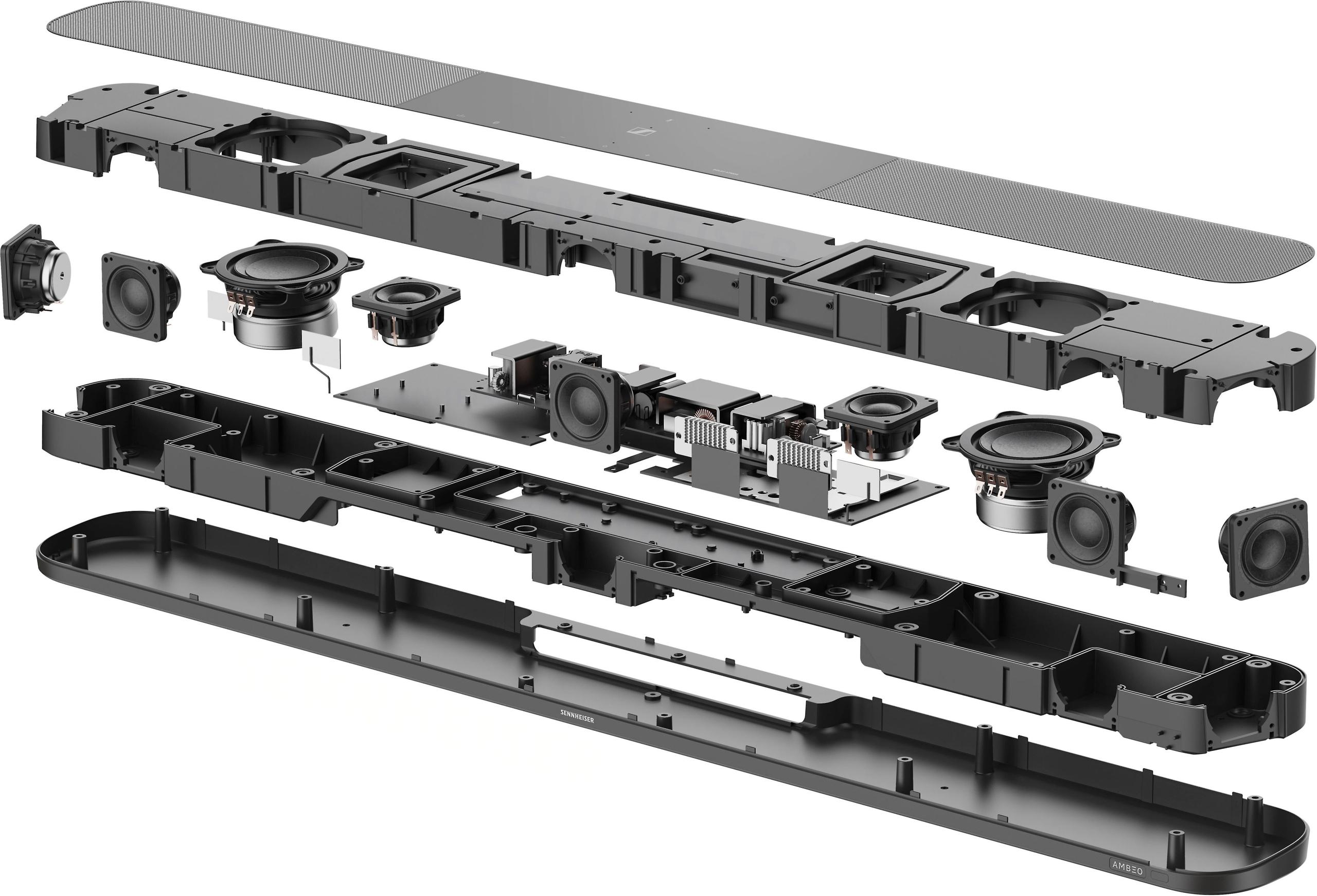
Sennheiser partnered with the renowned Fraunhofer Institute to develop the AMBEO 3D technology—advanced virtualization processing that maps your room's acoustic signature and uses that information to place virtual speakers throughout the space. This isn't just bouncing sound off walls; it's creating a precise acoustic model of your listening environment and using 13 carefully positioned drivers to recreate the experience of a full surround sound system.
Those 13 drivers represent serious engineering: six 4-inch woofers for deep bass extension down to 30Hz (low enough for genuine home theater impact), five 1-inch aluminum dome tweeters for crisp highs, and two 3.5-inch full-range drivers positioned on top for height effects. The 500-watt total power output provides headroom for dynamic movie soundtracks without compression or distortion.
The room calibration system deserves special mention. Using built-in microphones, the Sennheiser AMBEO measures your space's acoustic properties and adjusts its output accordingly. This isn't a simple EQ adjustment—it's mapping reflection patterns, identifying acoustic dead spots, and customizing the virtual surround processing to work optimally in your specific room. The result is genuinely impressive spatial audio that can fool you into thinking you have speakers placed around the room.
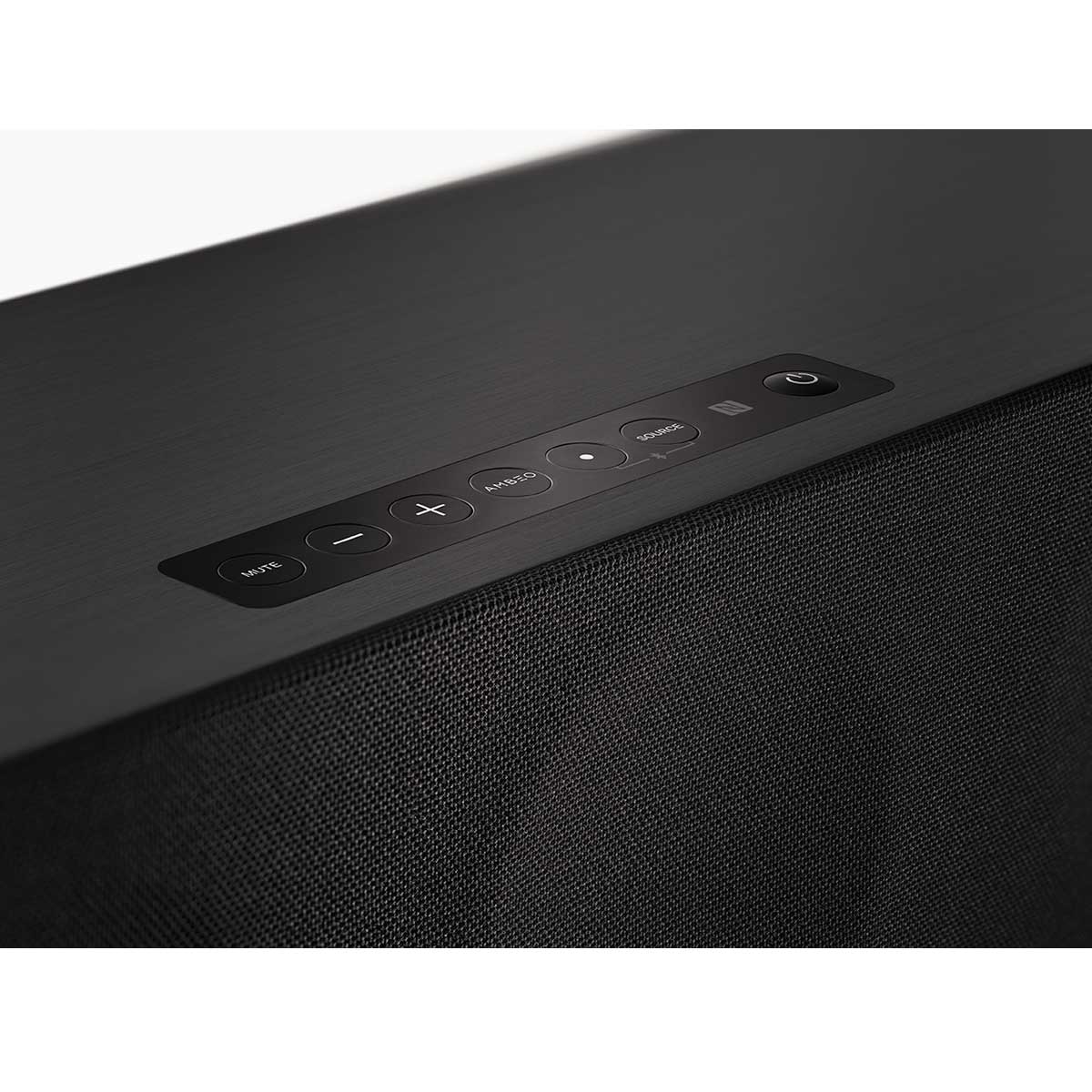
AMBEO Boost Mode pushes the virtualization processing to its maximum, creating the most aggressive surround effects. Standard mode provides a more subtle approach, while Light mode reduces processing for those who prefer a more traditional soundbar presentation. The flexibility lets you match the experience to your content and preferences.
Our research into professional reviews and user feedback reveals clear performance distinctions. The Sennheiser AMBEO consistently wins in pure audio fidelity. Its aluminum dome tweeters deliver cleaner high-frequency reproduction, while the dedicated woofer array provides bass depth that the Bose Smart Soundbar 1100 simply can't match without an additional subwoofer.
However, the Bose Smart Soundbar 1100 excels in what most people actually prioritize: dialogue clarity and balanced sound across different content types. The A.I. Dialogue Mode genuinely improves the TV watching experience, especially for news, documentaries, and dialogue-heavy dramas. Bose's decades of expertise in psychoacoustic processing—understanding how humans perceive sound—shows in the natural, unforced presentation.
For Dolby Atmos content, the Sennheiser AMBEO provides a more convincing surround experience. Its larger driver array and sophisticated processing create more precise audio object placement and movement. Action movie sequences with helicopters, aircraft flyovers, or environmental effects sound genuinely three-dimensional.
The Bose Smart Soundbar 1100 takes a more practical approach. While it can't match the AMBEO's spatial precision, its TrueSpace processing works on all content, not just Atmos-encoded material. Your old stereo music collection, regular TV broadcasts, and streaming content all benefit from enhanced spatial processing. For many users, this broad compatibility provides more day-to-day value than reference-quality Atmos reproduction.
This represents the starkest performance gap. The Sennheiser AMBEO includes genuine low-frequency extension thanks to its six 4-inch woofers. Action movies, electronic music, and any content with significant bass content sounds full and impactful without requiring additional equipment.
The Bose Smart Soundbar 1100 produces respectable bass for its size but lacks the deep extension needed for proper home theater impact. Bose clearly designed it with their optional Bass Module in mind—a strategic decision that keeps the main unit compact while allowing serious bass performance for those who want it. However, this modular approach means additional cost and complexity.
The Sennheiser AMBEO's 500-watt power output provides substantial headroom. Professional reviews consistently note its ability to maintain clarity and control even at high volumes—crucial for large rooms or when you want genuine cinema-level impact.
The Bose Smart Soundbar 1100 handles moderate volumes excellently but begins showing limitations in very large spaces or when pushed to maximum output. Its processing algorithms work best at conversational levels, making it ideal for typical TV watching but potentially limiting for dedicated movie nights.
The Bose Smart Soundbar 1100 clearly prioritizes smart home integration and daily usability. The built-in Alexa implementation feels natural and responsive, while the Bose Music app provides intuitive control over settings and streaming services. Features like SimpleSync for private headphone listening and Voice4Video for comprehensive device control add genuine convenience.
The Sennheiser AMBEO takes a more traditional approach, focusing its engineering resources on audio performance rather than smart features. While it supports major streaming services and voice assistants through connected devices, it lacks the seamless integration that makes the Bose feel like a natural part of a modern smart home ecosystem.
At the time of writing, these soundbars occupy very different price segments, with the Sennheiser AMBEO commanding significantly more than the Bose Smart Soundbar 1100. This price difference reflects their different target markets and engineering priorities.
The Bose Smart Soundbar 1100 offers exceptional value for users who prioritize dialogue clarity, smart features, and room-friendly dimensions. Its modular expansion path means you can start with the basic bar and add bass or surround modules as budget and needs dictate. For typical TV viewing in small to medium rooms, it provides premium performance at a more accessible price point.
The Sennheiser AMBEO commands premium pricing but delivers performance that would require multiple separate components to match. When compared to the cost of equivalent separate receivers, speakers, and subwoofers, its pricing becomes more reasonable. For serious home theater enthusiasts who want maximum performance from a single unit, it represents strong value despite the higher entry cost.
Room dimensions significantly impact both soundbars' performance. The Bose Smart Soundbar 1100 works well in rooms from small apartments up to medium living rooms (roughly 200-300 square feet). Its processing algorithms and driver configuration are optimized for these intimate spaces where subtle audio cues and dialogue clarity matter most.
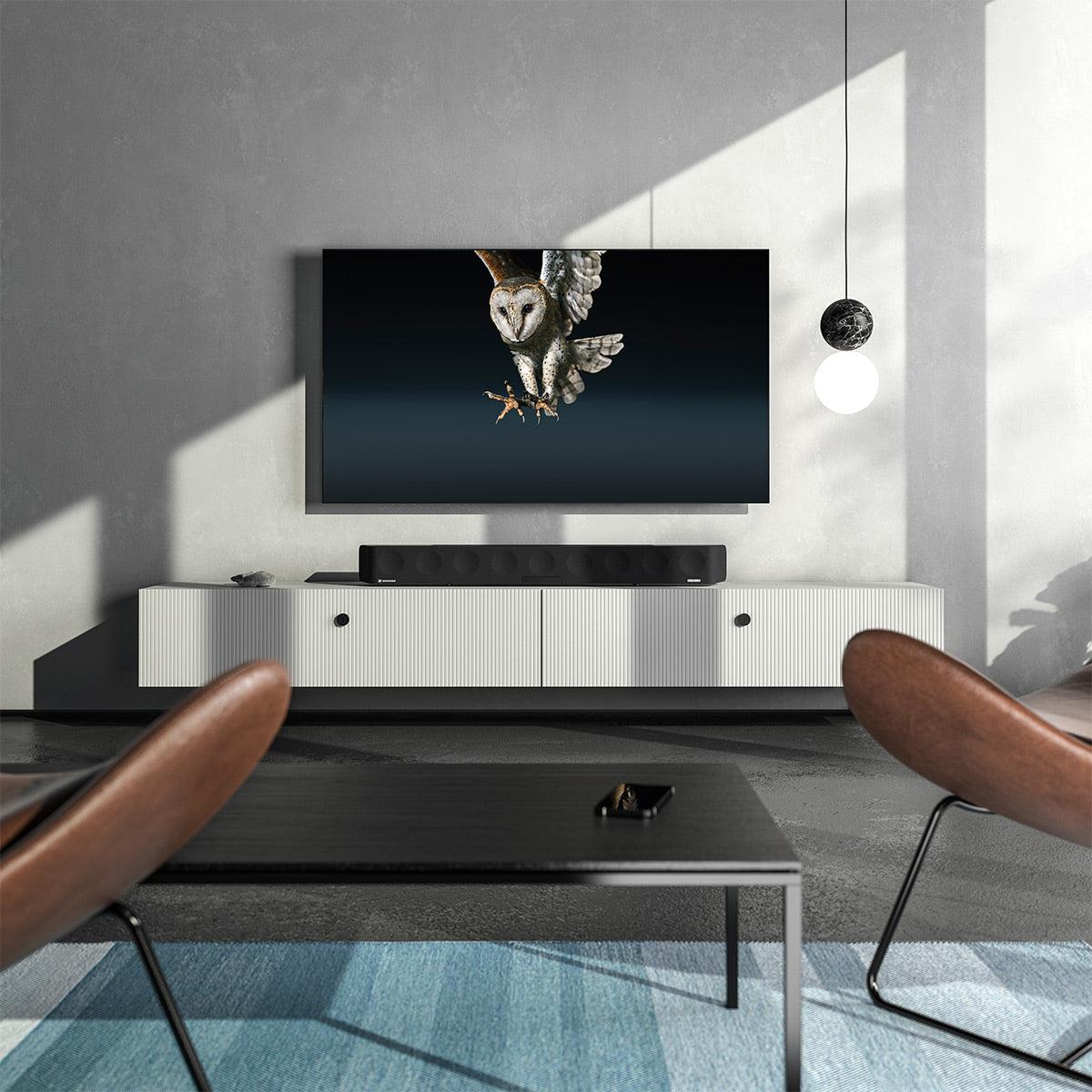
The Sennheiser AMBEO requires more space to reach its potential. Large living rooms, basement home theaters, or open-concept spaces allow its virtualization technology and powerful drivers to create the intended immersive experience. In small rooms, its output can feel overwhelming, and the virtualization effects may not work optimally due to limited acoustic reflection surfaces.
Placement sensitivity also differs significantly. The Bose Smart Soundbar 1100 includes wall-mount EQ settings and generally adapts well to various positions. The Sennheiser AMBEO requires more careful positioning—proper height, distance from walls, and unobstructed upward clearance for its height drivers. Getting the AMBEO dialed in properly requires patience and possibly some room treatment, but the results justify the effort.
These soundbars represent genuinely different approaches to premium audio, making the choice more about matching philosophy than comparing specifications.
Choose the Bose Smart Soundbar 1100 if you value convenience, smart integration, and balanced performance across all content types. It's ideal for typical TV viewing in moderately sized rooms, especially if you prioritize dialogue clarity and ease of use. The modular expansion system means you can grow the system over time, and the compact dimensions work in most modern living spaces. It's the soundbar for people who want premium audio to enhance their daily viewing without requiring acoustic expertise or room modifications.
Choose the Sennheiser AMBEO if audio quality is your primary concern and you have the space and commitment to optimize its performance. It's designed for movie enthusiasts who want the most immersive possible experience from a single unit. The substantial size and weight signal serious engineering, and the performance delivers on that promise. This is the soundbar for dedicated home theater setups where audio quality takes precedence over convenience.
Both products have evolved their respective categories since launch, with the Bose Smart Soundbar 1100 bringing 2023's latest AI processing to the compact premium segment, while the Sennheiser AMBEO remains largely unchanged since 2019—a testament to how advanced its original design was for the time.
Your choice ultimately depends on your room, content preferences, and how you prioritize convenience versus ultimate performance. Either way, you're getting genuinely premium audio that will transform your TV watching experience—just through very different engineering philosophies.
| Bose Smart Soundbar 1100 | Sennheiser AMBEO Soundbar |
|---|---|
| Physical Dimensions - Critical for TV compatibility and room placement | |
| 27.3" W × 2.2" H × 4.6" D, 6.9 lbs (fits under most TVs) | 49.6" W × 5.3" H × 6.7" D, 40.8 lbs (requires large TV and sturdy surface) |
| Total Drivers - More drivers typically mean better sound separation and imaging | |
| 6 drivers total (5 speakers + 1 center tweeter) | 13 high-end drivers (6 woofers, 5 tweeters, 2 full-range) |
| Bass Extension - Determines movie impact and music fullness without subwoofer | |
| Limited low-end, requires optional Bass Module for deep bass | 30Hz extension from built-in 4" woofers (genuine home theater bass) |
| Power Output - Affects maximum volume and dynamic range | |
| Unspecified but optimized for small-medium rooms | 500W total (excellent headroom for large spaces) |
| Dolby Atmos Implementation - Creates overhead sound effects | |
| 2 up-firing drivers with TrueSpace upmixing for all content | True 5.1.4 processing with advanced Fraunhofer virtualization |
| Smart Assistant Integration - Voice control and smart home compatibility | |
| Built-in Amazon Alexa with Voice4Video TV control | Basic voice assistant support through connected devices |
| AI Audio Enhancement - Automatic sound optimization | |
| A.I. Dialogue Mode for real-time voice clarity optimization | Manual EQ and room calibration (no AI processing) |
| Connectivity Options - Streaming and device compatibility | |
| Wi-Fi, Bluetooth 5.0, AirPlay 2, Chromecast, Spotify Connect | Wi-Fi, Bluetooth 4.0, Chromecast, UPnP streaming |
| Room Calibration - Adapts sound to your specific space | |
| Wall EQ preset only (basic adjustment) | Advanced room calibration with microphone measurement |
| Expandability - Options to build a larger system over time | |
| Modular: optional Bose Bass Module and surround speakers | Self-contained unit with limited expansion options |
| Target Room Size - Optimal performance environment | |
| Small to medium rooms (up to ~200-300 sq ft) | Large rooms and dedicated home theaters (300+ sq ft) |
| Price Category - Value positioning at time of writing | |
| Mid-premium pricing with expansion options | High-end premium pricing as complete system |
The Bose Smart Soundbar 1100 is ideal for small rooms due to its compact 27-inch width and optimized processing for intimate spaces. Its TrueSpace technology works well in smaller environments where you're sitting closer to the soundbar. The Sennheiser AMBEO Soundbar can overwhelm small spaces with its 50-inch width and powerful 500W output designed for larger rooms.
The key difference is philosophy: the Bose Smart Soundbar 1100 prioritizes convenience, smart features, and dialogue clarity in a compact design, while the Sennheiser AMBEO Soundbar focuses on maximum audio performance and immersive surround sound from a single large unit. Bose emphasizes ease of use, while Sennheiser targets audiophile-level performance.
The Sennheiser AMBEO Soundbar delivers significantly better bass with its six 4-inch woofers providing 30Hz extension. The Bose Smart Soundbar 1100 produces respectable bass for its size but requires the optional Bass Module for deep, impactful low-end performance that matches what the AMBEO provides built-in.
Yes, both support Dolby Atmos, but differently. The Sennheiser AMBEO Soundbar offers true 5.1.4 channel processing with advanced virtualization for more precise overhead effects. The Bose Smart Soundbar 1100 uses 2 up-firing drivers plus TrueSpace technology that enhances all content types, not just Atmos-encoded material.
The Bose Smart Soundbar 1100 excels at dialogue clarity with its AI Dialogue Mode that automatically optimizes voice frequencies in real-time. This makes it superior for TV shows, news, and dialogue-heavy content. While the Sennheiser AMBEO has excellent overall clarity, it's optimized more for immersive movie experiences than TV dialogue.
The Bose Smart Soundbar 1100 has built-in Amazon Alexa with Voice4Video technology, allowing direct TV control including power, volume, and input switching. The Sennheiser AMBEO Soundbar supports voice assistants only through connected devices and lacks the comprehensive TV control features of the Bose.
For dedicated home theater rooms, the Sennheiser AMBEO Soundbar provides superior performance with its 13 high-end drivers, 500W power output, and advanced room calibration. However, the Bose Smart Soundbar 1100 can work well in home theaters when paired with the optional Bass Module and surround speakers for a more traditional expandable system.
The Bose Smart Soundbar 1100 offers comprehensive smart features including built-in Alexa, SimpleSync for headphone pairing, and seamless streaming integration. The Sennheiser AMBEO Soundbar provides basic streaming capabilities but focuses its engineering on audio performance rather than smart home integration and convenience features.
The Bose Smart Soundbar 1100 is designed for plug-and-play simplicity with automatic AI processing and minimal manual adjustment needed. The Sennheiser AMBEO Soundbar includes advanced room calibration that provides superior results but requires more time and attention to positioning and setup for optimal performance.
The Bose Smart Soundbar 1100 offers modular expansion with optional Bass Modules and surround speakers, allowing you to build a complete system gradually. The Sennheiser AMBEO Soundbar is designed as a complete standalone solution with limited expansion options, prioritizing all-in-one performance over modularity.
The Bose Smart Soundbar 1100 adapts well to mixed content with TrueSpace processing that enhances everything from stereo music to Atmos movies. The Sennheiser AMBEO Soundbar excels with high-quality movie content and music but is optimized primarily for premium source material rather than everyday TV viewing.
The Bose Smart Soundbar 1100 performs optimally in small to medium rooms up to about 300 square feet, while the Sennheiser AMBEO Soundbar needs larger spaces of 300+ square feet to showcase its immersive capabilities. Room acoustics and ceiling height also matter more for the AMBEO's virtualization technology to work effectively.
We've done our best to create useful and informative comparisons to help you decide what product to buy. Our research uses advanced automated methods to create this comparison and perfection is not possible - please contact us for corrections or questions. These are the sites we've researched in the creation of this article: bestbuy.com - rtings.com - rtings.com - youtube.com - staples.com - youtube.com - soundguys.com - businessinsider.com - youtube.com - rtings.com - crutchfield.com - youtube.com - youtube.com - smart.dhgate.com - dolby.com - bose.com - assets.bose.com - bose.com - connection.com - bestbuy.com - cdw.com - dell.com - device.report - bestbuy.com - rtings.com - techradar.com - audioxpress.com - whathifi.com - upscaleaudio.com - soundstagesimplifi.com - global.sennheiser-hearing.com - sennheiser-hearing.com - audioadvice.com - abt.com - moon-audio.com

Privacy Policy
Terms and Conditions - Affiliate Policy
Home Security
© Copyright 2008-2026.
11816 Inwood Rd #1211, Dallas, TX 75244