






If you've ever found yourself cranking up your TV volume just to understand what the characters are saying, only to get blasted by the next action scene, you're not alone. TV speakers have gotten progressively worse as manufacturers make screens thinner, leaving less room for decent audio components. That's where soundbars come in – they're the most popular solution for upgrading your TV's audio without turning your living room into a maze of speakers and wires.
But here's the thing: not all soundbars are created equal. Today we're comparing two products that couldn't be more different – the budget-friendly Samsung HW-B550D ($178) and the premium Sennheiser AMBEO Soundbar ($2,000). These represent opposite ends of the soundbar spectrum, and understanding their differences will help you figure out which approach makes sense for your home and budget.
Before diving into specifics, let's talk about what soundbars actually do. At their core, they're trying to solve the fundamental problem of TV audio: creating a wider, more immersive soundstage than what tiny TV speakers can manage. The challenge is doing this while keeping things simple and affordable.
The main things to consider when shopping for a soundbar are audio performance (how good it sounds), value (what you get for your money), room integration (how well it fits your space), and content compatibility (whether it works with modern audio formats like Dolby Atmos). These factors become especially important if you're building a dedicated home theater setup where audio quality can make or break the experience.
Think of soundbars as falling into different categories based on their approach. Basic models focus on improving dialogue clarity and adding some width to the sound. Mid-range options introduce virtual surround effects and better bass response. Premium models use advanced processing to create truly immersive 3D audio experiences that can rival traditional multi-speaker setups.
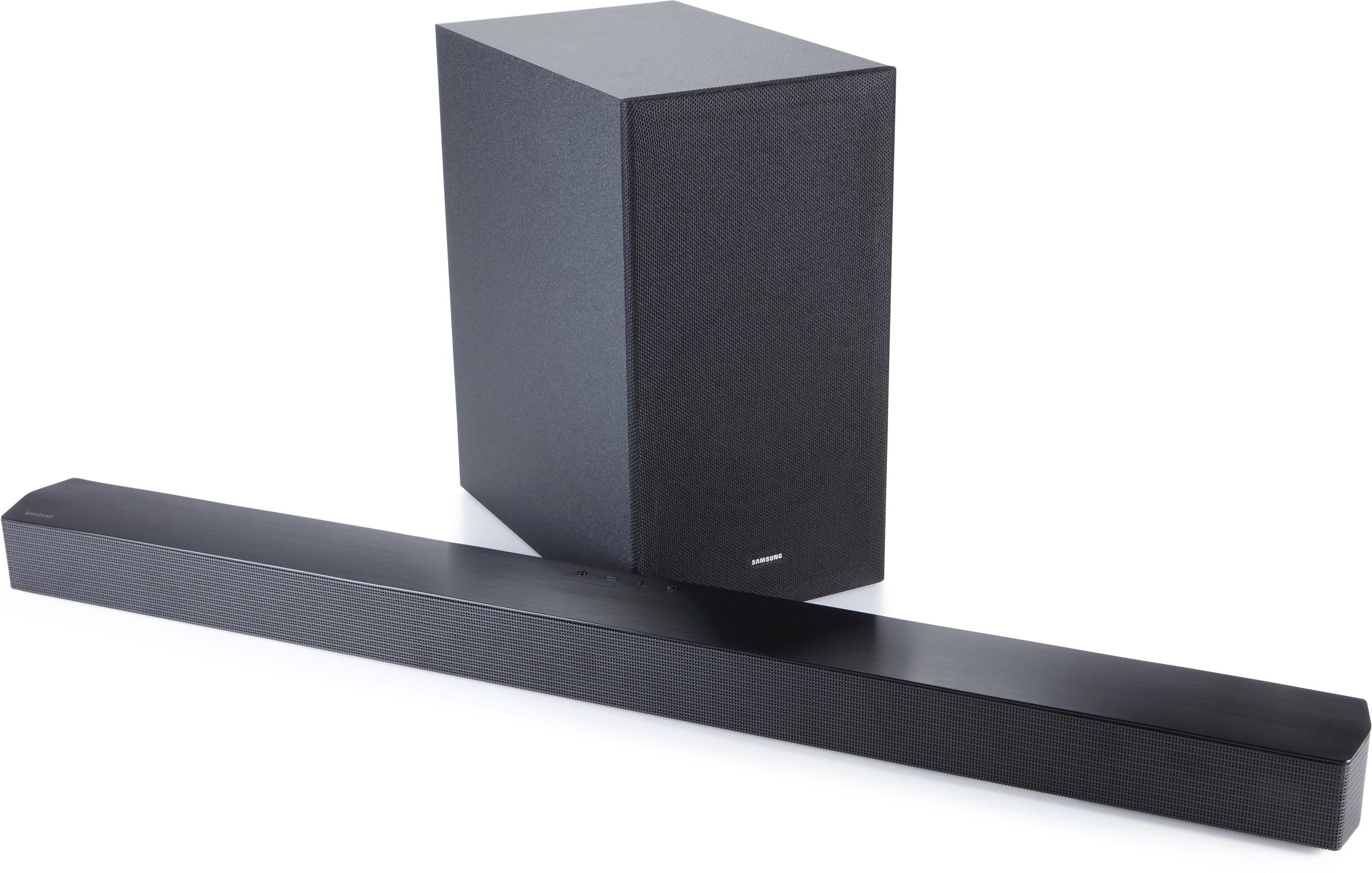
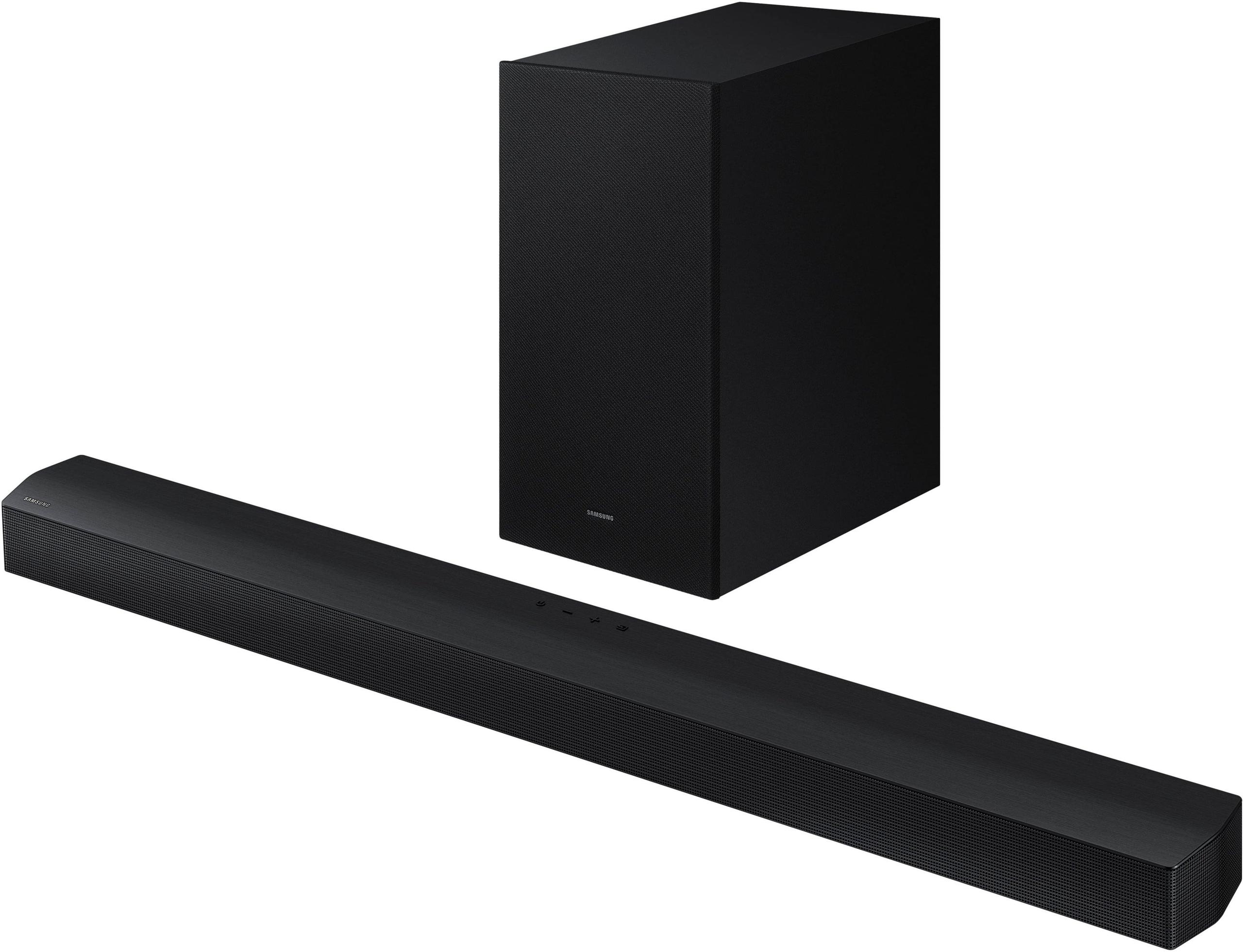
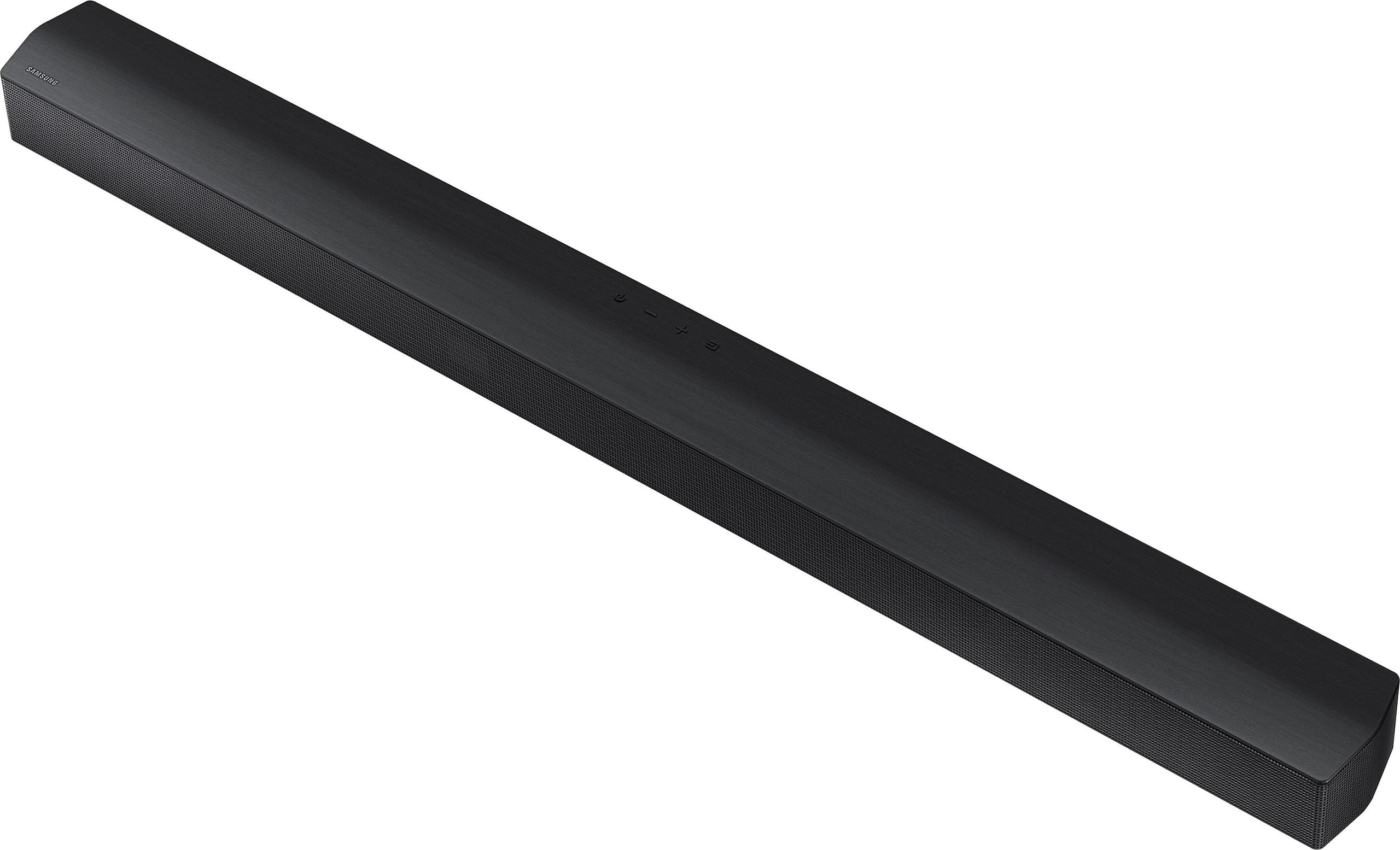
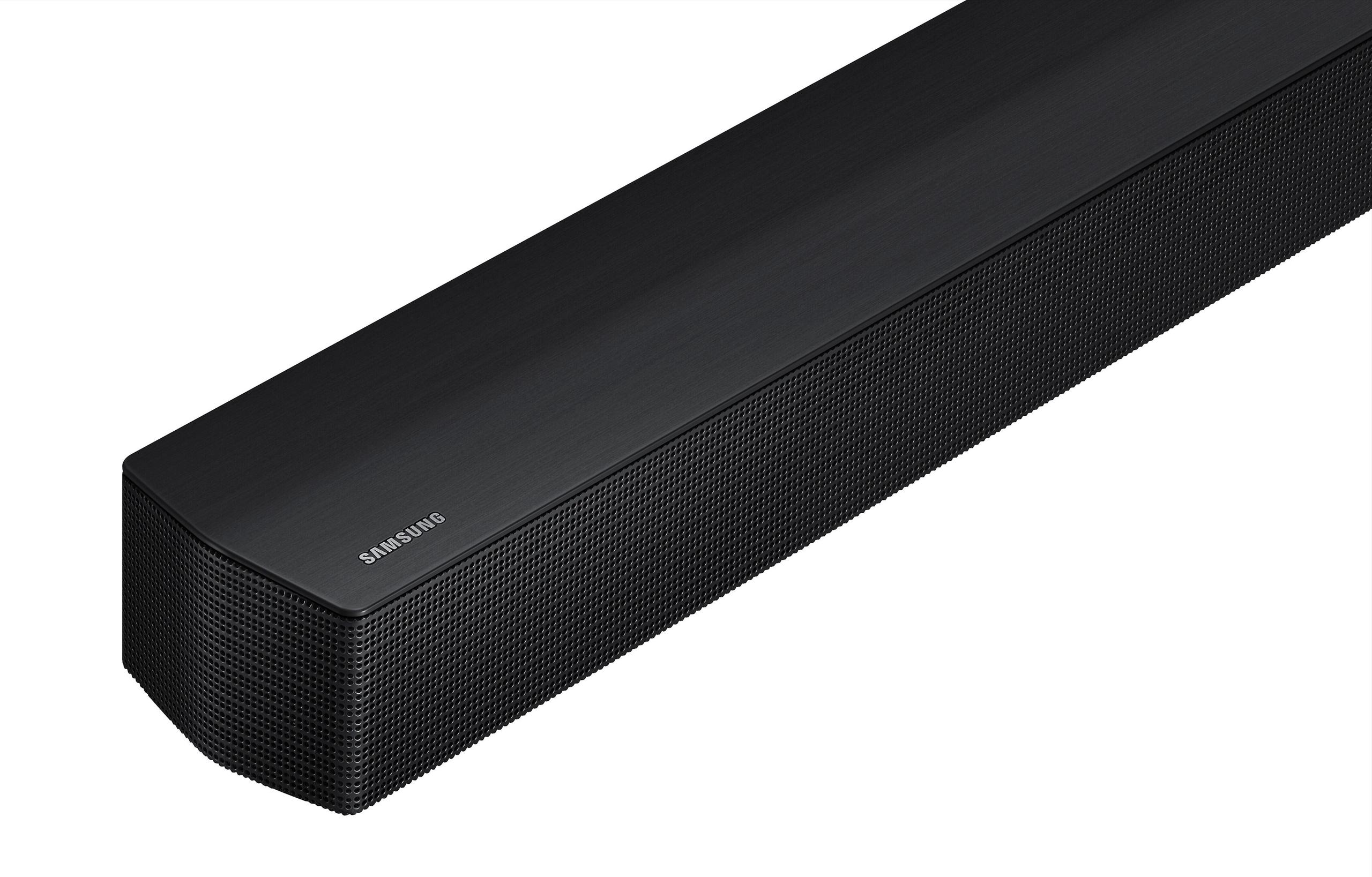
The Samsung HW-B550D represents Samsung's entry-level approach to soundbar design, released as part of their 2025 lineup. It's built around the philosophy that most people just want clearer TV dialogue and some basic surround effects without breaking the bank or dealing with complex setup procedures.
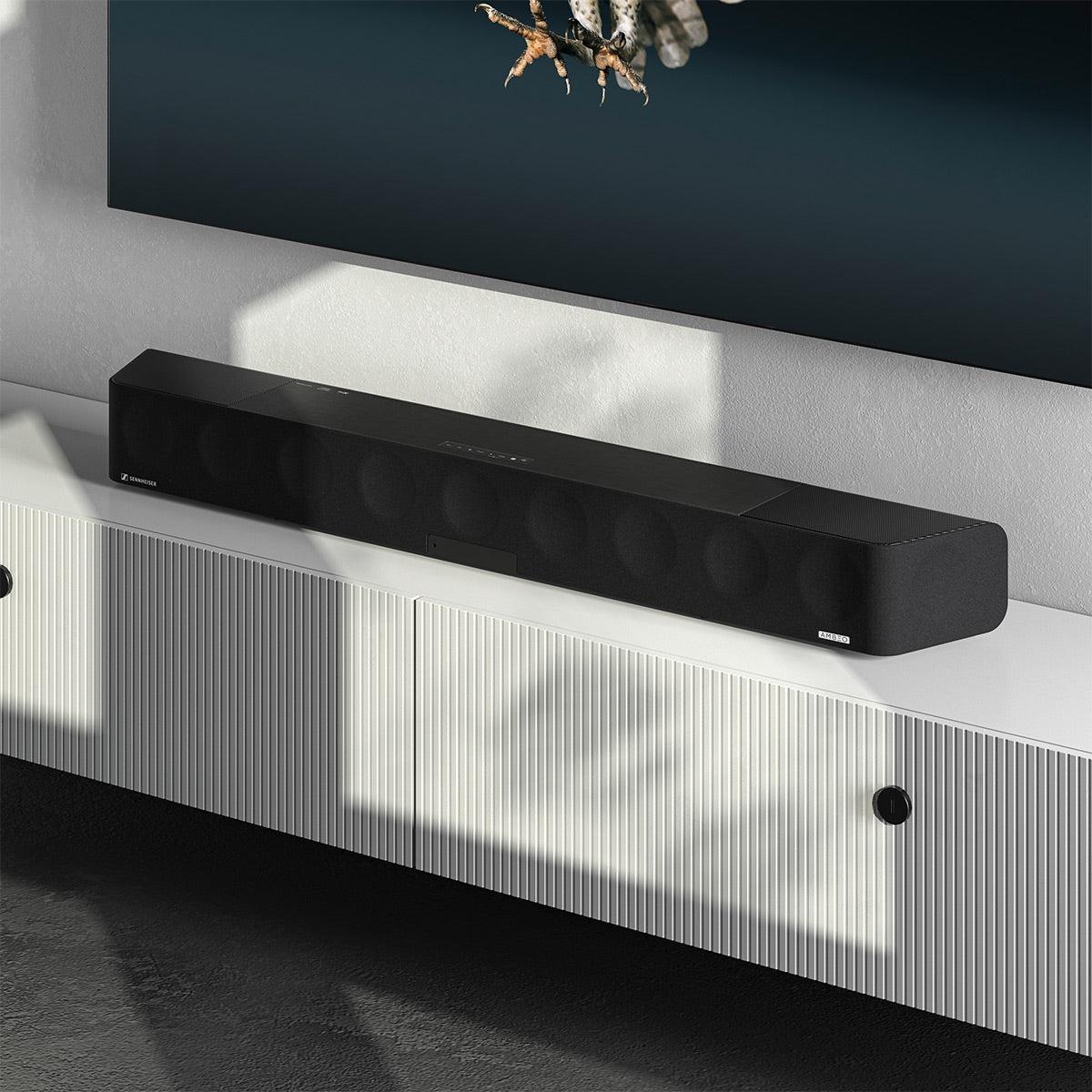
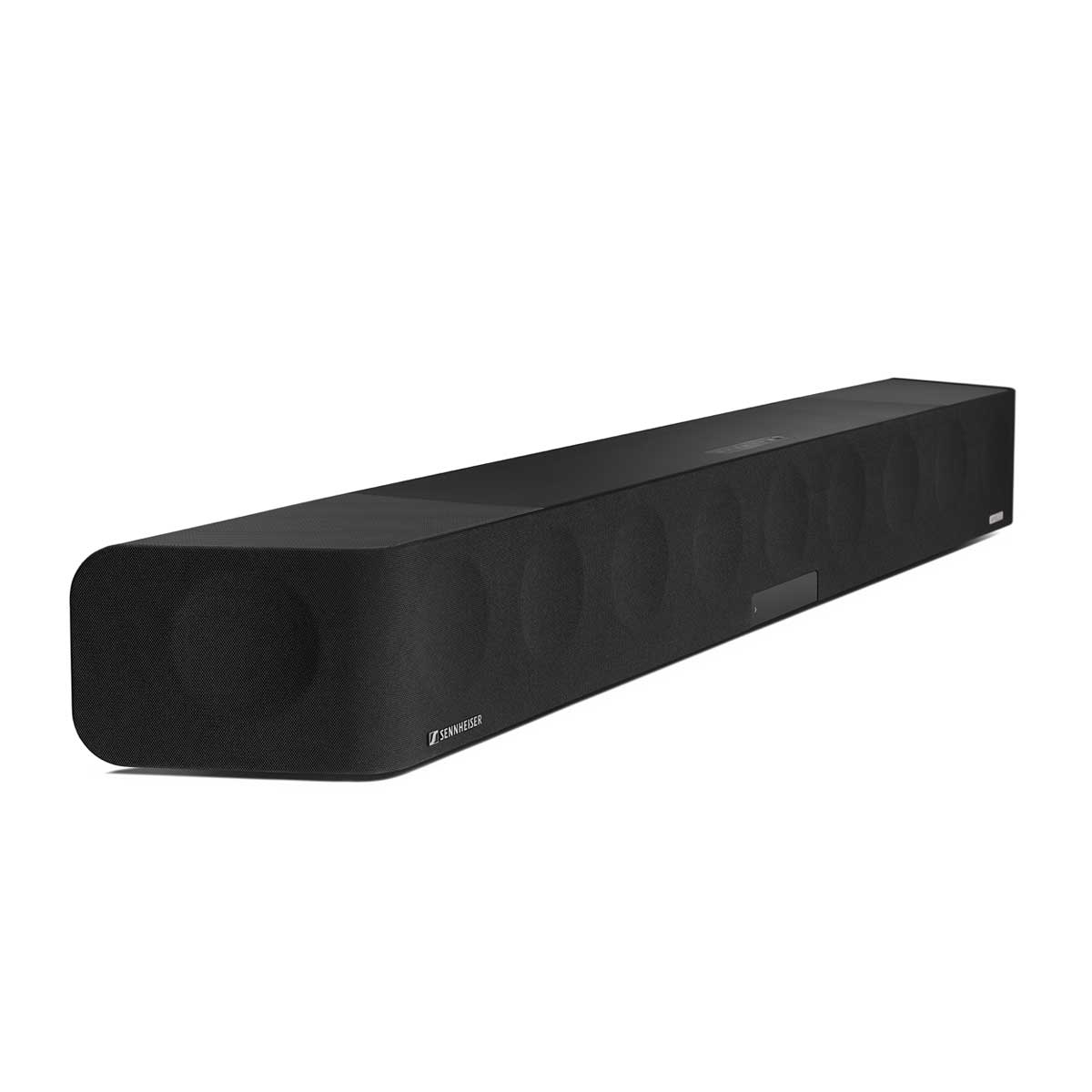
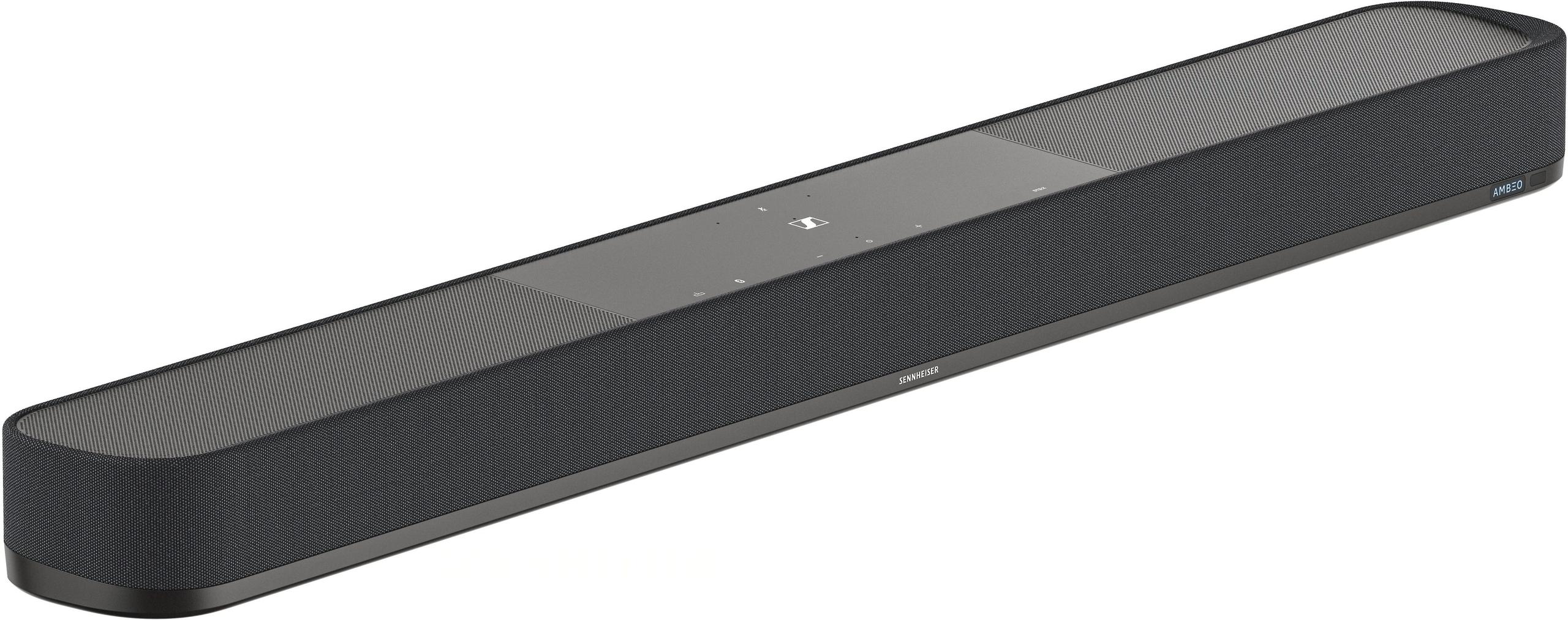
Meanwhile, the Sennheiser AMBEO Soundbar launched in 2023 as Sennheiser's flagship attempt to revolutionize what a single soundbar can achieve. This isn't just an upgraded TV speaker – it's an attempt to recreate the experience of a full surround sound system using advanced acoustic engineering and psychoacoustic processing (basically, tricks that make your brain think sounds are coming from places they're not).
The timing difference is actually important here. The Samsung benefits from newer manufacturing techniques that allow them to pack decent performance into a very affordable package. The Sennheiser, being a few years older, represents the peak of what was possible when premium soundbar technology was still emerging. Both approaches have their merits, depending on what you're trying to accomplish.
Here's where the differences become stark. The Samsung HW-B550D delivers what Consumer Reports calls "acceptable overall sound quality" – it gets the job done without any major flaws, but don't expect to be blown away. The sound tends to be somewhat prominent in the bass (which isn't necessarily bad), with midrange that can sound a bit grainy and congested. The treble extends well enough but can come across as subdued and occasionally sizzly.
In practical terms, this means the Samsung sounds good enough for most TV watching and casual music listening. You'll definitely hear improvements over your TV speakers, especially in dialogue clarity thanks to its dedicated center channel (a separate speaker specifically for voices). But if you're used to quality headphones or a good stereo system, you might notice the limitations during quieter, more nuanced content.
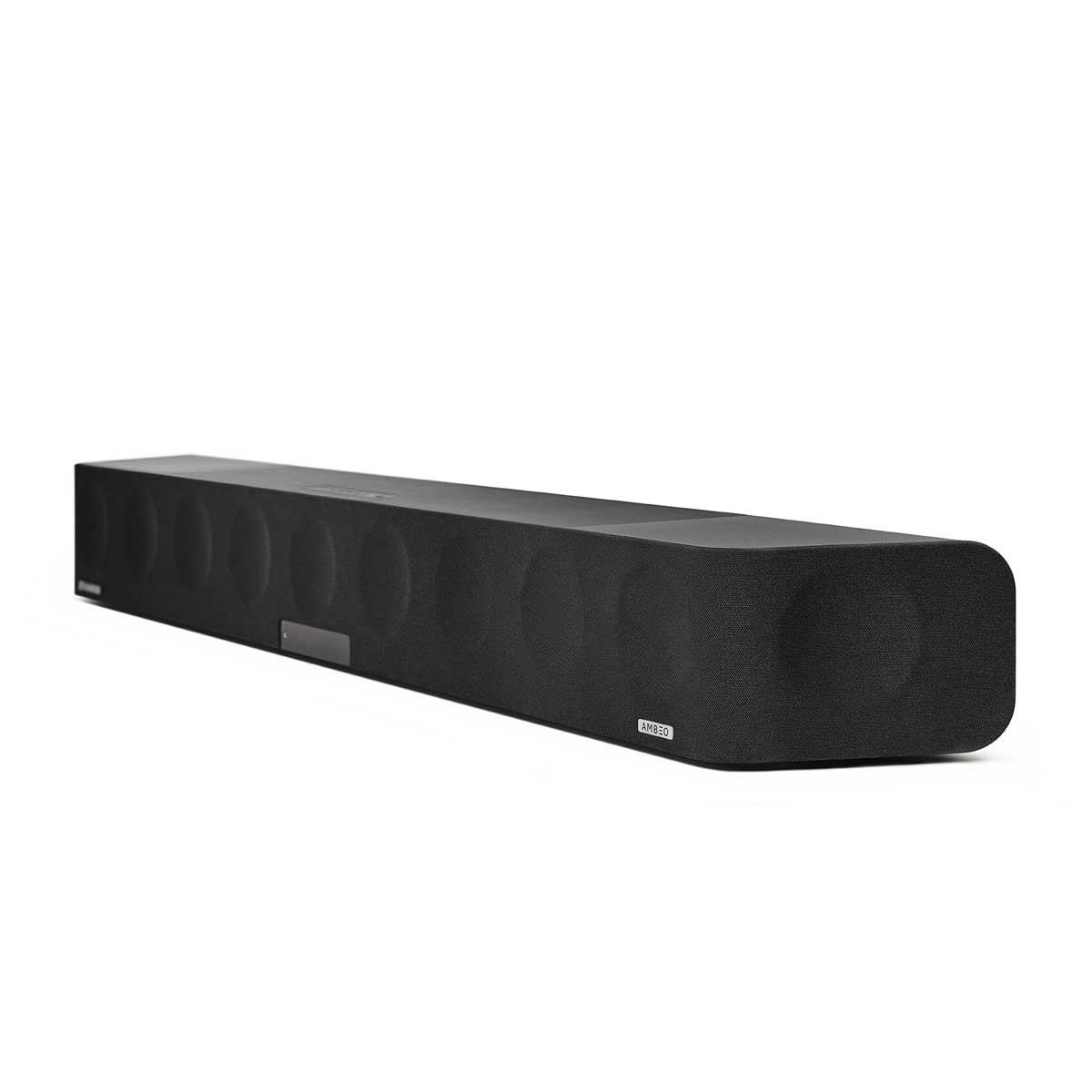
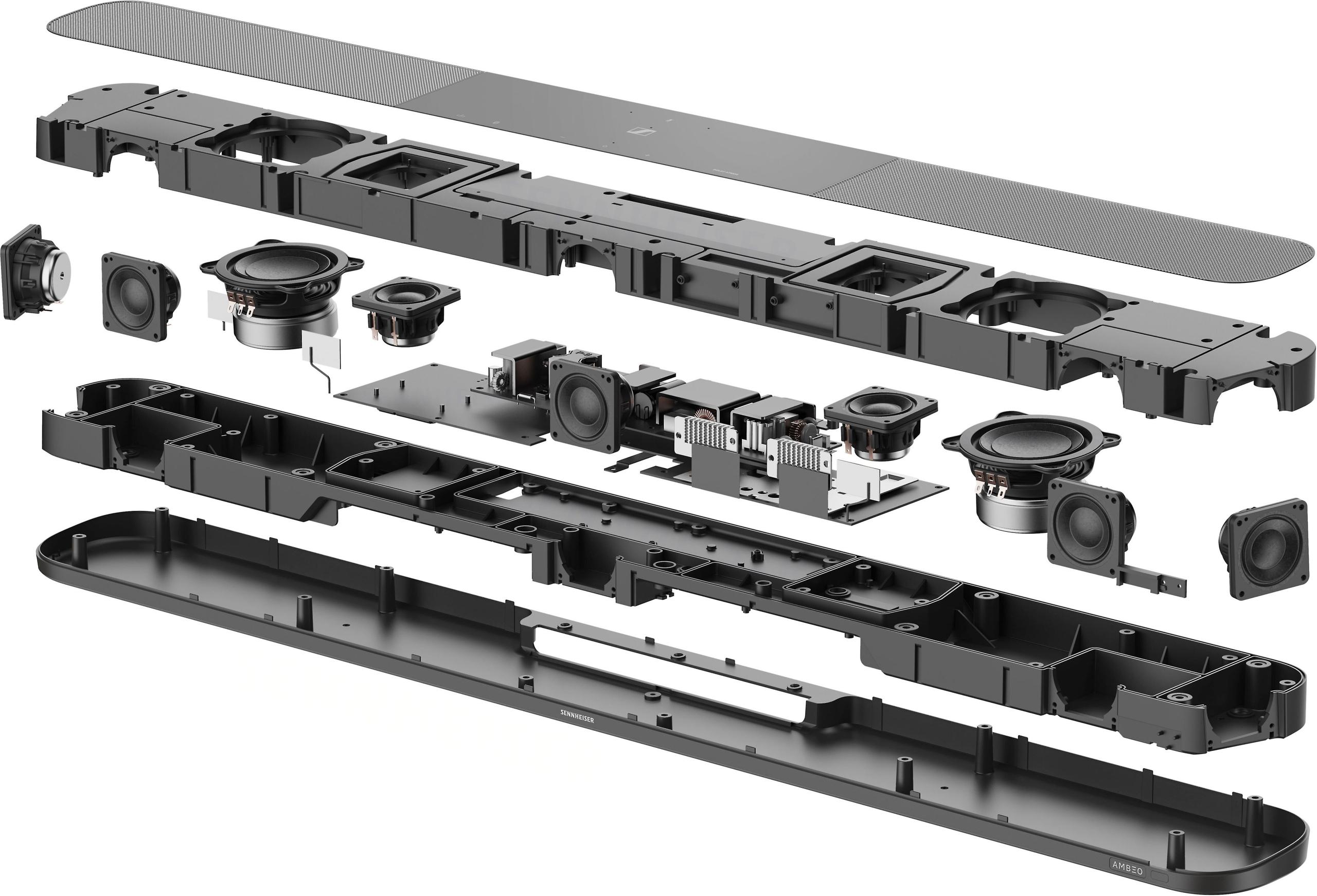
The Sennheiser AMBEO, on the other hand, operates in a completely different league. With 13 individual drivers including five aluminum dome tweeters and six long-throw woofers, it delivers what reviewers consistently describe as "studio-grade" sound quality. The frequency response extends from a deep 30Hz up to 20kHz, covering essentially the full range of human hearing with remarkable accuracy.
What this means in your living room is immediately apparent. Instruments have space to breathe, voices sound natural and present, and you can actually hear subtle details in movie soundtracks that cheaper soundbars simply can't reproduce. It's the difference between watching a movie and feeling like you're inside it.
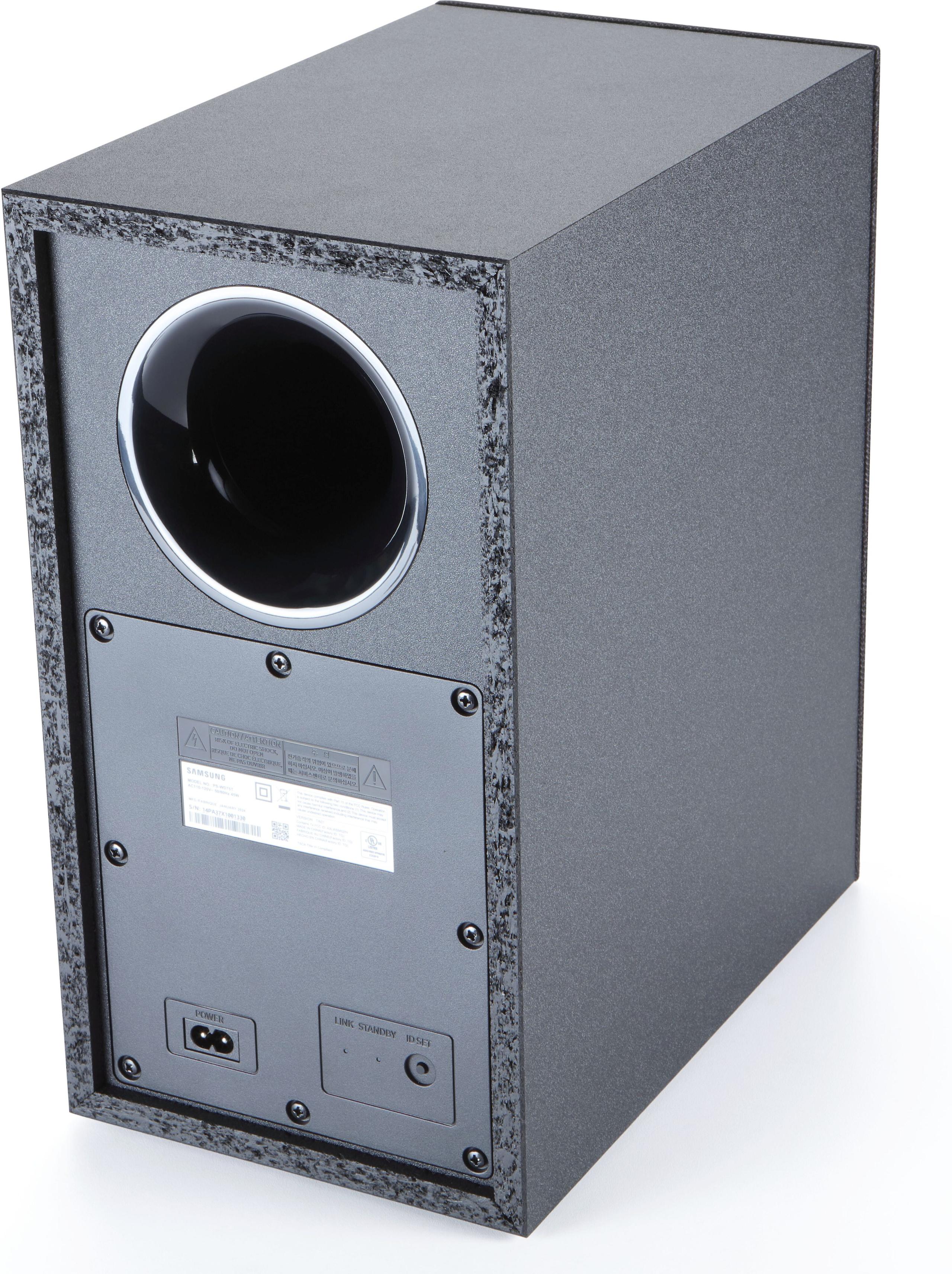
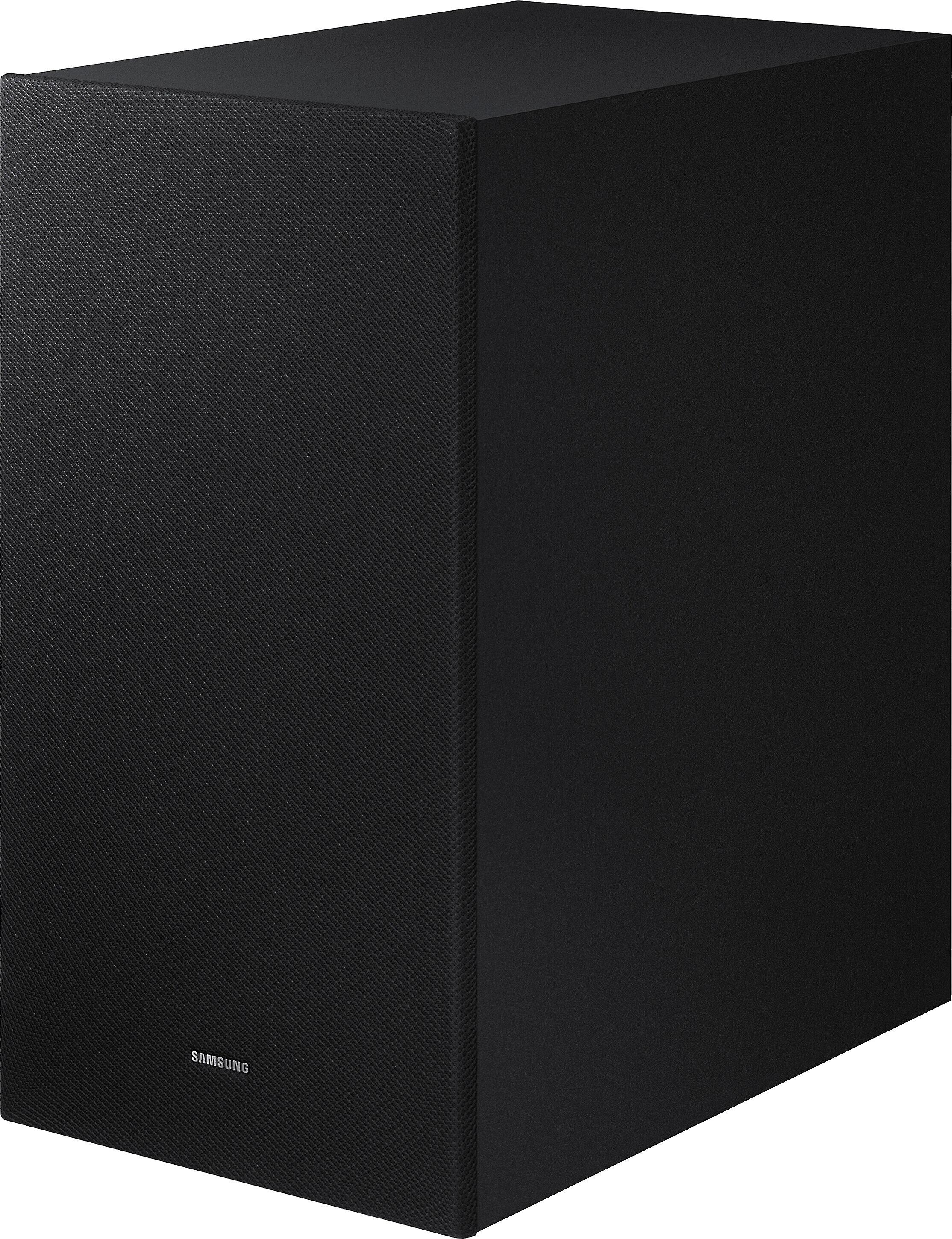
Bass is where many soundbars struggle, but both of these take different approaches to the challenge. The Samsung includes a wireless subwoofer with a 5-inch driver in a ported enclosure. This setup provides adequate bass impact for most content, and the Bass Boost mode can add extra punch when you want it. However, some users report the bass can sound "tubby" – meaning it lacks the tightness and control you'd want for music listening.
The wireless connection, while convenient, occasionally causes issues. Some users report the subwoofer randomly disconnecting, requiring a reset to get it working again. It's not a universal problem, but it's worth being aware of.
The Sennheiser takes a completely different approach by building six 4-inch woofers directly into the main soundbar. This eliminates the wireless connectivity issues and provides much tighter integration between the bass and the rest of the frequency spectrum. The result is bass that extends down to 30Hz (genuinely deep) while maintaining the speed and precision needed for both movies and music.
For home theater applications, this difference is particularly noticeable during action sequences. The Samsung provides adequate rumble, but the Sennheiser delivers bass that feels controlled and purposeful rather than just loud.
This is probably the most important aspect for most people, and it's where the Samsung really shines relative to its price point. The dedicated center channel makes a huge difference in speech intelligibility, and multiple users specifically mention buying it to solve dialogue problems with their TV. The Voice Enhancement mode further optimizes speech frequencies, making it easier to follow conversations even during loud action scenes.
The Night Mode feature compresses the dynamic range (reduces the difference between quiet and loud sounds), which is genuinely useful for late-night viewing when you don't want to wake the neighbors during explosion scenes but still need to hear whispered dialogue.
The Sennheiser AMBEO handles dialogue differently. Rather than artificially boosting speech frequencies, it relies on the inherent quality of its drivers and processing to present voices naturally. The result is dialogue that sounds more realistic and present, but without the obvious "enhancement" that some people prefer. It's a more sophisticated approach, but the Samsung's more direct method might actually be preferable for people who primarily struggle with TV dialogue.
This is where the philosophical differences between these products become most apparent. The Samsung uses DTS Virtual:X, which is essentially audio processing that tries to trick your brain into thinking sounds are coming from around you using just the soundbar's speakers. It works to a degree – you'll notice some width and occasional height effects – but it's clearly artificial.
The Surround Sound Expansion mode does add some spaciousness to movie soundtracks, making them feel bigger than what TV speakers can manage. But if you've ever experienced a real surround sound system, you'll immediately recognize the limitations. It's virtual surround in the truest sense – better than stereo, but not truly immersive.
The Sennheiser AMBEO represents a quantum leap in this area. Using advanced beam-forming technology (precisely controlling where sound waves go) and psychoacoustic processing, it can actually bounce sounds off your walls and ceiling to create the illusion of speakers placed around your room. This isn't just marketing speak – multiple reviewers describe genuinely convincing overhead effects and sounds that seem to come from behind the listening position.
The room calibration process is crucial here. The soundbar uses built-in microphones to analyze your room's acoustic properties, then adjusts its processing to work with your specific space. This means it actually gets better as it learns about your room, rather than applying generic processing like the Samsung does.
For home theater enthusiasts, this difference is night and day. The Samsung provides a wider soundstage that's pleasant for casual viewing. The Sennheiser creates a convincing three-dimensional audio environment that can genuinely enhance the emotional impact of movies and shows.
At $178, the Samsung HW-B550D represents exceptional value for what it delivers. You're getting a significant upgrade over TV speakers, clear dialogue enhancement, adequate bass response, and basic surround effects. For most people who just want better TV audio without spending a fortune, it hits the sweet spot perfectly.
The inclusion of a wireless subwoofer at this price point is particularly impressive. Even five years ago, you'd typically pay $300+ for a soundbar-subwoofer combo with similar features. Samsung's manufacturing efficiency and component sourcing clearly benefit consumers here.
The Sennheiser AMBEO at $2,000 requires a different value calculation. You're not just paying for better sound quality – you're paying for engineering that represents the current state-of-the-art in single-unit audio reproduction. The 13 individual drivers, advanced processing chips, room calibration technology, and premium build quality all contribute to the cost.
Is it worth it? That depends entirely on your priorities and budget. If audio quality is genuinely important to you and you have the room and budget for it, the AMBEO delivers an experience that would typically require a much more complex (and expensive) traditional surround sound system. But if you're just trying to solve basic TV audio problems, spending $2,000 is clearly overkill.
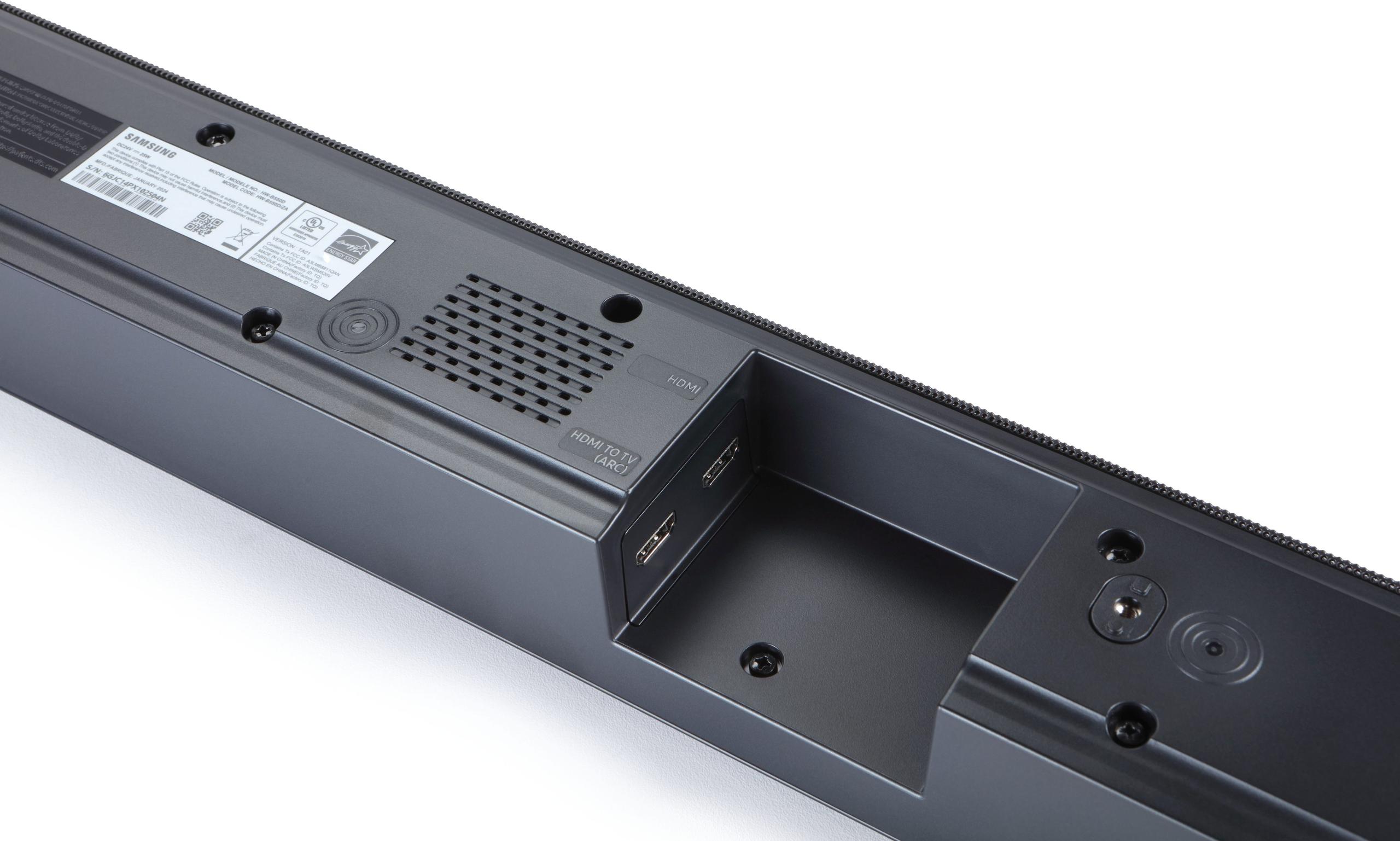
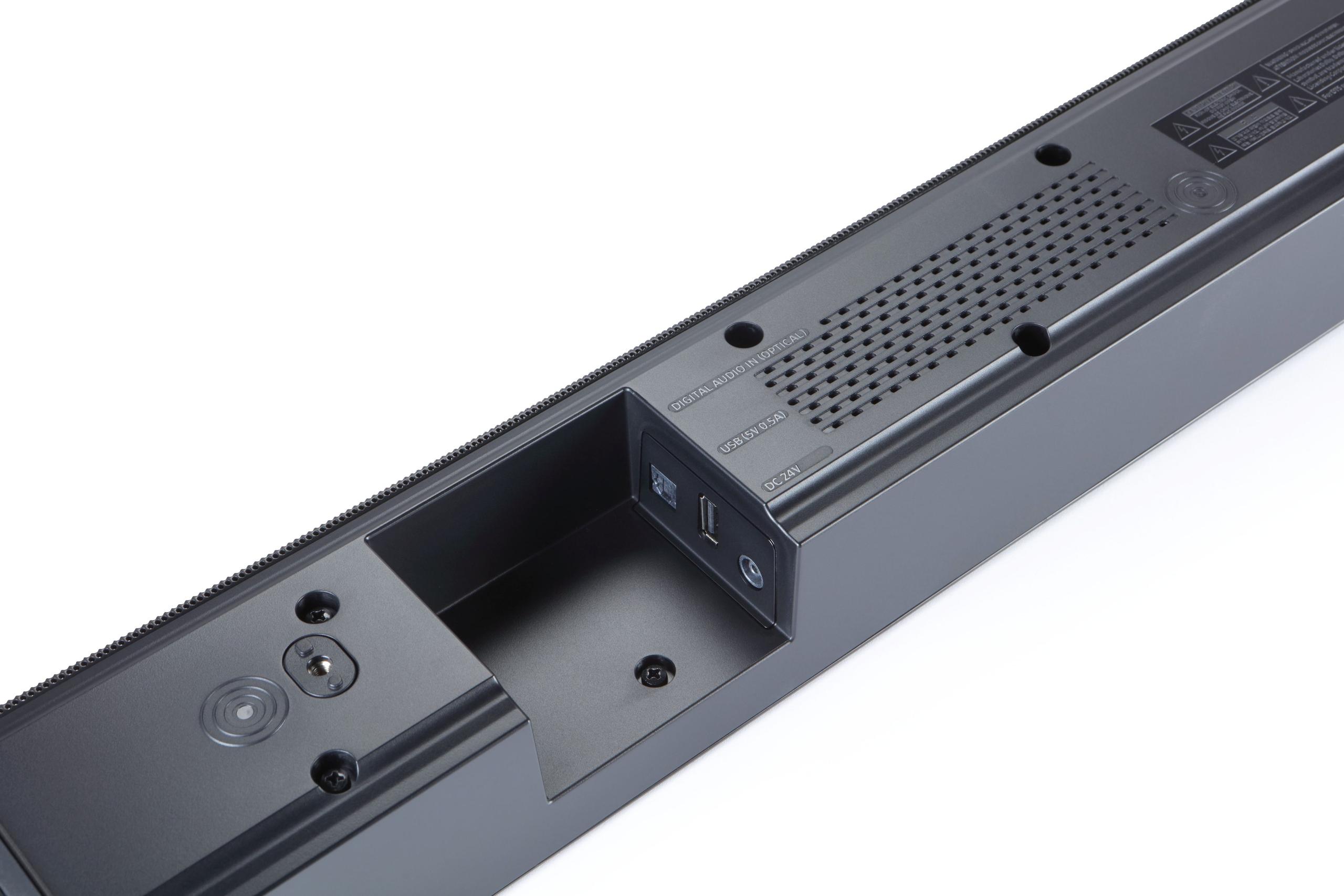
The Samsung keeps things straightforward with Bluetooth connectivity, HDMI ARC, and optical digital input. The Adaptive Sound Lite feature automatically adjusts the audio based on what you're watching, which works reasonably well for switching between quiet dramas and loud action movies. The Game Mode uses cross-talk cancellation to improve directional audio cues, which gamers will appreciate.
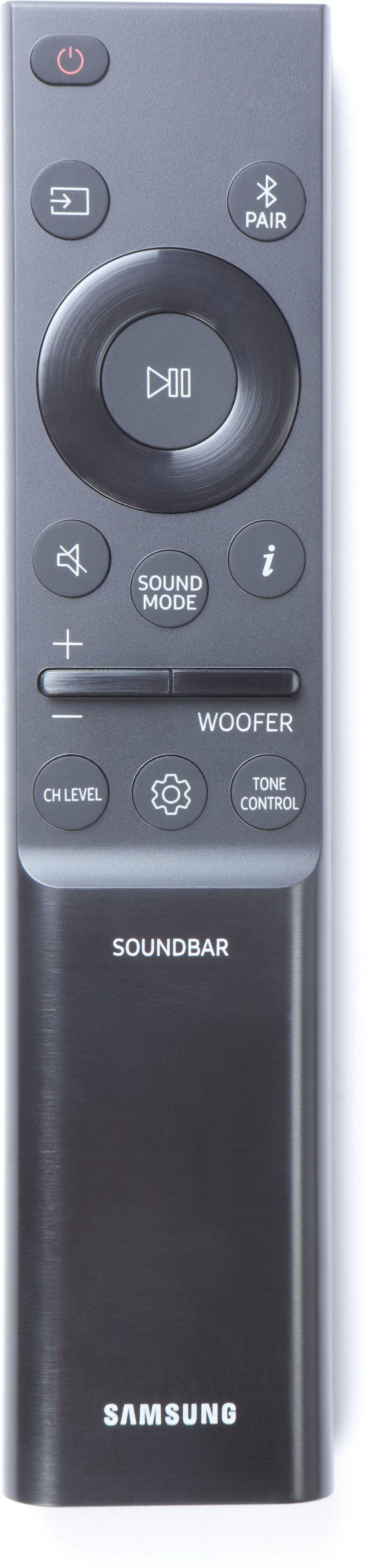
Setup is genuinely plug-and-play. Connect the HDMI cable, let the subwoofer pair automatically, and you're ready to go. Samsung TV owners get the added benefit of being able to control the soundbar with their TV remote, reducing remote clutter.
The Sennheiser offers a much more comprehensive feature set, but with corresponding complexity. Beyond the basic connections, you get WiFi, Apple AirPlay 2, Google Chromecast built-in, Spotify Connect, and TIDAL Connect. This makes it as much a music streaming device as a TV audio enhancer.
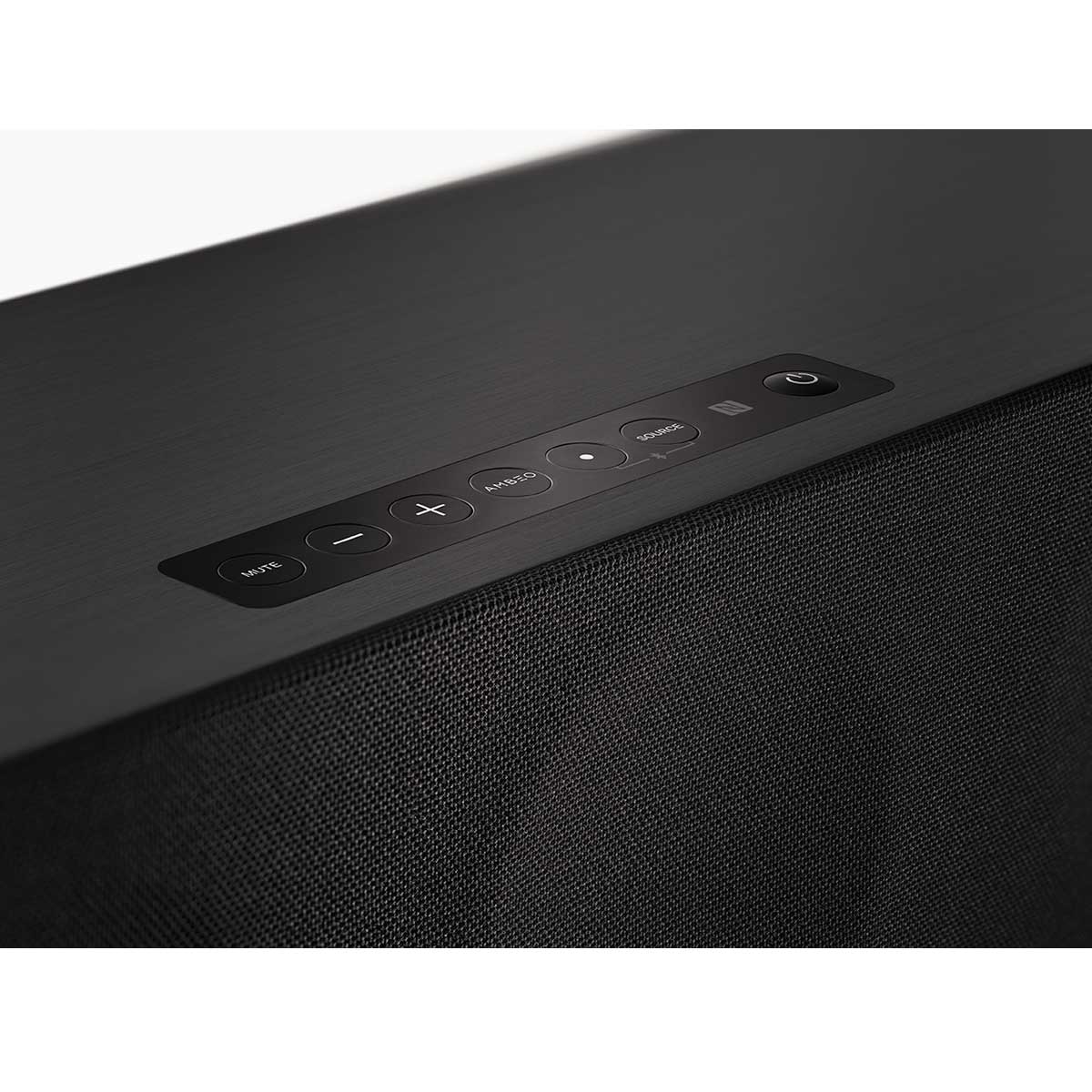
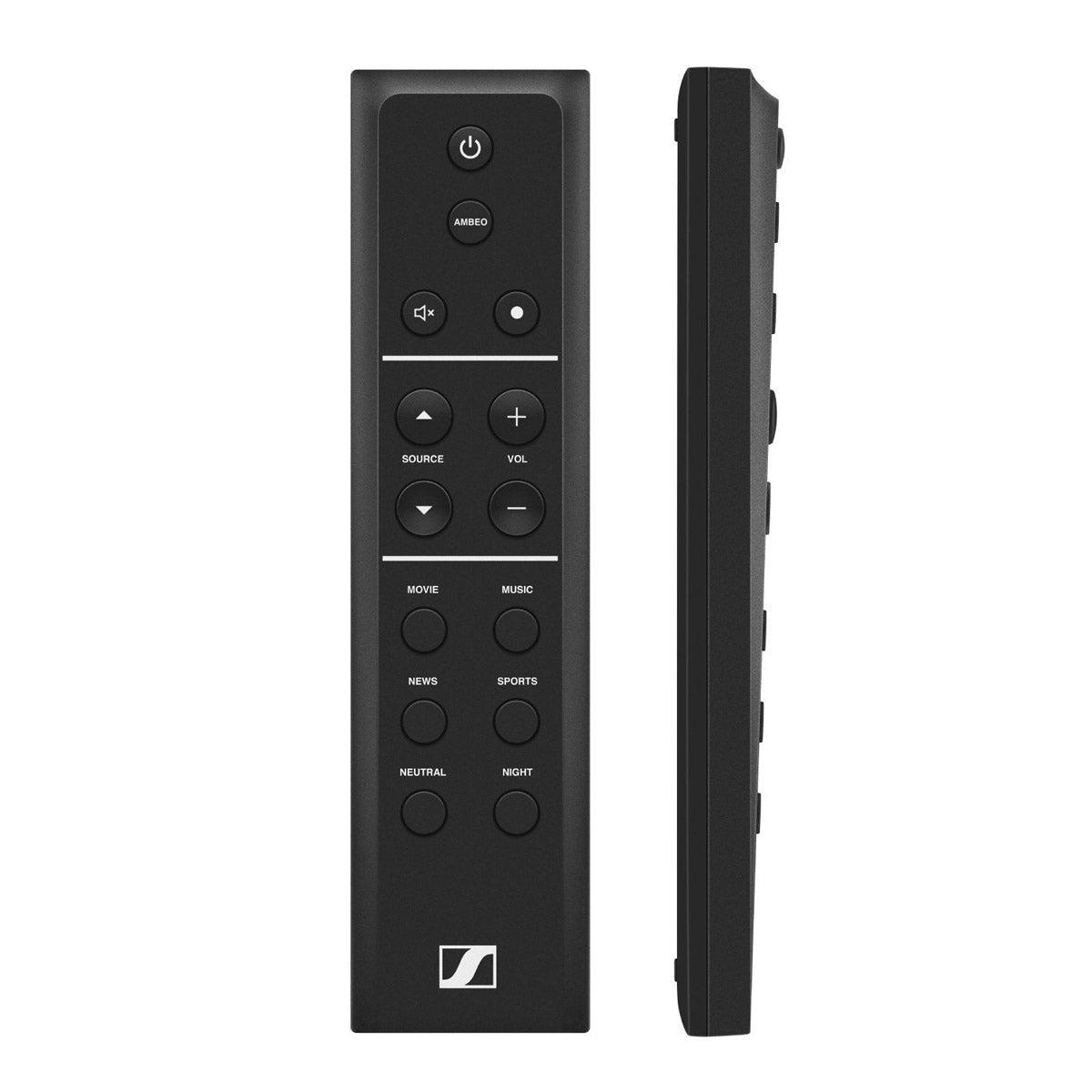
The Smart Control app provides extensive customization options, including detailed EQ controls and multiple AMBEO processing modes. Voice control works through Alexa, Google Assistant, or Apple HomeKit. It's impressively capable, but it's also a lot more to learn and configure.
The Samsung's compact size (just under 34 inches wide) means it'll fit on most TV stands without dominating the space. The wireless subwoofer can be placed anywhere within reasonable range, giving you flexibility in room layout. Most users report the setup process taking less than 10 minutes.
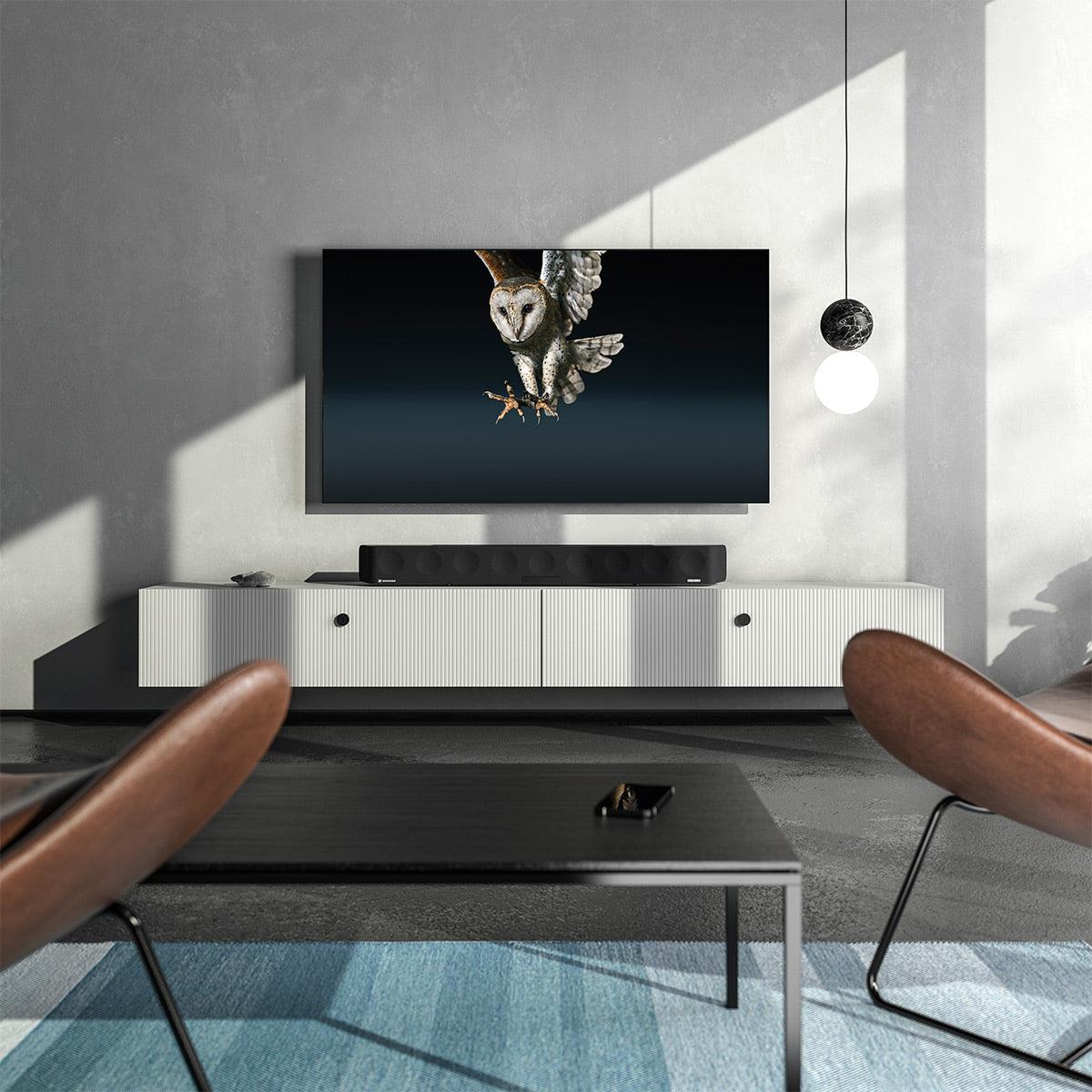
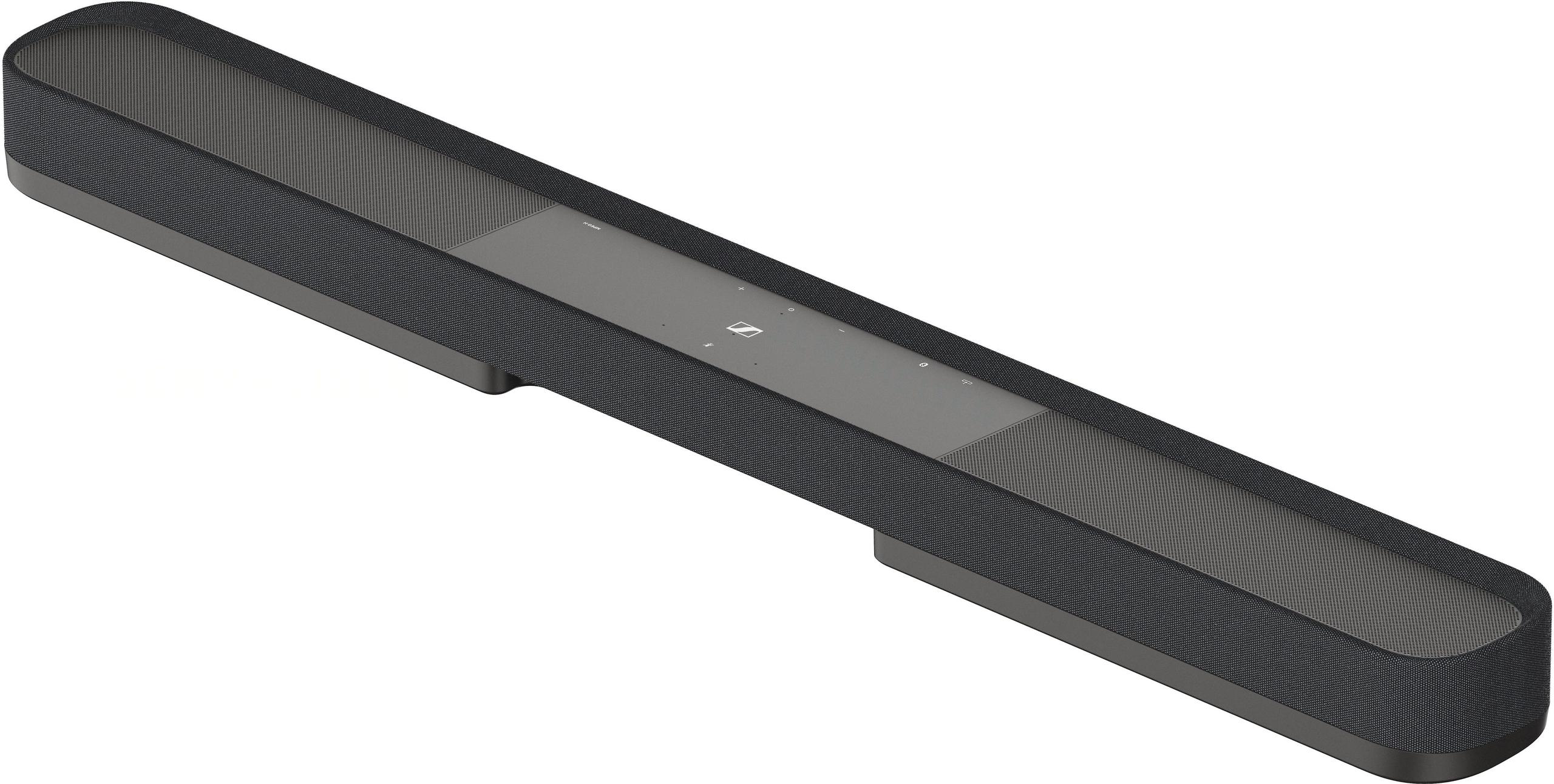
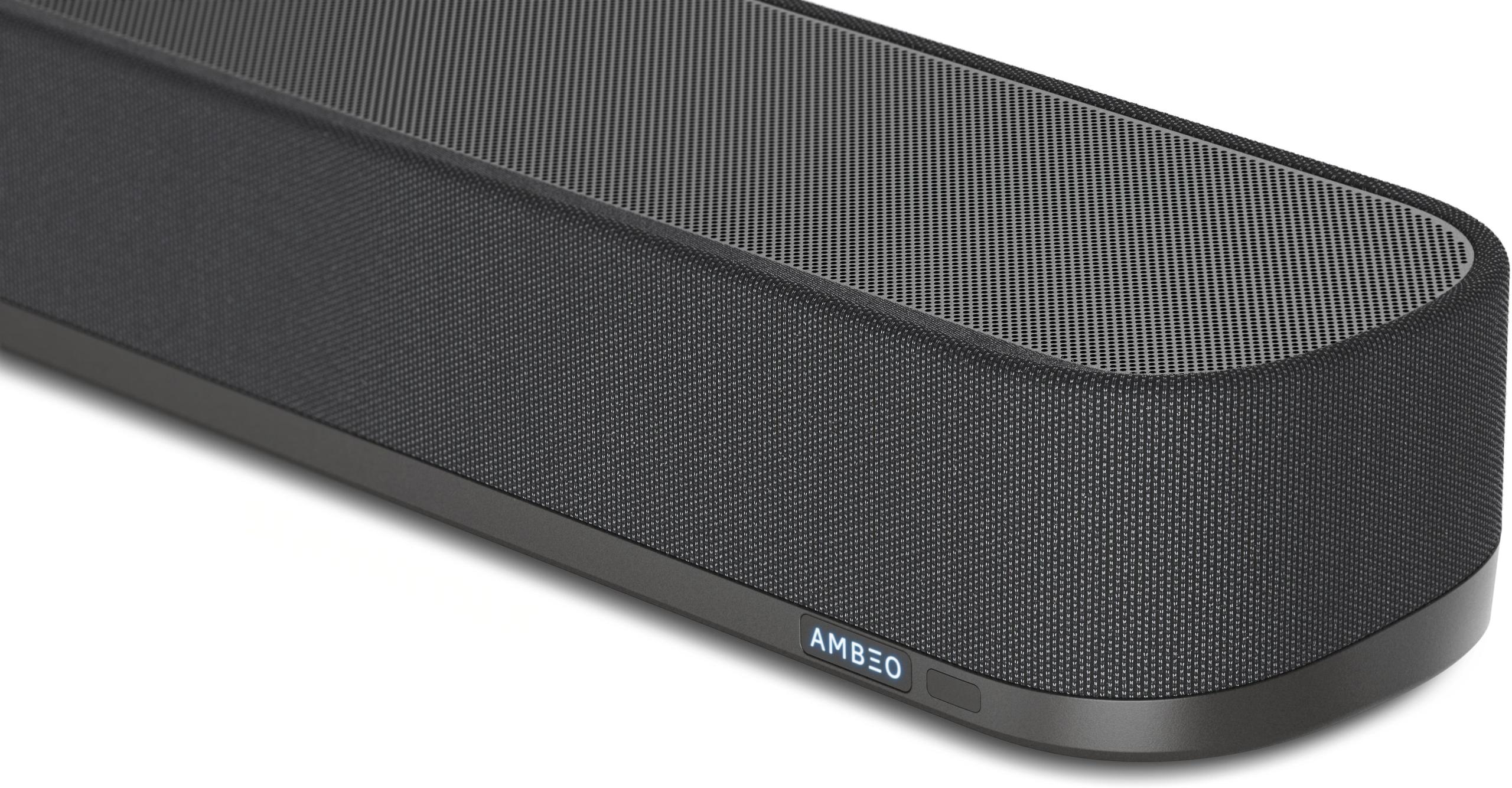
The Sennheiser is a different beast entirely. At nearly 50 inches wide and weighing over 40 pounds, it has a significant physical presence. But that size serves a purpose – those 13 drivers need space to work effectively. The build quality is immediately apparent, with premium materials and attention to detail that justifies the price.
Room calibration is more involved but crucial for optimal performance. The soundbar needs to analyze your space, which takes several minutes and requires you to sit still while it runs test tones. But users consistently report that the calibration process makes a noticeable difference in performance, especially for the surround effects.
For dedicated home theater setups, the choice becomes more clear-cut. The Samsung HW-B550D works best as part of a casual viewing setup where convenience and value matter more than ultimate performance. It's perfect for family rooms, bedrooms, or situations where you watch a variety of content and just want everything to sound better than TV speakers.
The Sennheiser AMBEO is designed for people who take their home theater seriously. It supports all the latest audio formats including Dolby Atmos, DTS:X, and MPEG-H, ensuring compatibility with premium streaming services and 4K Blu-rays. The room calibration and advanced processing make it genuinely capable of serving as the centerpiece of a high-end audio setup.
However, room size matters significantly with the Sennheiser. In smaller spaces, its capabilities might be wasted, and the size could be overwhelming. It really shines in medium to large rooms where it has space to create its acoustic magic.
After spending time with both approaches to soundbar design, here's how I'd recommend making the decision:
Choose the Samsung HW-B550D if you're primarily focused on solving TV audio problems without spending a lot of money. It excels at dialogue clarity, provides adequate bass, and offers enough surround effects to make movies more engaging. The setup is simple, and it works well for the vast majority of content people actually watch.
Go with the Sennheiser AMBEO if audio quality is genuinely important to you and you have the budget and room to take advantage of its capabilities. It's not just better than the Samsung – it's operating in a completely different category. The immersive surround effects, studio-quality audio reproduction, and comprehensive streaming features make it a legitimate centerpiece for a high-end home theater.
The price difference isn't just about better components – it represents fundamentally different philosophies about what a soundbar should accomplish. Both succeed at their intended goals, but those goals are worlds apart. Choose based on your budget, your room, and how much audio quality actually matters to your daily viewing experience.
| Samsung HW-B550D 3.1 Channel Sound Bar | Sennheiser AMBEO Soundbar |
|---|---|
| Price - Major factor determining value proposition | |
| $178 (exceptional value for TV audio upgrade) | $2,000 (premium pricing for flagship performance) |
| Channel Configuration - Determines surround sound capability | |
| 3.1 channels (soundbar + wireless subwoofer) | Virtual 5.1.4 channels (no external subwoofer needed) |
| Audio Formats - Compatibility with premium streaming content | |
| Dolby Digital, DTS (no Atmos support) | Dolby Atmos, DTS:X, MPEG-H (full premium format support) |
| Driver Configuration - Foundation of sound quality | |
| Basic drivers with 5" wireless subwoofer | 13 high-end drivers including 6x 4" woofers, 5x 1" aluminum tweeters |
| Frequency Response - Range of sounds the system can reproduce | |
| Not specified (adequate for TV content) | 30Hz - 20kHz (studio-grade full-range response) |
| Power Output - Determines maximum volume and dynamics | |
| Not specified (sufficient for most rooms) | 500W total (powerful enough for large spaces) |
| Surround Technology - How immersive the experience feels | |
| DTS Virtual:X (simulated surround effects) | Advanced beam-forming with room calibration (convincing 3D audio) |
| Connectivity Options - How you can connect and stream content | |
| HDMI ARC, Optical, Bluetooth | WiFi, HDMI eARC, AirPlay 2, Chromecast, Spotify/TIDAL Connect |
| Size and Weight - Impact on room placement and aesthetics | |
| 34" wide, 4.4 lbs (fits most TV stands) | 50" wide, 40.8 lbs (requires substantial surface, premium build) |
| Setup Complexity - Time and effort required for optimal performance | |
| Plug-and-play (under 10 minutes) | Room calibration required (20+ minutes for best results) |
| Best Use Case - Who should consider each option | |
| TV dialogue improvement and casual viewing | Dedicated home theater and audiophile applications |
The Samsung HW-B550D ($178) offers exceptional value for basic TV audio improvement, making it perfect for budget-conscious buyers who want clearer dialogue and some bass enhancement. The Sennheiser AMBEO Soundbar ($2,000) provides premium audio quality and advanced features that justify its higher price for serious home theater enthusiasts and audiophiles.
The core difference is approach and target audience. The Samsung HW-B550D focuses on solving basic TV audio problems with a simple 3.1-channel setup, while the Sennheiser AMBEO uses advanced virtualization technology with 13 drivers to create an immersive 3D audio experience that rivals traditional surround sound systems.
No, only the Sennheiser AMBEO Soundbar supports Dolby Atmos, DTS:X, and other premium audio formats. The Samsung HW-B550D supports Dolby Digital and DTS but lacks Atmos capability, which limits its compatibility with premium streaming content and 4K Blu-rays.
Both excel at dialogue improvement, but in different ways. The Samsung HW-B550D has a dedicated center channel and Voice Enhancement mode specifically designed to boost speech clarity. The Sennheiser AMBEO provides more natural dialogue reproduction through superior driver quality, though without artificial enhancement features.
The Samsung HW-B550D is compact at 34 inches wide and fits most TV stands easily. The Sennheiser AMBEO Soundbar is much larger at nearly 50 inches wide and weighs over 40 pounds, requiring a substantial surface and working best in medium to large rooms where it can utilize room reflections effectively.
The Samsung HW-B550D offers true plug-and-play setup with automatic subwoofer pairing, typically taking under 10 minutes. The Sennheiser AMBEO requires a more complex room calibration process that takes 20+ minutes but optimizes performance for your specific space and acoustic environment.
The Samsung HW-B550D includes a wireless subwoofer as part of the package. The Sennheiser AMBEO Soundbar has built-in woofers that provide deep bass without requiring a separate subwoofer, though an optional wireless sub is available for larger rooms.
The Sennheiser AMBEO significantly outperforms the Samsung for music, offering studio-grade sound quality, high-resolution audio support, and multiple streaming options including AirPlay 2 and Spotify Connect. The Samsung HW-B550D handles music adequately but is primarily designed for TV audio enhancement.
The Samsung HW-B550D uses DTS Virtual:X to create simulated surround effects that add width but feel somewhat artificial. The Sennheiser AMBEO Soundbar employs advanced beam-forming technology to bounce sounds off walls and ceiling, creating convincing 3D audio effects that can genuinely place sounds around and above you.
Both offer gaming benefits, but differently. The Samsung HW-B550D includes a dedicated Game Mode with cross-talk cancellation for better directional audio cues. The Sennheiser AMBEO provides superior spatial audio that can enhance gaming immersion, especially for games that support advanced audio formats.
The Samsung HW-B550D provides essential connections including HDMI ARC, optical input, and Bluetooth for basic streaming needs. The Sennheiser AMBEO Soundbar offers comprehensive connectivity with WiFi, HDMI eARC, Apple AirPlay 2, Google Chromecast, and direct streaming service integration for maximum flexibility.
Choose the Samsung HW-B550D if you want a simple, affordable upgrade for casual viewing and clear dialogue. Select the Sennheiser AMBEO Soundbar if you're building a dedicated home theater, prioritize audio quality, have the budget for premium performance, and want support for the latest audio formats and streaming capabilities.
We've done our best to create useful and informative comparisons to help you decide what product to buy. Our research uses advanced automated methods to create this comparison and perfection is not possible - please contact us for corrections or questions. These are the sites we've researched in the creation of this article: bestbuy.com - crutchfield.com - avsforum.com - consumerreports.org - abt.com - pcrichard.com - samsung.com - samsung.com - rtings.com - samsung.com - jeffsappliance.com - bestbuy.com - rtings.com - techradar.com - audioxpress.com - whathifi.com - upscaleaudio.com - soundstagesimplifi.com - global.sennheiser-hearing.com - sennheiser-hearing.com - audioadvice.com - abt.com - moon-audio.com

Privacy Policy
Terms and Conditions - Affiliate Policy
Home Security
© Copyright 2008-2026.
11816 Inwood Rd #1211, Dallas, TX 75244