



If you've ever watched a movie where helicopters seemed to fly right over your head, or felt the rumble of an explosion shake your living room, you know the difference good audio can make. The soundbar market has come a long way from those basic TV speaker upgrades, and today we're comparing two very different approaches to creating that cinema-at-home experience: the Hisense HT Saturn HTSATURN and the Sennheiser AMBEO Soundbar.
These aren't just bigger speakers for your TV – they're sophisticated audio systems that use completely different philosophies to surround you with sound. The Hisense system, released in 2025, takes the "more speakers, better sound" approach with multiple wireless components scattered around your room. Meanwhile, the Sennheiser AMBEO, which has been refined since its original 2019 launch with significant updates through 2024, tries to do everything from one sleek unit using advanced audio processing wizardry.
Before diving into specifics, let's talk about what these systems are trying to accomplish. Traditional home theater setups require running speaker wires across your room and dealing with complex AV receivers – those black boxes with dozens of inputs that seem designed to confuse rather than help. Modern soundbars aim to recreate that immersive surround sound experience without the hassle.
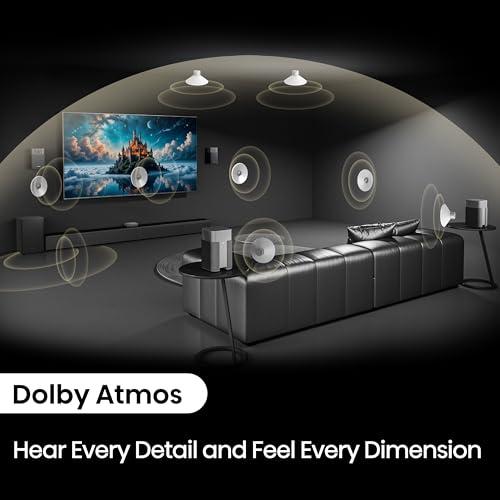
The challenge is physics. True surround sound works by placing different audio elements in speakers positioned around your room. When a car drives across the screen, you hear it move from your left speaker to your right speaker. When something explodes above you in a movie, dedicated height speakers bounce sound off your ceiling to create that overhead effect – this is what Dolby Atmos (a technology that places sounds in 3D space rather than just left-right-center) is all about.
But what if you can't or don't want multiple speakers? That's where virtual surround processing comes in. Using psychoacoustics – basically tricks your brain uses to determine where sounds come from – advanced soundbars can make you think sounds are coming from places where no speakers exist. It's impressive technology, but there are always trade-offs.
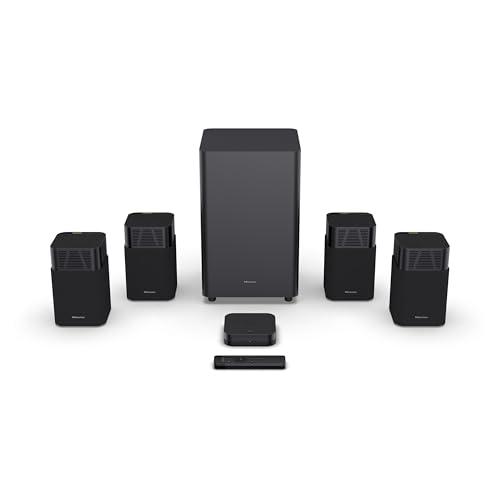
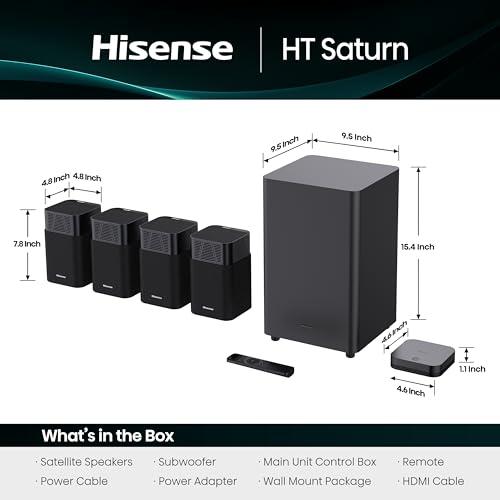
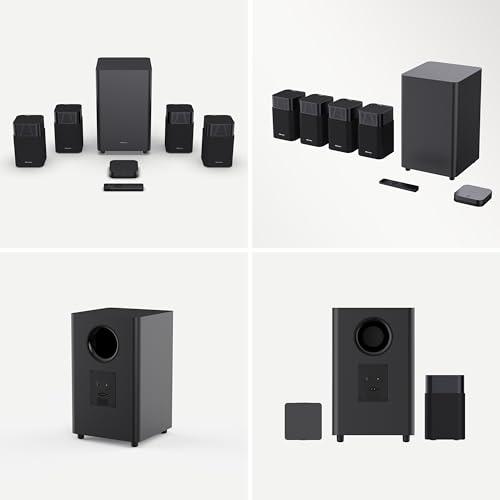
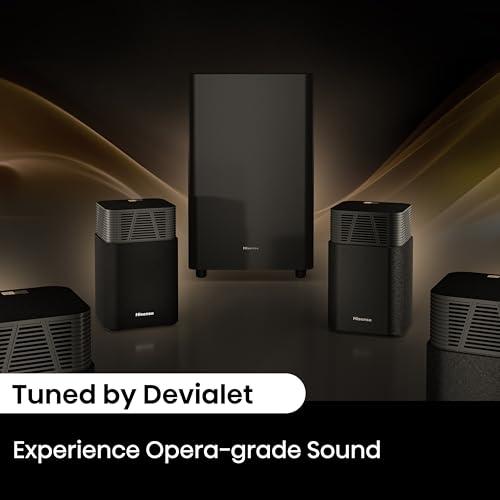
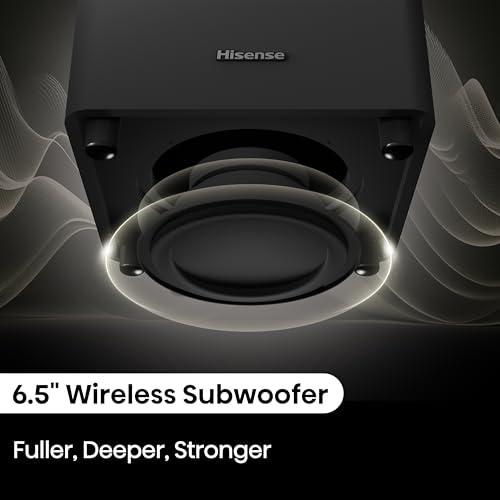
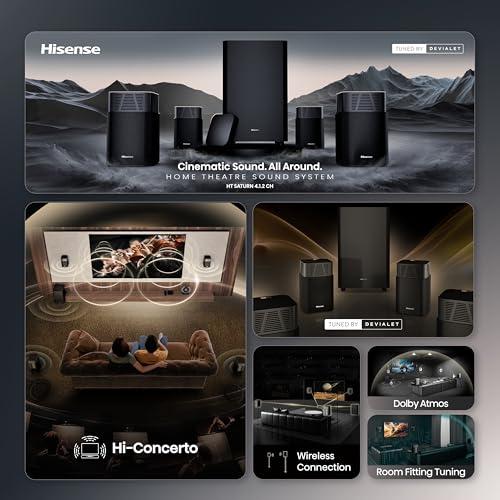
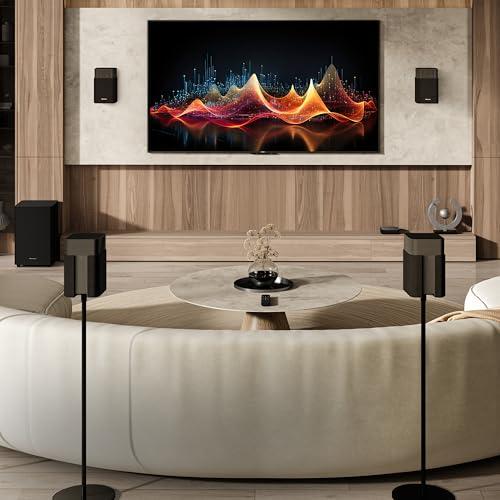
The Hisense HT Saturn takes a refreshingly direct approach to the surround sound challenge: if you need speakers around your room, why not just put speakers around your room? Released in 2025, this system includes four compact satellite speakers that connect wirelessly to a central control unit, plus a dedicated 6.5-inch subwoofer for bass.
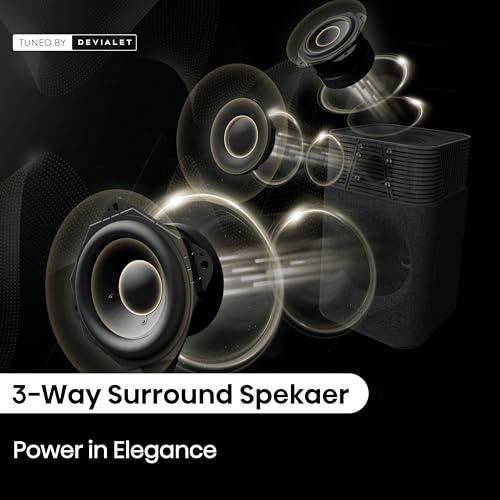
Each satellite speaker is what audio engineers call a "3-way design," meaning it has three different types of drivers: a full-range driver for most sounds, a tweeter for high frequencies like cymbals and dialogue clarity, and an up-firing driver that bounces sound off your ceiling for height effects. Having 13 total speakers across all components means the HT Saturn can create genuine directional audio – when something moves behind you in a movie, it's actually coming from speakers behind you.
The "Tuned by Devialet" certification is particularly interesting. Devialet is a French company known for extremely high-end audio equipment that costs more than most people's cars. Their acoustic engineering expertise focuses on minimizing distortion and maintaining tonal balance across all frequencies. For a mass-market system to carry this certification means the tuning has been carefully calibrated to meet Devialet's exacting standards.
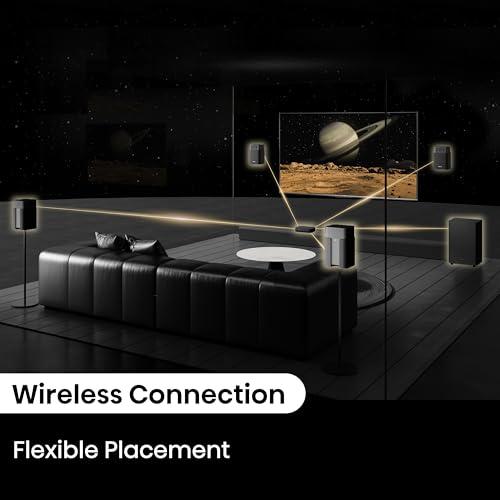
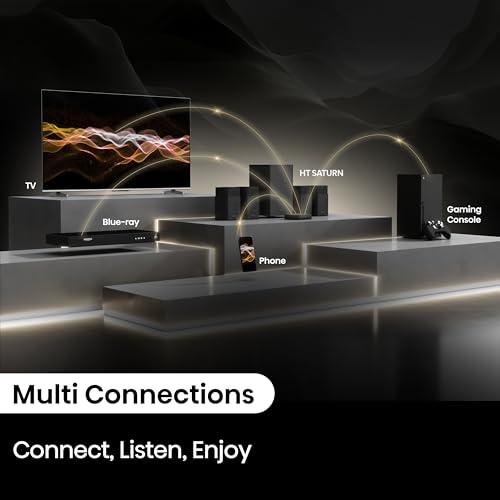
What makes this system unique is its tri-band wireless technology, operating on 2.4GHz, 5.2GHz, and 5.8GHz frequencies simultaneously. This matters because your home is probably flooded with wireless signals from phones, laptops, smart devices, and neighbors' WiFi networks. Using three different frequency bands means if one gets crowded with interference, the system can automatically switch to a cleaner channel, maintaining stable audio without dropouts or delays.
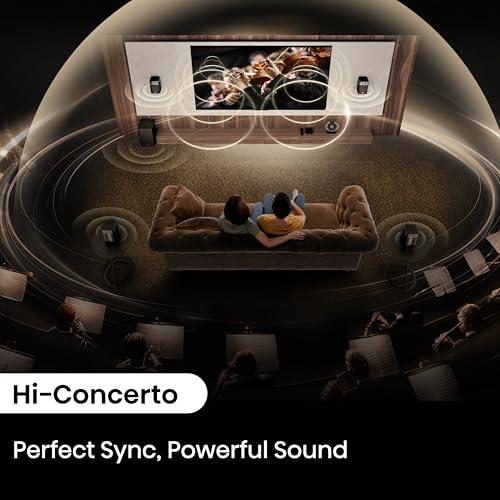
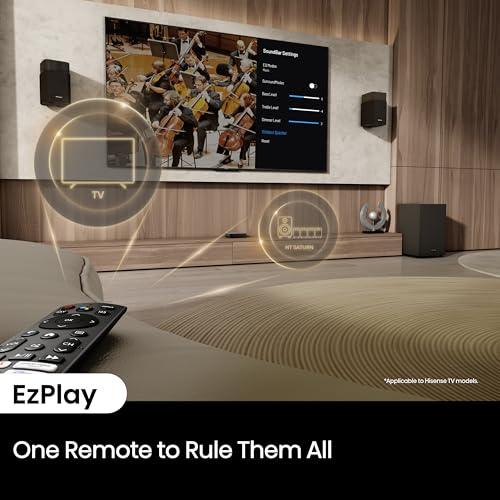
The standout feature, however, is Hi-Concerto technology, which works exclusively with newer Hisense TVs. When enabled, the TV's built-in speakers actually become part of the surround system, working in coordination with the satellite speakers to create what Hisense calls a 7.1.2-channel experience. It's like having additional front speakers without buying additional speakers – clever engineering that extends the soundstage wider than the physical components alone could achieve.
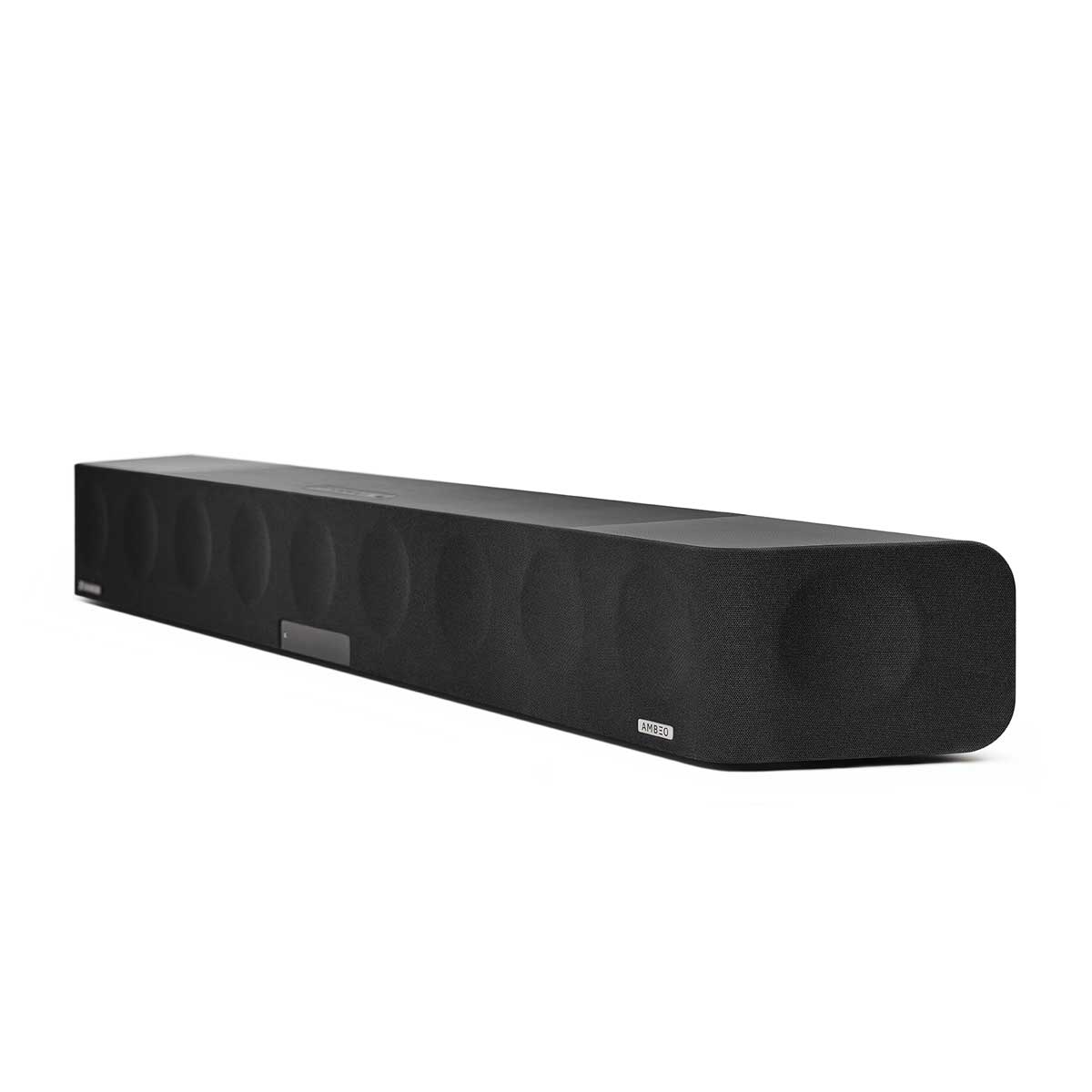
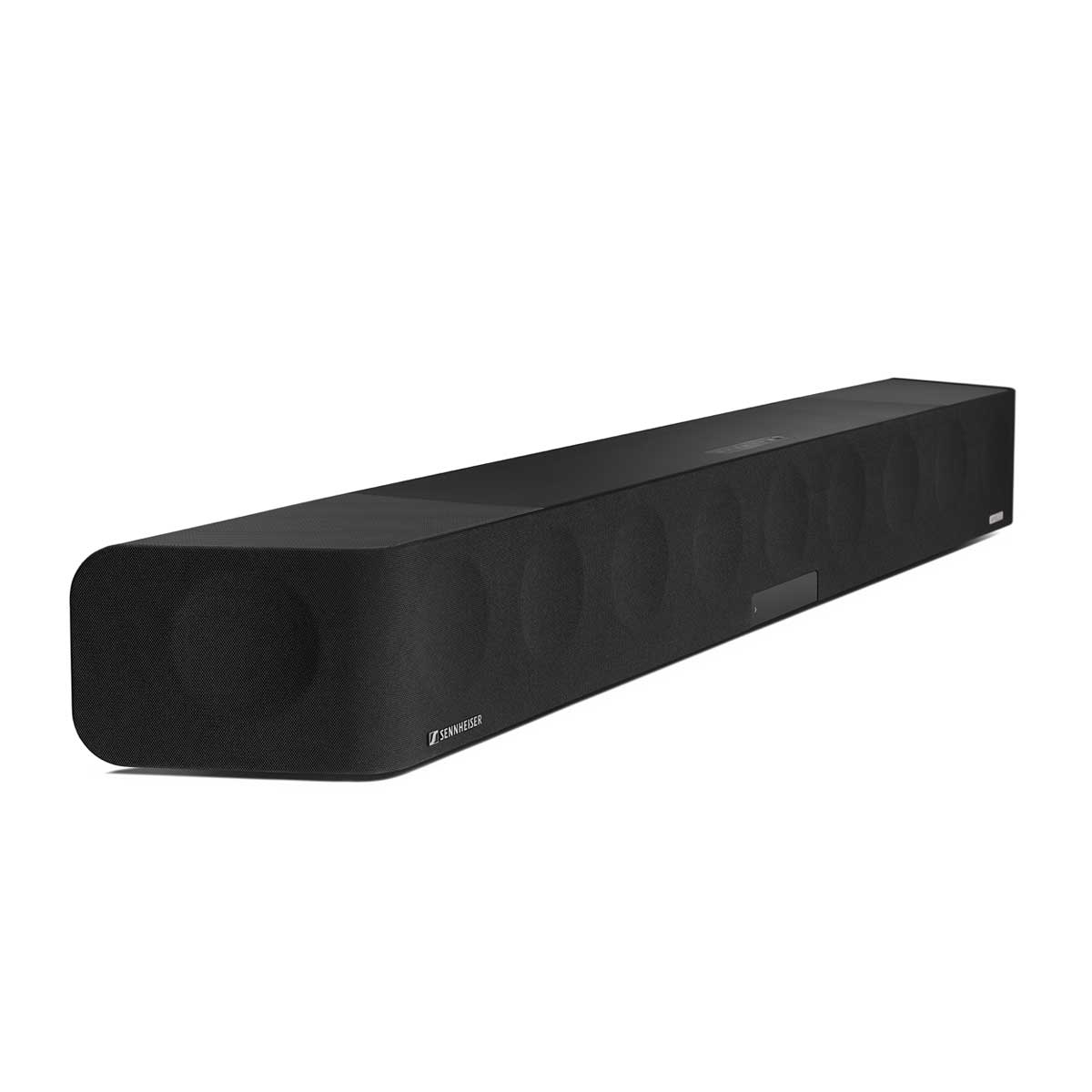
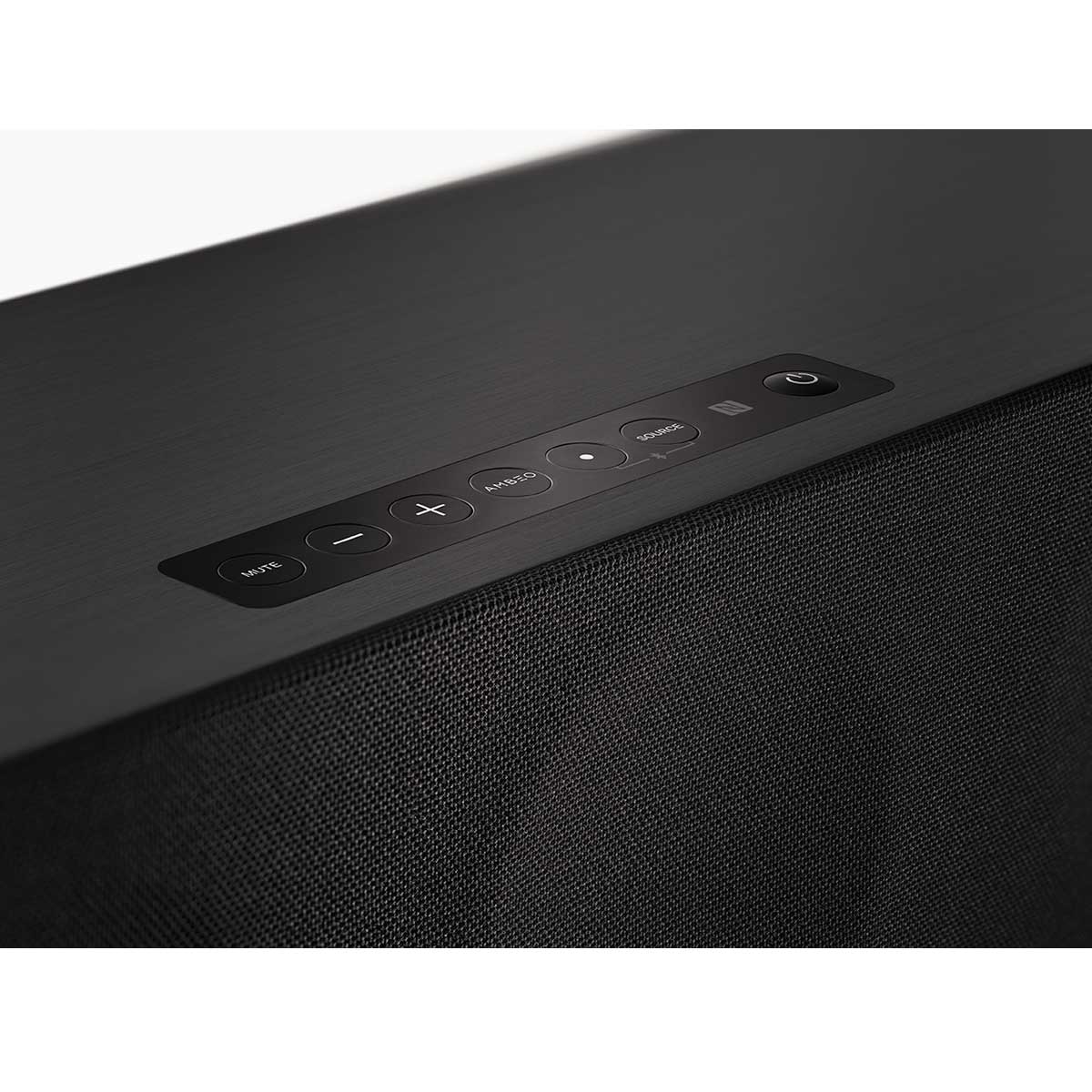
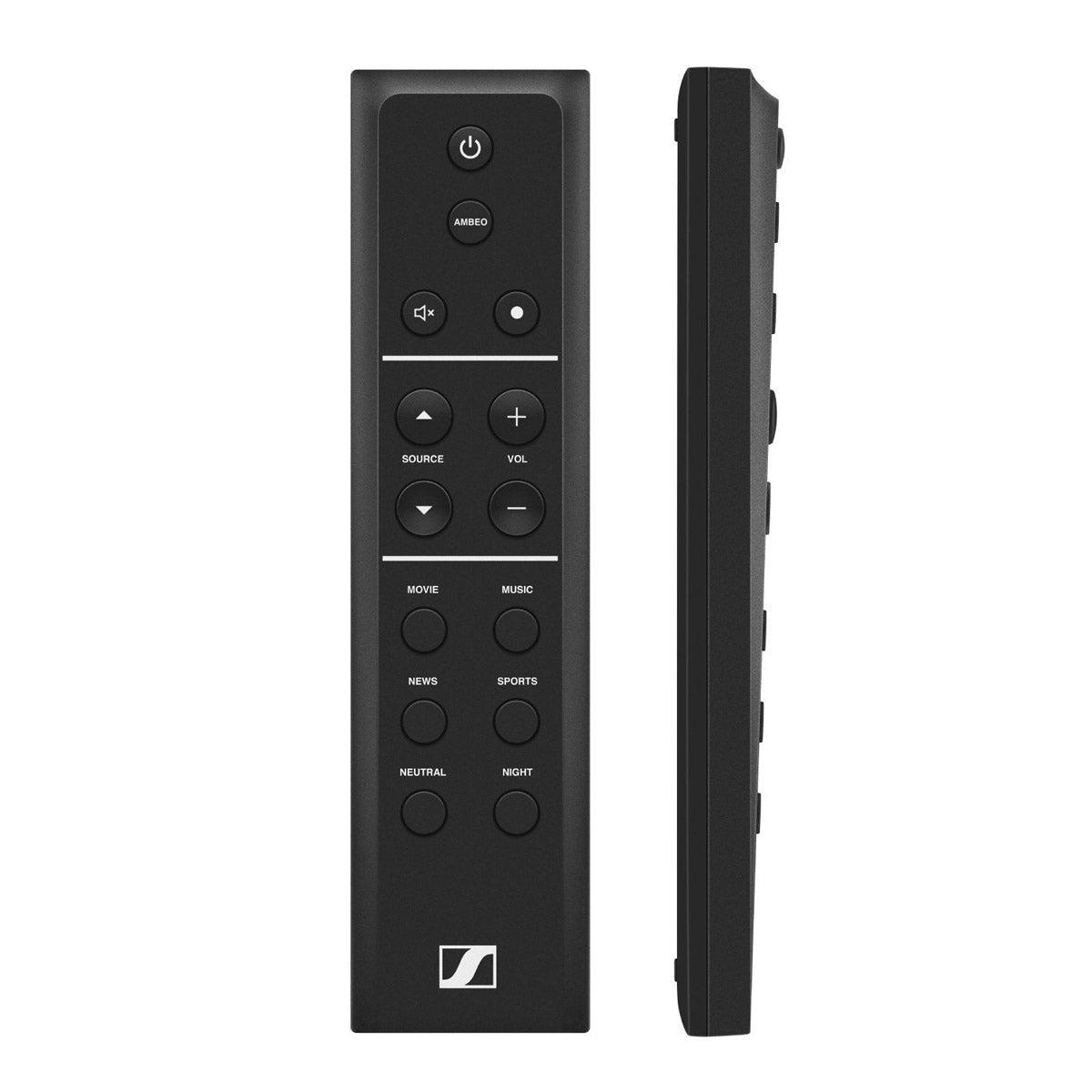
The Sennheiser AMBEO Soundbar represents the opposite philosophy: instead of placing speakers around your room, use advanced processing to convince your brain that speakers exist where they don't. This approach has been refined considerably since the original AMBEO's 2019 debut, with the current version incorporating years of improvements in both hardware and software.
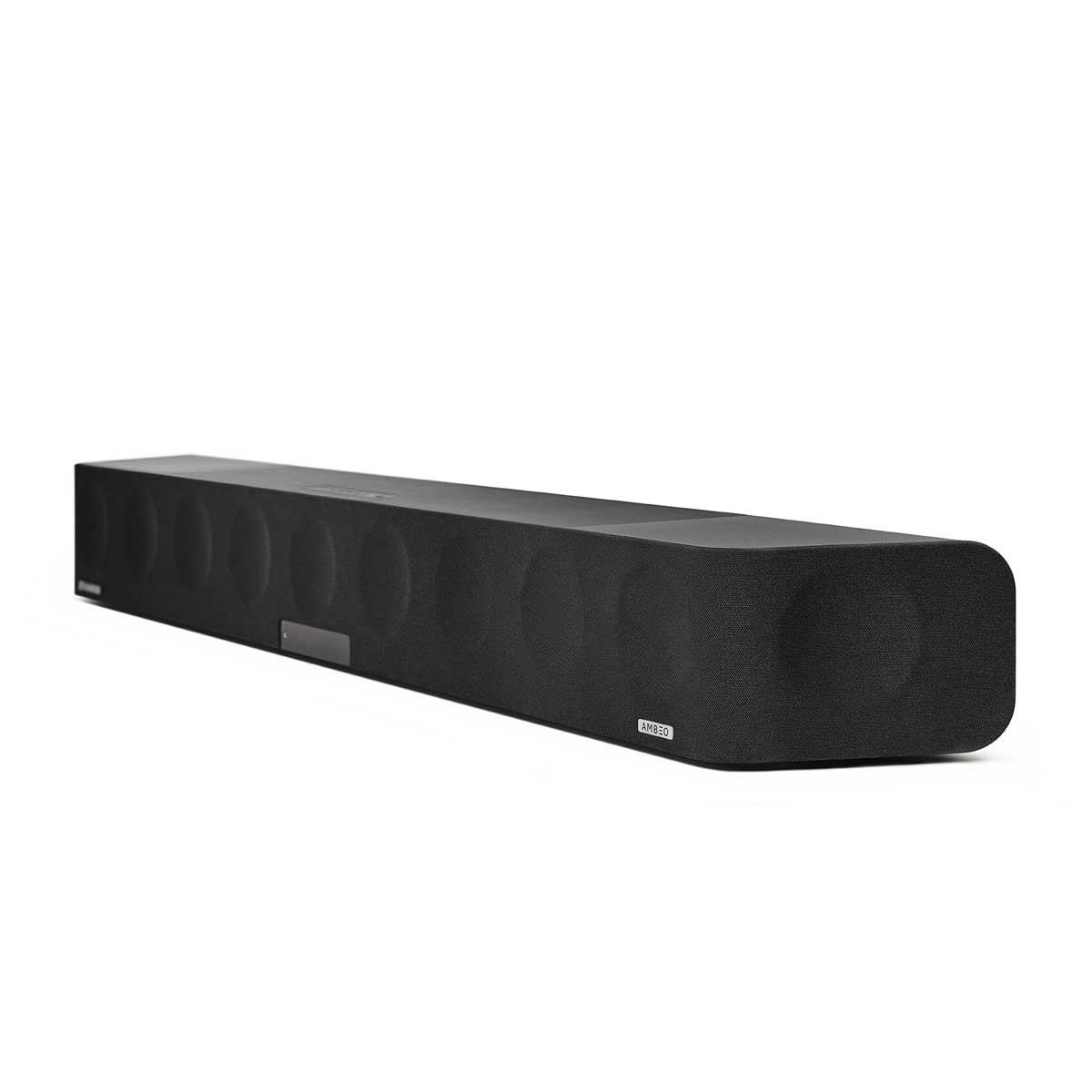
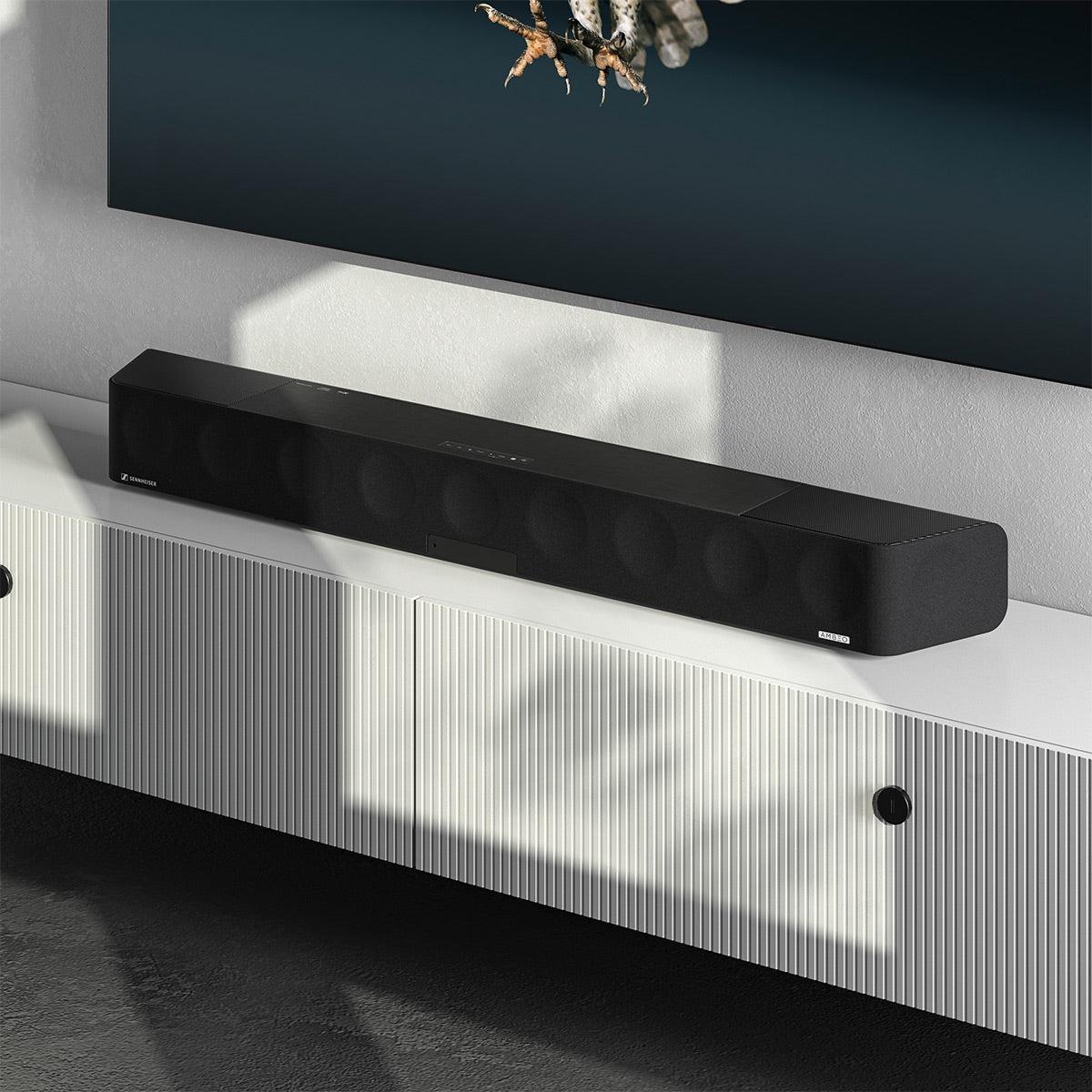
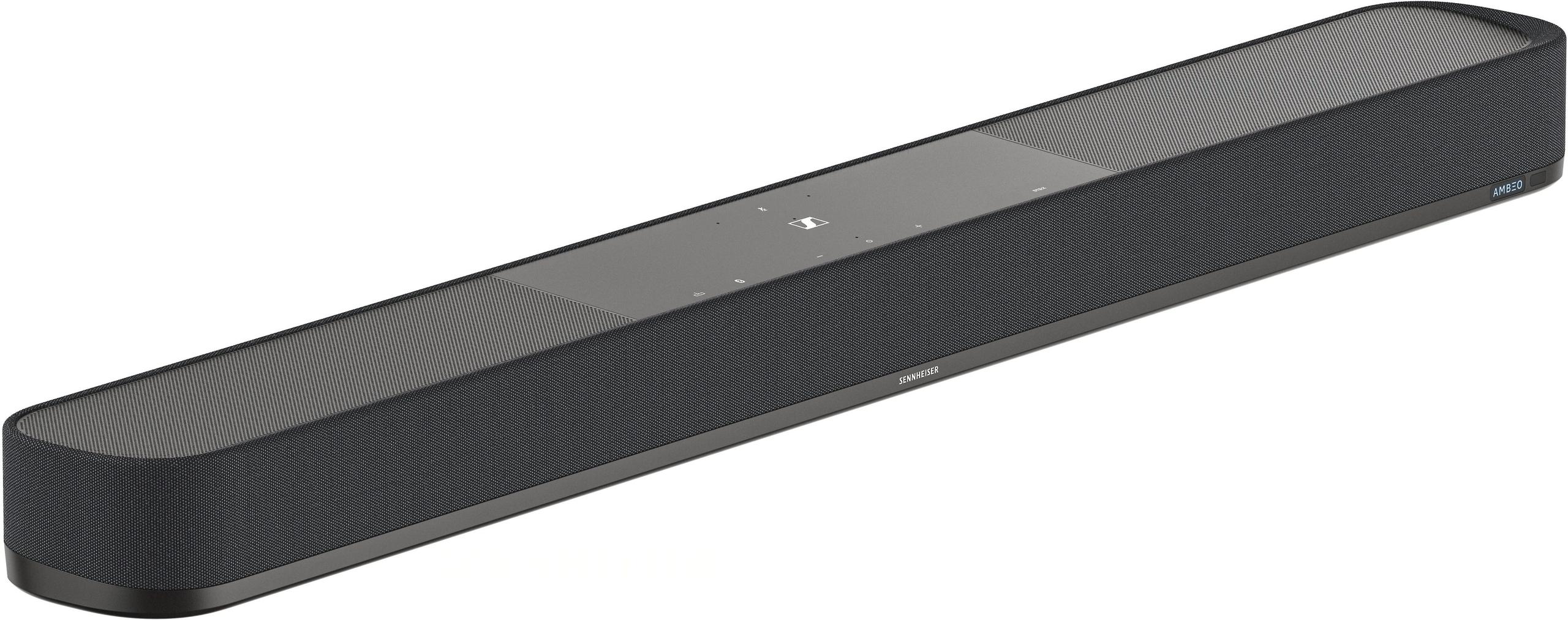
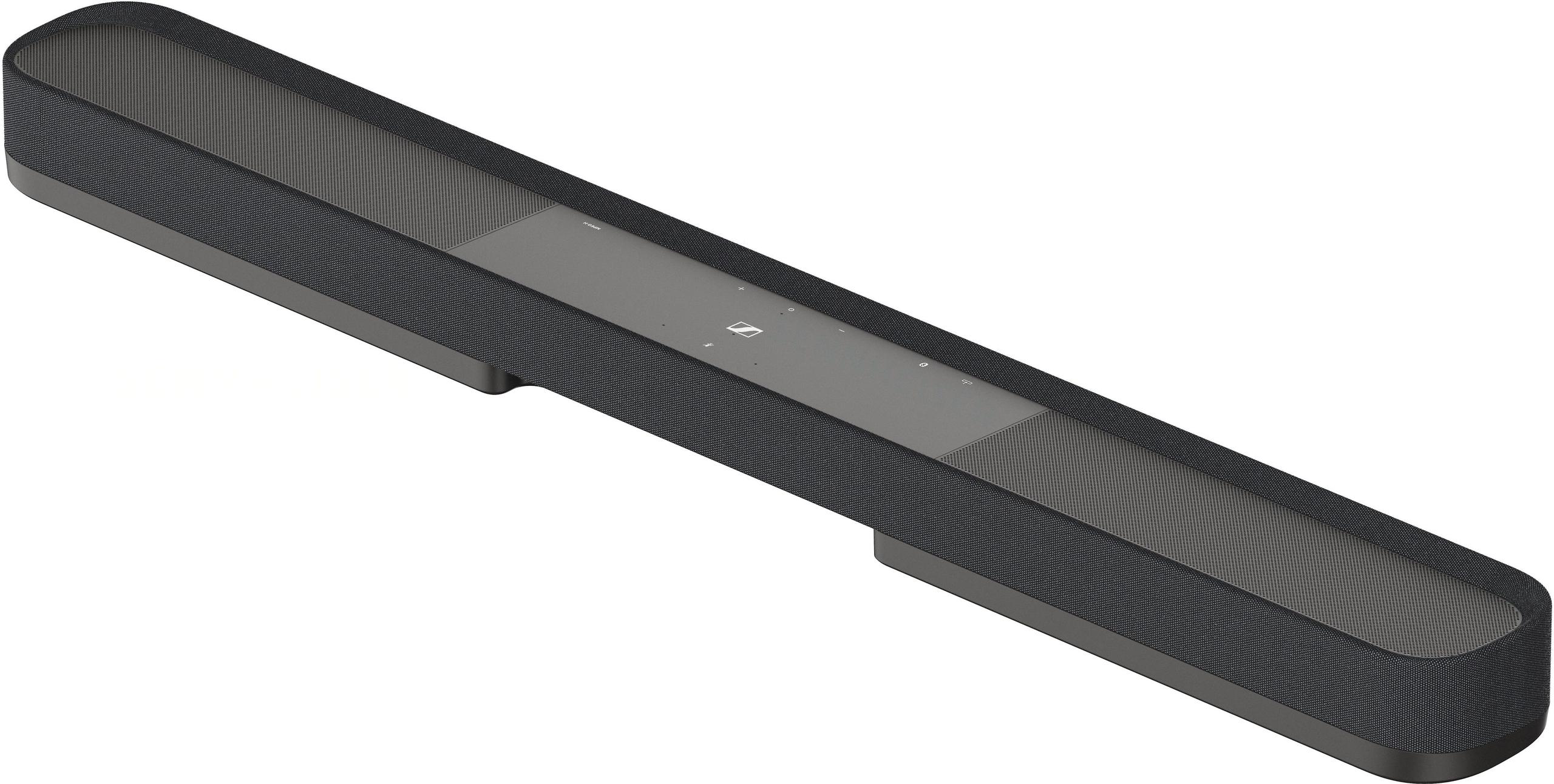
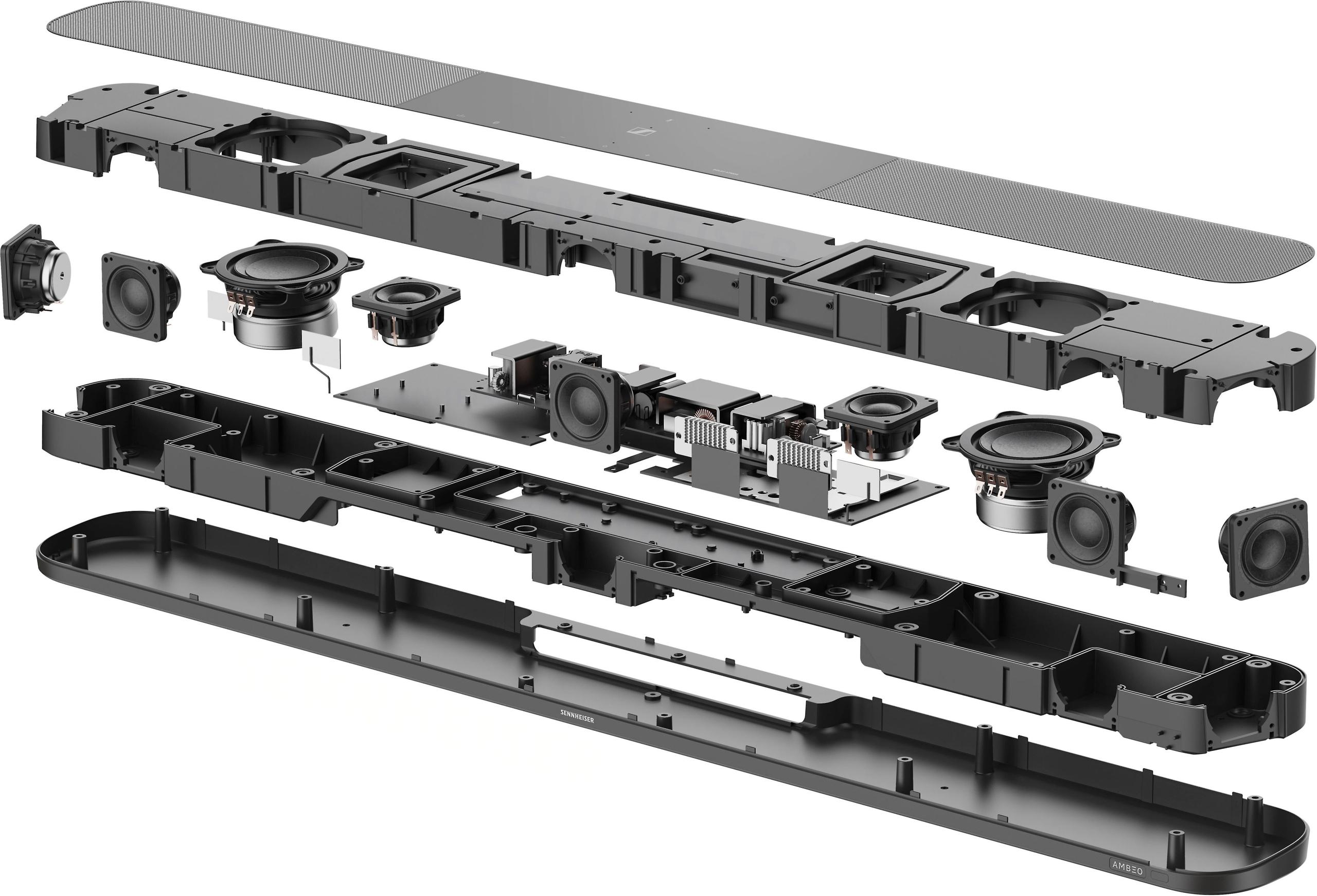
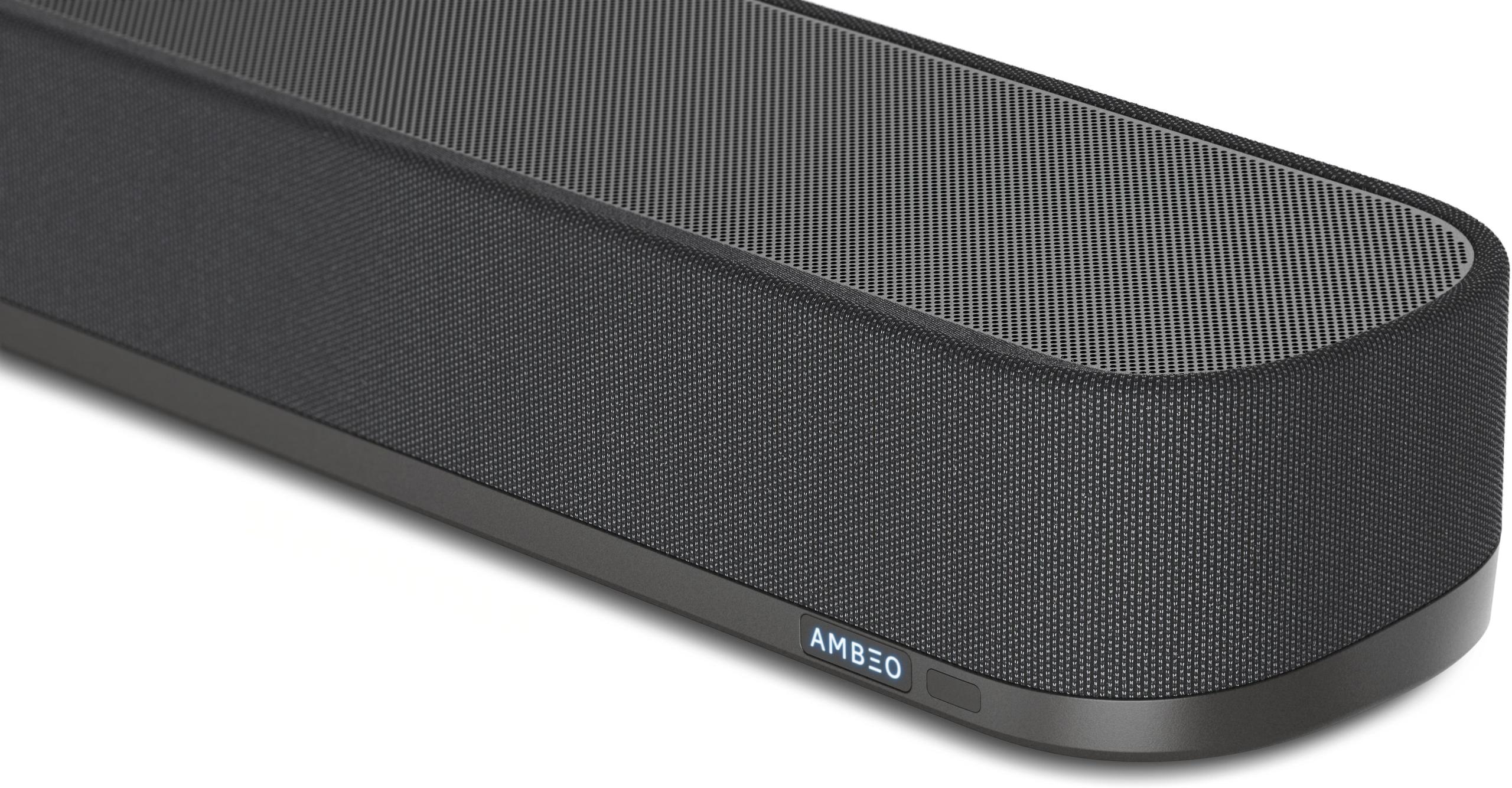
At nearly four feet wide, the AMBEO Soundbar packs 13 drivers into its single chassis, including multiple up-firing speakers that bounce sound off your ceiling. The magic happens in the processing – Sennheiser's AMBEO 3D technology analyzes your room's acoustic properties and adjusts how sounds are directed from each driver to create the illusion of surround speakers.
This virtualization technology works surprisingly well, particularly for content mixed in Dolby Atmos or DTS:X (another 3D audio format). The up-firing drivers create convincing overhead effects, while carefully timed delays and frequency adjustments trick your brain into perceiving sounds coming from beside and even behind you. It's not magic – it's applied psychoacoustics, using your brain's natural sound processing against itself in the best possible way.
The included room calibration microphone is crucial to this process. During setup, the soundbar plays test tones while the microphone measures how your room responds. Hardwood floors, carpet, furniture placement, wall materials – everything affects how sound bounces around your space. The AMBEO uses this acoustic fingerprint to customize its processing, ensuring optimal performance whether you're in a small apartment or a large living room.
What's impressive about Sennheiser's approach is how it handles different types of content. The system automatically detects whether you're watching a movie, listening to music, or playing games, and adjusts its processing accordingly. Music gets a more natural, stereo-focused presentation, while movies get the full surround treatment with enhanced dialogue clarity.
This is where the fundamental difference between these approaches becomes clear. The HT Saturn delivers what audiophiles call "true discrete surround" – each channel is handled by physically separate speakers. When something moves from front to back in a movie, you're hearing it move from actual front speakers to actual rear speakers. There's no processing trickery involved, just sound coming from where it's supposed to come from.
Our research into user experiences shows that this authenticity is immediately noticeable in action movies and games. The feeling of being surrounded by audio is more convincing because you actually are surrounded by speakers. Height effects from Dolby Atmos content work particularly well since each satellite has its own up-firing driver, creating multiple reflection points off your ceiling.
The Sennheiser AMBEO, despite its sophisticated processing, faces inherent limitations. Sounds that should come from directly behind you are created through psychoacoustic manipulation rather than actual rear speakers. While this works surprisingly well – users consistently report being impressed by the effect – it's not quite the same as discrete speakers. The trade-off is convenience versus authenticity.
Here's where having dedicated components pays off for the Hisense system. The wireless 6.5-inch subwoofer can be positioned anywhere in your room to optimize bass response. Bass frequencies are omnidirectional, meaning you can't tell where they're coming from, so placement flexibility is crucial for even, room-filling low-end response.
The AMBEO Soundbar, despite extending down to 30Hz (impressive for any soundbar), is limited by physics. All its bass drivers are contained within the soundbar itself, meaning you can't optimize their placement for your room's acoustics. While the bass output is substantial for a single unit, it can't match the room-shaking impact of a properly positioned dedicated subwoofer.
Users consistently report that the HT Saturn delivers more satisfying bass for movie watching, particularly in larger rooms. The ability to place the subwoofer in a corner or along a wall where room acoustics naturally amplify bass response makes a noticeable difference in impact and depth.
This is where things get interesting. Traditional surround systems use a dedicated center channel speaker for dialogue, ensuring voices stay anchored to the screen. The HT Saturn doesn't have a physical center speaker – instead, it creates a "phantom center" by precisely balancing audio between the front left and right satellites.
Thanks to Devialet's tuning expertise, this phantom center is remarkably stable. Users report that dialogue remains clearly positioned at the screen even when moving around the room, which is impressive engineering. However, it's not quite as rock-solid as a dedicated center channel.
The Sennheiser AMBEO includes dedicated center channel drivers within its array, giving it a significant advantage for dialogue clarity. Combined with sophisticated processing that can enhance voice frequencies without affecting other elements, the AMBEO consistently delivers superior dialogue intelligibility, especially in complex soundtracks where voices might otherwise get buried.
While both systems are primarily designed for movies and TV, music performance reveals their different strengths. The HT Saturn benefits from having multiple drivers per channel and Devialet's acoustic expertise. The result is detailed, well-balanced music reproduction with excellent stereo imaging – the ability to perceive instruments positioned across a soundstage.
However, the AMBEO Soundbar has an advantage in driver matching and acoustic coherence. Since all drivers are contained in one carefully designed enclosure, there are no timing mismatches or tonal variations between left and right channels that can sometimes occur with separate speakers. For critical music listening, this coherence is often preferred by audiophiles.
The Hisense HT Saturn requires more initial setup – you need to position six components (control unit, four satellites, and subwoofer) and connect power to each. However, the wireless connectivity eliminates the need to run speaker cables across your room, which is often the most challenging part of traditional surround system installation.
The tri-band wireless connectivity proves its worth during setup. Users report that pairing is typically automatic and stable, even in WiFi-congested environments. The ability to power on the entire system with one remote command and have all components sync automatically is convenient for daily use.
The AMBEO Soundbar is obviously simpler to install – one power connection and one HDMI cable to your TV. However, optimal performance requires running the room calibration routine, which means complete silence in your room while the system plays test tones and measures acoustic response. This process takes several minutes and needs to be repeated if you significantly rearrange your furniture.
The HT Saturn's satellites are compact enough to blend into most rooms without dominating the space. At under 8 inches tall and weighing about 3.5 pounds each, they can sit on shelves, stands, or mount to walls using the included hardware. The flexibility to position them for both acoustic and aesthetic optimization is a significant advantage.
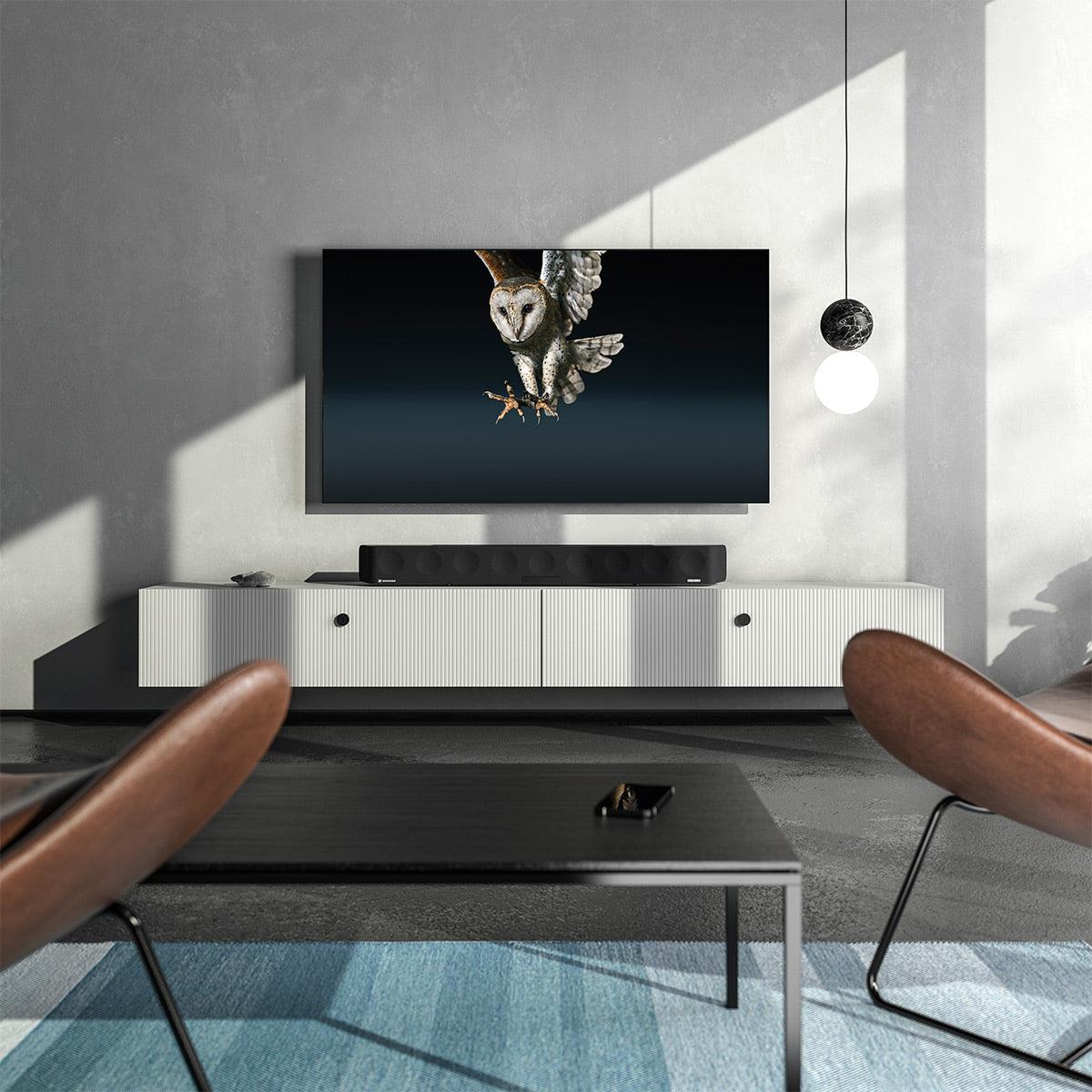
The AMBEO Soundbar, at nearly four feet wide, can be more challenging to integrate. Many TV stands won't accommodate its width, potentially requiring furniture changes or wall mounting. However, once positioned, its single-unit design creates a cleaner, more minimalist appearance that many users prefer.
At the time of writing, the HT Saturn costs significantly less than the AMBEO Soundbar while delivering authentic discrete surround sound. This represents exceptional value for users who want genuine surround performance without the complexity and cost of traditional multi-component systems.
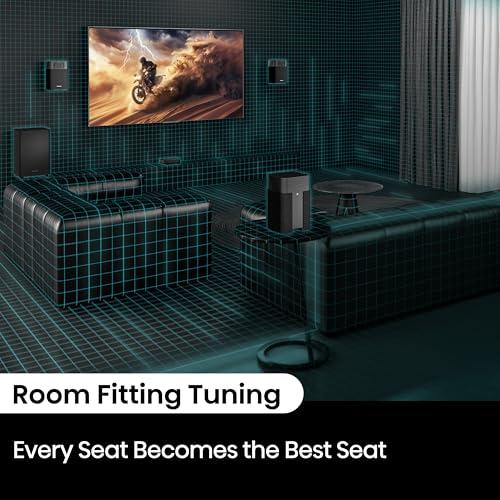
The value proposition becomes even stronger for Hisense TV owners. The Hi-Concerto integration effectively adds the TV's speakers as additional channels, creating a wider soundstage and more immersive experience without additional cost. Room Fitting Tuning further optimizes performance for your specific space, features that simply aren't available with other TV brands.
However, this ecosystem dependence is also the system's primary limitation. Users with non-Hisense TVs lose access to these key features, reducing the value proposition considerably. If you frequently upgrade TVs or prefer keeping your options open, this locked ecosystem might be a dealbreaker.
The AMBEO Soundbar costs considerably more, but justifies its premium pricing through universal compatibility, superior build quality, and advanced processing technology. It works equally well with any TV supporting HDMI eARC, ensuring consistent performance regardless of your display choice.
The convenience factor can't be overstated. For users who want high-quality surround sound but don't want to deal with multiple components, cable management, or complex setup procedures, the AMBEO offers a compelling single-unit solution. The German engineering and premium components also suggest better long-term reliability and support.
Your choice between these systems should be based on several key factors:
Choose the Hisense HT Saturn if:
Choose the Sennheiser AMBEO if:
These systems represent fundamentally different approaches to home theater audio, and both succeed at their respective goals. The HT Saturn proves that you don't need to spend thousands on traditional surround systems to get authentic discrete channel performance, especially if you're already in the Hisense ecosystem. The AMBEO Soundbar demonstrates how sophisticated processing can create convincing surround effects from a single unit, backed by premium engineering and universal compatibility.
Neither approach is inherently better – they're optimized for different user priorities and room constraints. The key is honestly assessing your needs, space limitations, and existing equipment to determine which philosophy aligns better with your situation. Both will dramatically improve your TV's audio performance; the question is whether you value the authenticity of discrete speakers or the convenience of advanced virtualization.
In my experience researching audio equipment, the most satisfied users are those who choose systems that match their actual usage patterns rather than theoretical ideals. If you'll actually position multiple speakers properly and have a compatible TV, the Hisense offers exceptional value. If you want great sound without the complexity, the Sennheiser delivers premium performance with minimal hassle. Either choice will transform your TV watching experience – the question is which approach better fits your life.
| Hisense HT Saturn HTSATURN 4.1.2Ch Sound Bar System | Sennheiser AMBEO Soundbar |
|---|---|
| System Architecture - Determines audio authenticity vs. convenience | |
| Multi-component wireless system: 4 satellite speakers + subwoofer + control unit | Single soundbar unit with 13 built-in drivers |
| Total Speaker Count - More drivers can mean better sound separation | |
| 13 speakers across 6 separate components | 13 drivers within single soundbar chassis |
| Surround Sound Method - Physical vs. virtual affects immersion quality | |
| True discrete surround with physical rear speakers | Virtual surround using advanced psychoacoustic processing |
| Power Output - Affects volume capability and dynamic range | |
| 720W total system power | 500W total power |
| Bass Configuration - Dedicated subs typically outperform built-in bass | |
| Dedicated wireless 6.5" subwoofer with flexible placement | Built-in woofers extending to 30Hz (impressive for single unit) |
| Frequency Response - Lower numbers mean deeper bass extension | |
| 40Hz - 20kHz (good low-end with dedicated sub) | 30Hz - 20kHz (excellent for integrated design) |
| Audio Format Support - Determines compatibility with premium content | |
| Dolby Atmos, DTS:X, Dolby Digital Plus, DTS-HD Master | Dolby Atmos, DTS:X, MPEG-H, 360 Reality Audio |
| TV Brand Integration - Can significantly enhance performance and features | |
| Deep integration with Hisense TVs (Hi-Concerto + Room Tuning) | Universal compatibility with all TV brands |
| Setup Complexity - Affects installation time and ongoing convenience | |
| 6 components requiring power connections, wireless pairing | Single unit + HDMI connection + room calibration |
| Wireless Technology - Affects connection stability and range | |
| Tri-band (2.4G/5.2G/5.8G) for interference resistance | Bluetooth 5.3, WiFi, Chromecast built-in |
| Room Calibration - Optimizes sound for your specific space | |
| Room Fitting Tuning via compatible Hisense TVs only | Advanced room calibration with included microphone |
| Physical Footprint - Determines installation flexibility | |
| Multiple compact satellites (4.8" x 7.8" x 4.8" each) | Single large unit (49.6" x 5.3" x 6.7") |
| Audio Tuning Pedigree - Indicates sound quality expertise | |
| "Tuned by Devialet" (French high-end audio certification) | Sennheiser German engineering with AMBEO 3D technology |
| Voice Control Integration - Affects smart home compatibility | |
| No built-in voice assistants | Built-in Alexa support |
| Streaming Capabilities - Determines direct music playback options | |
| Bluetooth 5.3 only | Bluetooth, AirPlay 2, Spotify Connect, Chromecast |
The Hisense HT Saturn HTSATURN 4.1.2Ch Sound Bar System uses multiple wireless speakers placed around your room to create true surround sound, while the Sennheiser AMBEO Soundbar uses advanced processing technology in a single unit to create virtual surround effects. The Hisense system includes four satellite speakers and a wireless subwoofer, giving you authentic directional audio. The Sennheiser relies on sophisticated algorithms to make you think sounds are coming from speakers that aren't actually there.
For authentic movie theater experience, the Hisense HT Saturn has an advantage because it provides true discrete surround sound with physical speakers behind and beside you. When something moves across the screen or explodes overhead, you hear it from actual speakers in those positions. The Sennheiser AMBEO creates impressive virtual surround effects and excels at dialogue clarity, but can't fully replicate the immersion of having real speakers around your room.
The Sennheiser AMBEO Soundbar is much easier to install - just connect one HDMI cable and plug it in. The Hisense HT Saturn requires positioning six separate components (four satellites, one subwoofer, and the control unit) and connecting power to each, though all audio connections are wireless. While the Hisense takes more initial setup time, it eliminates the need to run speaker wires across your room.
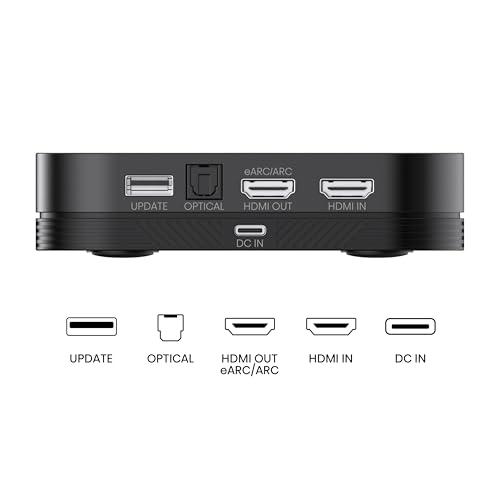
The Sennheiser AMBEO works with any TV that has HDMI eARC or optical output, regardless of brand. The Hisense HT Saturn HTSATURN technically works with any TV, but you'll get significantly better performance and additional features (like Hi-Concerto technology and Room Fitting Tuning) when paired with compatible Hisense TVs from the U8 or U7 series.
The Hisense HT Saturn typically delivers superior bass because it includes a dedicated 6.5-inch wireless subwoofer that can be positioned anywhere in your room for optimal low-frequency response. The Sennheiser AMBEO Soundbar has impressive built-in bass that extends down to 30Hz, but being confined to the soundbar's chassis limits its room-filling impact compared to a dedicated subwoofer.
The Sennheiser AMBEO needs space for one large unit measuring nearly 4 feet wide, which may not fit under smaller TV stands. The Hisense HT Saturn requires space for multiple smaller components - four compact satellite speakers (under 8 inches tall each) and a subwoofer, but offers more flexibility in placement since components can be positioned on shelves, stands, or mounted to walls.
The Sennheiser AMBEO Soundbar generally excels at dialogue clarity thanks to dedicated center channel drivers and advanced processing that can enhance voice frequencies. The Hisense HT Saturn creates a "phantom center" for dialogue by balancing sound between front speakers, which works well due to Devialet tuning but isn't quite as precise as a dedicated center channel.
Both systems handle music well, but with different strengths. The Hisense HT Saturn benefits from multiple drivers per channel and Devialet's acoustic expertise for detailed stereo imaging. The Sennheiser AMBEO offers superior driver matching and acoustic coherence since all components are in one carefully designed enclosure, which many audiophiles prefer for critical music listening.
The Hisense HT Saturn HTSATURN 4.1.2Ch Sound Bar System typically offers better value, providing authentic discrete surround sound at a lower price point than the Sennheiser AMBEO. However, the Sennheiser justifies its premium pricing through superior build quality, universal TV compatibility, and advanced German engineering. Value depends on whether you prioritize authentic surround sound (Hisense) or premium single-unit convenience (Sennheiser).
Yes, both the Hisense HT Saturn and Sennheiser AMBEO Soundbar support Dolby Atmos and DTS:X for 3D audio effects. The Hisense system uses up-firing drivers in each satellite speaker to bounce sound off your ceiling, while the Sennheiser uses multiple up-firing drivers within the soundbar itself. Both create convincing overhead effects, though the distributed speakers of the Hisense can provide more precise positioning.
The Hisense HT Saturn generally provides better gaming immersion due to its true surround sound with physical speakers positioned around you. This creates more accurate directional audio for competitive gaming and better atmosphere for single-player games. The Sennheiser AMBEO still offers good gaming performance with its virtual surround processing, plus it may have lower input lag since there's no wireless transmission to multiple speakers.
The Sennheiser AMBEO Soundbar requires minimal maintenance beyond occasional firmware updates and may need room recalibration if you significantly change your furniture layout. The Hisense HT Saturn HTSATURN needs occasional firmware updates across multiple components and may require re-pairing wireless connections if you experience interference, though the tri-band wireless technology minimizes connection issues in most environments.
We've done our best to create useful and informative comparisons to help you decide what product to buy. Our research uses advanced automated methods to create this comparison and perfection is not possible - please contact us for corrections or questions. These are the sites we've researched in the creation of this article: bestbuy.com - youtube.com - blog.son-video.com - youtube.com - youtube.com - techradar.com - ecoustics.com - jbhifi.com.au - shop.hisense-usa.com - bhphotovideo.com - bestbuy.com - digitalreviews.net - hisense-usa.com - projectorscreenstore.com - valueelectronics.com - dolby.com - giftpack.ai - bestbuy.com - rtings.com - techradar.com - audioxpress.com - whathifi.com - upscaleaudio.com - soundstagesimplifi.com - global.sennheiser-hearing.com - sennheiser-hearing.com - audioadvice.com - abt.com - moon-audio.com

Privacy Policy
Terms and Conditions - Affiliate Policy
Home Security
© Copyright 2008-2026.
11816 Inwood Rd #1211, Dallas, TX 75244