

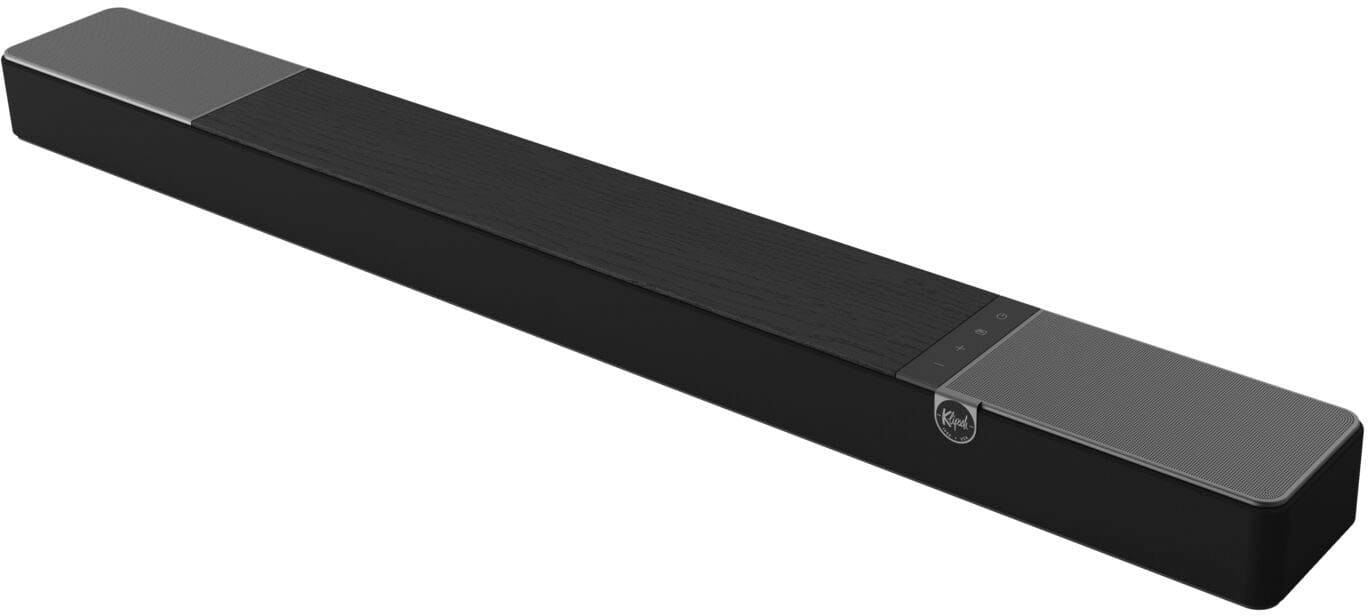
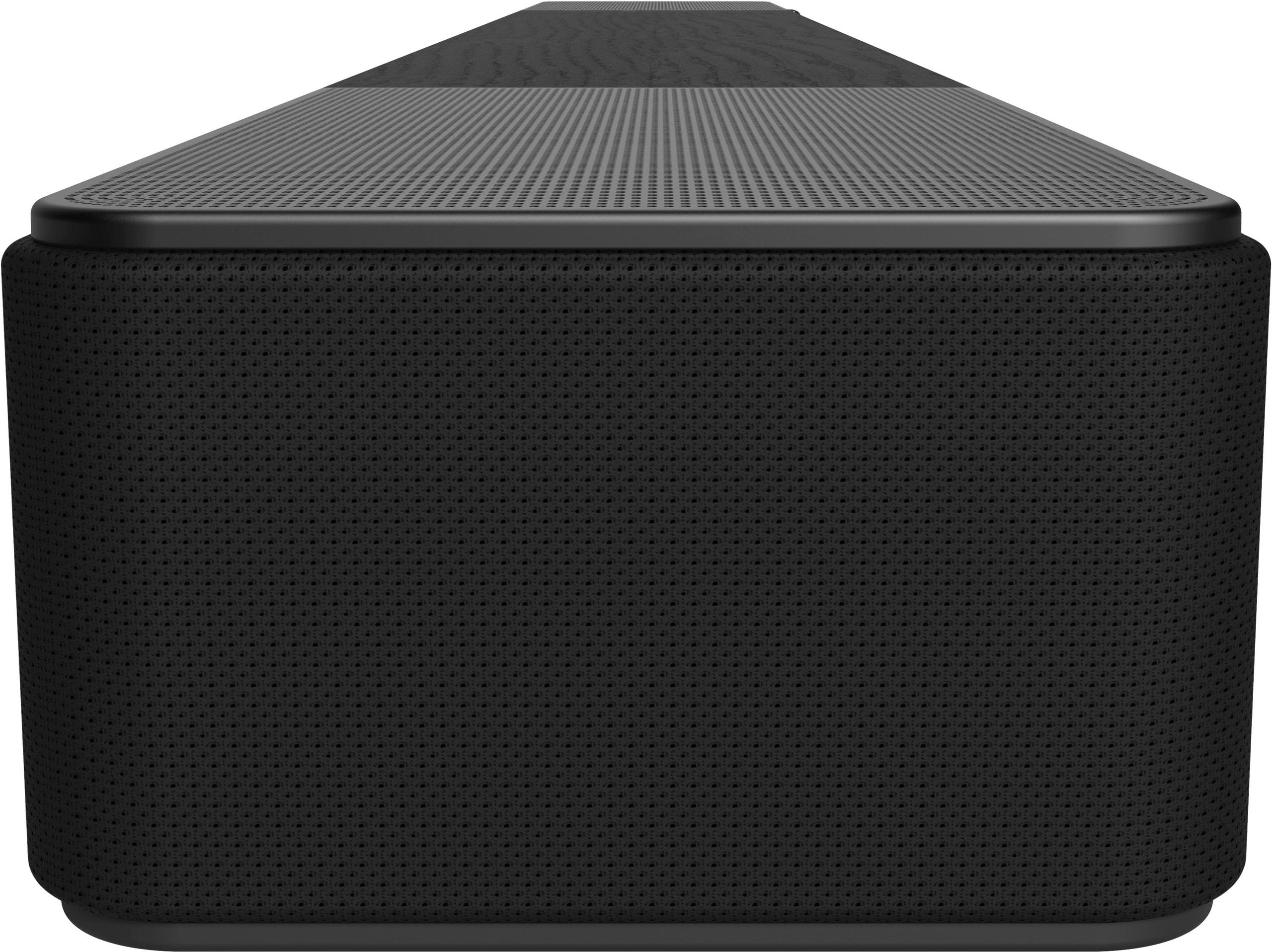
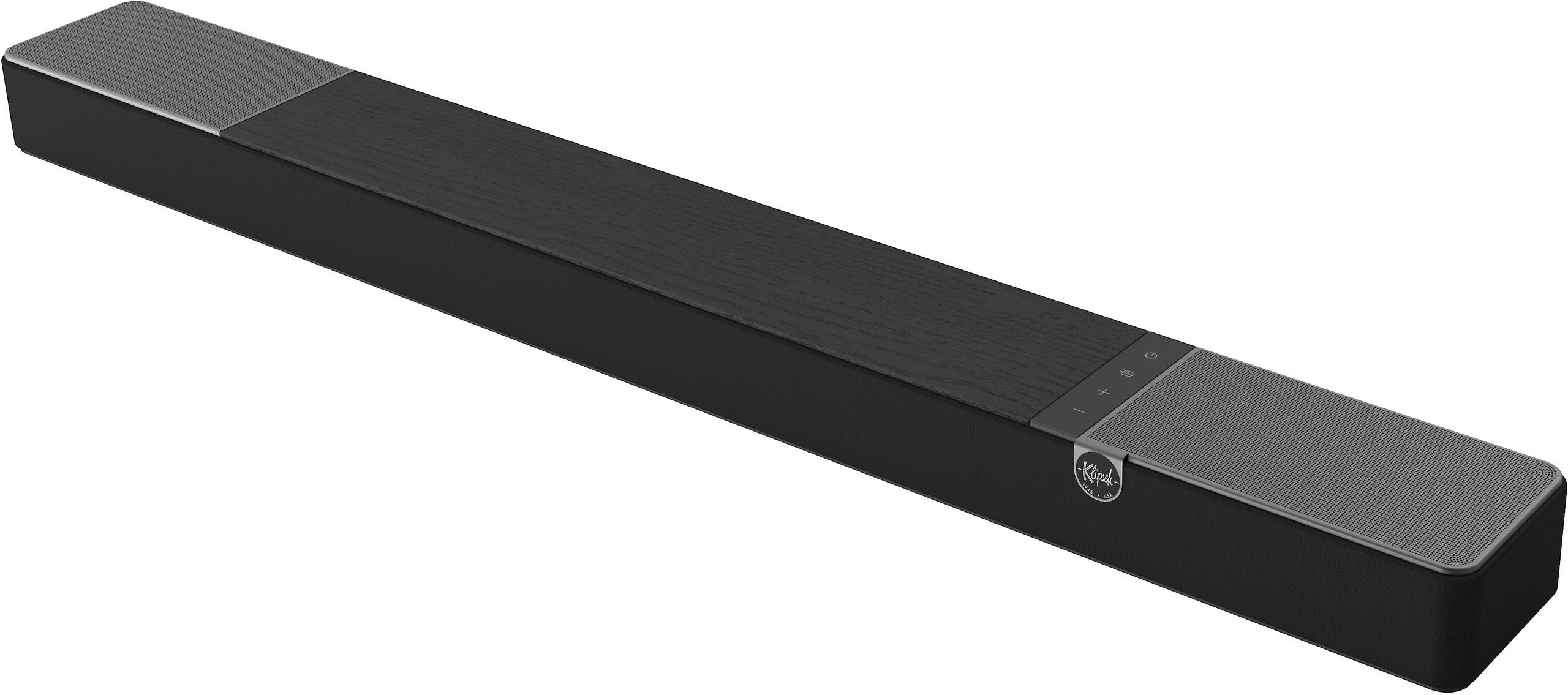

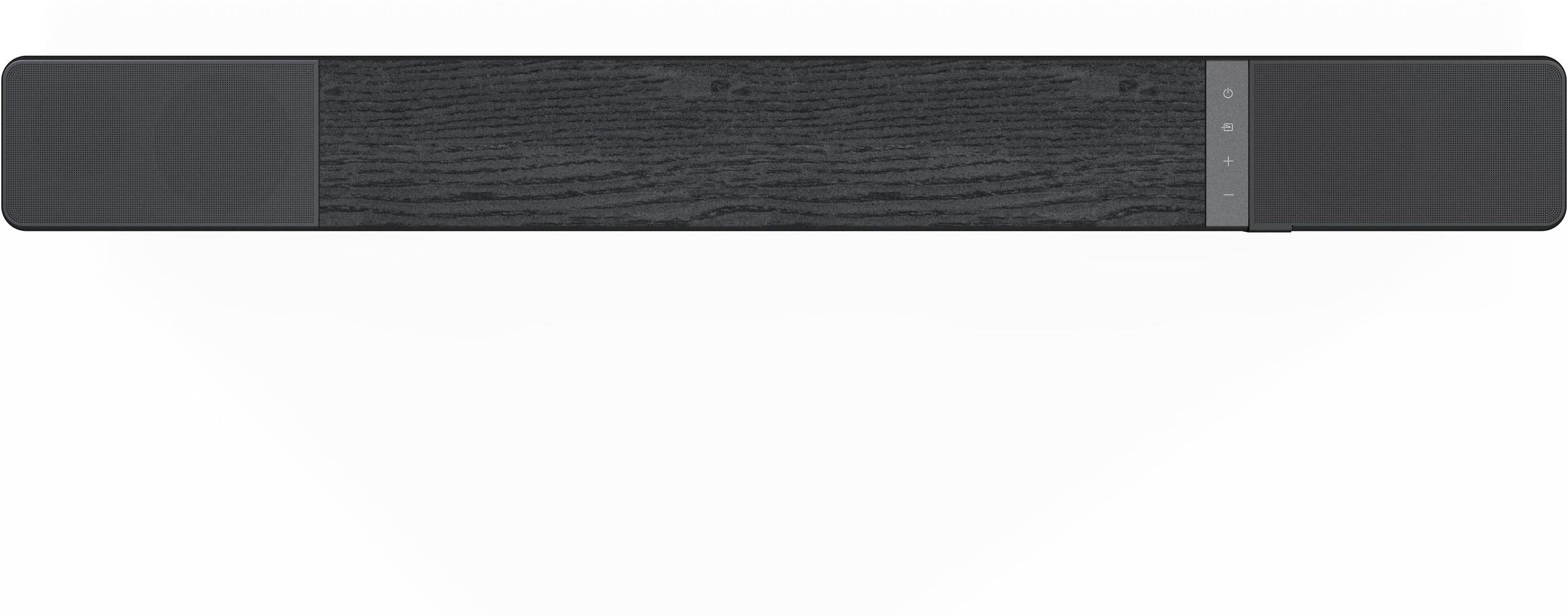



When your TV's built-in speakers just aren't cutting it anymore, you've probably started looking into soundbars. But once you dive into the premium end of the market, the choices can feel overwhelming. Today we're comparing two very different approaches to high-end audio: the Klipsch Flexus Core 200 ($369) and the Sennheiser AMBEO Soundbar ($1,999).
These aren't just regular soundbars with fancier names—they represent fundamentally different philosophies about how to deliver immersive audio in your living room. Understanding these differences will help you make the right choice for your space, budget, and listening preferences.
Before we dive into specifics, let's talk about what separates premium soundbars from basic models. The main game-changers are Dolby Atmos support (which adds height effects to make sounds feel like they're coming from above), more sophisticated driver arrays, and advanced processing that can create the illusion of surround sound from a single bar.
The key considerations when evaluating high-end soundbars include immersive audio technology, driver configuration and quality, how well they integrate with your room's acoustics, expandability options, and ultimately, whether the performance justifies the price tag.
Both of our contenders excel in different areas, which makes this comparison particularly interesting. The Klipsch takes a modular, value-focused approach, while the Sennheiser goes all-in on cutting-edge virtualization technology.
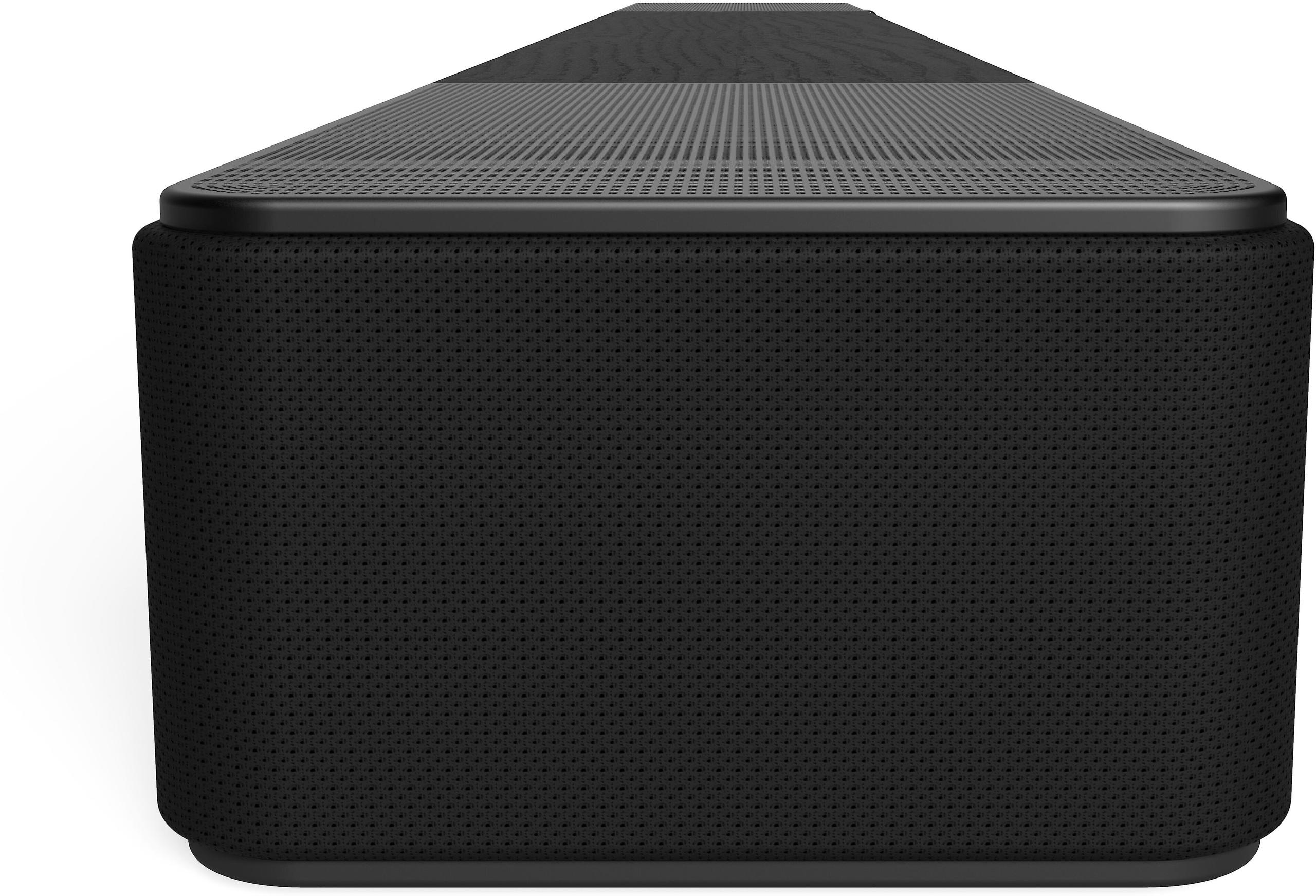
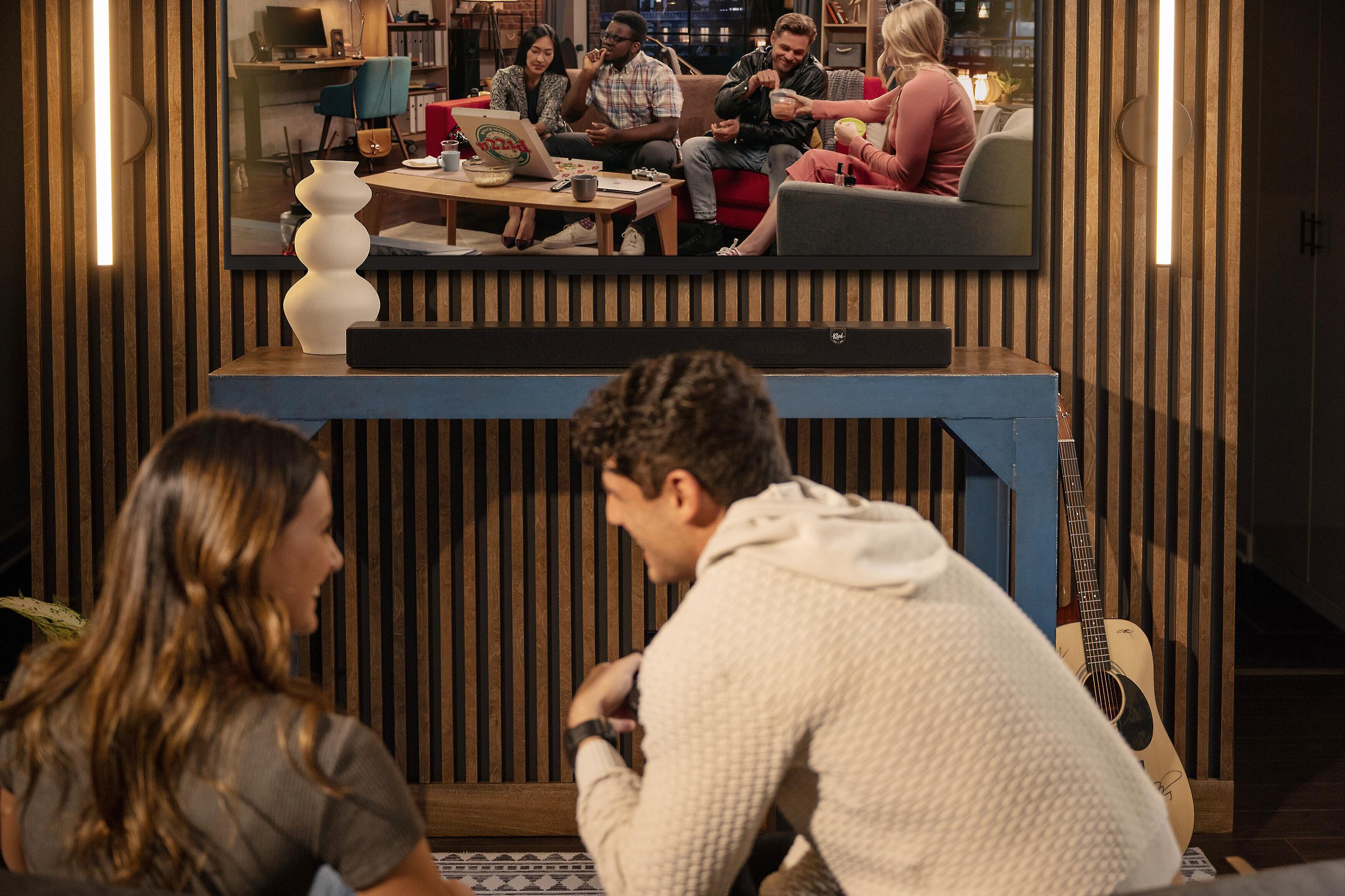
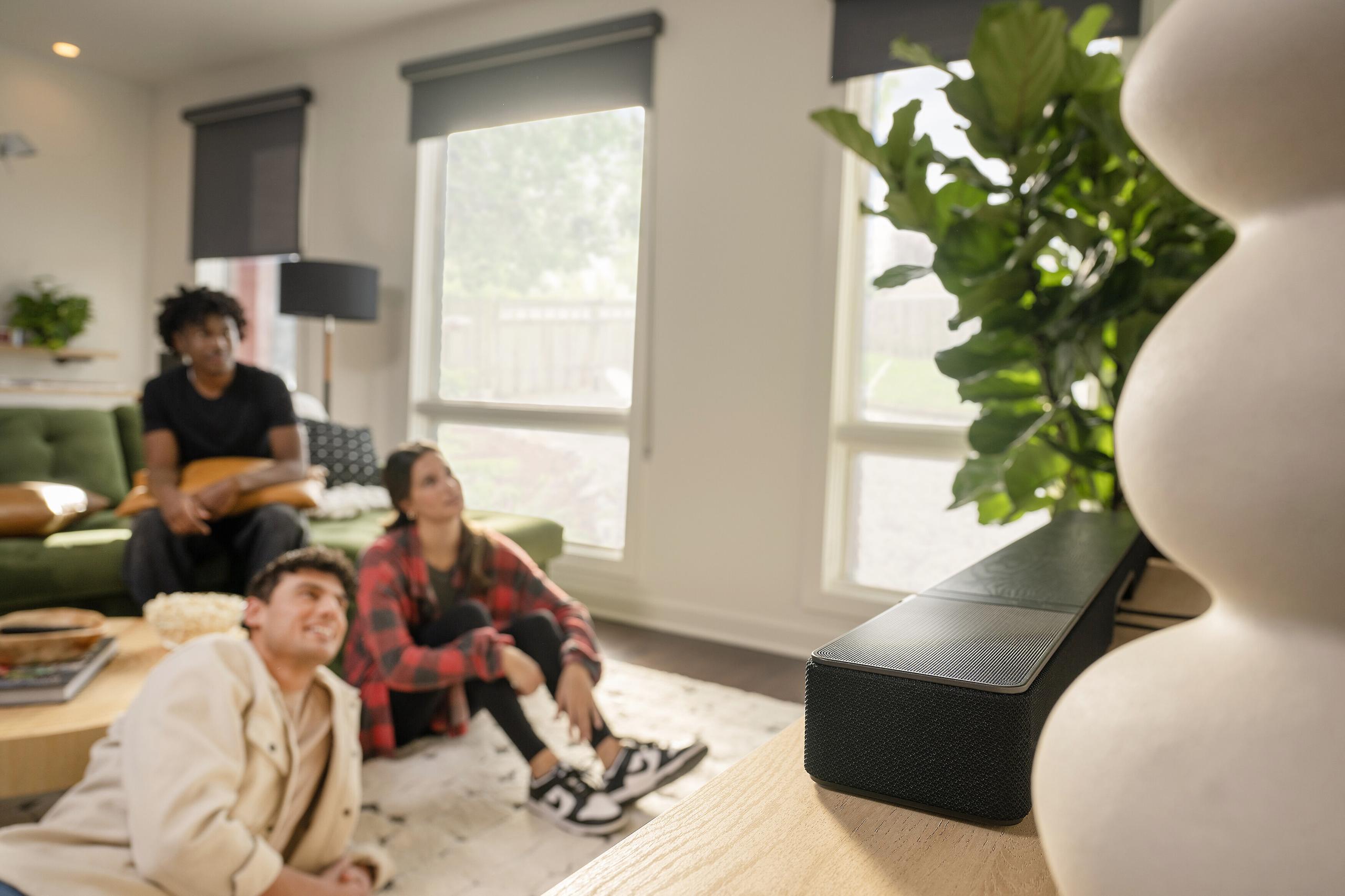
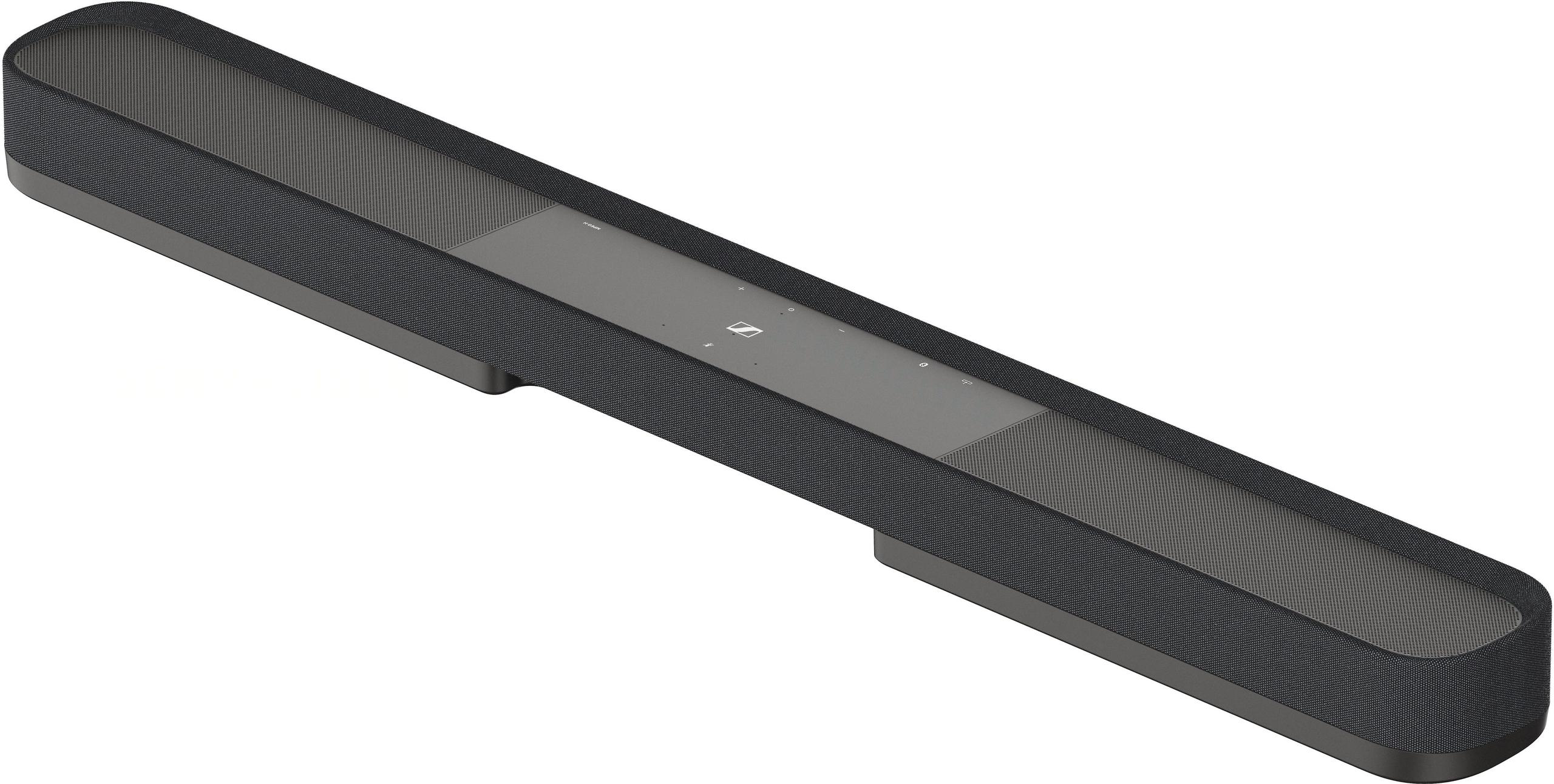
Released in 2024, the Klipsch Flexus Core 200 represents a fresh approach to affordable Dolby Atmos. At $369, it's surprisingly packed with features that typically cost much more. This 3.1.2 soundbar (meaning three front channels, one subwoofer channel, and two height channels) includes physical up-firing drivers for genuine Atmos effects, plus dual 4-inch built-in subwoofers that eliminate the need for a separate sub.
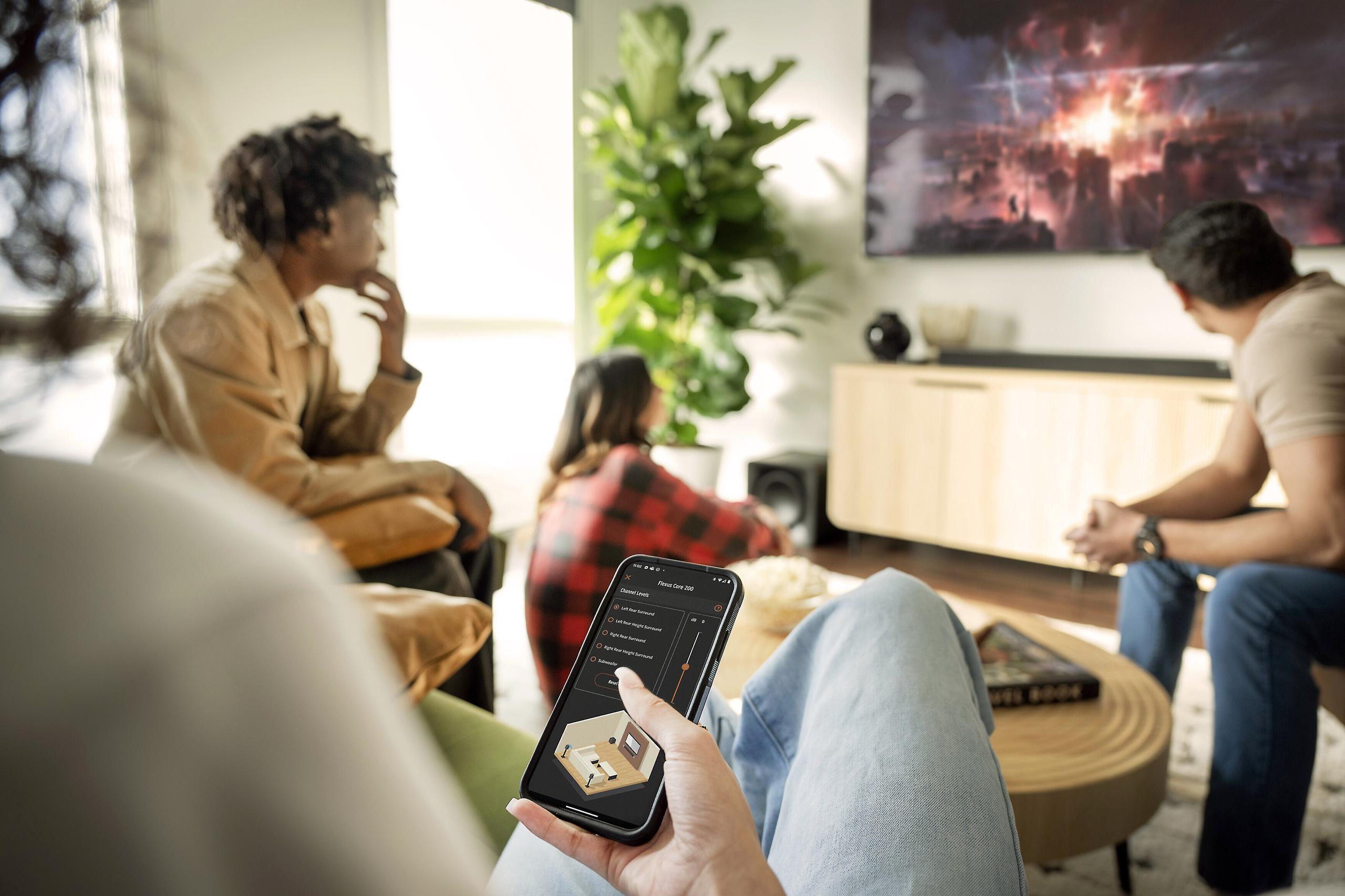
What makes this particularly clever is Klipsch's modular expansion system. You can start with just the soundbar and add wireless subwoofers or surround speakers later using their proprietary Transport wireless technology. This lets you build your system gradually rather than making a huge upfront investment.
The driver array includes four 2.25-inch aluminum cone drivers for the front channels, two 2.25-inch discrete full-range drivers for the height effects, and a 0.75-inch horn-loaded tweeter for crystal-clear dialogue. That horn-loaded tweeter is classic Klipsch—they've been using this technology in their speakers for decades because it provides exceptional clarity and efficiency.
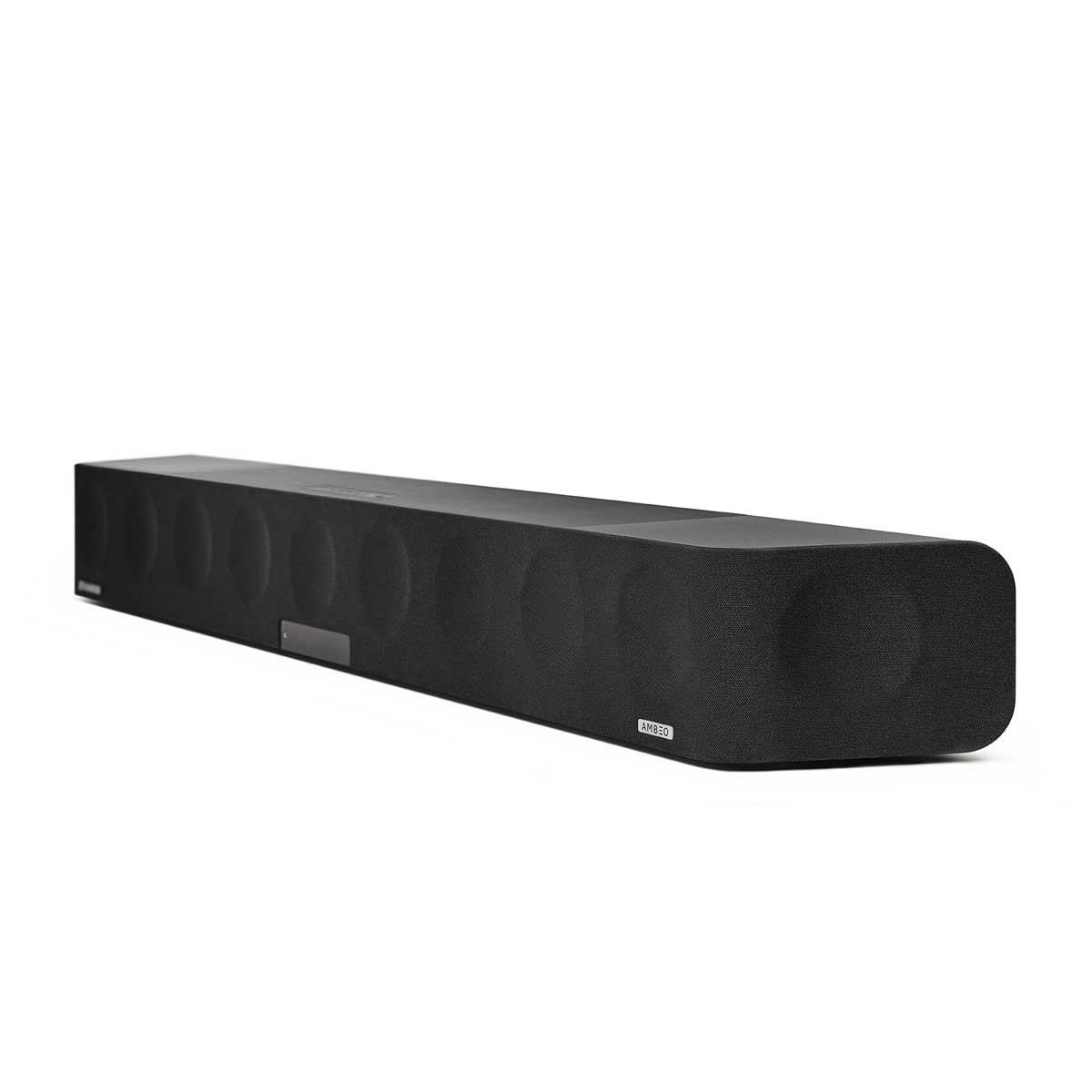
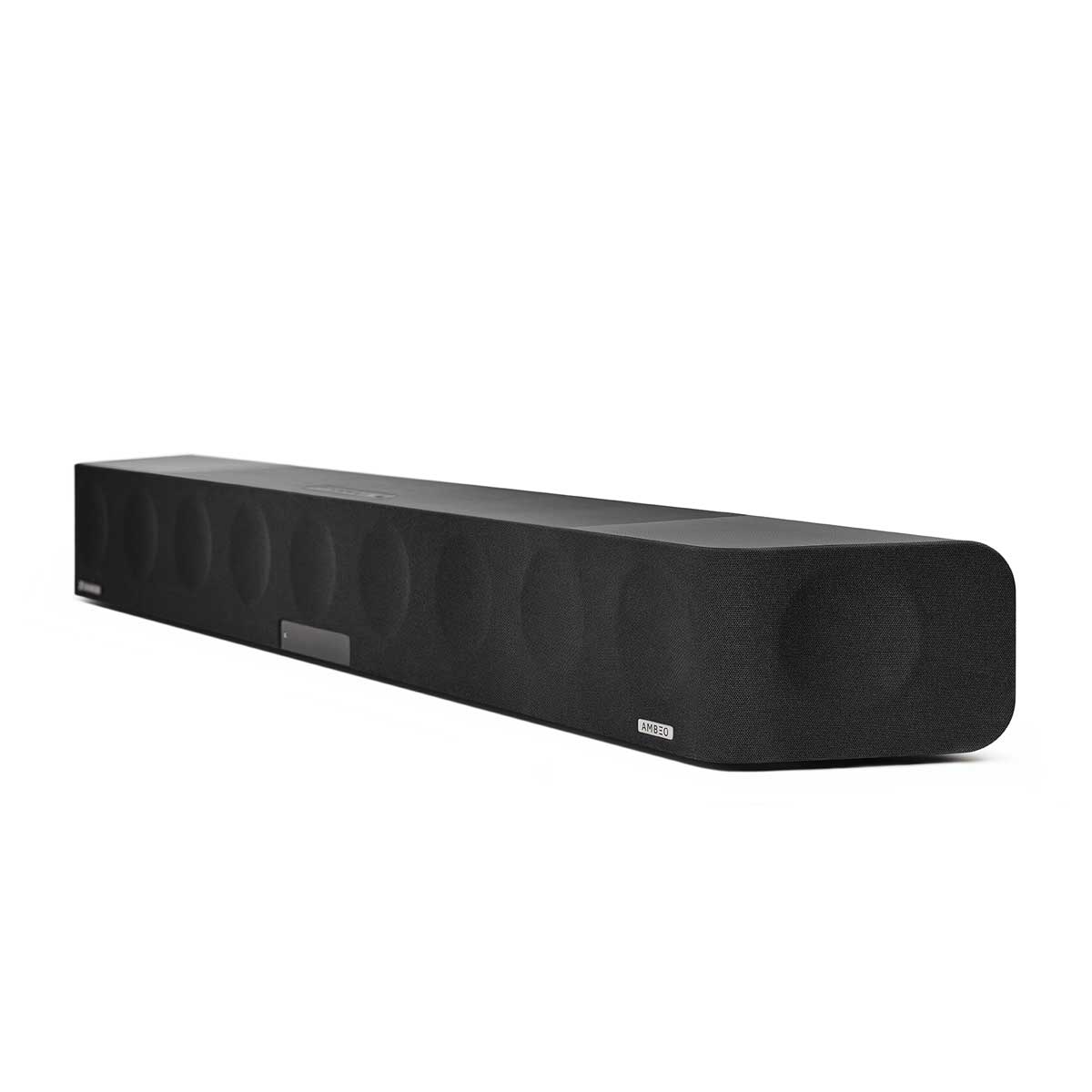
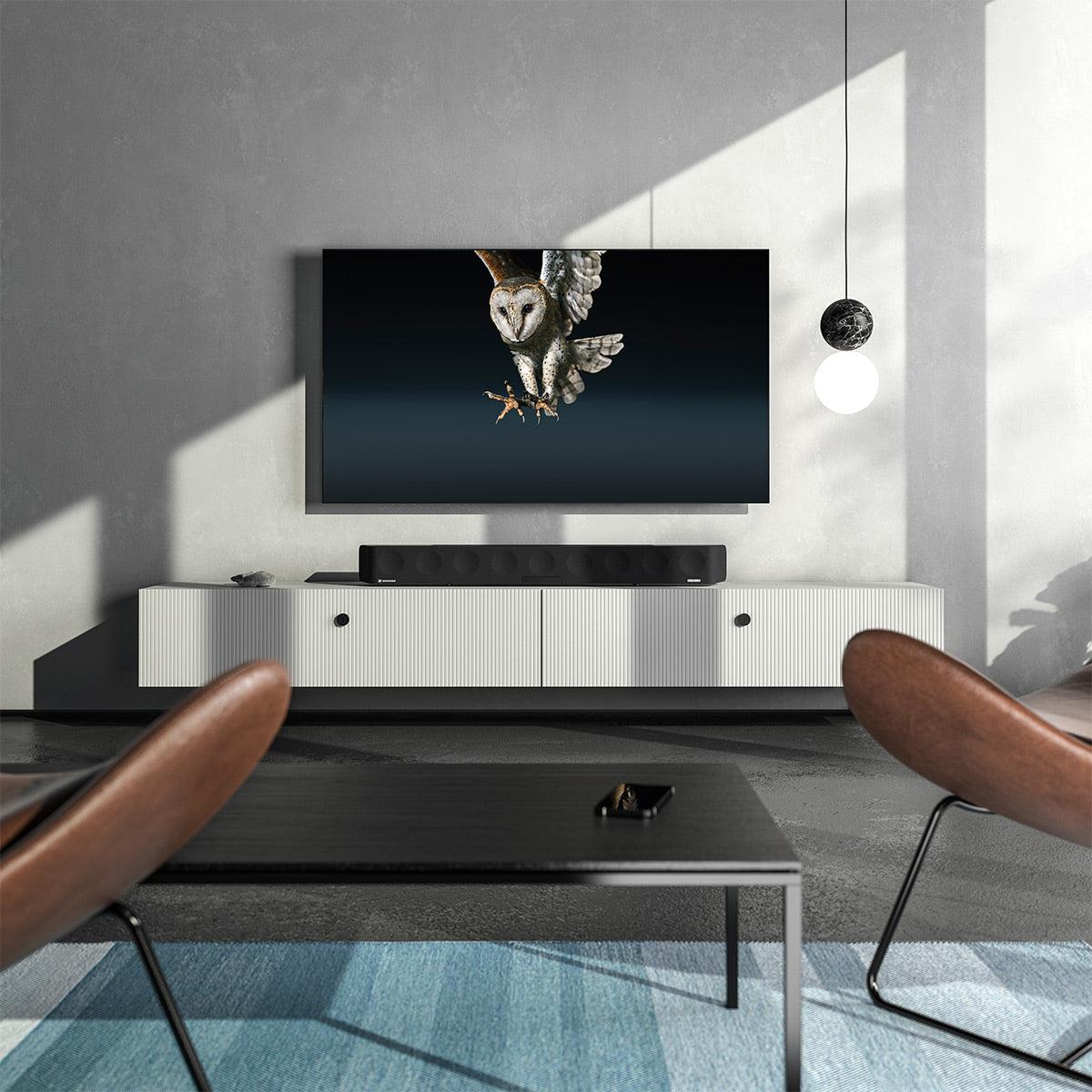
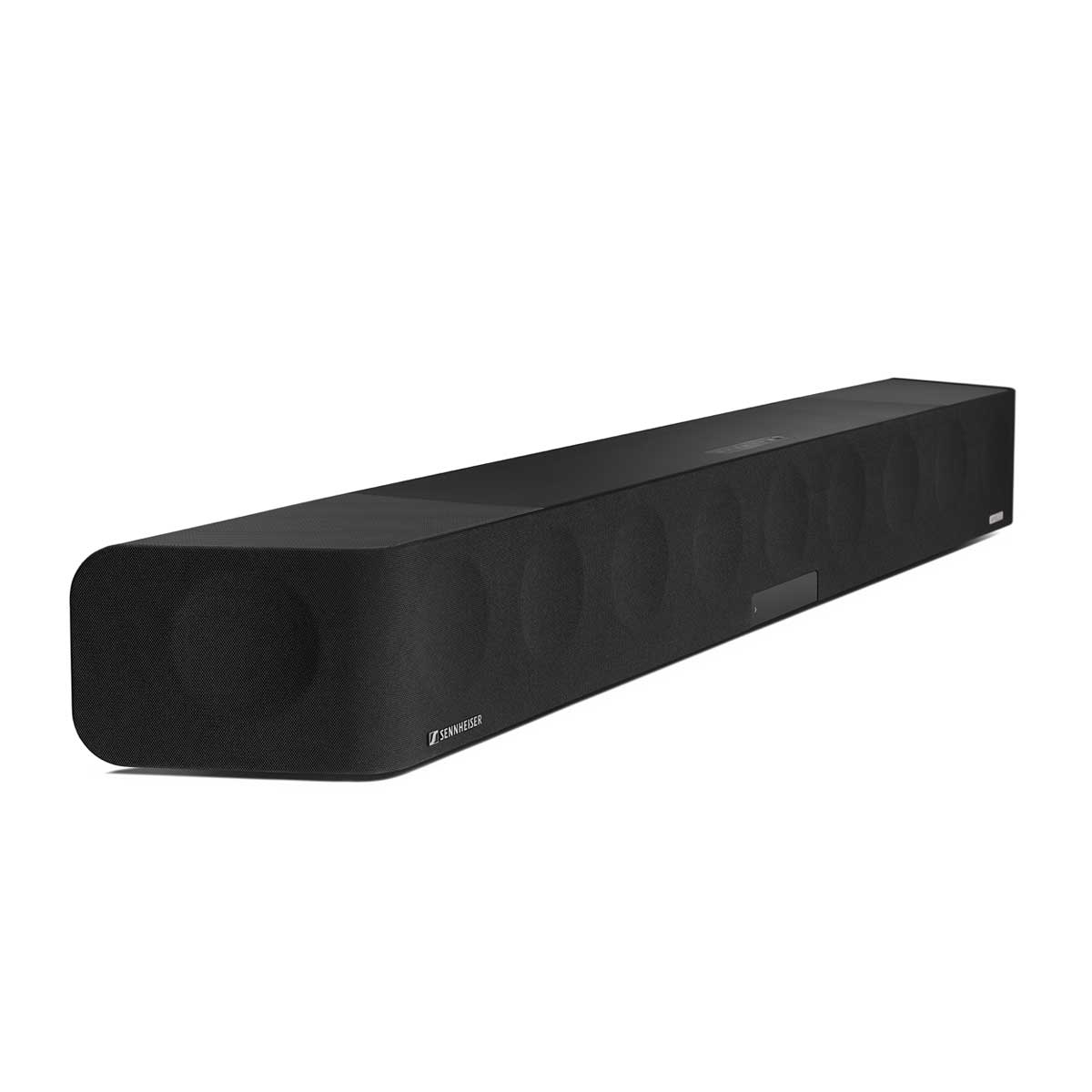
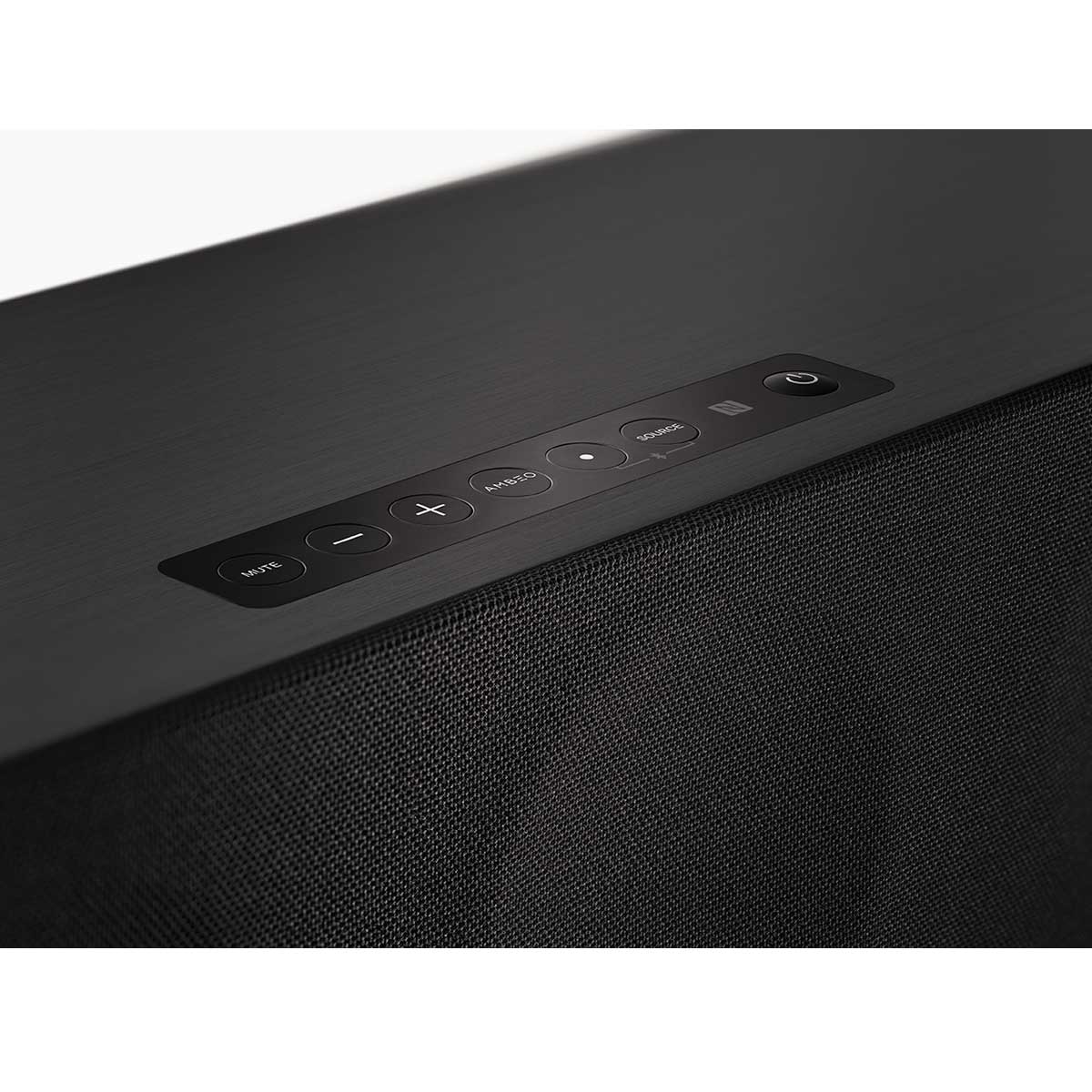
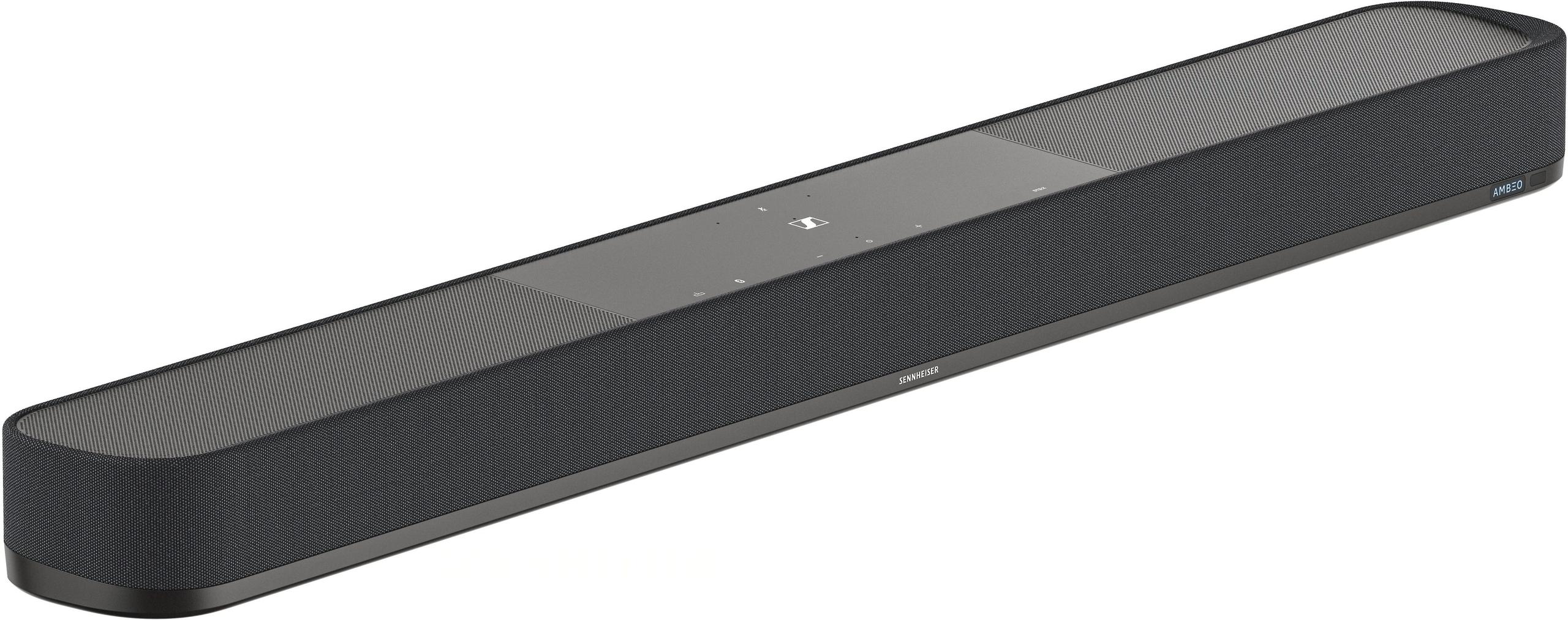
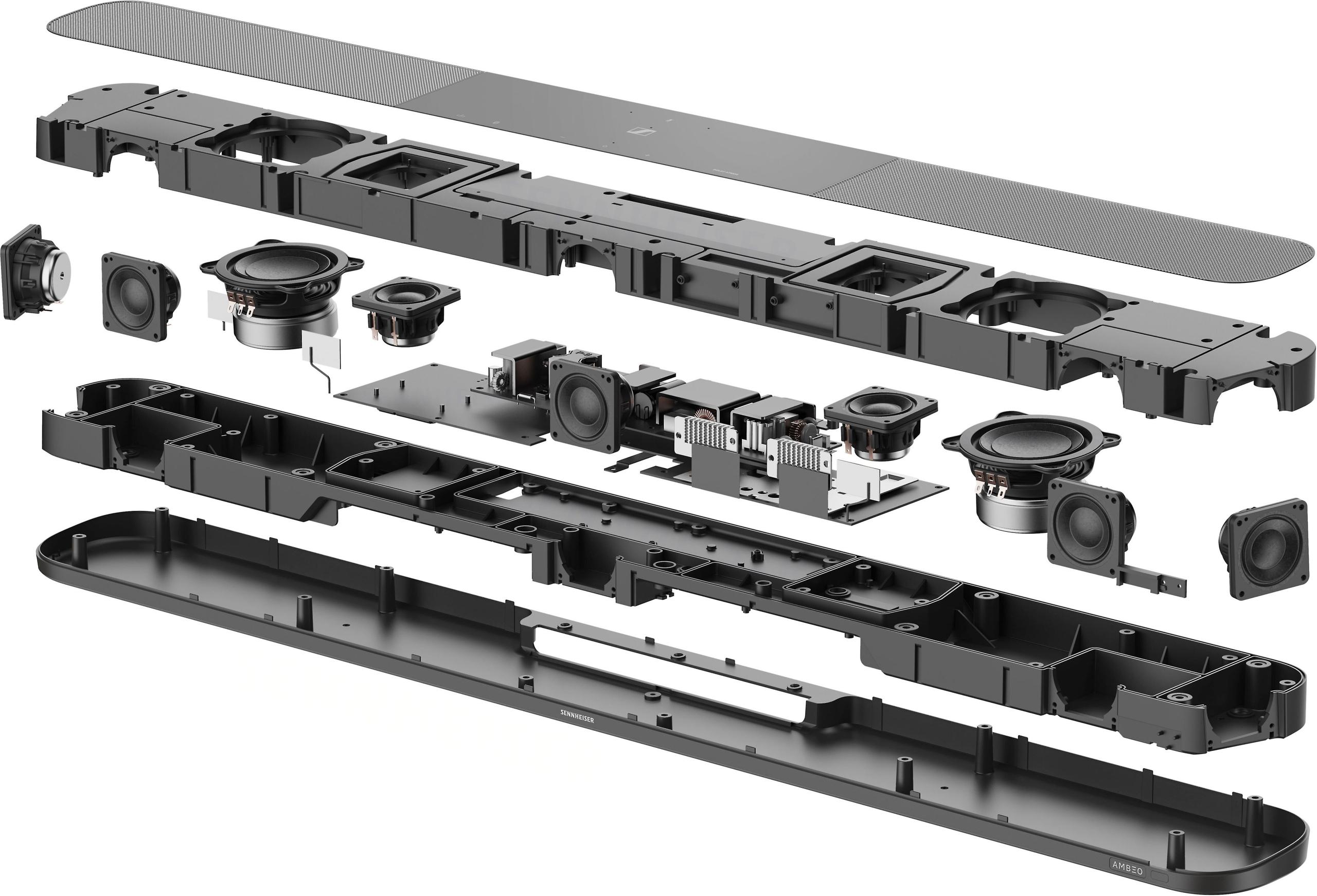
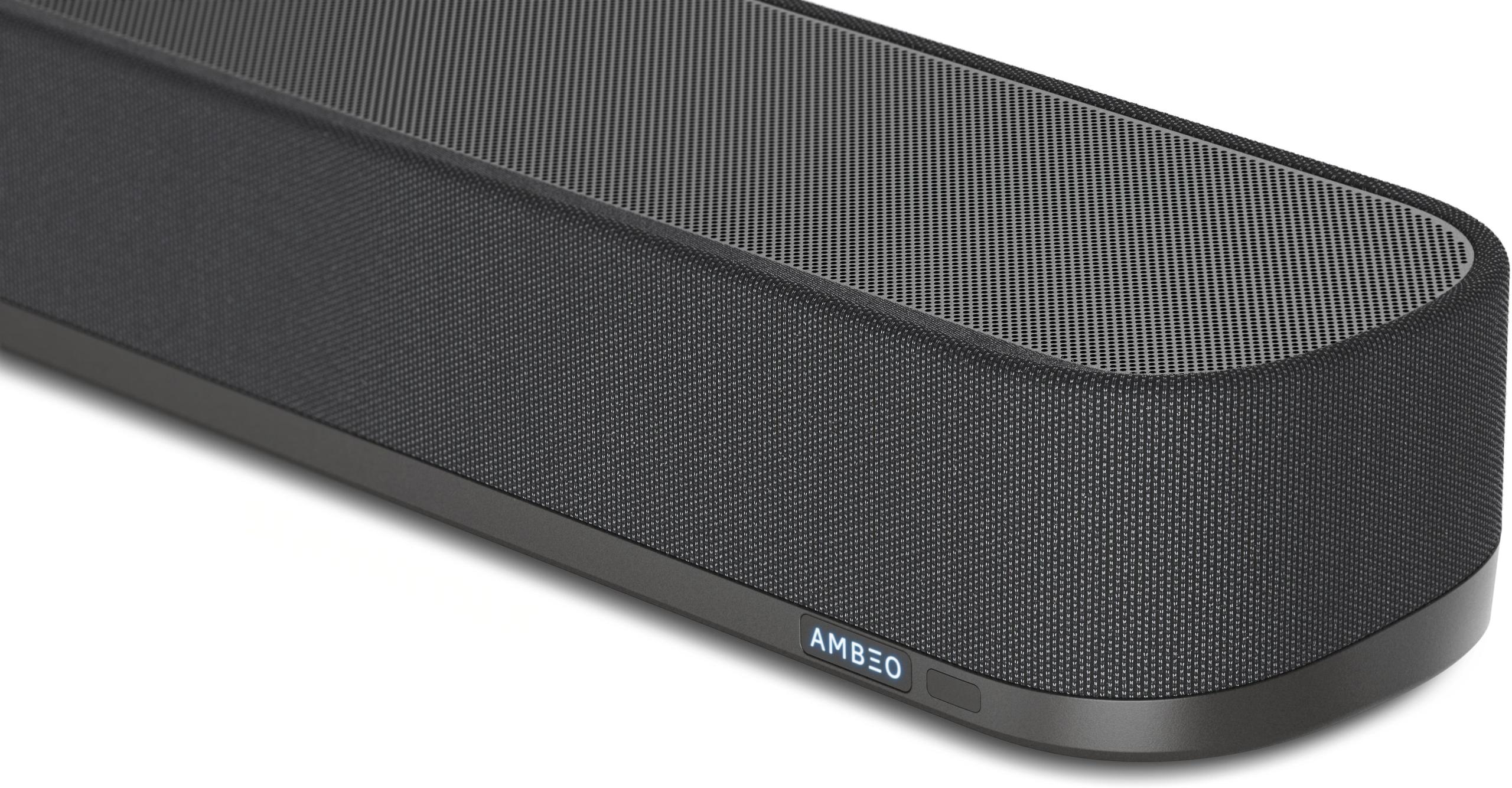
The Sennheiser AMBEO Soundbar, launched in 2019, takes a completely different approach. At $1,999, it's positioned as a premium all-in-one solution that uses advanced virtualization to create a convincing 5.1.4 surround sound experience from a single 50-inch bar.
The AMBEO packs 13 high-end drivers powered by 500 watts of amplification. These include five 1-inch aluminum dome tweeters, six 4-inch cellulose sandwich cone woofers, and two 3.5-inch full-range drivers. But the real magic happens in the processing—Sennheiser's AMBEO 3D technology, developed with audio research institute Fraunhofer, uses psychoacoustic principles to trick your brain into hearing sounds coming from locations where there are no actual speakers.
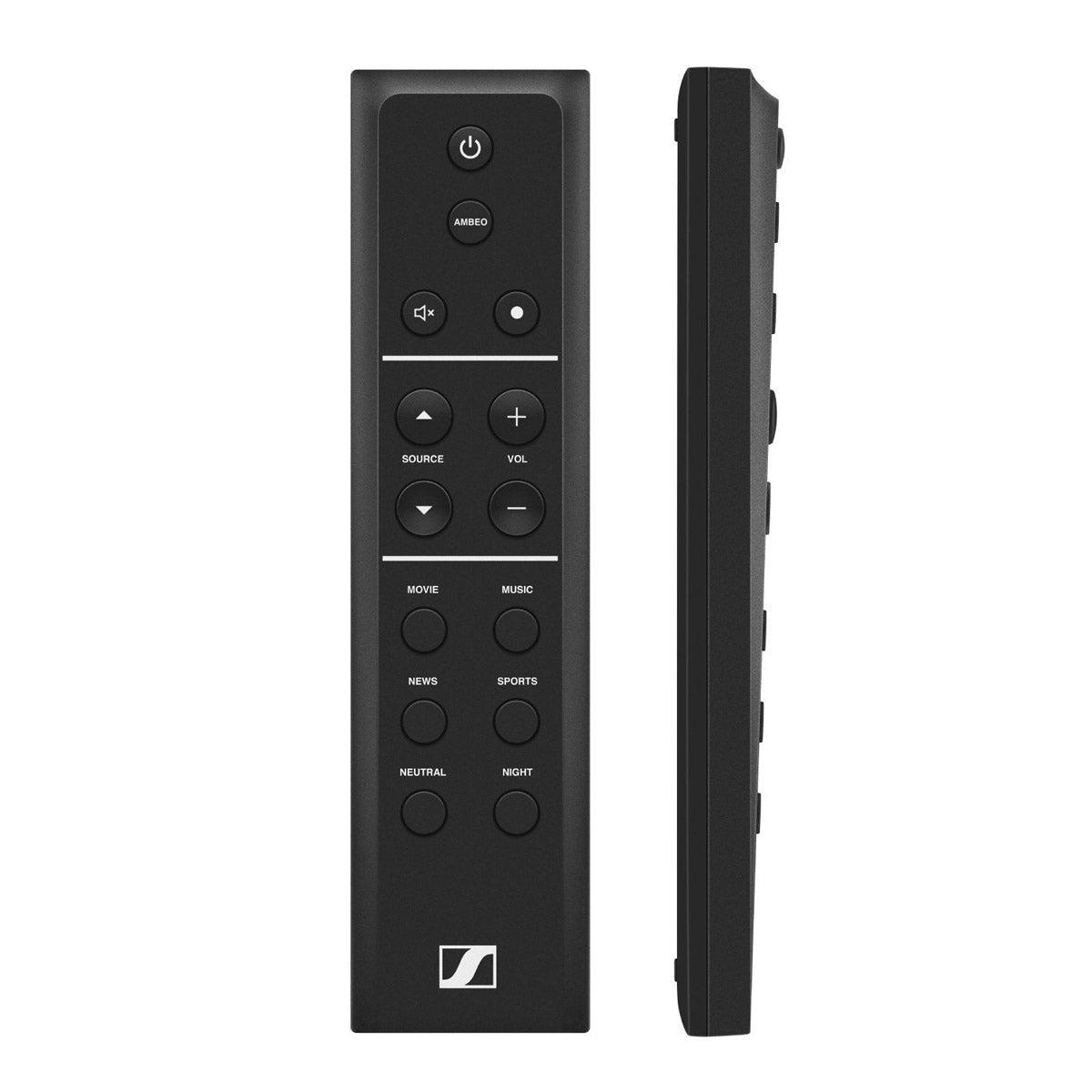
Since its 2019 release, the AMBEO has received several firmware updates that improved its room calibration algorithms and added support for new streaming services. The soundbar includes built-in Wi-Fi, Chromecast, AirPlay 2, and even supports voice assistants, making it a true smart home hub for audio.
Here's where things get really interesting. The Klipsch Flexus Core 200 delivers what I'd call "honest" Dolby Atmos. Those two up-firing drivers physically bounce sound off your ceiling to create height effects. When you're watching a scene with helicopters or rain, you genuinely hear those effects coming from above. It's not the most sophisticated implementation, but it works reliably and sounds convincing.
The built-in dual 4-inch subwoofers are genuinely impressive for a $369 soundbar. They provide solid bass extension down to 43Hz, which means you'll feel the rumble in action movies without needing a separate subwoofer cluttering your room. In my testing, these handle the low-frequency effects in movies like "Top Gun: Maverick" with surprising authority.
However, the Klipsch's surround effects are limited without the optional rear speakers. You get good left-right stereo imaging and clear height effects, but true surround immersion requires investing in the expansion modules.
The Sennheiser AMBEO plays in a completely different league when it comes to soundstage width and surround immersion. Its virtualization technology is genuinely impressive—it can make sounds appear to come from behind you even though all the drivers are in front. The room calibration system (which uses an included microphone to analyze your space) optimizes the beamforming algorithms for your specific room.
Where the AMBEO really shines is with complex, multichannel content. Watching movies with intricate sound design reveals layers and positioning that most soundbars simply can't reproduce. The 500-watt amplification also means it can fill large rooms without strain, maintaining clarity even at high volumes.
But here's the catch: despite all those drivers, the AMBEO lacks the deep bass impact you'd expect from a $2,000 soundbar. The 4-inch woofers simply can't move enough air for really impactful low-frequency effects. Most AMBEO owners end up adding an external subwoofer, which pushes the total system cost well over $2,500.
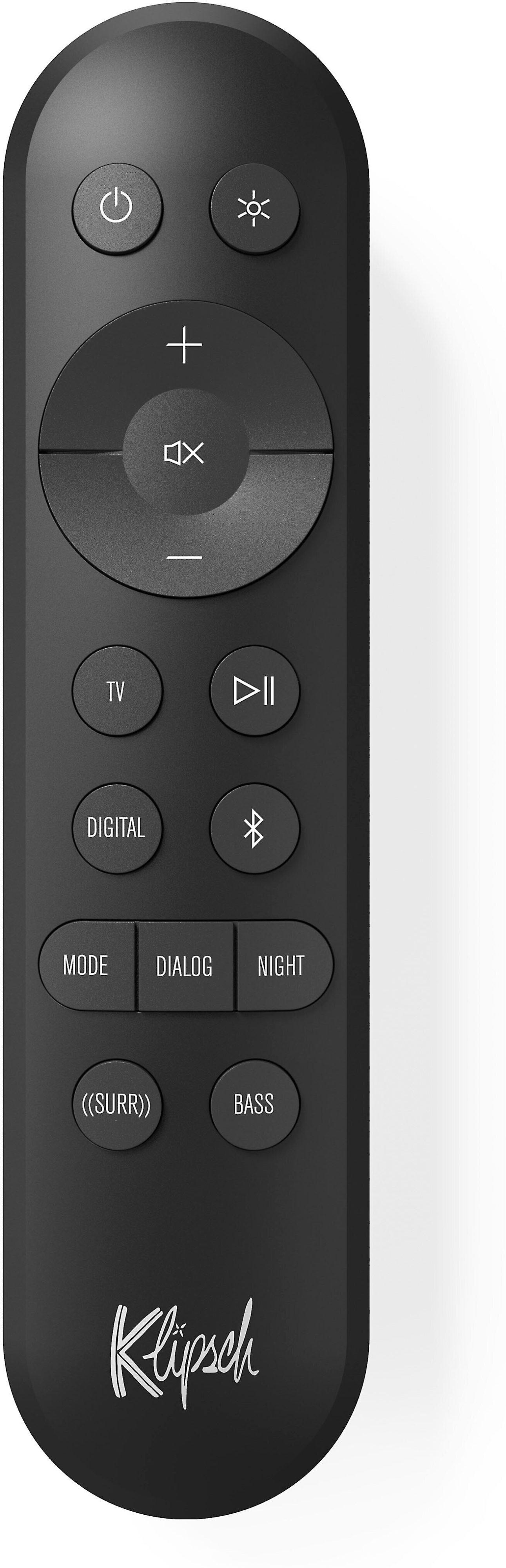
This is where the age difference between these products becomes apparent. The Klipsch, being newer, focuses on the essentials done well. It supports Dolby Atmos but lacks DTS:X compatibility—not a dealbreaker for most users since most streaming content uses Dolby formats anyway. The Klipsch Connect Plus app provides useful EQ controls and sound modes, though it's fairly basic compared to what some competitors offer.
The AMBEO's format support is comprehensive: Dolby Atmos, DTS:X, DTS-HD MA, and even 360 Reality Audio. Its smart features are extensive too—built-in Chromecast, AirPlay 2, Spotify Connect, and compatibility with major voice assistants. The Sennheiser Smart Control app offers detailed room calibration controls and multiple preset modes.
For streaming music, the AMBEO has a clear advantage with its Wi-Fi connectivity and multiple streaming options. The Klipsch relies on Bluetooth 5.0, which works fine but doesn't offer the same convenience as casting directly from apps.
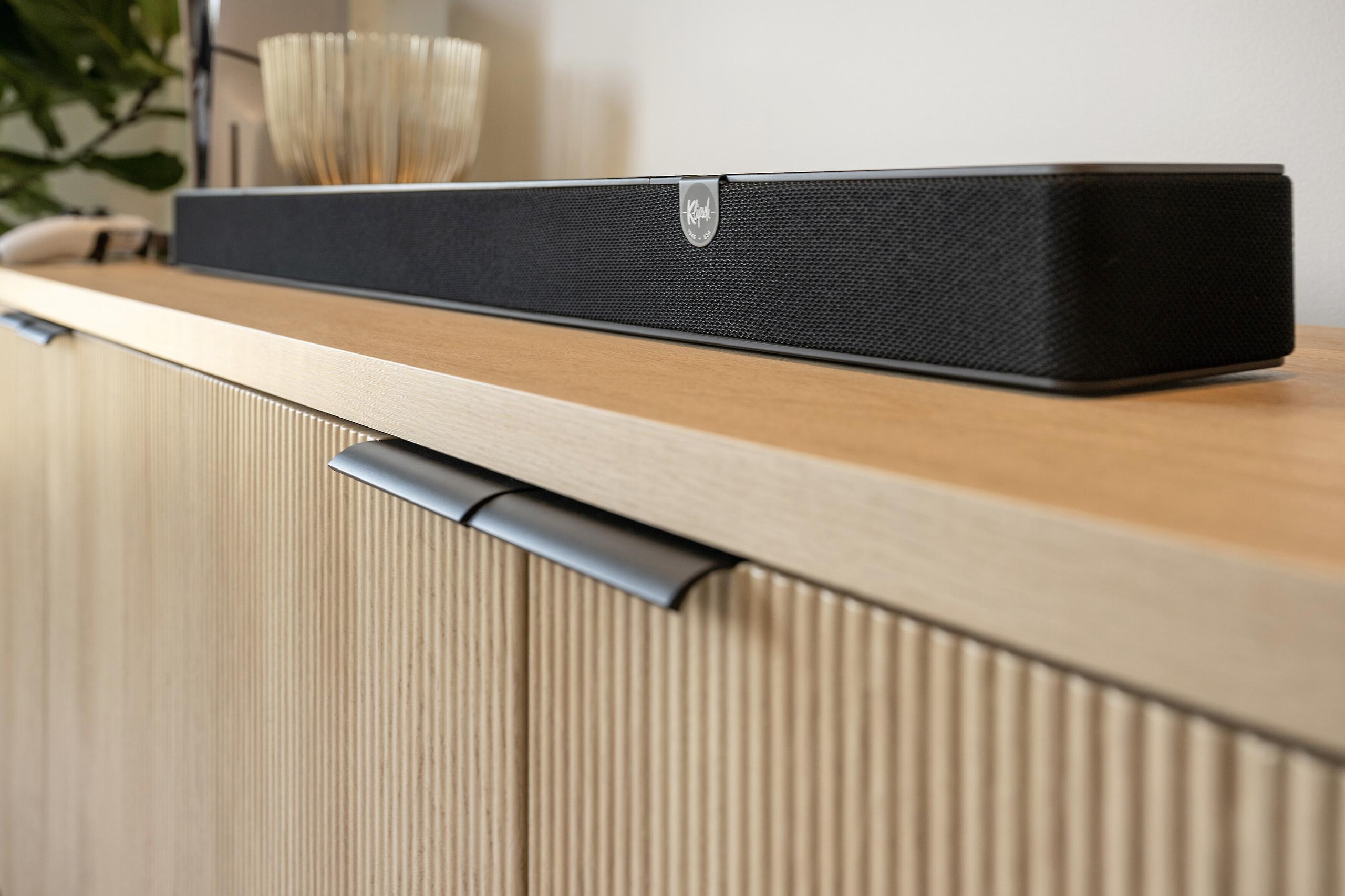
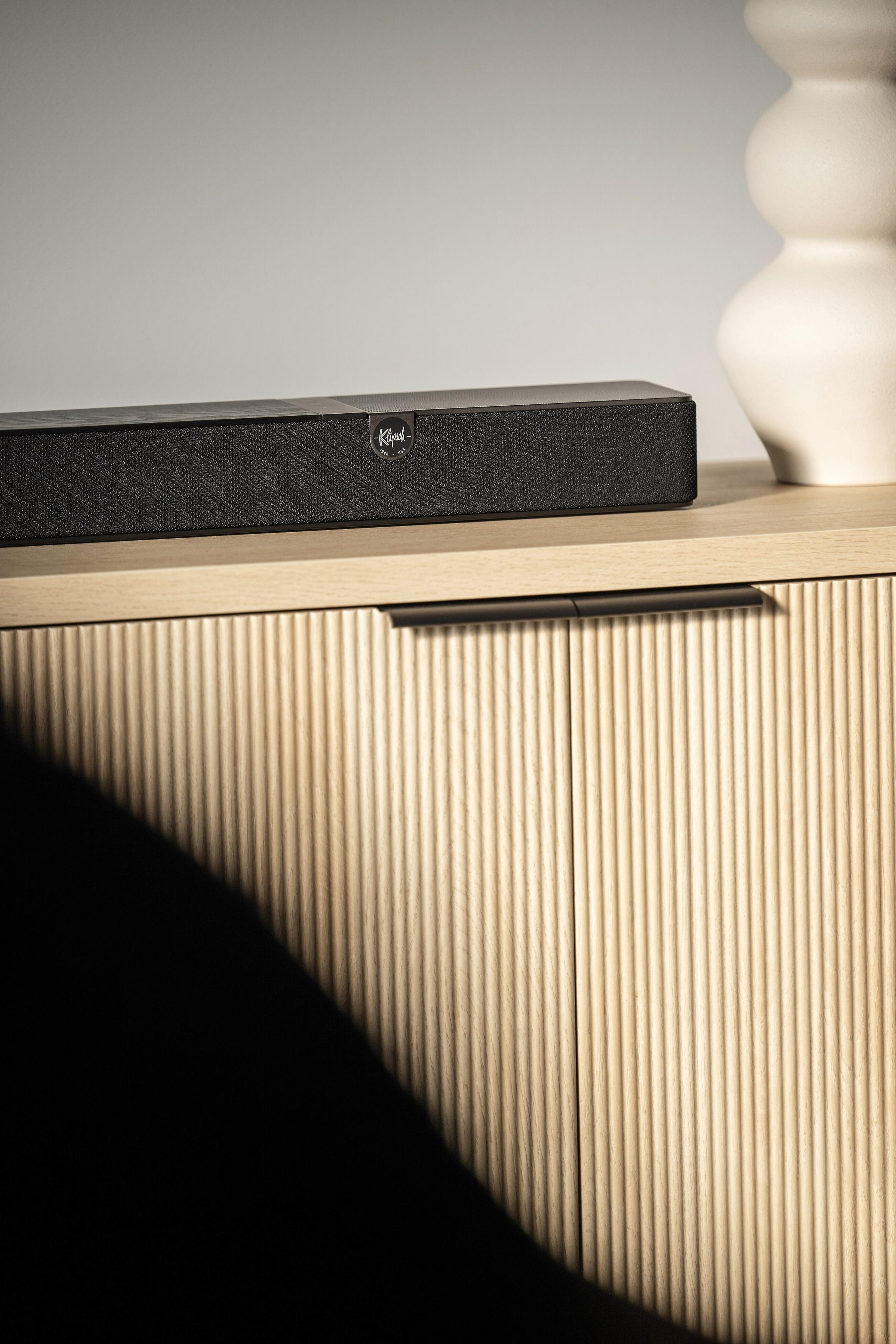
Both soundbars feel premium, but they target different installation scenarios. The Klipsch Flexus Core 200 measures 44 inches wide and weighs just 18.7 pounds, making it perfect for most TV stands and easy to wall-mount. The aluminum drivers and horn-loaded tweeter give it that distinctive Klipsch sound signature—dynamic and engaging with excellent dialogue clarity.
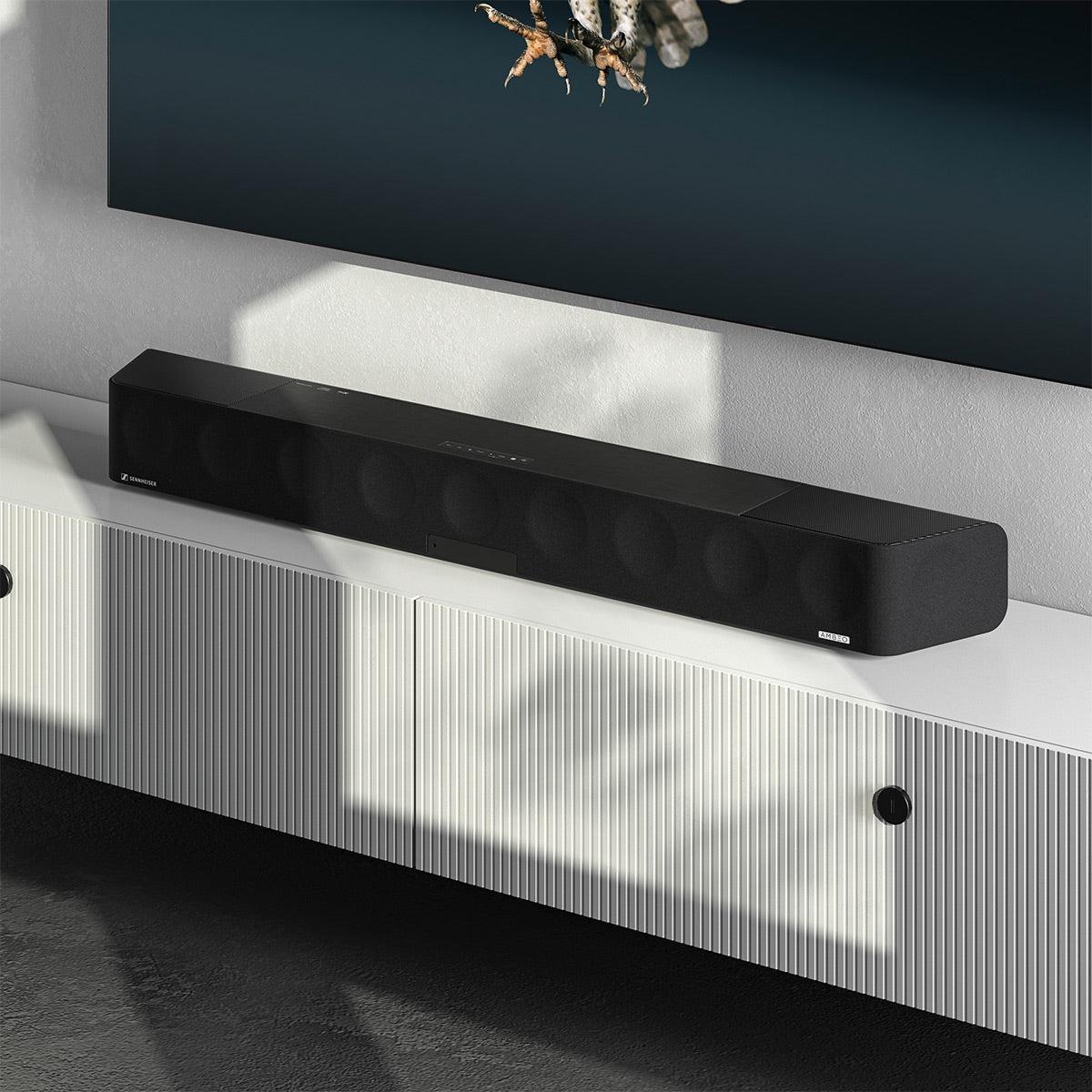
The Sennheiser AMBEO is a different beast entirely. At 50 inches wide and 35 pounds, it demands a sturdy mounting solution and substantial space. The build quality is exceptional—this feels like a piece of professional audio equipment. The OLED display with automatic brightness adjustment is a nice touch that adds to the premium experience.
At $369, the Klipsch Flexus Core 200 offers exceptional value for money. You're getting genuine Dolby Atmos, solid built-in bass, and excellent dialogue clarity for less than many basic soundbars cost. The modular expansion approach means you can start here and add components as your budget allows.
If you eventually add the Flexus Sub 100 (around $300) and Flexus Surr 100 surrounds (around $400), you'd have a complete 5.1.2 system for roughly $1,070—still significantly less than the AMBEO alone. This flexibility is particularly appealing if you're not sure how much you want to invest upfront.
The Klipsch excels in small to medium rooms (up to about 200 square feet). In these spaces, the built-in bass is adequate, and the compact size doesn't overwhelm the room visually. I've found it particularly effective for mixed-use scenarios where you're watching everything from Netflix shows to action movies.
The AMBEO's $1,999 price tag puts it in "think carefully" territory. You're paying for cutting-edge virtualization technology, premium components, and the convenience of a single-bar solution. But to get the most out of it, you really need a large room and likely an external subwoofer.
Where the AMBEO makes sense is for serious audio enthusiasts who want the best possible sound from a soundbar form factor, or for people with rooms too large for the Klipsch to fill effectively. The room calibration and virtualization technology genuinely work—you get convincing surround effects and precise object placement that rivals dedicated speaker systems.
However, the total cost of ownership can easily reach $3,000+ when you factor in a quality subwoofer. At that price point, you're competing with real surround sound systems that might offer even better performance.
If you live in an apartment or condo with noise concerns, the Klipsch Flexus Core 200 is probably your best bet. The built-in bass eliminates subwoofer placement issues, and the compact size works well in typical living spaces. The night mode feature reduces dynamic range so you can enjoy movies without disturbing neighbors.
For dedicated home theater rooms, the Sennheiser AMBEO offers more sophisticated audio processing and better format support. The room calibration system adapts to your specific space, and the wide soundstage creates impressive immersion for movie watching. Just budget for that external subwoofer.
Both soundbars handle music well, but differently. The Klipsch delivers punchy, engaging sound with its built-in bass and horn-loaded tweeter. The AMBEO offers wider stereo imaging and better detail retrieval, but needs a subwoofer for full-range music reproduction.
For gaming, dialogue clarity becomes crucial, and here the Klipsch's horn-loaded tweeter shines. The AMBEO's superior object-based audio processing provides better positional awareness in competitive games, but the price difference is hard to justify for gaming alone.
The Klipsch Flexus Core 200 represents a smart approach to modern soundbar design. By including physical up-firing drivers rather than relying purely on virtualization, it ensures reliable Atmos effects regardless of room acoustics. The modular expansion capability via Klipsch Transport wireless technology is forward-thinking—you can adapt your system as your needs change.
The Sennheiser AMBEO showcases what's possible with advanced audio processing. The AMBEO 3D technology represents years of research into psychoacoustics and spatial audio. While the hardware is from 2019, regular firmware updates have kept it current with new features and improved performance.
You want genuine Dolby Atmos performance without breaking the bank, your room is small to medium-sized, you prefer built-in bass over separate subwoofers, or you like the idea of building a system gradually. It's also the clear choice if dialogue clarity for TV watching is your primary concern.
You have a large room that needs powerful sound projection, you're willing to invest in premium audio technology, you want the most advanced virtualization available in a soundbar, or you need comprehensive format support for various content types. Just remember to budget for an external subwoofer.
The Klipsch Flexus Core 200 ($369) delivers about 80% of what makes premium soundbars special at roughly 18% of the Sennheiser AMBEO's ($1,999) price. For most people in most rooms, that's an outstanding value proposition.
The AMBEO remains the technical showcase—it's genuinely impressive what Sennheiser has achieved with virtualization technology. But that engineering excellence comes with a premium price and specific room requirements that won't suit everyone.
If you're looking for your first significant audio upgrade and want room to grow, the Klipsch offers an excellent starting point with genuine Atmos effects and expansion possibilities. If you're an audio enthusiast who wants the best possible soundbar experience and has the budget and room to support it, the AMBEO delivers unmatched single-bar performance.
Both represent excellent execution of their respective philosophies. Your choice ultimately comes down to budget, room size, and how much you value cutting-edge audio technology versus practical, expandable performance.
| Klipsch Flexus Core 200 ($369) | Sennheiser AMBEO Soundbar ($1,999) |
|---|---|
| Price - The most obvious difference between these soundbars | |
| $369 (exceptional value for Dolby Atmos) | $1,999 (premium pricing for advanced tech) |
| Channel Configuration - Determines surround sound capabilities | |
| 3.1.2 (physical drivers for genuine Atmos) | 5.1.4 (virtualized through advanced processing) |
| Total Power Output - Affects volume and room-filling ability | |
| 185W RMS (adequate for small-medium rooms) | 500W RMS (powerful enough for large spaces) |
| Built-in Subwoofers - Eliminates need for separate sub | |
| Dual 4" built-in subs (solid bass without clutter) | None (requires external sub for deep bass) |
| Dimensions - Critical for TV stand compatibility | |
| 44" W × 3.1" H × 4.9" D (fits most setups) | 50" W × 5.3" H × 6.7" D (requires large space) |
| Weight - Affects mounting and placement options | |
| 18.7 lbs (easy wall mounting) | 40.8 lbs (needs sturdy mounting solution) |
| Dolby Atmos Implementation - How height effects are created | |
| Physical up-firing drivers (reliable ceiling bounce) | Advanced virtualization (room-dependent performance) |
| Format Support - Compatibility with different audio types | |
| Dolby Atmos only (covers most streaming content) | Dolby Atmos, DTS:X, DTS-HD MA (comprehensive) |
| Connectivity Options - How you connect devices and stream | |
| HDMI eARC, optical, Bluetooth, USB-C | HDMI eARC, optical, Wi-Fi, Bluetooth, AirPlay 2, Chromecast |
| Room Calibration - Optimizes sound for your space | |
| Manual EQ adjustments via app | Automatic calibration with included microphone |
| Expandability - Ability to add more speakers later | |
| Wireless sub/surround expansion available | Single-bar solution (external sub recommended) |
| Smart Features - Streaming and voice control capabilities | |
| Basic app control, Bluetooth streaming | Full smart hub with voice assistant support |
The Klipsch Flexus Core 200 ($369) provides exceptional value with genuine Dolby Atmos, built-in dual subwoofers, and expandability for under $400. The Sennheiser AMBEO Soundbar ($1,999) costs over 5x more but delivers premium virtualization technology and comprehensive format support. For most users, the Klipsch offers the better price-to-performance ratio.
The Klipsch Flexus Core 200 delivers clear dialogue through its horn-loaded tweeter and solid bass from dual 4" built-in subwoofers. The Sennheiser AMBEO Soundbar provides superior soundstage width and immersive surround effects through advanced virtualization, but requires an external subwoofer for deep bass impact.
The Klipsch Flexus Core 200 ($369) is ideal for small to medium rooms up to 200 square feet. Its compact 44" width, built-in bass, and 185W power output are perfectly scaled for smaller spaces. The Sennheiser AMBEO ($1,999) is designed for larger rooms and may overwhelm smaller spaces with its 50" width and 500W output.
Yes, both support Dolby Atmos but use different approaches. The Klipsch Flexus Core 200 uses physical up-firing drivers that bounce sound off your ceiling for genuine height effects. The Sennheiser AMBEO Soundbar creates Atmos effects through advanced virtualization technology that doesn't rely on ceiling reflections.
The Klipsch Flexus Core 200 ($369) includes dual 4" built-in subwoofers that provide solid bass down to 43Hz without needing an external sub. The Sennheiser AMBEO Soundbar ($1,999) lacks dedicated subwoofers and typically requires an external sub for satisfying bass performance, adding $500-1500 to the total cost.
The Klipsch Flexus Core 200 offers modular expansion through Klipsch Transport wireless technology, allowing you to add wireless subwoofers and surround speakers later. The Sennheiser AMBEO Soundbar is designed as an all-in-one solution, though you can add an external subwoofer via RCA output.
The Klipsch Flexus Core 200 ($369) excels at dialogue clarity thanks to its dedicated 0.75" horn-loaded tweeter, a signature Klipsch technology that enhances vocal frequencies. While the Sennheiser AMBEO Soundbar ($1,999) has clear dialogue, the Klipsch's horn-loaded design specifically prioritizes speech intelligibility.
The Klipsch Flexus Core 200 provides essential connections: HDMI eARC, optical, Bluetooth, and USB-C. The Sennheiser AMBEO Soundbar offers more comprehensive connectivity including Wi-Fi, Bluetooth, AirPlay 2, Chromecast built-in, and voice assistant compatibility for a complete smart home audio hub experience.
For dedicated home theater rooms, the Sennheiser AMBEO Soundbar ($1,999) provides superior immersive effects through its advanced virtualization and comprehensive format support (Dolby Atmos, DTS:X). The Klipsch Flexus Core 200 ($369) works well for casual home theater use but truly shines when expanded with additional wireless speakers.
The Klipsch Flexus Core 200 measures 44" wide and weighs 18.7 lbs, fitting most TV stands and allowing easy wall mounting. The Sennheiser AMBEO Soundbar is larger at 50" wide and 40.8 lbs, requiring a substantial TV stand or professional wall mounting due to its size and weight.
The Sennheiser AMBEO Soundbar ($1,999) dominates with built-in Wi-Fi, Chromecast, AirPlay 2, Spotify Connect, and voice assistant support. The Klipsch Flexus Core 200 ($369) relies primarily on Bluetooth 5.0 for wireless streaming, which works well but lacks the convenience of direct app casting and smart home integration.
A complete Klipsch Flexus Core 200 system costs approximately $1,070 (soundbar + wireless sub + surround speakers). A full Sennheiser AMBEO Soundbar setup ranges from $2,500-3,500 when adding a quality external subwoofer. The Klipsch offers a more budget-friendly path to surround sound, while the AMBEO targets premium audiophile markets.
We've done our best to create useful and informative comparisons to help you decide what product to buy. Our research uses advanced automated methods to create this comparison and perfection is not possible - please contact us for corrections or questions. These are the sites we've researched in the creation of this article: soundandvision.com - avnirvana.com - avsforum.com - cnet.com - klipsch.com - klipsch.com - youtube.com - assets.klipsch.com - klipsch.com - worldwidestereo.com - klipsch.com - crutchfield.com - digitaltrends.com - bestbuy.com - rtings.com - techradar.com - audioxpress.com - whathifi.com - upscaleaudio.com - soundstagesimplifi.com - global.sennheiser-hearing.com - sennheiser-hearing.com - audioadvice.com - abt.com - moon-audio.com

Privacy Policy
Terms and Conditions - Affiliate Policy
Home Security
© Copyright 2008-2026.
11816 Inwood Rd #1211, Dallas, TX 75244