

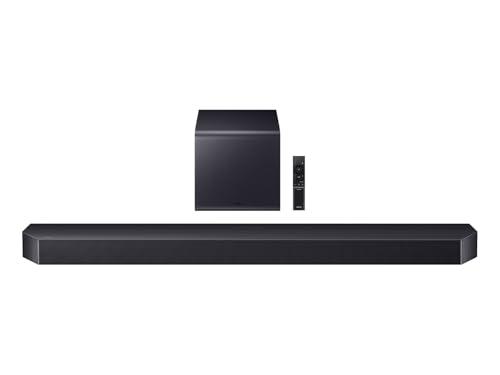
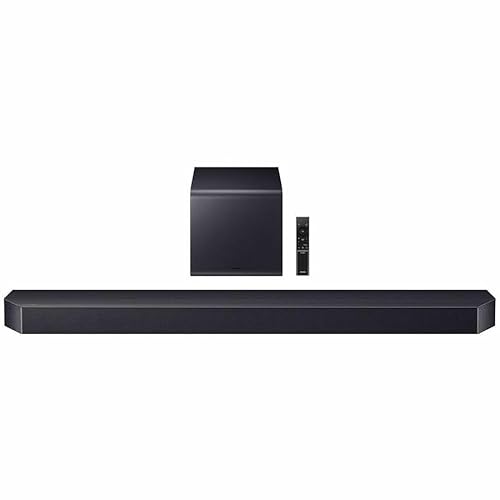
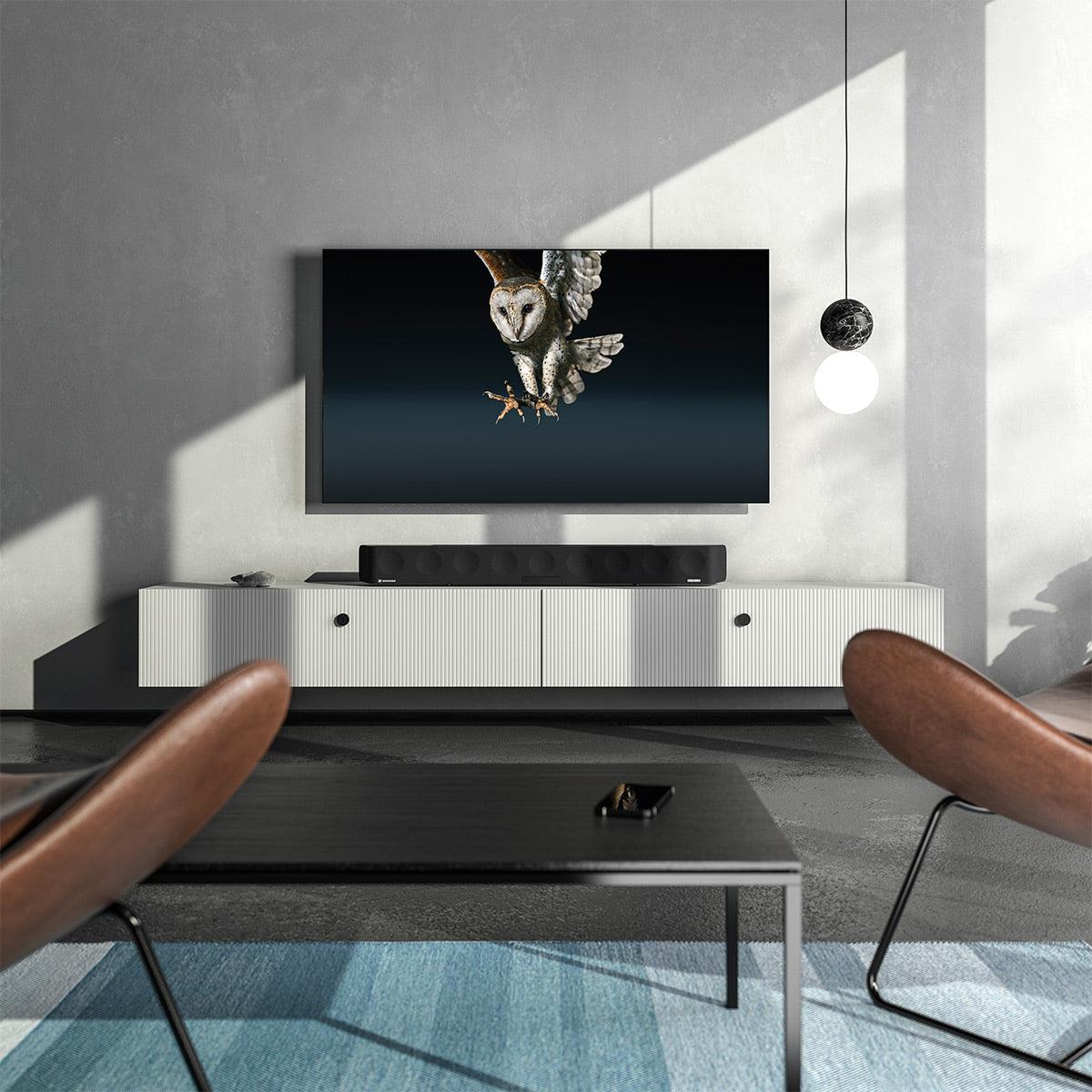
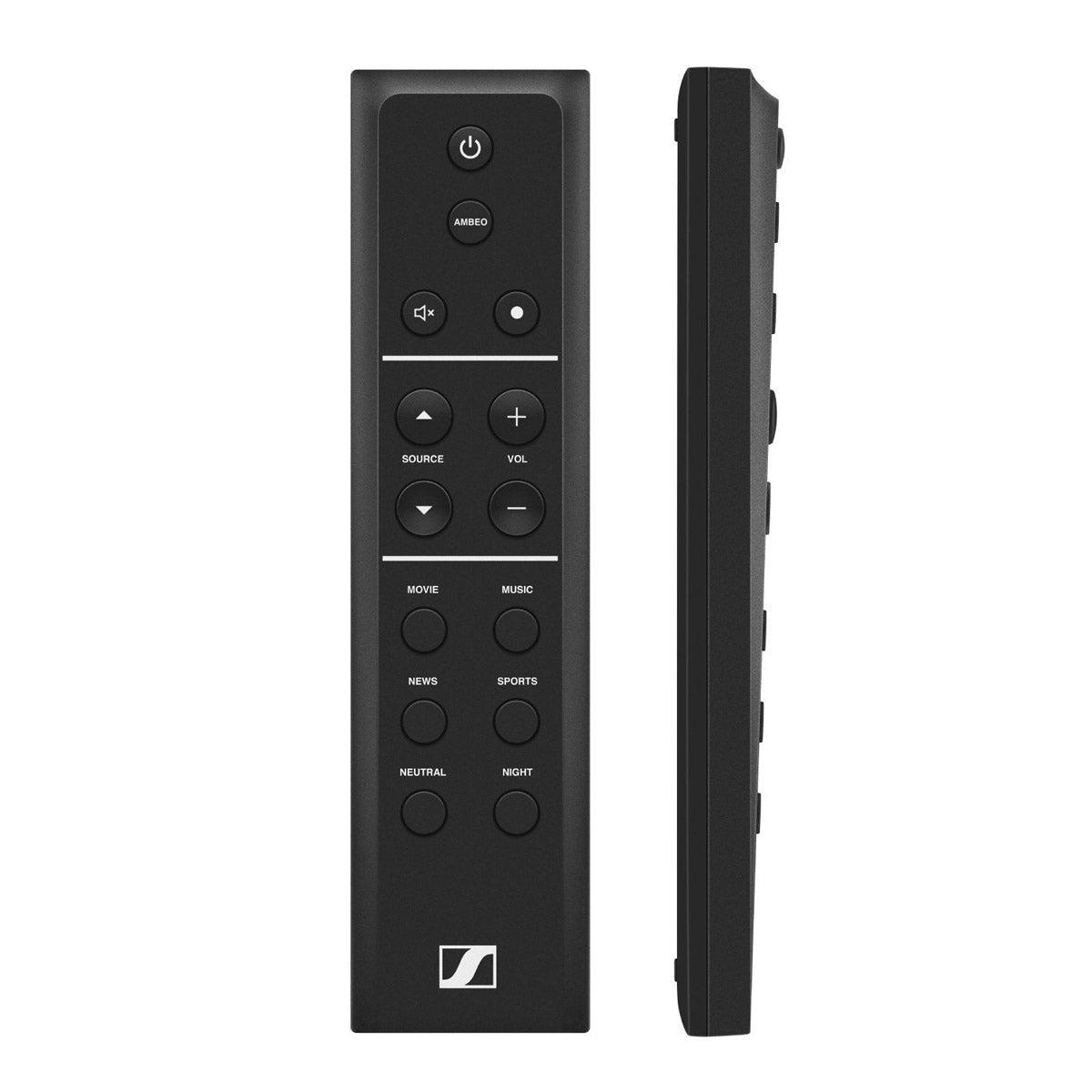
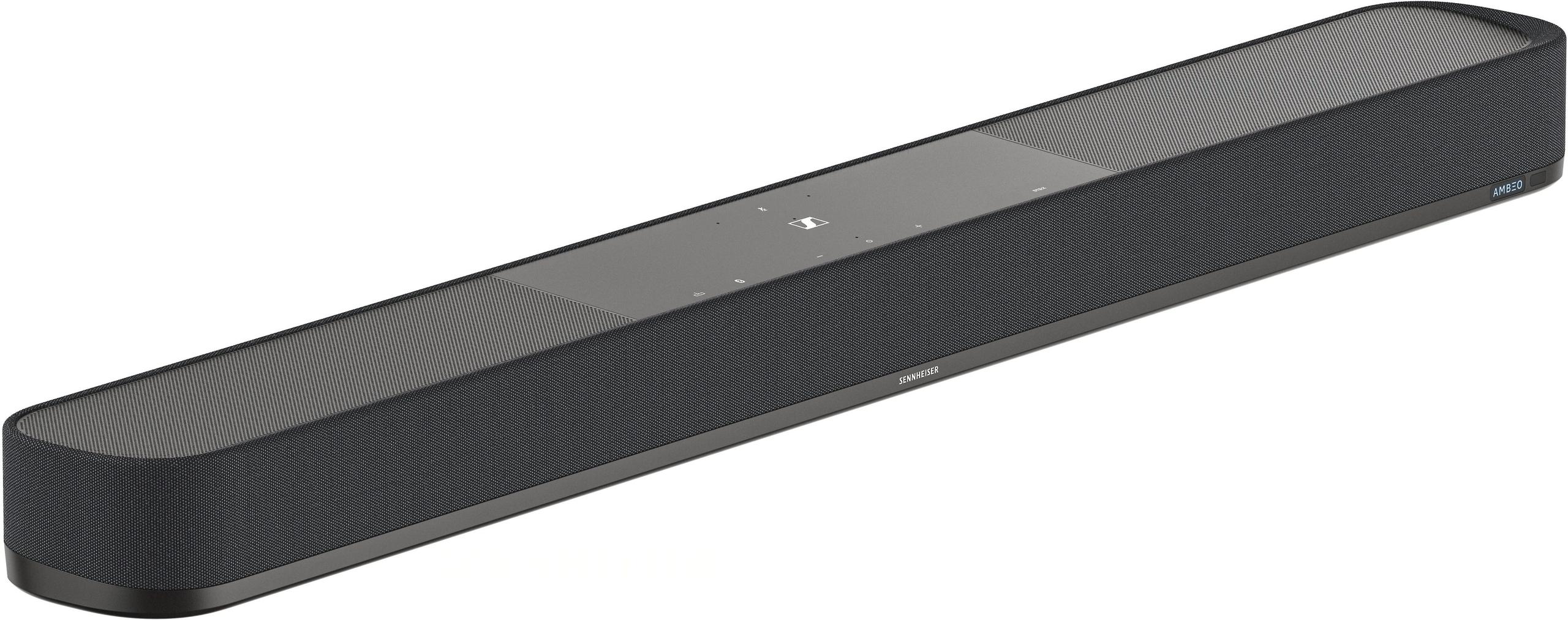
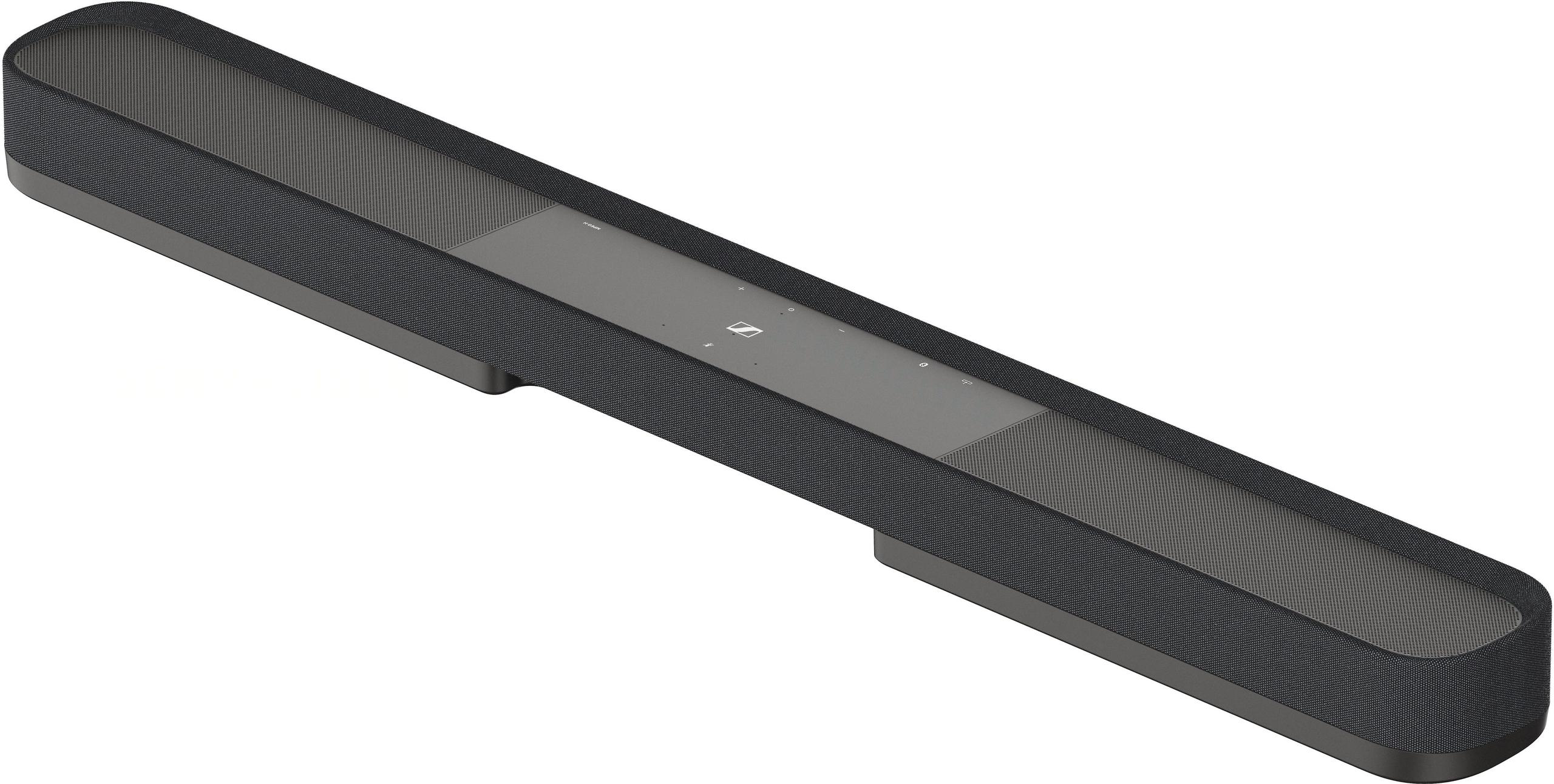

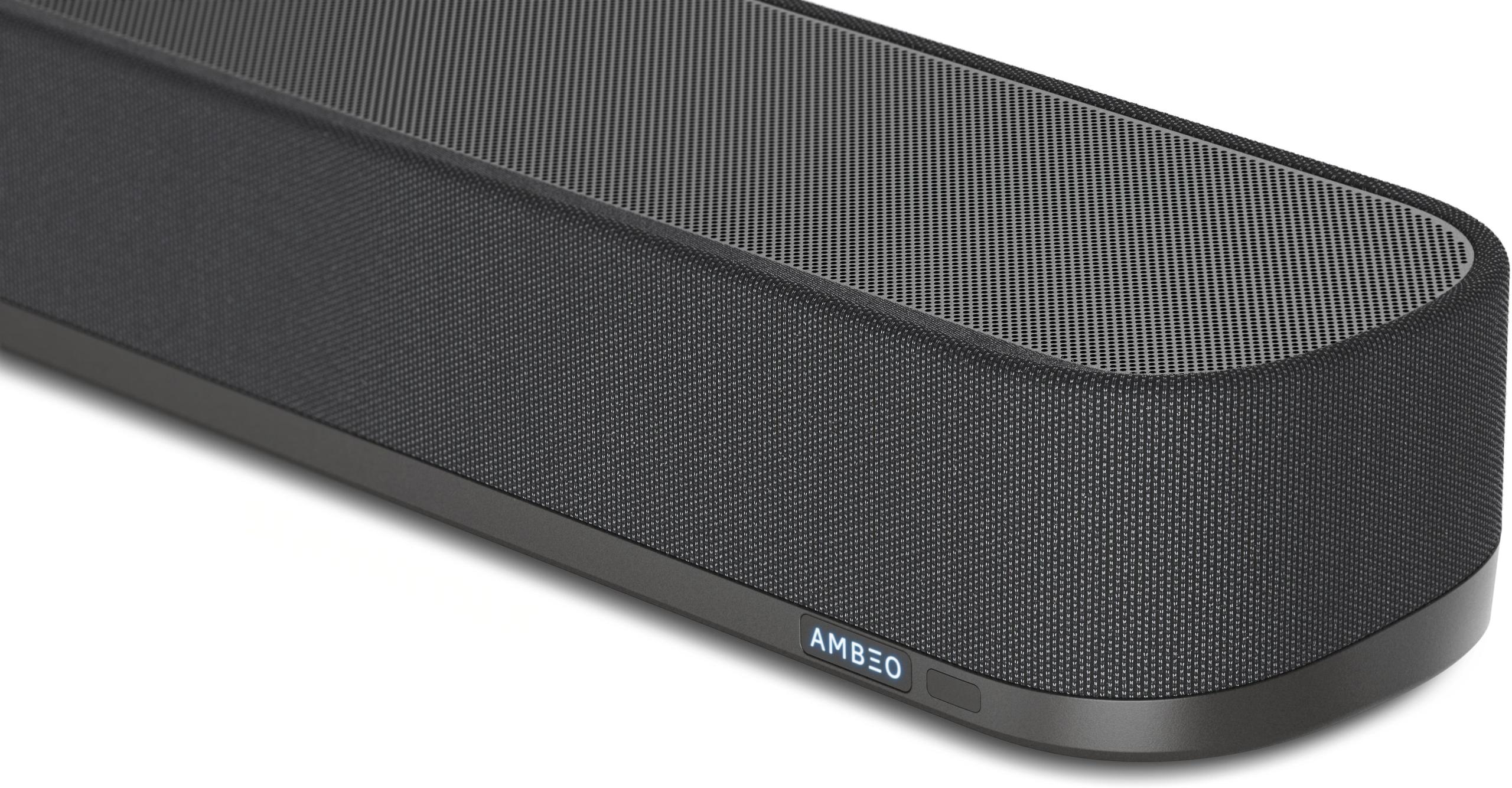

Premium soundbars have revolutionized home audio by promising cinema-quality sound without the complexity of traditional receiver-and-speaker setups. But with flagship models now costing as much as some cars' monthly payments, choosing the right one matters more than ever. The Samsung HW-Q990F and Sennheiser AMBEO Soundbar MAX represent two fundamentally different approaches to achieving that elusive "theater at home" experience.
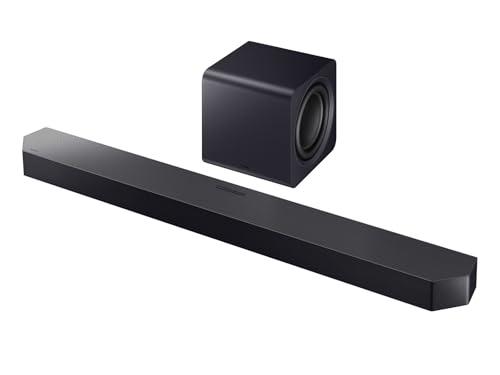
The Samsung HW-Q990F takes the "more speakers, better sound" philosophy to its logical conclusion with a complete 11.1.4-channel system spread across three separate units. Meanwhile, the Sennheiser AMBEO MAX bets everything on advanced virtualization technology packed into a single, elegant soundbar. At the time of writing, there's roughly a $700 price difference between them, with the Sennheiser commanding a significant premium for its German engineering and minimalist approach.
Understanding which approach works better requires diving deep into how each system creates that immersive surround sound experience you're paying for.
Before we pit these titans against each other, it's worth understanding what makes premium soundbars tick. The holy grail of home audio is recreating the three-dimensional soundscape you experience in a movie theater, where explosions rumble behind you and helicopters whoosh overhead. Traditional surround systems achieve this by physically placing speakers around your room – a center channel for dialogue, left and right speakers for stereo effects, surround speakers behind you, and specialized height channels for overhead effects.
Premium soundbars promise the same experience with far less complexity, but they achieve this goal through two very different methods. Physical surround systems like the Samsung HW-Q990F include actual wireless speakers that you place behind your seating area, creating genuine directional audio. Virtual surround systems like the Sennheiser AMBEO MAX use psychoacoustic processing – essentially tricking your brain into perceiving sounds coming from directions where no speakers exist.
Both the Samsung and Sennheiser were released in their current generations within the past few years, representing the cutting edge of their respective technologies. Samsung's 2025 model builds on years of refinement in wireless speaker integration and room calibration, while Sennheiser's offering showcases advanced virtualization algorithms developed in partnership with Germany's Fraunhofer Institute, the research organization behind the MP3 format.
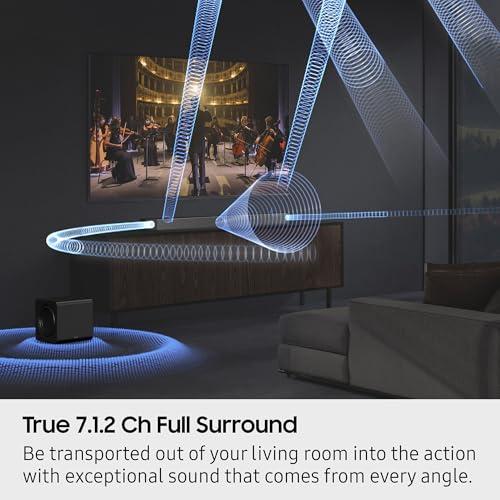
The most fundamental difference between these systems lies in their channel configuration – essentially, how many distinct audio streams they can handle simultaneously. The Samsung HW-Q990F boasts an impressive 11.1.4 setup, which breaks down to 11 main channels (including front left/right, center, side surrounds, and rear surrounds), one dedicated subwoofer channel (the ".1"), and four height channels (the final ".4") for overhead effects like rain or aircraft.
This translates to 23 individual speakers working in concert: 15 drivers built into the main soundbar itself, a powerful wireless subwoofer with dual 8-inch woofers, and a pair of wireless rear speakers that each house three separate drivers. Each rear speaker contains one front-firing driver, one side-firing driver, and one up-firing driver, creating a hemisphere of sound that envelops your listening position.
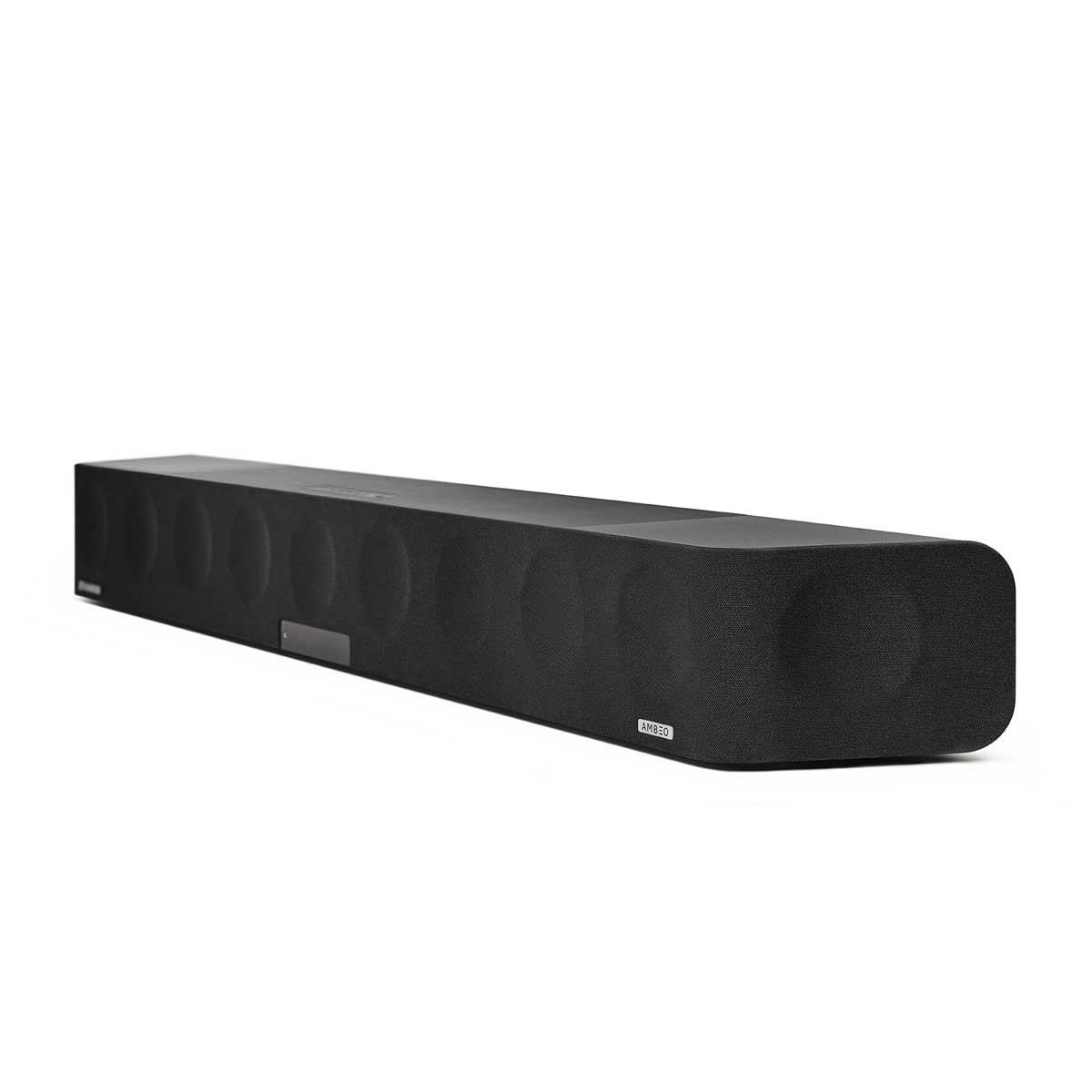
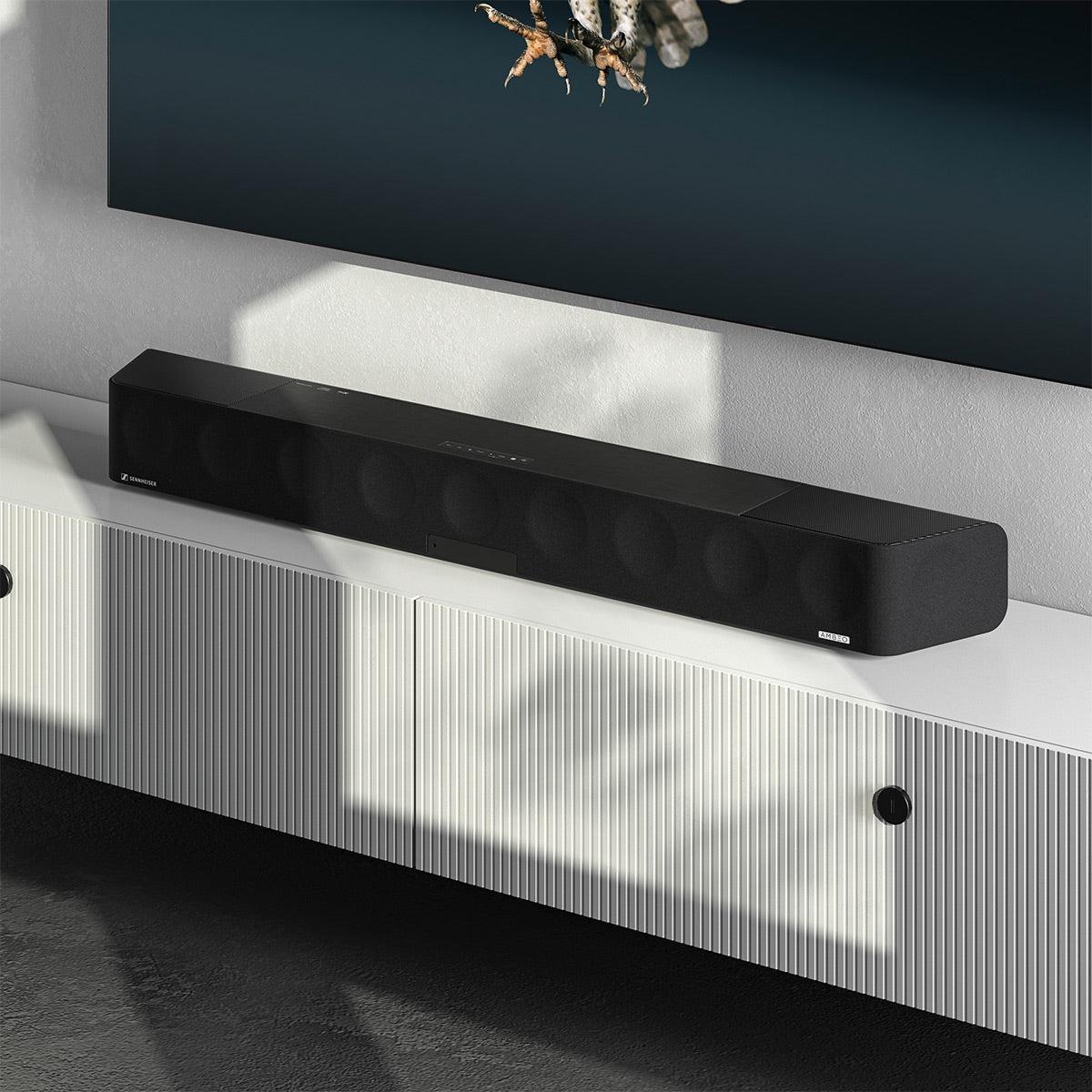
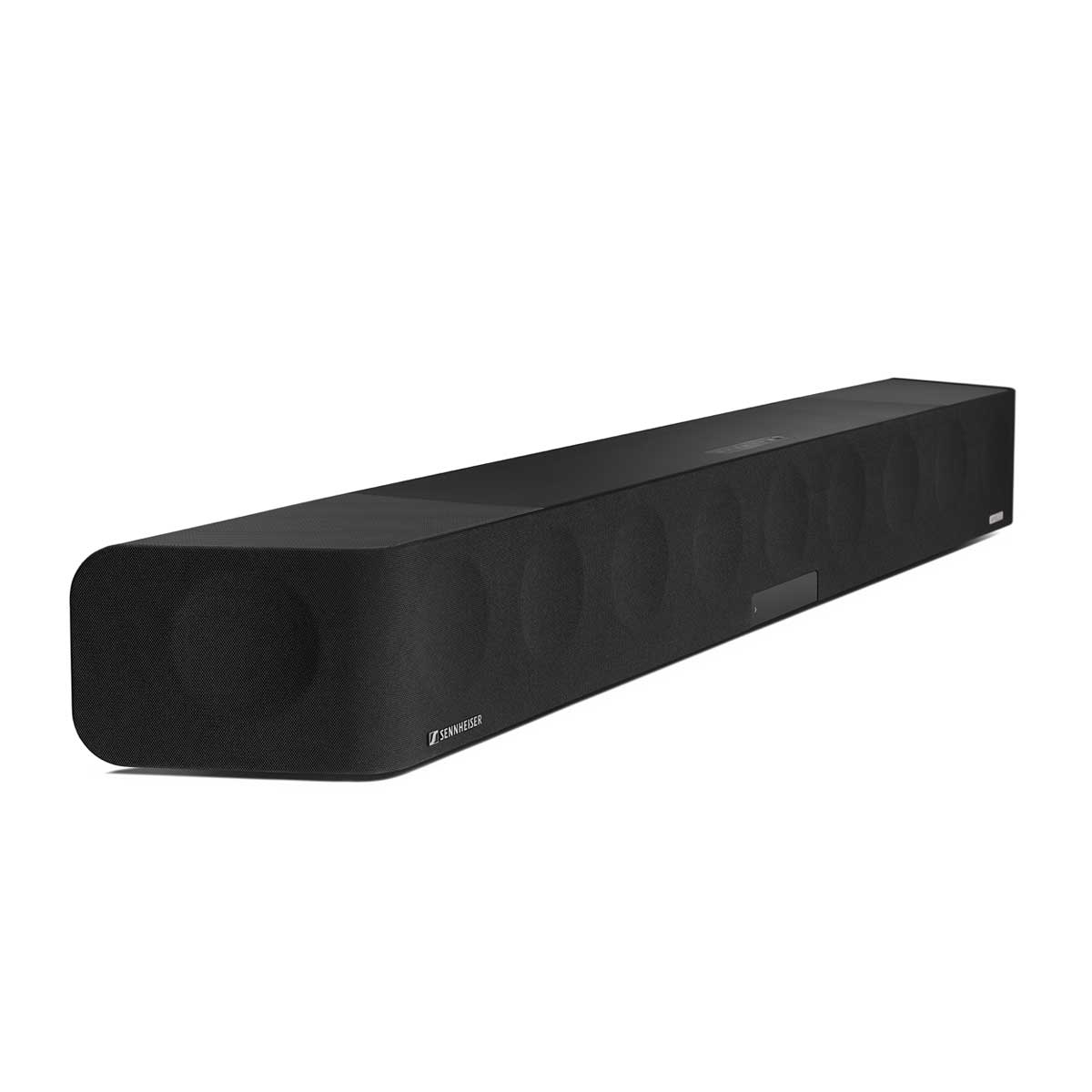
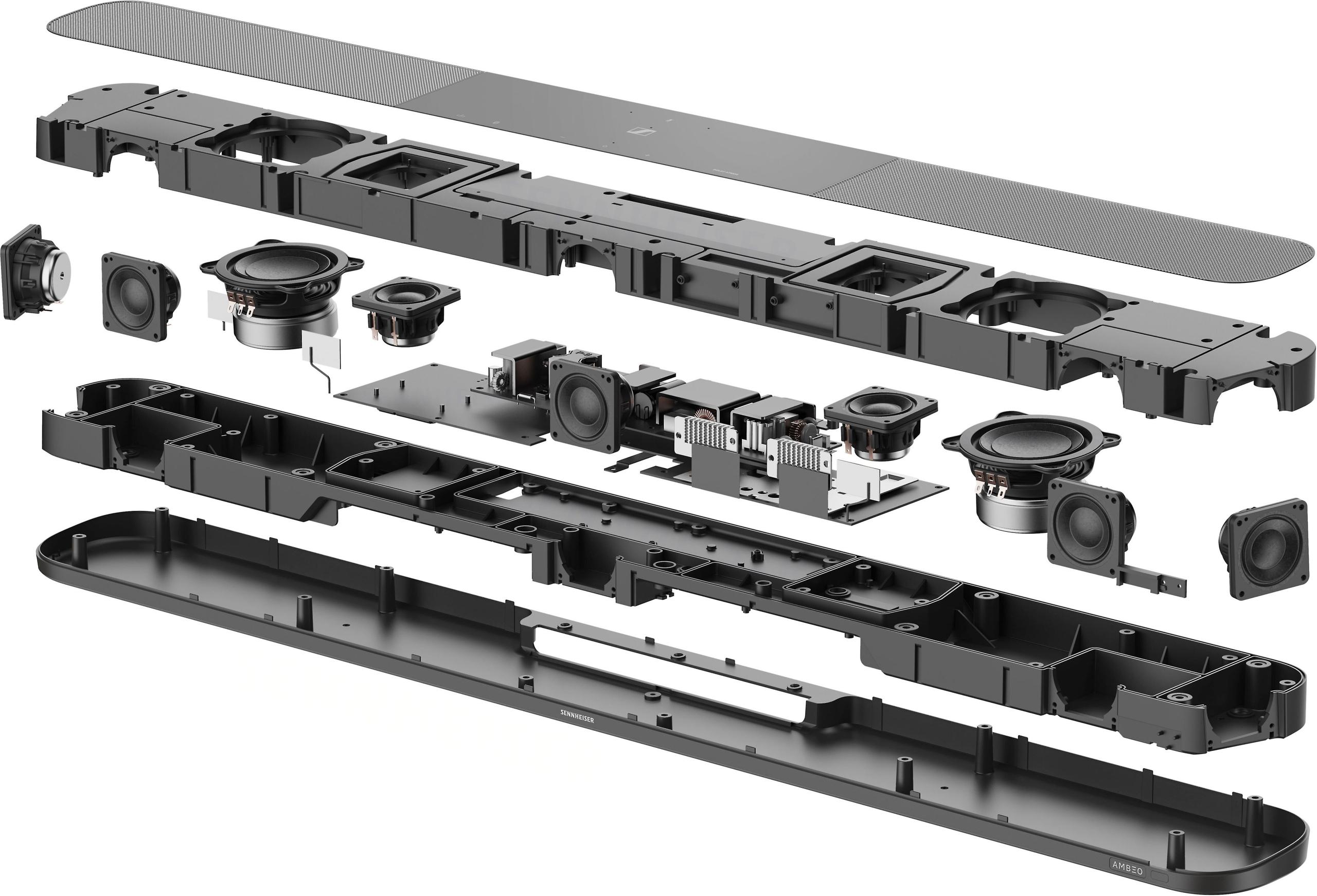
The Sennheiser AMBEO MAX takes a more refined approach with its 5.1.4 configuration using 13 carefully selected drivers, all housed within the single main unit. This includes five 1-inch aluminum dome tweeters for crisp highs, six 4-inch woofers for mid-range and bass, and two 3.5-inch full-range drivers positioned on the top corners for ambient effects.
What makes the Sennheiser's approach particularly clever is how these 13 drivers are positioned and angled. Rather than simply firing forward like conventional soundbars, the AMBEO's drivers point in multiple directions – some firing straight ahead, others angled toward the sides, and several pointing upward to bounce sound off your ceiling. This creates what Sennheiser calls "room virtualization," where the soundbar maps your room's acoustic properties and uses reflections to place virtual speakers around you.
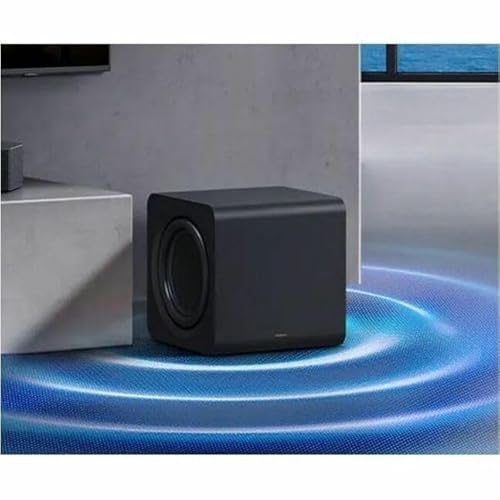
Bass performance often makes or break the home theater experience, and these two systems couldn't approach it more differently. The Samsung HW-Q990F includes a substantial wireless subwoofer featuring dual 8-inch woofers in a force-canceling configuration. This design places the two drivers in opposition to each other, which cancels out cabinet vibrations while allowing the acoustic energy to combine and reinforce. The result is clean, powerful bass that can shake your room without rattling your TV stand.
Samsung's subwoofer incorporates AI-based nonlinear control, which continuously monitors the drivers and adjusts their behavior to minimize distortion. This technology allows the subwoofer to maintain its composure even at high volumes, delivering the kind of deep, clean bass that makes movie explosions feel visceral without turning dialogue muddy.
The Sennheiser AMBEO MAX takes the integrated approach, building bass production into its main unit using two 4-inch woofers. While these drivers are smaller than Samsung's 8-inch units, Sennheiser has engineered them to work within the soundbar's acoustic design, using the cabinet itself as part of the bass reproduction system. The frequency response extends down to 30Hz – impressively deep for an integrated system.
However, physics still matters. Those 4-inch drivers simply can't move as much air as Samsung's 8-inch woofers, which means the Sennheiser delivers more refined, controlled bass rather than the room-shaking impact some home theater enthusiasts crave. For apartment dwellers or those who prefer subtlety over power, this might actually be preferable. But if you want to feel those T-Rex footsteps in Jurassic Park, the Samsung has a clear advantage.
This is where the philosophical differences between these systems become most apparent. The Samsung HW-Q990F achieves surround sound the traditional way – by actually placing speakers behind and around you. When a movie's sound engineer pans a helicopter from front to back, you hear it move from the main soundbar to the rear speakers positioned behind your couch. There's no processing trickery involved; the sound literally comes from where it's supposed to.
Each of Samsung's rear speakers houses three drivers oriented in different directions. The front-firing driver handles effects that should come from beside you, the side-firing driver creates ambient soundscapes, and the up-firing driver contributes to height effects. This multi-directional approach ensures that surround effects don't sound like they're coming from two point sources behind you, but rather from a continuous sound field.
The Sennheiser AMBEO MAX accomplishes surround sound through acoustic sleight of hand. Its virtualization engine analyzes incoming audio signals and redistributes them across its 13 drivers, carefully controlling timing, phase relationships, and frequency content to create the illusion of sound sources that don't physically exist. When that helicopter pans from front to back, the AMBEO manipulates reflections off your room's walls and ceiling to convince your brain that the sound is coming from behind you.
This virtualization technology has improved dramatically in recent years. Modern processors can account for room acoustics, listener position, and even the specific characteristics of human hearing to create surprisingly convincing surround effects. However, it's still an illusion, and like all illusions, it works better under some conditions than others.
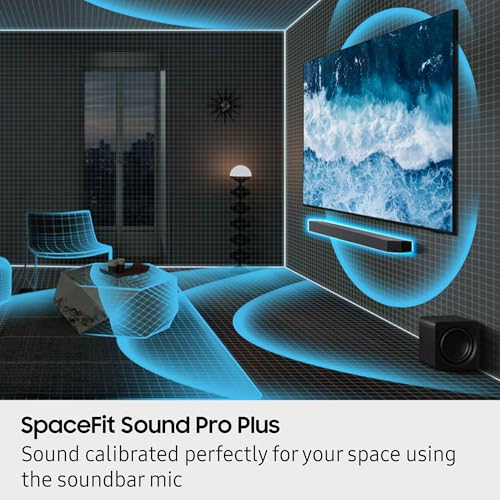
Both systems recognize that your living room isn't a perfectly designed acoustic space, and they each tackle this challenge differently. The Samsung HW-Q990F employs SpaceFit Sound Pro, which uses embedded sensors to analyze your room's acoustic properties automatically. This system measures how sound bounces around your space and adjusts the soundbar's output to compensate for reflective surfaces, room size, and speaker placement.
What makes Samsung's approach particularly user-friendly is how seamlessly it works. Once you've positioned the speakers and powered everything up, the system handles calibration automatically without requiring any input from you. It's the kind of "set it and forget it" functionality that makes premium soundbars appealing to people who want great sound without becoming audio engineers.
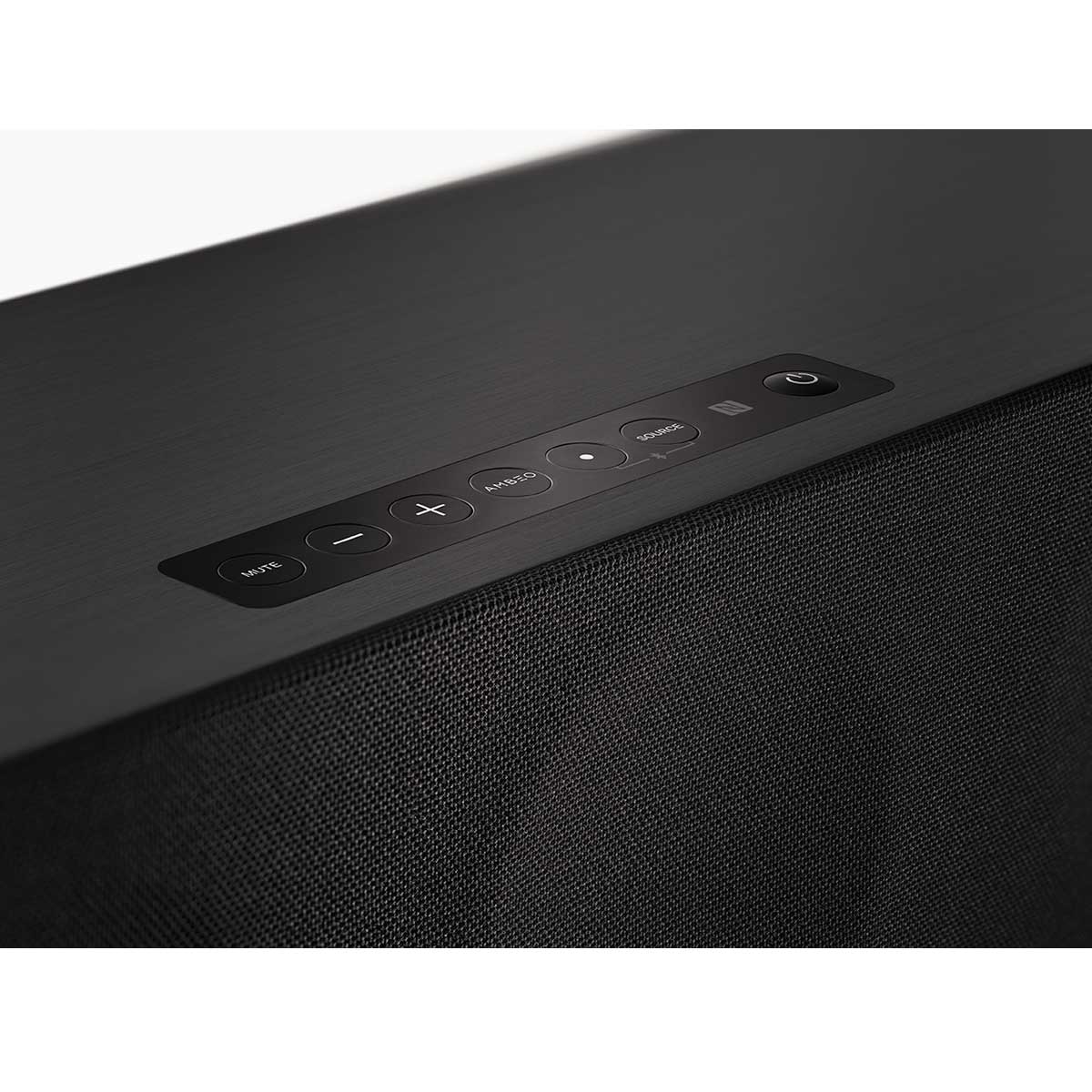
The Sennheiser AMBEO MAX uses a built-in microphone array for room calibration, analyzing acoustic reflections to optimize its virtualization algorithms for your specific space. This calibration process is more involved than Samsung's automatic approach, but it allows for more precise tuning of the virtualization effect.
The Sennheiser's calibration is particularly critical because virtual surround depends heavily on room acoustics. In a room with hard surfaces that reflect sound predictably, the AMBEO can create remarkably convincing surround effects. In a heavily furnished room with lots of sound-absorbing materials, those critical reflections get dampened, and the virtualization becomes less effective.
Nothing ruins a movie night like having to constantly adjust the volume because you can't understand what the characters are saying. Both systems excel at dialogue clarity, but they achieve it through different means.
The Samsung HW-Q990F dedicates specific drivers to center channel reproduction – the audio stream that carries most dialogue in movies and TV shows. This discrete center channel, combined with Samsung's Active Voice Amplifier Pro technology, ensures that voices cut through even the most chaotic action sequences. The system can analyze ambient noise in your room and dynamically boost dialogue frequencies to maintain intelligibility.
The Sennheiser AMBEO MAX takes a more purist approach, focusing on accurate reproduction of the original audio mix without heavy processing. Its aluminum dome tweeters and precision engineering deliver what many describe as uncolored, natural-sounding voices. The system includes voice enhancement options in its companion app, but even without these features engaged, dialogue clarity remains exceptional.
In practice, both systems deliver excellent voice reproduction, but with slightly different characteristics. The Samsung tends to be more forgiving of poorly mixed content, using its processing power to pull dialogue forward in the mix. The Sennheiser rewards high-quality source material with more natural, lifelike vocal reproduction.
Gaming has become an increasingly important consideration for soundbar purchases, especially as PlayStation 5 and Xbox Series X push the boundaries of audiovisual fidelity. The Samsung HW-Q990F clearly designed with gamers in mind, featuring HDMI 2.1 connectivity that supports 4K video pass-through at 120Hz with HDR10+ compatibility.
This might sound like technical gibberish, but it's actually crucial for modern gaming. Today's consoles can output games at 120 frames per second in 4K resolution, creating incredibly smooth motion that's particularly noticeable in fast-paced games. The Samsung's HDMI 2.1 support means you can connect your console directly to the soundbar without losing any video quality or features, while still benefiting from the system's audio processing.
The Samsung also includes a Game Pro mode that optimizes audio processing for gaming scenarios, emphasizing directional cues that help you locate opponents in competitive games. The discrete rear speakers provide genuine positional audio that can give you a competitive edge in games where sound positioning matters.
The Sennheiser AMBEO MAX doesn't emphasize gaming features as heavily, focusing instead on pure audio reproduction. While it certainly handles game audio well, it lacks the specialized processing modes and high-bandwidth video connectivity that serious gamers might want.
At the time of writing, the Samsung HW-Q990F represents exceptional value in the premium soundbar category. You're getting a complete surround sound system with genuine rear speakers, a powerful subwoofer, and advanced room calibration for significantly less than the Sennheiser's asking price. When you consider that the Samsung package includes everything needed for a full surround setup, while the Sennheiser would require an additional subwoofer purchase for maximum bass impact, the value equation tilts even further toward Samsung.
The Sennheiser AMBEO MAX commands its premium through build quality, acoustic engineering, and the convenience of a single-unit solution. Those aluminum dome tweeters and precision-engineered drivers don't come cheap, and the research and development behind the virtualization technology represents significant investment. If you value minimalist aesthetics and are willing to pay for German engineering, the price premium might be justified.
However, for most home theater enthusiasts, the Samsung delivers more tangible performance benefits per dollar spent. The combination of genuine surround speakers, powerful bass, and comprehensive feature set provides better value for money, especially considering the substantial price difference.
Your decision between these systems should primarily depend on your room constraints, aesthetic preferences, and performance priorities.
Choose the Samsung HW-Q990F if you have space for multiple components and want maximum home theater impact. The genuine surround speakers provide more convincing directional effects than any virtualization technology can achieve, and the included subwoofer delivers the kind of bass that makes action movies truly engaging. The automatic setup and room calibration make it surprisingly easy to get great results, while the gaming features future-proof your investment for next-generation consoles.
The Samsung particularly excels in medium to large rooms where you can properly position the rear speakers and where the powerful subwoofer can really stretch its legs. If you're setting up a dedicated home theater space or have a family room where movie nights are a regular occurrence, this system will deliver the most immersive experience.
Choose the Sennheiser AMBEO MAX if aesthetic simplicity and audio purity are your primary concerns. The single-unit design eliminates cable management headaches and appeals to minimalists who don't want multiple components cluttering their living space. The virtualization technology, while not as convincing as discrete speakers, still creates impressive surround effects, especially in smaller rooms where wall reflections work more predictably.
The Sennheiser also excels for music listening, where its high-quality drivers and uncolored sound reproduction really shine. If you listen to as much music as you watch movies, or if you're particularly sensitive to audio quality, the AMBEO's audiophile-grade components justify their premium pricing.
Both systems represent the pinnacle of soundbar technology, but they serve different audiences. The Samsung maximizes performance and value for traditional home theater setups, while the Sennheiser offers premium audio quality in a space-efficient package. Your choice ultimately depends on whether you prioritize maximum immersion or minimal footprint – both are valid approaches to great home audio.
| Samsung HW-Q990F | Sennheiser AMBEO Soundbar |
|---|---|
| Channel Configuration - Determines surround sound accuracy and immersion | |
| 11.1.4 channels with 23 discrete speakers across 3 units | 5.1.4 channels with 13 drivers in single unit |
| Surround Sound Method - Physical placement vs virtualization trade-offs | |
| Dedicated wireless rear speakers for authentic directional audio | Advanced virtualization using room reflections |
| Bass System - Impact on movie explosions and music depth | |
| Wireless subwoofer with dual 8" woofers (300W dedicated power) | Integrated 2x 4" woofers (optional sub available separately) |
| Setup Complexity - Time and effort required for optimal performance | |
| 3 separate units with automatic wireless pairing | Single soundbar with app-based room calibration |
| Room Calibration - Automatic audio optimization for your space | |
| SpaceFit Sound Pro (sensor-based, fully automatic) | Built-in microphone array with manual fine-tuning |
| Gaming Features - Modern console compatibility and competitive advantages | |
| HDMI 2.1 with 4K/120Hz pass-through, Game Pro mode | Standard connectivity, audiophile-focused processing |
| Voice Clarity Technology - Dialogue intelligibility in complex mixes | |
| Active Voice Amplifier Pro with discrete center channel | Natural reproduction with voice enhancement options |
| Music Performance - Accuracy and detail for critical listening | |
| Balanced sound with 7-band EQ and multiple presets | Audiophile-grade aluminum tweeters with uncolored reproduction |
| Physical Footprint - Space requirements and aesthetic impact | |
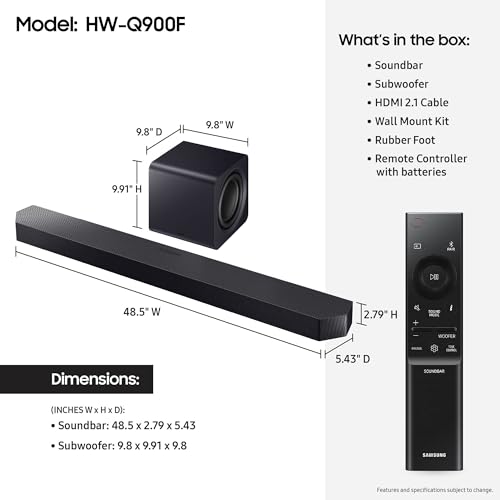
| Requires placement of rear speakers and subwoofer | Single 49.6" soundbar unit only |
| Value Proposition - Performance per dollar at time of writing | |
| Complete surround system with all components included | Premium single-unit solution at significant price premium |
The Samsung HW-Q990F is better for dedicated home theater setups because it includes physical rear speakers that create authentic surround sound. The Sennheiser AMBEO uses virtualization technology which works well but can't match the directional accuracy of actual speakers placed behind your seating area.
The Samsung HW-Q990F includes wireless rear speakers that provide genuine surround effects, while the Sennheiser AMBEO creates virtual surround sound using advanced processing. Real rear speakers like those in the Samsung system deliver more convincing directional audio for movies and gaming.
The Samsung HW-Q990F includes a dedicated wireless subwoofer with dual 8-inch woofers, providing deeper and more powerful bass than the Sennheiser AMBEO's integrated 4-inch drivers. For impactful movie explosions and music, the Samsung offers superior low-frequency performance.
The Samsung HW-Q990F offers 11.1.4 channels with 23 total speakers across multiple units, while the Sennheiser AMBEO provides 5.1.4 channels through 13 drivers in one soundbar. More channels generally mean better surround sound separation and more immersive audio experiences.
The Sennheiser AMBEO is simpler to install as a single unit, but the Samsung HW-Q990F features automatic wireless pairing between all components. Both systems offer room calibration, though the Samsung requires positioning multiple speakers while the Sennheiser only needs one placement decision.
The Sennheiser AMBEO costs significantly more than the Samsung HW-Q990F but offers premium build quality and audiophile-grade components. The Samsung provides better value with more features and genuine surround speakers included at a lower price point.
The Sennheiser AMBEO excels at music reproduction with its high-quality aluminum tweeters and natural sound signature. While the Samsung HW-Q990F handles music well with customizable EQ settings, the Sennheiser is specifically engineered for audiophile-quality music playback.
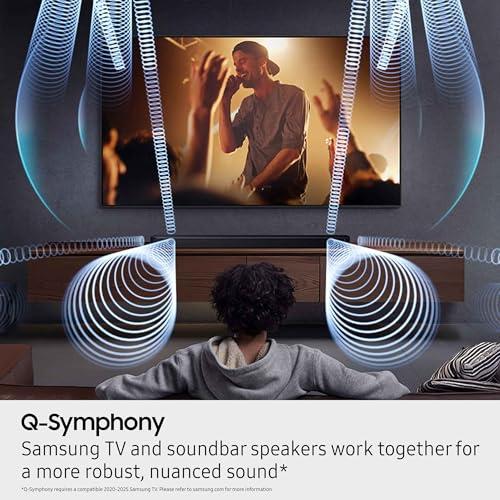
Both the Samsung HW-Q990F and Sennheiser AMBEO work with any TV through HDMI or optical connections. The Samsung offers additional integration features with Samsung TVs, but both systems provide universal compatibility with all major TV brands.
The Samsung HW-Q990F is superior for gaming with HDMI 2.1 support for 4K/120Hz pass-through and a dedicated Game Pro mode. The physical rear speakers also provide better directional audio cues for competitive gaming compared to the Sennheiser AMBEO's virtualization.
The Sennheiser AMBEO requires only space for one 49.6-inch soundbar, making it ideal for minimalist setups. The Samsung HW-Q990F needs placement for the main bar, wireless subwoofer, and two rear speakers, requiring more room but delivering authentic surround sound.
Both the Samsung HW-Q990F and Sennheiser AMBEO excel at dialogue clarity. The Samsung uses Active Voice Amplifier Pro with a dedicated center channel, while the Sennheiser provides natural, uncolored voice reproduction. Both ensure clear dialogue during movies and TV shows.
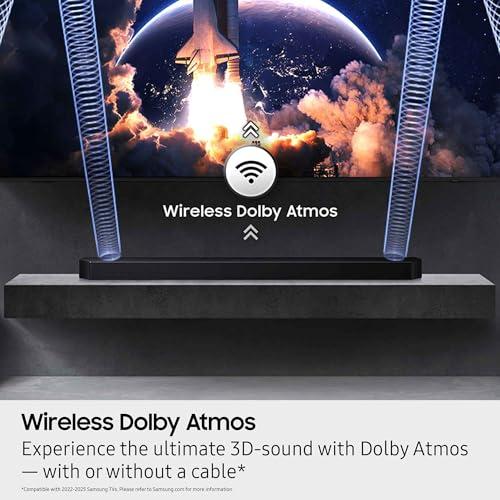
Yes, both the Samsung HW-Q990F and Sennheiser AMBEO support Dolby Atmos, DTS:X, and other premium audio formats. The Samsung uses physical height speakers for overhead effects, while the Sennheiser creates virtual height channels through advanced processing algorithms.
We've done our best to create useful and informative comparisons to help you decide what product to buy. Our research uses advanced automated methods to create this comparison and perfection is not possible - please contact us for corrections or questions. These are the sites we've researched in the creation of this article: rtings.com - crutchfield.com - sound-advice.online - samsung.com - soundandvision.com - samsung.com - whathifi.com - youtube.com - youtube.com - bestbuy.com - avsforum.com - content.syndigo.com - samsung.com - businessinsider.com - dolby.com - youtube.com - abcwarehouse.com - bestbuy.com - rtings.com - techradar.com - audioxpress.com - whathifi.com - upscaleaudio.com - soundstagesimplifi.com - global.sennheiser-hearing.com - sennheiser-hearing.com - audioadvice.com - abt.com - moon-audio.com

Privacy Policy
Terms and Conditions - Affiliate Policy
Home Security
© Copyright 2008-2026.
11816 Inwood Rd #1211, Dallas, TX 75244