



When your TV's built-in speakers sound like they're broadcasting through a tin can, it's time for a soundbar upgrade. The question isn't whether you need better audio – it's how much you should spend to get there. Today's soundbar market presents an interesting dilemma: ultra-affordable systems with genuine surround speakers versus premium all-in-one bars that cost ten times more.
We've spent considerable time researching two products that represent opposite ends of this spectrum: the Ultimea Aura A40 U2601 and the Sennheiser AMBEO Soundbar. At the time of writing, these systems are separated by roughly a 12-fold price difference, yet each offers compelling advantages depending on your priorities and living situation.
Before diving into specifics, let's establish what separates a great soundbar from a mediocre one. The fundamental challenge with any soundbar is physics: cramming multiple audio channels into a slim enclosure that fits under your TV. Traditional surround sound systems place speakers around your room – behind you, to your sides, and above you. Soundbars must recreate this effect through clever engineering tricks.
The most critical performance metrics include frequency response (how deep the bass goes and how clear the highs are), soundstage width (how spread out the audio feels), and dynamic range (the difference between quiet whispers and explosive action scenes). Power output matters, but clean amplification and quality drivers often trump raw wattage numbers.
Virtual surround processing – the algorithms that make stereo speakers sound like surround sound – has improved dramatically since both products launched in the early 2020s. However, the fundamental trade-off remains: physical speaker placement versus sophisticated processing in a single unit.
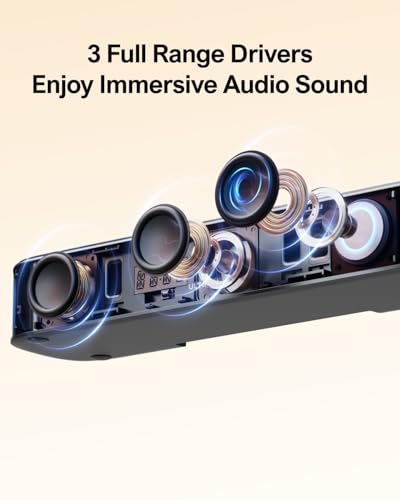
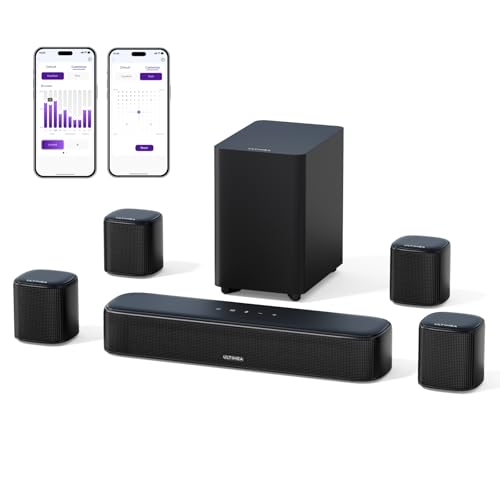
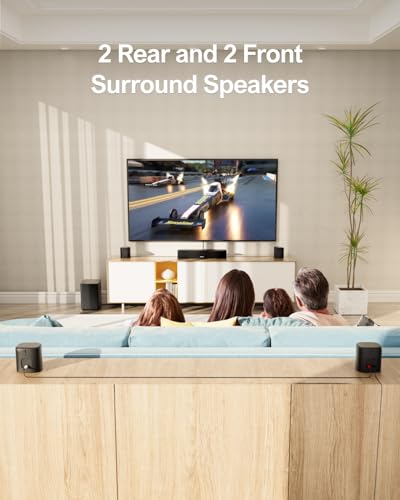
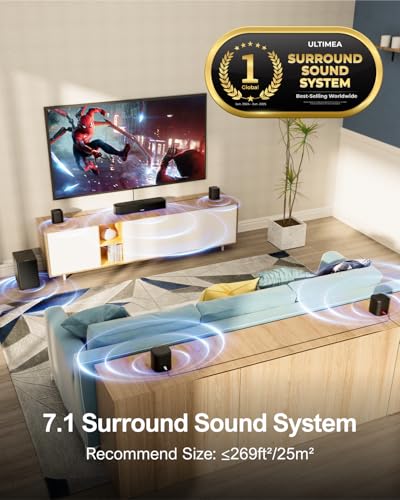
The Ultimea Aura A40 U2601 takes an unconventional approach for a budget system. Rather than cramming everything into one bar, Ultimea provides eight physical speakers distributed across your room: three in the main soundbar, four separate surround speakers, and a dedicated subwoofer. This creates what they call a "7.1 virtual surround" system, though it's more accurate to describe it as a genuine multi-speaker setup with virtual processing enhancement.
This physical distribution offers a significant advantage that software alone cannot replicate. When a helicopter flies overhead in a movie, the Ultimea system can actually move that sound from the front speakers to the rear ones, creating convincing directional effects. The four surround speakers – two positioned near your front left and right, two behind your seating area – enable true 360-degree audio placement that no single soundbar can match.
The system's BassMX technology works in conjunction with a 4-inch wired subwoofer to handle low-frequency effects. While the main system only reaches down to 65Hz (bass frequencies below this point are what you feel in your chest during action movies), the dedicated subwoofer extends the response lower. However, our research into user experiences reveals this requires running the subwoofer "all the way up" to compensate for the naturally thin character of the satellite speakers.
SurroundX processing enhances the spatial effects, but the real magic happens through physical placement. The Ultimea includes cables up to 6 meters long for rear speaker placement, giving you genuine positional flexibility that dramatically improves immersion for gaming and action content.
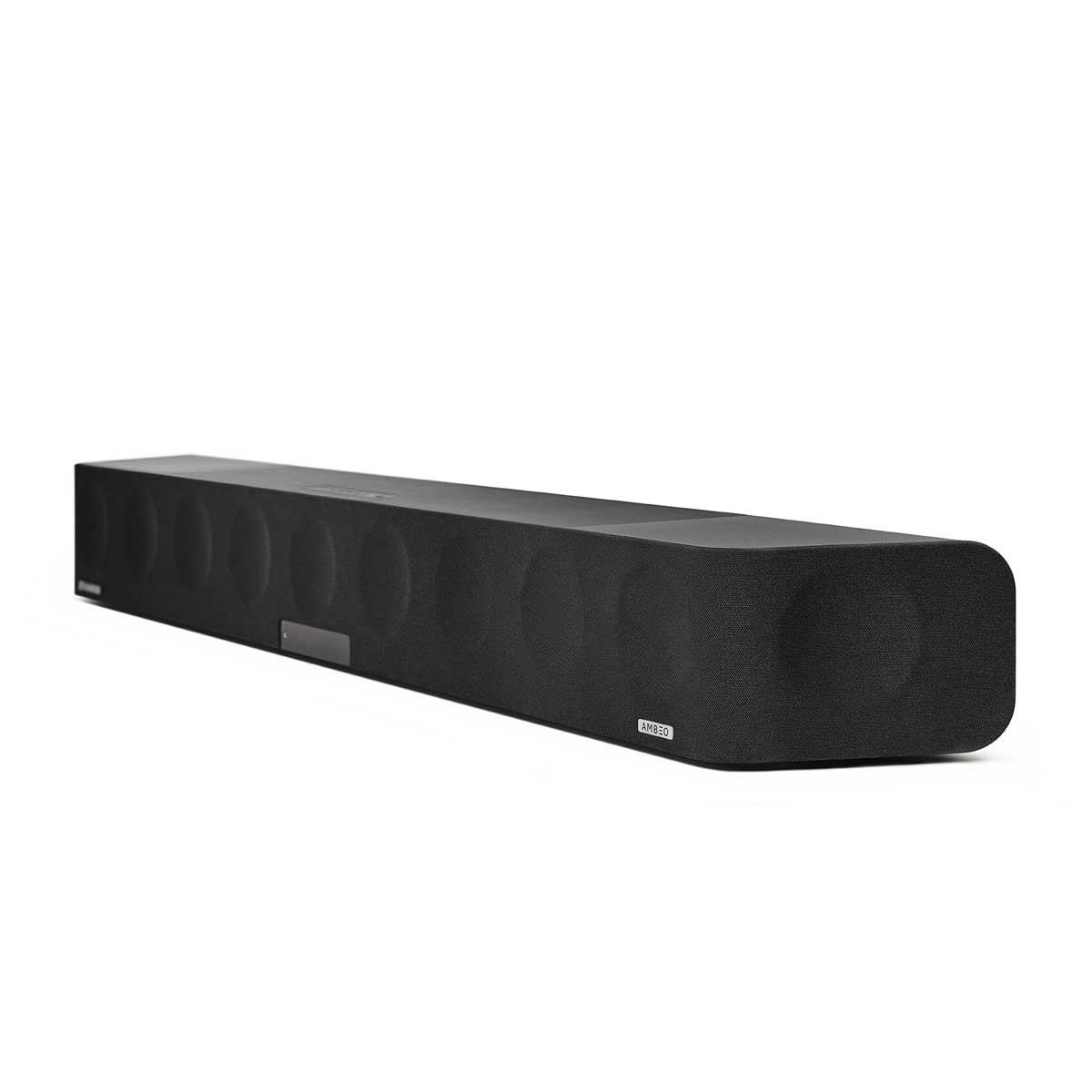
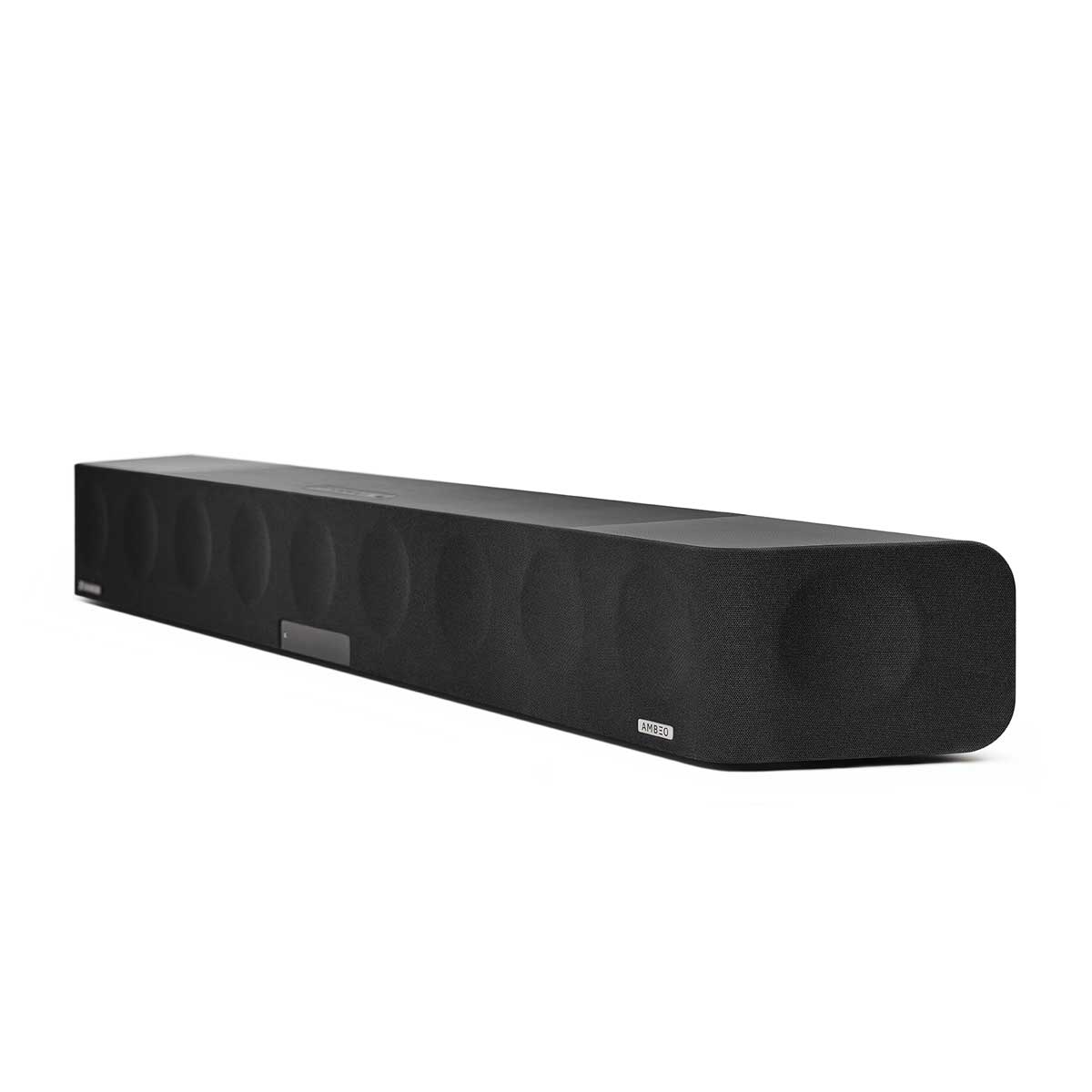
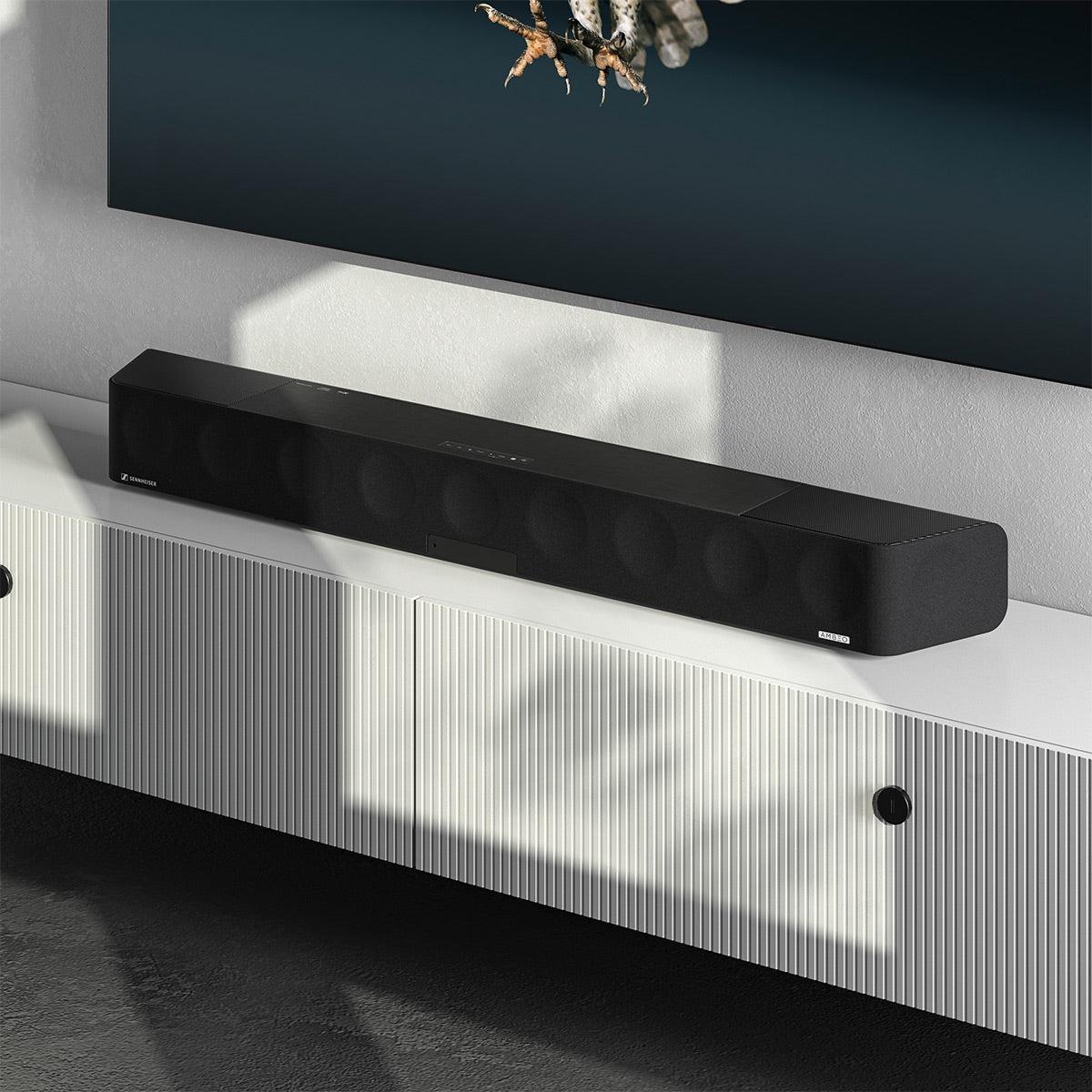
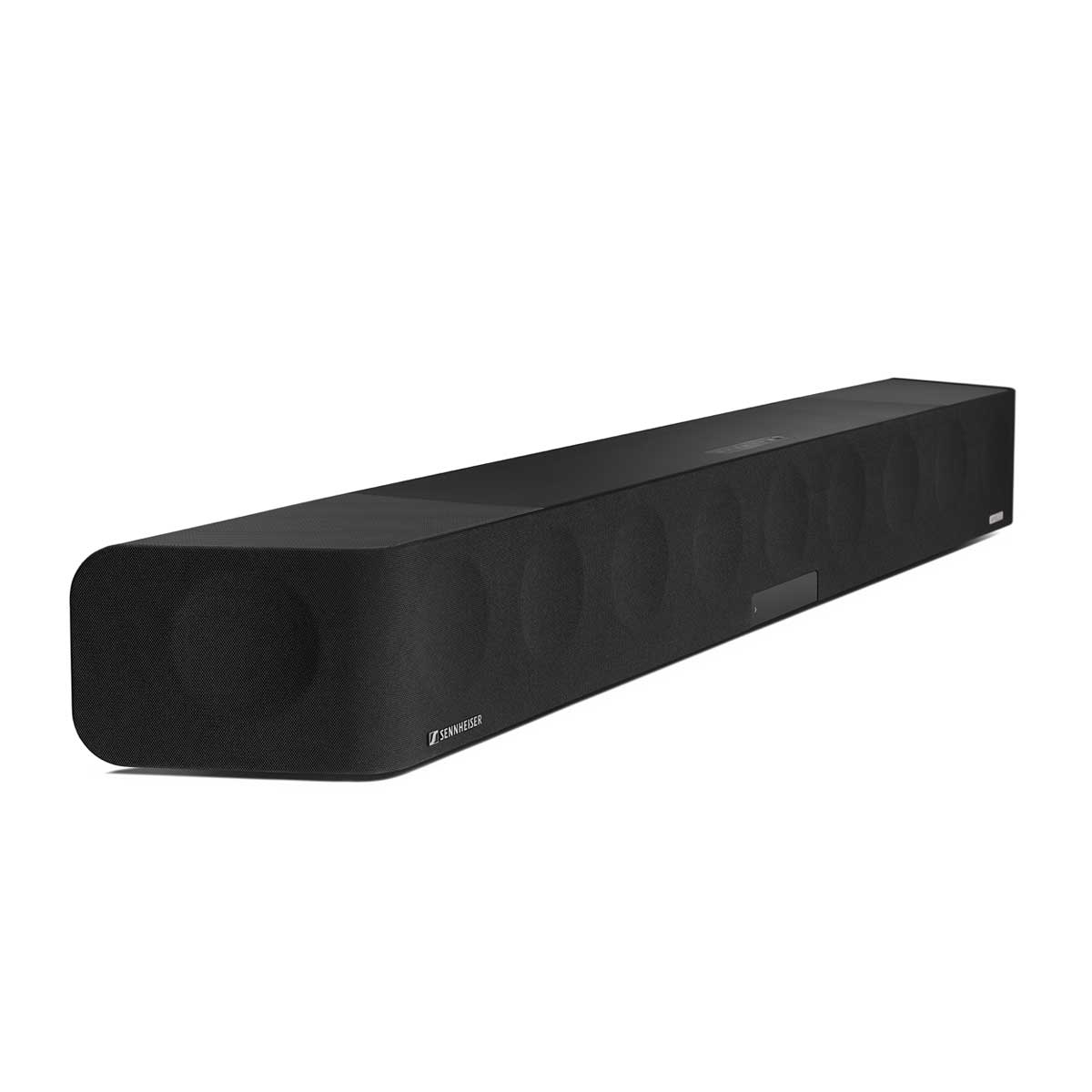
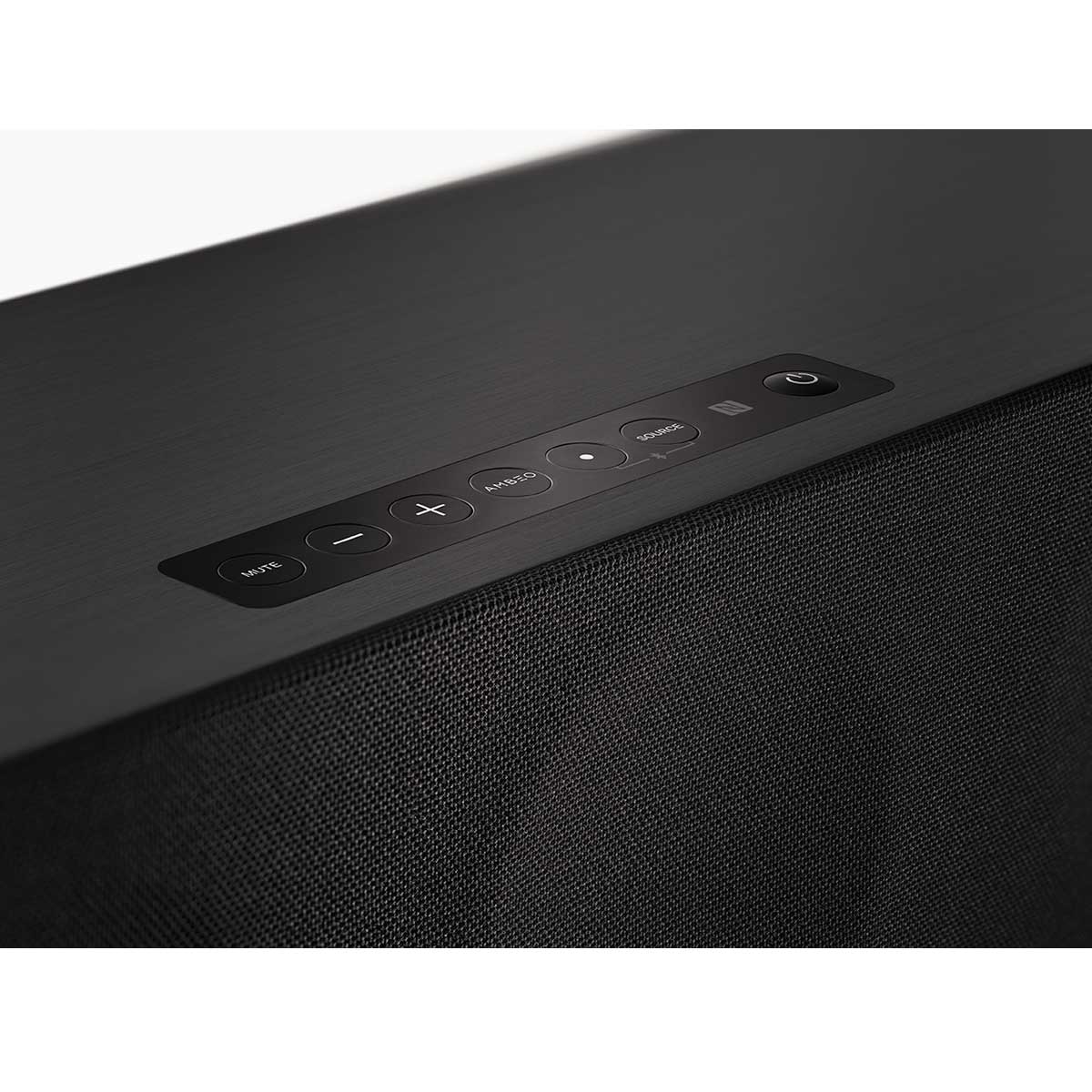
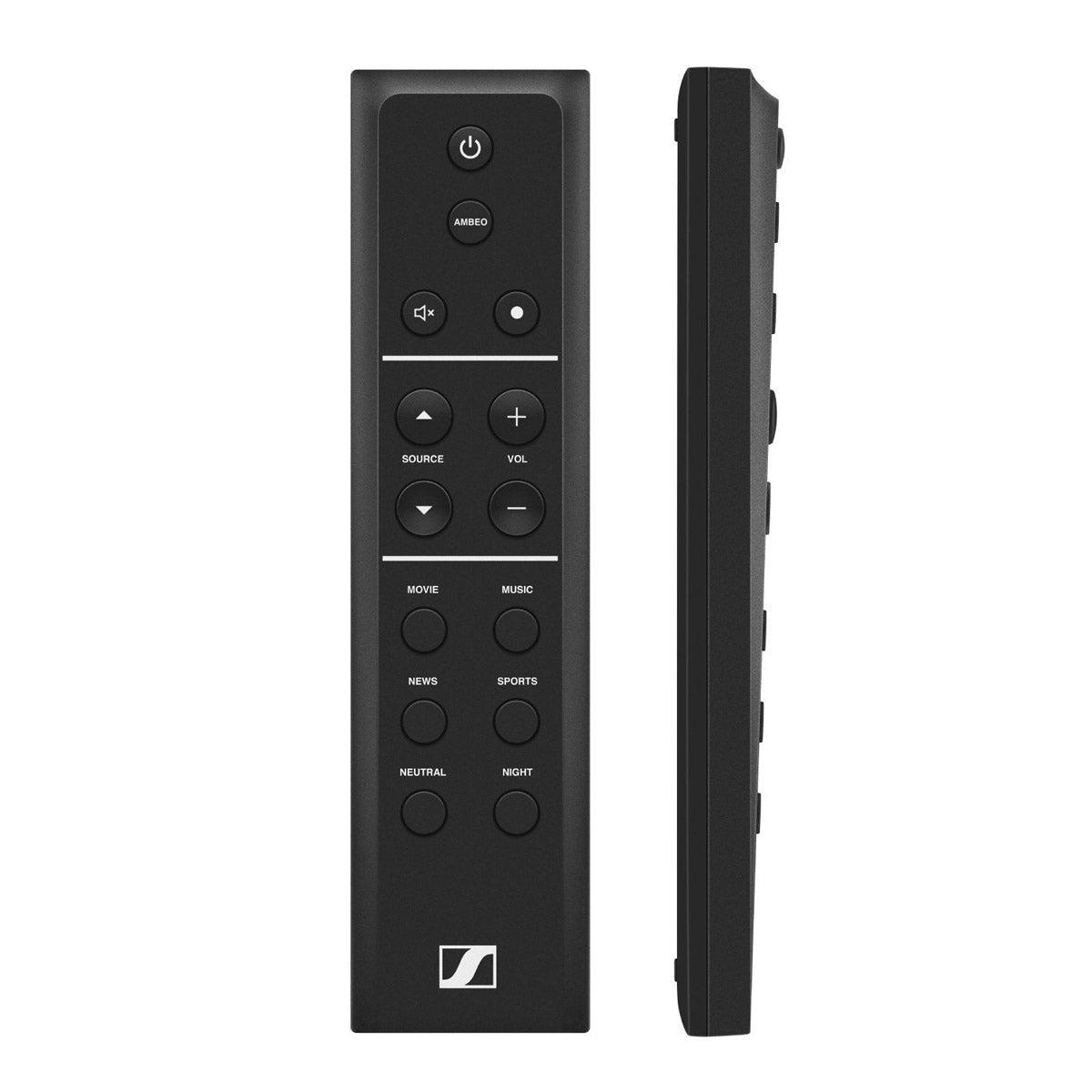
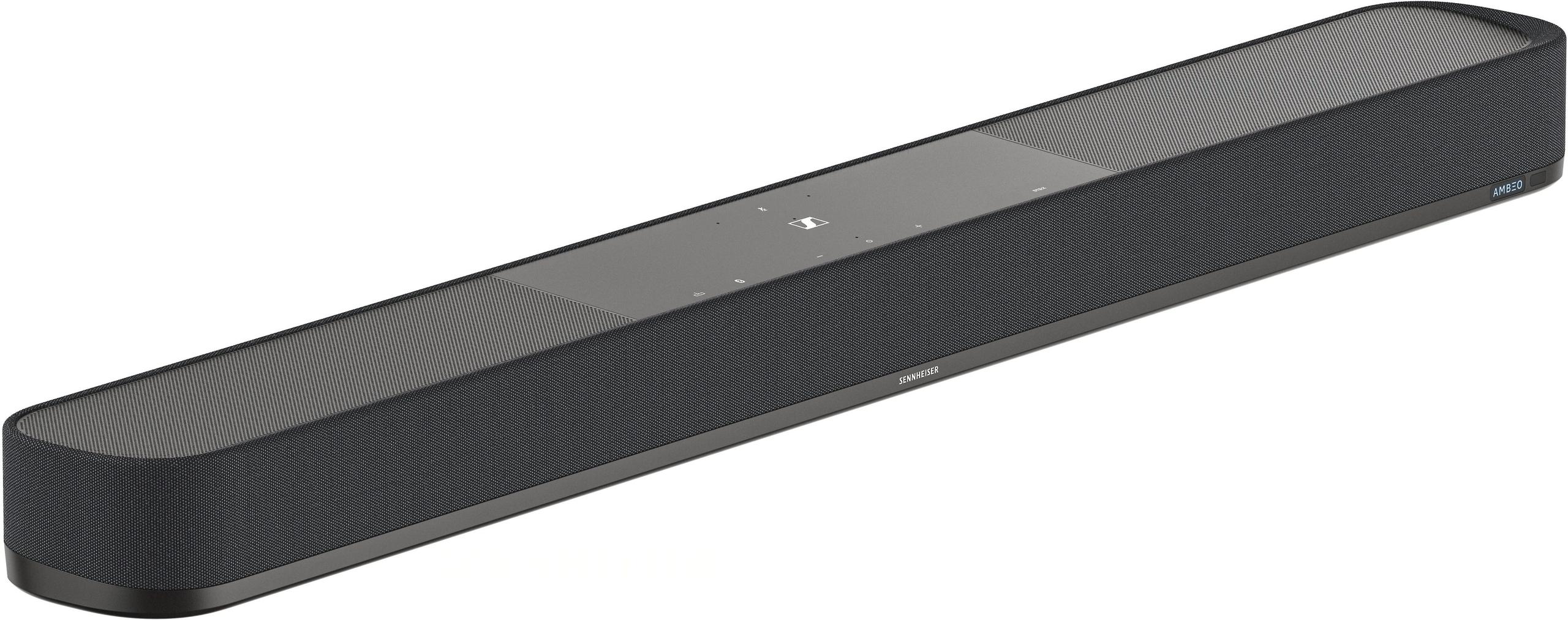
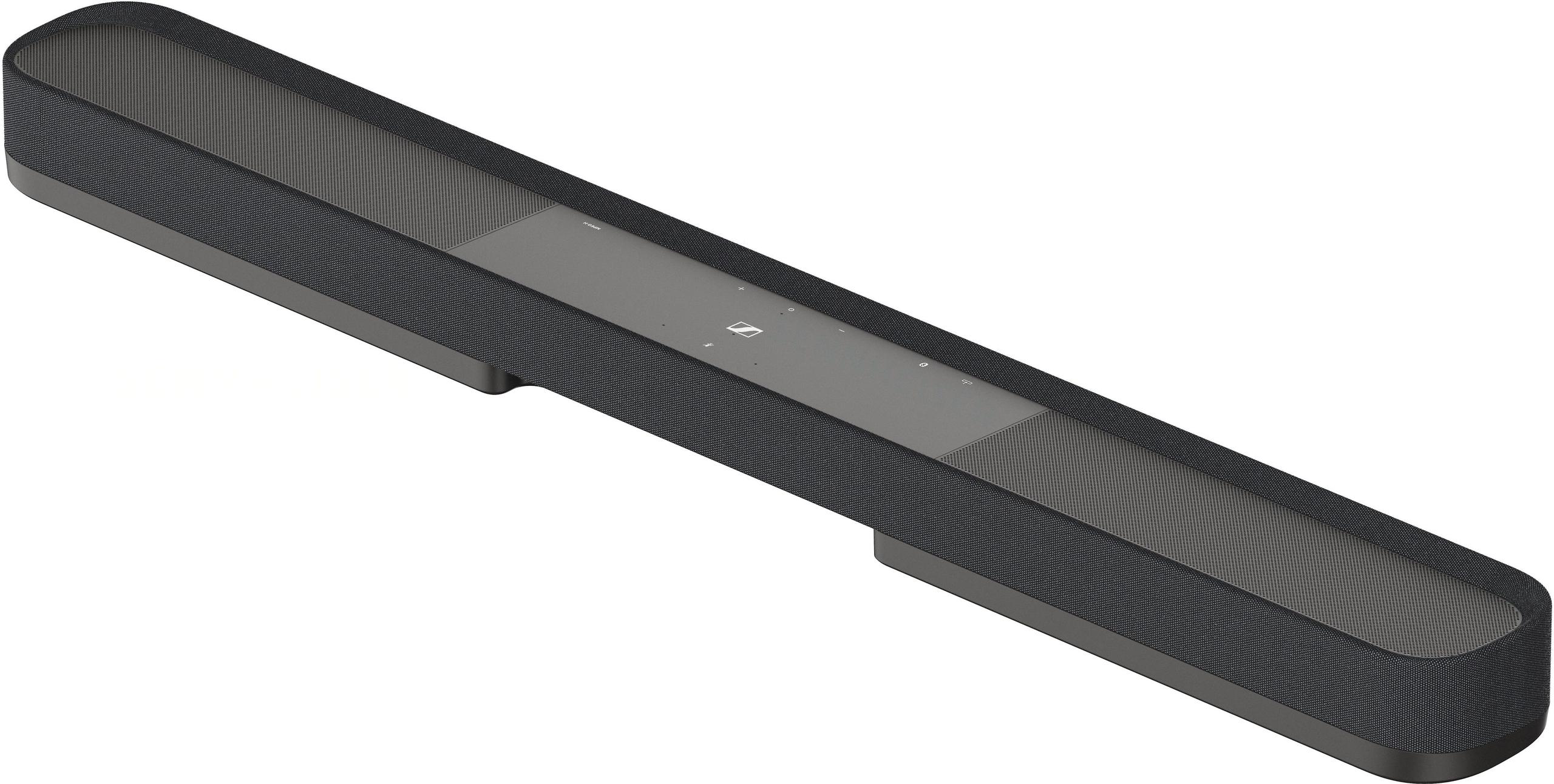
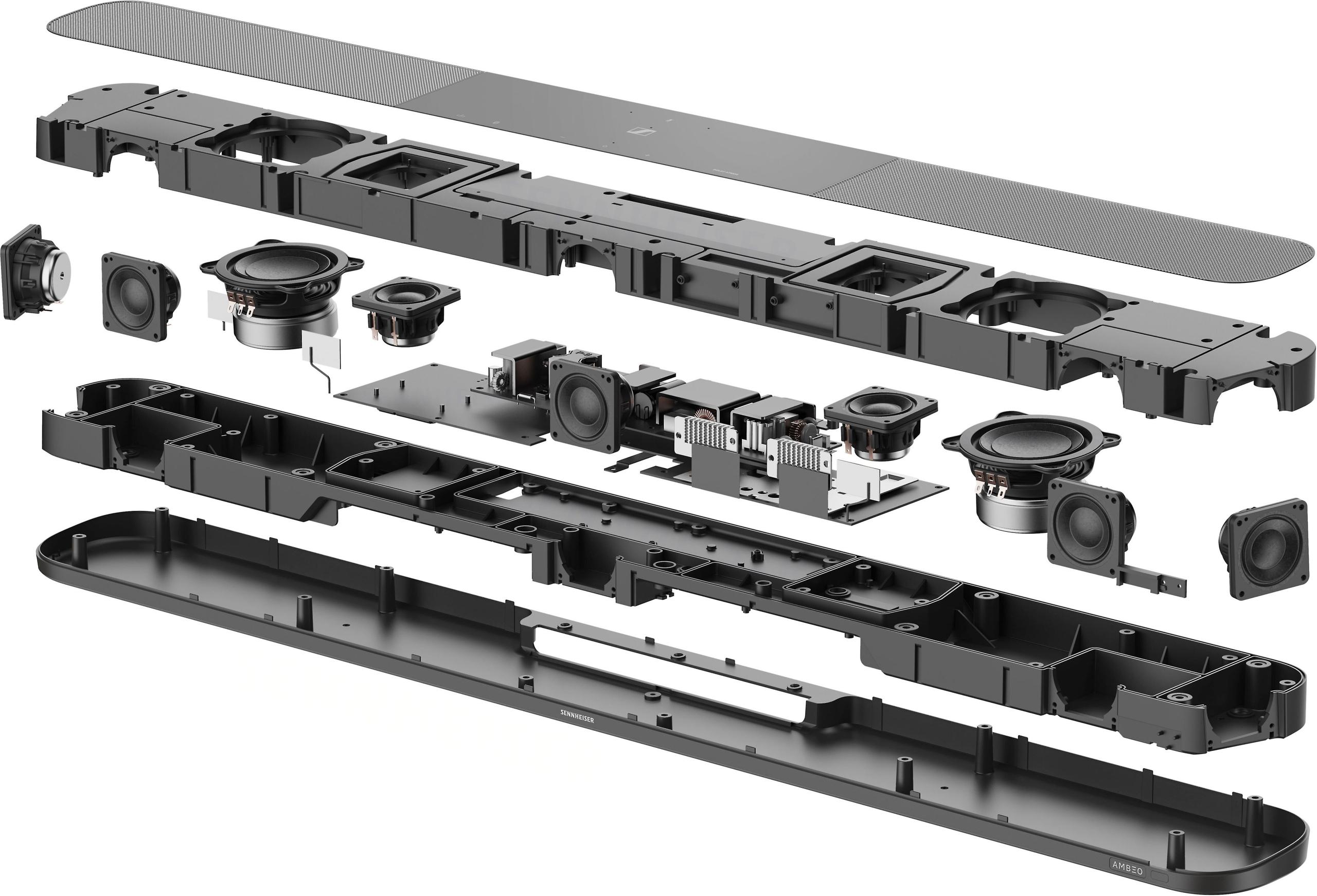
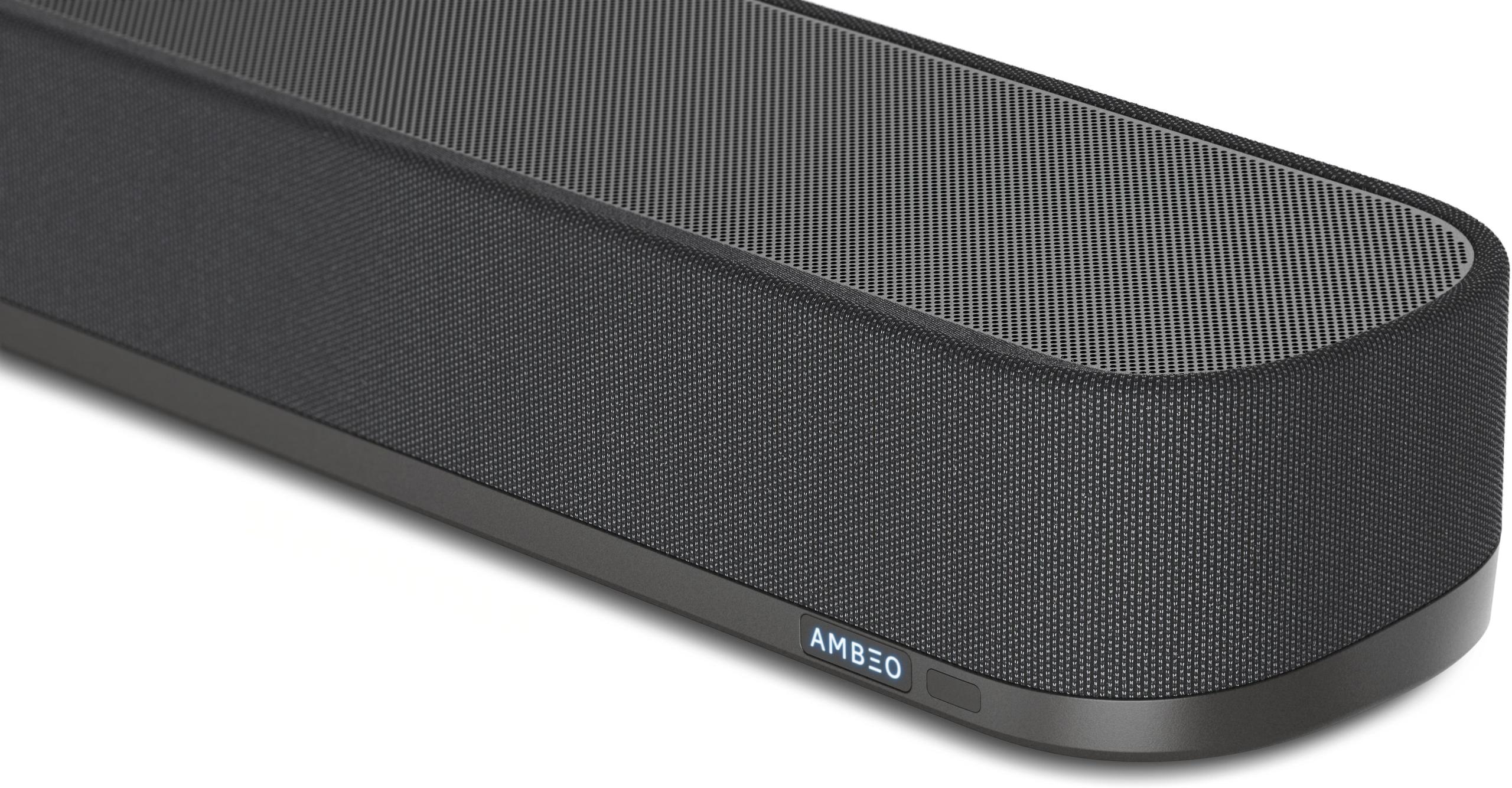
The Sennheiser AMBEO Soundbar represents the opposite philosophy: pack everything into one sophisticated enclosure and rely on advanced processing to create the surround experience. Released in 2019 with subsequent updates, this system uses 13 individual drivers including specialized upfiring speakers, long-throw woofers for deep bass extension, and precision tweeters for crystal-clear highs.
Sennheiser's AMBEO 3D technology, developed in partnership with audio research institute Fraunhofer, goes far beyond simple virtual surround processing. The system performs room calibration by analyzing your space's acoustic properties – ceiling height, wall materials, furniture placement – then adjusts its output to optimize sound reflection patterns. This creates the illusion of speakers positioned throughout your room by bouncing audio off surfaces in precisely calculated ways.
The technical specifications tell an impressive story. Where the Ultimea struggles to reproduce frequencies below 65Hz, the Sennheiser AMBEO reaches down to a thunderous 30Hz – deep enough to reproduce the subsonic rumble of movie explosions and music's lowest bass notes without external assistance. Its 500-watt amplification system drives those 13 drivers with authority, creating room-filling dynamics that smaller systems simply cannot match.
Perhaps most importantly for modern home theaters, the AMBEO supports advanced audio formats like Dolby Atmos and DTS:X. These object-based surround formats don't just move sound left and right – they place individual audio elements anywhere in three-dimensional space, including above your head. The soundbar's upfiring drivers bounce audio off your ceiling to create convincing overhead effects.
The most significant performance gap between these systems lies in fundamental audio quality. Our analysis of professional reviews and user experiences reveals a stark difference in tonal balance and refinement.
The Ultimea Aura A40 exhibits what multiple reviewers describe as a "tinny, metallic" character with "flabby and loose" bass response. This isn't surprising given the price point and driver size – those 2-inch speakers in the satellites simply cannot reproduce midrange frequencies with the authority of larger drivers. However, dialogue clarity receives consistent praise, with speech remaining intelligible even during complex action sequences.
The Sennheiser AMBEO, conversely, demonstrates what proper engineering investment can achieve. Reviews consistently describe its sound as "neutral" and "refined," with controlled bass response and clean high-frequency reproduction. The larger 4-inch woofers and 1-inch aluminum dome tweeters simply outclass the Ultimea's smaller drivers in every measurable way.
For home theater applications, this difference becomes particularly noticeable during demanding content. The AMBEO can reproduce the full dynamic range of movie soundtracks – from whispered dialogue to explosive action scenes – without compression or distortion. The Ultimea requires careful volume management and EQ adjustment to achieve acceptable results, and even then cannot match the effortless dynamics of its premium competitor.
Here's where the comparison becomes genuinely interesting, because each system's approach offers distinct advantages.
The Ultimea Aura A40's physical speaker placement provides undeniably superior directional effects for rear-channel content. When bullets whiz past your head in a first-person game or footsteps approach from behind in a thriller, those actual speakers behind your seating position create convincing spatial illusions that no virtual processing can fully replicate. The system offers six adjustable surround levels, allowing fine-tuning for different room sizes and content types.
However, the Sennheiser AMBEO's sophisticated processing creates a more coherent, stable soundstage for front-focused content. Its room calibration technology adapts to your specific acoustic environment, potentially creating a more natural listening experience than physical speakers placed in less-than-optimal positions.
For gaming enthusiasts, the Ultimea's discrete positioning advantage becomes particularly valuable. Competitive gamers rely on precise directional audio cues – hearing enemy footsteps approaching from specific angles can mean the difference between victory and defeat. Physical speaker placement provides more reliable directional information than virtual processing.
Movie enthusiasts might prefer either system depending on their priorities. The AMBEO's superior dynamic range and frequency response create a more cinematic experience overall, but action movie fans who prioritize immersive effects might appreciate the Ultimea's physical surround placement.
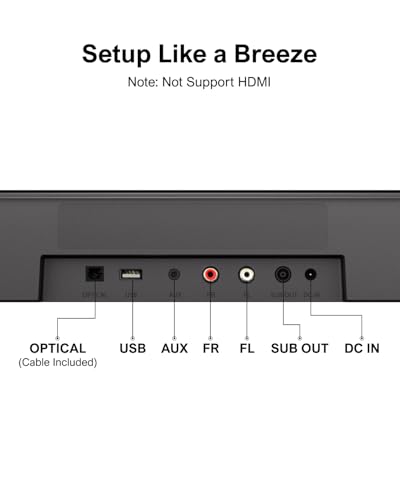
The connectivity comparison reveals one of the most decisive factors for many buyers. The Ultimea Aura A40 completely lacks HDMI inputs – a significant limitation in 2024. This forces users to rely on optical, analog, or Bluetooth connections, preventing access to advanced audio formats and limiting integration with modern TVs and gaming consoles.
The Sennheiser AMBEO provides comprehensive HDMI connectivity including eARC support, enabling full-resolution Dolby Atmos transmission from compatible sources. This makes a substantial difference when watching Netflix, Disney+, or playing PlayStation 5 games that utilize object-based surround formats.
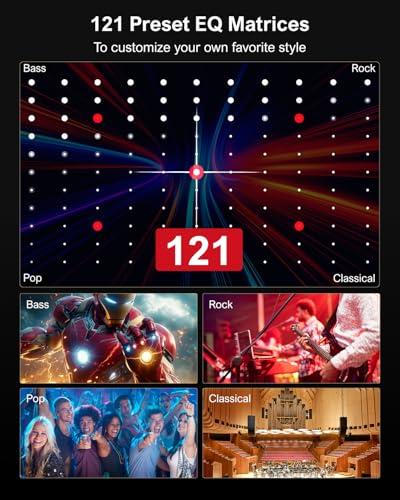
However, the Ultimea partially compensates through exceptional customization options. Its companion app provides access to 121 preset EQ matrices covering everything from specific music genres to room acoustics adjustments. The 10-band equalizer allows precise frequency shaping – valuable for correcting the system's tonal imbalances or adapting to challenging room acoustics.
For apartment dwellers and students, the Ultimea Aura A40 presents compelling advantages despite its audio quality limitations. At the time of writing, its budget pricing makes it accessible to cost-conscious buyers, while the physical surround speakers create dramatic improvements over TV audio in close-quarters listening environments.
The system's compact speakers can be wall-mounted or placed on shelves without dominating small spaces. More importantly, the significant audio upgrade justifies the modest investment for casual TV watching, gaming, and music streaming. The lack of HDMI connectivity becomes less problematic when primarily using built-in TV apps or Bluetooth streaming.
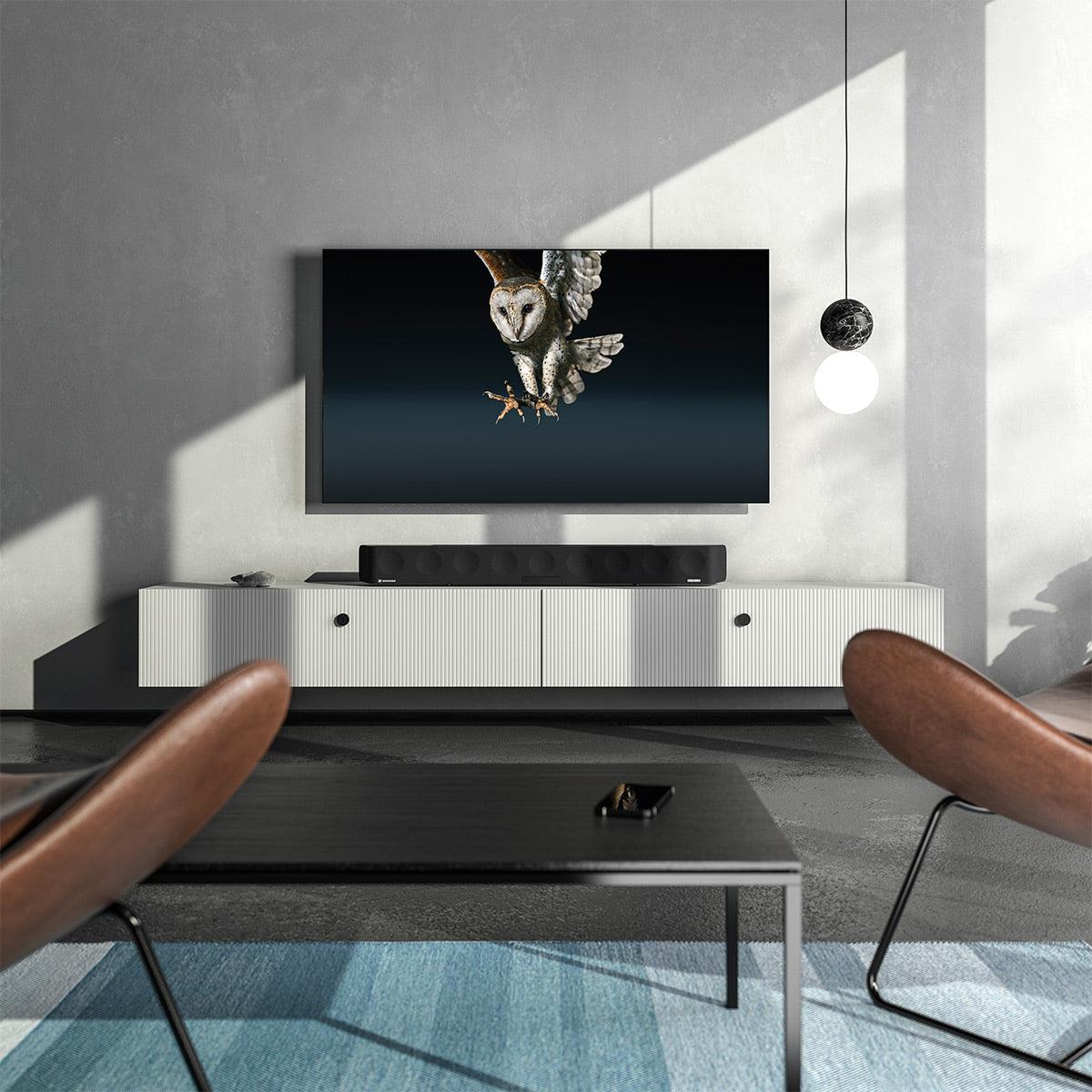
Larger spaces reveal the Sennheiser AMBEO's strengths more clearly. Its powerful amplification and sophisticated drivers can fill substantial rooms with authoritative sound, while the single-bar design maintains aesthetic appeal in family-focused spaces.
The room calibration technology becomes particularly valuable in acoustically challenging environments – rooms with high ceilings, hard surfaces, or irregular layouts that make physical speaker placement difficult. The AMBEO adapts its output to work with your room rather than against it.
For dedicated home theater enthusiasts, the advanced audio format support proves essential. Modern streaming services and UHD Blu-ray discs increasingly utilize Dolby Atmos and DTS:X soundtracks that showcase the AMBEO's capabilities while remaining completely inaccessible to the Ultimea system.
Gaming presents an interesting case study where the Ultimea Aura A40 can punch above its weight class. The physical rear speakers provide genuine tactical advantages in competitive gaming, while the system's gaming EQ mode optimizes frequency response for clarity and positioning accuracy.
However, the lack of HDMI connectivity creates complications with modern gaming consoles that rely on HDMI for uncompressed audio transmission. Optical connections introduce slight latency that competitive gamers might notice, though casual players typically won't find this problematic.
Since both products launched in the early 2020s, the soundbar landscape has evolved significantly. Wireless surround systems have become more affordable, Dolby Atmos support has expanded across price ranges, and streaming services have embraced higher-quality audio formats.
The Ultimea Aura A40 benefits from this evolution through regular firmware updates via its companion app, adding new EQ presets and potentially improving processing algorithms. However, its hardware limitations – particularly the lack of HDMI and modest driver specifications – cannot be overcome through software updates.
The Sennheiser AMBEO remains more future-proof thanks to its advanced connectivity and processing power. As streaming services enhance their audio quality and new surround formats emerge, the system's sophisticated hardware can adapt through firmware updates.
The choice between these systems ultimately depends on your priorities, budget, and usage patterns.
Choose the Ultimea Aura A40 U2601 if you're working with a strict budget but want genuine surround sound enhancement. It's ideal for apartment living, casual gaming, and situations where physical speaker placement provides clear advantages over processing power. The extensive customization options help compensate for its tonal limitations, and the value proposition remains compelling for cost-conscious buyers.
Choose the Sennheiser AMBEO Soundbar if audio quality takes priority over budget constraints. It's the clear winner for serious home theater applications, larger rooms, and situations where convenience and aesthetic appeal matter. The superior frequency response, dynamic range, and modern connectivity justify the premium pricing for dedicated audio enthusiasts.
Both systems deliver dramatic improvements over TV speakers, but they target fundamentally different audiences. The Ultimea maximizes features and surround effects within budget constraints, while the AMBEO prioritizes uncompromising audio quality and modern functionality.
Consider your long-term plans as well. The Ultimea system provides excellent value for temporary situations – apartment living, college years, or secondary rooms. The Sennheiser AMBEO represents a long-term investment that can anchor a serious home theater system for years to come.
The soundbar market offers something for every budget and requirement. These two systems prove that whether you spend modestly or invest significantly, substantial audio improvements await anyone ready to move beyond basic TV speakers.
| Ultimea Aura A40 U2601 | Sennheiser AMBEO Soundbar |
|---|---|
| Audio Architecture - Determines surround sound quality and setup complexity | |
| 7.1 virtual with 8 physical speakers (soundbar + 4 surrounds + subwoofer) | All-in-one soundbar with 13 internal drivers |
| Frequency Response - How deep the bass goes and clarity of highs | |
| 65Hz - 18kHz (requires subwoofer maxed for adequate bass) | 30Hz - 20kHz (deep bass without external sub needed) |
| Power Output - Volume capability and dynamic range | |
| 330W total across all components | 500W from premium amplification |
| HDMI Connectivity - Essential for modern TV and gaming integration | |
| None (major limitation - optical/AUX/USB only) | Full HDMI suite including eARC for Dolby Atmos |
| Dolby Atmos Support - Advanced surround formats from streaming services | |
| Not supported (limited to basic surround processing) | Full Dolby Atmos and DTS:X compatibility |
| Physical Setup - Installation complexity and flexibility | |
| Multiple speakers require room placement and cable management | Single soundbar with automatic room calibration |
| Room Size Recommendation - Optimal performance area | |
| 108-270 sq ft (small to medium rooms only) | Scalable to large rooms with powerful drivers |
| Customization Options - Audio tuning and personalization | |
| Exceptional: 121 EQ presets, 10-band equalizer, app control | Standard soundbar controls with room correction |
| Sound Quality Character - Tonal balance and refinement | |
| Thin, metallic sound requiring EQ adjustment | Neutral, refined audio quality without tuning needed |
| Surround Speaker Placement - Physical vs virtual positioning | |
| True 360° with actual rear speakers behind listening position | Virtual surround using ceiling reflections and processing |
| Value Proposition - Performance per dollar at time of writing | |
| Exceptional value for genuine multi-speaker surround on budget | Premium performance justifies higher investment for quality |
The Ultimea Aura A40 U2601 is better suited for small apartments due to its compact speaker design and budget-friendly pricing. The physical surround speakers create impressive immersion in close-quarters listening environments, while the system's recommended room size of 108-270 square feet perfectly matches typical apartment spaces. The Sennheiser AMBEO Soundbar may overpower smaller rooms and represents a significant investment for temporary living situations.
Yes, HDMI connectivity is essential for modern home theater setups. The Sennheiser AMBEO Soundbar includes full HDMI support with eARC, enabling Dolby Atmos from streaming services and gaming consoles. The Ultimea Aura A40 U2601 lacks HDMI entirely, forcing users to rely on optical or Bluetooth connections that limit audio quality and format compatibility.
Both excel in different ways. The Ultimea Aura A40 U2601 offers superior directional effects through actual physical speakers positioned behind your seating area, creating genuine 360-degree sound placement. The Sennheiser AMBEO Soundbar uses advanced processing and room calibration for a more cohesive soundstage, but cannot match the convincing rear-channel positioning that physical speakers provide.
The Sennheiser AMBEO Soundbar delivers significantly superior audio quality with neutral, refined sound and deep 30Hz bass extension. The Ultimea Aura A40 U2601 exhibits thinner, more metallic sound quality that requires EQ adjustment, though it provides adequate dialogue clarity for casual viewing. The premium system offers audiophile-grade performance while the budget option prioritizes features over fidelity.
The Sennheiser AMBEO Soundbar is dramatically easier to install as a single unit with automatic room calibration. The Ultimea Aura A40 U2601 requires positioning four surround speakers throughout your room, running cables up to 6 meters long, and experimenting with placement for optimal sound. Setup complexity increases significantly with the multi-component system.
The Sennheiser AMBEO Soundbar excels in large spaces with its 500W amplification and sophisticated drivers that fill substantial rooms with authoritative sound. The Ultimea Aura A40 U2601 is specifically limited to smaller rooms (108-270 sq ft) and lacks the power output needed for larger open floor plans or high-ceiling spaces.
The Ultimea Aura A40 U2601 provides advantages for competitive gaming through discrete rear speaker placement that enhances directional audio cues. However, its lack of HDMI connectivity creates latency issues with modern consoles. The Sennheiser AMBEO Soundbar offers superior overall audio quality and proper HDMI integration, making it better for single-player gaming experiences.
The Ultimea Aura A40 U2601 includes a dedicated 4-inch subwoofer, though users report needing to run it at maximum levels for adequate bass. The Sennheiser AMBEO Soundbar incorporates powerful internal woofers that reach down to 30Hz, eliminating the need for external bass reinforcement in most rooms.
Value depends on your priorities. The Ultimea Aura A40 U2601 provides exceptional value for budget-conscious buyers, offering genuine surround speaker placement and extensive customization at an entry-level price point. The Sennheiser AMBEO Soundbar delivers premium performance that justifies its higher cost for serious audio enthusiasts seeking uncompromising quality.
Both work with streaming services, but with different capabilities. The Sennheiser AMBEO Soundbar fully supports Dolby Atmos content from Netflix, Disney+, and other services through HDMI eARC. The Ultimea Aura A40 U2601 can play streaming audio via Bluetooth or optical connections but cannot access advanced surround formats, limiting the experience with premium content.
The Sennheiser AMBEO Soundbar is significantly more future-proof with comprehensive HDMI connectivity, advanced audio format support, and sophisticated processing hardware that can adapt through firmware updates. The Ultimea Aura A40 U2601 faces limitations from its lack of HDMI and modest hardware specifications that cannot be overcome through software updates.
For casual movie viewing, the Ultimea Aura A40 U2601 provides dramatic improvement over TV speakers with convincing surround effects. However, the Sennheiser AMBEO Soundbar delivers a superior cinematic experience with full dynamic range, deep bass extension, and support for modern audio formats that bring movie soundtracks to life with audiophile-quality reproduction.
We've done our best to create useful and informative comparisons to help you decide what product to buy. Our research uses advanced automated methods to create this comparison and perfection is not possible - please contact us for corrections or questions. These are the sites we've researched in the creation of this article: walmart.com - newegg.com - youtube.com - ultimea.com - youtube.com - device.report - ultimea.co - manuals.plus - homestudiobasics.com - youtube.com - bestbuy.com - community.ultimea.com - manuals.plus - eu.ultimea.com - navesapeugeot.com.br - bestbuy.com - images.thdstatic.com - provantage.com - ultimea.com - bestbuy.com - bestbuy.com - rtings.com - techradar.com - audioxpress.com - whathifi.com - upscaleaudio.com - soundstagesimplifi.com - global.sennheiser-hearing.com - sennheiser-hearing.com - audioadvice.com - abt.com - moon-audio.com

Privacy Policy
Terms and Conditions - Affiliate Policy
Home Security
© Copyright 2008-2026.
11816 Inwood Rd #1211, Dallas, TX 75244