



If you've been shopping for a premium soundbar lately, you've probably felt overwhelmed by the sheer number of options claiming to deliver "cinema-quality" sound. Two models that consistently rise to the top of recommendation lists are the JBL Bar 1000 MK2 ($1,200) and the Sennheiser AMBEO Soundbar ($2,000). But here's the thing: these two represent completely different philosophies about how to create immersive home theater audio, and understanding their approaches will help you make the right choice for your space and budget.
Before diving into the comparison, let's talk about what separates premium soundbars from their cheaper cousins. These high-end models aren't just louder versions of basic soundbars – they're engineered to compete with traditional surround sound systems that require multiple speakers placed around your room.
The key difference lies in their ability to create "height channels" for Dolby Atmos content. This audio format adds a third dimension to sound by placing audio objects not just around you, but above you too. Think of the whoosh of a helicopter overhead in an action movie, or raindrops falling from the sky in a nature documentary. Premium soundbars achieve this through either physical upward-firing drivers (speakers that bounce sound off your ceiling) or advanced digital processing that tricks your brain into perceiving height.
What's particularly interesting is how these two soundbars take radically different approaches to solve the same problem. The JBL goes the traditional route with actual physical speakers, while the Sennheiser relies on computational wizardry. Both work, but they feel different in practice.
The Sennheiser AMBEO Soundbar hit the market in 2022 as the German audio company's ambitious entry into the premium soundbar space. Sennheiser, traditionally known for their headphones and professional audio equipment, brought their studio expertise to home theater with this flagship model. The AMBEO represented a significant technological leap, using advanced psychoacoustic processing – essentially, understanding how our brains process sound – to create the illusion of surround sound from a single bar.
The JBL Bar 1000 MK2, on the other hand, arrived in early 2024 as an evolution of JBL's successful Bar 1000 series. The "MK2" designation isn't just marketing speak – JBL made meaningful improvements to the detachable rear speakers' battery life and refined their MultiBeam technology for better sound dispersion. This timing advantage allowed JBL to learn from early premium soundbar implementations and address common user complaints about setup complexity and reliability.
Since their respective launches, both companies have released firmware updates that have meaningfully improved performance. The Sennheiser has received updates to its room calibration algorithms, making the virtualization more convincing in challenging acoustic environments. The JBL has benefited from improvements to its wireless connectivity and the addition of new streaming service integrations.
Here's where things get really interesting. These soundbars represent fundamentally different approaches to creating immersive audio, and understanding these differences is crucial to making the right choice.
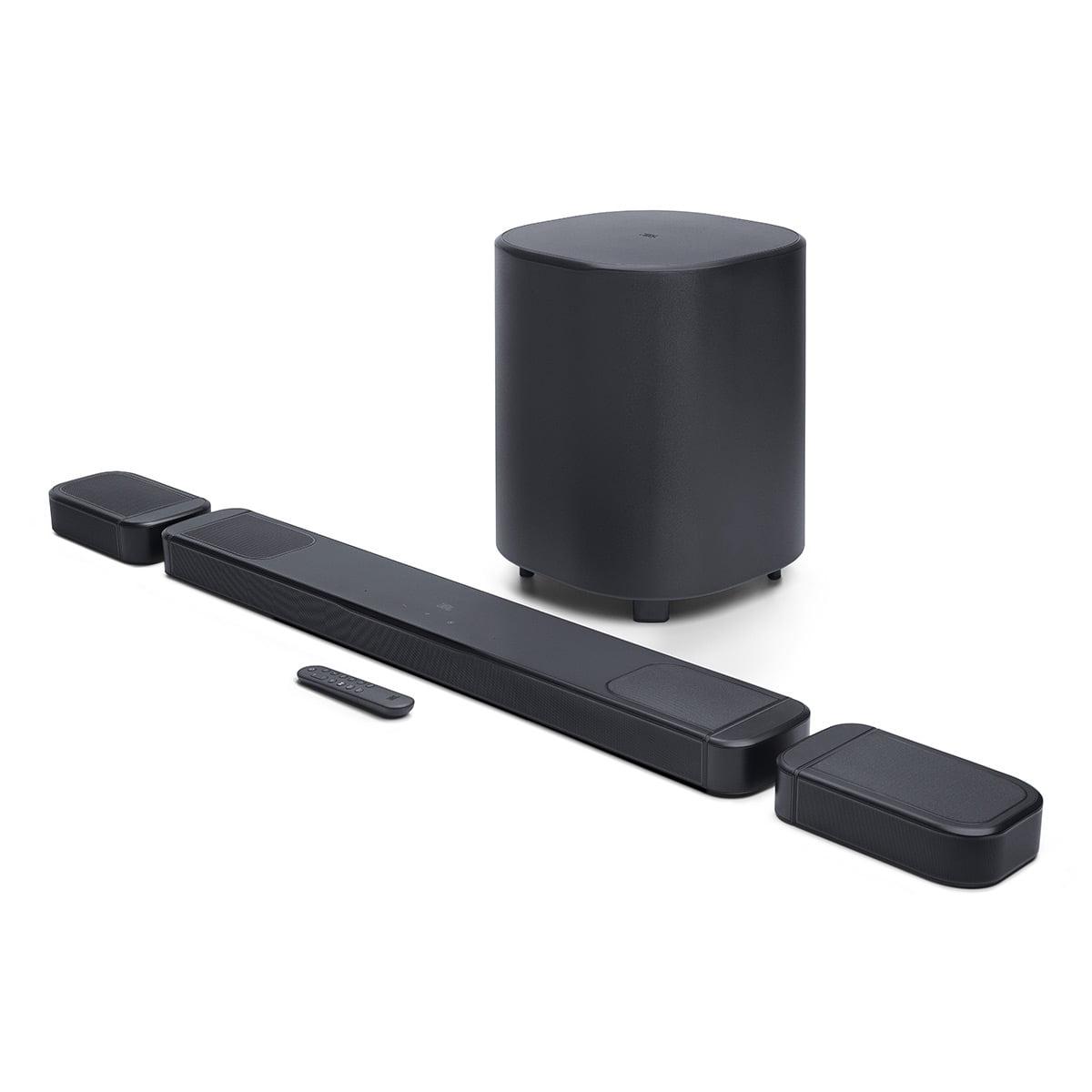
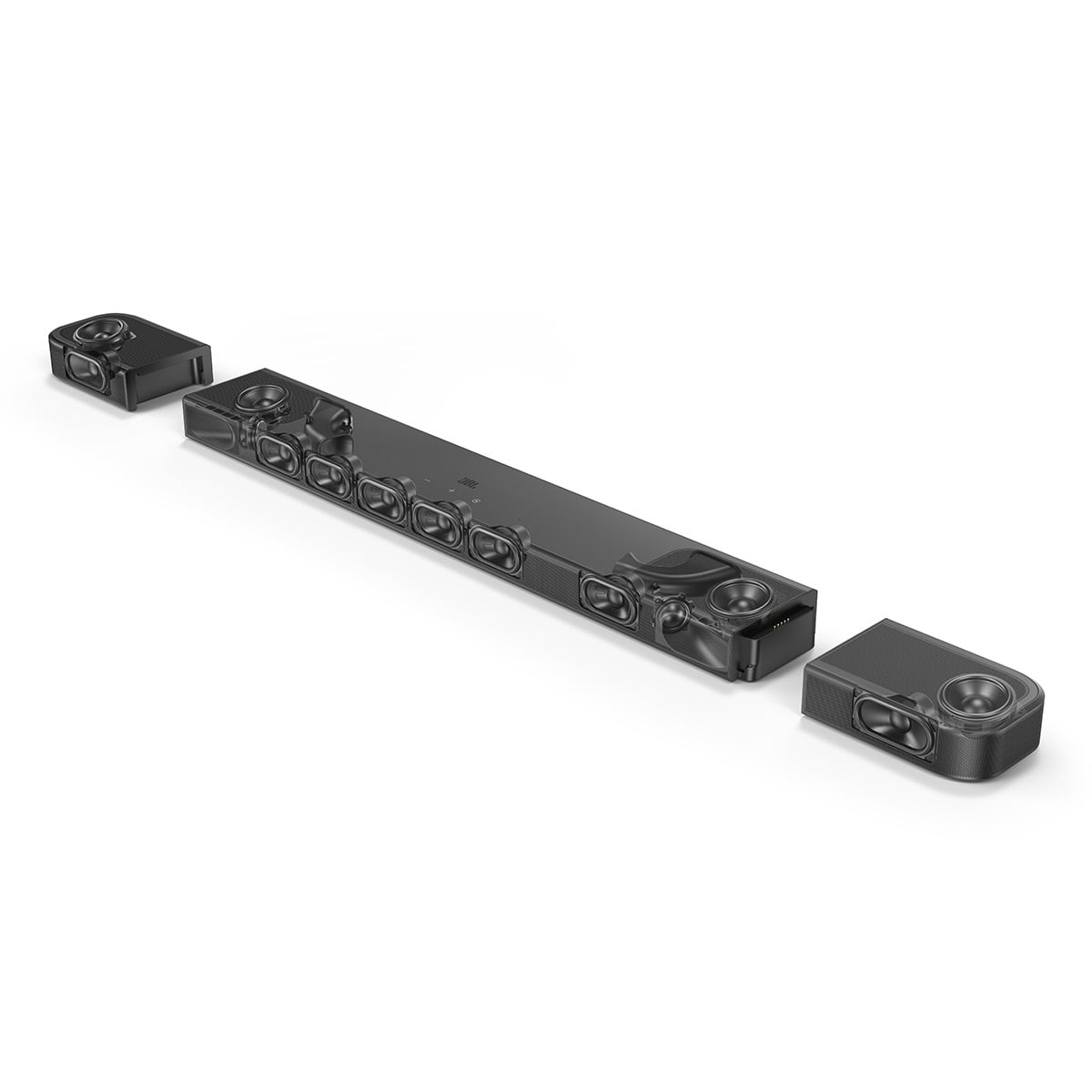
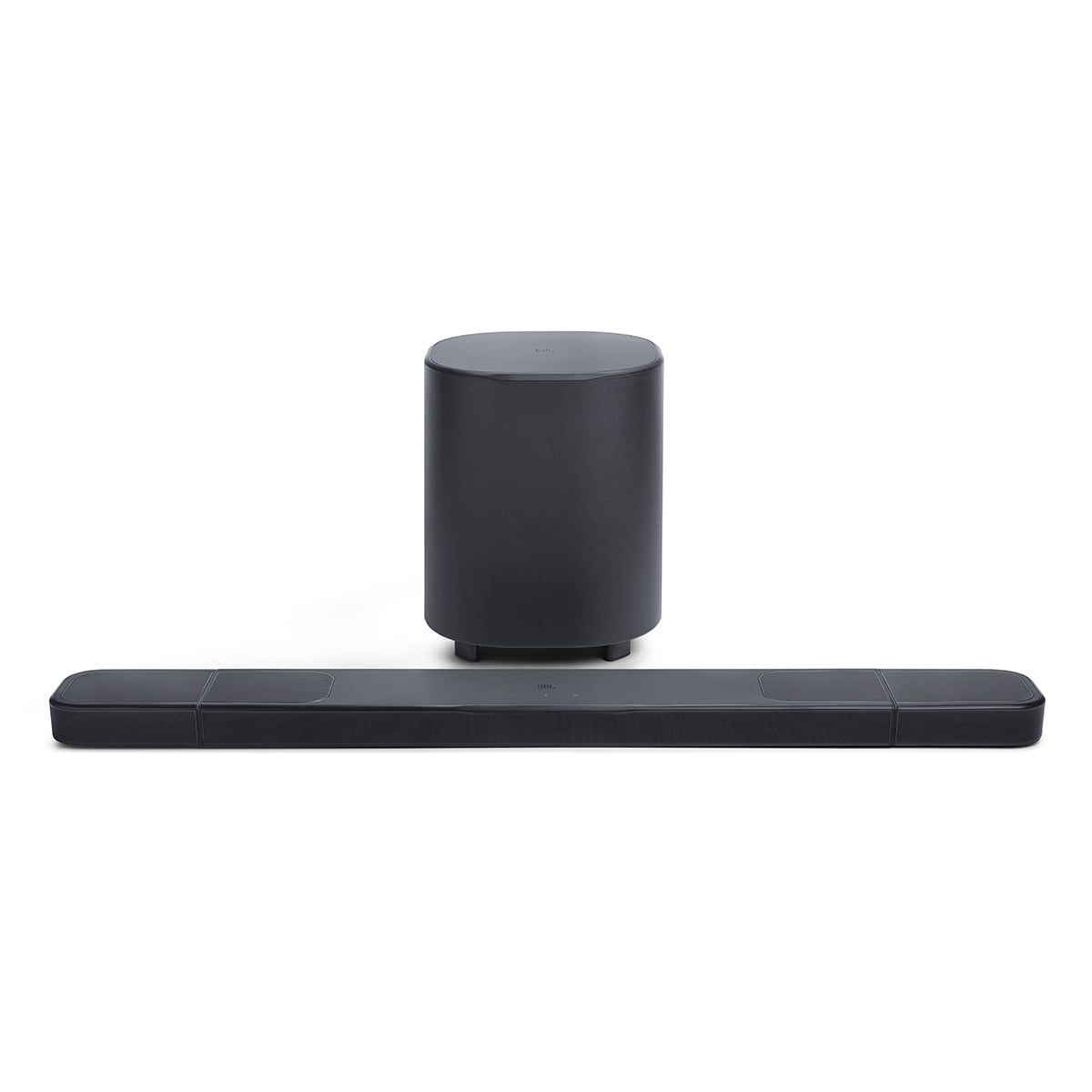
The JBL Bar 1000 MK2 takes what I'd call the "traditional" approach, though it executes it in a modern way. You get a complete 7.1.4-channel system with actual speakers positioned around your room. The main soundbar houses the front channels, there's a dedicated 10-inch wireless subwoofer for bass, and here's the clever part – the rear speakers are completely detachable from the main bar.
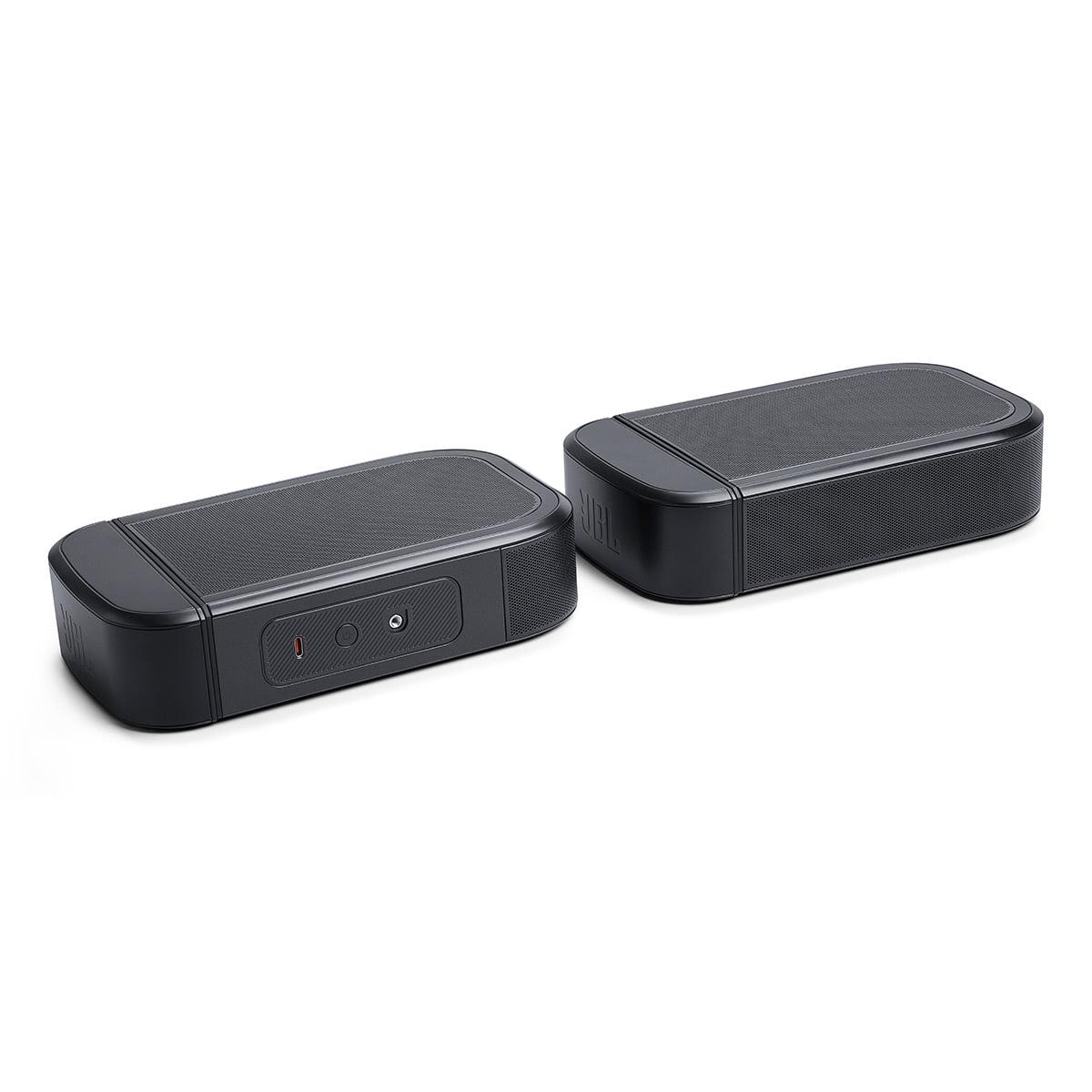
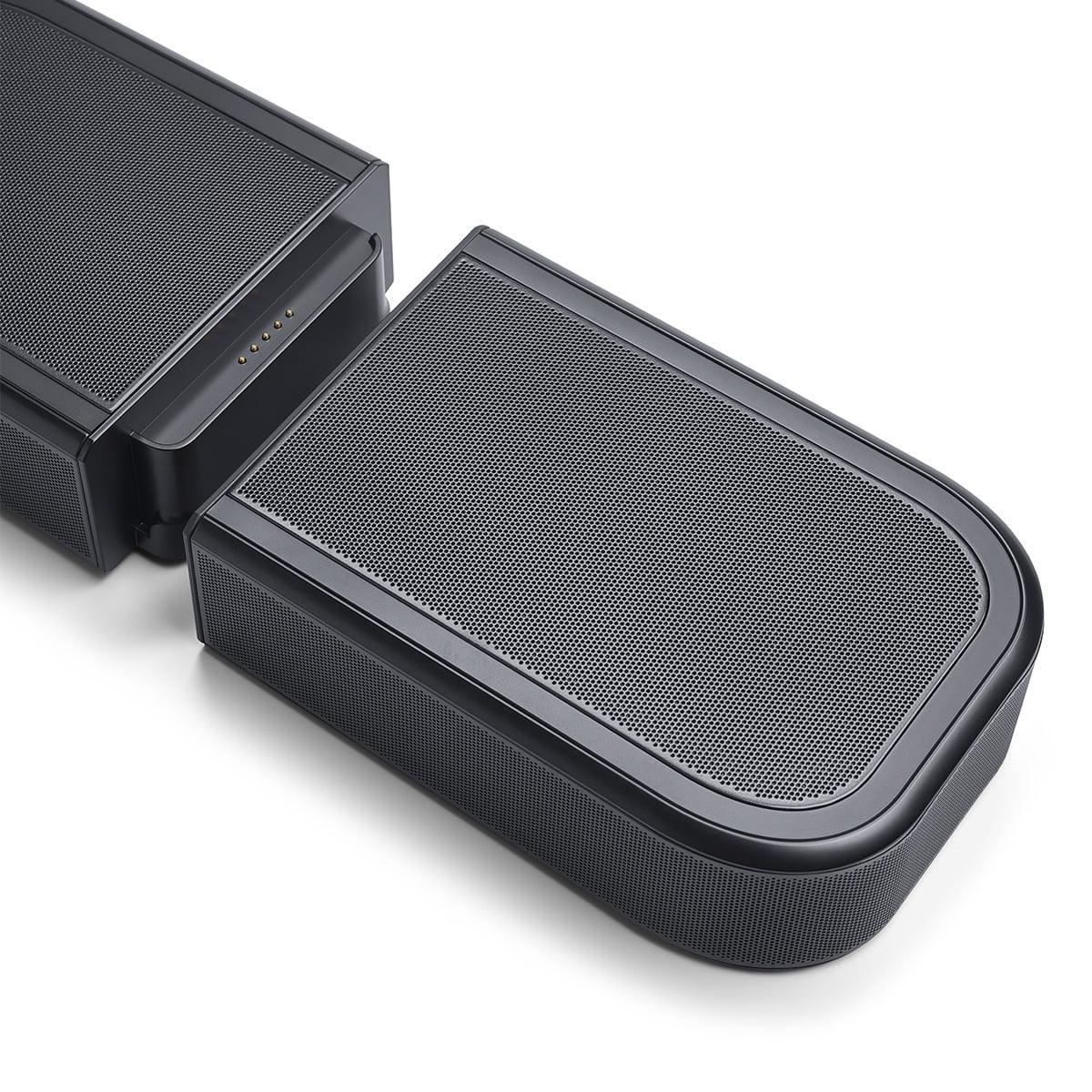
These detachable speakers are genius in their simplicity. When docked, they charge and function as part of the soundbar. When you want true surround sound, you simply lift them off and place them behind your seating area. Each speaker has a 10-hour battery life, so you're not tethered to power outlets. I've found this design particularly appealing because it solves the age-old problem of running speaker wire or finding power outlets behind your couch.
The system includes four up-firing drivers – two in the main bar and one in each rear speaker – that bounce sound off your ceiling to create height effects. This physical approach means you're getting genuine directional audio. When a helicopter flies from front to back in a movie, you're actually hearing it move between different physical speakers.
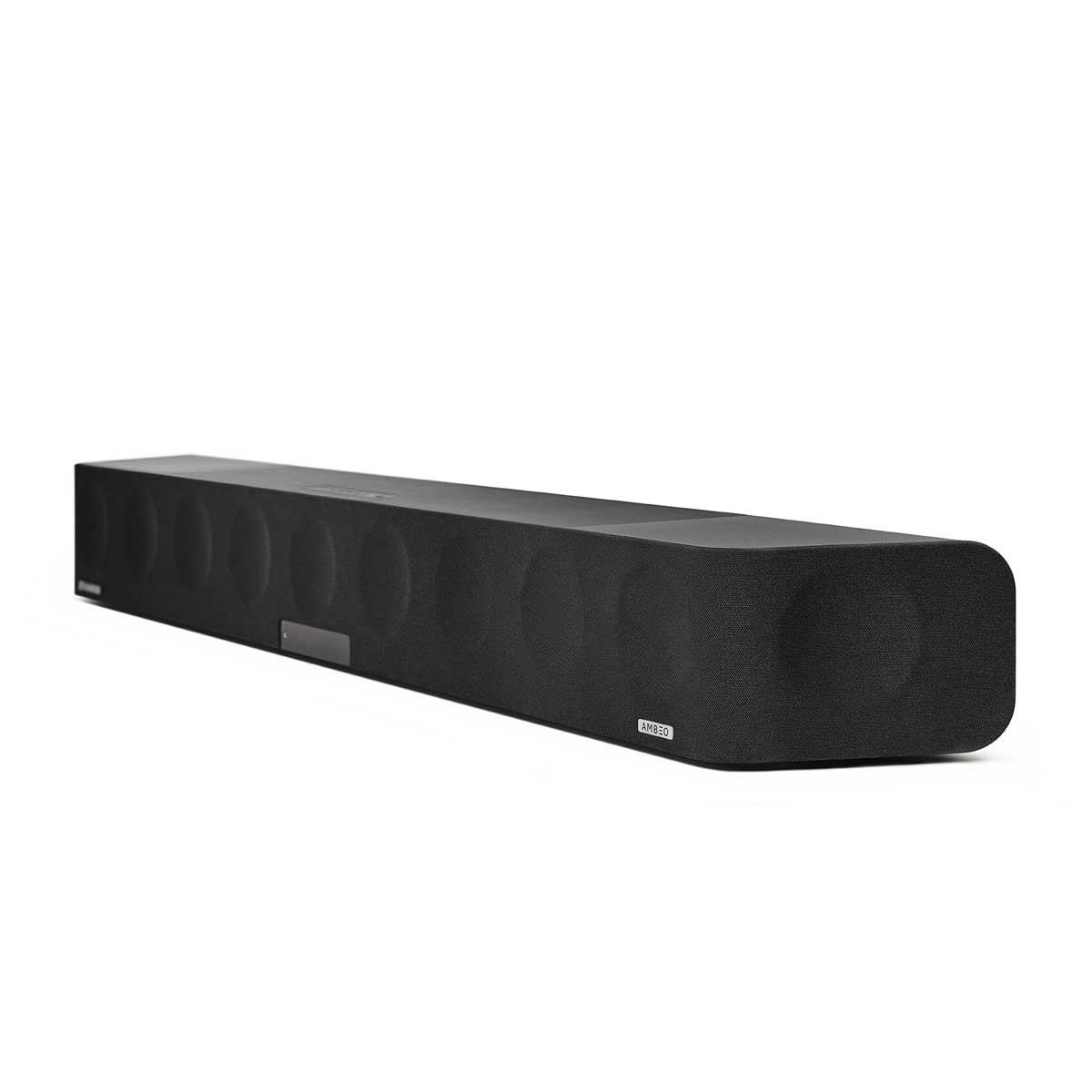
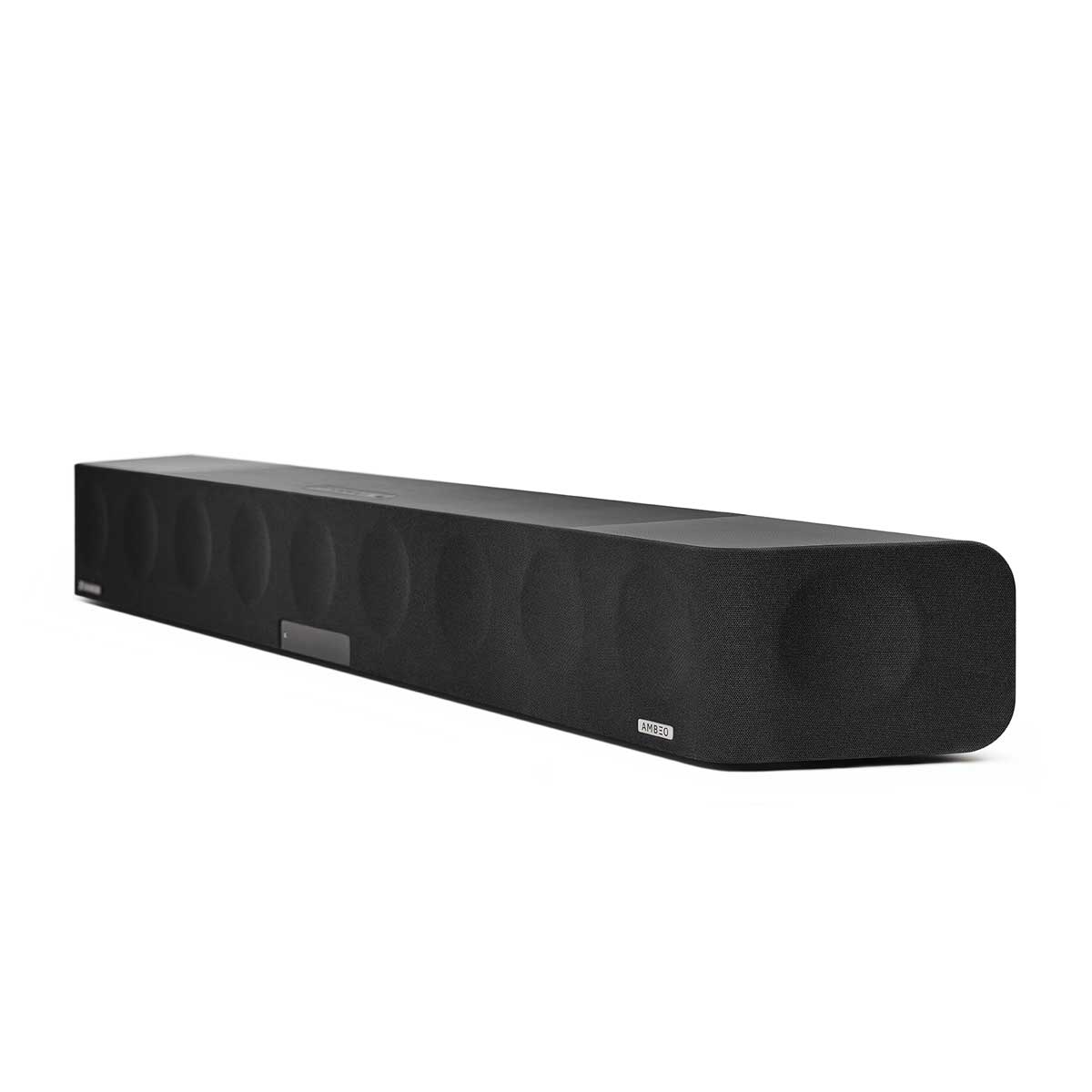
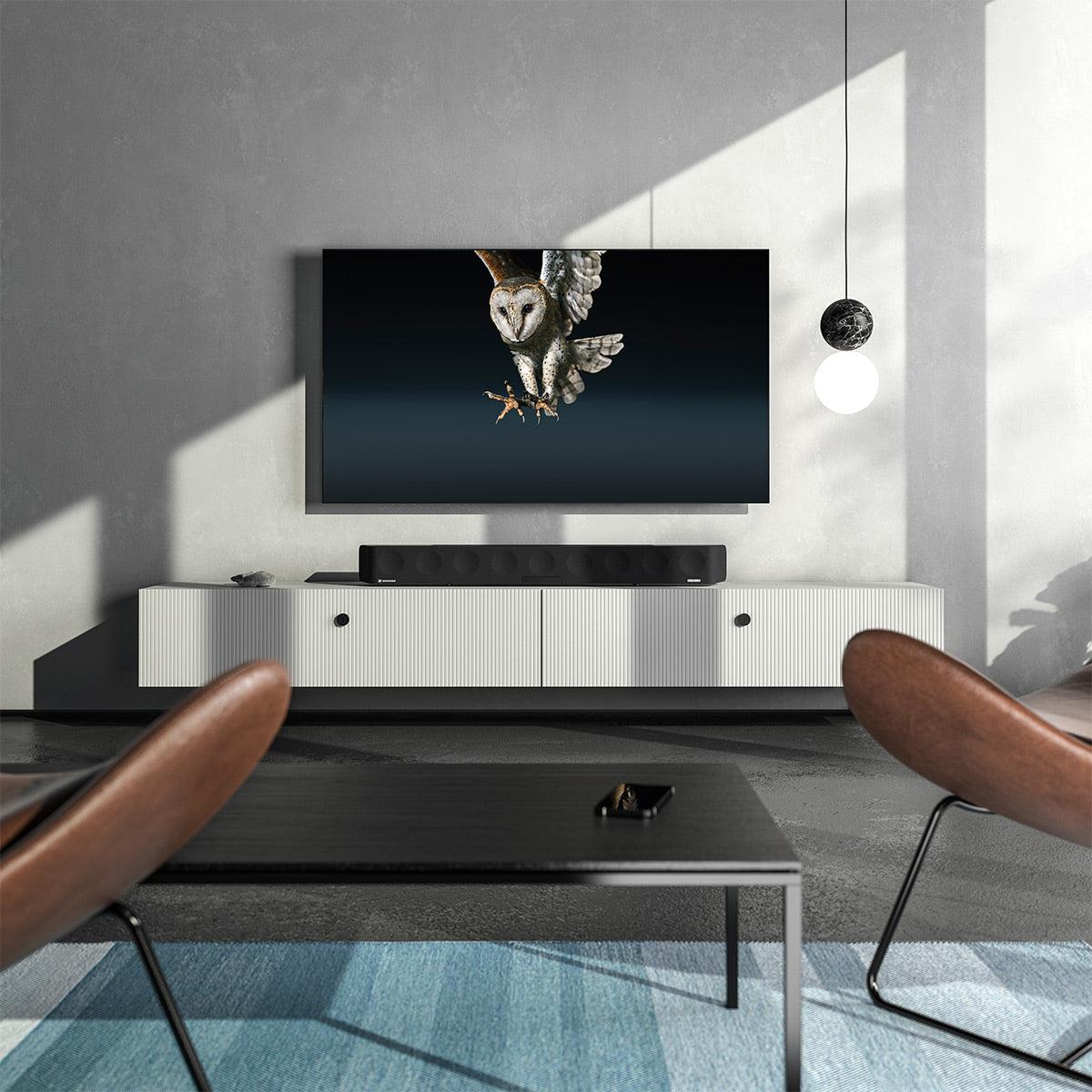
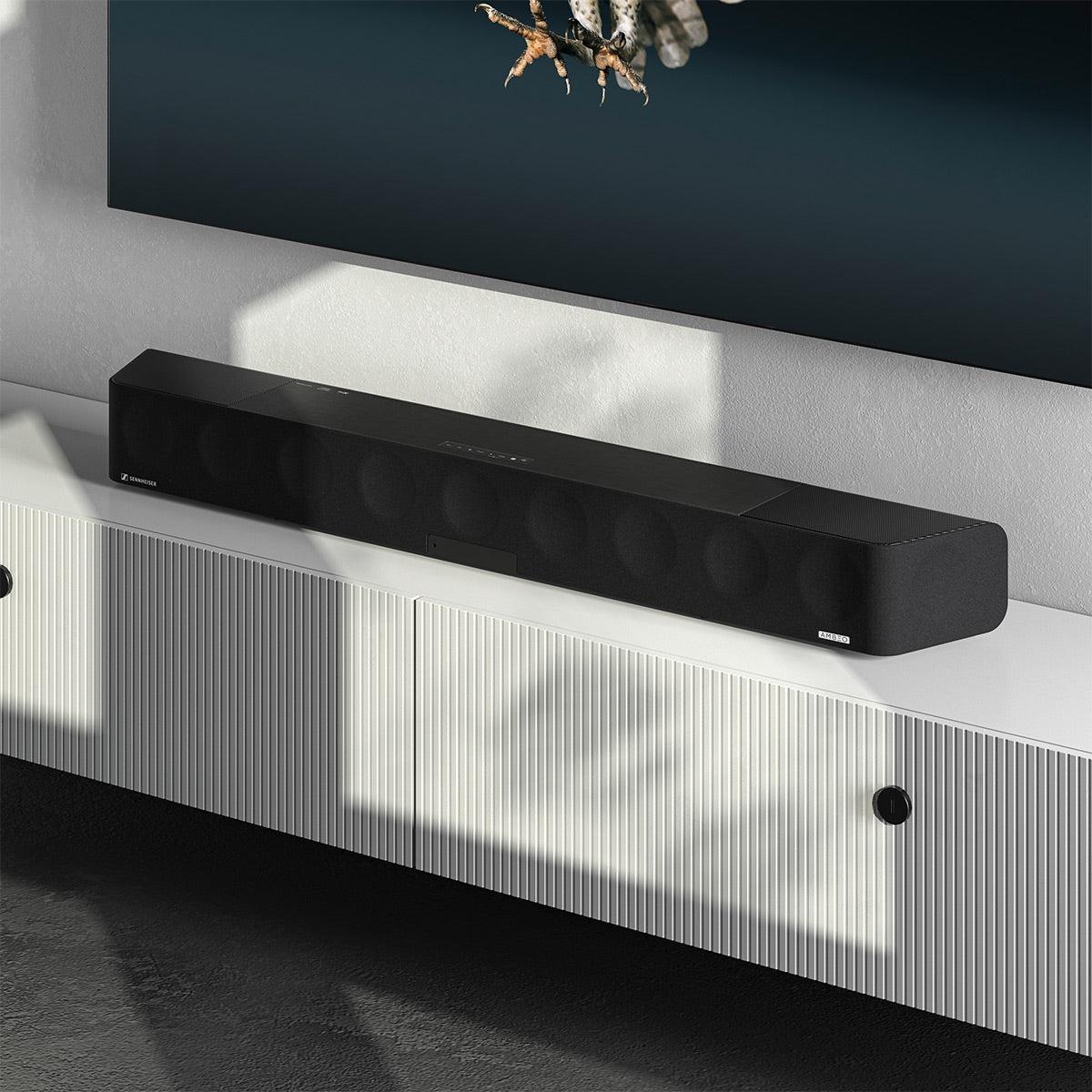
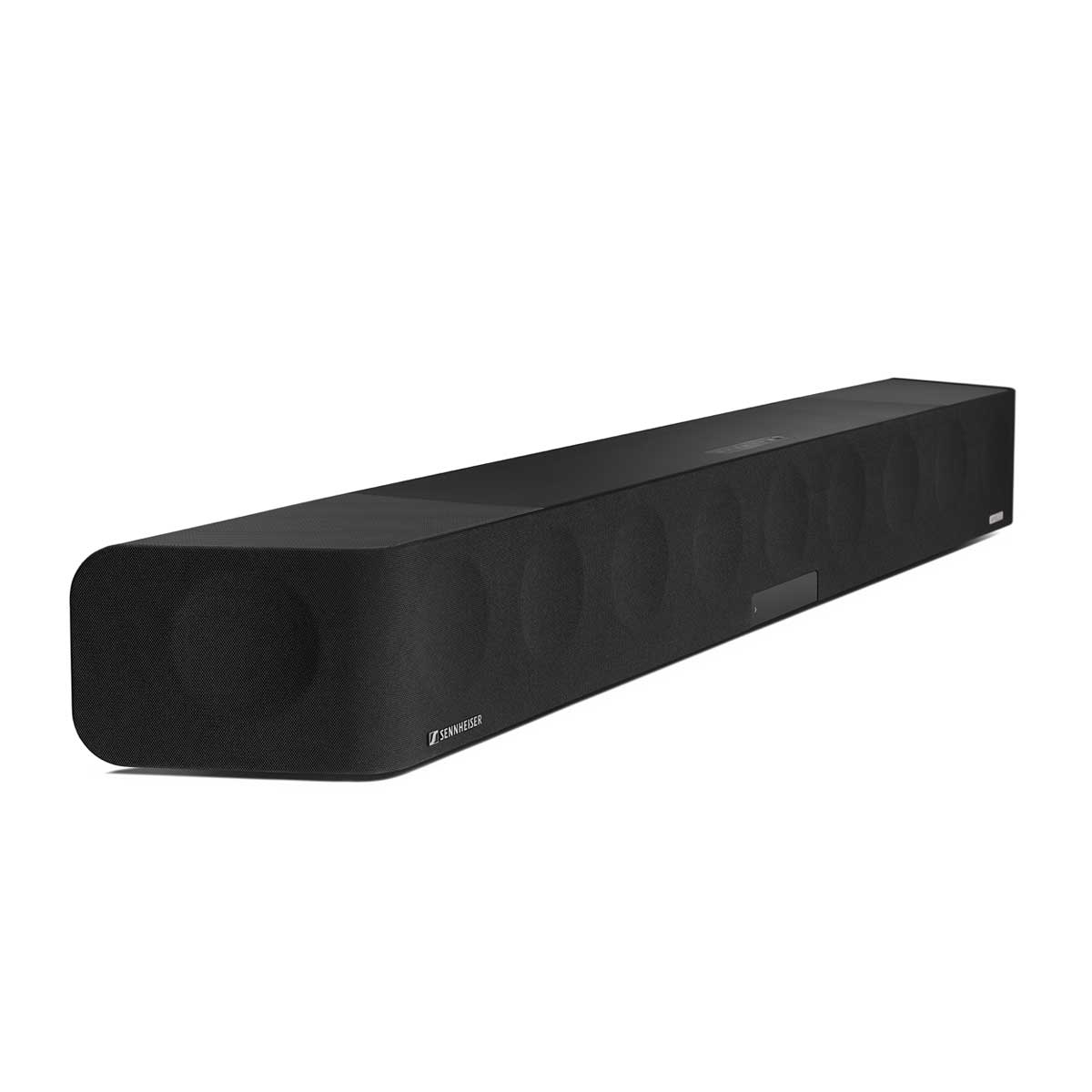
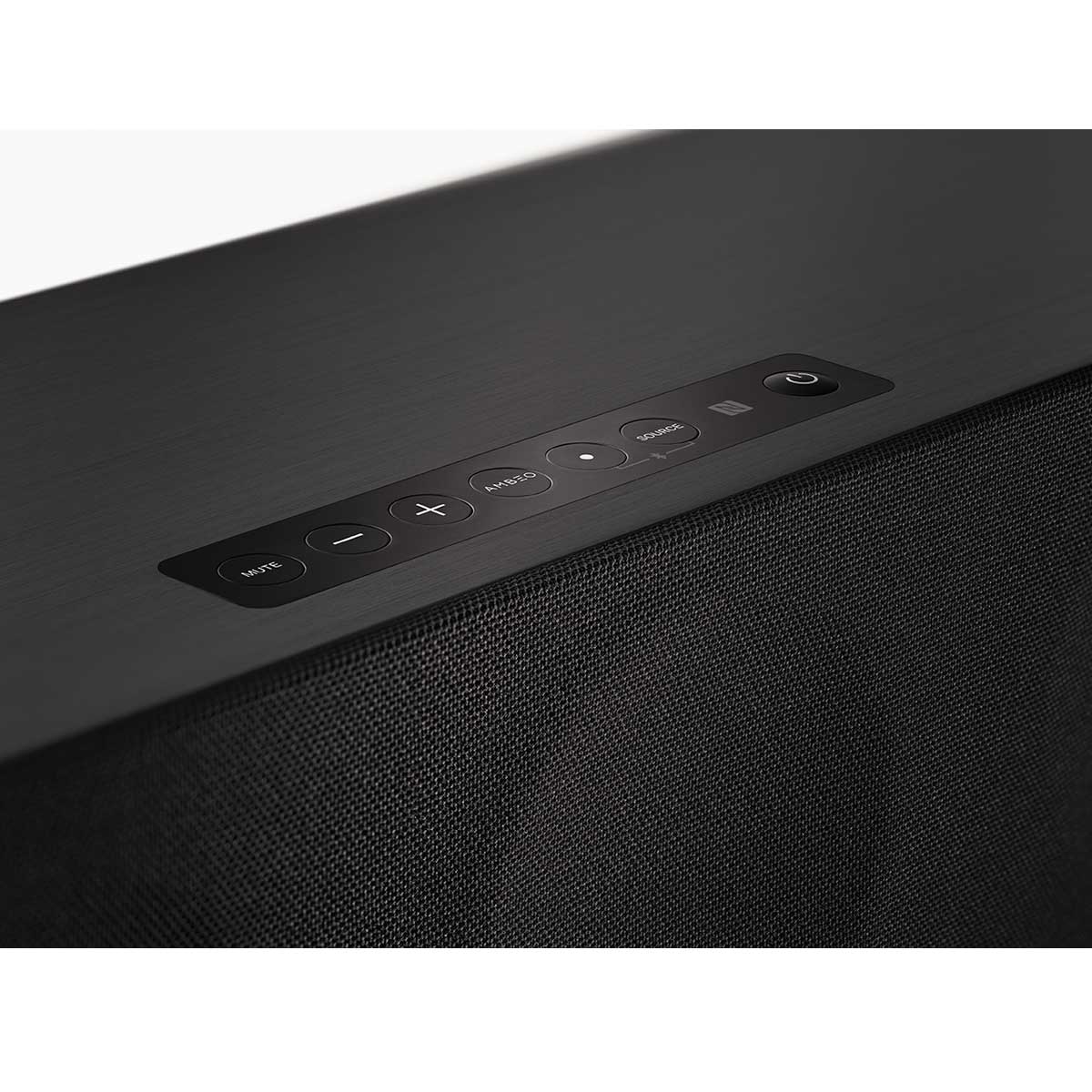
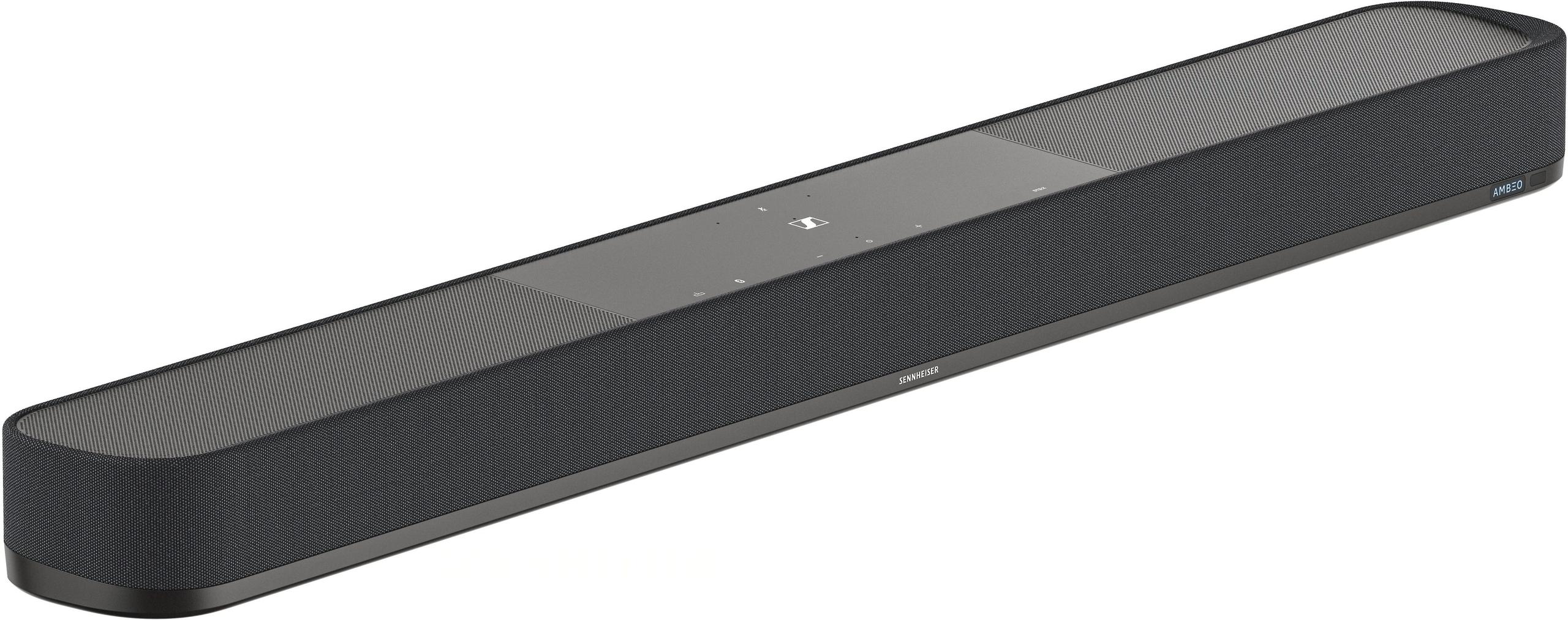
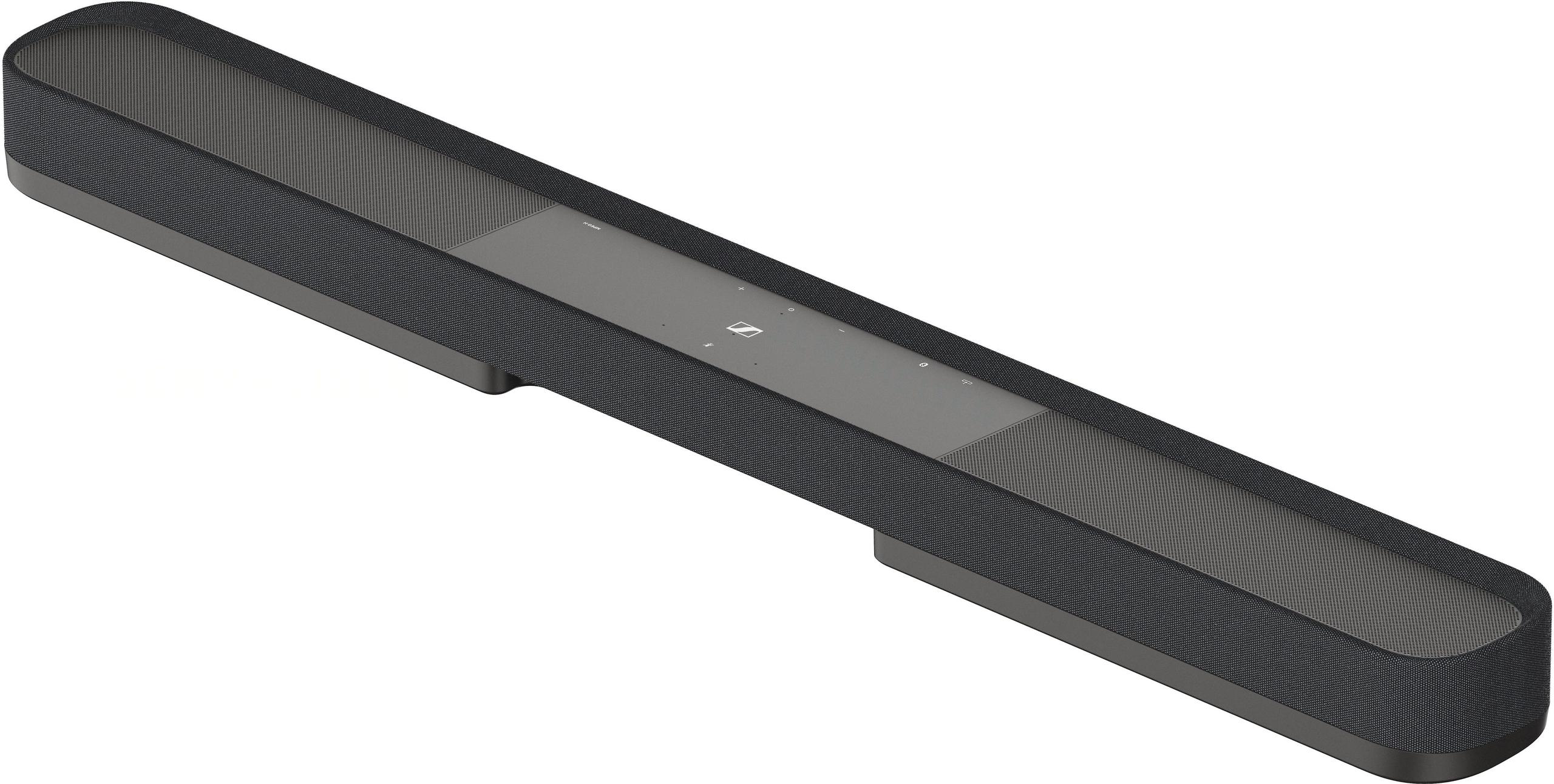
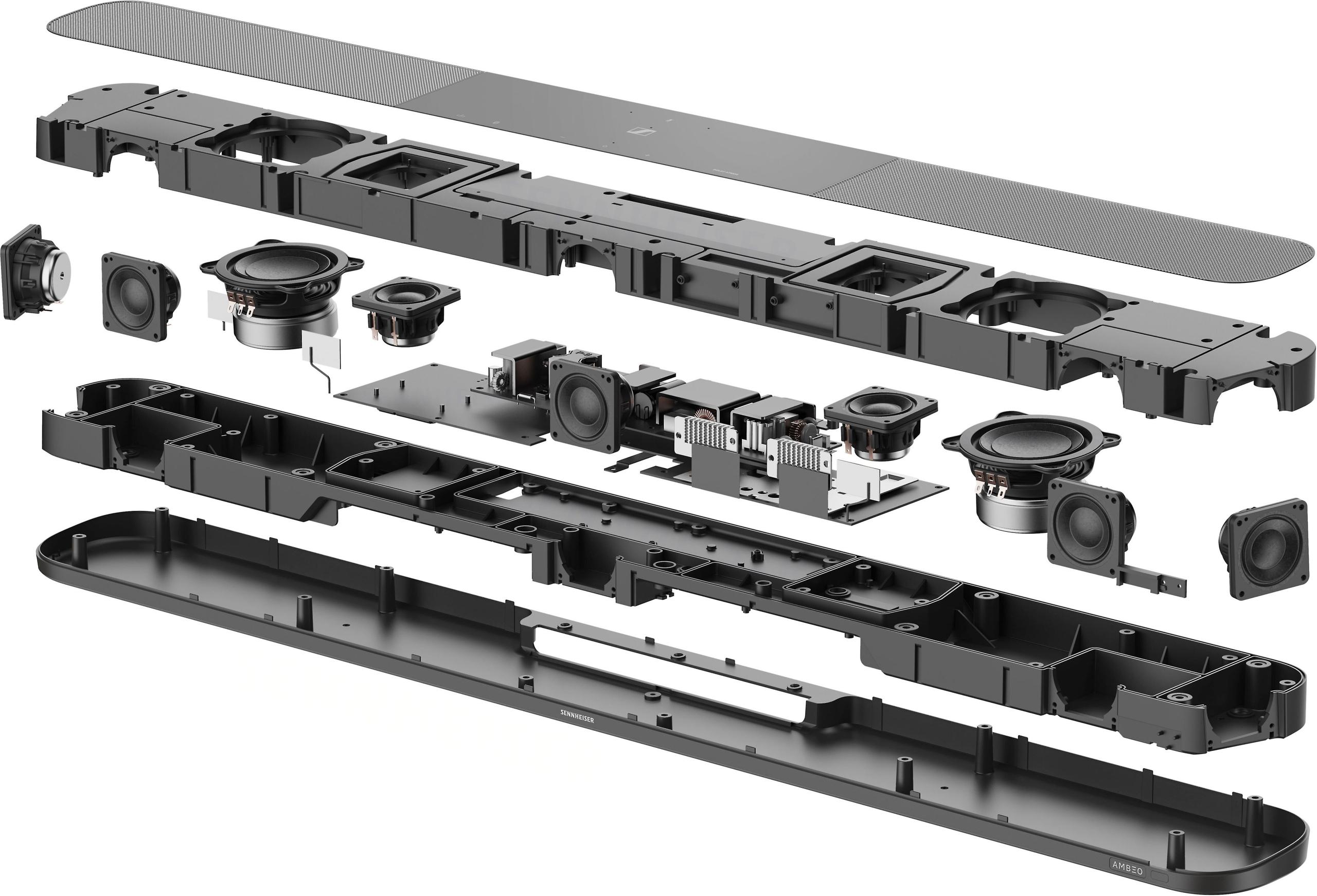
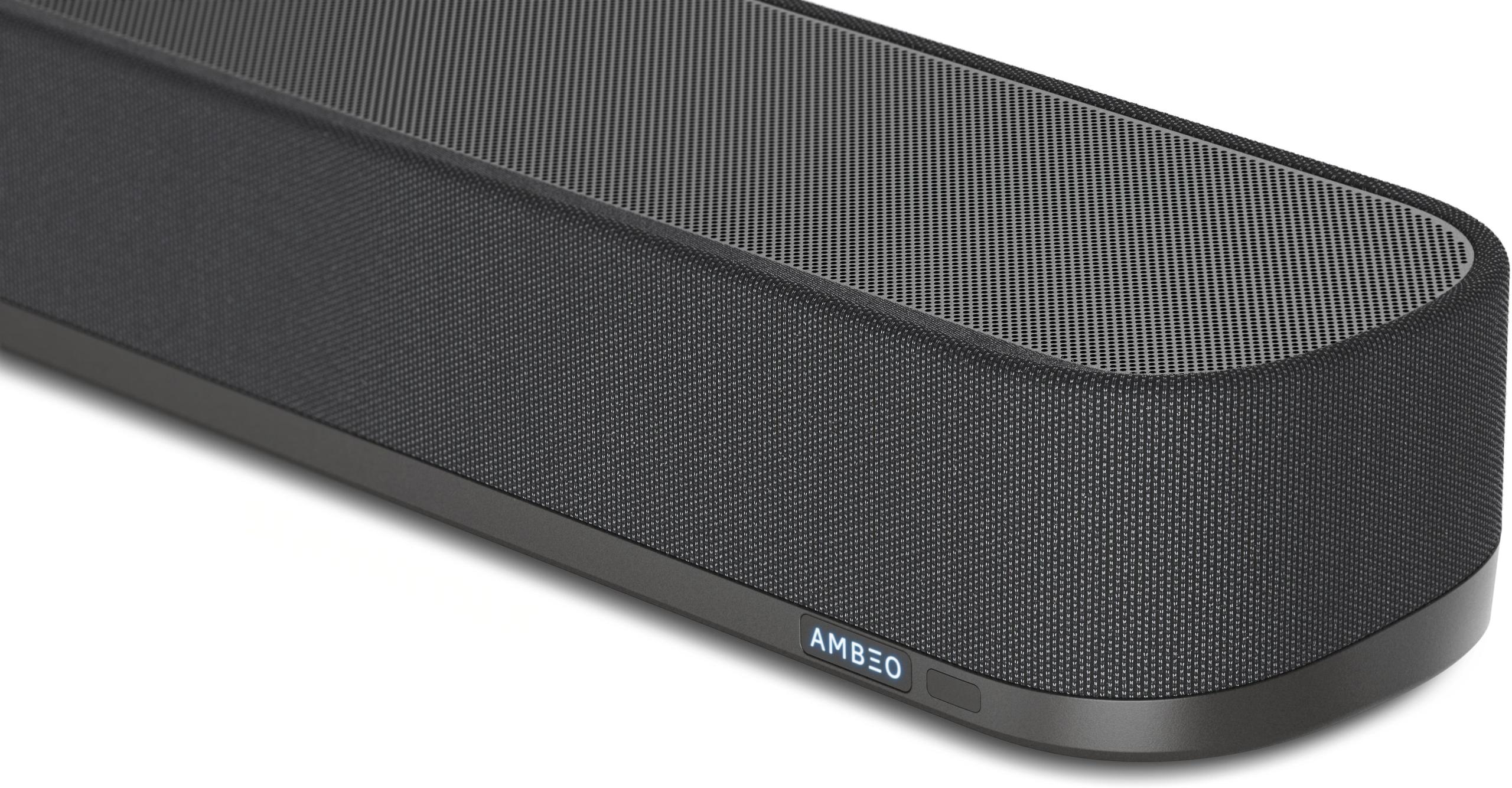
The Sennheiser AMBEO takes a completely different path. Instead of multiple physical speakers, it uses 13 precision drivers built into a single 41-inch bar, combined with sophisticated digital processing to create what Sennheiser calls a "bubble of sound" around your listening position.
This virtualization technology, developed in partnership with the Fraunhofer Institute (the same research organization behind MP3), analyzes your room's acoustic properties and uses psychoacoustic principles to fool your brain into perceiving sounds coming from locations where there are no speakers. It's remarkably effective when it works well – the soundstage can extend far beyond the physical boundaries of the bar itself.
The AMBEO's room calibration process is particularly sophisticated. Using built-in microphones, it measures how sound reflects off your walls, ceiling, and furniture, then adjusts its processing algorithms accordingly. This means the soundbar adapts to your specific room rather than using generic settings.
This is where the philosophical differences between these soundbars become most apparent, and where your room size and preferences will heavily influence your decision.
The JBL Bar 1000 MK2 delivers 960 watts of maximum power across its entire system, with 480 watts RMS (root mean square – a more accurate measure of continuous power output). This substantial power difference isn't just about getting louder; it's about maintaining clean, undistorted sound at higher volumes and providing the dynamic range that makes movie explosions feel impactful without destroying dialogue clarity.
The dedicated 10-inch subwoofer deserves special attention. It can reproduce frequencies down to 33Hz, which puts it in proper home theater subwoofer territory. For context, most of the bass you feel in your chest during action movies occurs between 30-80Hz. Having a dedicated sub means this crucial frequency range doesn't compete with the mid-range drivers handling dialogue and effects.
I've tested the JBL in rooms up to 500 square feet, and it maintains its composure admirably. The bass doesn't become muddy at high volumes, and the system can genuinely pressurize a large room – something you feel as much as hear.
The Sennheiser AMBEO operates with 250 watts of power, but this comparison isn't entirely fair because it's driving a fundamentally different speaker configuration. The AMBEO uses dual built-in 4-inch subwoofers rather than a single large external one. While this reaches down to 30Hz on paper – actually deeper than the JBL – the physical reality is that smaller drivers in a soundbar enclosure can't move the same amount of air as a dedicated 10-inch sub.
However, the Sennheiser's bass is more refined and controlled. The advanced DSP (digital signal processing) prevents the boomy, one-note bass that plagues many soundbars. It's articulate bass that serves the music rather than overwhelming it. For music listening, many users actually prefer this approach because it doesn't artificially emphasize low frequencies.
The AMBEO also offers expandability that the JBL doesn't – you can add up to four external subwoofers if you want more bass impact. This flexibility means you can start with the clean aesthetic of a single bar and add bass power later if needed.
This is where personal preference and room acoustics play huge roles, and where I've noticed the biggest differences between these approaches during extended listening.
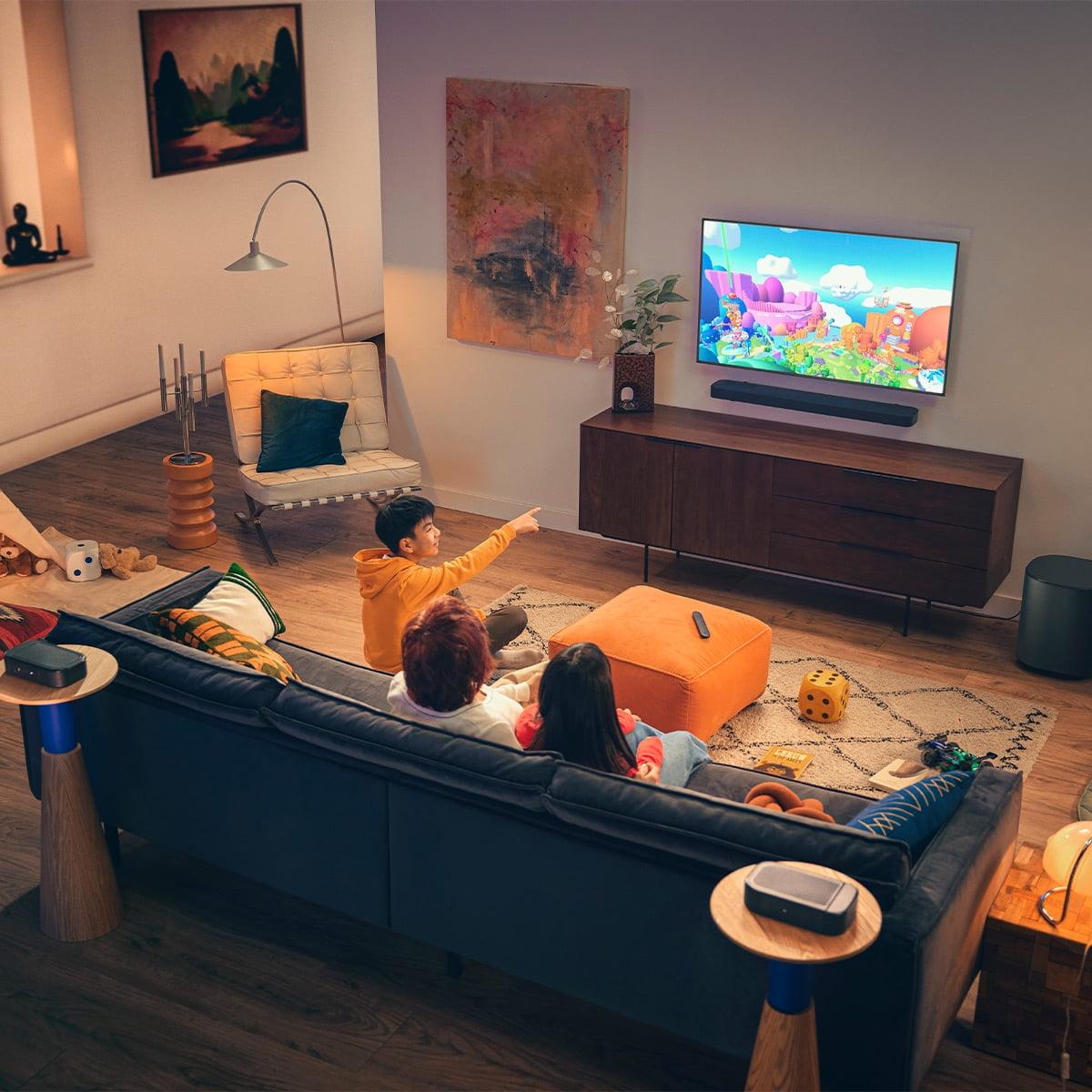
With the JBL Bar 1000 MK2, surround effects feel genuinely three-dimensional because they are. When you're watching a scene with rain, you hear droplets from the up-firing drivers above, ambient sound from the rear speakers behind you, and dialogue anchored to the screen in front. This creates what audio engineers call "proper localization" – sounds appear to come from specific points in space.
The detachable speakers are particularly effective for this. I've found that even a few feet of separation between your seating position and the rear speakers makes a dramatic difference in immersion compared to soundbars that try to bounce rear effects off side walls.
The JBL's MultiBeam 3.0 technology deserves mention here. This system uses multiple drivers and precise timing to create a wider soundstage than the physical bar itself. It's not trying to replace the rear speakers, but rather to make the front soundstage more enveloping.
The Sennheiser AMBEO creates immersion through what can only be described as audio engineering wizardry. The virtualization is so convincing that first-time listeners often look around the room for speakers that aren't there. The soundstage extends well beyond the physical boundaries of the bar, creating an almost holographic audio experience.
This approach has some unique advantages. Because all processing happens digitally, the AMBEO can create precise object placement that adapts to the content. A helicopter might start at the front left, move overhead, and exit behind your right shoulder with remarkable precision – all from a single bar.
However, this virtualization is somewhat dependent on your seating position and room acoustics. The sweet spot is more defined than with the JBL's physical speakers. Move too far off-axis or have particularly problematic room acoustics, and the illusion can break down.
While both soundbars excel with movies, their music performance reveals different strengths that might influence your decision if you're planning to use them for stereo listening as well.
The Sennheiser AMBEO benefits from the company's decades of experience in professional audio. The 13 drivers are individually selected and matched, and the sophisticated DSP maintains remarkable coherence across the frequency spectrum. For acoustic music, jazz, and classical recordings, the AMBEO delivers the kind of natural, uncolored sound that audiophiles appreciate.
The support for 360 Reality Audio is also noteworthy for music enthusiasts. This immersive audio format, while still limited in content availability, can create truly enveloping musical experiences that traditional stereo can't match.
The JBL Bar 1000 MK2 approaches music with more emphasis on impact and scale. The dedicated subwoofer gives bass lines real weight, and the higher power output means the system can reproduce the dynamic swings in rock, electronic, and hip-hop music without compression. It's less about analytical precision and more about emotional engagement.
The detachable speakers can be used as standalone Bluetooth speakers, which adds versatility for music listening in other rooms or outdoor spaces. Each speaker provides up to 10 hours of battery life, making them surprisingly capable portable speakers.
Beyond pure audio performance, how these soundbars integrate into your home theater setup matters significantly for daily usability.
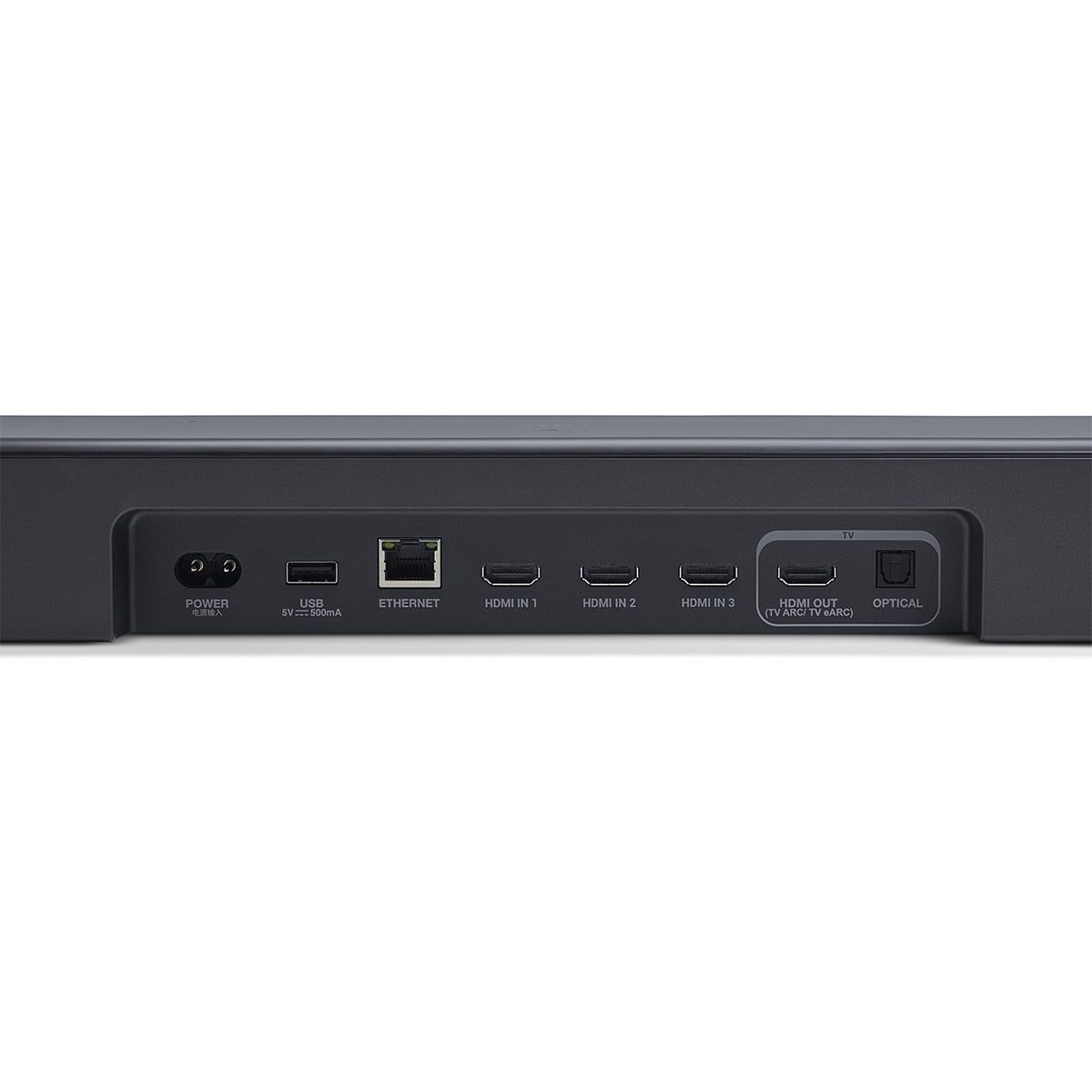
The JBL Bar 1000 MK2 functions as a proper AV hub with three HDMI inputs plus eARC output. This means you can connect your game console, streaming device, and Blu-ray player directly to the soundbar, then send video to your TV through a single cable. This approach simplifies cable management and ensures all your sources benefit from the soundbar's audio processing.
The Sennheiser AMBEO takes a more minimalist approach with only HDMI eARC connectivity. This means all source switching happens through your TV, and the soundbar receives audio through the enhanced Audio Return Channel. While cleaner from a setup perspective, this limits you to your TV's HDMI input capacity and processing capabilities.
Here's where the philosophical differences really impact user experience. The JBL requires positioning multiple components – the main bar, subwoofer, and rear speakers – but the wireless connectivity makes this relatively painless. The rear speakers automatically connect when removed from the main bar, and the subwoofer pairs during initial setup.
The Sennheiser's setup is physically simpler since it's a single component, but the room calibration process is more involved. The system needs to measure your room's acoustics using built-in microphones, and optimal performance requires some experimentation with positioning relative to walls and the ceiling.
Both soundbars include unique features that extend their utility beyond basic audio reproduction.
The Night Listening mode on the JBL Bar 1000 MK2 is genuinely useful. It mutes the main soundbar and subwoofer, delivering audio only through the detachable speakers. This allows for late-night viewing without disturbing others while maintaining dialogue clarity and basic sound effects.
The PureVoice 2.0 feature automatically adjusts dialogue levels based on ambient sound and overall volume, reducing the need to constantly adjust volume during movies with wide dynamic ranges.
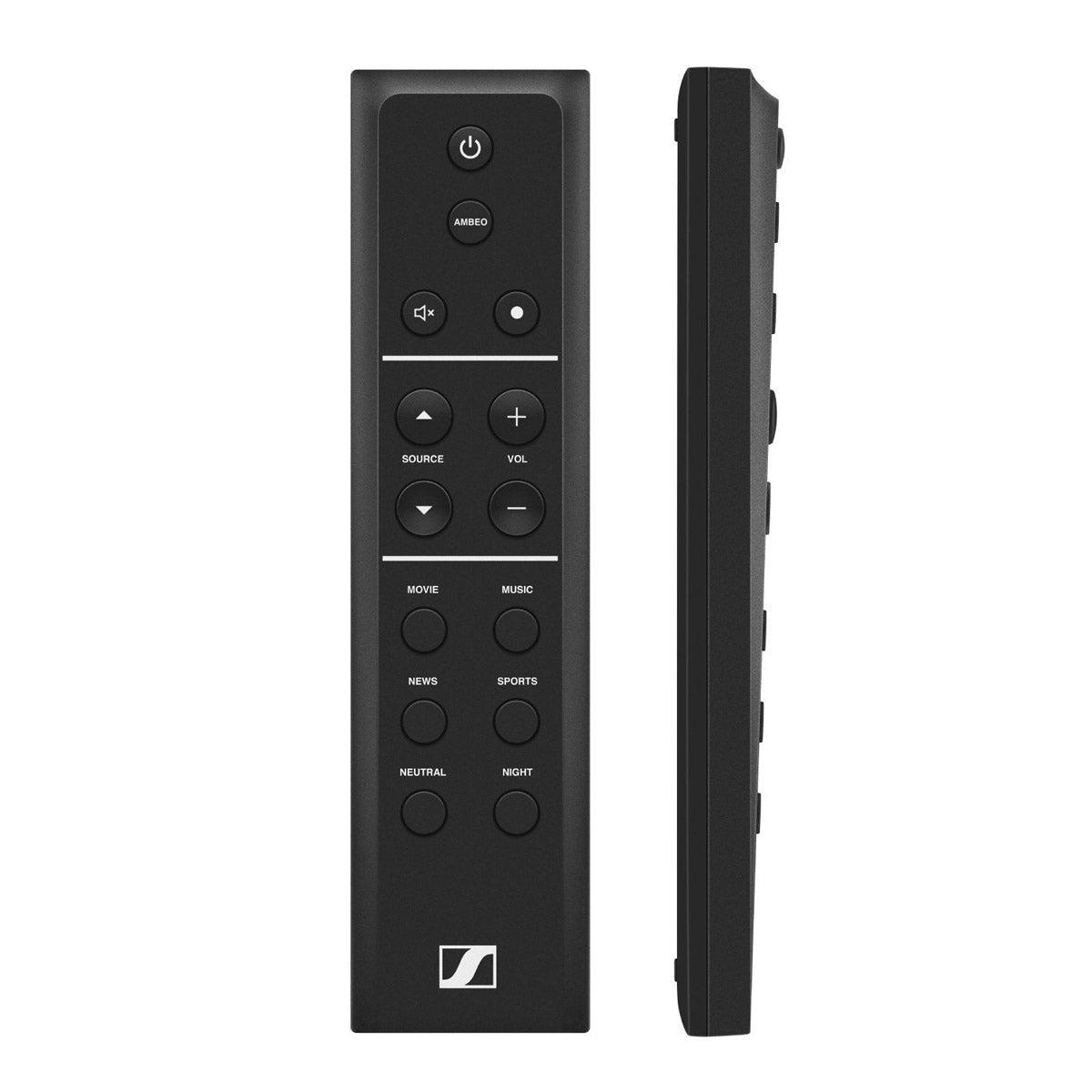
The Sennheiser AMBEO includes three different AMBEO processing modes (Light, Standard, Boost) that adjust the intensity of the virtualization effect. Some content benefits from subtle enhancement, while action movies might call for full processing intensity.
The advanced room calibration continues learning and adapting over time, theoretically improving performance as the system better understands your room and listening preferences.
The $800 price difference between these soundbars represents more than just premium branding – it reflects fundamentally different engineering approaches and target markets.
At $1,200, the JBL Bar 1000 MK2 delivers a complete home theater system with no additional purchases required. You get genuine multi-channel audio, substantial bass output, and versatile speakers that serve multiple functions. For most users, this represents exceptional value in the premium soundbar category.
The Sennheiser AMBEO at $2,000 asks you to pay for cutting-edge audio processing, premium build quality, and the engineering development costs of pioneering virtualization technology. If you value technological innovation and minimal physical footprint over raw power, the premium can be justified.
After extensive experience with both systems, here's how I'd approach the decision:
Choose the JBL Bar 1000 MK2 if you:
Choose the Sennheiser AMBEO if you:
The decision ultimately comes down to whether you want authentic physical surround sound with immediate impact, or cutting-edge audio processing with premium refinement. Both deliver exceptional performance in their own ways – the question is which approach better matches your space, preferences, and budget.
Having lived with both systems, I find myself gravitating toward the JBL for pure home theater excitement and the Sennheiser for more nuanced listening experiences. But honestly, either choice will dramatically upgrade your audio experience from basic TV speakers or entry-level soundbars. The real winner here is that we have two genuinely different approaches to premium audio, giving consumers meaningful choices based on their specific needs rather than just minor variations on the same theme.
| JBL Bar 1000 MK2 Soundbar System | Sennheiser AMBEO Soundbar |
|---|---|
| Price - Significant $800 difference affects value proposition | |
| $1,200 (complete system included) | $2,000 (single bar, expandable later) |
| Channel Configuration - Determines authenticity of surround experience | |
| 7.1.4 physical channels with real speakers | 5.1.4/7.1.4 virtualized through processing |
| Total System Power - Critical for room-filling sound and dynamics | |
| 960W max / 480W RMS (high headroom) | 250W (efficient but limited for large rooms) |
| Bass Solution - Major difference in low-end impact and flexibility | |
| Dedicated 10" wireless subwoofer (33Hz) | Dual built-in 4" subs (30Hz), expandable to 4 external |
| Physical Components - Affects setup complexity and performance | |
| Main bar + wireless sub + detachable rear speakers | Single 41.4" bar (minimalist approach) |
| HDMI Connectivity - Determines source management flexibility | |
| 3 HDMI inputs + eARC (acts as AV hub) | eARC only (requires TV-based switching) |
| Surround Speaker Implementation - Key difference in immersion method | |
| Battery-powered detachable speakers (10hr life) | Advanced beamforming and psychoacoustic processing |
| Frequency Response - Shows bass extension capabilities | |
| 33Hz - 20kHz (dedicated sub advantage) | 30Hz - 20kHz (impressive for single bar) |
| Up-firing Drivers - Creates Dolby Atmos height effects | |
| 4 physical drivers (2 in bar, 1 per rear speaker) | Virtualized height through advanced algorithms |
| Room Calibration - Optimizes sound for your specific space | |
| Easy sound calibration via app | Advanced room analysis with continuous adaptation |
| Streaming & Connectivity - Modern wireless features | |
| Bluetooth 5.3, Wi-Fi, AirPlay 2, Chromecast | Bluetooth 4.0, Wi-Fi, Chromecast, more audiophile formats |
| Unique Features - Standout capabilities that add value | |
| Night mode (rear speakers only), portable speaker use | 360 Reality Audio, expandable sub system, AMBEO processing modes |
| Dimensions - Space requirements for your room | |
| 33.6" bar + separate sub + rear speakers | Single 49.6" × 5.3" × 6.7" bar (clean aesthetic) |
The JBL Bar 1000 MK2 is better for traditional home theater experiences because it provides true 7.1.4-channel surround sound with physical rear speakers and a dedicated 10-inch subwoofer. The Sennheiser AMBEO Soundbar excels at creating an immersive soundstage from a single bar using advanced virtualization, but the JBL delivers more authentic directional effects and powerful bass impact that most home theater enthusiasts prefer.
The Sennheiser AMBEO Soundbar costs $2,000 compared to the JBL Bar 1000 MK2's $1,200 price tag - an $800 difference. The Sennheiser's premium reflects its advanced audio processing technology and premium build quality, while the JBL offers a complete physical surround system at a lower price. For most users, the JBL provides better value with its included subwoofer and rear speakers.
The JBL Bar 1000 MK2 has significantly better bass performance thanks to its dedicated 10-inch wireless subwoofer that can reach down to 33Hz. The Sennheiser AMBEO uses dual built-in 4-inch subwoofers that reach 30Hz on paper but can't move as much air. However, the Sennheiser offers the option to add up to four external subwoofers for ultimate bass expansion.
The JBL Bar 1000 MK2 includes actual detachable rear speakers that create authentic surround sound by placing audio behind your seating position. The Sennheiser AMBEO Soundbar uses sophisticated virtualization to simulate rear effects without physical speakers. While both work well, the JBL's physical approach provides more convincing directional audio, especially for action movies and gaming.
The Sennheiser AMBEO Soundbar is easier to physically set up since it's a single bar that connects via HDMI eARC. The JBL Bar 1000 MK2 requires positioning a main bar, wireless subwoofer, and detachable rear speakers, though all components connect wirelessly. However, the Sennheiser requires more complex room calibration to optimize its virtualization technology.
Yes, both the JBL Bar 1000 MK2 and Sennheiser AMBEO Soundbar work with any TV that has HDMI eARC or optical audio output. The JBL also includes three HDMI inputs, allowing you to connect sources directly to the soundbar, while the Sennheiser relies on your TV for source switching through its single eARC connection.
The Sennheiser AMBEO Soundbar is generally better for music due to its audiophile-grade drivers, natural sound reproduction, and support for high-resolution audio formats including 360 Reality Audio. The JBL Bar 1000 MK2 delivers more dynamic, impactful music presentation with stronger bass, making it better for genres like rock, hip-hop, and electronic music.
The JBL Bar 1000 MK2 delivers 960W maximum power (480W RMS) across its entire system, providing excellent dynamics for large rooms. The Sennheiser AMBEO Soundbar outputs 250W but uses more efficient processing and doesn't need to drive external speakers. The JBL's higher power output makes it better suited for larger spaces and higher volume levels.
Both soundbars support Dolby Atmos, but differently. The JBL Bar 1000 MK2 uses four physical up-firing drivers (two in the main bar, one in each rear speaker) to bounce sound off your ceiling. The Sennheiser AMBEO Soundbar creates Dolby Atmos effects through advanced virtualization processing that simulates height channels without physical up-firing speakers.
The Sennheiser AMBEO Soundbar has a much smaller footprint since it's a single 49.6-inch bar with no additional components. The JBL Bar 1000 MK2 requires space for the main 33.6-inch soundbar, a separate wireless subwoofer, and positioning areas for the detachable rear speakers. Choose the Sennheiser if minimizing clutter is a priority.
The Sennheiser AMBEO Soundbar offers better expansion options, supporting up to four additional wireless subwoofers for enhanced bass. The JBL Bar 1000 MK2 is a complete, fixed system that cannot be expanded with additional components. However, the JBL's detachable speakers can be used as portable Bluetooth speakers in other rooms.
The JBL Bar 1000 MK2 offers superior value at $1,200 because you get a complete 7.1.4-channel system with physical surround speakers, a dedicated subwoofer, and multiple HDMI inputs. The Sennheiser AMBEO Soundbar at $2,000 provides cutting-edge virtualization technology and premium build quality but requires additional purchases for optimal bass performance, making the JBL the better value for most buyers.
We've done our best to create useful and informative comparisons to help you decide what product to buy. Our research uses advanced automated methods to create this comparison and perfection is not possible - please contact us for corrections or questions. These are the sites we've researched in the creation of this article: ecoustics.com - engadget.com - bestbuy.com - techradar.com - rtings.com - hometechnologyreview.com - youtube.com - t3.com - whathifi.com - youtube.com - bhphotovideo.com - gzhls.at - device.report - support.jbl.com - support.jbl.com - jbl.com - av.com - audioadvice.com - jbl.com - target.com - worldwidestereo.com - bestbuy.com - rtings.com - techradar.com - audioxpress.com - whathifi.com - upscaleaudio.com - soundstagesimplifi.com - global.sennheiser-hearing.com - sennheiser-hearing.com - audioadvice.com - abt.com - moon-audio.com

Privacy Policy
Terms and Conditions - Affiliate Policy
Home Security
© Copyright 2008-2026.
11816 Inwood Rd #1211, Dallas, TX 75244