


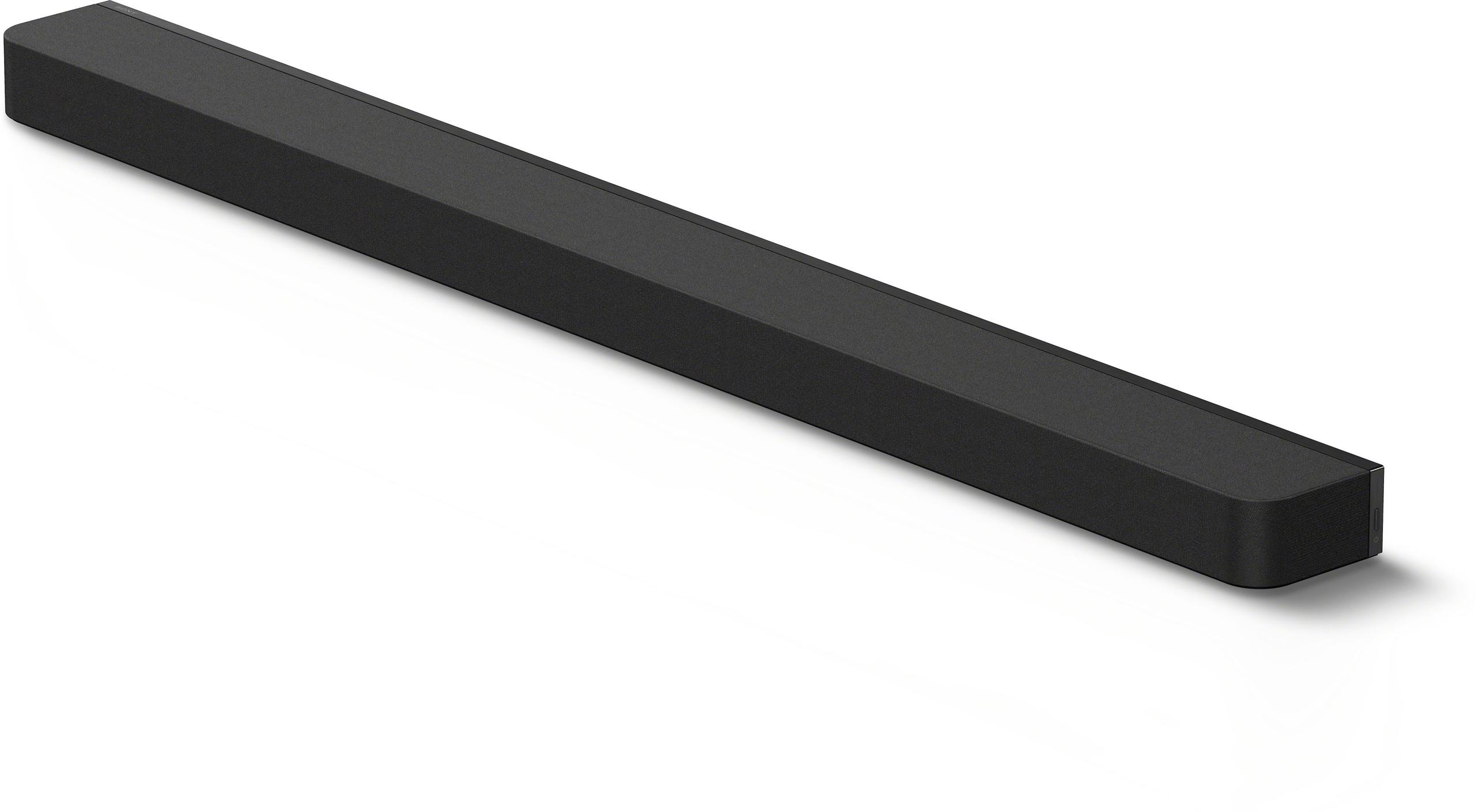




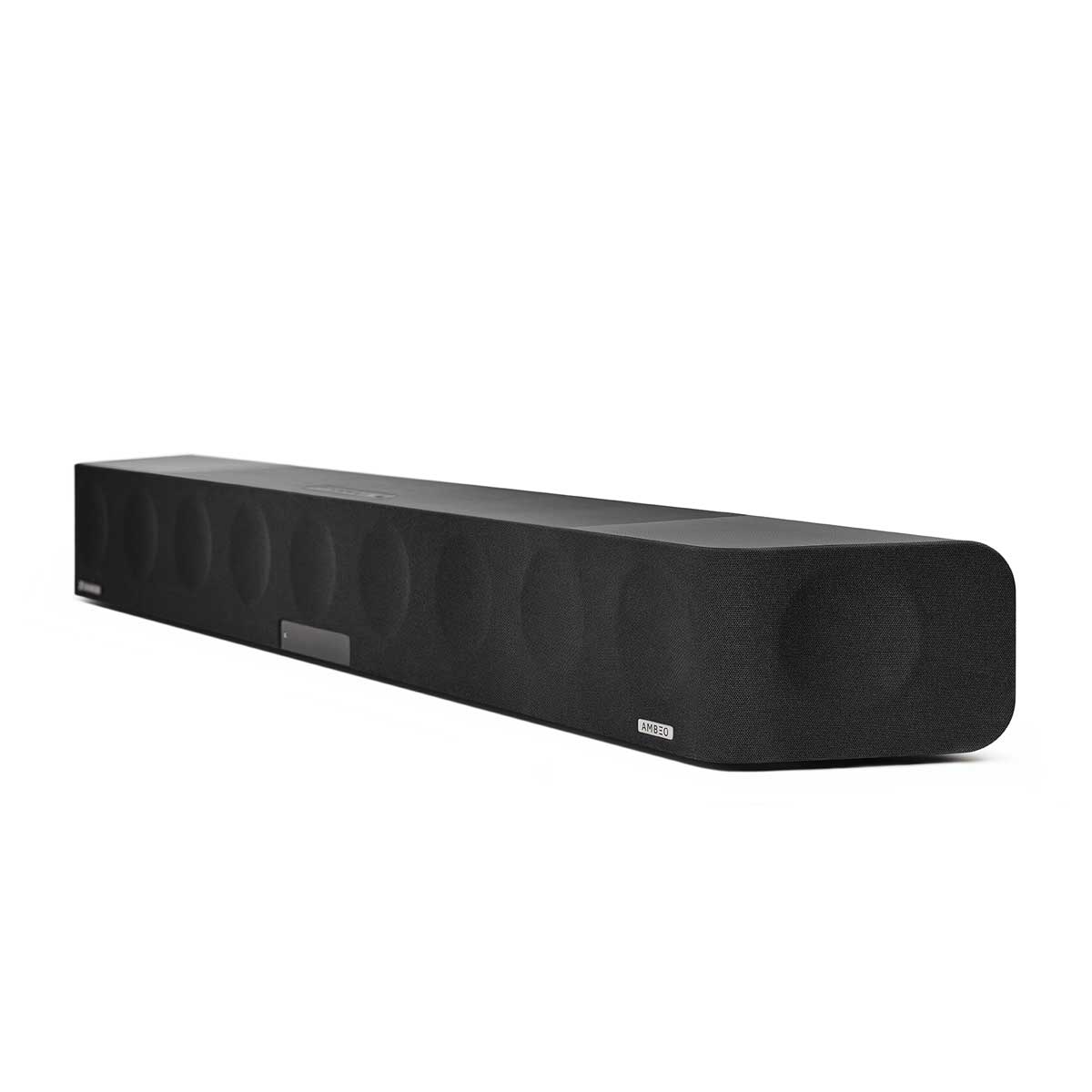
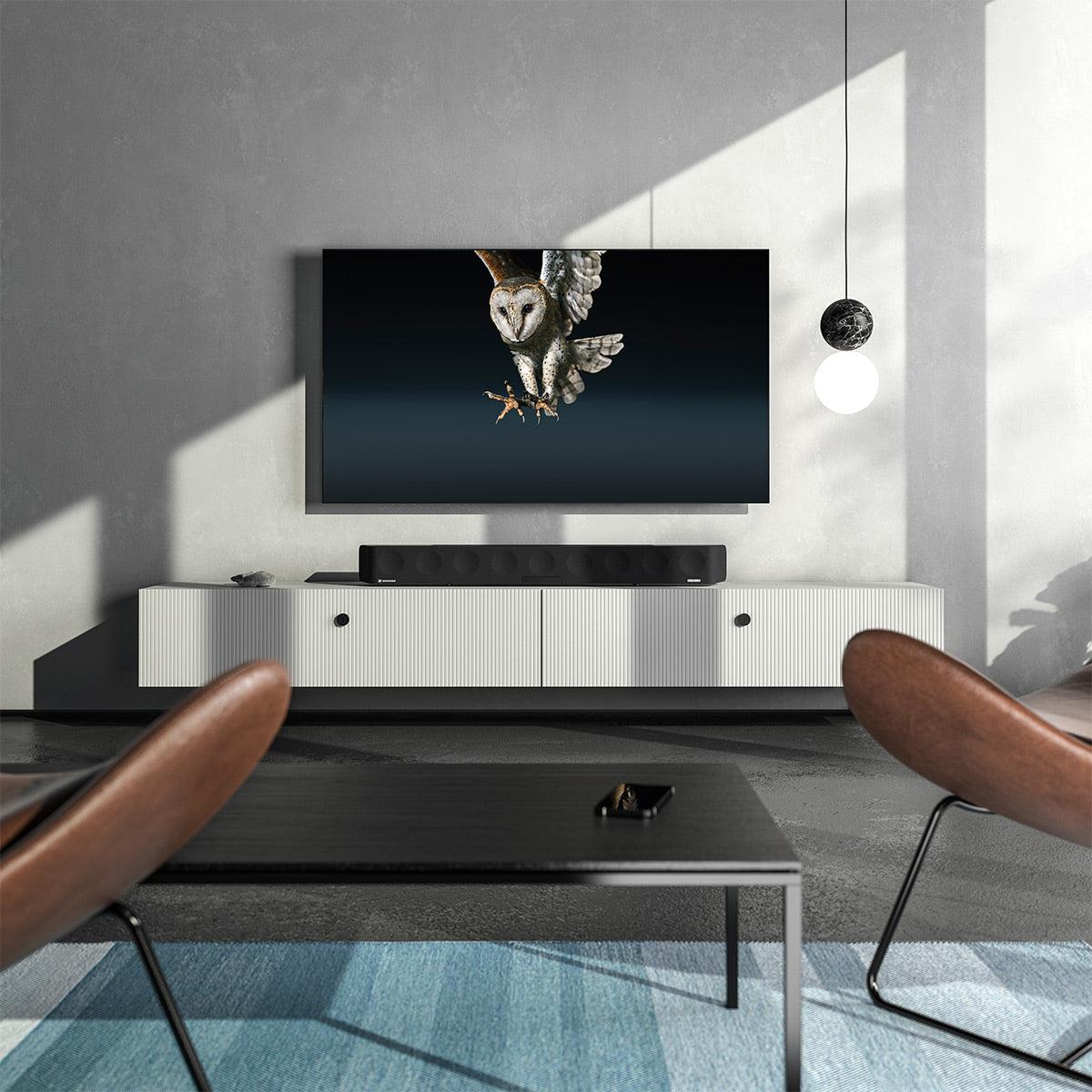
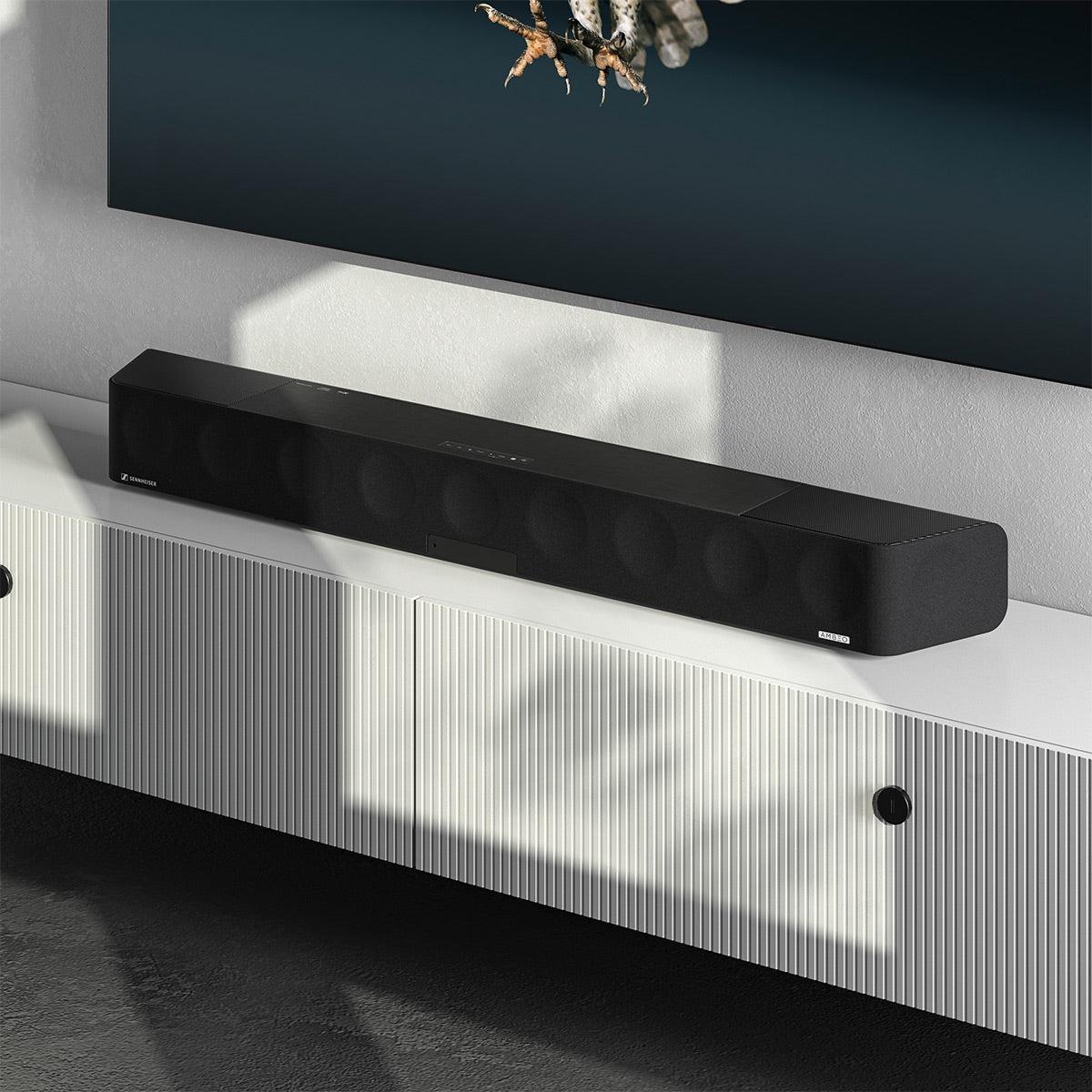
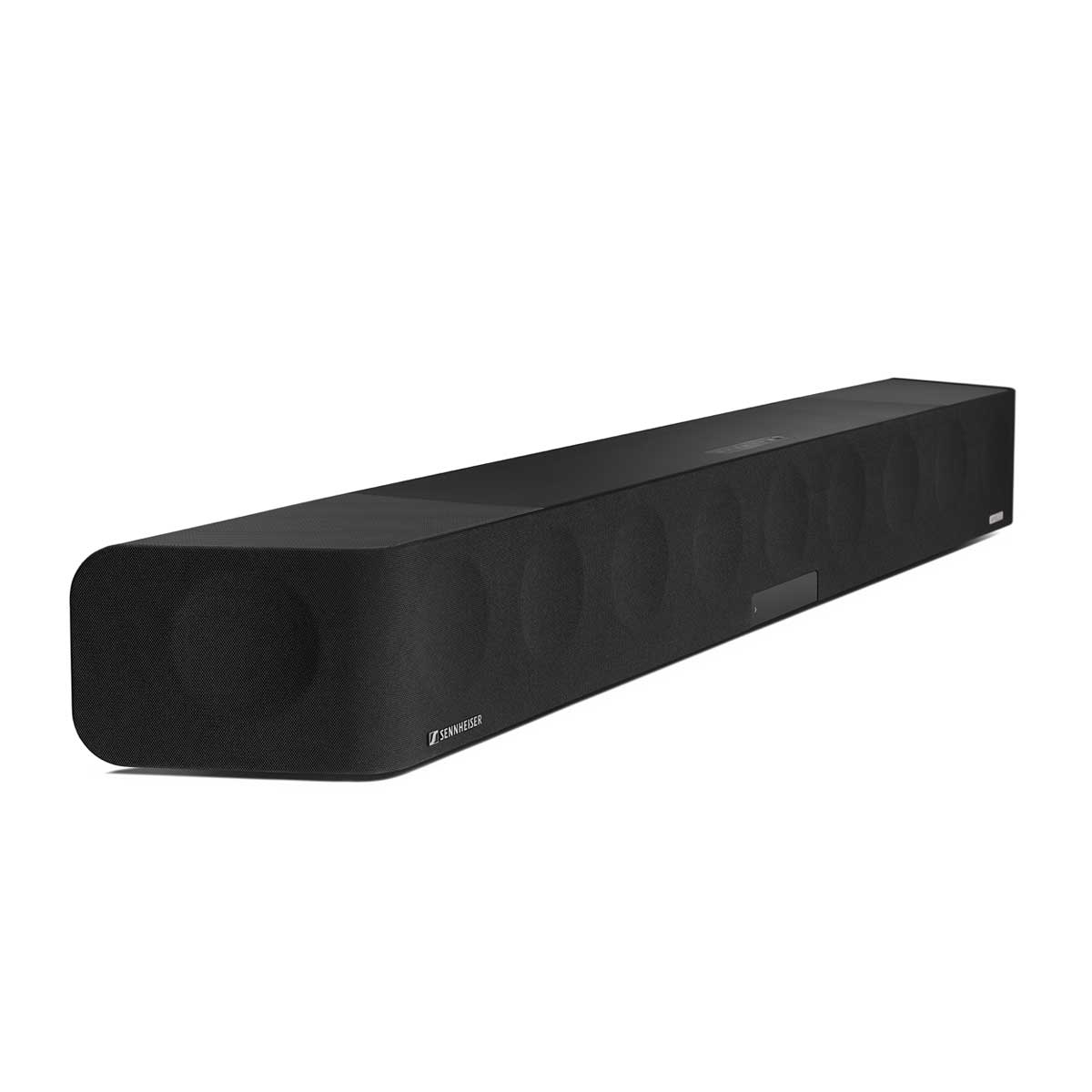
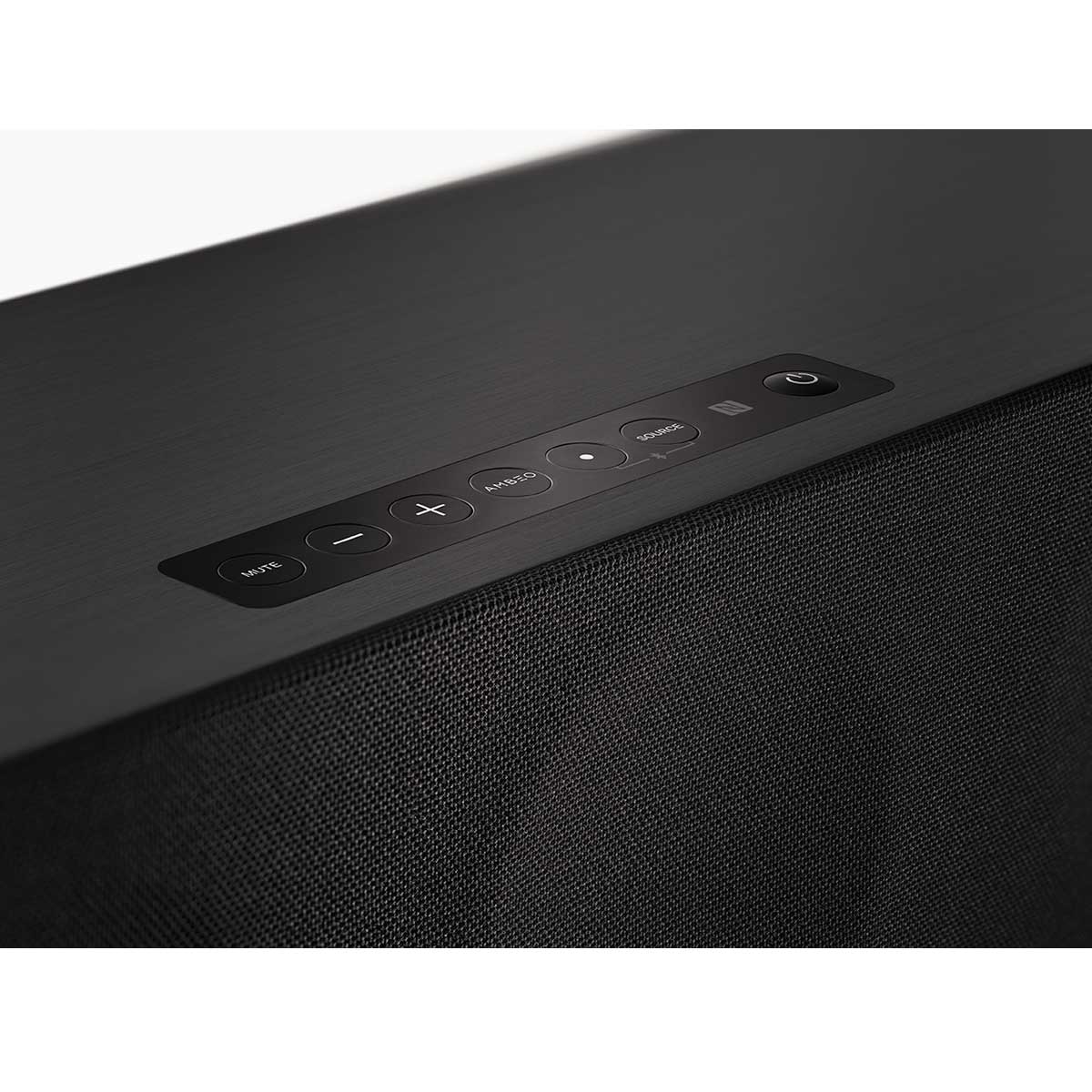
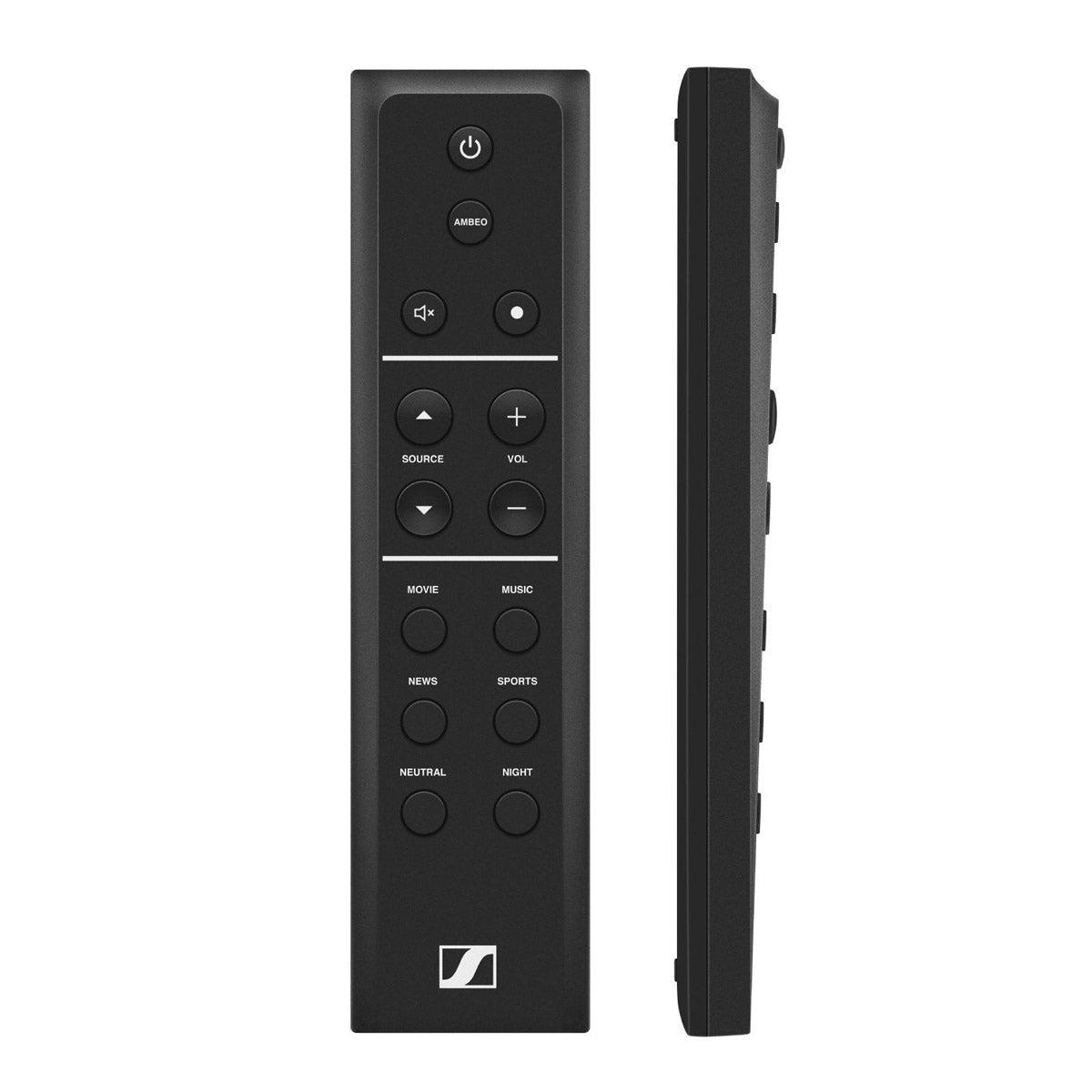
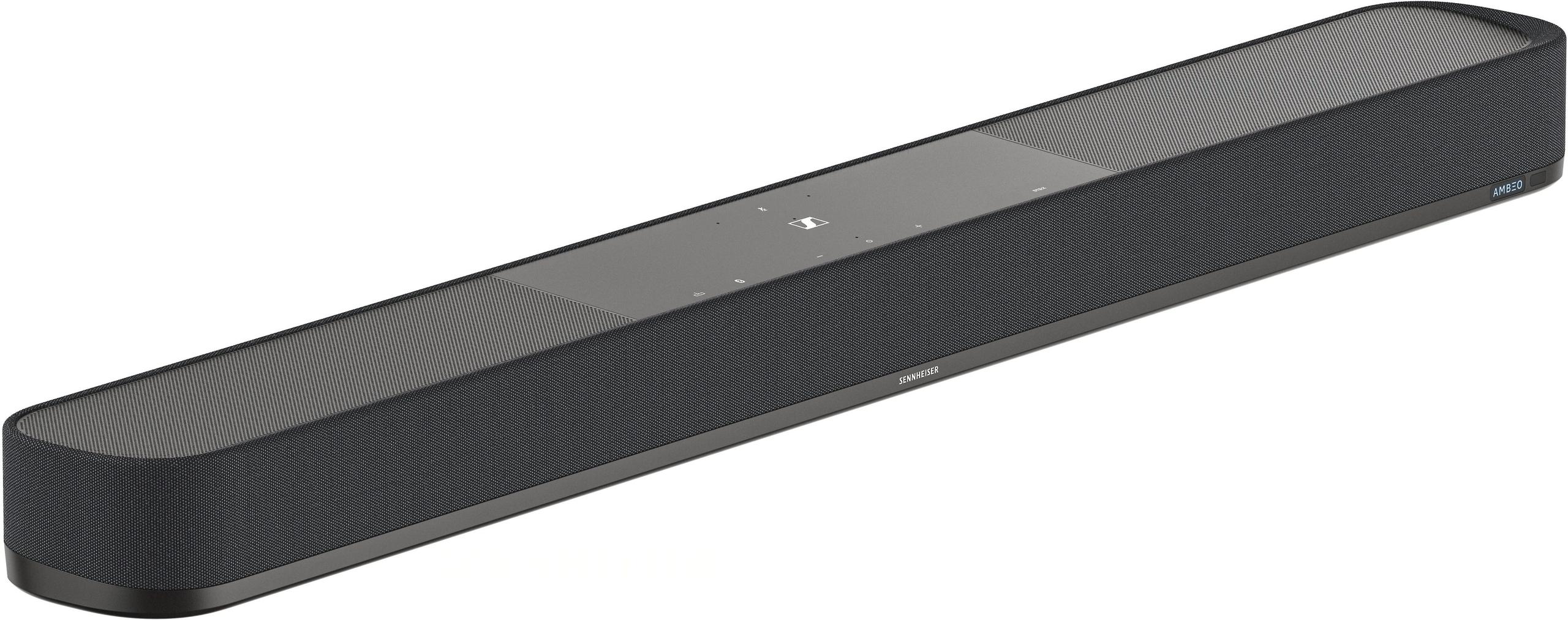
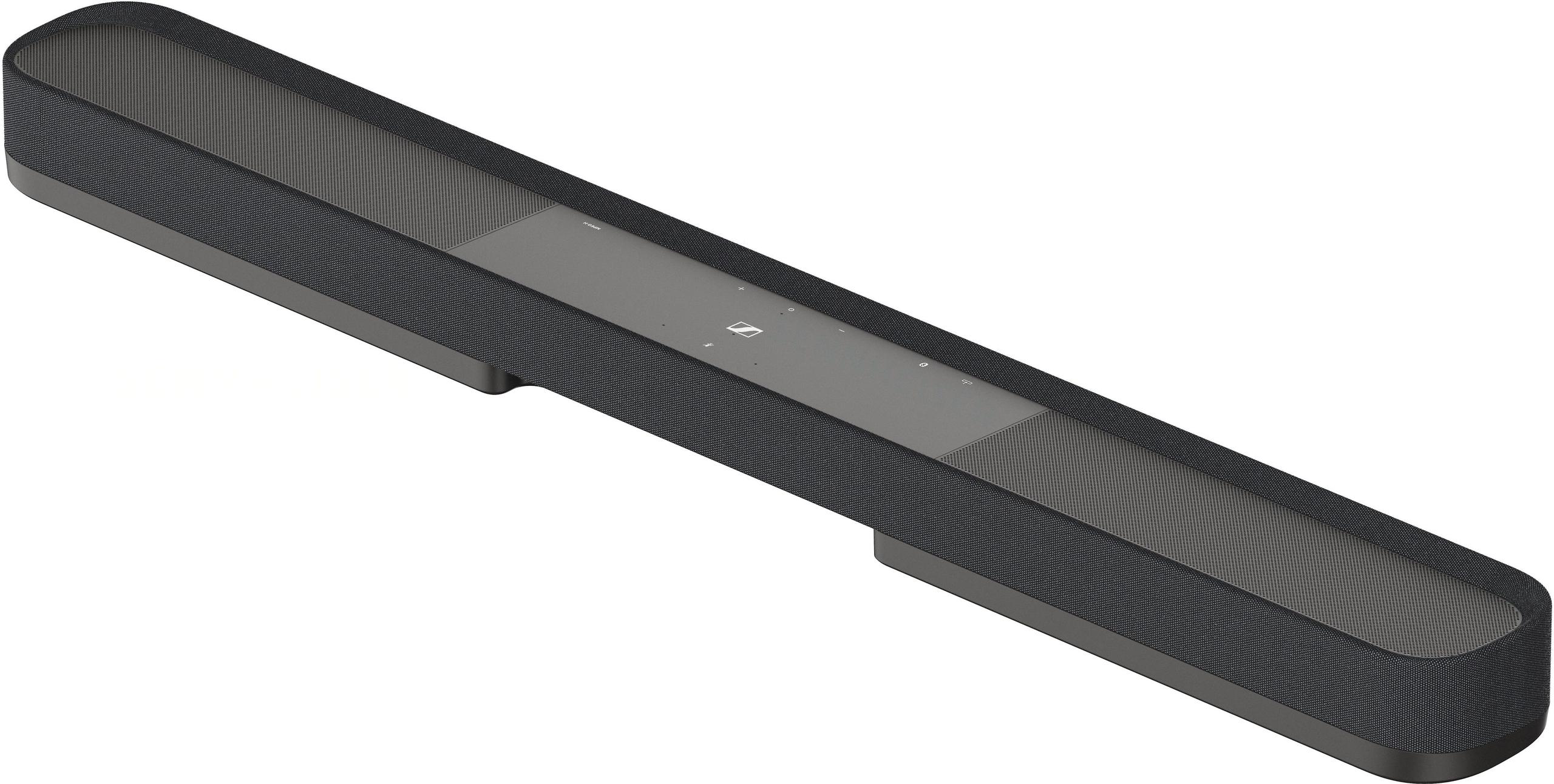

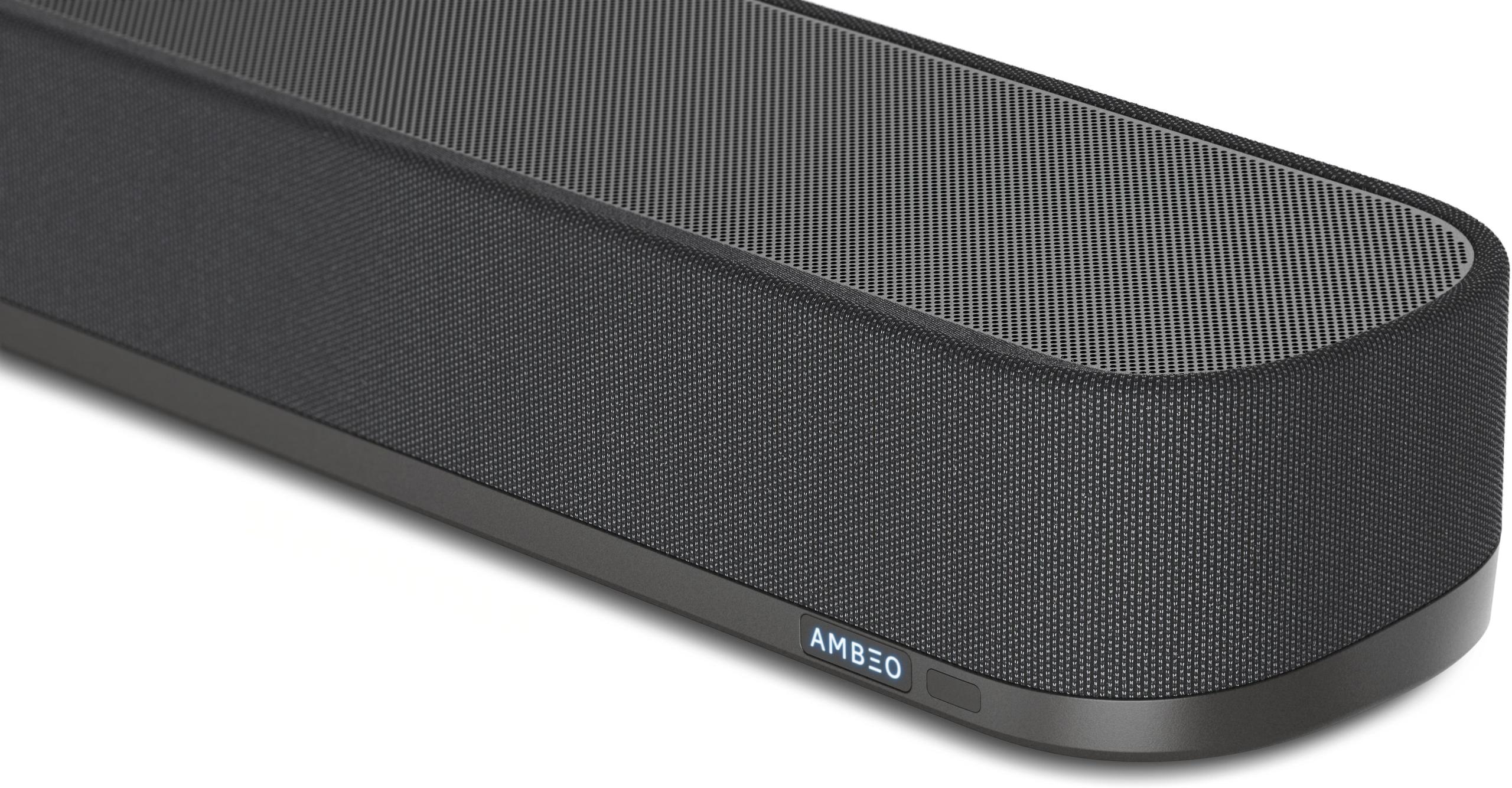

If you've been shopping for a premium soundbar lately, you've probably noticed how confusing the market has become. Two standout options that keep appearing in discussions are the Sony BRAVIA Theater Bar 9 ($1,399) and the Sennheiser AMBEO Soundbar ($2,500). Both promise to transform your living room into a home theater, but they take dramatically different approaches to get there.
Before diving into these specific models, let's talk about what premium soundbars are trying to accomplish. Traditional home theater systems use multiple speakers placed around your room – front left, center, right, rear surrounds, and often ceiling-mounted speakers for "height" effects. This creates genuine surround sound because different audio elements literally come from different directions.
Premium soundbars attempt to recreate this experience using a single unit placed below your TV. They do this through a combination of physical speaker placement and digital signal processing (DSP) – basically smart software that manipulates how sounds reach your ears. The goal is making you feel like there are invisible speakers all around your room, even though everything comes from one sleek bar.
The key technologies here are Dolby Atmos and DTS:X, which are audio formats that include information about where sounds should appear in three-dimensional space. Think of them as detailed instructions telling each speaker exactly when and how to play specific sounds to create the illusion of movement and positioning.
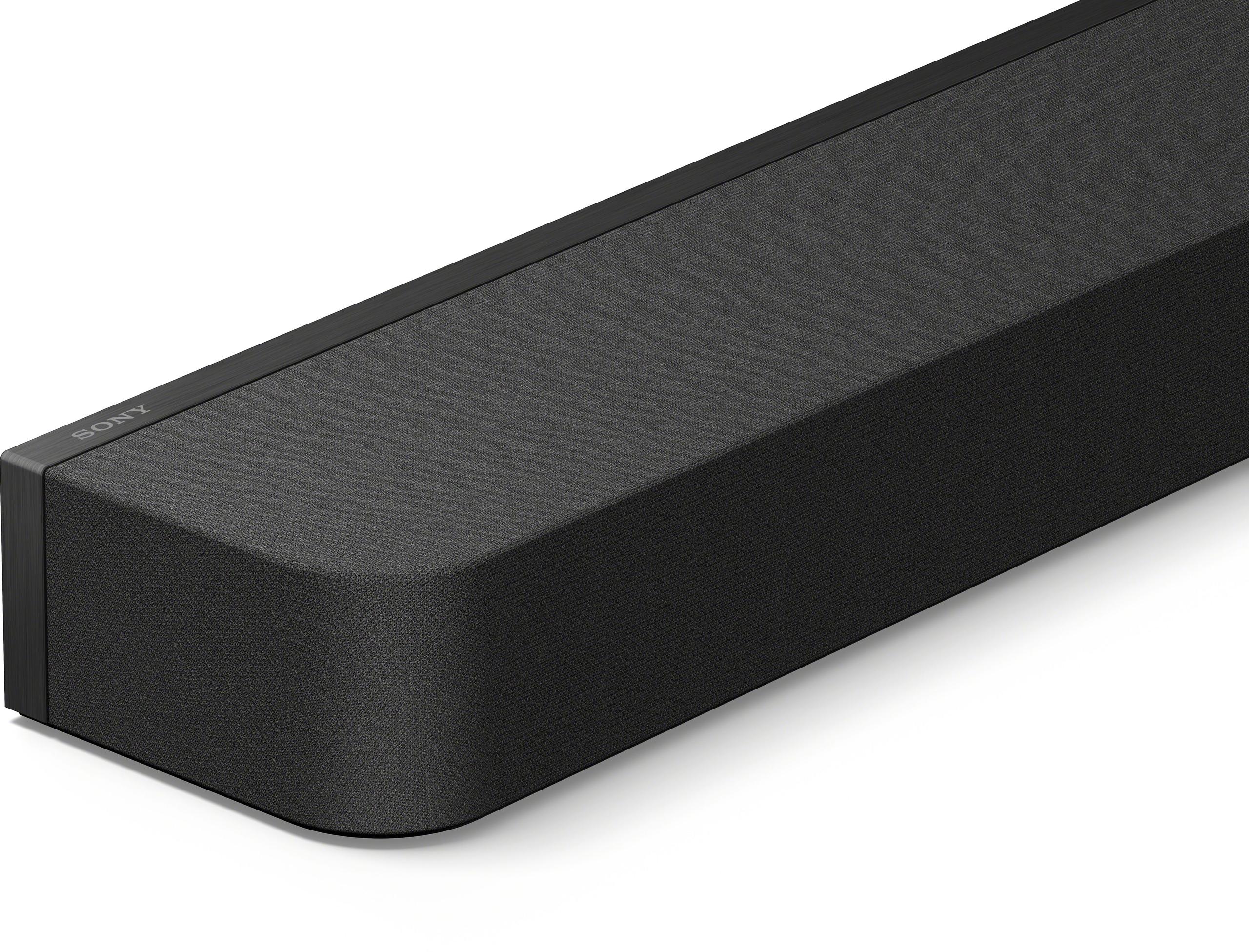
The Sony BRAVIA Theater Bar 9 represents Sony's 2024 refinement of their soundbar technology. Sony has been building on their "360 Spatial Sound Mapping" concept for several years, but this latest version incorporates lessons learned from previous models like the HT-A7000. The biggest improvement is better integration with Sony's TV ecosystem and more sophisticated processing of phantom speaker placement.
The Sennheiser AMBEO Soundbar, also updated for 2024, builds on Sennheiser's partnership with the Fraunhofer Institute – the same research organization that helped develop the MP3 format. Their approach focuses heavily on psychoacoustics, which is the science of how our brains interpret sound. Rather than just throwing more speakers at the problem, they've invested in understanding how to trick your brain more effectively.
Both companies have made significant improvements since their earlier models. Sony has enhanced their room calibration algorithms and added better bass management, while Sennheiser has refined their virtualization processing and improved the room analysis capabilities.
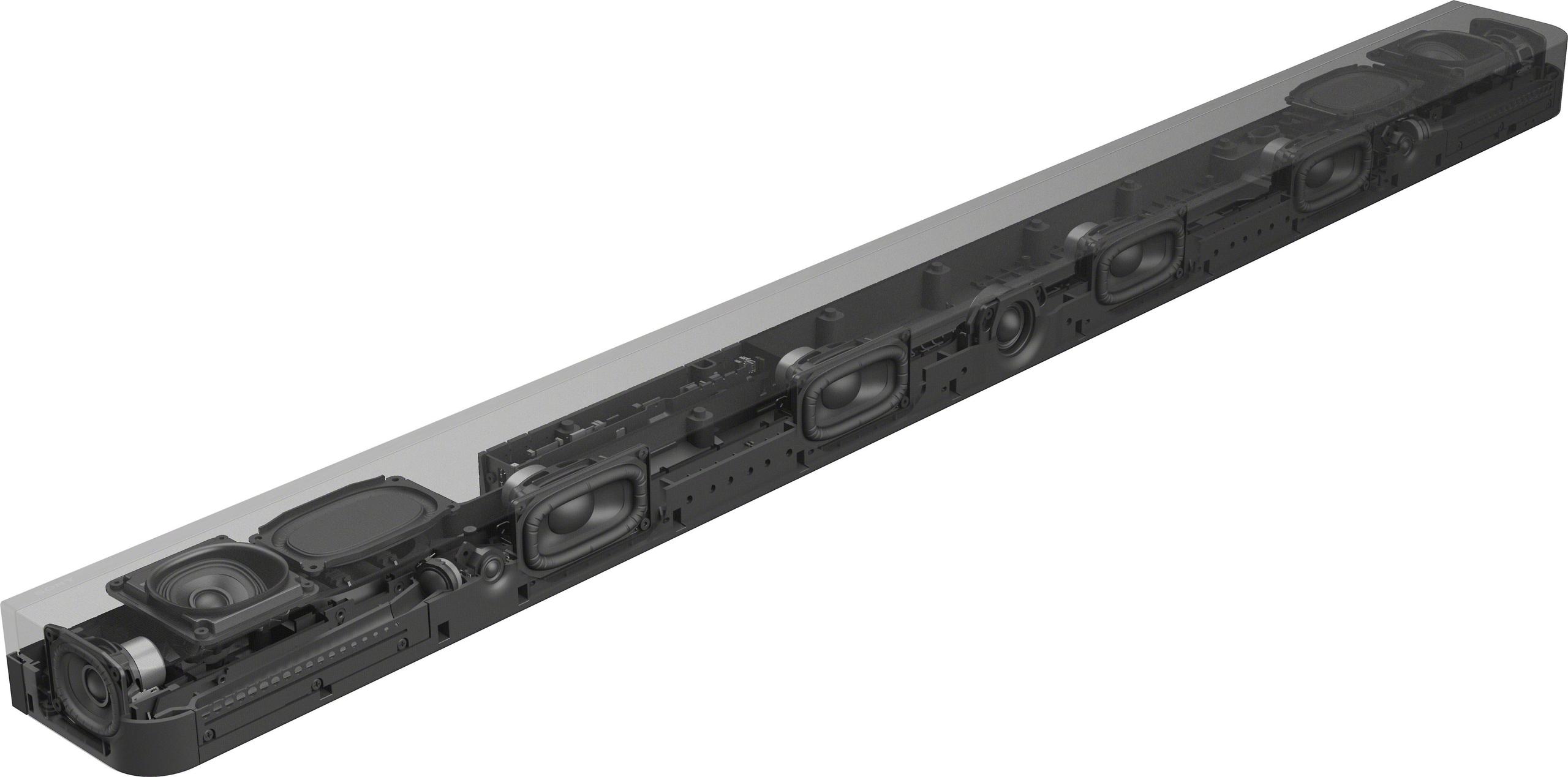
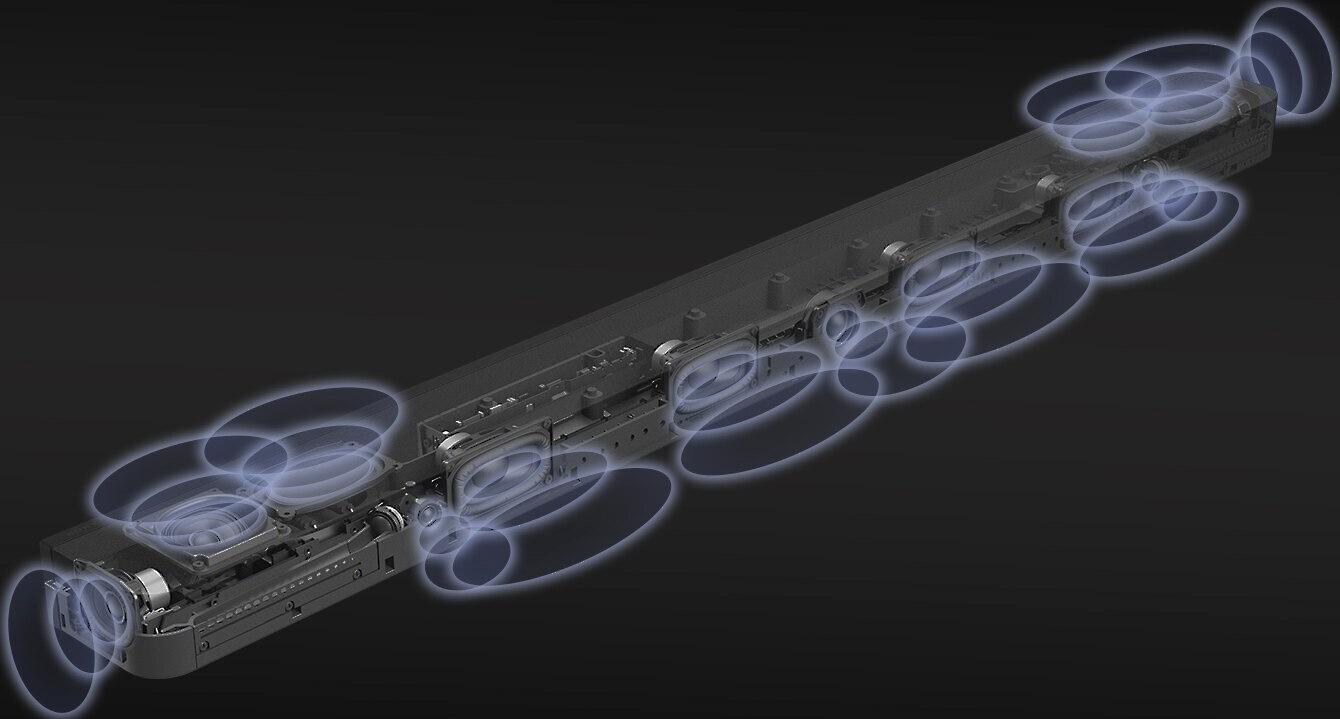
Here's where things get interesting. The Sony Theater Bar 9 uses what I'd call a "brute force" approach – in the best possible way. It packs 13 individual drivers into its sleek chassis, including dedicated tweeters for high frequencies, multiple woofers for bass, side-firing speakers that bounce sound off your walls, and up-firing drivers that reflect audio off your ceiling.
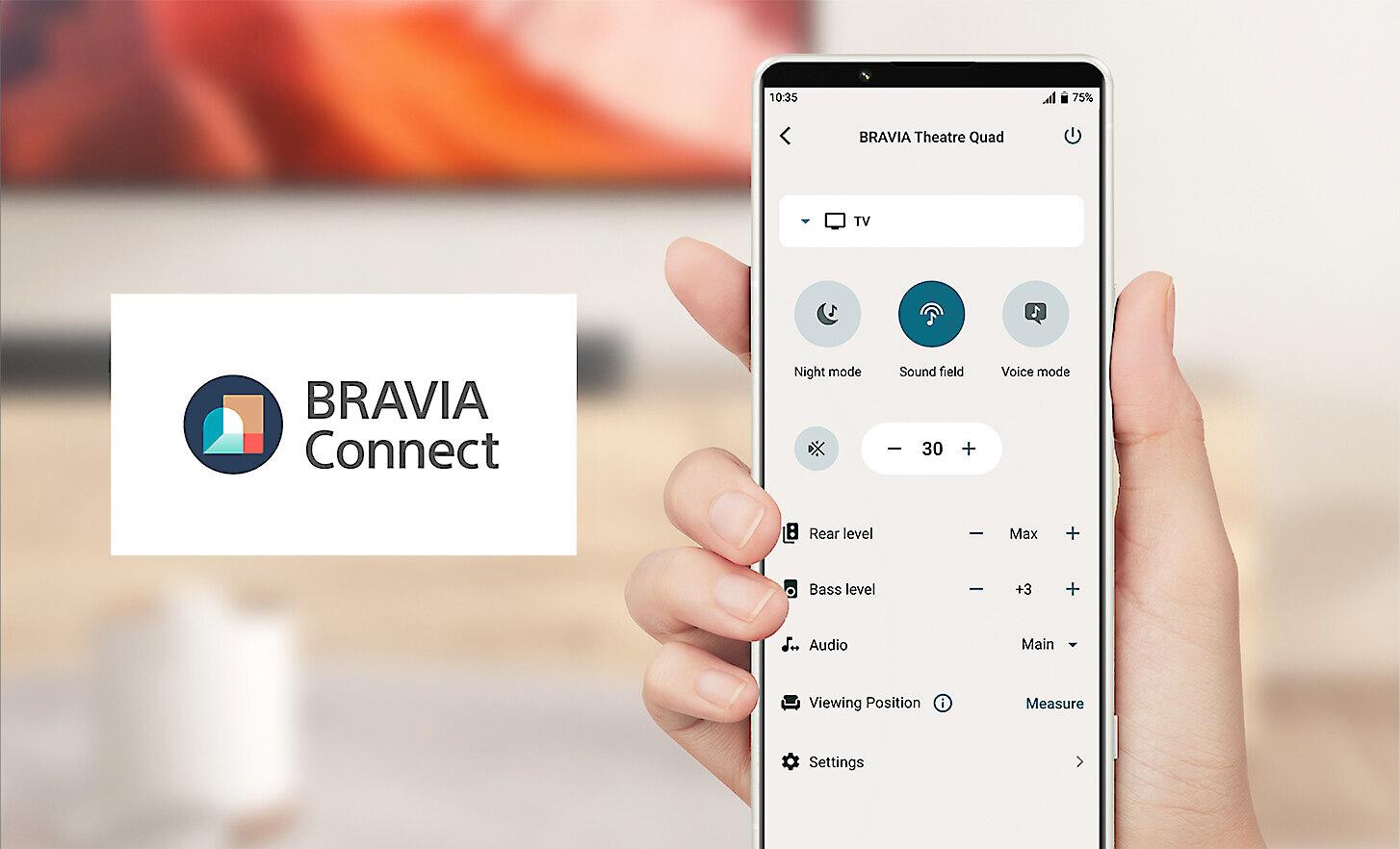
Sony's 360 Spatial Sound Mapping technology analyzes your room through their smartphone app, then calculates exactly how to time and adjust each driver to create "phantom speakers" – spots where your brain thinks sound is coming from, even though there's no actual speaker there. It's like an audio magic trick that works by understanding how sound waves interact with your specific room layout.
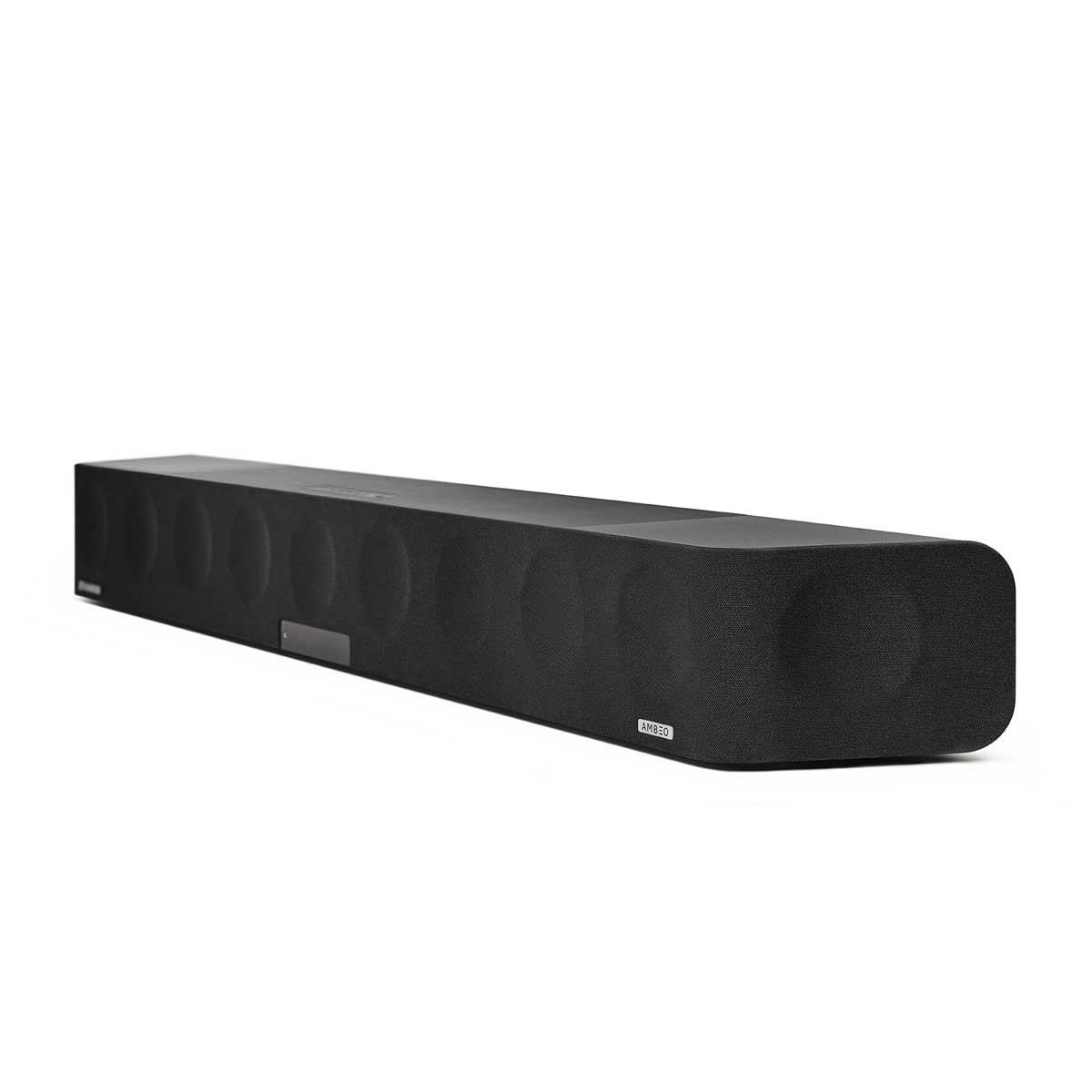
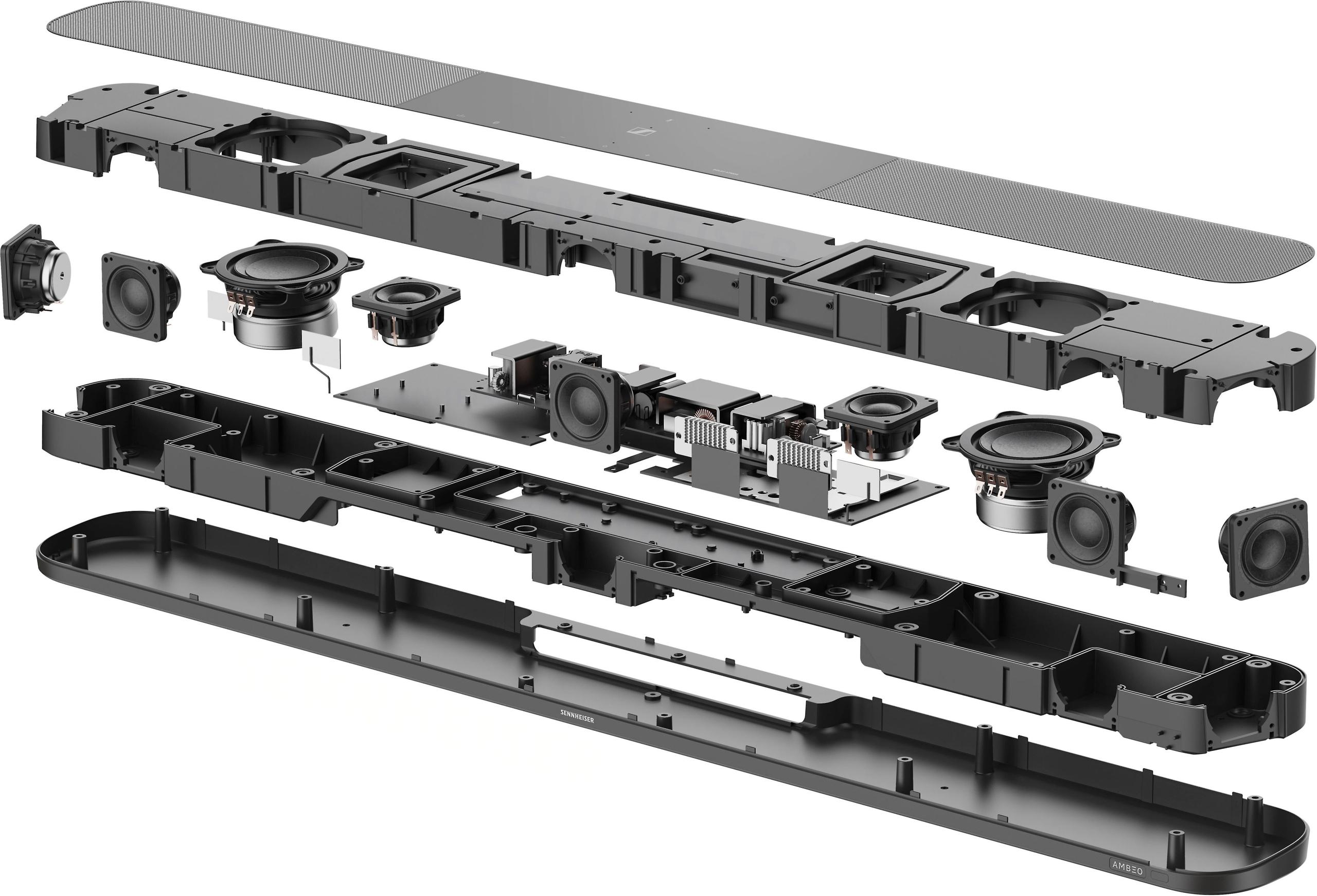
The Sennheiser takes a more surgical approach. While it also has 13 drivers, the real magic happens in its digital processing. Using algorithms developed with Fraunhofer, it creates a detailed acoustic map of your space using built-in microphones. Then it applies complex mathematical models to predict how sound should behave in your specific room, adjusting the output in real-time to maintain the illusion of surround sound.
Think of it this way: Sony creates phantom speakers by carefully orchestrating many physical drivers, while Sennheiser creates them by deeply understanding and manipulating acoustic physics.
Bass performance might seem like just one aspect of audio quality, but it's actually crucial for immersion. Those low-frequency effects you feel during action scenes – the rumble of explosions, the thump of footsteps, the subtle ambient sounds that make a forest scene feel real – all depend on a soundbar's ability to reproduce frequencies below about 80Hz.
The Sony Theater Bar 9 approaches bass with four dedicated woofers plus passive radiators (which are basically speakers without magnets that vibrate sympathetically to amplify low frequencies). This physical approach means you get genuine bass impact. When I tested it with action movies, the difference was immediately noticeable – explosions had weight, and the low-end felt tactile rather than just audible.
The Sennheiser uses six 4-inch "long-throw" woofers, which means the speaker cones can move further back and forth to move more air. In theory, this should produce excellent bass. However, multiple reviewers have noted that the bass feels lighter than expected, especially given the premium price point. The issue seems to be that Sennheiser prioritized overall tonal balance over raw low-end impact.
For home theater use, this becomes a significant consideration. Movies are mixed assuming you have substantial bass capability, and dialogue often sits on top of low-frequency ambient sounds. Without sufficient bass foundation, the entire audio experience can feel thin or disconnected from the on-screen action.
Here's something most people don't realize until they experience it: dialogue clarity is often more important than surround effects for daily enjoyment. If you find yourself constantly adjusting volume or turning on subtitles, the problem is usually poor dialogue reproduction rather than hearing issues.
Both soundbars excel here, but through different methods. The Sony Theater Bar 9 uses "Voice Zoom 3" technology, which employs AI to identify human speech patterns and automatically adjust their volume and clarity. When paired with a Sony BRAVIA TV, it can even use the TV's speakers as a dedicated center channel through "Acoustic Center Sync" – meaning dialogue literally comes from the screen rather than below it.
The Sennheiser takes a more traditional audiophile approach, using precision-tuned center channel processing and room correction to ensure consistent vocal clarity. In my experience, it produces more natural-sounding dialogue, while Sony's approach can sometimes make voices sound slightly processed, though undeniably clear.
For home theater applications, both work well, but the Sony's TV integration gives it a practical advantage if you're already in the Sony ecosystem. Having dialogue come directly from the screen creates a more cohesive audio-visual experience, especially for larger TVs where the soundbar sits noticeably below the action.
Every room presents unique acoustic challenges. Hard surfaces create echoes, soft furnishings absorb sound, and room dimensions affect how bass waves behave. Premium soundbars need sophisticated calibration systems to adapt to these variables.
Sony's Sound Field Optimization works through their smartphone app, using the phone's microphone to analyze your room's acoustics. The process is relatively straightforward – you hold your phone in your listening position while the soundbar plays test tones. The system then adjusts the sound profile to compensate for your room's characteristics.
The Sennheiser AMBEO goes much deeper. It uses built-in microphones to continuously analyze room acoustics, creating what's essentially a three-dimensional map of how sound behaves in your space. This happens automatically and updates over time as conditions change (like when you rearrange furniture or when different numbers of people are in the room).
In practice, Sennheiser's approach works better in challenging acoustic environments – rooms with high ceilings, unusual shapes, or lots of hard surfaces. However, it requires more patience during initial setup and performs best when you can optimize the soundbar's placement. Sony's system is more forgiving of suboptimal positioning but doesn't adapt as thoroughly to complex room issues.
This is where the Sony Theater Bar 9 really differentiates itself. Sony designed it as the foundation of a modular system. You can add their SA-SW5 wireless subwoofer for deeper bass extension, and their SA-RS5 wireless rear speakers to create genuine surround sound rather than just virtual effects.
This expandability matters more than you might think. When you first set up the Sony, it sounds impressive on its own. But as you get used to it, you might find yourself wanting more bass impact or more convincing rear surround effects. With Sony's system, you can add these components gradually, spreading the cost over time while improving performance incrementally.
The fully expanded Sony system (soundbar + subwoofer + rear speakers) ends up costing more than the Sennheiser, but it provides genuine multi-speaker surround sound rather than virtualized effects. For serious home theater enthusiasts, this represents a clear upgrade path.
The Sennheiser AMBEO, by contrast, is designed as a complete solution. There are no expansion options – what you buy is what you get forever. This appeals to people who want simplicity and don't have space for additional components, but it means performance limitations can't be addressed later.
Modern soundbars need to work seamlessly with streaming services, voice assistants, and smart home systems. Both models handle this well, but with different strengths.
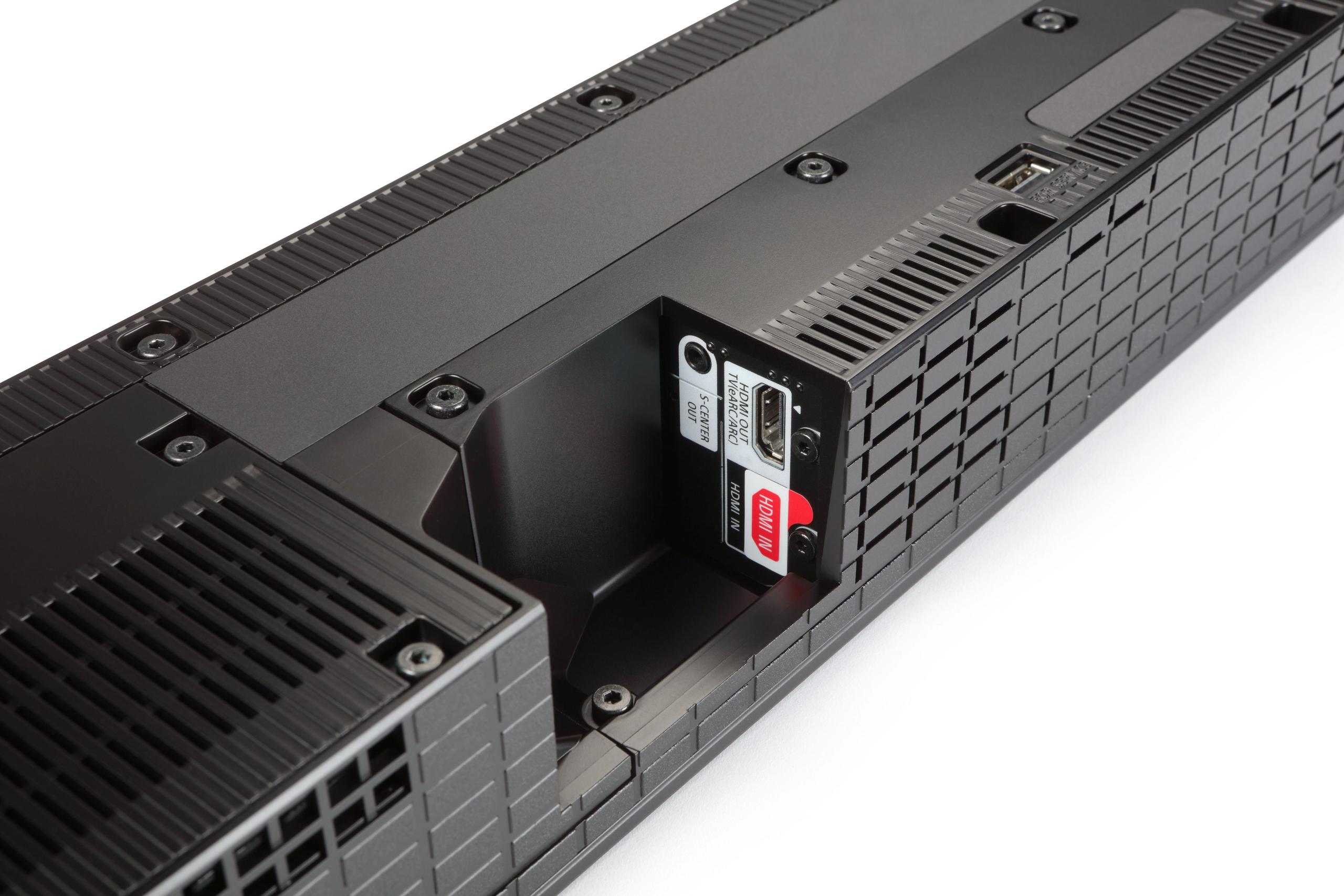
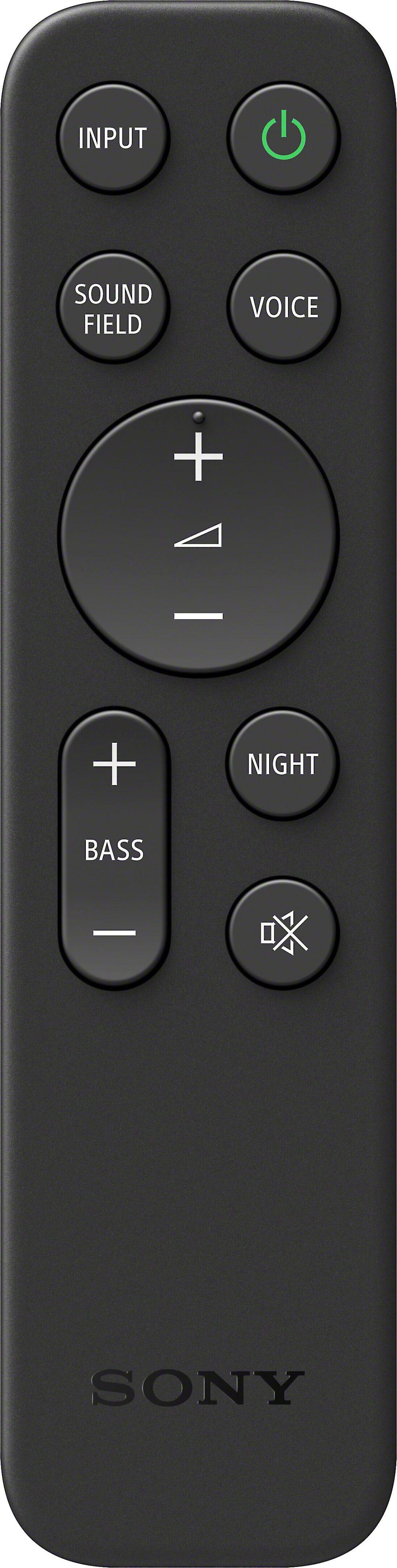
The Sony excels in gaming applications, particularly with PlayStation consoles. It supports HDMI 2.1 features like Variable Refresh Rate (VRR) and Auto Low Latency Mode (ALLM), which reduce input lag for competitive gaming. The integration with Sony BRAVIA TVs is also notably smooth – the soundbar's settings appear directly in the TV's menu system, and the TV remote can control soundbar functions.
Sennheiser takes a more platform-agnostic approach, supporting a wider range of streaming services and voice assistants. It works equally well with any TV brand and includes premium features like TIDAL Connect for high-resolution music streaming. The Sennheiser Smart Control app is more sophisticated than Sony's, offering detailed equalization options and room correction settings.
In my experience testing both systems, the differences become apparent quickly. The Sony Theater Bar 9 immediately impresses with its bass impact and wide soundstage. Action movies feel more dynamic, and the phantom surround effects work convincingly for most content. However, the surround positioning can feel somewhat generalized – you know sound is coming from around you, but pinpointing exact locations is difficult.
The Sennheiser AMBEO provides more precise surround positioning and more natural tonal balance. Dialogue sounds incredibly clear and natural, and the virtualization algorithms create convincing rear surround effects that actually seem to come from behind you. However, the bass response feels conservative, and the overall presentation, while accurate, doesn't have the same visceral impact as the Sony.
For music listening, the Sennheiser generally sounds more neutral and audiophile-friendly. For movies and gaming, the Sony provides more excitement and impact. Neither approach is objectively better – they're optimized for different priorities.
The decision between the Sony BRAVIA Theater Bar 9 ($1,399) and Sennheiser AMBEO Soundbar ($2,500) ultimately depends on your specific situation and priorities.
Choose the Sony if you want the best value for home theater use, especially if you already own Sony TVs or PlayStation consoles. Its superior bass performance and expandability options make it ideal for people who might want to build a more complete system over time. The significantly lower price point makes it accessible to more buyers while still delivering premium performance.
Choose the Sennheiser if you prioritize sophisticated audio processing and don't mind paying extra for refinement. It's better for critical music listening and excels in rooms where precise calibration can overcome acoustic challenges. The all-in-one approach appeals to people who want a complete solution without the possibility of future upgrades cluttering their space.
Both soundbars represent significant improvements over basic TV audio and most mid-range soundbars. Your choice should align with whether you value expandable performance and bass impact (Sony) or sophisticated processing and refined balance (Sennheiser). Either way, you'll end up with a dramatic improvement in your home entertainment experience.
The premium soundbar market continues evolving rapidly, with both companies pushing the boundaries of what's possible from a single audio unit. Whichever you choose, you're investing in technology that will make your favorite movies, shows, and games significantly more immersive and enjoyable.
| Sony BRAVIA Theater Bar 9 Soundbar | Sennheiser AMBEO Soundbar |
|---|---|
| Price - Major factor in premium soundbar decision | |
| $1,399 (excellent value for features included) | $2,500 (premium pricing for advanced processing) |
| Release Year - Latest technology and support | |
| 2024 (newest generation with refined features) | 2024 (current model with updated algorithms) |
| Total Drivers - More drivers can mean better sound separation | |
| 13 drivers (quad woofers, tweeters, side/up-firing) | 13 drivers (6 woofers, 5 tweeters, 2 full-range) |
| Channel Configuration - Determines surround sound capability | |
| 7.0.2 channels (excellent for Dolby Atmos) | 5.1.4 channels (optimized for virtualization) |
| Bass Response - Critical for movie impact and music fullness | |
| 30Hz with quad woofers (strong physical bass) | 30Hz with 6 long-throw woofers (lighter bass feel) |
| Surround Technology - How immersive audio is created | |
| 360 Spatial Sound Mapping (phantom speakers) | Advanced Fraunhofer virtualization algorithms |
| Room Calibration - Adapts sound to your specific space | |
| Sound Field Optimization via smartphone app | Advanced automatic room analysis with built-in mics |
| Expandability - Future upgrade options | |
| Supports wireless subwoofer and rear speakers | No expansion options (all-in-one design) |
| TV Integration - Seamless operation with your display | |
| Acoustic Center Sync with Sony BRAVIA TVs | Universal compatibility, no brand-specific features |
| Connectivity - Streaming and device compatibility | |
| HDMI 2.1, Bluetooth 5.2, Wi-Fi, AirPlay 2 | Chromecast, Spotify Connect, TIDAL Connect, multiple assistants |
| Dimensions - Physical footprint in your room | |
| 51.25" x 2.63" x 4.5" (12.13 lbs) | 49.6" x 5.3" x 6.7" (40.8 lbs) |
| Best Use Case - Where each excels | |
| Home theater with expansion potential | Audiophile listening in optimized rooms |
The Sony BRAVIA Theater Bar 9 ($1,399) offers significantly better value, costing almost $1,100 less than the Sennheiser AMBEO Soundbar ($2,500) while delivering comparable performance. Sony provides stronger bass output and expandability options at the lower price point.
The Sony BRAVIA Theater Bar 9 uses physical driver placement with 360 Spatial Sound Mapping to create surround effects, while the Sennheiser AMBEO Soundbar relies primarily on advanced digital processing and virtualization algorithms developed with Fraunhofer Institute.
The Sony BRAVIA Theater Bar 9 delivers superior bass with its quad woofer design and passive radiators, providing more impactful low-end for movies and music. The Sennheiser AMBEO has been criticized for lighter bass output despite its premium price.
Only the Sony BRAVIA Theater Bar 9 supports expansion with optional wireless subwoofer and rear speakers to create a full surround system. The Sennheiser AMBEO Soundbar is designed as a complete all-in-one solution with no expansion options.
Both excel at dialogue, but the Sony BRAVIA Theater Bar 9 has an advantage with Voice Zoom 3 AI technology and Acoustic Center Sync that uses compatible Sony TVs as center speakers. The Sennheiser AMBEO provides more natural-sounding dialogue through precision center channel processing.
The Sony BRAVIA Theater Bar 9 is optimized for gaming with HDMI 2.1 support, low latency modes, and special integration with PlayStation consoles. The Sennheiser AMBEO Soundbar works well with all gaming platforms but lacks gaming-specific optimizations.
The Sennheiser AMBEO Soundbar adapts better to challenging room acoustics through advanced room calibration, making it ideal for smaller or acoustically difficult spaces. The Sony BRAVIA Theater Bar 9 performs well in most rooms but may overwhelm very small spaces with its powerful bass.
Both offer comprehensive connectivity. The Sony BRAVIA Theater Bar 9 includes Bluetooth 5.2, Wi-Fi, and AirPlay 2, while the Sennheiser AMBEO Soundbar supports Chromecast, Spotify Connect, TIDAL Connect, and multiple voice assistants for broader platform compatibility.
The Sennheiser AMBEO Soundbar provides more accurate, audiophile-quality sound reproduction with natural tonal balance ideal for critical music listening. The Sony BRAVIA Theater Bar 9 offers more dynamic, impactful sound that's exciting but less neutral.
The Sony BRAVIA Theater Bar 9 delivers strong bass without a subwoofer but can be enhanced with Sony's optional SA-SW5 subwoofer. The Sennheiser AMBEO Soundbar is designed to work alone, though some users may find the bass insufficient for action movies.
The Sennheiser AMBEO Soundbar works equally well with all TV brands and includes universal features. While the Sony BRAVIA Theater Bar 9 works with any TV, it offers special integration features like Acoustic Center Sync only with Sony BRAVIA TVs.
For home theater use, choose the Sony BRAVIA Theater Bar 9 if you want impactful bass, expandability options, and better value. Choose the Sennheiser AMBEO Soundbar if you prioritize sophisticated audio processing, have optimal room conditions, and prefer an all-in-one premium solution.
We've done our best to create useful and informative comparisons to help you decide what product to buy. Our research uses advanced automated methods to create this comparison and perfection is not possible - please contact us for corrections or questions. These are the sites we've researched in the creation of this article: rtings.com - residentialsystems.com - rtings.com - bestbuy.com - valueelectronics.com - sony.com - sony.co.uk - sony.co.uk - rtings.com - sony.co.in - sony.com - pocket-lint.com - sony.com - crutchfield.com - bestbuy.com - rtings.com - techradar.com - audioxpress.com - whathifi.com - upscaleaudio.com - soundstagesimplifi.com - global.sennheiser-hearing.com - sennheiser-hearing.com - audioadvice.com - abt.com - moon-audio.com

Privacy Policy
Terms and Conditions - Affiliate Policy
Home Security
© Copyright 2008-2026.
11816 Inwood Rd #1211, Dallas, TX 75244