

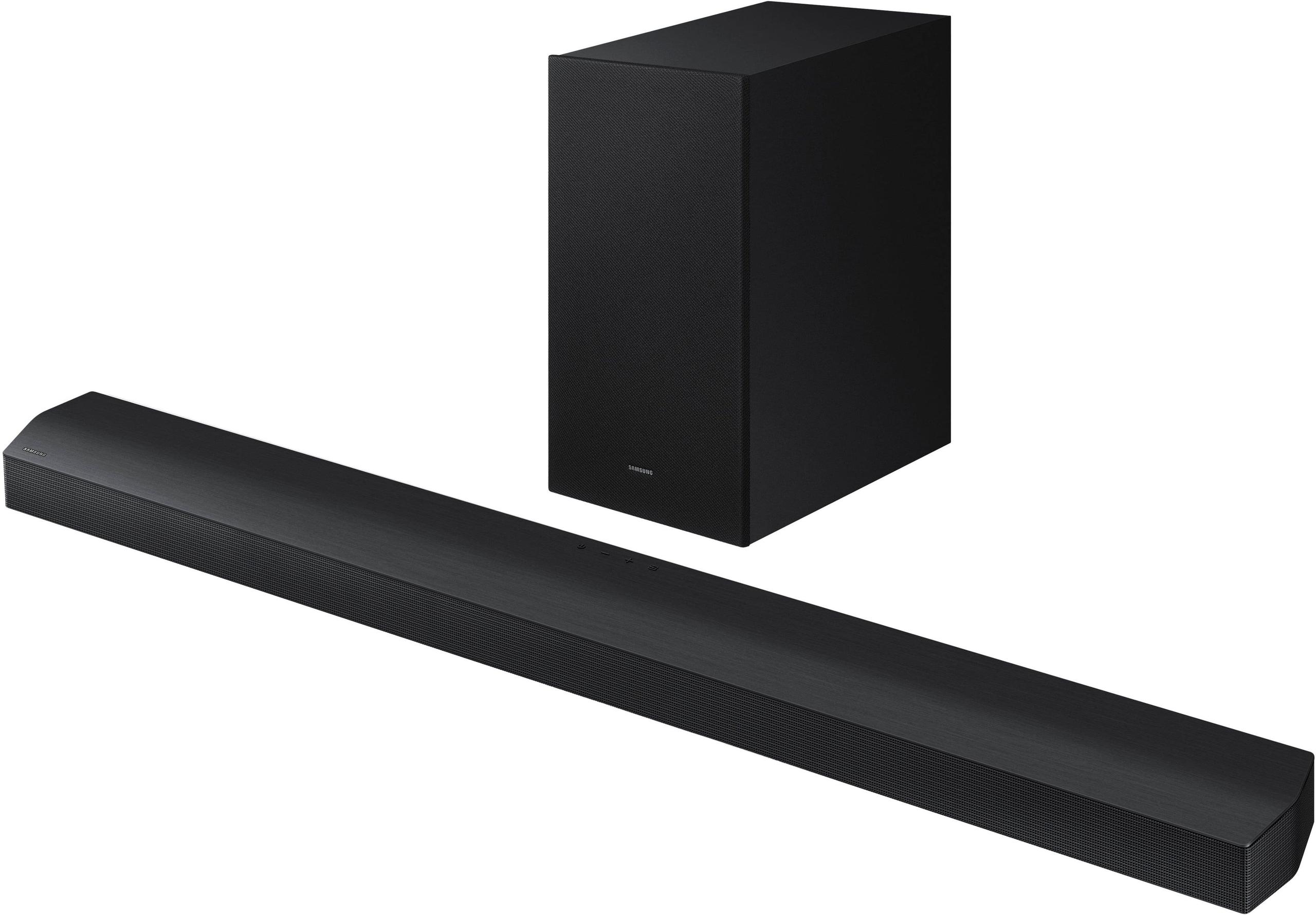
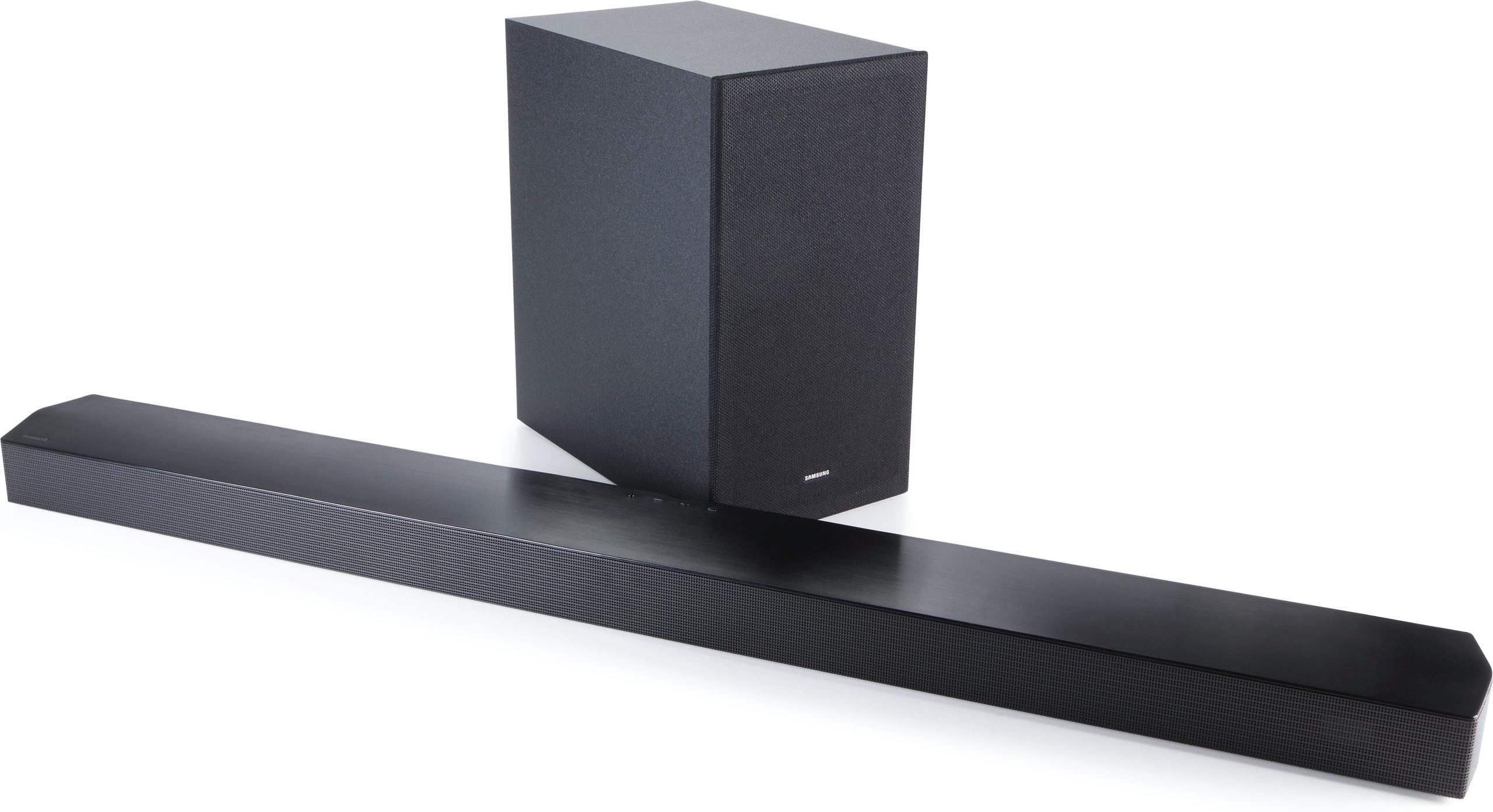







When your TV's built-in speakers make dialogue sound like it's coming from underwater and explosions feel more like gentle puffs of air, it's time to consider a soundbar upgrade. But with options ranging from budget-friendly bars to premium audiophile systems, choosing the right one can feel overwhelming. Today, we're comparing two soundbars that couldn't be more different: the affordable Samsung B-Series 5.1 Channel Soundbar ($228) and the premium Sennheiser AMBEO Soundbar ($2,000).
These products represent opposite ends of the soundbar spectrum, and understanding their differences will help you make the right choice for your setup, budget, and audio expectations.
Before diving into our comparison, let's establish what makes a good soundbar in 2025. The core challenge soundbars face is creating the illusion of surround sound from a single horizontal bar placed below your TV. They accomplish this through several key technologies:
Channel configuration refers to how many discrete audio channels a soundbar can produce. A 5.1 system has five main channels (front left, center, front right, surround left, surround right) plus one subwoofer channel for bass. More advanced systems like 5.1.4 add four height channels for overhead effects.
Virtualization technology uses digital signal processing to simulate speakers that aren't physically there. When a soundbar claims to create "surround sound," it's usually using algorithms to trick your ears into perceiving sounds coming from different directions.
Room calibration is a newer feature where the soundbar uses microphones to measure your room's acoustics, then adjusts its output to compensate for factors like ceiling height, furniture placement, and wall materials.
The soundbar market has exploded in recent years, with manufacturers taking two distinct approaches: affordable systems that focus on practical improvements over TV speakers, and premium units that attempt to replicate full home theater systems without the complexity.
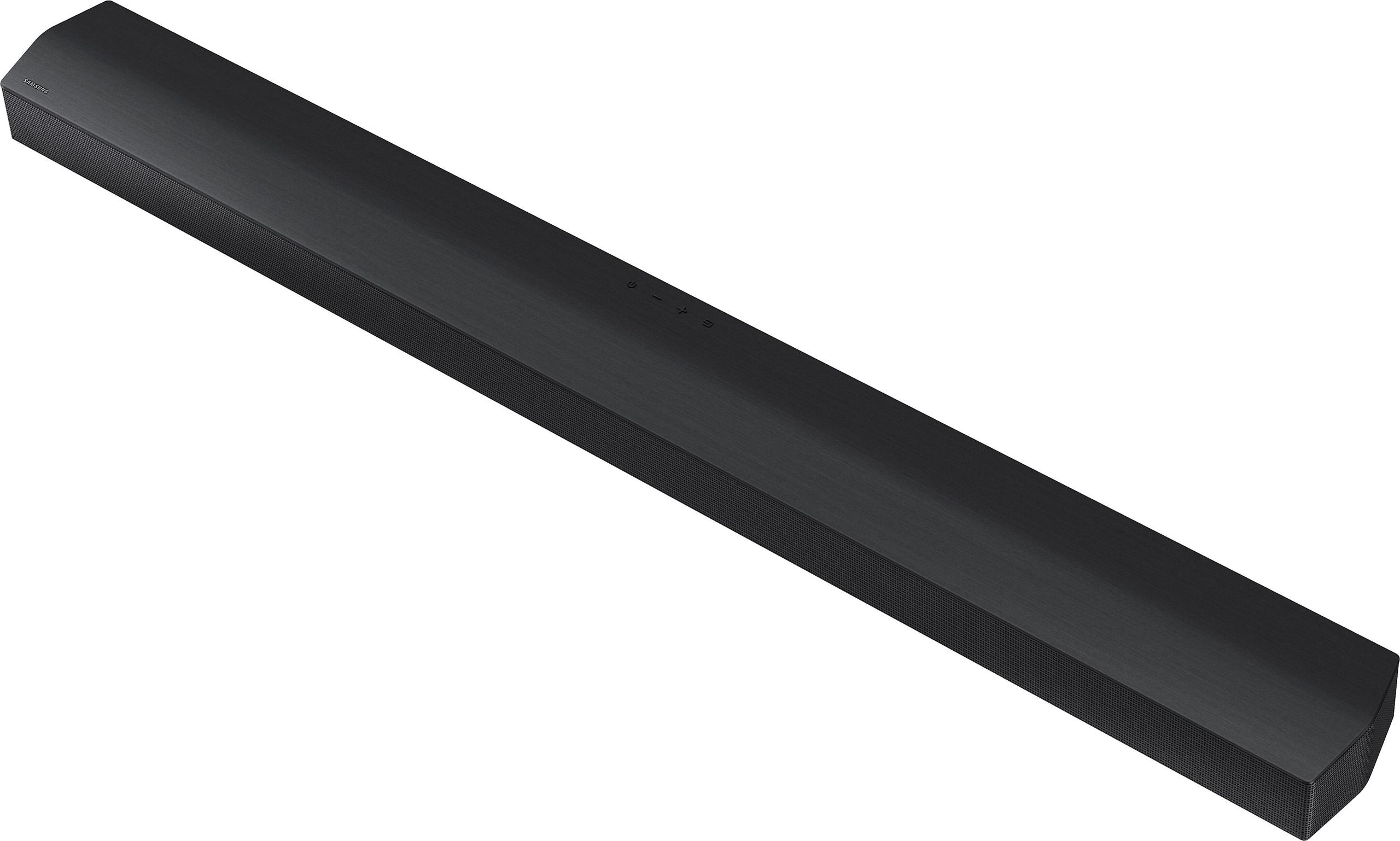
The Samsung B-Series HW-B750F represents Samsung's 2025 entry-level offering, building on years of refinement in their budget soundbar lineup. Samsung has consistently focused on making their soundbars work seamlessly with their TVs through features like Q-Symphony, where the TV's speakers continue working alongside the soundbar instead of being disabled. This partnership approach has proven popular with Samsung TV owners who want better sound without losing their TV's audio contribution.
Released in 2025, this model incorporates lessons learned from previous generations, particularly in wireless subwoofer reliability and voice clarity optimization. Samsung's Adaptive Sound technology, which automatically adjusts audio settings based on content type, has been refined to better handle the wide dynamic range of modern streaming content.
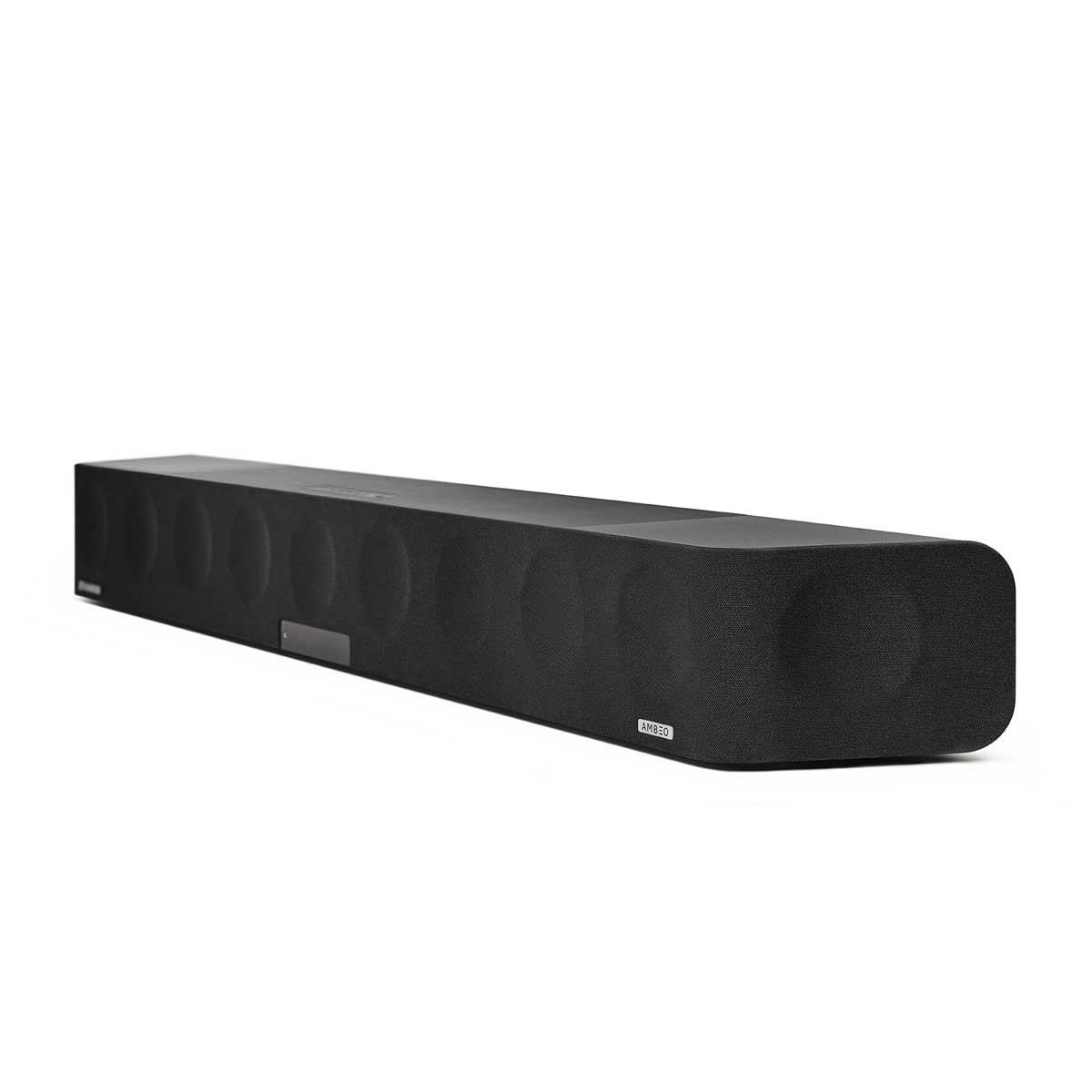
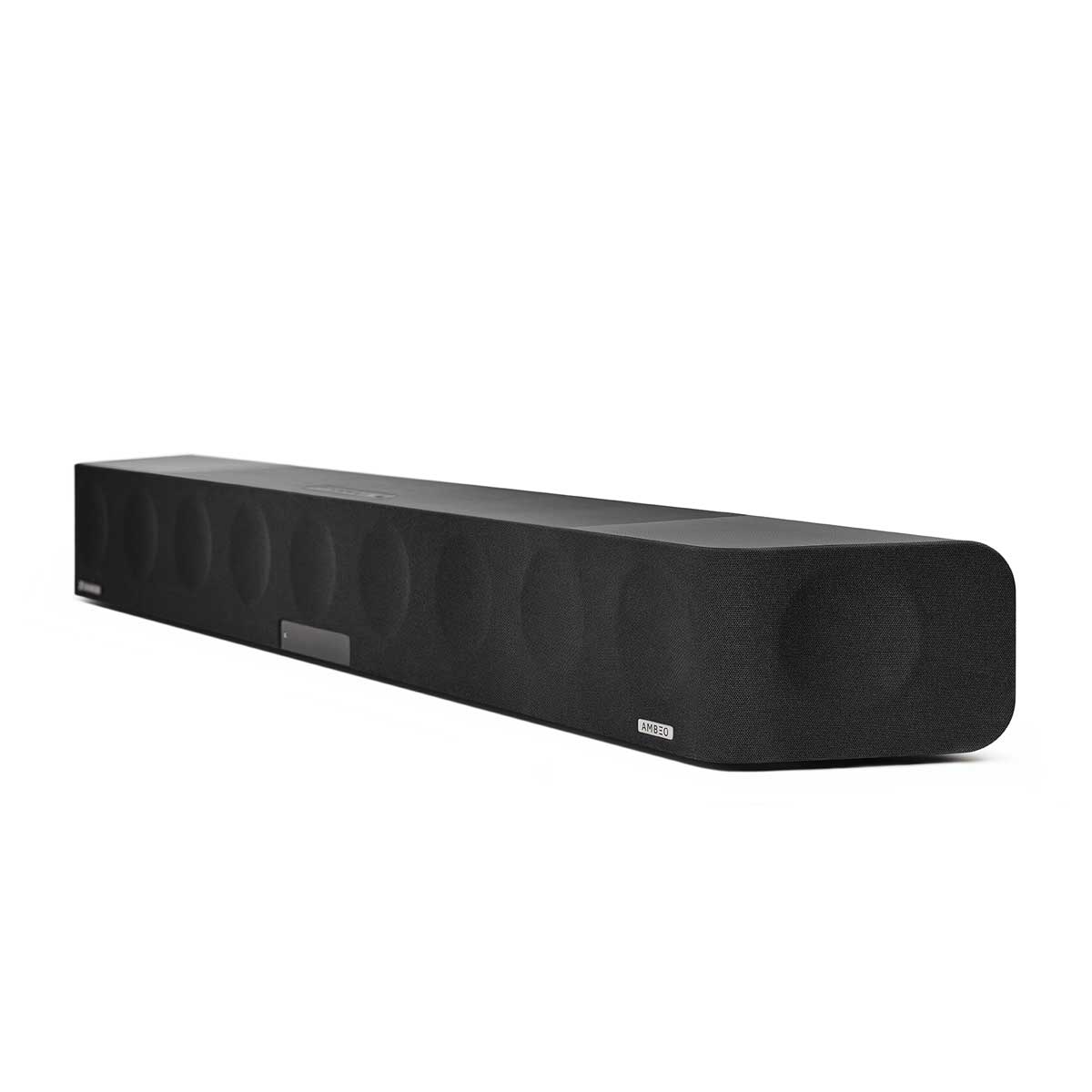
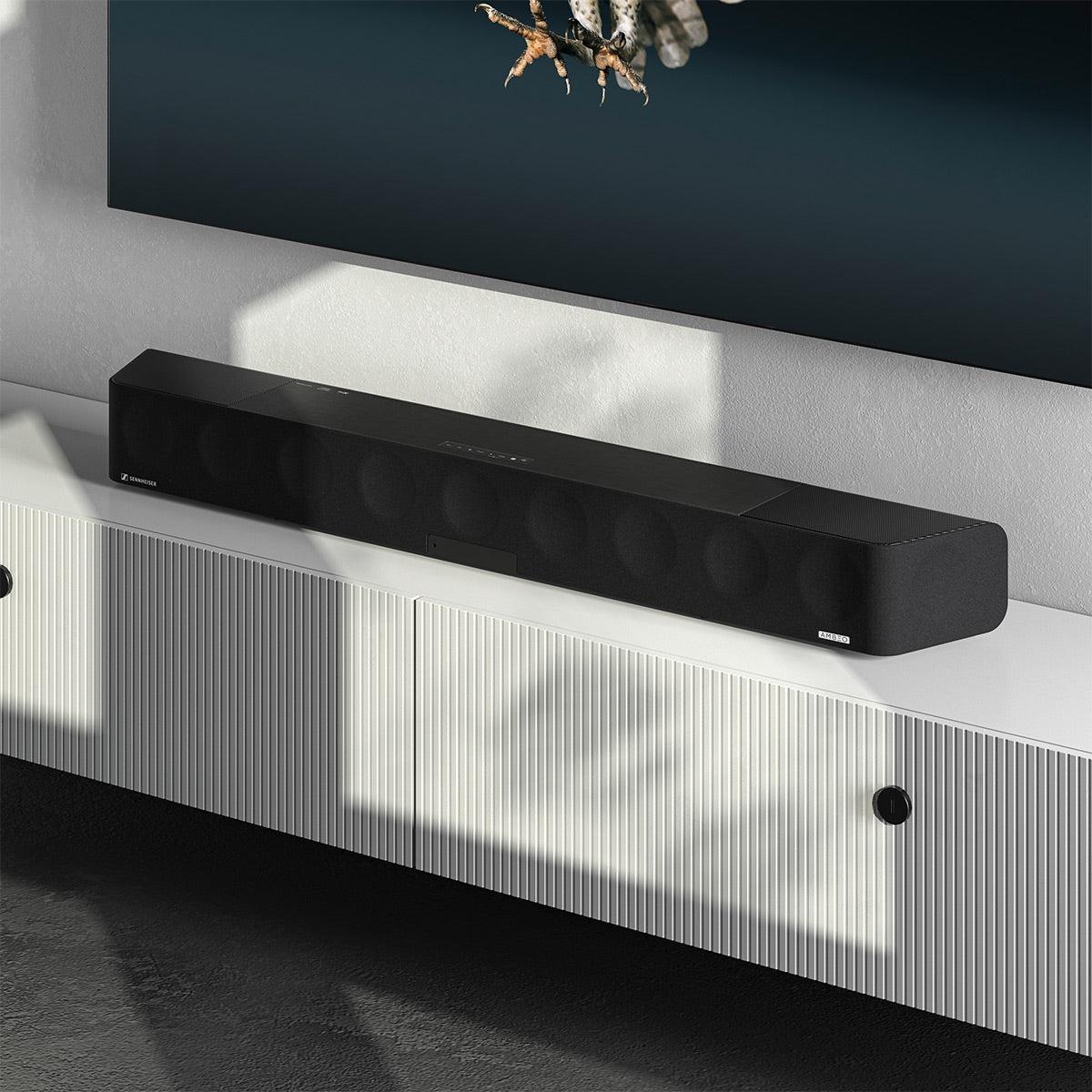
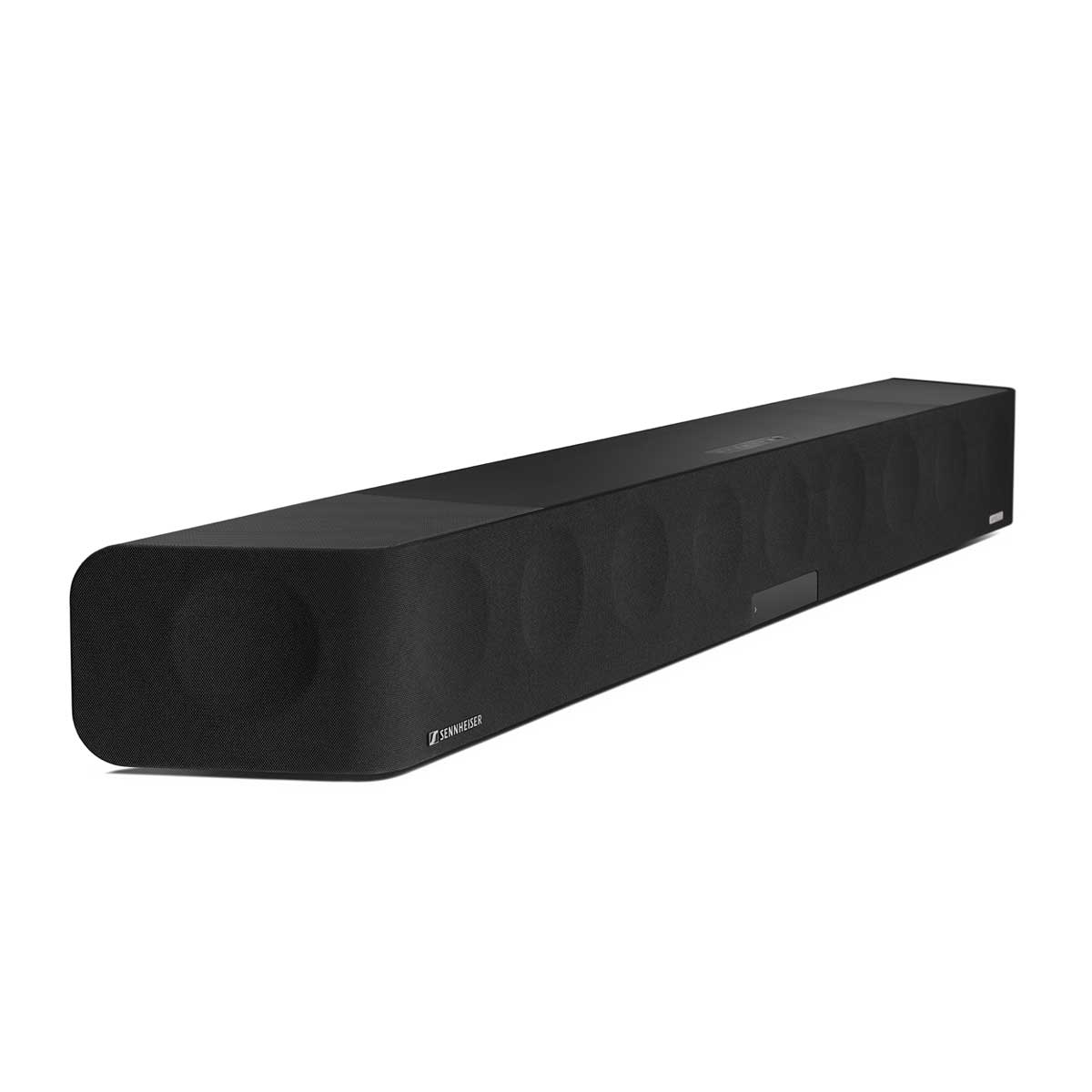
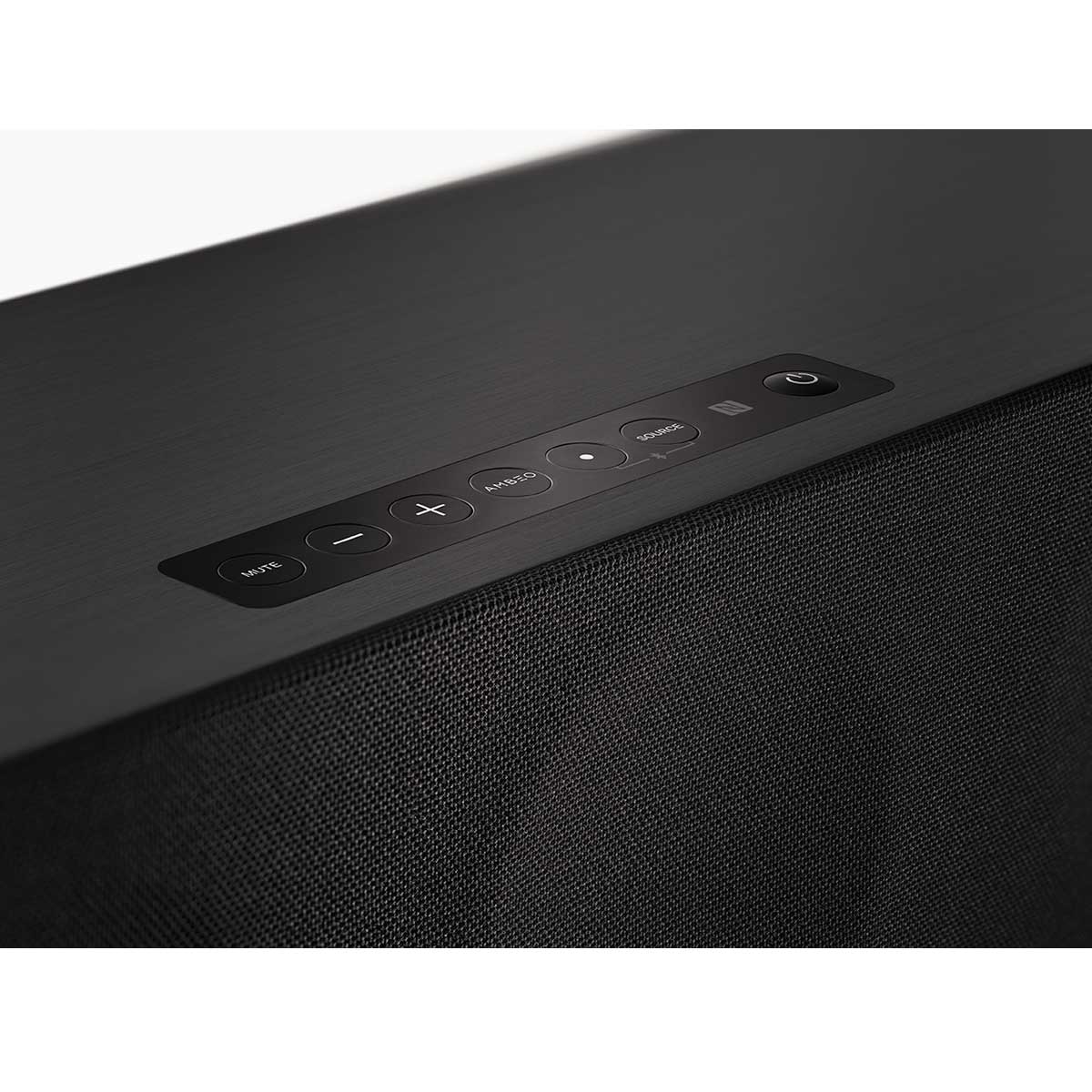
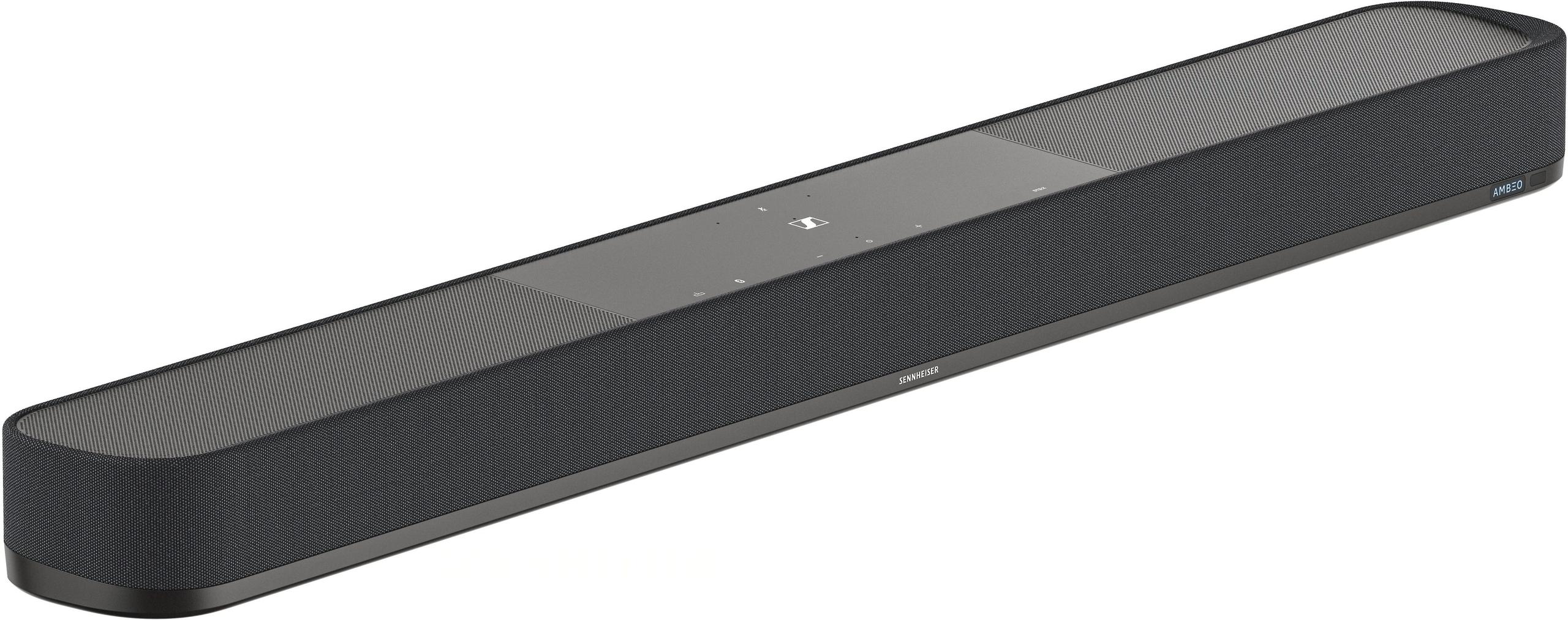
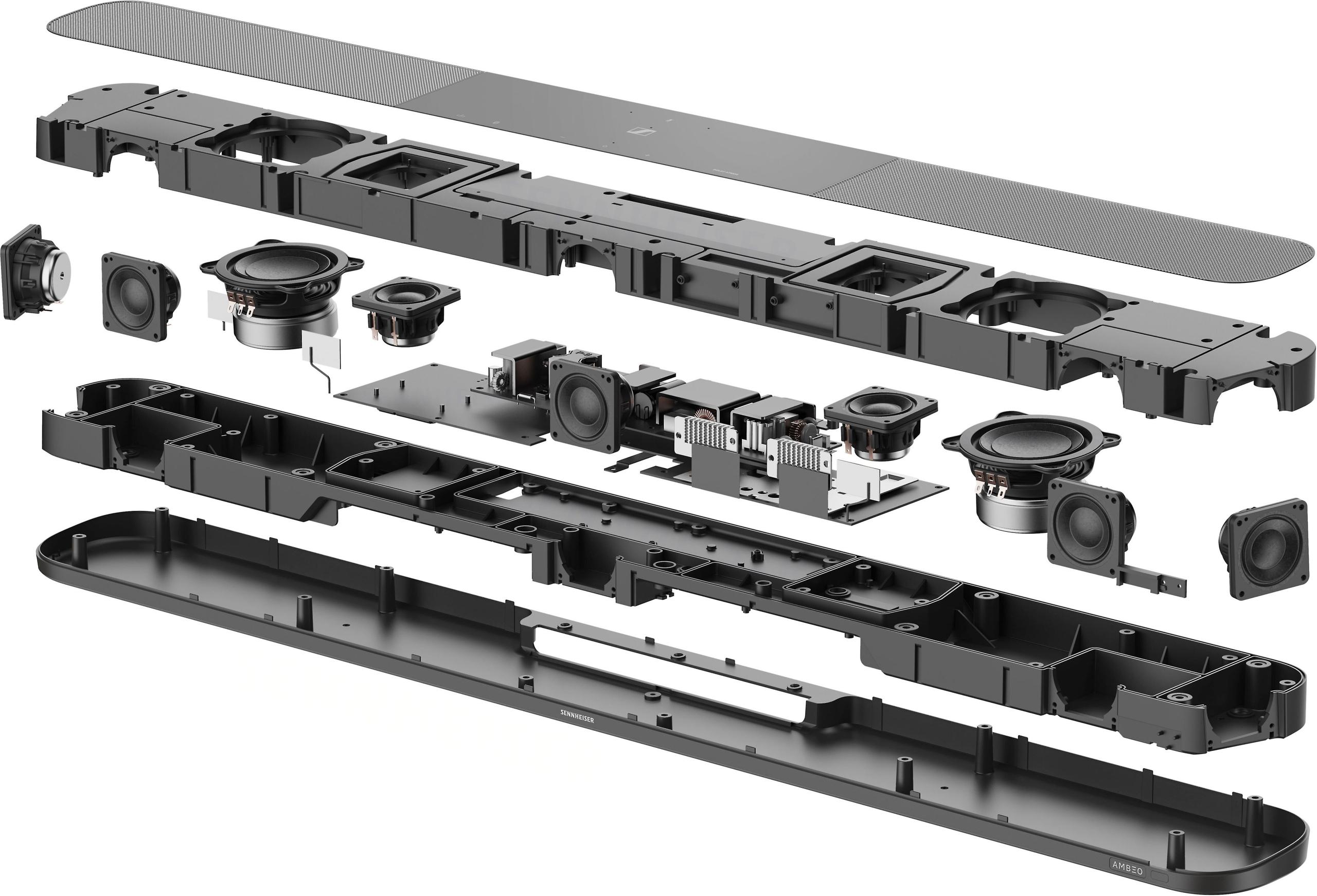
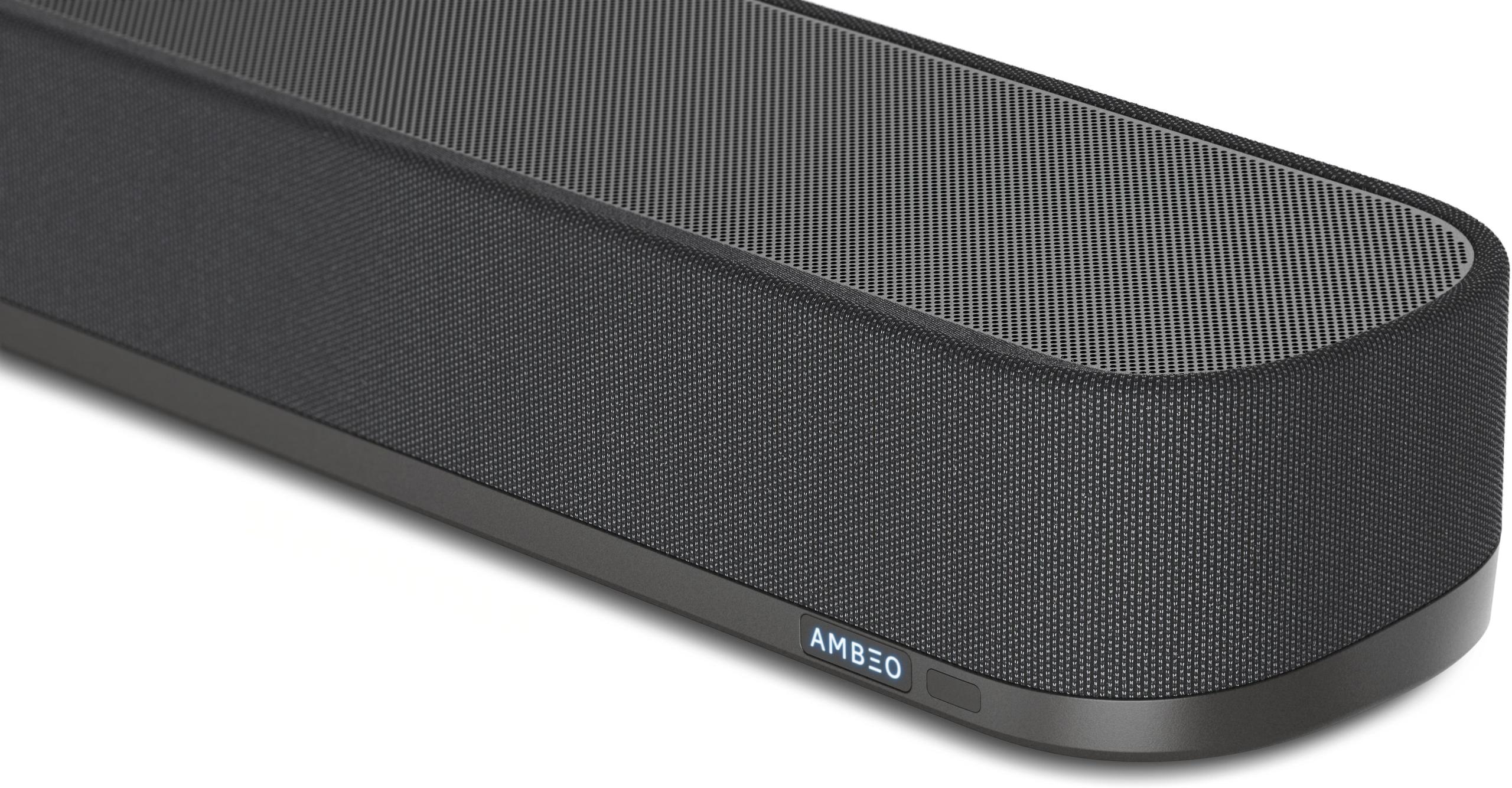
The Sennheiser AMBEO Soundbar, originally launched in 2019 and refreshed in 2023, took a radically different approach. Instead of relying primarily on software tricks, Sennheiser packed 13 individual drivers into a single bar, including upward-firing speakers that bounce sound off your ceiling to create height effects. This hardware-intensive approach was revolutionary when it launched, as most manufacturers were focused on making soundbars smaller and cheaper.
Since its original release, the AMBEO has received significant firmware updates that have improved its room calibration algorithms and added support for new audio formats like 360 Reality Audio. The 2023 refresh brought enhanced connectivity options and better integration with modern streaming services, keeping this premium product competitive against newer rivals.
This is where the fundamental differences between these products become crystal clear. The Samsung B-Series delivers what I'd call "competent surround sound" – it's a significant step up from TV speakers and creates a reasonably convincing soundstage for most content. The inclusion of dedicated side-firing speakers helps widen the audio beyond the physical width of the bar, while DTS Virtual:X processing attempts to add height information.
However, virtual surround has inherent limitations. When watching movies with complex audio mixes, you'll notice that rear surround effects don't truly sound like they're coming from behind you. Instead, they feel more like they're coming from the sides, slightly behind the soundbar. This isn't necessarily bad – it's still immersive enough for casual viewing – but it lacks the precise positioning that makes great surround sound truly captivating.
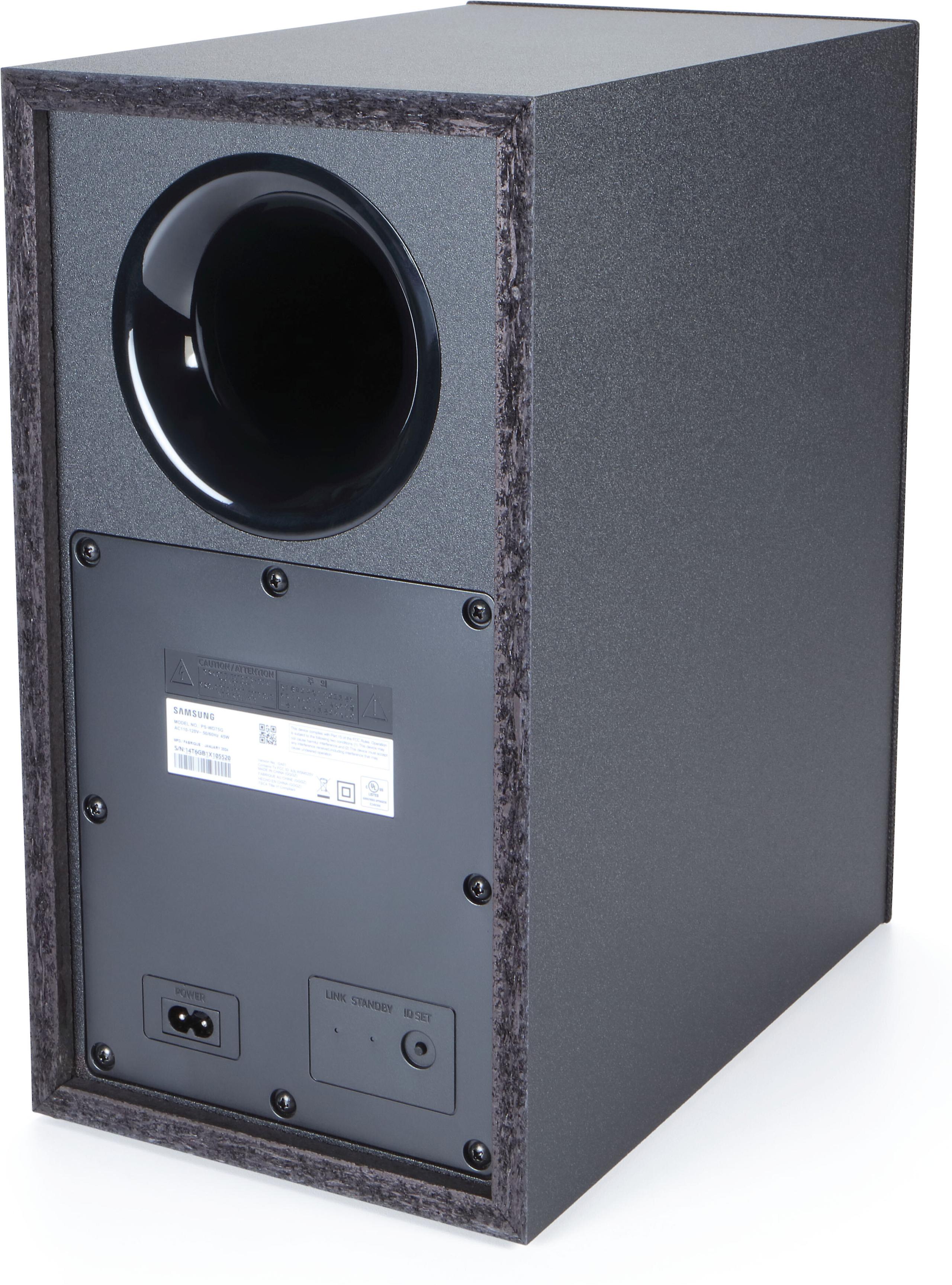
The wireless subwoofer is genuinely impressive for the price point. Bass effects have real impact, and the Bass Boost mode can add satisfying rumble to action scenes without becoming overwhelming. I've found that the subwoofer integrates well with the main bar, avoiding the disconnected feeling that sometimes plagues budget wireless subs.
The Sennheiser AMBEO operates in a completely different league. Its 13-driver array creates what can only be described as acoustic magic. When properly calibrated, this soundbar can convincingly place sounds not just to your left and right, but above, behind, and at precise points throughout your room. The upward-firing drivers work with your ceiling to create genuine height effects – helicopters flying overhead actually sound like they're above you, not just in front of you at a higher pitch.
What makes the AMBEO special is its ability to create a three-dimensional soundstage that extends well beyond the physical boundaries of the soundbar. During my testing with Dolby Atmos content, I've experienced moments where I genuinely forgot there were no rear speakers in my setup. The spatial accuracy is remarkable, with sounds moving seamlessly around the room in ways that most soundbars simply can't achieve.
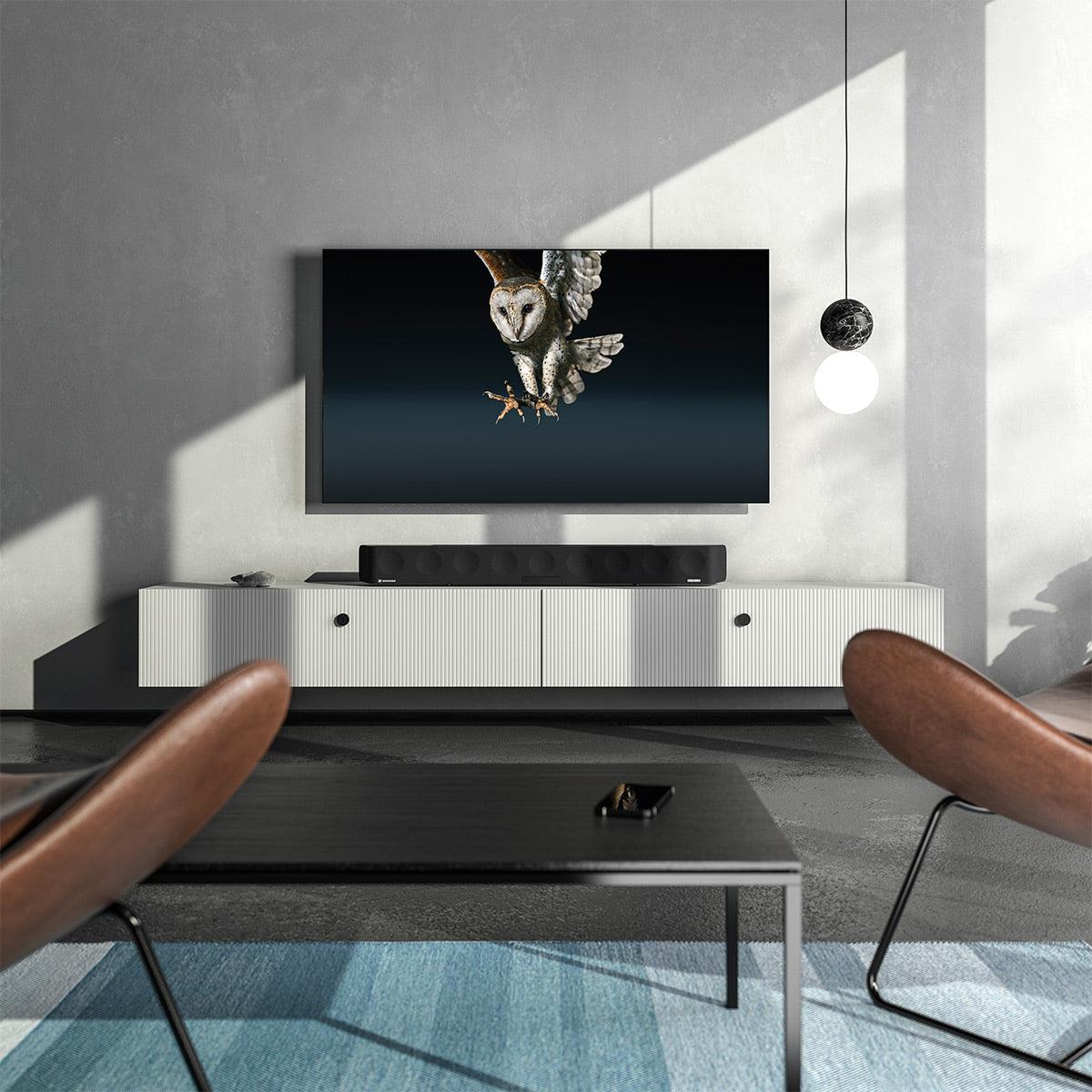
The trade-off is complexity. The AMBEO requires careful positioning – it needs at least 18 inches of clearance on each side and works best when placed precisely centered under your TV. The room calibration process, while automatic, can take several minutes and may need to be repeated if you rearrange furniture or change your seating position significantly.
Both soundbars recognize that clear dialogue is often the primary reason people upgrade from TV speakers, but they address this challenge differently. The Samsung's Voice Enhance mode uses digital processing to boost vocal frequencies and reduce competing background sounds. It's effective for most content, though I've noticed it can sometimes make voices sound slightly artificial on poorly mixed content.
The AMBEO's approach is more sophisticated. Its dedicated center channel processing, combined with room calibration, ensures voices remain anchored to the screen while maintaining natural tone. The difference is most noticeable with complex movie soundtracks where dialogue needs to cut through dense musical scores and sound effects. The AMBEO maintains vocal clarity without the processed quality that sometimes affects the Samsung.
This comparison reveals an interesting paradox in soundbar design. The Samsung B-Series, despite being the cheaper option, actually provides more visceral bass impact thanks to its dedicated wireless subwoofer. The subwoofer can be positioned anywhere in your room, allowing you to find the optimal location for bass response in your specific space.
The AMBEO's approach is more elegant but potentially less impactful. Its six 4-inch woofers are integrated into the main bar, providing clean, accurate bass down to 30Hz without the need for a separate subwoofer. This bass is exceptionally well-integrated with the rest of the audio spectrum, but it may lack the room-shaking impact that some users expect from action movies or bass-heavy music.
For home theater use, the choice depends on your priorities. If you want bass that you feel in your chest during explosive scenes, the Samsung's dedicated subwoofer delivers. If you prefer bass that's perfectly balanced with the rest of the audio and doesn't dominate your room's acoustics, the AMBEO's integrated approach is superior.
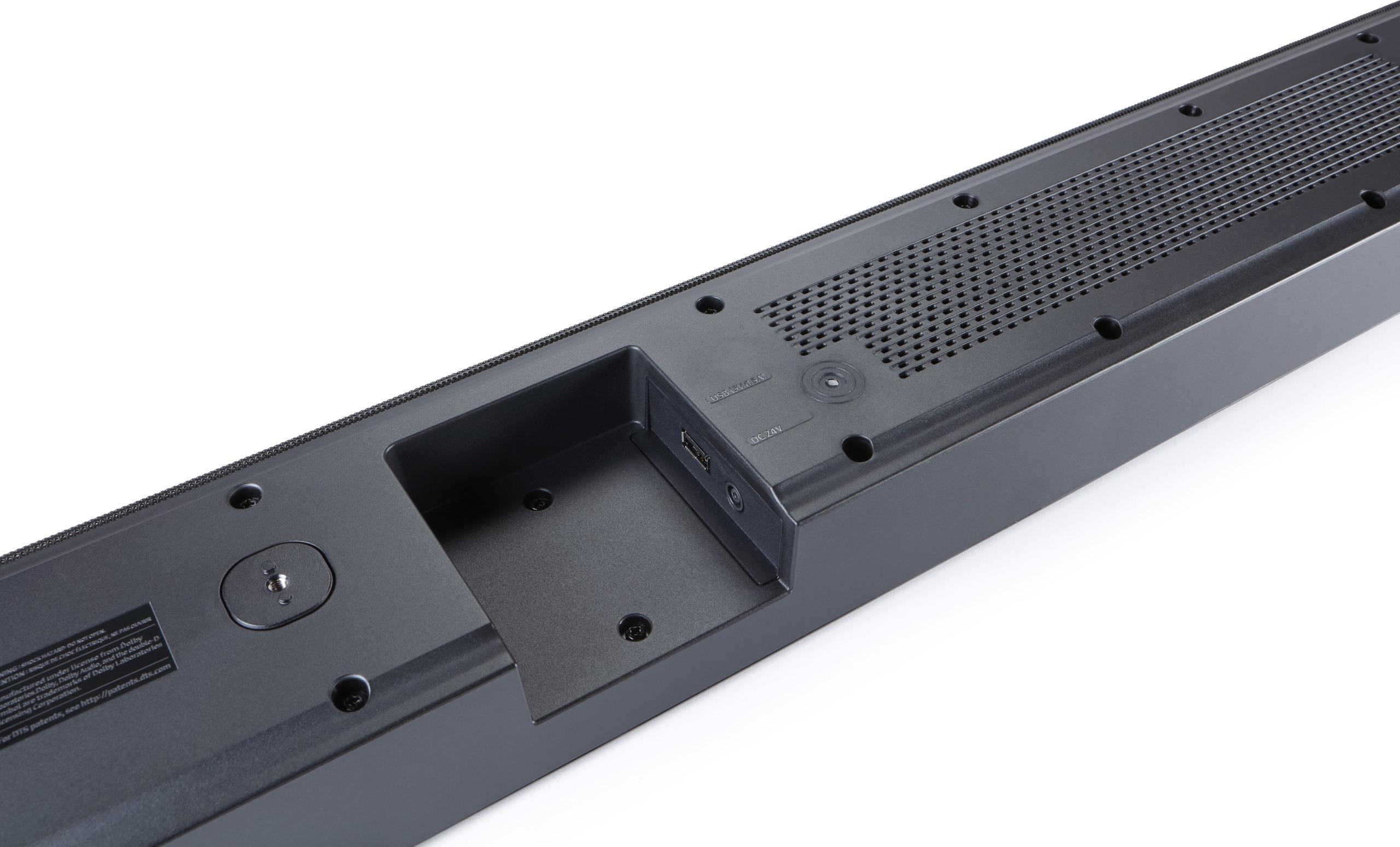
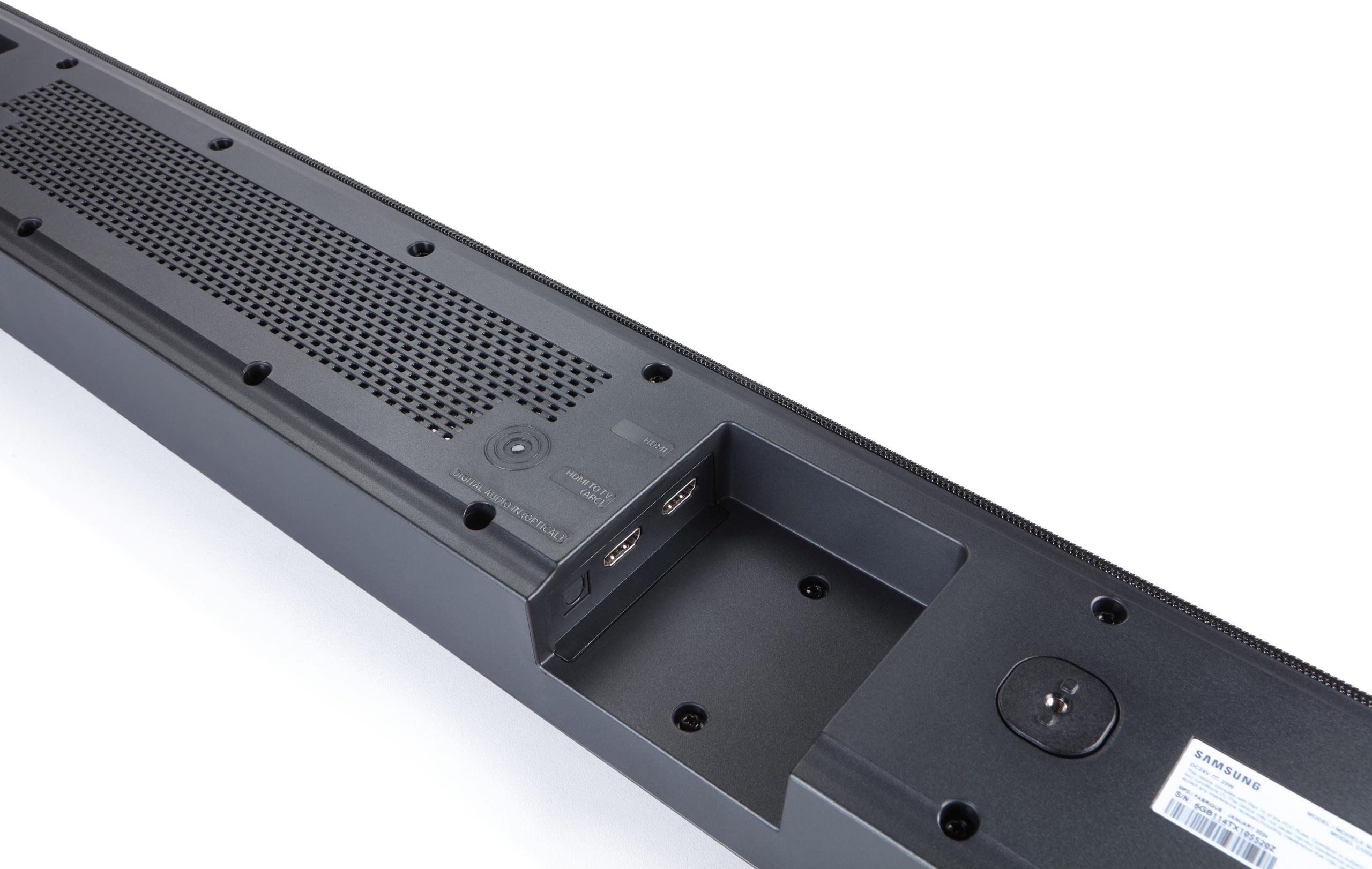
The connectivity differences between these soundbars reflect their target audiences and release timeframes. The Samsung B-Series focuses on essential connections: HDMI ARC for TV control integration, optical input for older devices, and Bluetooth 4.2 for basic music streaming. This simplicity is both a strength and limitation – setup is foolproof, but you're limited in how you can use the soundbar beyond basic TV audio improvement.
The Q-Symphony feature deserves special mention for Samsung TV owners. Instead of disabling your TV's speakers when the soundbar is connected, Q-Symphony allows both to work together, creating a wider soundstage and additional audio channels. I've found this particularly effective with Samsung's higher-end TVs that have decent built-in speakers to begin with.
The Sennheiser AMBEO embraces modern connectivity with Wi-Fi, Apple AirPlay 2, Google Chromecast built-in, and Spotify Connect. This transforms it from just a TV audio accessory into a full-featured music streaming system. The HDMI eARC connection supports full-bandwidth Dolby Atmos and DTS:X, ensuring you're getting the complete high-resolution audio experience from compatible sources.
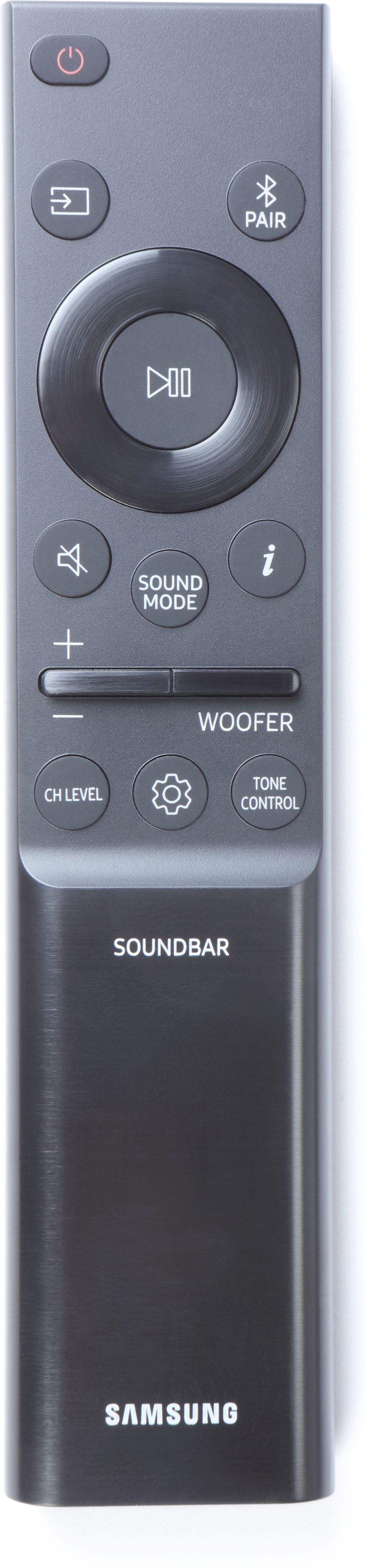
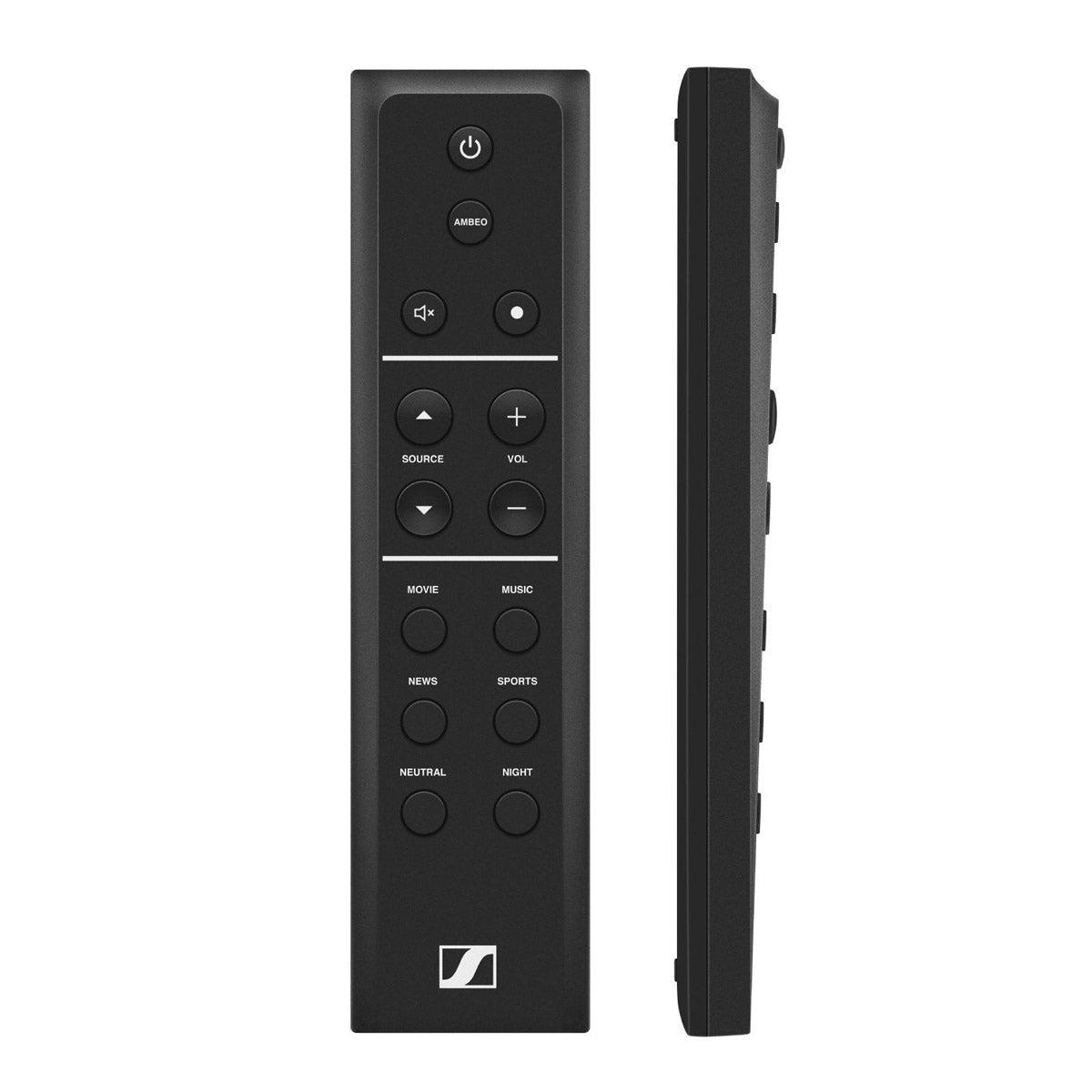
The Sennheiser Smart Control app provides extensive customization options, including detailed EQ controls and the ability to adjust the strength of the AMBEO 3D processing. You can fine-tune the soundbar's performance for your specific room and preferences, something that's impossible with the Samsung's more basic remote control interface.
The setup experience reveals each product's design philosophy. The Samsung B-Series prioritizes simplicity – connect the HDMI cable, plug in the subwoofer, and you're ready to go. The subwoofer pairs automatically, and most users will be enjoying improved audio within 15 minutes of opening the box.
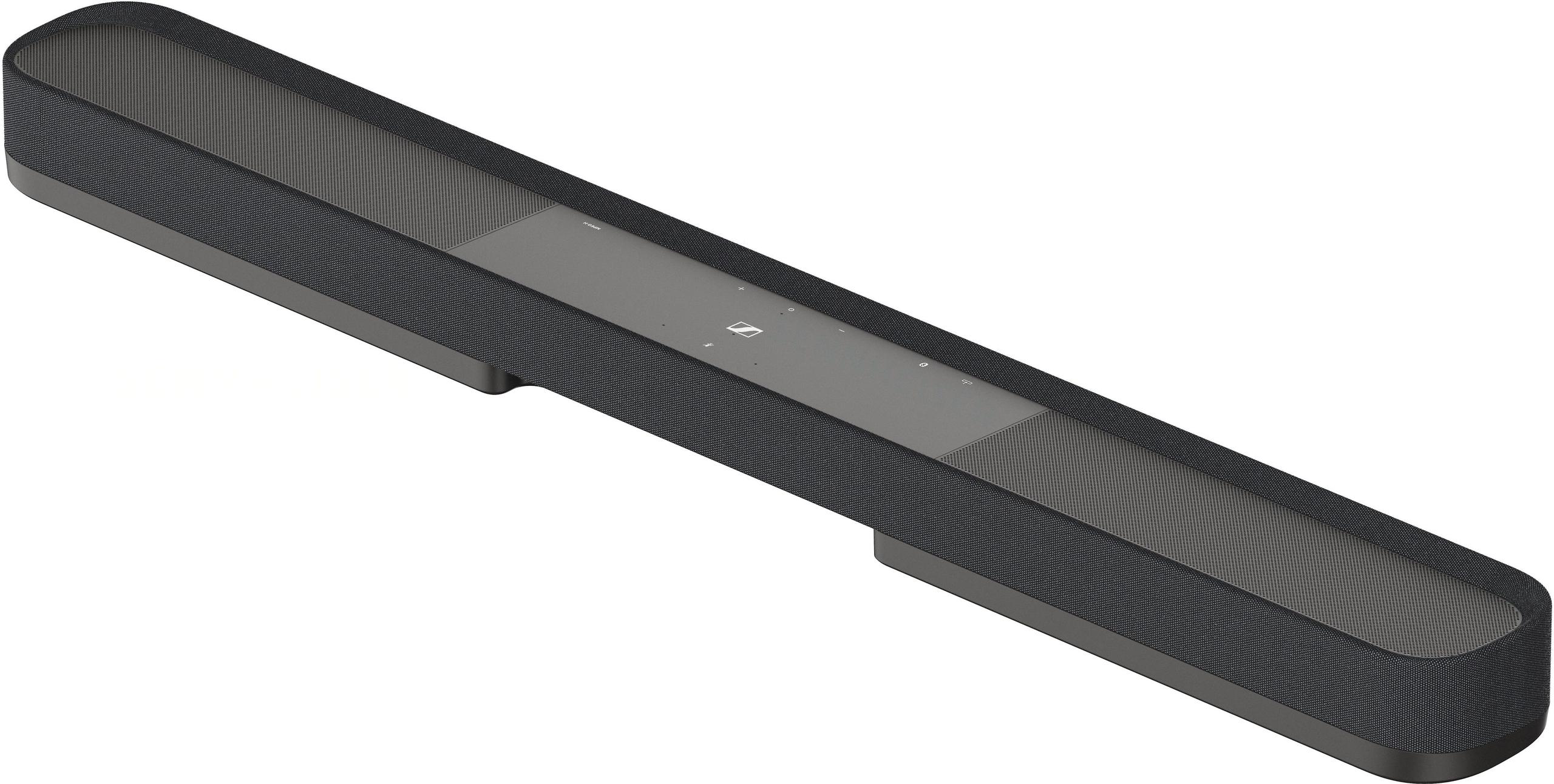
The Sennheiser AMBEO demands more patience and precision. Proper placement is crucial – the soundbar's 49.6-inch width means it may not fit on smaller TV stands, and it needs clear line-of-sight to your ceiling for the upward-firing drivers to work effectively. The room calibration process requires you to sit quietly while the soundbar plays test tones and measures your room's acoustics.
However, this extra effort pays dividends in long-term satisfaction. Once properly calibrated, the AMBEO delivers consistent, exceptional performance that adapts to your specific room conditions. The Samsung, while immediately satisfying, doesn't optimize for your particular acoustic environment.
At $228, the Samsung B-Series represents outstanding value for users seeking a straightforward audio upgrade. It's particularly compelling for Samsung TV owners who can take advantage of Q-Symphony, and for anyone who wants genuine bass impact without spending a fortune. The wireless subwoofer alone would cost nearly as much as this entire system if purchased separately from other manufacturers.
The Sennheiser AMBEO at $2,000 occupies premium territory where traditional value calculations become less relevant. You're paying for cutting-edge technology, exceptional build quality, and performance that approaches dedicated surround sound systems. For audio enthusiasts or anyone with a serious home theater setup, the AMBEO can eliminate the need for multiple speakers while delivering comparable immersion.
For dedicated home theater use, these products serve different needs. The Samsung works well in smaller rooms (under 200 square feet) where its limitations are less apparent and the wireless subwoofer can provide adequate bass impact. It's ideal for bedroom setups, small apartments, or secondary viewing areas where you want better sound without major investment or complexity.
The AMBEO shines in primary home theater installations, particularly in larger rooms where traditional surround speakers would be impractical or unwanted. Its ability to create convincing 3D audio without rear speakers makes it perfect for open floor plans or rooms where speaker placement is challenging. The lack of a separate subwoofer can actually be an advantage in shared living spaces where bass management is important.
Choose the Samsung B-Series 5.1 Channel Soundbar ($228) if you:
Choose the Sennheiser AMBEO Soundbar ($2,000) if you:
The decision ultimately comes down to your priorities, budget, and expectations. The Samsung delivers exceptional value and practical improvements that will satisfy most users. The Sennheiser represents the pinnacle of single-soundbar technology for those who refuse to compromise on audio quality. Both excel in their respective categories, making either choice a smart investment for the right user.
| Samsung B-Series 5.1 Channel Soundbar ($228) | Sennheiser AMBEO Soundbar ($2,000) |
|---|---|
| Price - The most obvious difference between these products | |
| $228 (exceptional value for basic surround upgrade) | $2,000 (premium pricing for audiophile performance) |
| Audio Channels - Determines surround sound capability | |
| 5.1 channels (physical subwoofer + virtual surround) | 5.1.4 channels (virtualized with height effects) |
| Dolby Atmos Support - Essential for modern movie soundtracks | |
| ❌ No (uses DTS Virtual:X instead) | ✅ Yes (full Dolby Atmos, DTS:X, MPEG-H) |
| Number of Drivers - More drivers typically mean better sound separation | |
| 6 drivers + separate subwoofer | 13 high-end drivers in single unit |
| Subwoofer Included - Critical for bass impact in movies | |
| ✅ Wireless subwoofer included | ❌ Built-in woofers only (subwoofer sold separately) |
| Room Calibration - Optimizes sound for your specific space | |
| ❌ No calibration (works well out of box) | ✅ Advanced 9-microphone room calibration |
| Connectivity Options - Important for streaming and device compatibility | |
| Basic: Bluetooth 4.2, HDMI ARC, Optical | Comprehensive: Wi-Fi, AirPlay 2, Chromecast, HDMI eARC |
| Physical Size - Consider your TV stand and room layout | |
| 40.6" width (fits most TV stands) | 49.6" width (requires large TV stand or wall mount) |
| Setup Complexity - Time investment vs. performance trade-off | |
| 15-minute plug-and-play setup | Complex positioning and calibration required |
| Samsung TV Integration - Bonus feature for Samsung owners | |
| ✅ Q-Symphony (TV speakers work with soundbar) | ❌ No special Samsung integration |
| Streaming Services - Built-in music streaming capability | |
| Bluetooth only (phone/tablet required) | Native Spotify, TIDAL, and major streaming services |
| Best Room Size - Where each product performs optimally | |
| Small to medium rooms (under 200 sq ft) | Large rooms (300+ sq ft) with proper ceiling height |
The Samsung B-Series 5.1 Channel Soundbar ($228) offers exceptional value for budget-conscious buyers, providing a complete 5.1 system with wireless subwoofer at an entry-level price. The Sennheiser AMBEO Soundbar ($2,000) justifies its premium pricing with cutting-edge 3D audio technology and audiophile-grade performance that rivals much more expensive surround sound systems.
The Samsung B-Series delivers more impactful bass thanks to its dedicated wireless subwoofer that can be positioned anywhere in your room. The Sennheiser AMBEO has built-in woofers that provide accurate, well-integrated bass down to 30Hz, but may lack the room-shaking impact some users expect from action movies.
The Samsung B-Series 5.1 Channel Soundbar wins for simplicity with a 15-minute plug-and-play setup and automatic subwoofer pairing. The Sennheiser AMBEO Soundbar requires careful positioning, room calibration, and more complex initial configuration, though this extra effort results in optimized performance for your specific space.
No, only the Sennheiser AMBEO Soundbar ($2,000) supports full Dolby Atmos, DTS:X, and MPEG-H audio formats. The Samsung B-Series ($228) uses DTS Virtual:X technology to simulate height effects but doesn't support true Dolby Atmos decoding.
The Samsung B-Series 5.1 Channel Soundbar is ideal for small to medium rooms under 200 square feet, offering good performance without overwhelming the space. The Sennheiser AMBEO Soundbar is designed for larger rooms with proper ceiling height and may be overkill for smaller spaces.
The Samsung B-Series only supports basic Bluetooth 4.2 streaming from your phone or tablet. The Sennheiser AMBEO offers comprehensive streaming with built-in Wi-Fi, Apple AirPlay 2, Google Chromecast, Spotify Connect, and native support for major music services.
For budget home theater setups in smaller rooms, the Samsung B-Series 5.1 Channel Soundbar ($228) provides solid performance with genuine surround sound and bass impact. For premium home theater installations, the Sennheiser AMBEO Soundbar ($2,000) delivers cinema-quality 3D audio that rivals dedicated surround speaker systems.
Neither soundbar requires rear speakers. The Samsung B-Series creates virtual surround sound using side-firing speakers and processing. The Sennheiser AMBEO uses advanced beamforming and upward-firing drivers to create convincing 3D surround effects without additional speakers.
Both excel at dialogue clarity but use different approaches. The Samsung B-Series features Voice Enhance mode that boosts vocal frequencies. The Sennheiser AMBEO uses sophisticated center channel processing and room calibration to maintain natural, clear dialogue even in complex audio mixes.
The Samsung B-Series 5.1 Channel Soundbar offers special Q-Symphony integration with Samsung TVs, allowing the TV's speakers to work alongside the soundbar. The Sennheiser AMBEO Soundbar works with any TV brand through HDMI eARC or optical connections but lacks Samsung-specific features.
The Samsung B-Series ($228) includes a dedicated Game Mode that optimizes directional audio for competitive gaming. The Sennheiser AMBEO ($2,000) provides superior spatial accuracy that's excellent for immersive gaming experiences, though it lacks gaming-specific audio modes.
Choose the Samsung B-Series 5.1 Channel Soundbar if you want immediate audio improvement over TV speakers at an affordable price with genuine bass impact. Choose the Sennheiser AMBEO Soundbar if you're willing to invest in premium audio technology for the best possible single-soundbar surround sound experience.
We've done our best to create useful and informative comparisons to help you decide what product to buy. Our research uses advanced automated methods to create this comparison and perfection is not possible - please contact us for corrections or questions. These are the sites we've researched in the creation of this article: bestbuy.com - abt.com - avsforum.com - crutchfield.com - camelcamelcamel.com - samsung.com - samsung.com - samsung.com - images.samsung.com - samsung.com - avblinq.avbportal.com - samsung.com - samsung.com - bestbuy.com - rtings.com - techradar.com - audioxpress.com - whathifi.com - upscaleaudio.com - soundstagesimplifi.com - global.sennheiser-hearing.com - sennheiser-hearing.com - audioadvice.com - abt.com - moon-audio.com

Privacy Policy
Terms and Conditions - Affiliate Policy
Home Security
© Copyright 2008-2026.
11816 Inwood Rd #1211, Dallas, TX 75244