




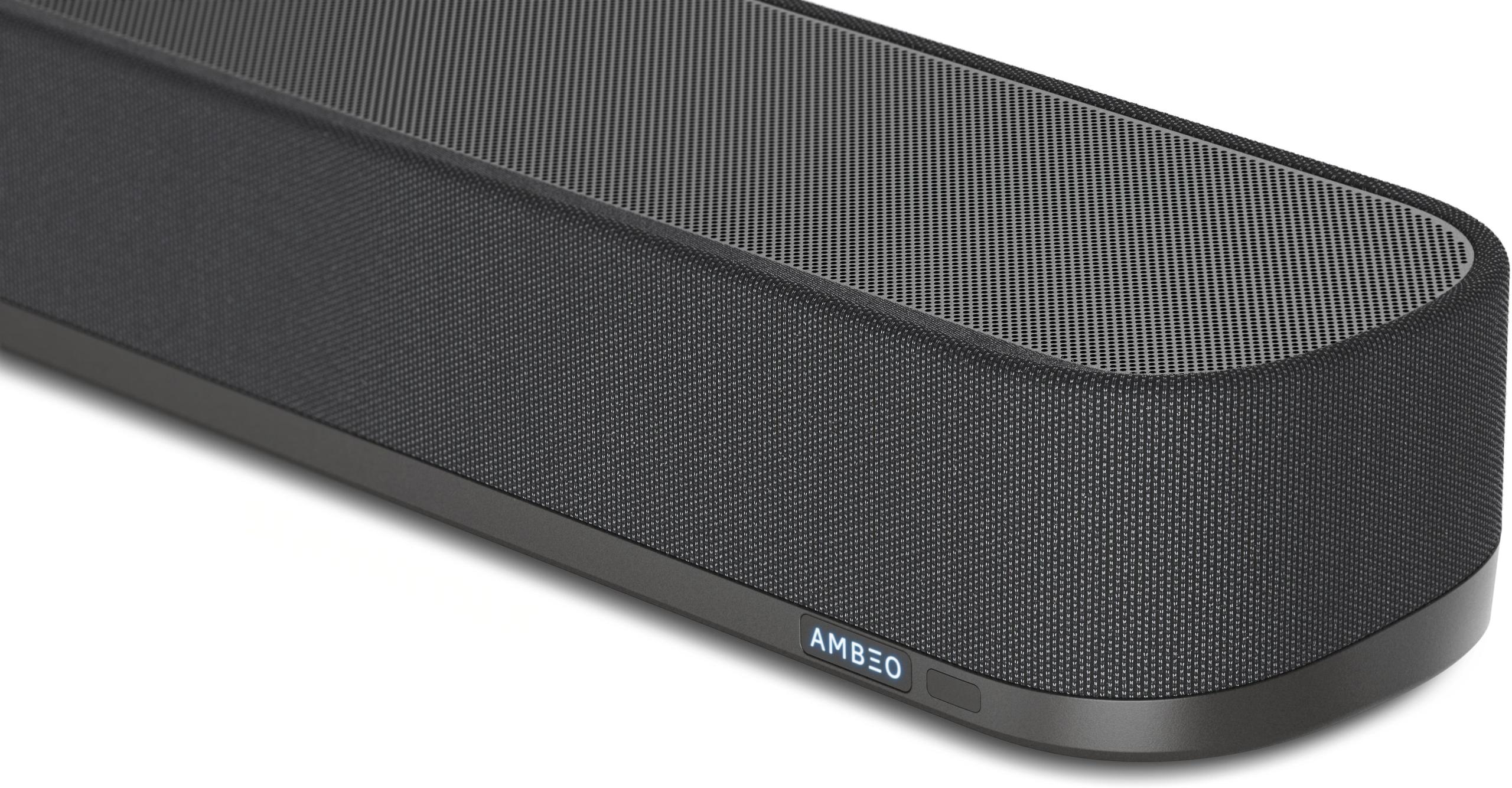

When you're ready to upgrade from your TV's tinny built-in speakers but don't want the complexity of a full surround sound system with wires running everywhere, premium soundbars offer an appealing middle ground. These sophisticated devices promise to deliver cinema-quality audio through advanced engineering and smart processing, but they take very different approaches to get there.
Today we're comparing two standout options: the ULTIMEA Skywave X40, a modern 2025 wireless system, and the Sennheiser AMBEO Max, a premium all-in-one bar that launched in 2019 but received major firmware updates in 2025. Both aim to create immersive surround sound, but their philosophies couldn't be more different.
Before diving into specifics, it's worth understanding what separates premium soundbars from basic models. Regular soundbars might improve dialogue clarity and add some bass, but premium models attempt something far more ambitious: recreating the spatial audio experience of a movie theater or concert hall.
The key technologies here are Dolby Atmos and DTS:X—these are "object-based" audio formats that don't just send sound to specific speakers, but actually place sounds at precise locations in 3D space around you. Think of the difference between stereo (left and right) and having sounds that seem to come from above, behind, and all around you. Premium soundbars use various tricks to achieve this, from bouncing sound off your ceiling to using advanced processing that "tricks" your brain into hearing sounds from directions where there are no actual speakers.
The main considerations when evaluating these systems are audio performance (how good they sound and how convincing the surround effects are), installation flexibility (how easy they are to set up and position in your room), technology integration (what devices and formats they support), and overall value for the investment you're making.
The ULTIMEA Skywave X40 and Sennheiser AMBEO Max represent fundamentally different philosophies about how to create great surround sound.
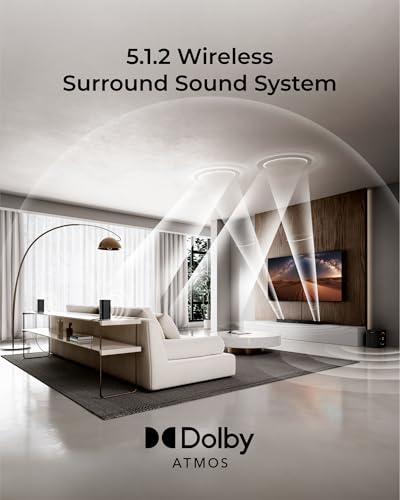
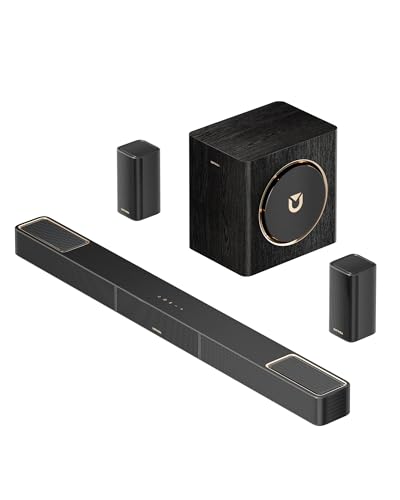
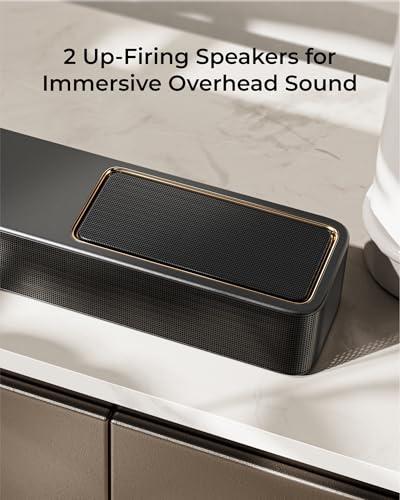
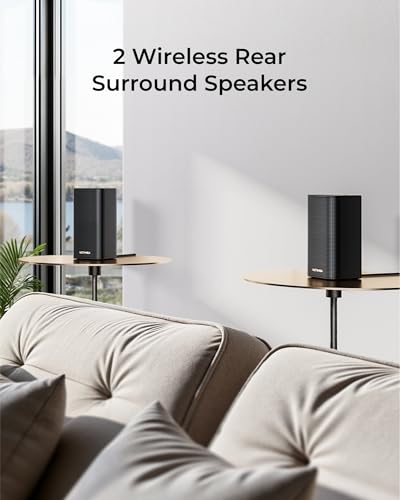
The Skywave X40 is what we'd call a "modular wireless system." It includes a main soundbar, a wireless subwoofer, and two wireless rear surround speakers—essentially giving you a true 5.1.2 setup where the ".2" refers to upward-firing drivers for height effects. This approach means you get actual speakers behind you for rear channel effects, which is as close as you can get to a traditional surround system without running wires.
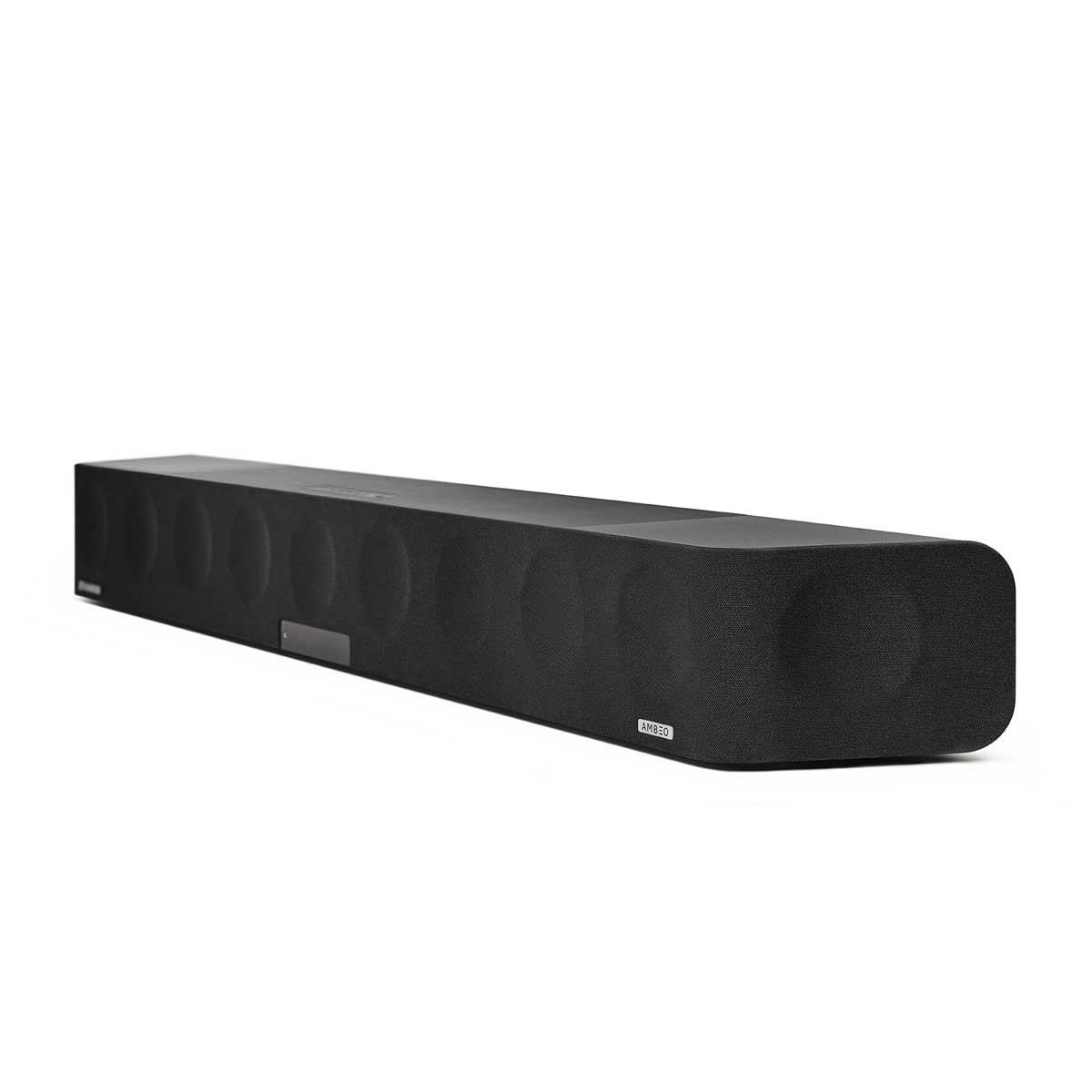
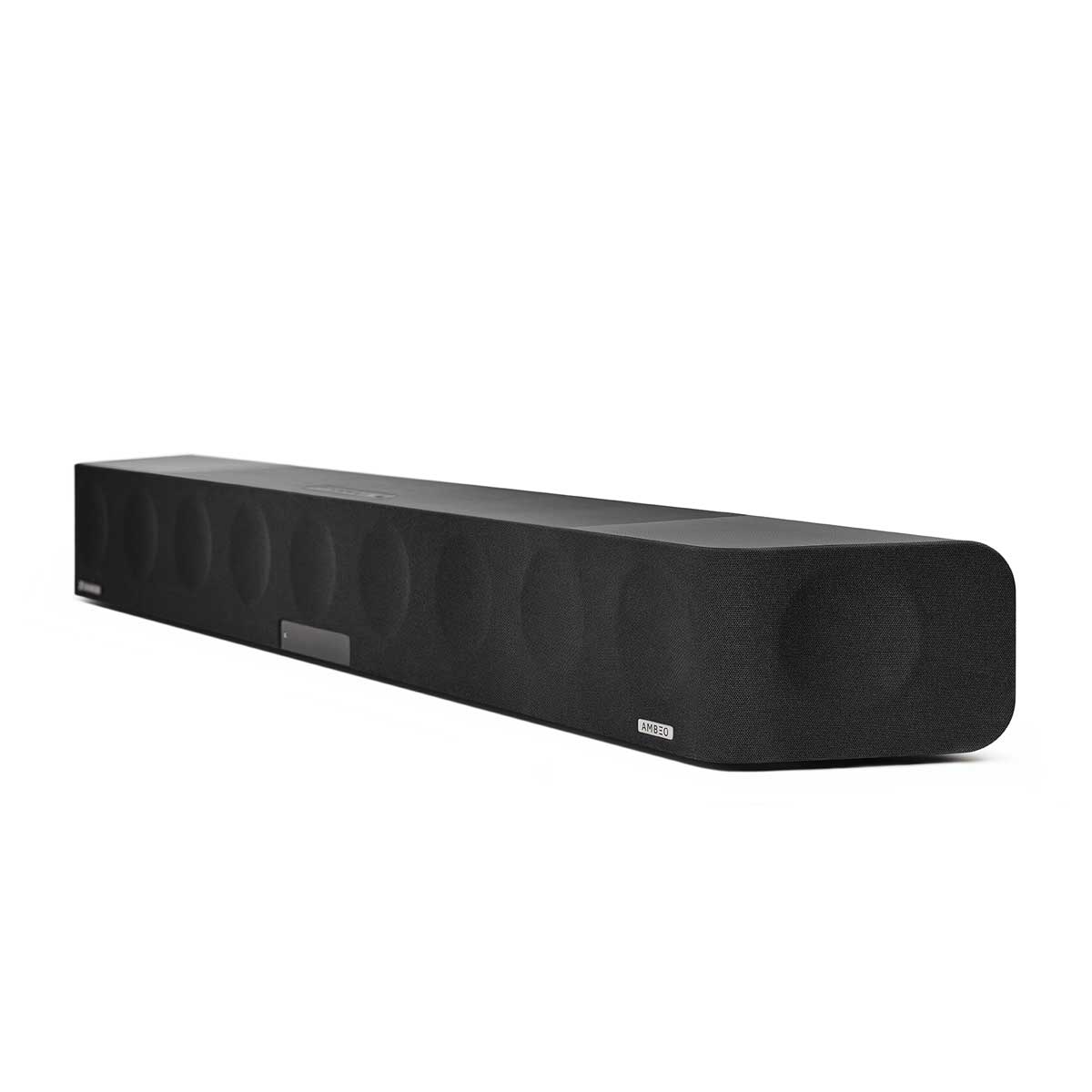
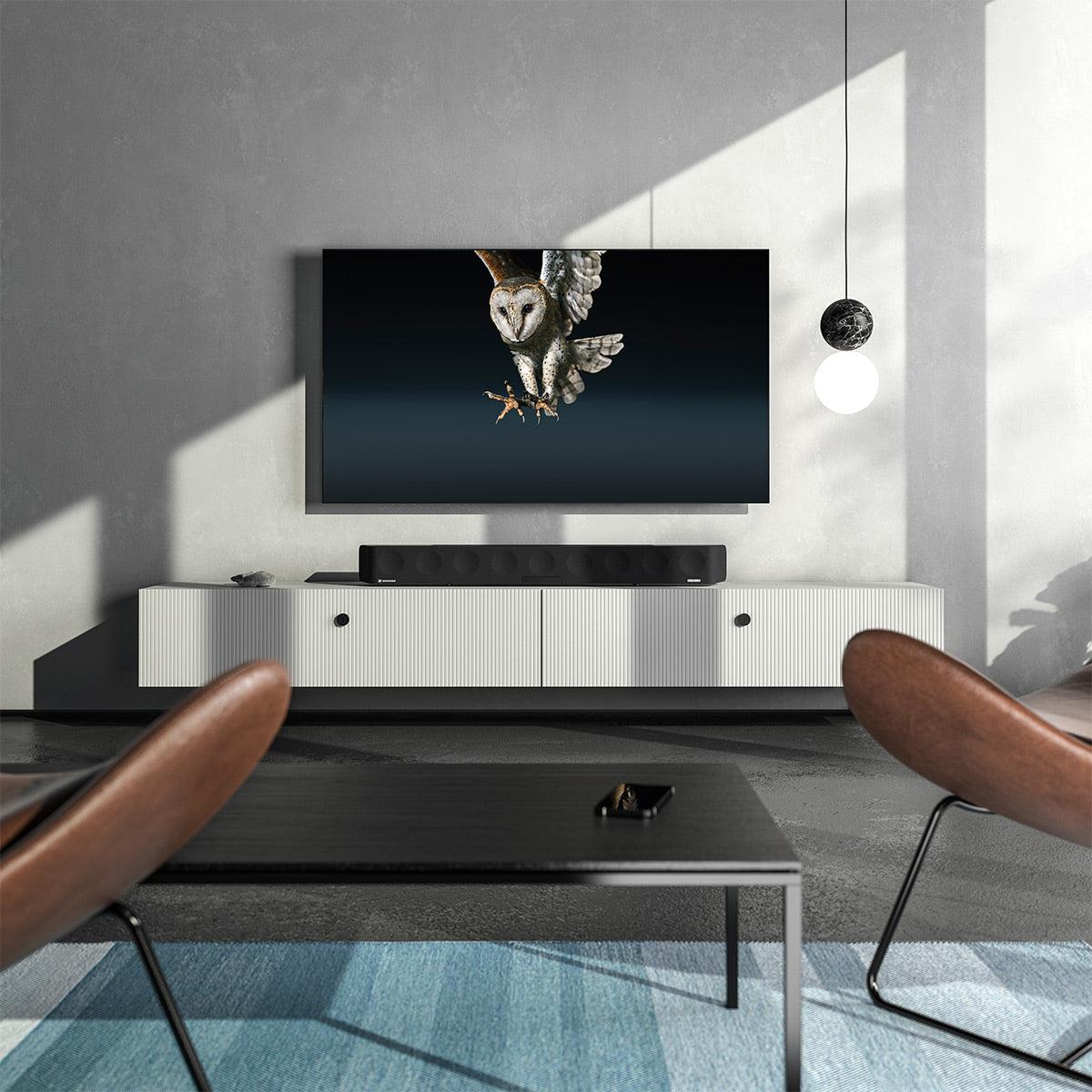
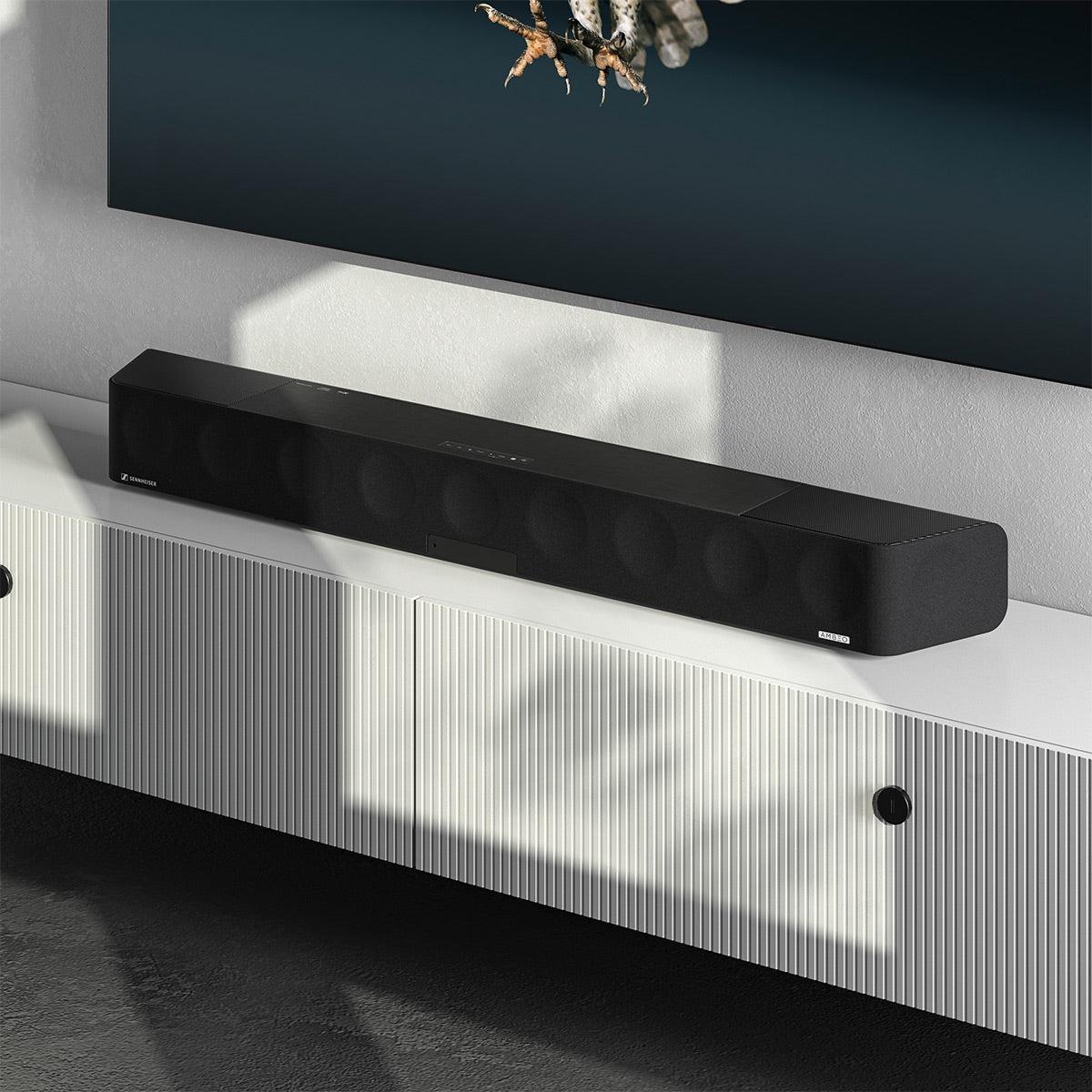
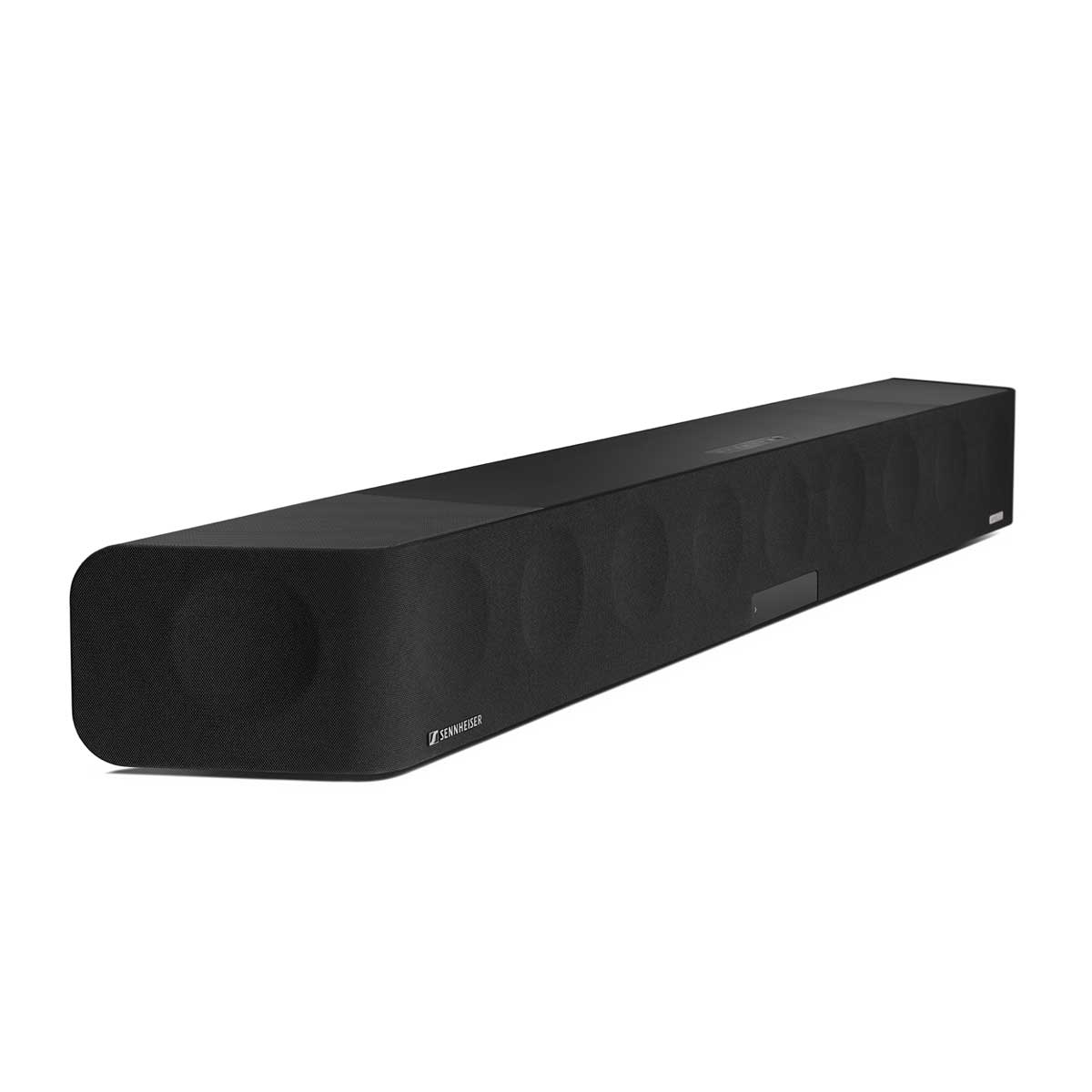
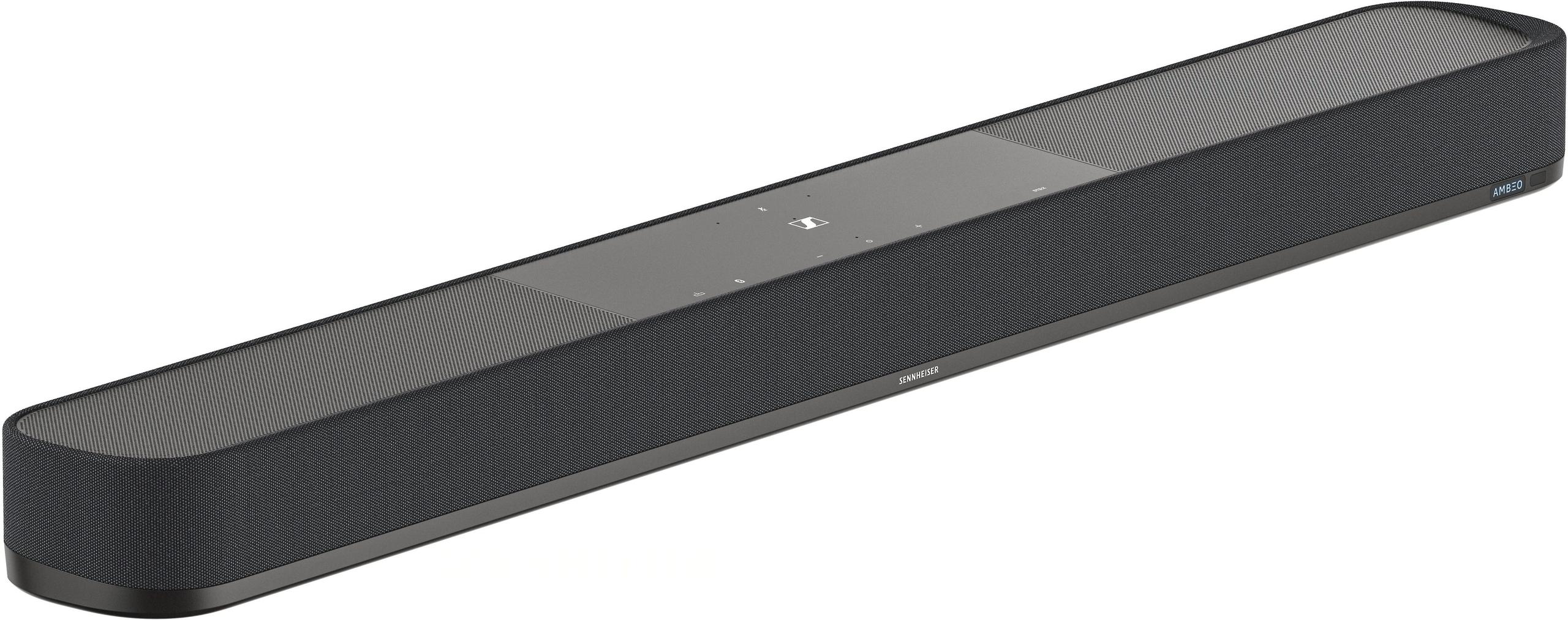
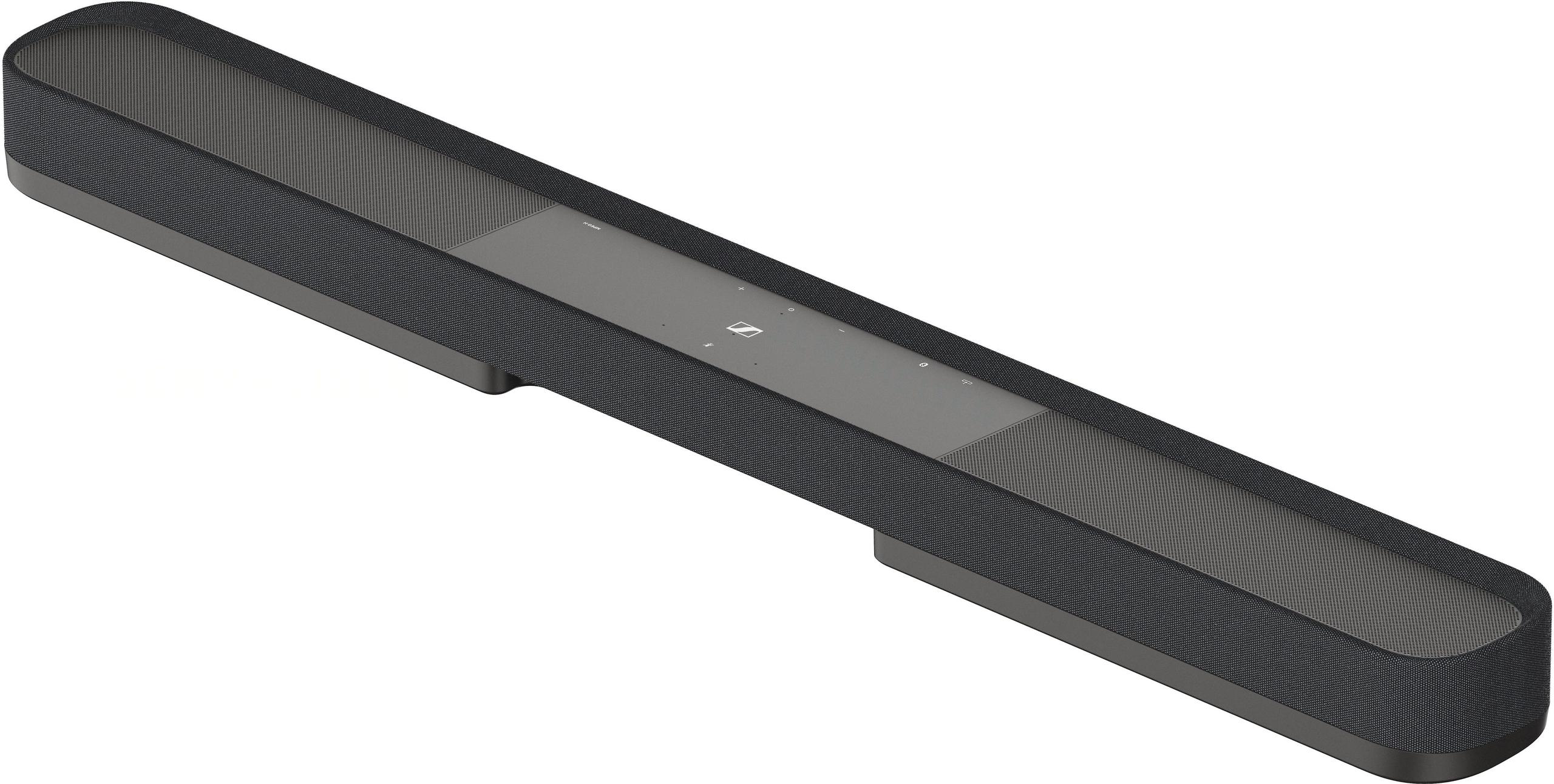
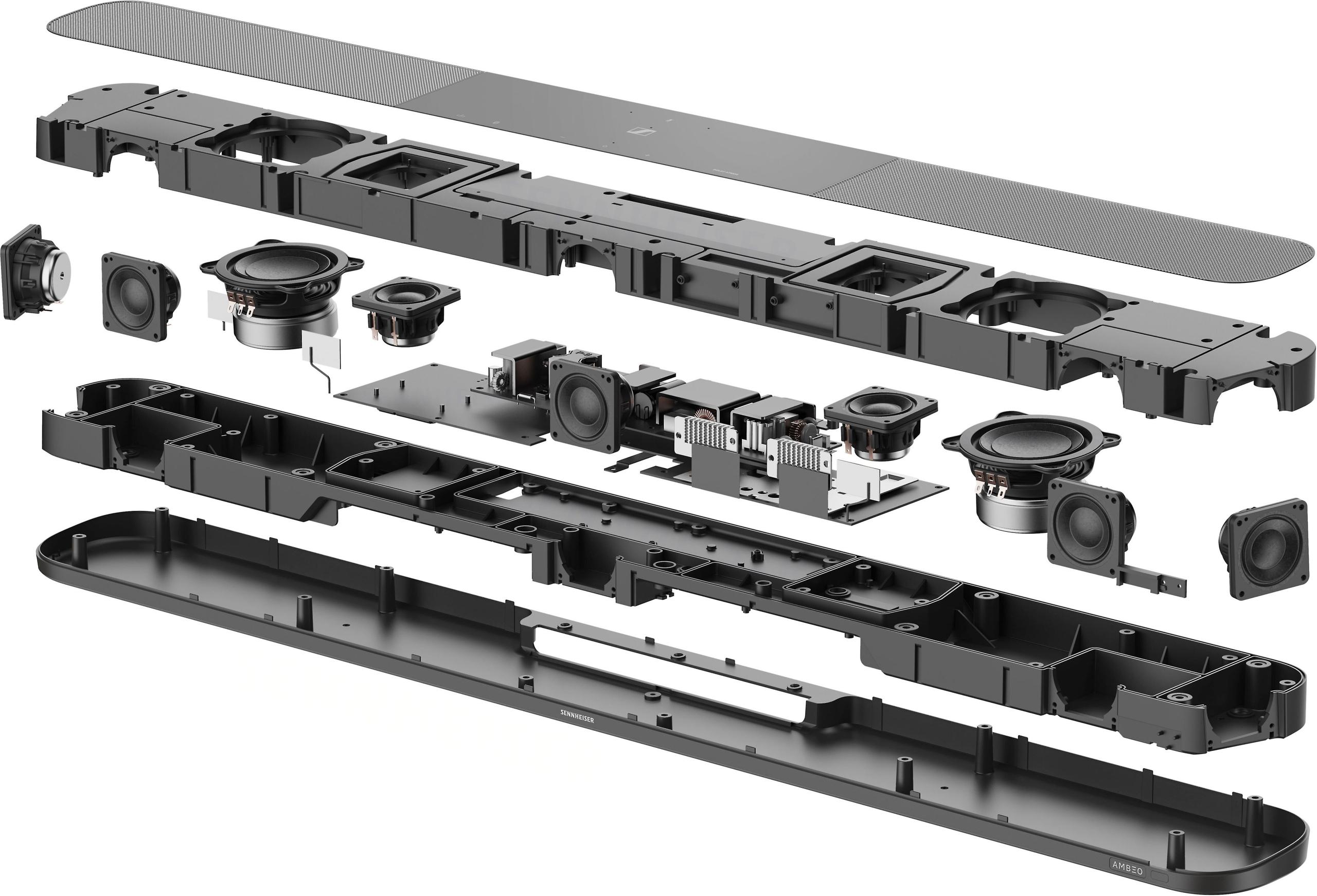
The AMBEO Max, by contrast, is an "all-in-one virtualized system." It's a single, substantial soundbar packed with 13 different drivers that uses sophisticated processing to create the illusion of surround sound coming from all directions. No separate subwoofer needed, no rear speakers to place—just one (admittedly large) bar that handles everything through acoustic trickery.
Raw power numbers can be misleading with soundbars, but they do tell part of the story. The Skywave X40 delivers 530W of peak power distributed across its modular system, while the AMBEO Max provides 500W through its integrated design. More interesting is how they use that power.
The Skywave X40 spreads its 8 total drivers across multiple components—you get dedicated drivers in each rear speaker, a substantial subwoofer, and the main bar handling center, left, right, and height channels. This distributed approach means each component can be optimized for its specific job and positioned where it works best in your room.
The AMBEO Max takes the opposite approach, cramming 13 high-end drivers into its single chassis. This includes six 4-inch woofers for bass, five 1-inch aluminum tweeters for crisp highs, and two 3.5-inch full-range drivers positioned to bounce sound around your room. Having more drivers allows for more precise control over the sound field, but they all need to work from one fixed position.
Deep, clean bass is crucial for both movies and music, and these systems tackle it differently. The AMBEO Max achieves impressive 30Hz bass response through its six integrated woofers—that's low enough to feel the rumble in action movies and the lowest notes in electronic music. The advantage of this built-in approach is that Sennheiser could tune the bass drivers to work perfectly with the rest of the system from day one.
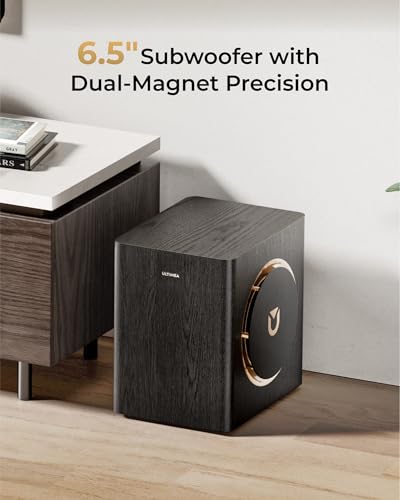
The Skywave X40 reaches 35Hz through its dedicated 6.5-inch wireless subwoofer, which uses what ULTIMEA calls "Gravus Ultra-Linear Bass Technology"—essentially advanced driver and port design that maintains clean bass even at high volumes. While 35Hz isn't quite as low as the AMBEO's 30Hz, the dedicated subwoofer approach offers a significant advantage: you can position it anywhere in your room for optimal bass response. Bass frequencies are highly dependent on room acoustics, and having flexibility in subwoofer placement often trumps those extra 5Hz on paper.
This is where the fundamental difference between these systems becomes most apparent. The AMBEO Max supports 5.1.4 channels—that's five main channels, one subwoofer, and four height channels for overhead effects. But remember, these are all virtualized through processing rather than discrete speakers.
The Skywave X40 offers 5.1.2 channels with actual physical rear speakers. While it has fewer height channels (2 vs 4), having real surround speakers behind you creates more convincing rear channel effects for movies where helicopters fly overhead or bullets whiz past.
From our research into user experiences and expert reviews, the consensus seems to be that physical rear speakers provide more authentic surround imaging, while virtualized height effects can work surprisingly well when the processing is sophisticated enough. The AMBEO Max excels at creating overhead effects that seem to come from above your listening position, while the Skywave X40 delivers more convincing sounds from behind and beside you.
Both systems use advanced processing, but with different goals. The Skywave X40 employs what ULTIMEA calls "NEURACORE Triple-Core DSP" with 2,000 MIPS (million instructions per second) of processing power. This handles the complex task of managing all those wireless connections while optimizing the sound from each component. The system also uses GaN (Gallium Nitride) amplification—a newer, more efficient amplifier technology that runs cooler and responds faster than traditional silicon amplifiers.
The AMBEO Max uses virtualization technology developed with Fraunhofer, a renowned audio research institute. This processing analyzes your room's acoustic properties and creates a virtual sound field that places you at the center of the action. The recent 2025 firmware update significantly enhanced these capabilities, adding customizable immersion controls that let you adjust how aggressively the system virtualizes side, top, and center channel information.
Here's where personal preference really matters. The Skywave X40 requires you to position three separate wireless components around your room. The good news is that ULTIMEA's "CineMesh" technology handles the wireless connections automatically—everything pairs at the factory, so you just need to plug each component into power and they connect with less than 20ms latency (fast enough that you won't notice any delay between video and audio).
The challenge is finding good spots for everything. The rear speakers need to be positioned behind or to the sides of your listening position, and the subwoofer needs placement that works with your room's acoustics—typically not right next to a wall where it might sound boomy.
The AMBEO Max is genuinely plug-and-play from a setup perspective—position the single bar, connect it to your TV, and you're done. However, this simplicity comes with its own requirements. The bar is substantial at nearly 50 inches wide and needs to be positioned where its upward-firing drivers can bounce sound off your ceiling effectively. Rooms with very high ceilings, irregular shapes, or lots of sound-absorbing materials might not work as well with the virtualization approach.
The AMBEO Max includes sophisticated room calibration that analyzes your space and adjusts its processing accordingly. This is genuinely impressive technology—the system listens to how sound reflects in your room and adjusts its virtualization to compensate for your specific acoustic environment.
The Skywave X40 takes a more physical approach to room adaptation. Since you can position each component independently, you have more control over optimizing the sound for your space. The subwoofer can go where bass sounds best, the rear speakers can be positioned for ideal surround imaging, and the main bar doesn't have to handle everything by itself.
Both systems support modern connection standards, but with different emphases. The Skywave X40 focuses on cutting-edge wireless technology, including Bluetooth 5.4 for improved range and stability. It handles 4K HDR passthrough via HDMI eARC, ensuring you get both high-quality video and audio.
The AMBEO Max offers more comprehensive wired connectivity with multiple HDMI inputs, optical, and Ethernet connections. While its Bluetooth is older (4.2 vs 5.4), the recent firmware update added impressive lossless streaming support up to 24-bit/192kHz via services like TIDAL Connect—audiophile-level quality for music listening.
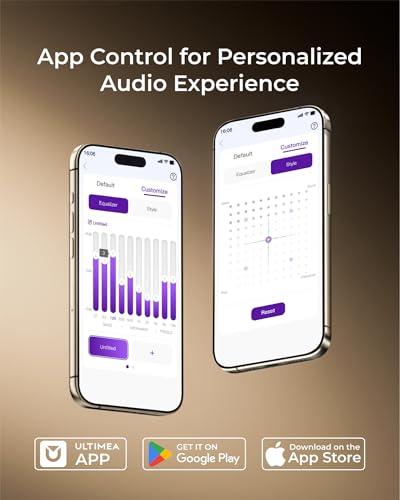
The Skywave X40 includes extensive app control with a 10-band equalizer and 121 preset sound profiles. This level of customization lets you fine-tune the sound for different content types or personal preferences. The app also manages the wireless connections and system updates.
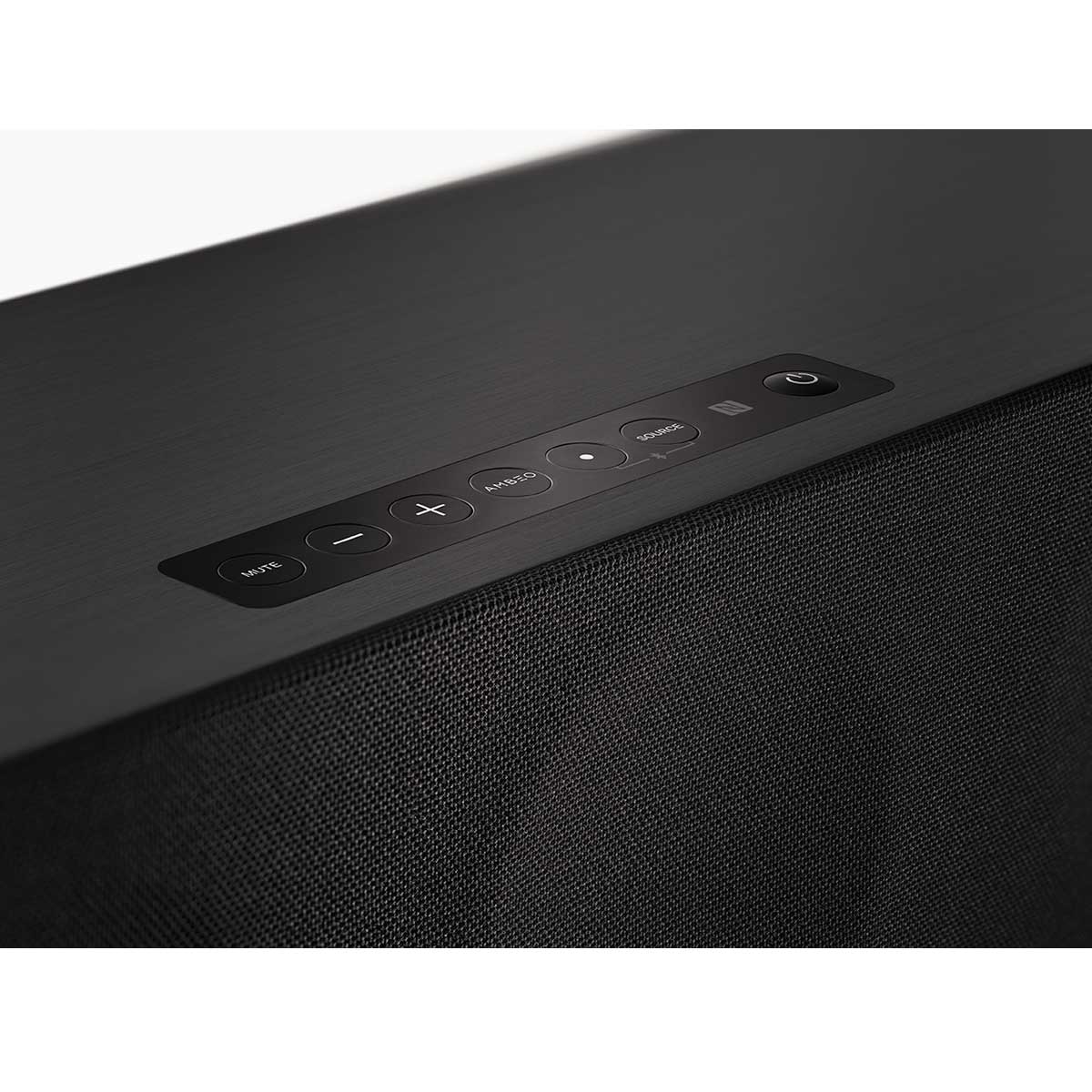
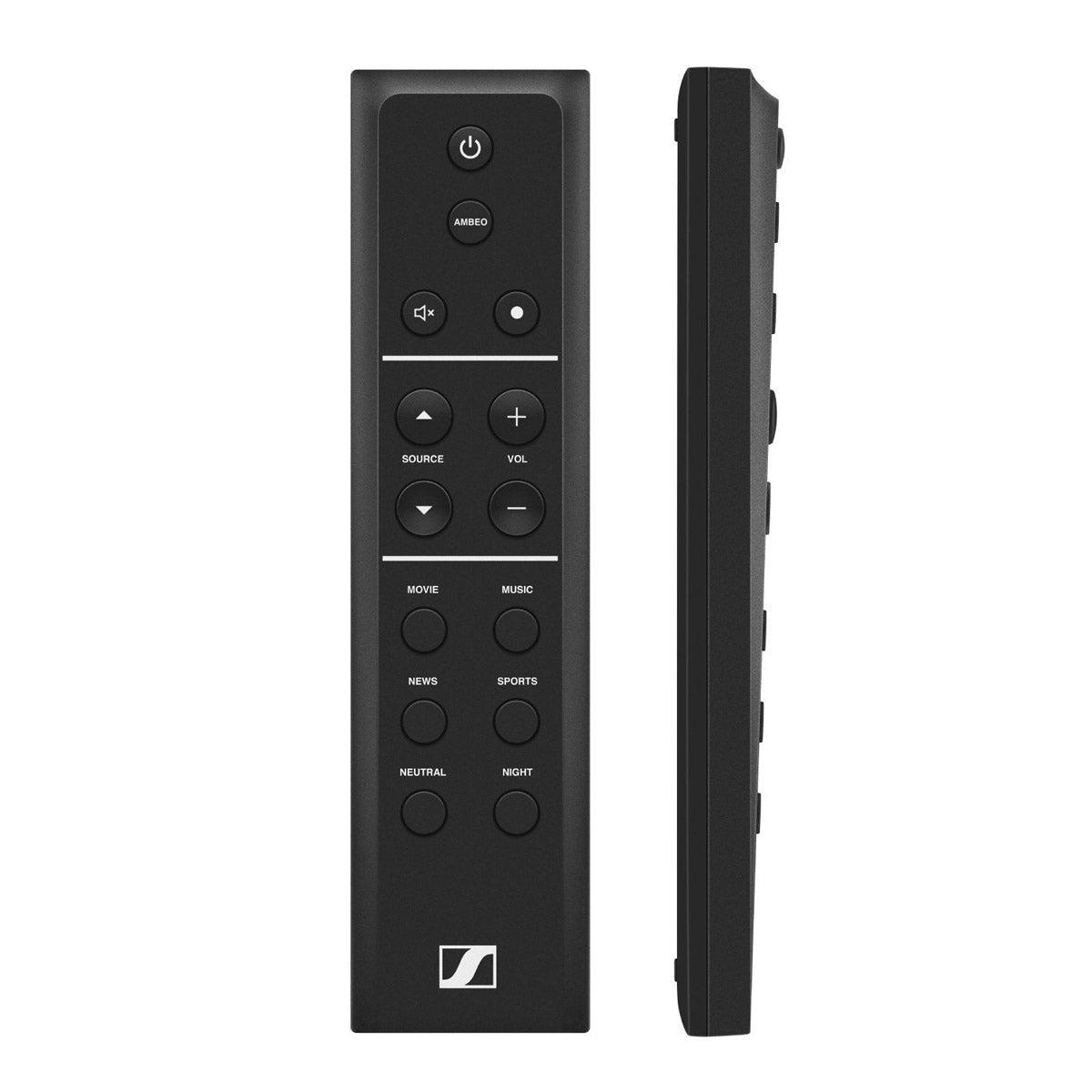
The AMBEO Max received significant smart feature upgrades with its 2025 OS2 firmware update. The new interface allows customizable immersion controls—you can adjust how aggressively the system processes side, top, and center channel information. There's also a new Voice Enhancement Mode that makes dialogue clearer without affecting other parts of the soundtrack.
For movie watching, both systems excel but in different ways. The AMBEO Max creates an impressively immersive soundfield from a single position, with overhead effects that genuinely seem to come from above. Action sequences with helicopters, rain, or debris falling feel convincing, and the system's ability to create width and depth from one bar is remarkable.
The Skywave X40 provides more traditional surround sound with clear directionality. When something happens behind you in a movie, you hear it from the actual rear speakers. This creates a more authentic surround experience, though the height effects from the upward-firing drivers might not be quite as convincing as the AMBEO's more sophisticated processing.
Bass performance favors the AMBEO Max for sheer depth—those extra 5Hz make a difference in the deepest rumbles. However, the Skywave X40's dedicated subwoofer can often be positioned for better bass response in your specific room.
Both systems handle music well, but again with different strengths. The AMBEO Max excels with its recent lossless audio support and sophisticated processing that can make stereo music feel more spacious without sounding artificial. The 13-driver configuration provides excellent detail and separation.
The Skywave X40 offers more traditional stereo imaging with the option to engage surround processing for music. The dedicated subwoofer provides excellent low-end extension for electronic music, while the distributed driver approach can create a room-filling sound that works well for parties or background listening.
Gaming presents unique challenges for surround sound systems, particularly with latency and directional accuracy. The Skywave X40's sub-20ms wireless latency ensures no noticeable delay between game actions and audio, while the physical rear speakers provide clear directional cues for competitive gaming.
The AMBEO Max processes game audio well, though some users report that the virtualized surround isn't quite as precise for competitive gaming where pinpoint directional accuracy matters most.
At the time of writing, both systems represent significant investments in your audio setup, though they target slightly different market positions. The AMBEO Max sits firmly in the premium tier, competing with flagship models from Samsung and Sony. Its all-in-one approach means you're getting a complete solution with no additional purchases required.
The Skywave X40 offers compelling value by delivering true wireless surround sound with modern features at a more accessible price point than many competitors. While you're getting more components to manage, you're also getting more flexibility and authentic surround sound.
The long-term value equation is interesting. The AMBEO Max has proven its staying power with meaningful firmware updates six years after launch, suggesting Sennheiser's commitment to evolving the product over time. The Skywave X40 represents newer technology but lacks this established track record.
You want authentic rear surround sound and don't mind managing multiple wireless components. This system makes sense if you have the space to position rear speakers properly and value flexibility in component placement. It's ideal for larger rooms where the distributed approach can really shine, and for users who appreciate having the latest wireless technology and amplifier innovations.
The Skywave X40 is particularly appealing if you might want to expand your system later or if you have specific room acoustic challenges that benefit from flexible subwoofer placement. It's also the better choice for users who prefer extensive app-based customization and modern connectivity features.
You want the deepest possible bass and most sophisticated processing without any external components to manage. This system excels for users who prioritize convenience and have rooms that work well with ceiling-bounce technology for height effects.
The AMBEO Max makes particular sense if you have limited space for multiple components but still want premium audio performance. Its proven track record and ongoing firmware support make it a solid long-term investment, especially for users who appreciate the engineering prowess behind its virtualization technology.
Both the ULTIMEA Skywave X40 and Sennheiser AMBEO Max deliver excellent performance, but they serve different philosophies about home audio. The Skywave X40 embraces the wireless future while maintaining the authenticity of physical surround speakers. The AMBEO Max represents the pinnacle of single-component engineering, using sophisticated processing to eliminate the need for multiple devices.
Your choice ultimately comes down to whether you prioritize the convenience and acoustic sophistication of an all-in-one solution or the authenticity and flexibility of a true wireless surround system. Both will dramatically improve your home entertainment experience—they just get there via different paths.
| ULTIMEA Skywave X40 5.1.2 Soundbar System | Sennheiser AMBEO Soundbar |
|---|---|
| Channel Configuration - More channels create better surround immersion | |
| 5.1.2 with physical rear speakers | 5.1.4 virtualized (no rear speakers needed) |
| Peak Power Output - Higher wattage typically means louder, cleaner sound | |
| 530W (distributed across modular components) | 500W (concentrated in single bar) |
| Bass Frequency Response - Lower numbers mean deeper, more impactful bass | |
| 35Hz (via dedicated 6.5" wireless subwoofer) | 30Hz (built-in woofers, no external sub needed) |
| Total Driver Count - More drivers allow for better sound separation and detail | |
| 8 drivers across distributed system | 13 high-end drivers in single chassis |
| System Design - Affects installation complexity and room flexibility | |
| Modular wireless (soundbar + subwoofer + 2 rear speakers) | All-in-one single bar solution |
| Amplifier Technology - Newer tech offers better efficiency and sound quality | |
| GaN (Gallium Nitride) - latest efficient amplification | 13x Class-D amplifiers - proven reliable tech |
| Wireless Technology - Affects connection stability and range | |
| CineMesh with <20ms latency, Bluetooth 5.4 | Room calibration virtualization, Bluetooth 4.2 |
| Audio Format Support - Determines compatibility with movie and streaming content | |
| Dolby Atmos | Dolby Atmos + DTS:X |
| Connectivity Options - More inputs provide better device compatibility | |
| HDMI eARC, Optical, USB, 4K HDR passthrough | HDMI eARC, 2x HDMI inputs, Optical, Ethernet |
| Physical Dimensions - Affects placement requirements and room aesthetics | |
| Main bar: 43.3" wide, total system weight 32.1 lbs | Single bar: 49.8" wide, 40.7 lbs |
| Smart Features - App control and customization capabilities | |
| ULTIMEA app with 10-band EQ, 121 presets | AMBEO OS2 with lossless audio, voice enhancement |
| Release Year - Indicates technology generation and update potential | |
| 2025 (latest wireless and amplifier tech) | 2019 (mature platform with 2025 firmware upgrades) |
The ULTIMEA Skywave X40 is a modular wireless system that includes separate rear surround speakers and a subwoofer, while the Sennheiser AMBEO is an all-in-one soundbar that creates virtualized surround sound from a single unit. The Skywave X40 gives you actual physical speakers behind you, whereas the AMBEO uses advanced processing to simulate surround effects.
Both excel for home theaters but in different ways. The ULTIMEA Skywave X40 provides more authentic rear surround effects with its physical rear speakers, making it ideal for action movies where directional sound matters. The Sennheiser AMBEO creates impressive overhead effects and deeper bass (30Hz vs 35Hz), making it excellent for immersive movie experiences in smaller spaces.
The ULTIMEA Skywave X40 includes a wireless 6.5-inch subwoofer as part of the system. The Sennheiser AMBEO has built-in bass drivers that eliminate the need for a separate subwoofer, though you can add an optional AMBEO subwoofer if desired. The AMBEO reaches deeper bass frequencies without external components.
The Sennheiser AMBEO is simpler to set up since it's just one bar to position and connect. The ULTIMEA Skywave X40 requires positioning three wireless components (soundbar, subwoofer, and two rear speakers) around your room, though they pair automatically. The Skywave X40 offers more flexibility but requires more planning for placement.
The ULTIMEA Skywave X40 supports 5.1.2 channels with physical rear speakers and upward-firing drivers for height effects. The Sennheiser AMBEO supports 5.1.4 channels, providing more height channels for overhead effects, though these are virtualized rather than from separate speakers.
The Sennheiser AMBEO reaches deeper bass at 30Hz through its built-in woofers, while the ULTIMEA Skywave X40 reaches 35Hz with its dedicated wireless subwoofer. However, the Skywave X40's separate subwoofer can be positioned anywhere in your room for optimal bass response, which often matters more than the 5Hz difference.
Both soundbars support wireless connections. The ULTIMEA Skywave X40 features newer Bluetooth 5.4 technology and wireless connectivity between all components with ultra-low latency. The Sennheiser AMBEO uses Bluetooth 4.2 but offers more wired connection options including multiple HDMI inputs and Ethernet for streaming services.
Both handle music well with different strengths. The Sennheiser AMBEO recently added lossless audio support up to 24-bit/192kHz and has 13 high-end drivers for detailed sound reproduction. The ULTIMEA Skywave X40 offers extensive EQ customization with 121 presets and can create room-filling sound through its distributed speaker system.
The Sennheiser AMBEO is a single large bar measuring 49.8 inches wide that needs substantial TV stand space. The ULTIMEA Skywave X40 has a more compact 43.3-inch main bar but requires space around your room for the wireless rear speakers and subwoofer placement.
The Sennheiser AMBEO supports both Dolby Atmos and DTS:X formats, giving it broader compatibility with different content sources. The ULTIMEA Skywave X40 focuses on Dolby Atmos support but includes advanced processing through its NEURACORE system for optimized performance.
The ULTIMEA Skywave X40 excels for gaming with its sub-20ms wireless latency and physical rear speakers that provide accurate directional audio cues. The Sennheiser AMBEO processes game audio well through virtualization, though some users prefer the Skywave X40's discrete speakers for competitive gaming where precise directional accuracy matters.
The Sennheiser AMBEO has proven longevity with significant firmware updates six years after launch, showing strong manufacturer support. The ULTIMEA Skywave X40 represents newer 2025 technology with modern features like GaN amplification and advanced wireless connectivity, but lacks the established update track record of the AMBEO.
We've done our best to create useful and informative comparisons to help you decide what product to buy. Our research uses advanced automated methods to create this comparison and perfection is not possible - please contact us for corrections or questions. These are the sites we've researched in the creation of this article: bestbuy.com - shopabunda.com - youtube.com - youtube.com - youtube.com - youtube.com - ultimea.com - walmart.com - youtube.com - hometechnologyreview.com - community.ultimea.com - avsforum.com - youtube.com - youtube.com - youtube.com - bestbuy.com - hometechnologyreview.com - bestbuy.com - rtings.com - techradar.com - audioxpress.com - whathifi.com - upscaleaudio.com - soundstagesimplifi.com - global.sennheiser-hearing.com - sennheiser-hearing.com - audioadvice.com - abt.com - moon-audio.com

Privacy Policy
Terms and Conditions - Affiliate Policy
Home Security
© Copyright 2008-2026.
11816 Inwood Rd #1211, Dallas, TX 75244