


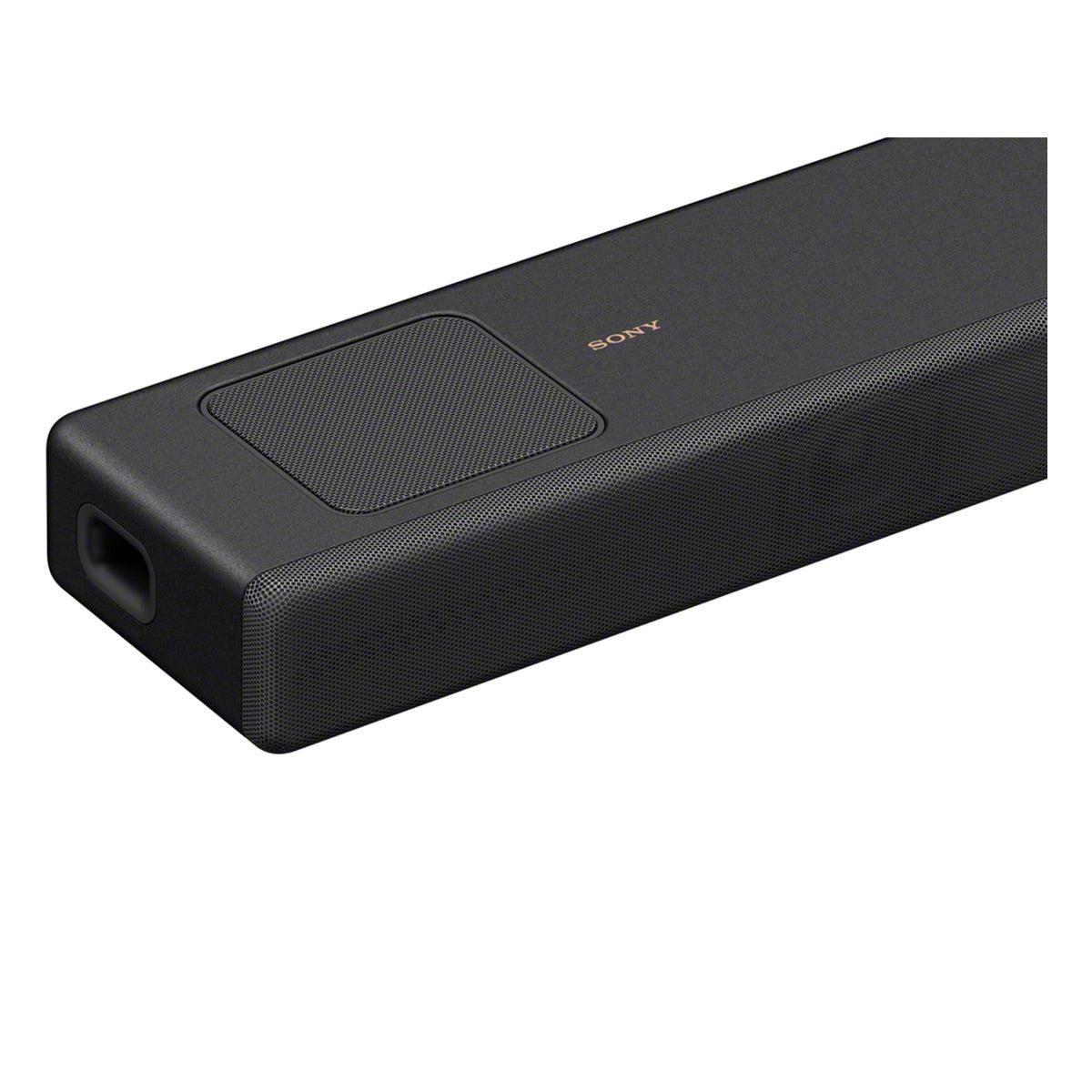
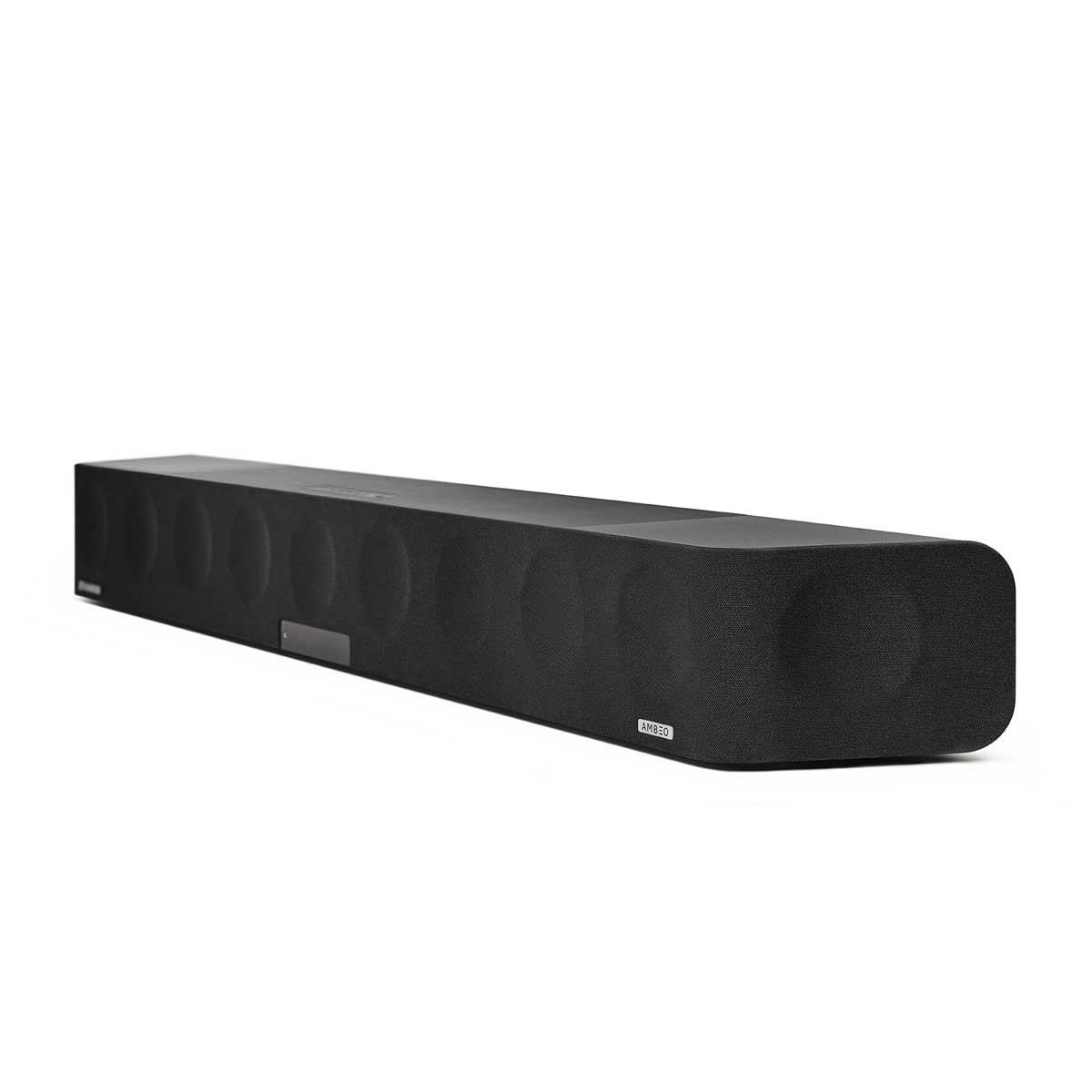
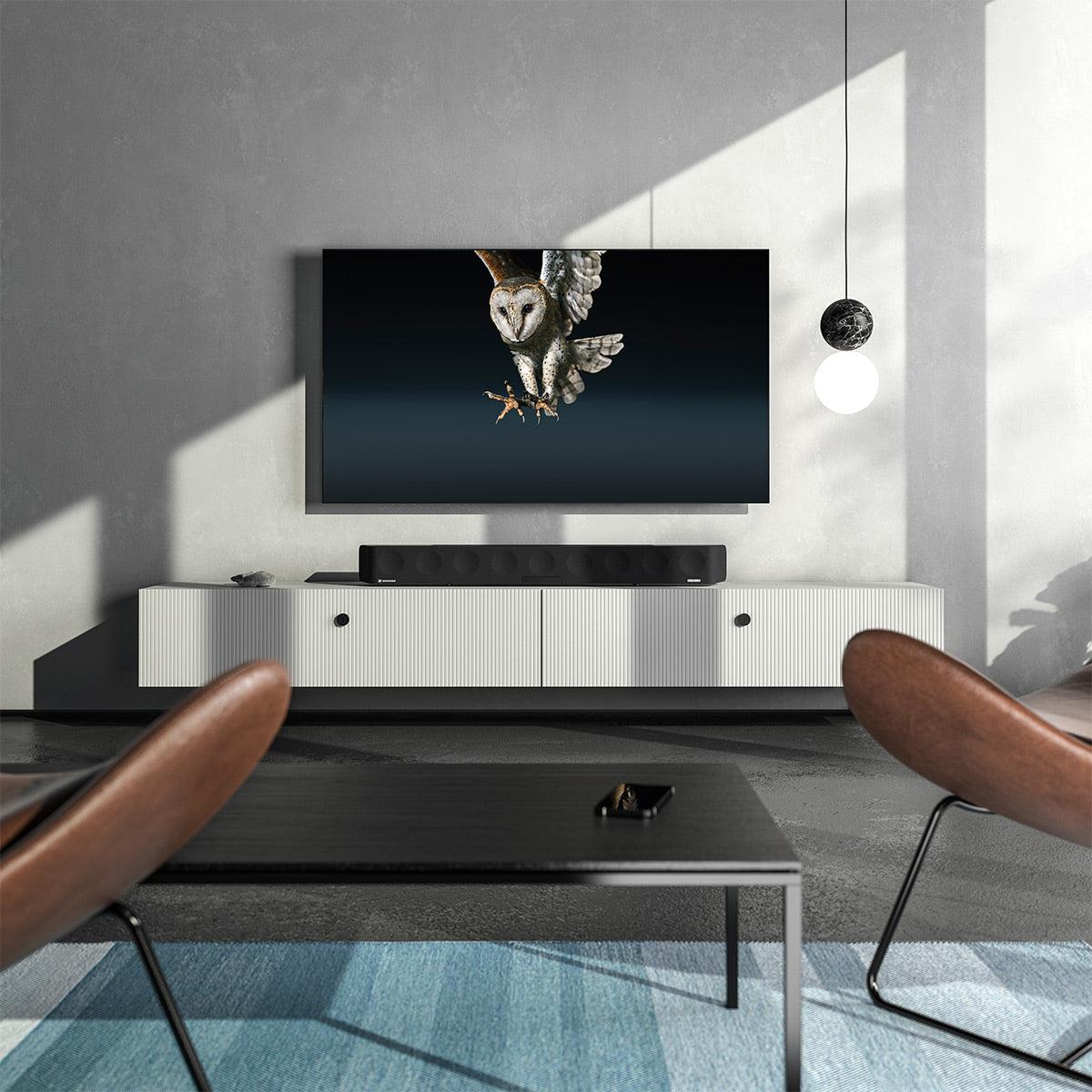
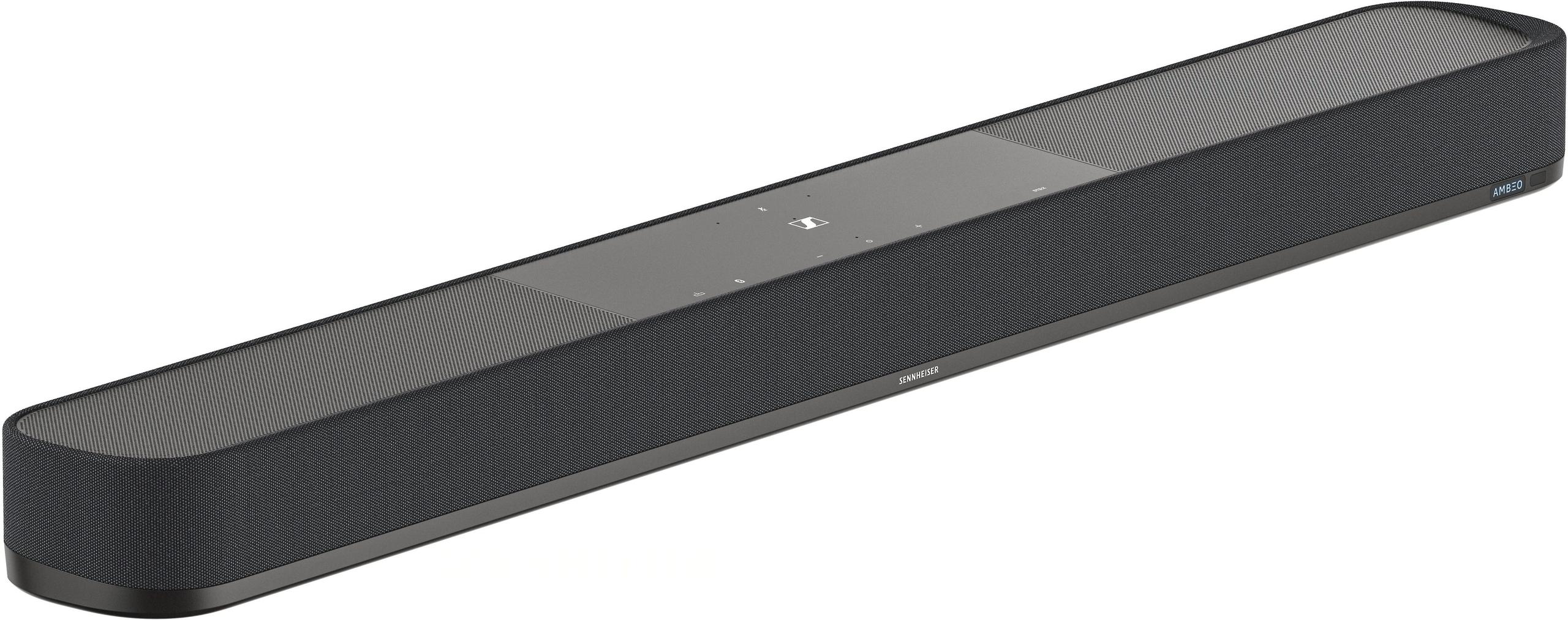
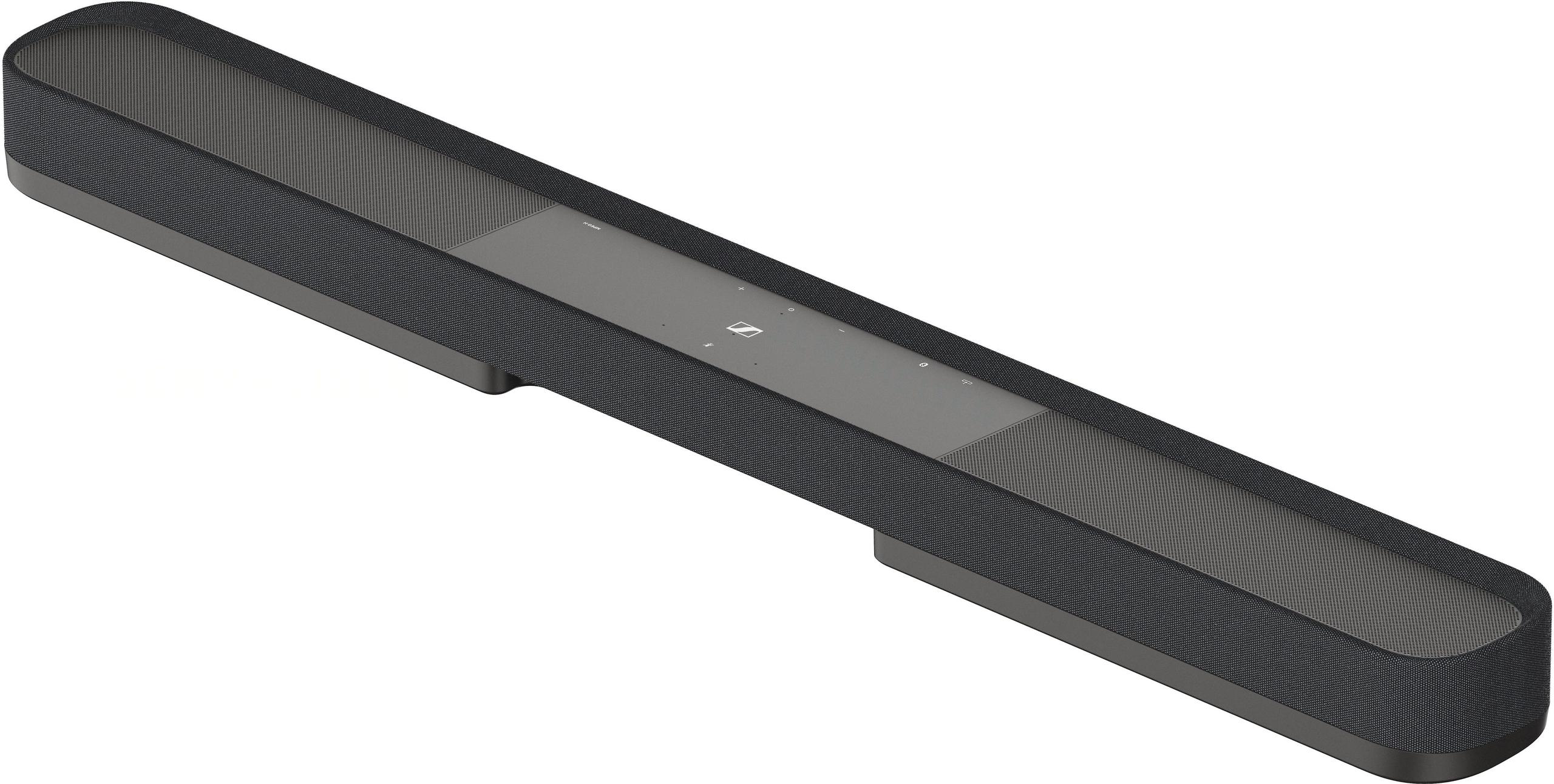

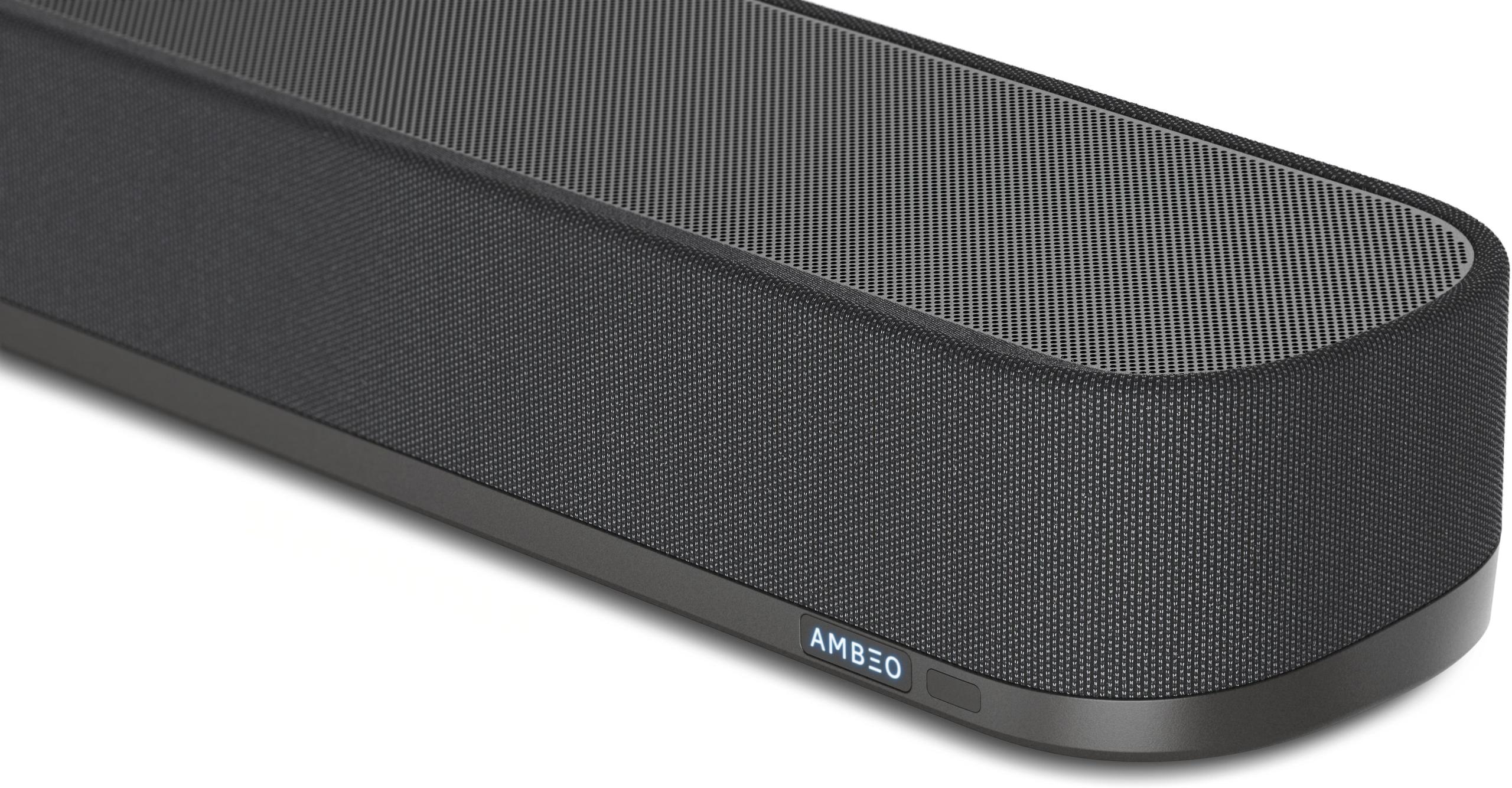

If you've been shopping for a premium soundbar recently, you've probably noticed something: the price range has exploded. While basic soundbars hover around $200-300, premium Dolby Atmos models now stretch from $600 to over $2,000. Two standouts in this competitive space are the Sony HT-A5000 and the Sennheiser AMBEO Soundbar, but they take completely different approaches to delivering that coveted surround sound experience.
Understanding these differences isn't just about specs on paper—it's about choosing the right technology for your specific room, budget, and expectations. After spending time with both systems, I've found they represent two distinct philosophies in premium soundbar design, each with compelling advantages depending on your priorities.
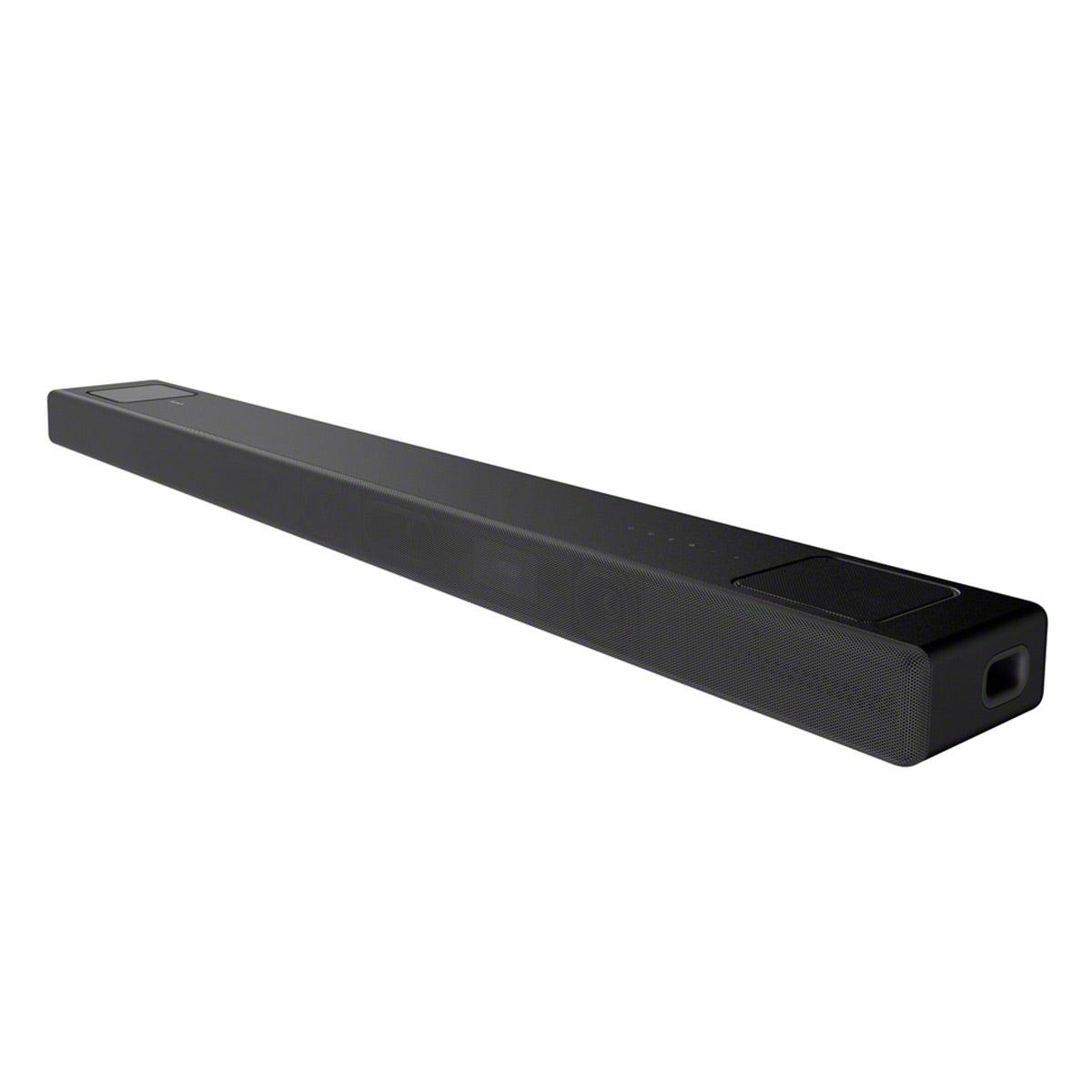
Premium Dolby Atmos soundbars have come a long way since their introduction in the mid-2010s. The Sony HT-A5000, released in 2021, represents Sony's refined approach after years of learning from earlier models. It incorporates lessons from their flagship HT-A7000 while maintaining a more accessible price point—currently around $640-999 depending on sales.
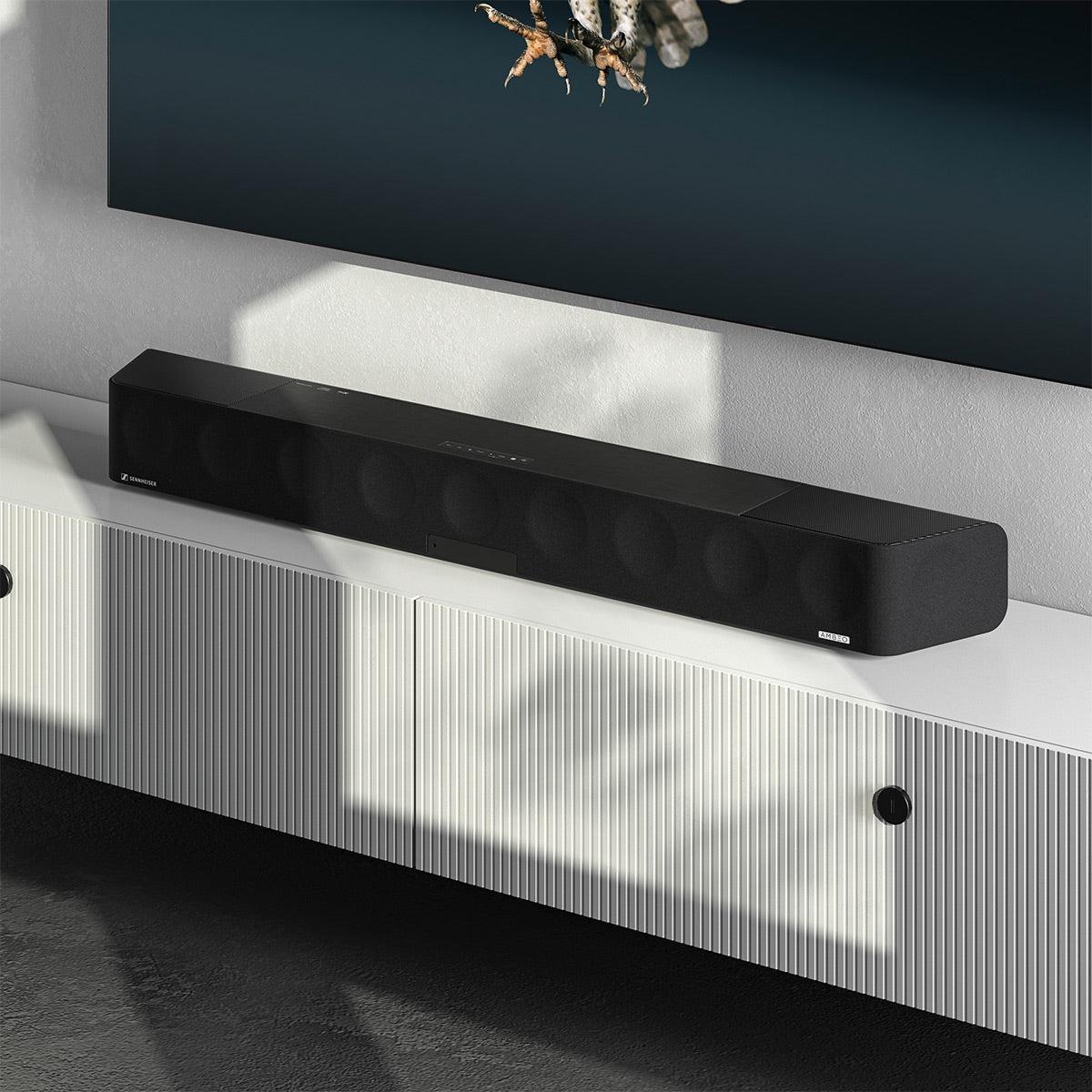
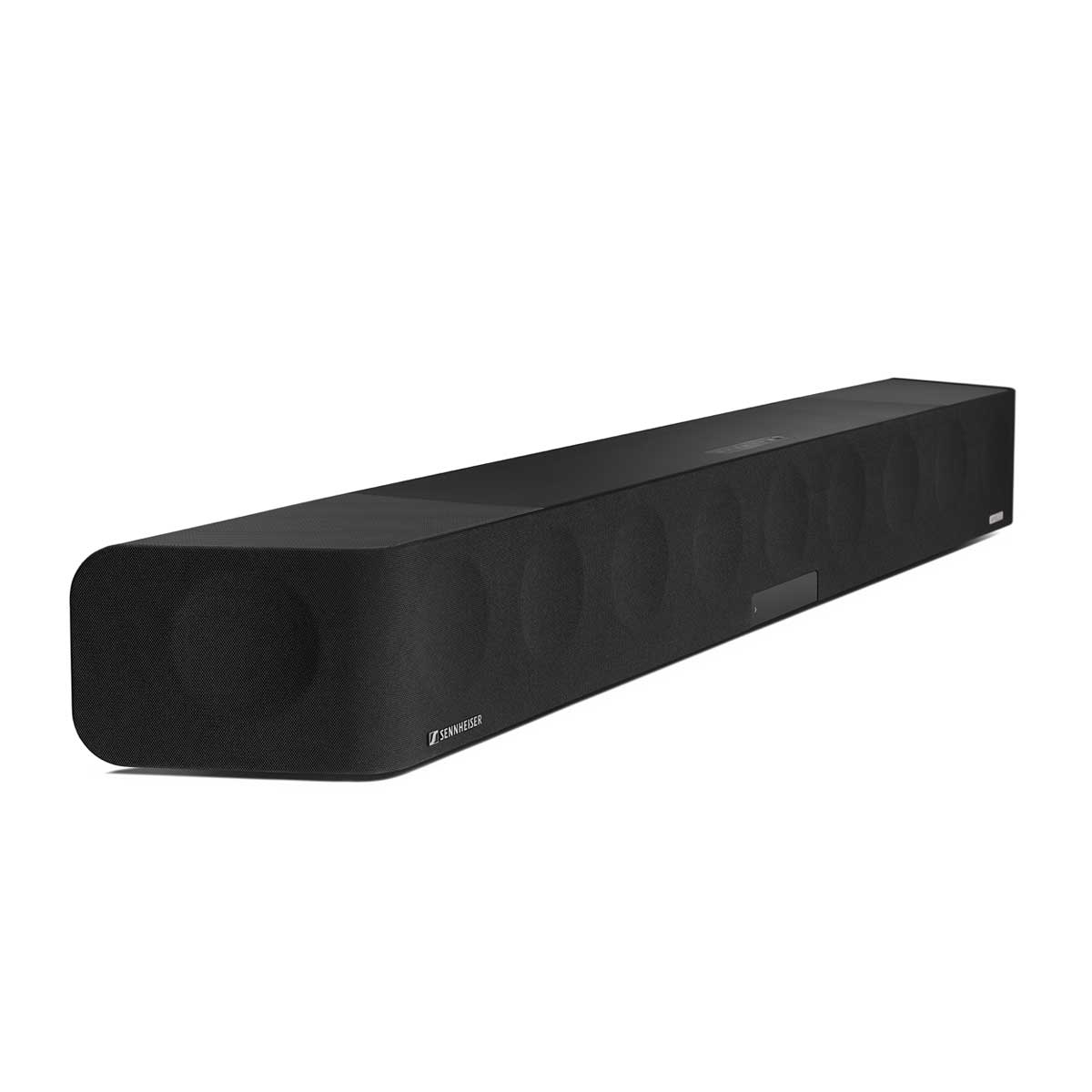
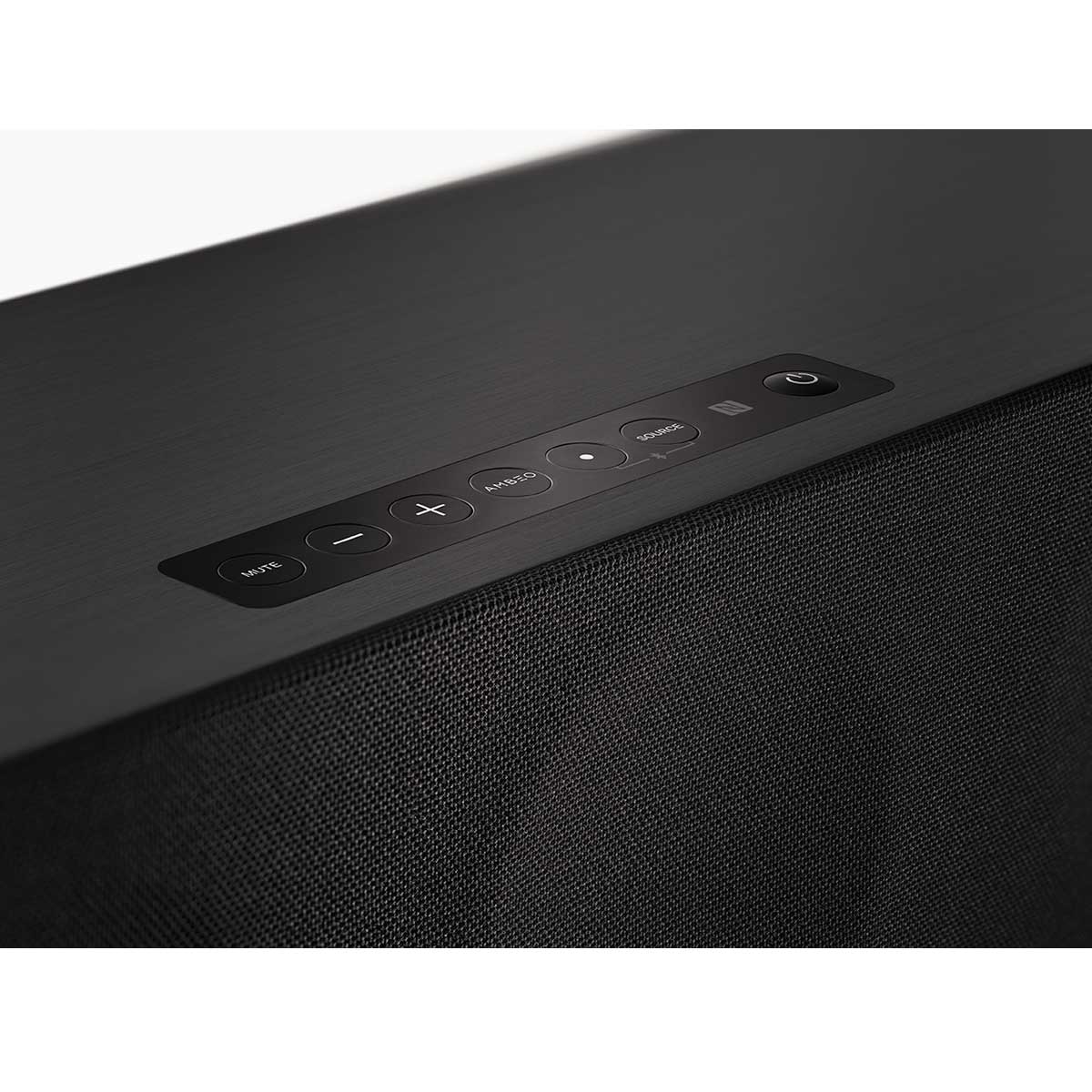
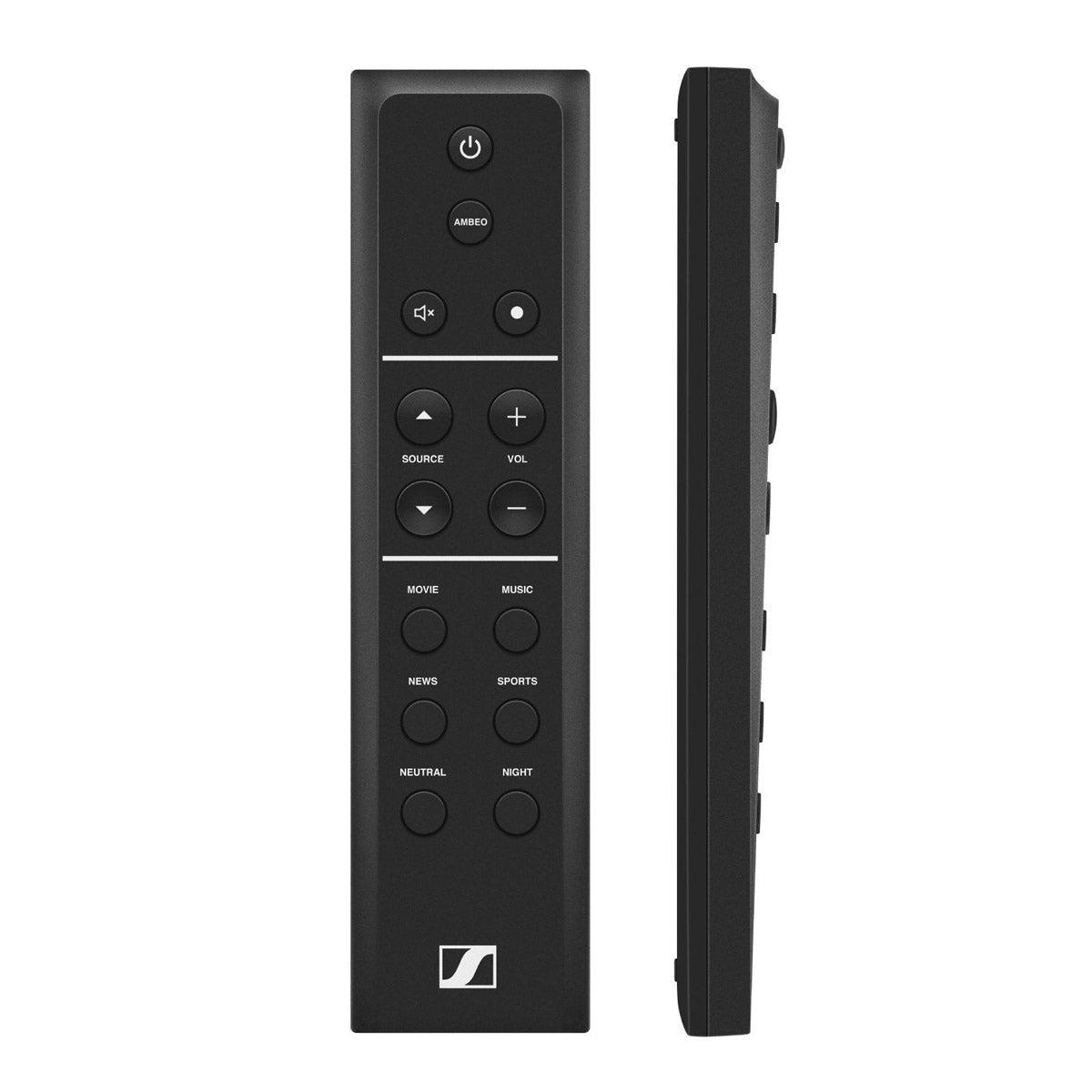
The Sennheiser AMBEO Soundbar, launched in 2019 and updated through 2023, was Sennheiser's bold entry into the home theater market. At $1,999, it positioned itself as a no-compromise solution that prioritizes processing power over expandability. What's fascinating is how both companies have continued improving these products through firmware updates, with Sennheiser adding features like enhanced room correction and Sony introducing better streaming codec support.
The key innovation driving both soundbars is Dolby Atmos—a technology that adds height information to surround sound. Traditional 5.1 surround sound moves audio left, right, front, and back. Dolby Atmos adds a third dimension, placing sounds above you. Think of a helicopter flying overhead in a movie—with Atmos, you should hear it move from behind you, over your head, and forward, just like in real life.
Here's where things get interesting: these soundbars create immersive audio in fundamentally different ways, and understanding this difference is crucial for making the right choice.
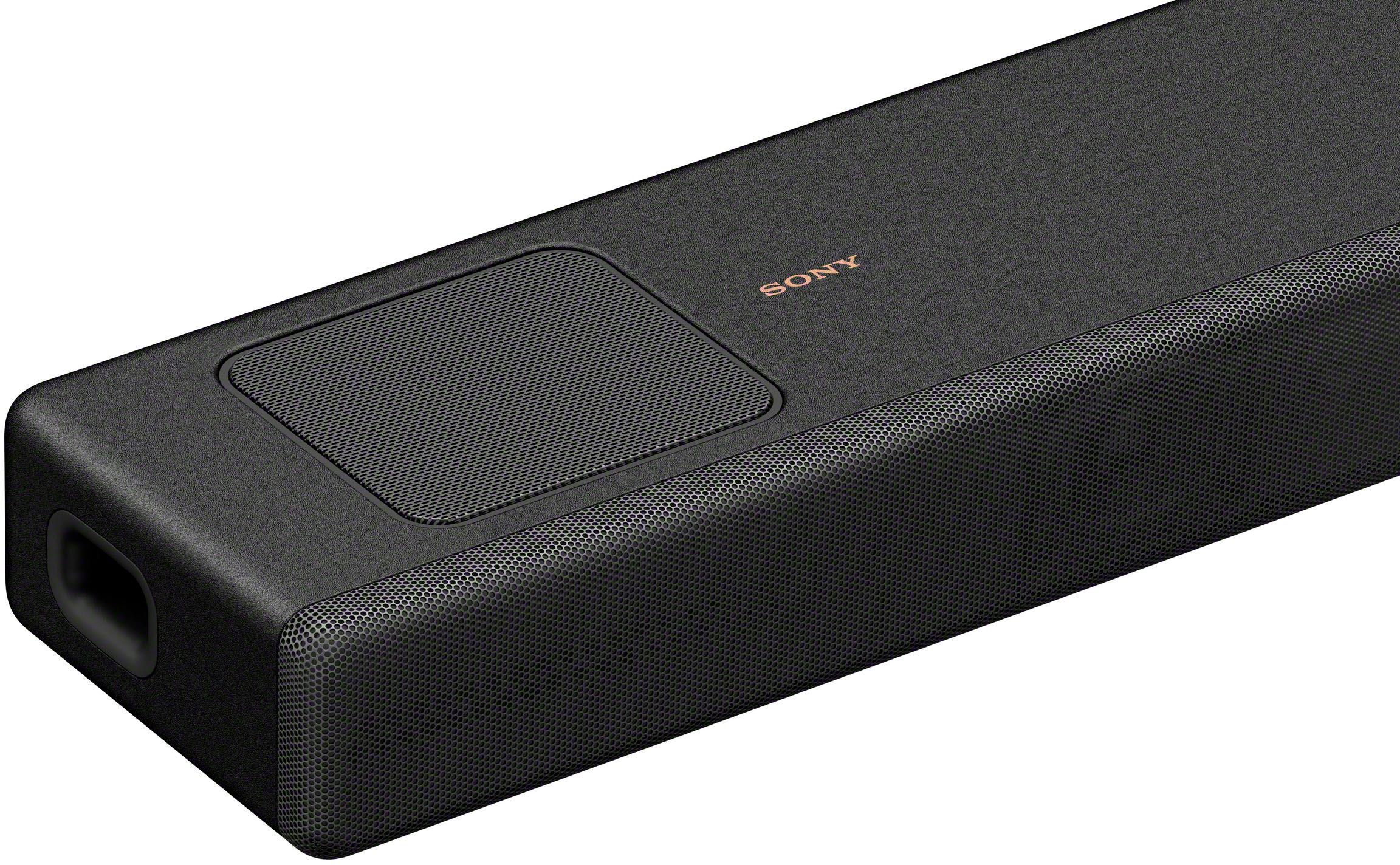
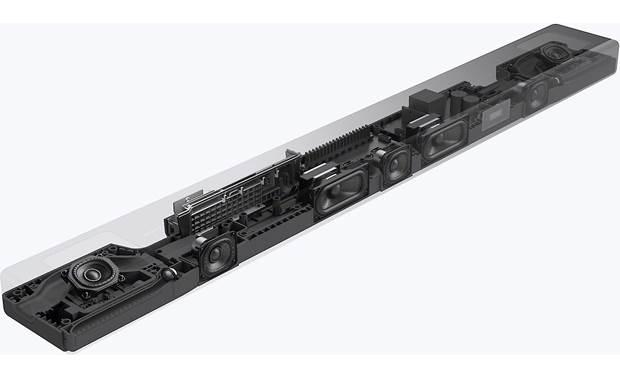
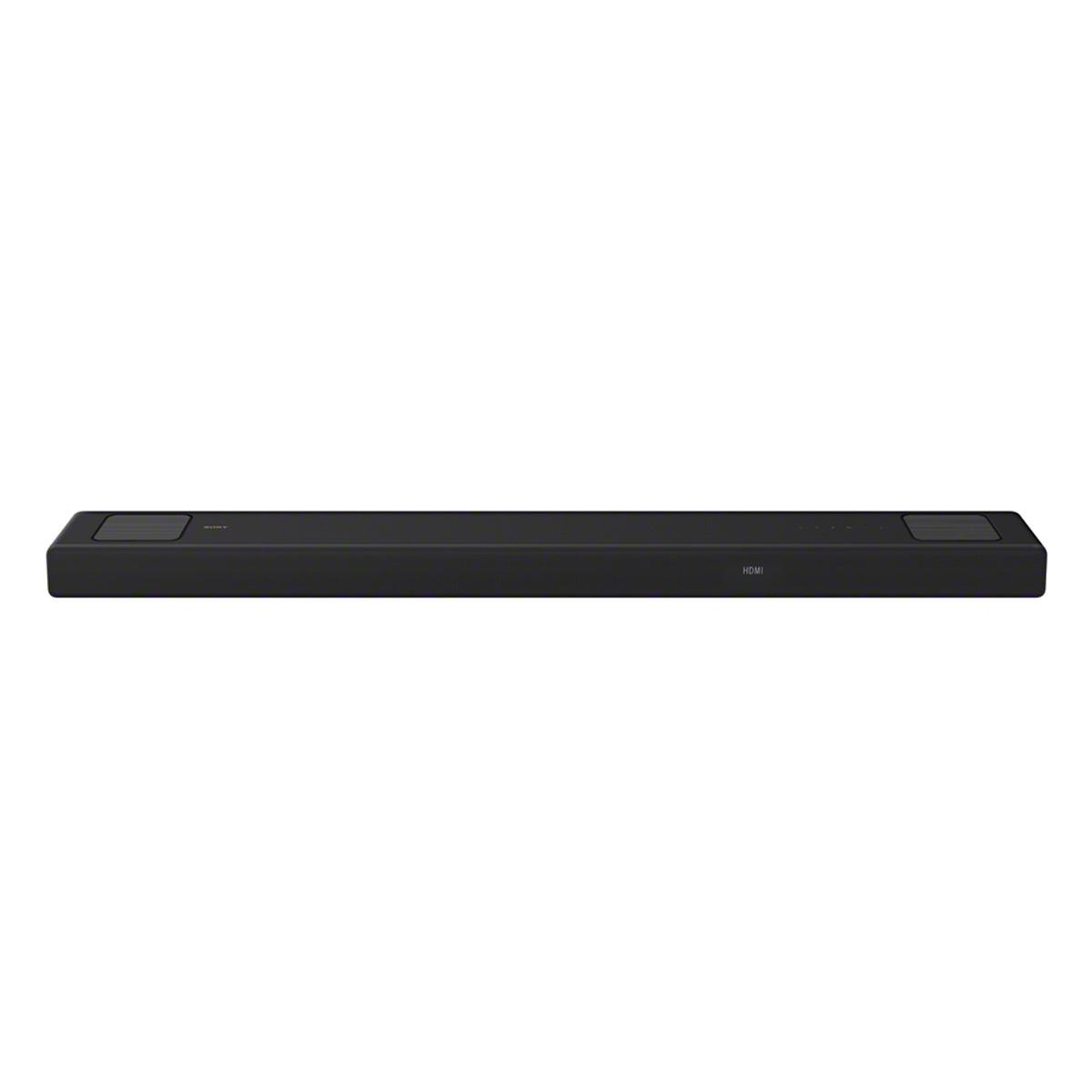
The Sony HT-A5000 uses what I call the "traditional" approach—it has actual speakers pointing in different directions. Its 5.1.2 configuration means five main speakers (left, right, center, and two surrounds), one subwoofer channel, and two height speakers that fire upward toward your ceiling.
Those up-firing drivers are key. They bounce sound off your ceiling to create the illusion that audio is coming from above. When I tested this with the helicopter scene from "Blade Runner 2049," the effect was convincing, though it requires a reasonably flat ceiling about 8-10 feet high to work properly. The Sony also includes Sony's Vertical Surround Engine, which uses digital processing to enhance these physical height effects.
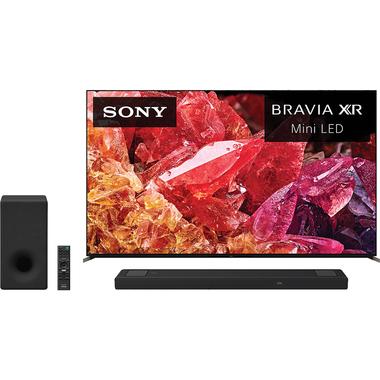
What makes the Sony particularly clever is its expandability. You can start with just the soundbar ($640-999) and later add Sony's wireless subwoofer (SA-SW5 for $499 or SA-SW3 for $399) and rear speakers (SA-RS3S for $349 or SA-RS5 for $599). This modular approach means you can build a complete 7.1.2 system gradually, spreading the cost over time.
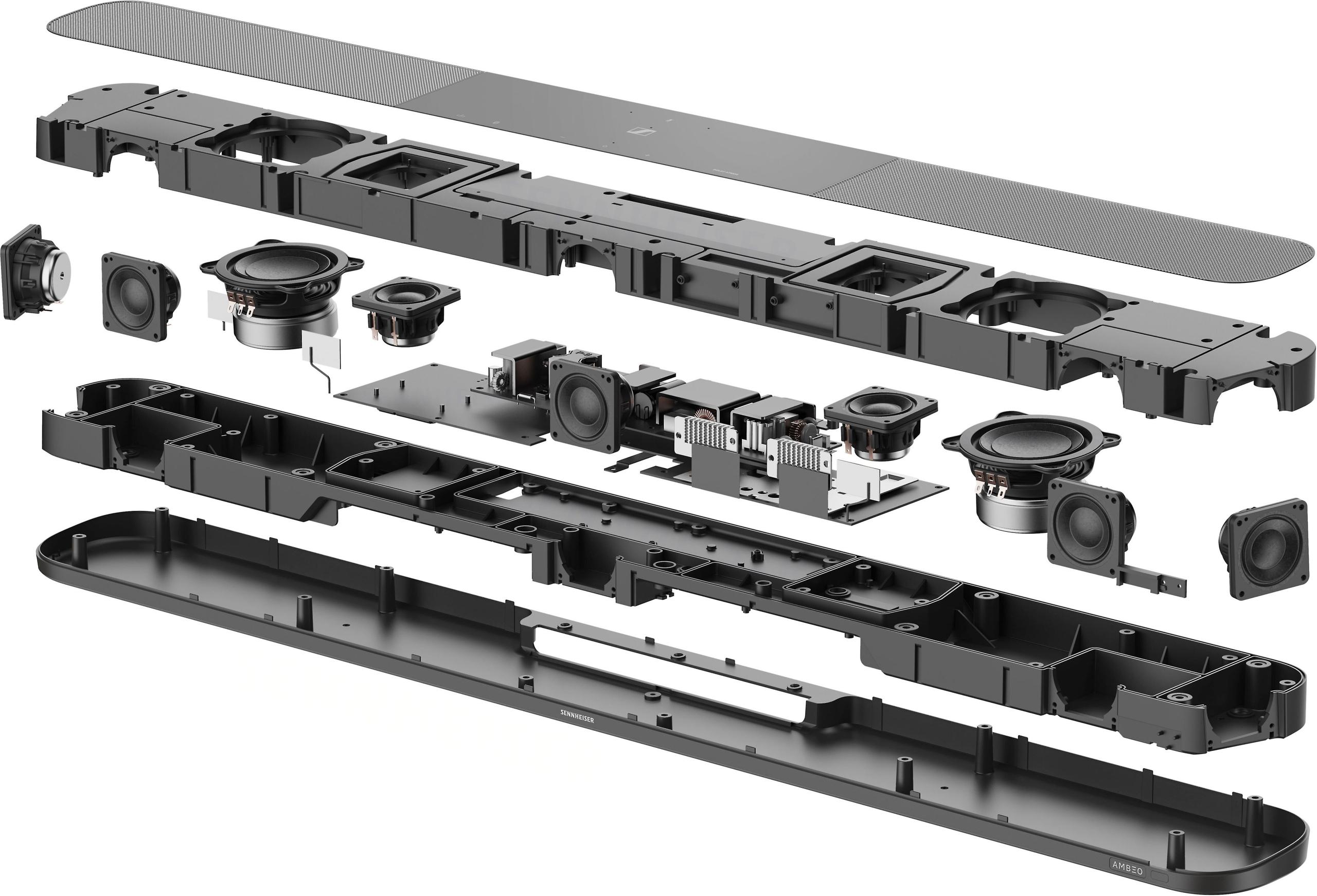
The Sennheiser AMBEO takes a radically different approach. Instead of physical speakers pointing everywhere, it uses 13 drivers all facing forward, then relies on incredibly sophisticated processing to create a virtual 7.1.4 surround field. That means seven main channels, one subwoofer, and four height channels—all simulated through digital wizardry.
This AMBEO 3D technology, developed with the renowned Fraunhofer Institute (the folks behind MP3), analyzes your room's acoustics and essentially "tricks" your brain into hearing sounds from all directions. During my testing, I was genuinely surprised by how well this works. In the same helicopter scene, the Sennheiser created an even more convincing sense of movement, with the aircraft seeming to travel not just overhead but also behind me—despite having no rear speakers.
The trade-off? What you buy is what you get. There's no way to add more speakers or upgrade components later. The Sennheiser's dual built-in subwoofers provide impressive bass down to 30Hz (that's movie theater-level low-end), but if you want more, you're out of luck.
This is where the differences become most apparent in real-world use. The Sony HT-A5000 includes a built-in subwoofer, but it's modest—adequate for dialogue and mid-range effects but lacking the room-shaking power that makes action movies truly exciting. I noticed this limitation during bass-heavy scenes in "Mad Max: Fury Road," where the engine rumbles felt somewhat restrained.
However, Sony designed the system with expansion in mind. Adding their SA-SW5 wireless subwoofer transforms the experience completely. The sub connects automatically and provides the deep, authoritative bass the main unit lacks. The total investment rises to around $1,140-1,500, but you get genuinely impressive low-end performance.
The Sennheiser AMBEO includes dual integrated subwoofers that immediately deliver what the Sony requires an additional purchase to achieve. Those same "Mad Max" scenes had noticeably more impact, with engine growls that you felt as much as heard. The bass integration is also more seamless since everything was designed as a complete system from the start.
Both soundbars excel at dialogue clarity, but they achieve it differently. The Sony uses a dedicated center channel approach—there's literally a specific speaker responsible for most dialogue. This creates very focused, forward-projected voices that cut through complex soundtracks well. Sony's Voice Mode further enhances speech intelligibility, which I found particularly useful for dialogue-heavy films or shows with heavy accents.
The Sennheiser's approach distributes dialogue across its driver array more dynamically. The result is slightly more natural-sounding voices that seem to come from the appropriate location on screen, but with less artificial "spotlighting" of speech. During my testing with "The Crown," the Sennheiser presented dialogue with a more natural, less processed character.
One quirk I noticed with the Sony: male voices occasionally sound slightly "boxy" during very loud action sequences, as if they're coming from inside a small room. This wasn't consistently problematic, but it's worth noting if dialogue quality is your top priority.
This is where the fundamental technology differences create the most dramatic performance gaps. The Sony HT-A5000 creates height effects that feel accurate but somewhat conservative. The up-firing drivers work well for overhead sounds like rain or aircraft, but the effect is more subtle than what you'd get from actual ceiling speakers.
Where Sony shines is in expandability. Adding the optional rear speakers (SA-RS3S or SA-RS5) transforms the system into a true 7.1.2 setup with genuine surround envelopment. The rears connect wirelessly and, in my experience, integrate seamlessly with the main bar. With the full system, the Sony delivers convincing surround effects that rival much more expensive discrete speaker systems.
The Sennheiser AMBEO immediately provides more dramatic spatial effects. The AMBEO processing creates what Sennheiser calls "phantom speakers"—you genuinely hear sounds coming from locations where no speakers exist. Testing with "Gravity," I consistently heard debris and voices coming from behind and beside my listening position, despite the soundbar being directly in front of me.
However, this virtualization has limitations. The effect works best in a sweet spot directly in front of the soundbar. Move too far to either side, and the illusion breaks down. The Sony's physical approach is more forgiving of different seating positions.
Setup complexity varies dramatically between these systems. The Sony HT-A5000 includes Sound Field Optimization—built-in microphones that automatically measure your room and adjust the audio accordingly. The process takes about 30 seconds and works well in most typical living rooms up to about 350 square feet.
I found Sony's calibration forgiving and effective without being overly finicky about placement. As long as the soundbar is roughly centered under your TV with a few inches of clearance, it performs well. The system adapts to your room rather than demanding your room adapt to it.
The Sennheiser AMBEO takes calibration much more seriously. Its four-microphone system performs detailed acoustic mapping of your space, measuring not just distance but also reflective surfaces, room modes, and frequency response. The process is more involved—taking several minutes and requiring careful microphone placement—but the results are more precise.
However, the Sennheiser is notably more demanding about positioning. It needs to be precisely centered, at ear level, with specific clearances around it. In my testing, moving it just a few inches dramatically affected the spatial effects. This isn't necessarily bad, but it requires more thoughtful installation.
Understanding value requires looking beyond initial purchase price to consider the complete ownership experience.
The Sony HT-A5000 starts at a relatively accessible $640-999, making it an attractive entry point into premium Dolby Atmos. At this price, you get genuine height effects, solid dialogue clarity, and adequate bass for most content. For many users, this baseline configuration provides satisfying performance without additional investment.
The expansion path adds significant value flexibility. You can prioritize based on your needs: add the subwoofer first if you watch a lot of action movies, or add rears first if you prioritize surround effects for gaming. The total system cost ranges from $1,500-2,100 depending on which components you choose, but you can spread this investment over time.
From a cost-per-channel perspective, the Sony offers excellent value. Even the fully expanded 7.1.2 system costs less than many competing single-unit soundbars while providing genuine discrete surround speakers.
The Sennheiser AMBEO at $1,999 represents a different value calculation. You pay significantly more upfront, but you get a complete system that doesn't require additional purchases. The dual subwoofers alone would cost $400-600 if purchased separately for the Sony, making the premium less dramatic than it initially appears.
The Sennheiser also includes features that add value: three HDMI inputs versus Sony's one, analog RCA inputs for older components, and advanced streaming options like Tidal Connect. For users with multiple source devices, these connectivity options can eliminate the need for an HDMI switch.
However, the lack of expandability limits long-term value. If your needs change or audio technology advances, you're locked into the current configuration. The Sony's modular approach provides more future-proofing flexibility.
Having used both systems extensively in typical home theater setups, several practical considerations emerge that aren't obvious from specifications alone.
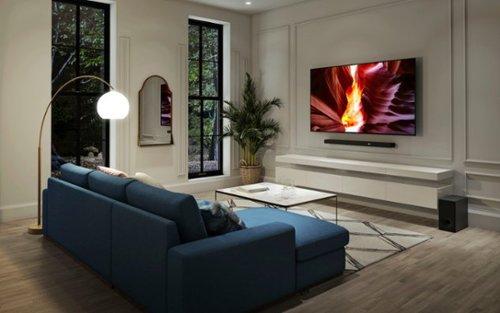
The Sony HT-A5000 works well in rooms from about 150-350 square feet—typical living rooms and smaller dedicated theater spaces. Its up-firing drivers need reasonable ceiling height (8-10 feet is ideal) but aren't overly sensitive to ceiling material or texture. I achieved good results with both textured and smooth ceilings.
The Sennheiser AMBEO handles larger spaces better, working effectively up to about 500 square feet. However, it's more sensitive to room acoustics. Hard surfaces enhance the spatial effects, while heavily furnished rooms with lots of soft materials can diminish the virtualization. In my testing, the Sennheiser performed dramatically better in a room with hardwood floors and minimal soft furnishings compared to a heavily carpeted, furniture-dense space.
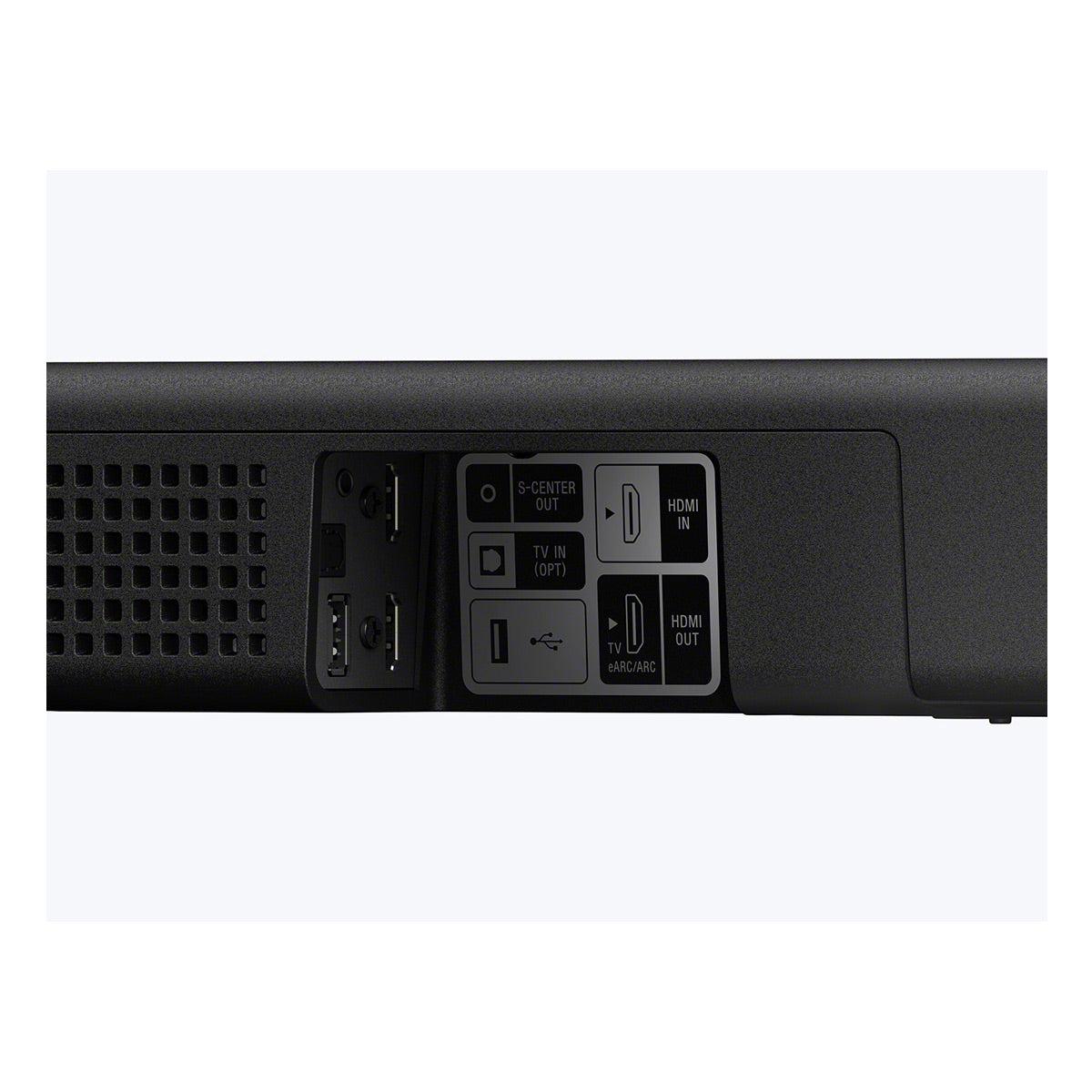
Both soundbars support HDMI eARC (enhanced Audio Return Channel), which allows the TV to send high-quality audio back to the soundbar through the same HDMI cable used for video. This simplifies connections and ensures you get full Dolby Atmos from streaming services like Netflix and Disney+.
The Sony's single HDMI input can be limiting if you have multiple high-end sources (4K Blu-ray player, game console, streaming device). You'll likely need to connect most sources directly to your TV and rely on eARC, which works well with modern TVs but can be problematic with older models.
The Sennheiser's three HDMI inputs provide more flexibility for complex setups. You can connect multiple sources directly to the soundbar, which can improve audio quality and reduce potential compatibility issues.
For gaming, both soundbars offer advantages. The Sony HT-A5000 supports Variable Refresh Rate (VRR) and Auto Low Latency Mode (ALLM) through its HDMI input, making it compatible with PlayStation 5 and Xbox Series X gaming features. The spatial effects work well for games with Atmos support, like "Gears 5" or "Resident Evil Village."
The Sennheiser AMBEO provides more dramatic spatial effects for gaming, but its virtualization can sometimes feel less precise for competitive gaming where audio positioning is critical. For cinematic single-player games, the Sennheiser's immersion is exceptional. For online multiplayer where you need to precisely locate enemy footsteps, the Sony's more direct approach may be preferable.
After extensive testing with both systems, the choice ultimately comes down to your priorities, room characteristics, and budget approach.
Choose the Sony HT-A5000 if you want genuine Dolby Atmos at an accessible price point with room to grow. It's ideal for users who prefer to start modestly and expand over time, or those who prioritize the precision of physical drivers over processing wizardry. The Sony also makes more sense if you have a smaller room, prefer simpler setup, or want maximum flexibility for future upgrades.
Choose the Sennheiser AMBEO if you want maximum immediate impact and don't mind paying premium pricing for a complete solution. It's the better choice for larger rooms, users who won't expand the system, and those who prioritize processing sophistication over modularity. The Sennheiser also makes sense if you need extensive connectivity options or want the most dramatic spatial effects possible from a single unit.
Both soundbars represent excellent engineering and will significantly improve your home theater experience over basic TV speakers or entry-level soundbars. The "wrong" choice is less about the products themselves and more about mismatching your specific needs, room, and expectations with the right technology approach.
The beauty of today's premium soundbar market is that there's no single "best" product—just different solutions optimized for different priorities. Whether you choose Sony's expandable approach or Sennheiser's virtualization mastery, you'll get a genuinely impressive home theater upgrade that brings movies, music, and games to life in ways that would have required professional installation and much higher costs just a few years ago.
| Sony HT-A5000 | Sennheiser AMBEO Soundbar |
|---|---|
| Price - Entry cost for premium Dolby Atmos experience | |
| $640-999 (frequently on sale) | $1,999 (fixed premium pricing) |
| Channel Configuration - How surround sound is created | |
| 5.1.2 physical channels with dedicated up-firing drivers | 7.1.4 virtual channels through advanced processing |
| Total Power Output - Raw amplification for room-filling sound | |
| 450W (adequate for most rooms) | 500W (higher power for larger spaces) |
| Bass System - Low-end performance without additional purchases | |
| Built-in subwoofer (modest, benefits from optional sub) | Dual integrated subwoofers with 30Hz extension |
| Expandability - Ability to upgrade over time | |
| Wireless subwoofer and rear speakers available | No expansion options (fixed configuration) |
| Room Calibration - Setup complexity and acoustic optimization | |
| Quick Sound Field Optimization (30 seconds) | Advanced 4-microphone system (several minutes) |
| HDMI Connectivity - Input options for multiple devices | |
| 1x HDMI input + eARC output | 3x HDMI inputs + eARC output |
| Dimensions - Physical footprint requirements | |
| 47.75" x 2.75" x 5.62" (fits most TV stands) | Larger footprint (requires more space) |
| Room Size Optimization - Ideal space for best performance | |
| Up to 350 sq ft (typical living rooms) | Up to 500 sq ft (larger home theaters) |
| Complete System Cost - Total investment for full surround experience | |
| $1,500-2,100 with optional subwoofer and rears | $1,999 (everything included from day one) |
The Sony HT-A5000 offers better value at $640-999, providing genuine Dolby Atmos with physical up-firing drivers at a much lower entry price. The Sennheiser AMBEO at $1,999 costs significantly more but includes dual subwoofers and premium processing that would require additional purchases with the Sony system.
The Sony HT-A5000 uses 5.1.2 physical channels with actual speakers pointing in different directions, including dedicated up-firing drivers for height effects. The Sennheiser AMBEO creates virtual 7.1.4 surround using advanced processing to simulate more channels than it physically has, relying on psychoacoustic tricks rather than physical speaker placement.
The Sennheiser AMBEO has superior built-in bass with dual integrated subwoofers that extend down to 30Hz, providing room-filling low-end without additional purchases. The Sony HT-A5000 has a modest built-in subwoofer that's adequate for dialogue but benefits significantly from adding Sony's optional wireless subwoofer.
The Sony HT-A5000 offers full expandability with optional wireless subwoofers ($399-499) and rear speakers ($349-599), allowing you to build a complete 7.1.2 system over time. The Sennheiser AMBEO has no expansion options—it's a fixed configuration that cannot be upgraded with additional components.
The Sony HT-A5000 is much easier to set up with its quick 30-second Sound Field Optimization and forgiving placement requirements. The Sennheiser AMBEO requires more complex calibration with precise positioning and a detailed room measurement process that takes several minutes to complete properly.
The Sony HT-A5000 works optimally in rooms up to 350 square feet with standard 8-10 foot ceilings. The Sennheiser AMBEO handles larger spaces better, performing well in rooms up to 500 square feet, but requires good room acoustics with hard surfaces for optimal spatial effects.
The Sennheiser AMBEO offers three HDMI inputs plus eARC, allowing you to connect multiple high-end sources directly. The Sony HT-A5000 has only one HDMI input plus eARC, which may require connecting most devices to your TV and using the TV's eARC function.
The Sony HT-A5000 creates height effects using physical up-firing drivers that bounce sound off your ceiling, providing accurate but conservative overhead audio. The Sennheiser AMBEO uses virtualization to create more dramatic spatial effects, with sounds appearing to come from behind and around you without any rear speakers.
The Sony HT-A5000 may be better for competitive gaming due to its more precise audio positioning and support for gaming features like VRR and ALLM. The Sennheiser AMBEO excels for cinematic single-player games with its immersive spatial processing, but the virtualization can be less precise for competitive gaming scenarios.
A complete Sony HT-A5000 system with optional subwoofer and rear speakers costs $1,500-2,100 total, but you can spread this cost over time. The Sennheiser AMBEO costs $1,999 upfront and includes everything you need—dual subwoofers and advanced processing—with no additional purchases required.
Both excel at dialogue, but differently. The Sony HT-A5000 uses a dedicated center channel approach with Voice Mode for enhanced speech intelligibility, creating very focused dialogue projection. The Sennheiser AMBEO distributes dialogue more naturally across its driver array, resulting in more realistic vocal positioning but less artificial speech enhancement.
Choose the Sony HT-A5000 if you want genuine Dolby Atmos at a lower price with expansion flexibility, prefer physical drivers, or have a smaller room under 350 sq ft. Choose the Sennheiser AMBEO if you want maximum immediate impact, have a larger room up to 500 sq ft, prefer a complete one-purchase solution, and don't mind paying premium pricing for advanced virtualization technology.
We've done our best to create useful and informative comparisons to help you decide what product to buy. Our research uses advanced automated methods to create this comparison and perfection is not possible - please contact us for corrections or questions. These are the sites we've researched in the creation of this article: whathifi.com - electronics.sony.com - costco.com - sony.com - expertreviews.co.uk - crutchfield.com - audioadvice.com - sony.com - sony.com - bestbuy.com - videoandaudiocenter.com - community.sony.co.uk - bestbuy.com - rtings.com - techradar.com - audioxpress.com - whathifi.com - upscaleaudio.com - soundstagesimplifi.com - global.sennheiser-hearing.com - sennheiser-hearing.com - audioadvice.com - abt.com - moon-audio.com

Privacy Policy
Terms and Conditions - Affiliate Policy
Home Security
© Copyright 2008-2026.
11816 Inwood Rd #1211, Dallas, TX 75244