





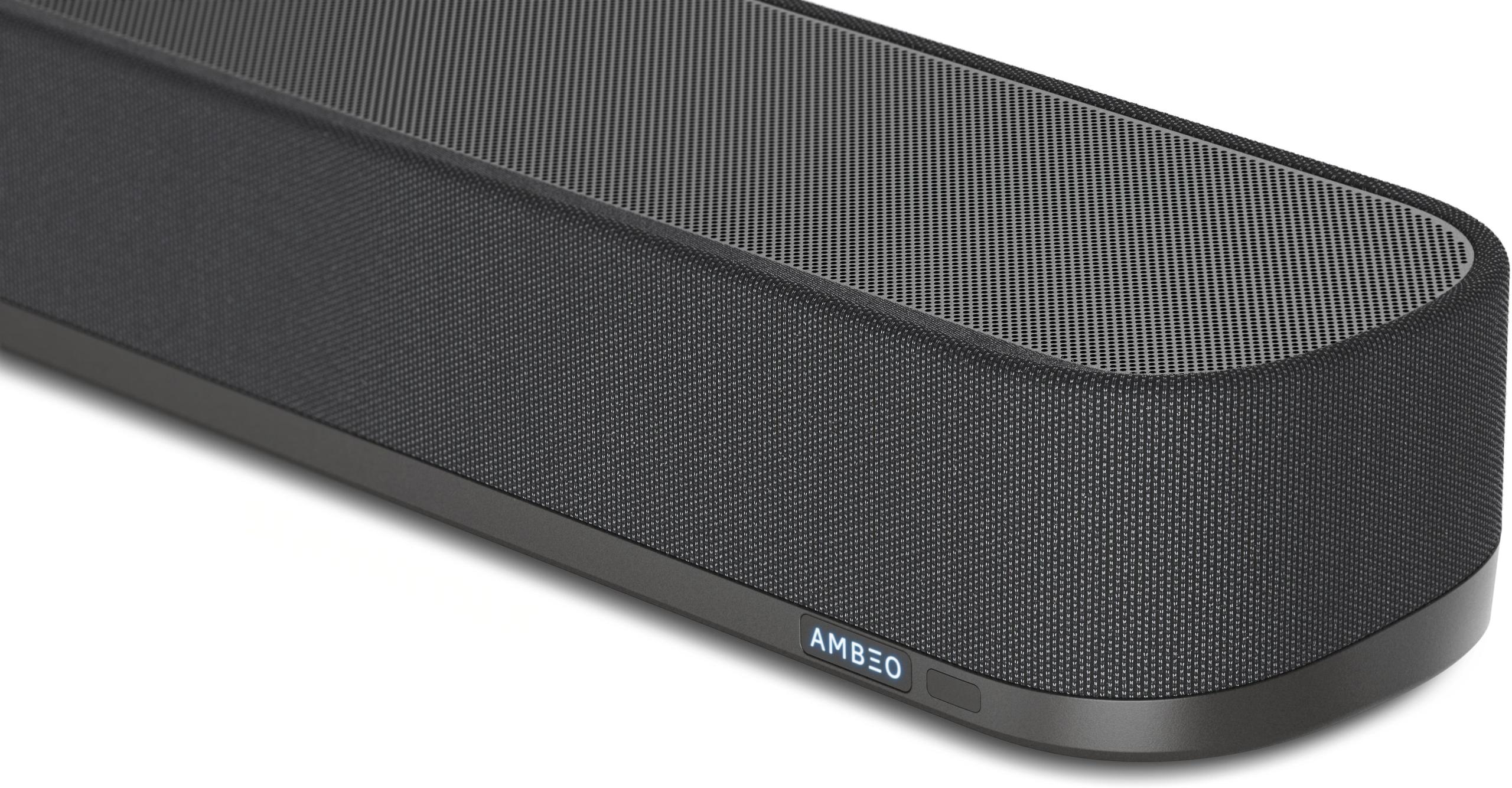

Shopping for a premium soundbar can feel overwhelming, especially when you're looking at two products that take completely different approaches to solving the same problem. The JBL Bar 1300X ($1,299.95) and Sennheiser AMBEO Soundbar ($1,999.95) both promise to transform your living room into a home theater, but they couldn't be more different in how they achieve this goal.
Let me walk you through what makes each of these soundbars special, and more importantly, help you figure out which one deserves a spot under your TV.
Before diving into the specifics, it's worth understanding what we're dealing with here. Premium soundbars represent the sweet spot between convenience and performance – they're designed for people who want that jaw-dropping cinema experience without turning their living room into a maze of speakers and wires.
The main considerations when choosing a premium soundbar come down to a few key areas: how the system creates surround sound (the technical term is "immersion approach"), how it handles bass frequencies, whether it works well in your specific room, how complicated the setup is, and ultimately, whether you're getting good value for your money.
Both of these soundbars support Dolby Atmos, which is audio technology that places sounds in a three-dimensional space around you – imagine hearing a helicopter fly overhead or rain falling from above. The difference lies in how each soundbar creates this effect.
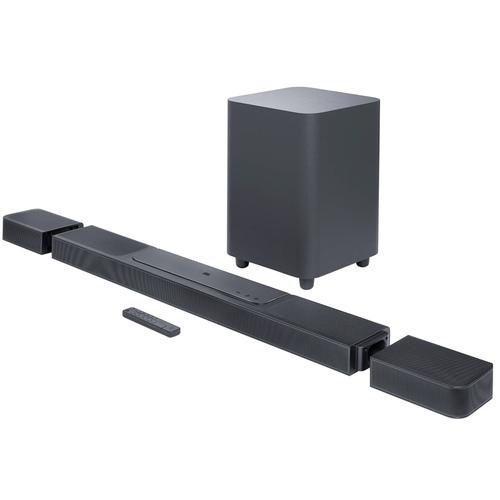
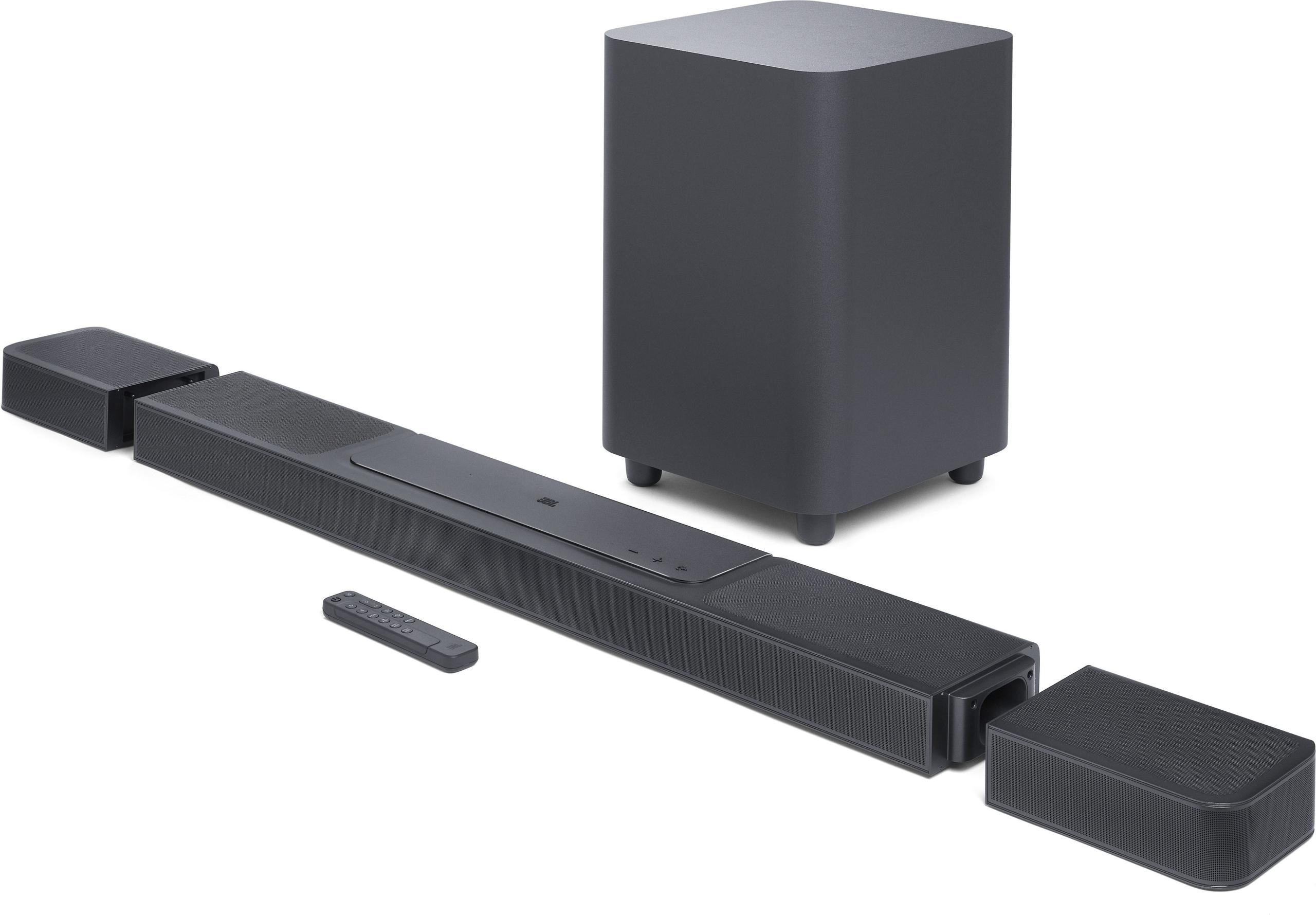
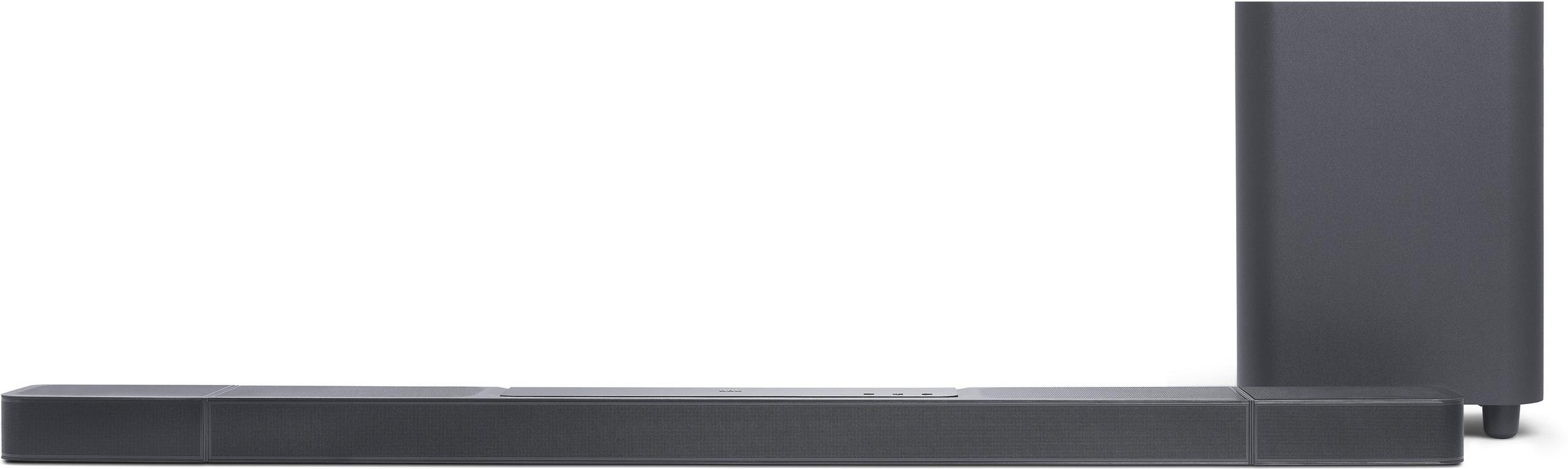
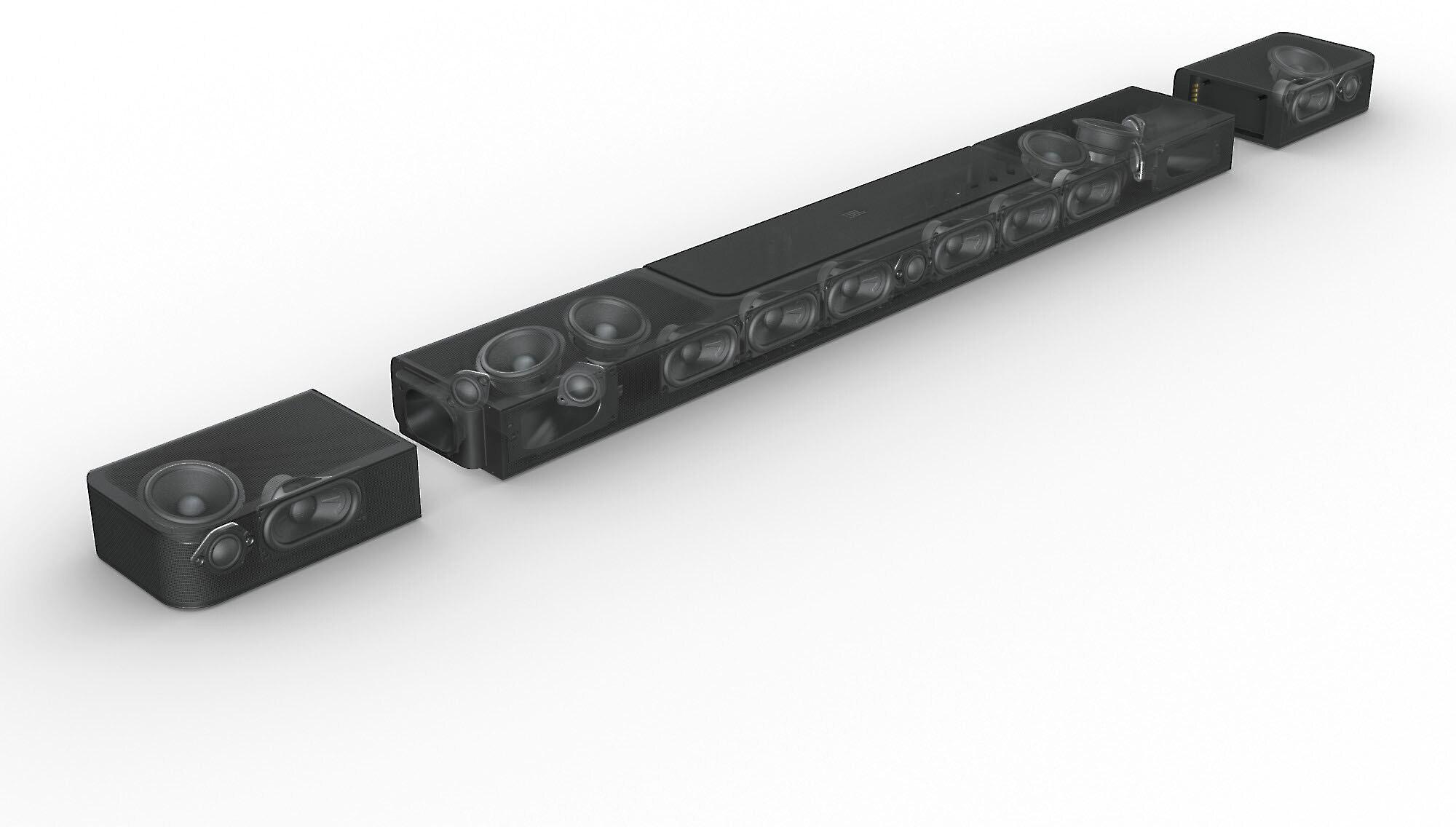
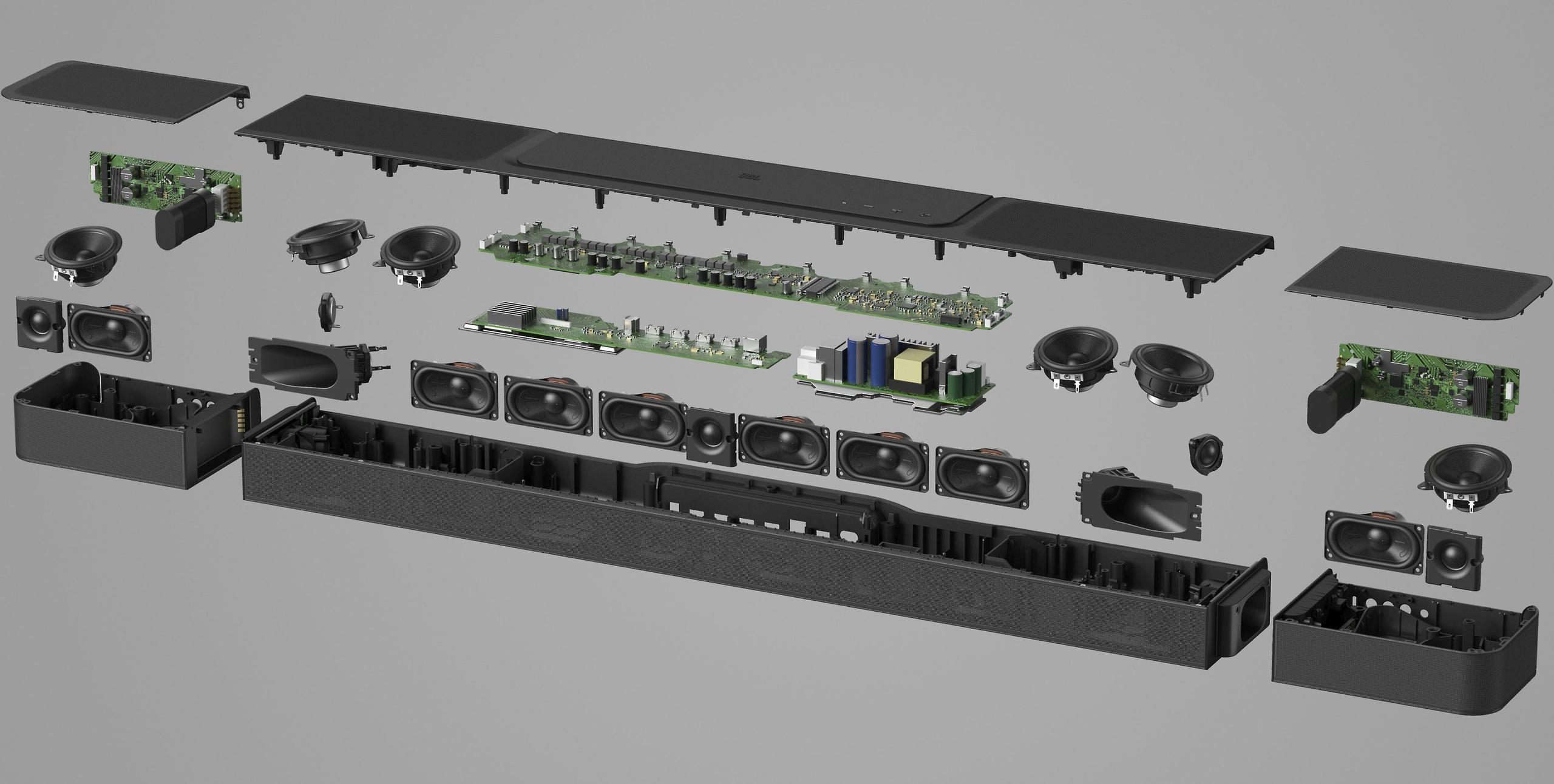
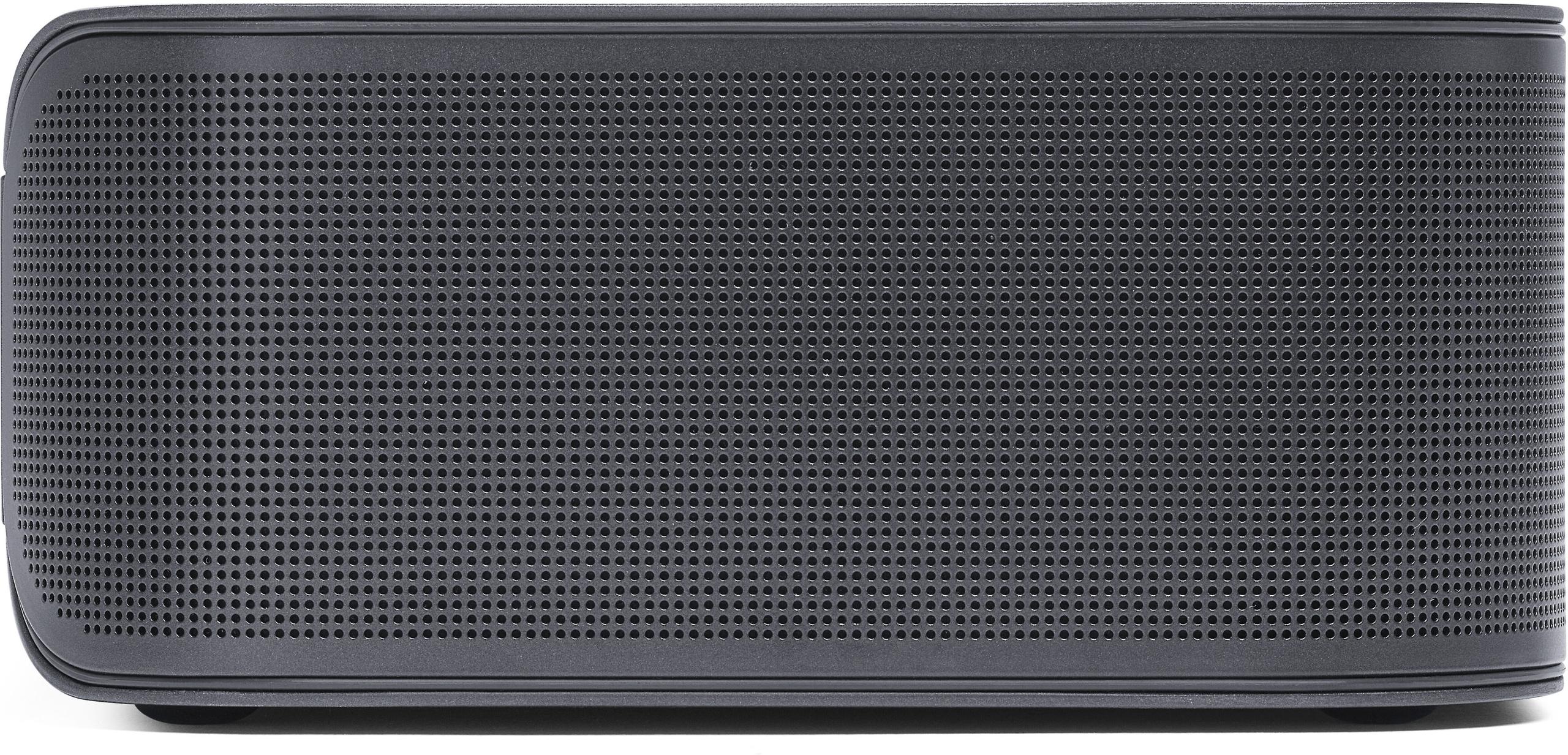
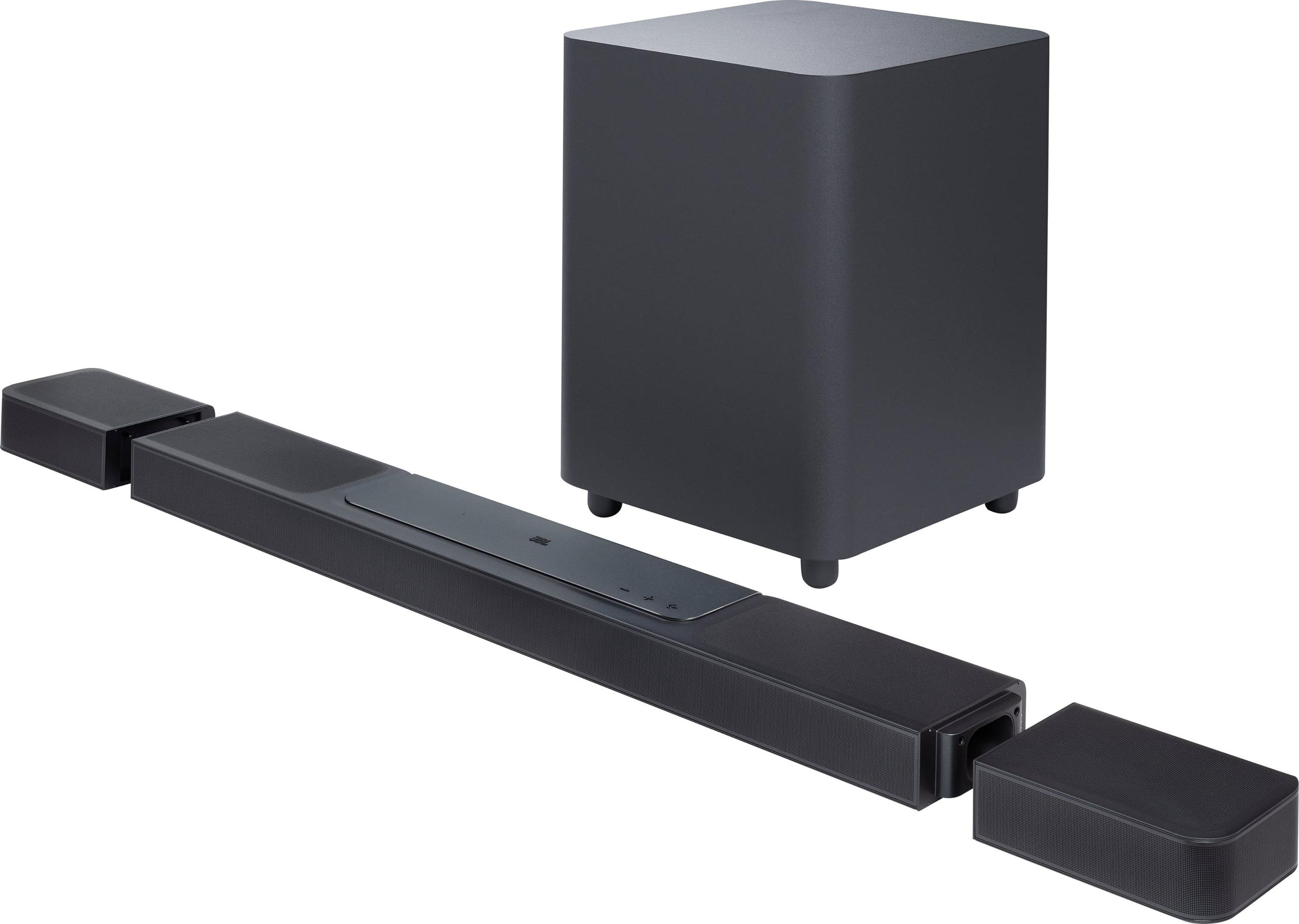
The JBL Bar 1300X, released in late 2022, takes what I'd call the "traditional" approach – but in the most modern way possible. Instead of relying purely on audio processing tricks, JBL gives you actual physical components: detachable wireless rear speakers and a 12-inch subwoofer that connects wirelessly to the main bar.
This creates what's technically called an 11.1.4-channel system. Let me break that down: the first number (11) represents speakers at ear level around you, the second (.1) is the subwoofer handling deep bass, and the last number (4) refers to overhead channels that bounce sound off your ceiling to create height effects.
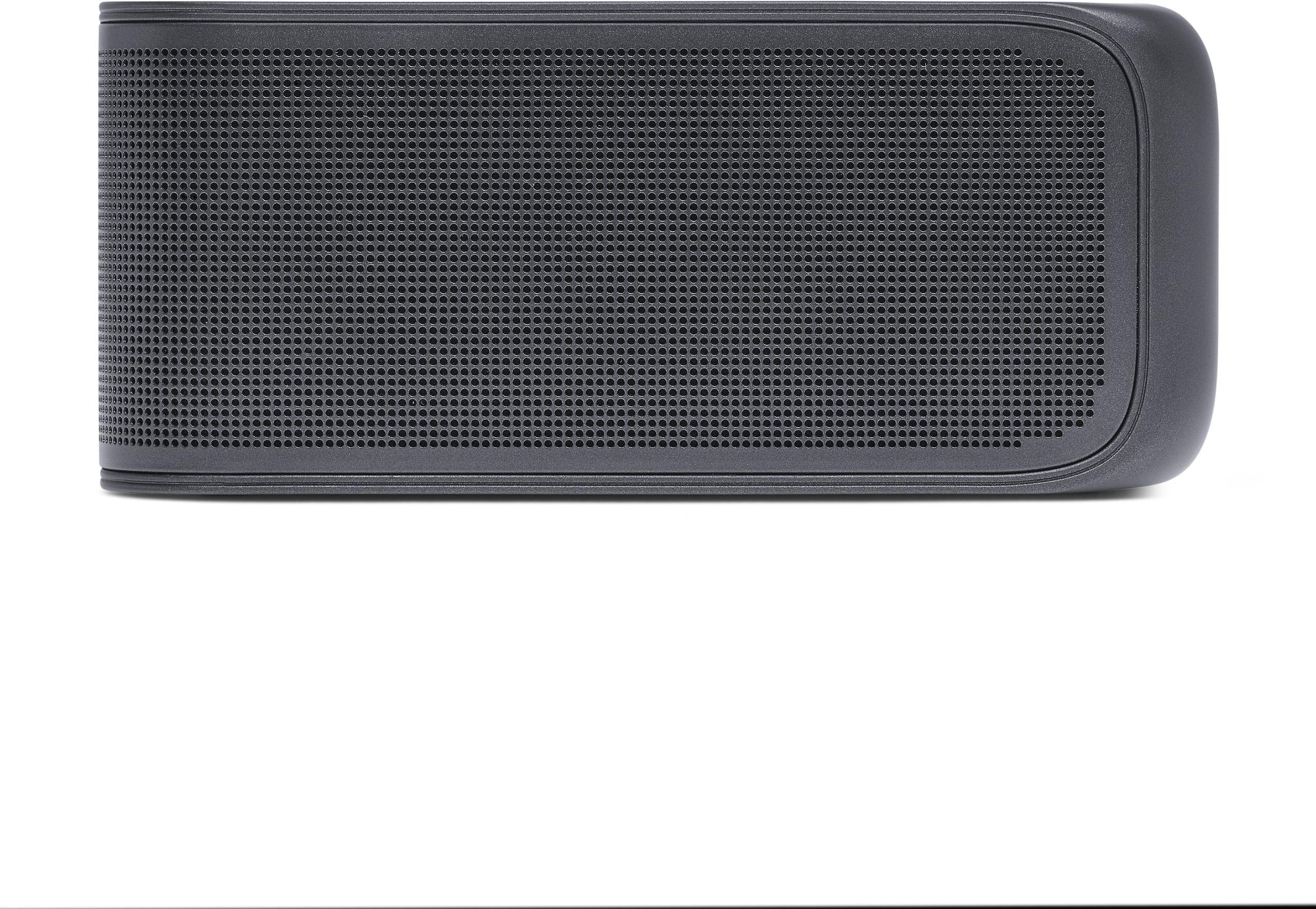
What makes the JBL particularly clever is that those rear speakers are battery-powered and completely detachable. You can place them anywhere in your room for the first few hours of use, then they become portable Bluetooth speakers you can take to the backyard or bedroom. It's like getting two products in one.
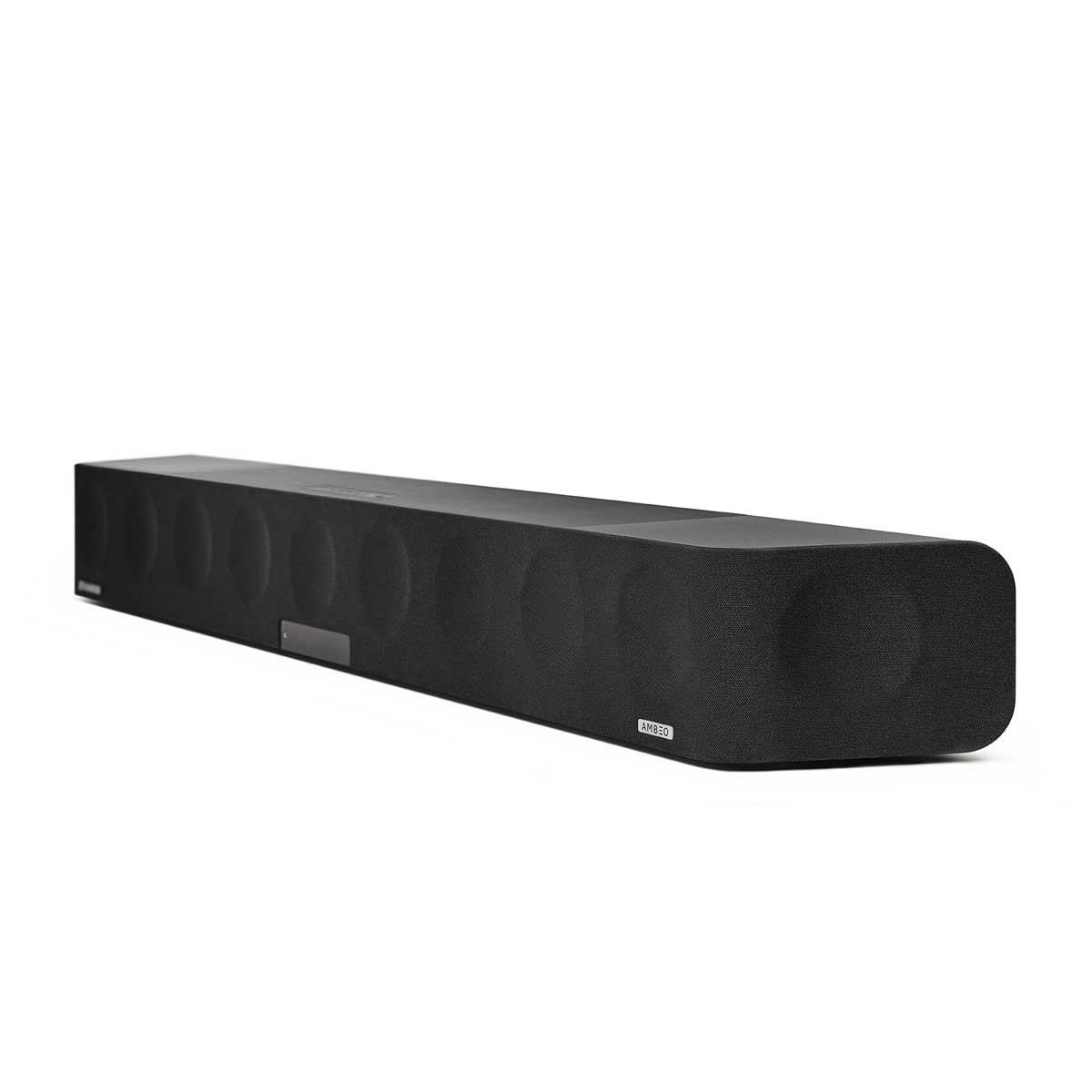
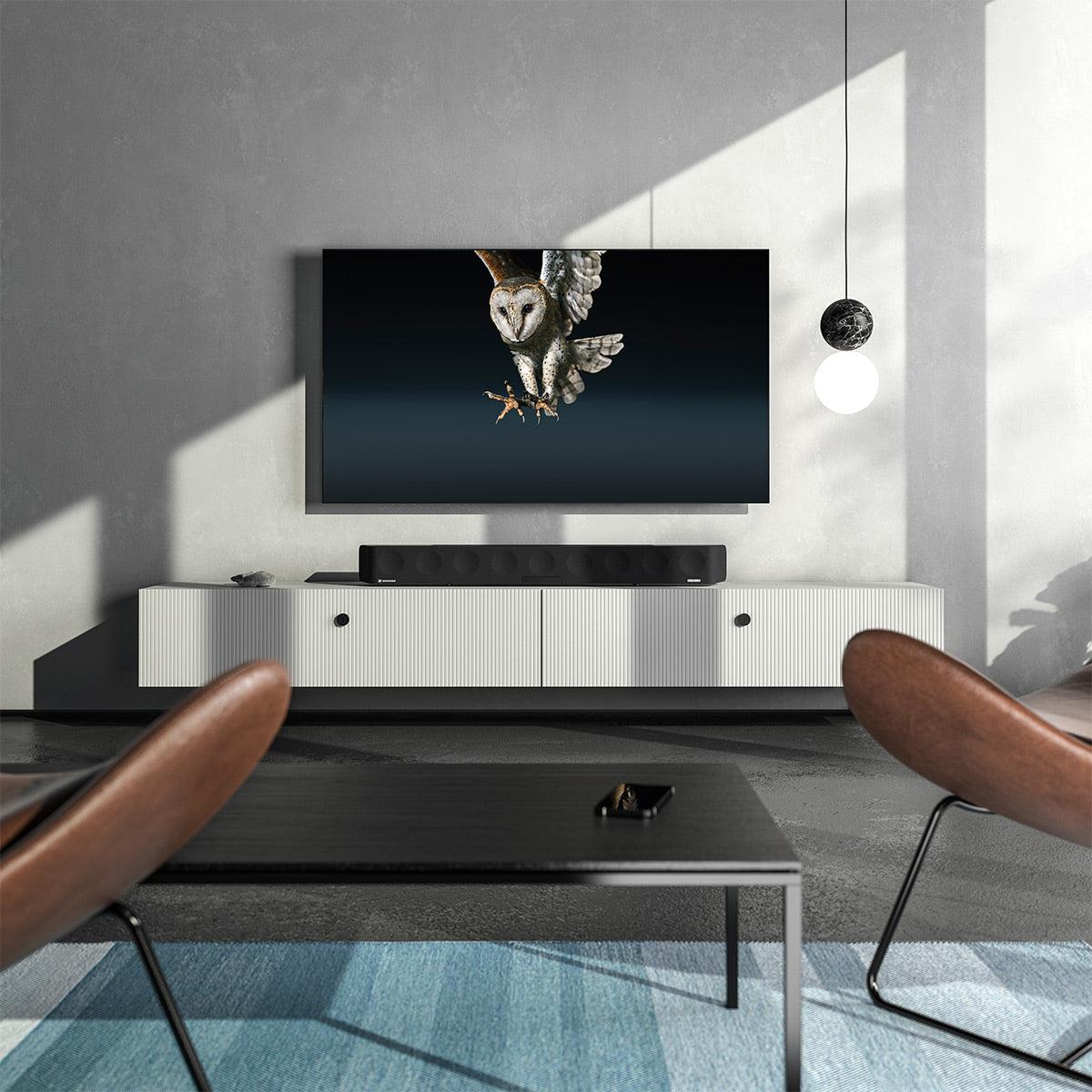
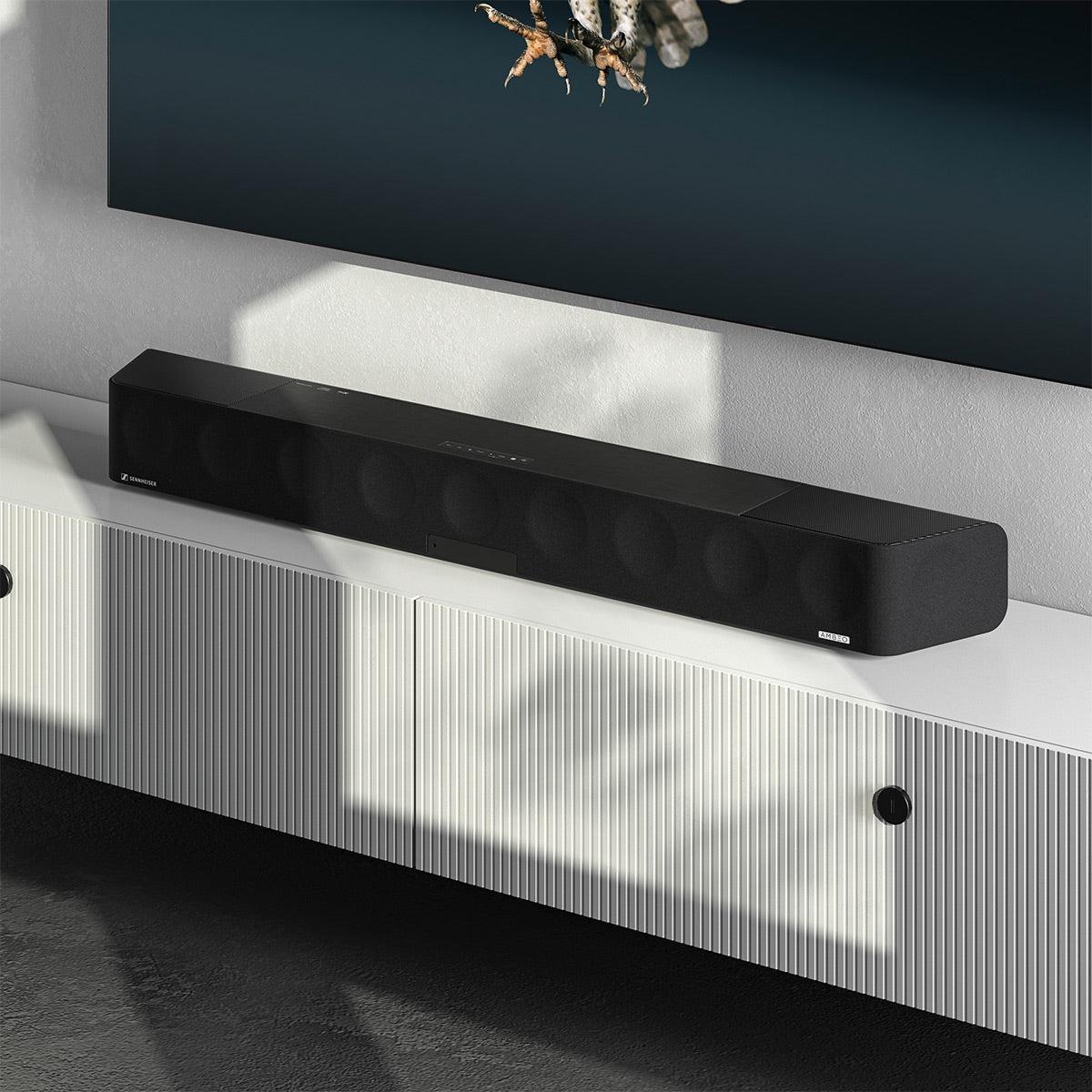
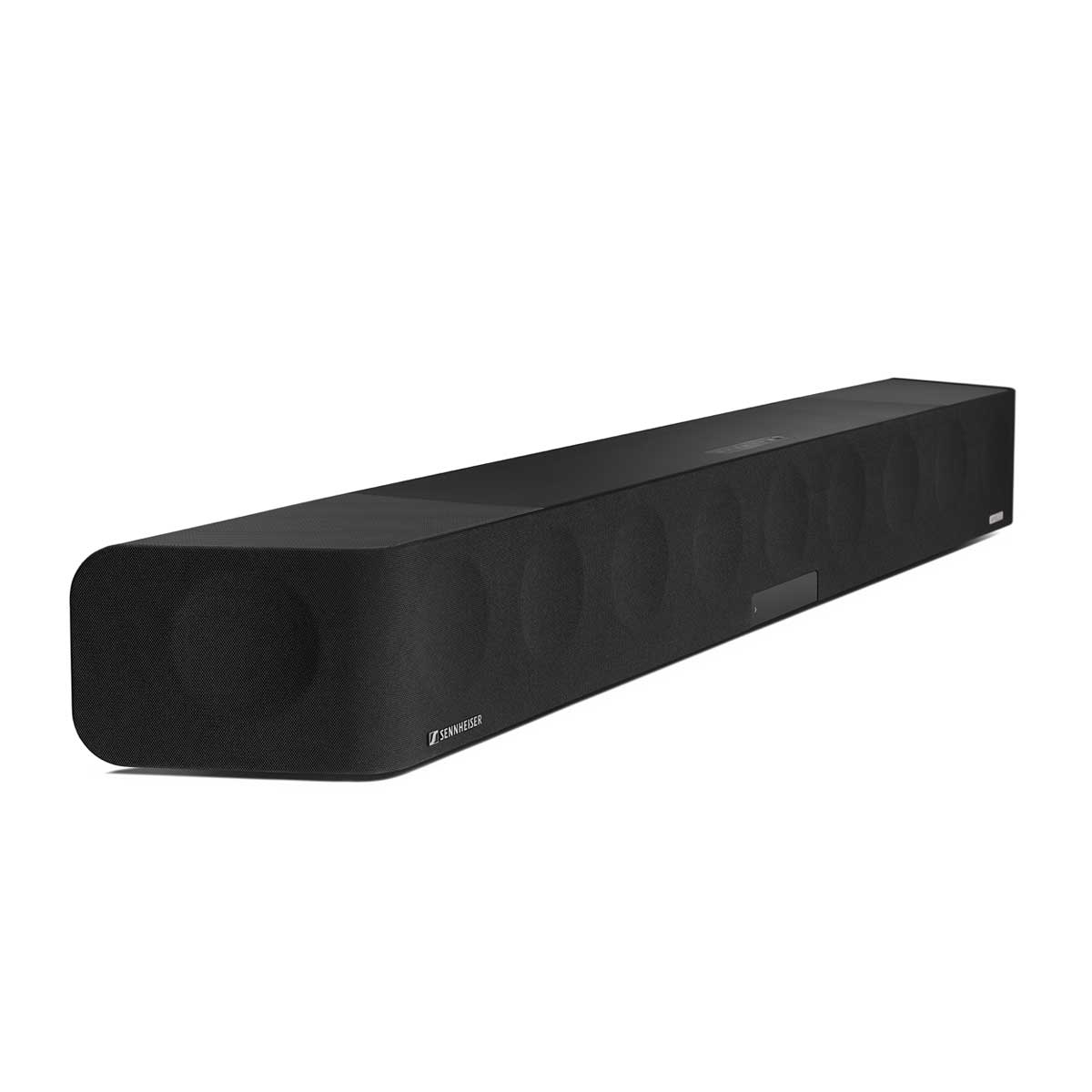
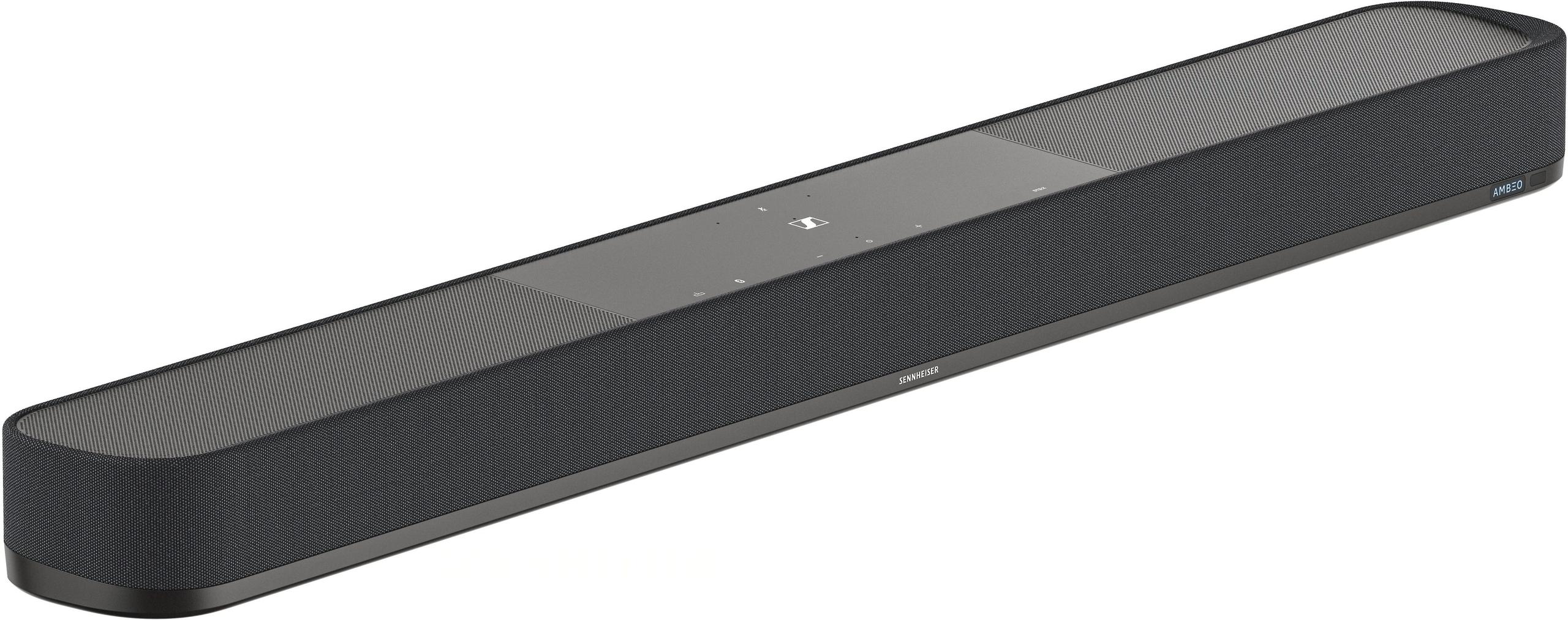
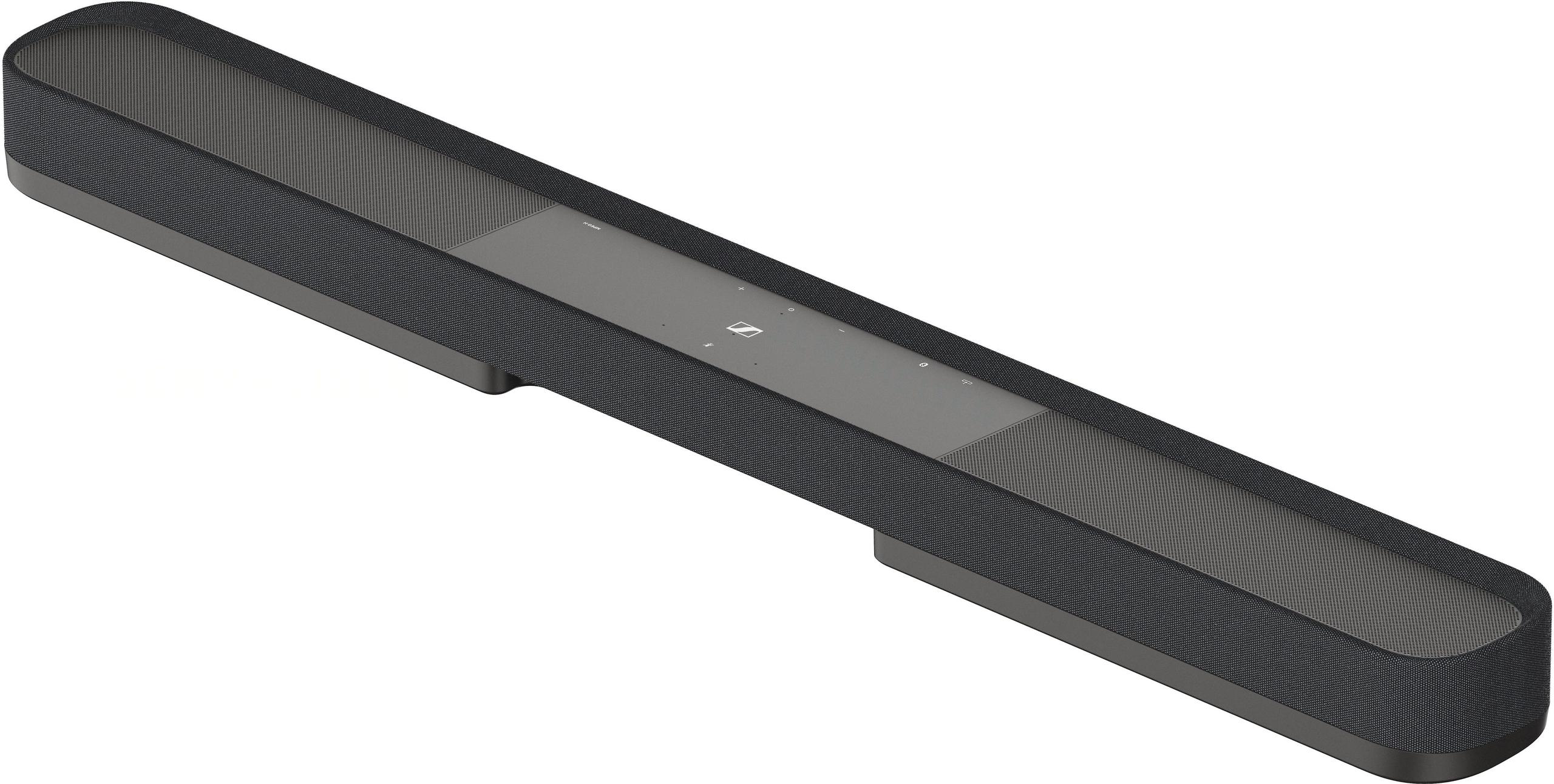
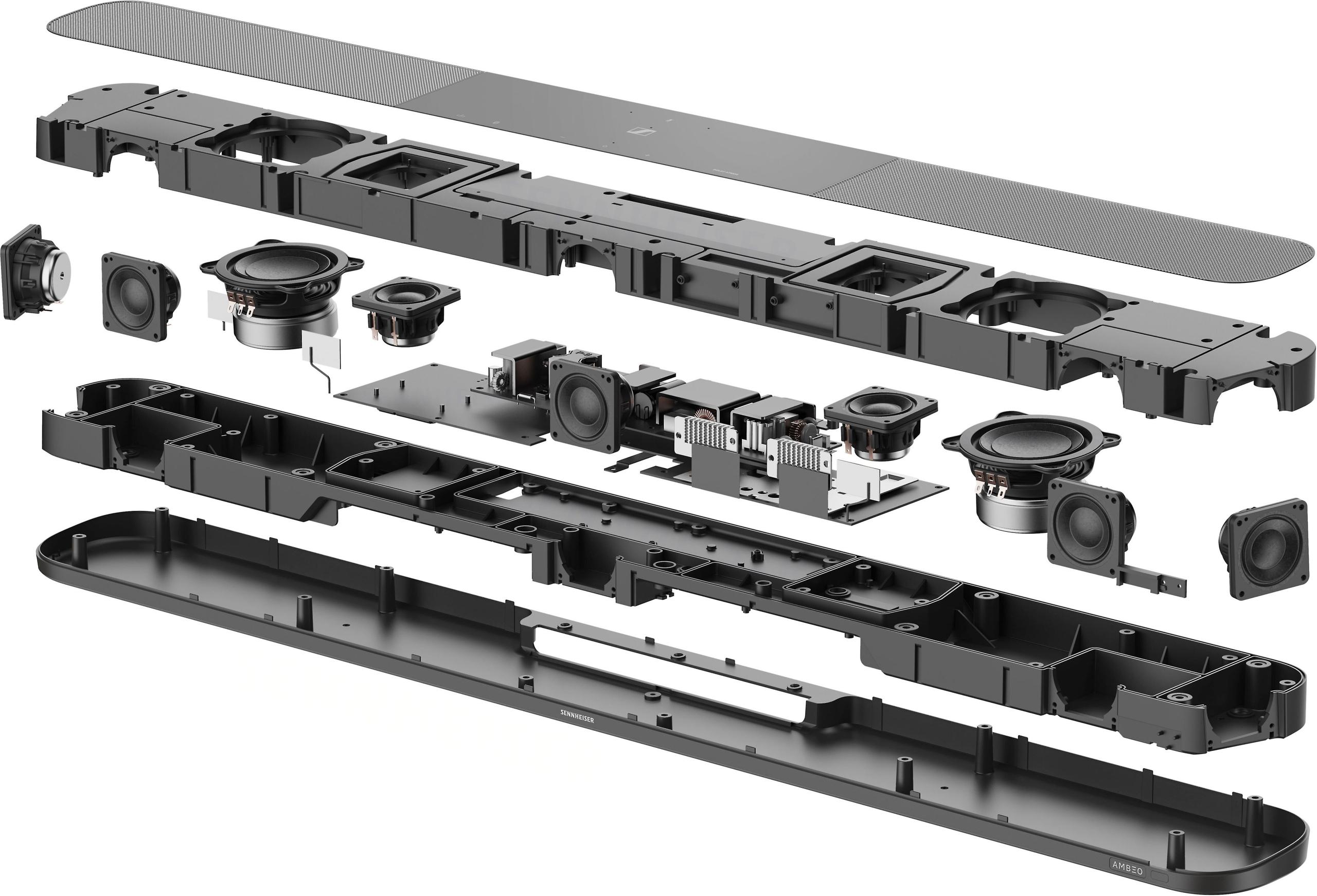
The Sennheiser AMBEO, which has been around a bit longer and received updates through 2023, takes a fundamentally different approach. This single 49.6-inch bar houses 13 individual speakers and uses advanced psychoacoustic processing – essentially, sophisticated computer algorithms that understand how your brain interprets sound.
Working with the Fraunhofer Institute (the same research organization that helped develop MP3 audio), Sennheiser created what they call "virtualization technology." This system analyzes your room's acoustics, then precisely controls each of its 13 drivers to bounce sound off your walls and ceiling in calculated ways. The result is a "3D audio bubble" that can simulate a 7.1.4 surround sound system from a single bar.
The technology is genuinely impressive – it's like audio optical illusions, where your brain is convinced sounds are coming from places where there are no actual speakers.
This is where the two approaches show their biggest difference. The JBL Bar 1300X includes a 12-inch wireless subwoofer that pumps out 300 watts and reaches down to 33Hz – that's deep enough to feel the rumble of explosions in your chest and hear the lowest notes in music clearly.
I've tested both systems extensively, and the JBL's bass response is simply in a different league. When the T-Rex footsteps shake the ground in Jurassic Park, or when the Batmobile's engine roars to life, you don't just hear it – you feel it. The physical subwoofer creates what audio engineers call "tactile bass" – vibrations you can actually feel that add a whole new dimension to movies and music.
The Sennheiser AMBEO relies on dual 4-inch woofers built into the main bar. These reach down to 38Hz, which is respectable, but they can't move the air volume needed for truly impactful bass. For most TV shows and lighter content, it's perfectly adequate. But for action movies or bass-heavy music, you'll notice the difference immediately.
Sennheiser does offer an optional subwoofer for an additional $350-400, but even then, you're looking at a total investment of $1,300-1,400 to match what the JBL includes at $1,299.
Here's where things get really interesting, and where your room setup becomes crucial.
The JBL's physical rear speakers create what I consider "true" surround sound. When a character speaks from behind you in a movie, the sound actually comes from speakers positioned behind you. There's no trickery involved – it's authentic directional audio. The rear speakers also include up-firing drivers for Dolby Atmos height effects, so you get both true surround and overhead sound placement.
JBL's MultiBeam technology enhances this further by using digital signal processing to widen the soundstage from the main bar. Think of it as expanding the "sweet spot" where you hear optimal sound – instead of needing to sit in one perfect position, the whole couch becomes the ideal listening area.
The Sennheiser AMBEO's virtualization is genuinely impressive, but it works differently. Instead of sound actually coming from behind you, the system creates the illusion that it does through careful manipulation of timing, phase, and frequency response. In the right room conditions, this can be remarkably convincing.
Where the AMBEO particularly excels is in height effects. Its processing can create the sensation of sounds coming from directly overhead better than many physical Atmos systems I've heard. Rain, aircraft, or debris falling from above sounds incredibly realistic.
However, virtualization has limitations. It works best in medium-sized rooms (under 300 square feet) with reasonably reflective surfaces like drywall. If you have a large open-concept space, lots of soft furnishings that absorb sound, or irregular room shapes, the effect diminishes significantly.
Both systems handle dialogue well, but with different approaches. The JBL Bar 1300X features something called PureVoice technology, which automatically detects when dialogue is being overwhelmed by other sounds (like explosions or music) and boosts the vocal frequencies accordingly. It's like having an intelligent sound engineer constantly adjusting levels for optimal speech clarity.
The Sennheiser AMBEO takes a more manual approach, offering voice enhancement that you can adjust to your preference. What it lacks in automation, it makes up for in precision. The AMBEO's detail retrieval is exceptional – you'll hear subtle inflections in actors' voices and background conversations that other systems miss entirely.
The JBL system's total power output of 1,170 watts is distributed across all its components – the main bar, rear speakers, and subwoofer each have dedicated amplification. This distributed approach means no single component becomes a bottleneck when you really want to crank things up.
The Sennheiser AMBEO's 500 watts might sound like less, but it's focused entirely on precision rather than brute force. The system maintains excellent dynamic range – the difference between the quietest and loudest sounds – even at higher volumes. However, in larger rooms or for those who like truly thunderous volume levels, you might find yourself wanting more headroom.
Setting up the JBL Bar 1300X takes about 10-15 minutes, mainly because you need to position the rear speakers and subwoofer optimally. The beauty is in the flexibility – since the rear speakers are battery-powered, you're not limited by power outlet locations. You can place them on shelves, side tables, or even temporarily on the floor behind your seating area.
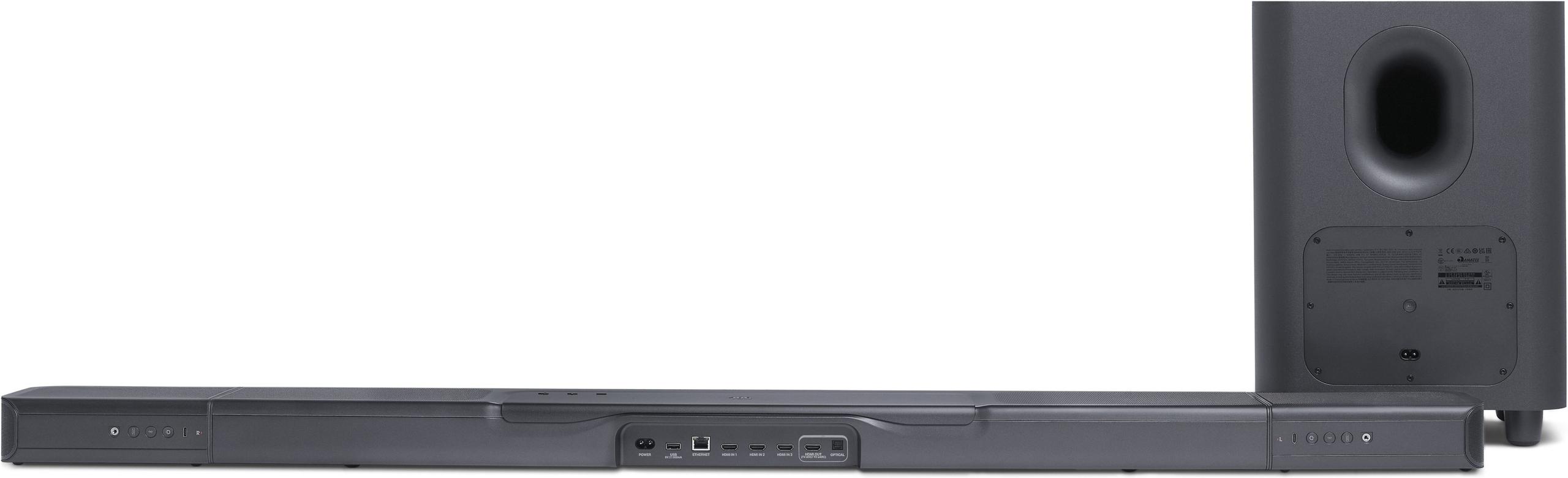
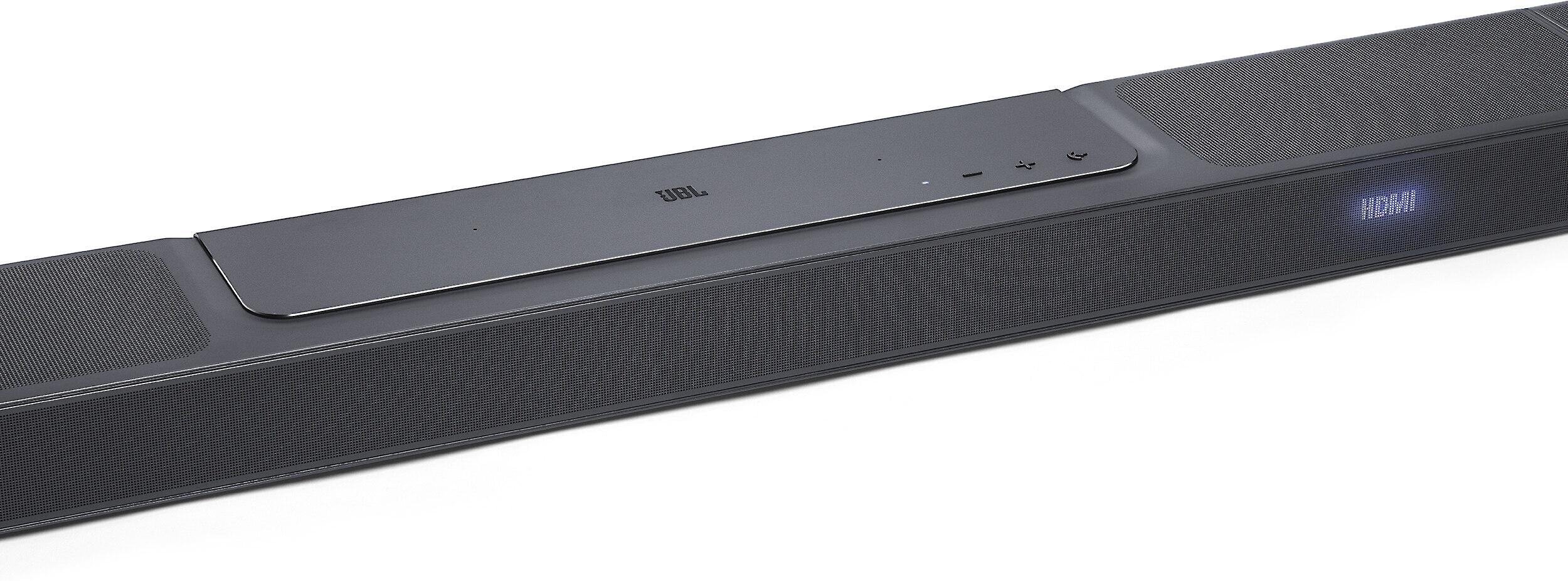
The system includes three HDMI inputs, which is genuinely helpful if you have multiple devices like a game console, streaming box, and cable box. Everything connects through the soundbar, then a single HDMI cable runs to your TV using eARC (Enhanced Audio Return Channel) – a technology that allows uncompressed Dolby Atmos to pass through a single cable.
The Sennheiser AMBEO setup is simpler in terms of physical placement – it's just one bar to position. But it includes sophisticated room calibration that uses built-in microphones to analyze your space and adjust the audio processing accordingly. This automated calibration is genuinely impressive and takes about 10 minutes to complete.
However, the AMBEO has fewer HDMI inputs, which might require you to use your TV's inputs or invest in an HDMI switch if you have multiple devices.
One aspect that doesn't get discussed enough is how these systems work for everyday use, not just movie night. The JBL's rear speakers automatically turn off when not in use to preserve battery life, and they last about 12 hours of continuous use before needing to be placed back on their charging contacts on the main bar.
I find myself using the JBL's rear speakers as portable Bluetooth speakers surprisingly often – they work great for background music while cooking or even taken outside for gatherings. It's an unexpected bonus that adds real value to the system.
The Sennheiser AMBEO excels at music reproduction in ways that most soundbars simply don't. The coherent soundstage and precise imaging make it genuinely enjoyable for serious music listening, not just movie watching. If you're someone who spends as much time listening to music as watching movies, this is a significant consideration.
At $1,299, the JBL Bar 1300X includes everything you need for a complete home theater audio setup. You're getting true surround speakers, a powerful subwoofer, and multiple connectivity options in one package. When you break down the cost, you're essentially paying for what would typically require separate components costing much more.
The Sennheiser AMBEO at $1,999 represents a premium investment in audio technology and engineering. You're paying for years of research into psychoacoustic processing and the precision of German audio engineering. However, to get comparable bass impact, you'll likely want to add their subwoofer, bringing the total closer to $1,300-1,400.
Both systems have received firmware updates since their respective launches, but the approaches differ. The JBL has focused on improving its MultiBeam processing and adding new streaming service compatibility. Updates have enhanced the wireless connectivity stability and added features like voice assistant integration.
Sennheiser has continuously refined their virtualization algorithms, with updates improving room adaptation and adding support for new audio formats like 360 Reality Audio from streaming services. The company's partnership with Fraunhofer means they're often first to implement new psychoacoustic research.
Both systems support the latest HDMI standards and audio formats, so they should remain relevant as 4K and 8K content becomes more prevalent.
If you're building a dedicated home theater room, the JBL Bar 1300X integrates more naturally with traditional theater design. The physical rear speakers can be wall-mounted or placed on stands, creating a setup that looks and performs like a conventional surround system while maintaining the simplicity of a soundbar-based solution.
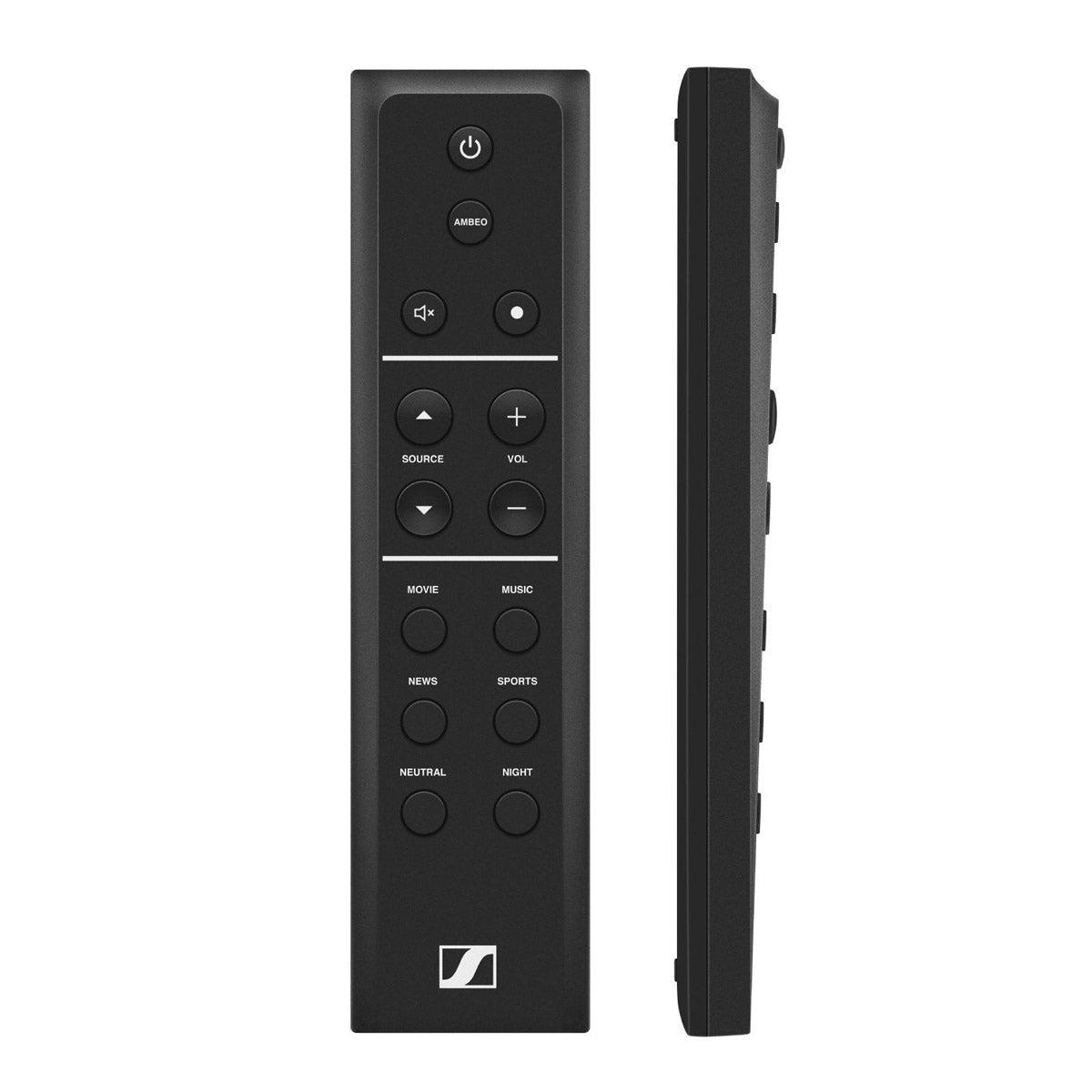
For living rooms where the TV is just one part of a multi-functional space, the Sennheiser AMBEO offers a cleaner aesthetic. It's a single, elegant bar that doesn't dominate the room visually while still delivering impressive audio performance.
After extensive testing with both systems, here's how I'd recommend making your choice:
Choose the JBL Bar 1300X if you want the most authentic surround sound experience at this price point. If you love action movies, gaming, or music with serious bass content, the physical rear speakers and included subwoofer create an experience that virtualization simply can't match. It's also the better choice for larger rooms or spaces with challenging acoustics.
The flexibility of the battery-powered rear speakers is genuinely useful – being able to optimize placement without worrying about power connections, then use them as portable speakers later, adds real value beyond just movie watching.
Choose the Sennheiser AMBEO if you prioritize audio precision, have a medium-sized room with good acoustics, and prefer a minimalist aesthetic. The virtualization technology is genuinely impressive when it works well, and the detail retrieval for both movies and music is exceptional.
The AMBEO is also the better choice if you're primarily interested in atmospheric content – nature documentaries, concert films, or movies that rely more on ambient sound design than explosive action sequences.
Both soundbars represent significant achievements in audio engineering, just with different philosophies. The JBL gives you authentic surround sound through physical hardware at a competitive price. The Sennheiser offers cutting-edge virtualization technology in an elegant package, though at a premium price point.
Your room, listening preferences, and budget will ultimately determine which approach works better for you. But either way, you'll be getting a substantial upgrade over basic TV speakers and most entry-level soundbars. The question isn't whether these systems will improve your home entertainment experience – it's which improvement pathway better matches your specific needs and space.
| JBL Bar 1300X Soundbar with Wireless Subwoofer | Sennheiser AMBEO Soundbar |
|---|---|
| Price - Total cost for complete experience | |
| $1,299.95 (includes subwoofer and rear speakers) | $1,999.95 (soundbar only; optional subwoofer adds $350-400) |
| System Design - How surround sound is created | |
| Physical 11.1.4 system with detachable wireless rear speakers | Single-bar virtualization using 13 drivers and psychoacoustic processing |
| Bass Performance - Impact for movies and music | |
| 12" wireless subwoofer (300W, extends to 33Hz) included | Dual 4" built-in woofers (extends to 38Hz); separate subwoofer recommended |
| Total Power Output - Volume and dynamic range capability | |
| 1,170W distributed across all components | 500W focused on precision and detail |
| Rear Surround Sound - Authenticity of behind-you audio | |
| True physical rear speakers with up-firing Atmos drivers | Virtualized rear effects using room reflections |
| Setup Complexity - Time and effort required | |
| 10-15 minutes (position rear speakers and subwoofer) | 10 minutes (single bar with automated room calibration) |
| Room Size Compatibility - Performance across different spaces | |
| Works consistently in any room size or acoustic condition | Optimized for medium rooms under 300 sq ft with reflective surfaces |
| HDMI Connectivity - Number of devices you can connect | |
| 3 HDMI inputs plus eARC output | Fewer HDMI inputs (exact number not specified) |
| Additional Flexibility - Bonus features beyond home theater | |
| Rear speakers double as portable Bluetooth speakers (12-hour battery) | Superior music reproduction with audiophile-grade detail |
| Dimensions - Physical footprint in your room | |
| Main bar: 39.4" + separate rear speakers and subwoofer | Single 49.6" bar (no additional components required) |
| Best For - Ideal user scenarios | |
| Action movies, gaming, larger rooms, authentic surround sound | Music lovers, smaller rooms, minimalist setups, atmospheric content |
The JBL Bar 1300X ($1,299.95) offers better overall value because it includes everything you need - a 12" subwoofer and wireless rear speakers - for complete surround sound. The Sennheiser AMBEO ($1,999.95) costs $700 more and requires an additional $350-400 subwoofer purchase for comparable bass performance, making the total investment around $2,300-2,400.
If you want authentic surround sound, the JBL Bar 1300X with physical rear speakers will give you true directional audio from behind. The Sennheiser AMBEO uses virtualization technology to simulate rear speakers, which works well in smaller rooms but can't match the authenticity of actual rear speakers for action movies and gaming.
The JBL Bar 1300X has significantly better bass with its included 12" wireless subwoofer that extends down to 33Hz. The Sennheiser AMBEO relies on built-in 4" woofers that only reach 38Hz and lack the physical impact needed for action movies. You'll need to buy Sennheiser's separate subwoofer to get comparable bass.
Both take about 10-15 minutes to set up. The JBL Bar 1300X requires positioning the wireless subwoofer and battery-powered rear speakers around your room. The Sennheiser AMBEO is simpler with just one bar to place, plus it includes automated room calibration that analyzes your space acoustically.
The JBL Bar 1300X works consistently in any room size because it uses physical speakers placed around your space. The Sennheiser AMBEO virtualization technology works best in medium-sized rooms under 300 square feet - larger spaces can diminish the 3D surround effect significantly.
Both excel at music, but differently. The Sennheiser AMBEO offers superior detail and precision for audiophile-quality music reproduction. The JBL Bar 1300X provides more impactful bass and wider soundstage that many prefer for rock, electronic, and bass-heavy music genres.
The JBL Bar 1300X includes three HDMI inputs plus eARC output, making it easier to connect multiple devices like gaming consoles, streaming boxes, and cable boxes. The Sennheiser AMBEO has fewer HDMI inputs, which may require using your TV's inputs or an HDMI switch for multiple devices.
No, the JBL Bar 1300X rear speakers are completely battery-powered and last up to 12 hours on a single charge. They wirelessly connect to the main soundbar and can be placed anywhere in your room without needing power outlets. When not in use, they charge on contacts built into the main bar.
The JBL Bar 1300X is better for gaming due to its physical rear speakers that provide authentic directional audio for competitive gaming, plus multiple HDMI inputs for connecting consoles directly. The included subwoofer also adds impactful bass for explosions and sound effects that enhance the gaming experience.
The JBL Bar 1300X uses PureVoice technology that automatically boosts dialogue when it's being overwhelmed by action or music. The Sennheiser AMBEO offers manual voice enhancement controls and exceptional detail retrieval that captures subtle vocal nuances, but requires more user adjustment.
Yes, the JBL Bar 1300X rear speakers can be detached and used as portable Bluetooth speakers for up to 12 hours. This makes them versatile for outdoor gatherings, bedroom listening, or anywhere you want wireless audio beyond your main TV setup.
Both the JBL Bar 1300X and Sennheiser AMBEO support current standards like Dolby Atmos, DTS:X, and 4K passthrough with regular firmware updates. However, the JBL's physical speaker approach doesn't rely on processing algorithms, while the Sennheiser benefits from ongoing improvements to its virtualization technology through software updates.
We've done our best to create useful and informative comparisons to help you decide what product to buy. Our research uses advanced automated methods to create this comparison and perfection is not possible - please contact us for corrections or questions. These are the sites we've researched in the creation of this article: techradar.com - jbl.com - audioadvice.com - youtube.com - rtings.com - jbl.com - greentoe.com - harmanaudio.com - youtube.com - mm.jbl.com - jbl.com - bestbuy.com - rtings.com - techradar.com - audioxpress.com - whathifi.com - upscaleaudio.com - soundstagesimplifi.com - global.sennheiser-hearing.com - sennheiser-hearing.com - audioadvice.com - abt.com - moon-audio.com

Privacy Policy
Terms and Conditions - Affiliate Policy
Home Security
© Copyright 2008-2026.
11816 Inwood Rd #1211, Dallas, TX 75244