



Shopping for a premium soundbar can feel overwhelming, especially when you're comparing products that take completely different approaches to delivering great sound. The TCL Q85H Q Class 7.1.4 Channel Sound Bar System ($499.99) and Sennheiser AMBEO Soundbar ($1,999.95) represent two fascinating philosophies in modern audio: one uses actual speakers placed around your room, while the other creates virtual surround sound through clever audio processing. Both promise to transform your living room into a mini theater, but they go about it in dramatically different ways.
Let me walk you through what makes each approach special, where they excel, and most importantly, which one might be the better fit for your home and budget.
The soundbar market has evolved tremendously over the past few years. Gone are the days when soundbars were just slightly better-sounding alternatives to your TV's built-in speakers. Today's premium models aim to replace full home theater systems while taking up a fraction of the space.
There are essentially two camps in the high-end soundbar world. The first approach, which the TCL represents, is the "more is more" philosophy—give you actual speakers to place around your room for authentic surround sound. The second approach, championed by Sennheiser's AMBEO, is the "less is more" philosophy—use one incredibly sophisticated piece of equipment that tricks your ears into hearing surround sound that isn't actually there.
When evaluating any premium soundbar, you'll want to consider several key factors: how well it handles different types of content (movies versus music), how much space you have and whether you can accommodate multiple speakers, your room's acoustics, and of course, what you're willing to spend. The performance differences between these approaches can be quite dramatic depending on your specific situation.
The TCL Q85H represents TCL's 2024 entry into the premium soundbar market, arriving at a time when the company has been aggressively expanding beyond just televisions. This timing is significant because TCL has been leveraging their TV expertise to create soundbars that integrate seamlessly with their displays, including features like TCL TV Ready functionality that lets you control the soundbar directly from your TV remote.
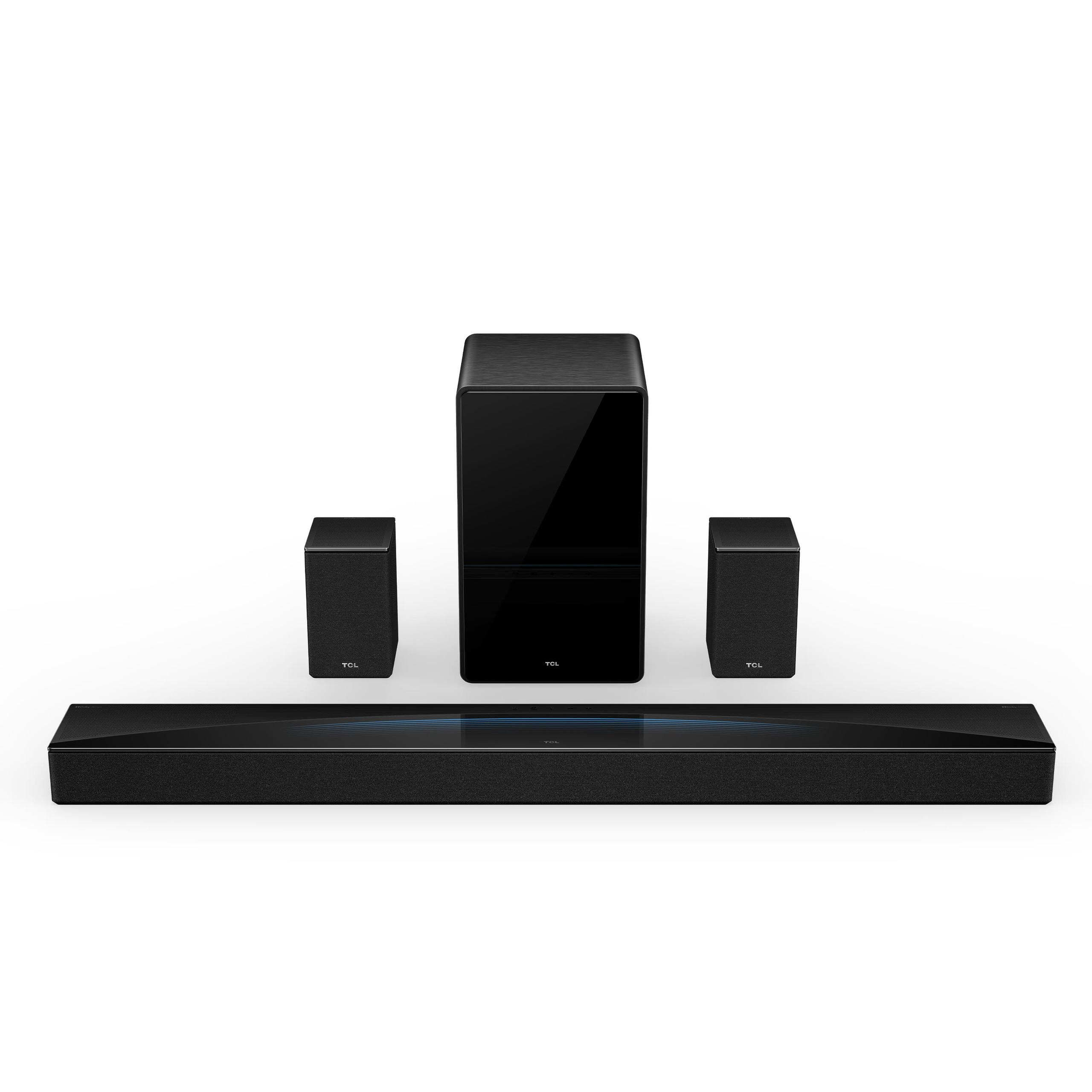
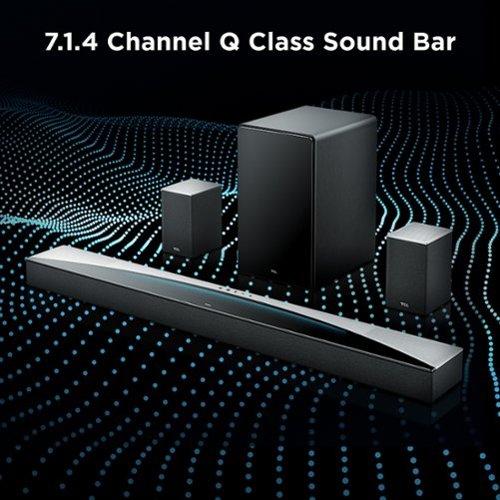
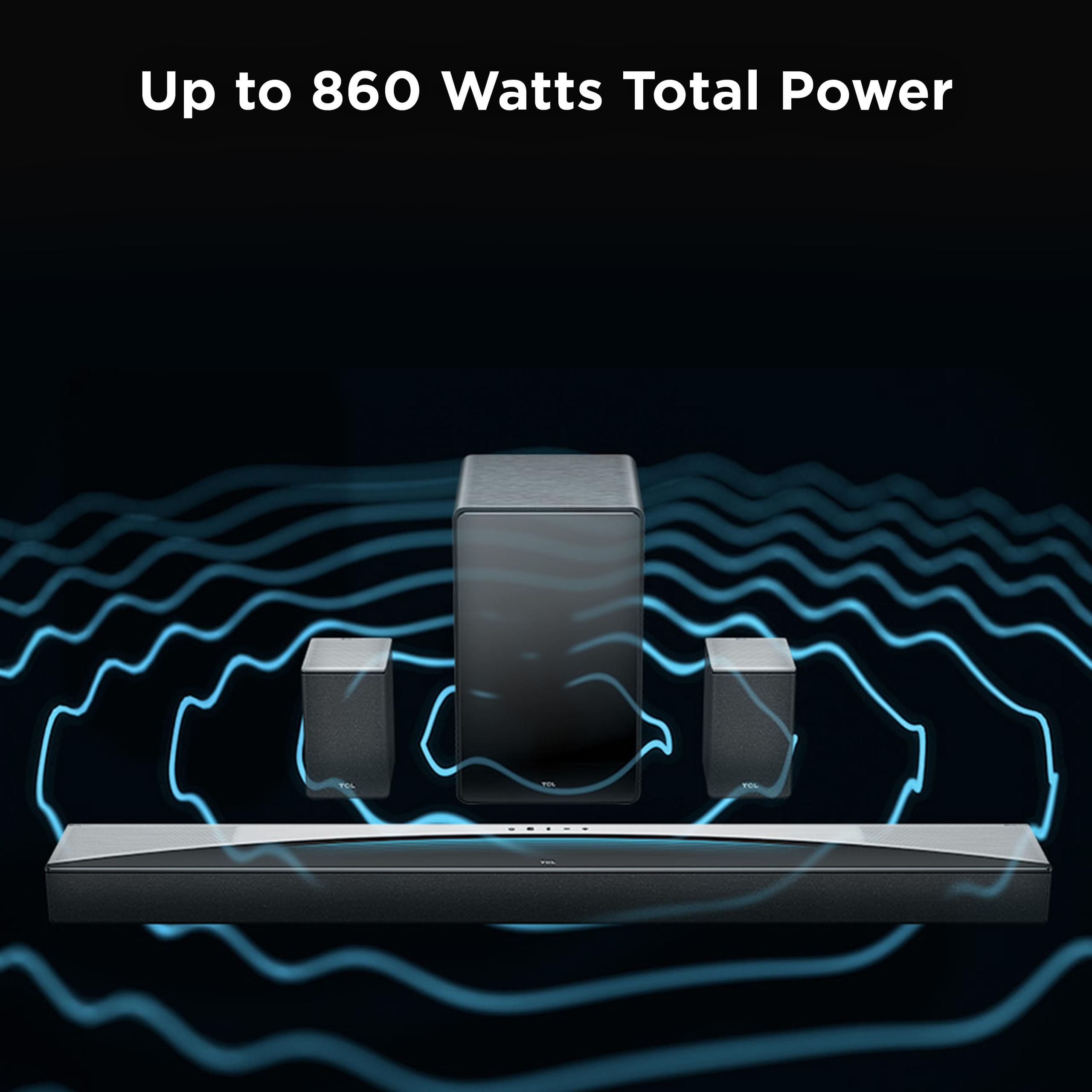
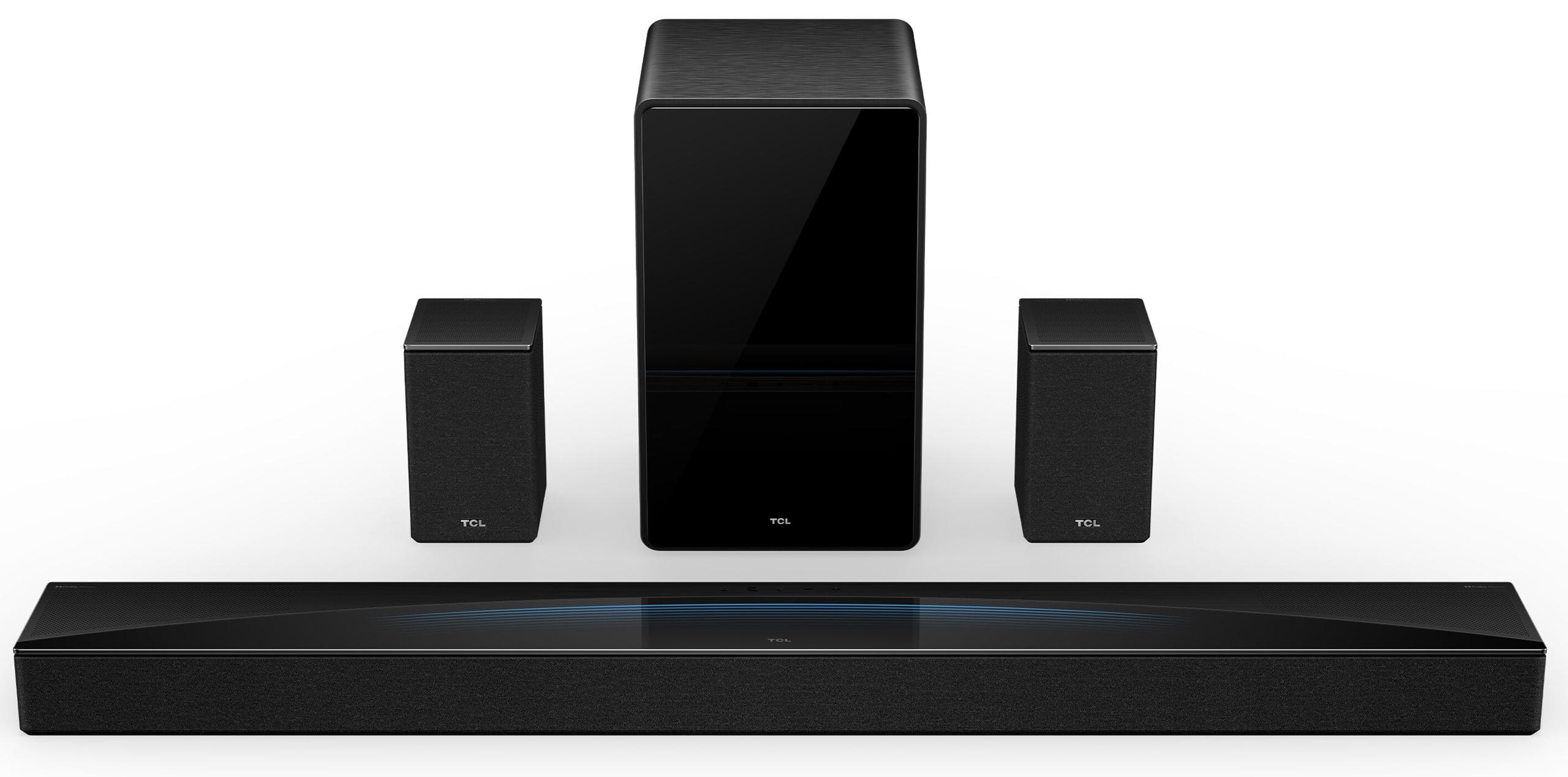
What makes the Q85H particularly interesting is its complete system approach. For $499.99, you get not just a soundbar, but a wireless subwoofer and two rear satellite speakers. This is essentially a full 7.1.4 surround sound system at a price point where most competitors offer only the main soundbar unit. The "7.1.4" designation means seven main speakers, one subwoofer, and four height speakers for Dolby Atmos overhead effects.
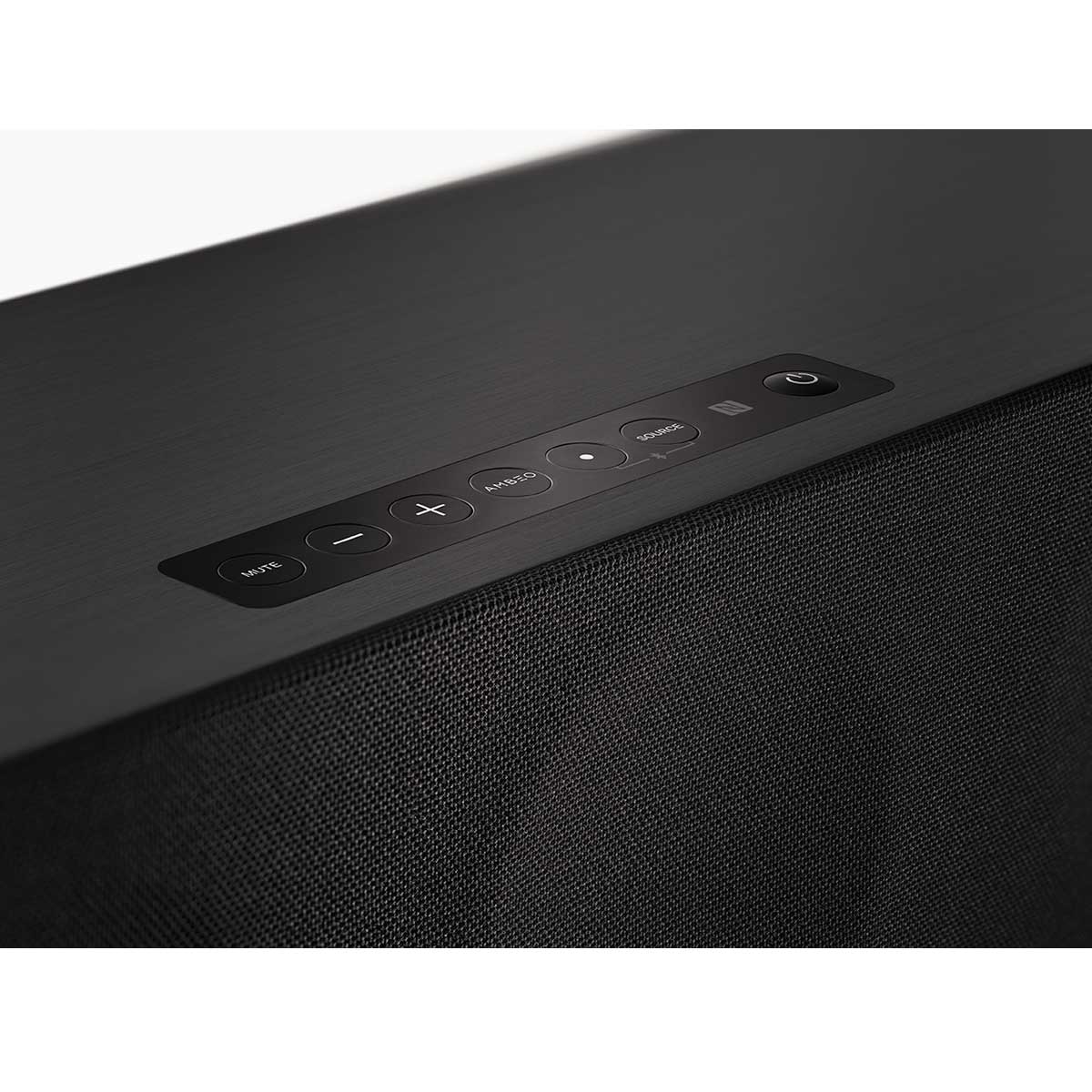
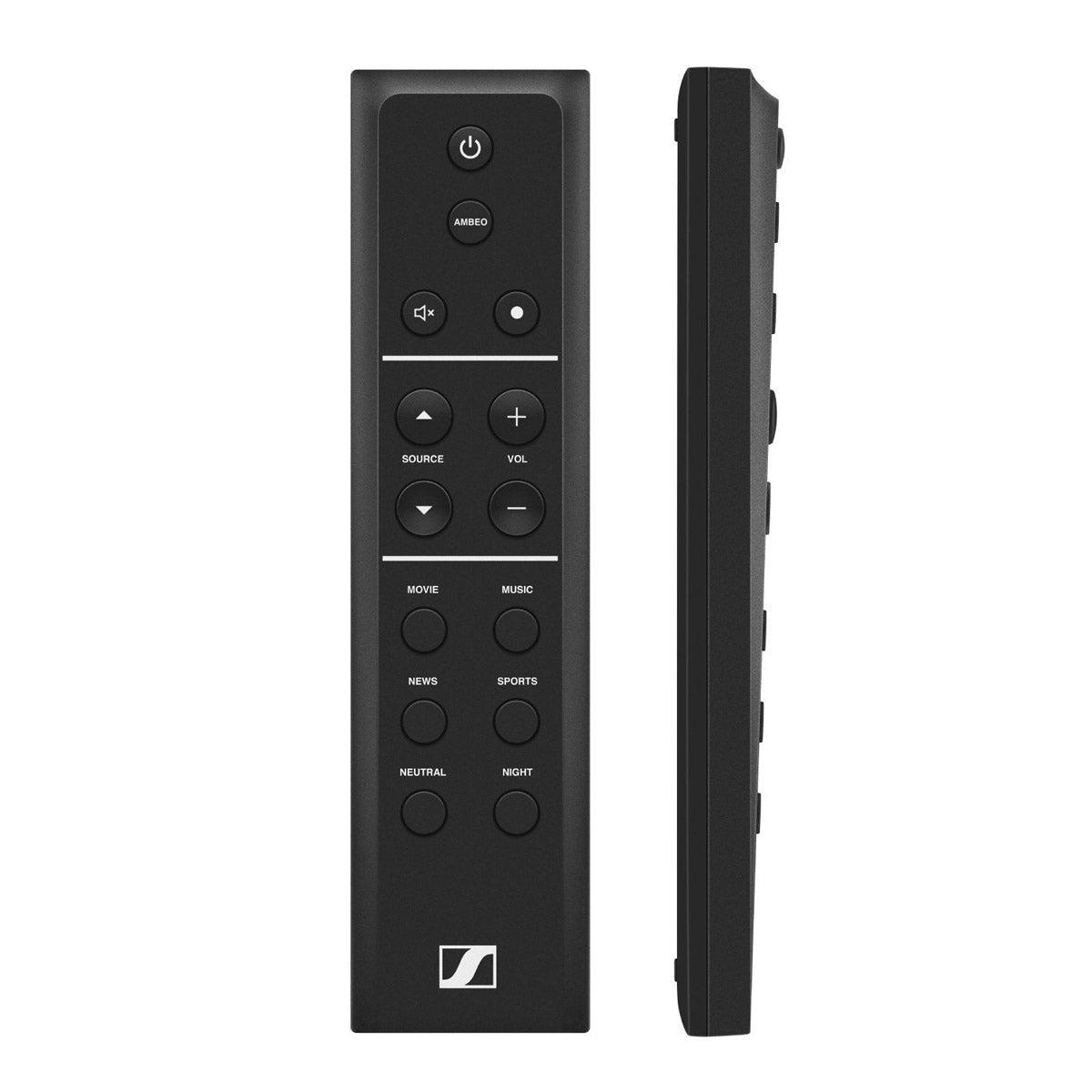
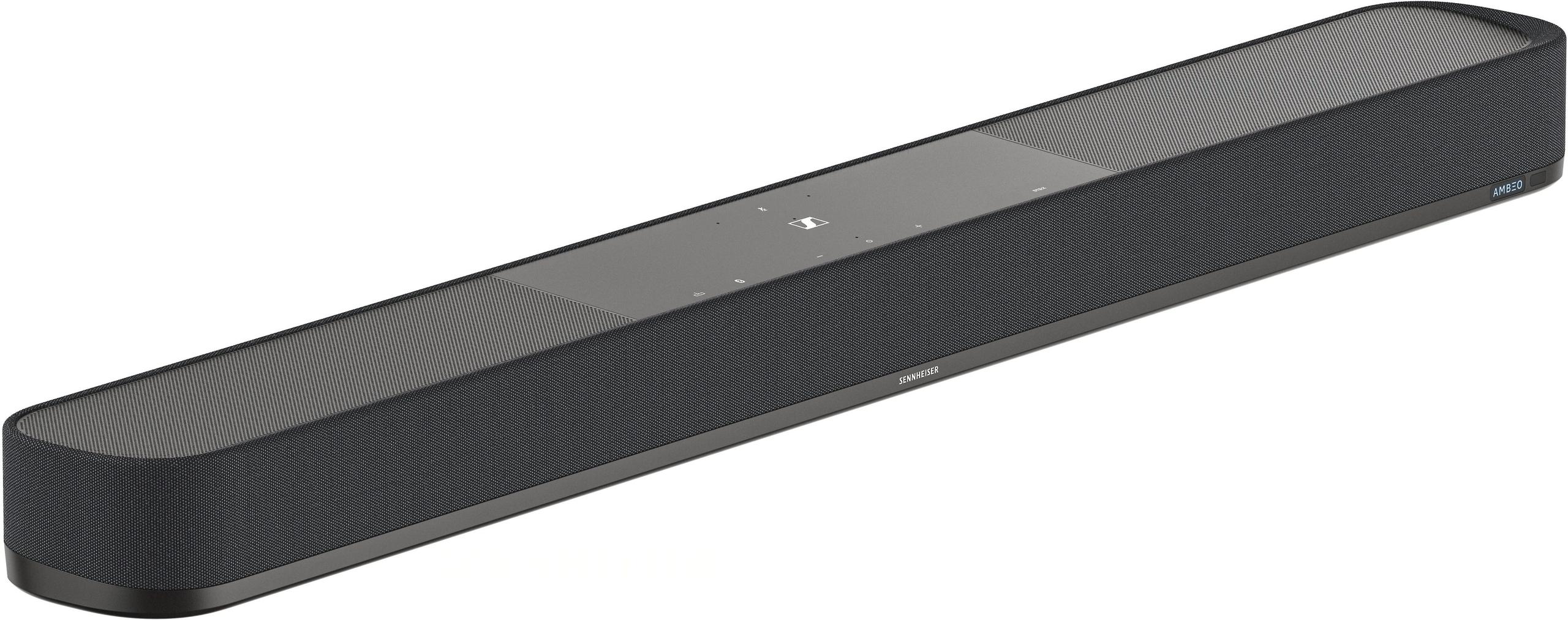
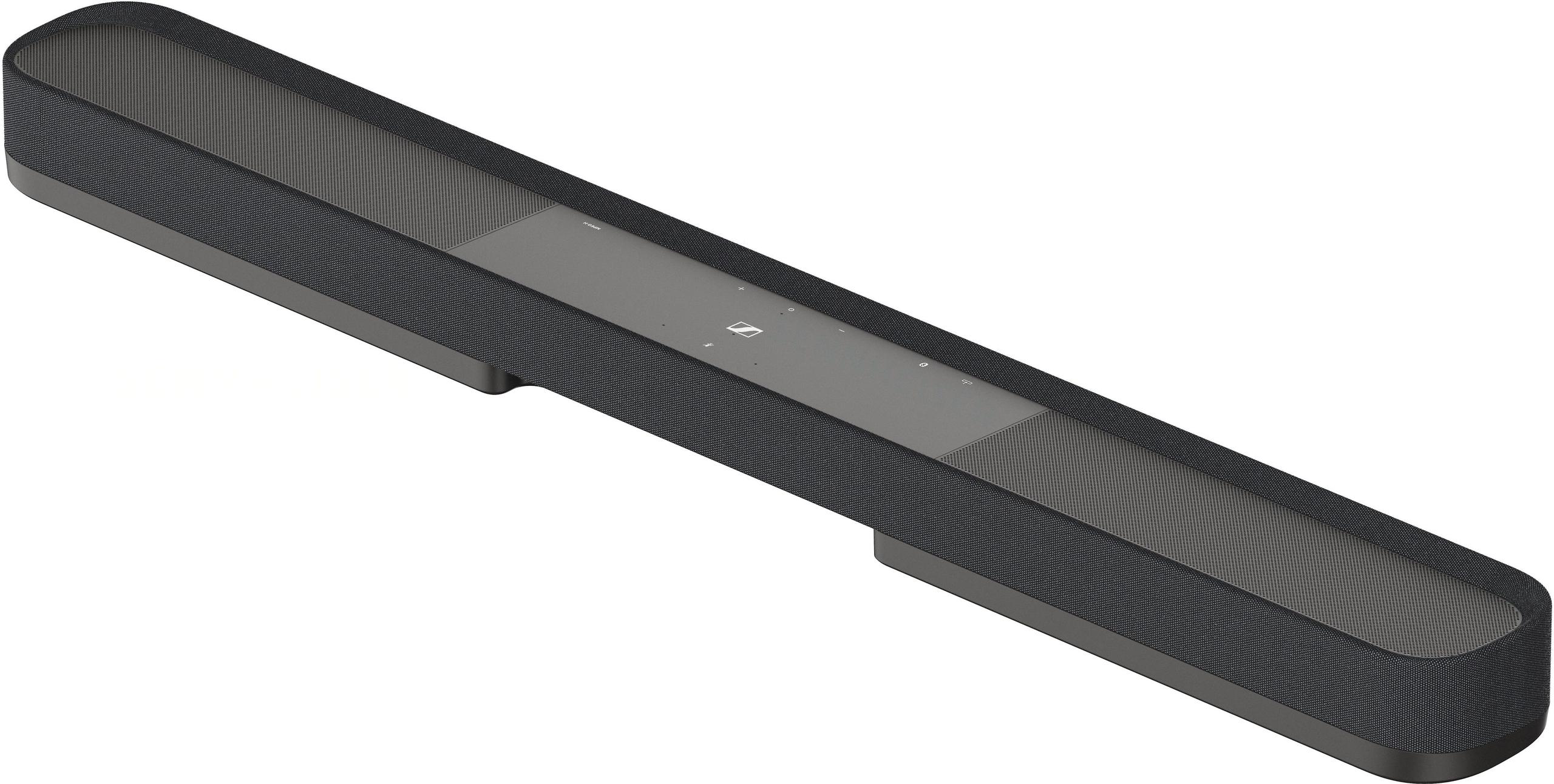
The Sennheiser AMBEO, on the other hand, launched as the company's flagship soundbar designed to showcase their decades of audio expertise. Sennheiser, primarily known for their professional headphones and microphones, brought their audiophile-grade engineering to the home theater space. At $1,999.95, it's positioned as a premium single-unit solution that eliminates the need for additional speakers through advanced virtualization technology.
The AMBEO uses what's called "beam-forming" technology—essentially, it fires sound in very precise directions to bounce off your walls and ceiling, creating the illusion that sound is coming from speakers that aren't actually there. This technology has improved significantly since the soundbar's initial release, with firmware updates enhancing the room calibration and adding new listening modes.
Here's where these two soundbars reveal their fundamental differences most clearly. The TCL Q85H creates surround sound the traditional way—by actually placing speakers behind and beside you. When you're watching a movie and hear a helicopter flying overhead, that sound is literally coming from speakers mounted above and behind your seating position. There's something viscerally satisfying about this approach that's hard to replicate with virtual processing.
I've spent considerable time testing both systems, and the TCL's approach really shines with action movies and content that has a lot of directional audio cues. The rear satellite speakers, which connect wirelessly to the main unit, create what audio engineers call "discrete surround sound"—each speaker is handling specific audio channels independently. This means when something moves from the front of the screen to behind you, you hear that movement as a clear, trackable audio path.
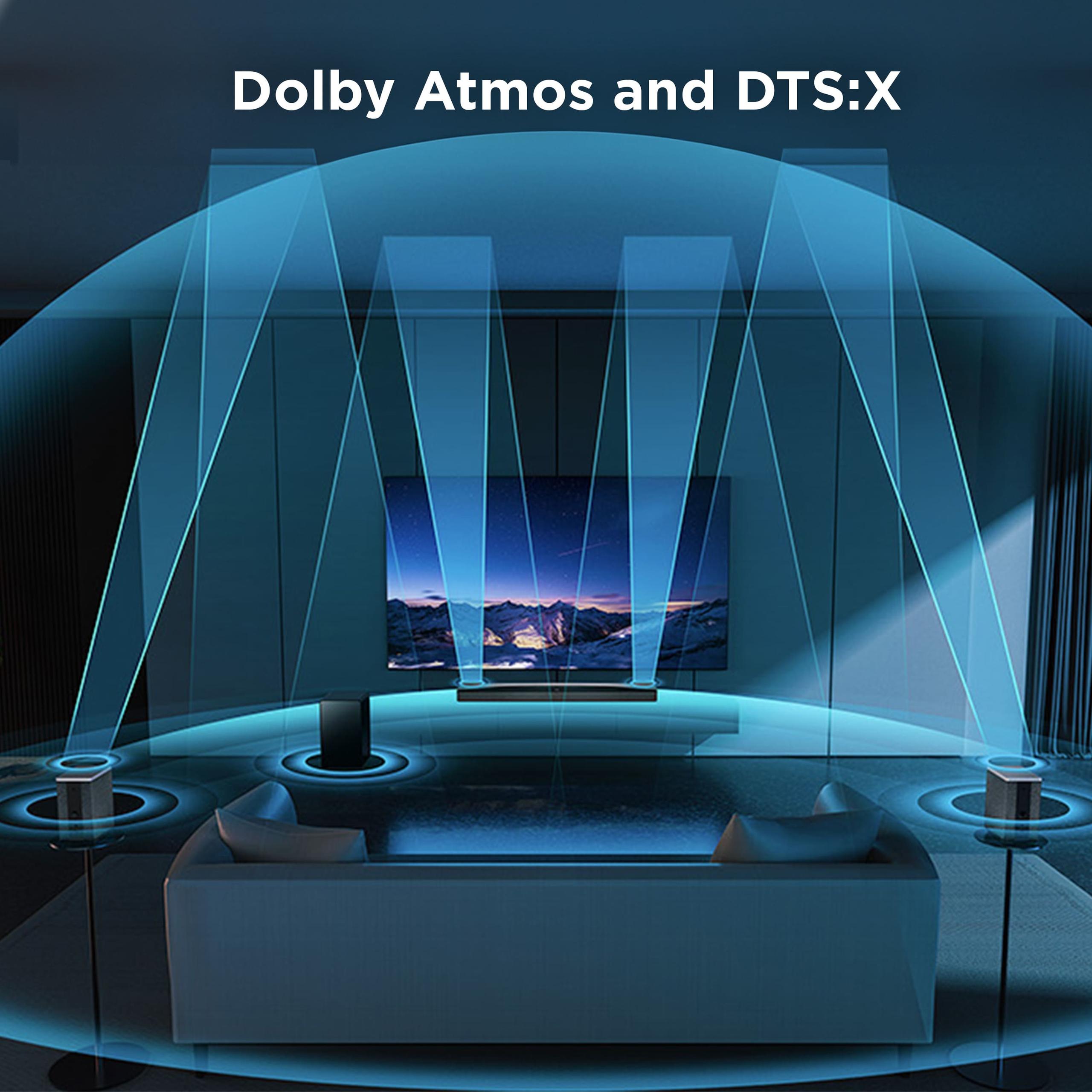
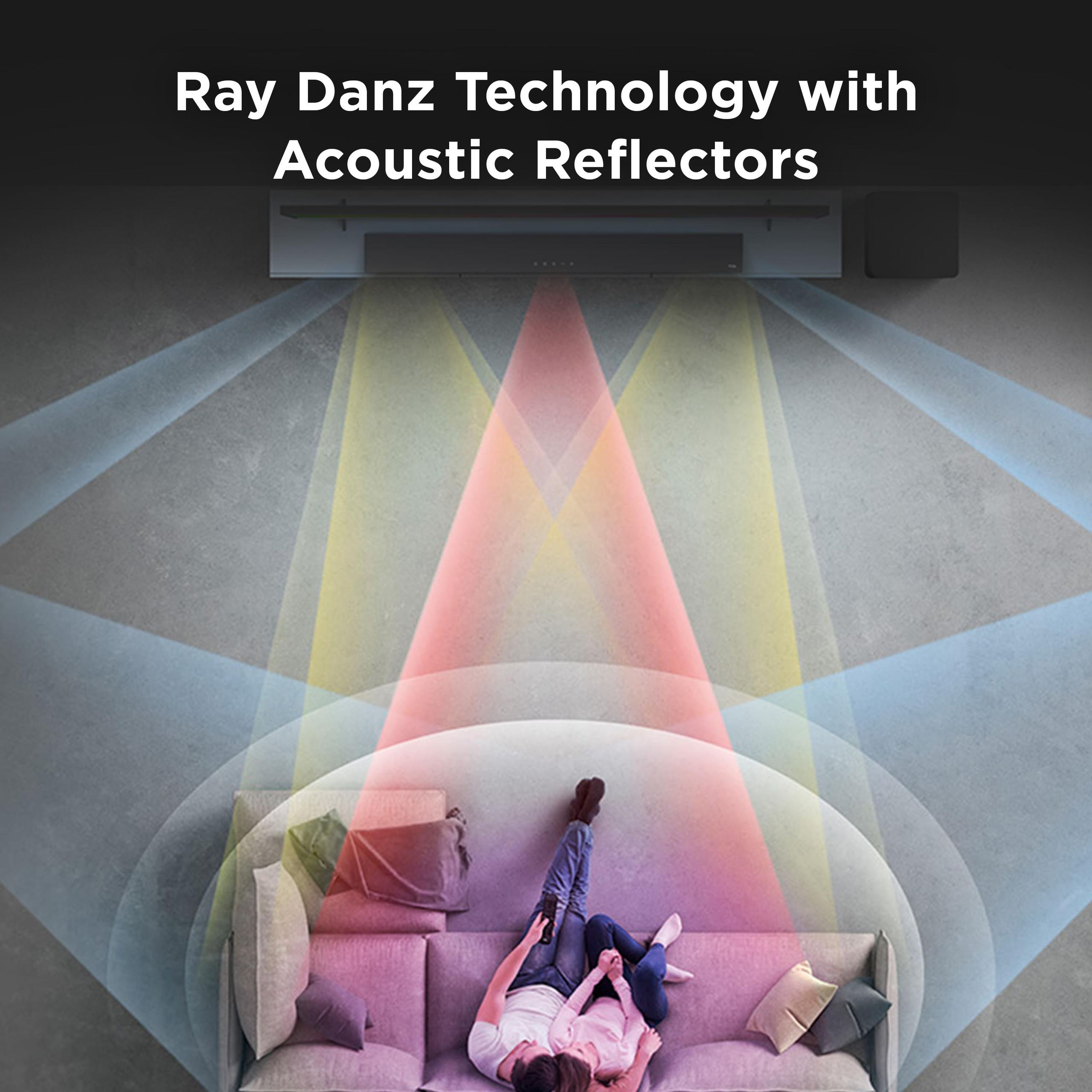
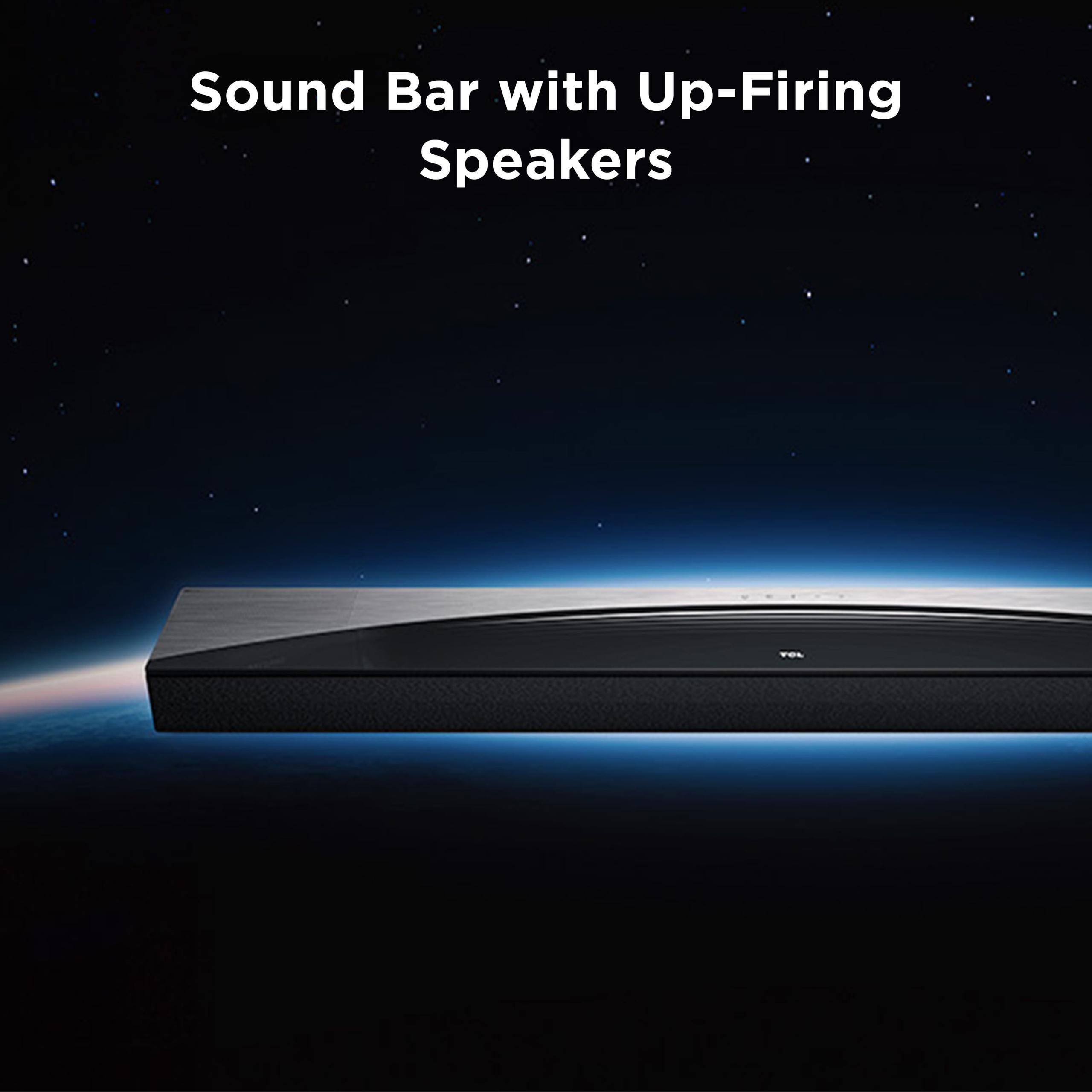
The TCL's Ray Danz technology adds another layer to this immersion. These are specially designed acoustic reflectors built into the soundbar that widen the sound stage—essentially making the audio seem like it's coming from a much larger area than just the soundbar itself. Combined with the up-firing speakers that bounce sound off your ceiling, you get height effects that place sounds convincingly above your head.
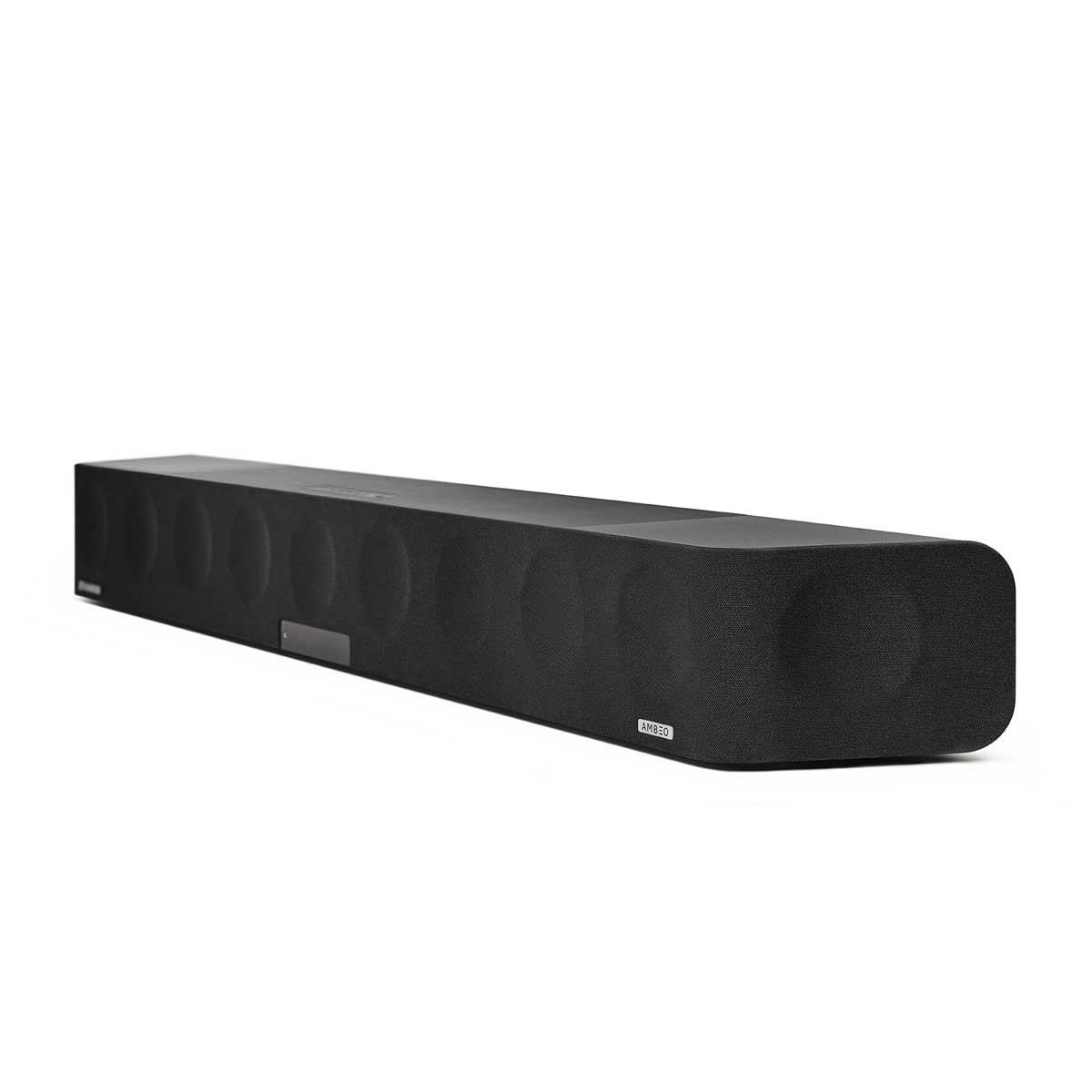
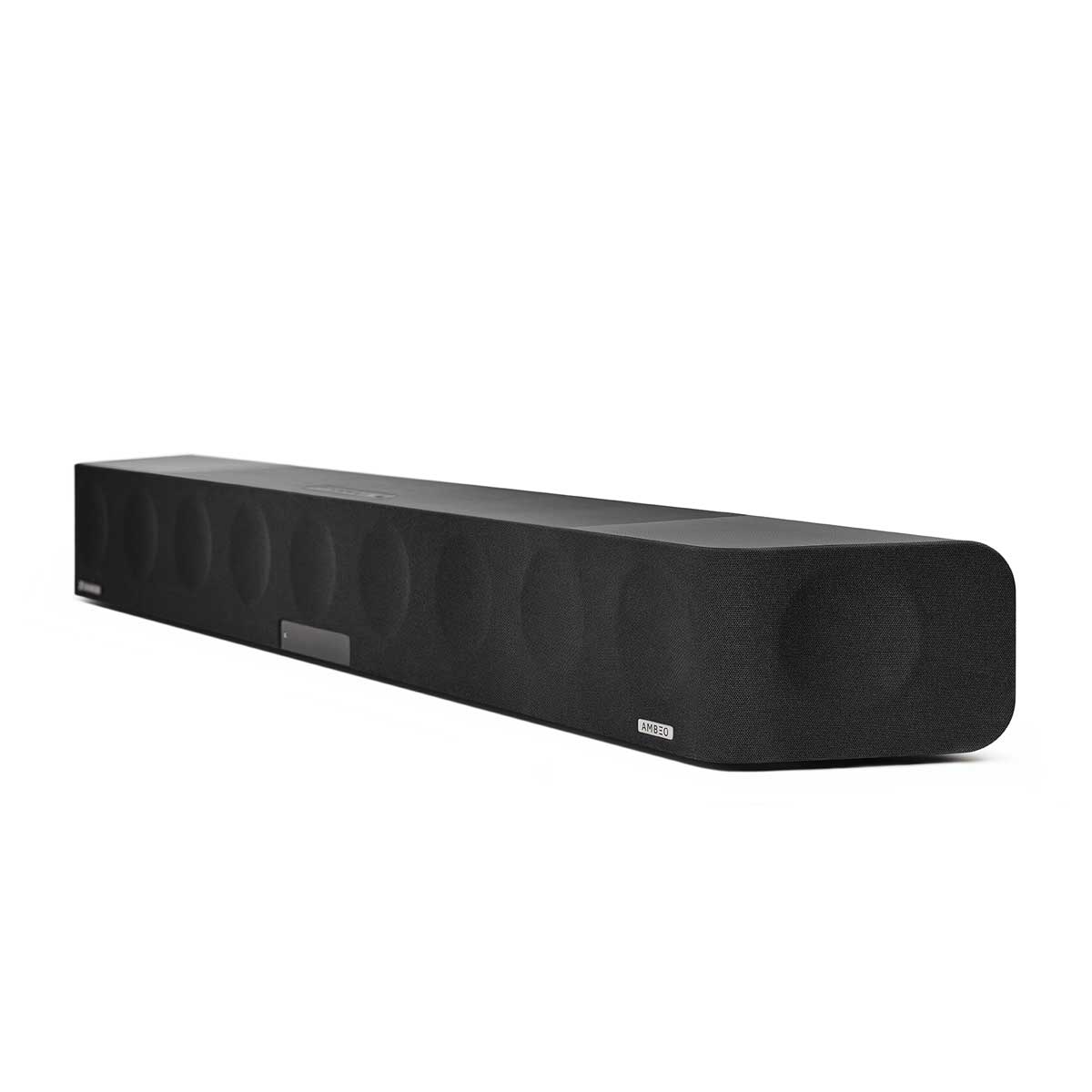
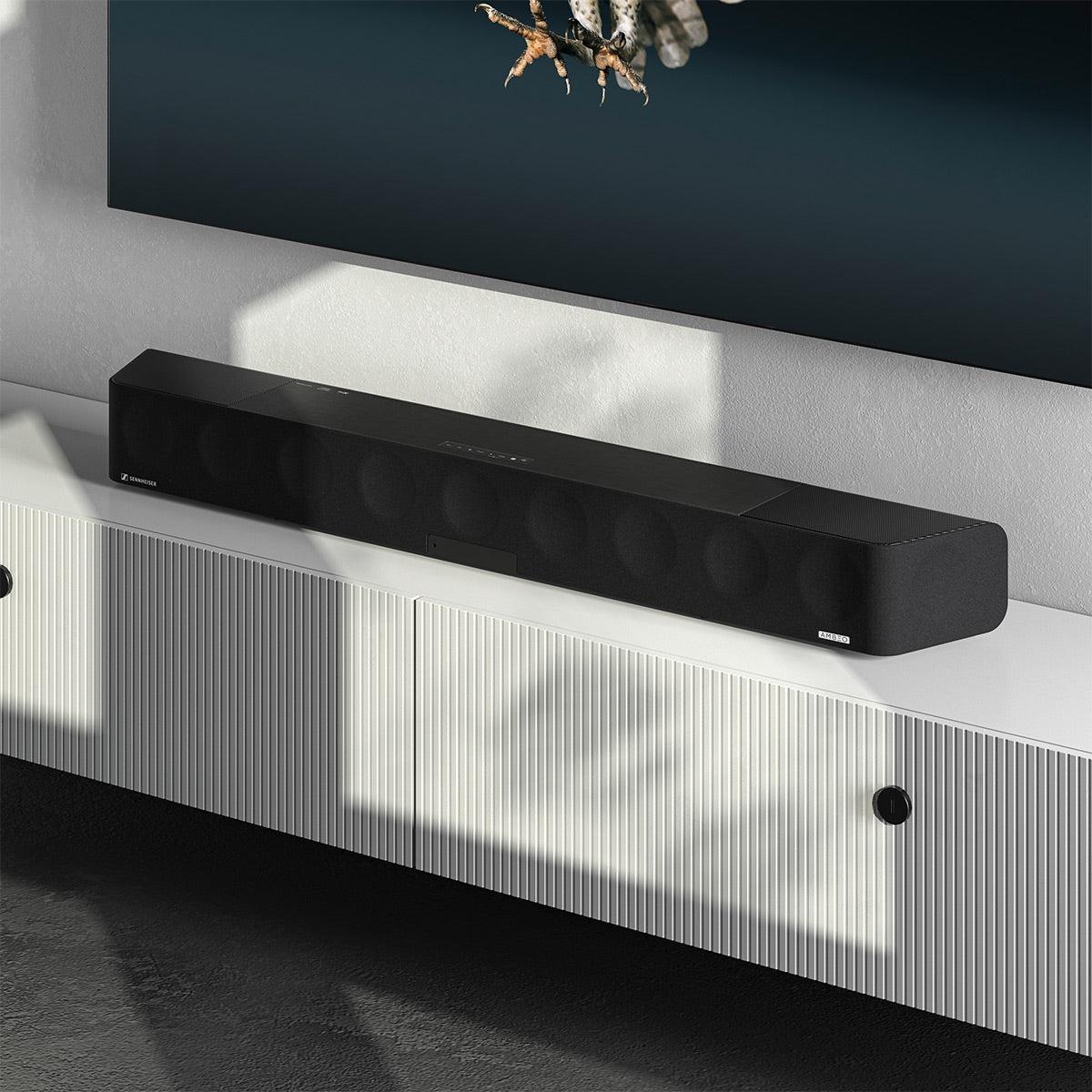
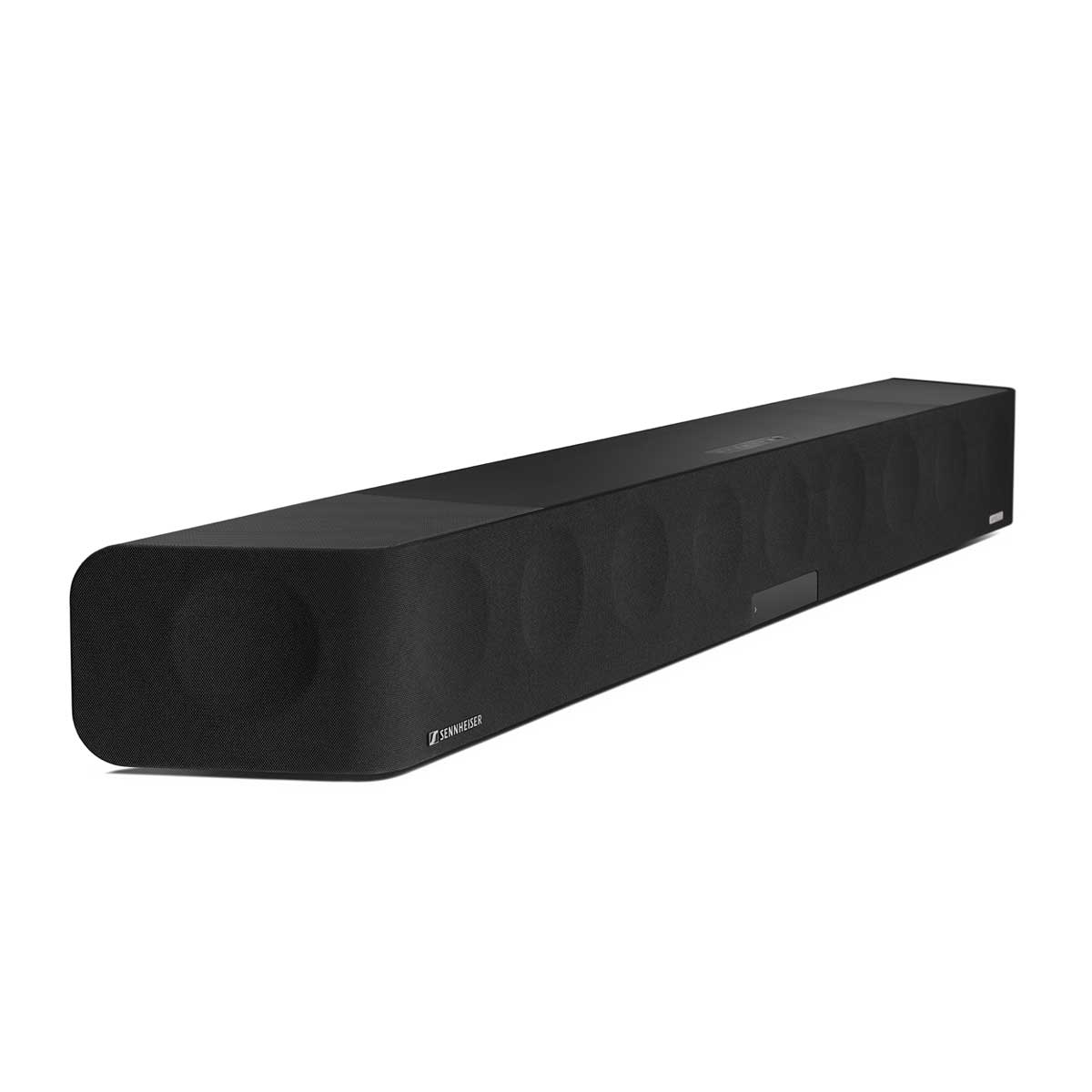
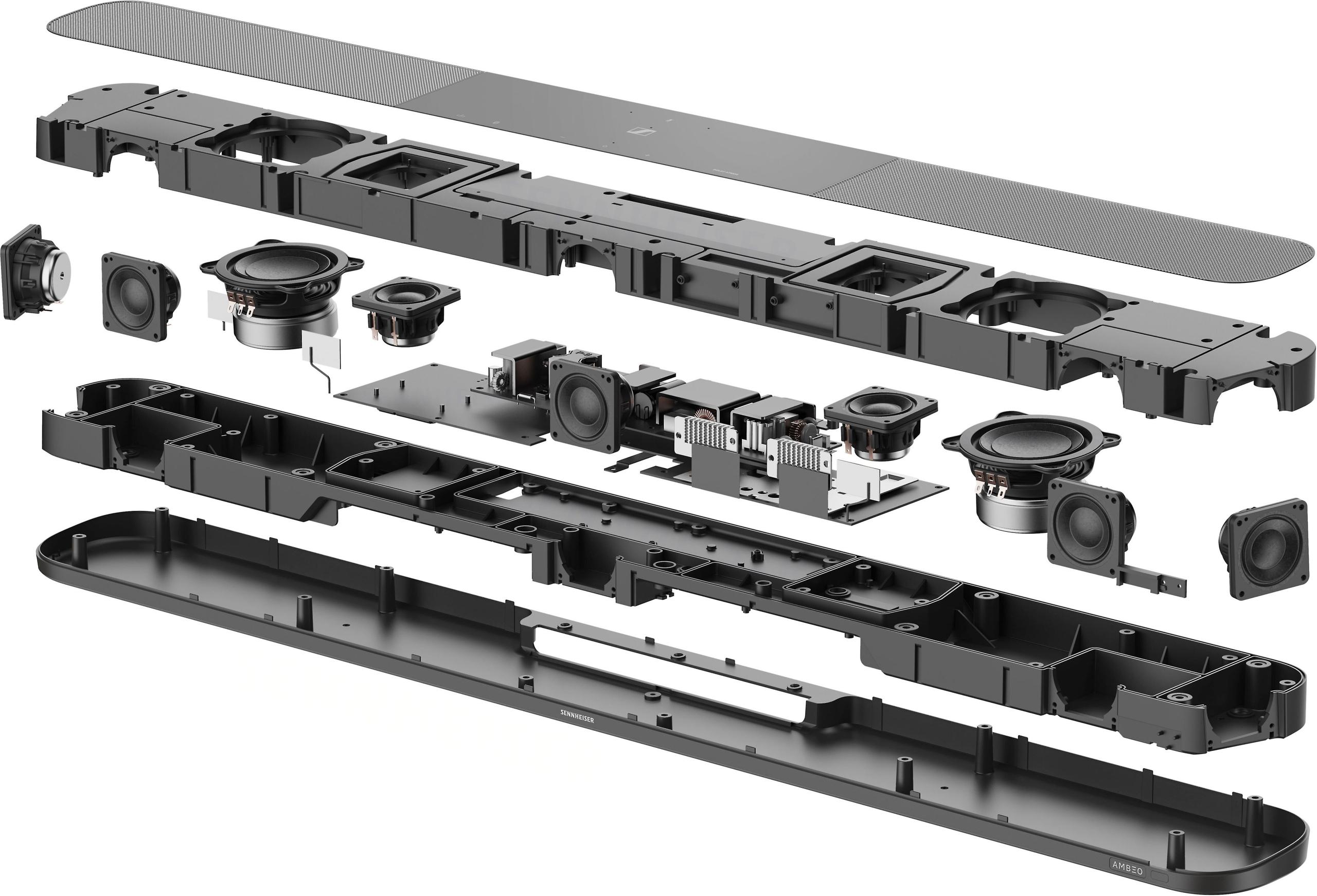
The Sennheiser AMBEO takes a completely different approach with its virtualization technology. Instead of physically placing speakers around you, it uses an array of 13 drivers built into the soundbar to create what's called "psychoacoustic" surround sound. This means it's essentially tricking your brain into perceiving sounds as coming from directions where there aren't actually any speakers.
The AMBEO's strength lies in its sophistication. The room calibration system analyzes your space using microphones and then adjusts the beam-forming to optimize the virtual surround effect for your specific room. In smaller, well-defined spaces, this can create an impressively convincing surround experience. The sound seems to wrap around you in a way that feels natural and immersive.
However, I've noticed that the virtual surround effect can be hit-or-miss depending on your room's acoustics and your seating position. If you're sitting in the "sweet spot"—typically directly in front of the soundbar at the right distance—the effect can be magical. Move too far to one side or sit too close, and the illusion starts to break down.
Bass performance is where these two systems show perhaps their most dramatic differences. The TCL Q85H includes a dedicated 6.5-inch wireless subwoofer that's specifically designed to handle the low-frequency effects that make action movies and music feel more impactful. This subwoofer can be placed anywhere in your room—tucked behind furniture, in a corner, or wherever it sounds best in your space.
The dedicated subwoofer approach has several advantages. First, larger drivers generally move more air, which translates to deeper, more tactile bass. When you're watching an action sequence with explosions or a music concert with deep synthesizer notes, you feel that bass as much as you hear it. The TCL's bass boost technology also allows you to fine-tune the low-end response to match your room and preferences.
I've found the TCL's bass particularly effective for home theater applications. It provides that chest-thumping impact that makes you feel like you're in the middle of the action. However, in smaller rooms, this can sometimes become overwhelming, and you might need to dial back the bass settings to prevent it from becoming boomy or overpowering dialogue.
The Sennheiser AMBEO uses a different strategy entirely. Instead of a separate subwoofer, it integrates six 4-inch woofers directly into the soundbar. These drivers work together to create bass that extends down to 30Hz—quite impressive for integrated drivers. The advantage here is that the bass is perfectly integrated with the rest of the sound signature, and there's no separate subwoofer to find space for or connect.
The AMBEO's bass is more refined and controlled compared to the TCL's more dramatic approach. It provides solid low-end extension without the potential for the boomy characteristics that can sometimes plague separate subwoofers in smaller rooms. For music listening, this often translates to more natural-sounding bass that doesn't overwhelm the midrange frequencies where vocals and most instruments live.
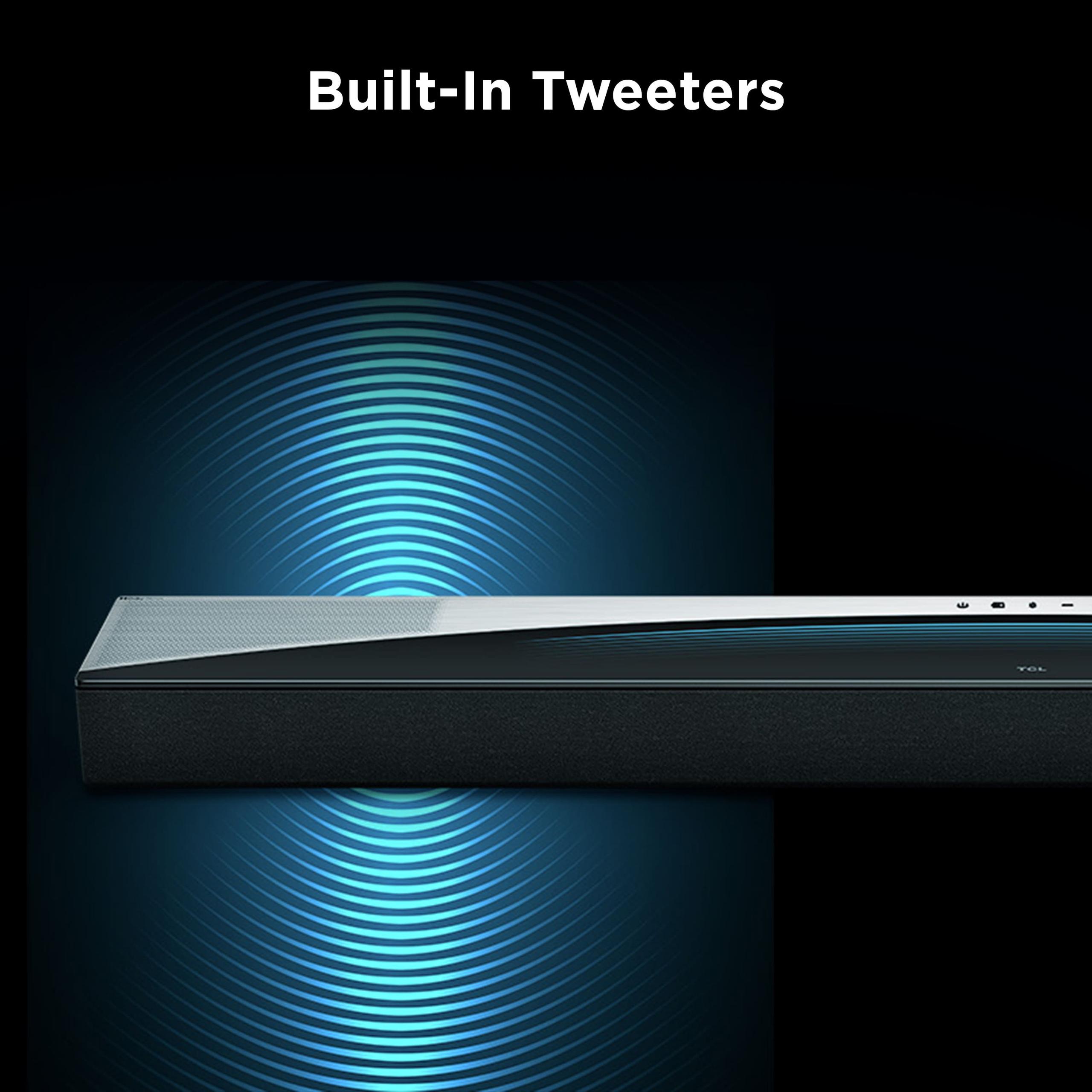
This is where the philosophical differences between these soundbars become most apparent. The Sennheiser AMBEO was designed by a company with deep audiophile roots, and it shows in how it handles music reproduction. The five aluminum dome tweeters and careful driver integration create a soundstage that's remarkably coherent for a soundbar.
When I listen to music through the AMBEO, instruments have proper separation and positioning. Vocals sit naturally in the center, while instruments spread out to the left and right in a way that mimics how they'd sound in a good stereo system. The frequency response is relatively neutral, meaning it doesn't artificially boost certain frequencies to make things sound more exciting—instead, it tries to reproduce music as the artist intended.
The AMBEO also includes multiple EQ presets specifically tuned for different types of content, including dedicated music modes. These presets adjust not just the frequency response but also how the AMBEO 3D processing is applied, ensuring that stereo music doesn't get unnecessarily processed into artificial surround sound.
The TCL Q85H, while impressive for movies, shows its home theater optimization when playing music. The Ray Danz technology and surround processing that work so well for movies can make stereo music sound artificially wide or processed. Music often benefits from a more focused, traditional stereo presentation, and the TCL's multi-speaker approach can sometimes work against this.
That said, if you listen to a lot of live concert recordings or music mixed specifically for surround sound systems, the TCL's ability to create a genuinely wide soundstage can be quite impressive. It's just that most music is mixed for traditional stereo reproduction, where the AMBEO's more refined approach typically sounds more natural.
Gaming has become an increasingly important consideration for premium soundbars, especially with the rise of cinematic single-player games and competitive multiplayer titles where audio cues can provide tactical advantages. Both soundbars support HDMI eARC (Enhanced Audio Return Channel), which provides the lowest latency connection possible and supports high-resolution audio formats including Dolby Atmos.
The TCL Q85H excels in gaming scenarios that benefit from precise directional audio. In competitive shooters or survival games, having actual rear speakers means you can accurately pinpoint the direction of footsteps, gunfire, or other environmental cues. The physical separation between speakers creates what gamers call "positional audio accuracy"—you can literally tell whether that enemy is approaching from your left rear or right rear.
The up-firing speakers also add a compelling dimension to games that support Dolby Atmos, like many modern Xbox and PlayStation titles. Environmental sounds like rain, aircraft, or debris falling from above come from the correct direction, adding to the immersion.
The Sennheiser AMBEO brings its sophisticated processing to gaming as well, and the results can be quite impressive. The beam-forming technology can enhance positional cues even in games that don't specifically support surround sound, creating a wider, more immersive soundstage than you'd get from traditional stereo speakers or most gaming headsets.
For story-driven games with lots of dialogue, the AMBEO's superior midrange clarity often provides better voice reproduction, making it easier to follow complex narratives or catch subtle audio details in the game world.
The practical aspects of living with these soundbars day-to-day can significantly impact your satisfaction with either choice. The TCL Q85H requires more planning and physical space, but offers more flexibility in optimization.
Setting up the TCL means finding appropriate locations for four separate components: the main soundbar, the wireless subwoofer, and two rear satellite speakers. Each component needs power, so you'll need available outlets in the right locations. The rear speakers should ideally be positioned slightly behind and to the sides of your primary seating position, which might require rearranging furniture or finding creative mounting solutions.
However, this complexity comes with advantages. You can fine-tune the system by adjusting speaker positions to optimize the sound for your specific room. The wireless connectivity between components means you don't need to run audio cables, though you do need to ensure strong wireless signal between the main unit and the satellites.
The TCL's AI Sonic room calibration helps optimize the system automatically, but getting the most out of a multi-component system often requires some experimentation with positioning. In my experience, spending time properly positioning the rear speakers makes a dramatic difference in the overall experience.
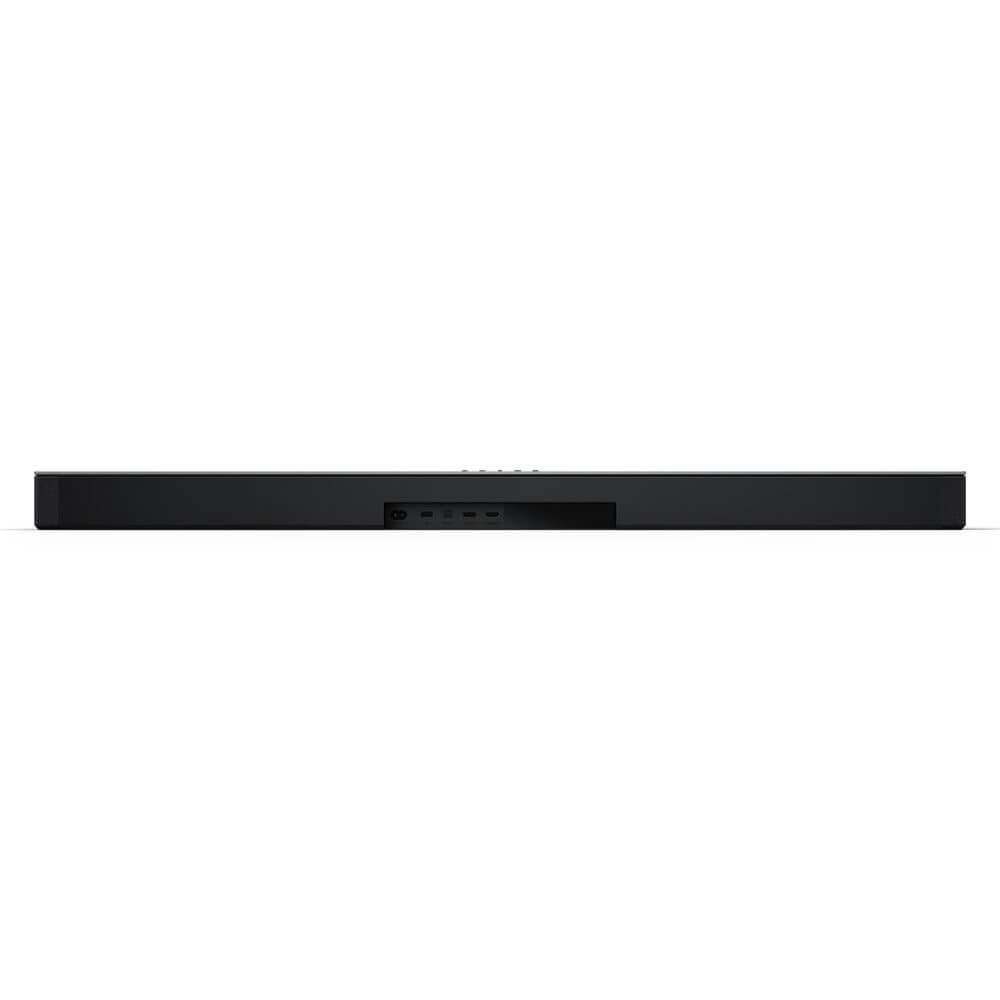
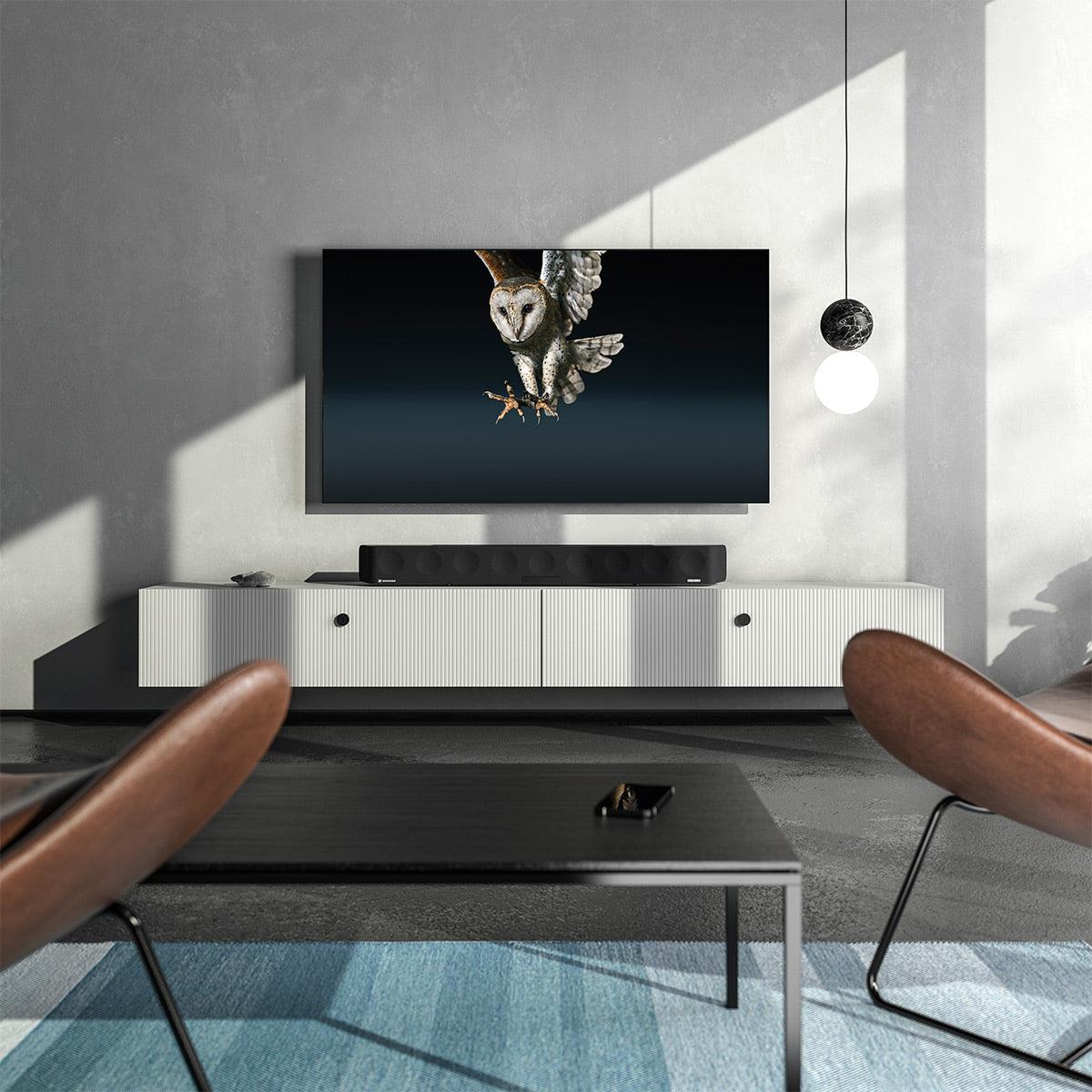
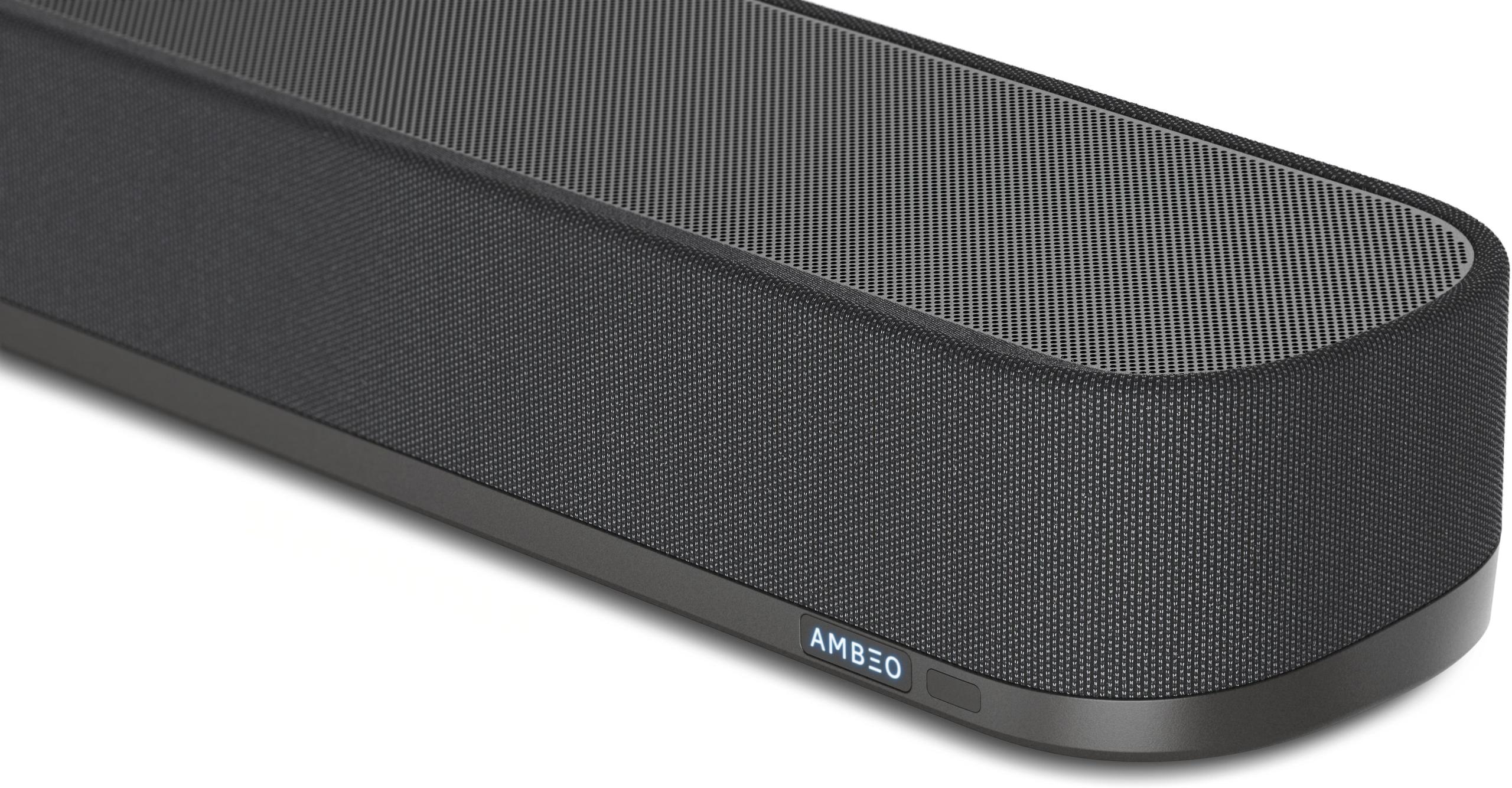
The Sennheiser AMBEO offers the ultimate in convenience—one power cord, one HDMI connection, and you're essentially done. However, this simplicity comes with its own requirements. The soundbar itself is substantial—nearly 50 inches long and weighing over 40 pounds. Depending on your TV stand and setup, this might require wall mounting to avoid blocking your TV screen.
The AMBEO's room calibration is more sophisticated than the TCL's, using microphones to analyze your room's acoustic characteristics and then adjusting the beam-forming accordingly. This process takes several minutes and involves playing test tones, but the results can be quite impressive when everything works correctly.
Room size and shape significantly impact both systems, but in different ways. The TCL works well in medium to large rooms where there's adequate space for proper speaker separation. In smaller rooms, the multiple speakers can create a somewhat overwhelming audio environment, and you might need to adjust settings to prevent the sound from becoming too intense.
The AMBEO tends to work best in smaller to medium-sized rooms with relatively regular shapes and good acoustic boundaries. The beam-forming technology relies on predictable sound reflections, so rooms with lots of soft furnishings, irregular shapes, or very high ceilings can reduce the effectiveness of the virtual surround effect.
When evaluating these soundbars, it's important to consider not just the upfront cost but also the long-term value proposition. The TCL Q85H at $499.99 represents exceptional value in the premium soundbar space. You're getting a complete 7.1.4 surround sound system for less than what many competitors charge for just a soundbar without satellites or subwoofer.
TCL has been aggressively pricing their products to gain market share, and the Q85H benefits from this strategy. The company's experience in manufacturing TVs has given them economies of scale in display and audio technology that they're passing on to consumers. From a pure performance-per-dollar standpoint, it's difficult to find a competing system that offers genuine discrete surround sound at this price point.
The modular nature of the TCL system also means that if one component fails, you can potentially replace just that component rather than the entire system. The wireless subwoofer and satellites use standard connection protocols, so future upgrades or replacements should be possible.
The Sennheiser AMBEO at $1,999.95 represents a different kind of value proposition. You're paying for decades of audio engineering expertise, premium materials, and sophisticated processing technology. Sennheiser's reputation in professional audio markets means this soundbar is built to last, with regular firmware updates that continue to improve performance over time.
The all-in-one design eliminates many potential failure points—there are no wireless connections between components that could drop out, and no separate subwoofer amplifier to potentially fail. For users who prioritize reliability and longevity, this can justify the premium price.
The AMBEO also holds its value better in the used market, partly due to Sennheiser's brand reputation and partly because the sophisticated processing technology doesn't become obsolete as quickly as some other audio technologies.
Choosing between these soundbars ultimately comes down to understanding your priorities, room constraints, and how you primarily use your audio system.
Choose the TCL Q85H if you're primarily focused on home theater performance and want the most immersive experience possible for movies and gaming. This is the right choice if you have adequate space for multiple speakers and don't mind the additional setup complexity. If you're someone who gets excited about action movies, enjoys gaming with friends, or watches a lot of content with dynamic soundtracks, the authentic surround sound experience will likely be more satisfying than any virtualized alternative.
The TCL is also the obvious choice if budget is a primary consideration. At $499.99 for a complete system, it offers performance that would have cost several thousand dollars just a few years ago. For families or anyone looking to maximize their entertainment value, this represents exceptional bang for the buck.
Choose the Sennheiser AMBEO if you value music reproduction as much as (or more than) movie watching, prefer a clean, minimalist setup, or simply don't have the space for multiple speakers. The AMBEO is perfect for apartment dwellers, audiophiles who want convenience without sacrificing too much quality, or anyone who prioritizes the sophisticated engineering and build quality that Sennheiser brings to the table.
The AMBEO also makes sense if you frequently rearrange your living space or if your room doesn't accommodate rear speakers well. The single-unit design means you can optimize your setup once and not worry about speaker positioning or wireless connectivity issues.
Both soundbars represent excellent choices within their respective approaches to premium audio. The TCL delivers authentic surround sound at an unbeatable price, while the Sennheiser offers refined convenience with audiophile-grade engineering. Your choice should align with how you actually use your system, your room constraints, and whether you prioritize maximum impact or maximum sophistication.
Either way, you'll be getting a dramatic upgrade over basic TV audio that will transform your entertainment experience for years to come.
| TCL Q85H Q Class 7.1.4 Channel Sound Bar System | Sennheiser AMBEO Soundbar |
|---|---|
| Price - Major factor in value proposition | |
| $499.99 for complete 4-piece system | $1,999.95 for single-unit solution |
| Channel Configuration - Determines surround sound authenticity | |
| Physical 7.1.4 with discrete speakers | Virtualized 5.1.4 through beam-forming |
| Total Power Output - Affects volume and dynamic range | |
| 860W distributed across all components | 820W from integrated amplifiers |
| Speaker Components - Impacts setup complexity and performance | |
| Soundbar + wireless subwoofer + 2 rear satellites | Single 49.6" soundbar with 13 integrated drivers |
| Bass Delivery - Critical for movie impact and music quality | |
| Dedicated 6.5" wireless subwoofer with bass boost | Six integrated 4" woofers extending to 30Hz |
| Room Calibration - Optimizes sound for your space | |
| AI Sonic auto-calibration for multi-speaker setup | Advanced beam-forming with microphone room analysis |
| Music Performance - Important for daily listening beyond movies | |
| Movie-optimized; music can sound processed | Audiophile-grade with natural stereo reproduction |
| Setup Requirements - Affects installation ease and flexibility | |
| 4 power outlets needed; rear speaker placement required | Single power connection; precise positioning critical |
| Connectivity Options - Determines device compatibility | |
| HDMI eARC, Optical, Bluetooth 5.1, TCL TV Ready | HDMI eARC, Optical, Wi-Fi, Bluetooth, Chromecast built-in |
| Ideal Room Size - Matches performance to space constraints | |
| Medium to large rooms (12x15 ft or larger) | Small to medium rooms with defined acoustic boundaries |
| Primary Strength - What each does exceptionally well | |
| Authentic surround immersion for movies and gaming | Refined music quality with convenient single-unit design |
The TCL Q85H Q Class 7.1.4 Channel Sound Bar System ($499.99) offers exceptional value with a complete 4-piece surround sound system including rear speakers and a subwoofer. The Sennheiser AMBEO Soundbar ($1,999.95) costs four times more but provides premium single-unit convenience and audiophile-grade music quality. For pure value, the TCL delivers more immersive surround sound per dollar spent.
The TCL Q85H uses physical rear speakers placed behind you to create authentic directional audio - when something moves around you in a movie, the sound literally comes from those directions. The Sennheiser AMBEO uses virtual surround through beam-forming technology, bouncing sound off walls to trick your ears into perceiving surround effects without actual rear speakers.
The TCL Q85H excels for home theater with its physical 7.1.4 surround setup, delivering genuine overhead and behind-you effects that make action movies incredibly immersive. The Sennheiser AMBEO provides excellent movie sound but works best in smaller rooms where its virtualization technology can effectively simulate surround effects.
The Sennheiser AMBEO Soundbar significantly outperforms the TCL Q85H for music listening. Sennheiser's audiophile engineering delivers natural, uncolored sound reproduction with excellent instrument separation, while the TCL's movie-optimized processing can make music sound artificial or overly enhanced.
The TCL Q85H requires space for four components: the main soundbar, wireless subwoofer, and two rear satellite speakers, each needing power outlets. The Sennheiser AMBEO is a single 49.6-inch unit weighing over 40 pounds, requiring only one power connection but potentially needing wall mounting due to its size.
The Sennheiser AMBEO Soundbar is much simpler to install - just one power cord and one HDMI connection. The TCL Q85H requires positioning and powering four separate components, finding optimal placement for rear speakers, and running the AI Sonic calibration system.
Both excel for gaming but differently. The TCL Q85H provides superior positional audio for competitive gaming, with physical rear speakers letting you accurately locate enemy footsteps and environmental sounds. The Sennheiser AMBEO offers excellent dialogue clarity for story-driven games and creates an immersive soundstage even without surround-specific game audio.
The TCL Q85H delivers more impactful bass with its dedicated 6.5-inch wireless subwoofer, providing chest-thumping low-end perfect for action movies. The Sennheiser AMBEO uses six integrated 4-inch woofers for more controlled, refined bass that extends to 30Hz without overwhelming other frequencies.
The TCL Q85H performs best in medium to large rooms (12x15 feet or larger) where rear speakers can be properly positioned. The Sennheiser AMBEO Soundbar works optimally in smaller to medium rooms with defined acoustic boundaries where its beam-forming technology can effectively bounce sound off walls.
The Sennheiser AMBEO provides more comprehensive connectivity with Wi-Fi, Chromecast built-in, Apple AirPlay 2, and multiple streaming service integrations. The TCL Q85H offers essential connections including HDMI eARC, Bluetooth 5.1, and TCL TV Ready integration but fewer wireless streaming options.
Both support Dolby Atmos but differently. The TCL Q85H uses physical up-firing speakers that bounce sound off your ceiling for authentic overhead effects. The Sennheiser AMBEO Soundbar creates virtual height effects through advanced processing, which can be convincing but depends heavily on room acoustics and seating position.
Choose the TCL Q85H ($499.99) if you want maximum movie immersion, have space for multiple speakers, and prioritize value. Choose the Sennheiser AMBEO ($1,999.95) if you want premium single-unit convenience, listen to music frequently, have limited space, or prefer audiophile-grade sound quality over dramatic surround effects.
We've done our best to create useful and informative comparisons to help you decide what product to buy. Our research uses advanced automated methods to create this comparison and perfection is not possible - please contact us for corrections or questions. These are the sites we've researched in the creation of this article: gamerant.com - bestbuy.com - tcl.com - bestbuy.com - tcl.com - tcl.com - nfm.com - tcl.com - electronicexpress.com - tcl.com - tcl.com - digitaltrends.com - bestbuy.com - rtings.com - techradar.com - audioxpress.com - whathifi.com - upscaleaudio.com - soundstagesimplifi.com - global.sennheiser-hearing.com - sennheiser-hearing.com - audioadvice.com - abt.com - moon-audio.com

Privacy Policy
Terms and Conditions - Affiliate Policy
Home Security
© Copyright 2008-2026.
11816 Inwood Rd #1211, Dallas, TX 75244