





If you've ever watched a movie on your TV and thought "this audio is terrible," you're not alone. Modern TVs, despite their incredible picture quality, often have speakers that sound like they're coming from inside a tin can. That's where soundbars come in—they're designed to transform your living room into something closer to a movie theater without requiring you to become an audio engineer.
But here's where it gets interesting: there are two completely different philosophies about how to create that immersive surround sound experience. The Ultimea Poseidon D50 represents the traditional approach with actual speakers placed around your room, while the Sennheiser AMBEO uses cutting-edge audio processing to trick your ears into hearing sounds that aren't really there. Both work, but they work very differently.
Before diving into these specific products, it's worth understanding what separates good soundbars from great ones. The most important factor is how well they create a sense of space and directionality. When someone gets shot in a movie, you should hear that gunshot coming from a specific location, not just "somewhere in front of you." When a helicopter flies overhead, your brain should track its movement across the ceiling.
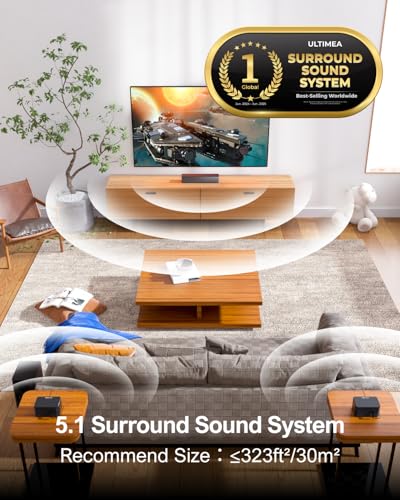
Traditional stereo audio only gives you left and right channels, which is why TV speakers often sound flat and lifeless. True surround sound adds center, rear, and subwoofer channels, creating what's called a 5.1 system (five main speakers plus one subwoofer). More advanced systems add height channels for overhead effects, creating formats like 5.1.4 (five main, one sub, four height speakers).
The challenge with soundbars is achieving this multi-directional experience while keeping the setup simple. Some use multiple physical speakers, while others use psychoacoustic processing—basically audio tricks that exploit how your brain interprets sound reflections and timing differences.
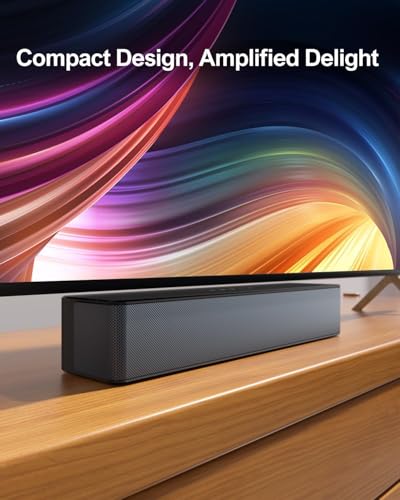
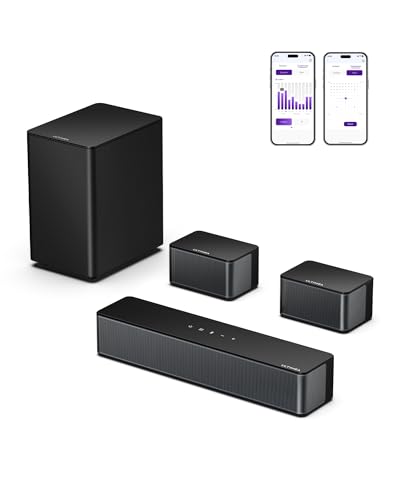
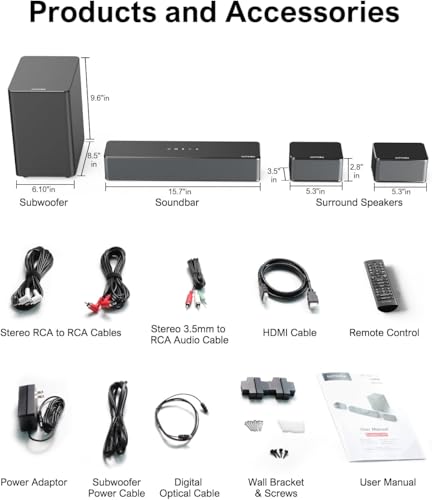
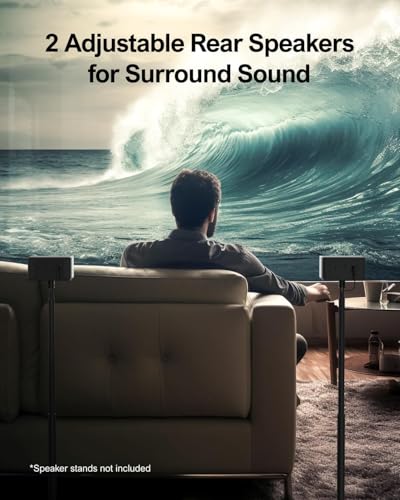
Released in 2025, the Ultimea Poseidon D50 takes the straightforward route to surround sound: it gives you actual speakers where surround speakers should go. The system includes a main soundbar, two satellite speakers for behind your seating area, and a wireless subwoofer that handles the deep bass.
This might seem obvious, but it's actually rare in the soundbar world. Most "surround sound" soundbars are really just stereo systems with some clever processing. The Poseidon D50 gives you wires to run to your rear speakers—yes, actual wires—which means you get genuine directional audio coming from behind you.
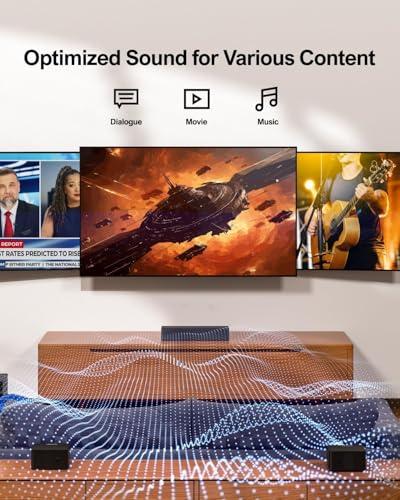
The technical implementation here is solid. The system uses SurroundX™ technology, which is essentially a digital signal processor (DSP) that can take regular stereo audio and intelligently distribute it across all five speakers. When you're watching older content that wasn't mixed in surround sound, the system analyzes the audio and decides what sounds should come from which speakers. Explosions get sent to the subwoofer, dialogue stays centered, and ambient sounds get spread to create atmosphere.
What makes this particularly effective is the independent control you get over each component. Through Ultimea's smartphone app, you can adjust the rear speaker volume separately from the front. This is crucial because every room is different—if you're sitting close to the rear speakers, they might overpower the front channels, but if you're far away, they might be too quiet to create proper surround effects.
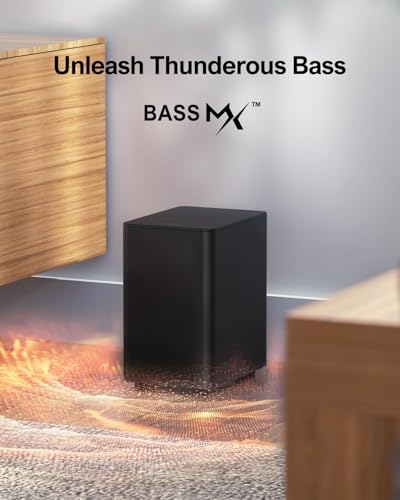
The subwoofer uses something called BassMX™ technology, which is marketing speak for "we made the speaker cone move further back and forth." Specifically, it moves 15 millimeters, which is quite substantial for a soundbar system's subwoofer. This extra movement means more air gets pushed around, creating those room-shaking explosions that make action movies feel impactful.
Based on user feedback and professional reviews, the Poseidon D50 excels at creating convincing surround effects for movies and games. The physical placement of rear speakers means when something happens behind you in a film, it actually sounds like it's behind you. This might seem basic, but it's something many soundbars struggle with.
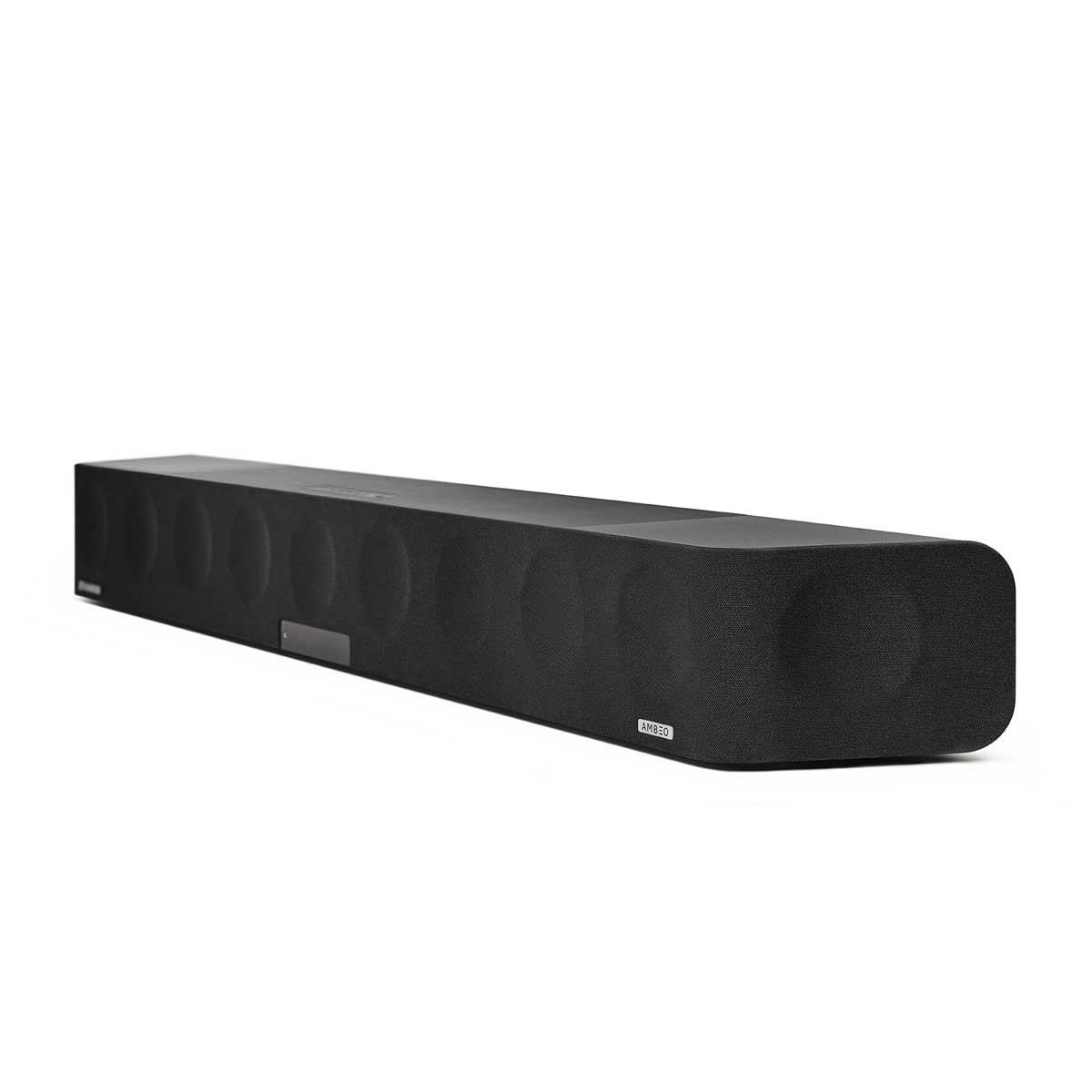
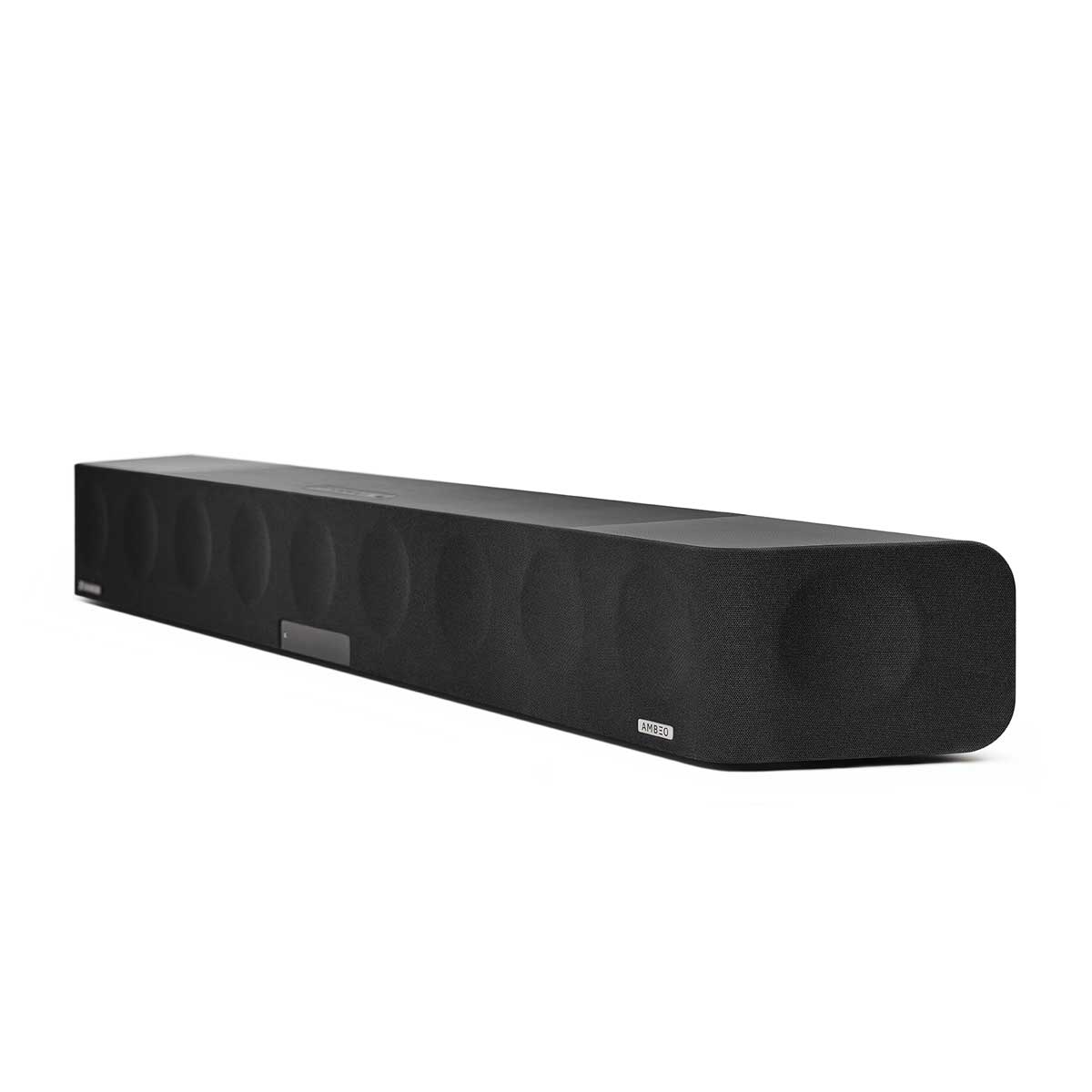
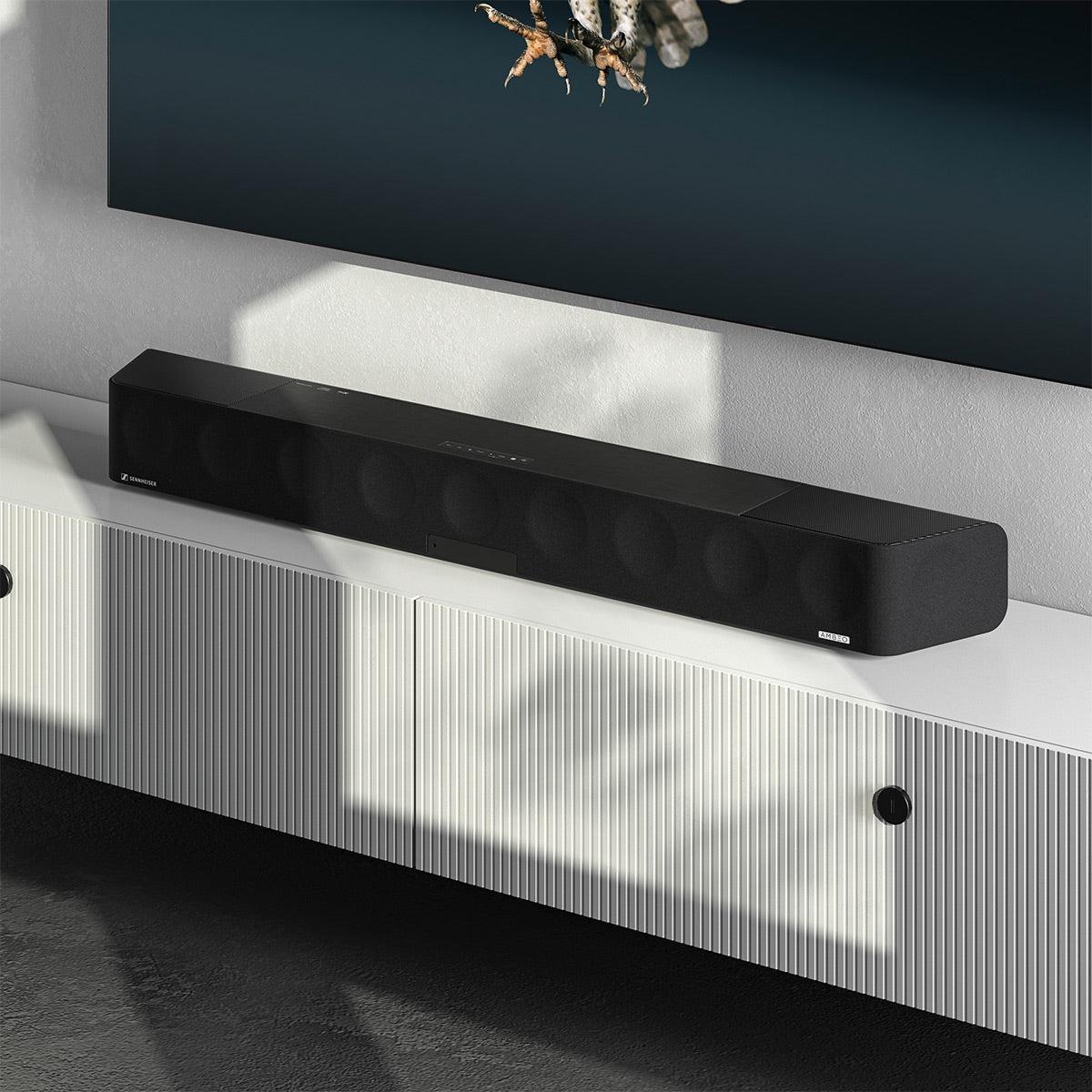
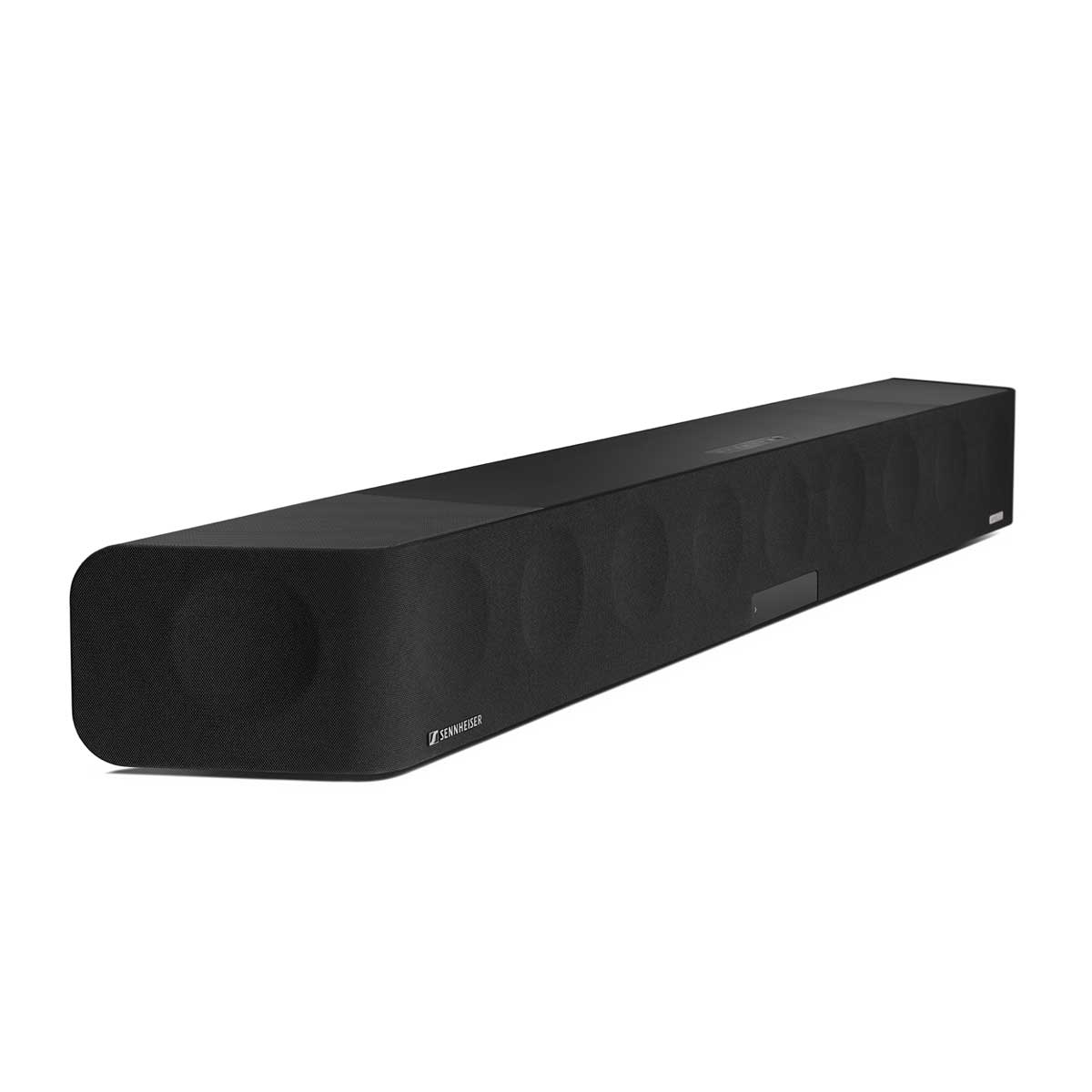
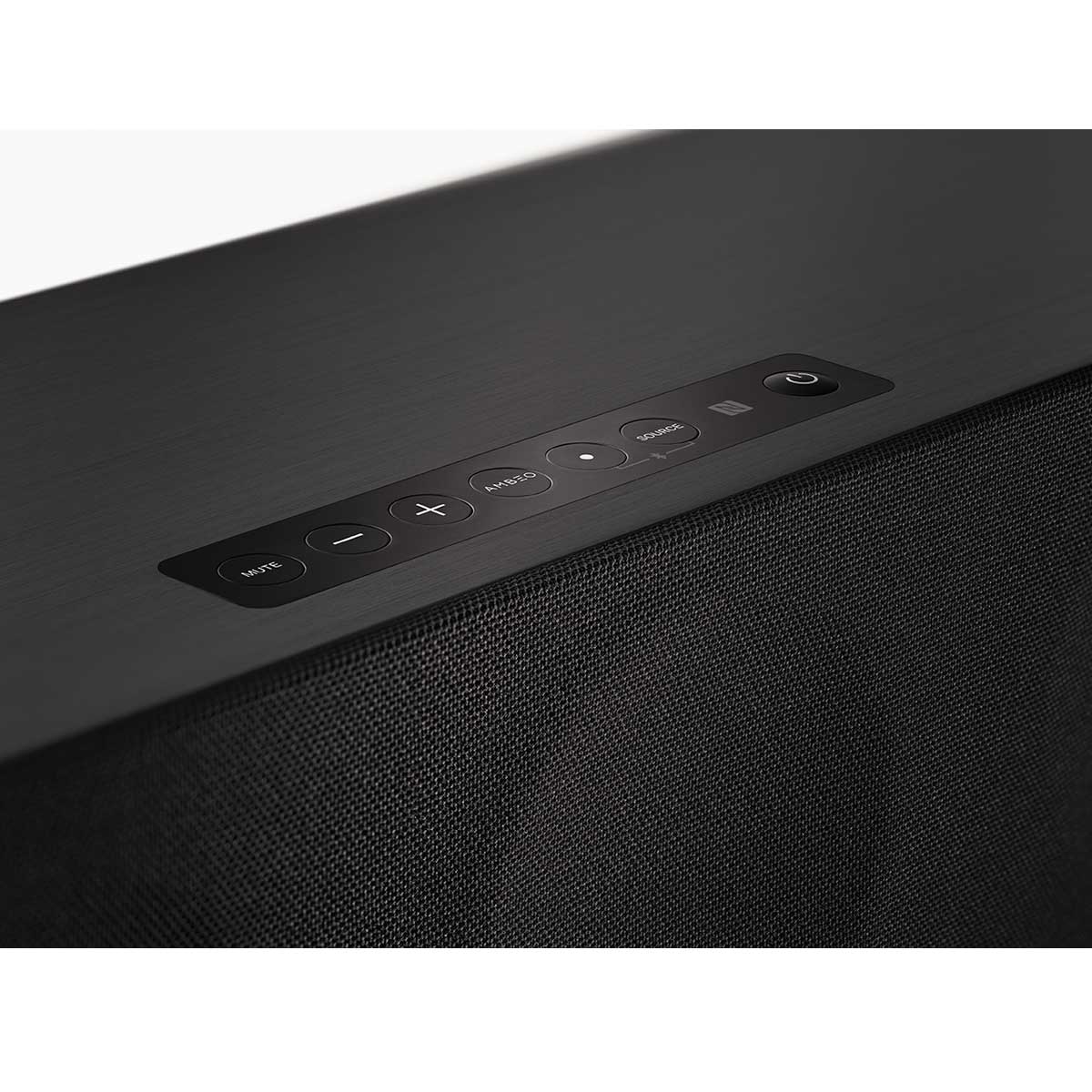
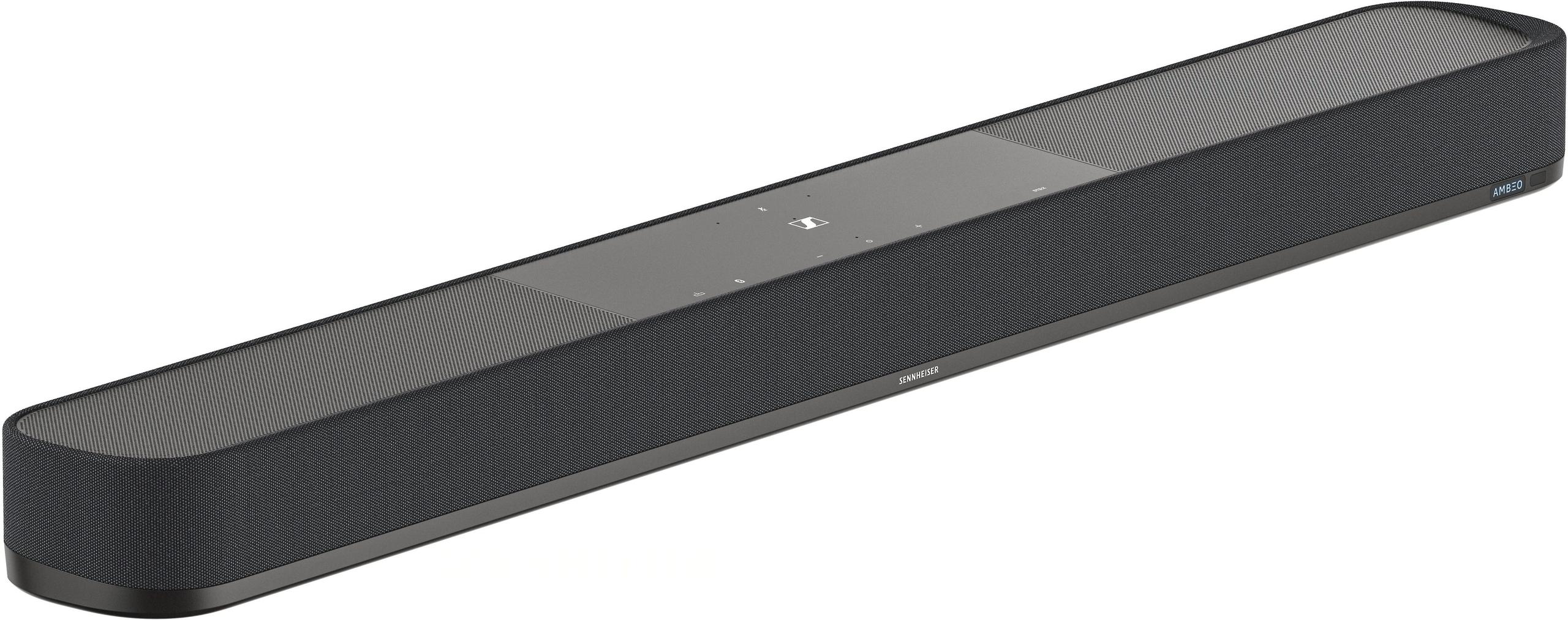
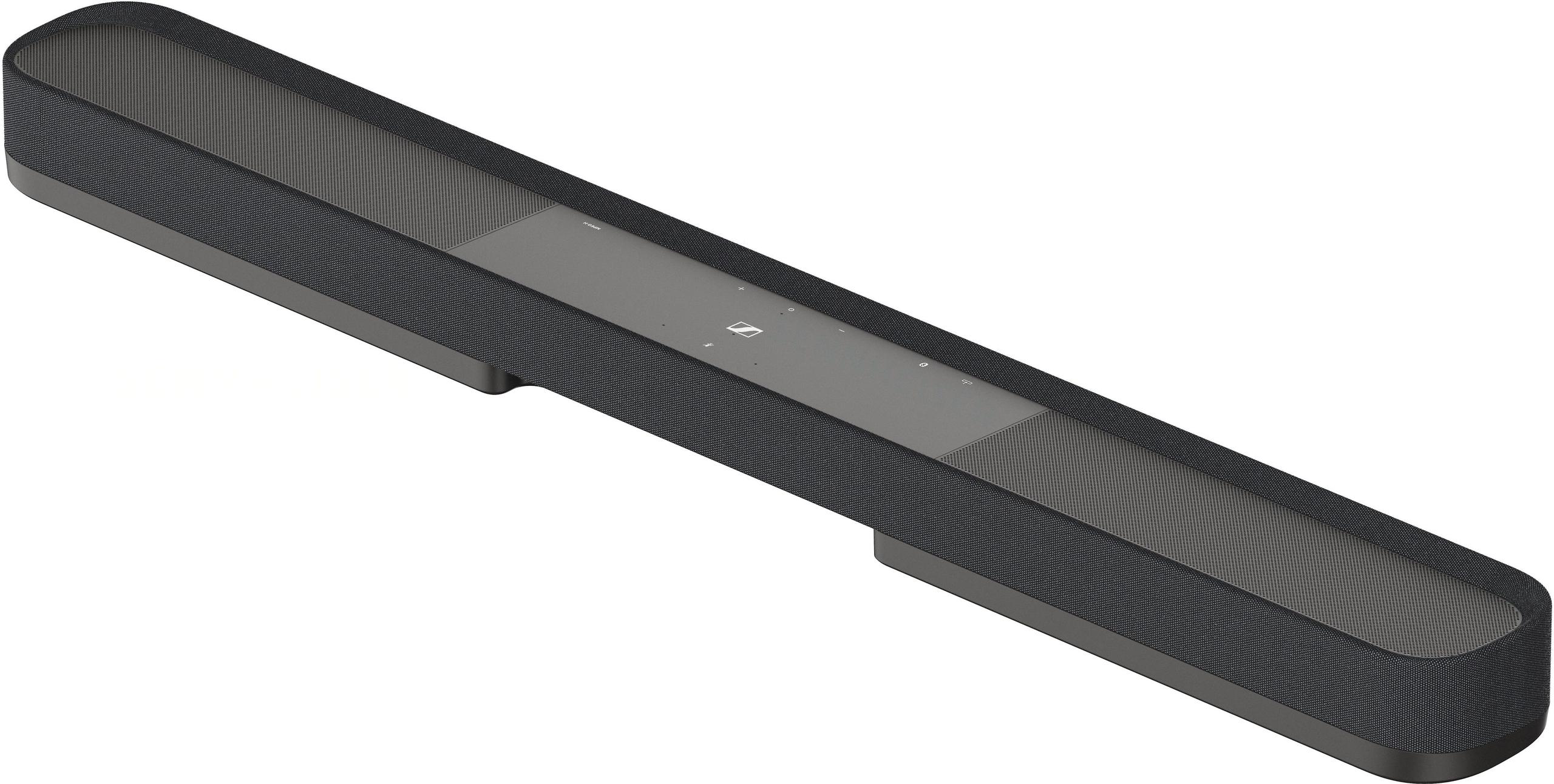
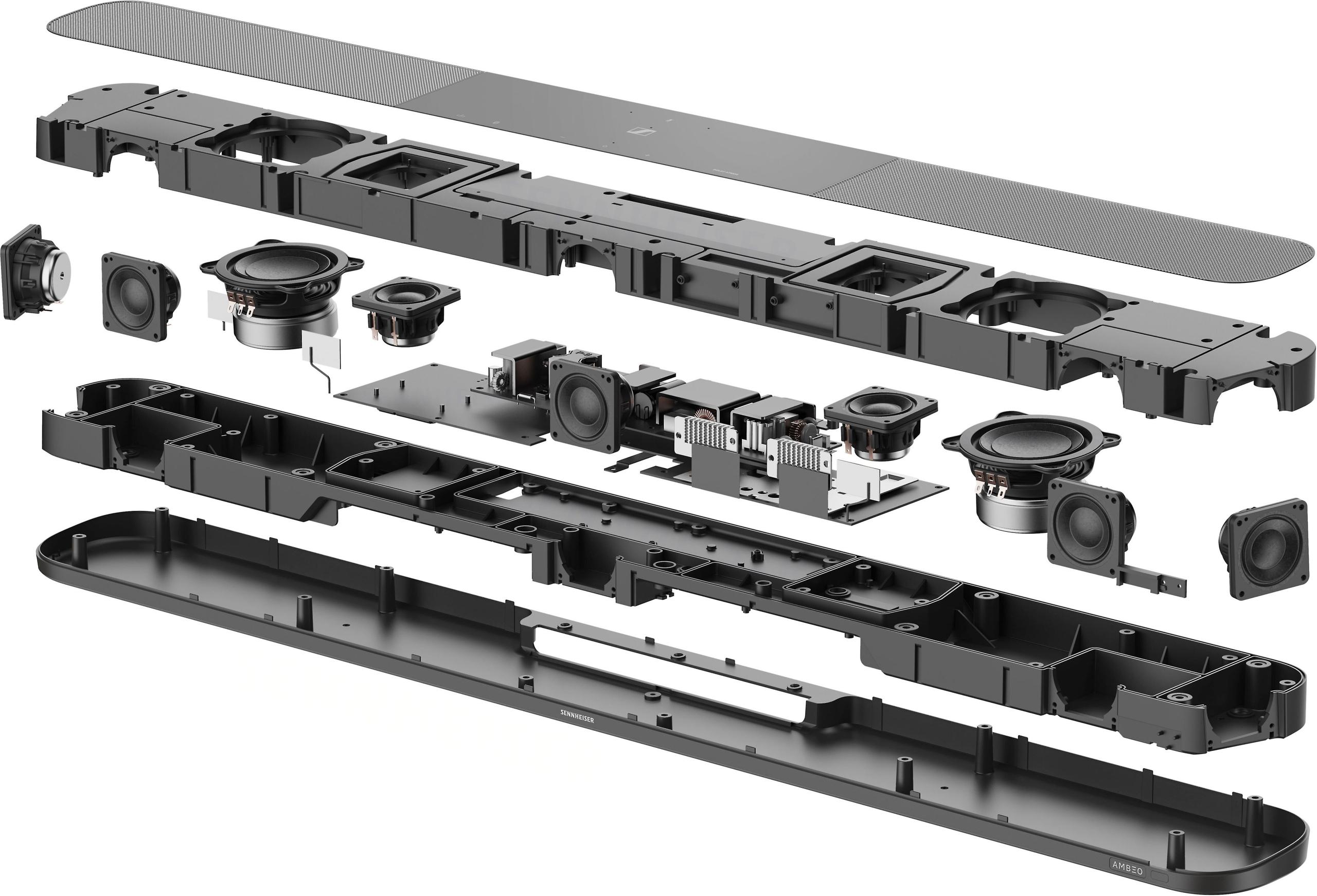
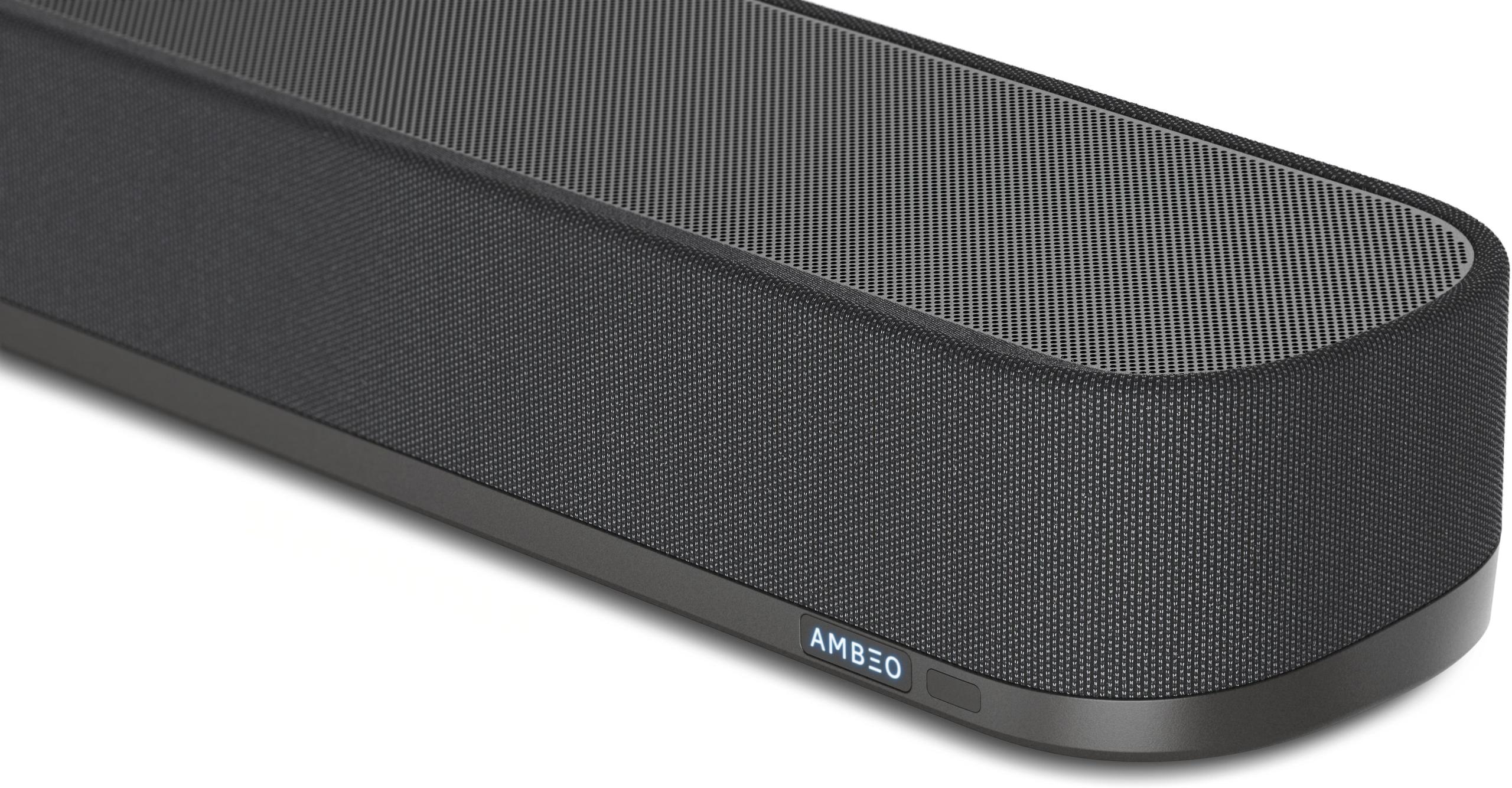
The Sennheiser AMBEO, originally released in 2019 but significantly updated through 2025, represents the opposite philosophy. Instead of placing speakers around your room, it uses a single, substantial soundbar packed with 13 individual drivers and some very sophisticated processing to create the illusion that sounds are coming from all around you.
This approach relies on psychoacoustics—the study of how your brain interprets sound. The AMBEO bounces audio off your ceiling and walls using precisely angled speakers, then analyzes how those reflections reach your ears. Your brain, which has spent your entire life learning to interpret sound reflections and timing differences, gets tricked into thinking there are speakers where there aren't any.
The technology behind this is genuinely impressive. The AMBEO uses virtualization algorithms developed with Fraunhofer, a German research institute famous for creating the MP3 format. These algorithms don't just bounce sound around randomly—they actually map your room's acoustic characteristics and adjust their processing accordingly.
Here's where it gets really clever: the system includes an external calibration microphone that you place at your listening position. The soundbar then plays test tones and listens to how they reflect around your room. It learns where your walls are, how reflective they are, what furniture might be absorbing sound, and how high your ceiling is. Based on this acoustic fingerprint, it customizes its processing to your specific space.
The AMBEO supports advanced audio formats like Dolby Atmos and DTS:X, which include height information—sounds that are supposed to come from above you. Traditional soundbars struggle with this because they're sitting below your TV, but the AMBEO uses upward-firing drivers to bounce sound off your ceiling. When calibrated properly, you can actually hear helicopters flying overhead or rain falling from above.
Professional reviews consistently praise the AMBEO's ability to create an expansive, three-dimensional soundstage that extends well beyond the physical boundaries of the soundbar. The experience is less like "a soundbar playing audio" and more like "being surrounded by invisible speakers."
The bass performance difference between these systems tells an interesting story about design philosophy. The Poseidon D50 uses a dedicated wireless subwoofer with a 5.25-inch driver, which means it can be placed anywhere in your room for optimal bass response. Subwoofers work best when they're not right next to the main speakers, so this flexibility is valuable.
The AMBEO takes a different approach, building six 4-inch woofers directly into the soundbar. These are larger than typical soundbar drivers and can reach down to 30Hz, which is genuinely deep bass territory. However, they're all in one location, which limits your ability to optimize bass placement for your room.
In practical terms, the Poseidon D50 tends to produce more punchy, dramatic bass that really emphasizes explosive movie moments. User reviews consistently mention feeling the impact of action scenes. The AMBEO produces more refined, integrated bass that supports the overall soundstage without drawing attention to itself.
Both systems handle dialogue well, but through different methods. The Poseidon D50 has a dedicated center channel in its main soundbar, plus the ability to independently adjust rear speaker levels so they don't interfere with dialogue during complex scenes. This gives you direct control over the most important element of movie audio.
The AMBEO uses multiple drivers to create a virtual center channel, with room calibration ensuring dialogue appears to come from your TV screen regardless of where you're sitting. The processing is sophisticated enough to maintain dialogue clarity even when the system is creating complex surround effects.
Based on user feedback, both systems excel here, but the AMBEO has a slight edge for users with challenging room layouts or multiple seating positions, since its calibration can optimize for broader listening areas.
This is where the fundamental difference in approach becomes most apparent. The Poseidon D50 creates surround effects by actually playing sounds from behind you. When something explodes to your left rear in a movie, that sound literally comes from a speaker positioned to your left rear. It's accurate, convincing, and works exactly as intended.
The AMBEO creates surround effects through acoustic manipulation, bouncing sounds off surfaces to create the illusion of directional audio. When calibrated properly in an appropriate room, the results can be startling—sounds genuinely seem to come from beside and behind you, even though there are no speakers there.
The key phrase is "when calibrated properly in an appropriate room." The AMBEO's effectiveness depends heavily on your space having reasonably reflective walls and ceiling, and the right proportions. In challenging acoustic environments—rooms with very high ceilings, lots of soft furniture, or unusual layouts—the virtual surround effects may not work as intended.
The Poseidon D50 works regardless of your room's acoustic properties because it's using actual speakers in actual locations.
At the time of writing, these systems occupy very different price segments, with the AMBEO commanding significantly more investment than the Poseidon D50. This price difference reflects not just different approaches to surround sound, but different target markets and design philosophies.
The Poseidon D50 represents exceptional value in the true surround sound category. Getting physical rear speakers, a wireless subwoofer, and comprehensive app control at its price point is remarkable. Most competing systems at similar price levels are stereo soundbars with basic virtual surround processing.
The AMBEO commands premium pricing but delivers technology and convenience that justify the investment for the right user. The single-cable setup, sophisticated room calibration, and advanced audio processing would typically require much more expensive separates to achieve.
The practical differences extend beyond audio performance. The Poseidon D50 requires running 19.6-foot cables to your rear speakers, which means either visible wires or some creative cable management. You'll also need to find appropriate placement for the subwoofer and rear speakers, which might not work in all room layouts.
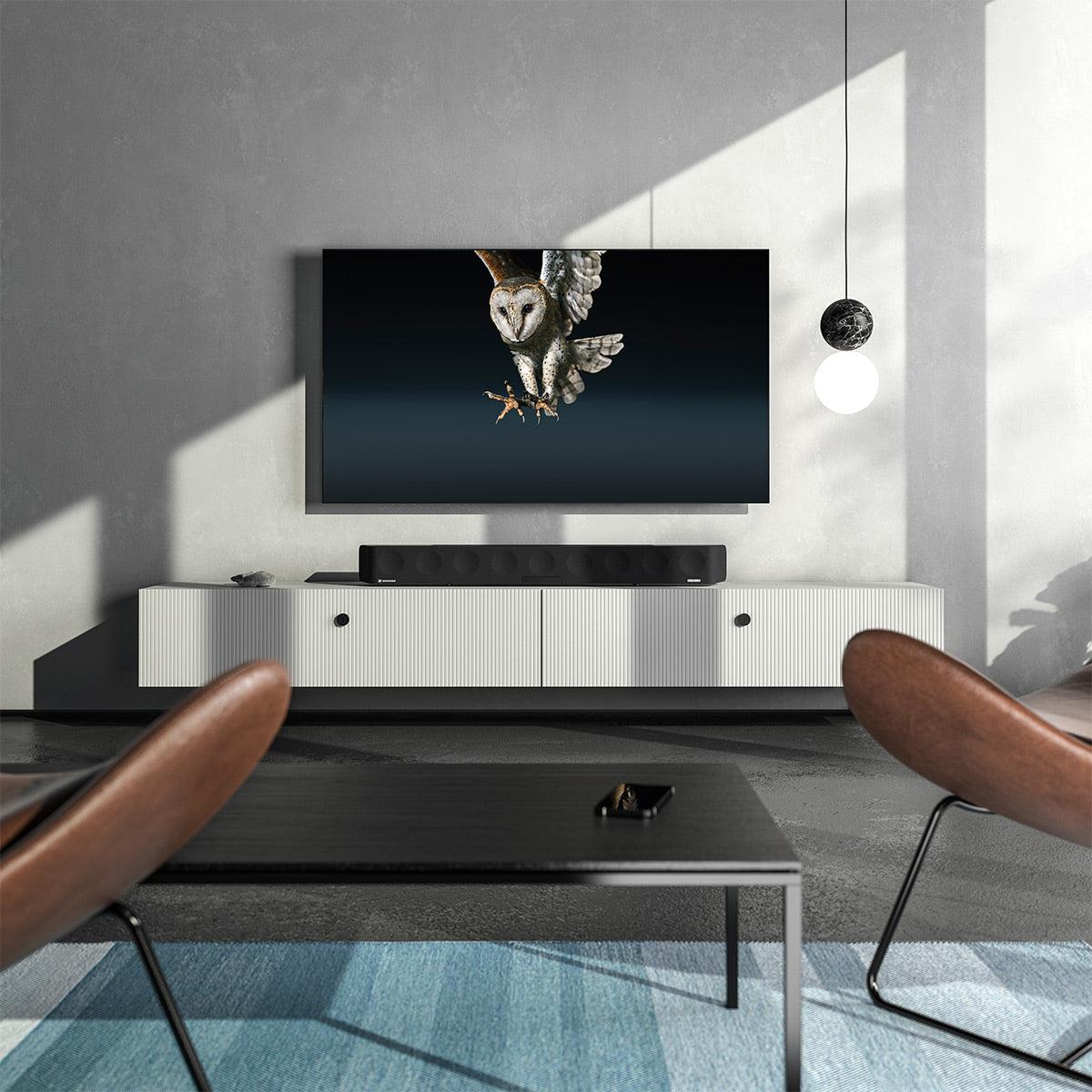
The AMBEO connects with a single HDMI cable and sits below your TV like any other soundbar. No additional placement considerations, no cable management, no convincing family members that speaker wires are worth the visual compromise.
For renters, temporary living situations, or spaces where running cables isn't practical, the AMBEO's simplicity is a major advantage. For permanent installations where optimal performance is the priority, the Poseidon D50's physical speaker approach often delivers better results.
The decision between these systems should start with your room and lifestyle, then consider your audio priorities and budget.
Choose the Ultimea Poseidon D50 if you have a dedicated TV room where you can properly position rear speakers, don't mind some cable management, and want authentic surround sound that works consistently regardless of your room's acoustic properties. It's particularly compelling for users who prioritize value and want the most surround sound performance for their investment. The system excels for movie watching and gaming, where directional effects and impactful bass enhance the experience.
Choose the Sennheiser AMBEO if you want high-end performance without installation complexity, have a room with reasonable acoustic properties for virtual surround processing, and are willing to invest significantly more for cutting-edge technology. It's ideal for users who value sophisticated audio processing, have content rich in Dolby Atmos, or live in spaces where physical rear speakers aren't practical.
The AMBEO also makes more sense if you listen to a lot of music through your soundbar, as its processing creates a more spacious, enveloping experience for stereo content. The Poseidon D50 is more focused on movie and TV performance.
Consider your long-term plans too. If you might move frequently or your listening room setup could change, the AMBEO's single-unit design offers more flexibility. If you're setting up a permanent home theater and want maximum performance for your investment, the Poseidon D50's physical speaker approach typically delivers more convincing results.
Both systems represent their respective approaches well, but they're solving different problems for different users. The Poseidon D50 gives you genuine surround sound at an accessible price, while the AMBEO uses advanced technology to create impressive virtual surround without the complexity. Your choice depends on whether you prioritize authentic surround placement or sophisticated single-unit convenience.
| Ultimea Poseidon D50 5.1 Soundbar Home Theater (2025) | Sennheiser AMBEO Soundbar |
|---|---|
| Audio Configuration - Determines authenticity of surround sound experience | |
| True 5.1 channel with physical rear speakers and wireless subwoofer | Virtual 5.1.4 channel using 13 drivers in single soundbar unit |
| Total Power Output - Impacts volume levels and dynamic range | |
| 320W peak power across all components | 500W peak power (250W RMS) from integrated amplifiers |
| Driver Configuration - Affects sound quality and frequency response | |
| 6 high-performance drivers plus 2 rear satellites and subwoofer | 13 high-end drivers: 6x 4" woofers, 5x 1" tweeters, 2x 3.5" full-range |
| Bass Response - Critical for movie impact and music enjoyment | |
| Dedicated 5.25" wireless subwoofer with BassMX™ technology | Integrated 6x 4" long-throw woofers achieving 30Hz response |
| Setup Complexity - Determines ease of installation | |
| Requires rear speaker cable runs (19.6ft included) and subwoofer placement | Single HDMI connection with automatic room calibration |
| Room Calibration - Optimizes sound for your specific space | |
| Manual EQ adjustment through app with 121 preset matrices | Advanced automatic calibration using external microphone |
| Surround Sound Technology - How immersive effects are created | |
| SurroundX™ processing with physical rear speaker placement | AMBEO 3D virtualization using Fraunhofer algorithms |
| Audio Format Support - Compatibility with premium content | |
| Dolby Digital and DTS decoding, PCM upmixing to 5.1 | Dolby Atmos, DTS:X, MPEG-H, and 360 Reality Audio |
| Connectivity Options - Determines device compatibility | |
| HDMI eARC, Optical, AUX, USB, Bluetooth 5.3 | HDMI eARC, Optical, RCA, WiFi, Bluetooth, Chromecast built-in |
| App Control Features - Customization and convenience options | |
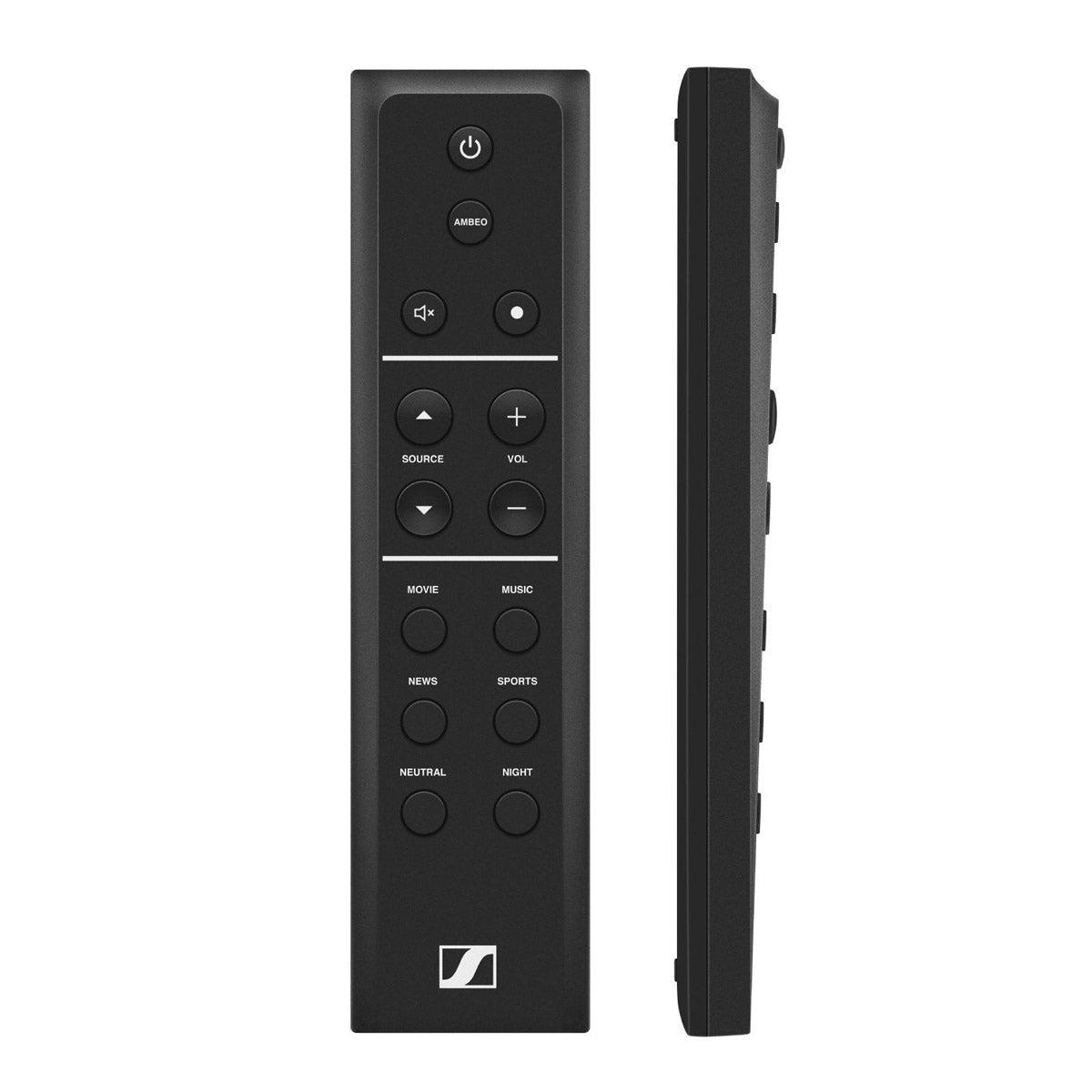
| Comprehensive app with 10-band EQ, independent rear speaker control | Sennheiser AMBEO Smart Control app with preset modes and updates |
| Physical Dimensions - Space requirements and aesthetics | |
| Main bar: 400mm x 70mm x 90mm plus separate components | Single unit: 1265mm x 135mm x 171mm, 18.5kg |
| Recommended Room Size - Performance optimization guidelines | |
| 20-35m² (250-380ft²) with proper rear speaker placement | Medium to large rooms with reflective surfaces for virtualization |
| Height Channel Support - Overhead audio effects capability | |
| No dedicated height channels (traditional 5.1 layout) | Virtual height channels through upward-firing drivers and processing |
The Ultimea Poseidon D50 is better for traditional home theater setups because it provides true 5.1 surround sound with physical rear speakers that create authentic directional audio. The Sennheiser AMBEO excels in premium home theaters where advanced virtual surround and Dolby Atmos height effects are priorities, but requires proper room acoustics to work optimally.
Yes, the Ultimea Poseidon D50 comes with dedicated rear satellite speakers that are essential for its true 5.1 surround sound experience. These physical rear speakers are what differentiate it from virtual surround soundbars and provide genuine directional audio effects for movies and gaming.
Yes, the Sennheiser AMBEO uses advanced virtualization technology to create convincing surround sound effects without any additional speakers. It bounces audio off your room's walls and ceiling using 13 strategically placed drivers to simulate speakers positioned around your listening area.
The Sennheiser AMBEO is much easier to set up, requiring only a single HDMI connection and automatic room calibration. The Ultimea Poseidon D50 requires running speaker cables to rear positions and finding optimal placement for the wireless subwoofer, though setup remains straightforward with included instructions.
The Ultimea Poseidon D50 uses a dedicated wireless 5.25" subwoofer that delivers punchy, room-shaking bass ideal for action movies. The Sennheiser AMBEO integrates six 4" woofers directly into the soundbar for refined bass response down to 30Hz, but lacks the placement flexibility of a separate subwoofer.
The Sennheiser AMBEO typically works better in smaller rooms because it doesn't require space for rear speakers and can optimize its virtual surround processing for compact spaces. The Ultimea Poseidon D50 needs adequate distance between seating and rear speakers to create proper surround effects.
Only the Sennheiser AMBEO supports true Dolby Atmos with height channel processing through its upward-firing drivers. The Ultimea Poseidon D50 focuses on traditional 5.1 surround sound and can decode Dolby Digital content but doesn't support Atmos height effects.
The Ultimea Poseidon D50 offers exceptional value by providing true 5.1 surround sound with physical components at an accessible price point. The Sennheiser AMBEO commands premium pricing but delivers advanced technology and convenience that justify the investment for users wanting cutting-edge virtual surround processing.
Yes, both soundbars offer comprehensive smartphone app control. The Ultimea Poseidon D50 provides extensive customization with 121 EQ presets and independent rear speaker volume control. The Sennheiser AMBEO offers smart control features including room optimization settings and audio format management.
The Sennheiser AMBEO generally provides a more refined music listening experience with its sophisticated processing that creates an expansive soundstage for stereo content. The Ultimea Poseidon D50 is optimized primarily for movies and TV, though it offers multiple EQ modes including dedicated music settings.
Both soundbars offer comprehensive connectivity, but the Sennheiser AMBEO includes additional options like built-in WiFi, Chromecast, and advanced streaming capabilities. The Ultimea Poseidon D50 provides essential connections including HDMI eARC, optical, and Bluetooth 5.3 for reliable device compatibility.
For first-time home theater buyers, the Ultimea Poseidon D50 is often the better choice because it provides genuine surround sound at an accessible price and teaches you what true directional audio should sound like. The Sennheiser AMBEO is better suited for users who want premium performance without installation complexity or have experience with high-end audio systems.
We've done our best to create useful and informative comparisons to help you decide what product to buy. Our research uses advanced automated methods to create this comparison and perfection is not possible - please contact us for corrections or questions. These are the sites we've researched in the creation of this article: youtube.com - eu.ultimea.com - newegg.com - tvsbook.com - youtube.com - provantage.com - ultimea.com - techradar.com - community.ultimea.com - homedepot.com - community.ultimea.com - ultimea.com - ultimea.de - youtube.com - medisamhealthcenter.com - ultimea.com - youtube.com - walmart.com - bestbuy.com - rtings.com - techradar.com - audioxpress.com - whathifi.com - upscaleaudio.com - soundstagesimplifi.com - global.sennheiser-hearing.com - sennheiser-hearing.com - audioadvice.com - abt.com - moon-audio.com

Privacy Policy
Terms and Conditions - Affiliate Policy
Home Security
© Copyright 2008-2026.
11816 Inwood Rd #1211, Dallas, TX 75244