





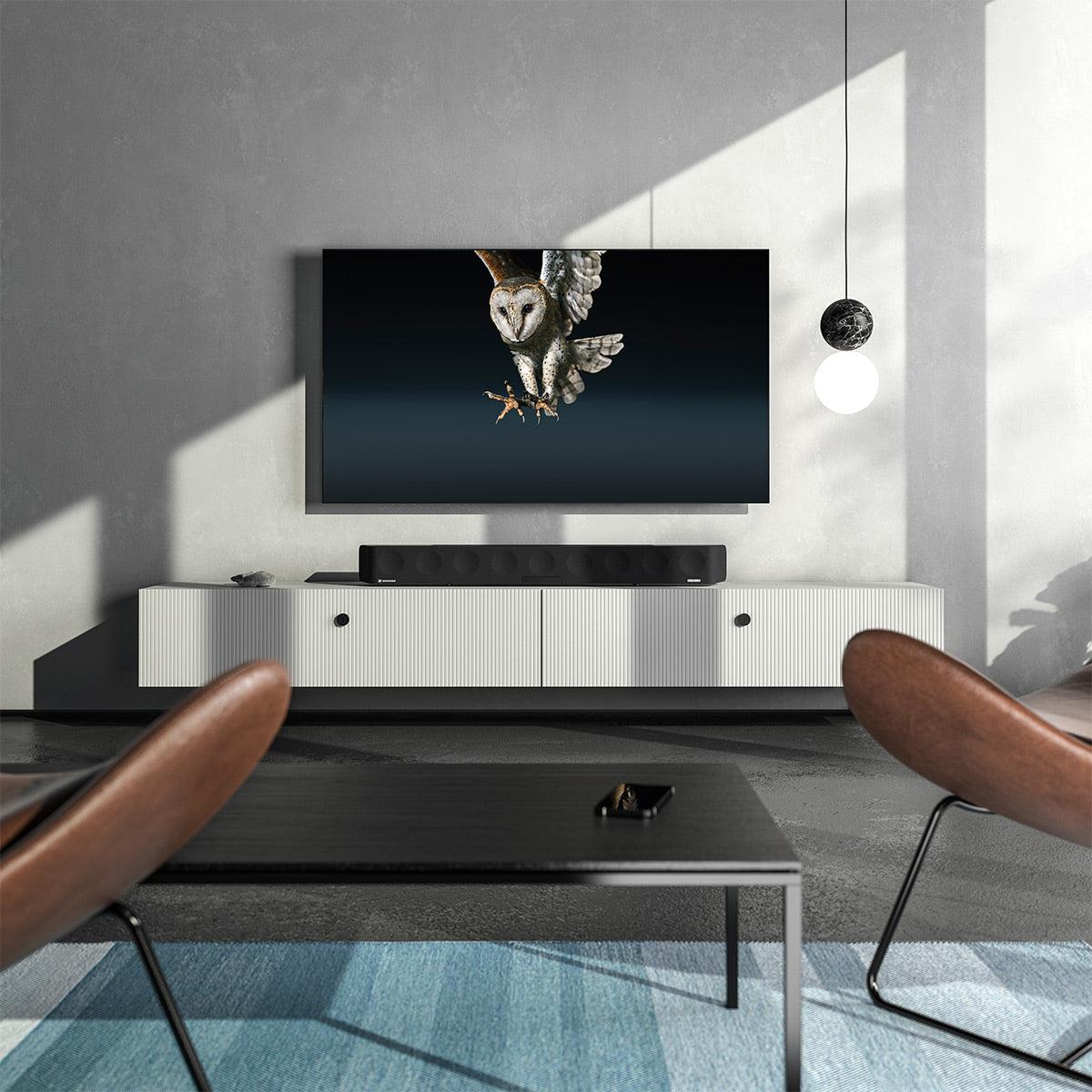


When you're sitting in your living room watching Top Gun: Maverick and those fighter jets scream overhead, you want to feel them, not just hear them. That's exactly what premium soundbars promise to deliver – that spine-tingling, immersive audio experience that makes your couch feel like the best seat in a movie theater. But here's the thing: not all premium soundbars achieve this goal the same way.
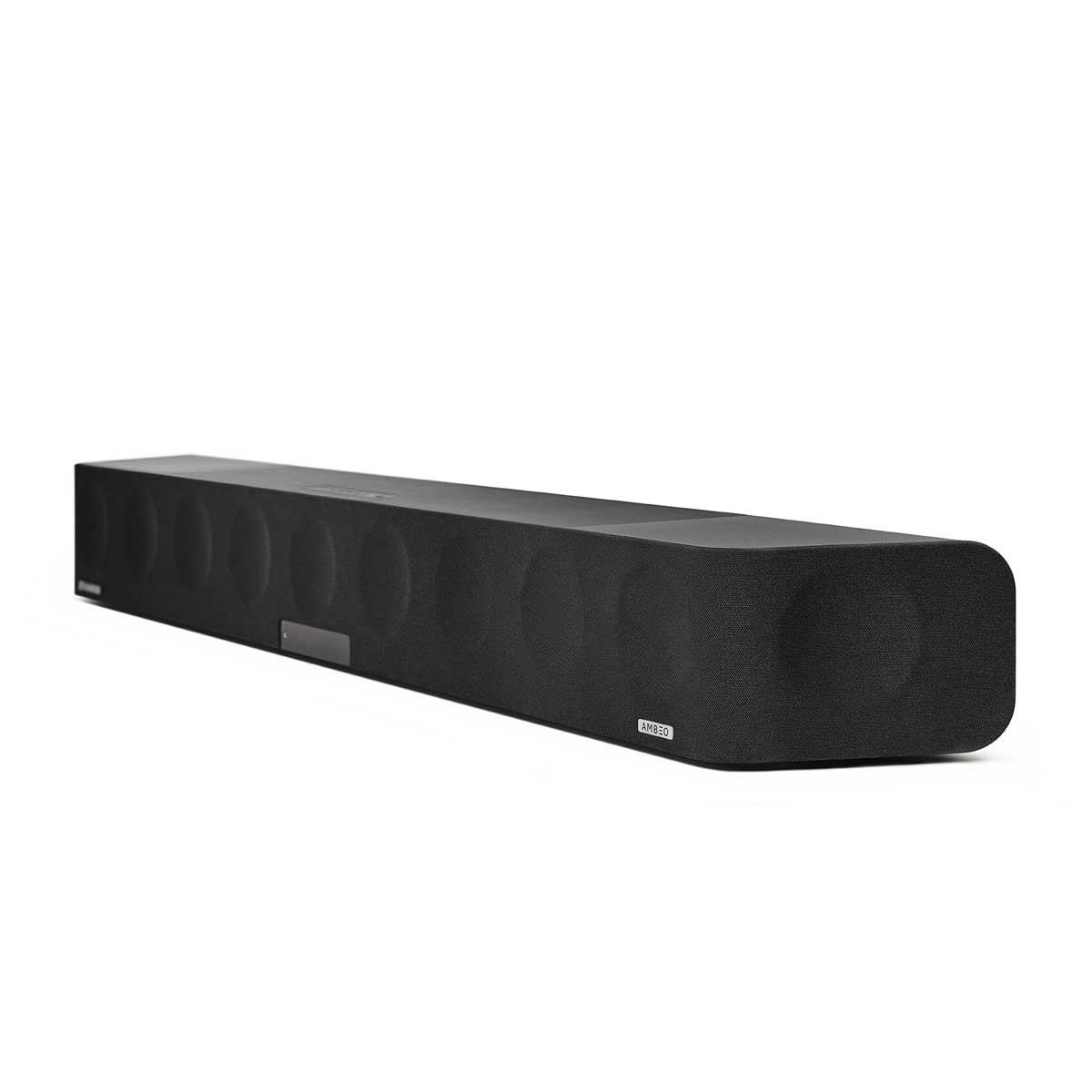
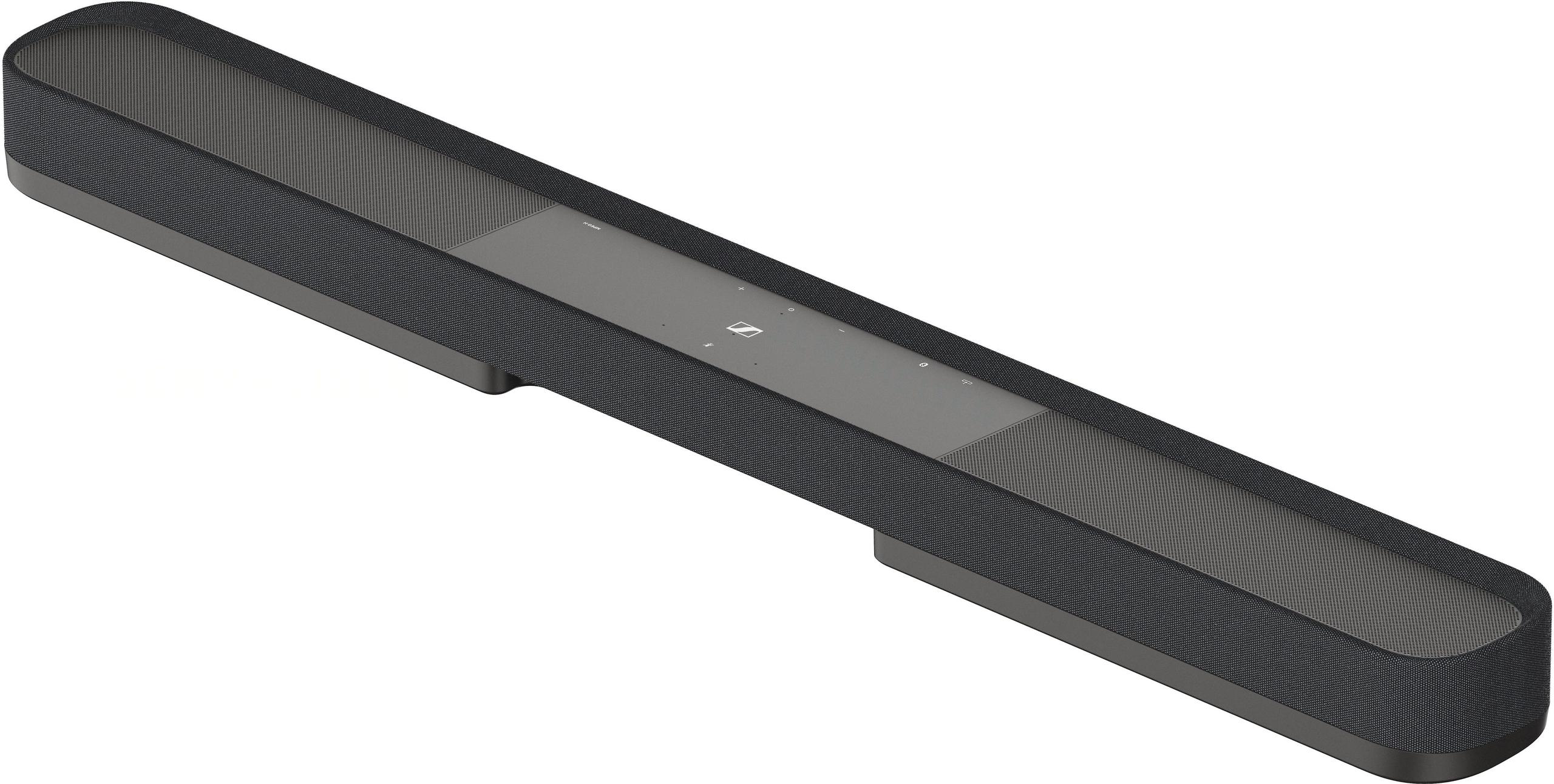
Today we're comparing two very different approaches to premium audio: the JBL Bar 1000 ($699.95) and the Sennheiser AMBEO ($1,999.95). These represent fundamentally different philosophies about how to create amazing sound, and understanding these differences will help you make the right choice for your home.
Before diving into these specific models, let's talk about what separates premium soundbars from their cheaper cousins. Regular soundbars basically take your TV's weak speakers and make them louder and clearer. Premium soundbars go several steps further – they try to recreate the experience of having speakers positioned all around your room, including above your head.
This surround sound magic happens in two main ways. The first approach uses physical speakers – actual satellite speakers you place around your room, just like a traditional home theater system. The second approach uses virtualization technology, which is essentially audio trickery that makes your brain think sounds are coming from places where there aren't actually any speakers.
Both methods have their strengths. Physical speakers give you authentic positioning – when a helicopter flies from left to right in a movie, you literally hear it moving from your left rear speaker to your right rear speaker. Virtualization, on the other hand, keeps things simple with just one bar while using sophisticated audio processing to fool your ears into hearing surround sound.
The other big consideration is bass handling. Deep, powerful bass requires moving a lot of air, which typically means you need either a large dedicated subwoofer or multiple smaller drivers working together. How a soundbar handles bass dramatically affects whether movie explosions feel impactful or just loud.
The JBL Bar 1000 launched in 2023 as JBL's flagship soundbar, representing their most ambitious attempt at bringing true home theater audio to the masses. It came at a time when consumers were increasingly frustrated with the limitations of single-bar solutions – people wanted real surround sound, not just the illusion of it.
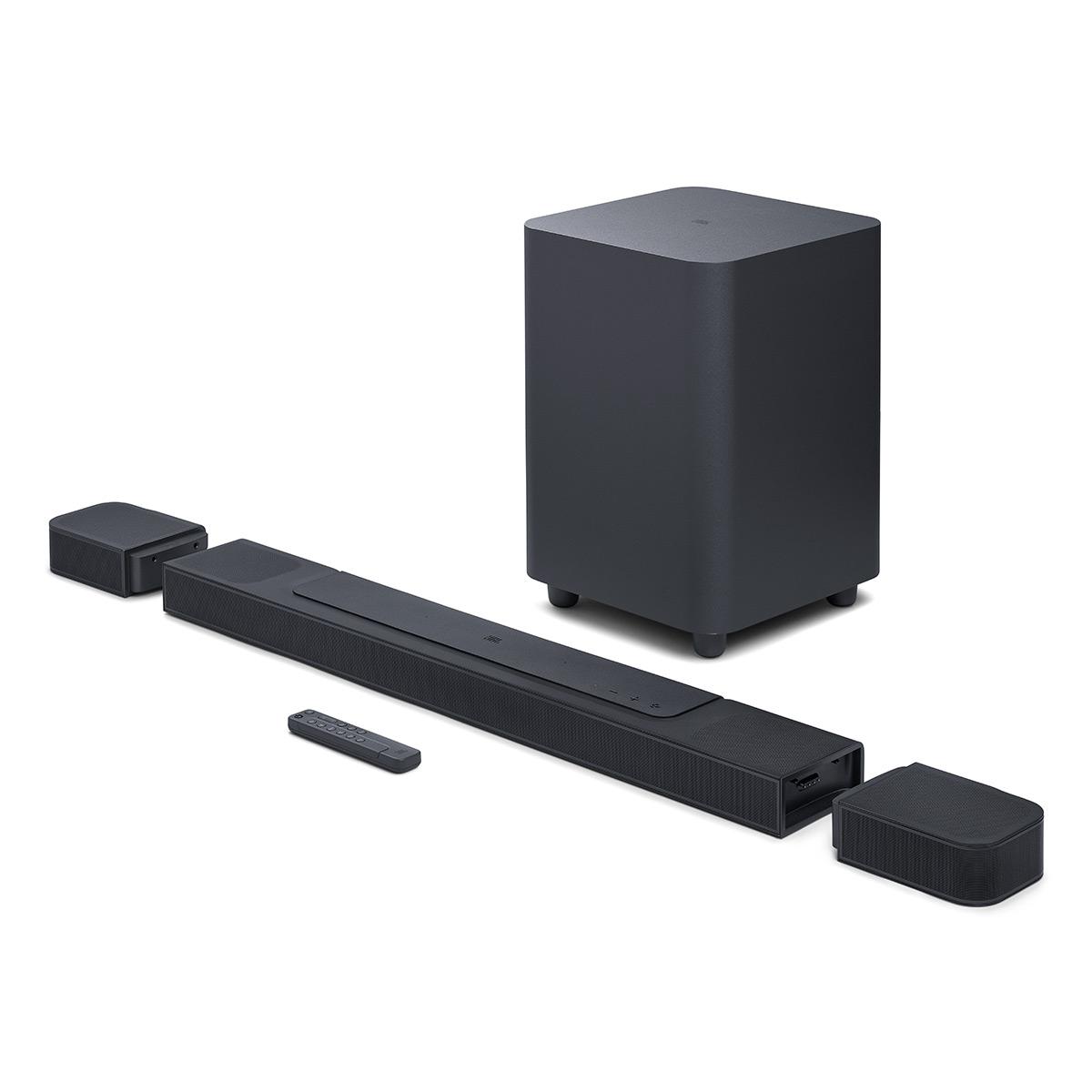
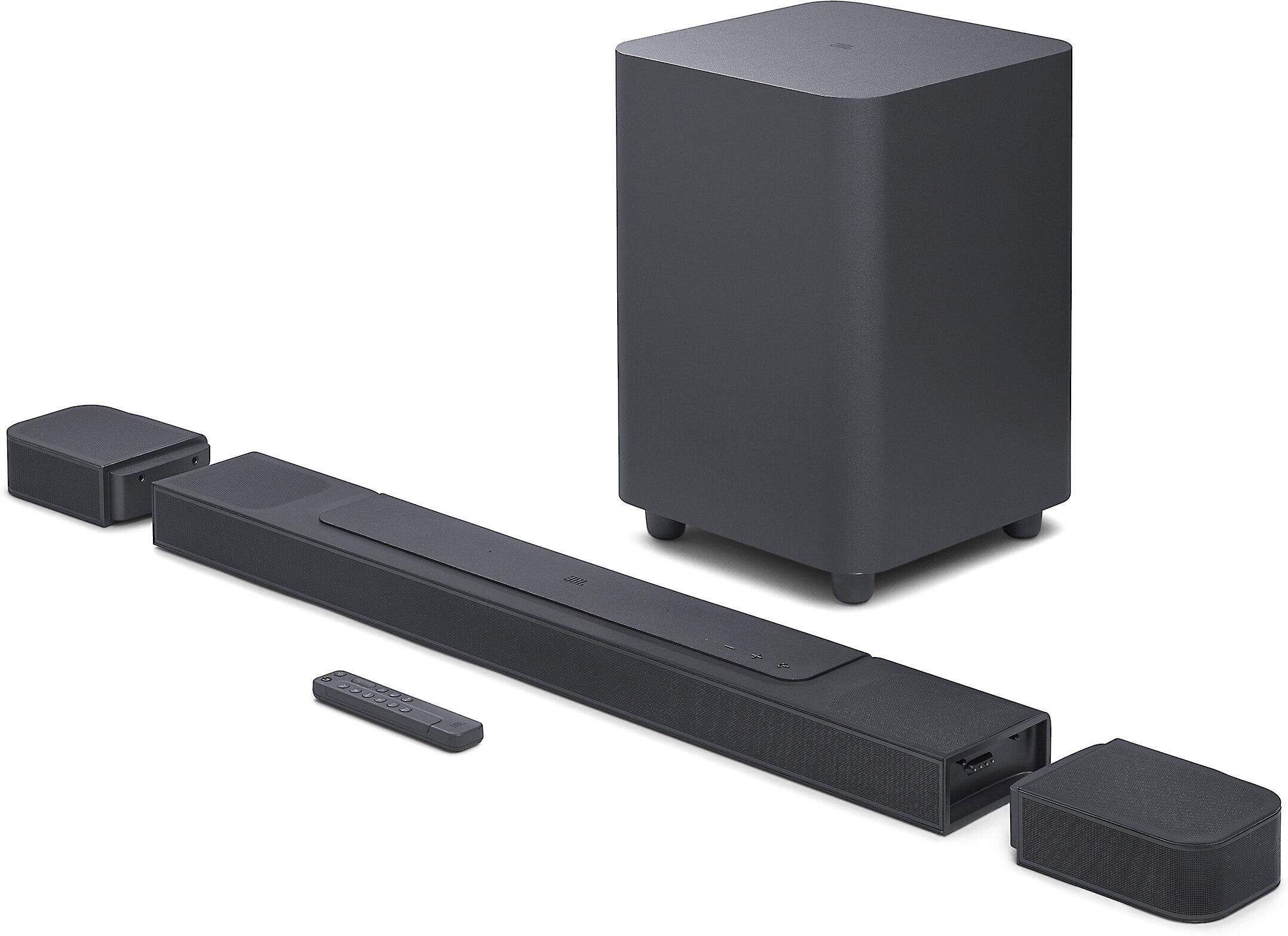
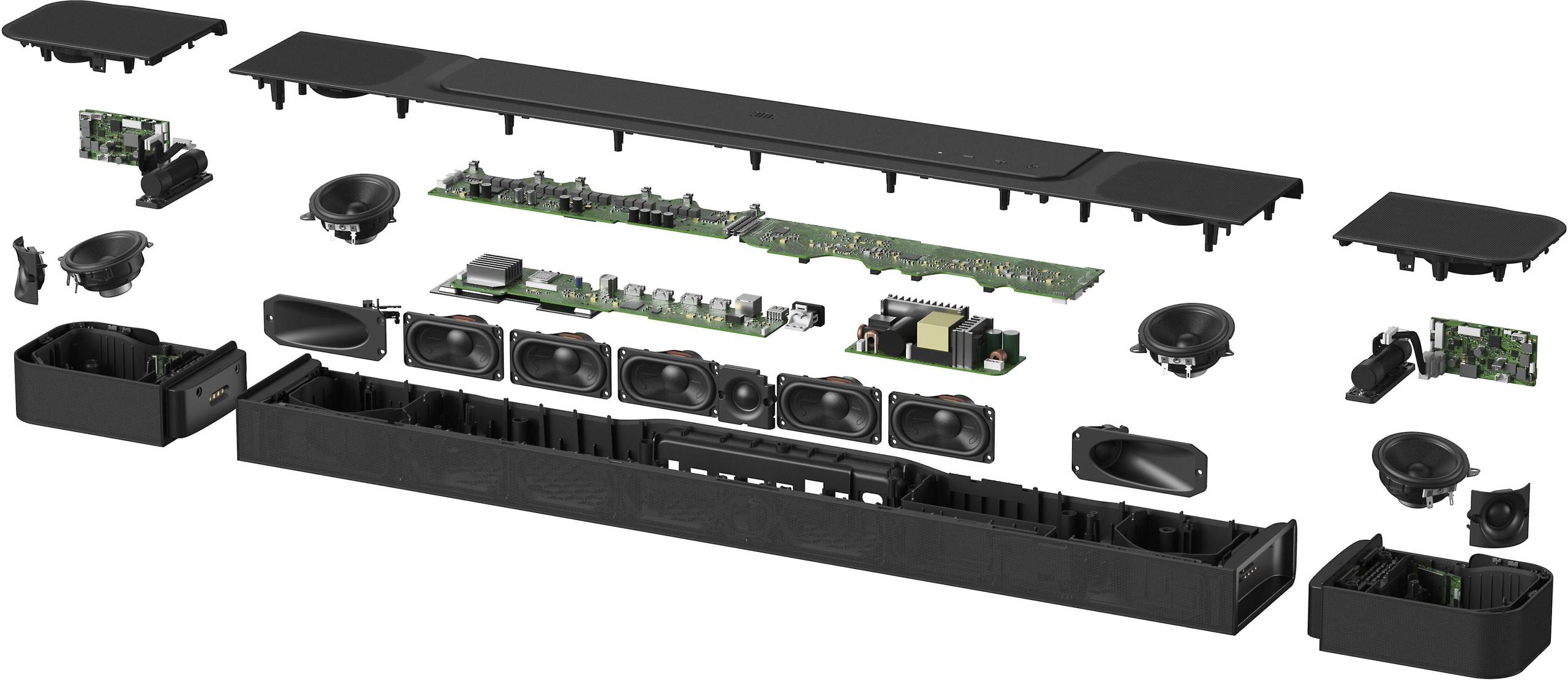
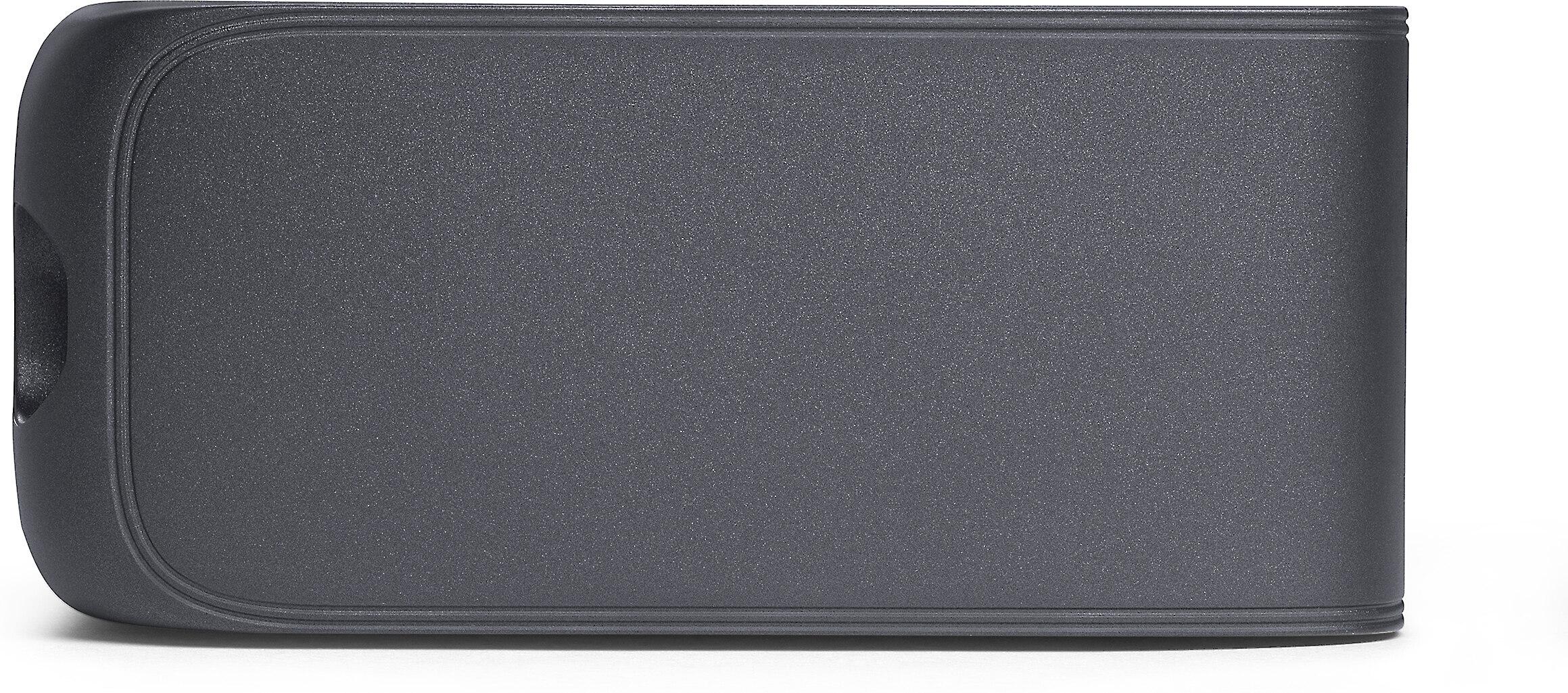
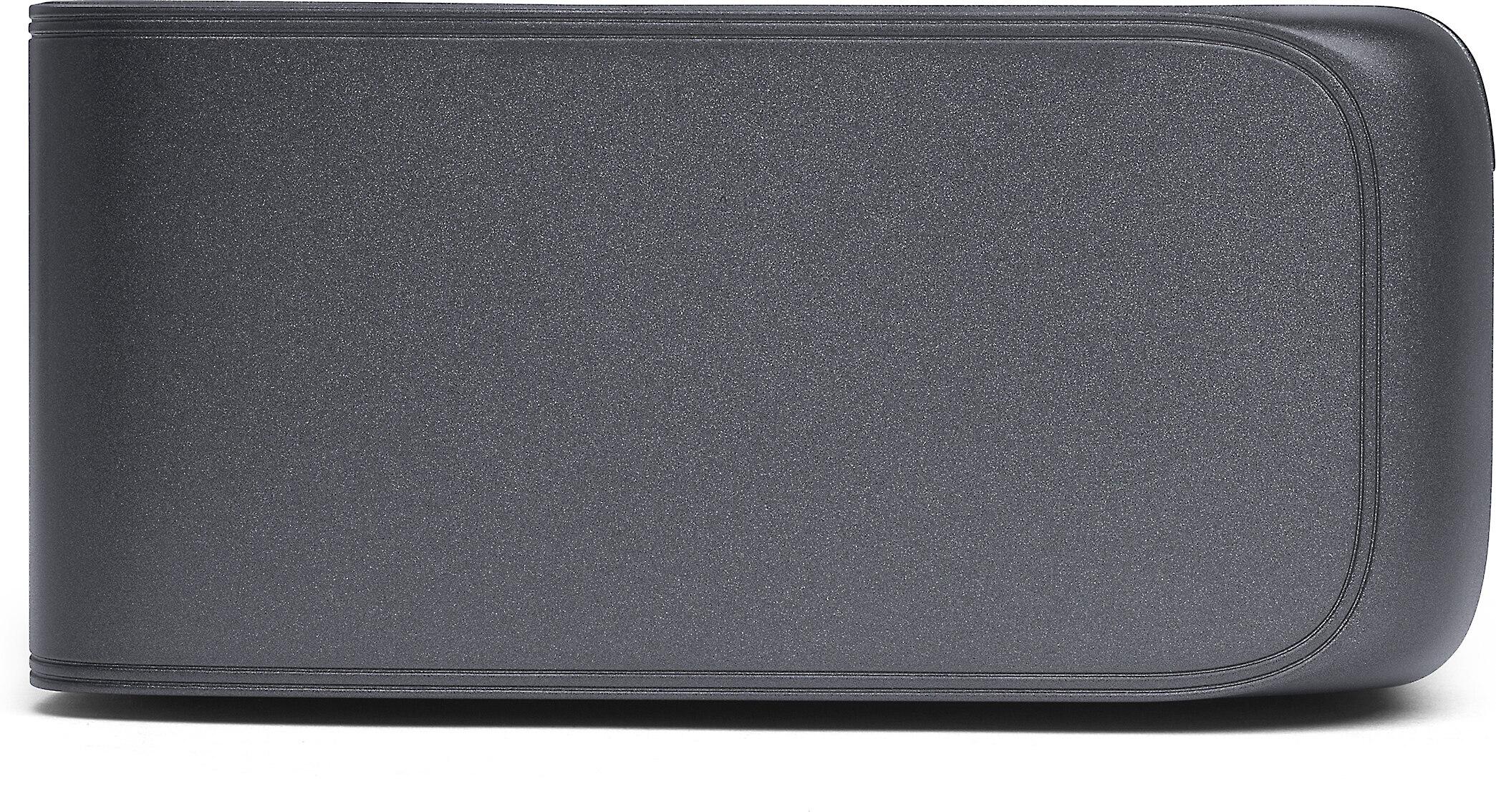
JBL's innovative solution was making the rear speakers detachable. When you want the full surround experience, they dock magnetically to the main bar. When you want to use them elsewhere, they pop off and become portable Bluetooth speakers with 10-hour battery life. It's a clever compromise that addresses both the desire for authentic surround sound and the practicality of wireless, multi-purpose speakers.
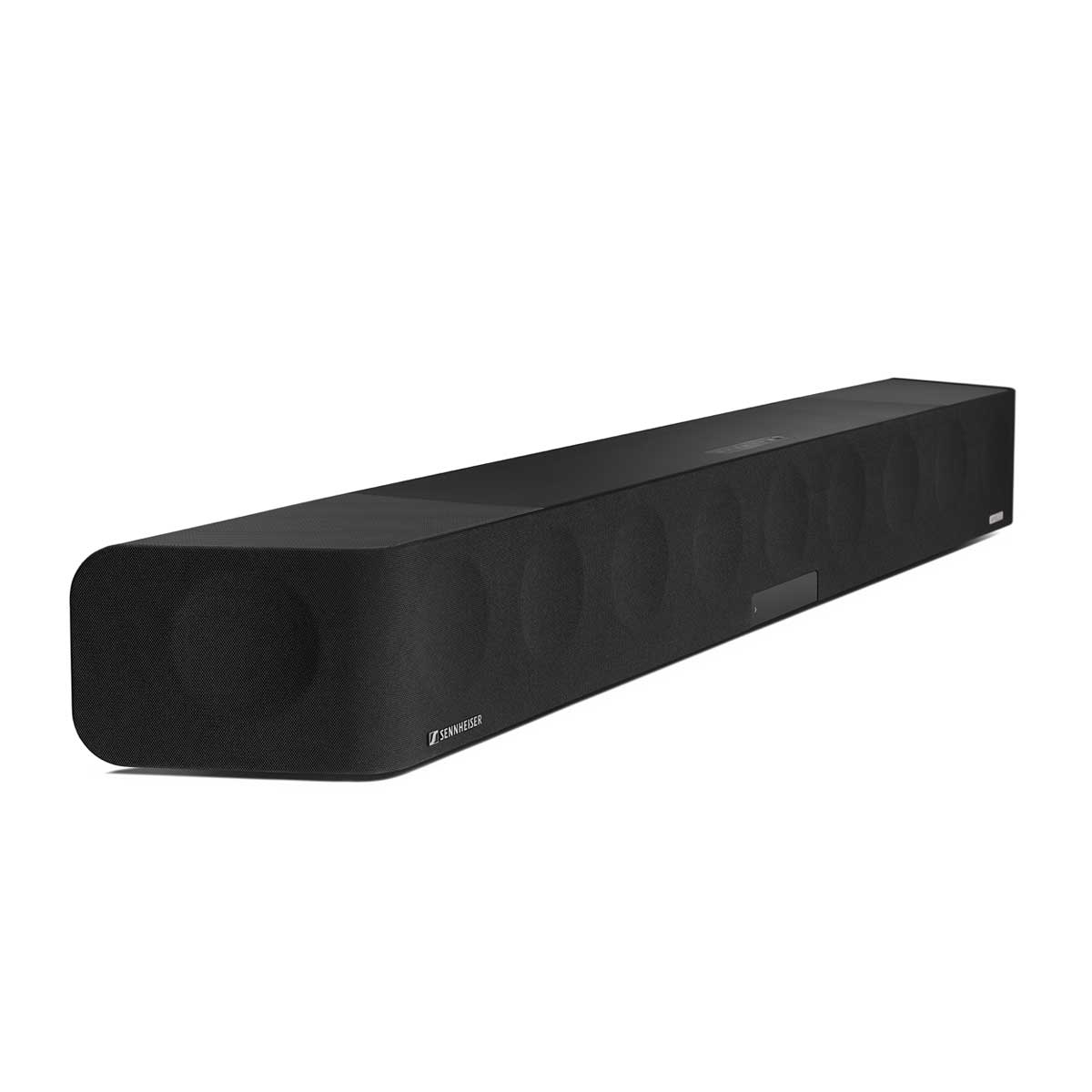
The Sennheiser AMBEO, on the other hand, first launched in 2019 with a radically different approach. Sennheiser, known for their premium headphones and professional audio equipment, partnered with Germany's Fraunhofer Institute (the research organization that helped develop MP3) to create virtualization technology that could convincingly simulate a full surround speaker setup using just one bar.
Since its original release, the AMBEO has received several significant firmware updates that improved its room calibration algorithms and added support for new streaming services like TIDAL Connect. The most recent versions can analyze your room's acoustics in about 10 minutes and adjust their sound processing accordingly – something that would have seemed like science fiction just a few years ago.
Here's where these two soundbars take completely different paths, and where your room size and preferences really matter.
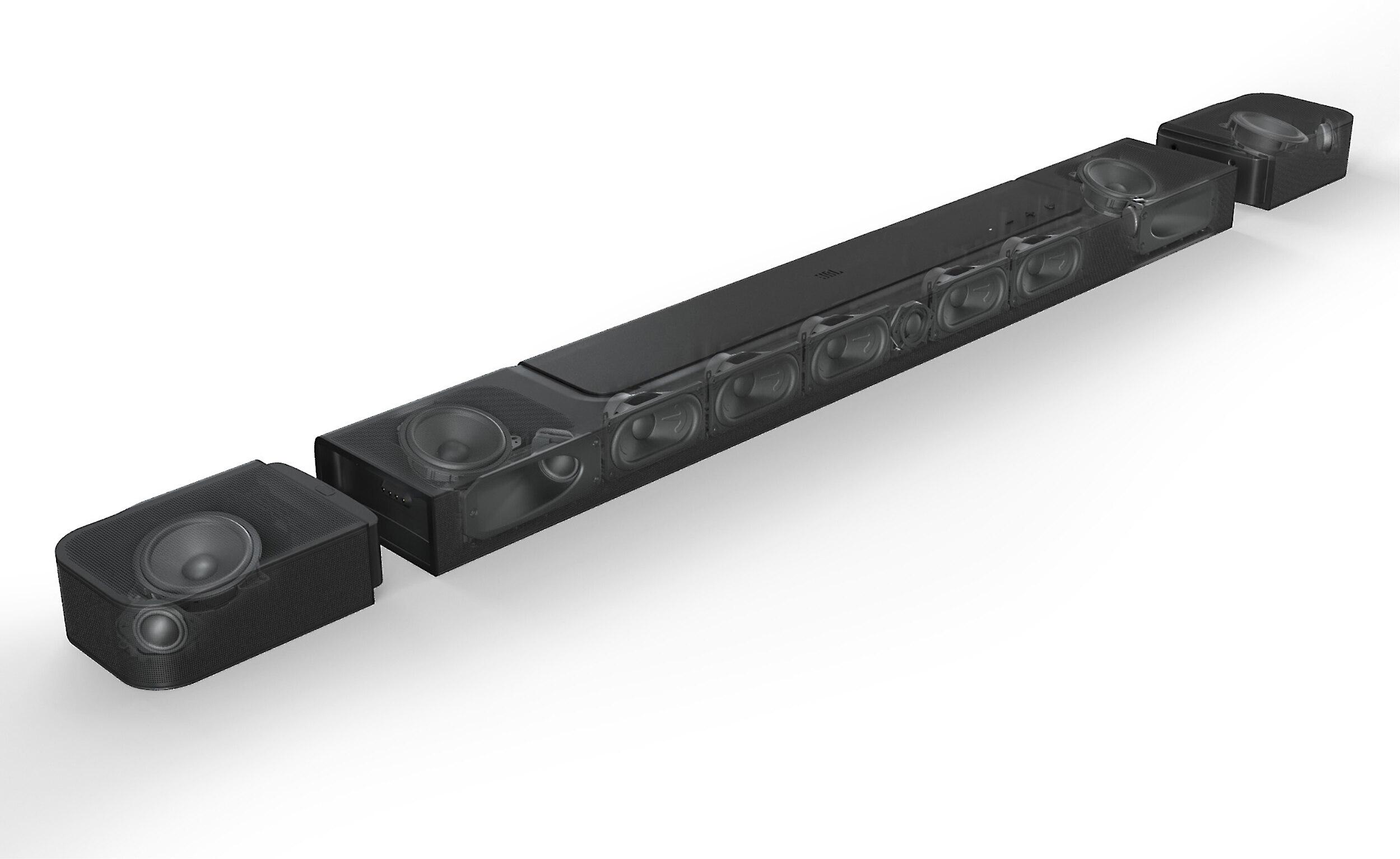
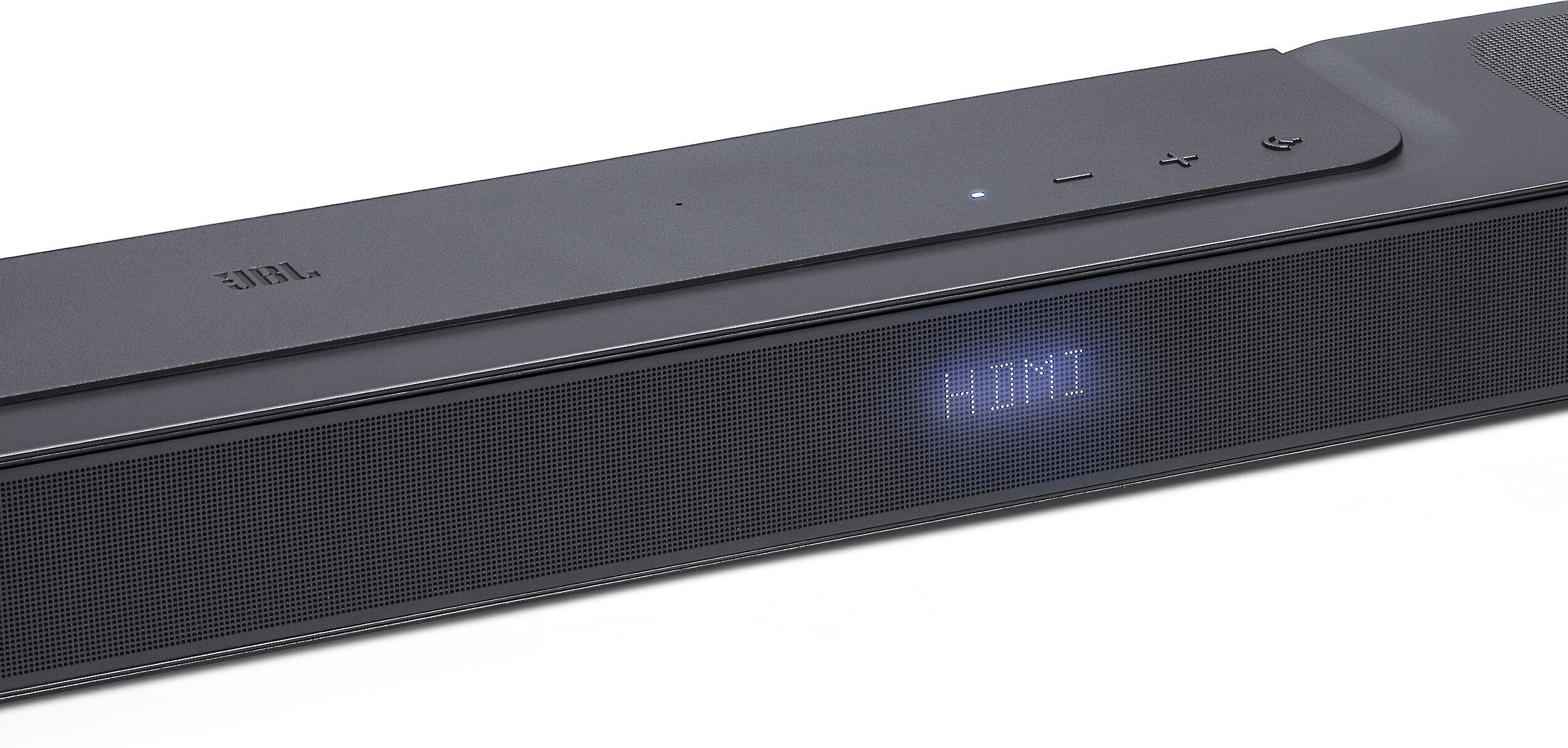
The JBL Bar 1000's approach is refreshingly straightforward: it gives you actual surround speakers. The system includes four up-firing drivers (speakers that fire sound toward your ceiling) – two in the main bar and two in the detachable rear speakers. These up-firing drivers bounce sound off your ceiling to create height effects, which is how you get that sense of jets flying overhead or rain falling from above.
When you position the rear speakers behind your couch, you get legitimate 7.1.4 surround sound. That means seven main speakers at ear level, one subwoofer for bass, and four height speakers for overhead effects. In practical terms, this creates incredibly convincing surround immersion. During action scenes, you'll hear bullets whizzing past your head from behind, and the positioning feels natural because it literally is – there are actual speakers behind you creating those sounds.
The trade-off? Setup complexity and the need to manage battery life in the rear speakers. You'll need to recharge them every 10 hours of use, and you need to find good positions for them in your room.
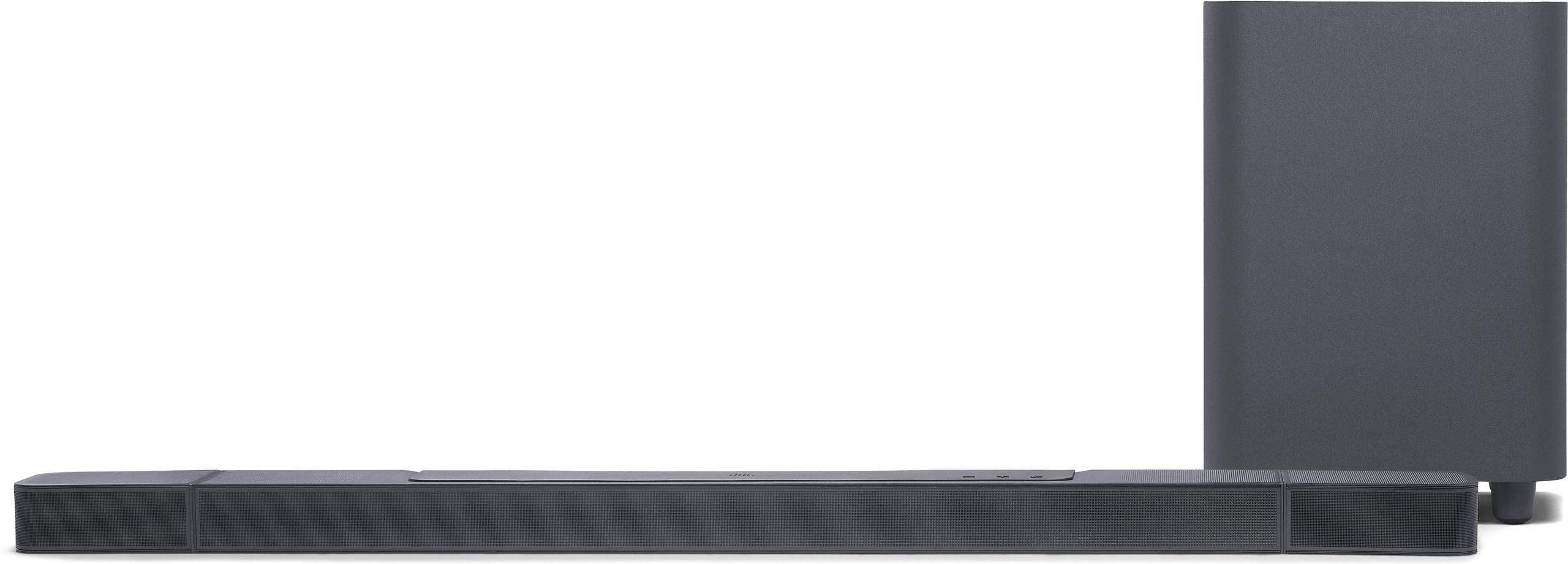
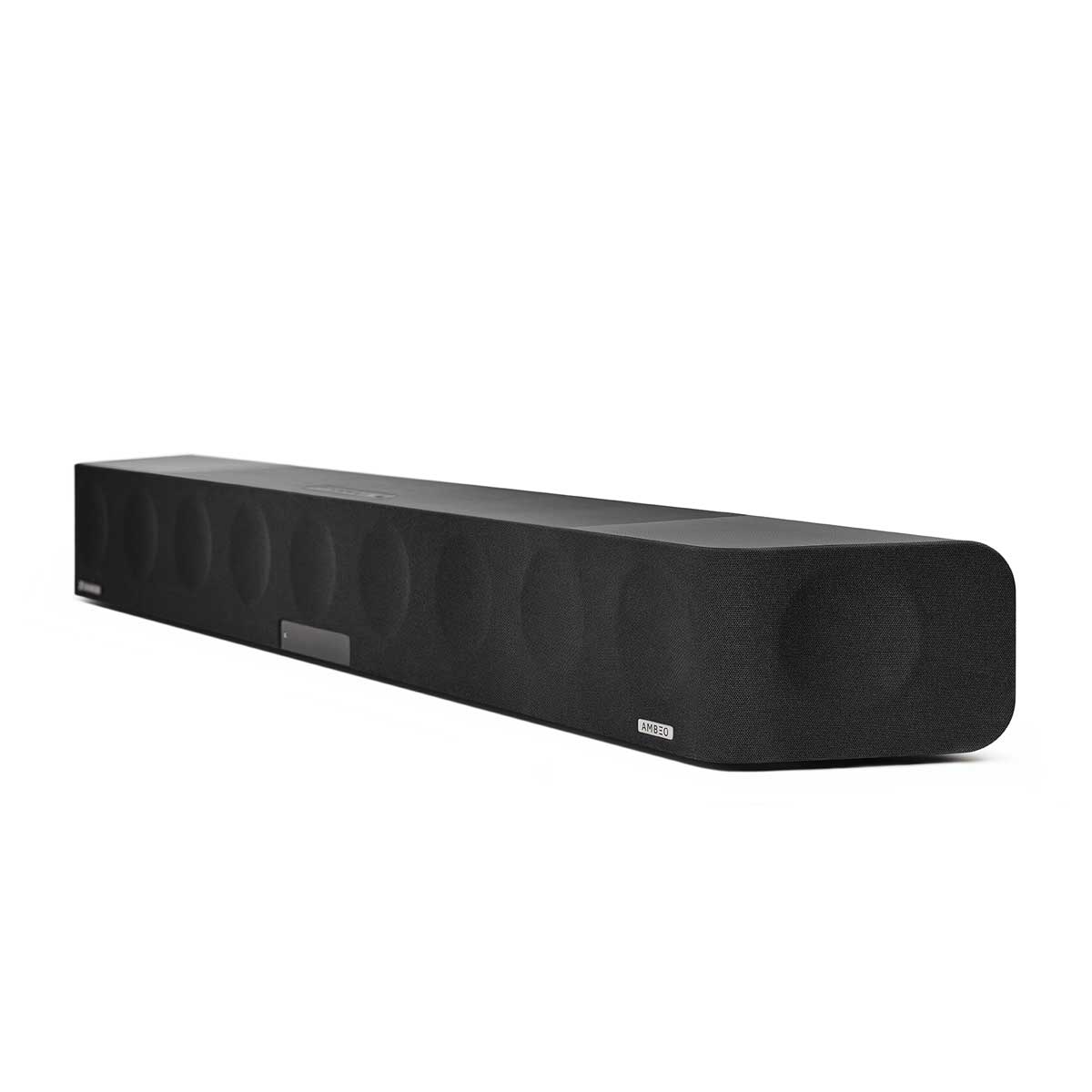
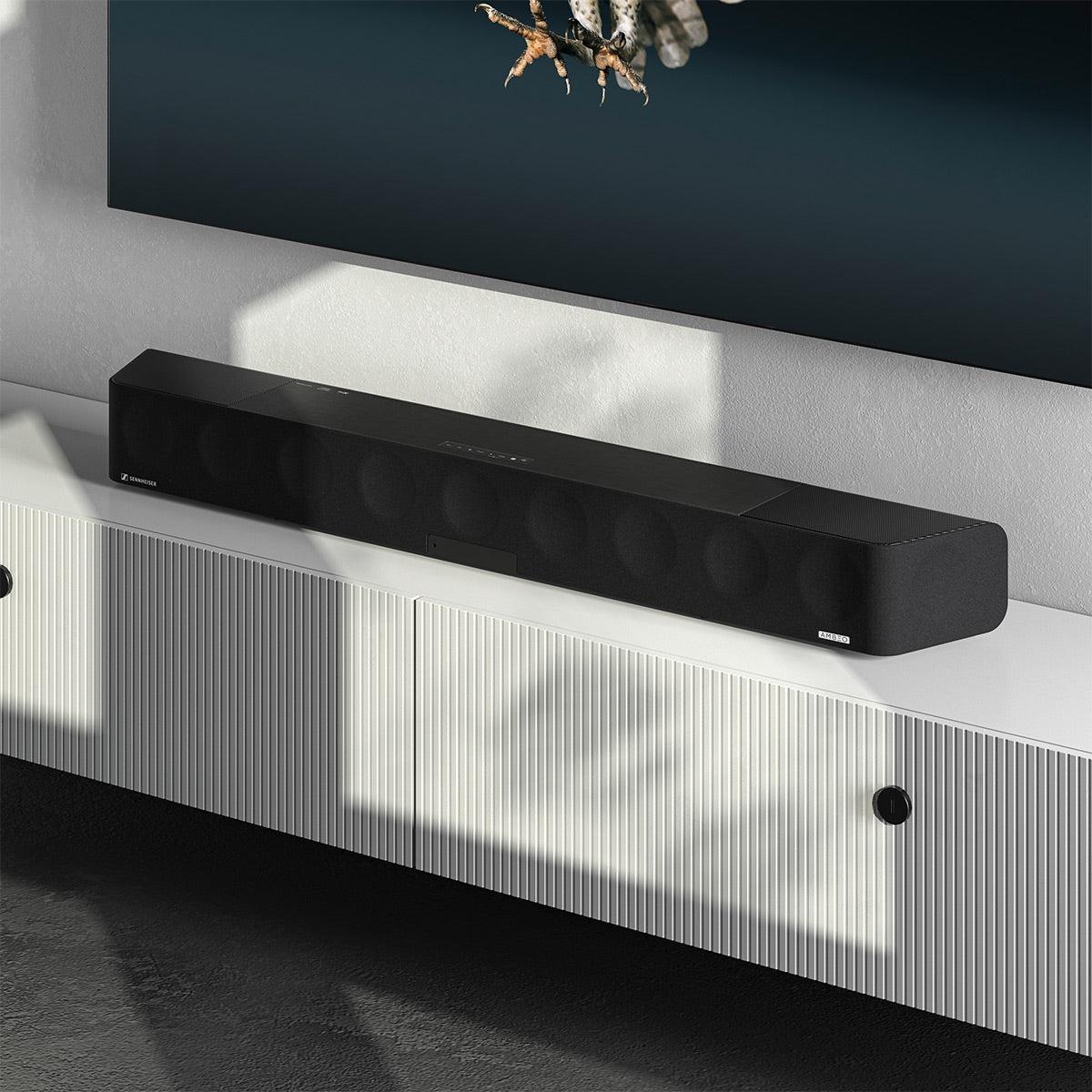
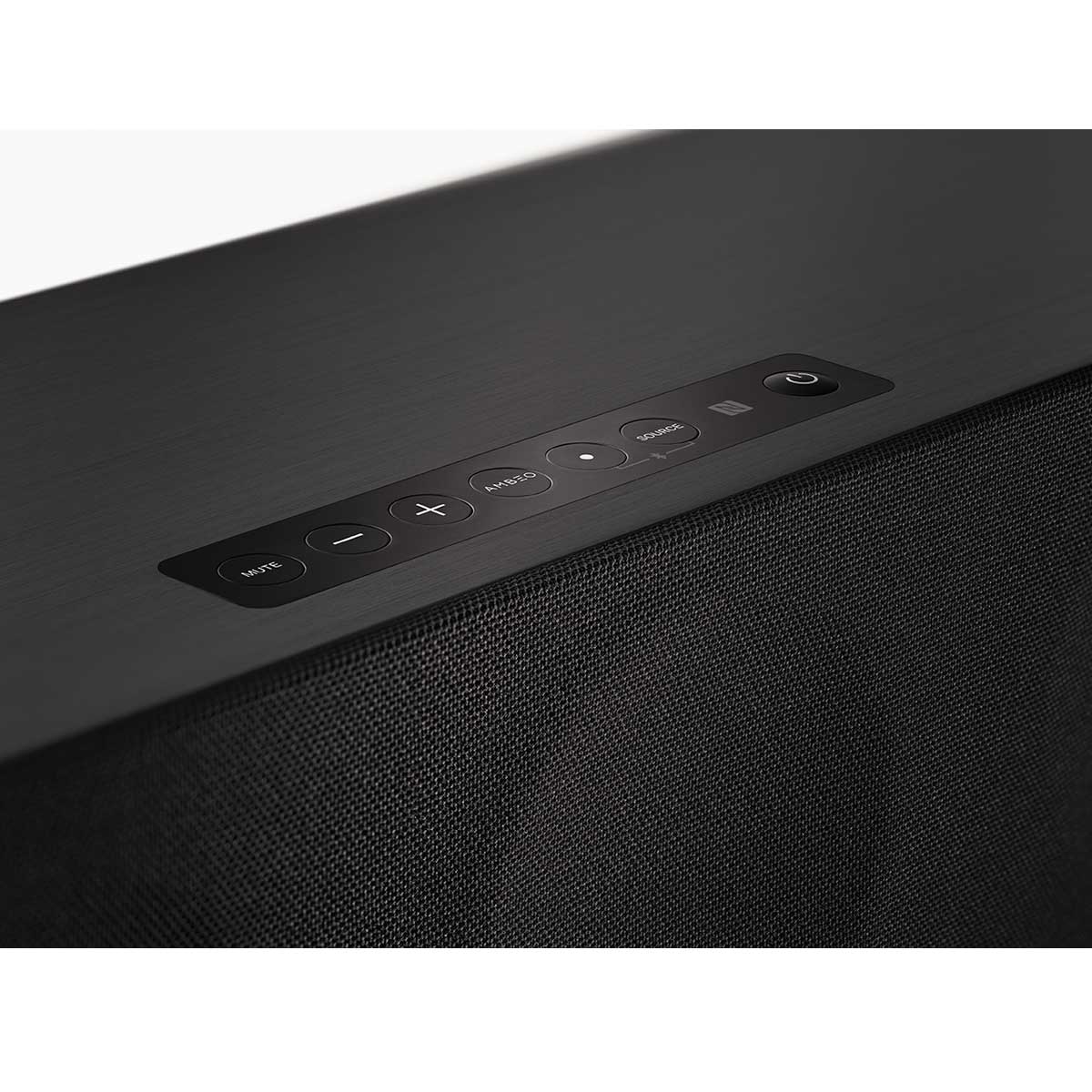
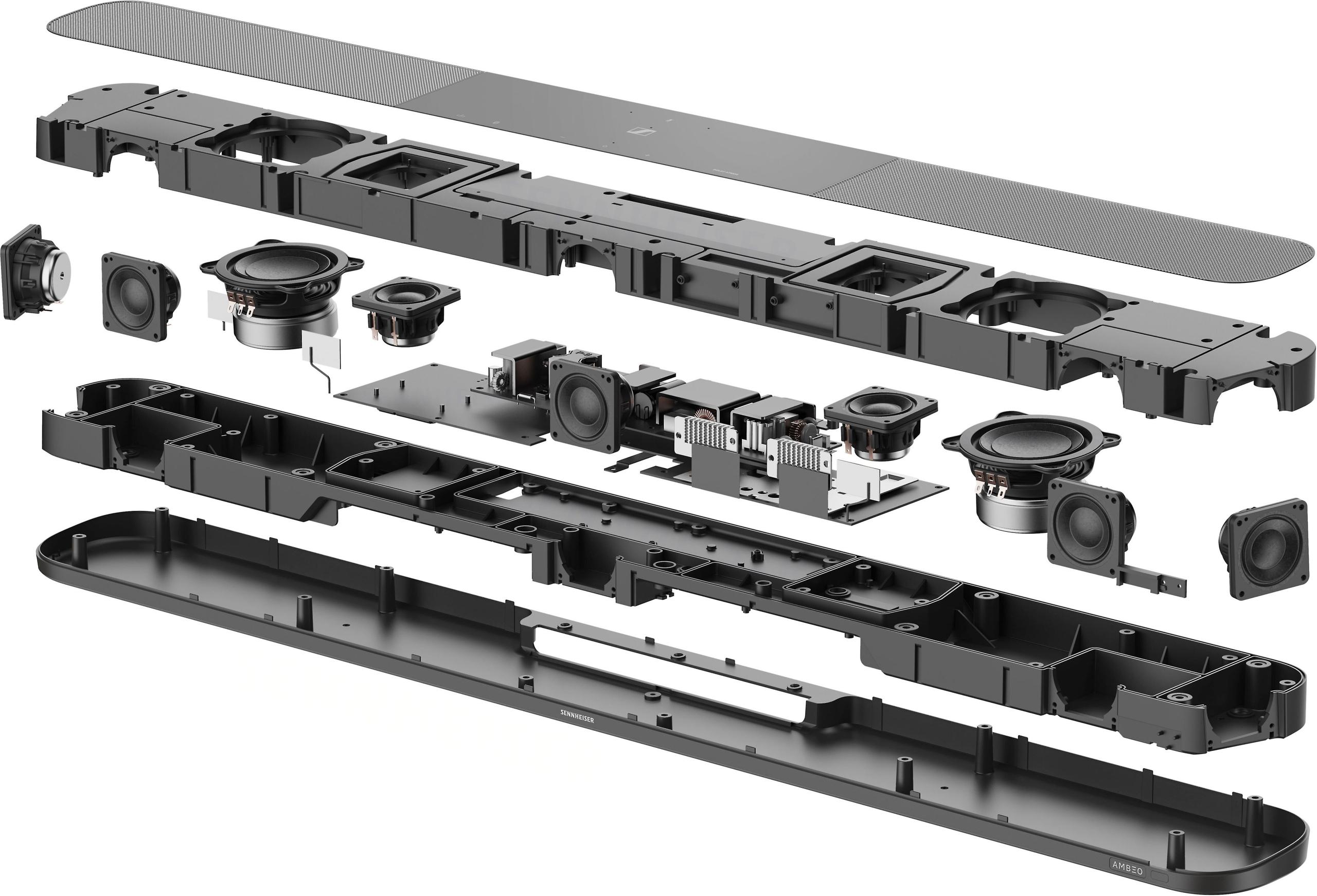
The Sennheiser AMBEO takes the opposite approach with its virtualization technology. This single 49-inch bar contains 13 individually powered drivers arranged in a sophisticated configuration: five tweeters (for high-frequency detail), six woofers (for bass), and two full-range drivers positioned on the top corners.
The magic happens through psychoacoustics – the science of how our brains interpret sound. The AMBEO uses advanced signal processing to manipulate timing, phase, and frequency response in ways that trick your brain into perceiving sounds as coming from locations where there are no speakers. During the 10-minute room calibration process, it analyzes how sound reflects off your walls, ceiling, and furniture, then adjusts its processing to work optimally in your specific space.
In smaller rooms (under 200 square feet), this virtualization can be surprisingly convincing. The AMBEO excels at creating a wide, enveloping soundstage that makes your living room feel much larger than it actually is. However, in bigger rooms or spaces with challenging acoustics, the illusion starts to break down because there's simply too much space for the virtualization algorithms to cover effectively.
This is where the fundamental differences between these soundbars become most apparent, and where your personal preferences really matter.
The JBL Bar 1000 includes a dedicated 10-inch wireless subwoofer that puts out 300 watts of power and can reproduce frequencies down to 33Hz. To put that in perspective, 33Hz is deep enough to feel the rumble of distant thunder or the low-frequency effects that make movie explosions feel visceral rather than just loud.
Having used similar JBL subwoofers in various room sizes, I can tell you that this thing has serious impact. When the T-Rex footsteps shake the ground in Jurassic Park, you feel it in your chest. The wireless connection means you can position it wherever it sounds best in your room – often a corner or along a wall where the bass naturally reinforces.
The Sennheiser AMBEO takes a completely different approach with six built-in 4-inch woofers distributed throughout the soundbar. These are high-quality drivers that can reach down to 30Hz – technically even lower than the JBL's subwoofer. However, there's a crucial difference between frequency response and real-world impact.
Those built-in woofers simply can't move as much air as a dedicated 10-inch subwoofer. The bass from the AMBEO is more refined and controlled, which makes it excellent for music listening where you want bass that's present but not overwhelming. For movies, though, it lacks that visceral punch that makes action scenes feel immersive rather than just loud.
Sennheiser acknowledges this limitation – they make optional subwoofers specifically designed to pair with the AMBEO. But adding one pushes the total cost to around $2,500-2,800, which changes the value equation significantly.
Both soundbars excel here, but in different ways that reflect their overall design philosophies.
The JBL Bar 1000 uses PureVoice 2.0 technology, which is essentially intelligent signal processing that identifies and enhances dialogue frequencies while suppressing background noise. This is particularly effective during loud action scenes where explosions and gunfire might otherwise drown out conversation. The system maintains dialogue clarity even when those detachable rear speakers are pumping out surround effects.
Having tested this during particularly explosive scenes in movies like Mad Max: Fury Road, the dialogue clarity remains impressive even when the action gets intense. You can follow conversations without constantly reaching for the volume remote – something that's surprisingly rare even in premium soundbars.
The Sennheiser AMBEO approaches vocal clarity through sheer driver quality and sophisticated DSP (digital signal processing). Those five premium aluminum dome tweeters deliver exceptional detail in the frequency range where human voices live. The result is dialogue that sounds natural and present, with subtle vocal inflections that many soundbars simply miss.
Where the AMBEO really shines is with music vocals. Whether it's the delicate phrasing in an acoustic song or the power of a rock vocalist, the clarity and detail are genuinely impressive. It's the kind of performance that makes you notice vocal details you've never heard before in familiar songs.
This is perhaps the biggest differentiator between these two soundbars, and it comes down to what they're primarily designed to do.
The JBL Bar 1000 is fundamentally a home theater system that also handles music reasonably well. Its strength lies in creating that wide, immersive soundstage that makes movie soundtracks feel epic. For music, it's perfectly capable – especially when you have the rear speakers positioned for stereo imaging – but it's not trying to be an audiophile system.
The real music advantage of the JBL system is versatility. Those detachable rear speakers become excellent portable Bluetooth speakers for outdoor gatherings, pool parties, or just moving music to different rooms. With 10-hour battery life, they're genuinely useful as standalone speakers.
The Sennheiser AMBEO, however, is an audiophile system that also happens to do movies well. Those 13 high-end drivers create a level of musical detail and coherence that rivals dedicated stereo systems costing significantly more. The soundstage for music is wide and precisely positioned, with instruments appearing to occupy specific locations in space.
The AMBEO supports high-resolution audio formats and includes premium streaming integrations like TIDAL Connect, which bypasses Bluetooth compression for true lossless audio. If you're the type of person who cares about the difference between compressed and uncompressed audio, the AMBEO delivers that level of fidelity.
I've spent considerable time listening to jazz recordings through the AMBEO, and the way it reproduces the subtle interplay between instruments – the brush strokes on drums, the breathing between vocal phrases, the resonance of acoustic instruments – is genuinely impressive for a soundbar.
Room size dramatically affects how these soundbars perform, and this is crucial for making the right choice.
In larger rooms (200+ square feet), the JBL Bar 1000 has a significant advantage because those physical rear speakers provide authentic surround sound regardless of room size. The wireless subwoofer can be positioned optimally anywhere in the room, and the whole system scales up well for bigger spaces.
However, the setup process requires patience. You need to find good positions for the rear speakers (behind and slightly to the sides of your seating position), ensure they're charged, and occasionally deal with wireless connectivity hiccups. It's not complicated, but it's not plug-and-play either.
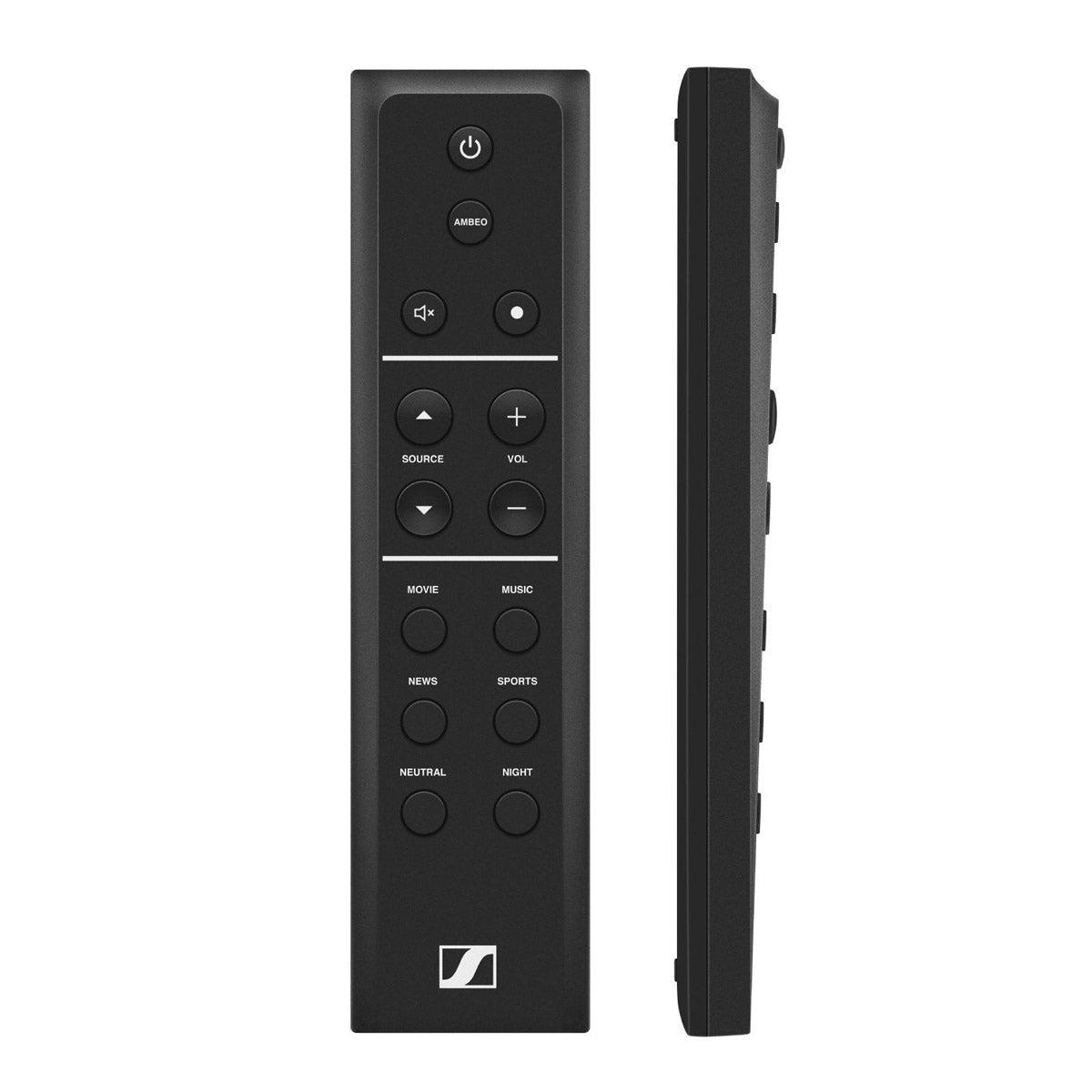
The Sennheiser AMBEO excels in smaller to medium-sized rooms where its virtualization technology can work most effectively. Setup is genuinely simple – connect one HDMI cable, run the 10-minute room calibration, and you're done. The sophisticated room correction adjusts the sound processing based on your specific space, and firmware updates continue to improve performance over time.
For home theater use specifically, both soundbars support the latest audio formats including Dolby Atmos and DTS:X. The JBL provides more dramatic surround effects thanks to its physical speakers, while the AMBEO offers more refined overall sound quality with its premium drivers and processing.
Here's where things get interesting from a pure dollars-and-cents perspective.
The JBL Bar 1000 ($699.95) delivers a complete surround sound system with subwoofer and rear speakers for about $700. That's exceptional value for what you get – legitimate 7.1.4 surround sound that would cost significantly more if you bought separate components.
The Sennheiser AMBEO ($1,999.95) costs nearly three times as much for the soundbar alone. To match the JBL's bass performance, you'd need to add a subwoofer, pushing the total cost to $2,500-2,800. That's a massive price difference that's hard to justify unless audio quality is your absolute top priority.
From a features standpoint, both offer modern connectivity including HDMI eARC, Wi-Fi streaming, and voice assistant integration. The AMBEO has more premium streaming integrations and smarter room correction, while the JBL offers the unique flexibility of detachable speakers.
Choose the JBL Bar 1000 if you want the most immersive home theater experience possible within a reasonable budget. It's ideal for larger rooms, movie enthusiasts, and anyone who values that authentic surround sound feeling. The detachable speakers add genuine versatility, and the powerful subwoofer delivers the kind of bass that makes action movies truly exciting.
Choose the Sennheiser AMBEO if you prioritize music reproduction and want a premium, minimalist solution. It's perfect for smaller rooms where virtualization works well, audiophiles who appreciate exceptional detail and build quality, and anyone who values simplicity over raw impact.
The reality is that the JBL delivers about 90% of what the Sennheiser offers at 35% of the price. For most people, that makes it the smart choice. But if you're the type of person who notices and cares about that extra 10% of performance – particularly for music listening – the Sennheiser's premium is worth considering.
Both soundbars represent the current state of the art in their respective approaches. The JBL proves that authentic surround sound doesn't have to be complicated or expensive, while the Sennheiser demonstrates just how sophisticated single-bar audio processing has become. Your choice ultimately comes down to whether you value immersive impact or refined precision – and how much you're willing to spend for either one.
| JBL Bar 1000 ($699.95) | Sennheiser AMBEO ($1,999.95) |
|---|---|
| Price - Significant cost difference affects overall value proposition | |
| $699.95 complete system | $1,999.95 soundbar only (add $500-800 for comparable bass) |
| System Configuration - Determines setup complexity and authentic surround capabilities | |
| 3-piece system: soundbar + 10" wireless sub + detachable rear speakers | Single soundbar with 13 built-in drivers |
| Total Power Output - Affects maximum volume and dynamic range | |
| 880W total system power | 500W single bar |
| Surround Sound Approach - Critical for immersion quality | |
| True 7.1.4 physical surround with detachable rear speakers | Virtualized 5.1.4 surround using AMBEO 3D technology |
| Bass Performance - Essential for movie impact and music fullness | |
| Dedicated 10" subwoofer (300W, down to 33Hz) for room-shaking bass | Six built-in 4" woofers (down to 30Hz) - refined but less impactful |
| Driver Configuration - Affects sound quality and detail reproduction | |
| Multiple drivers across components with up-firing Atmos speakers | 13 premium drivers: 5 tweeters, 6 woofers, 2 full-range |
| Room Calibration - Optimizes sound for your specific space | |
| Basic room optimization | Advanced 10-minute room calibration with ongoing adjustments |
| Music Performance - Important if you listen to music frequently | |
| Good for casual listening, optimized for movies | Audiophile-grade reproduction with high-res audio support |
| Setup Complexity - Affects user experience and WAF (Wife Acceptance Factor) | |
| Multi-component placement, rear speaker charging required | Single HDMI connection with automatic calibration |
| Smart Features - Modern connectivity and convenience | |
| Wi-Fi, Bluetooth, voice assistant support, HDMI eARC | Premium streaming (TIDAL Connect, AirPlay 2), advanced smart home integration |
| Unique Features - Special capabilities that differentiate each product | |
| Detachable speakers work as portable Bluetooth speakers (10hr battery) | Fraunhofer virtualization technology, premium build quality |
The JBL Bar 1000 ($699.95) is better for home theater due to its true 7.1.4 surround sound with physical rear speakers and powerful 10" subwoofer. It creates more authentic surround immersion for movies compared to the Sennheiser AMBEO ($1,999.95), which relies on virtualization technology.
The JBL Bar 1000 costs $699.95 and includes everything (soundbar, subwoofer, rear speakers), while the Sennheiser AMBEO costs $1,999.95 for just the soundbar. To match the JBL's bass performance, you'd need to add a subwoofer to the AMBEO, bringing the total to around $2,500-2,800.
The JBL Bar 1000 has more impactful bass with its dedicated 10" wireless subwoofer that delivers room-shaking low frequencies down to 33Hz. The Sennheiser AMBEO has six built-in 4" woofers that are more refined but lack the visceral impact needed for movies.
The Sennheiser AMBEO is much easier to set up - just connect one HDMI cable and run a 10-minute room calibration. The JBL Bar 1000 requires positioning multiple components (soundbar, subwoofer, rear speakers) and managing battery charging for the detachable speakers.
The Sennheiser AMBEO is significantly better for music with its 13 high-end drivers and audiophile-grade sound quality. It supports high-resolution audio and premium streaming services. The JBL Bar 1000 handles music well but is primarily optimized for movies and home theater content.
Yes, both the JBL Bar 1000 and Sennheiser AMBEO support Dolby Atmos and DTS:X. However, the JBL provides true physical Dolby Atmos with up-firing speakers in both the main bar and rear speakers, while the AMBEO uses virtualization to simulate Atmos effects.
The JBL Bar 1000 works better in large rooms because its physical rear speakers provide authentic surround sound regardless of room size. The Sennheiser AMBEO's virtualization technology works best in smaller to medium-sized rooms where the acoustic processing can be most effective.
Yes, the JBL Bar 1000's rear speakers detach and function as portable Bluetooth speakers with 10-hour battery life. This unique feature lets you use them for outdoor gatherings or in other rooms. The Sennheiser AMBEO is a single unit that cannot be separated.
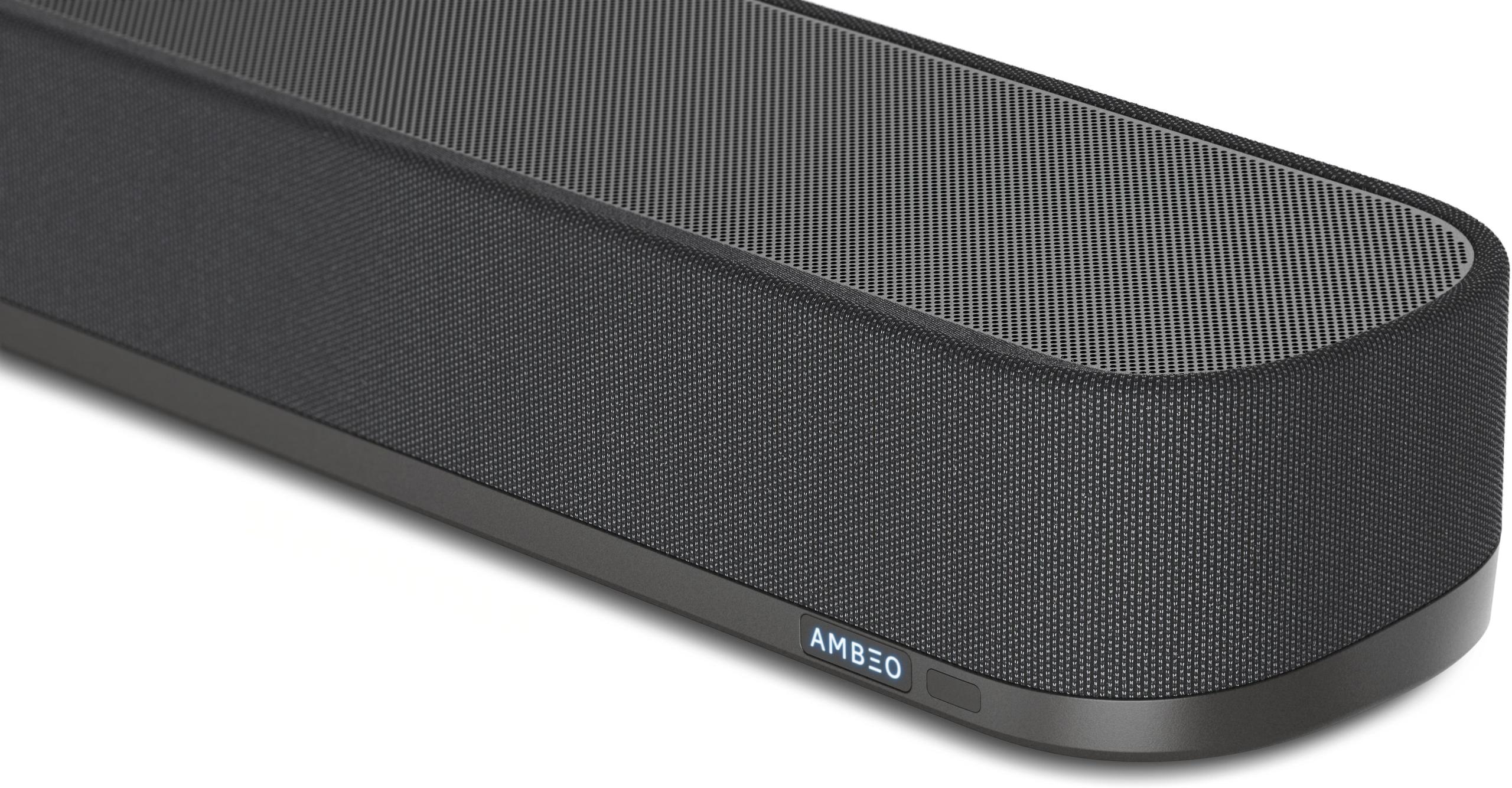
The Sennheiser AMBEO has premium build quality with high-end materials and German engineering. The JBL Bar 1000 has solid build quality but focuses more on performance and value rather than premium materials and aesthetics.
Yes, both the JBL Bar 1000 and Sennheiser AMBEO support voice assistants like Alexa and Google Assistant. The AMBEO also includes Apple HomeKit support and more advanced smart home integration features.
The JBL Bar 1000 offers exceptional value at $699.95 for a complete 7.1.4 surround system with subwoofer and rear speakers. The Sennheiser AMBEO costs nearly three times more and requires additional investment for comparable bass performance, making it a premium choice for audiophiles.
Both the JBL Bar 1000 and Sennheiser AMBEO come with manufacturer warranties and app-based control systems. JBL offers widespread service support, while Sennheiser provides premium customer service befitting their higher price point. Both receive regular firmware updates to improve performance and add features.
We've done our best to create useful and informative comparisons to help you decide what product to buy. Our research uses advanced automated methods to create this comparison and perfection is not possible - please contact us for corrections or questions. These are the sites we've researched in the creation of this article: zdnet.com - jbl.com - jbl.com - pcrichard.com - rtings.com - d21buns5ku92am.cloudfront.net - ro.harmanaudio.com - target.com - harmanaudio.com - dell.com - mm.jbl.com - dolby.com - jbl.com.my - videoandaudiocenter.com - bestbuy.com - rtings.com - techradar.com - audioxpress.com - whathifi.com - upscaleaudio.com - soundstagesimplifi.com - global.sennheiser-hearing.com - sennheiser-hearing.com - audioadvice.com - abt.com - moon-audio.com

Privacy Policy
Terms and Conditions - Affiliate Policy
Home Security
© Copyright 2008-2026.
11816 Inwood Rd #1211, Dallas, TX 75244