





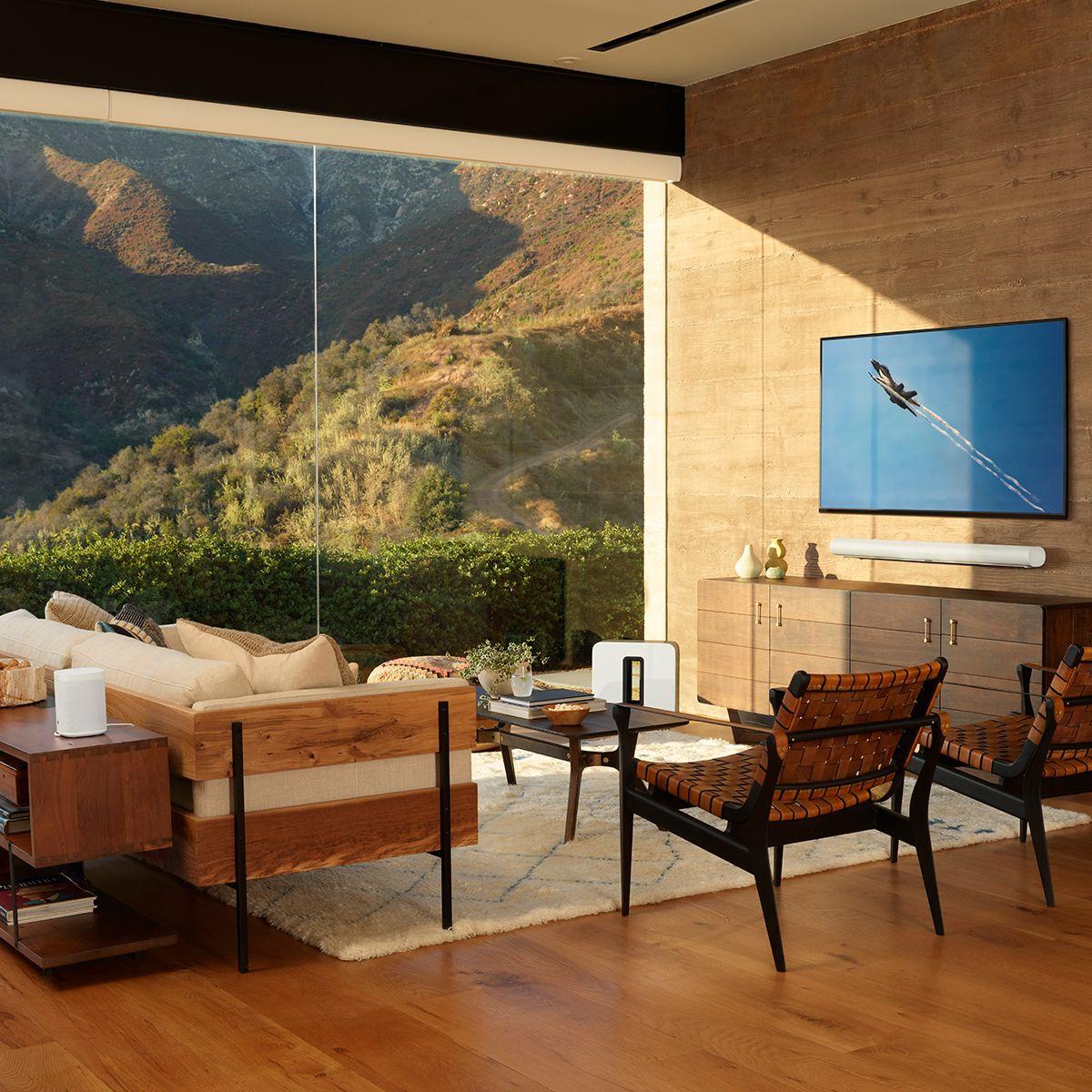
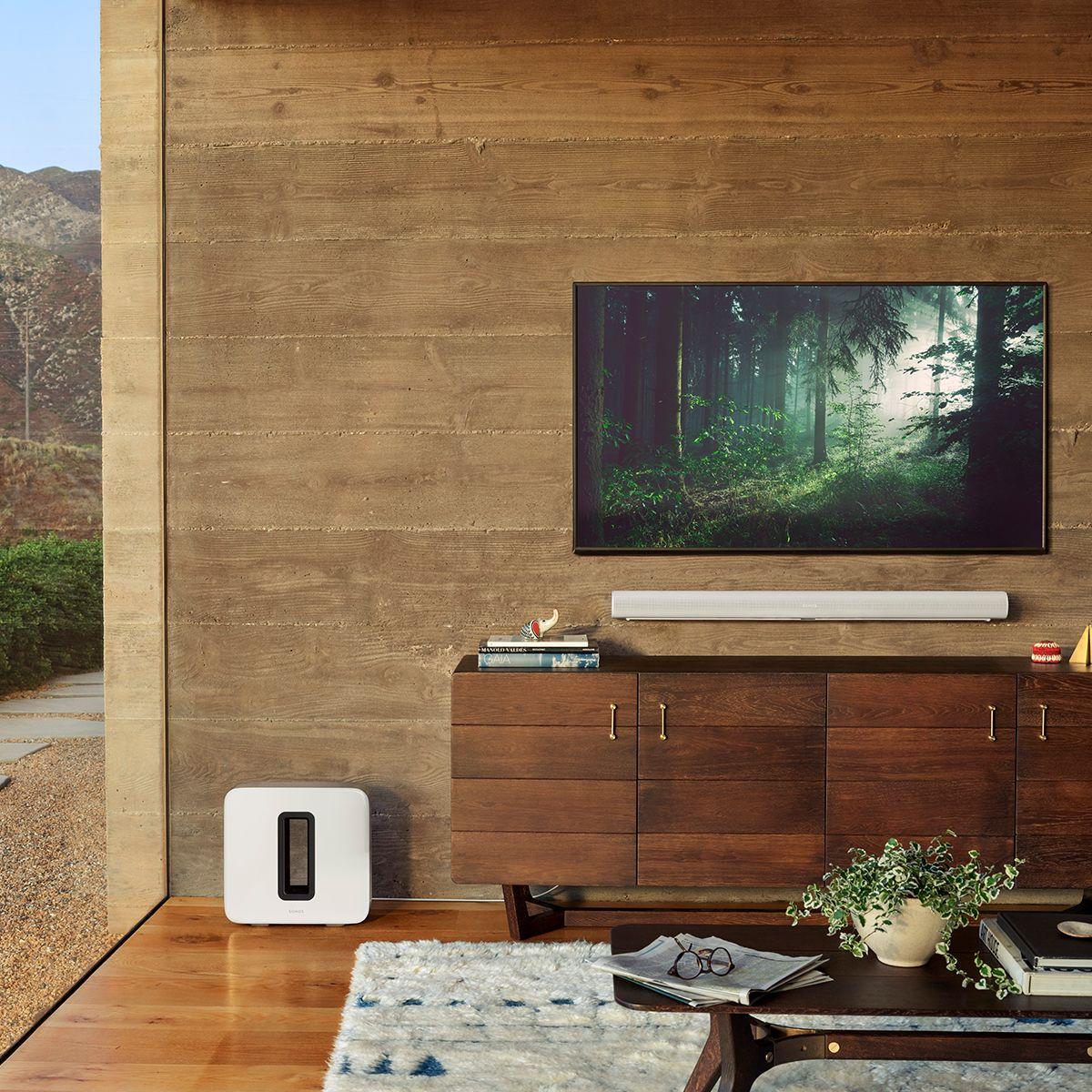
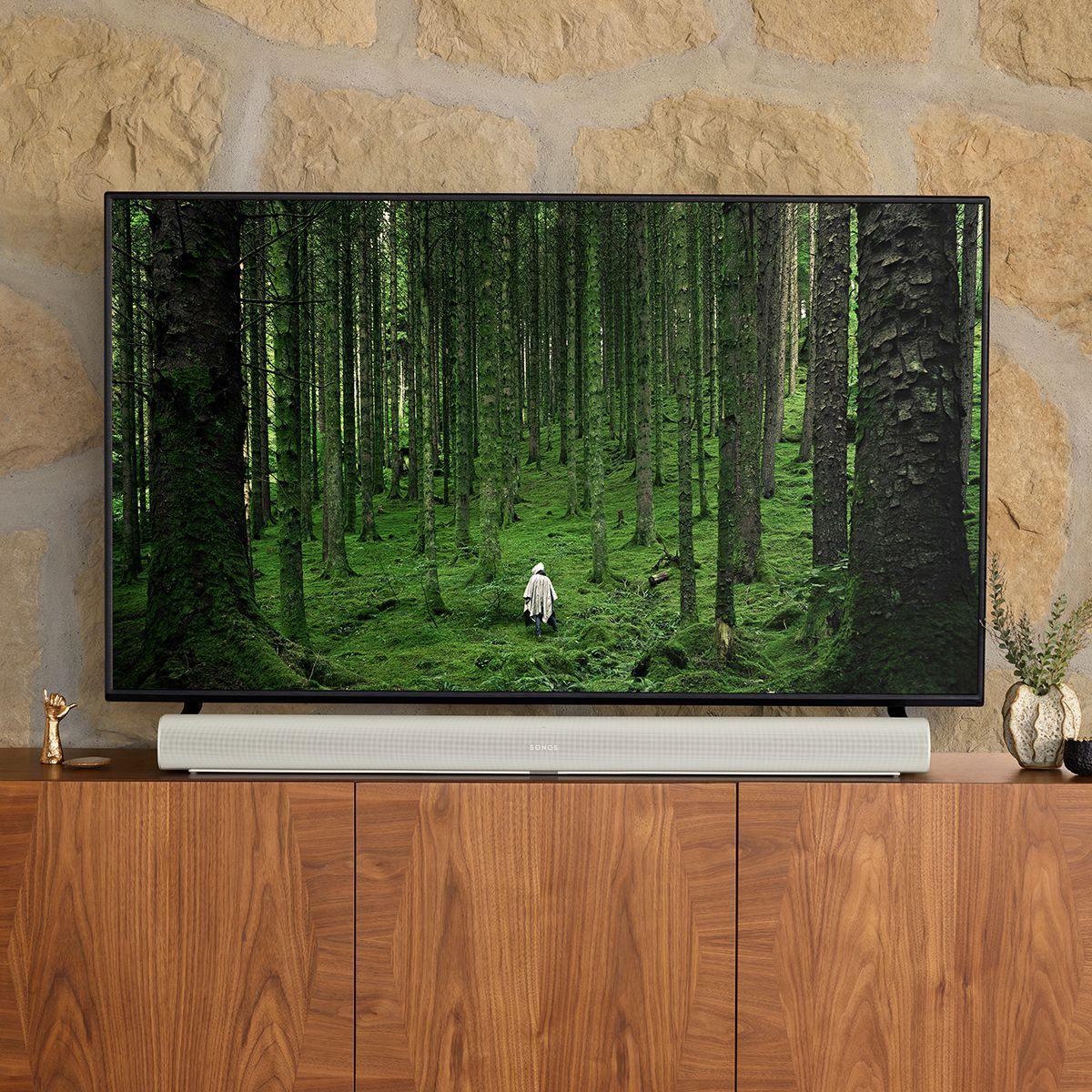


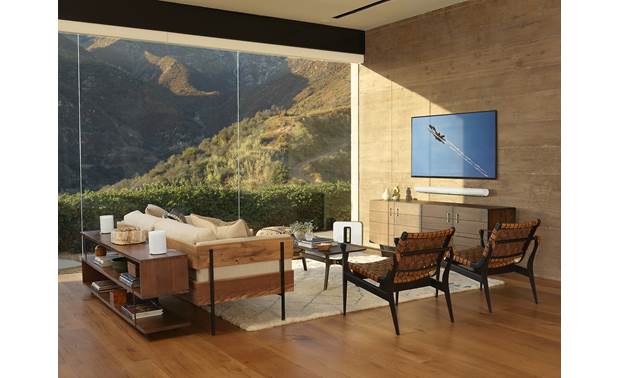



When you're ready to upgrade from your TV's built-in speakers but don't want the hassle of a full surround sound system with wires running everywhere, premium soundbars offer an attractive middle ground. These sophisticated audio devices promise theater-quality sound from a single sleek unit that sits under your TV. But with prices ranging from hundreds to thousands of dollars, choosing the right one matters.
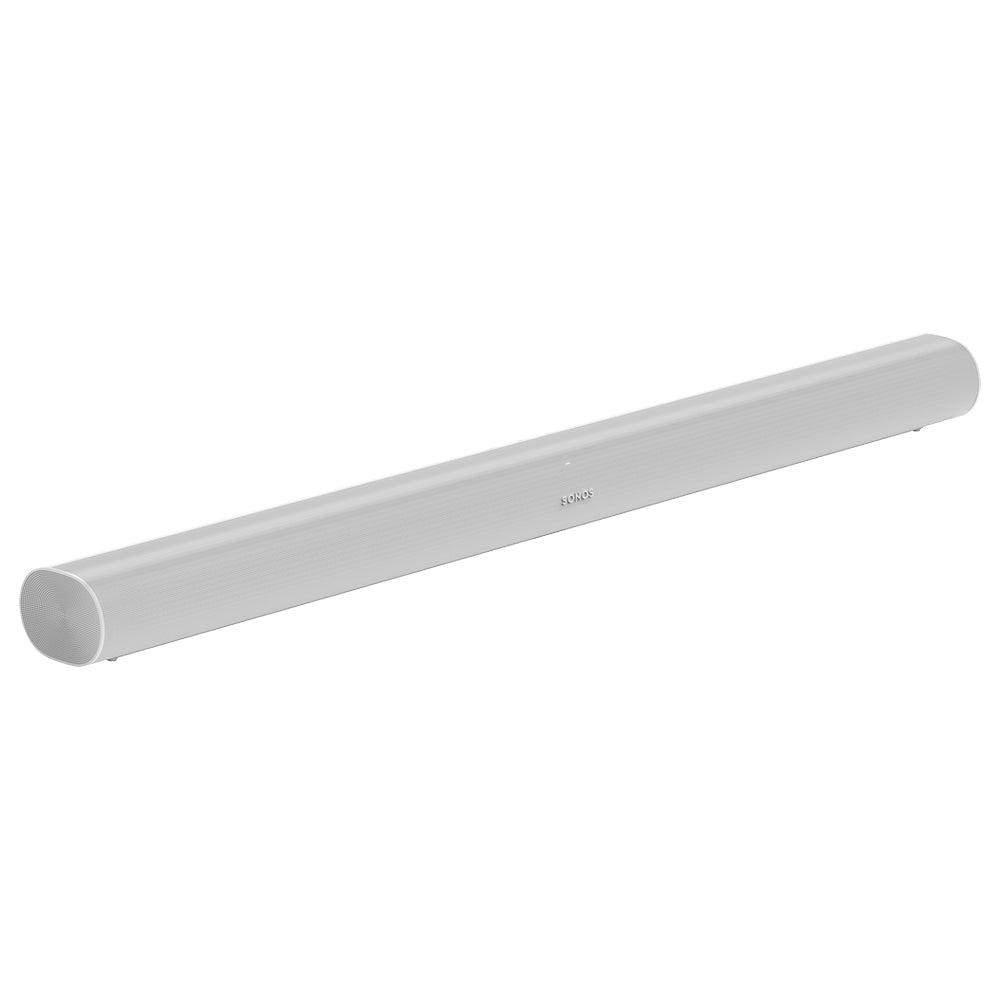
Today we're comparing two standout options: the Sonos Arc ($540-$799) and the Sennheiser AMBEO Soundbar ($1,999-$2,499). These represent very different approaches to premium audio – one focused on smart integration and value, the other on uncompromising sound quality. Let's dive into what makes each special and help you decide which fits your needs.
Before we get into specifics, it's worth understanding what premium soundbars are trying to accomplish. Traditional surround sound systems use multiple speakers positioned around your room – front left and right, center channel for dialogue, rear surrounds, and often a subwoofer for bass. This setup creates genuine surround sound but requires extensive wiring and multiple devices.
Premium soundbars attempt to recreate this multi-speaker experience using advanced audio processing and clever speaker placement within a single unit. They use techniques like psychoacoustic processing (basically tricking your brain into hearing sounds from directions they're not actually coming from) and upward-firing drivers (speakers that bounce sound off your ceiling to create height effects).
The key considerations when shopping in this category include audio performance across different content types, value proposition relative to the price, spatial audio capabilities (especially Dolby Atmos support), connectivity options, and how well they integrate with your existing setup.
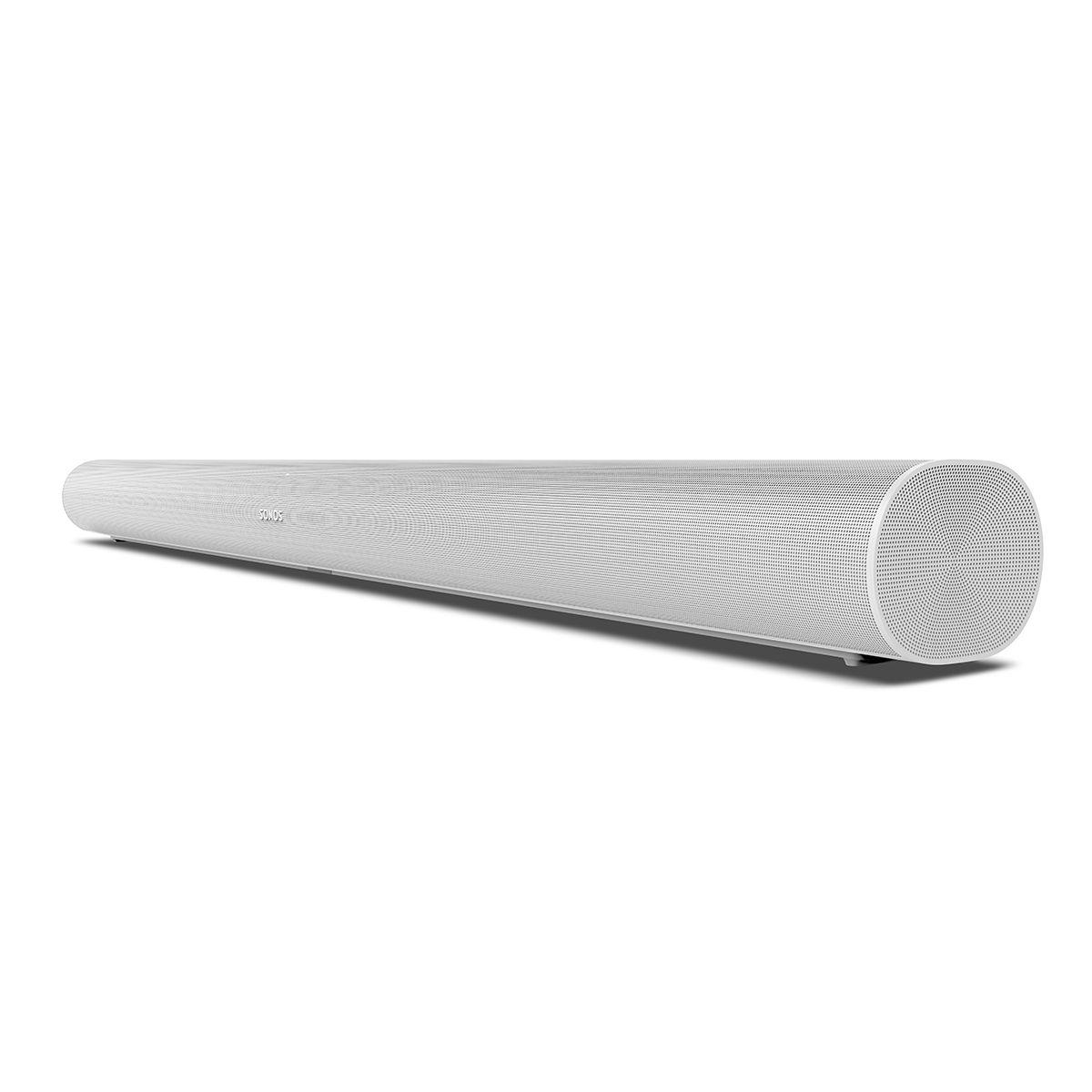
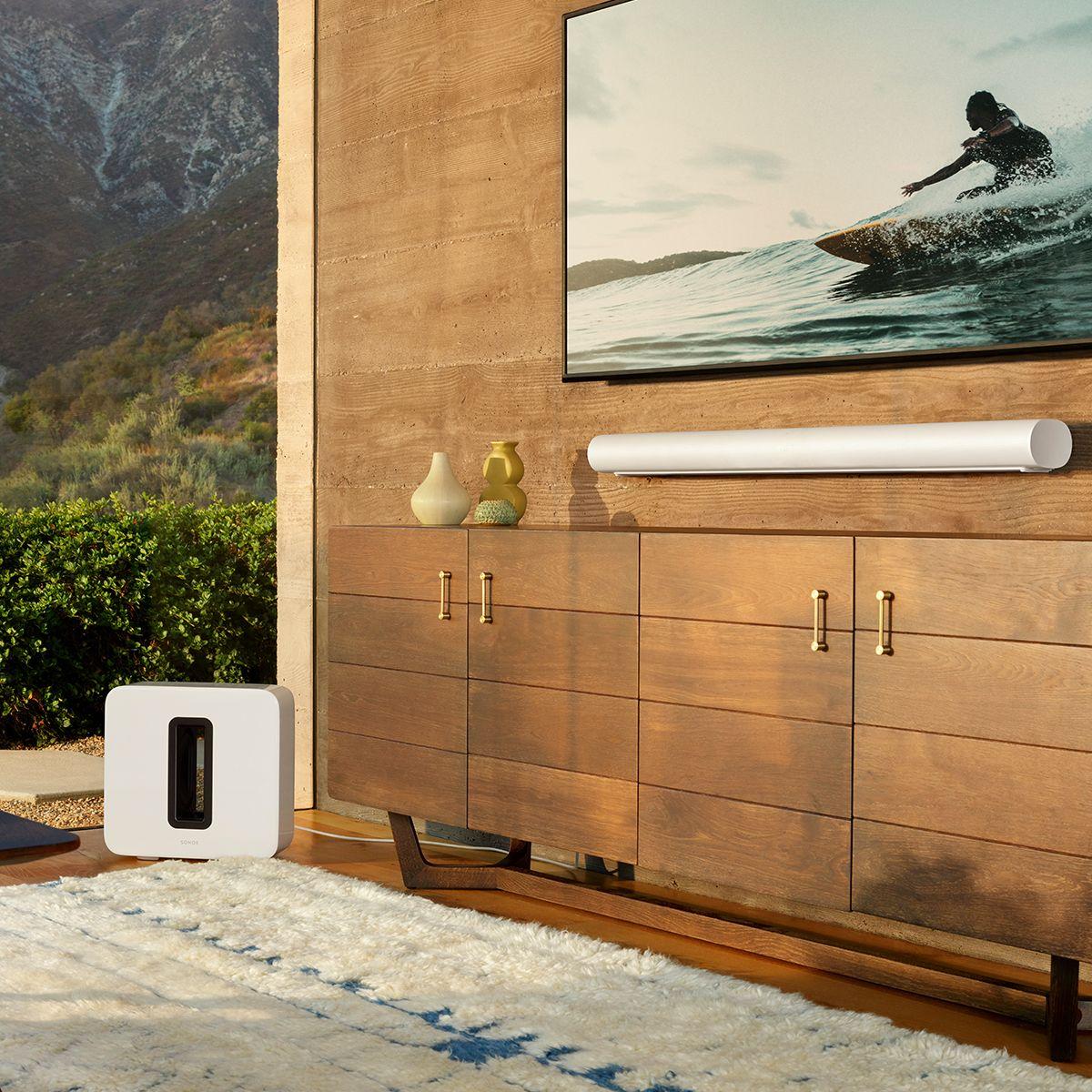
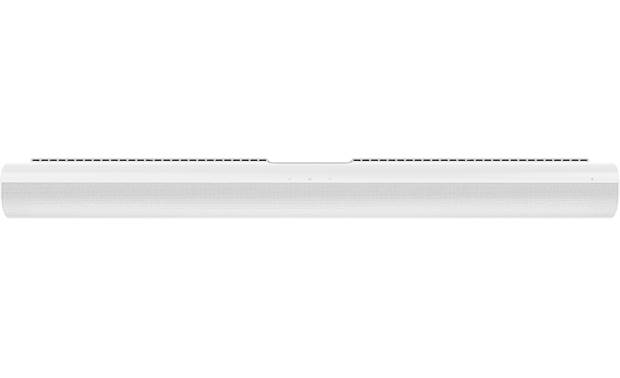
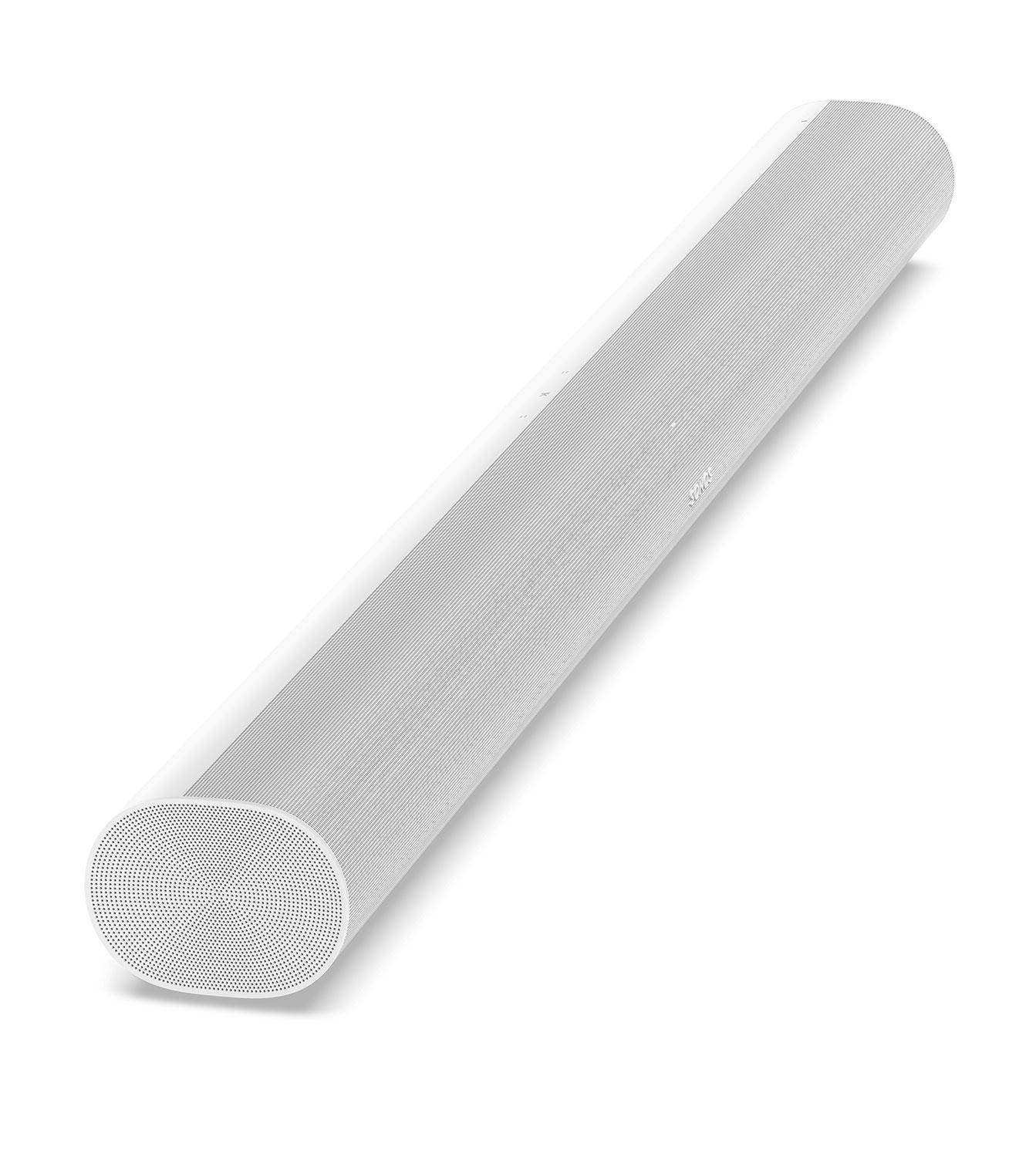
The Sonos Arc, released in June 2020, represented Sonos's first serious attempt at a premium Dolby Atmos soundbar. At launch, it cost $799 and aimed to deliver great sound while maintaining Sonos's signature ease of use and smart home integration. Today, you can often find it for around $540, making it significantly more accessible.
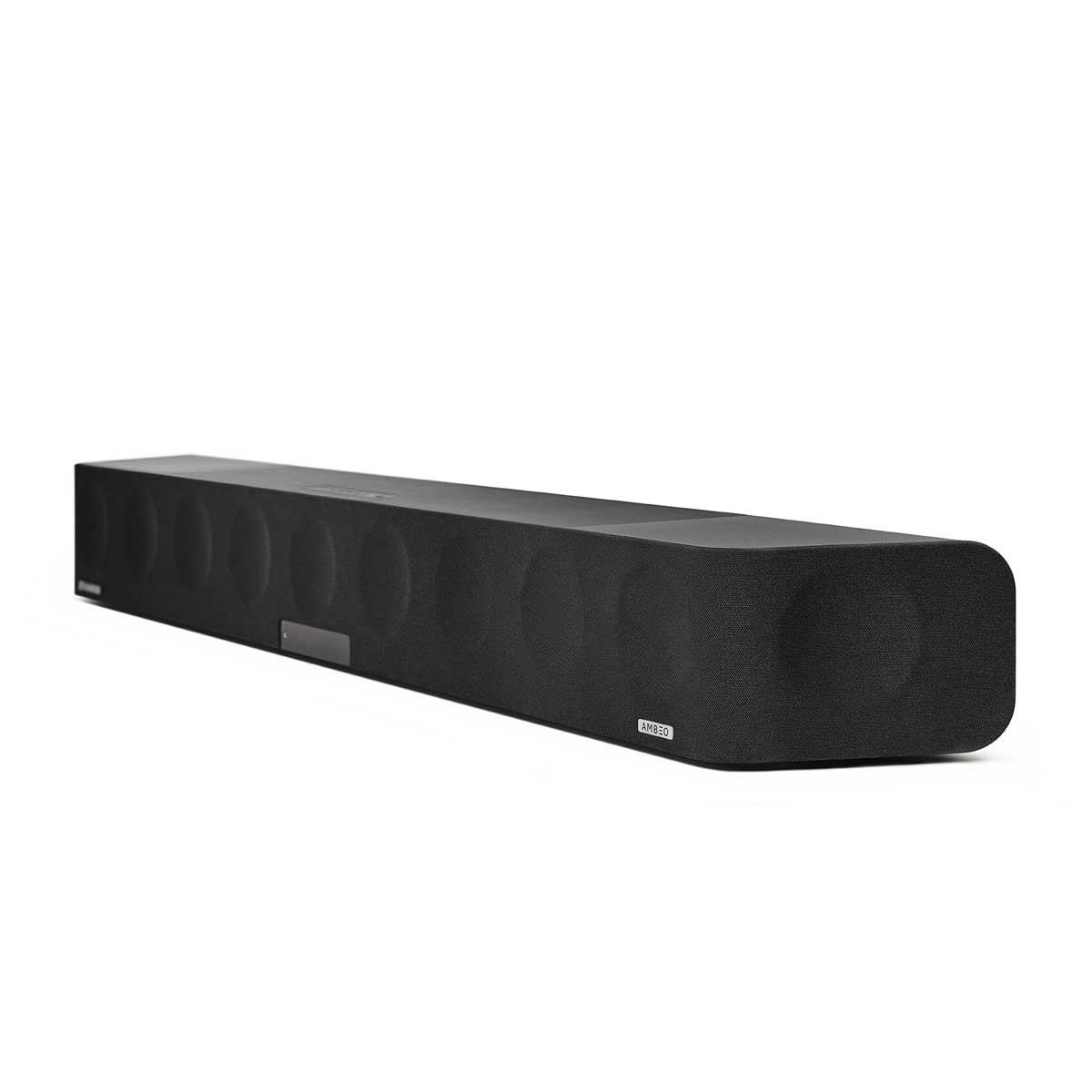
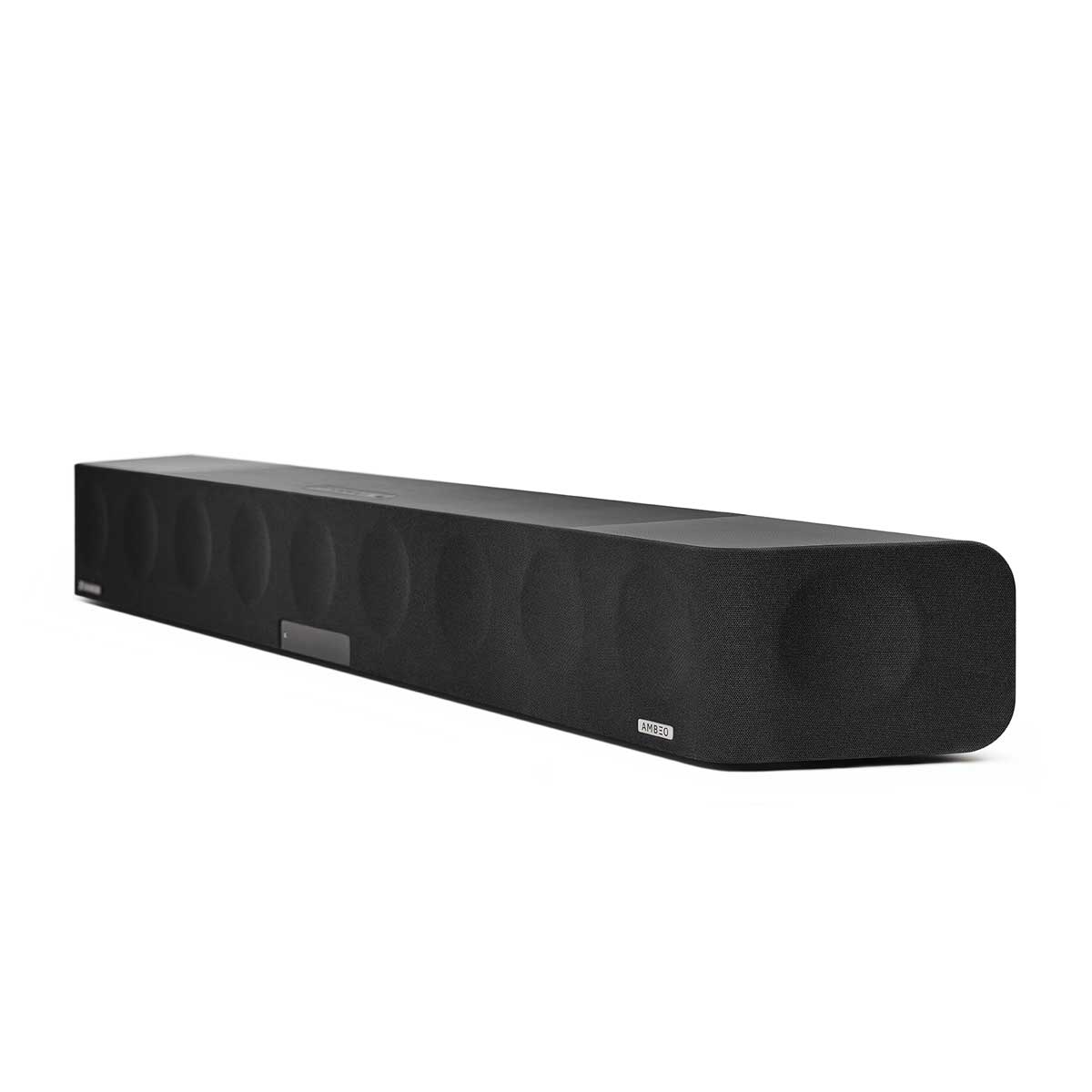
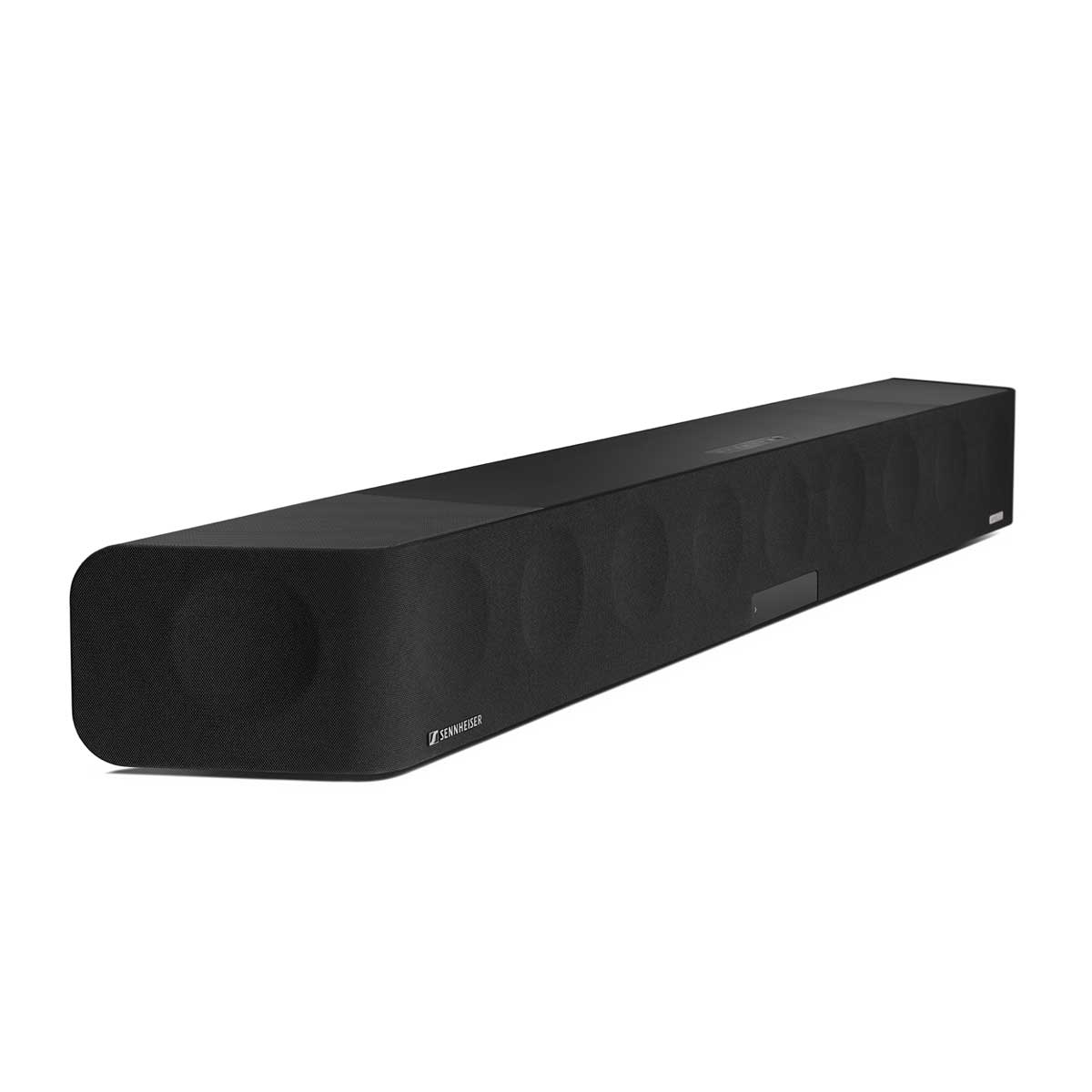
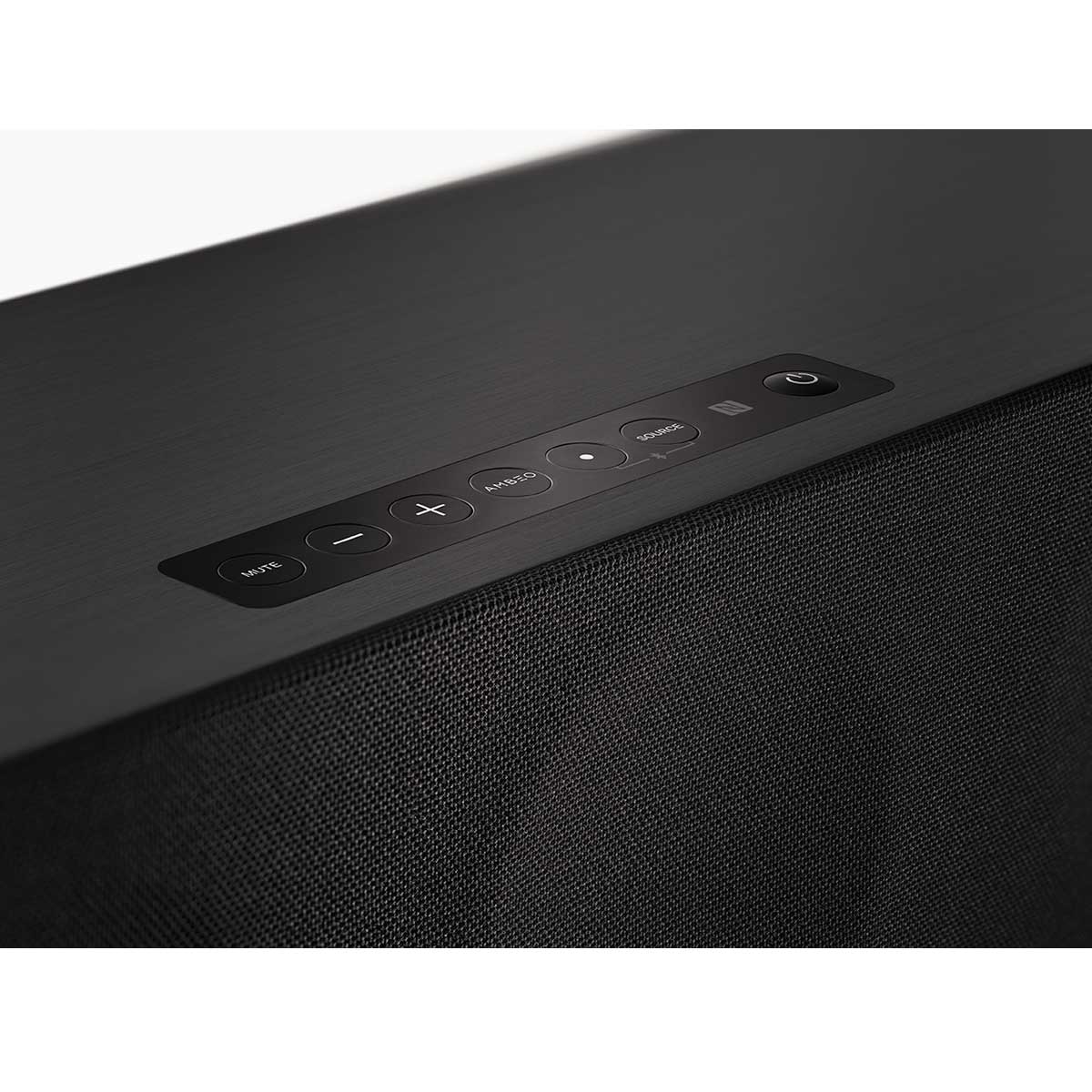
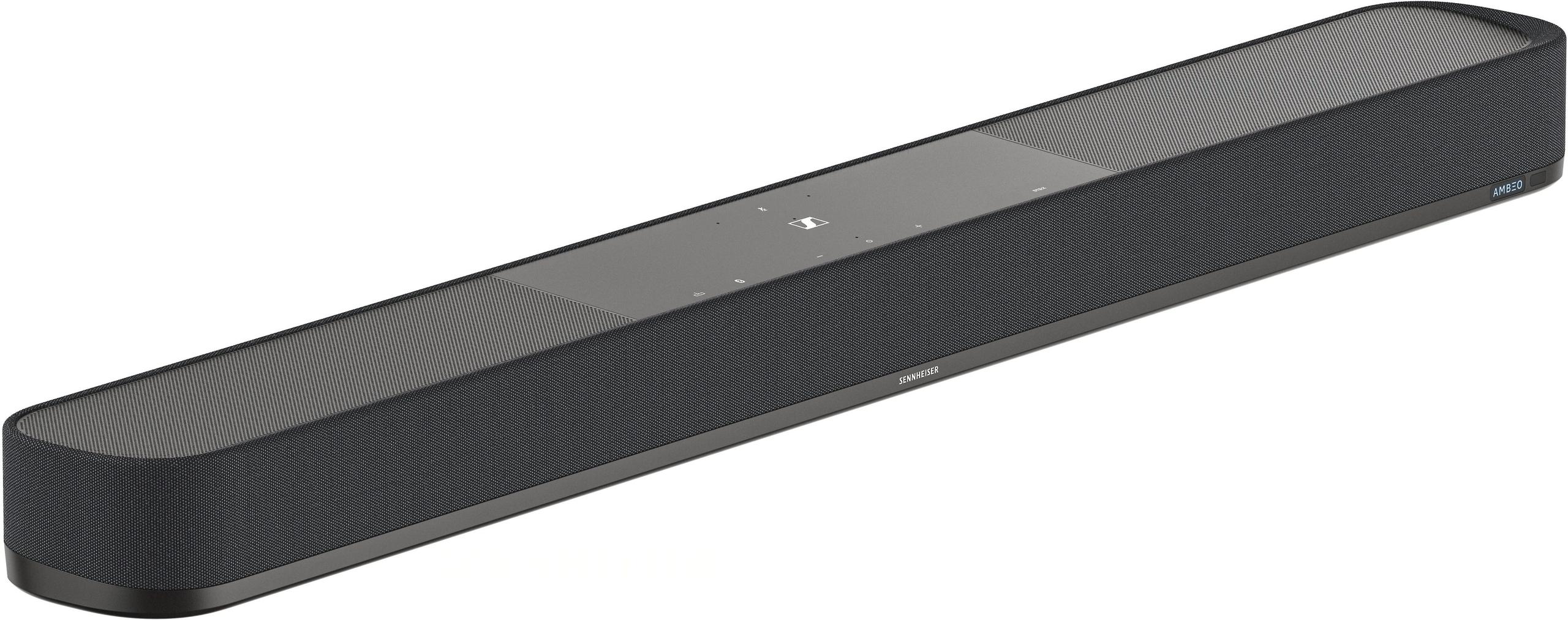
The Sennheiser AMBEO Soundbar Max, launched in 2021, takes a completely different approach. At $2,499 (now often $1,999), it's unapologetically expensive and focuses purely on audio performance. Sennheiser, known for high-end headphones and professional audio equipment, designed this as their flagship home audio product.
These different release timelines matter because both companies have refined their products through software updates. The Arc has received numerous improvements to its Atmos processing and room correction features, while the AMBEO has gotten better streaming service integration and wireless connectivity options.
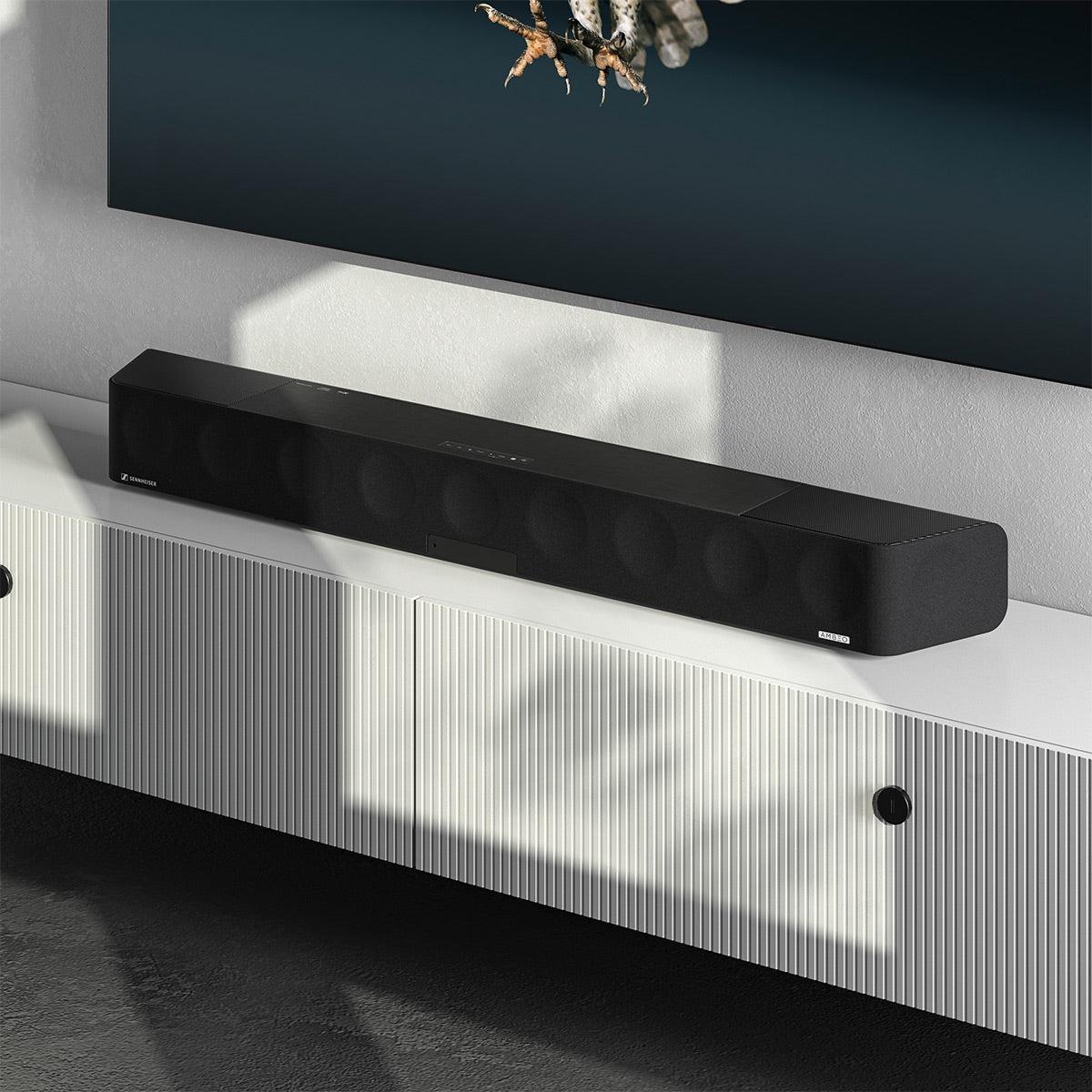
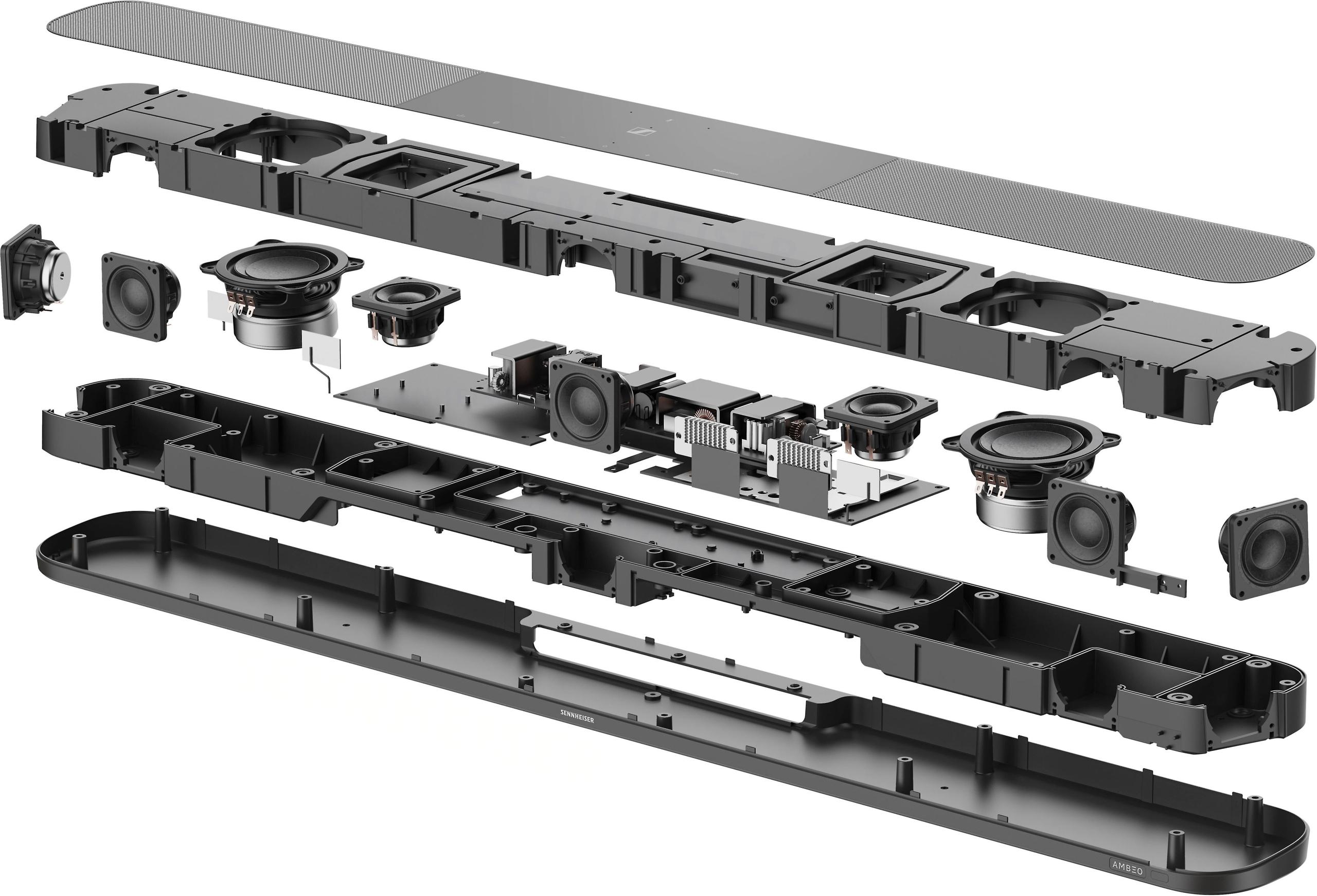
This is where the fundamental differences become clear. The Sennheiser AMBEO packs 13 individual drivers powered by 500 watts of amplification. That includes six 4-inch woofers (the drivers that handle bass frequencies), five 1-inch aluminum tweeters (for high frequencies like cymbals and dialogue clarity), and two 3.5-inch full-range drivers positioned on top corners.
Compare this to the Sonos Arc's 11 drivers with unspecified but clearly more modest power output. While Sonos doesn't publish exact wattage figures, real-world testing suggests it's roughly half the AMBEO's output.
In practical terms, this power difference is immediately noticeable. The AMBEO can fill large rooms with authority, delivering the kind of bass impact that makes explosions feel visceral and orchestral music sound genuinely dynamic. The Arc, while clear and balanced, often leaves you wanting more oomph during action sequences.
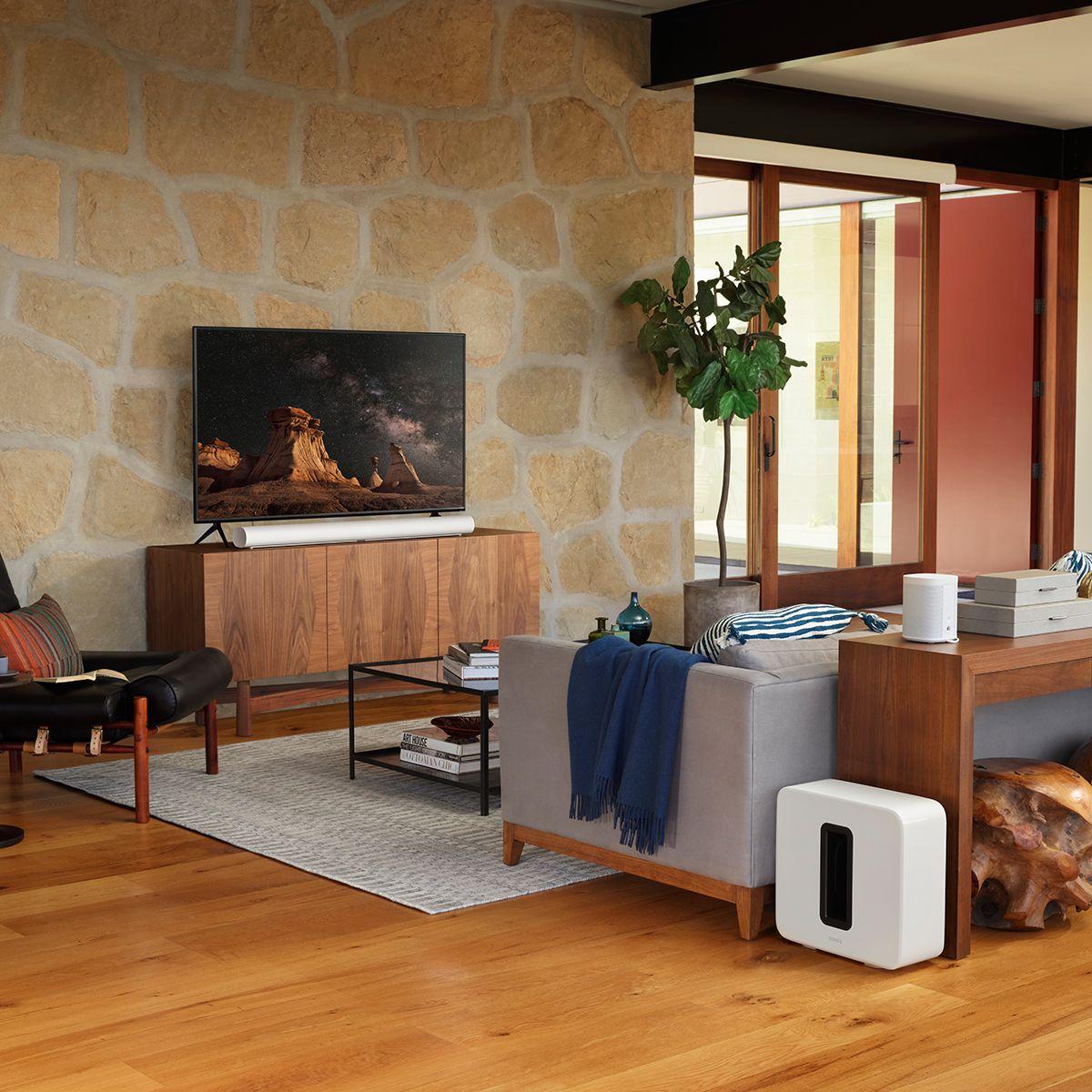
I've tested both extensively, and the AMBEO's ability to reproduce the full frequency range – especially deep bass down to 30Hz – means it sounds complete on its own. The Arc, meanwhile, really benefits from adding Sonos's separate Sub, which brings the total system cost to around $1,290-$1,550.
Both soundbars support Dolby Atmos, the surround sound format that adds height information to create a three-dimensional soundscape. However, their approaches differ significantly.
The Sonos Arc creates a 5.0.2 channel experience, meaning five main channels (front left, center, right, plus virtualized rear left and right) plus two height channels. It uses upward-firing drivers to bounce sound off your ceiling, creating the illusion of overhead speakers.
The Sennheiser AMBEO goes further with 5.1.4 channels – that extra ".1" represents a dedicated bass channel, while the ".4" indicates four height channels instead of two. More importantly, it uses proprietary virtualization technology developed with Fraunhofer (a leading audio research institute) to create more convincing spatial effects.
In my experience, the AMBEO's Atmos effects are noticeably more immersive. When watching "Top Gun: Maverick," jet engines seem to genuinely move overhead, while rain in quieter scenes creates an enveloping sense of atmosphere. The Arc provides good Atmos effects too, but they're less pronounced – you notice them when they're there, but they don't transform the experience quite as dramatically.
Here's where things get interesting. Despite the AMBEO's superior power and driver count, the Sonos Arc often handles dialogue more naturally. Its center channel tuning prioritizes vocal frequencies, making conversations easy to follow even during complex action scenes. The Arc also excels with music, delivering balanced sound across genres from jazz to electronic music.
The Sennheiser AMBEO, with its reference-quality drivers, can sound spectacular with music – orchestral pieces reveal incredible detail, and bass-heavy tracks have real impact. However, its sheer power can sometimes overwhelm dialogue in busy scenes. The soundbar includes dialogue enhancement features, but they require menu diving to access.
This reflects the products' different priorities: Sonos optimized for daily usability, while Sennheiser focused on maximum fidelity.
At first glance, the price difference seems dramatic – the Sonos Arc costs roughly a quarter of the Sennheiser AMBEO's price. But value analysis requires looking deeper.
The Arc's $540-$799 price point delivers genuinely impressive performance for the money. Its build quality feels premium, the sound significantly outclasses any TV's built-in speakers, and the feature set justifies the cost. However, to reach its full potential, most users will want to add the Sonos Sub ($749), bringing total investment to $1,289-$1,548.
The AMBEO's $1,999-$2,499 pricing initially seems extreme, but consider what you're getting: a complete system that doesn't need additional components, multiple HDMI inputs that eliminate the need for a separate switch, and audio quality that competes with dedicated surround systems costing similar amounts.
I've compared the AMBEO directly to traditional receiver-and-speaker setups in the $2,000-$3,000 range, and while dedicated systems can offer slightly better separation and imaging, the AMBEO comes remarkably close while eliminating setup complexity.
Modern soundbars need to integrate seamlessly with today's complex entertainment systems, and this is where the products diverge significantly.
The Sonos Arc excels here with built-in Amazon Alexa and Google Assistant support. You can control volume, switch inputs, or ask for weather updates using voice commands. The Arc also integrates beautifully with Sonos's multi-room audio ecosystem – you can group it with other Sonos speakers throughout your home for synchronized music playback.
The Sennheiser AMBEO takes a more traditional approach with no built-in voice assistants. While it supports modern wireless standards like AirPlay 2 and Chromecast Built-in, it's essentially a standalone audio component rather than a smart home device.
Here the AMBEO gains a significant advantage with four HDMI ports (three inputs plus one eARC output) compared to the Arc's single HDMI eARC connection. This matters if you have multiple source devices – gaming consoles, Blu-ray players, streaming boxes – as you can connect them directly to the soundbar rather than juggling TV inputs or buying a separate HDMI switch.
The AMBEO also includes a subwoofer pre-out, allowing future expansion with an external subwoofer if desired, though most users won't need this given its built-in bass capability.
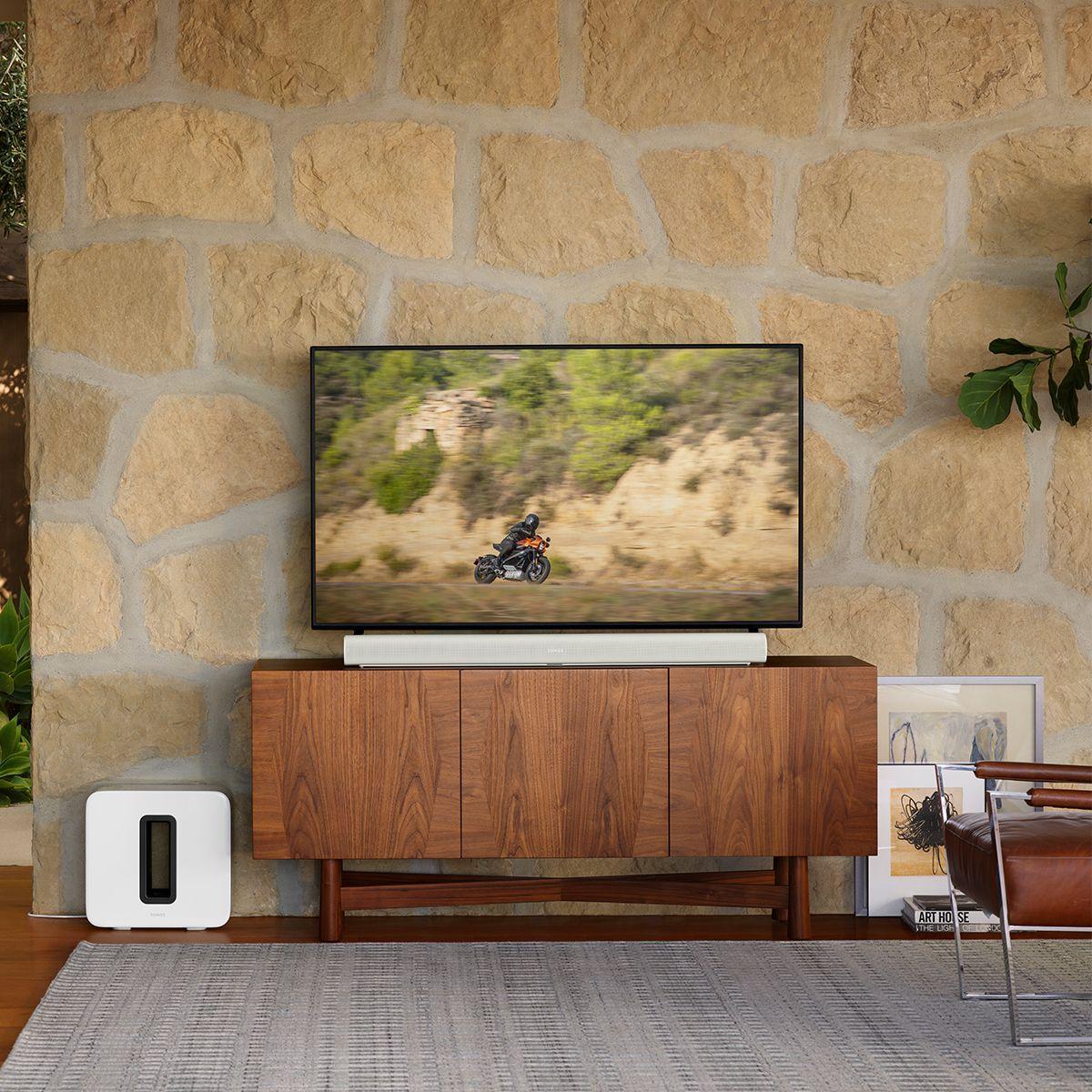
Size matters when choosing between these soundbars. The Sonos Arc measures a manageable 45 inches wide and fits comfortably under most TVs. Its sleek profile blends well with modern TV aesthetics.
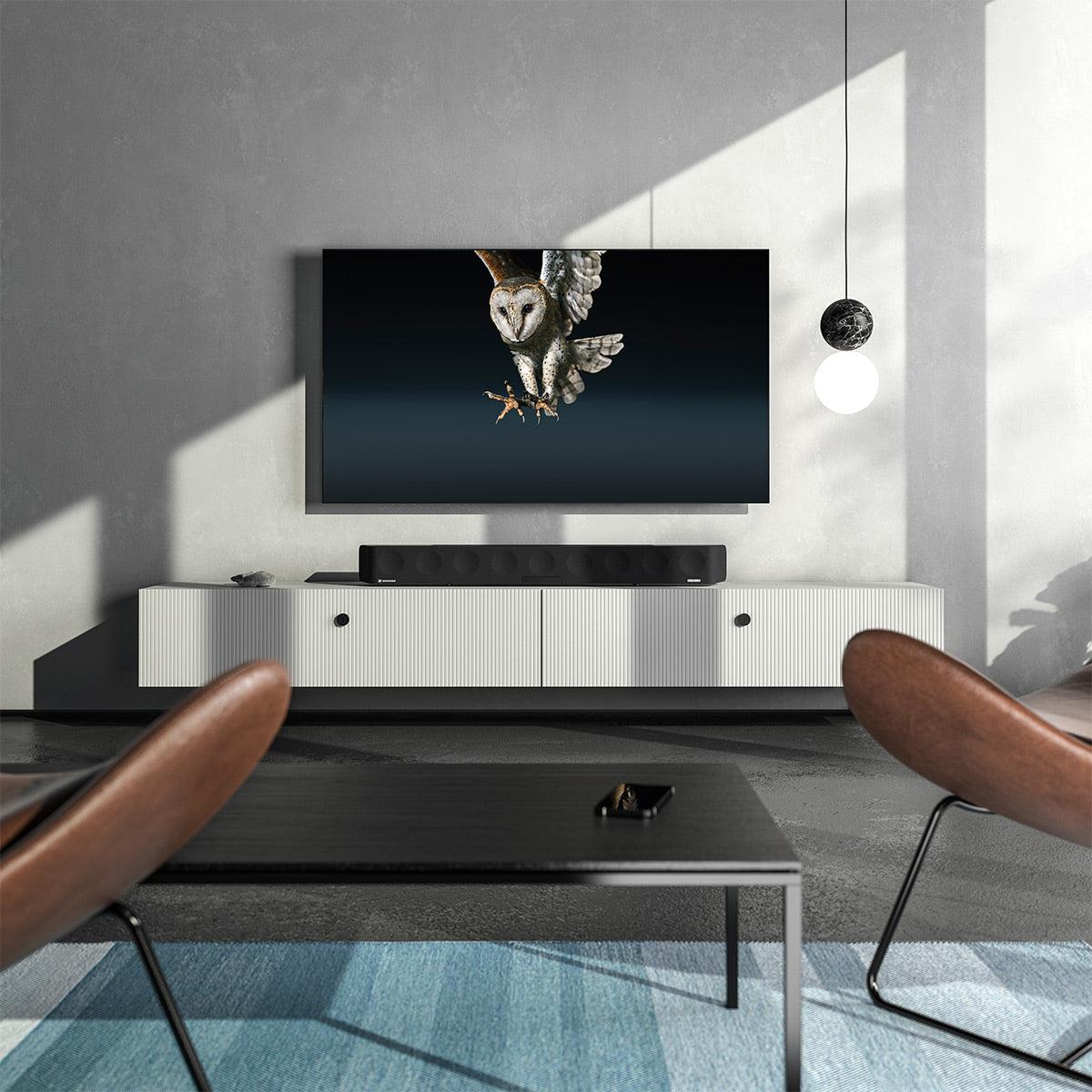
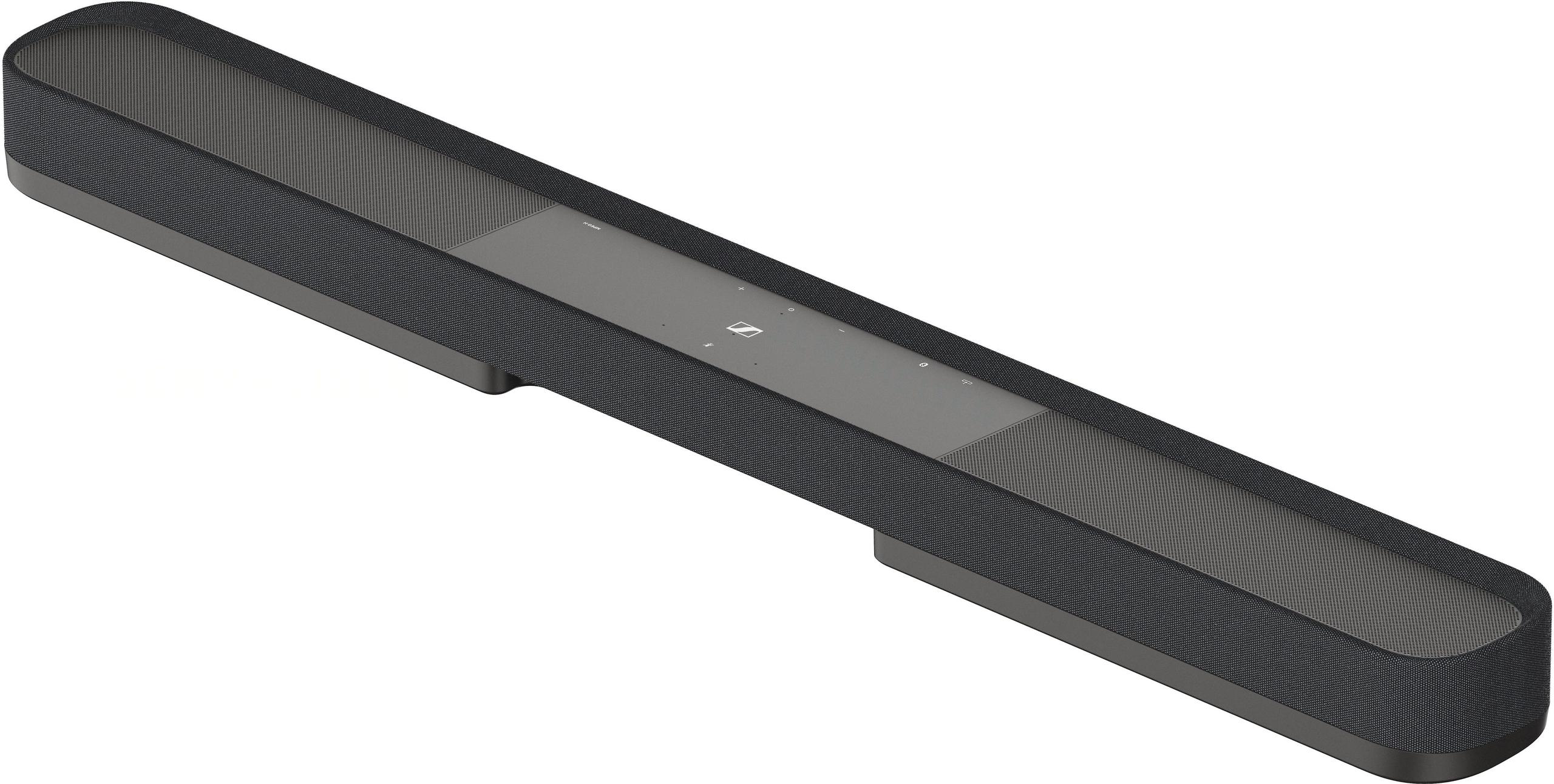
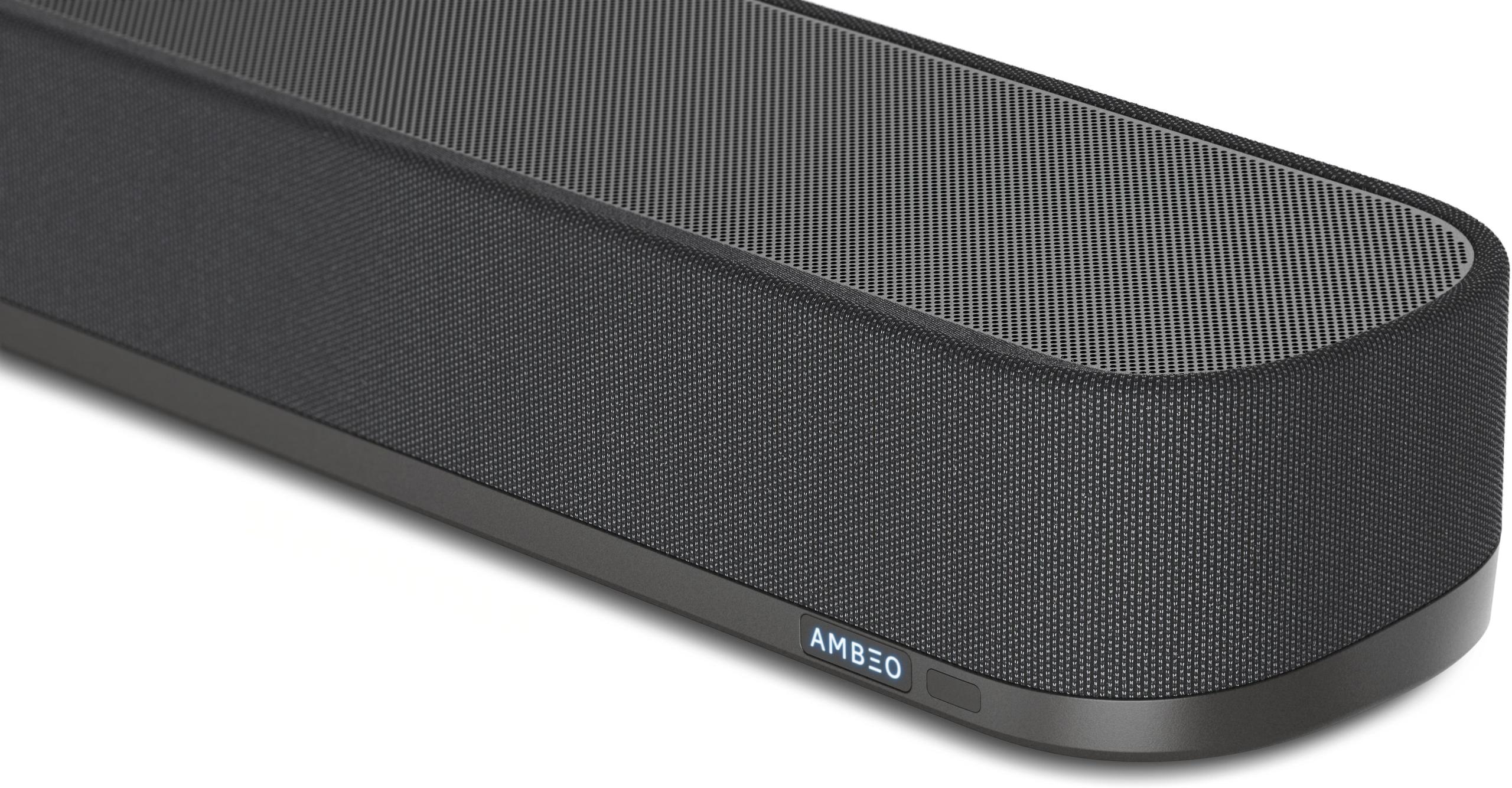
The Sennheiser AMBEO is genuinely massive at nearly 50 inches wide and significantly deeper. It requires a sturdy TV stand and dominates the space visually. Some users find its size imposing, while others appreciate the substantial presence that hints at its audio capabilities.
Both soundbars perform room calibration, but differently. The Arc uses Sonos's TruePlay technology, which requires you to walk around your room with an iOS device while the system plays test tones. It's effective but requires manual setup.
The AMBEO performs automatic room calibration using built-in microphones, adapting its sound profile to your room's acoustics without user intervention. In my testing, both systems improve performance noticeably after calibration, though the AMBEO's automated approach is more convenient.
For dedicated home theater use, both soundbars shine but in different ways. The Sonos Arc creates an engaging, balanced presentation that works well for everything from Netflix series to blockbuster movies. Its dialogue clarity means you'll catch whispered conversations without constantly adjusting volume, while its Atmos effects add immersion to supporting scenes.
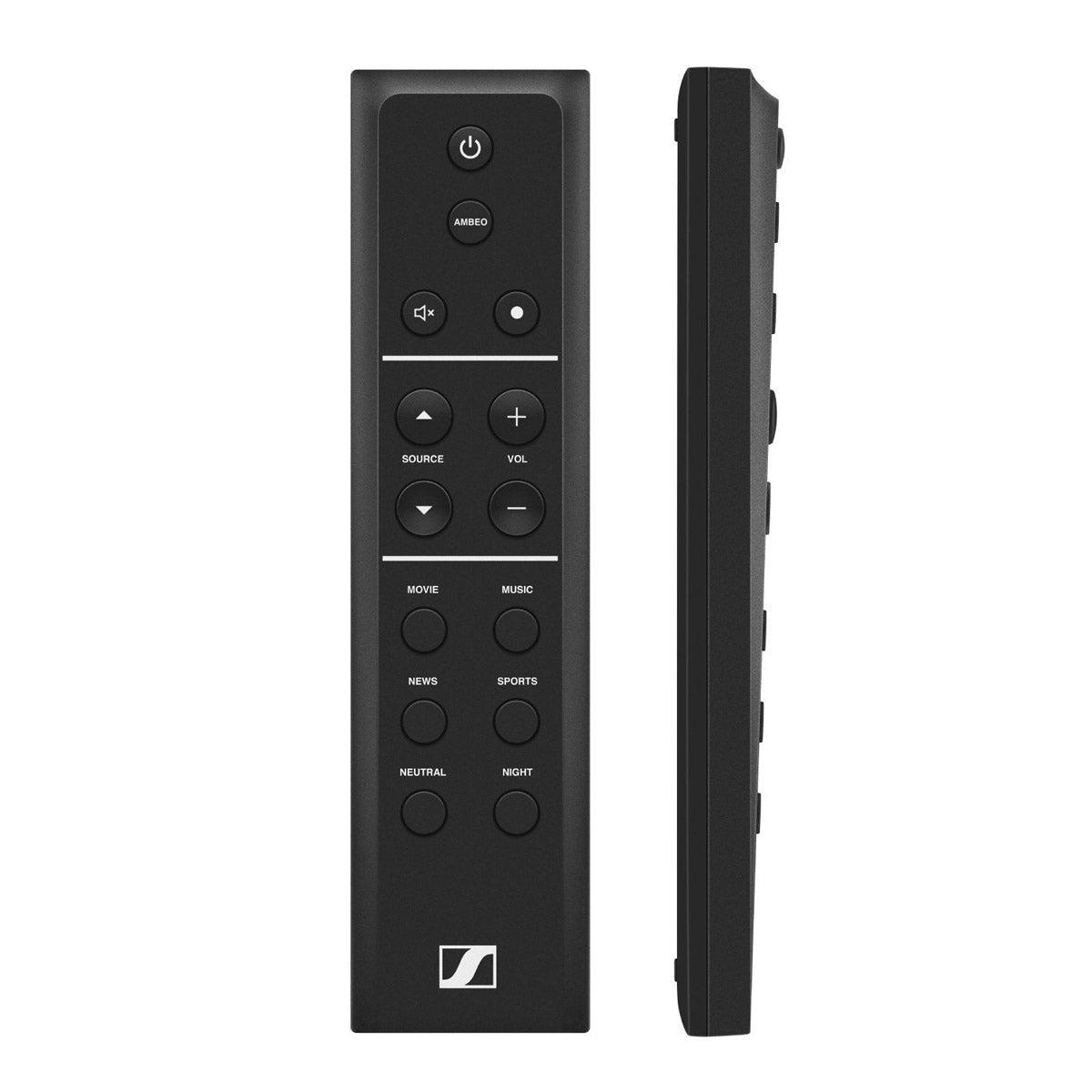
The Sennheiser AMBEO transforms your living room into something approaching a commercial theater. Action sequences have genuine impact – explosions rumble through your body, while quiet tension-building moments reveal subtle audio details you might miss with lesser systems. The AMBEO's multiple listening modes (Movie, Music, Sports, and various AMBEO 3D settings) let you optimize for different content types.
I particularly appreciate the AMBEO's ability to maintain clarity at high volumes. Many soundbars start to compress dynamics or introduce distortion when pushed hard, but the AMBEO remains composed even during the loudest passages of demanding movie soundtracks.
Choose the Sonos Arc if you want excellent performance without breaking the bank, value smart home integration, or have space constraints. It's perfect for apartments or smaller rooms where its balanced sound signature won't be overwhelmed by the space. The Arc also makes sense if you're already invested in the Sonos ecosystem or plan to build a multi-room audio system over time.
The Sennheiser AMBEO justifies its premium price if audio quality is your top priority, you have a large room that can benefit from its power, or you need multiple HDMI inputs for a complex entertainment setup. It's also ideal if you want a complete solution without the hassle of adding components later.
Both products continue receiving software updates that improve performance and add features. Recent Arc updates have enhanced its Atmos processing and added new streaming service integrations, while AMBEO updates have improved wireless connectivity and added support for additional audio formats.
The soundbar market continues evolving rapidly, with manufacturers pushing the boundaries of what's possible from single-unit designs. However, both the Sonos Arc and Sennheiser AMBEO represent mature, refined products that should remain competitive for years to come.
Your choice between these soundbars should align with your priorities, budget, and room requirements. The Sonos Arc delivers exceptional value with smart features that enhance daily use, making it perfect for most users seeking significant audio improvement without extreme expense. The Sennheiser AMBEO targets audiophiles and home theater enthusiasts willing to pay premium prices for uncompromising performance and convenience.
Both will dramatically improve your TV audio experience compared to built-in speakers. The question is whether you prioritize value and ecosystem integration or maximum audio fidelity and power. Either choice represents a significant step up in your home entertainment experience.
| Sonos Arc Wireless Sound Bar | Sennheiser AMBEO Soundbar |
|---|---|
| Price - Major factor in value proposition | |
| $540-$799 (often discounted from original $799) | $1,999-$2,499 (originally $2,499, now often $1,999) |
| Total Power Output - Determines volume levels and bass impact | |
| Moderate output (unspecified, estimated ~200W) | 500W (significantly more powerful for large rooms) |
| Driver Configuration - More drivers typically mean better sound separation | |
| 11 drivers (3 tweeters, 8 woofers) | 13 drivers (5 tweeters, 6 woofers, 2 full-range) |
| Dolby Atmos Channels - Higher numbers create more immersive surround sound | |
| 5.0.2 channels (virtualized rear channels) | 5.1.4 channels (dedicated bass + 4 height channels vs 2) |
| Bass Response - Lower frequencies mean deeper, more impactful bass | |
| Requires separate Sonos Sub for full bass (adds $749) | 30Hz built-in (no subwoofer needed) |
| HDMI Connectivity - More inputs mean fewer device juggling | |
| 1 HDMI eARC port only | 4 HDMI ports (3 inputs + 1 eARC output) |
| Voice Assistant Support - Convenience for smart home users | |
| Built-in Alexa and Google Assistant | None (requires external smart speaker) |
| Multi-room Audio - Important for whole-home audio systems | |
| Full Sonos ecosystem integration | Standalone unit only |
| Dimensions - Critical for TV stand compatibility | |
| 45" x 3.4" x 4.6" (fits most setups) | 49.6" x 5.3" x 6.7" (requires sturdy, large stand) |
| Room Calibration - Optimizes sound for your specific space | |
| TruePlay (manual setup with iOS device required) | Automatic calibration with built-in microphones |
| Complete System Cost - True price including necessary additions | |
| $1,289-$1,548 (with recommended Sub) | $1,999-$2,499 (complete as-is) |
The Sonos Arc offers better value at $540-$799, delivering excellent performance for most users without breaking the bank. The Sennheiser AMBEO at $1,999-$2,499 provides superior audio quality but costs 3-4 times more. For most buyers, the Arc's balanced performance and smart features justify its lower price.
The Sennheiser AMBEO includes powerful built-in bass down to 30Hz, so no subwoofer is needed. The Sonos Arc benefits significantly from adding the Sonos Sub ($749) for full bass impact, though it's not absolutely required for casual listening.
The Sonos Arc works well in small to medium rooms where its balanced sound won't be overwhelmed. The Sennheiser AMBEO really shines in large rooms where its 500W power output can fill the space effectively. In small rooms, the AMBEO might actually be overkill.
The Sonos Arc has only one HDMI eARC port, requiring you to use your TV's inputs for multiple devices. The Sennheiser AMBEO includes four HDMI ports (three inputs plus eARC), making it much better for connecting gaming consoles, Blu-ray players, and streaming devices directly.
The Sennheiser AMBEO delivers superior Dolby Atmos with 5.1.4 channels and more convincing overhead effects using advanced virtualization technology. The Sonos Arc provides good Atmos with 5.0.2 channels, but the height effects are less dramatic and immersive.
The Sonos Arc has built-in Amazon Alexa and Google Assistant, allowing direct voice control for volume, playback, and smart home functions. The Sennheiser AMBEO has no built-in voice assistants, requiring a separate smart speaker for voice control.
The Sonos Arc wins for ease of use with a 10-minute setup process, intuitive app control, and seamless smart home integration. The Sennheiser AMBEO is more complex due to its size, port placement underneath, and professional-grade features that require more manual adjustment.
Both support modern streaming via AirPlay 2 and other wireless protocols. The Sonos Arc integrates with the broader Sonos multi-room ecosystem and has extensive streaming service support. The Sennheiser AMBEO offers reference-quality music reproduction but lacks multi-room capabilities.
The Sennheiser AMBEO excels for dedicated home theater use with cinema-level dynamics, powerful bass, and immersive Atmos effects that transform action movies. The Sonos Arc provides excellent dialogue clarity and balanced sound that works well for all content types but with less dramatic impact.
The Sonos Arc measures 45" wide and fits under most TVs with its sleek profile. The Sennheiser AMBEO is massive at nearly 50" wide and much deeper, requiring a very sturdy TV stand and dominating the visual space significantly.
The Sonos Arc can be expanded with wireless Sonos rear speakers and the Sonos Sub for a complete surround system. The Sennheiser AMBEO has a subwoofer pre-out for adding an external sub but doesn't support wireless rear speakers for true surround expansion.
The Sonos Arc is the better choice for most buyers, offering excellent performance, smart features, and reasonable pricing that delivers great value. Choose the Sennheiser AMBEO only if you're an audiophile with a large room, multiple source devices, and budget flexibility for premium sound quality above all else.
We've done our best to create useful and informative comparisons to help you decide what product to buy. Our research uses advanced automated methods to create this comparison and perfection is not possible - please contact us for corrections or questions. These are the sites we've researched in the creation of this article: whathifi.com - soundandvision.com - en.community.sonos.com - cnet.com - worldwidestereo.com - abt.com - creativeaudio.net - target.com - sonos.com - worldwidestereo.com - businessinsider.com - en.community.sonos.com - youtube.com - bestbuy.com - rtings.com - techradar.com - audioxpress.com - whathifi.com - upscaleaudio.com - soundstagesimplifi.com - global.sennheiser-hearing.com - sennheiser-hearing.com - audioadvice.com - abt.com - moon-audio.com

Privacy Policy
Terms and Conditions - Affiliate Policy
Home Security
© Copyright 2008-2026.
11816 Inwood Rd #1211, Dallas, TX 75244