





When your TV's built-in speakers sound like they're coming from inside a cardboard box, it's time for an upgrade. But the soundbar world can feel overwhelming, especially when you're comparing products from completely different price tiers. Today we're looking at two fascinating options that take radically different approaches to delivering immersive home theater sound: the budget-friendly Hisense AX5140Q and the premium Sennheiser AMBEO Soundbar.
Before diving into these specific models, it's worth understanding what soundbars are trying to accomplish. Think of them as the Swiss Army knife of home audio—they're designed to deliver the experience of a full surround sound system without requiring you to run speaker wire around your room or dedicate an entire wall to components.
The magic happens through a combination of physical speakers and digital processing. Traditional surround sound uses five or more speakers placed around your room, plus a subwoofer for bass (that's what "5.1" means—five speakers plus one subwoofer). Modern soundbars try to recreate this experience using fewer components, either through clever speaker placement or sophisticated audio processing that tricks your brain into hearing sounds from directions where no speakers actually exist.
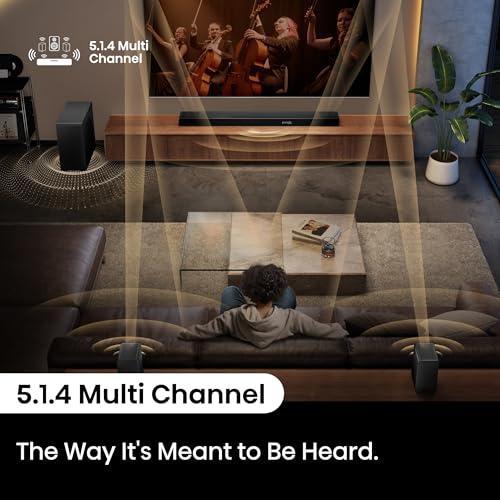
Both the Hisense AX5140Q and Sennheiser AMBEO support what's called "5.1.4" surround sound. The ".4" refers to height channels that create overhead effects—imagine rain falling from above or helicopters flying overhead in movies. This technology, called Dolby Atmos, adds a vertical dimension to surround sound that makes action sequences feel dramatically more immersive.
However, these two soundbars achieve their 5.1.4 surround in completely different ways, and understanding this difference is crucial for making the right choice.
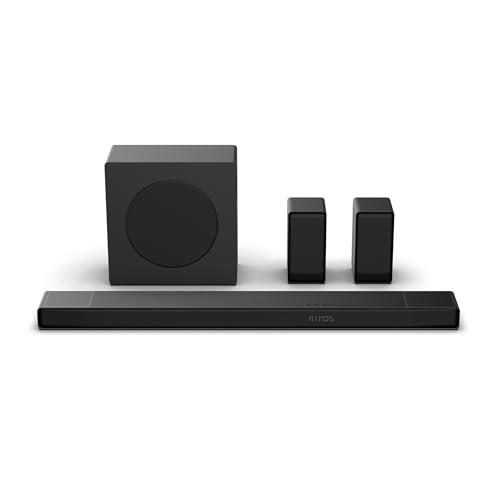
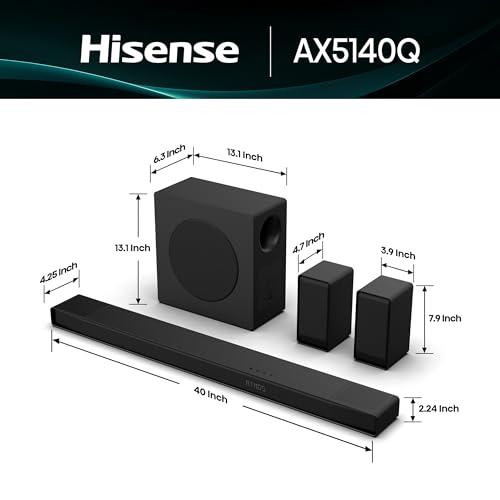
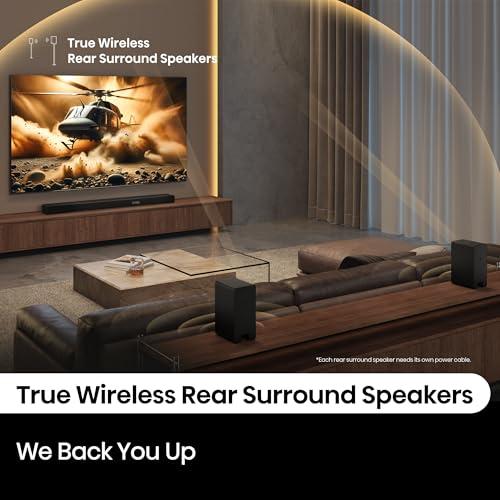
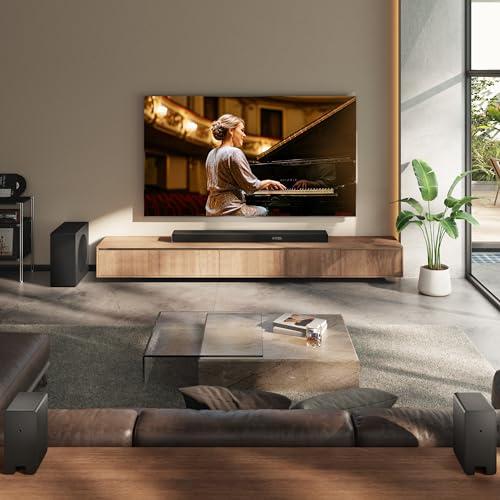
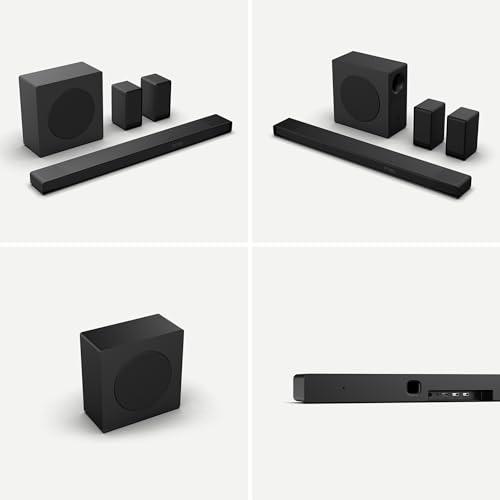
Released in 2024, the Hisense AX5140Q takes what I'd call the "traditional surround sound" approach. Instead of cramming everything into one bar, it gives you four separate components: the main soundbar, a wireless subwoofer, and two wireless rear speakers. Each rear speaker even includes its own upfiring drivers—these are speakers that point toward your ceiling to create overhead sound effects by bouncing audio off the ceiling and back down to your ears.
This approach has obvious advantages. When a movie wants to create the sound of footsteps behind you, the Hisense AX5140Q can actually play that sound from speakers positioned behind your seating area. It's not trying to trick your brain—it's physically placing the sound where it should be. The wireless design means you don't need to run cables, though you'll still need power outlets for each component.
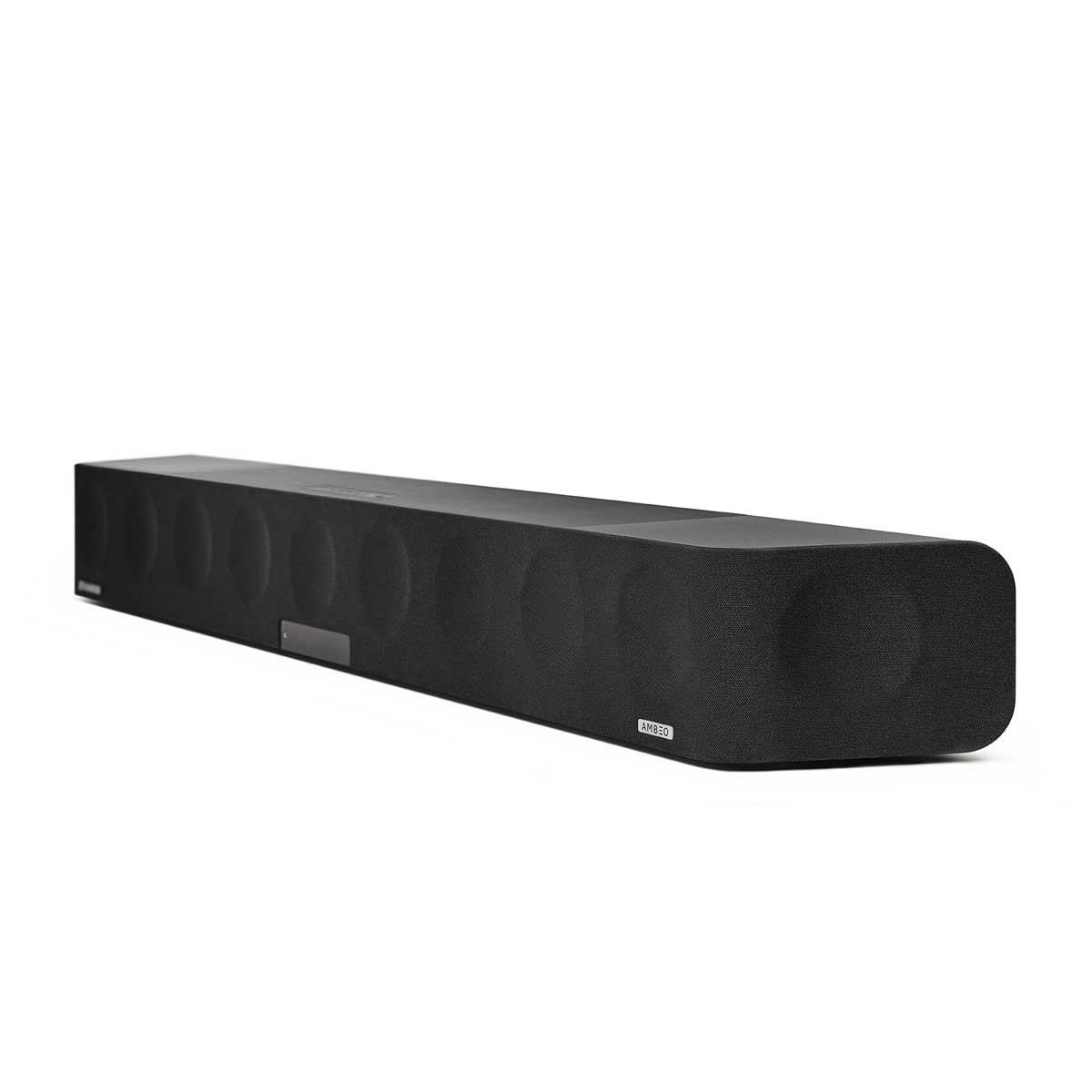
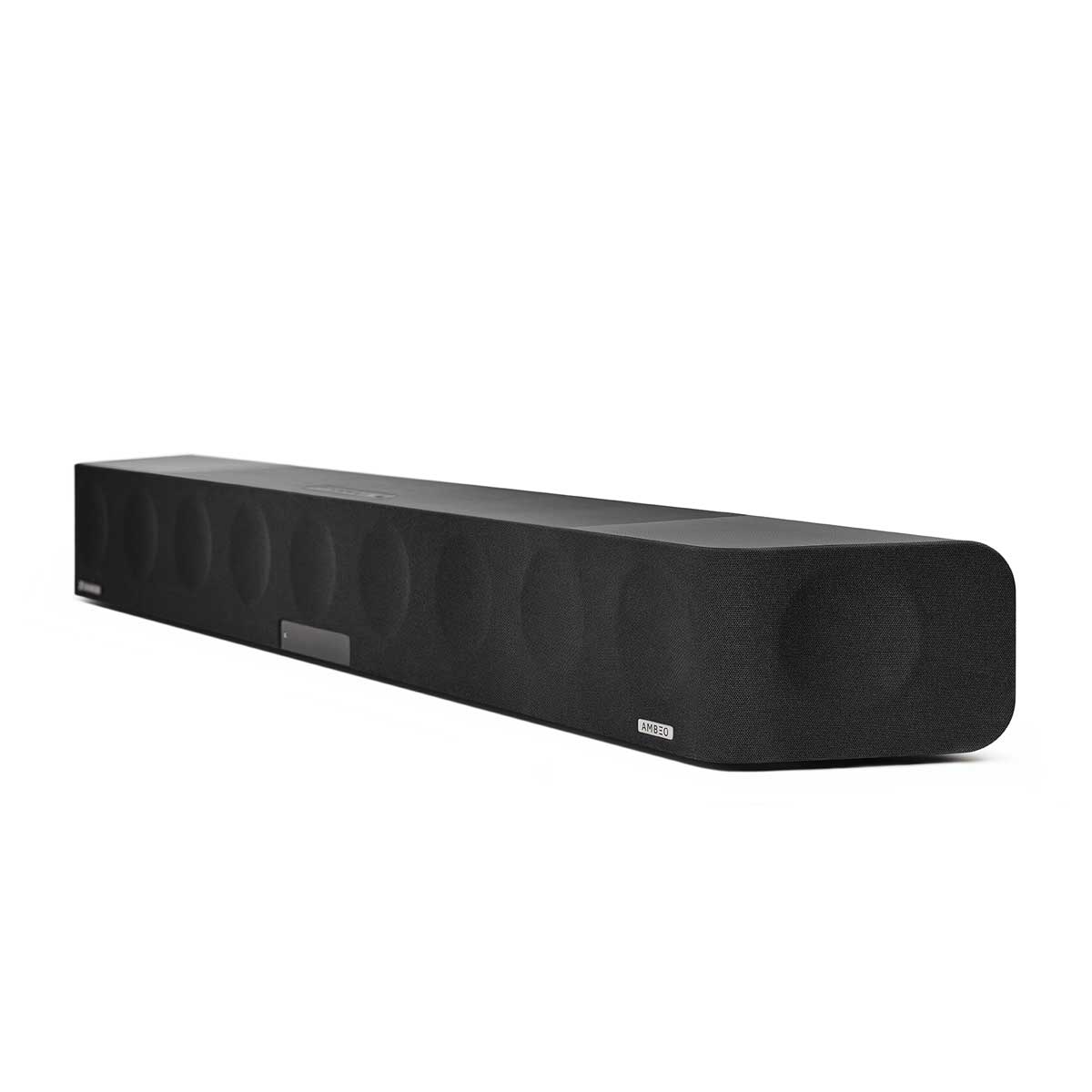
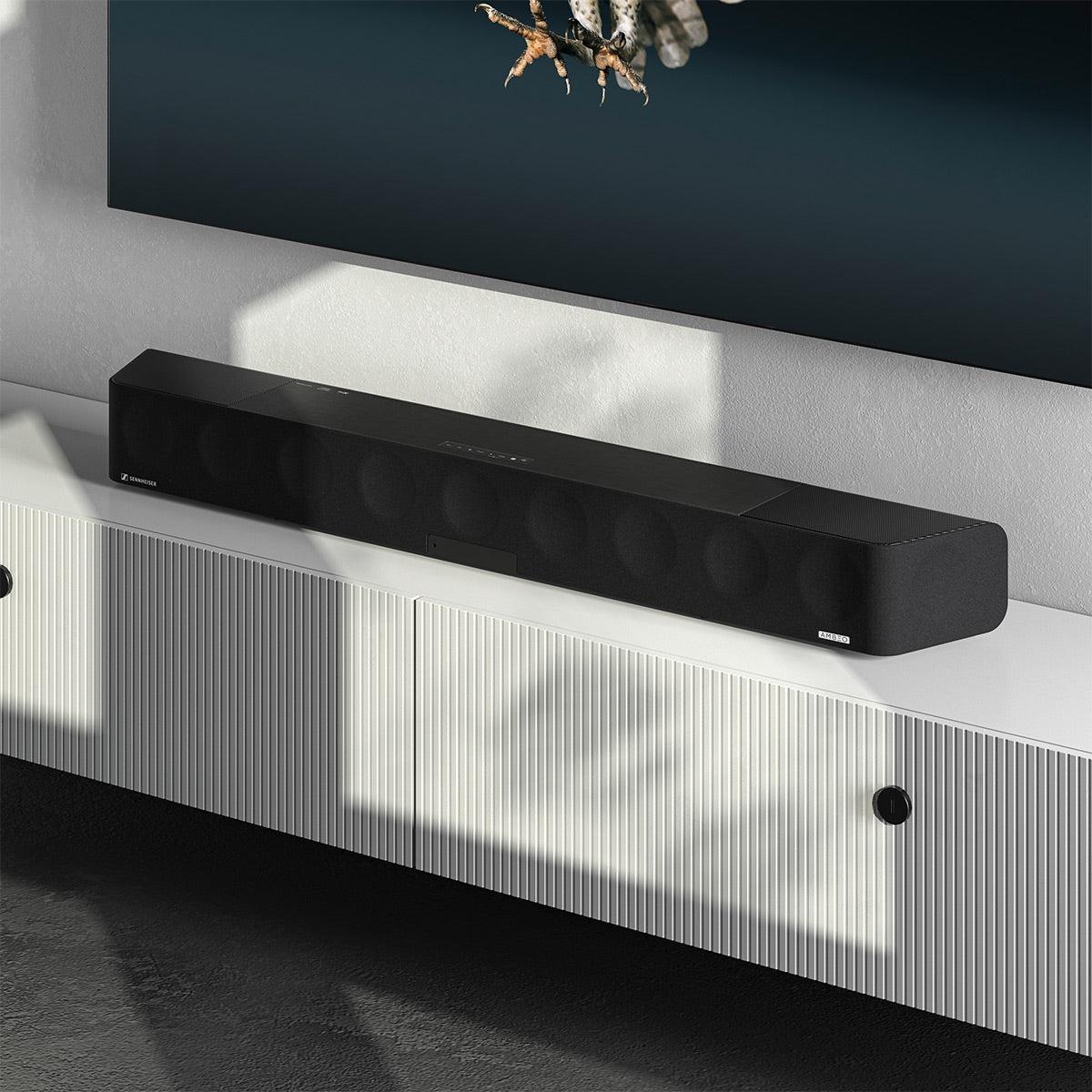
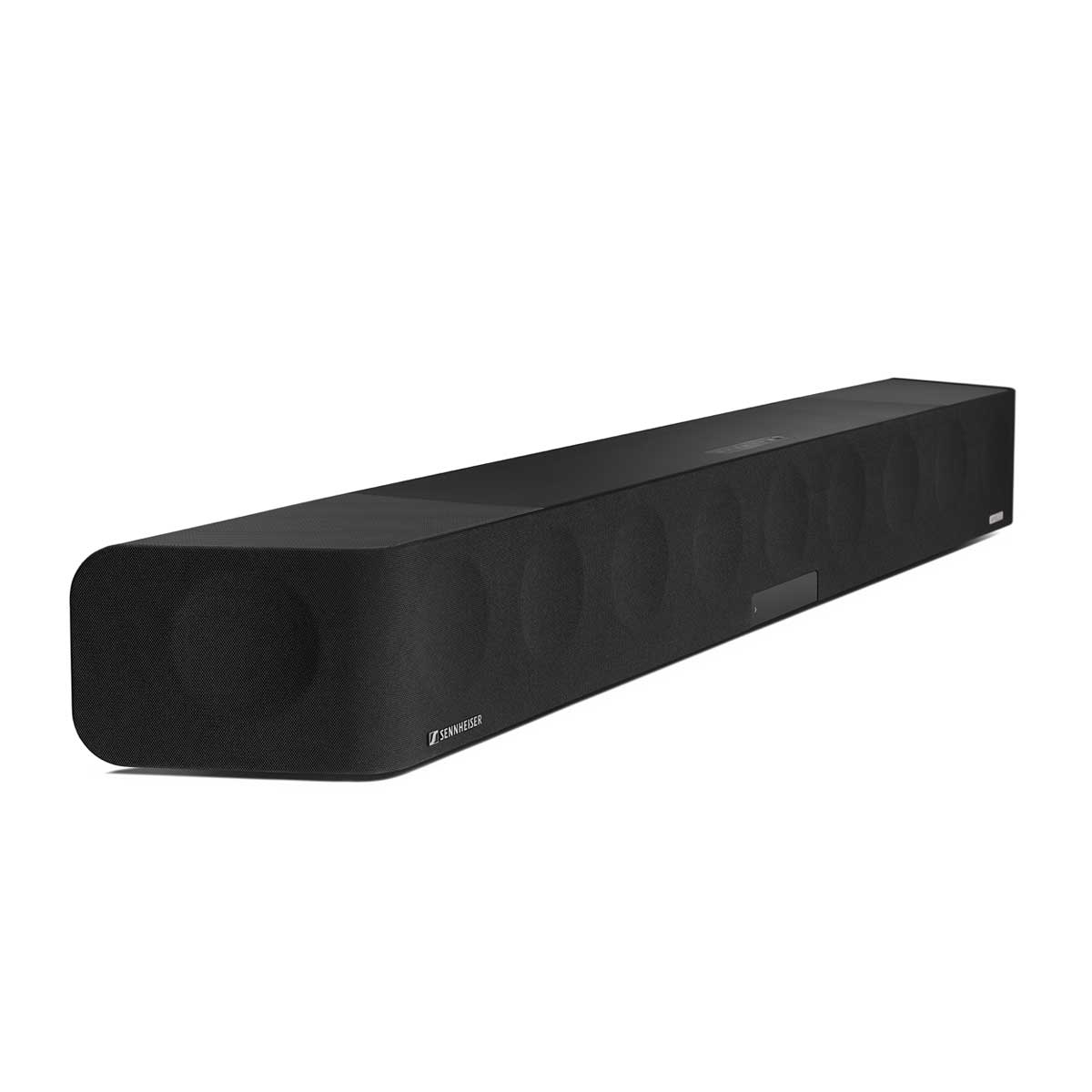
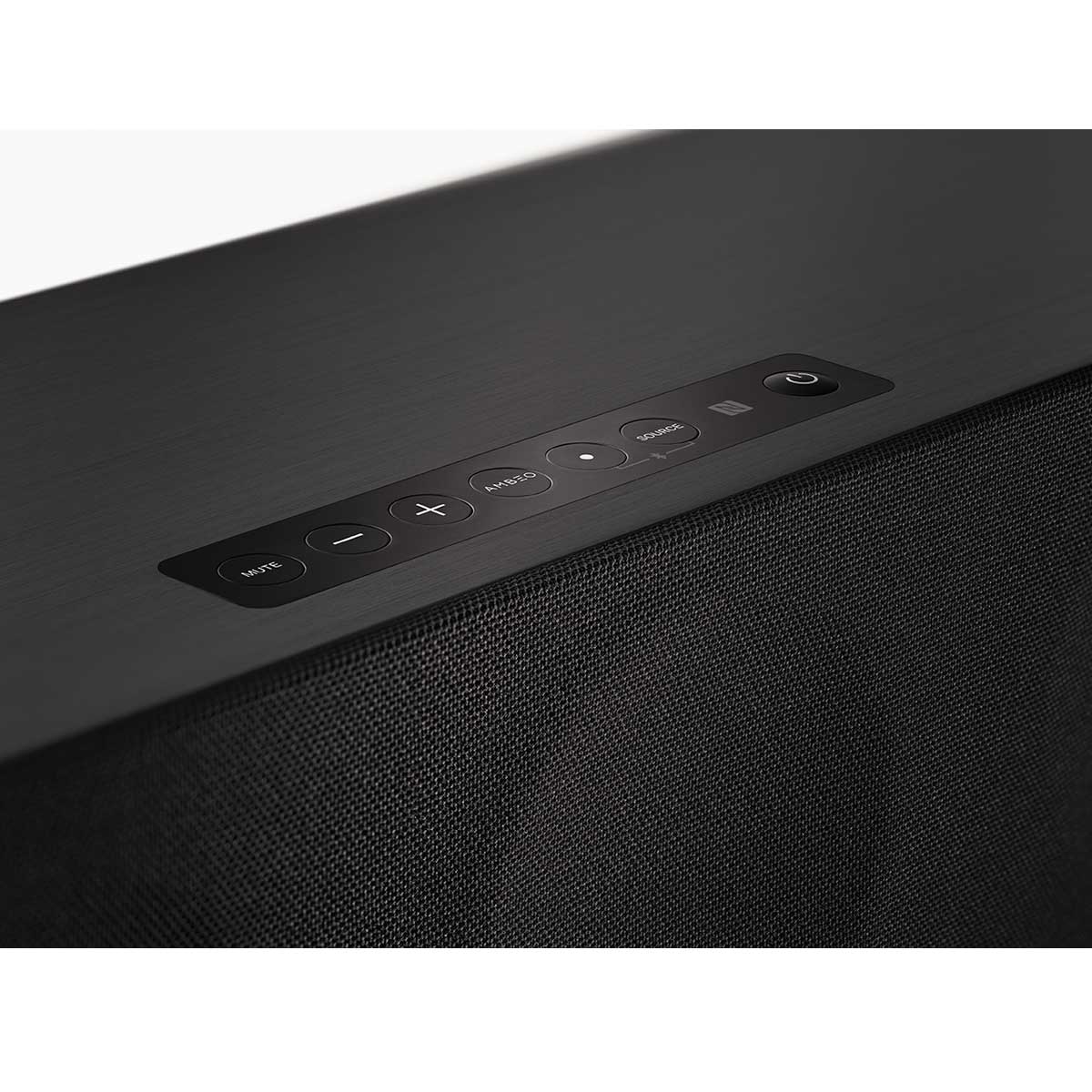
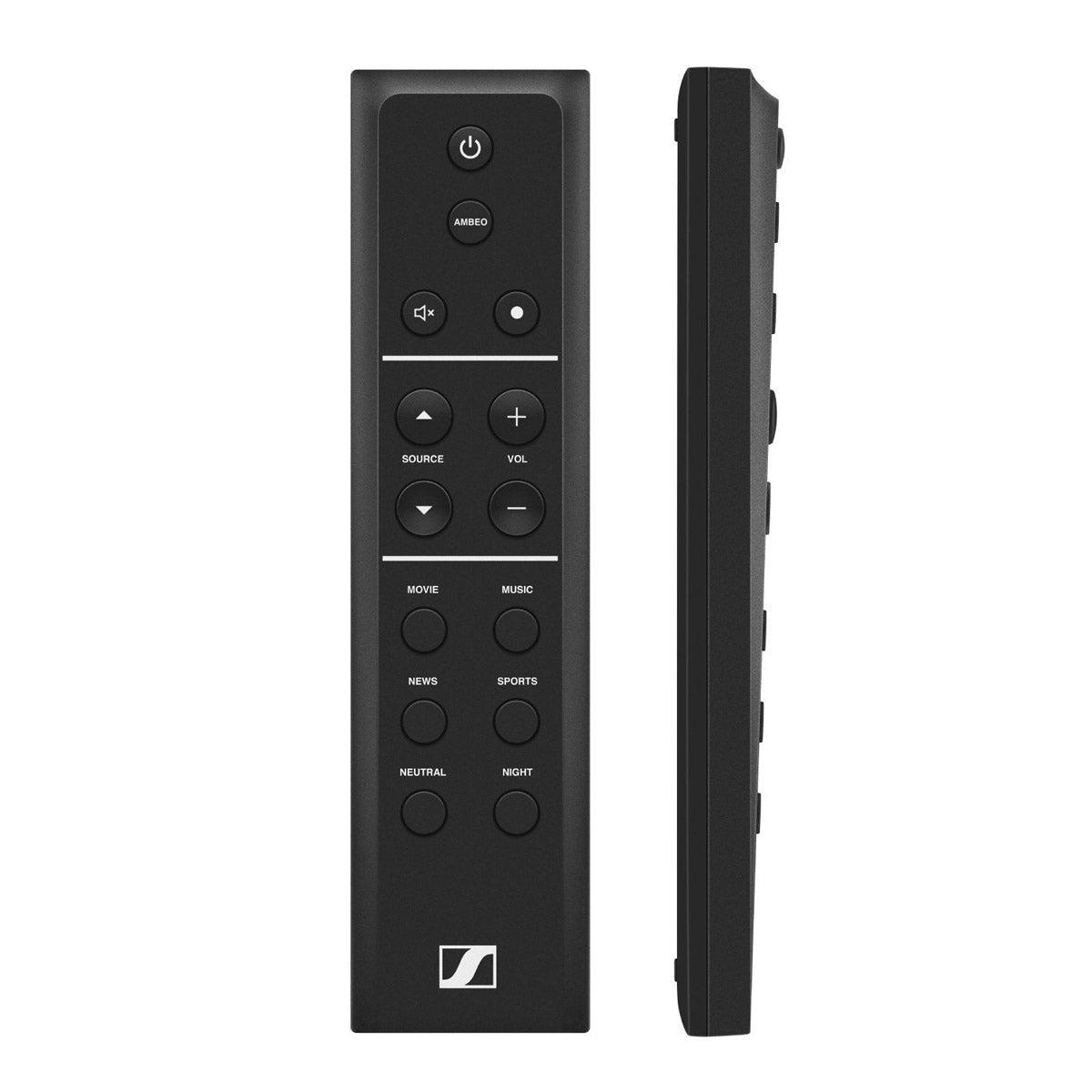
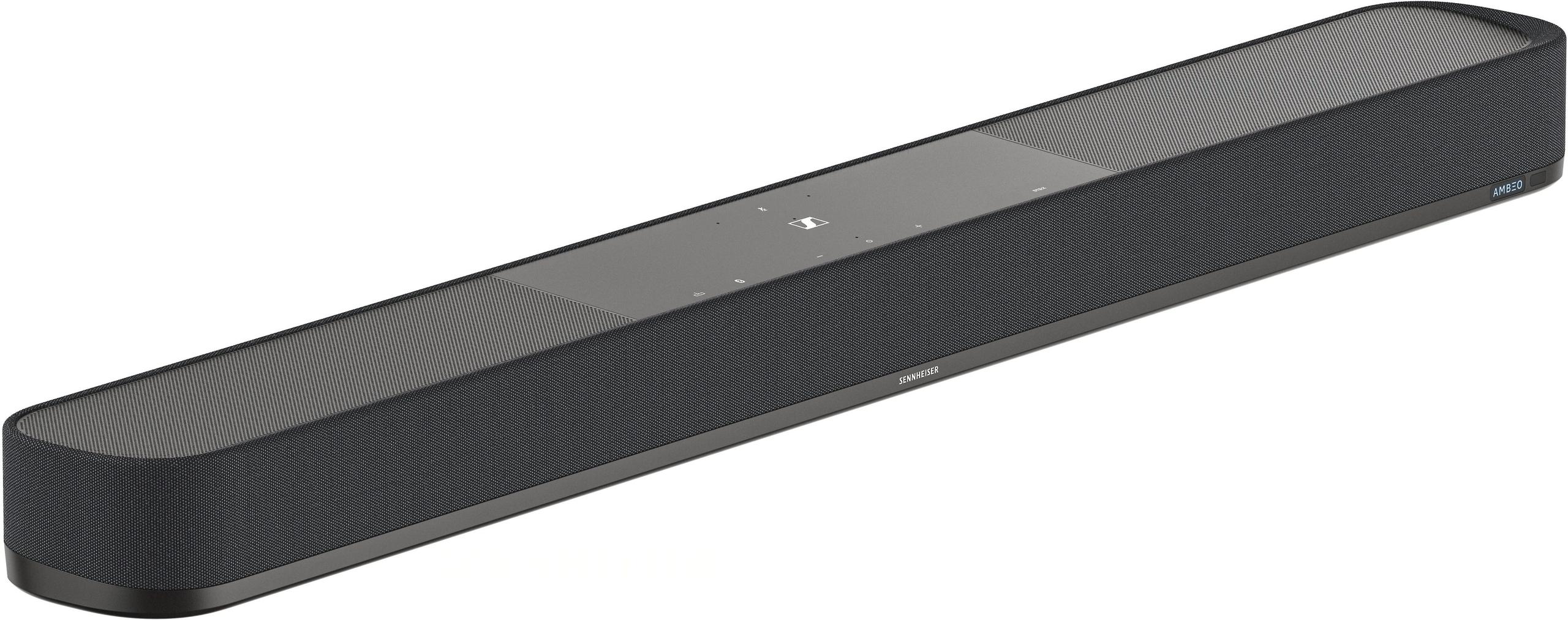
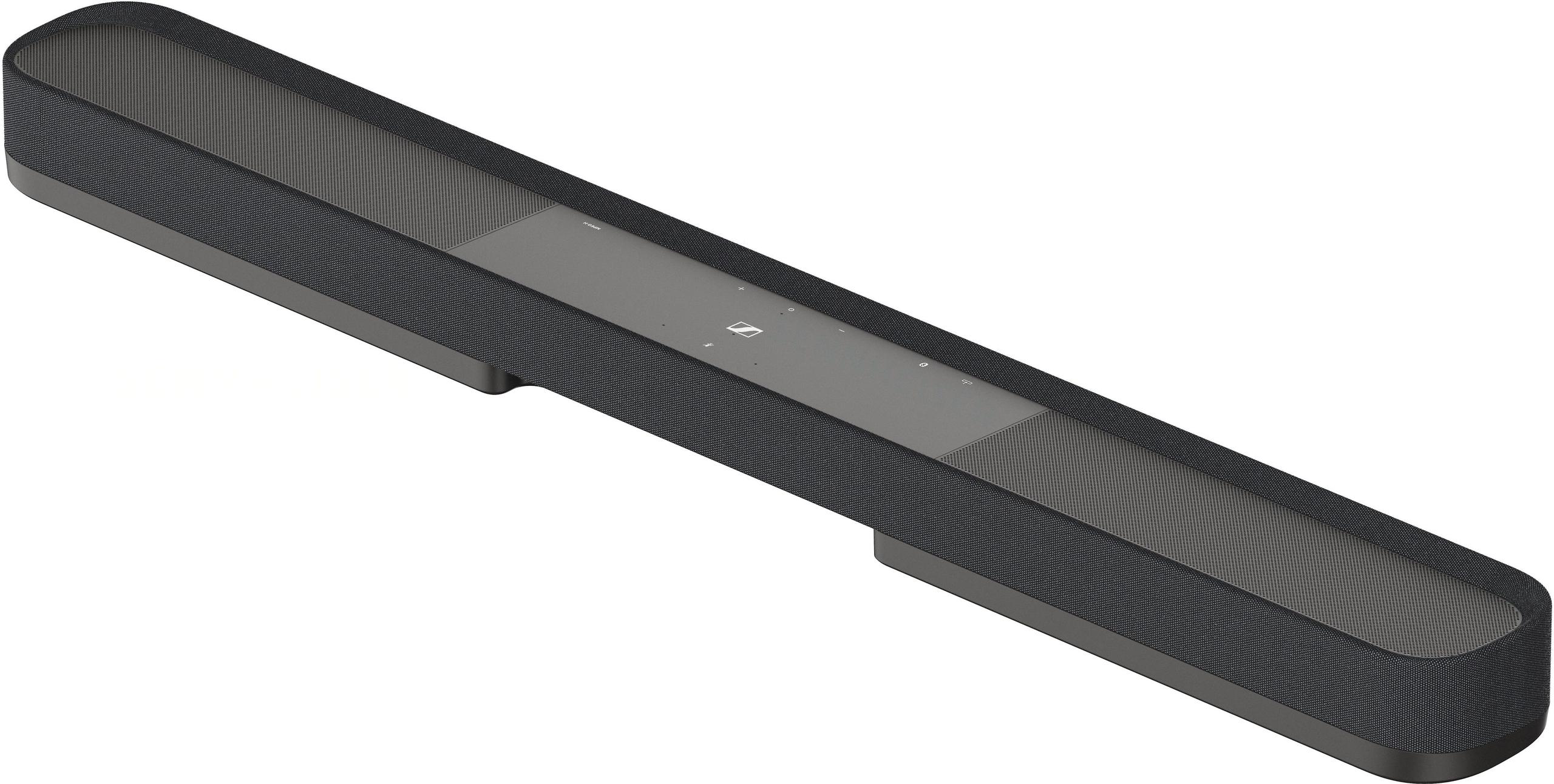
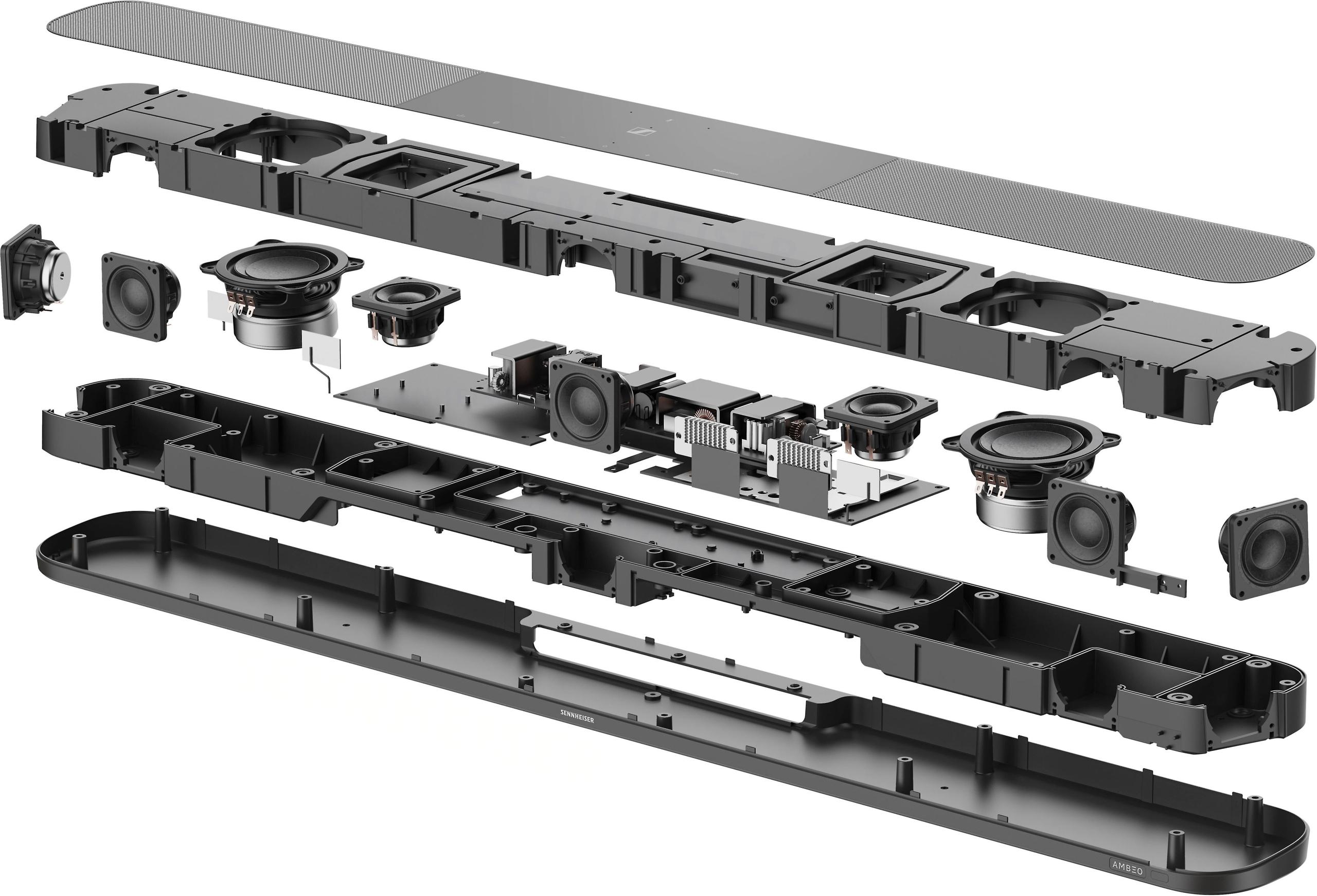
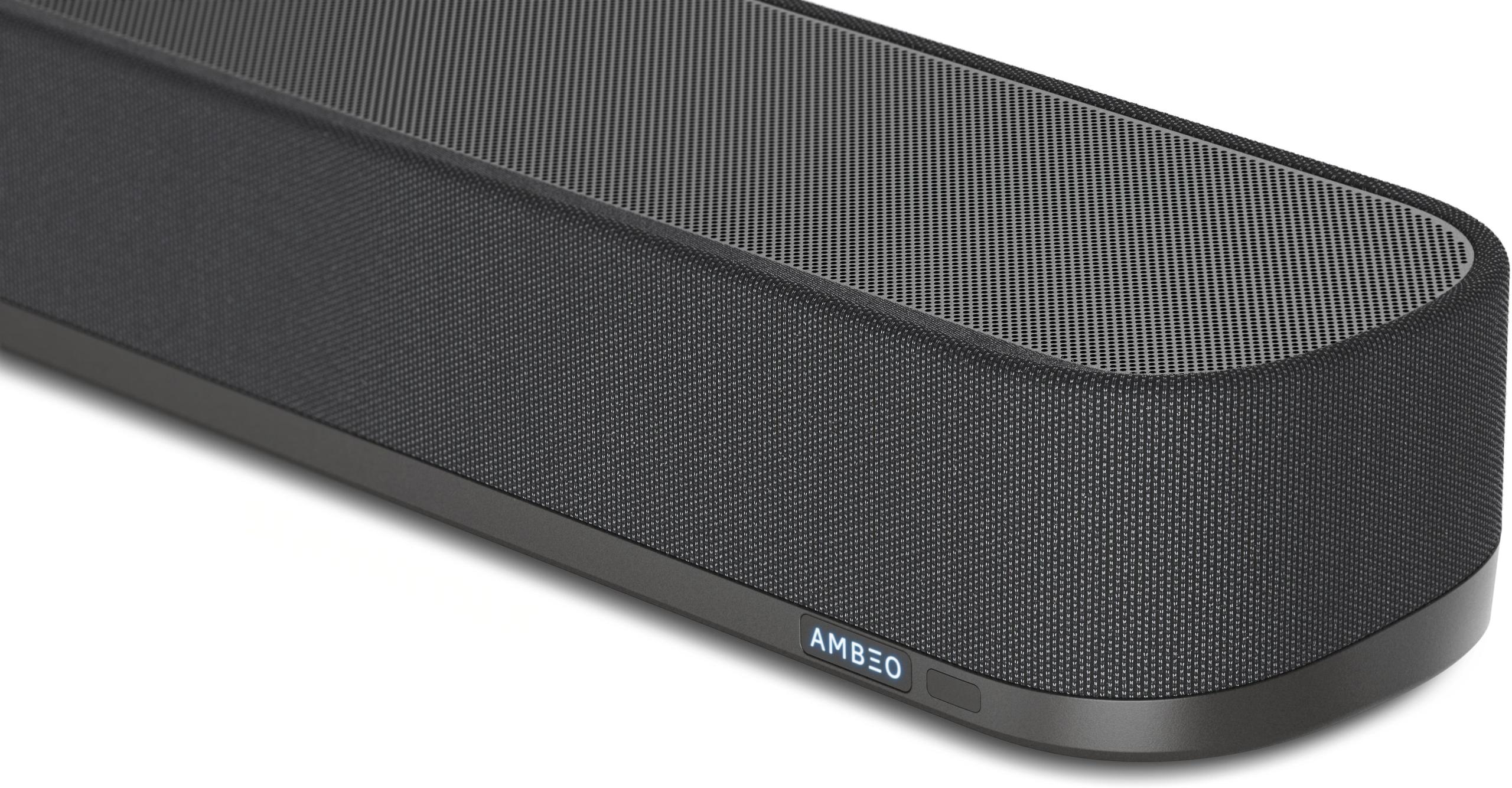
The Sennheiser AMBEO Soundbar, originally released in 2019 but significantly updated with new firmware in 2025, takes a radically different approach. Everything happens in one 50-inch bar packed with 13 individually powered speakers. Instead of physical rear speakers, it uses incredibly sophisticated processing to create "virtual" speakers that your brain perceives as being positioned around the room.
This technology, developed in partnership with Fraunhofer (the same research institute that created the MP3 format), analyzes your room's acoustic properties and uses psychoacoustic principles—basically the science of how your brain processes sound—to place audio effects in three-dimensional space. It's like having a master audio engineer constantly adjusting the sound to create the illusion of speakers everywhere.
When evaluating soundbar performance, audio quality trumps everything else. You can have all the features in the world, but if it doesn't sound good, nothing else matters.
Our research into professional reviews and user feedback reveals interesting patterns. The Sennheiser AMBEO consistently earns praise for what reviewers describe as "studio-grade" audio quality. Its 13 drivers include premium components like aluminum dome tweeters and cellulose sandwich cone woofers—materials typically found in high-end bookshelf speakers. The frequency response extends from 30Hz to 20kHz, meaning it can reproduce everything from the deepest bass notes to the most delicate high frequencies without rolling off.
Users frequently mention the AMBEO's exceptional clarity in complex scenes. During action sequences with explosions, dialogue, and orchestral music happening simultaneously, the system maintains separation between different elements instead of turning everything into mush. This comes down to superior driver quality and advanced digital signal processing that prevents different frequency ranges from interfering with each other.
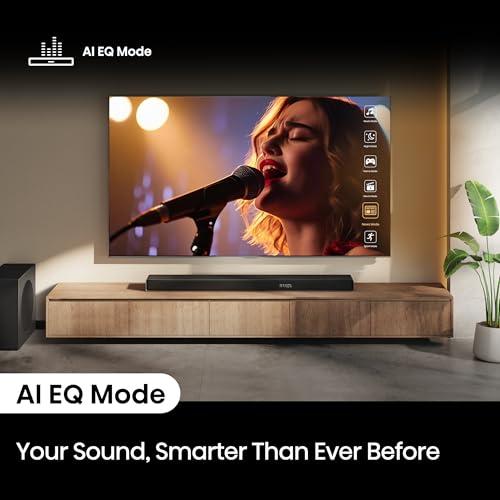
The Hisense AX5140Q, while operating at a much lower price point (at the time of writing, roughly one-sixth the cost of the AMBEO), delivers surprisingly competent audio quality for its tier. User reviews consistently praise its dialogue clarity—a crucial metric since unclear speech is one of the biggest complaints about TV audio. The system's dedicated center channel and AI EQ Mode help maintain vocal intelligibility even during loud action scenes.
However, there's an important caveat about audio quality comparisons. The Hisense AX5140Q benefits from physical separation between components. When bass comes from a dedicated subwoofer positioned across the room, it doesn't interfere with midrange frequencies coming from the soundbar. This spatial separation can make the overall presentation feel cleaner and more open than all-in-one solutions, even when individual components aren't as refined.
Here's where these products really diverge, and where your room and preferences become crucial factors.
The Hisense AX5140Q creates surround sound the straightforward way: by actually placing speakers around you. When a car races from left to right in a movie, you'll hear it start from the front left speaker, move across the soundbar, continue to the rear right speaker, and fade out behind you. The four upfiring speakers (two in the soundbar, two in the rear speakers) bounce sound off your ceiling to create overhead effects.
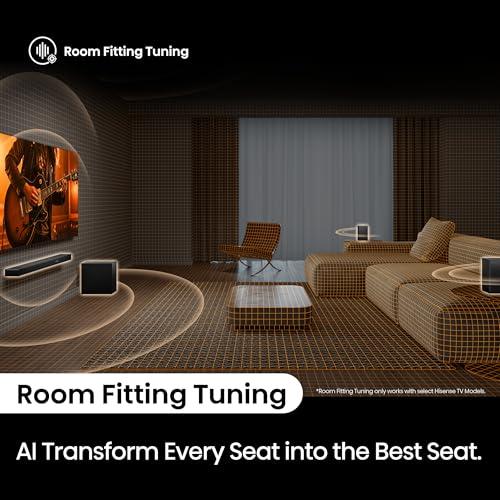
This approach works reliably regardless of your room's acoustic properties. Whether you have a small apartment with hard surfaces or a large living room with carpet and curtains, those rear speakers will create genuine surround effects. The trade-off is complexity—you need to position four separate components and ensure the wireless connections remain stable.
The Sennheiser AMBEO creates surround effects through acoustic wizardry. Its AMBEO 3D technology maps your room's reflective surfaces and uses this information to precisely time and process audio signals. When done well, users report remarkably convincing surround effects from a single bar. The latest firmware update even allows customization of virtual speaker placement—you can adjust how much emphasis goes to side, rear, and overhead channels independently.
However, virtualization technology is inherently room-dependent. Users with optimal conditions (moderate ceiling height, some reflective surfaces, proper positioning) report excellent results. But those with high ceilings, heavy acoustic treatment, or challenging room layouts find the virtual surround effects less convincing. The Sennheiser AMBEO includes sophisticated room calibration to address this, but physics still imposes limits on what reflection-based systems can achieve.
Bass response fundamentally shapes how engaging movie and music playback feels. Explosions, musical instruments, and even the rumble of dialogue voices all depend on solid low-frequency reproduction.
The Hisense AX5140Q includes a dedicated 6.5-inch wireless subwoofer that can be positioned independently for optimal bass response in your room. This flexibility is valuable—subwoofer placement dramatically affects bass quality, and having the freedom to experiment with positioning can make the difference between muddy, boomy bass and tight, impactful low frequencies.
User feedback suggests the subwoofer delivers adequate punch for movies and gaming without overwhelming the midrange frequencies. The 40Hz extension means it can reproduce most low-frequency effects in modern content, though it won't reach the deepest organ notes or the most extreme special effects.
The Sennheiser AMBEO takes a different approach, using six integrated 4-inch woofers to achieve 30Hz extension without requiring a separate subwoofer. This design eliminates placement challenges and reduces visual clutter, but physics still applies—smaller drivers in a confined space can't move as much air as a larger, dedicated subwoofer.
Professional reviews consistently praise the AMBEO's bass quality as controlled and articulate, avoiding the boom and resonance that plague many all-in-one systems. However, some users note that while technically excellent, the bass impact feels lighter than systems with large dedicated subwoofers. The AMBEO does include a subwoofer output for users who want to add external bass reinforcement.
Modern gaming increasingly relies on precise audio cues for competitive advantage. Footsteps, gunfire direction, and environmental audio can mean the difference between victory and defeat in online matches.
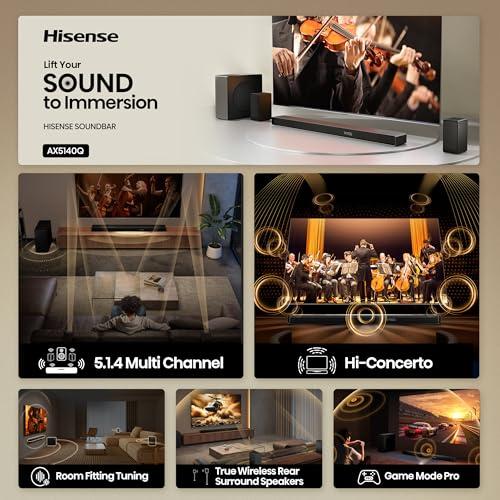
The Hisense AX5140Q includes a dedicated Game Pro mode that emphasizes positional audio accuracy and reduces processing latency. More importantly, its physical rear speakers provide genuine directional information—when someone approaches from behind in a game, you'll hear it from actual speakers behind you rather than processed effects from the front.
The Sennheiser AMBEO offers exceptional audio precision that can benefit competitive gaming, but its virtualization processing introduces slight delays that might matter in latency-critical situations. However, for single-player games where immersion matters more than split-second timing, the AMBEO's sophisticated processing creates remarkably engaging soundscapes.
Soundbar selection often comes down to practical considerations that have nothing to do with audio quality.
The Hisense AX5140Q requires thoughtful planning. You'll need to position rear speakers behind your seating area, ensure all four components have power access, and maintain clear wireless signal paths. The 40-inch soundbar fits under most 55-inch and larger TVs, but you're committing to a multi-component setup that takes up more visual and physical space.
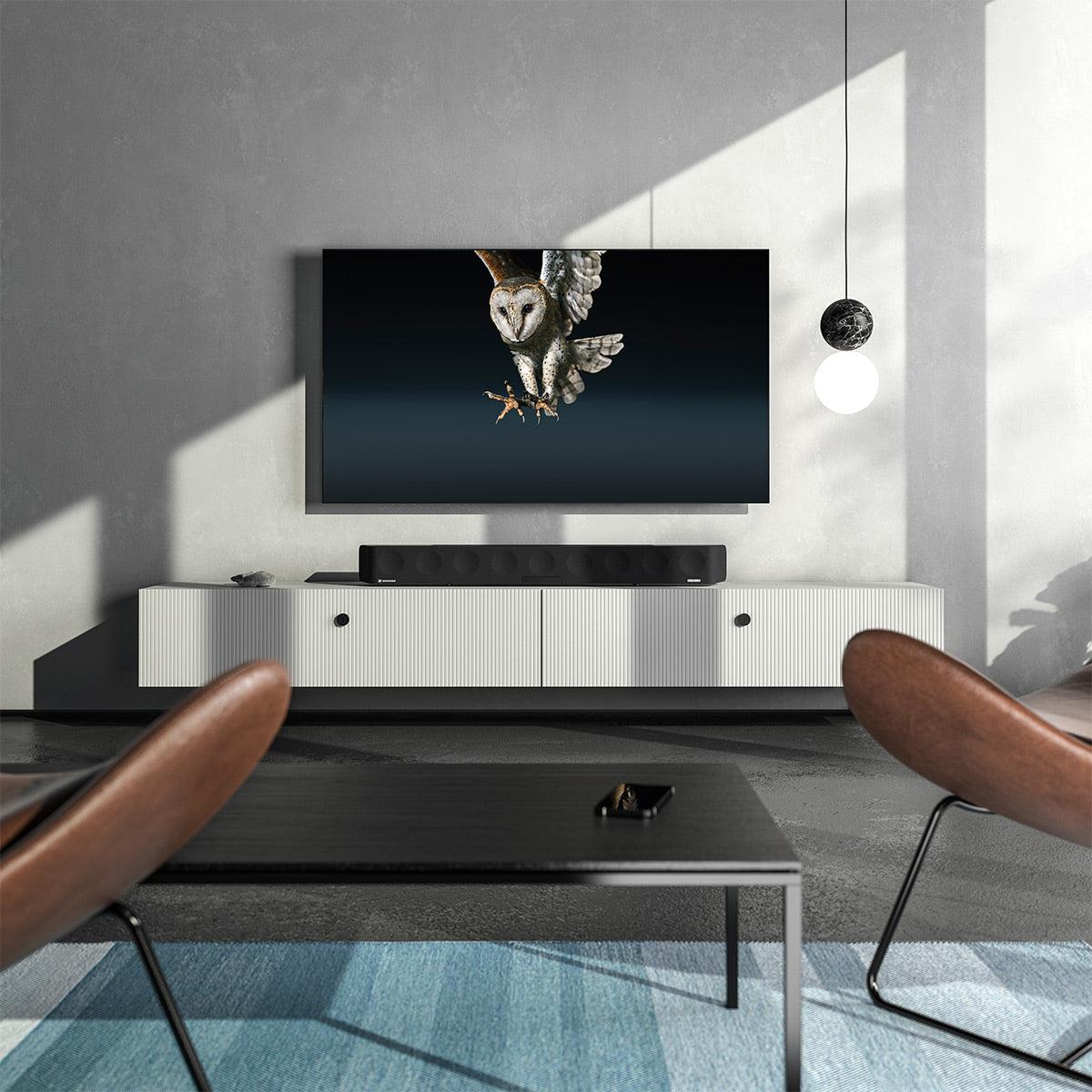
The Sennheiser AMBEO simplifies installation dramatically—one 50-inch bar under your TV, one power connection, one HDMI cable, and you're done. However, at nearly 41 pounds and 50 inches wide, it requires a substantial TV (65 inches or larger) and robust mounting if wall-installed. The premium brushed aluminum construction looks sophisticated but commands attention in your room.
Both systems include modern connectivity, but with different focuses.
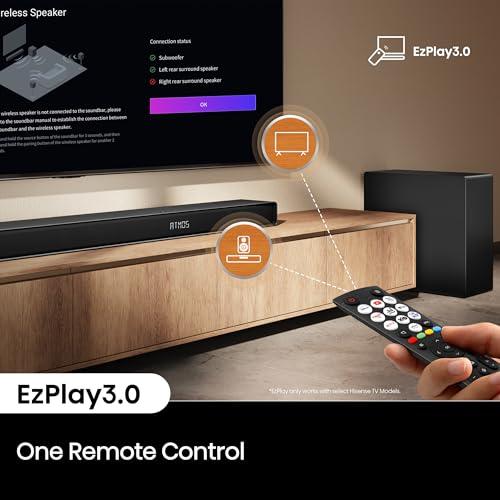
The Hisense AX5140Q emphasizes ecosystem integration, particularly with Hisense TVs through their Hi-Concerto platform. This creates unified control where your TV remote manages soundbar functions, and the TV display shows soundbar status. The EzPlay 3.0 system coordinates audio and video for better lip-sync performance.
The Sennheiser AMBEO received major firmware updates in 2025 that significantly expanded its capabilities. The AMBEO OS2 update added customizable immersion controls, lossless 24-bit/192kHz audio streaming, and enhanced voice clarity modes. This demonstrates Sennheiser's commitment to long-term support, though it also highlighted that some features were missing at launch.
At the time of writing, these products occupy completely different value propositions. The Hisense AX5140Q targets budget-conscious buyers who want genuine surround sound without premium pricing. It delivers roughly 80% of the performance of systems costing several times more, making it exceptional value for mainstream users.
The Sennheiser AMBEO targets discerning listeners who prioritize audio quality above cost considerations. Its premium pricing reflects genuinely superior components, sophisticated processing, and ongoing software development. For users who appreciate the difference between good and exceptional audio quality, the premium can be justified.
However, value isn't just about immediate performance. The Hisense AX5140Q's modular design allows future upgrades—you could replace the subwoofer with a larger model or add additional speakers over time. The Sennheiser AMBEO's all-in-one design limits upgrade paths but provides superior integration and simplicity.
Want genuine surround sound on a budget. Nothing beats actual rear speakers for creating convincing surround effects, and the Hisense AX5140Q delivers true 5.1.4 surround at a fraction of premium pricing.
Have flexible room layout options. If you can position rear speakers behind your seating area and don't mind managing multiple components, the multi-speaker approach provides superior immersion.
Prioritize gaming performance. Physical rear speakers and low-latency processing give competitive gamers genuine advantages in directional audio.
Plan to upgrade over time. The modular design allows component replacement and system expansion as budget permits.
Demand exceptional audio quality. The AMBEO's premium drivers and sophisticated processing deliver performance that justifies its flagship pricing for discerning listeners.
Want installation simplicity. Single-unit design eliminates rear speaker placement challenges while still delivering impressive surround effects in suitable rooms.
Value ongoing software development. Sennheiser's commitment to firmware updates means the system continues improving after purchase.
Listen to high-quality music sources. The lossless audio support and audiophile-grade components make this system excel with music as well as movies.
Your budget falls between these options, your room presents unusual acoustic challenges, or you're deeply invested in other brand ecosystems that might offer better integration.
Both the Hisense AX5140Q and Sennheiser AMBEO represent excellent execution of their respective approaches to home theater audio. The Hisense proves that budget-friendly products can deliver genuine surround sound when designed thoughtfully, while the Sennheiser demonstrates how advanced processing and premium components can create remarkable immersion from a single unit.
Your choice should align with your priorities: genuine multi-component surround staging versus premium single-unit sophistication. Both deliver exceptional value within their market segments, but they serve different needs and preferences. Consider your room layout, budget flexibility, audio priorities, and long-term plans—the right choice will depend on which factors matter most to your specific situation.
| Hisense AX5140Q | Sennheiser AMBEO Soundbar |
|---|---|
| System Design - Determines setup complexity and surround accuracy | |
| True 5.1.4 with discrete wireless rear speakers and subwoofer | All-in-one 5.1.4 using advanced virtualization technology |
| Total Drivers - More drivers generally mean better sound separation | |
| Multiple drivers across 4 separate components | 13 precision drivers in single 50-inch bar |
| Surround Implementation - How realistic rear effects will sound | |
| Physical rear speakers with upfiring drivers for genuine surround | AMBEO 3D virtualization creates phantom surround speakers |
| Bass Solution - Affects low-frequency impact and flexibility | |
| Dedicated 6.5" wireless subwoofer (flexible placement) | Six integrated 4" woofers with 30Hz extension |
| Frequency Response - Range of sounds the system can reproduce | |
| 40Hz-20kHz (adequate for most content) | 30Hz-20kHz (extends deeper into bass territory) |
| Room Requirements - How your space affects performance | |
| Works in any room layout with rear speaker placement | Performance depends on ceiling height and reflective surfaces |
| Installation Complexity - Time and effort to set up | |
| Four wireless components need positioning and power | Single unit installation with advanced room calibration |
| Gaming Features - Specialized modes for competitive gaming | |
| Game Pro mode with low-latency processing | Neutral mode available but optimized for music/movies |
| Streaming Audio Quality - Maximum supported audio resolution | |
| Standard Bluetooth and Wi-Fi streaming | Lossless 24-bit/192kHz via TIDAL Connect and Google Cast |
| Smart Integration - Works with your existing TV and ecosystem | |
| Hisense AX5140Q Hi-Concerto platform for Hisense TVs | Universal compatibility with advanced HDMI 2.1 eARC |
| Upgrade Path - Ability to improve system over time | |
| Modular design allows component replacement and expansion | All-in-one design limits upgrades but includes subwoofer output |
| Physical Footprint - Space requirements in your room | |
| 40" soundbar plus wireless sub and rear speakers | Single 50" bar weighing 41 lbs |
| Target User - Who each product serves best | |
| Budget-conscious buyers wanting true surround sound | Audiophiles prioritizing premium quality and simplicity |
For dedicated home theater use, the Hisense AX5140Q offers superior surround sound immersion with its physical rear speakers and four upfiring drivers. The discrete wireless components create genuine 360-degree surround effects that work reliably in any room layout. The Sennheiser AMBEO Soundbar delivers exceptional audio quality but relies on virtualization that performs best in acoustically optimized rooms.
The core difference is system architecture: the Hisense AX5140Q uses four separate wireless components (soundbar, subwoofer, and two rear speakers) to create true 5.1.4 surround sound, while the Sennheiser AMBEO Soundbar packs everything into one 50-inch bar using advanced virtualization technology to simulate surround speakers around your room.
The Hisense AX5140Q includes a dedicated 6.5-inch wireless subwoofer that can be positioned anywhere for optimal bass response and room-filling impact. The Sennheiser AMBEO Soundbar uses six integrated 4-inch woofers that deliver controlled, articulate bass down to 30Hz without requiring a separate subwoofer, though with less physical impact than a dedicated sub.
Yes, both the Hisense AX5140Q and Sennheiser AMBEO Soundbar fully support Dolby Atmos and DTS:X for immersive 3D audio. The Hisense AX5140Q creates height effects using four physical upfiring speakers, while the Sennheiser AMBEO uses sophisticated processing to virtually position overhead sounds.
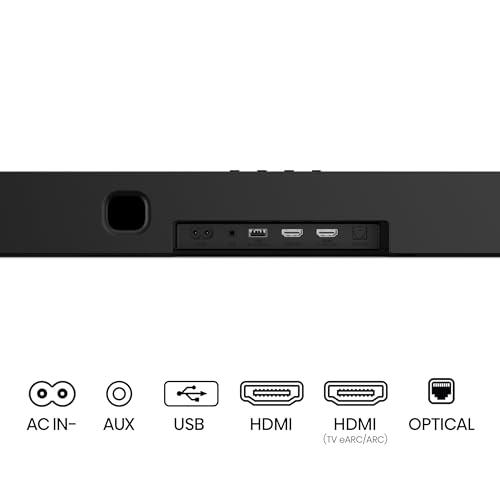
The Sennheiser AMBEO Soundbar is significantly easier to install, requiring only one unit, one power connection, and one HDMI cable. The Hisense AX5140Q needs strategic placement of four wireless components throughout your room, though no signal cables are required between components.
The Sennheiser AMBEO Soundbar excels at music reproduction with its premium drivers, lossless audio support up to 24-bit/192kHz, and audiophile-grade components. The Hisense AX5140Q offers competent music performance with its AI EQ mode and dedicated Music preset, though it's optimized more for movie and TV content.
The Hisense AX5140Q is better suited for gaming with its dedicated Game Pro mode, low processing latency, and physical rear speakers that provide genuine directional audio cues. The Sennheiser AMBEO Soundbar offers excellent audio precision but its virtualization processing may introduce slight delays that could matter in competitive gaming.
The Hisense AX5140Q works effectively in small to large rooms as long as you can position rear speakers behind your seating. The Sennheiser AMBEO Soundbar performs best in medium-sized rooms with 8-10 foot ceilings and some reflective surfaces for optimal virtualization effects.
The Hisense AX5140Q offers more upgrade flexibility due to its modular design - you can replace the subwoofer or add components over time. The Sennheiser AMBEO Soundbar has limited upgrade options but includes a subwoofer output if you want to add external bass enhancement.
The Hisense AX5140Q delivers exceptional value by providing true 5.1.4 surround sound with discrete components at a budget-friendly price point. The Sennheiser AMBEO Soundbar justifies its premium pricing with superior audio quality, advanced processing, and ongoing firmware updates for discerning listeners.
Both offer HDMI eARC, optical input, and Bluetooth connectivity. The Sennheiser AMBEO Soundbar provides more advanced streaming options including lossless audio support, AirPlay 2, and multiple streaming service integrations. The Hisense AX5140Q focuses on ecosystem integration with Hisense TVs through its Hi-Concerto platform.
Choose the Hisense AX5140Q if you want genuine surround sound on a budget, have space for rear speakers, or prioritize gaming performance. Select the Sennheiser AMBEO Soundbar if you demand premium audio quality, prefer single-unit simplicity, listen to high-quality music sources, or have installation constraints that prevent rear speaker placement.
We've done our best to create useful and informative comparisons to help you decide what product to buy. Our research uses advanced automated methods to create this comparison and perfection is not possible - please contact us for corrections or questions. These are the sites we've researched in the creation of this article: shop.hisense-usa.com - manuals.plus - dolby.com - youtube.com - gzhls.at - rtings.com - youtube.com - bestbuy.com - manuals.plus - bestbuy.com - hisense-usa.com - youtube.com - device.report - manuals.plus - youtube.com - device.report - manuals.plus - youtube.com - bestbuy.com - rtings.com - techradar.com - audioxpress.com - whathifi.com - upscaleaudio.com - soundstagesimplifi.com - global.sennheiser-hearing.com - sennheiser-hearing.com - audioadvice.com - abt.com - moon-audio.com

Privacy Policy
Terms and Conditions - Affiliate Policy
Home Security
© Copyright 2008-2026.
11816 Inwood Rd #1211, Dallas, TX 75244