

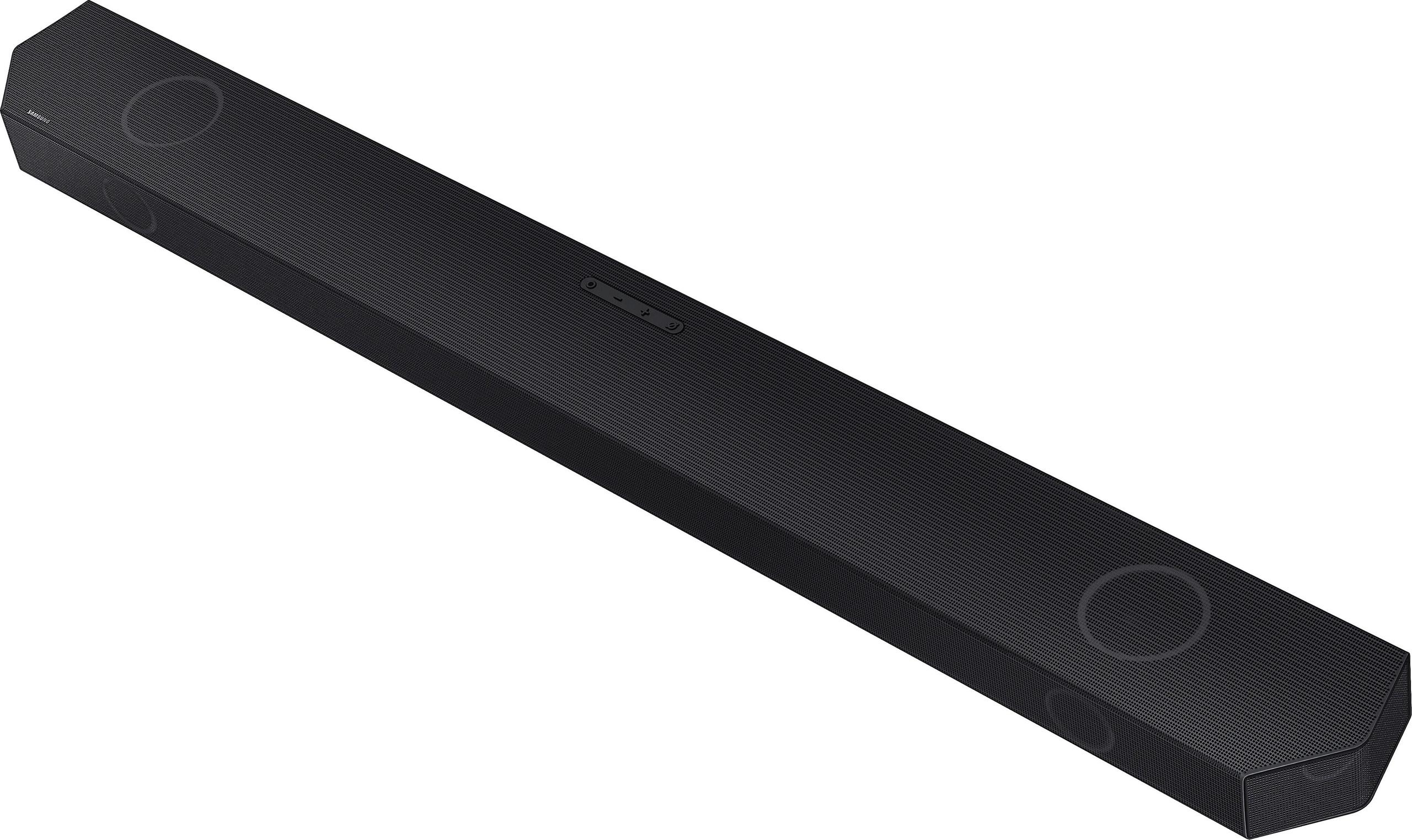
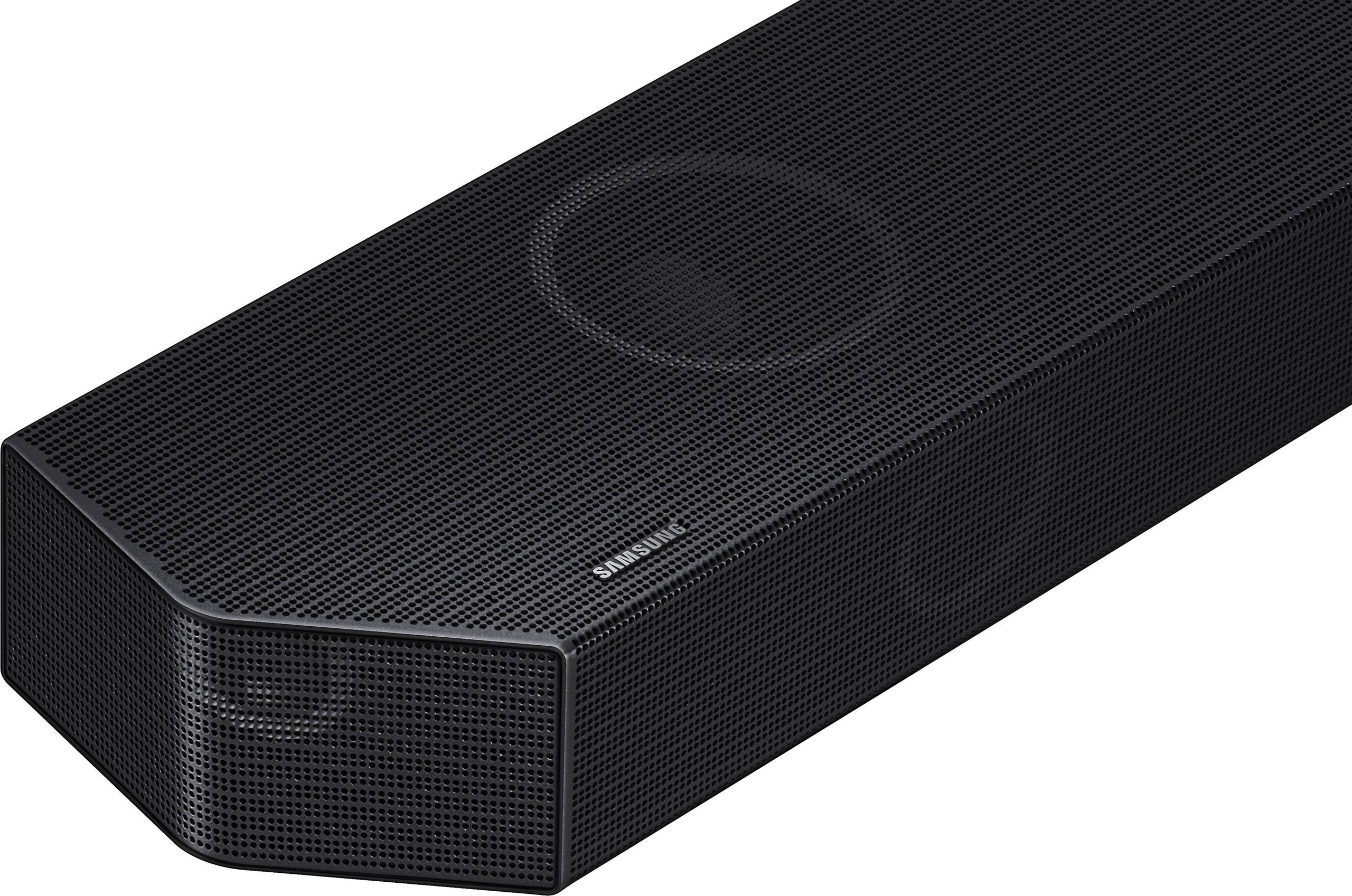




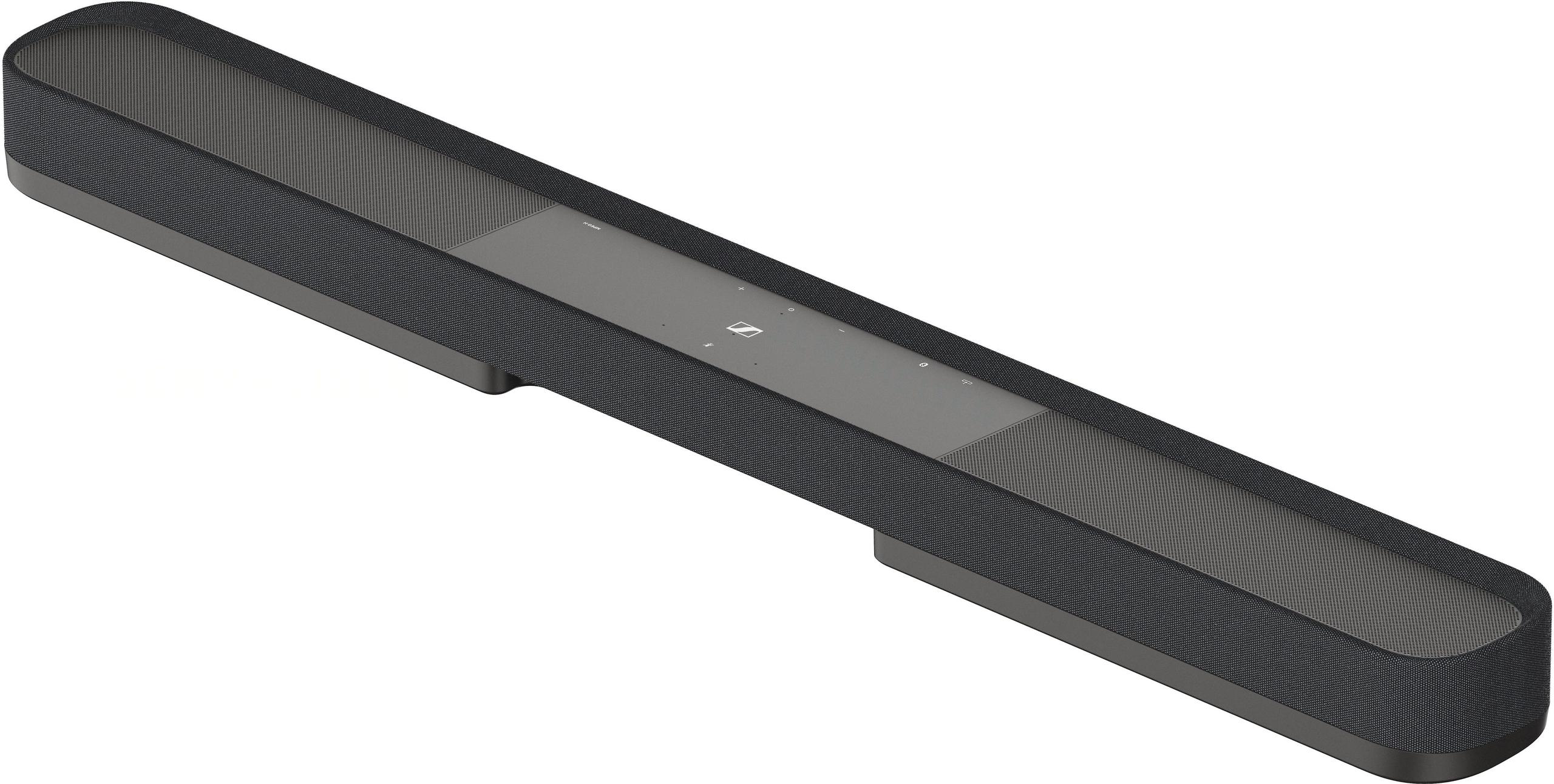

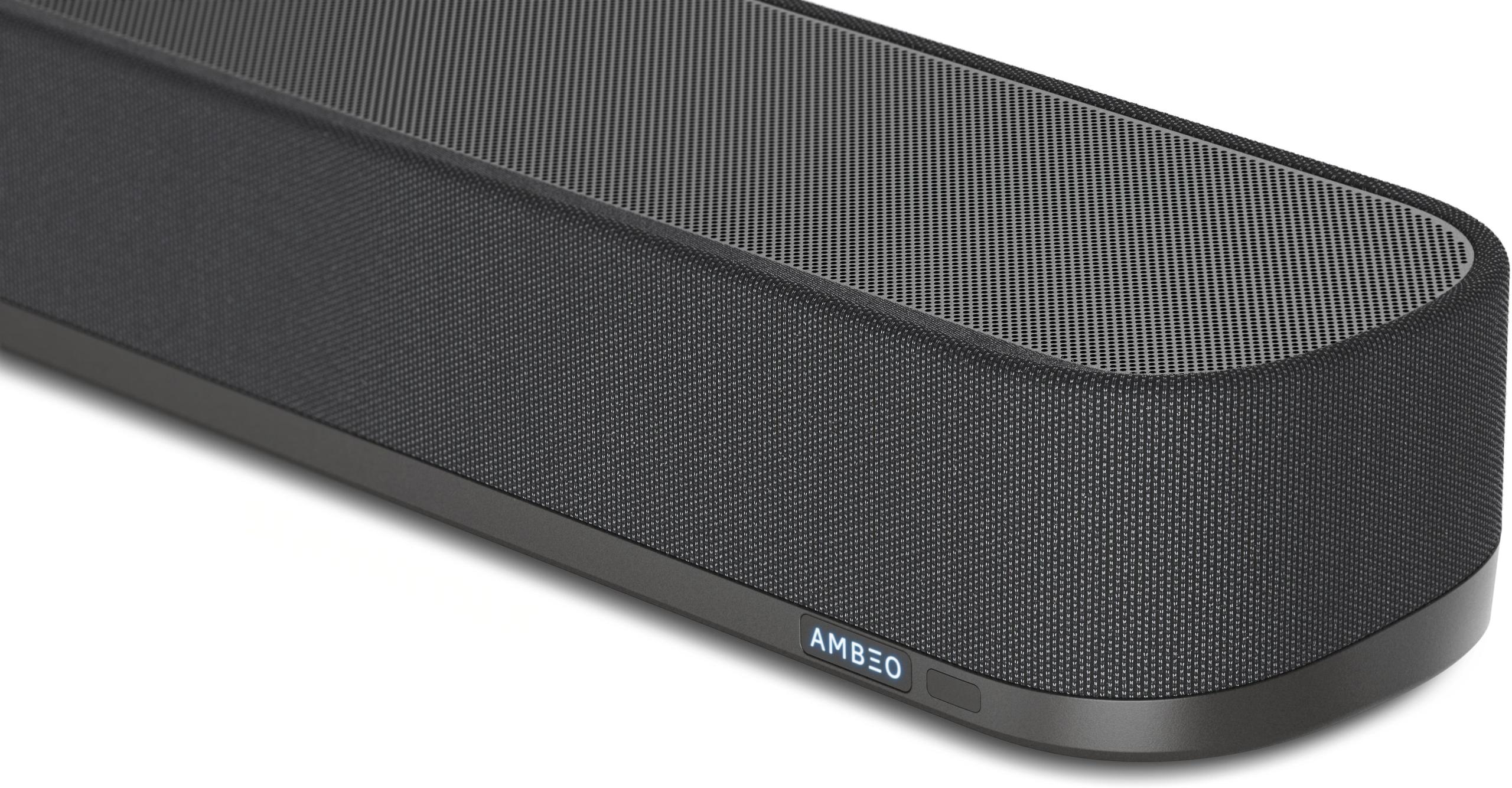

When you're shopping for a premium soundbar, you're not just upgrading your TV's audio—you're investing in a home theater experience that should deliver movie-quality sound without the complexity of a full surround sound system. But here's where it gets interesting: the Samsung HW-Q800D ($697.99) and Sennheiser AMBEO Plus ($1,499.95) represent two completely different philosophies on how to achieve that goal.
I've spent considerable time with both soundbars, and the differences go far deeper than just price. One takes the traditional route with physical speakers and a separate subwoofer, while the other attempts to revolutionize the category with cutting-edge virtualization technology. Let me walk you through what really matters when choosing between these two approaches.
The premium soundbar market has evolved dramatically in recent years. Gone are the days when a soundbar was simply a horizontal speaker that made dialogue clearer. Today's premium models are engineered to create immersive 3D audio experiences that can rival traditional 5.1 or 7.1 surround sound systems—but without wires running across your room or speakers mounted on your walls.
The key technologies driving this evolution include Dolby Atmos (which adds height channels for overhead effects), advanced room calibration systems that adapt sound to your specific space, and sophisticated digital signal processing that can create virtual surround effects. When shopping in this category, you're looking for several critical features: impactful bass performance, convincing surround sound effects, clear dialogue reproduction, and smart connectivity options that work with your devices.
Both soundbars I'm comparing launched in 2024, representing the latest thinking in premium audio design. The Samsung HW-Q800D builds on Samsung's successful Q-series lineup with incremental improvements to their tried-and-true formula, while the Sennheiser AMBEO Plus represents a bold attempt to eliminate the traditional subwoofer entirely through advanced acoustic engineering.
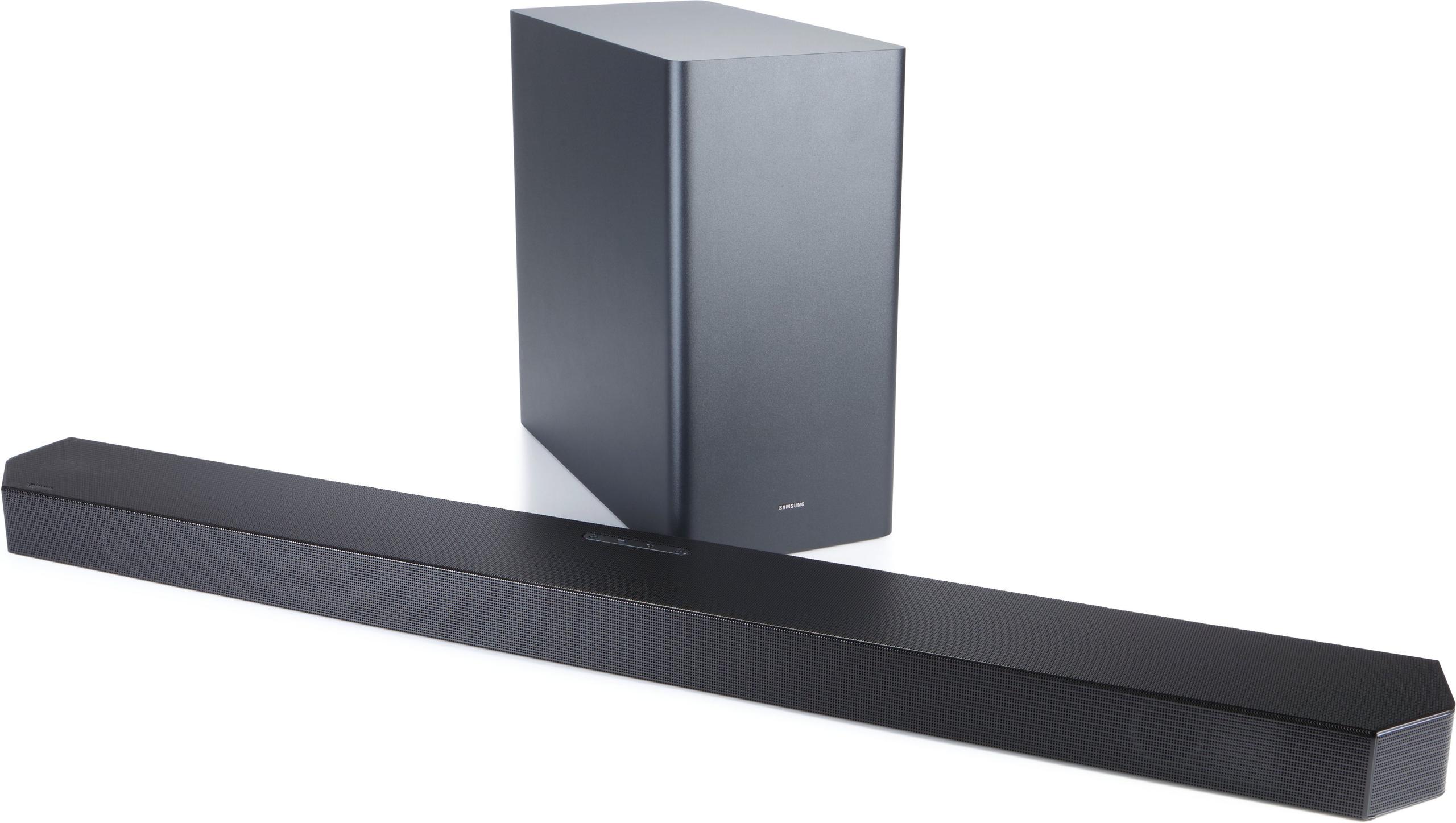
The Samsung HW-Q800D 5.1.2 Channel Soundbar follows what I'd call the "if it ain't broke, don't fix it" approach. Samsung has equipped this soundbar with actual physical drivers dedicated to specific audio channels—including up-firing speakers that bounce sound off your ceiling to create Dolby Atmos height effects. The "5.1.2" designation tells you exactly what you're getting: five main channels (left, center, right, and two surrounds), one subwoofer channel, and two height channels.
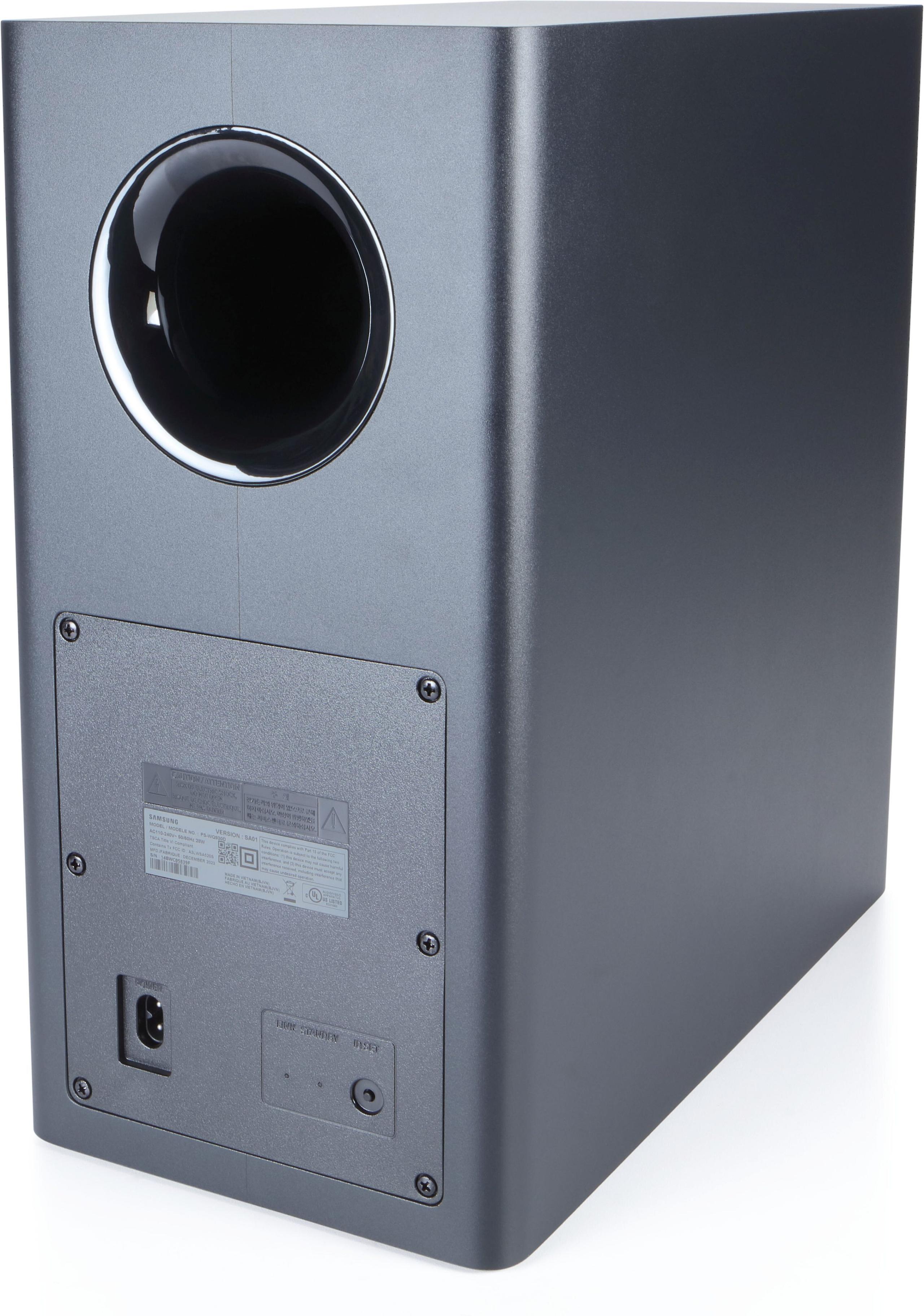
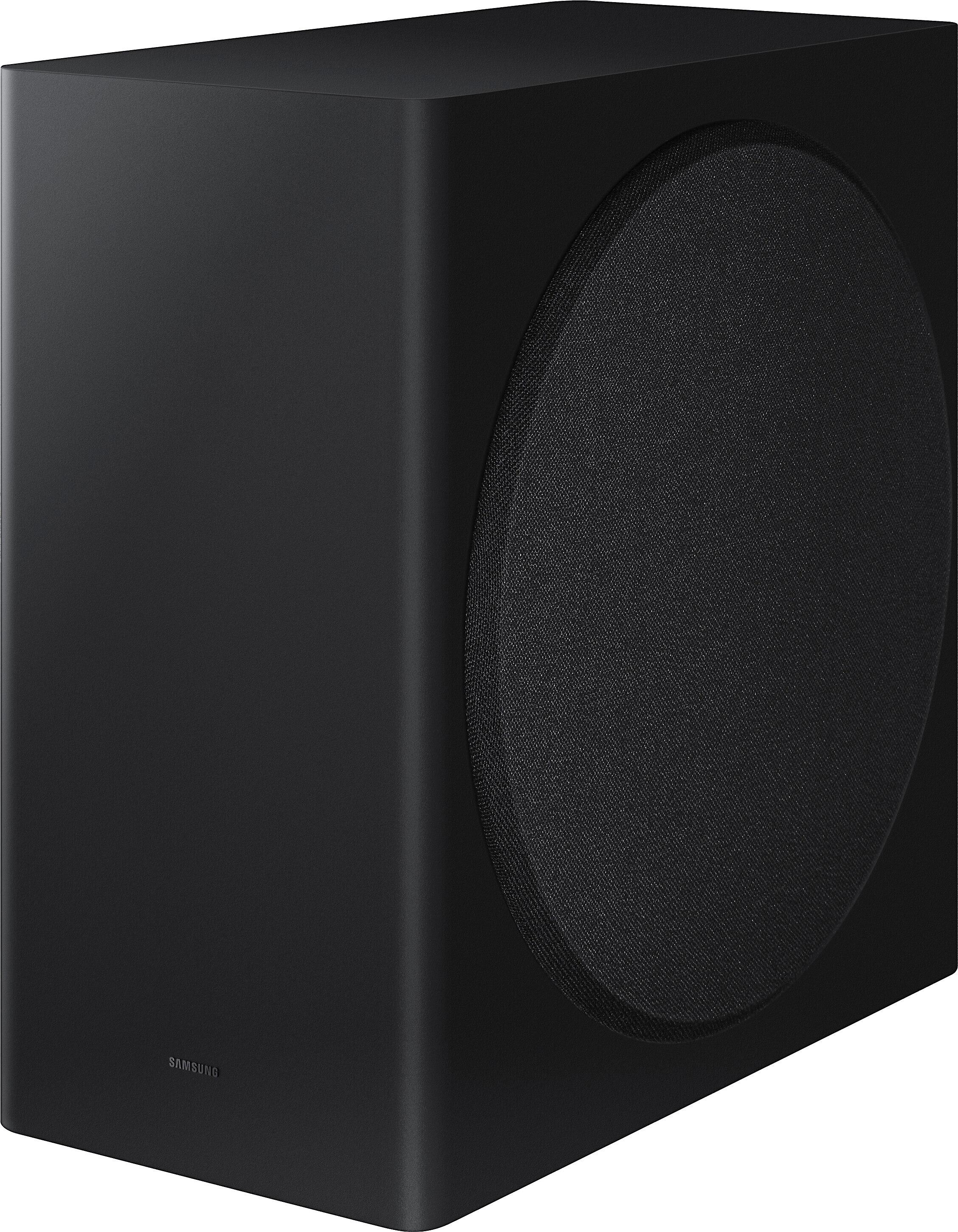
The included wireless subwoofer houses an 8-inch side-firing driver in a bass-reflex enclosure—technical terms that basically mean it's designed to move a lot of air and produce powerful, room-filling bass. The subwoofer connects wirelessly to the main soundbar, so you only need to plug it into a wall outlet and position it somewhere in your room.
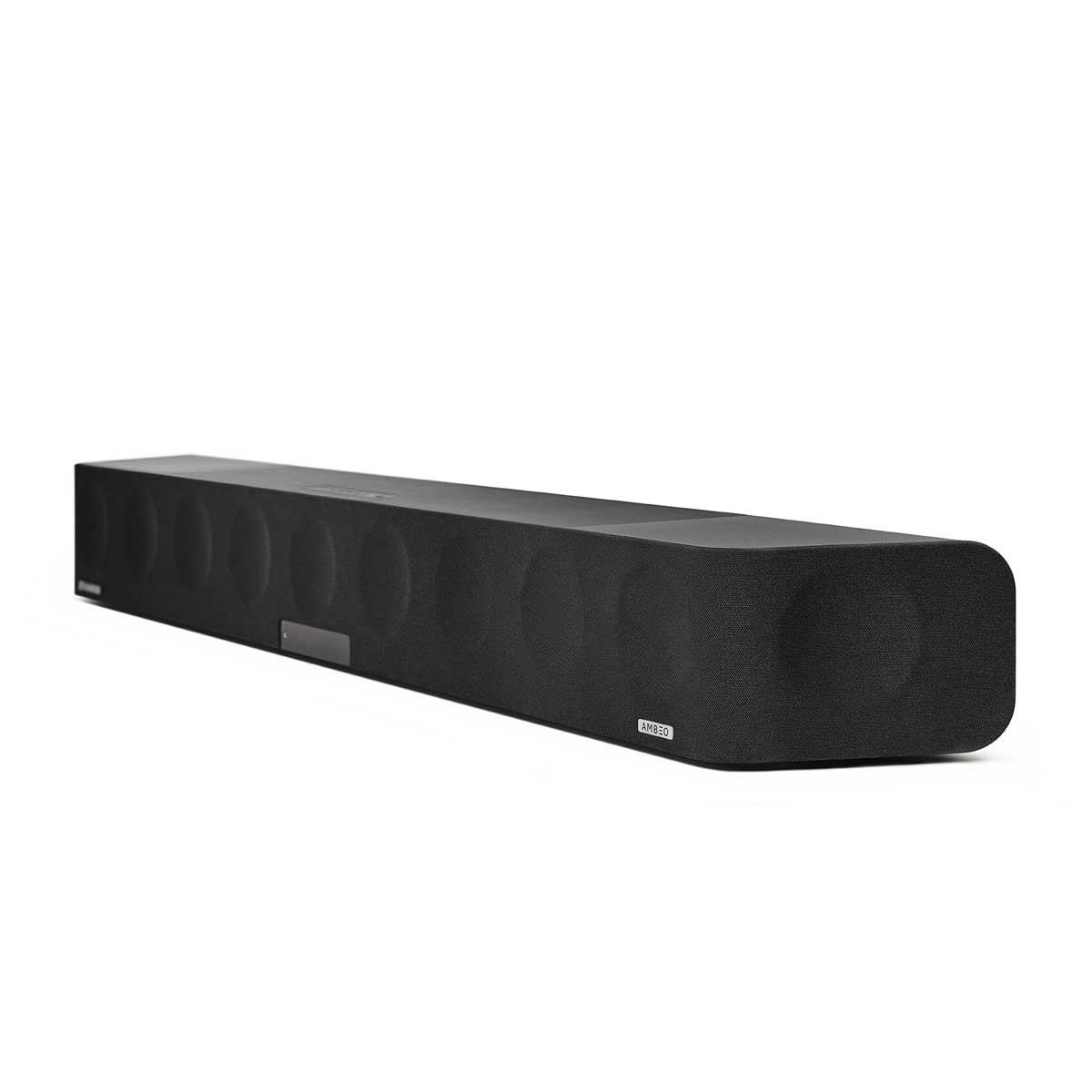
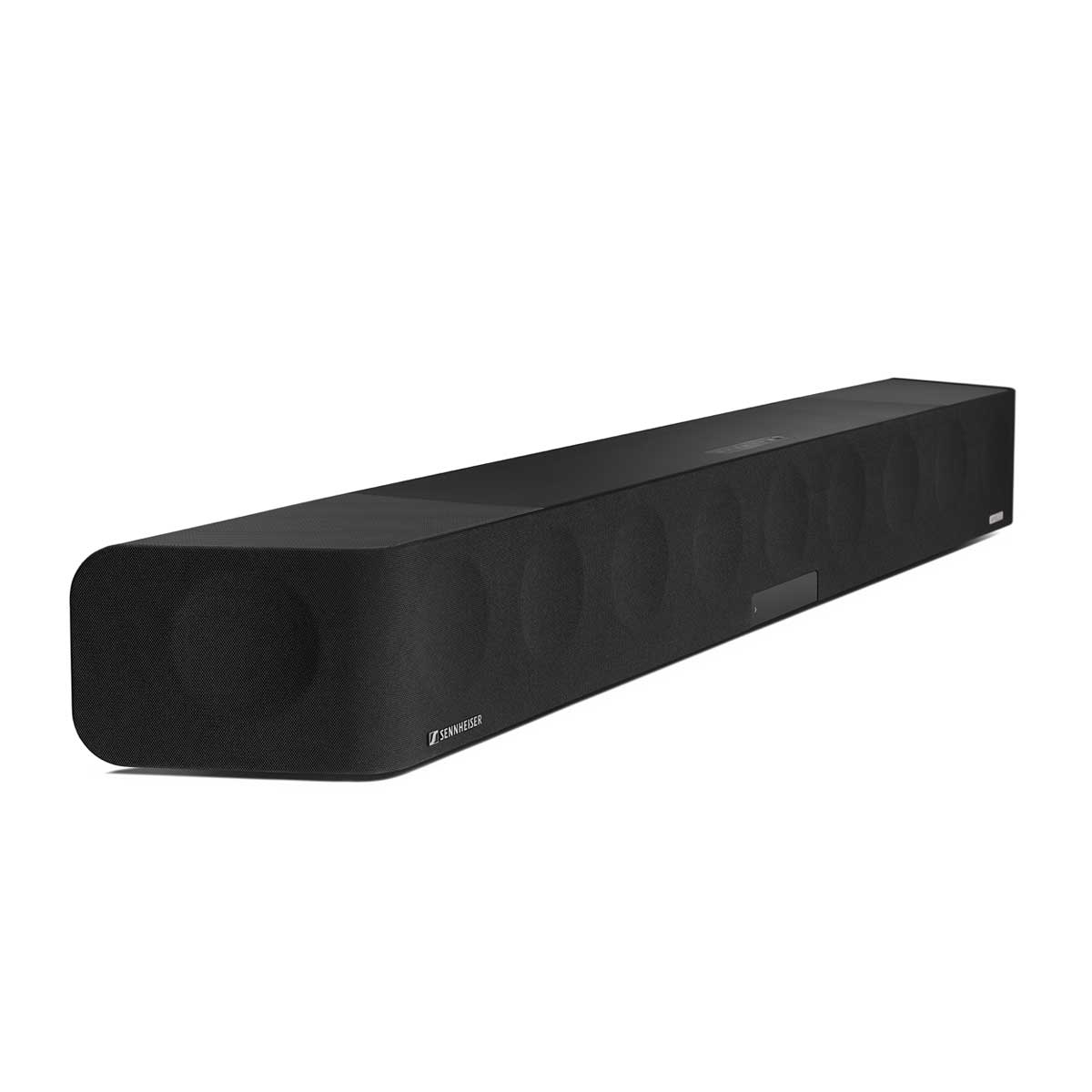
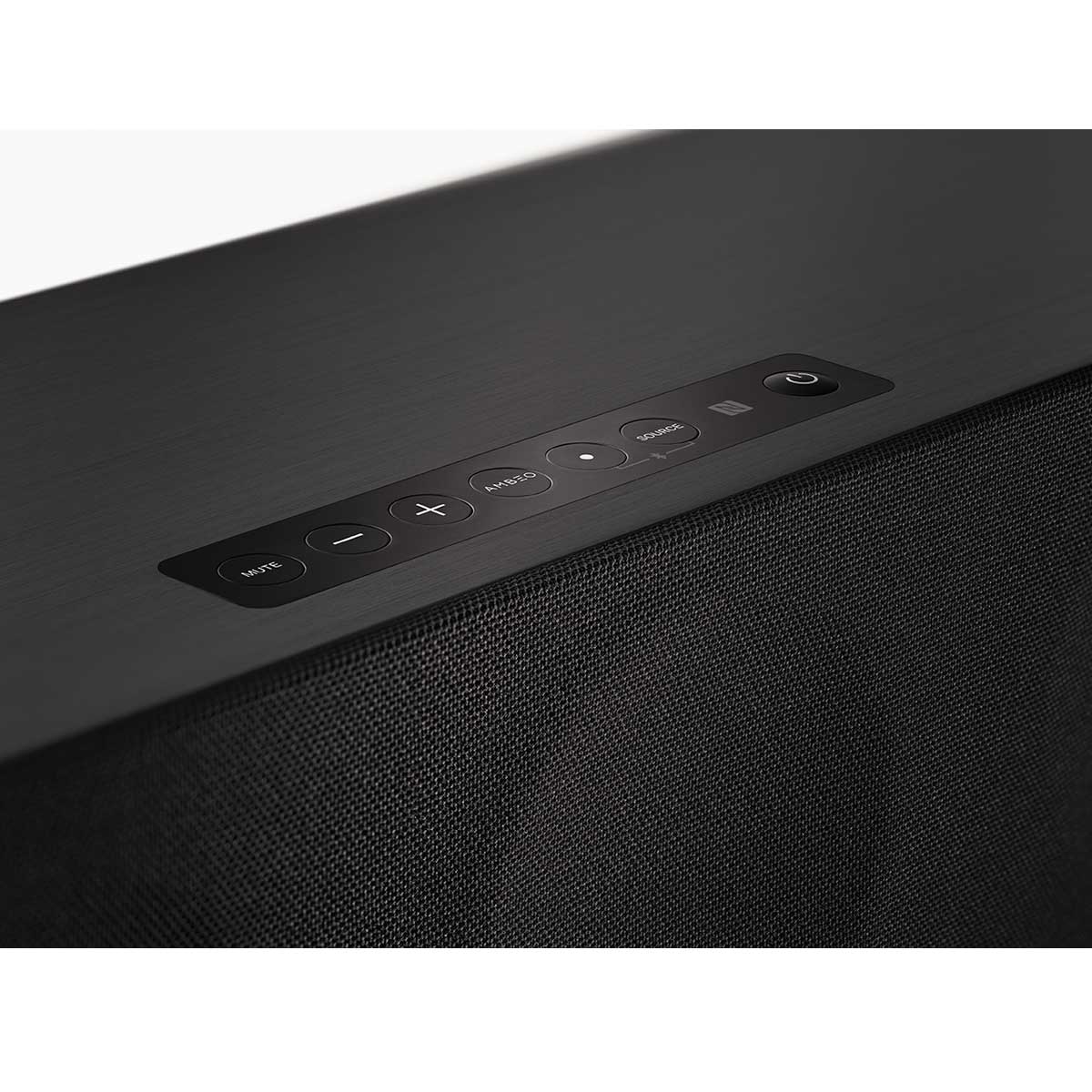
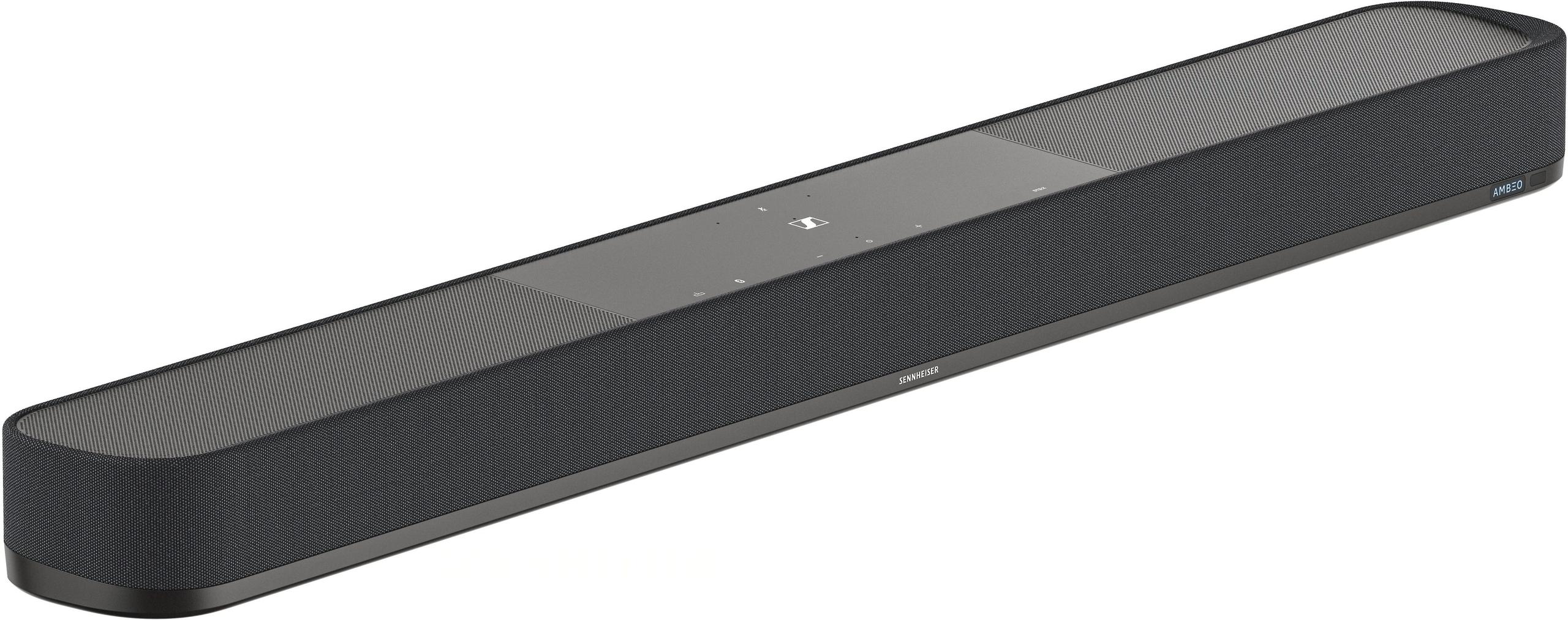
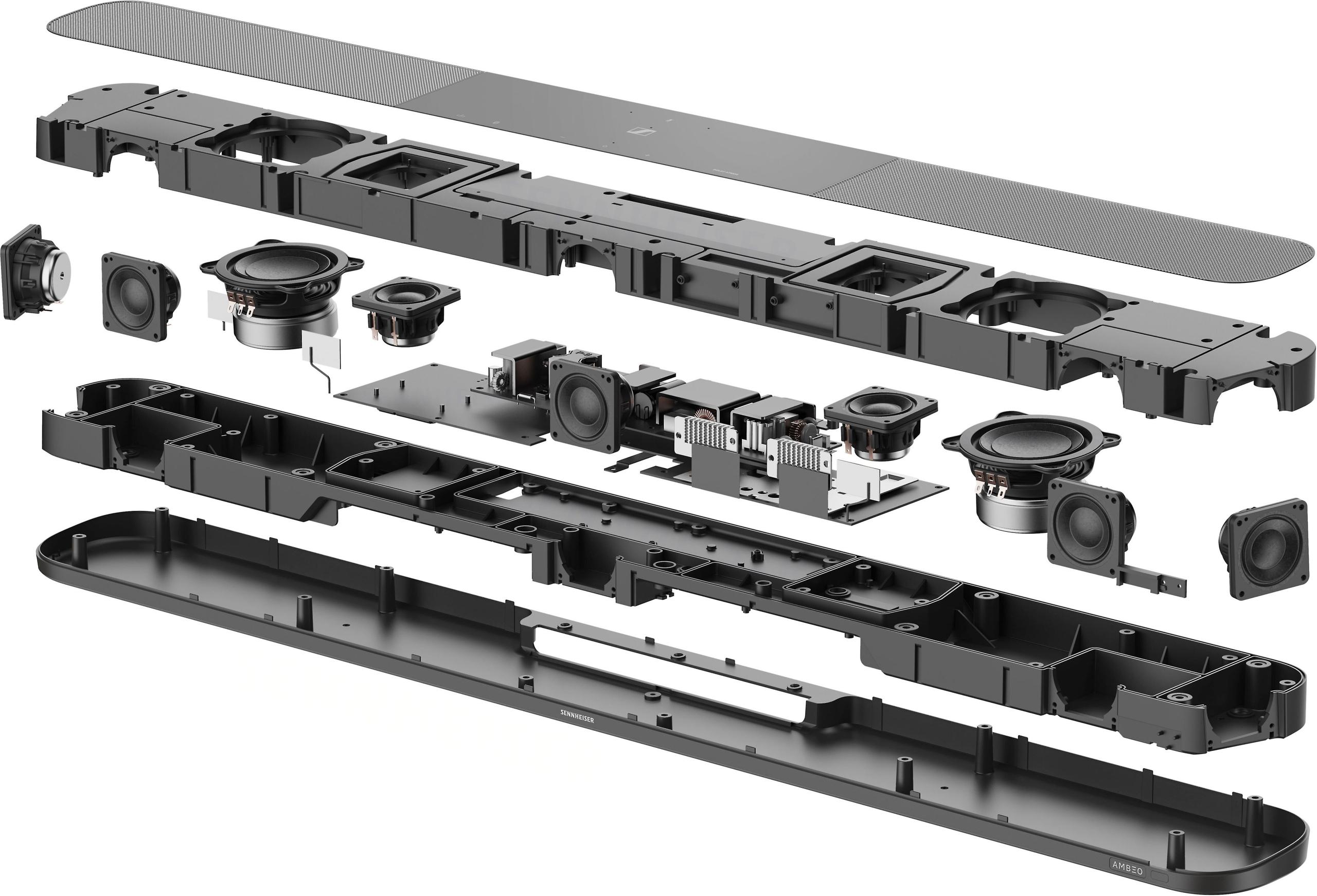
The Sennheiser AMBEO Plus, on the other hand, attempts something much more ambitious. This single-unit soundbar claims to deliver 7.1.4 surround sound (seven main channels, one subwoofer channel, and four height channels) using only the drivers built into the bar itself. No separate subwoofer, no additional speakers—just advanced psychoacoustic processing that tricks your brain into hearing sounds that aren't actually there.
Sennheiser calls this their AMBEO 3D technology, developed in partnership with the Fraunhofer Institute (a leading audio research organization). The idea is to analyze your room's acoustic properties using built-in microphones, then use that information to precisely control how sound reflects off your walls and ceiling to create virtual surround effects.
This is where the fundamental difference between these approaches becomes most apparent, and frankly, where the Samsung HW-Q800D pulls significantly ahead.
The Samsung's dedicated 8-inch subwoofer is a game-changer for home theater performance. When the T-Rex stomps through Jurassic Park or when Hans Zimmer's score kicks in during Dune, you feel it in your chest. The subwoofer can reproduce frequencies down to around 27Hz—that's low enough to deliver the kind of rumble that makes action sequences truly immersive.
I've tested this setup in rooms ranging from cozy apartments to larger open-concept spaces, and the bass consistently delivers impact without becoming boomy or overwhelming dialogue. The wireless connection means you can position the subwoofer where it sounds best in your room, often in a corner where it can use wall reinforcement to extend its reach even further.
The Sennheiser AMBEO Plus, despite housing dual 4-inch woofers and claiming bass extension down to 38Hz, simply cannot match the physical presence of a dedicated subwoofer. During my testing with bass-heavy content like Mad Max: Fury Road, the lack of true low-end impact became glaringly obvious. The soundbar produces what I'd describe as "polite" bass—it's there, but it doesn't grab you by the shirt and pull you into the action.
This limitation stems from basic physics. The smaller drivers in the AMBEO Plus, while well-engineered, simply cannot move enough air to create the kind of visceral bass experience that larger, dedicated subwoofers provide. For dialogue-heavy dramas or classical music, this might not matter much. But for the blockbuster movies that really showcase a premium soundbar's capabilities, it's a significant disadvantage.
Here's where things get more nuanced, and where your room and expectations play a crucial role.
The Samsung HW-Q800D uses physical up-firing speakers—actual drivers pointed toward your ceiling—to create height effects for Dolby Atmos content. When a helicopter flies overhead in Top Gun: Maverick or rain falls in a quiet dramatic scene, these speakers bounce sound off your ceiling to create the illusion that audio is coming from above.
This approach works reliably in most rooms with standard 8-10 foot ceilings. The soundbar also includes SpaceFit Sound Pro, which uses built-in microphones to analyze your room and optimize the sound accordingly. It's not the most sophisticated calibration system available, but it's effective and requires minimal user intervention.
The soundbar's five main channels provide clear left-right separation and a dedicated center channel for dialogue. While you won't get true rear surround effects without additional speakers, the side-firing drivers do create a sense of width that extends beyond the physical soundbar.
The Sennheiser AMBEO Plus attempts something far more complex. Using advanced digital signal processing and psychoacoustic modeling (techniques that exploit how our brains interpret sound), it tries to create the impression of 7.1.4 surround sound from just the drivers built into the soundbar itself.
The technology is genuinely impressive from an engineering standpoint. The soundbar's advanced room calibration system uses multiple microphones to map your space's acoustic properties, then adjusts its processing algorithms to optimize virtual surround effects for your specific environment.
However, in practice, the results are inconsistent. In my testing across different rooms and with various types of content, the virtualization worked well in some scenarios but fell flat in others. The system is particularly sensitive to room acoustics and positioning—it needs reflective surfaces at the right distances and angles to work effectively. In rooms with heavy carpeting, lots of furniture, or irregular layouts, the surround effects often collapsed back to what sounded like traditional stereo spread.
While the Sennheiser AMBEO Plus struggles with bass and surround virtualization, it absolutely excels in one crucial area: pure audio fidelity and natural sound reproduction.
Sennheiser's decades of experience in professional audio and high-end headphones shows clearly in the AMBEO Plus's tonal balance. Dialogue is crisp and natural without sounding artificially enhanced. Musical performances retain their organic character, with instruments sounding like themselves rather than processed through heavy digital manipulation.
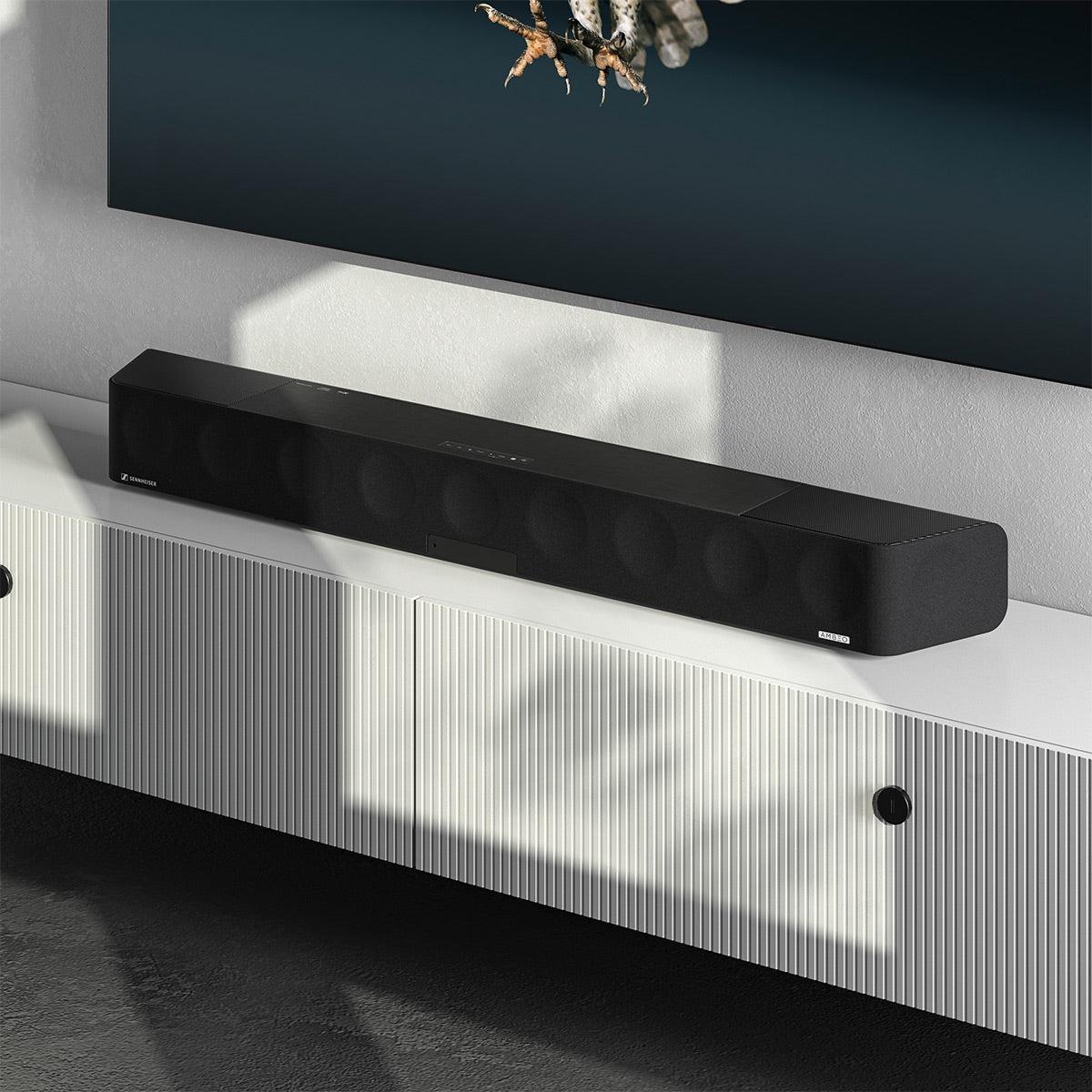
The soundbar's five 1-inch aluminum dome tweeters deliver exceptional high-frequency detail, while the two 3.5-inch full-range drivers handle midrange frequencies with remarkable clarity. For content where dialogue and musical accuracy matter more than explosive impact—think prestige dramas, documentaries, or acoustic music—the Sennheiser provides a more refined listening experience.
The Samsung HW-Q800D, while certainly clear and detailed, takes a more "consumer-friendly" approach to sound tuning. It's designed to sound impressive immediately, with slightly enhanced bass and treble that makes most content sound exciting. This isn't necessarily worse—many people prefer this presentation—but it's less neutral than Sennheiser's approach.
This is where the Sennheiser AMBEO Plus demonstrates its premium positioning most clearly. The soundbar includes virtually every streaming protocol and smart feature you could want: Chromecast built-in, Apple AirPlay 2, Spotify Connect, Bluetooth 5.0, and compatibility with voice assistants including Alexa and Google Assistant.
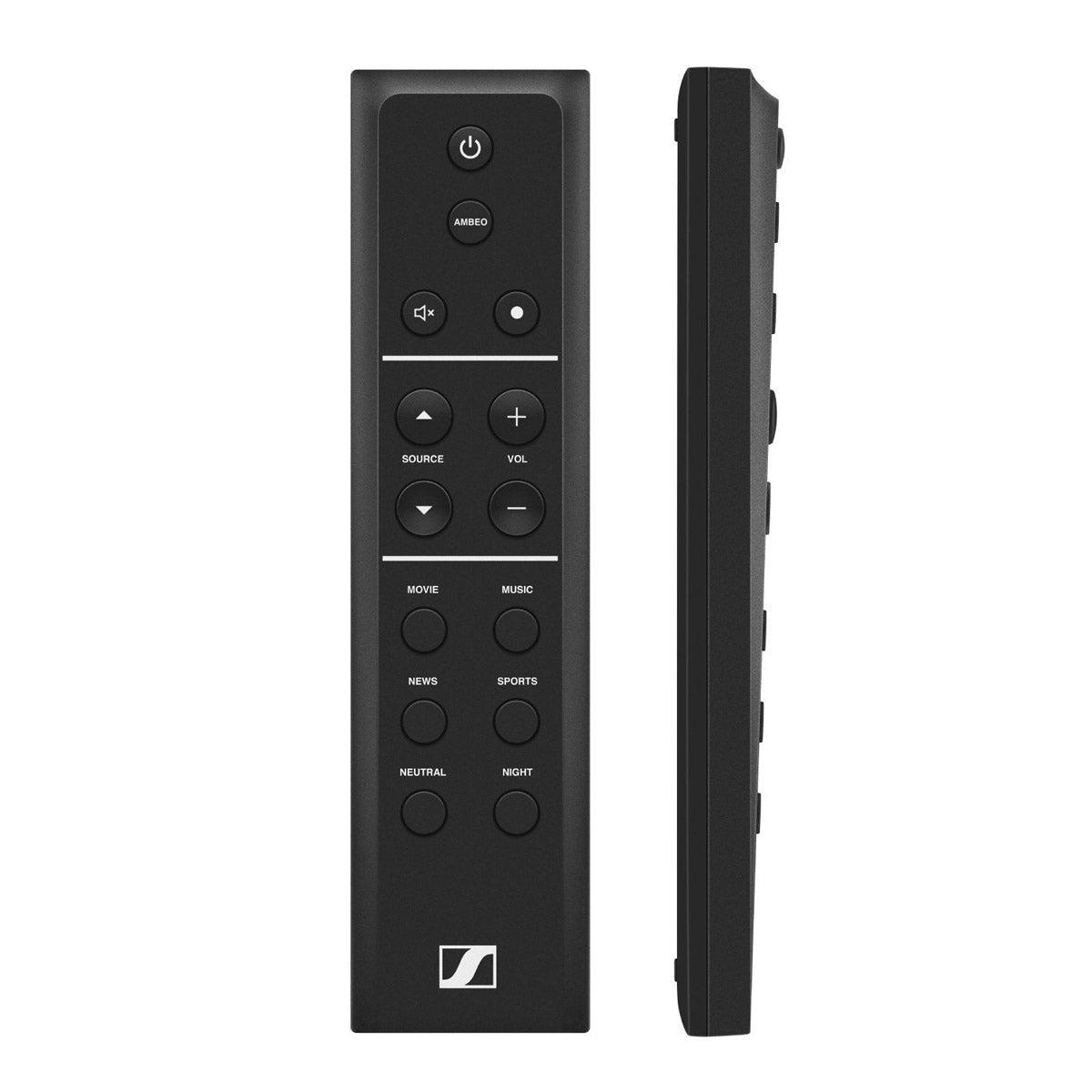
The integration is seamless. You can start music on your phone, hand it off to Spotify Connect, then control playback using voice commands—all without touching a remote. The soundbar appears as a native speaker in streaming apps, making it feel like a natural extension of your smart home ecosystem.
The Samsung HW-Q800D offers more basic connectivity: Bluetooth 5.2 for wireless streaming and integration with Samsung's SmartThings ecosystem. If you own Samsung TVs and other Samsung devices, the Q-Symphony feature can coordinate the soundbar with your TV's built-in speakers for enhanced performance. However, the streaming options are more limited, requiring you to connect devices via Bluetooth rather than appearing natively in apps.
Your room plays a huge role in determining which soundbar will work better for you.
The Samsung HW-Q800D is more forgiving of different room configurations. The physical subwoofer provides consistent bass regardless of room acoustics, and the up-firing Atmos speakers work reliably in most spaces with standard ceiling heights. You'll want to ensure you have space for the subwoofer (it measures about 8 inches wide by 16 inches deep), but its wireless connection gives you flexibility in placement.
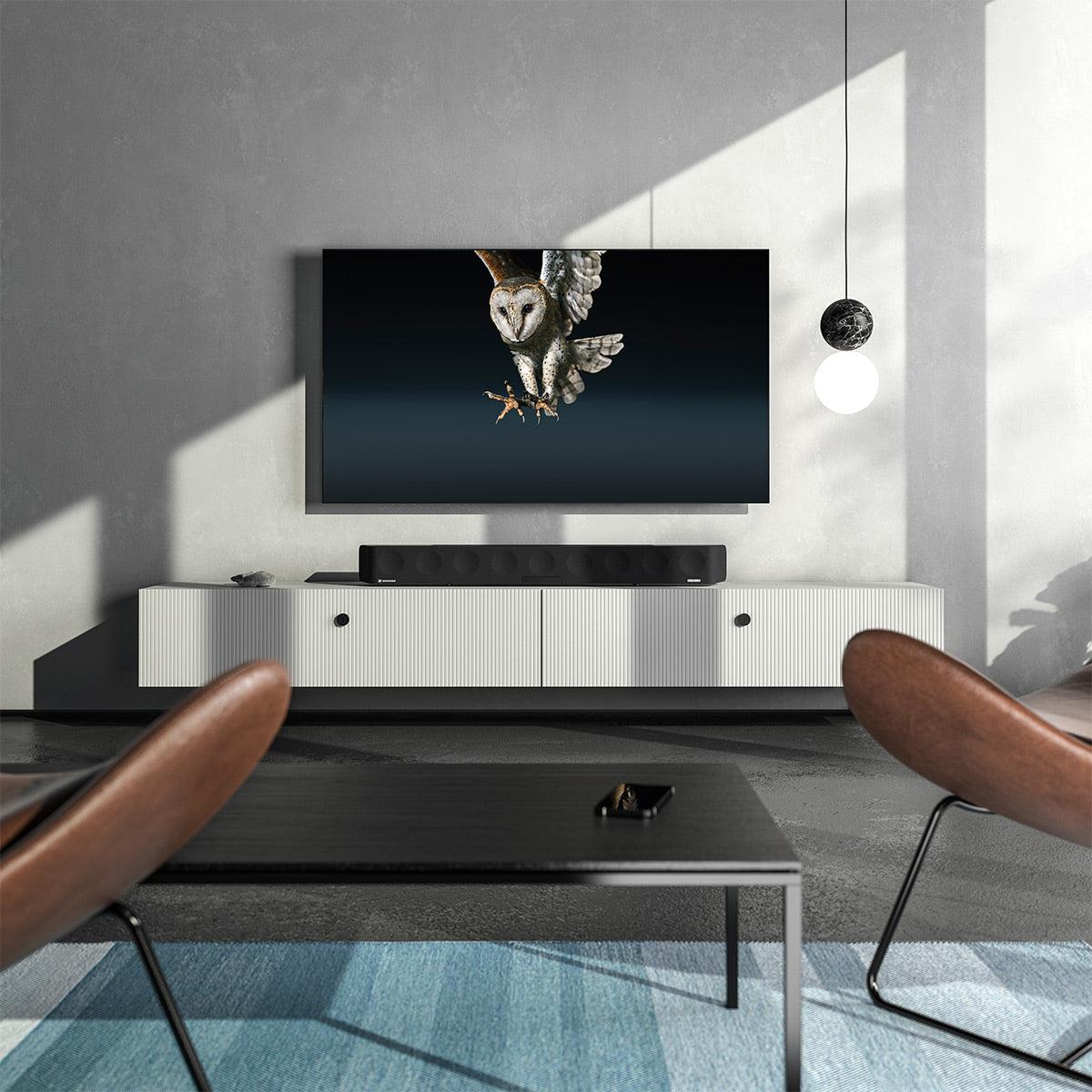
The Sennheiser AMBEO Plus is much more demanding. It performs best in rectangular rooms with hard surfaces that can effectively reflect sound. Rooms with high ceilings, heavy carpeting, or lots of soft furnishings can significantly compromise its virtual surround effects. The soundbar itself is also quite large—nearly 50 inches wide—and needs to be positioned precisely for optimal performance.
Setting up the Samsung HW-Q800D is refreshingly straightforward. The subwoofer pairs automatically when you power everything on, and the SpaceFit Sound calibration runs quickly in the background. You can be up and running with good performance in minutes.
The Sennheiser AMBEO Plus requires more patience and attention to detail. The initial calibration process takes several minutes and requires complete silence in the room. You'll likely need to experiment with positioning and re-run calibration multiple times to achieve optimal results. The payoff can be worth it, but it's definitely not plug-and-play.
At $697.99, the Samsung HW-Q800D delivers exceptional value for a premium soundbar. You get reliable Dolby Atmos performance, powerful bass, clear dialogue, and easy setup at a price that's accessible to many households looking to upgrade their TV audio.
The Sennheiser AMBEO Plus, at $1,499.95, commands more than double the price. While you're paying for cutting-edge virtualization technology and premium streaming features, the core home theater performance doesn't justify the substantial price premium for most users. The bass limitations alone make it difficult to recommend at this price point for movie enthusiasts.
Both soundbars represent significant technological achievements, but they succeed in different ways. Samsung has refined and perfected a traditional approach, delivering consistent performance that works well for the vast majority of users and rooms. Sennheiser has pushed the boundaries of what's possible with virtualization, creating a product that showcases impressive engineering but makes compromises that affect real-world performance.
Choose the Samsung HW-Q800D if you want reliable, impactful home theater performance without breaking the bank. It's ideal for movie lovers who want to feel the rumble of explosions and the thump of musical bass lines. The straightforward setup and consistent performance across different room types make it a safe choice that's likely to satisfy for years to come.
Choose the Sennheiser AMBEO Plus if you prioritize streaming versatility and have an optimal room for its virtualization technology. It's best suited for users who focus more on dialogue-heavy content and music than action movies, and who appreciate the convenience of a single-unit design despite its performance limitations.
For most people building a home theater, the Samsung's combination of powerful bass, reliable surround effects, and excellent value makes it the smarter choice. The Sennheiser's technological ambitions are admirable, but at this price point, the compromises are too significant to overlook.
| Samsung HW-Q800D ($697.99) | Sennheiser AMBEO Plus ($1,499.95) |
|---|---|
| Price - Major factor in value proposition | |
| $697.99 (excellent value for premium features) | $1,499.95 (premium price for cutting-edge tech) |
| Design Approach - Affects performance and room requirements | |
| Soundbar + wireless 8" subwoofer | Single all-in-one unit with built-in drivers |
| Channel Configuration - Determines surround sound capability | |
| 5.1.2 physical channels with dedicated subwoofer | 7.1.4 virtual channels through processing |
| Bass Performance - Critical for movies and music impact | |
| Dedicated 8" wireless subwoofer (powerful, room-filling bass) | Dual 4" built-in woofers (lacks low-end impact) |
| Total Power Output - Affects maximum volume and dynamics | |
| 360W (adequate for most rooms) | 400W (slightly higher but doesn't translate to better bass) |
| Dolby Atmos Implementation - Height effects quality | |
| Physical up-firing speakers (reliable overhead effects) | Virtual processing (room-dependent performance) |
| Room Calibration - Optimizes sound for your space | |
| SpaceFit Sound Pro (basic but effective) | Advanced multi-microphone system (sophisticated but demanding) |
| Streaming Features - Smart connectivity options | |
| Bluetooth 5.2, Samsung SmartThings integration | Chromecast, AirPlay 2, Spotify Connect, voice assistants |
| Setup Complexity - Time and effort required | |
| Plug-and-play with auto subwoofer pairing | Requires precise positioning and detailed calibration |
| Room Compatibility - How forgiving of different spaces | |
| Works well in most rooms with standard ceilings | Needs optimal acoustics and rectangular layout |
| Best Use Cases - Where each excels | |
| Action movies, gaming, music with strong bass | Dialogue-heavy content, music listening, streaming |
The Samsung HW-Q800D ($697.99) offers significantly better value at less than half the price of the Sennheiser AMBEO Plus ($1,499.95). Samsung delivers reliable Dolby Atmos performance, powerful bass through its dedicated subwoofer, and easy setup for under $700. The Sennheiser's premium price doesn't translate to proportionally better performance for most users.
The key difference is their approach to surround sound. The Samsung HW-Q800D uses a traditional design with physical speakers and a separate wireless subwoofer for 5.1.2 channels. The Sennheiser AMBEO Plus attempts to create 7.1.4 virtual surround sound from a single unit using advanced processing, eliminating the need for a separate subwoofer.
The Samsung HW-Q800D has significantly better bass performance thanks to its dedicated 8-inch wireless subwoofer. It delivers powerful, room-filling low-end that's essential for action movies and music. The Sennheiser AMBEO Plus relies on dual 4-inch built-in woofers that lack the impact and depth needed for immersive home theater experiences.
The Samsung HW-Q800D is better for movies, especially action films, due to its powerful subwoofer and reliable Dolby Atmos effects. The Sennheiser AMBEO Plus excels more with dialogue-heavy content and TV shows where bass impact is less critical, offering superior vocal clarity and natural sound reproduction.
The Samsung HW-Q800D is much easier to set up with plug-and-play operation and automatic subwoofer pairing. The Sennheiser AMBEO Plus requires careful positioning, room calibration using built-in microphones, and often multiple attempts to achieve optimal performance, making it more demanding for users.
Yes, both support Dolby Atmos, but differently. The Samsung HW-Q800D uses physical up-firing speakers that bounce sound off your ceiling for consistent height effects. The Sennheiser AMBEO Plus creates virtual Dolby Atmos through processing, which can be effective but depends heavily on your room's acoustics and layout.
The Sennheiser AMBEO Plus has superior streaming capabilities with Chromecast built-in, Apple AirPlay 2, Spotify Connect, and voice assistant compatibility. The Samsung HW-Q800D offers basic Bluetooth 5.2 connectivity and Samsung SmartThings integration, which is adequate but less versatile for multi-device households.
The Samsung HW-Q800D works well in medium to large rooms and is forgiving of different layouts due to its physical subwoofer. The Sennheiser AMBEO Plus performs best in smaller, rectangular rooms with good acoustics and hard surfaces that can effectively reflect sound for its virtualization technology.
For music, the Sennheiser AMBEO Plus offers more natural, accurate sound reproduction with excellent clarity and detail, making it better for acoustic and vocal-heavy music. The Samsung HW-Q800D provides more exciting, bass-forward sound that many prefer for pop, rock, and electronic music genres.
The Samsung HW-Q800D requires space for both the main soundbar and a wireless subwoofer (approximately 8" x 16" x 16"). The Sennheiser AMBEO Plus is a single unit but quite large at nearly 50 inches wide, and it needs precise positioning for optimal virtual surround effects.
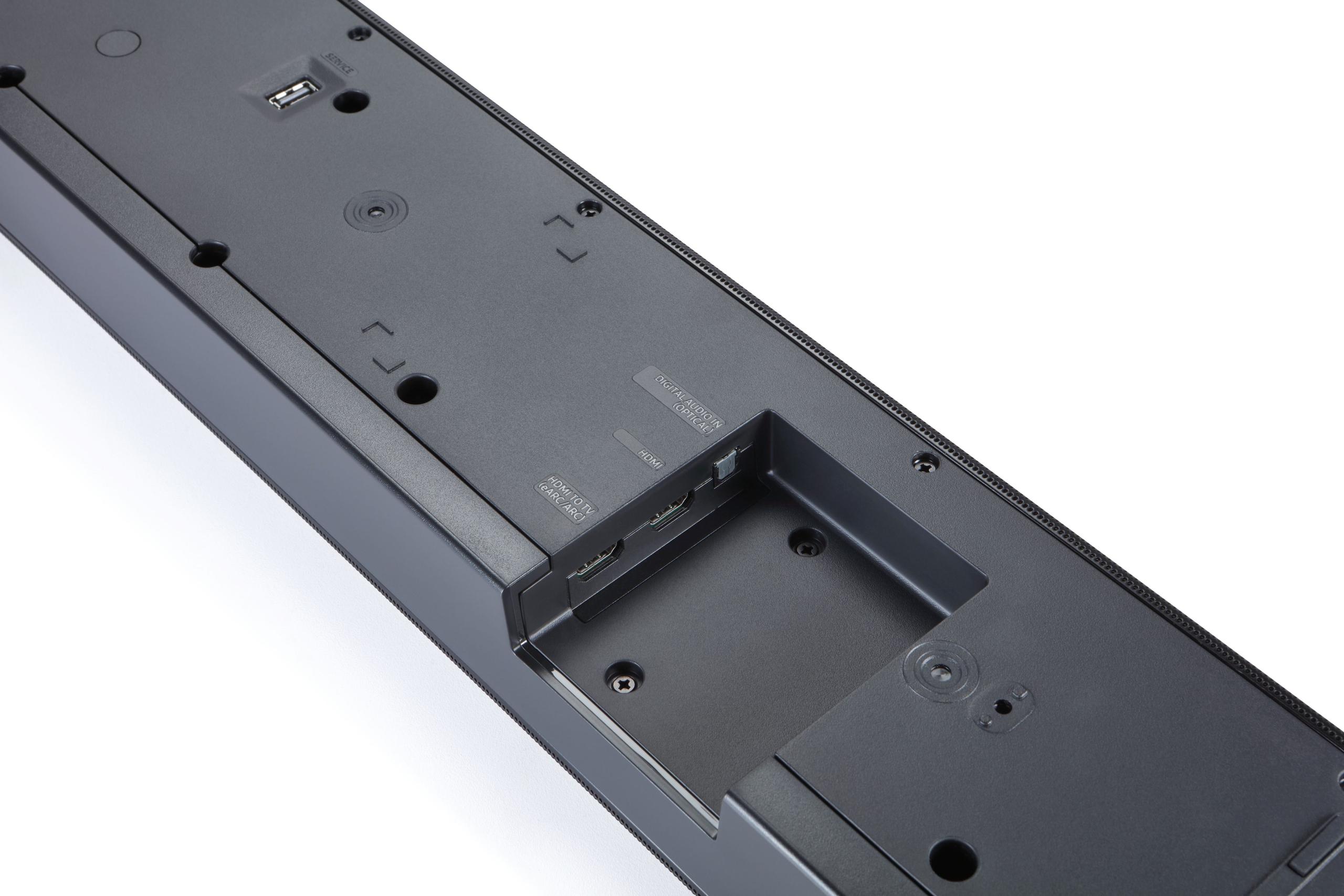
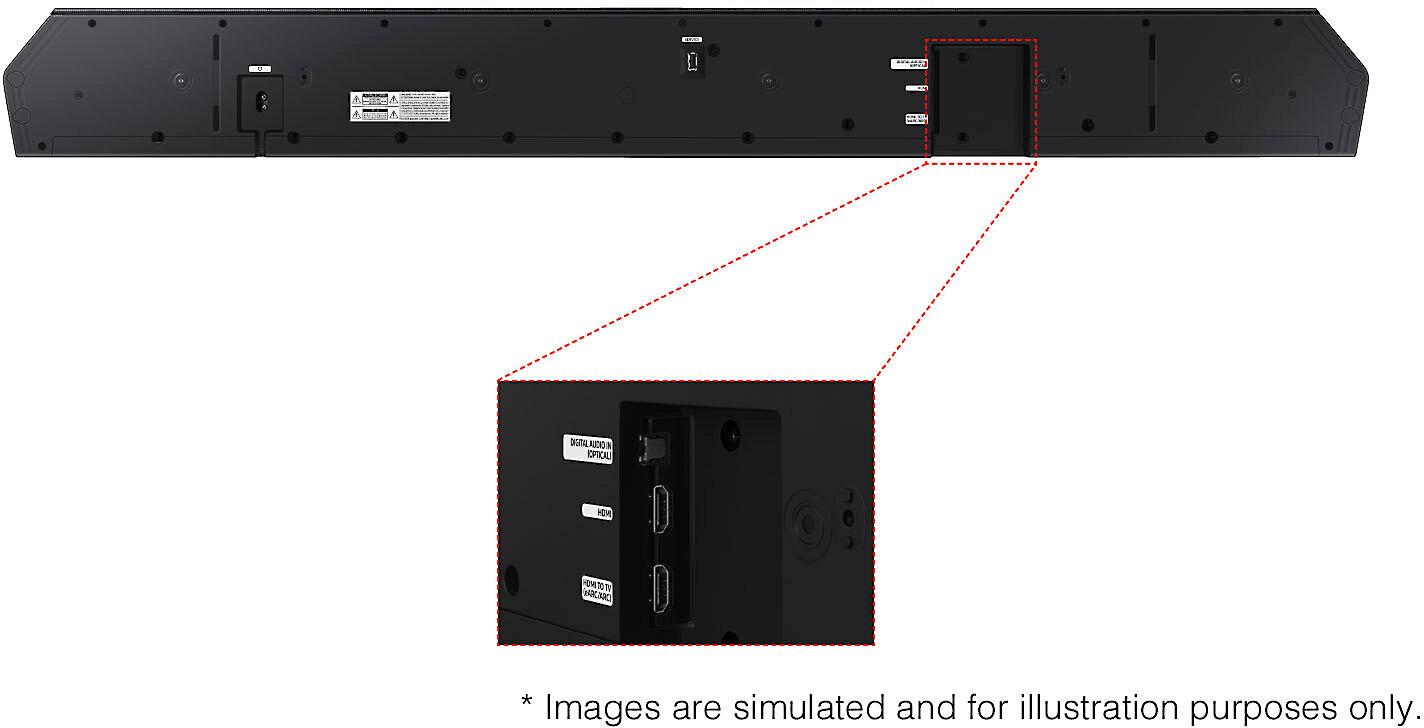
The Samsung HW-Q800D works with all TV brands but offers special Q-Symphony features when paired with Samsung TVs. The Sennheiser AMBEO Plus is TV-brand agnostic and connects via HDMI eARC/ARC, Bluetooth, or optical inputs, making it equally compatible with all major TV manufacturers.
For home theater use, choose the Samsung HW-Q800D for its superior bass performance, reliable surround effects, easier setup, and excellent value at $697.99. The Sennheiser AMBEO Plus at $1,499.95 is better suited for users who prioritize streaming features and have optimal room conditions, but it lacks the bass impact crucial for cinematic experiences.
We've done our best to create useful and informative comparisons to help you decide what product to buy. Our research uses advanced automated methods to create this comparison and perfection is not possible - please contact us for corrections or questions. These are the sites we've researched in the creation of this article: techradar.com - valueelectronics.com - samsung.com - rtings.com - samsung.com - crutchfield.com - samsung.com - samsung.com - samsung.com - shidirect.com - bestbuy.com - rtings.com - techradar.com - audioxpress.com - whathifi.com - upscaleaudio.com - soundstagesimplifi.com - global.sennheiser-hearing.com - sennheiser-hearing.com - audioadvice.com - abt.com - moon-audio.com

Privacy Policy
Terms and Conditions - Affiliate Policy
Home Security
© Copyright 2008-2026.
11816 Inwood Rd #1211, Dallas, TX 75244