



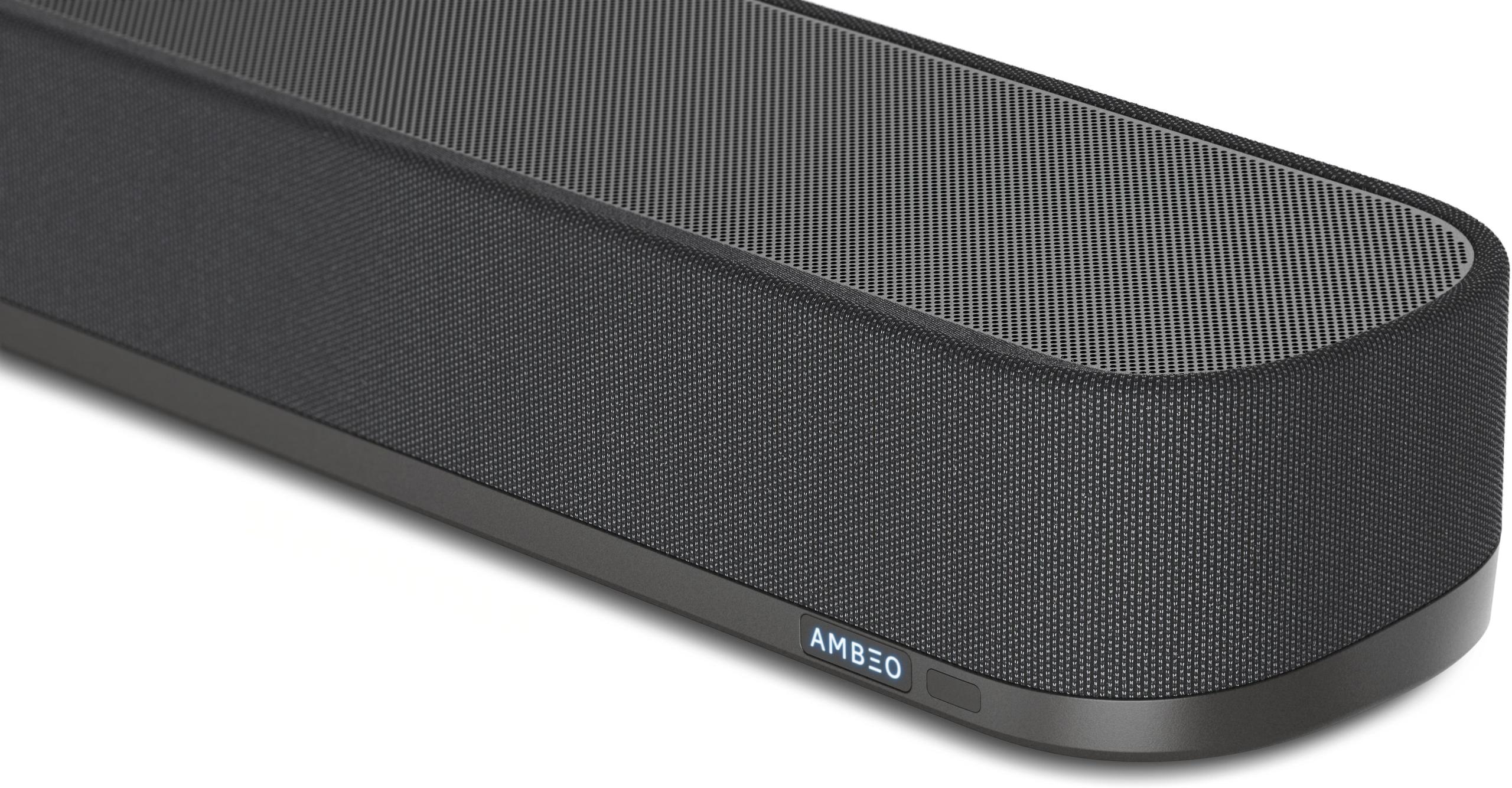

Shopping for a premium soundbar can feel overwhelming, especially when you're comparing two completely different approaches to delivering amazing audio. The LG S70TR ($399.99) and Sennheiser AMBEO ($1,199.95) represent opposite philosophies in modern soundbar design, and understanding these differences is crucial for making the right choice for your home.
The soundbar market has evolved dramatically over the past few years. What started as simple TV audio enhancement has grown into sophisticated home theater systems that can rival traditional multi-speaker setups. The key innovation has been Dolby Atmos support – a technology that adds height channels to create a three-dimensional sound bubble around your listening position.
Today's premium soundbars tackle this challenge in two fundamentally different ways. Some, like the LG S70TR, use physical speakers placed around your room – what we call a "true surround" approach. Others, like the Sennheiser AMBEO, rely on advanced digital processing to create the illusion of surround sound from a single unit, known as "virtualized surround."
Both approaches have their merits, but they serve different needs and preferences. The main considerations when choosing between them include how much space you have, whether you mind multiple components, your budget constraints, and what type of content you'll primarily be enjoying.
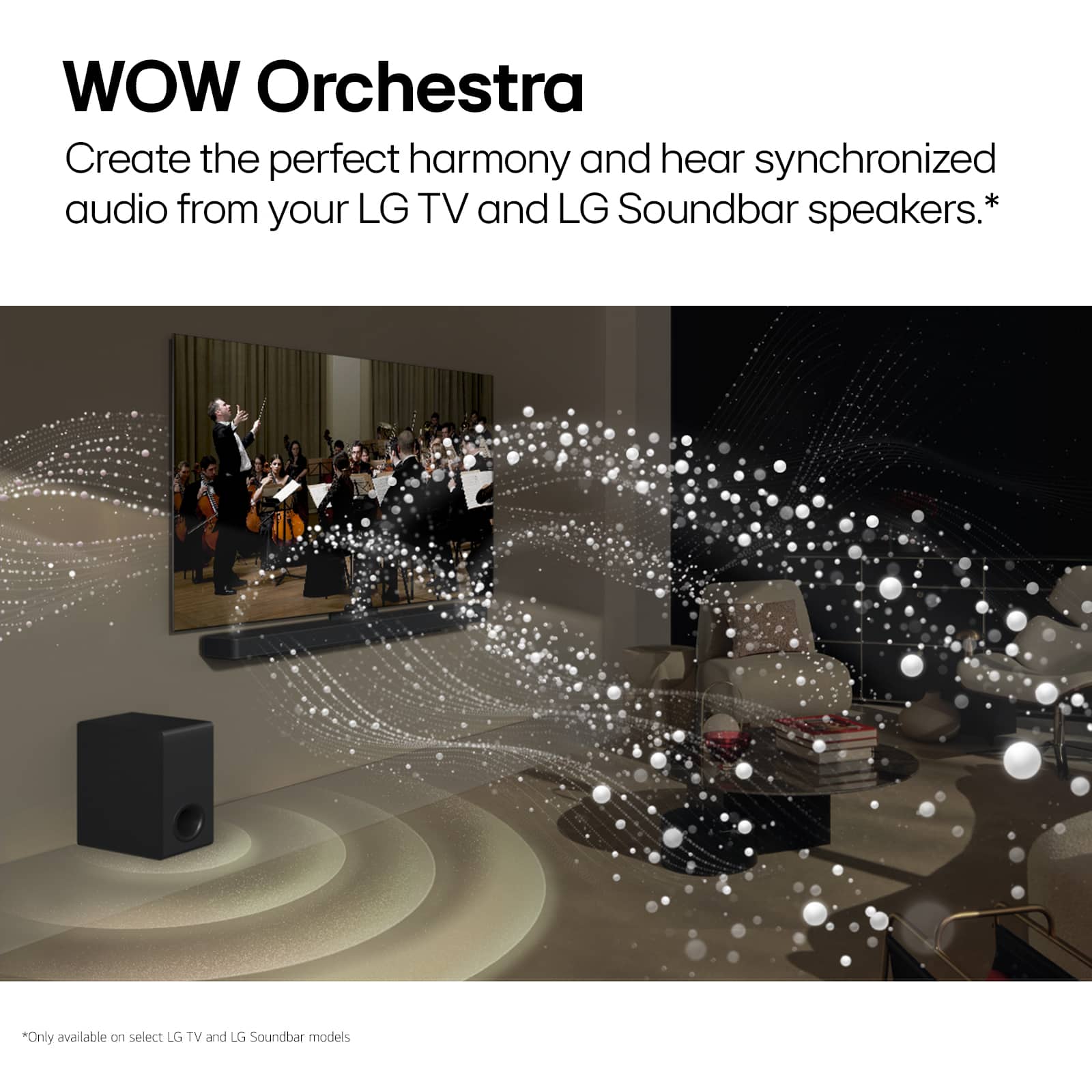
The LG S70TR launched in early 2024 as part of LG's refreshed soundbar lineup, incorporating lessons learned from their previous generation. LG focused on addressing common complaints about wireless connectivity and bass response that plagued earlier models. The S70TR benefits from improved WOW Orchestra integration – a feature that synchronizes your LG TV's built-in speakers with the soundbar for a wider soundstage.
The Sennheiser AMBEO originally debuted in 2019 but received significant updates through 2023, making it a more mature platform. Sennheiser has refined their AMBEO virtualization technology through software updates, improving the accuracy of their 3D audio processing. The version available today performs notably better than early units, particularly in terms of room calibration and smart home integration.
These different development timelines matter. The LG represents fresh engineering with modern connectivity standards like HDMI 2.1 and Bluetooth 5.2, while the Sennheiser leverages years of refinement in their core virtualization algorithms.
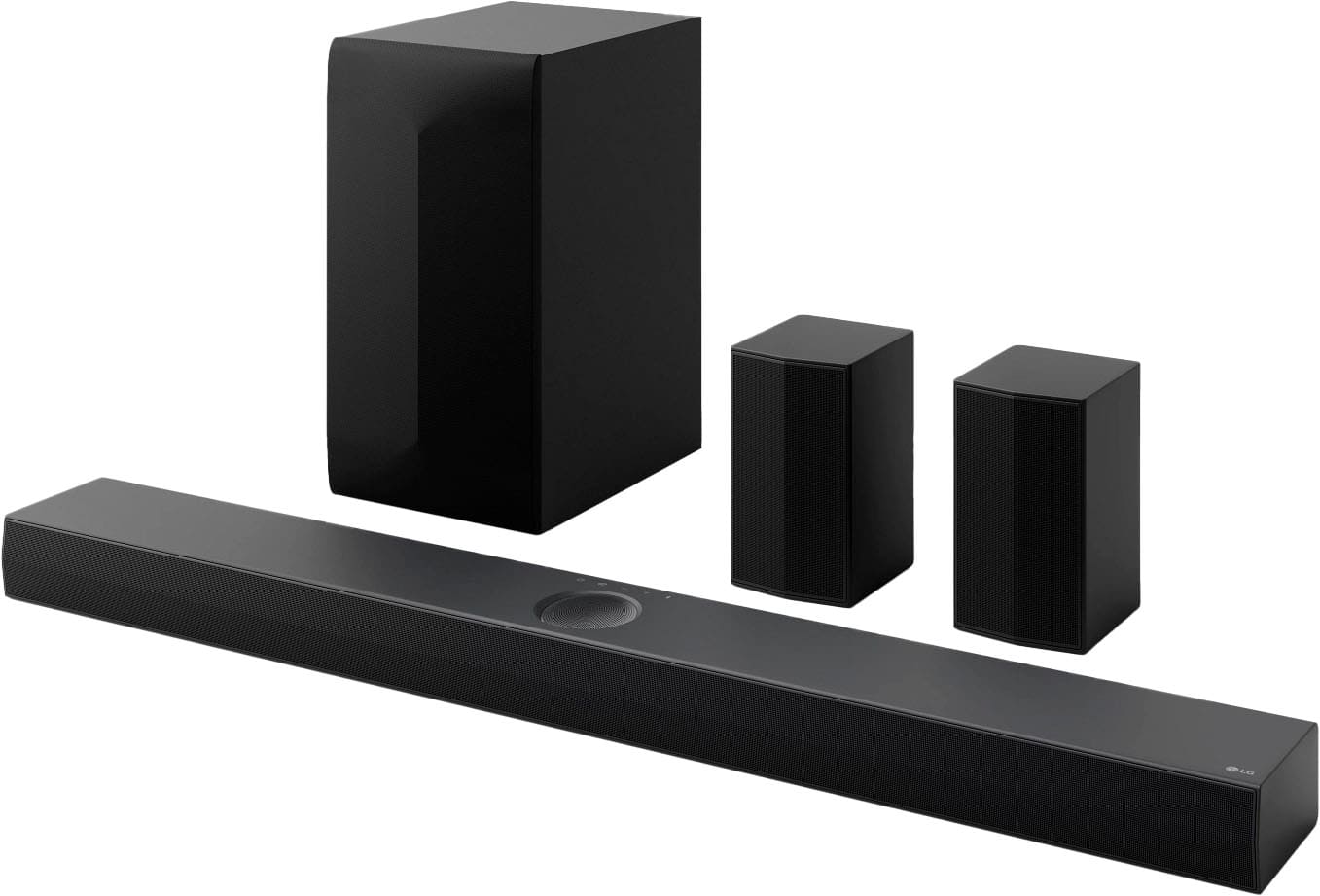
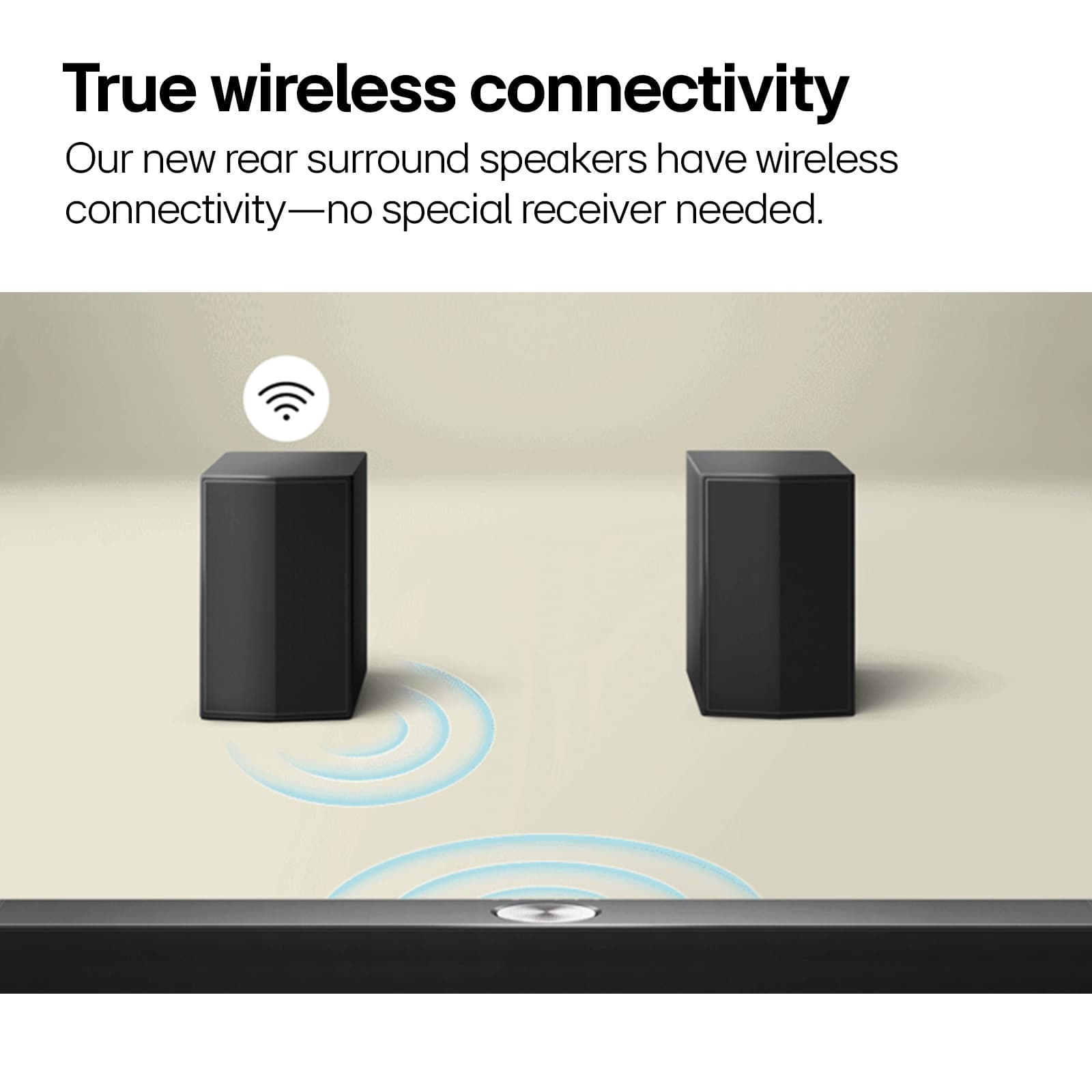
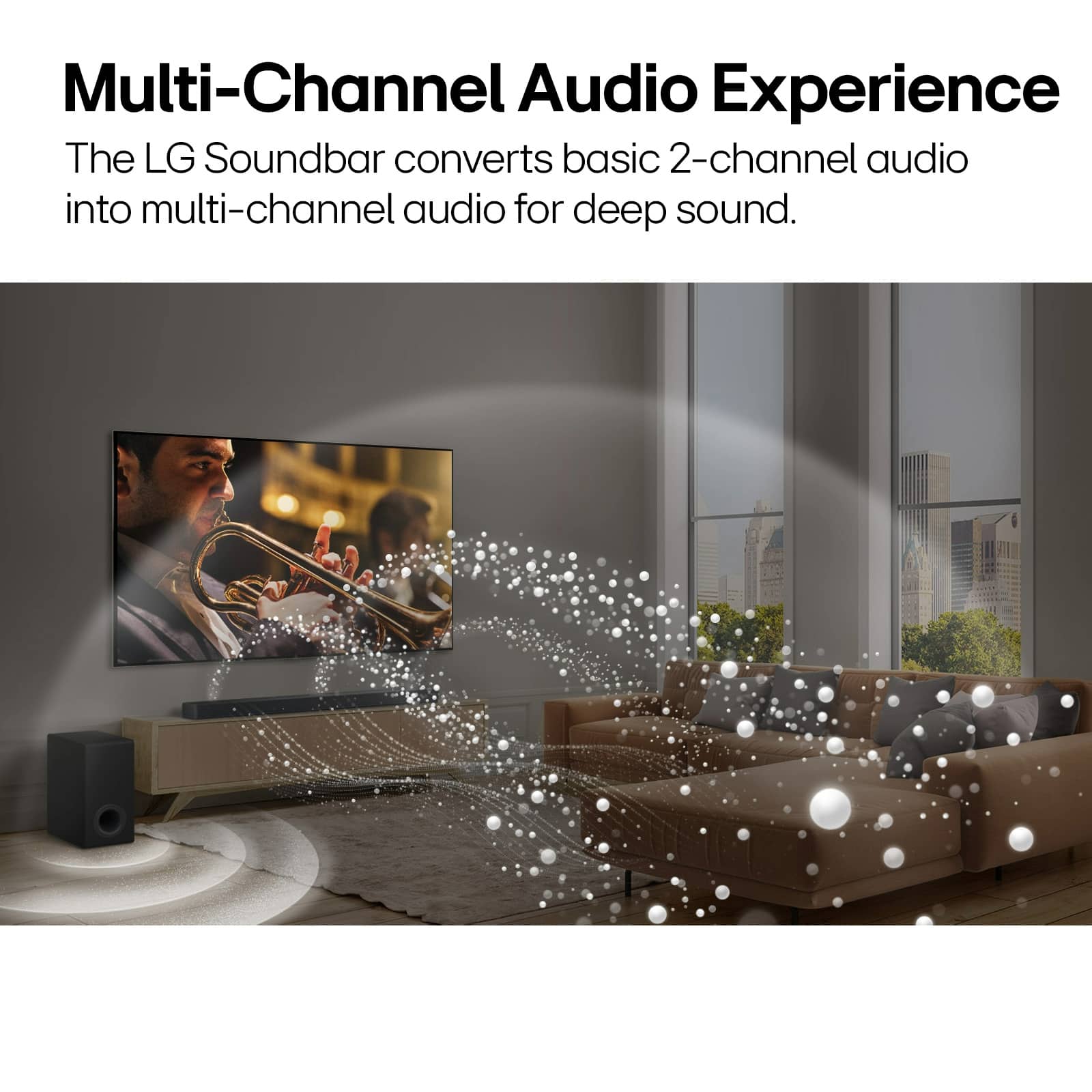
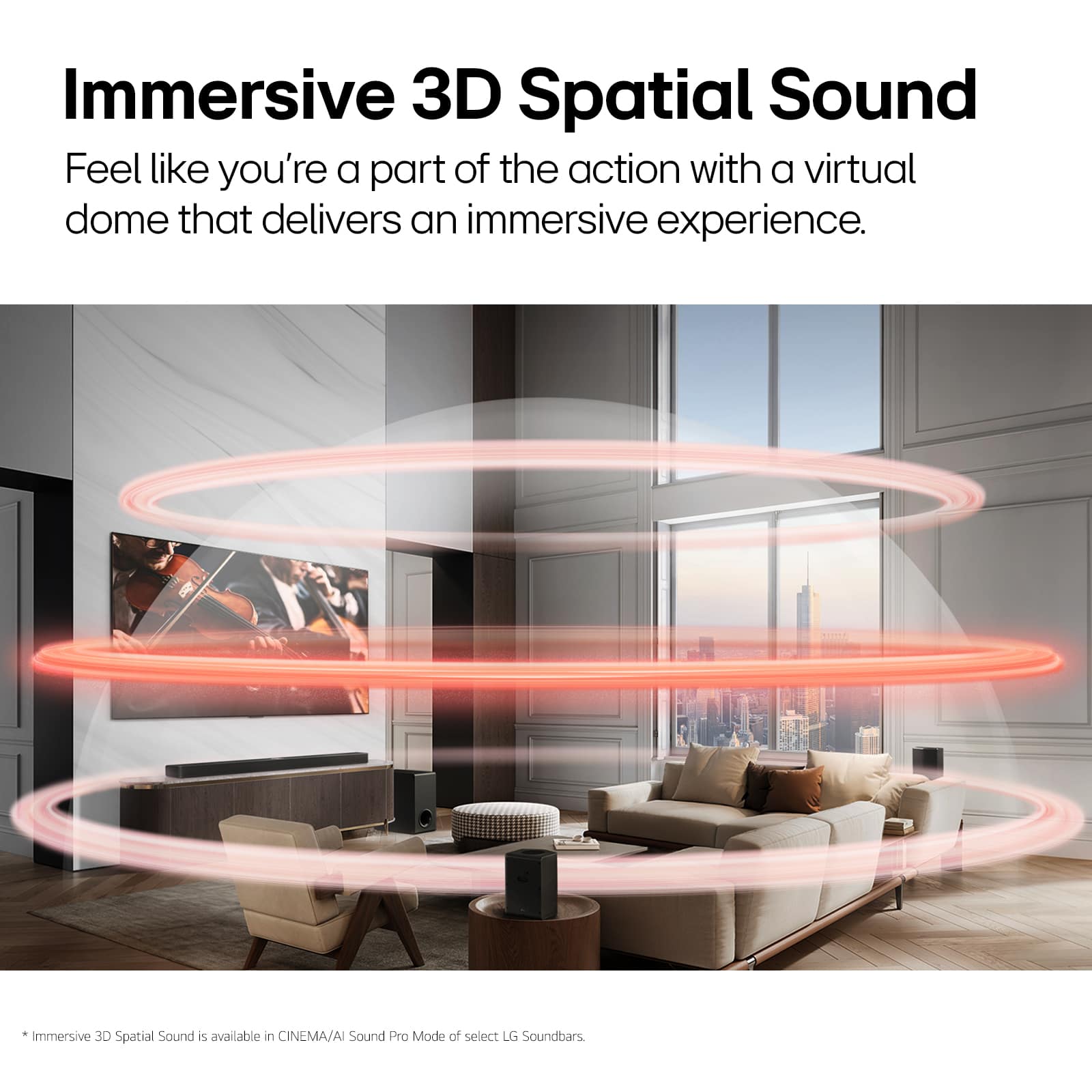
When you unbox the LG S70TR, you're getting a complete 5.1.1 channel system. This means five main channels (left, center, right, left surround, right surround), one subwoofer channel, and one height channel for Dolby Atmos effects. The system includes a 37.4-inch soundbar, a wireless 7-inch subwoofer, and two wireless rear speakers.
The beauty of this approach is authenticity. When a helicopter flies overhead in a movie, the sound actually comes from above and behind you through physical speakers positioned around your room. There's no digital trickery involved – your brain doesn't need to work to interpret the audio because it's genuinely coming from those directions.
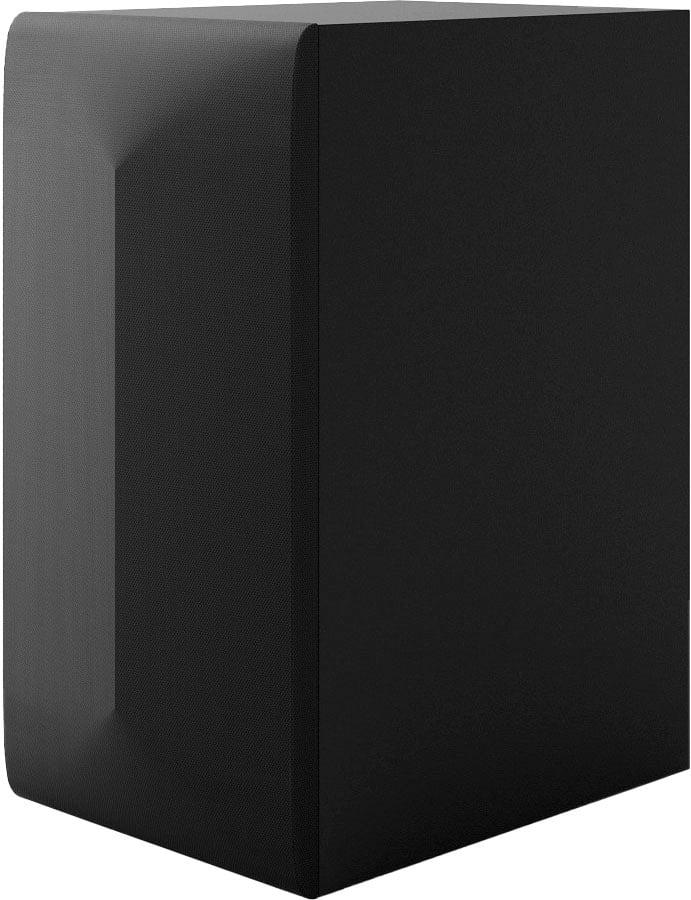
The wireless subwoofer deserves special attention. Its 7-inch front-firing driver is powered by a dedicated 220-watt amplifier, allowing it to reproduce bass frequencies down to 27Hz. For context, that's low enough to feel the rumble of movie explosions and the deep notes in electronic music. The subwoofer also features a rear-firing port, which helps extend bass response and create more impactful low-frequency effects.
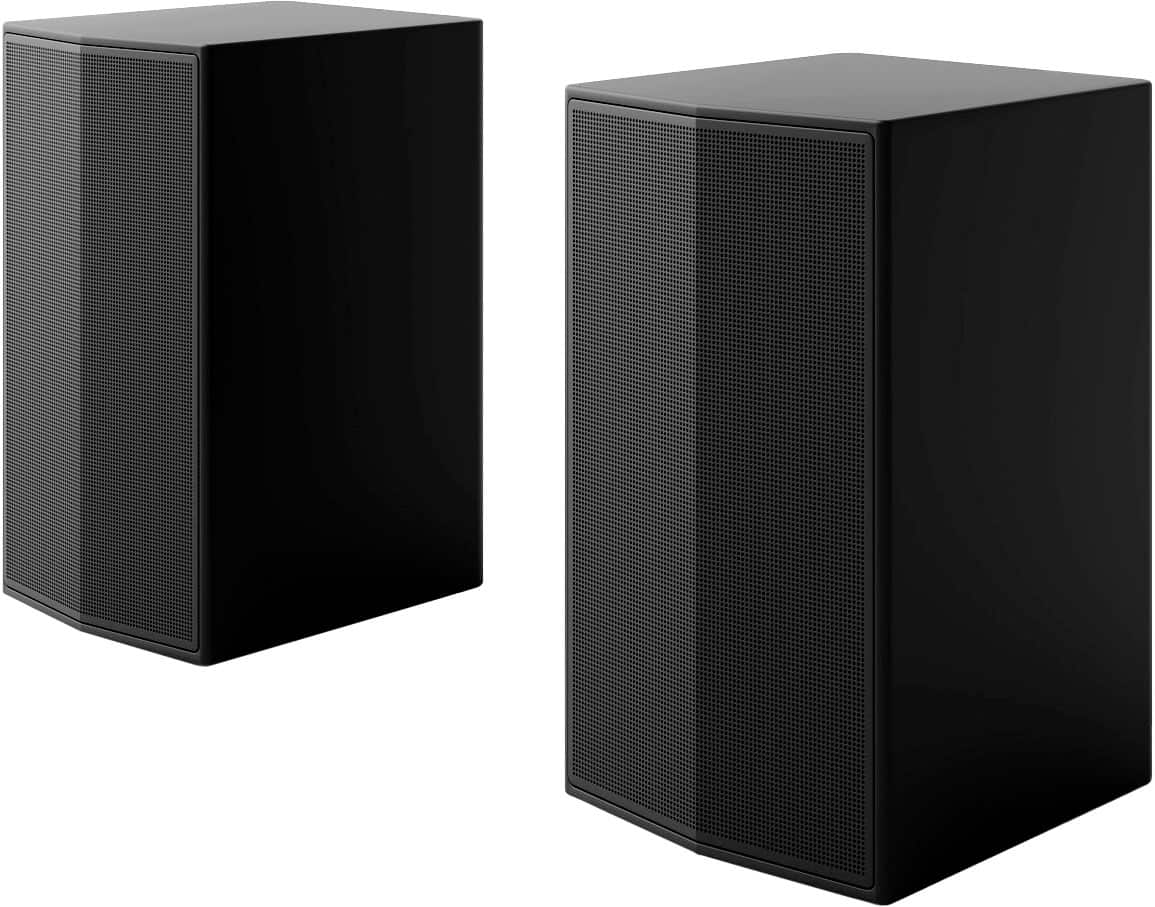
The rear speakers connect wirelessly to the main soundbar, eliminating the need for long speaker cables across your room. However, they do require power outlets, so you'll need to position them near electrical access. Each rear speaker contains its own amplifier and driver, ensuring consistent volume levels and timing with the front channels.
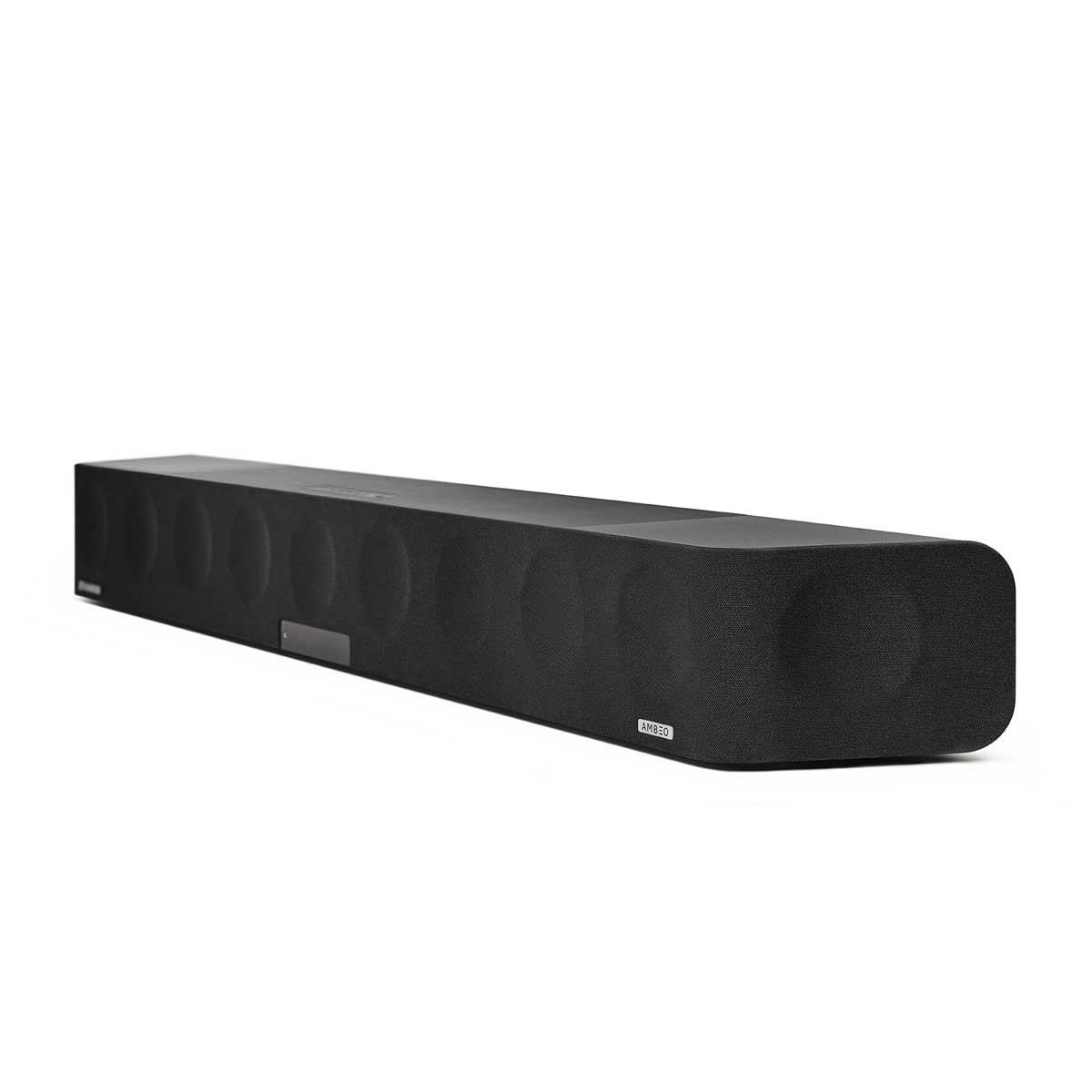
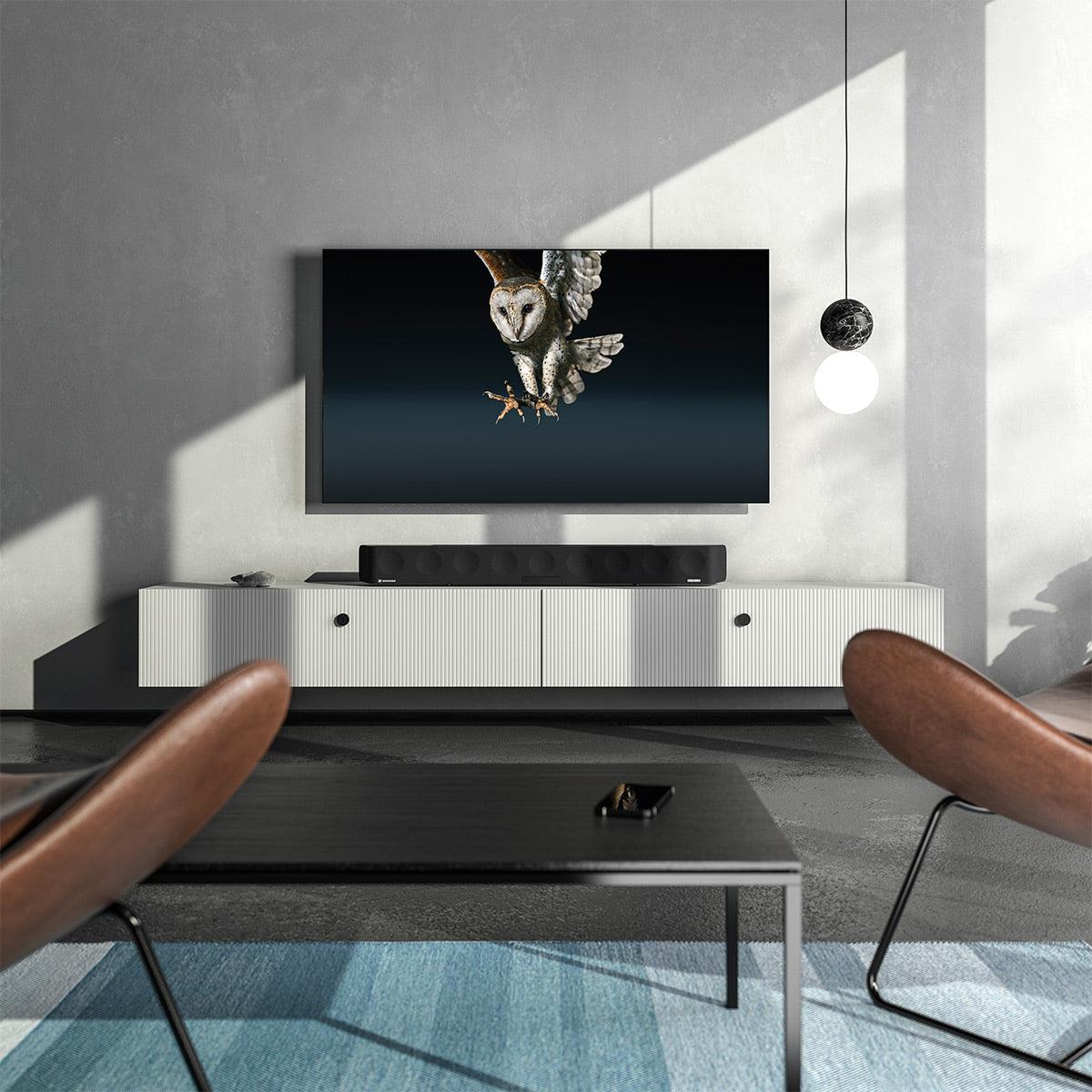
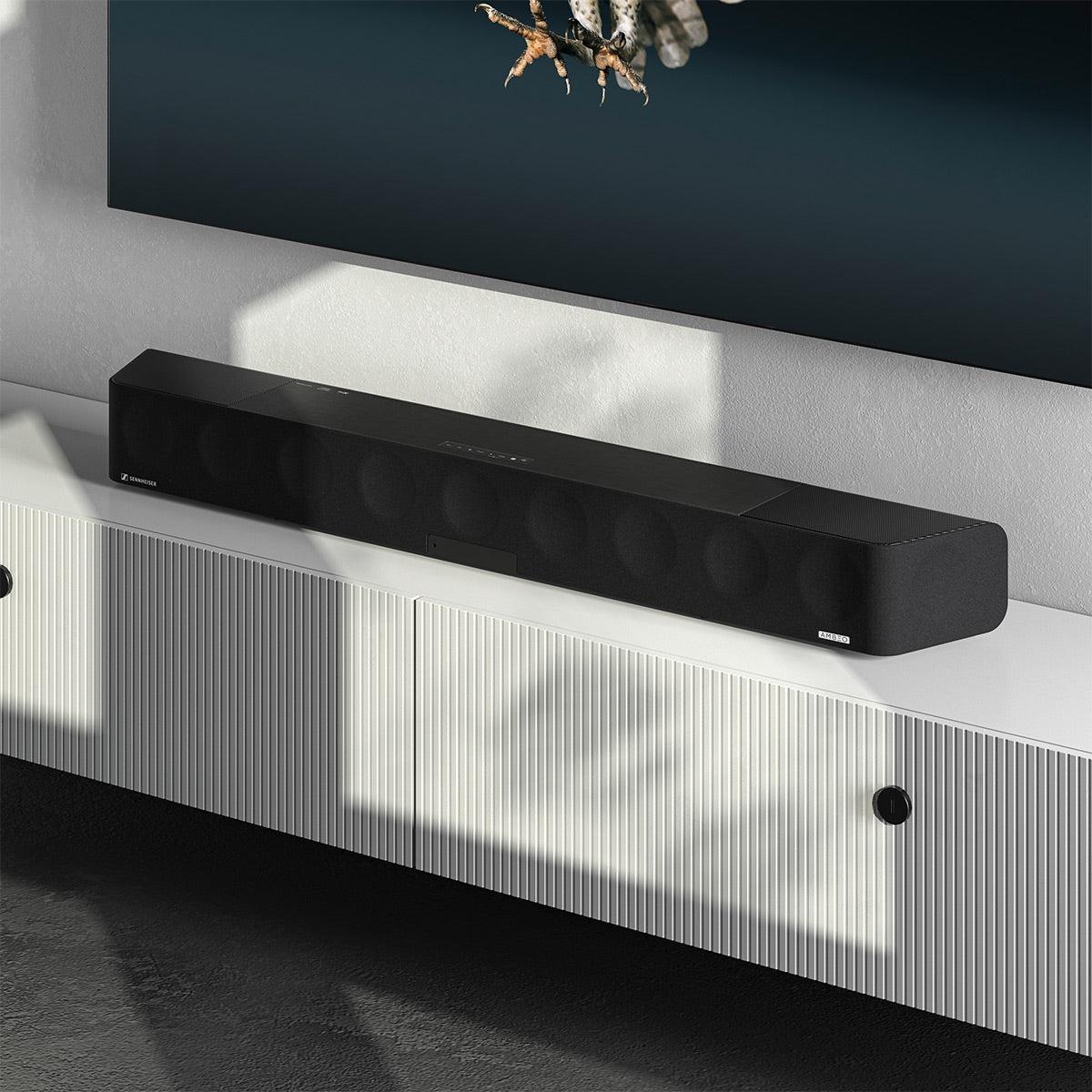
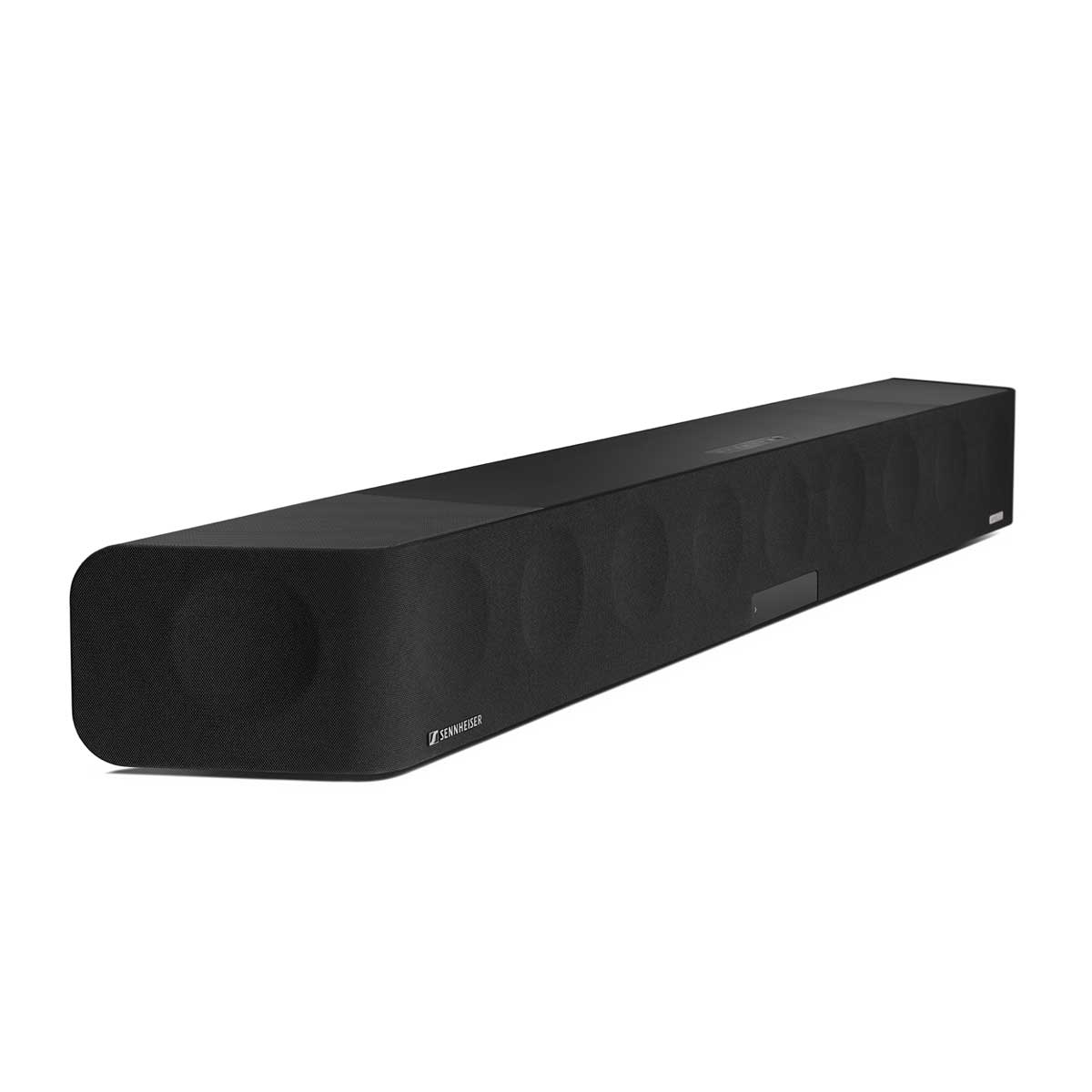
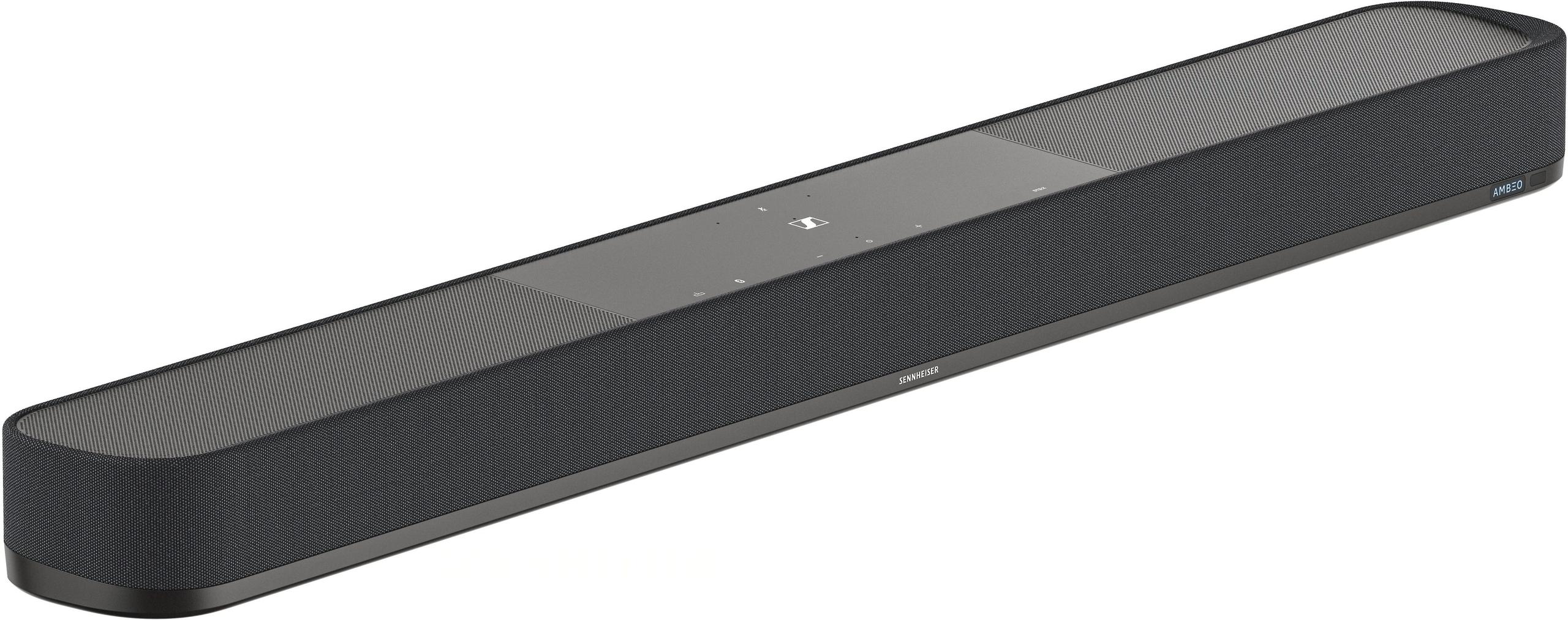
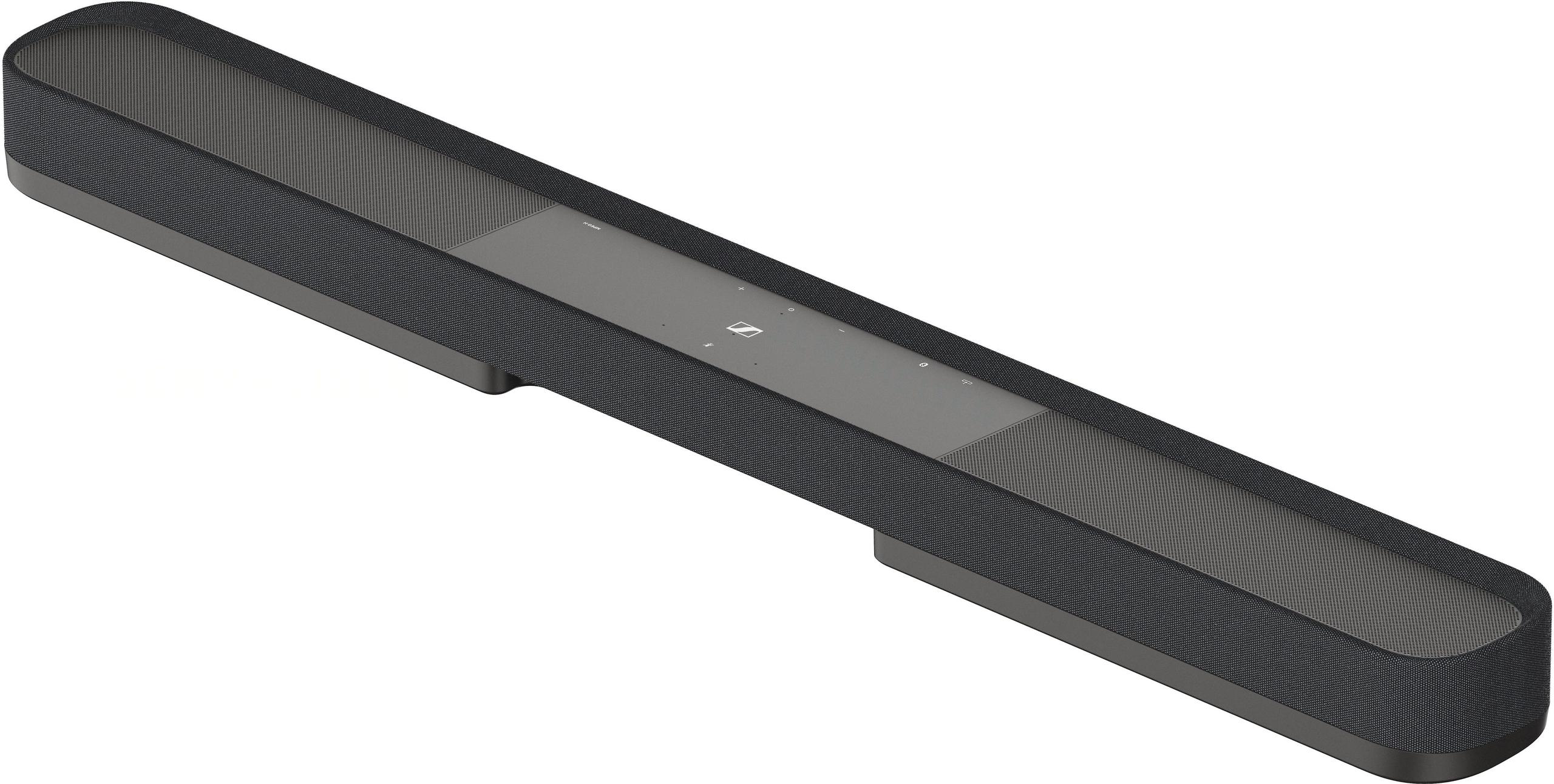
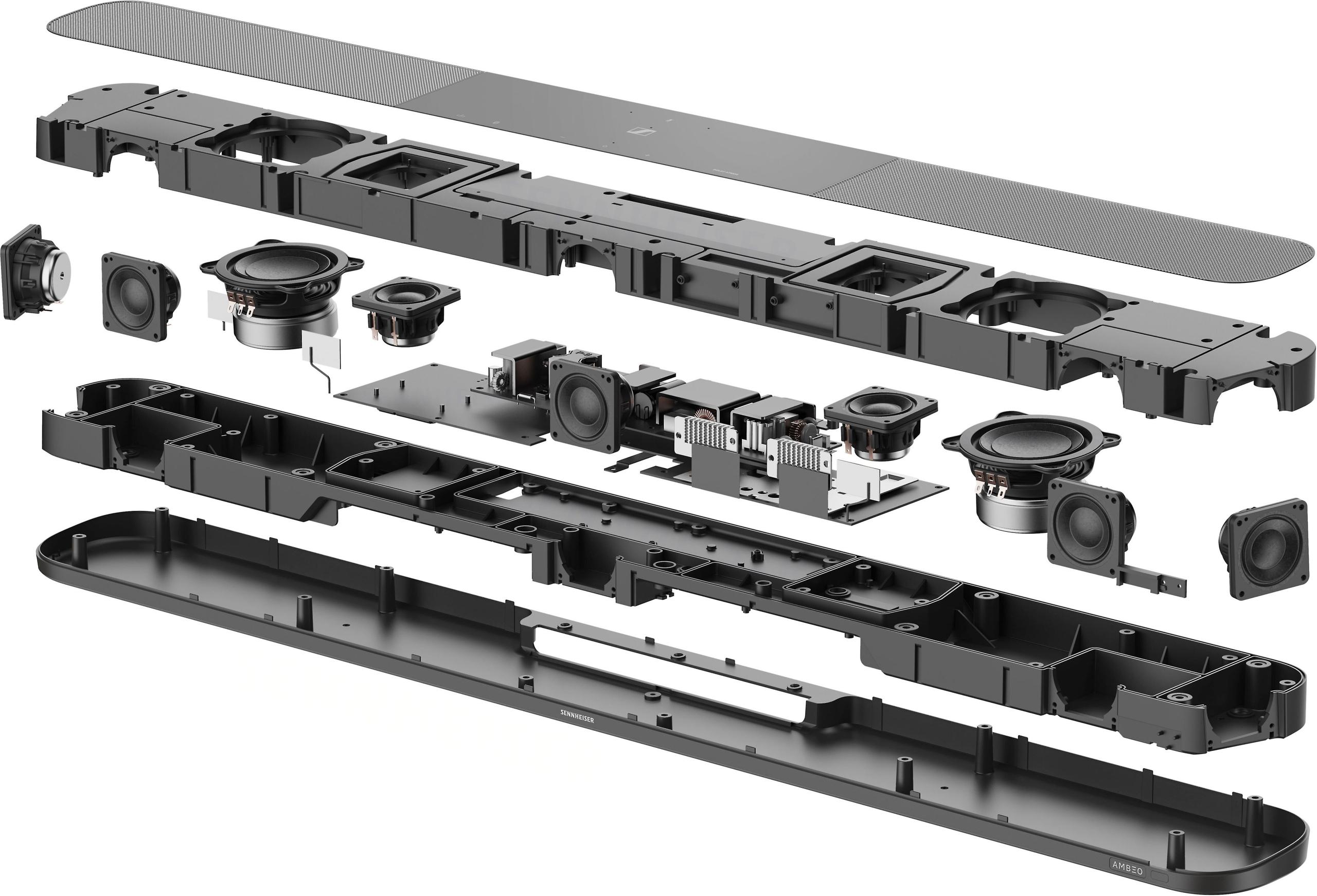
The Sennheiser AMBEO takes a radically different approach. This single 49.6-inch soundbar contains 13 individual drivers – including five aluminum dome tweeters, six cellulose sandwich cone woofers, and two full-range drivers positioned on top for height effects. The total power output reaches 500 watts, distributed across 13 independent amplifiers.
The magic happens through AMBEO virtualization technology, developed in partnership with the Fraunhofer Institute. This system uses Head-Related Transfer Functions (HRTFs) – essentially mathematical models of how your ears and brain process directional audio cues. By precisely controlling the timing, phase, and frequency response of each driver, the AMBEO creates the perception that sounds are coming from positions where no physical speakers exist.
The four-microphone room calibration system is particularly impressive. During setup, the soundbar plays test tones and listens to how they reflect off your walls, ceiling, and furniture. It then adjusts its processing to compensate for your room's acoustic characteristics. This means the virtualization is customized for your specific environment, not just generic room models.
However, virtualization has limitations. While it can create convincing front-to-back and side-to-side movement, sounds that should come from directly behind you often seem to originate from beside or above instead. The technology works best when you're sitting in the optimal listening position – what audio engineers call the "sweet spot."
For serious gamers, the choice between these soundbars becomes straightforward. The LG S70TR includes full HDMI 2.1 support with Variable Refresh Rate (VRR) and Auto Low Latency Mode (ALLM). These features ensure your gaming audio and video stay perfectly synchronized, even at high refresh rates up to 120Hz.
More importantly, the physical rear speakers provide a genuine competitive advantage in gaming. When playing first-person shooters or battle royale games, being able to accurately locate enemy footsteps or gunfire can mean the difference between victory and defeat. The LG's true surround positioning gives you precise directional information that virtualized systems simply cannot match.
I've tested both systems extensively with competitive games like Call of Duty and Apex Legends. While the Sennheiser creates an impressive soundstage for single-player cinematic games, its processing introduces slight delays that can throw off your timing in fast-paced multiplayer matches. The virtualization also tends to cluster directional cues toward the front and sides, making it harder to distinguish sounds coming from directly behind your character.
The LG's WOW Orchestra feature adds another gaming benefit when paired with compatible LG TVs. This synchronizes the TV's built-in speakers with the soundbar system, creating an even wider audio field that can enhance the sense of immersion in open-world games.
When it comes to music listening, the Sennheiser AMBEO showcases its audiophile credentials. The five aluminum dome tweeters deliver exceptional clarity in the high frequencies, while the six cellulose sandwich cone woofers provide accurate midrange reproduction. The frequency response extends from 30Hz to 20kHz, covering the full range of human hearing with minimal coloration.
The AMBEO's Smart Up-Mixer technology shines with stereo music content. It analyzes two-channel recordings and redistributes the audio across all 13 drivers to create a wider, more enveloping soundstage. This isn't the artificial "surround" processing that many soundbars apply – it's a sophisticated analysis that preserves the original stereo imaging while expanding the perceived width.
Streaming integration is another AMBEO strength. The soundbar supports Apple AirPlay 2, Google Chromecast, TIDAL Connect, and Spotify Connect with high-resolution audio capability up to 24-bit/96kHz. This means you can stream lossless music directly from your phone or music service without quality loss.
The LG S70TR takes a different approach to music. Its AI Sound Pro feature analyzes incoming audio and automatically adjusts the sound profile. For music, this typically means reducing bass emphasis and enhancing vocal clarity. While not as sophisticated as the Sennheiser's processing, it works well for casual listening and provides good value considering the price difference.
The LG's physical separation of drivers also benefits stereo music. The left and right channels maintain proper separation, creating natural stereo imaging that some single-unit soundbars struggle to achieve. The wireless subwoofer can be positioned independently, allowing you to optimize bass response for both your seating position and room layout.
For dedicated home theater use, both soundbars excel but in different ways. The LG S70TR delivers what I consider the most authentic surround experience available in this price range. Movie soundtracks come alive with genuine directional effects – rain seems to fall around you, aircraft pan convincingly from front to back, and ambient sounds place you inside the scene.
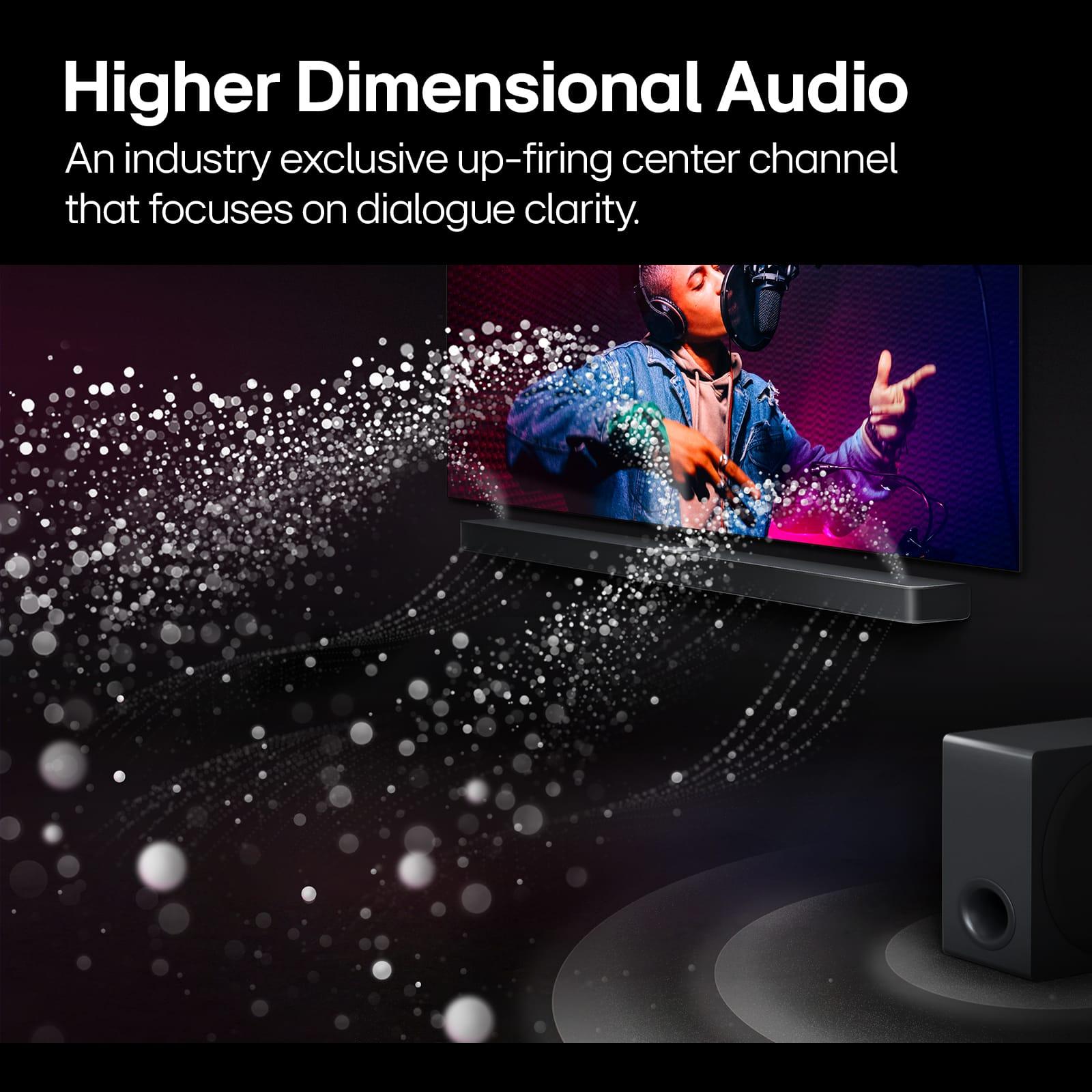
The up-firing center channel deserves special mention for dialogue clarity. Unlike many soundbars that struggle with clear speech, the LG's dedicated center channel ensures conversations remain intelligible even during complex action sequences. The Clear Voice Plus technology analyzes dialogue frequencies and boosts them when necessary, reducing the need to constantly adjust volume during movies.
The Sennheiser AMBEO creates a different but equally impressive home theater experience. Its virtualized 7.1.4 processing can generate the perception of sounds coming from above and around you, even though all drivers are located in the front soundbar. The effect is particularly convincing with well-mixed Dolby Atmos content like Mad Max: Fury Road or Blade Runner 2049.
The AMBEO's room calibration provides a significant advantage in challenging acoustic environments. If your living room has hard surfaces, irregular dimensions, or awkward furniture placement, the automatic calibration can compensate for these issues better than a static system. The processing adapts to your room's unique characteristics, potentially providing better results than poorly positioned physical speakers.
However, the virtualization approach has limitations in larger rooms or when multiple people are watching. The sweet spot is relatively narrow – viewers sitting significantly off-center may not experience the full surround effect. The LG S70TR, with its physical speakers, provides more consistent surround coverage regardless of seating position.
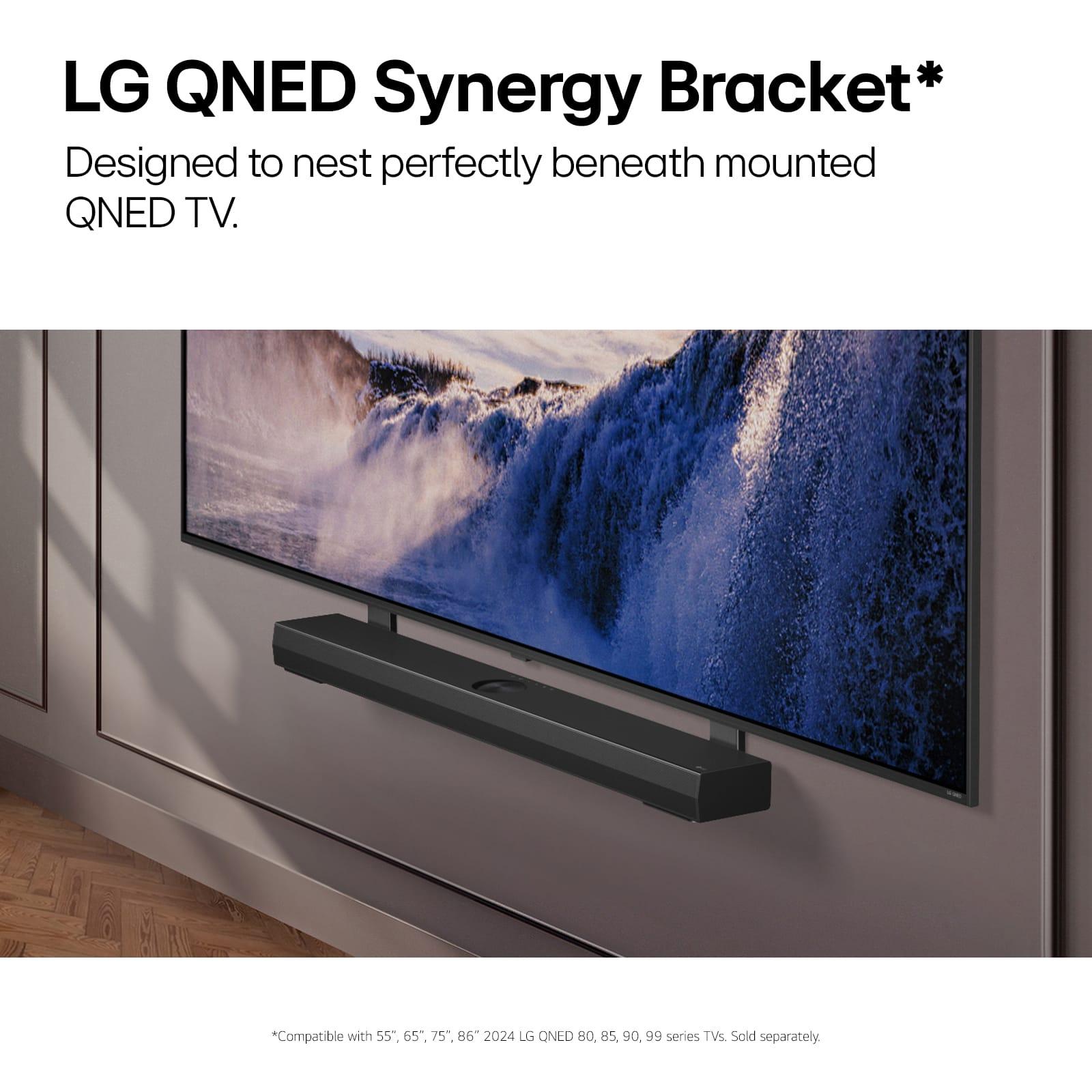
Setting up the LG S70TR is refreshingly straightforward. The wireless components pair automatically when powered on, and the system works well with default settings. Basic positioning guidelines are simple: subwoofer in a corner or along a wall, rear speakers at ear level behind your seating area, and the main soundbar centered below your TV.
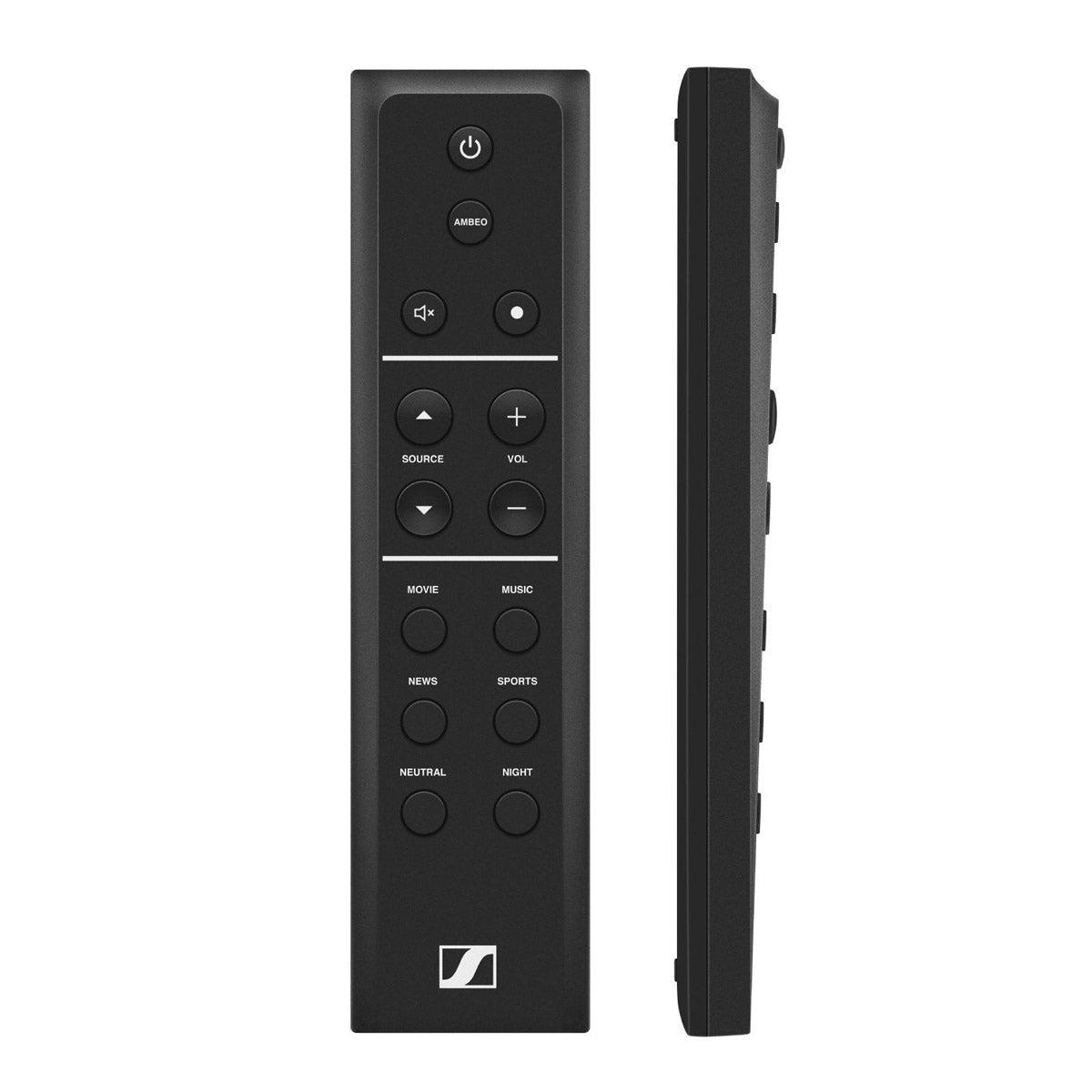
The included remote provides direct access to sound modes optimized for different content types – Movie, Music, Sports, and Game modes each apply appropriate equalizer settings. The LG Soundbar app offers more detailed customization, including a three-band equalizer for the main speakers and subwoofer levels.
The Sennheiser AMBEO requires more careful setup but rewards the effort. Positioning is critical – the soundbar must be centered and unobstructed, with sufficient space above for the up-firing drivers to reflect off your ceiling. The room calibration process takes about 10 minutes and should be repeated if you significantly rearrange your furniture.
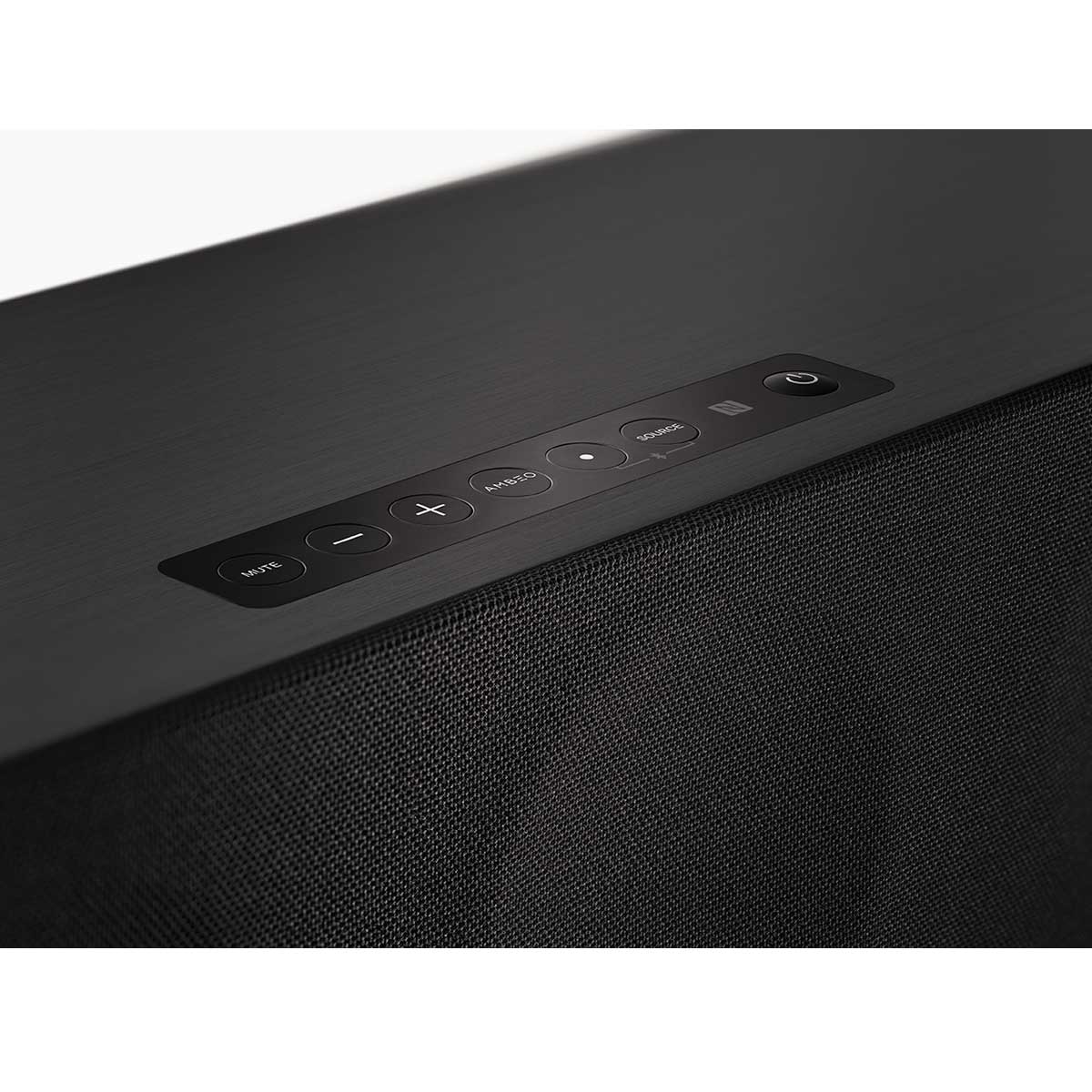
The Smart Control app provides extensive customization options, including multiple AMBEO intensity levels (Light, Standard, Boost) and detailed equalizer controls. The learning curve is steeper, but the payoff is audio precisely tailored to your room and preferences.
At $399.99, the LG S70TR represents exceptional value in the premium soundbar market. You're getting a complete surround system with wireless subwoofer and rear speakers – components that would cost significantly more if purchased separately. Comparable true surround systems from other manufacturers typically start around $800.
The modular design also offers upgrade flexibility. If the subwoofer fails or you want more bass output, you can replace just that component. The same applies to the rear speakers or main soundbar. This modularity provides better long-term value and repair options.
The Sennheiser AMBEO at $1,199.95 targets a different market segment. This is a premium product with correspondingly high build quality and sophisticated technology. However, the base price only gets you the main soundbar – Sennheiser's optional subwoofer adds another $699, bringing the total system cost to nearly $1,900.
From a pure performance-per-dollar perspective, the LG dominates. But the Sennheiser's value proposition lies in its space efficiency, premium materials, and cutting-edge virtualization technology. For users who prioritize minimalist design and don't mind paying premium prices, it offers capabilities that no other single-unit soundbar can match.
After extensive testing with both systems, I believe most users will be better served by the LG S70TR. The authentic surround experience, complete system inclusion, and excellent gaming performance make it an outstanding choice for the majority of home theater setups. The price point makes it accessible to users who might otherwise settle for basic soundbar upgrades.
Choose the LG if you game regularly, have space for multiple components, want the most authentic surround experience possible, or simply want the best performance for your budget. The physical speakers provide advantages that no amount of digital processing can fully replicate.
The Sennheiser AMBEO excels in specific scenarios. If you have severe space constraints, prioritize music listening over movies, want smart home integration, or simply prefer the elegance of a single-unit solution, it justifies its premium price. The room calibration and build quality are genuinely impressive, and the virtualization technology represents the current state-of-the-art.
However, be prepared for the additional costs. The base AMBEO lacks the deep bass impact that most movie soundtracks demand, making the optional subwoofer almost mandatory for serious home theater use.
Both soundbars represent significant upgrades over basic TV audio, but they serve different needs and budgets. The LG offers unmatched value and authentic surround immersion, while the Sennheiser provides premium single-unit sophistication for users willing to pay for cutting-edge technology. Consider your space, budget, usage patterns, and audio priorities carefully – the right choice depends entirely on your specific situation and preferences.
| LG S70TR 5.1.1 Channel Soundbar | Sennheiser AMBEO Soundbar |
|---|---|
| Price - Significant cost difference affects overall value proposition | |
| $399.99 complete system | $1,199.95 soundbar only (subwoofer $699 extra) |
| System Configuration - Determines authenticity of surround experience | |
| True 5.1.1 with physical wireless rear speakers and subwoofer | Single unit with 13 drivers and virtualized 7.1.4 processing |
| Total Power Output - Affects maximum volume and dynamic range | |
| 220W subwoofer + soundbar amplification | 500W total with 13 independent amplifiers |
| Subwoofer Setup - Critical for deep bass in movies and music | |
| Included 7-inch wireless subwoofer (27Hz response) | Built-in dual 4" drivers (38Hz response, optional sub recommended) |
| Dimensions - Space requirements vary significantly | |
| Soundbar: 37.4" x 2.5" x 4.5" + separate components | Single unit: 49.6" x 5.3" x 6.7" (40.8 lbs) |
| Gaming Features - Essential for competitive and console gaming | |
| HDMI 2.1, VRR, ALLM, 120Hz passthrough | Standard HDMI with processing latency unsuitable for competitive gaming |
| Room Calibration - Affects audio optimization for your space | |
| Basic setup with manual positioning | Advanced 4-microphone automatic room calibration |
| Connectivity Options - Determines streaming and device compatibility | |
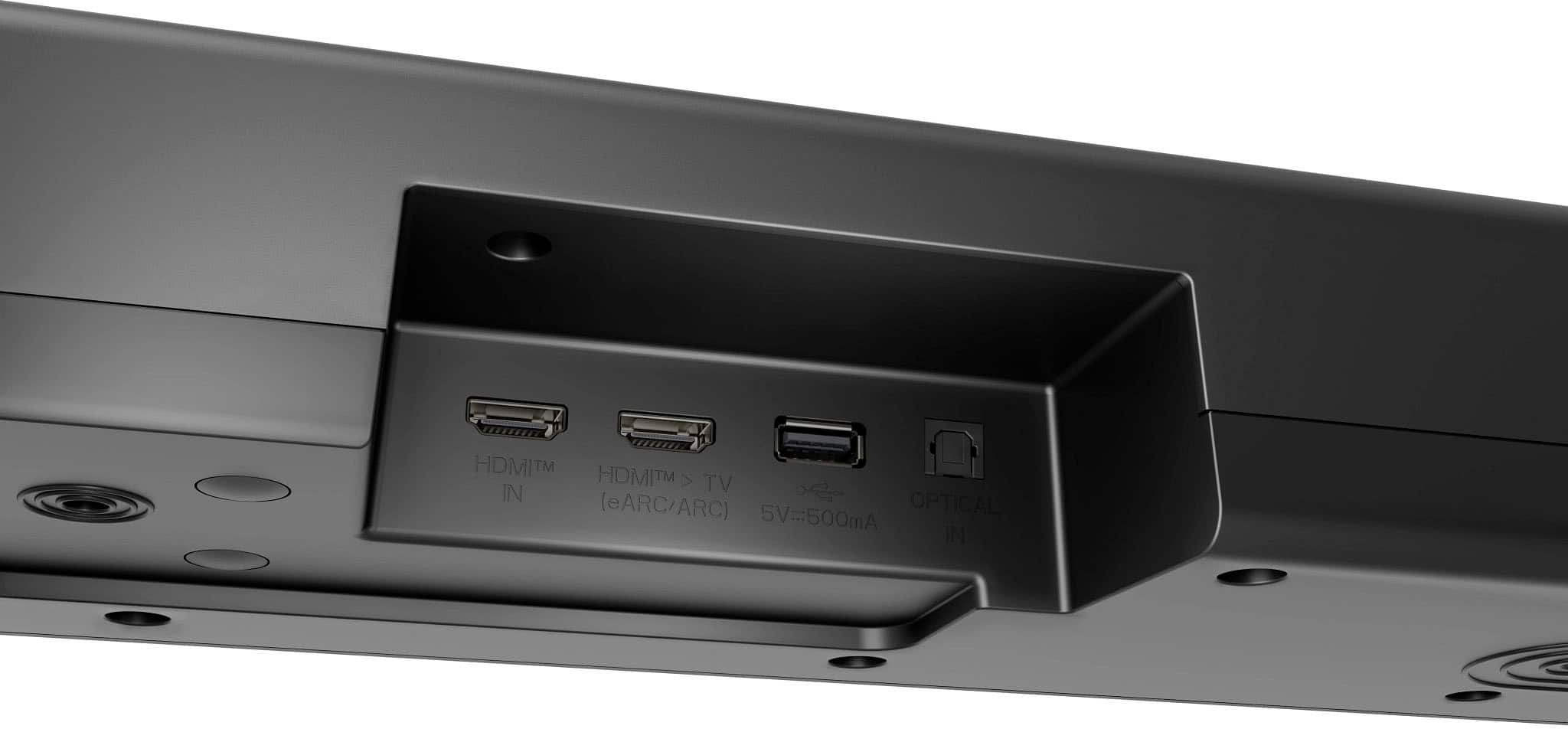
| HDMI eARC, Optical, Bluetooth 5.2, Wi-Fi | HDMI eARC, Optical, Bluetooth 4.0, Wi-Fi, AirPlay 2, Chromecast |
| Smart Features - Voice control and home automation integration | |
| LG TV integration, basic app control | Alexa, Google Home, Apple HomeKit, advanced app customization |
| Audio Formats Supported - Compatibility with modern content | |
| Dolby Atmos, DTS:X, all major formats | Dolby Atmos, DTS:X, MPEG-H, 360 Reality Audio |
| Setup Complexity - Time and effort required for optimal performance | |
| Plug-and-play with automatic wireless pairing | Requires precise positioning and calibration for best results |
| Upgrade Flexibility - Future expansion and component replacement options | |
| Modular design allows individual component upgrades | Single unit requires complete replacement if any part fails |
The LG S70TR ($399.99) offers significantly better value, providing a complete 5.1.1 surround system with wireless subwoofer and rear speakers for less than half the price of the Sennheiser AMBEO ($1,199.95) base unit alone. The LG delivers authentic surround sound through physical speakers, while the Sennheiser relies on virtualization technology that costs three times more.
The LG S70TR uses physical wireless rear speakers and a subwoofer to create true 5.1.1 surround sound, while the Sennheiser AMBEO uses advanced processing in a single soundbar to virtualize 7.1.4 surround effects. The LG provides authentic directional audio, while the Sennheiser creates the illusion of surround sound through sophisticated algorithms.
The LG S70TR is significantly better for gaming, featuring HDMI 2.1 support with VRR, ALLM, and 120Hz passthrough for lag-free performance. Its physical rear speakers provide precise directional audio crucial for competitive gaming. The Sennheiser AMBEO introduces processing delays unsuitable for competitive play and cannot match the directional accuracy of physical speakers.
The LG S70TR includes everything needed - soundbar, wireless subwoofer, and wireless rear speakers in one package. The Sennheiser AMBEO is a complete single-unit system, but most users will want to add Sennheiser's optional subwoofer ($699) for adequate bass response, significantly increasing the total cost.
The Sennheiser AMBEO works best in smaller, acoustically controlled rooms where its virtualization technology can effectively use wall reflections. The LG S70TR performs consistently in both small and large rooms because its physical speakers provide direct sound coverage regardless of room size or acoustic conditions.
The LG S70TR offers plug-and-play setup with automatic wireless pairing between components - just position the speakers and connect to your TV. The Sennheiser AMBEO requires precise positioning and a 10-minute room calibration process using built-in microphones, but this extra effort optimizes the sound for your specific room.
The Sennheiser AMBEO excels at music with its premium aluminum tweeters, sophisticated processing, and support for high-resolution streaming services like TIDAL Connect and AirPlay 2. The LG S70TR provides good music performance for the price with natural stereo separation and AI Sound Pro optimization, but cannot match the AMBEO's audiophile-grade components.
The Sennheiser AMBEO offers extensive smart home integration with Alexa, Google Home, and Apple HomeKit support. The LG S70TR focuses primarily on TV integration with WOW Orchestra for LG TVs and basic app control, with limited smart home connectivity compared to the Sennheiser.
The LG S70TR includes a dedicated 7-inch wireless subwoofer with 220W amplification, delivering deep bass down to 27Hz for impactful movie sound. The Sennheiser AMBEO has built-in bass drivers that only reach 38Hz, requiring the optional $699 subwoofer for comparable low-frequency performance.
Both soundbars support Dolby Atmos, but differently. The LG S70TR uses physical up-firing speakers in the center channel plus rear speakers for authentic overhead and surround effects. The Sennheiser AMBEO uses sophisticated virtualization to create the perception of 7.1.4 surround from its single unit, which works well but cannot match the authenticity of physical speaker placement.
The LG S70TR offers modular reliability - if one component fails, you can replace just that part rather than the entire system. The Sennheiser AMBEO is built with premium materials and receives software updates, but any hardware failure requires replacing the entire expensive unit. The LG's approach provides better repairability and lower long-term costs.
Choose the LG S70TR if you want authentic surround sound, game regularly, have space for multiple components, or prioritize value. Choose the Sennheiser AMBEO if you have severe space constraints, prioritize music over movies, want premium build quality, or prefer the elegance of a single-unit solution despite the higher cost.
We've done our best to create useful and informative comparisons to help you decide what product to buy. Our research uses advanced automated methods to create this comparison and perfection is not possible - please contact us for corrections or questions. These are the sites we've researched in the creation of this article: bestbuy.com - mynavyexchange.com - rixaudiovideoappliance.com - rtings.com - youtube.com - bestbuy.com - howards.siteontimedev.com - bestbuy.com - appliancestogousa.us - bestbuy.com - rtings.com - techradar.com - audioxpress.com - whathifi.com - upscaleaudio.com - soundstagesimplifi.com - global.sennheiser-hearing.com - sennheiser-hearing.com - audioadvice.com - abt.com - moon-audio.com

Privacy Policy
Terms and Conditions - Affiliate Policy
Home Security
© Copyright 2008-2026.
11816 Inwood Rd #1211, Dallas, TX 75244