


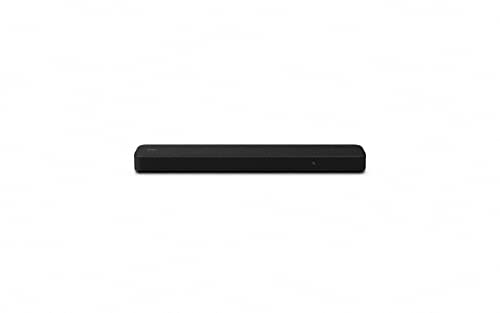
When you're tired of constantly adjusting your TV volume or squinting to catch dialogue over loud action scenes, it's time to consider a soundbar upgrade. But the soundbar market has evolved dramatically over the past few years, and choosing between options like the Sony HT-S2000 and the Klipsch Flexus Core 300 means understanding two completely different philosophies about home audio.
Both the Sony HT-S2000 and Klipsch Flexus Core 300 launched in 2023, but they arrived at a fascinating crossroads in soundbar technology. By 2023, manufacturers had largely solved the basic problem of "making TV audio better," and the industry split into two distinct paths: ultra-convenient plug-and-play solutions versus sophisticated home theater replacements.
The Sony HT-S2000 represents the refined simplicity approach – taking everything learned about compact soundbar design and distilling it into an effortless experience. Meanwhile, the Klipsch Flexus Core 300 pushed boundaries by becoming the world's first soundbar to integrate Dirac Live room correction, technology previously exclusive to high-end AV receivers costing thousands of dollars.
This technological divergence matters because it directly impacts how these soundbars will perform in your living room, and more importantly, how much effort you'll need to invest to get great sound.
Before diving into specific products, let's clarify what channel configurations actually mean for your listening experience. When you see "3.1" or "5.1.2," these numbers describe how many speakers are working to create your audio experience.
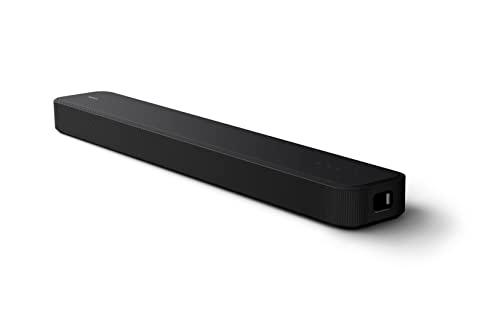
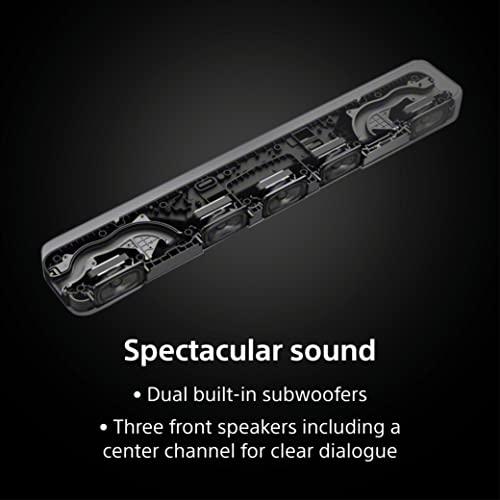
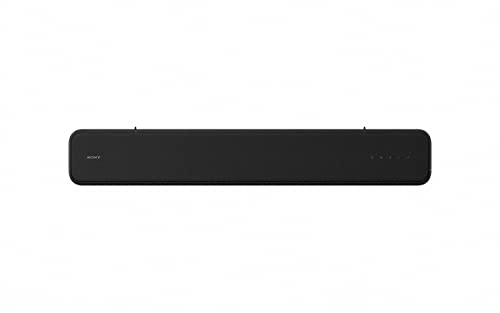
The Sony HT-S2000 uses a 3.1 configuration, meaning three front-facing channels (left, center, right) plus one subwoofer channel. The center channel is crucial here – it's specifically designed to handle dialogue, which is why dedicated center channels almost always sound clearer than stereo speakers trying to create a "phantom center" between left and right drivers.
The Klipsch Flexus Core 300 operates as a true 5.1.2 system. Those additional channels aren't just marketing numbers – they represent discrete audio streams. The "5" includes front left/right, center, and rear left/right channels. The ".1" is the subwoofer, and the ".2" indicates two height channels for Dolby Atmos overhead effects.
This difference is fundamental to how these soundbars approach surround sound. The Sony HT-S2000 must use psychoacoustic processing – basically audio tricks that fool your brain into perceiving surround effects from front-firing speakers. The Klipsch Flexus Core 300 can place sounds exactly where the movie director intended because it has physical speakers pointing in those directions.
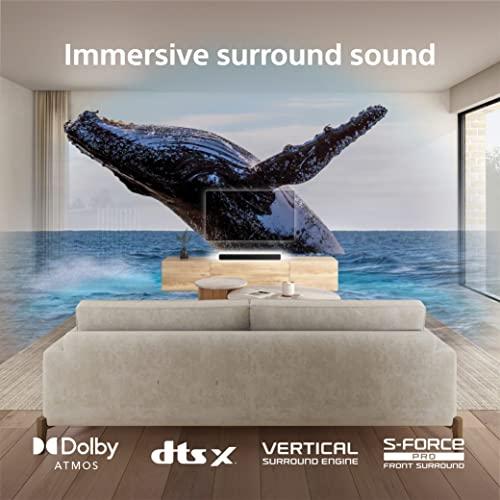
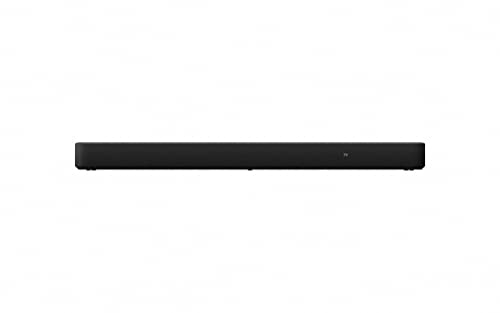
The Sony HT-S2000 achieves its surround effects through Sony's Vertical Surround Engine and S-Force PRO Front Surround processing. These aren't just fancy names – they represent sophisticated algorithms that analyze incoming audio and redistribute it across the soundbar's five drivers to create the illusion of height and surround effects.
Sony's X-Balanced Speaker Units deserve special mention. These rectangular drivers (rather than traditional circular ones) maximize the cone area within the soundbar's slim profile, allowing for greater sound pressure and reduced distortion. It's an elegant engineering solution to the challenge of fitting meaningful bass response into a compact enclosure.
The built-in dual subwoofers use side-firing ports to extend bass response beyond what you'd expect from the soundbar's dimensions. However, physics still applies – you're not going to get the deep, room-shaking bass that larger systems can produce. For dialogue-heavy content like news, sitcoms, and dramas, this limitation rarely matters. For action movies and music with complex bass lines, you'll notice the difference.
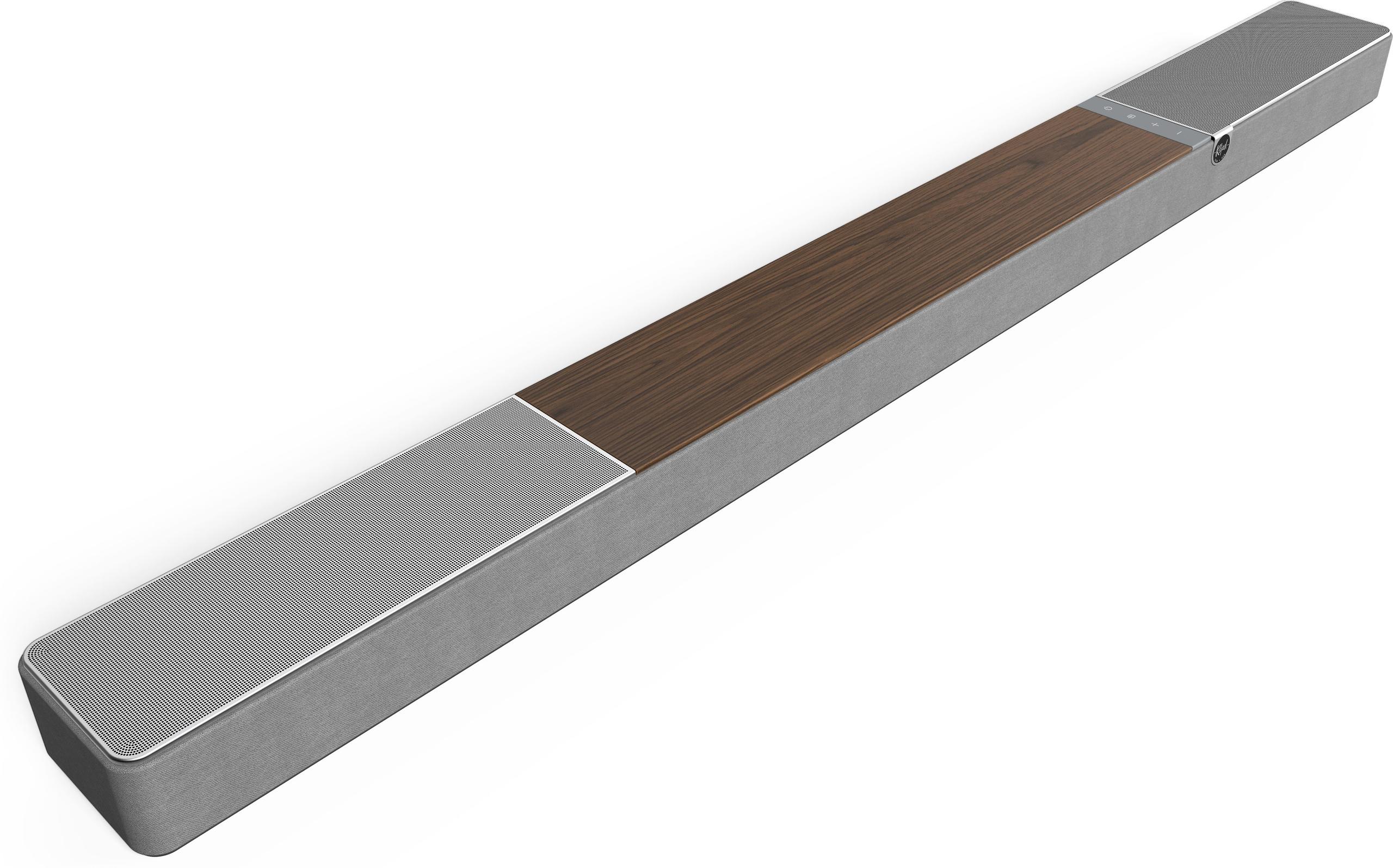
The Klipsch Flexus Core 300 takes a fundamentally different approach with its 13-speaker array. Four front-firing drivers handle the main stereo image, while two side-firing drivers create genuine surround width. The two up-firing drivers bounce sound off your ceiling to create height effects – these aren't virtual at all, but physical sound waves coming from above.
The horn-loaded tweeter in the center channel is pure Klipsch DNA. Horn loading increases efficiency and directivity, meaning dialogue cuts through complex soundtracks without digital processing. If you've ever struggled to hear conversations during loud movie scenes, this makes a noticeable difference.
Perhaps most impressive are the four built-in 4-inch subwoofer drivers. Most soundbars compromise bass response due to size constraints, but the Klipsch Flexus Core 300 dedicates significant internal volume to bass reproduction. The frequency response extends down to 43Hz independently, and the integrated subwoofers can reach 23Hz – that's deep enough for most home theater applications without needing an external subwoofer.
Here's where the Klipsch Flexus Core 300 truly differentiates itself. Room acoustics dramatically affect sound quality – your furniture, wall materials, room dimensions, and speaker placement all introduce coloration that can muddy bass, create harsh treble, or cause certain frequencies to disappear entirely.
Dirac Live room correction analyzes these acoustic anomalies using a calibration microphone and sophisticated algorithms, then creates custom filters to compensate. The process measures both magnitude response (how loud different frequencies are) and phase response (timing relationships between frequencies). Getting phase correction right is what separates professional room correction from simple EQ adjustments.
The included Limited Bandwidth license corrects up to 500Hz, which covers the most problematic frequency range for most rooms. Bass frequencies are where room acoustics cause the biggest issues, and 500Hz captures the critical range where your room's dimensions create standing waves and nulls.
Setting up Dirac Live requires patience and following the calibration process carefully, but the results can be transformative. I've heard the same soundbar sound dramatically different in different rooms, and room correction helps normalize that experience.
The Sony HT-S2000 includes no room correction beyond basic bass level adjustments. This isn't necessarily a limitation if you prioritize simplicity, but it means the soundbar's performance will vary significantly depending on your room's characteristics.
Both soundbars handle basic HDMI ARC connections, but their connectivity philosophies diverge sharply beyond the basics.
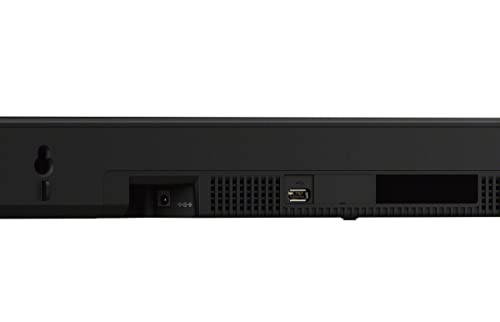
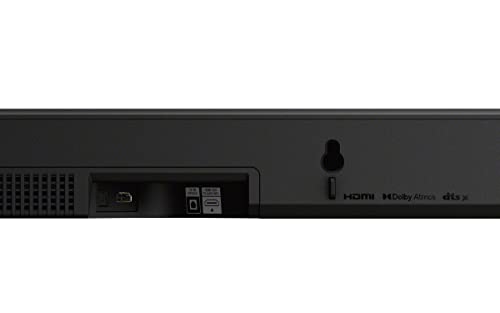
The Sony HT-S2000 keeps things straightforward with HDMI eARC/ARC, optical input, and Bluetooth 5.2 for music streaming. The HDMI implementation is output-only, meaning you can't use it as a hub for multiple sources – everything connects directly to your TV, then audio passes through to the soundbar. For most users, this simplifies setup and troubleshooting.
The Klipsch Flexus Core 300 includes full HDMI 2.1 support with 8K/60Hz and 4K/120Hz passthrough. This matters for gaming with PlayStation 5 or Xbox Series X, where Variable Refresh Rate (VRR) and Auto Low Latency Mode (ALLM) features require HDMI 2.1 bandwidth. If you're building a setup around the latest gaming consoles, this future-proofs your audio investment.
The streaming capabilities tell a similar story. The Sony HT-S2000 handles Bluetooth music streaming competently, supporting AAC and SBC codecs for decent wireless audio quality. The Klipsch Flexus Core 300 supports a comprehensive ecosystem including AirPlay 2, Google Cast, Spotify Connect, and Tidal Connect, plus Bluetooth 5.3 with more advanced codec support.
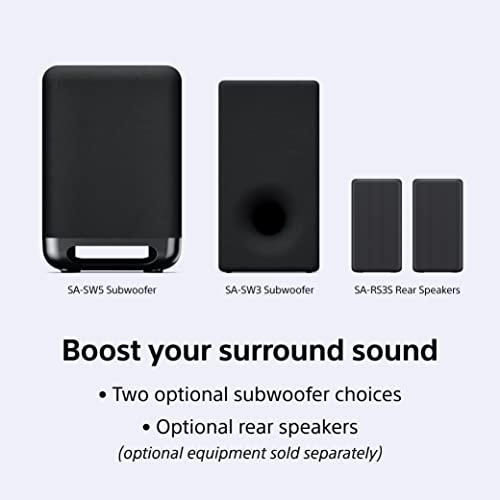
Both soundbars can expand into larger systems, but through different approaches. The Sony HT-S2000 works with Sony's SA-SW3 and SA-SW5 wireless subwoofers, plus SA-RS3S rear speakers. These additions can meaningfully improve the system's performance, particularly bass extension and rear surround effects.
The Klipsch Flexus Core 300 anchors a more comprehensive ecosystem. You can add Flexus Surr 200 wireless surrounds and up to two Flexus Sub 200 wireless subwoofers. Klipsch's proprietary wireless transport technology ensures low-latency connections across all components – a crucial factor for maintaining lip-sync accuracy.
The modularity question becomes important when considering long-term value. At the time of writing, the Sony HT-S2000 costs significantly less than the Klipsch Flexus Core 300, but adding Sony's wireless components reduces that price advantage. The Klipsch system's higher initial investment may prove more cost-effective if you plan to build a complete surround system over time.
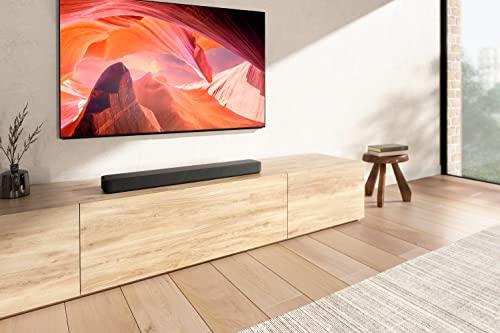
In smaller spaces, the Sony HT-S2000's virtual surround processing works surprisingly well. The psychoacoustic effects that create height and width illusions are most effective when you're sitting relatively close to the soundbar. The built-in subwoofers provide adequate bass response without overwhelming the space.
The Klipsch Flexus Core 300 might actually be overkill in very small rooms. Its 54-inch width could dominate a small TV stand, and its powerful output capability exceeds what most smaller spaces require. However, if you have the space and want maximum performance, the discrete channels still provide superior surround accuracy.
This is where the fundamental differences become most apparent. The Sony HT-S2000's virtual processing struggles in large spaces where you're sitting far from the soundbar or at extreme angles. The soundstage tends to collapse, and surround effects become less convincing.
The Klipsch Flexus Core 300 excels in larger rooms. The discrete side-firing and up-firing drivers maintain their effectiveness across wider listening positions, and the powerful bass response can fill larger volumes without strain. The room correction becomes even more valuable in larger spaces where acoustic challenges are typically more complex.
Modern gaming audio has become increasingly sophisticated, with many titles supporting Dolby Atmos and DTS:X for immersive experiences. The Sony HT-S2000 handles gaming audio competently, though its virtual processing means you won't get the precise positional accuracy that competitive gaming sometimes demands.
The Klipsch Flexus Core 300's discrete channels and HDMI 2.1 support make it better suited for serious gaming. The low-latency processing and 4K/120Hz passthrough ensure audio and video remain perfectly synchronized, while the discrete channels provide better positional audio for competitive advantages.
Budget-conscious upgraders who want meaningful improvement over TV speakers without breaking the bank. At the time of writing, the Sony HT-S2000 offers exceptional value for its performance level.
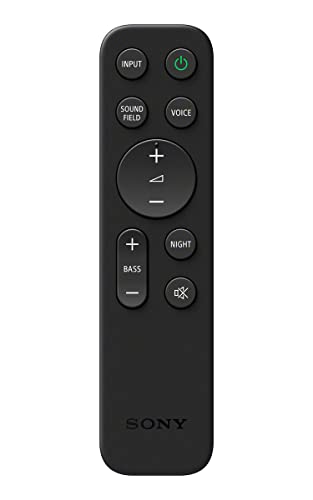
Simplicity seekers who want plug-and-play operation. If the idea of running calibration routines or adjusting multiple settings sounds frustrating, Sony's approach eliminates those complications.
Smaller space dwellers with TVs under 50 inches or limited room dimensions. The compact footprint and virtual processing work well in intimate settings.
Casual viewers whose content is primarily dialogue-heavy – news, sitcoms, basic cable programming. The dedicated center channel provides clear speech reproduction, which is often the most important upgrade from TV speakers.
Audio enthusiasts who understand that great sound requires proper setup and are willing to invest the time for optimal results. The Dirac Live calibration process rewards patience with significantly better sound quality.
Home theater builders who want audiophile-grade performance from a soundbar format. The discrete channels and powerful bass response rival traditional receiver-based systems.
Gamers and early adopters who need cutting-edge connectivity for the latest consoles and future content formats. The HDMI 2.1 support and advanced processing justify the premium for users with demanding requirements.
Large room owners with 55+ inch TVs and substantial listening distances. The Klipsch Flexus Core 300's power and discrete channel separation maintain effectiveness across wider areas.
Choosing between the Sony HT-S2000 and Klipsch Flexus Core 300 ultimately comes down to your priorities and listening philosophy. The Sony delivers immediate gratification – plug it in, and your TV instantly sounds better with minimal fuss. The Klipsch demands more investment, both financially and in setup time, but rewards that investment with genuinely superior audio performance.
At the time of writing, the price difference between these soundbars reflects their different target markets rather than simple feature scaling. The Sony HT-S2000 competes in the value-oriented segment where good-enough performance at an accessible price point drives purchasing decisions. The Klipsch Flexus Core 300 targets the premium segment where performance takes priority over cost considerations.
Both approaches have merit, and both soundbars execute their respective visions successfully. Your choice should align with your audio priorities, technical comfort level, and long-term plans for your entertainment system. Either way, you'll be getting substantially better sound than what your TV can provide on its own.
| Sony HT-S2000 | Klipsch Flexus Core 300 |
|---|---|
| Channel Configuration - Determines surround sound authenticity | |
| 3.1 channels (virtual surround processing) | True 5.1.2 channels (discrete surround speakers) |
| Total Drivers - More drivers enable better sound separation | |
| 5 active drivers with dual built-in subwoofers | 13 speakers including 4× built-in subwoofers |
| Dimensions - Critical for TV stand compatibility | |
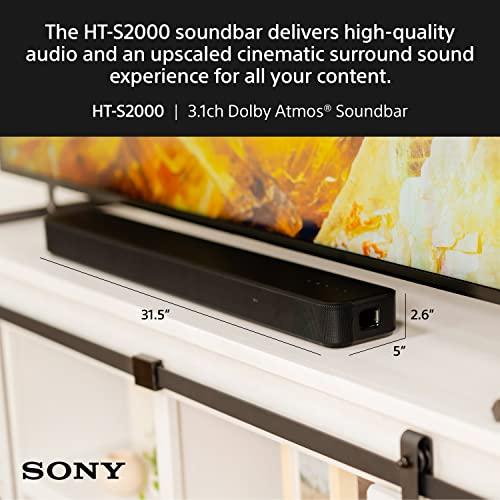
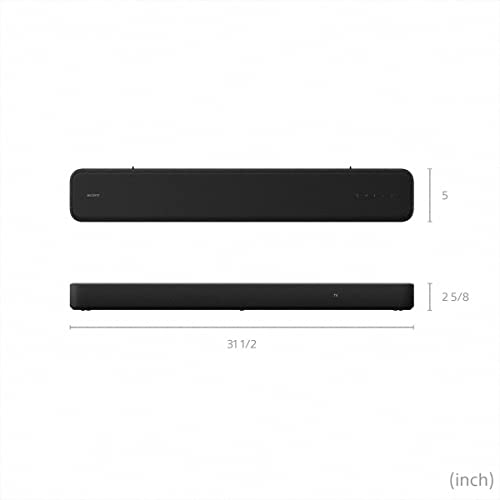
| 31.5" × 2.6" × 5" (fits smaller TVs) | 54" × 3.1" × 4.9" (requires large TV/stand) |
| Weight - Affects mounting and placement options | |
| 8.2 lbs (easy wall mounting) | 34.5 lbs (substantial mounting required) |
| Room Correction - Optimizes sound for your specific room | |
| None (basic bass level adjustment only) | Dirac Live up to 500Hz (professional-grade calibration) |
| HDMI Support - Future-proofs gaming and 8K content | |
| eARC/ARC only (no passthrough) | HDMI 2.1 with 8K/4K120Hz passthrough |
| Streaming Capabilities - Wireless music playback options | |
| Bluetooth 5.2 only (AAC/SBC codecs) | AirPlay 2, Google Cast, Spotify Connect, Tidal Connect |
| Bass Extension - Determines low-frequency impact | |
| Built-in dual subwoofers (adequate for dialogue) | 4× 4-inch subwoofers extending to 23Hz (cinema-level bass) |
| Setup Complexity - Time investment required for optimal performance | |
| Plug-and-play (single HDMI cable) | Manual Dirac Live calibration with included microphone |
| Expandability - System growth potential | |
| Sony wireless subwoofers and rear speakers | Full Flexus ecosystem with wireless surrounds and dual subs |
| Best Use Case - Primary scenarios where each excels | |
| Small-medium rooms, casual viewing, budget upgrades | Large rooms, home theater enthusiasts, audiophile performance |
The Sony HT-S2000 is better suited for small to medium-sized rooms due to its compact 31.5-inch width and 8.2-pound weight. Its virtual surround processing works more effectively in intimate spaces where you're sitting closer to the soundbar. The Klipsch Flexus Core 300 at 54 inches wide might overwhelm smaller TV setups and provides more power than most small rooms require.
Neither soundbar requires a separate subwoofer out of the box. The Sony HT-S2000 includes dual built-in subwoofers that provide adequate bass for most content, while the Klipsch Flexus Core 300 features four 4-inch built-in subwoofer drivers that deliver deeper bass extension down to 23Hz. However, both can be expanded with optional wireless subwoofers if you want even more bass impact.
The Sony HT-S2000 wins for simplicity with true plug-and-play operation requiring just a single HDMI cable connection to your TV. The Klipsch Flexus Core 300 requires manual calibration using the included microphone and Dirac Live room correction software, which takes additional time but results in optimized sound for your specific room.
The Klipsch Flexus Core 300 provides superior surround sound with true 5.1.2 channels and physical up-firing and side-firing speakers that create genuine overhead and surround effects. The Sony HT-S2000 uses virtual surround processing to simulate these effects from front-firing speakers, which works well but can't match the authenticity of discrete channels.
The Klipsch Flexus Core 300 is better for serious gaming thanks to HDMI 2.1 support with 8K/60Hz and 4K/120Hz passthrough, plus features like Variable Refresh Rate (VRR) and Auto Low Latency Mode (ALLM). The discrete channels also provide better positional audio. The Sony HT-S2000 handles gaming adequately but lacks these advanced gaming features.
Yes, but with different capabilities. The Sony HT-S2000 supports Bluetooth 5.2 streaming with AAC and SBC codecs for basic wireless music playback. The Klipsch Flexus Core 300 offers comprehensive streaming including AirPlay 2, Google Cast, Spotify Connect, and Tidal Connect, plus Bluetooth 5.3 with advanced codec support.
Both soundbars excel at dialogue thanks to dedicated center channels, but they achieve clarity differently. The Sony HT-S2000 uses digital processing to enhance speech, while the Klipsch Flexus Core 300 employs a horn-loaded tweeter in the center channel for natural voice reproduction that cuts through complex soundtracks without artificial processing.
The Klipsch Flexus Core 300 is specifically designed for serious home theater applications with its discrete 5.1.2 channels, Dirac Live room correction, and cinema-level bass response. The Sony HT-S2000 provides a solid home theater upgrade from TV speakers but is better suited for casual viewing rather than dedicated home theater rooms.
Both soundbars can be expanded, but through different ecosystems. The Sony HT-S2000 works with Sony's wireless subwoofers and rear speakers for enhanced surround sound. The Klipsch Flexus Core 300 anchors a more comprehensive Flexus system that can add wireless surround speakers and up to two wireless subwoofers for a complete multichannel experience.
Value depends on your priorities. The Sony HT-S2000 offers exceptional price-to-performance ratio for users wanting immediate TV audio improvement with minimal complexity. The Klipsch Flexus Core 300 provides premium audiophile performance that justifies its higher cost for users prioritizing sound quality and advanced features like room correction.
The Sony HT-S2000 performs optimally in small to medium rooms under 250 square feet where its virtual processing remains effective. The Klipsch Flexus Core 300 excels in larger rooms and open floor plans where its discrete channels and powerful output can fill bigger spaces while maintaining surround accuracy across wider listening positions.
Beginners should consider the Sony HT-S2000 for its plug-and-play simplicity and immediate improvement over TV speakers without any learning curve. The Klipsch Flexus Core 300 is better suited for users willing to invest time in proper setup and calibration to achieve audiophile-grade results, making it ideal for those ready to dive deeper into home audio.
We've done our best to create useful and informative comparisons to help you decide what product to buy. Our research uses advanced automated methods to create this comparison and perfection is not possible - please contact us for corrections or questions. These are the sites we've researched in the creation of this article: techradar.com - valueelectronics.com - youtube.com - videoandaudiocenter.com - whathifi.com - hometheaterhifi.com - youtube.com - sony.com - rtings.com - whathifi.com - rtings.com - helpguide.sony.net - electronics.sony.com - sony.com - dolby.com - sony.com - youtube.com - youtube.com - crutchfield.com - whathifi.com - avnirvana.com - hometechnologyreview.com - ecoustics.com - gearpatrol.com - klipsch.com - avsforum.com - youtube.com - avsforum.com - listenup.com - chowmain.software - klipsch.com - novis.ch - avsforum.com - klipsch.ca - lefflers.se - abt.com - sweetwater.com - wifihifi.com - klipsch.com - dirac.com

Privacy Policy
Terms and Conditions - Affiliate Policy
Home Security
© Copyright 2008-2026.
11816 Inwood Rd #1211, Dallas, TX 75244