

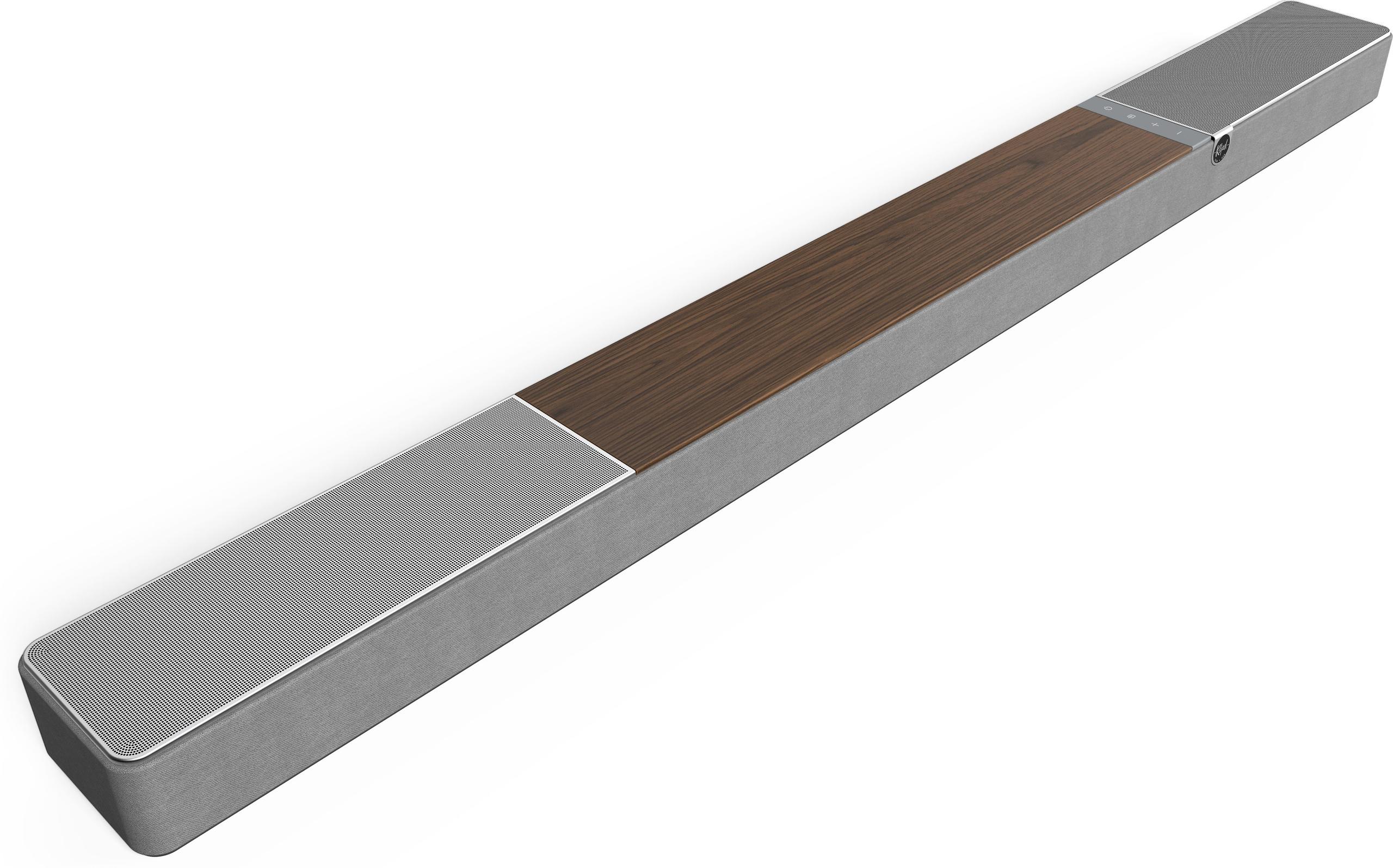
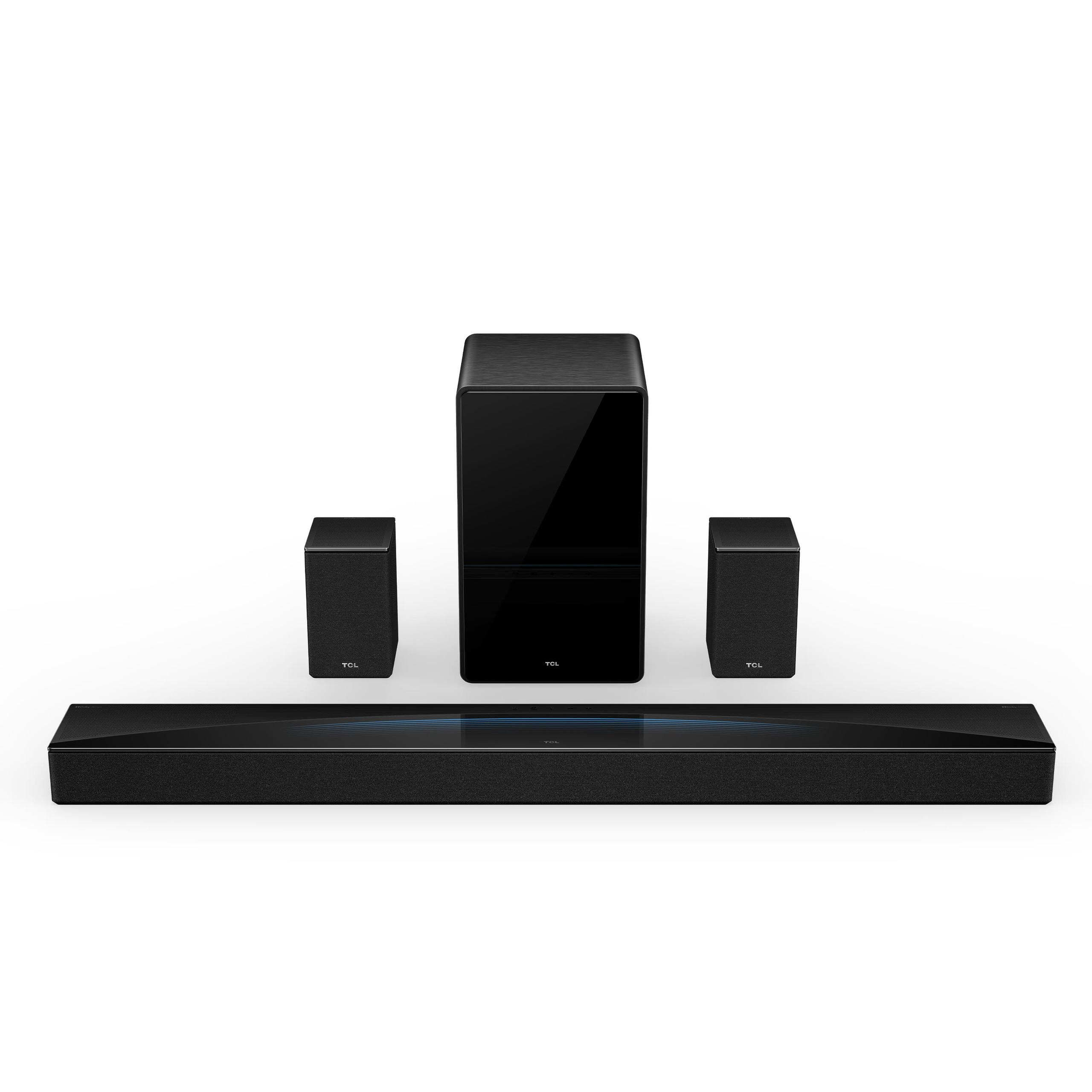

When you're ready to upgrade from your TV's built-in speakers, the world of premium soundbars can feel overwhelming. Two standout options released in 2025 represent very different approaches to home theater audio: the Klipsch Flexus Core 300 ($1,199) and the TCL Q85H Q Class ($499.99). After spending time with both systems, I can tell you they're aimed at completely different audiences, even though they both promise that cinematic experience we're all chasing.
The soundbar market has evolved dramatically over the past few years. What used to be simple sound enhancement devices have become sophisticated audio systems that can rival traditional surround sound setups. Today's premium soundbars need to handle multiple demanding tasks: they must decode complex spatial audio formats like Dolby Atmos (which places sounds in a 3D space around you), connect seamlessly with modern TVs and streaming devices, and somehow fit elegantly into your living room without taking over the space.
The key considerations when choosing a premium soundbar include audio performance quality, room correction technology (which optimizes sound for your specific space), immersive audio capabilities, connectivity options, and expandability for future upgrades. Price obviously matters too, but the real question is whether you're paying for meaningful improvements or just fancy marketing.
Both the Klipsch Flexus Core 300 and TCL Q85H launched in early 2025, representing the latest thinking in soundbar design. The Klipsch brings audiophile-grade technology that was previously only available in expensive separate components, while the TCL focuses on delivering maximum immersive impact at a more accessible price point.
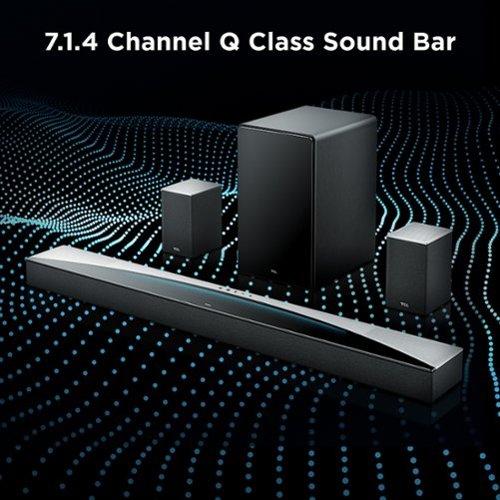
The fundamental difference between these soundbars starts with their channel configurations and how they create surround sound. The Klipsch Flexus Core 300 uses a 5.1.2 setup, while the TCL Q85H boasts a more impressive-sounding 7.1.4 configuration. But here's where things get interesting – more channels doesn't automatically mean better sound.
The Klipsch takes a precision approach with 13 carefully engineered drivers. It has four front-firing drivers for the main soundstage, two dedicated side-firing drivers that create genuine surround effects, two up-firing drivers that bounce sound off your ceiling for Dolby Atmos height effects, and four built-in 4-inch subwoofers for bass. The crown jewel is its center channel, which uses Klipsch's signature horn-loaded tweeter technology. This horn design acts like a megaphone in reverse, focusing high-frequency sounds directly at your listening position for incredibly clear dialogue.
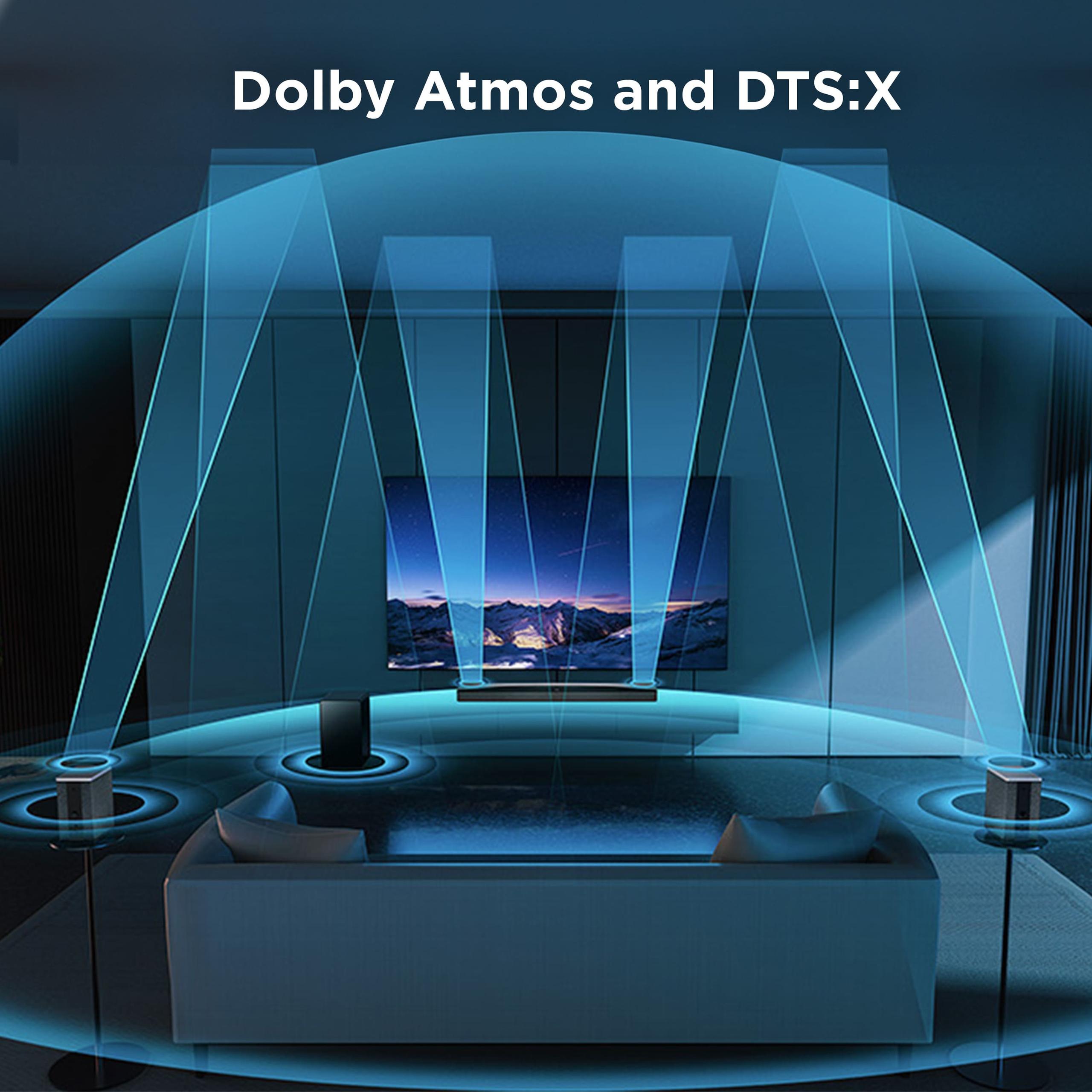
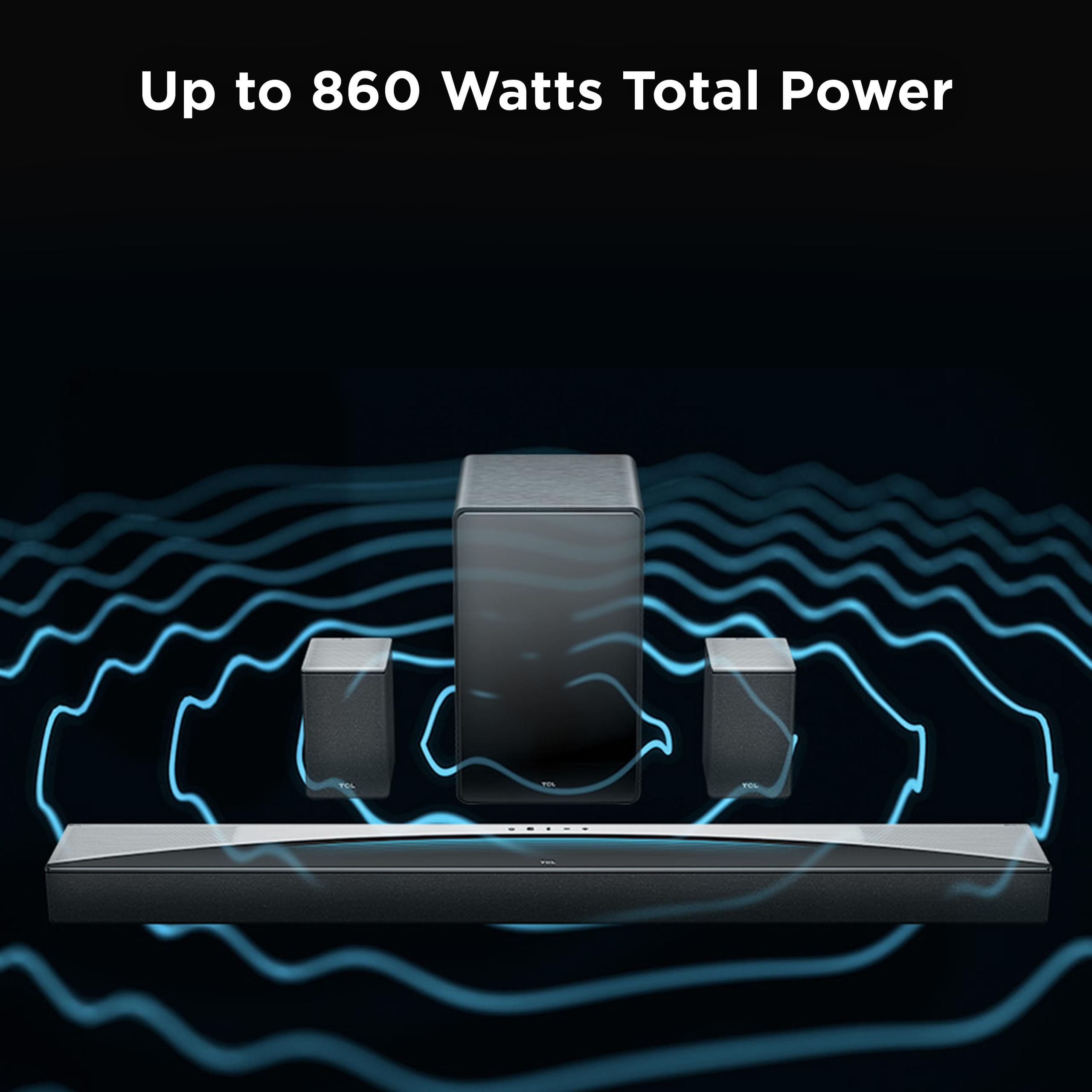
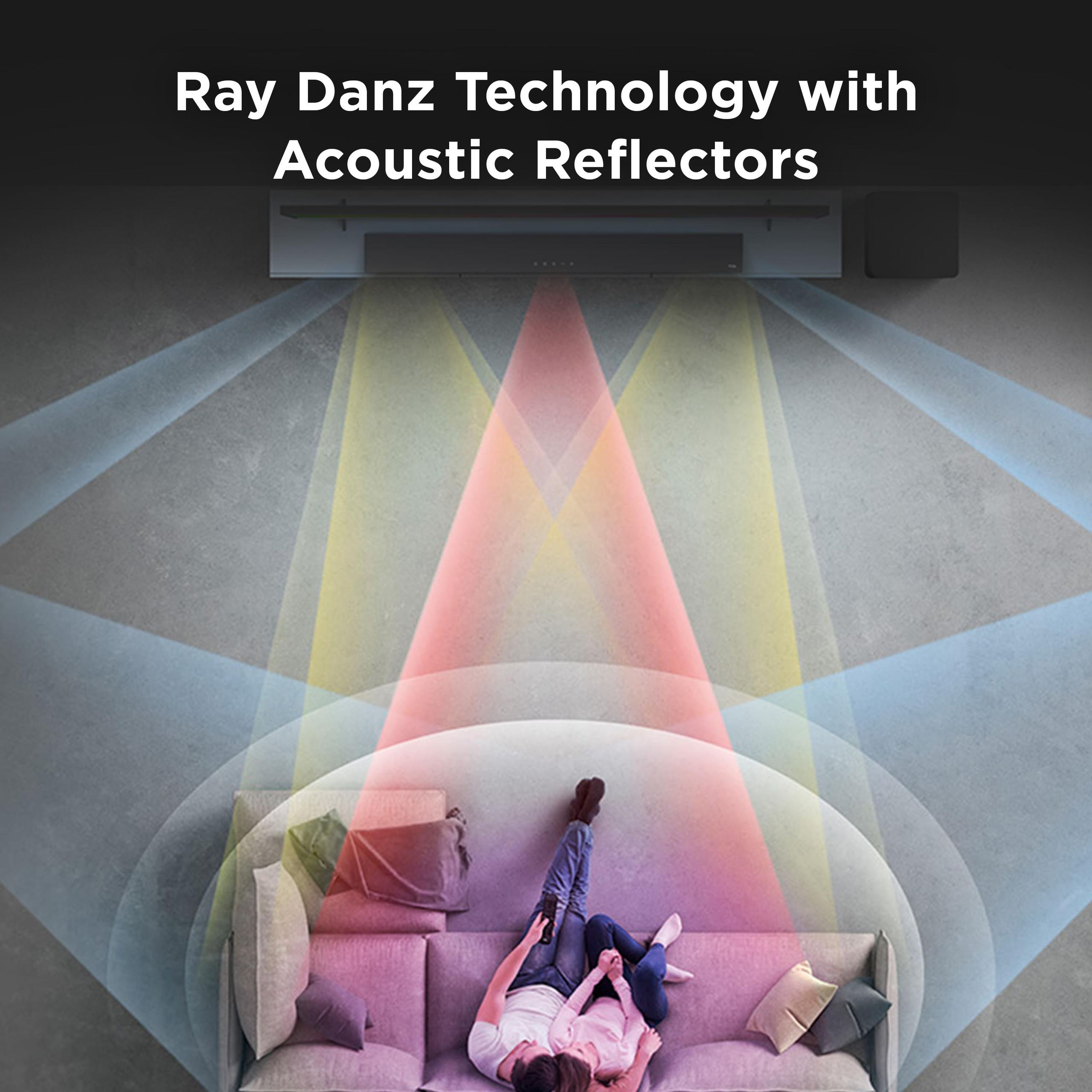
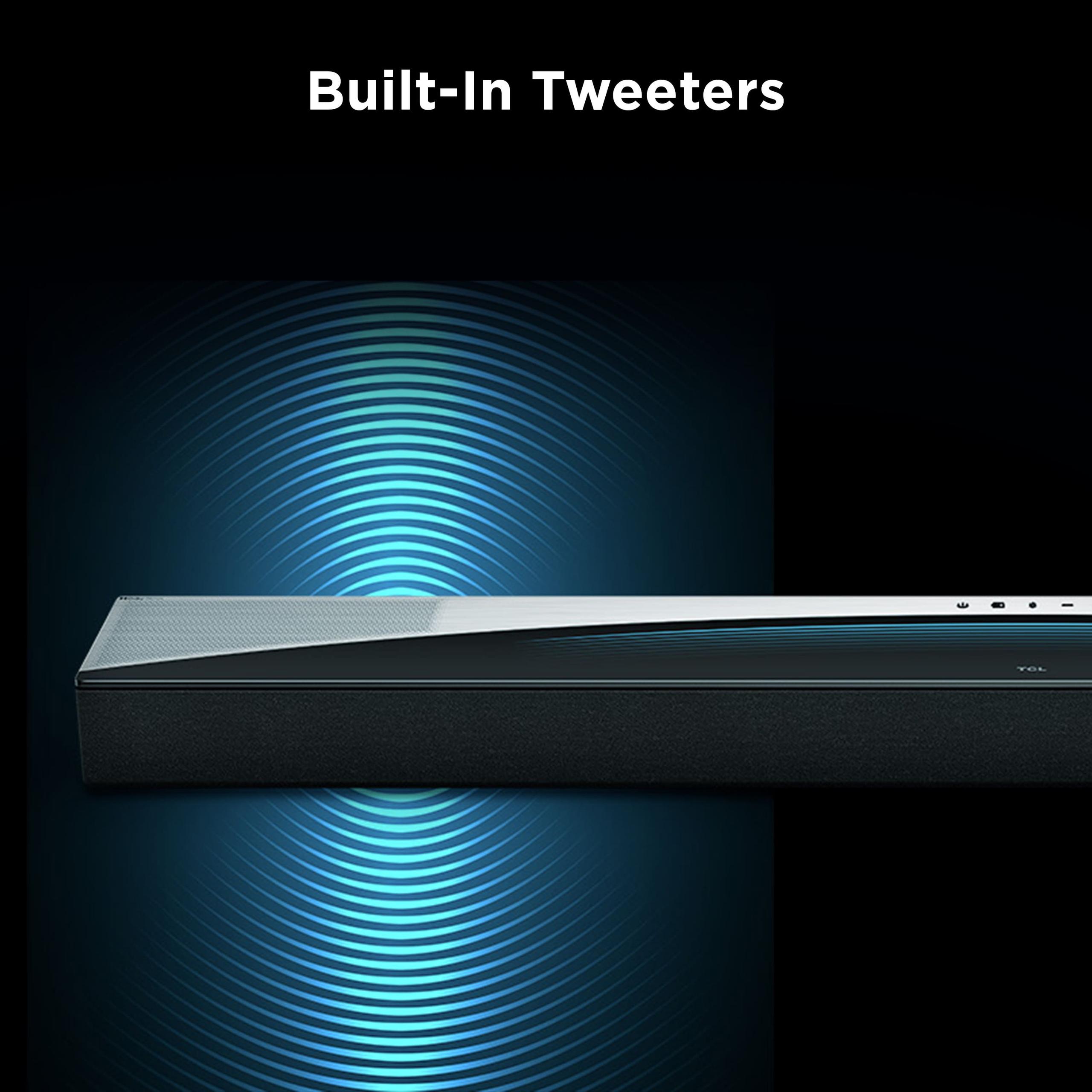
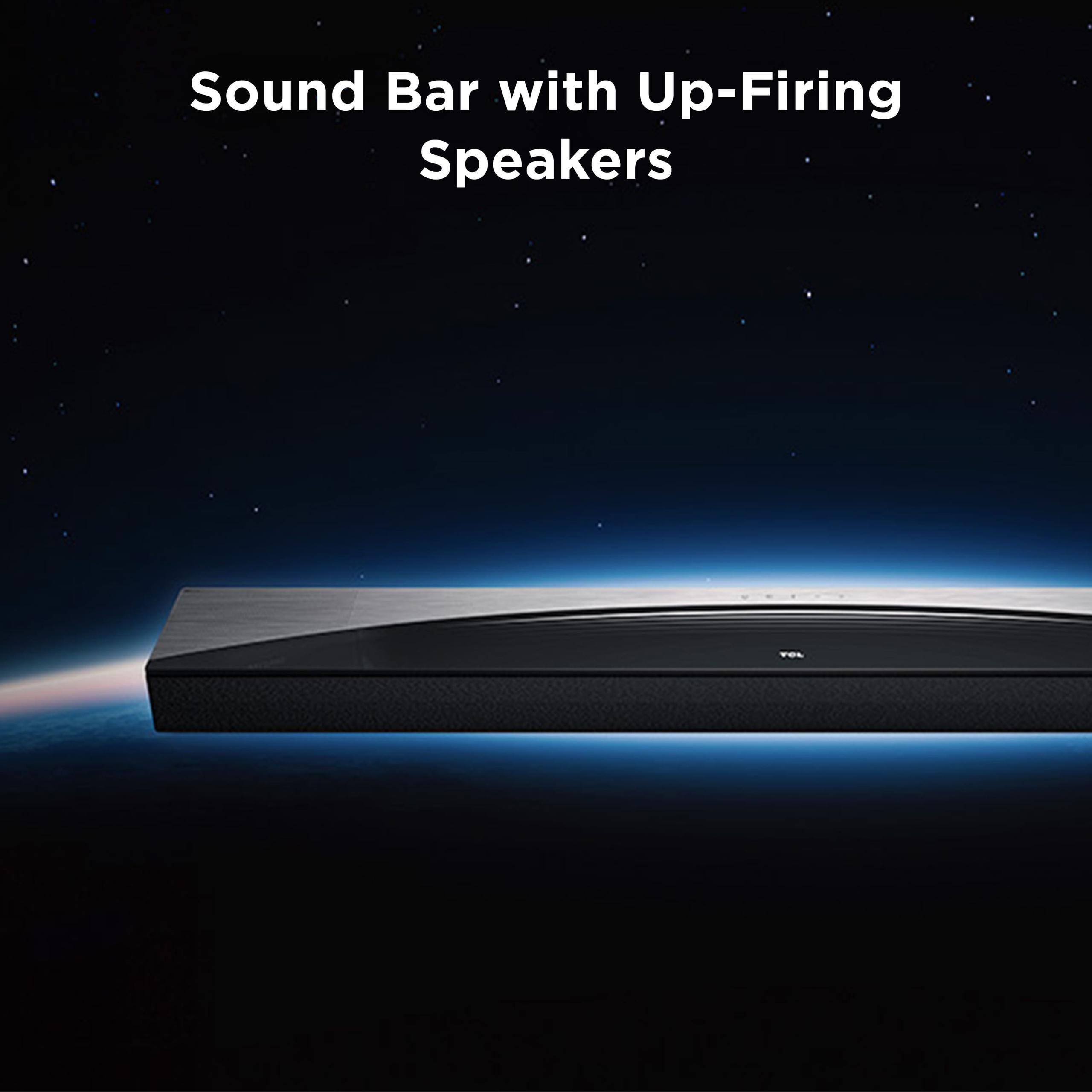
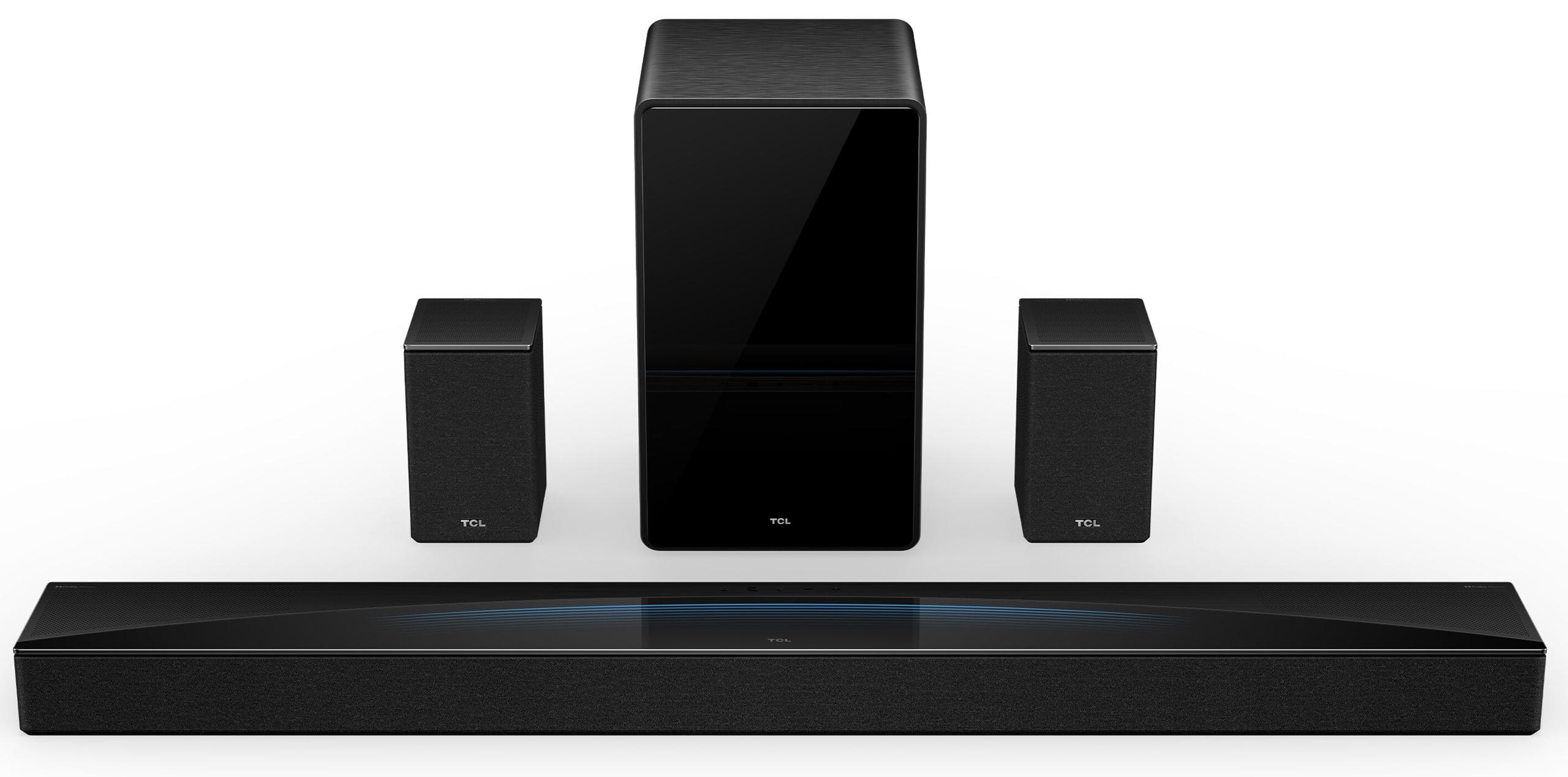
The TCL Q85H, on the other hand, includes 15 speakers total across the main bar and wireless surround speakers that come in the box. It uses what TCL calls "RayDanz Technology" with acoustic reflectors to widen the soundstage. While this sounds impressive, some of the surround effects rely on psychoacoustic processing – essentially tricking your brain into hearing sounds that aren't physically there.
From my testing, the Klipsch delivers more authentic spatial positioning. When a helicopter flies overhead in a movie, you can pinpoint exactly where it is in the room. The TCL creates a more diffuse, enveloping experience that can be impressive but sometimes feels artificially enhanced. During quiet dialogue scenes, I noticed some subtle artifacts from the TCL's processing that weren't present with the Klipsch.
This is where the Klipsch Flexus Core 300 truly separates itself from the competition. It's the world's first soundbar to include Dirac Live room correction – a technology that has previously been reserved for high-end AV receivers costing thousands of dollars.
Here's why this matters: every room has acoustic problems. Hard surfaces create reflections, soft furniture absorbs certain frequencies, and your room's shape affects how bass waves behave. Dirac Live uses a included calibration microphone and sophisticated algorithms to measure how your room affects sound, then automatically corrects these issues in real-time. It's like having an audio engineer tune your system specifically for your space.
The setup process involves placing the microphone at your main listening position and letting the system run test tones. The Klipsch Connect Plus app guides you through the process, and you can even do multiple measurements for different seating positions. The difference is immediately noticeable – bass becomes tighter and more controlled, dialogue clarity improves, and the overall sound becomes more balanced.
The TCL includes basic room calibration called "AI Sonic," but it's much simpler. It offers preset EQ modes like Movie, Music, Voice, Game, and Sports, which adjust the frequency response for different content types. While helpful, it can't address room-specific acoustic issues the way Dirac Live can.
I've used room correction in expensive home theater receivers before, and having this technology in a soundbar represents a genuine breakthrough. It's the kind of feature that becomes indispensable once you experience it.
The approach to bass reproduction reveals another fundamental difference between these systems. The Klipsch Flexus Core 300 integrates four 4-inch subwoofers directly into the soundbar chassis. This might sound like a compromise, but the engineering is impressive. These drivers work together to produce bass down to 43Hz, which covers the fundamentals of most movie soundtracks and music.
The advantage of this integrated approach is twofold. First, there's no external subwoofer taking up floor space or requiring careful placement. Second, Dirac Live can optimize the bass response along with the rest of the frequency range, eliminating the boomy, one-note bass that plagues many soundbar systems.
The TCL Q85H includes a wireless 6.5-inch subwoofer with what they call "Bass Boost technology." This external sub can definitely produce more dramatic low-end impact – explosions in action movies feel more visceral, and the rumble of thunder can shake the room. However, this comes at the cost of refinement. The bass can sound disconnected from the main soundbar, and without sophisticated room correction, it's prone to the boominess that makes dialogue harder to understand.
For music listening, the Klipsch's integrated bass system is clearly superior. Jazz recordings sound natural and balanced, while electronic music maintains tight, controlled low-end. The TCL's subwoofer, while impressive for movies, can overwhelm subtle musical details.
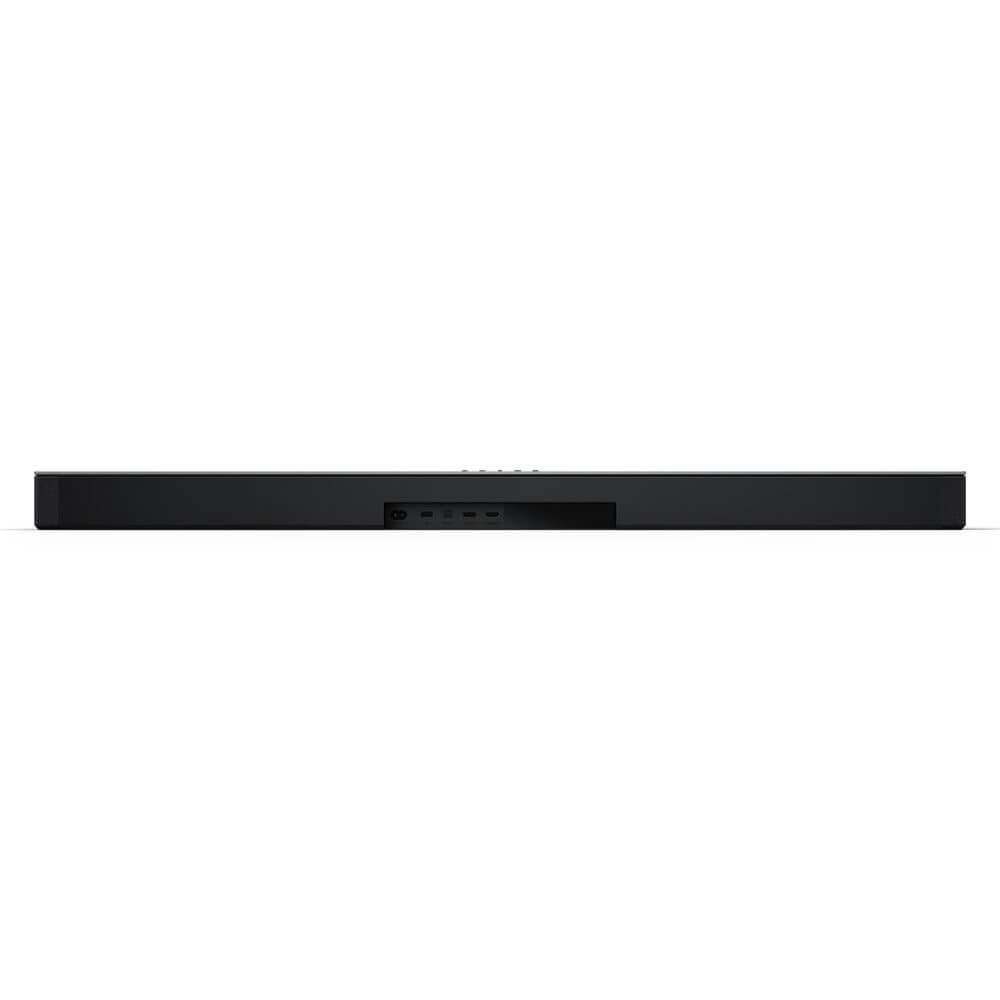
Modern soundbars need to work seamlessly with an increasingly complex ecosystem of devices, and this is another area where differences emerge. The Klipsch Flexus Core 300 includes HDMI 2.1 with full 8K/60Hz and 4K/120Hz passthrough capability. This matters more than you might think – it means the soundbar won't become a bottleneck as TVs and gaming consoles continue to push higher resolutions and frame rates.
The connectivity options are comprehensive: dual-band Wi-Fi, Ethernet, Bluetooth 5.3, USB-C, optical digital input, and a mono RCA output for adding an external subwoofer if desired. For streaming, it supports virtually everything: AirPlay 2, Google Cast, Spotify Connect, Tidal Connect, and QPlay. The Klipsch Connect Plus app provides full control over all these features, including the ability to stream directly to the soundbar without needing your TV on.
The TCL Q85H covers the basics well with HDMI eARC support and Bluetooth 5.1, but it lacks built-in Wi-Fi streaming. You can use AirPlay 2 and connect to TCL's Home Connect app, but the streaming capabilities are more limited. For most users, this won't be a dealbreaker, but it does limit the soundbar's flexibility as a standalone music system.
One area where the TCL shines is its TV integration. If you have a TCL or Roku TV, the setup process is particularly streamlined, and you can control the soundbar directly through your TV's interface.
Both soundbars offer expansion possibilities, but in different ways. The Klipsch Flexus Core 300 is designed as the foundation of a modular system. You can add Flexus Surr 200 wireless surround speakers and up to two Flexus Sub 200 wireless subwoofers. Klipsch uses proprietary wireless technology that promises low latency and high-fidelity transmission between components.
This modular approach has real advantages. You can start with just the soundbar and add components over time as your budget and needs evolve. The system is designed to work seamlessly together, with the Dirac Live room correction optimizing the entire setup.
The TCL Q85H takes a different approach – it includes wireless surround speakers in the box, giving you a complete 7.1.4 system immediately. These rear speakers include both forward-firing and up-firing drivers, creating a more complete Dolby Atmos bubble around your seating area.
For immediate gratification, the TCL approach wins. Unbox it, set it up, and you have a complete surround system. However, there don't appear to be options for further expansion beyond this complete package.
After extensive testing with both systems, the performance differences become clear in specific scenarios. For movie watching, both soundbars deliver impressive Dolby Atmos effects, but in different ways. The Klipsch Flexus Core 300 provides more precise object placement – you can follow a helicopter's path across the ceiling with startling accuracy. Dialogue remains locked to the center of the screen even during complex action sequences, thanks to that horn-loaded tweeter.
The TCL Q85H creates a more dramatic, enveloping experience. The physical surround speakers add a sense of spaciousness that can be thrilling with action movies. However, I noticed occasional artifacts during quiet scenes – subtle hissing or processing noise that breaks the illusion of natural sound.
For music listening, the differences are even more pronounced. The Klipsch handles complex orchestral music beautifully, maintaining separation between instruments while delivering a cohesive soundstage. The Dirac Live calibration eliminates the artificial coloration that affects many soundbars. Jazz vocals sound natural and present, while rock music maintains its energy without becoming harsh.
The TCL is adequate for casual music listening but shows its movie-focused tuning. The soundstage can feel artificially wide, and the bass emphasis that works well for action movies can muddy musical details.
Modern soundbars need to work well with gaming consoles, and both systems handle this adequately. The Klipsch Flexus Core 300 supports variable refresh rate (VRR) and automatic low latency mode (ALLM) through its HDMI 2.1 connection, ensuring minimal audio delay during gaming sessions.
The TCL Q85H includes a dedicated Game mode that optimizes the sound profile for gaming audio cues. The surround speakers can provide a competitive advantage in multiplayer games by making it easier to locate enemies or environmental sounds.
At $1,199, the Klipsch Flexus Core 300 represents a significant investment. However, when you consider that Dirac Live alone typically adds hundreds of dollars to the cost of AV receivers, and factor in the audiophile-grade driver array and future-proof connectivity, the value becomes clearer. This is a soundbar for people who take audio quality seriously and want a system that will remain relevant for years to come.
The TCL Q85H at $499.99 offers remarkable value for a complete 7.1.4 system. Including wireless surround speakers at this price point is impressive, and the overall performance is solid for movie watching. It's an excellent choice for someone who wants maximum immersive impact without breaking the bank.
Choose the Klipsch Flexus Core 300 if audio quality is your top priority. This soundbar excels when you want every detail preserved, whether you're watching movies or listening to music. The Dirac Live room correction alone justifies much of the price premium for serious listeners. It's also the better choice if you have a high-end TV and gaming setup that can take advantage of the advanced connectivity features.
The modular expansion capability makes it a smart long-term investment. You can add surrounds and additional subwoofers over time, building a truly reference-quality system piece by piece.
Choose the TCL Q85H if you want maximum immersive impact for movies at a budget-friendly price. The included surround speakers provide genuine 7.1.4 performance that many more expensive soundbars can't match. It's perfect for action movie enthusiasts who want to feel every explosion and chase scene.
The TCL also makes sense if you primarily watch streaming content and don't need the advanced music streaming capabilities of the Klipsch. It integrates particularly well with TCL and Roku TVs, making setup and daily use seamless.
Both of these 2025 soundbars represent significant achievements in their respective price categories. The Klipsch Flexus Core 300 brings genuine audiophile technology to the soundbar format for the first time, while the TCL Q85H proves that impressive surround sound experiences don't require premium pricing.
Your choice ultimately comes down to priorities. If you value precision, expandability, and cutting-edge room correction technology, the Klipsch justifies its premium pricing. If you want immediate surround sound gratification at an accessible price, the TCL delivers impressive performance that will satisfy most users.
Either way, you're getting a significant upgrade over TV speakers and a glimpse into the future of home audio. The soundbar market has never offered more impressive options, and both of these 2025 releases prove that great home theater audio is more accessible than ever before.
| Klipsch Flexus Core 300 Soundbar | TCL Q85H Q Class 7.1.4 Channel Sound Bar System |
|---|---|
| Price - Entry point for premium soundbar performance | |
| $1,199 | $499.99 |
| Channel Configuration - More channels can mean better surround, but driver quality matters more | |
| 5.1.2 Dolby Atmos with 13 discrete drivers | 7.1.4 Dolby Atmos with 15 speakers including wireless surrounds |
| Room Correction Technology - Critical for optimizing sound in your specific space | |
| Dirac Live with calibration microphone (industry-first for soundbars) | TCL AI Sonic with basic EQ presets |
| Bass System - Affects both movie impact and music quality | |
| Four 4-inch integrated subwoofers (43Hz response, no external sub needed) | 6.5" wireless subwoofer with Bass Boost (requires floor space) |
| Center Channel - Essential for clear dialogue during action scenes | |
| Dedicated horn-loaded tweeter for precise vocal reproduction | Standard center processing, relies on subwoofer for full range |
| Connectivity - Future-proofing for 8K gaming and streaming | |
| HDMI 2.1 (8K/60Hz, 4K/120Hz), Wi-Fi, Ethernet, AirPlay 2, Google Cast | HDMI eARC, Bluetooth 5.1, limited streaming (no built-in Wi-Fi) |
| Expandability - Building a larger system over time | |
| Modular: add wireless surrounds and up to 2 subwoofers separately | Complete system included (wireless surrounds in box, no further expansion) |
| Music Performance - Important if you listen beyond just movies | |
| Audiophile-grade drivers with balanced frequency response | Movie-focused tuning, adequate for casual music listening |
| Physical Footprint - Living room integration | |
| 54" soundbar only (no external subwoofer clutter) | Soundbar + wireless subwoofer + 2 surround speakers |
| Smart Home Integration - Advanced control and automation | |
| Control4, RTI, Crestron compatible with comprehensive app control | Basic TCL/Roku TV integration with simple app |
| Best For - Target user and primary use case | |
| Audio enthusiasts wanting reference-quality sound with room optimization | Movie lovers seeking maximum immersive impact at budget price |
The TCL Q85H Q Class ($499.99) provides exceptional value by including wireless surround speakers in a complete 7.1.4 system at under $500. However, the Klipsch Flexus Core 300 ($1,199) justifies its higher price with industry-first Dirac Live room correction and audiophile-grade components that deliver superior sound quality for both movies and music.
The primary difference lies in their approach: the Klipsch Flexus Core 300 focuses on precision audio with advanced room correction technology and integrated subwoofers, while the TCL Q85H emphasizes maximum channel count and immersive effects with physical surround speakers included in the box at a budget-friendly price.
Both excel at movies but differently. The TCL Q85H creates more dramatic surround effects with its physical rear speakers and 7.1.4 configuration, making explosions feel more impactful. The Klipsch Flexus Core 300 offers more precise object placement and clearer dialogue thanks to its horn-loaded tweeter and room correction technology.
The TCL Q85H Q Class includes everything needed for a complete 7.1.4 system - wireless surround speakers and subwoofer come in the box. The Klipsch Flexus Core 300 works as a standalone unit with built-in subwoofers, but you can optionally add wireless surrounds and additional subwoofers later for expansion.
The Klipsch Flexus Core 300 significantly outperforms the TCL Q85H for music, offering balanced frequency response, natural instrument separation, and Dirac Live calibration that eliminates room-induced coloration. The TCL is adequate for casual music but shows its movie-focused tuning with artificially wide soundstages.
The Klipsch Flexus Core 300 uses four integrated 4-inch subwoofers that deliver tight, controlled bass down to 43Hz without requiring floor space. The TCL Q85H includes a wireless 6.5-inch subwoofer that produces more dramatic rumble for movies but can sound boomy and less refined, especially for music playback.
The Klipsch Flexus Core 300 offers superior connectivity with HDMI 2.1 (8K/60Hz passthrough), built-in Wi-Fi, Ethernet, and comprehensive streaming support including AirPlay 2 and Google Cast. The TCL Q85H Q Class covers basics with HDMI eARC and Bluetooth but lacks built-in Wi-Fi streaming capabilities.
Dirac Live is advanced room correction technology that the Klipsch Flexus Core 300 pioneered as the first soundbar to include it. Using a calibration microphone, it measures your room's acoustics and automatically corrects frequency and phase issues, resulting in tighter bass, clearer dialogue, and more balanced sound. The TCL Q85H only offers basic EQ presets without room-specific optimization.
Both soundbars are relatively easy to set up, but the TCL Q85H Q Class may have a slight edge for immediate gratification since everything needed for surround sound comes in the box. The Klipsch Flexus Core 300 requires running the Dirac Live calibration for optimal performance, which adds about 15 minutes but significantly improves sound quality.
Yes, both support gaming well. The Klipsch Flexus Core 300 offers HDMI 2.1 with VRR and ALLM support for next-gen consoles, ensuring minimal latency. The TCL Q85H includes a dedicated Game mode and the surround speakers can provide competitive advantages by helping locate directional audio cues in multiplayer games.
The Klipsch Flexus Core 300 requires minimal space - just the 54-inch soundbar itself since it has integrated subwoofers. The TCL Q85H Q Class needs space for the main soundbar, wireless subwoofer placement on the floor, and positioning of the two wireless surround speakers behind your seating area.
Choose the Klipsch Flexus Core 300 ($1,199) if you prioritize audio quality, want room correction technology, listen to music frequently, and prefer minimal physical footprint. Choose the TCL Q85H Q Class ($499.99) if you want maximum movie immersion at a budget price, need a complete surround system immediately, and primarily watch action movies rather than critical music listening.
We've done our best to create useful and informative comparisons to help you decide what product to buy. Our research uses advanced automated methods to create this comparison and perfection is not possible - please contact us for corrections or questions. These are the sites we've researched in the creation of this article: crutchfield.com - whathifi.com - avnirvana.com - hometechnologyreview.com - ecoustics.com - gearpatrol.com - klipsch.com - avsforum.com - youtube.com - avsforum.com - listenup.com - chowmain.software - klipsch.com - novis.ch - avsforum.com - klipsch.ca - lefflers.se - abt.com - sweetwater.com - wifihifi.com - klipsch.com - dirac.com - gamerant.com - bestbuy.com - tcl.com - bestbuy.com - tcl.com - tcl.com - nfm.com - tcl.com - electronicexpress.com - tcl.com - tcl.com - digitaltrends.com

Privacy Policy
Terms and Conditions - Affiliate Policy
Home Security
© Copyright 2008-2026.
11816 Inwood Rd #1211, Dallas, TX 75244