

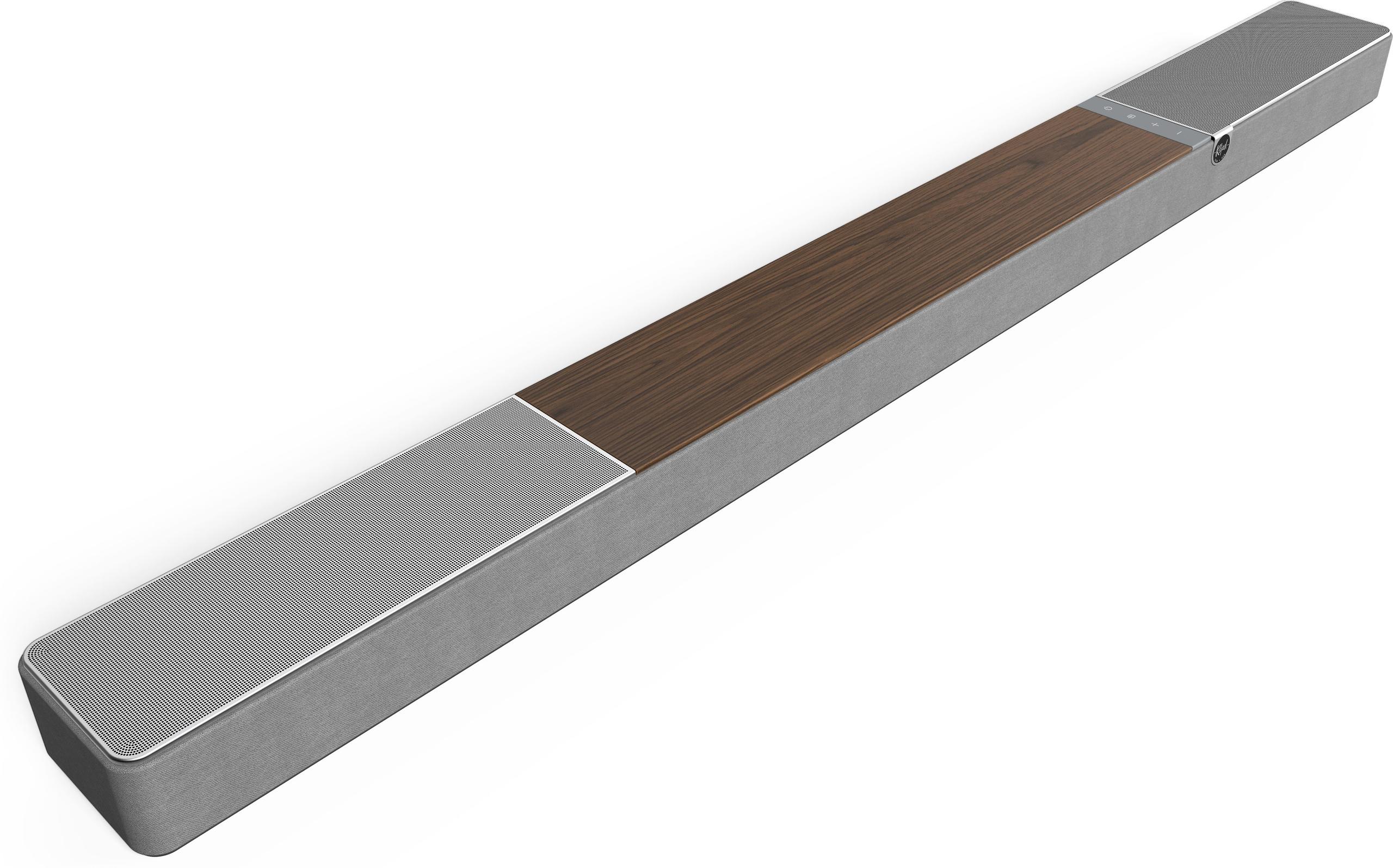
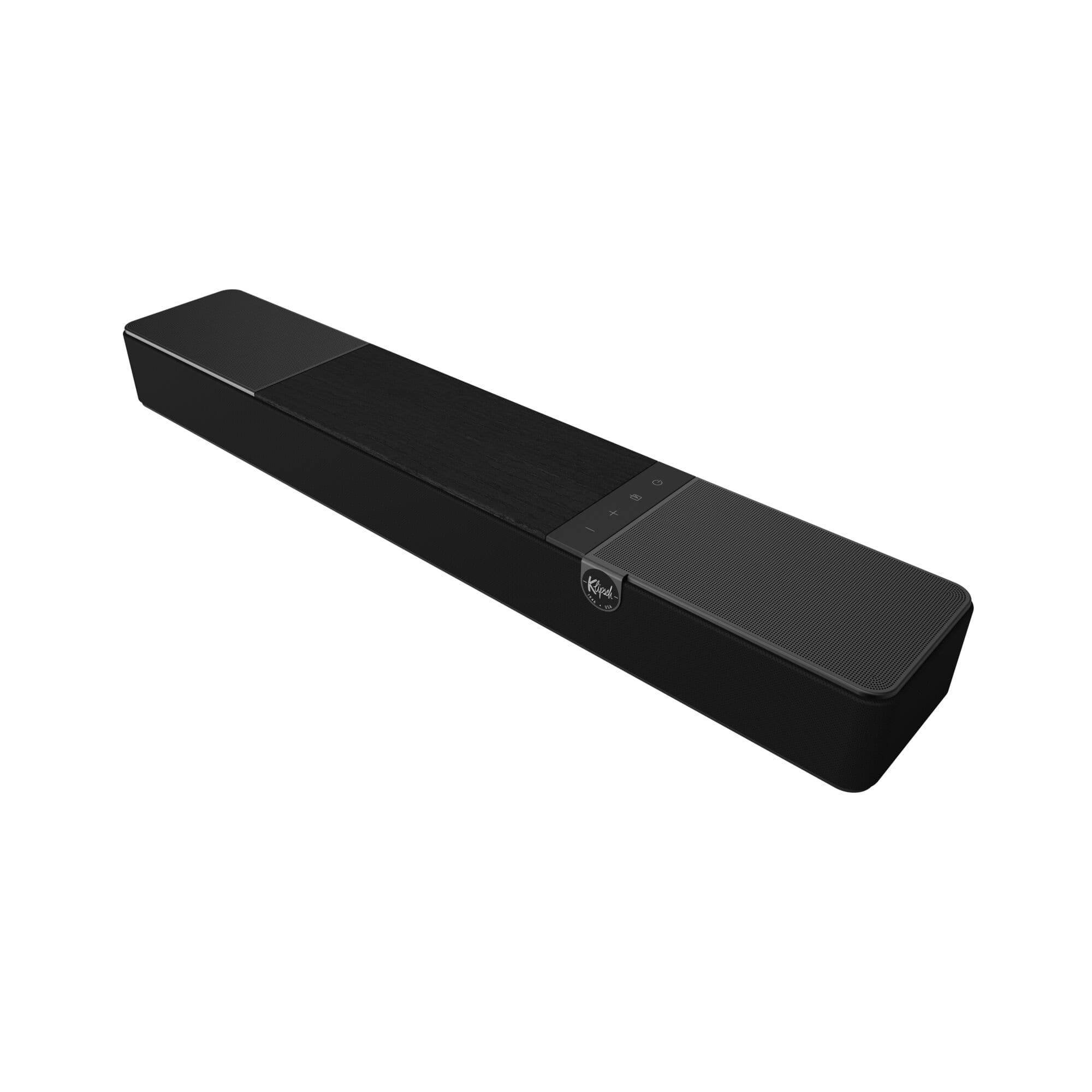

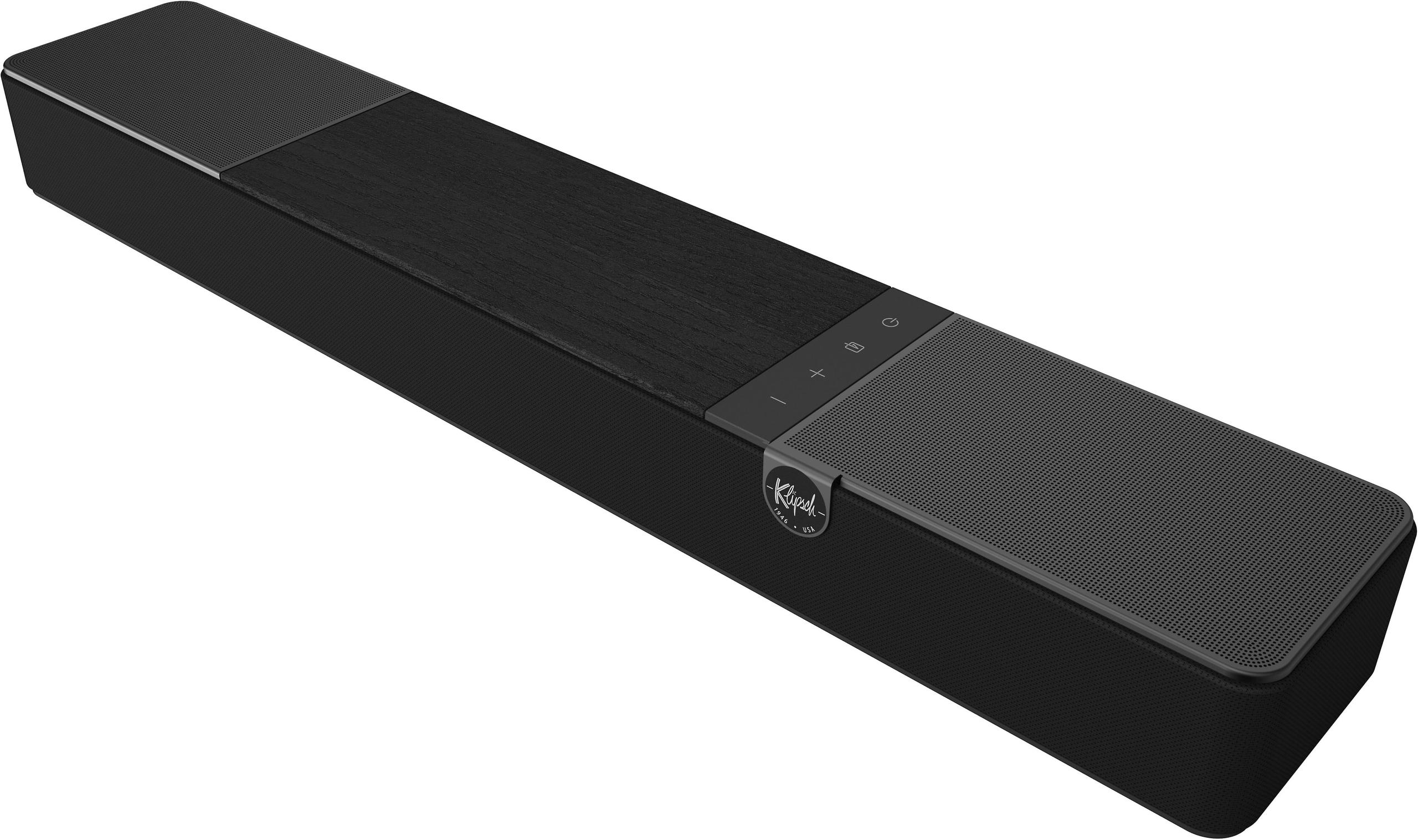


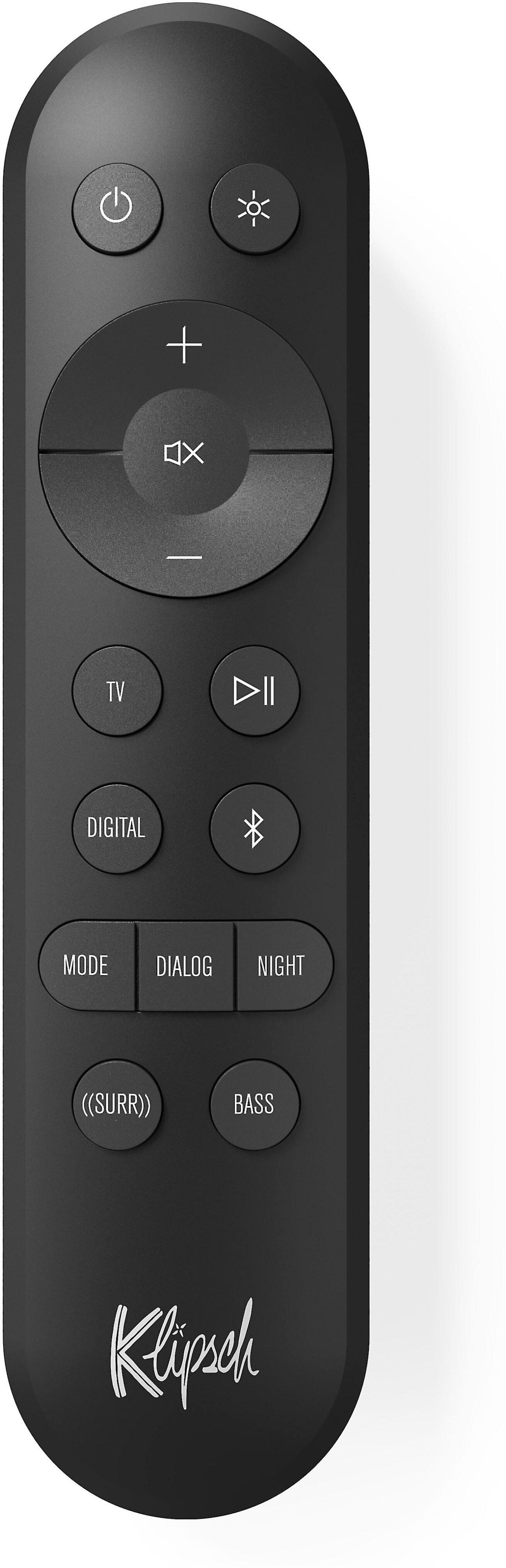



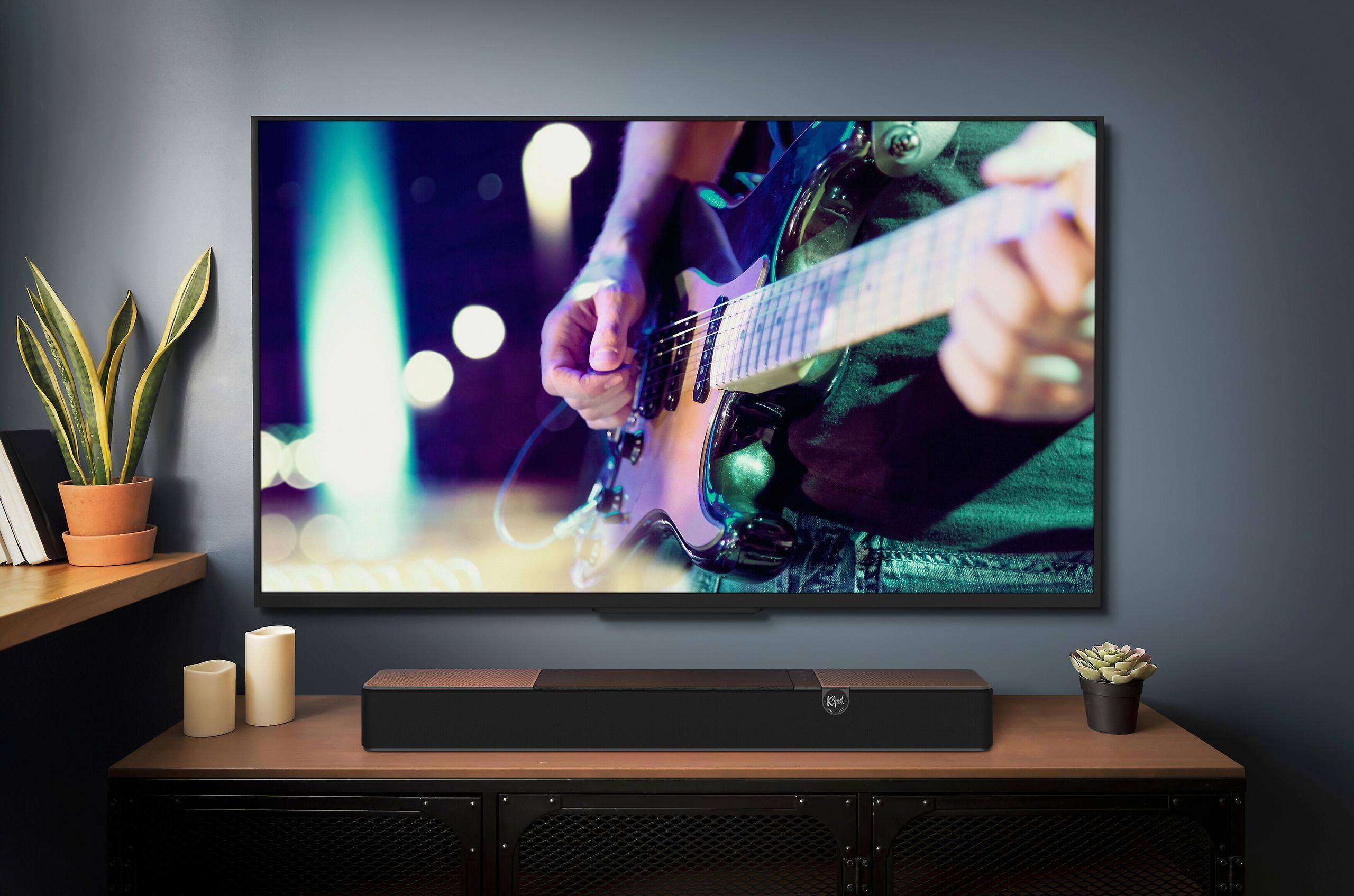
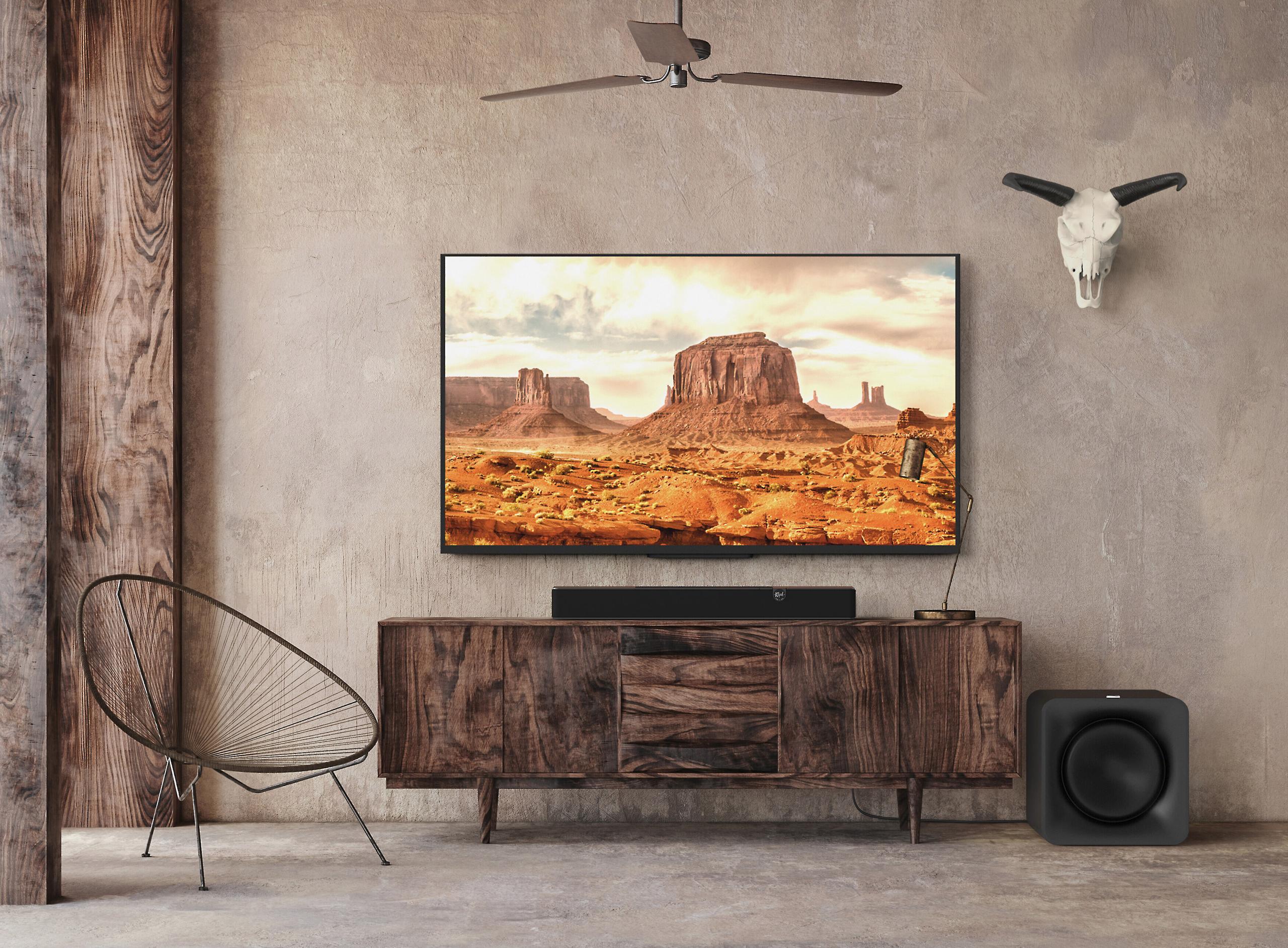
Shopping for a soundbar can feel overwhelming, especially when you're comparing products from the same brand that seem similar but have wildly different price tags. That's exactly the situation with Klipsch's Flexus lineup—the Core 300 ($1,199) and Core 100 ($227.90) might share the same family name, but they're built for completely different audiences and use cases.
I've spent considerable time with both soundbars, and the differences go far beyond just the price. Understanding what you're actually getting (or giving up) with each option will help you make the right choice for your specific situation.
The soundbar market has evolved dramatically over the past few years. What started as simple solutions to improve terrible TV speakers has grown into a sophisticated category of home theater products. Modern soundbars can deliver genuine surround sound, room-corrected audio, and wireless expandability that rivals traditional speaker systems.
When evaluating any soundbar today, you should consider several key factors: how many audio channels it actually produces (not just processes), whether it can adapt to your room's acoustics, what connectivity options it offers for future devices, and how it might grow with your needs over time.
The Flexus Core 300 and Core 100 represent two very different philosophies within this landscape. The Core 300, released in early 2025, showcases cutting-edge technology that was previously only available in high-end AV receivers. The Core 100, launched mid-2025, focuses on delivering solid performance at an accessible price point.
The most fundamental difference between these soundbars lies in their channel configuration—essentially, how many separate audio streams they can produce simultaneously.
The Core 300 operates as a true 5.1.2-channel system. This means it has five main channels (left, center, right, and two surrounds), one dedicated subwoofer channel, and two height channels for Dolby Atmos effects. To achieve this, Klipsch packed 13 individual drivers into the 54-inch chassis: four front-firing drivers handle the main stereo channels, a horn-loaded tweeter manages center channel dialogue, two up-firing drivers create height effects, two side-firing drivers produce surround sound, and four built-in 4-inch subwoofers handle bass duties.
In contrast, the Core 100 is a 2.1-channel system with just four drivers total: two 2.25-inch aluminum cone drivers for stereo output and two 4-inch subwoofers. While it can process Dolby Atmos signals, it uses psychoacoustic processing (basically audio tricks) to simulate surround and height effects rather than producing them with dedicated drivers.
This difference is immediately audible. With the Core 300, when a helicopter flies overhead in a movie, you hear it move from specific locations around and above you. The Core 100 creates the impression of movement, but it's more like watching a shadow of the real thing.
Here's where the Core 300 becomes truly unique: it's the world's first soundbar to include Dirac Live room correction technology. This is a big deal that deserves explanation.
Every room affects how audio sounds. Hard surfaces reflect sound waves, soft furnishings absorb them, and room dimensions create standing waves (peaks and nulls at certain frequencies). Professional recording studios spend thousands of dollars on acoustic treatment to minimize these issues. Dirac Live uses advanced algorithms to measure your room's acoustic signature and then applies real-time digital correction to compensate for problems.
The setup process is surprisingly straightforward. Using the included calibration microphone and the Klipsch Connect Plus app, you place the microphone at your listening position and run a series of test tones. The system analyzes how your room affects the sound and creates a custom correction curve. The included license corrects frequencies up to 500 Hz (which covers most bass and midrange issues), with a full-range upgrade available for purchase.
In my testing, the difference was immediately noticeable. Before calibration, the Core 300 sounded good but had some boomy bass notes due to my room's dimensions. After running Dirac Live, the bass became much tighter and more controlled, dialogue clarity improved, and the overall soundstage felt more natural and spacious.
The Core 100 relies on basic EQ presets accessible through the app, but these are generic settings that can't account for your specific room's acoustics.
Bass performance is often where soundbars struggle, but both Klipsch models take different approaches to solving this challenge.
The Core 300's four 4-inch subwoofers are strategically positioned to work together, creating what acousticians call "distributed bass." Instead of one large driver trying to pressurize your entire room, multiple smaller drivers work in coordination. This approach reduces the room-dependent bass peaks and nulls that plague single-subwoofer systems. Combined with Dirac Live's bass correction, the result is remarkably even bass response throughout your seating area.
With a maximum output of 106 dB, the Core 300 can fill large spaces without strain. I've used it in rooms up to 400 square feet, and it maintains its composure even during the most demanding action sequences.
The Core 100's dual 4-inch subwoofers deliver respectable bass for its size and price point, but they're working much harder to fill the same space. In smaller rooms (under 200 square feet), the Core 100 provides satisfying low-end response. However, in larger spaces or when you want truly impactful bass for movies, it can feel limited.
Clear dialogue is crucial for an enjoyable viewing experience, and this is where Klipsch's horn-loaded tweeter technology really shines in the Core 300.
The dedicated center channel uses a 0.75-inch horn-loaded tweeter—the same technology found in Klipsch's reference speakers. Horn loading increases efficiency and directivity, meaning dialogue cuts through background music and effects more effectively while directing sound precisely toward your listening position. Even during complex action scenes with explosions and music, conversations remain intelligible without needing to adjust the volume.
The Core 100 handles dialogue through its two main drivers, which also handle music and effects. While the aluminum cone drivers are well-designed, they lack the focused directivity of a dedicated center channel. You might find yourself reaching for the volume control more often during dialogue-heavy scenes.
This is perhaps the starkest difference between the two models. The Core 300's discrete surround channels create genuine spatial audio. Side-firing drivers bounce sound off your side walls to create width, while up-firing drivers reflect off the ceiling for height effects. When properly positioned (at least 18 inches from walls), the soundstage extends well beyond the physical soundbar.
I was genuinely surprised by how convincing the height effects could be. During the opening scene of "Blade Runner 2049," rain seemed to fall from above, and flying vehicles moved convincingly through three-dimensional space.
The Core 100 uses digital signal processing to simulate these effects, but it can't overcome the physical limitations of having just two forward-firing drivers. The sound stays largely anchored to the soundbar's location, though it does create a wider stereo image than most TV speakers.
Modern soundbars need to handle not just today's content but tomorrow's as well. This is where the Core 300 shows its premium positioning.
The HDMI 2.1 input supports 8K/60Hz and 4K/120Hz passthrough—crucial for PlayStation 5 and Xbox Series X gaming at high refresh rates. The eARC (enhanced Audio Return Channel) connection allows lossless audio formats like Dolby TrueHD and DTS-HD Master Audio to pass from compatible TVs.
Wireless connectivity is comprehensive: dual-band Wi-Fi, Bluetooth 5.3, and even Ethernet for the most stable connection. Streaming services integrate directly—AirPlay 2, Google Cast, Spotify Connect, and Tidal Connect all work without needing to route through your TV or phone.
The Core 100 covers the basics with HDMI ARC (not eARC) and Bluetooth connectivity. It's perfectly adequate for current content but lacks the future-proofing of its premium sibling.
Both soundbars can grow into larger systems, but the experience differs significantly.
The Core 300 integrates seamlessly with Flexus Surr 200 wireless surrounds and up to two Flexus Sub 200 subwoofers. Here's the key advantage: when you add components, Dirac Live re-calibrates the entire system automatically. The wireless surrounds don't just connect—they become part of an acoustically optimized surround system tuned to your specific room.
The Core 100 can connect to the same wireless components, but without room correction, you're responsible for manually adjusting settings to achieve proper integration. It works, but it requires more effort and may not achieve the same level of optimization.
At first glance, the price difference seems enormous—the Core 300 costs over five times more than the Core 100. But breaking down what you're actually getting helps justify the pricing.
Dirac Live room correction technology, when purchased separately for AV receivers, typically costs $500-800. The HDMI 2.1 implementation, discrete 5.1.2 processing, and premium driver array represent significant additional value. You're essentially getting technology that would require a high-end AV receiver plus separate speakers in a single, room-corrected package.
The Core 100 delivers exceptional value in its category. For under $230, you get well-designed drivers, solid build quality, and meaningful improvement over TV speakers. It's not trying to compete with the Core 300's advanced features—it's focused on being the best possible soundbar at its price point.
In my main home theater setup—a 15×20 foot room with hardwood floors and high ceilings—the Core 300 truly shines. The room's reflective surfaces initially created some bass issues, but Dirac Live tamed the problematic frequencies while maintaining impact. The discrete surround channels fill the space convincingly, and the system maintains clarity even at high volumes during action movies.
The Core 100 felt overwhelmed in this space. While it produced pleasant sound, it couldn't generate the scale and immersion that the room demanded.
In a 12×10 foot bedroom, the Core 100 proved much more appropriate. The smaller space doesn't require the Core 300's power, and the size difference becomes more apparent—the Core 100's 28-inch width fits better on a dresser or mounted under a smaller TV.
Interestingly, the Core 300 was almost too powerful for this space, even with Dirac Live optimization. The smaller room reinforced bass naturally, making the four built-in subwoofers feel excessive.
Since their release, both soundbars have received firmware updates that have improved performance and added features. The Core 300 has benefited from Dirac Live algorithm refinements and expanded streaming service compatibility. The Core 100 has received app improvements and additional EQ presets.
One significant development is the expanding Flexus ecosystem. Additional wireless components and integration options have made both soundbars more versatile foundation pieces for larger systems.
Your room is larger than 200 square feet and you want genuine home theater immersion. If you're serious about movie watching, gaming with 4K/120Hz consoles, or have challenging room acoustics, the advanced features justify the investment. The room correction alone can solve acoustic problems that would otherwise require expensive room treatment.
I'd also recommend it if you plan to expand your system over time. Starting with the Core 300 creates a foundation that grows intelligently rather than just getting louder.
You want significant audio improvement over TV speakers without complexity or premium pricing. It's ideal for bedrooms, small apartments, or as a first soundbar purchase. If your primary content is TV shows and casual movie watching in a smaller space, the Core 100 delivers excellent value.
It's also worth considering if you're uncertain about soundbars in general—the lower investment lets you explore the category without major financial commitment.
After extensive use with both systems, I believe each serves its intended audience well. The Core 300 represents a genuine leap forward in soundbar technology, bringing professional-grade room correction to a consumer product. For serious home theater enthusiasts, it's a compelling alternative to traditional receiver-based systems.
The Core 100 excels at its mission: delivering meaningful audio improvement at an accessible price. It doesn't try to be something it's not, and that honesty makes it easy to recommend for appropriate applications.
The decision comes down to your space, budget, and expectations. Both soundbars offer excellent build quality and Klipsch's signature sound character—you're choosing between different levels of sophistication rather than good versus bad products.For most people, starting with the Core 100 and upgrading later if needed is a perfectly valid approach, especially given the ecosystem compatibility. But if you have the budget and room size to take advantage of the Core 300's advanced features, it's a purchase you're unlikely to regret.
| Klipsch Flexus Core 300 ($1,199) | Klipsch Flexus Core 100 ($227.90) |
|---|---|
| Channel Configuration - Determines surround sound capability and immersion | |
| 5.1.2 channels with discrete drivers for true surround and height effects | 2.1 channels with virtualized Dolby Atmos processing |
| Room Correction Technology - Automatically optimizes sound for your specific room | |
| Dirac Live with included calibration microphone (world's first in a soundbar) | Basic app-based EQ presets only |
| Built-in Subwoofers - Critical for bass impact without external subwoofer | |
| Four 4" subwoofers with distributed bass design | Two 4" subwoofers |
| Total Driver Count - More drivers generally mean better sound separation and power | |
| 13 drivers including dedicated center channel with horn-loaded tweeter | 4 drivers (2 main + 2 subwoofers) |
| Maximum Output - Important for larger rooms and dynamic movie content | |
| 106 dB (suitable for rooms 300+ sq ft) | 100W RMS (best for rooms under 200 sq ft) |
| HDMI Connectivity - Future-proofing for gaming and high-quality audio | |
| HDMI 2.1 with eARC, 8K/60Hz and 4K/120Hz passthrough | HDMI ARC only (no eARC or high refresh rate support) |
| Wireless Connectivity - Streaming and smart home integration options | |
| Wi-Fi, Bluetooth 5.3, AirPlay 2, Google Cast, Spotify Connect, Ethernet | Bluetooth only with basic app control |
| Physical Size - Consider TV size and room aesthetics | |
| 54" W × 3" H × 5" D, 34.5 lbs | 28" W × 3" H × 5" D, 10 lbs |
| Expandability - Ability to add wireless surrounds and subwoofers | |
| Auto-calibrated wireless expansion with Dirac Live optimization | Manual setup required for wireless components |
| Best Room Size - Where each soundbar performs optimally | |
| Large rooms (200-400+ sq ft) with challenging acoustics | Small to medium rooms (under 200 sq ft) |
| Value Proposition - What you're paying for at each price point | |
| Premium technology with professional room correction and future-proofing | Excellent budget option with solid performance basics |
The biggest difference is audio configuration: the Klipsch Flexus Core 300 ($1,199) delivers true 5.1.2-channel surround sound with 13 discrete drivers, while the Klipsch Flexus Core 100 ($227.90) provides 2.1-channel audio with virtualized surround effects. The Core 300 also includes world-first Dirac Live room correction technology that automatically optimizes sound for your specific room.
The Klipsch Flexus Core 300 is designed for larger spaces with its 106 dB maximum output and four built-in subwoofers. It performs well in rooms 200-400+ square feet. The Klipsch Flexus Core 100 works best in smaller rooms under 200 square feet, as its dual subwoofers may struggle to fill larger spaces with adequate bass.
The Core 300's higher price reflects premium features like Dirac Live room correction (worth $500+ separately), true discrete surround channels, HDMI 2.1 with 8K passthrough, and extensive connectivity. The Core 100 offers exceptional value for basic TV audio improvement. Choose based on your room size, budget, and how much you value advanced audio features.
The Klipsch Flexus Core 300 has superior bass with four 4-inch subwoofers using distributed bass design for even response throughout your room. The Klipsch Flexus Core 100 includes two 4-inch subwoofers that provide good bass for its price range but may feel limited in larger spaces or for bass-heavy content.
The Klipsch Flexus Core 300 is superior for gaming with HDMI 2.1 supporting 4K/120Hz and 8K/60Hz passthrough, crucial for PlayStation 5 and Xbox Series X. It also provides immersive surround sound for spatial audio in games. The Core 100 has basic HDMI ARC without high refresh rate support.
The Klipsch Flexus Core 300 excels with its dedicated center channel featuring a horn-loaded tweeter that cuts through background noise for crystal-clear dialogue. The Core 100 handles dialogue through its main stereo drivers, which is adequate but lacks the focused clarity of a dedicated center channel.
The Core 300 includes Dirac Live room correction with a calibration microphone that measures and corrects your room's acoustic issues automatically. This professional-grade technology was previously only available in high-end AV receivers. The Core 100 offers basic EQ presets through the app but no automatic room optimization.
The Klipsch Flexus Core 300 offers superior music streaming with Wi-Fi connectivity, AirPlay 2, Google Cast, Spotify Connect, and Tidal Connect built-in. Its room correction also optimizes stereo music playback. The Core 100 provides basic Bluetooth streaming with app-based EQ controls.
For serious home theater enthusiasts with larger rooms and budget flexibility, the Klipsch Flexus Core 300 provides premium features and room-corrected performance. For casual viewers wanting better TV audio without complexity, the Klipsch Flexus Core 100 delivers excellent value and significant improvement over TV speakers at an accessible price point.
We've done our best to create useful and informative comparisons to help you decide what product to buy. Our research uses advanced automated methods to create this comparison and perfection is not possible - please contact us for corrections or questions. These are the sites we've researched in the creation of this article: crutchfield.com - whathifi.com - avnirvana.com - hometechnologyreview.com - ecoustics.com - gearpatrol.com - klipsch.com - avsforum.com - youtube.com - avsforum.com - listenup.com - chowmain.software - klipsch.com - novis.ch - avsforum.com - klipsch.ca - lefflers.se - abt.com - sweetwater.com - wifihifi.com - klipsch.com - dirac.com - cnet.com - klipsch.com - klipsch.com - bestbuy.com - sweetwater.com - assets.onkyo-av.com - youtube.com - worldwidestereo.com - avnirvana.com - target.com

Privacy Policy
Terms and Conditions - Affiliate Policy
Home Security
© Copyright 2008-2026.
11816 Inwood Rd #1211, Dallas, TX 75244