

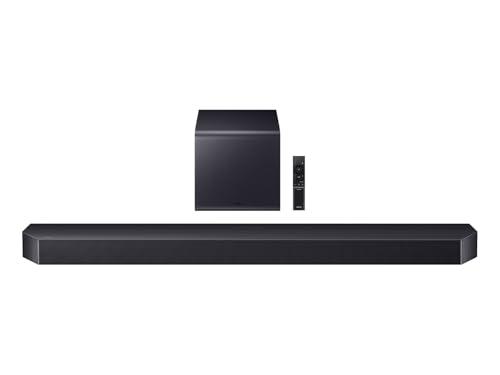
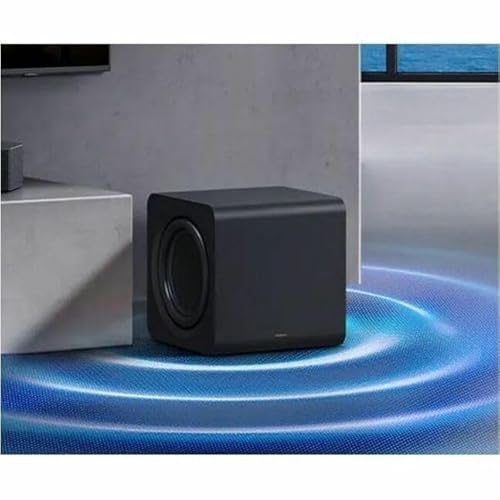
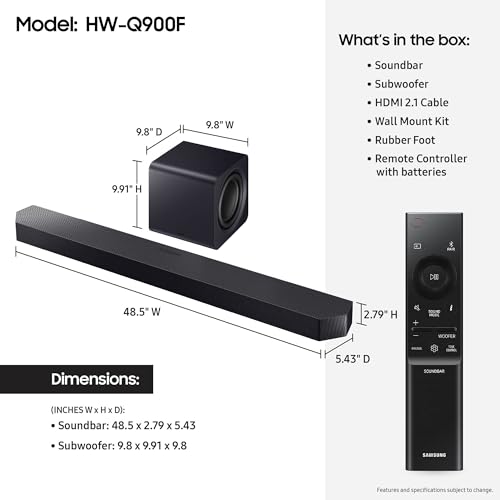
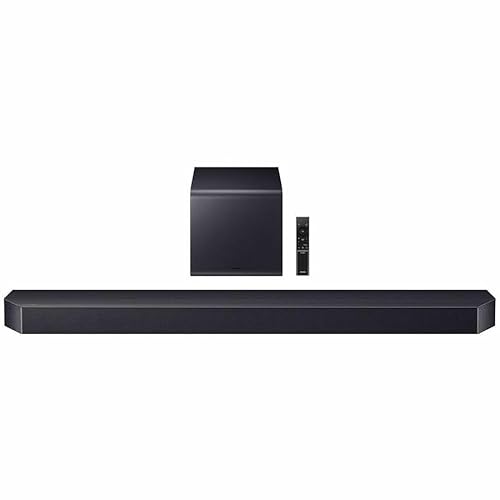

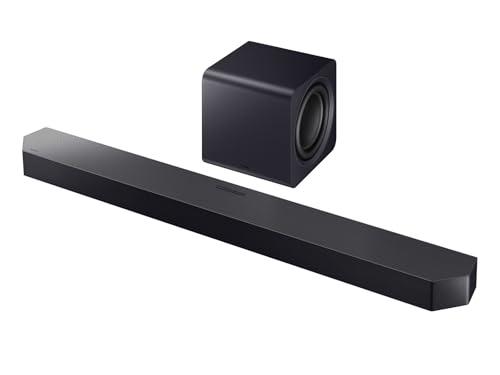
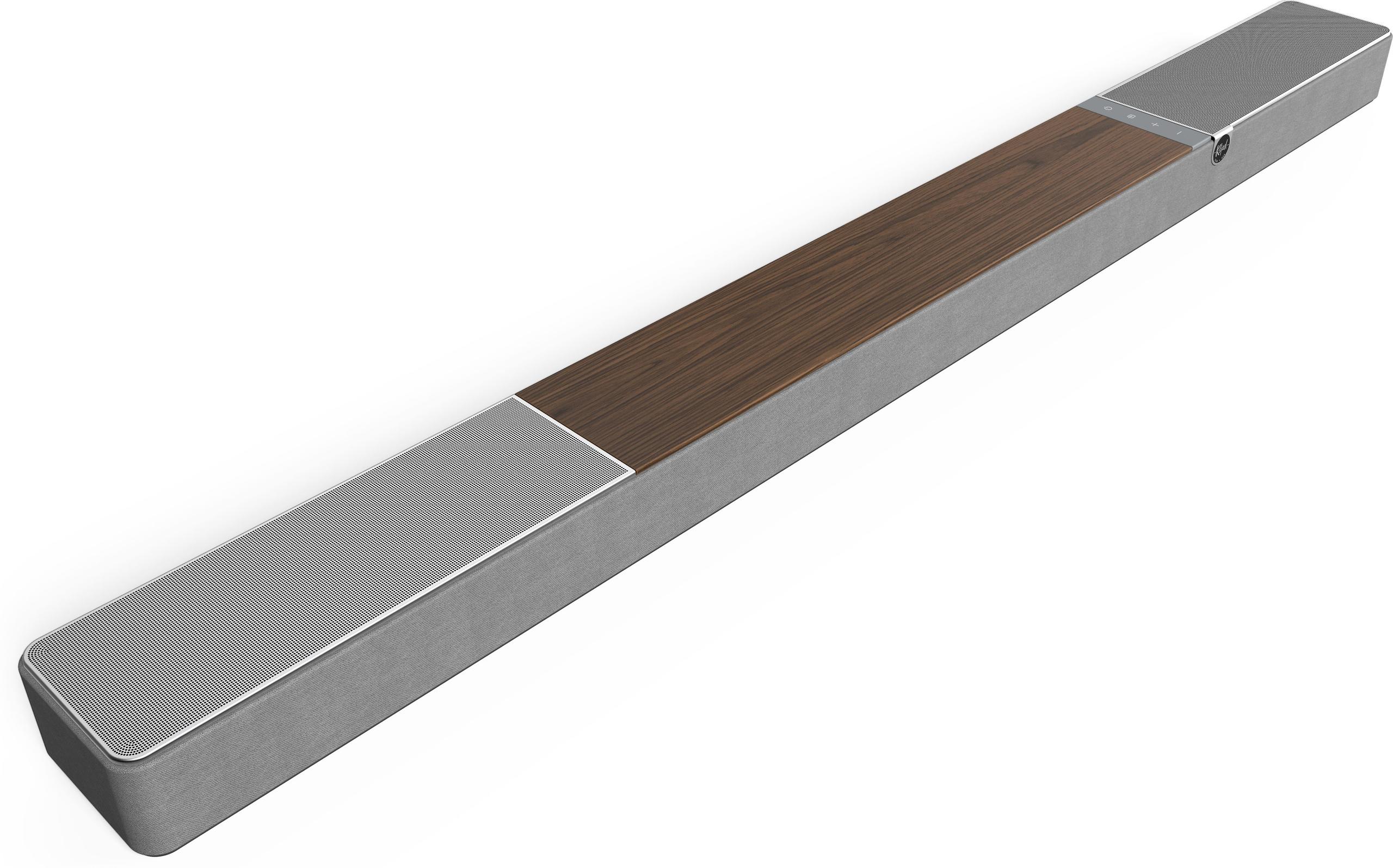
Premium soundbars have evolved dramatically over the past few years, transforming from simple TV audio upgrades into sophisticated home theater systems that rival traditional surround sound setups. If you're considering upgrading your TV's audio in 2025, two standout options represent fundamentally different philosophies: the Samsung HW-Q990F delivers everything you need in one complete package, while the Klipsch Flexus Core 300 takes a modular approach with audiophile-grade room correction technology.
Understanding which approach suits your needs requires diving into what makes each system unique, how they perform in real-world scenarios, and which delivers better value for different types of users.
Before we compare these specific models, it's worth understanding what separates premium soundbars from their budget counterparts. High-end soundbars like the Samsung HW-Q990F and Klipsch Flexus Core 300 focus on several key areas that dramatically impact your listening experience.
Dolby Atmos and DTS:X support represents the biggest leap forward in soundbar technology. These object-based audio formats create three-dimensional soundscapes by precisely placing sounds in space, including overhead effects. When a helicopter flies across the screen, you'll hear it move from front to back and overhead—something impossible with traditional stereo or even basic surround sound.
Channel configuration tells you how many discrete audio channels a soundbar can reproduce. The numbers follow a specific format: the first number represents main channels (front left, center, right, side surrounds), the second represents subwoofer channels, and the third represents height channels for overhead effects. More channels generally mean more precise sound placement, though the implementation matters enormously.
Room correction technology automatically adjusts the soundbar's output to compensate for your room's acoustics. Every room has unique characteristics—hard surfaces reflect sound while soft furnishings absorb it, creating frequency peaks and nulls that color what you hear. Advanced room correction can dramatically improve sound quality, especially in challenging acoustic environments.
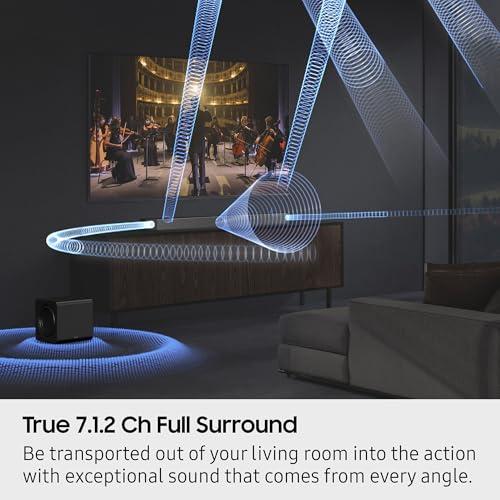
Released in 2024, the Samsung HW-Q990F represents Samsung's flagship approach to home theater audio. The system delivers an impressive 11.1.4 channel configuration using 23 discrete speakers spread across three main components: the soundbar itself, wireless rear speakers, and a dedicated wireless subwoofer.
What makes this configuration special is that you get genuine surround sound with physical speakers positioned around your listening area. The rear speakers aren't just simple satellites—each contains three full-range drivers: one facing forward, one firing to the side, and one angled upward to create height effects. This multi-directional approach ensures smooth sound movement as effects pan around and above you.
The main soundbar houses 15 speakers arranged in a sophisticated array. Front-firing drivers handle the main soundstage, while side-firing speakers create width and ambient effects. Up-firing drivers bounce sound off your ceiling to create overhead effects for Dolby Atmos content. This comprehensive speaker arrangement means the Samsung HW-Q990F can reproduce complex soundtracks with remarkable precision.
Samsung's 2024 updates focused heavily on bass performance. The wireless subwoofer features dual 8-inch opposing woofers—a design that cancels unwanted vibrations while delivering clean, powerful low-frequency effects. The new Dynamic Bass Control system uses AI algorithms to minimize distortion, ensuring bass remains tight and accurate even at high volumes. In practice, this means you'll hear the subtle low-frequency rumble in dramatic scenes without the boomy, one-note bass that plagues lesser systems.
The Samsung HW-Q990F also introduces Wireless Dolby Atmos transmission when paired with compatible Samsung TVs. This eliminates the need for HDMI cables between the TV and soundbar while maintaining full Dolby Atmos quality—a convenience feature that simplifies installation without compromising performance.
The Klipsch Flexus Core 300, launched in 2024, takes a fundamentally different approach. Rather than providing everything upfront, Klipsch designed a sophisticated standalone soundbar that can grow into a complete surround system as your needs and budget allow.
At its core, the Flexus Core 300 is a 5.1.2 channel soundbar with an impressive 13-driver array. Four 2.25-inch front-firing drivers handle the main soundstage, while a dedicated 0.75-inch horn-loaded tweeter—Klipsch's signature technology—ensures crystal-clear dialogue reproduction. Two up-firing drivers create overhead effects for Dolby Atmos, while two side-firing drivers add width and ambiance.
The standout feature here is the integration of four 4-inch subwoofers directly into the soundbar chassis. This eliminates the need for a separate subwoofer in many installations while providing surprisingly robust bass extension down to 43Hz. For context, most music and movie content contains meaningful bass information down to around 40Hz, so this integrated approach covers most real-world scenarios effectively.
But the Klipsch Flexus Core 300 makes history as the first soundbar to incorporate Dirac Live room correction technology. Previously exclusive to high-end AV receivers costing thousands of dollars, Dirac Live analyzes your room's acoustic characteristics using a calibration microphone and applies sophisticated mathematical corrections to optimize frequency response and timing.
The difference this makes cannot be overstated. Without room correction, even expensive speakers can sound muddy, boomy, or harsh depending on your room's characteristics. Dirac Live can tame problematic room modes (standing wave patterns that cause certain frequencies to be overemphasized), improve bass definition, and create a more balanced overall sound. The system can store up to 10 different calibration presets, allowing optimization for different listening positions or room configurations.
The Samsung HW-Q990F delivers a clear advantage in pure surround sound immersion thanks to its physical rear speakers. When watching movies with complex soundtracks—think action sequences with effects panning around the room—the Samsung creates a genuine sense of envelopment that's simply impossible to replicate with front-firing speakers alone.
This becomes particularly noticeable in scenes where ambient sounds or musical elements need to emerge from behind the listening position. The physical rear channels create authentic surround effects that don't rely on psychoacoustic trickery or room reflections. For viewers who prioritize that cinematic "you are there" feeling, the Samsung's true multi-channel approach provides an immediate and obvious benefit.
The Klipsch Flexus Core 300, despite its sophisticated processing, must rely on side-firing drivers and digital signal processing to create surround effects. While Klipsch has implemented this technology skillfully, and the results are impressively wide and spacious, it cannot fully replicate the discrete channel separation that physical rear speakers provide. However, for users in smaller rooms or those who can't accommodate rear speakers, the Klipsch delivers remarkably convincing spatial audio from a single chassis.
This represents one of the most significant philosophical differences between these systems. The Samsung HW-Q990F employs a traditional approach with a dedicated subwoofer featuring dual 8-inch drivers. This configuration can move substantially more air than smaller integrated drivers, resulting in deeper bass extension (down to 32Hz) and higher output capability.
For home theater enthusiasts who want to feel the rumble of explosions or the deep fundamental tones of pipe organs, the Samsung's dedicated subwoofer approach provides superior performance. The force-canceling driver arrangement also minimizes cabinet vibrations that can cause rattles or distortion at high volumes.
The Klipsch Flexus Core 300 takes a more elegant approach with four integrated 4-inch subwoofers. While these cannot match the raw output of larger dedicated drivers, they provide surprisingly robust bass for their size and eliminate the placement challenges associated with separate subwoofers. Many users find this integrated bass perfectly adequate for music and most movie content, especially in smaller to medium-sized rooms.
The Flexus Core 300 also includes a mono-RCA output for connecting an external powered subwoofer, providing upgrade flexibility that the Samsung system lacks. This modularity allows users to start with the integrated bass and add a dedicated subwoofer later if needed.
Both systems excel at dialogue reproduction, but through different approaches. The Samsung HW-Q990F employs Active Voice Amplifier Pro technology, which uses AI algorithms to analyze ambient noise levels and automatically boost dialogue frequencies to maintain speech intelligibility. This dynamic processing can be particularly beneficial in noisy environments or during complex action sequences where dialogue might otherwise get buried in the mix.
The Klipsch Flexus Core 300 takes a more traditional audiophile approach with its horn-loaded tweeter technology. Klipsch has used horn-loading for decades to improve efficiency and reduce distortion, resulting in exceptionally natural vocal reproduction. The dedicated Dialog Mode further optimizes frequency response for speech content, while Dirac Live room correction ensures dialogue emerges clearly from the center of the soundstage without coloration from room acoustics.
Based on consensus from professional reviews and user feedback, both systems deliver excellent dialogue clarity, with the Samsung perhaps having a slight edge in challenging acoustic environments due to its adaptive processing, while the Klipsch provides more natural, unprocessed vocal timbre that audiophiles tend to prefer.
This category represents the Klipsch Flexus Core 300's most significant advantage. Dirac Live room correction operates at a level of sophistication that simply isn't available in any other soundbar at this price point—or indeed, in most soundbars at any price point.
The calibration process involves placing the included microphone at your primary listening position while the system plays test tones and measures your room's acoustic response. Dirac Live then creates a custom filter that compensates for room-induced frequency peaks and nulls, timing irregularities, and other acoustic anomalies.
The improvement this makes varies significantly depending on your room, but the effects can be dramatic. Rooms with hard surfaces often suffer from excessive brightness or harshness in the upper frequencies, while rooms with irregular shapes may have uneven bass response. Dirac Live addresses these issues with surgical precision, often transforming good-sounding systems into exceptional ones.
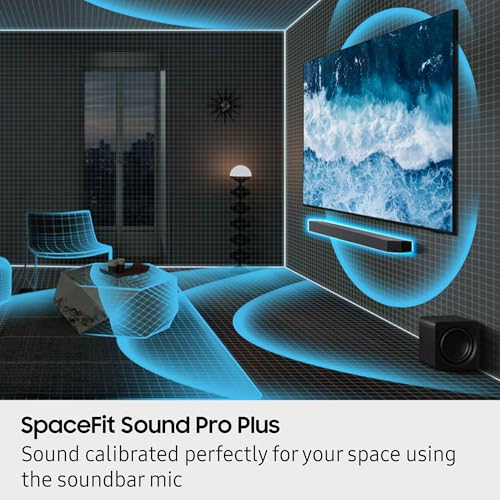
The Samsung HW-Q990F offers SpaceFit Sound Pro Plus, which provides automatic acoustic optimization, but this system operates more like a preset than true room correction. While it can improve performance in many rooms, it doesn't offer the detailed customization and precision that Dirac Live provides.
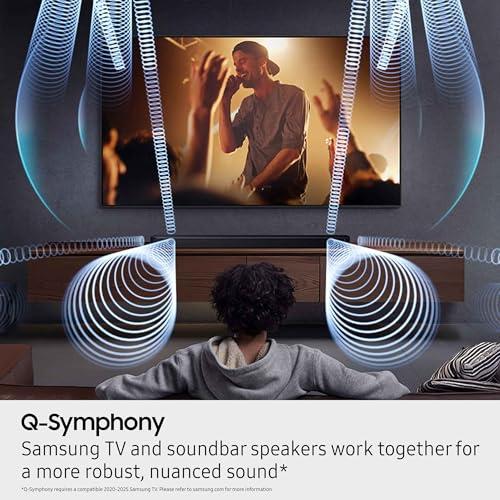
Both soundbars offer comprehensive smart features, but with different strengths. The Samsung HW-Q990F integrates particularly well with Samsung's ecosystem, offering Q-Symphony technology that synchronizes the soundbar with compatible Samsung TV speakers for enhanced audio output. For Samsung TV owners, this creates a more expansive soundstage by combining the TV's built-in speakers with the soundbar's output.
The Samsung also includes built-in Alexa voice control and works seamlessly with Samsung's SmartThings platform. The wireless Dolby Atmos feature, when paired with compatible Samsung TVs, eliminates cable connections while maintaining full audio quality—a convenience feature that simplifies installation.
The Klipsch Flexus Core 300 focuses more on audio flexibility and smart home integration. It supports a broader range of streaming services and includes features like Roon Ready certification for high-resolution audio playback. The system also offers more extensive smart home integration options, including compatibility with Control4, RTI, and Crestron systems—important for users building sophisticated smart home setups.
At the time of writing, the Samsung HW-Q990F represents excellent value for users wanting a complete surround system immediately. The included wireless rear speakers and subwoofer mean you're getting a genuine 11.1.4 channel system for the price of entry, with no additional purchases required to achieve full performance potential.
The Klipsch Flexus Core 300 starts at a lower price point but achieving comparable surround performance requires additional investment in optional rear speakers and potentially an external subwoofer. However, this modular approach allows budget-conscious users to spread their investment over time, starting with an excellent standalone soundbar and expanding as finances allow.
When evaluating long-term value, consider that the Klipsch system includes Dirac Live room correction technology typically found in audio equipment costing thousands of dollars. This sophisticated processing can improve performance in virtually any room and represents a significant technical advantage over more basic room correction systems.
The Samsung HW-Q990F requires positioning three separate wireless components: the main soundbar, rear speakers, and subwoofer. While all connections are wireless, you'll need power outlets near each component and sufficient space for optimal placement. The rear speakers should ideally be positioned slightly behind and to the sides of the main listening area, which may not be practical in all room layouts.
The Klipsch Flexus Core 300 offers much simpler installation as a single-component solution. The 54-inch width accommodates most TV sizes while the slim 3-inch height profile fits easily beneath most displays. Wall-mounting options are available for both systems, though the Samsung's multi-component setup makes wall installation more complex.
Choose the Samsung HW-Q990F if:
Choose the Klipsch Flexus Core 300 if:
Both soundbars represent excellent choices for different types of users. The Samsung HW-Q990F excels at providing immediate, complete home theater immersion with true surround effects and powerful bass. It's the better choice for users who want everything working perfectly out of the box and have the space to accommodate multiple components.
The Klipsch Flexus Core 300 appeals to users who value technical sophistication and flexibility. The inclusion of Dirac Live room correction technology alone represents a significant advancement in soundbar capabilities, while the modular design allows for gradual system expansion.
For most home theater enthusiasts with adequate space and budget for a complete system, the Samsung HW-Q990F provides better immediate value and more convincing surround effects. However, for audio enthusiasts, users with challenging room acoustics, or those who prefer a more gradual investment approach, the Klipsch Flexus Core 300 offers superior long-term potential and audiophile-grade features typically reserved for much more expensive equipment.
Ultimately, both represent significant improvements over basic soundbars and built-in TV speakers. Your choice should depend primarily on your room constraints, budget timeline, and whether you prioritize immediate complete performance or long-term flexibility and customization potential.
| Samsung HW-Q990F | Klipsch Flexus Core 300 |
|---|---|
| Channel Configuration - Determines surround sound immersion level | |
| 11.1.4 channels with 23 discrete speakers | 5.1.2 channels with 13 integrated drivers |
| What's Included - Complete system vs. modular approach | |
| Complete system: soundbar + wireless rear speakers + wireless subwoofer | Standalone soundbar only (expandable with optional components) |
| Surround Sound Implementation - Real vs. virtualized rear effects | |
| True rear channels with physical wireless speakers behind listener | Virtualized surround using side-firing drivers and processing |
| Bass Solution - Dedicated power vs. space-saving integration | |
| Dedicated wireless subwoofer with dual 8" opposing woofers (32Hz extension) | Four integrated 4" subwoofers in soundbar (43Hz extension) |
| Room Correction Technology - Audio optimization capabilities | |
| SpaceFit Sound Pro Plus (automatic preset-based optimization) | Dirac Live with calibration microphone (audiophile-grade precision correction) |
| Maximum Output - Performance for large rooms | |
| 756W total system power across 23 speakers | 106 dB SPL maximum (suitable for small-medium rooms) |
| HDMI Connectivity - Source device connections | |
| 2 HDMI 2.1 inputs + eARC output (4K/120Hz, HDR10+) | 1 HDMI 2.1 input + eARC output (8K/60Hz, 4K/120Hz, HDR10) |
| Smart Features - Voice control and ecosystem integration | |
| Built-in Alexa, Q-Symphony with Samsung TVs, Wireless Dolby Atmos | Google Cast, AirPlay 2, extensive smart home integration (Control4, RTI, Crestron) |
| Installation Complexity - Setup requirements | |
| Three wireless components require multiple power outlets and positioning | Single soundbar installation with optional wall mount |
| Expandability - Future upgrade potential | |
| Complete system with no official expansion options | Modular platform: add wireless surrounds, external subwoofer via RCA output |
| Audio Customization - User control over sound characteristics | |
| Preset sound modes, basic EQ adjustments | 10 Dirac Live presets, detailed EQ control, independent channel levels |
| Best For - Ideal user scenarios | |
| Immediate complete surround experience, Samsung TV owners, large rooms | Audio enthusiasts, space-constrained setups, gradual system building |
The Samsung HW-Q990F delivers superior surround sound with true 11.1.4 channels and physical wireless rear speakers that create authentic surround effects. The Klipsch Flexus Core 300 offers impressive 5.1.2 virtualized surround using side-firing drivers, but cannot match the immersion of actual rear speakers. For home theater enthusiasts wanting the most convincing surround experience, the Samsung HW-Q990F is the clear winner.
The Samsung HW-Q990F includes everything needed for complete surround sound: the main soundbar, wireless rear speakers, and wireless subwoofer. The Klipsch Flexus Core 300 is a standalone soundbar with integrated subwoofers, but you'll need to purchase optional wireless rear speakers separately for true surround sound. The Samsung provides immediate complete performance while the Klipsch offers modular expansion flexibility.
The Samsung HW-Q990F features a dedicated wireless subwoofer with dual 8-inch opposing woofers, delivering deeper bass extension to 32Hz and higher output capability. The Klipsch Flexus Core 300 uses four integrated 4-inch subwoofers within the soundbar, extending to 43Hz. While the Samsung provides more powerful bass, the Klipsch eliminates subwoofer placement issues and may be sufficient for smaller rooms.
Dirac Live is advanced room correction technology that analyzes your room's acoustics using a calibration microphone and applies precise corrections to optimize sound quality. The Klipsch Flexus Core 300 is the first soundbar to include this audiophile-grade technology, which can dramatically improve bass definition, frequency balance, and overall clarity. The Samsung HW-Q990F uses simpler automatic calibration that's effective but not as sophisticated as the Klipsch's Dirac Live system.
Both soundbars excel at dialogue reproduction through different approaches. The Samsung HW-Q990F uses AI-powered Active Voice Amplifier Pro that dynamically adjusts speech levels based on ambient noise. The Klipsch Flexus Core 300 employs horn-loaded tweeter technology for natural vocal reproduction and includes a dedicated Dialog Mode. Both deliver excellent speech clarity, with the Samsung having an edge in noisy environments and the Klipsch providing more natural vocal timbre.
The Samsung HW-Q990F includes two HDMI 2.1 inputs plus one eARC output, supporting 4K/120Hz and HDR10+ passthrough, making it better for connecting multiple devices like gaming consoles and Blu-ray players. The Klipsch Flexus Core 300 has one HDMI 2.1 input plus eARC output, supporting 8K/60Hz or 4K/120Hz passthrough with HDR10. The Samsung offers more connectivity flexibility for multiple source devices.
The Samsung HW-Q990F integrates seamlessly with Samsung TVs through Q-Symphony technology, which synchronizes the soundbar with the TV's built-in speakers for enhanced audio output. It also supports Wireless Dolby Atmos transmission from compatible Samsung TVs, eliminating cable connections. The Klipsch Flexus Core 300 works well with Samsung TVs but lacks these specialized integration features. Samsung TV owners will benefit more from the Samsung soundbar.
The Samsung HW-Q990F requires positioning three wireless components (soundbar, rear speakers, subwoofer) with power outlets for each, making installation more complex but still manageable. The Klipsch Flexus Core 300 offers simpler single-component installation that's easier for wall mounting or TV stand placement. If you prefer minimal setup complexity, the Klipsch is more straightforward to install and position.
The Klipsch Flexus Core 300 generally performs better for music with its horn-loaded tweeters providing natural sound reproduction and Dirac Live room correction optimizing frequency response for your space. It also supports high-resolution audio formats and is Roon Ready certified. The Samsung HW-Q990F handles music well but is primarily optimized for home theater content. Audiophiles and music lovers typically prefer the Klipsch's more neutral, accurate sound signature.
The Klipsch Flexus Core 300 is designed for modular expansion with optional wireless rear speakers and external subwoofers via RCA output, allowing gradual system building as budget allows. The Samsung HW-Q990F comes complete with all components included but offers no official expansion options. The Klipsch provides much more flexibility for future upgrades and customization.
Value depends on your needs and timeline. The Samsung HW-Q990F delivers complete 11.1.4 surround sound immediately with all components included, representing excellent value for the total package. The Klipsch Flexus Core 300 starts at a lower entry point but requires additional purchases for comparable surround performance, though it includes premium Dirac Live technology typically found in much more expensive equipment. The Samsung offers better immediate value, while the Klipsch provides better long-term value for audio enthusiasts.
The Samsung HW-Q990F is better suited for large rooms with its 756W total system power, 23 discrete speakers, and dedicated subwoofer providing the output capability needed to fill bigger spaces effectively. The Klipsch Flexus Core 300 is more appropriate for small to medium rooms, as its integrated design limits maximum output capability. For home theaters in large rooms, the Samsung's distributed power and true surround speaker placement deliver superior performance and immersion.
We've done our best to create useful and informative comparisons to help you decide what product to buy. Our research uses advanced automated methods to create this comparison and perfection is not possible - please contact us for corrections or questions. These are the sites we've researched in the creation of this article: rtings.com - crutchfield.com - sound-advice.online - samsung.com - soundandvision.com - samsung.com - whathifi.com - youtube.com - youtube.com - bestbuy.com - avsforum.com - content.syndigo.com - samsung.com - businessinsider.com - dolby.com - youtube.com - abcwarehouse.com - crutchfield.com - whathifi.com - avnirvana.com - hometechnologyreview.com - ecoustics.com - gearpatrol.com - klipsch.com - avsforum.com - youtube.com - avsforum.com - listenup.com - chowmain.software - klipsch.com - novis.ch - avsforum.com - klipsch.ca - lefflers.se - abt.com - sweetwater.com - wifihifi.com - klipsch.com - dirac.com

Privacy Policy
Terms and Conditions - Affiliate Policy
Home Security
© Copyright 2008-2026.
11816 Inwood Rd #1211, Dallas, TX 75244