

If you're tired of straining to hear dialogue or missing out on the immersive sound that makes movies truly exciting, you're probably considering a soundbar upgrade. But with options ranging from under $100 to well over $1,000, choosing the right one can feel overwhelming. Today, we're comparing two soundbars that represent opposite ends of the performance spectrum: the budget-friendly Amazon Fire TV Soundbar and the premium Klipsch Flexus Core 300.
These aren't just different price points—they represent fundamentally different approaches to solving your TV's audio problems. One focuses on delivering solid basics at an accessible price, while the other brings cutting-edge technology that was previously only available in high-end home theater systems.
Before diving into specifics, it's worth understanding what separates great soundbars from merely adequate ones. The most important performance characteristics include frequency response (how well it reproduces different pitches from deep bass to crisp highs), soundstage width (how spread out the audio feels), dialogue clarity, and dynamic range (the difference between the quietest and loudest sounds it can produce effectively).
For home theater use specifically, surround sound processing becomes crucial. This is where audio engineers use various techniques to make you feel like sound is coming from all around you, not just from the front of the room. Some soundbars achieve this through virtualization (using psychoacoustic tricks to fool your brain), while others use multiple physical speakers pointing in different directions.
Room acoustics play a huge role too. Hard surfaces like tile floors and large windows create reflections that can muddy dialogue or create uneven bass response. The best soundbars either account for these challenges or provide tools to overcome them.
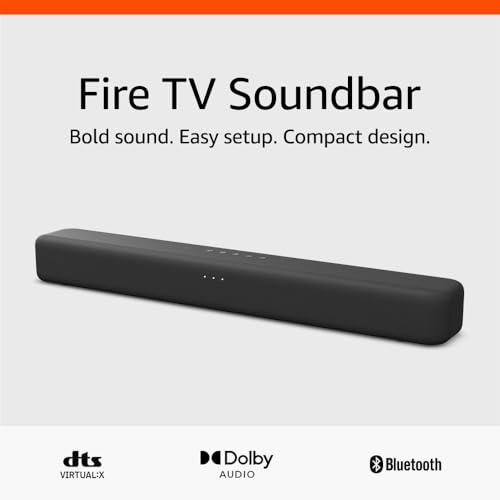
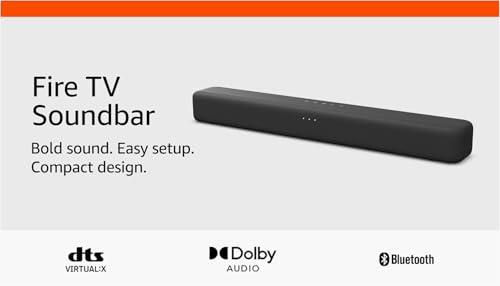
Released in 2023, the Amazon Fire TV Soundbar represents Amazon's attempt to bring decent TV audio improvement to the masses. At roughly $100 (at the time of writing), it positions itself as an accessible upgrade over built-in TV speakers without breaking the bank.
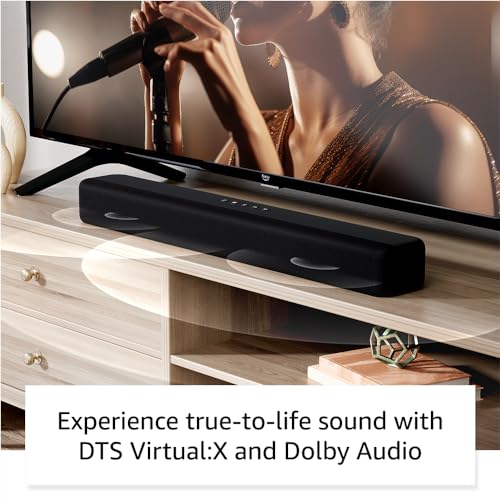
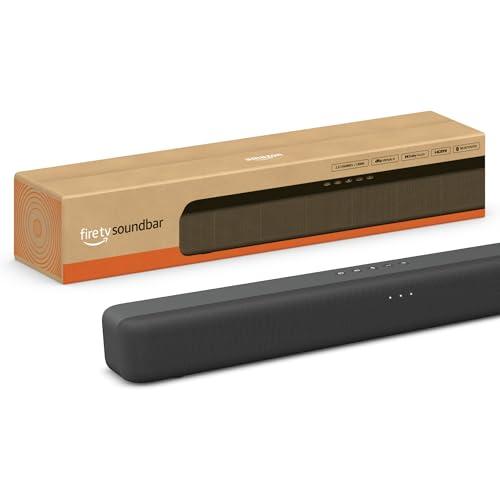
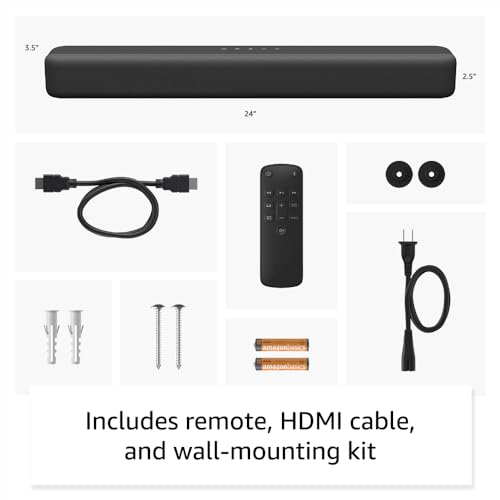
The Amazon Fire TV Soundbar is a compact 2.0-channel system—meaning it has two main speakers creating a stereo soundfield. Inside its 61cm-wide chassis, you'll find two "racetrack" drivers (oval-shaped speakers that fit more surface area into a slim profile) powered by 40 watts total. It's lightweight at 1.8kg, making it easy to position or wall-mount.
The soundbar includes DTS Virtual:X processing, which uses sophisticated algorithms to simulate surround sound from just those two front-facing speakers. Think of it as audio sleight-of-hand—the technology analyzes the incoming audio and applies timing delays, phase shifts, and frequency filtering to trick your brain into perceiving sounds coming from beside and even above you.
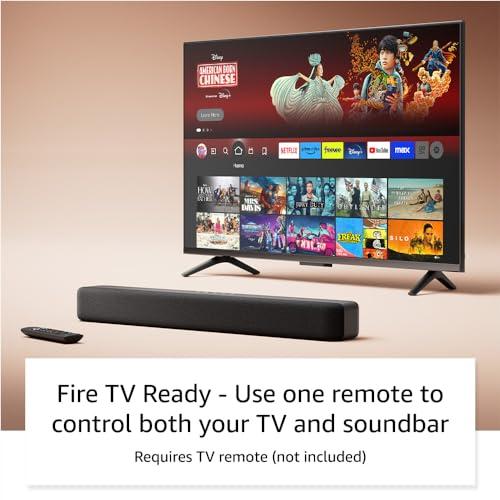
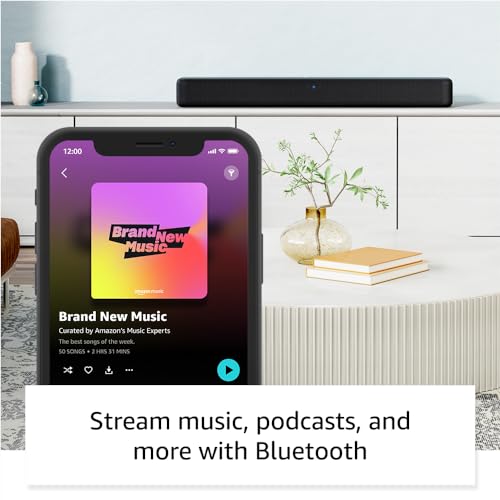
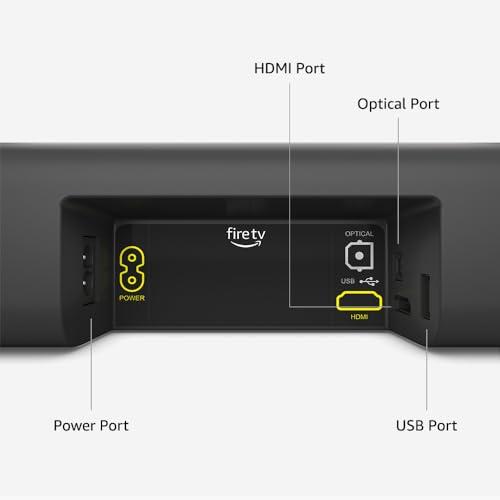
Connectivity is straightforward: HDMI ARC/eARC for modern TVs (this allows your TV remote to control the soundbar's volume), optical input for older TVs, and Bluetooth for wireless music streaming. The design includes touch controls on top and integrates seamlessly with Fire TV devices, though it works fine with any TV brand.
Our research into user and expert reviews reveals that the Amazon Fire TV Soundbar succeeds at its primary mission: making TV dialogue clearer and creating a wider soundstage than typical TV speakers. The racetrack drivers produce surprisingly full sound for their size, and the built-in bass reflex port (a tuned opening that enhances low-frequency response) helps deliver bass that's adequate for casual viewing.
However, expectations need to stay realistic. The virtual surround processing creates some sense of spaciousness, but you won't get the convincing overhead effects or precise positional audio that true multi-channel systems provide. Bass extension is limited—you'll hear drums and explosions, but they won't have the chest-thumping impact of larger systems.
The three EQ modes (Movie, Music, and Dialog) provide some customization, but these are broad adjustments rather than precise tuning tools. In smaller rooms under 200 square feet, the Amazon Fire TV Soundbar performs admirably, but larger spaces expose its limitations.
The Amazon Fire TV Soundbar makes perfect sense for specific situations. If you live in an apartment or have a small bedroom setup, its compact size and respectable performance offer genuine value. It's particularly appealing for Fire TV users who want seamless integration, though that's not a requirement.
Budget-conscious buyers who primarily watch TV shows and casual content will find the dialogue improvements meaningful. The soundbar also works well as a secondary system for kitchens, bedrooms, or home offices where you want better audio without major investment.
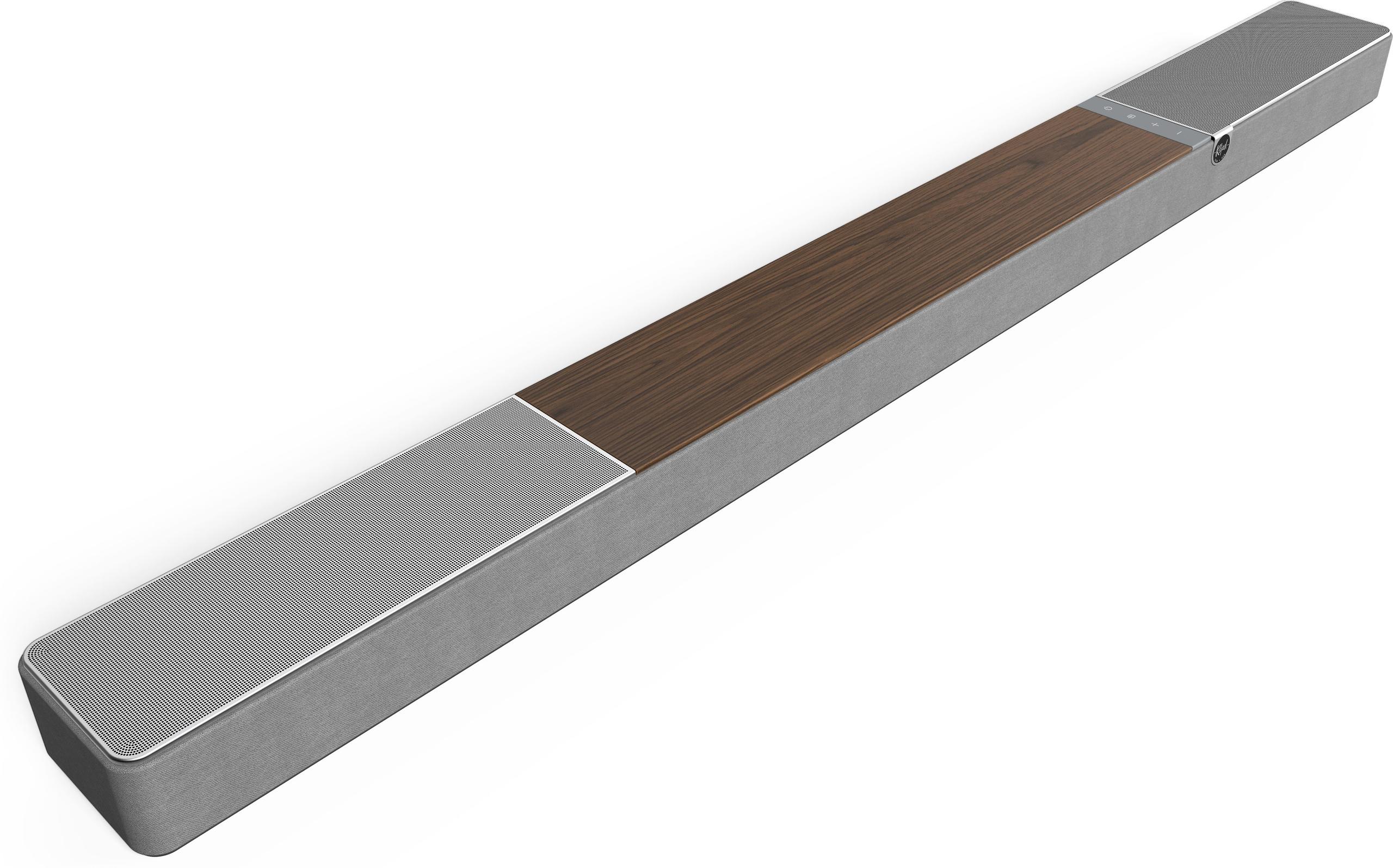
The Klipsch Flexus Core 300, launched in early 2025, represents a completely different philosophy. Rather than offering basic improvements at a low price, it brings audiophile-grade technology to the soundbar format. At around $1,200 (at the time of writing), it costs twelve times more than the Amazon option—but the technology gap is even wider than the price difference suggests.
The Klipsch Flexus Core 300 is a true 5.1.2-channel system, meaning it has five main channels (left, center, right, and two surrounds), one subwoofer channel, and two height channels for Dolby Atmos effects. This isn't achieved through virtual processing—it uses 13 separate drivers strategically positioned throughout the 54-inch-wide chassis.
The driver array includes four front-firing speakers, a dedicated center channel with Klipsch's signature horn-loaded tweeter (a cone-shaped element that focuses high frequencies for exceptional clarity), two up-firing speakers for height effects, two side-firing speakers for surround sound, and four built-in 4-inch subwoofers.
But here's where it gets really interesting: the Klipsch Flexus Core 300 is the world's first soundbar to include Dirac Live room correction. This technology, previously found only in high-end AV receivers costing thousands of dollars, uses a calibration microphone to analyze your room's acoustic properties. It then applies precise digital filters to compensate for problems like uneven frequency response, timing issues between different speakers, and room reflections that muddy the sound.
Based on expert reviews and detailed technical analysis, the performance differences between these soundbars are dramatic. The Klipsch Flexus Core 300 produces genuine surround sound with convincing height effects—when a helicopter flies overhead in a movie, you actually perceive it moving above you, not just across the front soundstage.
The four built-in subwoofers eliminate the need for a separate subwoofer in many rooms, delivering bass that extends down to 43Hz (compared to the Amazon's more limited low-frequency response). The horn-loaded tweeter ensures dialogue remains crystal clear even during explosive action sequences, while the discrete surround channels create an enveloping soundfield that makes you feel like you're inside the movie.
The Dirac Live room correction deserves special attention. Every room has acoustic problems—hard surfaces create reflections, furniture absorbs certain frequencies, and room dimensions create resonances at specific pitches. The Klipsch Flexus Core 300 measures these issues and applies corrections that can transform muddy, boomy audio into tight, clear sound. It's like having a professional audio engineer tune your system for your specific room.
The Klipsch Flexus Core 300 includes HDMI 2.1 with eARC support, enabling 8K/60Hz video passthrough for future-proofing. It supports all major audio formats including Dolby Atmos, DTS:X, and various high-resolution formats. Built-in Wi-Fi enables streaming via AirPlay 2, Google Cast, Spotify Connect, and Tidal Connect.
The Klipsch Connect Plus app provides comprehensive control, including EQ adjustment, input selection, and most importantly, the Dirac Live calibration process. The system can store multiple room correction profiles, useful if you rearrange furniture or want different settings for movies versus music.
Perhaps the most significant advantage of the Klipsch Flexus Core 300 is its expandability. You can add wireless Flexus Surround 200 speakers and up to two Flexus Sub 200 subwoofers, creating a full 7.2.2-channel system without running speaker wires. This modular approach means you can start with the soundbar and expand over time, eventually matching the performance of traditional component systems.
The wireless connection uses Klipsch's proprietary technology to ensure low latency and high fidelity between components—crucial for maintaining proper timing in surround sound systems.
Both soundbars improve dialogue over TV speakers, but through different approaches. The Amazon Fire TV Soundbar uses its Dialog EQ mode to boost midrange frequencies where most speech occurs. It's effective for basic clarity improvements.
The Klipsch Flexus Core 300 takes a more sophisticated approach with its horn-loaded tweeter and dedicated center channel. Horn loading (where the tweeter fires into a cone-shaped chamber) increases efficiency and directivity, meaning dialogue stays focused and clear even off-axis. Combined with Dirac Live's ability to correct for room reflections that can muddy speech, the result is exceptional vocal clarity that remains consistent across different seating positions.
This is where the difference becomes most apparent. The Amazon Fire TV Soundbar includes a bass reflex port and tuning that provides adequate low-end response for its size, but physics limits what two small drivers can produce. Bass is present but not particularly deep or impactful.
The Klipsch Flexus Core 300 integrates four 4-inch subwoofers into its chassis, providing substantial bass output without requiring floor space for a separate subwoofer. These aren't tiny drivers either—4-inch subwoofers can produce meaningful low-frequency energy down to the mid-40Hz range, covering most movie soundtracks and music effectively.
The virtual surround processing in the Amazon Fire TV Soundbar creates some sense of width and spaciousness, but it's limited by having only two front-facing drivers. DTS Virtual:X is sophisticated technology, but it can't overcome the fundamental limitation of not having physical speakers positioned around the listening area.
The Klipsch Flexus Core 300 uses discrete drivers firing in multiple directions to create genuine surround effects. The up-firing speakers bounce sound off the ceiling to create height effects, while side-firing drivers provide surround information. When properly set up in an appropriate room, the result is convincing 3D audio that places sounds in specific locations around you.
Room size significantly affects both soundbars, but in different ways. The Amazon Fire TV Soundbar works best in smaller spaces where its limited output can still provide adequate volume and where virtual surround processing is more convincing. In larger rooms, the lack of power and physical surround speakers becomes more apparent.
The Klipsch Flexus Core 300 is designed for larger rooms and actually benefits from having space for its directional speakers to work properly. The Dirac Live room correction helps it adapt to different acoustic environments, automatically compensating for issues that would negatively affect fixed-tuning soundbars.
Since the Amazon Fire TV Soundbar's 2023 release, the budget soundbar market has seen incremental improvements in virtual surround processing and connectivity, but the fundamental limitations of the form factor remain. You're still limited by having two small speakers trying to fill an entire room.
The Klipsch Flexus Core 300, arriving in 2025, represents a more significant technological leap. The integration of Dirac Live room correction into a consumer soundbar is genuinely revolutionary—this technology was previously available only in high-end AV processors costing several thousand dollars. It addresses one of the biggest limitations of soundbars: their inability to adapt to different room acoustics.
Value isn't just about the initial purchase price—it's about getting what you need without overpaying for features you won't use, while also considering long-term satisfaction.
The Amazon Fire TV Soundbar offers exceptional value if your needs align with its capabilities. For casual viewing in smaller spaces, the improvement over TV speakers is dramatic relative to the modest investment. The risk is that if your audio expectations grow over time, you'll need to replace the entire system.
The Klipsch Flexus Core 300 represents a different value proposition. While the initial cost is significant, you're getting technology and performance that should remain satisfying for years. The expandability means you can grow the system over time rather than replacing it entirely. For serious home theater use, the cost per year of ownership may actually favor the premium option.
Your decision should be based on honest assessment of your needs, room, and expectations.
Choose the Amazon Fire TV Soundbar if you want a straightforward upgrade that improves dialogue and creates a wider soundstage without complexity or major expense. It's perfect for apartments, bedrooms, or casual viewing situations where you want better audio but don't need room-shaking bass or precise surround effects.
The Klipsch Flexus Core 300 makes sense when audio quality is a priority and you have the space and budget to take advantage of its capabilities. If you frequently watch movies, enjoy immersive gaming, or listen to music through your TV setup, the performance difference justifies the investment. The room correction technology alone can transform problematic acoustic environments in ways that cheaper soundbars simply cannot.
Consider your room size carefully. In spaces under 150 square feet, the Amazon Fire TV Soundbar can provide satisfying performance. Larger rooms, especially those with challenging acoustics, will benefit significantly from the Klipsch Flexus Core 300's advanced processing and multiple drivers.
Think about your upgrade path too. If you might want to add a subwoofer or surround speakers later, starting with the Klipsch Flexus Core 300 makes more sense than replacing an entire system. The modular approach means your initial investment remains valuable as you expand.
Both soundbars succeed at their intended purposes—the question is which purpose aligns with your needs and expectations. The Amazon Fire TV Soundbar democratizes decent TV audio improvement, while the Klipsch Flexus Core 300 brings previously exclusive technology to a broader audience. Your choice should reflect which approach better serves your particular situation and long-term audio goals.
| Amazon Fire TV Soundbar | Klipsch Flexus Core 300 |
|---|---|
| Channel Configuration - Determines surround sound capability | |
| 2.0 stereo (virtual surround only) | 5.1.2 with discrete drivers (true Dolby Atmos) |
| Total Drivers - More drivers generally mean better sound separation | |
| 2 racetrack drivers | 13 discrete drivers including dedicated height channels |
| Room Correction Technology - Critical for optimizing sound in your specific space | |
| Basic 3-band EQ presets only | Dirac Live room correction with calibration microphone |
| Built-in Subwoofers - Eliminates need for separate subwoofer | |
| None (bass reflex port only) | Four 4-inch integrated subwoofers |
| Dolby Atmos Support - Essential for immersive movie experiences | |
| No (DTS Virtual:X simulation only) | Yes, with physical up-firing drivers |
| Expandability - Future upgrade options without replacing entire system | |
| Cannot add speakers or subwoofer | Compatible with wireless surrounds and additional subwoofers |
| Connectivity Options - Determines compatibility with modern devices | |
| HDMI ARC, Optical, Bluetooth | HDMI 2.1 eARC (8K passthrough), Wi-Fi, Bluetooth 5.3, multiple streaming services |
| Ideal Room Size - Performance varies significantly with space | |
| Small rooms under 200 sq ft | Large rooms 200-400+ sq ft with challenging acoustics |
| Target User - Who gets the best value from each option | |
| Budget-conscious users wanting basic TV audio improvement | Home theater enthusiasts and audiophiles seeking premium performance |
| Setup Complexity - Time and effort required for optimal performance | |
| Plug-and-play with basic controls | Advanced setup with app-guided room calibration |
The Amazon Fire TV Soundbar is ideal for small rooms under 200 square feet. Its compact 61cm width and virtual surround processing work well in intimate spaces where you sit relatively close to the TV. The Klipsch Flexus Core 300 is designed for larger rooms and may be overkill in small spaces, though its room correction technology can adapt to any environment.
Both soundbars improve dialogue significantly over TV speakers. The Amazon Fire TV Soundbar offers clear speech enhancement through its Dialog mode, which is sufficient for most users. However, the Klipsch Flexus Core 300 provides superior dialogue clarity with its dedicated center channel and horn-loaded tweeter, especially in challenging acoustic environments.
The Klipsch Flexus Core 300 is dramatically better for home theater use. It supports true Dolby Atmos with physical height speakers, creating genuine overhead effects and immersive surround sound. The Amazon Fire TV Soundbar relies on virtual processing that can't match the spatial accuracy of discrete multi-channel audio for cinematic experiences.
The Amazon Fire TV Soundbar cannot connect to external subwoofers - it's a fixed 2.0 system. The Klipsch Flexus Core 300 can connect to external subwoofers and includes four built-in 4-inch subwoofers, plus it's compatible with wireless Klipsch Flexus Sub 200 units for even more bass.
The Amazon Fire TV Soundbar is plug-and-play simple - just connect via HDMI or optical and you're ready. The Klipsch Flexus Core 300 requires more setup time due to its room correction calibration process, but the Klipsch Connect Plus app guides you through the process step-by-step.
Yes, both support Bluetooth streaming. The Amazon Fire TV Soundbar offers basic Bluetooth connectivity for phones and tablets. The Klipsch Flexus Core 300 provides more options including Wi-Fi, AirPlay 2, Google Cast, Spotify Connect, and Tidal Connect for higher-quality wireless streaming.
This depends on your needs and budget. The Amazon Fire TV Soundbar offers exceptional value for basic TV audio improvement at an entry-level price point. The Klipsch Flexus Core 300 provides premium performance and future-expandability that justifies its higher cost for serious audio enthusiasts.
Only the Klipsch Flexus Core 300 offers true expandability. You can add wireless Flexus Surround 200 speakers and additional subwoofers to create a complete 7.2.2 home theater system. The Amazon Fire TV Soundbar is a standalone unit that cannot be expanded with additional speakers.
The Klipsch Flexus Core 300 handles difficult rooms much better thanks to its Dirac Live room correction technology. This system measures your room's acoustic problems and applies precise corrections automatically. The Amazon Fire TV Soundbar has no room correction capabilities and may struggle in acoustically challenging spaces.
No, despite its name, the Amazon Fire TV Soundbar works with any TV brand via HDMI or optical connection. It simply offers enhanced integration with Fire TV remotes. The Klipsch Flexus Core 300 is completely TV-brand agnostic and works universally with any modern television.
Both handle music well, but the Klipsch Flexus Core 300 delivers superior musical performance with its wider frequency response, multiple drivers, and room correction. It includes a dedicated Music mode and supports high-quality streaming services. The Amazon Fire TV Soundbar provides adequate music playback but is primarily optimized for TV content.
The Amazon Fire TV Soundbar uses a bass reflex port to enhance low frequencies from its two drivers, providing moderate bass suitable for dialogue and casual content. The Klipsch Flexus Core 300 includes four dedicated 4-inch subwoofers built into the soundbar, delivering substantial bass that eliminates the need for a separate subwoofer in most rooms.
We've done our best to create useful and informative comparisons to help you decide what product to buy. Our research uses advanced automated methods to create this comparison and perfection is not possible - please contact us for corrections or questions. These are the sites we've researched in the creation of this article: rtings.com - developer.amazon.com - stereoguide.com - developer.amazon.com - techradar.com - hometechnologyreview.com - whathifi.com - youtube.com - whathifi.com - wirelessplace.com - hometechnologyreview.com - dolby.com - aboutamazon.com - developer.amazon.com - community.anker.com - youtube.com - cordbusters.co.uk - crutchfield.com - whathifi.com - avnirvana.com - hometechnologyreview.com - ecoustics.com - gearpatrol.com - klipsch.com - avsforum.com - youtube.com - avsforum.com - listenup.com - chowmain.software - klipsch.com - novis.ch - avsforum.com - klipsch.ca - lefflers.se - abt.com - sweetwater.com - wifihifi.com - klipsch.com - dirac.com

Privacy Policy
Terms and Conditions - Affiliate Policy
Home Security
© Copyright 2008-2026.
11816 Inwood Rd #1211, Dallas, TX 75244