

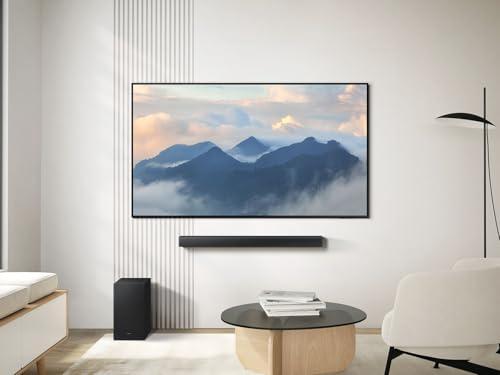
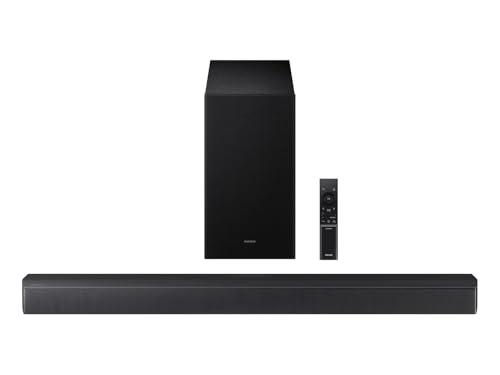
When your TV's built-in speakers make dialogue sound like it's coming from underwater and action scenes lack any real punch, it's time to consider a soundbar upgrade. But the soundbar market has evolved dramatically over the past few years, creating some interesting choices for different budgets and needs. Today, we're comparing two very different approaches: Samsung's budget-friendly HW-B630F and Klipsch's premium Flexus Core 300.
These soundbars represent fundamentally different philosophies. The Samsung HW-B630F, released in 2025, focuses on delivering solid performance at an accessible price point. Meanwhile, the Klipsch Flexus Core 300, also launched in 2025, introduces cutting-edge room correction technology that was previously only available in high-end audio equipment. At the time of writing, you're looking at roughly a 4x price difference between these models, which makes this comparison particularly interesting for understanding what that extra investment actually buys you.
Before diving into specifics, let's establish what makes a soundbar effective. The core job is improving upon your TV's audio, which typically involves tiny speakers firing downward or backward with virtually no bass response. A good soundbar addresses three main areas: dialogue clarity, bass impact, and spatial audio (the sense that sound is coming from around you rather than just straight ahead).
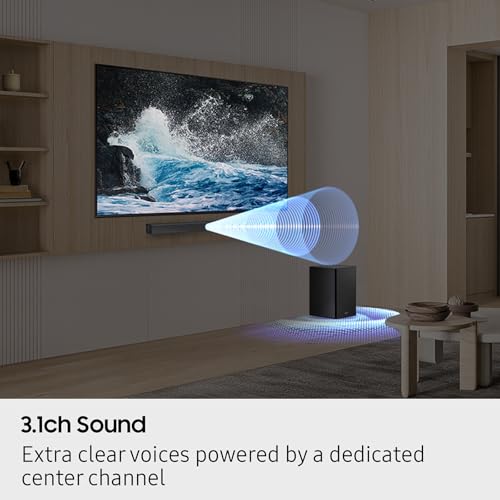
The number of channels tells you how many discrete audio streams the soundbar can handle. A 3.1 system like the Samsung has left, center, and right channels plus a subwoofer (.1 refers to the dedicated bass channel). The Klipsch's 5.1.2 configuration adds dedicated surround channels (the middle number) and height channels (the final number) for Dolby Atmos content.
Virtual surround processing uses digital algorithms to simulate surround effects from fewer physical speakers, while true surround systems use actual speakers positioned to create authentic directional audio. This distinction becomes crucial when comparing these two approaches.
The Samsung HW-B630F represents what I consider the sweet spot for mainstream soundbar buyers. Samsung has refined their B-series over several generations, and the 2025 model builds on lessons learned from previous iterations while keeping costs reasonable.
Audio Performance and Processing
What immediately stands out about the Samsung is its dedicated center channel. While this might sound like marketing speak, having a physical driver specifically handling dialogue makes a noticeable difference. The center channel is tuned to emphasize the frequency range where human speech lives (roughly 300Hz to 3kHz), which means voices stay clear even when explosions or music compete for attention.
Samsung's Voice Enhance mode goes further by intelligently boosting vocal frequencies while slightly reducing competing elements. During our research into user feedback, this feature consistently receives praise from people who struggle with dialogue clarity – particularly older viewers or those with hearing challenges. The Adaptive Sound processing analyzes incoming audio in real-time, automatically adjusting the balance between dialogue, effects, and music based on what you're watching.
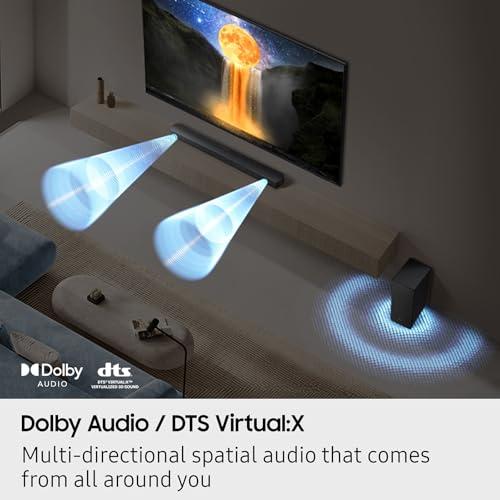
The DTS Virtual:X processing deserves special attention because it's doing some clever acoustic tricks. Using psychoacoustic principles (basically, how our brains interpret sound direction), it creates the illusion of height and surround effects by carefully timing and filtering audio signals. While purists might argue this isn't "true" surround sound, the consensus from reviews suggests it's convincingly effective for most content and room layouts.
Bass Response and Subwoofer Design
The wireless subwoofer is a major advantage over all-in-one soundbars in this price range. The separate 6-inch driver in a ported enclosure can move more air than integrated woofers, creating more impactful low-frequency effects. The wireless connection (operating on 2.4GHz) allows flexible placement – crucial since subwoofer location dramatically affects bass response in any room.
Based on specifications and user reports, the sub handles frequencies down to about 50Hz effectively, which covers most movie sound effects and music fundamentals. It won't reproduce the deepest pipe organ notes or the most extreme low-frequency effects, but it provides satisfying punch for typical home entertainment.
Gaming and Connectivity Considerations
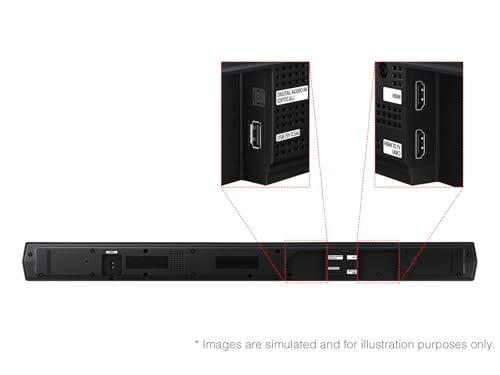
Here's where the Samsung shows its age and budget positioning. The HDMI 1.4 connectivity with basic ARC (Audio Return Channel) support handles current TV content well but falls short for modern gaming. If you own a PlayStation 5 or Xbox Series X, you'll miss out on 4K/120Hz gaming modes because the soundbar can't pass through those video signals.
The Game Mode processing attempts to compensate by optimizing directional audio cues – useful for hearing footsteps or gunfire location in competitive games. However, the lack of true surround speakers limits its effectiveness compared to more advanced systems.
The Klipsch Flexus Core 300 represents a significant leap in soundbar technology, primarily due to its integration of Dirac Live room correction. This is genuinely industry-first technology that brings professional audio calibration to consumer soundbars.
Revolutionary Room Correction Technology
Dirac Live works by measuring your room's acoustic properties using the included microphone, then applying sophisticated digital filters to correct frequency response problems. Every room has acoustic issues – reflections, resonances, and absorption that color the sound. Traditional soundbars offer preset EQ modes, but Dirac Live creates a custom acoustic profile specific to your space.
The practical impact is remarkable. Based on professional reviews and user experiences, the Klipsch maintains consistent tonal balance and imaging regardless of room size or furniture placement. This technology was previously exclusive to high-end AV receivers costing thousands of dollars, making its inclusion in a soundbar significant.
The system can store up to 10 different room profiles, useful if you rearrange furniture or want optimized settings for different listening positions. The Limited Bandwidth version (included) corrects frequencies up to 500Hz, while a paid upgrade enables full-range correction. For most users, the included version addresses the most problematic bass and lower midrange issues.
True Dolby Atmos Implementation
Unlike the Samsung's virtual processing, the Klipsch uses physical up-firing drivers to bounce sound off your ceiling, creating authentic overhead effects. The difference is immediately apparent with properly mixed Dolby Atmos content – helicopters actually sound like they're flying overhead rather than just louder.
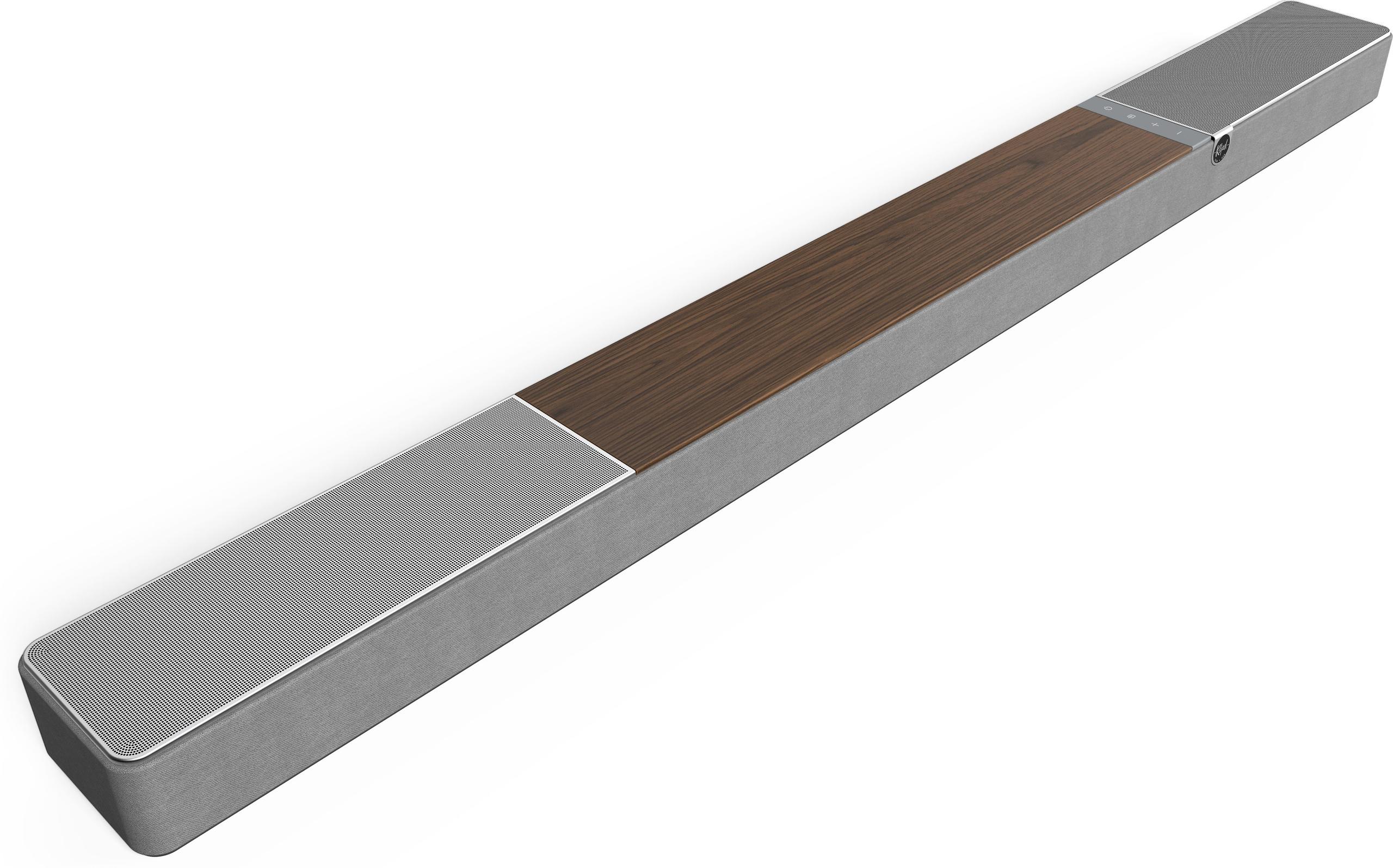
The 13-driver array is thoughtfully designed: four front-firing drivers handle the main soundstage, dedicated up-firing speakers create height effects, side-firing drivers generate surround ambiance, and four integrated subwoofers provide bass response. This comprehensive driver complement enables the Klipsch to create a convincing surround bubble from a single unit.
Horn-Loaded Tweeter Technology
Klipsch's signature horn-loaded tweeter isn't just about brand identity – it's an acoustic design that improves efficiency and directional control. The horn acts as an acoustic lens, focusing high-frequency energy toward the listening area while reducing dispersion to walls and ceiling. This results in clearer dialogue and more precise imaging, especially important for center channel performance.
Advanced Connectivity and Future-Proofing
The HDMI 2.1 support with enhanced Audio Return Channel (eARC) is crucial for modern home theaters. Unlike basic ARC, eARC can handle high-bandwidth audio formats and provides better synchronization. The 8K/60Hz and 4K/120Hz passthrough ensures compatibility with next-generation gaming consoles and media players.
The comprehensive streaming support – including AirPlay 2, Google Cast, and direct service integration – transforms the Klipsch into a capable music system beyond its home theater duties. The dual-band Wi-Fi provides stable connectivity for high-resolution streaming.
Dialogue Clarity Championship
Both soundbars excel at dialogue reproduction, but through different approaches. The Samsung uses intelligent processing and dedicated center channel tuning to lift voices from complex mixes. It's particularly effective with TV content and streaming shows where dialogue clarity is paramount.
The Klipsch takes a more sophisticated approach, combining horn-loaded tweeter technology with room correction to ensure consistent vocal performance regardless of acoustic environment. Based on professional reviews, the Klipsch maintains dialogue intelligibility even at lower volumes or when sitting off-axis from the soundbar.
For most viewers, both provide substantial improvement over TV speakers. The Klipsch offers more consistent performance across different rooms and content types, while the Samsung delivers impressive results for its price point.
Bass Response and Room Integration
The bass comparison reveals interesting tradeoffs. The Samsung's separate subwoofer can be positioned optimally within your room, potentially providing deeper extension and more flexibility. However, it requires finding suitable placement and may create timing issues if not properly integrated.
The Klipsch's four integrated subwoofers eliminate timing mismatches and benefit from Dirac Live optimization. While individual drivers are smaller (4-inch vs 6-inch), the multiple driver approach and room correction often result in more accurate, better-integrated bass response. Users consistently report that the Klipsch provides more musical bass reproduction, while the Samsung offers more dramatic movie sound effects.
Surround Sound Authenticity
This comparison highlights the fundamental difference between virtual and physical surround processing. The Samsung's DTS Virtual:X creates surprisingly convincing surround effects for stereo and 5.1 content, particularly effective for expanding the apparent width and height of the soundstage.
The Klipsch's physical drivers create authentic directional effects that virtual processing simply cannot match. With proper Dolby Atmos content, the overhead effects are genuinely convincing. However, this advantage only applies to compatible content – with stereo sources, both soundbars rely on processing algorithms.
The connectivity differences reflect each product's target market and release timeline. The Samsung covers essential needs with HDMI ARC, optical input, and Bluetooth, but the HDMI 1.4 limitation creates problems for modern gaming and future video formats.
The Klipsch's HDMI 2.1 support addresses current and future requirements, essential for next-generation gaming consoles and 8K content. The comprehensive streaming support makes it function as a complete audio hub rather than just a TV accessory.
For gaming specifically, the Klipsch provides superior positional audio through its physical surround drivers, plus the low-latency processing necessary for competitive gaming. The Samsung includes gaming-optimized processing but lacks the speaker configuration to fully realize directional audio benefits.
At the time of writing, these soundbars occupy very different value propositions. The Samsung HW-B630F delivers substantial audio improvement over TV speakers at roughly one-quarter the cost of the Klipsch. For many buyers, this represents the optimal balance of performance and affordability.
The Klipsch Flexus Core 300 justifies its premium pricing through genuinely advanced technology and superior performance. The Dirac Live room correction alone represents significant value for audio enthusiasts familiar with its benefits from high-end audio equipment.
Consider the Samsung if you want dramatic improvement over TV audio without complexity or high cost. It excels for TV shows, movies, and casual gaming in small-to-medium rooms. The simple setup and reliable performance make it ideal for mainstream users who want better sound without becoming audio hobbyists.
Choose the Klipsch if you're serious about home theater performance and future-proofing. The superior surround processing, room correction, and modern connectivity justify the investment for enthusiasts with high-quality source material and larger rooms. It's particularly compelling if you plan to expand with additional speakers over time.
Your choice between these soundbars ultimately depends on your priorities, room requirements, and budget comfort level. The Samsung HW-B630F represents excellent value for mainstream users seeking substantial audio improvement without complexity. Its straightforward operation, solid performance, and attractive pricing make it a sensible choice for most living rooms.
The Klipsch Flexus Core 300 targets serious home theater enthusiasts willing to invest in cutting-edge audio technology. Its professional-grade room correction, true Dolby Atmos processing, and comprehensive connectivity create a premium experience that justifies its higher cost for the right user.
Consider room size carefully – the Samsung works best in smaller spaces where its power limitations won't be exposed, while the Klipsch has the output and optimization capabilities for larger rooms. Factor in your source material too; if you primarily watch streaming content and casual TV, the Samsung provides excellent value. If you enjoy movies with advanced audio tracks and high-quality music, the Klipsch better realizes that content's potential.
Both soundbars represent significant improvements over TV audio, but they serve different needs and budgets. The Samsung democratizes good sound for mainstream buyers, while the Klipsch brings professional-grade audio technology to home theater enthusiasts. Choose based on your specific requirements, but either option will transform your viewing experience compared to built-in TV speakers.
| Samsung HW-B630F B-Series | Klipsch Flexus Core 300 |
|---|---|
| Channel Configuration - Determines surround sound capability and immersion level | |
| 3.1 channels (3 front + subwoofer) with virtual surround processing | 5.1.2 channels with physical up-firing drivers for true Dolby Atmos |
| Room Correction Technology - Critical for consistent sound quality across different rooms | |
| None (basic preset sound modes only) | Dirac Live room correction with included calibration microphone |
| HDMI Video Support - Essential for modern gaming consoles and future compatibility | |
| HDMI 1.4 with basic ARC (1080p passthrough only) | HDMI 2.1 with eARC (8K/60Hz and 4K/120Hz passthrough) |
| Dolby Atmos Support - Determines overhead sound effects authenticity | |
| No Dolby Atmos (DTS Virtual:X simulation only) | True Dolby Atmos and DTS:X with physical height channels |
| Driver Array - More drivers generally mean better sound separation and power | |
| 4 total drivers (3 in bar + 1 subwoofer) | 13 total drivers including 4 integrated subwoofers |
| Wireless Connectivity - Affects streaming options and smart home integration | |
| Bluetooth 4.2 only (no Wi-Fi) | Dual-band Wi-Fi, Bluetooth 5.3, AirPlay 2, Google Cast |
| Subwoofer Design - Impacts bass quality and room placement flexibility | |
| Separate wireless 6" subwoofer (flexible placement) | Four integrated 4" subwoofers (no separate unit needed) |
| Maximum Output - Determines how loud it can play for larger rooms | |
| Not specified (suitable for small-medium rooms) | 106 dB maximum (handles large rooms effectively) |
| Streaming Services - Built-in access to music platforms without additional devices | |
| USB playback only (no streaming service integration) | Spotify Connect, TIDAL Connect, and other direct streaming |
| Setup Complexity - Time and technical knowledge required for optimal performance | |
| Simple plug-and-play with basic remote control | Advanced app-based calibration with professional room optimization |
| Expandability - Ability to add more speakers for full surround system | |
| Optional wireless rear speakers (becomes 5.1 system) | Wireless rears and additional subs (becomes 7.1.4 system) |
| Physical Size - Important for TV stand compatibility and room aesthetics | |
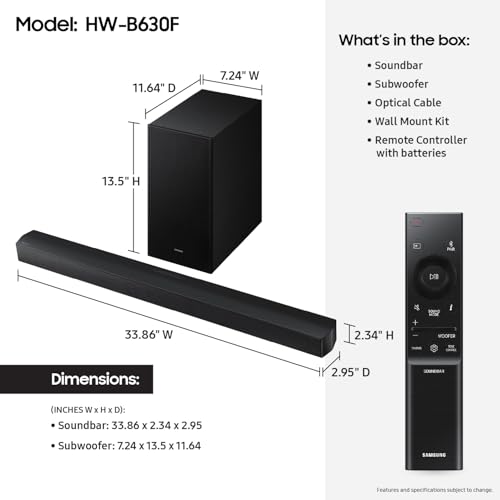
| 33.86" wide × 2.34" high (fits most TV setups) | 54" wide × 3.06" high (requires large TV or wall mounting) |
The Samsung HW-B630F offers exceptional value for budget-conscious buyers, delivering significant audio improvement over TV speakers at a fraction of the cost of premium models. The Klipsch Flexus Core 300 provides superior performance with professional-grade room correction and true Dolby Atmos, justifying its higher price for serious home theater enthusiasts who want the best possible sound quality.
The key difference is that the Samsung HW-B630F is a 3.1-channel system that uses virtual surround processing, while the Klipsch Flexus Core 300 is a 5.1.2-channel system with physical up-firing drivers for true Dolby Atmos. The Klipsch also includes industry-first Dirac Live room correction technology, whereas the Samsung relies on basic preset sound modes.
Both soundbars excel at dialogue, but the Klipsch Flexus Core 300 has the edge with its horn-loaded tweeter technology and Dirac Live room correction that ensures consistent vocal clarity in any room. The Samsung HW-B630F also provides excellent dialogue improvement with its dedicated center channel and Voice Enhance mode, making it a great choice for TV shows and movies.
The Klipsch Flexus Core 300 fully supports next-gen gaming with HDMI 2.1 connectivity that handles 4K/120Hz passthrough for PlayStation 5 and Xbox Series X. The Samsung HW-B630F has HDMI 1.4 which limits it to 1080p passthrough, so you'll need to connect gaming consoles directly to your TV and use audio return channel for sound.
The Samsung HW-B630F includes a separate wireless 6-inch subwoofer that can be positioned anywhere for optimal bass response and typically provides deeper low-frequency extension. The Klipsch Flexus Core 300 uses four integrated 4-inch subwoofers with Dirac Live optimization, resulting in more accurate and musical bass reproduction that's better integrated with the main speakers.
Yes, both soundbars are expandable. The Samsung HW-B630F can add optional wireless rear speakers to become a 5.1 system. The Klipsch Flexus Core 300 offers more extensive expansion options, supporting wireless rear speakers and additional subwoofers to create a full 7.1.4 Dolby Atmos system.
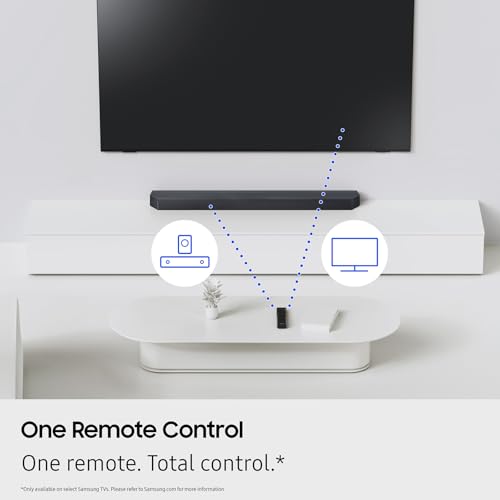
The Samsung HW-B630F is much simpler with plug-and-play installation and basic remote control operation. The Klipsch Flexus Core 300 requires more complex setup using the mobile app and included calibration microphone for Dirac Live room correction, but this extra effort results in significantly better optimized sound.
The Samsung HW-B630F only supports Bluetooth 4.2 for wireless audio from phones and tablets, with no Wi-Fi or streaming service integration. The Klipsch Flexus Core 300 offers comprehensive streaming with Wi-Fi, AirPlay 2, Google Cast, and direct integration with Spotify, TIDAL, and other music services.
The Klipsch Flexus Core 300 is better suited for large rooms with its 106 dB maximum output and 13-driver array that can fill bigger spaces effectively. The Samsung HW-B630F works best in small to medium-sized rooms where its power limitations won't be as noticeable.
The Samsung HW-B630F at 33.86 inches wide works well with TVs 40 inches and larger without overhanging. The Klipsch Flexus Core 300 measures 54 inches wide and is designed for larger TVs (55+ inches) or wall mounting to avoid overhang issues.
Only the Klipsch Flexus Core 300 supports true Dolby Atmos with physical up-firing drivers that bounce sound off your ceiling for authentic overhead effects. The Samsung HW-B630F uses DTS Virtual:X processing to simulate height effects but doesn't actually decode Dolby Atmos content.
Choose the Samsung HW-B630F if you want substantial audio improvement at a budget-friendly price with simple setup and operation. Select the Klipsch Flexus Core 300 if you're serious about home theater performance, have a larger room, want true Dolby Atmos, and are willing to invest in professional-grade room correction technology for the best possible sound quality.
We've done our best to create useful and informative comparisons to help you decide what product to buy. Our research uses advanced automated methods to create this comparison and perfection is not possible - please contact us for corrections or questions. These are the sites we've researched in the creation of this article: samsung.com - bhphotovideo.com - crutchfield.com - youtube.com - bestproducts.com - videoandaudiocenter.com - pcrichard.com - bhphotovideo.com - samsung.com - youtube.com - requiremints.com - karlsonline.com - crutchfield.com - youtube.com - donstv.com - samsung.com - bhphotovideo.com - youtube.com - youtube.com - crutchfield.com - costco.ca - rtings.com - crutchfield.com - accio.com - bhphotovideo.com - manuals.plus - samsung.com - saraappliance.com - crutchfield.com - whathifi.com - avnirvana.com - hometechnologyreview.com - ecoustics.com - gearpatrol.com - klipsch.com - avsforum.com - youtube.com - avsforum.com - listenup.com - chowmain.software - klipsch.com - novis.ch - avsforum.com - klipsch.ca - lefflers.se - abt.com - sweetwater.com - wifihifi.com - klipsch.com - dirac.com

Privacy Policy
Terms and Conditions - Affiliate Policy
Home Security
© Copyright 2008-2026.
11816 Inwood Rd #1211, Dallas, TX 75244