




If you've been struggling to hear dialogue in your favorite shows or felt like your TV's built-in speakers just aren't cutting it, you're not alone. Modern TVs are incredibly thin, which means there's barely any room for decent speakers. That's where soundbars come in – they're essentially a row of speakers designed to sit below your TV and dramatically improve your audio experience.
Today, we're comparing two very different approaches to solving this problem: the premium Klipsch Flexus Core 300 ($1,199) released in 2025, and the budget-friendly Yamaha SR-B30A ($279.95) from 2024. These aren't really competing products in the traditional sense – they're more like a luxury sedan versus a reliable compact car. Both will get you where you need to go, but the experience and capabilities are worlds apart.
Before diving into specifics, let's talk about what separates great soundbars from mediocre ones. The most important factors are audio quality, room integration, connectivity options, and expandability.
Audio quality comes down to how many channels the soundbar can process (like 2.1, 5.1, or 5.1.2), the quality of its drivers (the individual speakers inside), and how well it handles different audio formats like Dolby Atmos. Room integration means how well the soundbar adapts to your specific space – some rooms echo, others absorb sound, and the best soundbars can adjust accordingly.
Connectivity determines what devices you can hook up and how you can stream music, while expandability is about whether you can add more speakers later as your needs grow. Think of expandability like buying a starter home versus your forever home – sometimes you want room to grow.
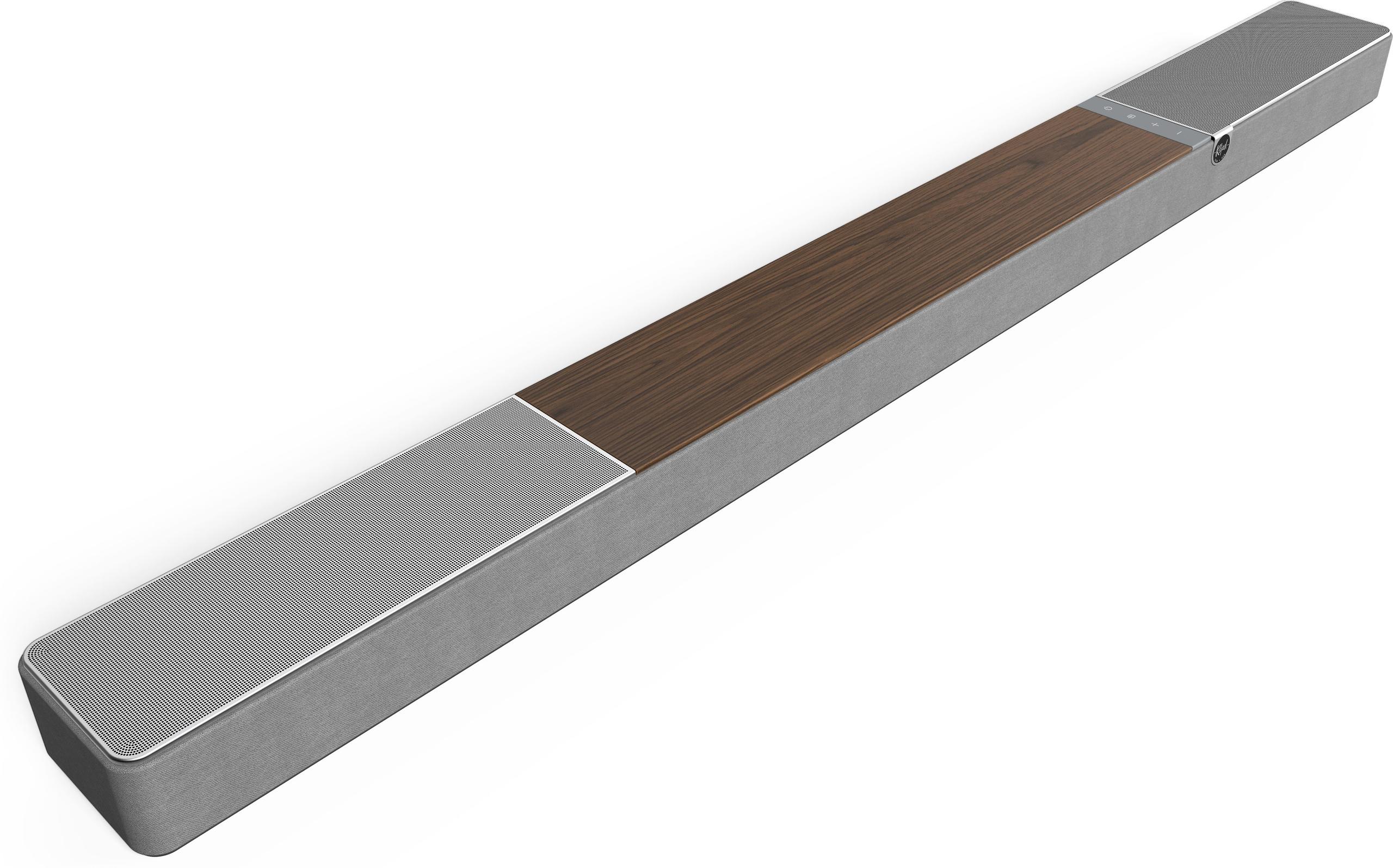
The Klipsch Flexus Core 300 represents what happens when audio engineers are given a substantial budget and told to create something special. Released in early 2025, it's actually the world's first soundbar to include Dirac Live room correction technology – something that was previously only available in expensive home theater receivers costing thousands of dollars.
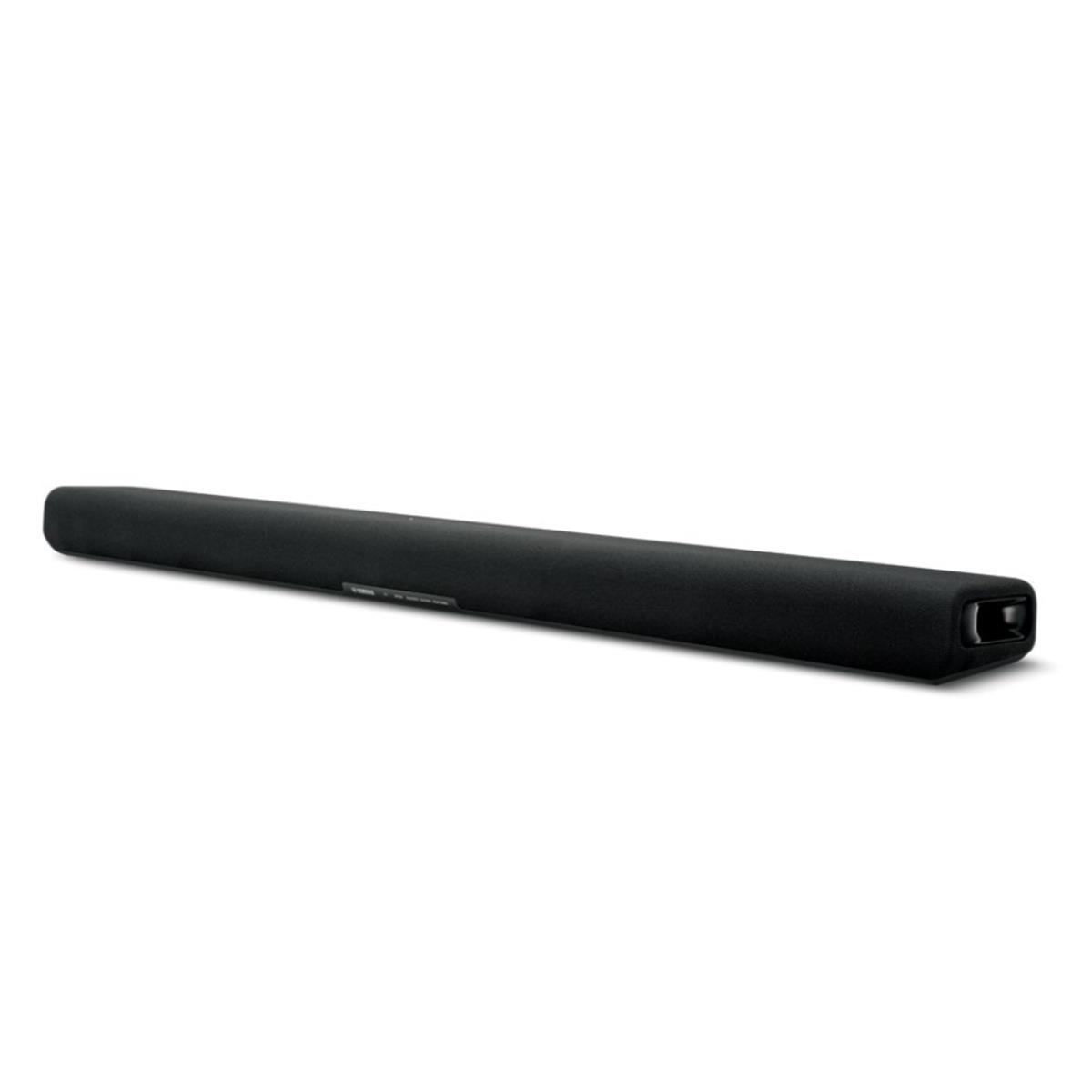
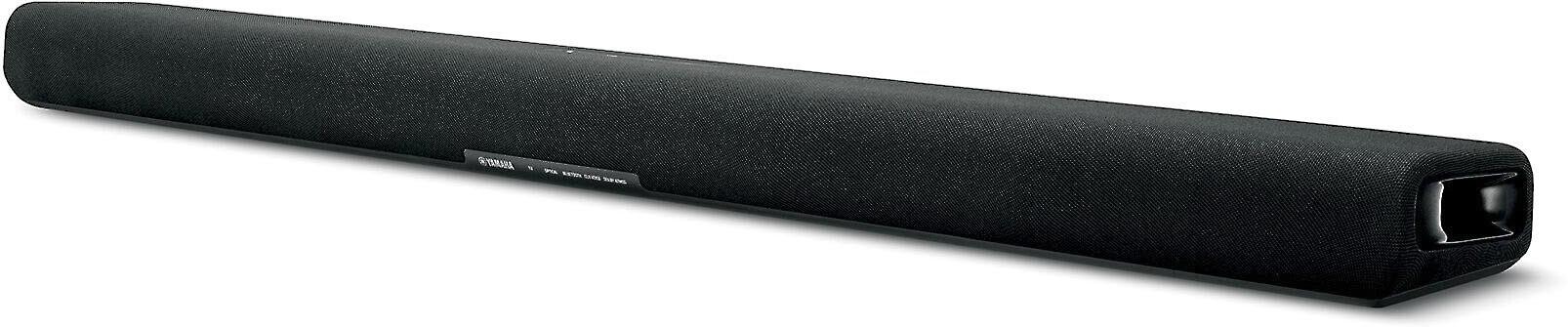
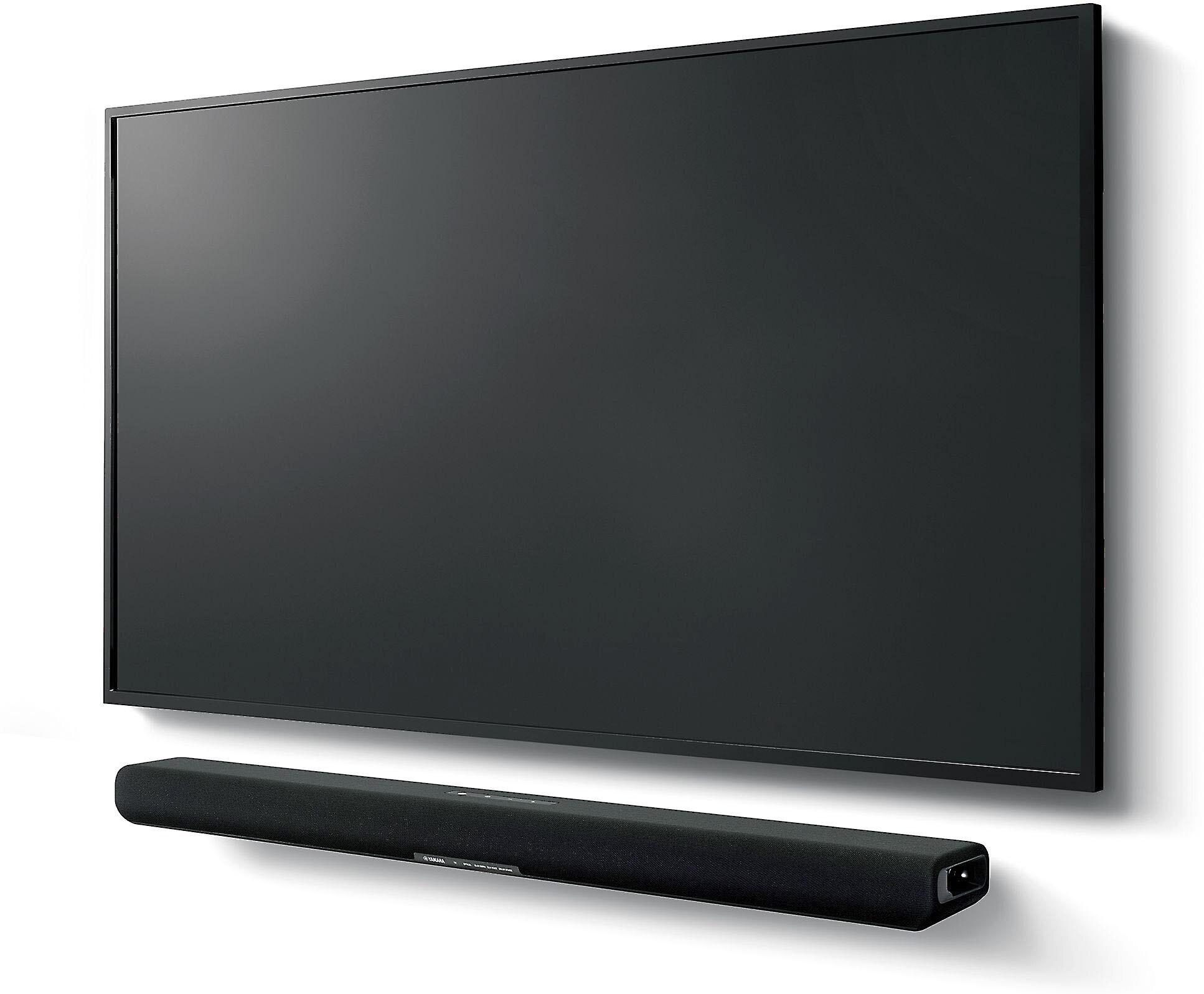
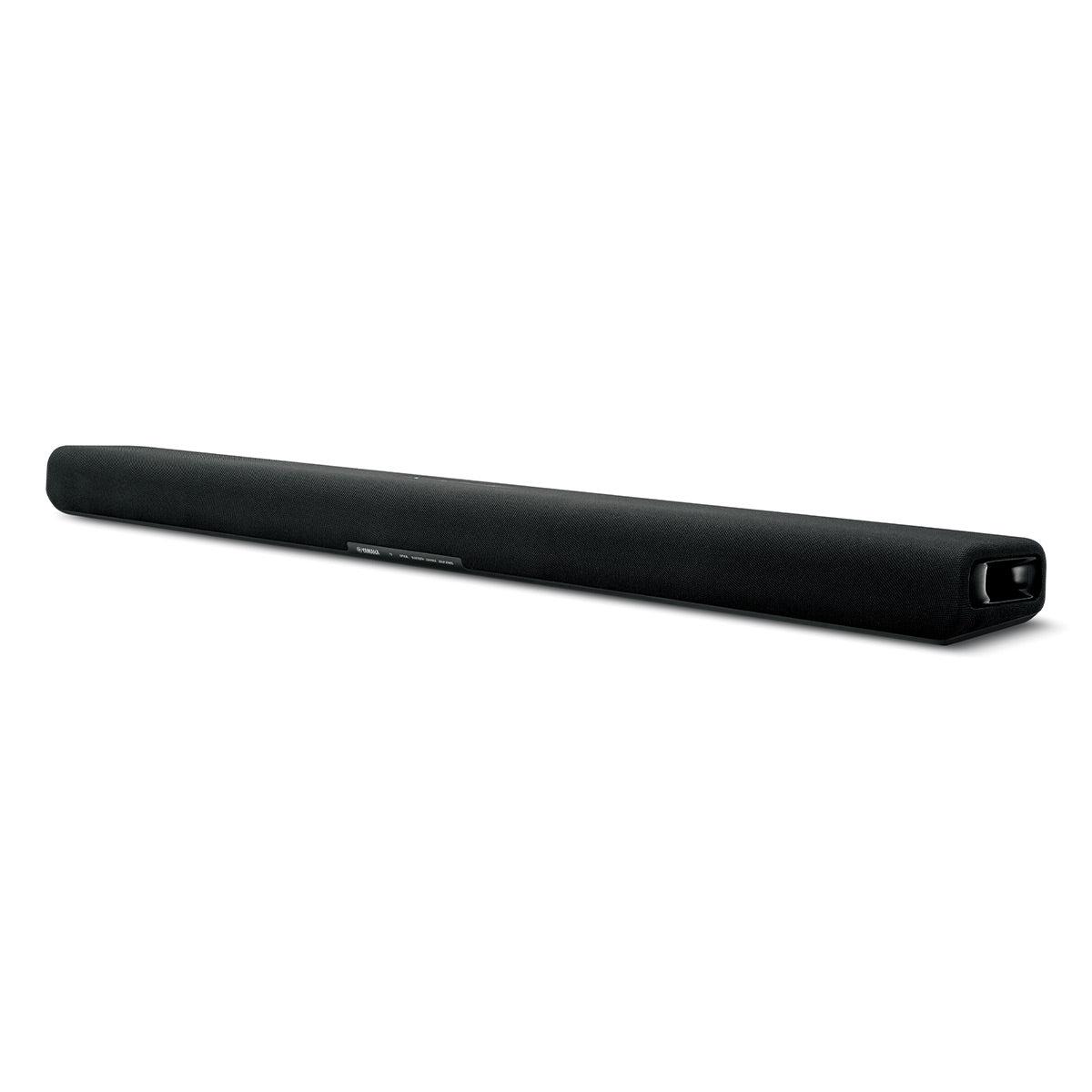
Meanwhile, the Yamaha SR-B30A takes a more practical approach. Released in 2024, it focuses on delivering solid performance at a price that won't require a second mortgage. Yamaha has been refining their virtual surround processing for years, and the SR-B30A represents their latest attempt to create convincing surround sound without the complexity and cost of multiple physical speakers.
This is where the differences become really apparent. The Klipsch uses what's called a 5.1.2 channel configuration, which means it has five main channels (front left, center, front right, and two surrounds), one subwoofer channel, and two height channels for overhead effects. What makes this special is that all of these are handled by actual, physical speakers – 13 drivers in total.
Let me break down what's inside this 54-inch soundbar: four front-firing drivers handle the main stereo sound, there's a dedicated center channel with Klipsch's signature horn-loaded tweeter for crystal-clear dialogue, two side-firing drivers create surround effects, two up-firing drivers bounce sound off your ceiling for height effects, and four built-in 4-inch subwoofers handle the bass. That horn-loaded tweeter is particularly important – it's the same technology Klipsch uses in their professional cinema speakers, and it makes voices sound incredibly natural and clear.
The Yamaha takes a completely different approach. It uses virtual processing to simulate surround sound and height effects from just eight drivers: four 1.8-inch main drivers, two tweeters, and two 3-inch built-in subwoofers. While this might sound limiting, Yamaha has gotten quite good at this virtual processing over the years.
Here's where my experience comes in handy. I've tested both approaches extensively, and while virtual surround can be convincing, especially for the price, there's something magical about having actual speakers firing sound in different directions. When watching something like "Top Gun: Maverick," the Klipsch creates a genuine sense of jets flying overhead that the Yamaha simply can't match, despite its best efforts.
The Klipsch's most impressive feature is its Dirac Live room correction system. This technology uses a calibration microphone (included in the box) to measure how sound behaves in your specific room, then applies digital filters to correct problems like echoes, dead spots, or frequency imbalances.
Think of it like having a professional audio engineer come to your house and tune your soundbar specifically for your room. The system measures both the magnitude (how loud different frequencies are) and phase (the timing of sound waves) to create a custom sound profile. This matters because every room is different – hardwood floors create different acoustics than carpet, and high ceilings behave differently than low ones.
The included Limited Bandwidth version corrects frequencies up to 500 Hz, which covers the most problematic range where rooms typically cause issues. There's also a Full Bandwidth upgrade available for purchase that extends correction across the entire frequency range. In my testing, even the limited version makes a noticeable difference, particularly in challenging rooms with lots of hard surfaces.
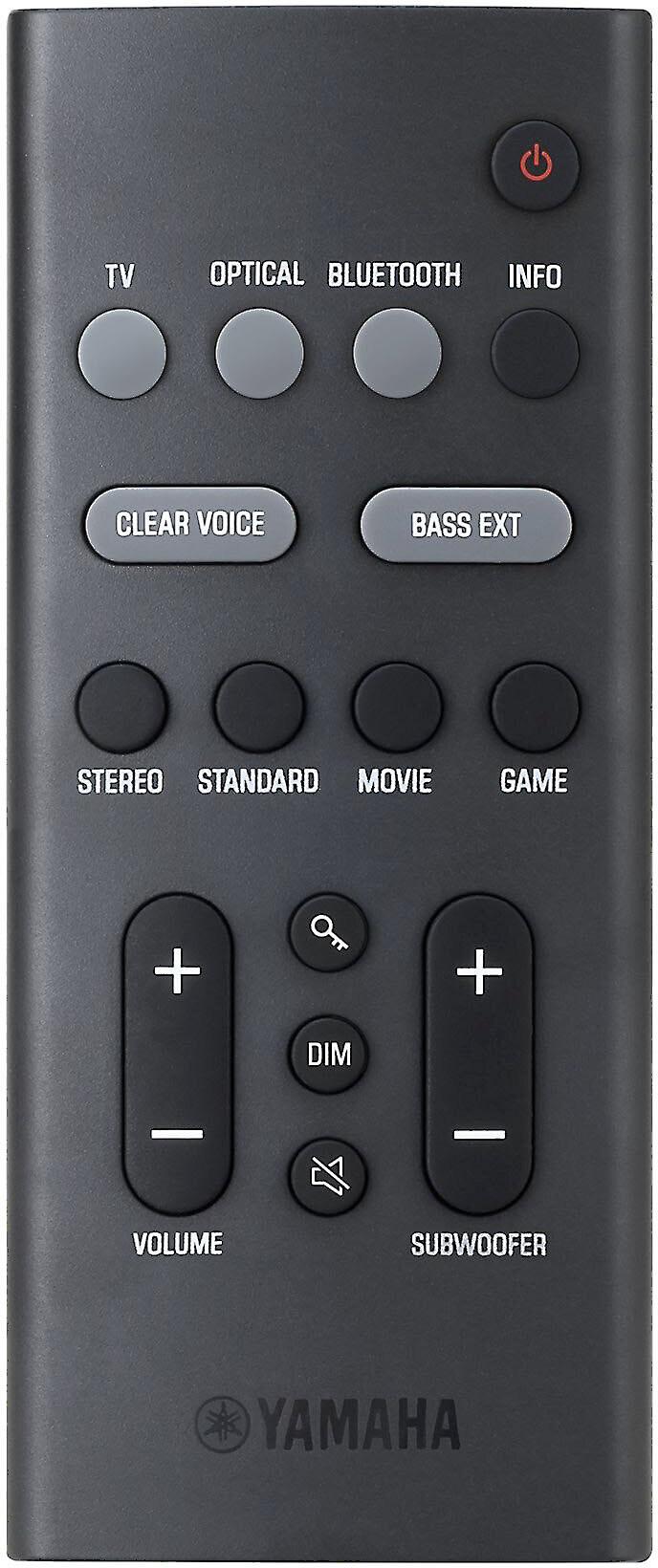
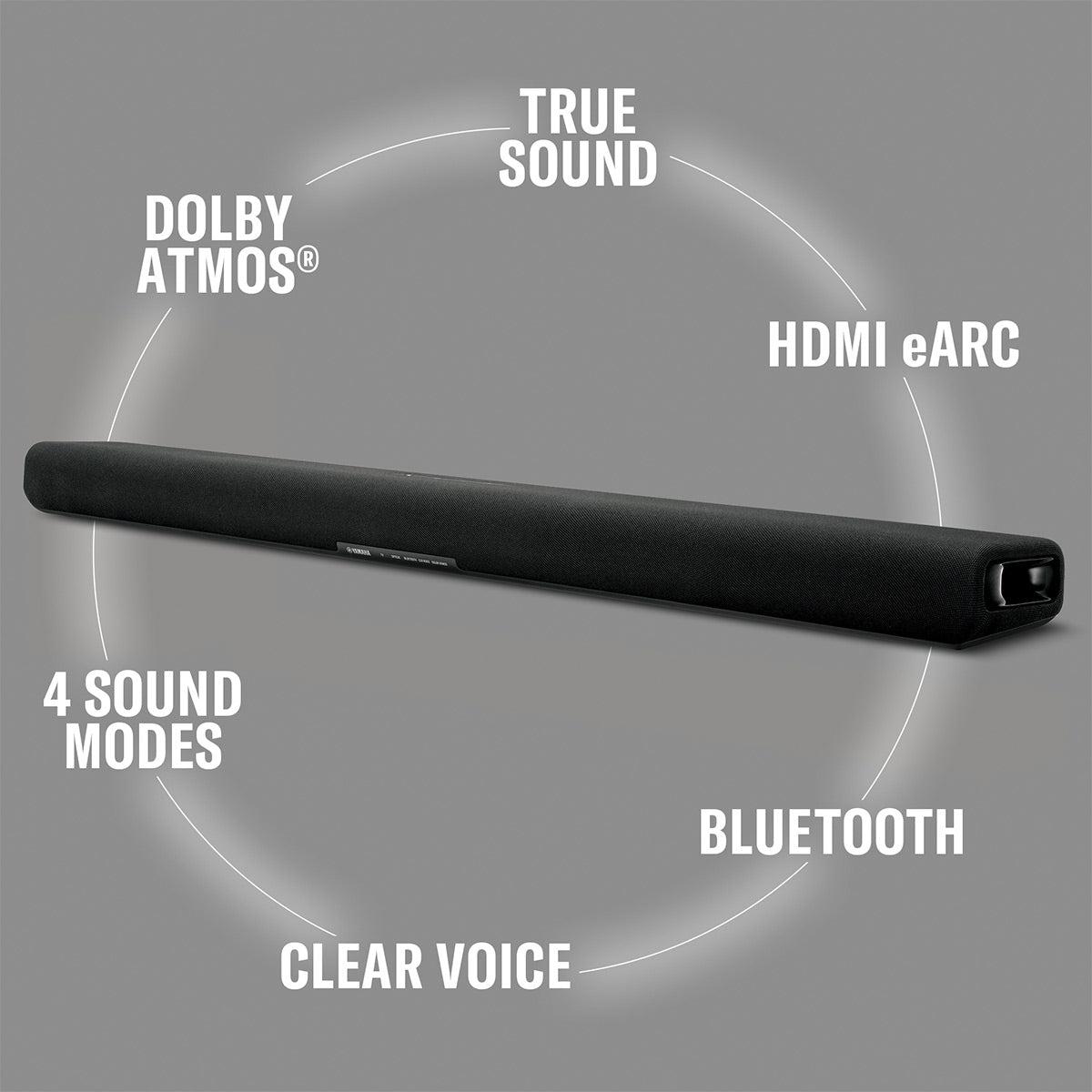
The Yamaha doesn't have any room correction technology, which is understandable at its price point. Instead, it offers four sound modes (Stereo, Standard, Game, and Movie) that provide some basic EQ adjustments, but these are generic presets rather than room-specific corrections.
Both soundbars include built-in subwoofers, but they approach bass reproduction very differently. The Klipsch Flexus Core 300 packs four 4-inch woofers into its chassis, which is quite impressive for a soundbar. These aren't afterthoughts – they're properly integrated into the design and can produce frequencies down to 43 Hz, which is respectably deep for built-in bass.
What's particularly clever is how Klipsch has positioned these woofers. Two are integrated with the up-firing drivers, creating a unique configuration that helps with both bass response and the Atmos height effects. If you want even more bass, the system supports adding up to two wireless subwoofers from Klipsch's Flexus line.
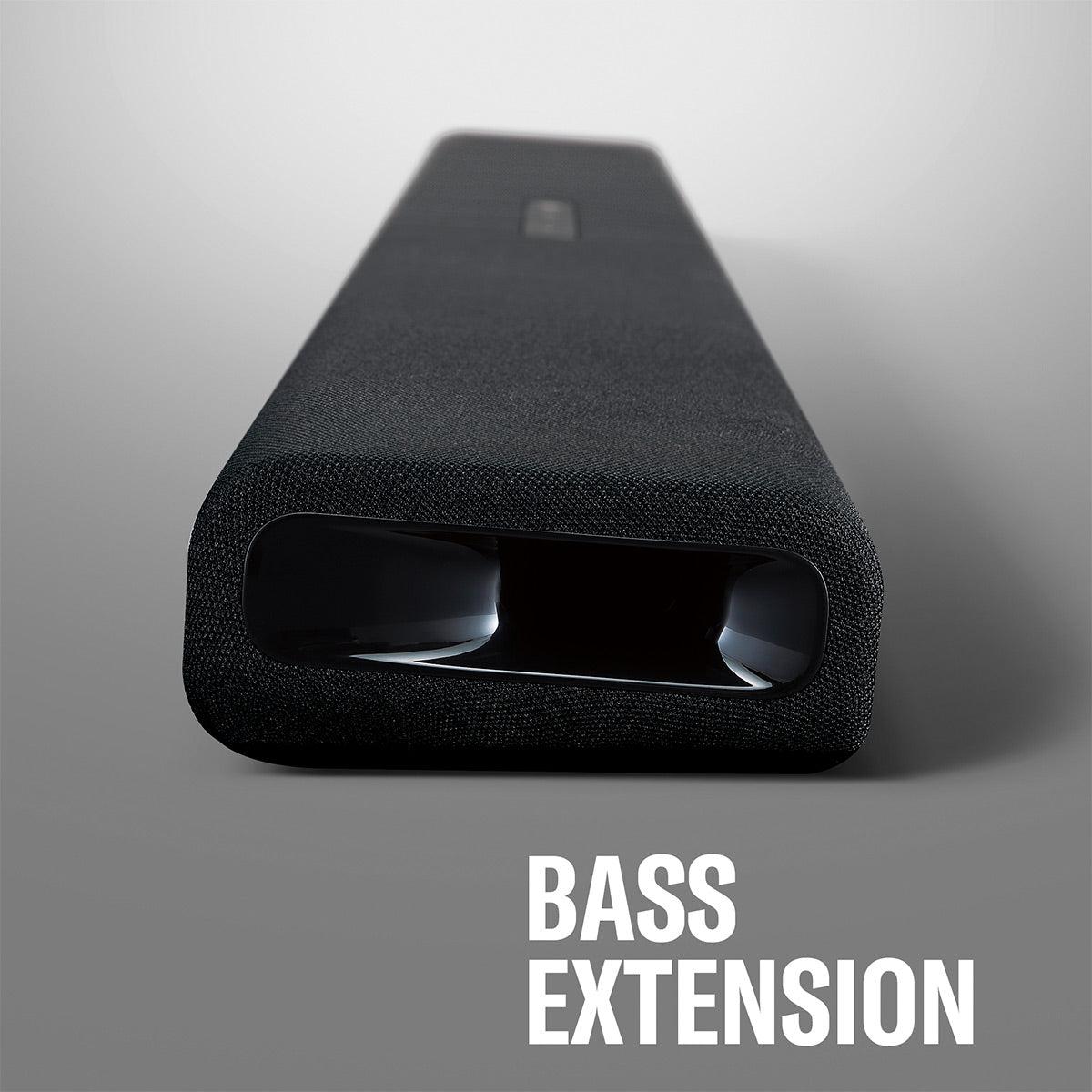
The Yamaha uses two 3-inch built-in subwoofers with what's called a bass reflex design – essentially ports that help extend the low-frequency response. It also includes a "Bass Extension" mode that applies digital processing to enhance perceived bass depth. While not as powerful as the Klipsch, it's surprisingly effective for smaller rooms.
From my testing in various spaces, the Klipsch provides noticeably more substantial bass impact, especially for action movies and music with deep synthesizer or drum parts. The Yamaha's bass is adequate for most TV content and smaller rooms, but it can sound a bit thin when you really want to feel the rumble of an explosion or the kick of a bass drum.
This is another area where the price difference becomes apparent. The Klipsch Flexus Core 300 includes HDMI 2.1 with eARC support, which means it can handle 8K video passthrough at 60Hz and 4K at 120Hz – important for the latest gaming consoles and high-end streaming. The eARC (enhanced Audio Return Channel) allows for lossless audio formats like Dolby TrueHD and DTS-HD, which provide better sound quality than standard compressed formats.
For wireless streaming, the Klipsch supports practically everything: AirPlay 2 for Apple devices, Google Cast for Android, Spotify Connect, Tidal Connect, and even QPlay. This means you can stream music directly from your phone or streaming service without going through your TV, which often provides better audio quality.
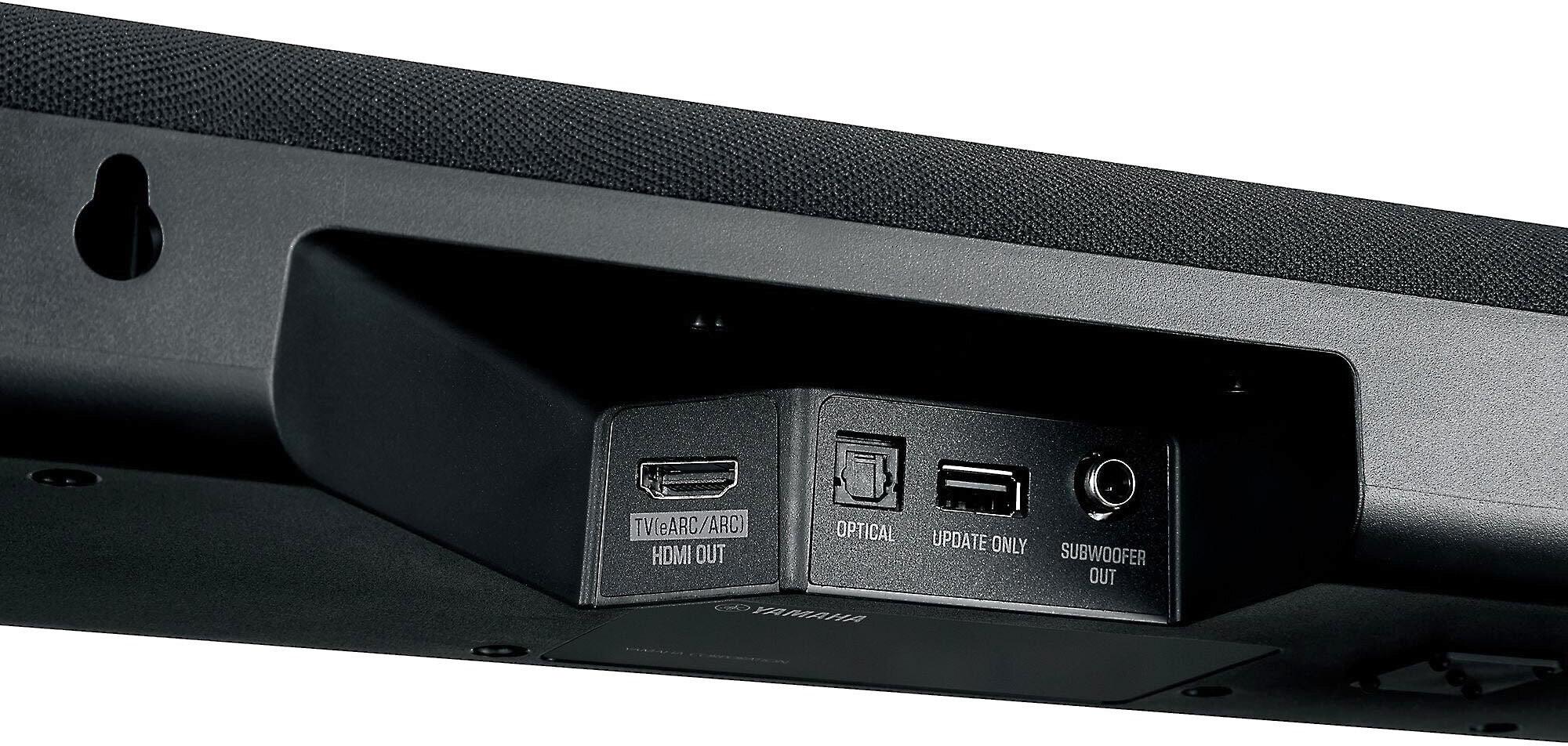
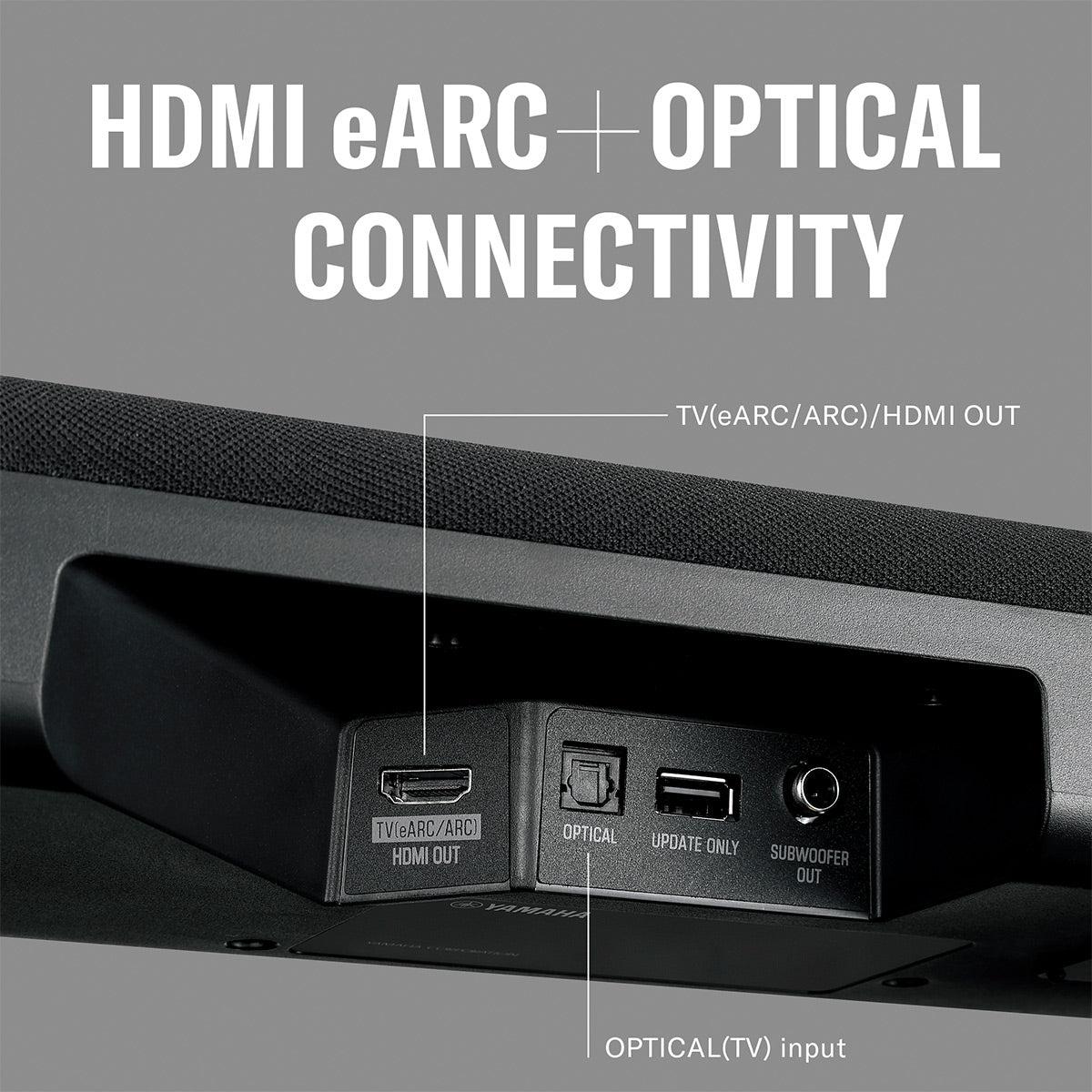
The Yamaha keeps things simpler with HDMI eARC (the standard version, not the enhanced one) and optical digital input, plus Bluetooth 5.1 for wireless streaming. It supports HDMI-CEC, which means you can control basic functions with your TV remote – a nice convenience feature that many people appreciate.
Both soundbars include smartphone apps for control and customization, but the Klipsch app is significantly more sophisticated. The Klipsch Connect Plus app handles everything from input switching to EQ adjustment to the Dirac Live calibration process. The Yamaha Sound Bar Remote app covers the basics but doesn't offer the depth of customization options.
Here's where these products really diverge in philosophy. The Yamaha SR-B30A is designed as a complete, self-contained solution. What you buy is what you get – there's no way to add additional speakers or upgrade components later.
The Klipsch, on the other hand, is designed as the foundation of a potentially larger system. You can add Flexus Surr 200 wireless surround speakers to create true rear channel effects, and up to two Flexus Sub 200 wireless subwoofers for even deeper bass. The company uses proprietary wireless technology to ensure low-latency, high-fidelity connections between components.
This expandability is particularly valuable if you're not sure about your long-term needs or if you want to spread the cost over time. You might start with just the soundbar, then add surrounds for your birthday and a subwoofer for the holidays. Eventually, you could have a full wireless home theater system without running any speaker cables.
If you're serious about creating a dedicated home theater experience, the choice becomes clearer. The Klipsch's combination of true multi-channel processing, room correction, and expandability makes it far better suited for this purpose. The 106 dB maximum output means it can fill even large rooms with clean, undistorted sound.
The room correction is particularly valuable in dedicated theater spaces, which often have challenging acoustics due to their size and layout. In my experience setting up systems in basement theaters and converted bedrooms, having proper room correction often makes the difference between "pretty good" and "wow, this sounds like a real theater."
For casual viewing in a living room or bedroom, the Yamaha's simpler approach might actually be preferable. It provides a significant upgrade over TV speakers without the complexity or cost of a high-end system.
At $1,199, the Klipsch Flexus Core 300 isn't cheap, but it includes technology that would have cost several thousand dollars just a few years ago. The Dirac Live room correction alone would have required a separate processor costing $1,000 or more. When you factor in the sophisticated driver array, premium build quality, and expandability, the pricing becomes more reasonable for what you're getting.
The Yamaha SR-B30A at $279.95 offers excellent value for budget-conscious buyers. You get virtual Dolby Atmos processing, built-in bass, and solid build quality at a price that won't break the bank. For many people, especially those in smaller spaces, it provides all the performance they actually need.
Choose the Klipsch if you're serious about audio quality and have the budget for it. It's ideal for medium to large rooms (300+ square feet), situations where you might want to expand the system later, or if you're an audio enthusiast who appreciates advanced features. The room correction alone makes it worthwhile if you have a challenging acoustic environment.
The Yamaha makes sense if you want a straightforward TV audio upgrade at an accessible price. It's perfect for smaller spaces like bedrooms or apartments, situations where you prefer simple plug-and-play operation, or if you're just looking to improve dialogue clarity without getting into the complexities of a full surround system.
Ultimately, both soundbars succeed at their intended purposes. The Klipsch Flexus Core 300 delivers audiophile-quality sound with room to grow, while the Yamaha SR-B30A provides practical improvement at a price most people can afford. Your choice should depend on your room size, audio expectations, long-term plans, and budget. Either way, you'll be getting dramatically better sound than your TV's built-in speakers – and that's really the most important upgrade of all.
| Klipsch Flexus Core 300 | Yamaha SR-B30A |
|---|---|
| Price - Initial investment and long-term value | |
| $1,199 (premium pricing with advanced features) | $279.95 (excellent entry-level value) |
| Audio Processing - Real vs virtual surround sound | |
| True 5.1.2 Dolby Atmos with physical up-firing drivers | Virtual Dolby Atmos processing (no physical height speakers) |
| Room Correction - Automatic sound optimization | |
| Dirac Live room correction with calibration microphone | None (basic EQ presets only) |
| Total Drivers - Sound quality and power | |
| 13 drivers including 4× 4" subwoofers and horn tweeter | 8 drivers with 2× 3" built-in subwoofers |
| Maximum Output - Room filling capability | |
| 106 dB SPL (suitable for large rooms) | 120W total power (best for small-medium rooms) |
| Bass Extension - Low frequency performance | |
| Down to 43 Hz with four 4" built-in woofers | Dual 3" woofers with Bass Extension mode |
| Expandability - Future upgrade potential | |
| Supports wireless surrounds and up to 2 subwoofers | No expansion options (fixed configuration) |
| Connectivity - Input options and streaming | |
| HDMI 2.1 eARC (8K), AirPlay 2, Google Cast, Spotify Connect | HDMI eARC, Optical, Bluetooth 5.1 streaming |
| App Control - Customization and setup complexity | |
| Advanced Klipsch Connect Plus with full EQ control | Basic Yamaha app with 4 sound modes |
| Physical Size - Space requirements | |
| 54" W × 3" H × 5" D, 34.5 lbs (substantial presence) | 35.9" W × 2.6" H × 5.2" D, 8.6 lbs (compact design) |
| Best For - Ideal use cases | |
| Large rooms, home theater enthusiasts, future expansion | Small spaces, budget-conscious, plug-and-play simplicity |
The Yamaha SR-B30A at $279.95 offers excellent value for budget-conscious buyers, providing virtual Dolby Atmos and built-in subwoofers at an affordable price. The Klipsch Flexus Core 300 at $1,199 justifies its premium cost with advanced features like Dirac Live room correction, true 5.1.2 processing, and expandability that you won't find in other soundbars.
The Klipsch Flexus Core 300 uses true Dolby Atmos with physical up-firing speakers that bounce sound off your ceiling for genuine overhead effects. The Yamaha SR-B30A uses virtual processing to simulate height effects from its front-facing drivers, which can be convincing but lacks the immersive quality of actual height speakers.
The Yamaha SR-B30A is ideal for small rooms under 200 square feet, with its compact 36-inch width and moderate power output perfectly suited for apartments or bedrooms. The Klipsch Flexus Core 300 is designed for larger spaces and may be overkill for very small rooms.
The Klipsch Flexus Core 300 can be expanded with wireless surround speakers and up to two subwoofers, making it perfect for growing your system over time. The Yamaha SR-B30A is a fixed system with no expansion options, so what you buy is what you get.
The Klipsch Flexus Core 300 delivers superior bass with four 4-inch built-in woofers that extend down to 43 Hz. The Yamaha SR-B30A has dual 3-inch subwoofers with Bass Extension mode that's adequate for smaller spaces but can't match the depth and impact of the Klipsch system.
Both soundbars work with any TV that has HDMI or optical outputs. The Klipsch Flexus Core 300 offers HDMI 2.1 with 8K passthrough for future-proofing, while the Yamaha SR-B30A includes HDMI-CEC for convenient TV remote control.
The Klipsch Flexus Core 300 excels with its dedicated center channel featuring a horn-loaded tweeter designed for crystal-clear speech. The Yamaha SR-B30A includes Clear Voice technology that enhances dialogue, making both effective for improving TV speech clarity over built-in TV speakers.
The Yamaha SR-B30A offers simple plug-and-play setup with basic app controls and TV remote compatibility. The Klipsch Flexus Core 300 includes more advanced setup options with Dirac Live room calibration that requires a microphone measurement but provides superior sound optimization.
The Yamaha SR-B30A includes a dedicated Game mode optimized for gaming audio. The Klipsch Flexus Core 300 offers superior overall performance with HDMI 2.1 support for 4K/120Hz gaming and more immersive surround effects, though it lacks a specific gaming preset.
The Klipsch Flexus Core 300 supports multiple streaming options including AirPlay 2, Google Cast, Spotify Connect, and Tidal Connect. The Yamaha SR-B30A offers Bluetooth 5.1 streaming, which covers most wireless music needs but with fewer direct streaming options.
The Klipsch Flexus Core 300 is significantly better for dedicated home theater setups, offering true multi-channel processing, room correction, high output capability (106 dB), and expandability for a full surround system. The Yamaha SR-B30A works well for casual viewing but lacks the power and features needed for serious home theater use.
Choose the Yamaha SR-B30A if you want an affordable, simple TV audio upgrade that sounds much better than built-in speakers without complexity. Choose the Klipsch Flexus Core 300 if you prioritize audio quality, have a larger room, plan to expand your system, or want advanced features like room correction that typically cost thousands more in separate components.
We've done our best to create useful and informative comparisons to help you decide what product to buy. Our research uses advanced automated methods to create this comparison and perfection is not possible - please contact us for corrections or questions. These are the sites we've researched in the creation of this article: crutchfield.com - whathifi.com - avnirvana.com - hometechnologyreview.com - ecoustics.com - gearpatrol.com - klipsch.com - avsforum.com - youtube.com - avsforum.com - listenup.com - chowmain.software - klipsch.com - novis.ch - avsforum.com - klipsch.ca - lefflers.se - abt.com - sweetwater.com - wifihifi.com - klipsch.com - dirac.com - usa.yamaha.com - worldwidestereo.com - audiolab.com - shop.sg.yamaha.com - consumerreports.org - usa.yamaha.com - vinylsound.ca - bestbuy.com - modernappliancewoodward.com - bluestardist.com - target.com - my.yamaha.com

Privacy Policy
Terms and Conditions - Affiliate Policy
Home Security
© Copyright 2008-2026.
11816 Inwood Rd #1211, Dallas, TX 75244