

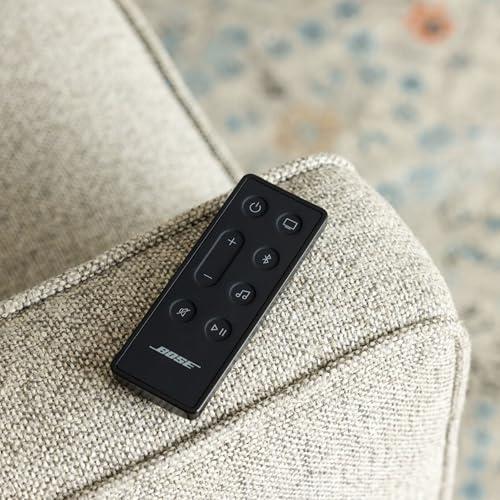
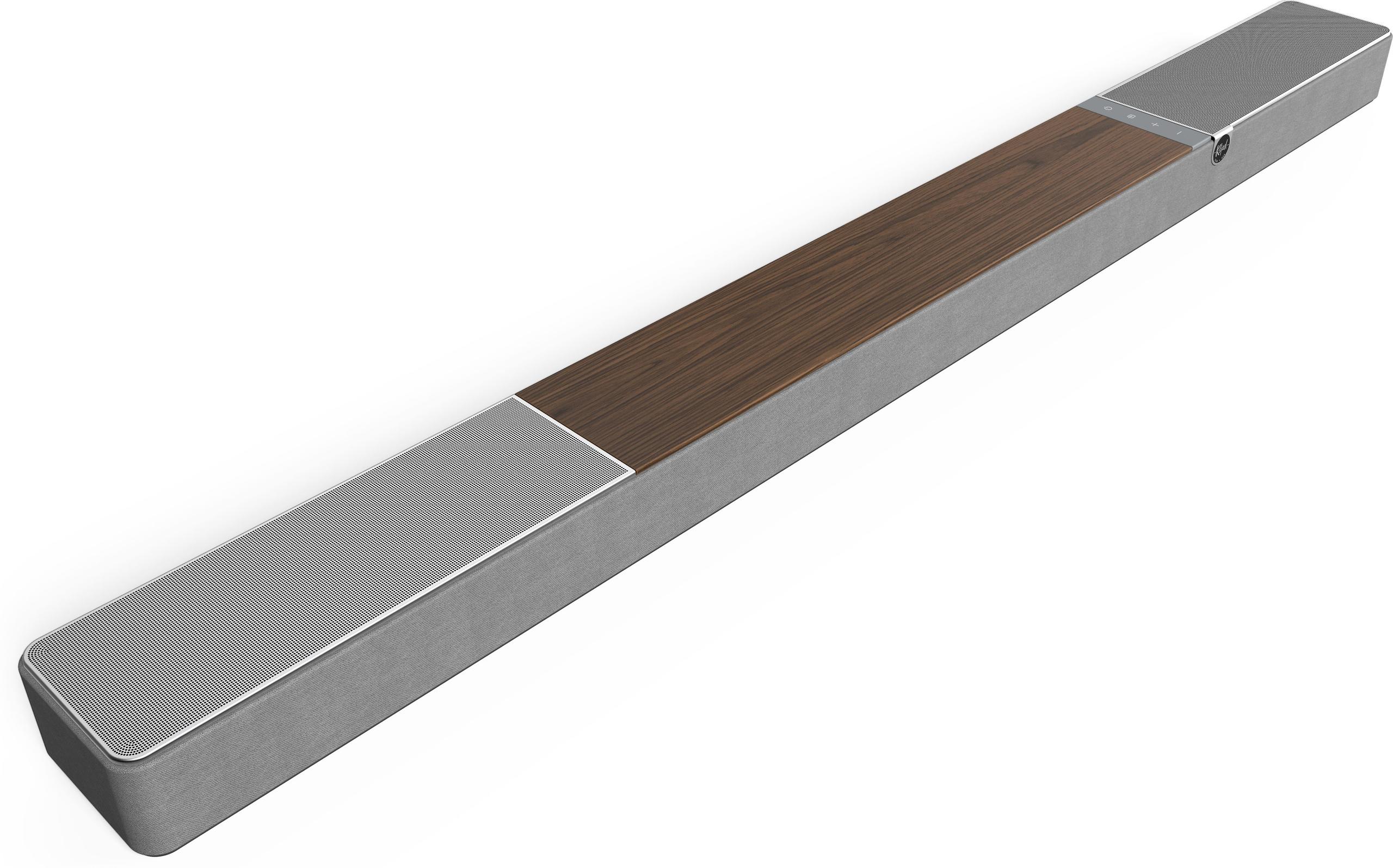
When you're trying to upgrade your TV's lackluster built-in speakers, the world of soundbars can feel overwhelming. Two products that consistently come up in conversations about premium soundbars are the Bose Smart Soundbar 1100 and the Klipsch Flexus Core 300. Released in 2024 and 2025 respectively, these represent fundamentally different philosophies about what makes a great soundbar experience.
At the time of writing, these products sit in different price brackets—the Bose positioning itself as a premium mid-range option while the Klipsch commands flagship pricing. But price alone doesn't tell the whole story. These soundbars take completely different approaches to solving the same basic problem: how do you get cinematic sound from a single bar sitting under your TV?
Before diving into specifics, it's worth understanding what we're actually comparing. Both products are what's called "all-in-one soundbars"—single units that attempt to recreate the experience of a full surround sound system using multiple drivers (individual speakers) and clever acoustic engineering.
The key innovation that makes modern soundbars work is something called "virtualization." Traditional surround sound uses speakers placed around your room—behind you, to your sides, even overhead. Soundbars achieve similar effects by bouncing sound off your walls and ceiling, or by using psychoacoustic tricks that fool your brain into perceiving sounds as coming from directions where there aren't actually any speakers.
Both the Bose Smart Soundbar 1100 and Klipsch Flexus Core 300 support Dolby Atmos, which adds height information to surround sound. Think of it as the difference between 2D and 3D—traditional surround moves sound around you horizontally, while Atmos adds vertical movement, like a helicopter flying overhead in a movie.
The performance gap between these two becomes apparent the moment you look at their specifications. The Klipsch Flexus Core 300 is simply a more powerful machine. With 13 total drivers compared to the Bose's 6, and a maximum output of 106 decibels, it's designed for larger rooms and higher volume levels.
But raw power isn't everything. The Bose Smart Soundbar 1100 uses what the company calls "PhaseGuide" technology—essentially, it precisely controls how sound waves from different drivers interact with each other to create a wider soundstage than you'd expect from such a compact unit. In our research into user experiences, this consistently translates to impressive performance in smaller to medium-sized rooms.
The Klipsch, meanwhile, takes a more traditional approach with its horn-loaded tweeter—a design that's been a Klipsch signature for decades. Horn loading means the high-frequency driver (tweeter) sits at the throat of an acoustic horn, which amplifies and controls the sound dispersion. The result is exceptional clarity and efficiency, particularly for dialogue and vocals.
This is where the two products diverge most dramatically. The Bose Smart Soundbar 1100 uses what Bose calls "QuietPort" technology—specially designed ports that reduce air turbulence to minimize distortion. It's clever engineering that allows impressive bass from a slim profile, but physics still applies. Without a dedicated subwoofer, you're limited in how much low-end power you can generate.
The Klipsch Flexus Core 300 takes a completely different approach by building four 4-inch subwoofers directly into the soundbar. This is unusual—most soundbars either rely on smaller drivers for bass or require a separate subwoofer. Klipsch essentially built the subwoofer into the main unit, which means you get substantial low-end punch right out of the box.
In practical terms, this means action movies and bass-heavy music will sound significantly fuller on the Klipsch. The Bose delivers respectable bass for its size, but anyone serious about low-end response will likely want to add Bose's optional Bass Module.
Both soundbars excel at dialogue clarity, but they achieve it differently. The Bose Smart Soundbar 1100 uses AI Dialogue Mode, which automatically analyzes audio content and adjusts the tonal balance when it detects speech. This means voices stay clear even during complex movie scenes with lots of sound effects.
The Klipsch Flexus Core 300 relies more on its acoustic design. That horn-loaded tweeter mentioned earlier is specifically engineered for vocal reproduction—it's the same technology Klipsch uses in their professional cinema speakers. The result is naturally clear dialogue without digital processing.
Both approaches work well, but they feel different. The Bose feels more "automatic"—it handles the optimization for you. The Klipsch gives you that clarity as a natural part of its sound signature.
Here's where the channel configurations become important. The Bose uses a 3.0.2 setup—three main channels (left, center, right) plus two height channels. The Klipsch goes with 5.1.2—five main channels, one subwoofer channel, and two height channels.
Those additional channels in the Klipsch translate to more convincing surround effects. It has dedicated side-firing drivers that create sound from your left and right sides, while the Bose relies more on acoustic reflection and processing to create those effects.
The height effects work differently too. Both have upward-firing drivers that bounce sound off your ceiling, but the Klipsch has more of them and more power behind them. In rooms with suitable ceilings (flat, not too high, reasonably reflective), this creates more convincing overhead effects.
This might be the most significant technical difference between these products. The Klipsch Flexus Core 300 is the first soundbar to include Dirac Live room correction technology. This is a big deal—Dirac Live has traditionally been found only in high-end AV receivers costing thousands of dollars.
Room correction works by using a microphone to measure how your room affects sound, then applying digital filters to compensate for acoustic problems. Every room has issues—hard surfaces that cause reflections, furniture that absorbs certain frequencies, room dimensions that create peaks and nulls in bass response. Dirac Live measures these problems and corrects for them automatically.
The process involves placing the included microphone at your listening position and letting the system play test tones. The software then creates a custom sound profile for your specific room. The difference can be dramatic, especially in challenging acoustic environments.
The Bose Smart Soundbar 1100 doesn't have automatic room correction. Instead, it includes a "Wall EQ" setting that adjusts the sound when you mount it on the wall, and relies on its acoustic design to work well in various rooms. This is simpler but less precise.
The Bose Smart Soundbar 1100 takes a more integrated approach to smart features. It has Amazon Alexa built right in, complete with microphones for voice control. The Voice4Video feature lets you control your TV and cable box through voice commands, not just the soundbar itself. This integration extends to smart home control and music streaming.
For streaming, the Bose supports virtually everything you'd want: AirPlay 2, Chromecast, Spotify Connect, plus direct access to services like Amazon Music and Pandora. The Bose Music app handles setup and control, and in our research, users consistently praise its ease of use.
The Klipsch Flexus Core 300 takes a different approach. Rather than building in voice assistants, it focuses on connectivity options. You get HDMI 2.1 with 8K passthrough (important for next-generation gaming and streaming), plus Ethernet, USB-C, and Bluetooth 5.3. The streaming options are comprehensive, including Tidal Connect for high-quality music streaming.
Where the Klipsch really shines is in smart home integration. It works with professional control systems like Control4 and Crestron—systems typically found in high-end custom installations. If you have or plan to have a professionally installed smart home system, this compatibility is valuable.
Both soundbars can be expanded, but they approach it differently. The Bose Smart Soundbar 1100 can add Bose Bass Modules and Surround Speakers, connected through proprietary wireless protocols. There's also a unique feature called Personal Surround Sound—you can pair certain Bose earbuds to act as rear surround speakers for private listening.
The Klipsch Flexus Core 300 offers more comprehensive expansion options. You can add wireless surround speakers and up to two subwoofers, all connected through Klipsch's proprietary wireless transport technology. The system is designed from the ground up to be modular—you can start with just the soundbar and build a complete surround system over time.
The wireless implementation matters here. Both systems promise seamless, low-latency connections to their wireless speakers, but having more expansion options gives the Klipsch system more flexibility for different room layouts and listening preferences.
At the time of writing, the Klipsch Flexus Core 300 commands a premium price that reflects its advanced features and performance capabilities. The Dirac Live room correction alone justifies much of the cost difference—this technology typically adds hundreds of dollars to the price of AV receivers.
The Bose Smart Soundbar 1100 offers excellent value in its price range, especially considering its smart features and acoustic engineering. However, if you want meaningful bass response, you'll likely need to add a subwoofer, which changes the total cost equation.
For home theater use specifically, the equation becomes more complex. If you have a large room or prioritize dynamic movie soundtracks, the Klipsch's built-in bass and higher power output provide immediate value. For smaller spaces focused on dialogue clarity and smart features, the Bose delivers exceptional performance at a more accessible price point.
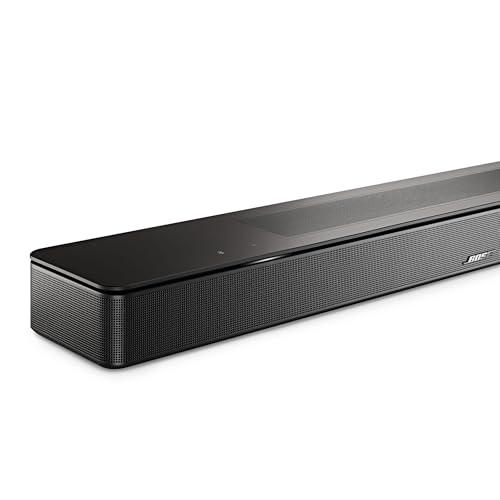
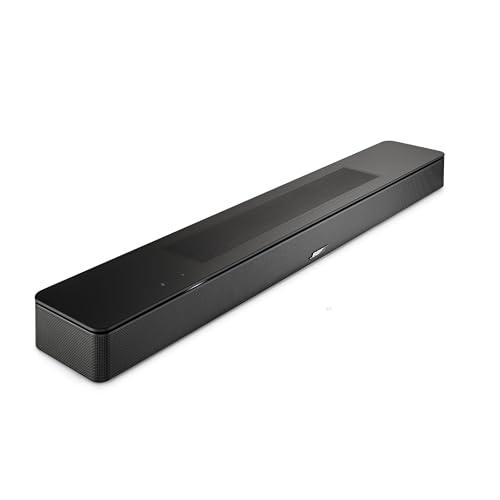
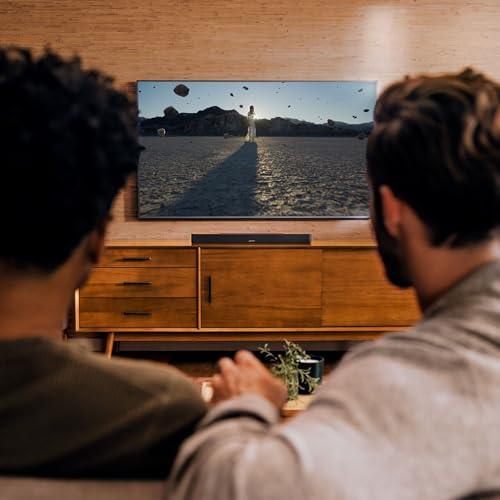
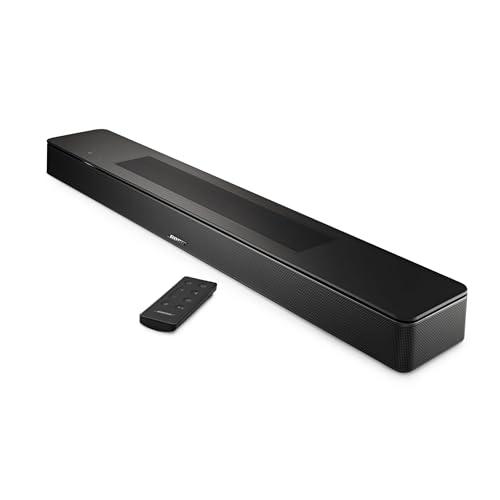
The Bose Smart Soundbar 1100 embodies the "disappears under your TV" philosophy. At just over 2 inches tall and 27 inches wide, it fits under most TVs without blocking the screen or drawing attention to itself. The build quality feels premium without being ostentatious.
The Klipsch Flexus Core 300 is necessarily larger—54 inches wide and weighing 35 pounds, it's a substantial piece of equipment. The extra size houses those 13 drivers and four built-in subwoofers. While still only about 3 inches tall, it has more physical presence in your room.
Both can be wall-mounted, but the installation considerations differ. The Bose mounts more easily due to its lighter weight, while the Klipsch requires more robust mounting hardware but offers more flexibility in placement thanks to its room correction capabilities.
The Bose Smart Soundbar 1100 makes the most sense for people who want premium sound quality with minimal fuss. If you have a small to medium-sized room, prioritize dialogue clarity, and value smart features like built-in voice control, it delivers exceptional performance. It's particularly appealing if you already have other Bose products or want something that just works well without extensive setup.
The Klipsch Flexus Core 300 is for the audio enthusiast who wants the best possible performance and isn't afraid of a more complex setup process. If you have a large room, care deeply about bass response, or plan to build out a full surround system eventually, the additional cost pays dividends. The Dirac Live room correction alone makes it worthwhile for anyone dealing with challenging room acoustics.
For home theater specifically, the choice often comes down to room size and priorities. In smaller rooms focused on TV and movie dialogue, the Bose punches well above its weight. In larger spaces where you want to feel the impact of action sequences and movie soundtracks, the Klipsch provides a more cinematic experience right out of the box.
Both represent excellent examples of their respective approaches to soundbar design. The Bose proves that smart engineering and user-focused features can deliver impressive results in a compact, affordable package. The Klipsch demonstrates what's possible when you apply high-end audio technologies to the soundbar format. Your choice ultimately depends on your room, your priorities, and how much you want to invest in your audio experience.
| Bose Smart Soundbar 1100 | Klipsch Flexus Core 300 |
|---|---|
| Channel Configuration - Determines surround sound capability and immersion | |
| 3.0.2 (3 main channels + 2 height) | 5.1.2 (5 main + subwoofer + 2 height) |
| Total Drivers - More drivers typically mean better sound separation and power | |
| 6 drivers (5 speakers + 1 center tweeter) | 13 drivers including 4 built-in subwoofers |
| Built-in Bass Response - Affects whether you need a separate subwoofer | |
| Limited without optional subwoofer purchase | Four 4-inch built-in subwoofers provide substantial bass |
| Room Correction Technology - Critical for optimizing sound in your specific room | |
| Basic Wall EQ preset only | Dirac Live with included calibration microphone |
| Physical Size - Important for TV compatibility and room aesthetics | |
| 27" W x 2.2" H x 4.6" D, 6.9 lbs | 54" W x 3.1" H x 4.9" D, 34.5 lbs |
| Voice Assistant Integration - Convenience for smart home control | |
| Amazon Alexa built-in with Voice4Video | Siri via AirPlay only, no built-in assistant |
| HDMI Connectivity - Future-proofing for gaming and 8K content | |
| HDMI eARC only | HDMI 2.1 with 8K/60Hz and 4K/120Hz passthrough |
| Maximum Output - Determines how loud and powerful the sound can get | |
| Not specified (optimized for small-medium rooms) | 106 dB (suitable for large rooms) |
| Streaming Services - Built-in access without needing external devices | |
| AirPlay 2, Chromecast, Spotify Connect, Amazon Music, Pandora | AirPlay 2, Google Cast, Spotify Connect, Tidal Connect |
| Expandability Options - Ability to add more speakers for full surround | |
| Bass Modules and Surround Speakers via proprietary wireless | Wireless surrounds + up to 2 subwoofers with more flexibility |
| Audio Format Support - Compatibility with different surround sound types | |
| Dolby Atmos, Dolby Digital variants (no DTS support) | Dolby Atmos and DTS:X (broader format compatibility) |
| Setup Complexity - How easy it is to get optimal sound | |
| Simple plug-and-play with automatic optimization | More complex but offers professional-grade calibration |
The Bose Smart Soundbar 1100 is better suited for small to medium rooms due to its compact 27-inch width and acoustic technologies like PhaseGuide that create a wide soundstage from a smaller footprint. The Klipsch Flexus Core 300 at 54 inches wide is designed for larger spaces and may overpower smaller rooms.
The Klipsch Flexus Core 300 includes four built-in 4-inch subwoofers, providing substantial bass without additional purchases. The Bose Smart Soundbar 1100 produces respectable bass for its size but will likely require an optional Bass Module for those wanting deeper low-end response, especially for movies and music.
Both excel at dialogue clarity but use different approaches. The Bose Smart Soundbar 1100 features AI Dialogue Mode that automatically optimizes speech clarity, while the Klipsch Flexus Core 300 uses a horn-loaded tweeter design for naturally clear vocals. Both deliver excellent results for TV dialogue.
The Klipsch Flexus Core 300 offers more immersive surround sound with its 5.1.2 channel configuration and dedicated side-firing drivers. The Bose Smart Soundbar 1100 uses a 3.0.2 setup with acoustic processing to create surround effects, which works well but isn't as enveloping as the Klipsch's physical driver arrangement.
The Bose Smart Soundbar 1100 offers simpler plug-and-play setup with built-in Alexa and automatic optimization features. The Klipsch Flexus Core 300 requires more initial setup including room calibration with the included microphone, but this complexity results in more precise sound tuning for your specific room.
The Bose Smart Soundbar 1100 has Amazon Alexa built-in with Voice4Video technology, allowing you to control both the soundbar and your TV with voice commands. The Klipsch Flexus Core 300 only supports Siri through AirPlay and doesn't have built-in voice assistants.
Both can expand, but the Klipsch Flexus Core 300 offers more comprehensive expansion options with wireless surround speakers and up to two additional subwoofers. The Bose Smart Soundbar 1100 can add Bass Modules and Surround Speakers, plus unique Personal Surround Sound using compatible Bose earbuds.
The Bose Smart Soundbar 1100 supports AirPlay 2, Chromecast, Spotify Connect, Amazon Music, and Pandora with built-in access. The Klipsch Flexus Core 300 offers AirPlay 2, Google Cast, Spotify Connect, and Tidal Connect, with broader high-quality streaming options but no built-in service access.
The Klipsch Flexus Core 300 is superior for gaming with HDMI 2.1 supporting 8K/60Hz and 4K/120Hz passthrough, plus lower latency connectivity. The Bose Smart Soundbar 1100 only offers HDMI eARC, which limits its future-proofing for next-generation gaming and streaming content.
The Klipsch Flexus Core 300 includes professional-grade Dirac Live room correction with a calibration microphone, measuring and correcting for your room's acoustic issues. The Bose Smart Soundbar 1100 relies on its acoustic design and basic Wall EQ settings, which work well but aren't as precise as active room correction.
The Bose Smart Soundbar 1100 provides excellent value with smart features, good sound quality, and user-friendly design at a mid-range price point. The Klipsch Flexus Core 300 costs significantly more but includes premium features like Dirac Live room correction, built-in subwoofers, and professional-grade performance that justify the higher investment.
Bose focuses on user-friendly design with automatic optimization and smart features, prioritizing dialogue clarity and ease of use. Klipsch emphasizes raw audio performance and customization, offering professional-grade room correction and acoustic engineering for users who want maximum sound quality and don't mind more complex setup.
We've done our best to create useful and informative comparisons to help you decide what product to buy. Our research uses advanced automated methods to create this comparison and perfection is not possible - please contact us for corrections or questions. These are the sites we've researched in the creation of this article: bestbuy.com - rtings.com - rtings.com - youtube.com - staples.com - youtube.com - soundguys.com - businessinsider.com - youtube.com - rtings.com - crutchfield.com - youtube.com - youtube.com - smart.dhgate.com - dolby.com - bose.com - assets.bose.com - bose.com - connection.com - bestbuy.com - cdw.com - dell.com - device.report - crutchfield.com - whathifi.com - avnirvana.com - hometechnologyreview.com - ecoustics.com - gearpatrol.com - klipsch.com - avsforum.com - youtube.com - avsforum.com - listenup.com - chowmain.software - klipsch.com - novis.ch - avsforum.com - klipsch.ca - lefflers.se - abt.com - sweetwater.com - wifihifi.com - klipsch.com - dirac.com

Privacy Policy
Terms and Conditions - Affiliate Policy
Home Security
© Copyright 2008-2026.
11816 Inwood Rd #1211, Dallas, TX 75244