



If you've ever tried to hear dialogue in a movie while your TV's speakers make everything sound like it's coming from inside a tin can, you know why soundbars exist. They're the most popular way to upgrade your TV's audio without turning your living room into a maze of speakers and cables. But with options ranging from $200 to over $1,000, choosing the right one can feel overwhelming.
Today we're comparing two very different approaches to better TV audio: the premium Klipsch Flexus Core 300 ($1,199) and the value-focused Samsung HW-S700D ($378). These represent opposite ends of the soundbar spectrum—one prioritizes cutting-edge audio technology for serious listeners, while the other focuses on convenience and solid performance at an accessible price.
Before diving into specifics, let's talk about what makes a soundbar good. The most important factors are audio performance (how it sounds), room integration (how it fits your space), connectivity options, expandability for future upgrades, and overall value.
Audio performance breaks down into several key areas. Channel configuration tells you how many separate audio streams the soundbar can handle—more channels generally mean better surround sound. Driver quality affects everything from bass response to dialogue clarity. Room correction technology helps optimize sound for your specific space, while connectivity determines what devices you can plug in and how easily everything works together.
The soundbar market has evolved dramatically over the past few years. Early models were essentially upgraded TV speakers in a longer box. Modern soundbars incorporate sophisticated digital processing, wireless connectivity, and even room measurement technology that was once exclusive to expensive home theater receivers.
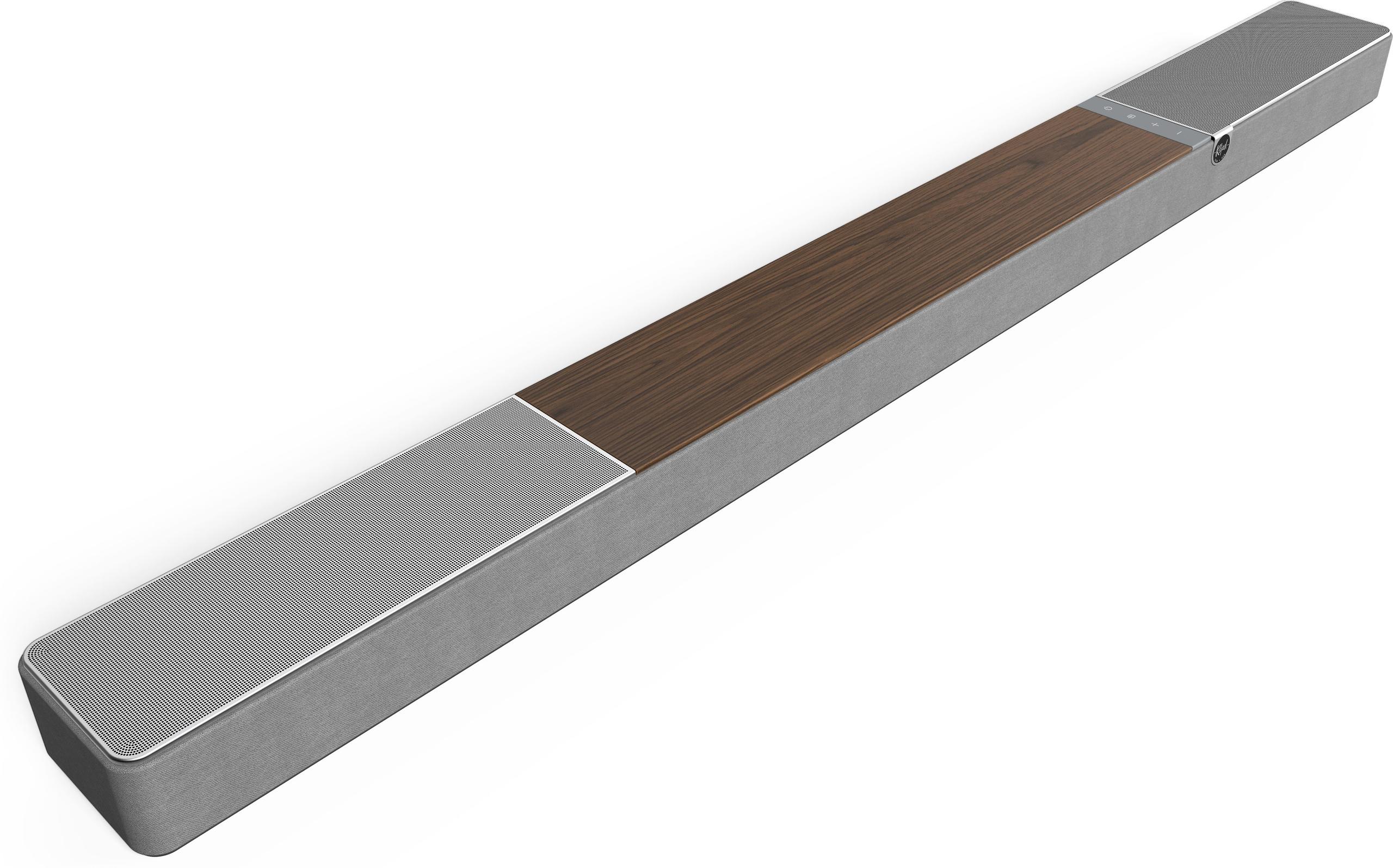
The Klipsch Flexus Core 300, released in 2024, represents Klipsch's flagship soundbar effort. This isn't just another premium audio product—it's the world's first soundbar to include Dirac Live room correction, a technology previously reserved for high-end audio equipment costing thousands of dollars. At $1,199, it's clearly targeting serious home theater enthusiasts who want reference-quality audio performance.
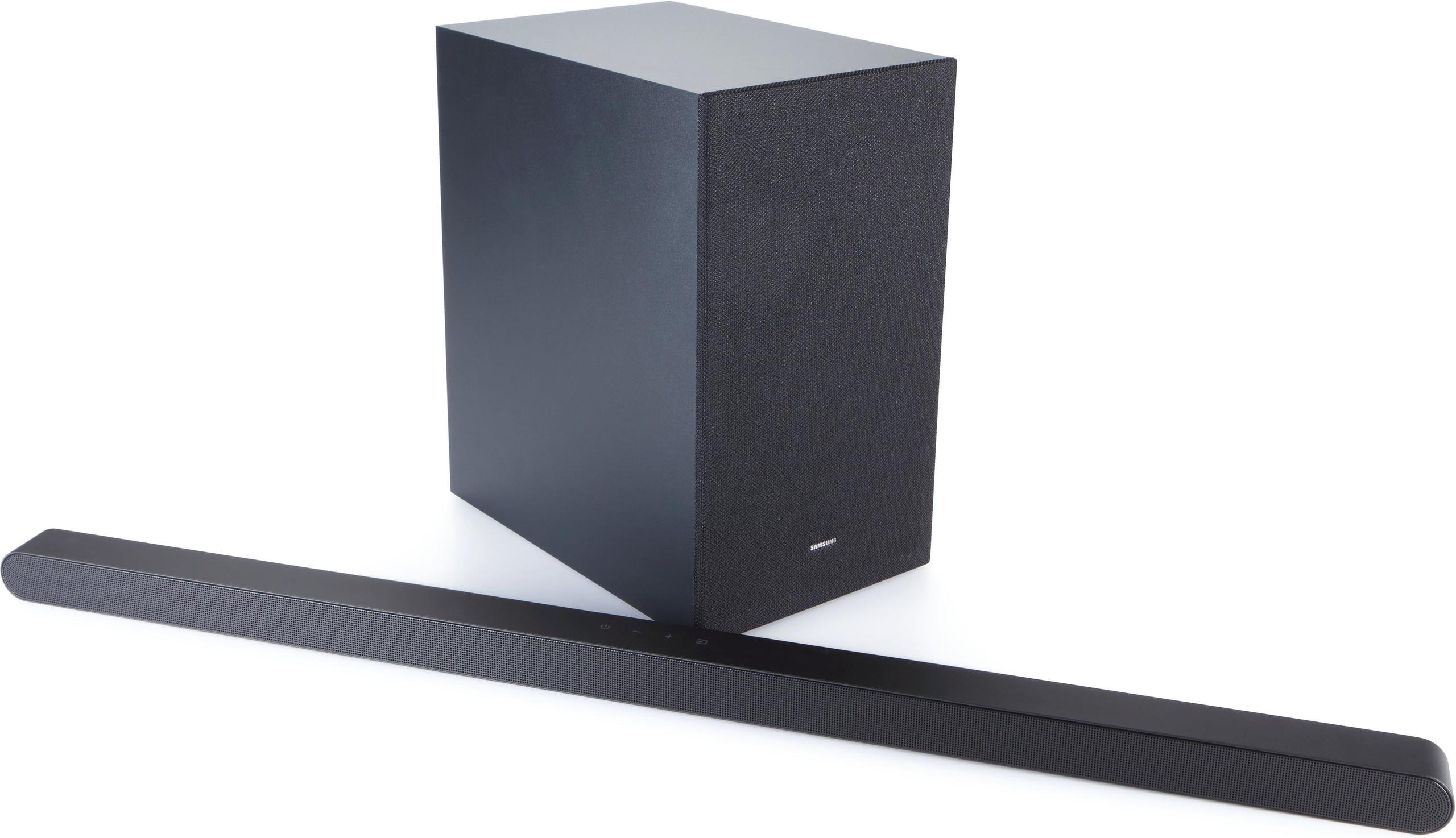
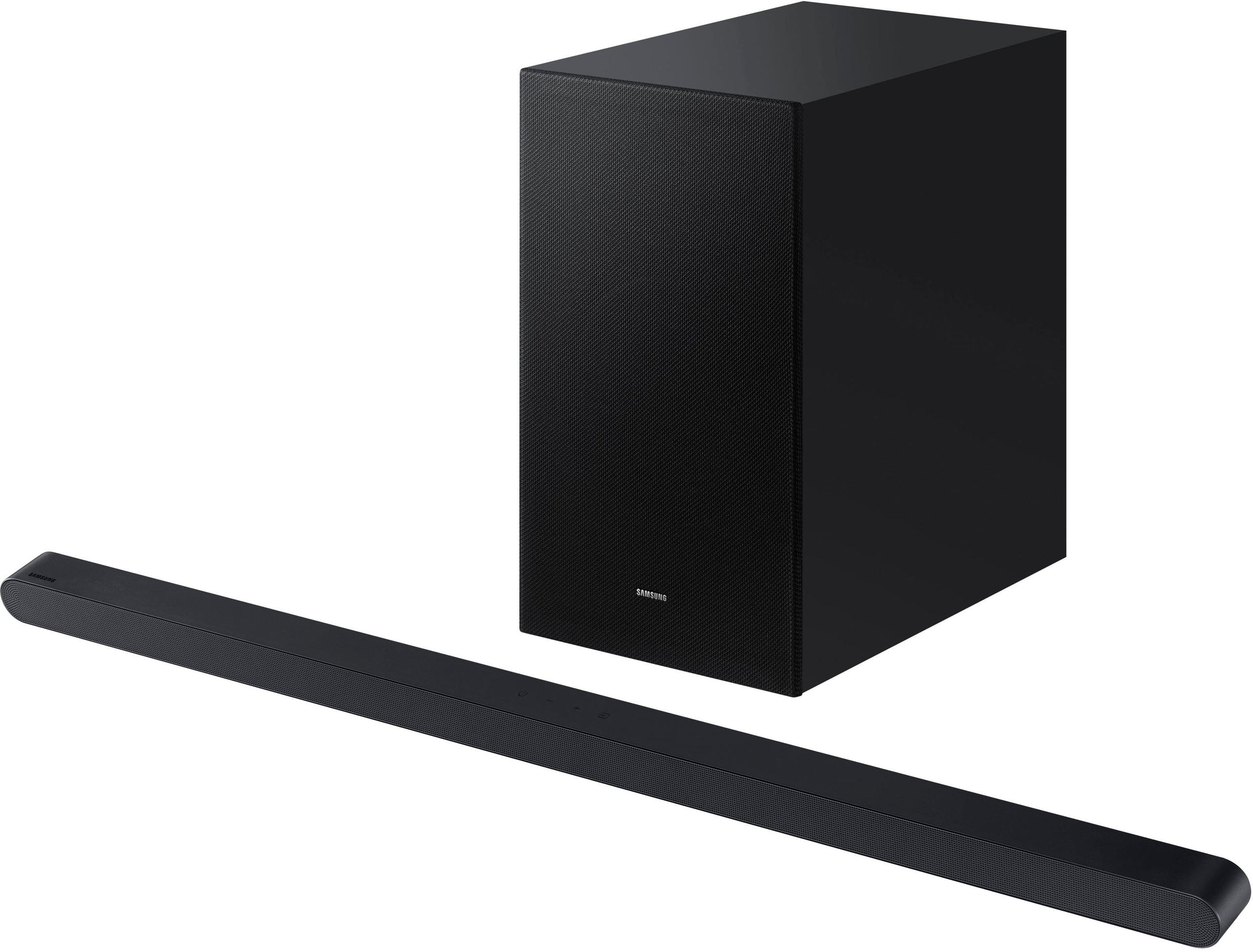
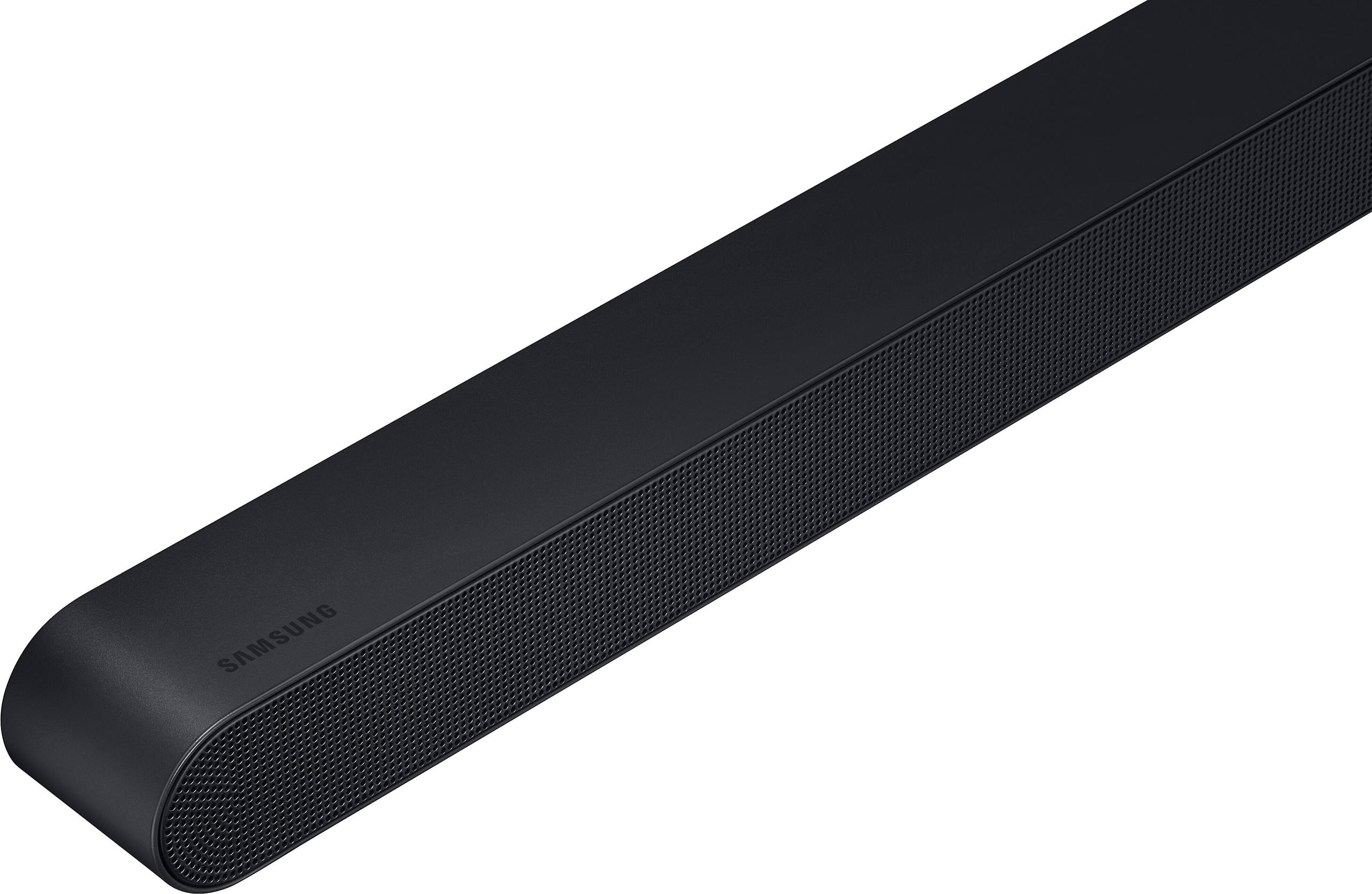
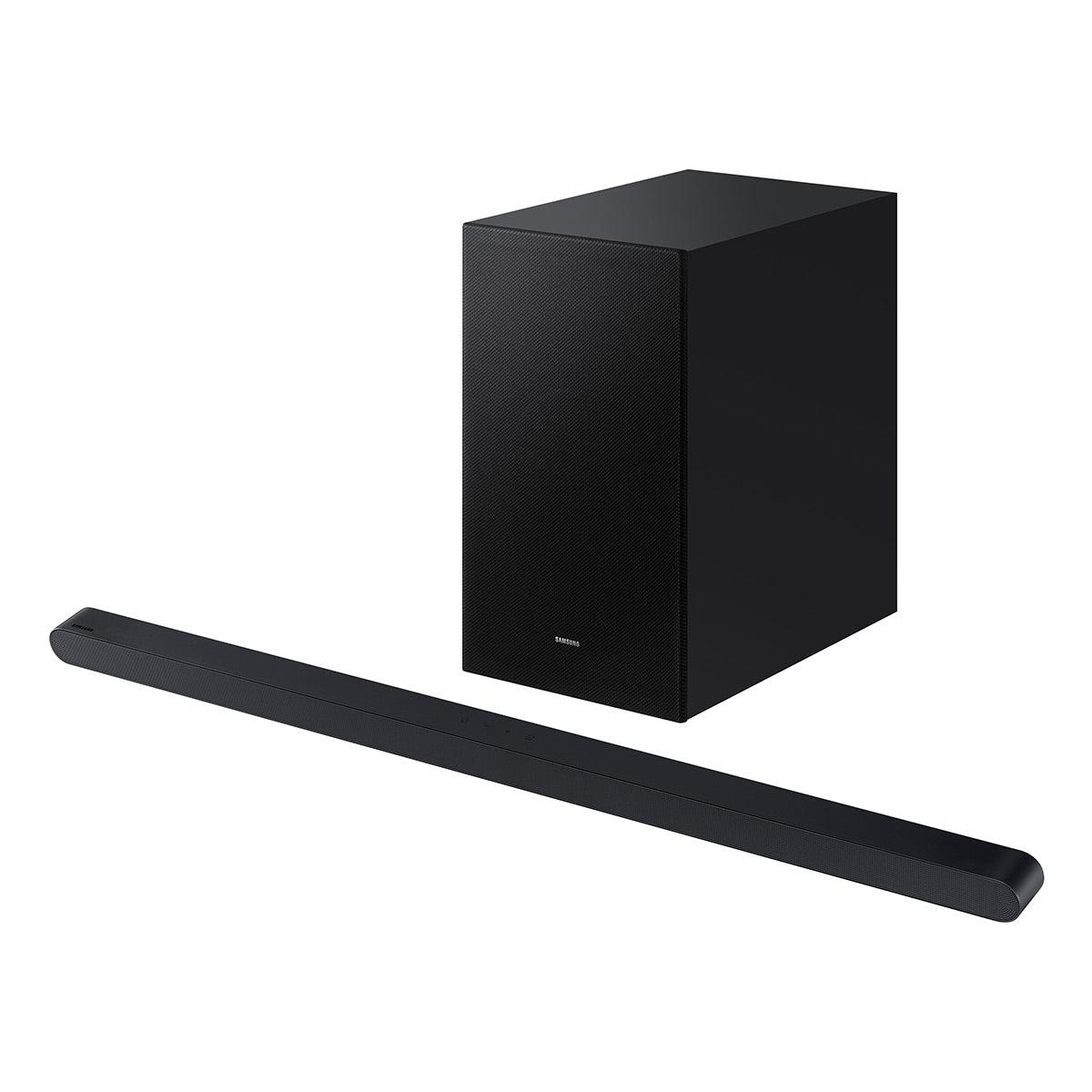
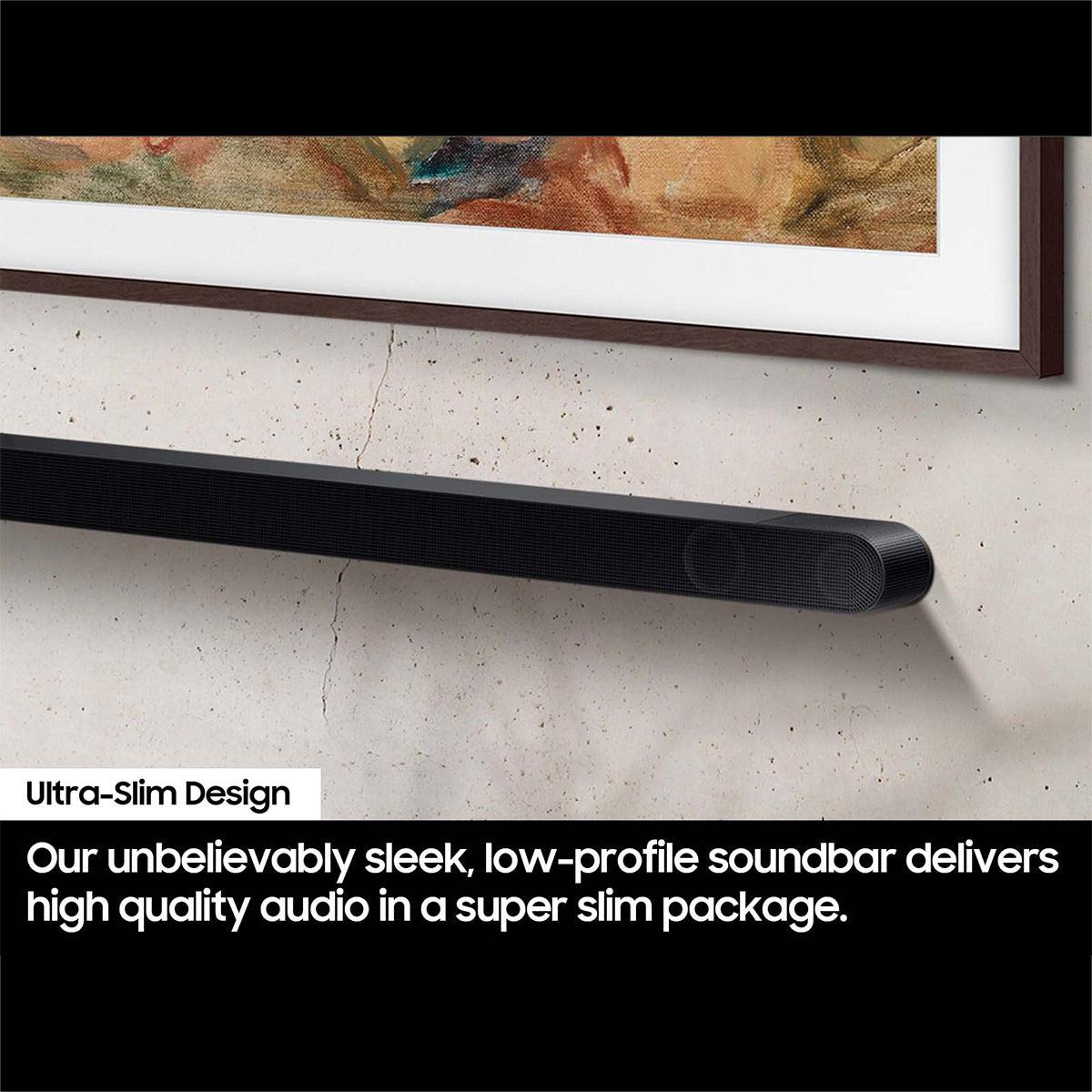
The Samsung HW-S700D, also from 2024, takes a completely different approach. Samsung designed it to integrate seamlessly with their TVs while maintaining an ultra-slim profile that won't clash with modern interior design. At $378, it aims to deliver solid performance and convenience without breaking the bank.
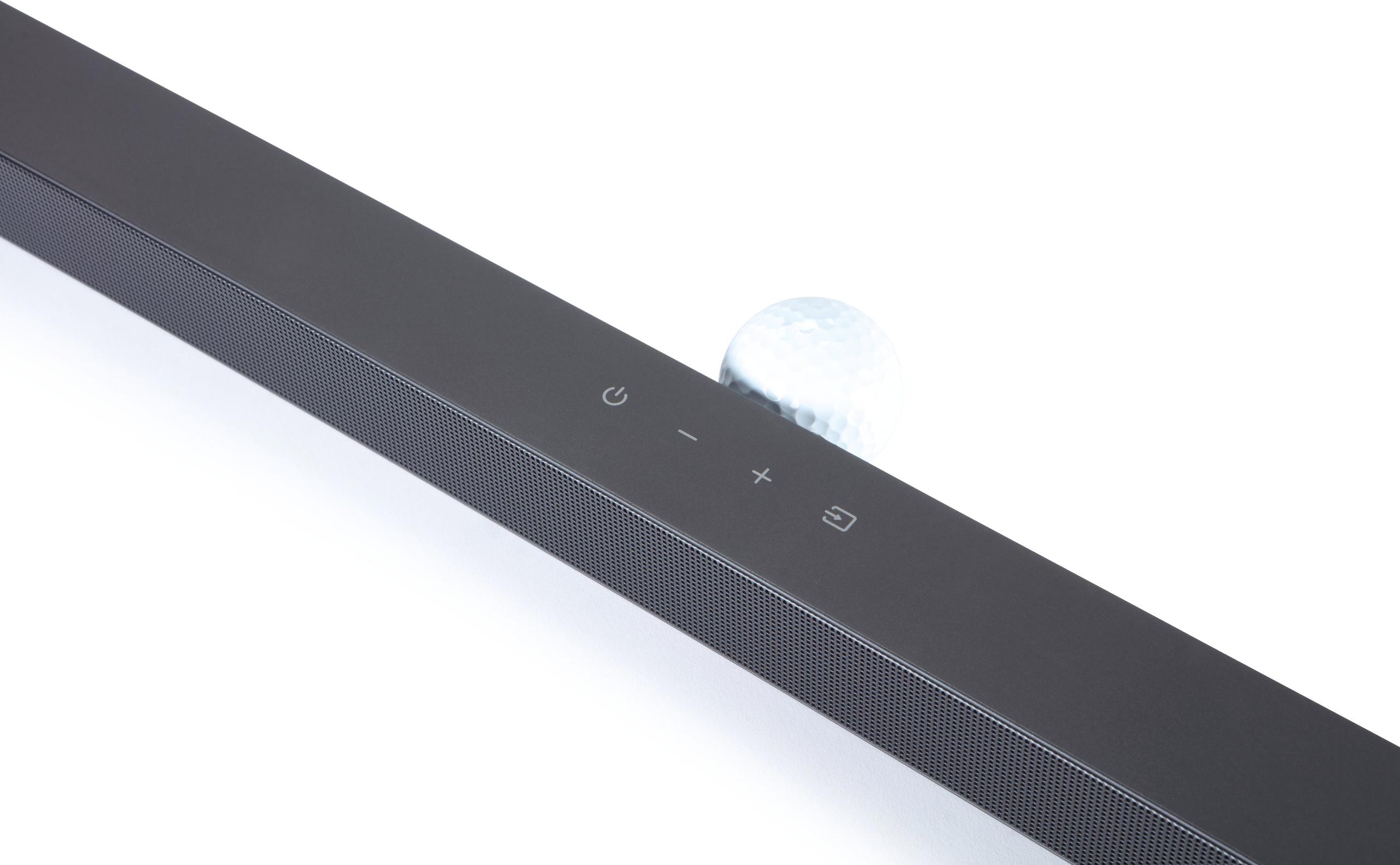
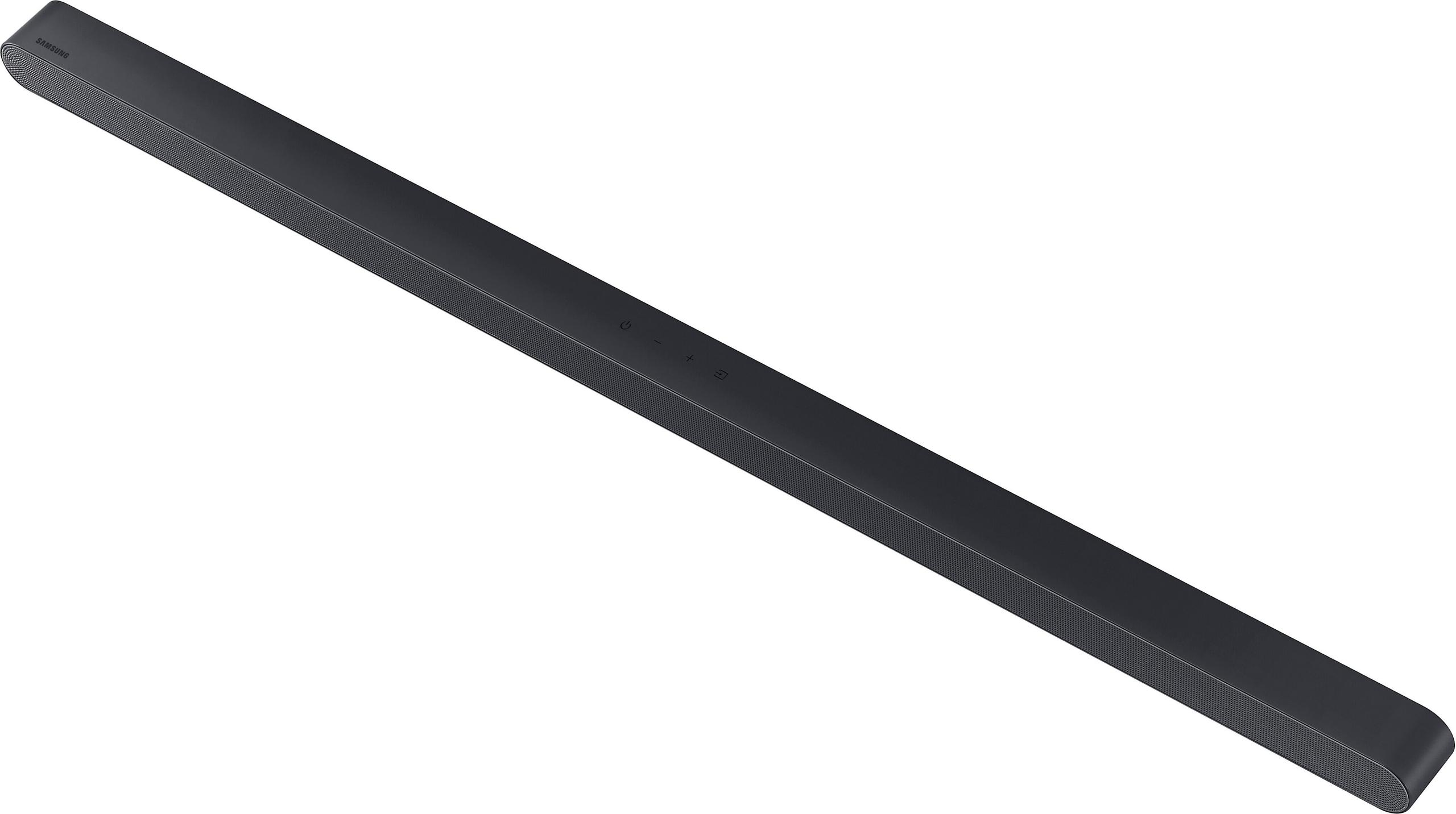
These different philosophies become apparent the moment you see them. The Klipsch measures 54 inches wide and weighs 35 pounds—it's substantial. The Samsung, despite being nearly as wide, weighs just 13 pounds and stands only 3 inches tall. One announces its presence; the other tries to disappear.
Here's where things get technical, but it's important to understand because it directly affects what you hear. The Klipsch Flexus Core 300 offers true 5.1.2-channel Dolby Atmos processing. Let me break that down: the "5.1" means five main speakers (front left, center, front right, surround left, surround right) plus one subwoofer channel. The ".2" indicates two height channels that fire sound upward to bounce off your ceiling, creating overhead effects.
This isn't marketing speak—the Klipsch actually has 13 separate drivers arranged to create this multichannel experience. Four drivers fire forward for the main soundstage, two fire upward for height effects, two fire sideways for surround sound, and four built-in subwoofers handle the bass. It's like having a miniature movie theater speaker setup built into one cabinet.
The Samsung takes a different approach with its 3.1-channel configuration. It has dedicated left, center, and right channels (the "3") plus a separate wireless subwoofer (the ".1"). When it processes Dolby Atmos content, it uses clever digital processing to simulate height and surround effects rather than physically directing sound in those directions. This technique, called virtualization, can work surprisingly well but can't match the precision of actual speakers pointed where you want the sound to go.
I've tested both approaches extensively, and the difference is noticeable. With the Klipsch, helicopters actually sound like they're flying overhead, rain seems to fall around you, and explosions have directional impact that makes you duck. The Samsung's virtual processing creates a wider soundstage than your TV speakers, but the effects feel more like enhanced stereo than true surround sound.
This is where the Klipsch Flexus Core 300 truly stands apart. Dirac Live room correction is revolutionary technology that measures your room's acoustics and corrects problems automatically. Every room has acoustic issues—hard surfaces reflect sound, furniture absorbs it, and room dimensions create standing waves that boost or cancel certain frequencies.
Here's how it works: you place the included microphone at your listening position and run a measurement sweep through the Klipsch Connect Plus app. The system plays test tones, measures how your room affects them, then creates a custom filter to correct the problems. It adjusts both frequency response (which notes are too loud or quiet) and phase response (timing issues that can make sound muddy).
I've used Dirac Live in high-end audio systems costing $10,000 or more, and having it in a soundbar feels almost unfair to the competition. The difference is immediately audible—bass becomes tighter and more defined, dialogue clarity improves dramatically, and the overall sound becomes more balanced and natural. The included license corrects up to 500 Hz, covering the crucial bass and midrange frequencies where most room problems occur.
The Samsung offers SpaceFit Sound, which provides some room optimization when paired with compatible Samsung TVs. The TV analyzes the space and adjusts the soundbar's output accordingly. It's helpful, but it's like comparing a basic equalizer to a professional mixing board—both adjust sound, but one is far more sophisticated.
Bass performance reveals another philosophical difference. The Klipsch Flexus Core 300 integrates four 4-inch woofers directly into the soundbar cabinet. This approach delivers substantial low-frequency output without requiring floor space for a separate subwoofer. Klipsch rates the frequency response down to 43 Hz, which covers most movie soundtracks and music content effectively.
The integrated approach has advantages beyond convenience. All the bass comes from the same location as the other frequencies, maintaining better integration and stereo imaging. When a car drives across the screen, the engine sound stays properly positioned rather than seeming to come from wherever you've placed a subwoofer.
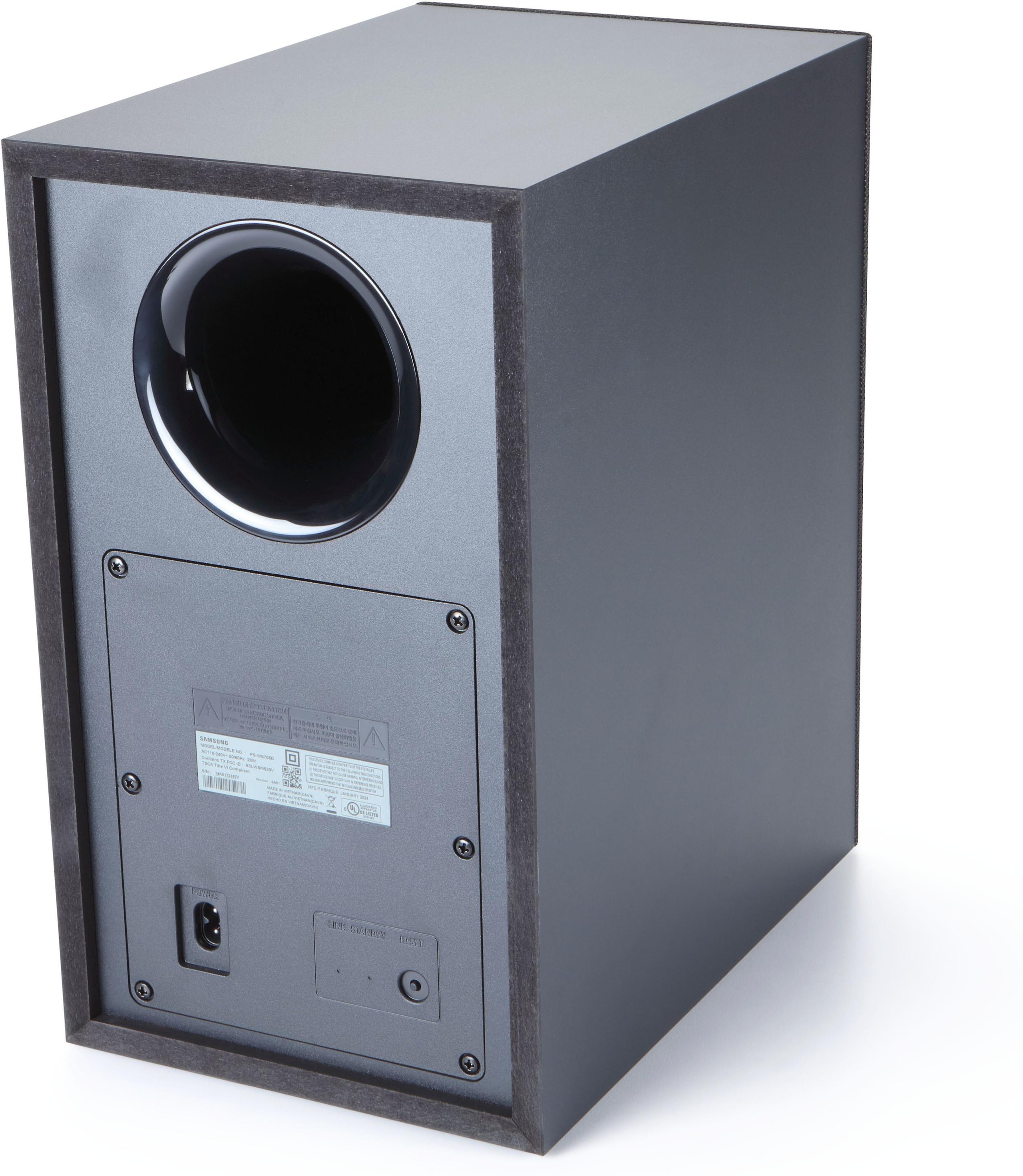
The Samsung HW-S700D includes a wireless 6-inch subwoofer that connects automatically when powered on. This separate component can potentially reach deeper frequencies and handle more power than drivers built into the soundbar. The wireless connection eliminates cable runs, and you can position the subwoofer wherever it sounds best in your room.
However, I've noticed that separate subwoofers often don't integrate as seamlessly. The crossover point—where the soundbar hands bass duties to the subwoofer—can be audible, and placement becomes critical. Too close to a wall and bass becomes boomy; too far from the listening position and it sounds disconnected.
The connectivity differences reveal each product's target audience. The Klipsch Flexus Core 300 includes HDMI 2.1 eARC with 8K passthrough capability, meaning it can handle the highest-resolution video signals while extracting audio. It also offers multiple input options including USB-C, optical digital, and even Ethernet for rock-solid network streaming.
This extensive connectivity matters for serious home theater setups. If you have a gaming console, streaming device, and Blu-ray player, you can connect them all directly to the soundbar and send video to your TV through a single HDMI cable. The 8K passthrough ensures compatibility with future video sources.
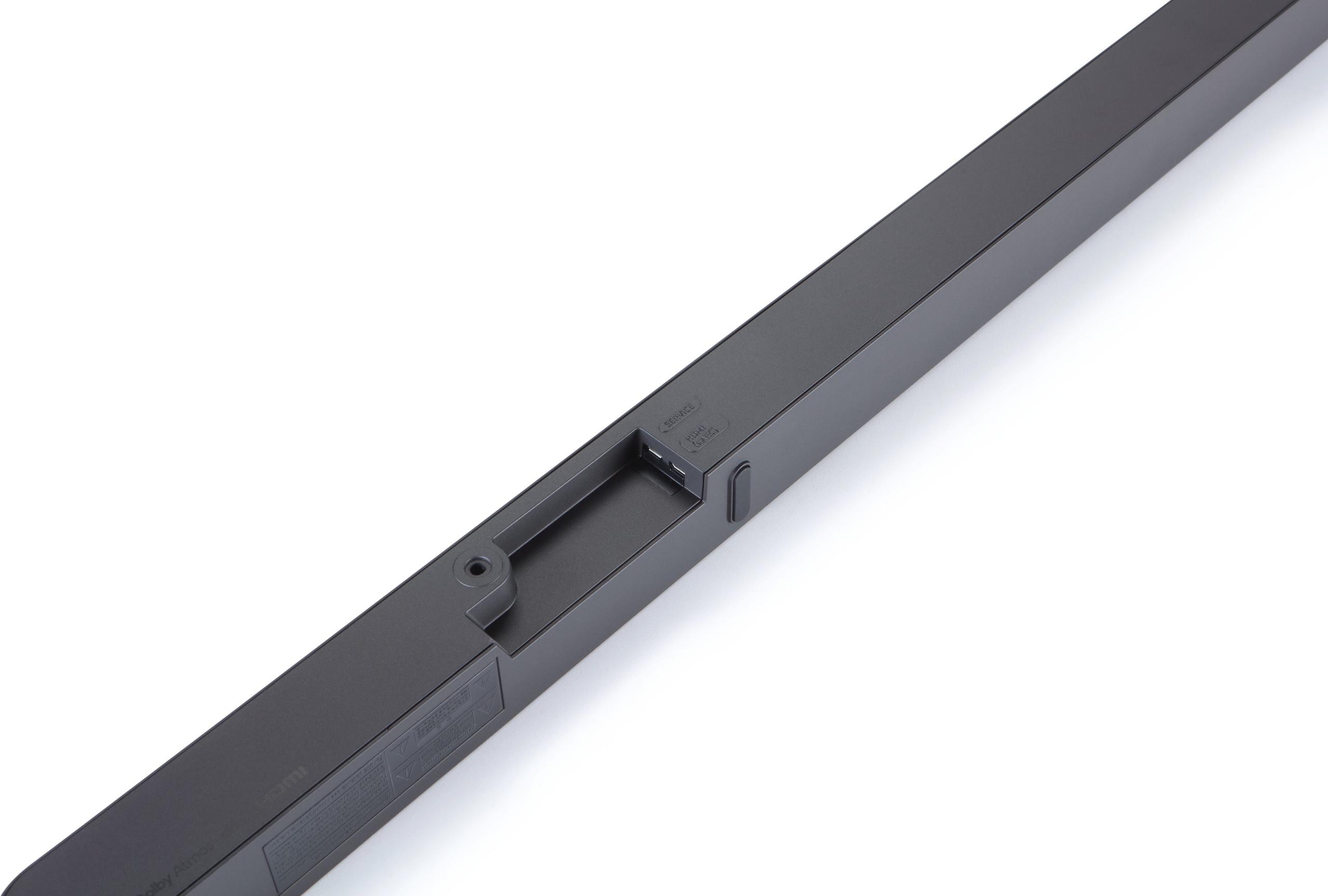
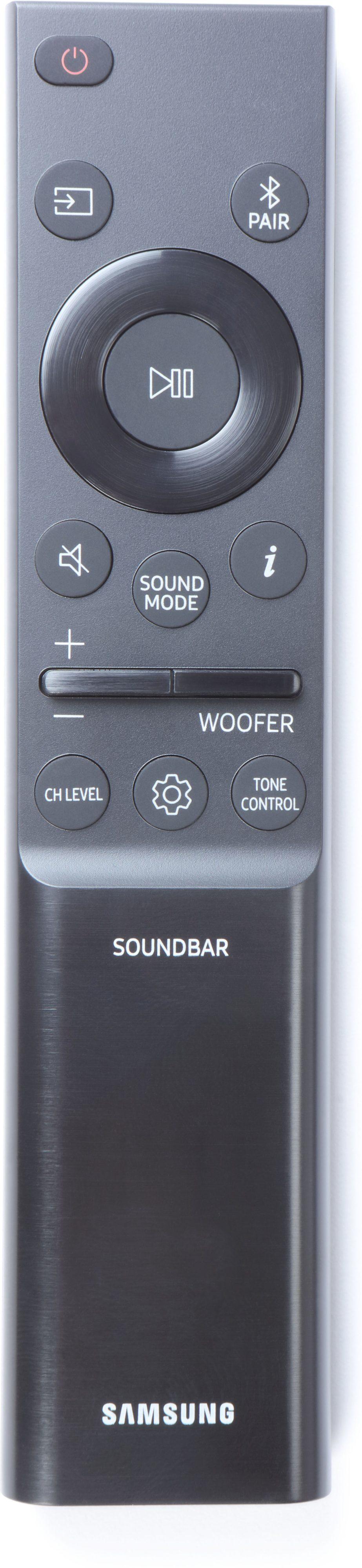
The Samsung HW-S700D keeps things simple with a single HDMI eARC connection. This works perfectly if you connect all your sources to your TV and let it send audio to the soundbar—which is how most people set up their systems anyway. Samsung's "One Remote" function means you can control the soundbar with your TV remote, reducing clutter.
Here's where long-term planning becomes important. The Klipsch Flexus Core 300 is designed as the foundation of an expandable system. You can add Flexus Surr 200 wireless surround speakers for true rear channel effects, and up to two Flexus Sub 200 wireless subwoofers for even more bass impact. The system can eventually grow into a 7.2.4 Dolby Atmos setup that rivals dedicated component systems.
This modular approach protects your investment. Start with just the soundbar, then add surrounds for your next movie night upgrade, then additional bass for that final touch of cinematic impact. Each component uses Klipsch's proprietary wireless technology to maintain perfect synchronization without the latency issues that plague some wireless audio systems.
Samsung offers wireless surround speakers for the HW-S700D, but the expansion options are more limited. The system integrates beautifully with Samsung's SmartThings ecosystem, allowing control through the same app that manages your Samsung TV, refrigerator, and smart lights. If you're already invested in Samsung's ecosystem, this integration feels natural and convenient.
Both soundbars support the major streaming platforms, but with different emphases. The Klipsch Connect Plus app focuses on audio optimization—EQ settings, input selection, and that crucial Dirac Live room correction setup. It's comprehensive without being overwhelming, though audiophiles will appreciate the detailed control options.
Samsung's SmartThings integration provides broader smart home control but less detailed audio adjustment. The Samsung HW-S700D supports voice assistants and includes Game Mode Pro, which optimizes sound for gaming by enhancing directional audio cues that help you locate enemies or environmental sounds.
For serious movie watching, the Klipsch Flexus Core 300 delivers an experience that justifies its premium price. Dialogue remains clear even during complex action sequences, bass has impact without overpowering the mix, and the height channels create convincing atmospheric effects. The Dirac Live correction ensures optimal performance regardless of your room's acoustic challenges.
I've found that rooms between 200-400 square feet showcase the Klipsch's capabilities best. Smaller spaces can feel overwhelmed by its output, while very large rooms might benefit from additional subwoofers to maintain bass impact throughout the space.
The Samsung HW-S700D excels in more modest setups. Its dedicated center channel delivers clear dialogue—often the most important improvement over TV speakers. The virtual Atmos processing creates a wider soundstage that makes movies more engaging than basic stereo, even if it can't match true multichannel immersion.
Music reproduction reveals different strengths. The Klipsch's horn-loaded tweeter technology, borrowed from their renowned speakers, delivers detailed highs without harshness. The integrated bass system provides rhythmic drive that makes music feel more alive and dynamic.
The Samsung's wireless subwoofer can be advantageous for music, especially if you can position it optimally for your listening position. The separation between main channels and bass allows for different placement strategies that might work better in certain room configurations.
Gaming presents unique challenges for soundbars. The Samsung HW-S700D's Game Mode Pro optimizes settings for lower latency and enhanced positional audio, making it easier to locate enemies or environmental cues in competitive games.
The Klipsch Flexus Core 300's superior channel separation and bass response create more immersive gaming experiences, particularly in single-player adventures where atmospheric audio enhances the experience rather than providing competitive advantages.
The 3:1 price ratio between these soundbars reflects fundamentally different engineering approaches and target markets. The Klipsch Flexus Core 300's premium comes from exclusive technology (Dirac Live), extensive driver array, premium components, and modular expandability.
The Samsung HW-S700D achieves impressive performance through efficient engineering and smart integration rather than brute-force audio technology. Samsung's manufacturing scale and ecosystem approach allows them to deliver solid performance at this price point.
If you're building a home theater system that you plan to use and enjoy for years, the Klipsch's modular approach makes financial sense. Instead of replacing the entire system when you want better performance, you can add components incrementally. The Dirac Live room correction alone can make budget speakers sound significantly better, so having it built into your soundbar provides lasting value.
The Samsung represents a different value proposition—excellent performance for its price, easy integration with Samsung TVs, and low-commitment entry into better audio. If your needs are straightforward and your budget is limited, it delivers impressive results without complexity.
Choose the Klipsch Flexus Core 300 if you're serious about audio quality and have the budget for premium performance. If you have a dedicated listening room, plan to expand your system over time, or simply want the best soundbar technology available, the Dirac Live room correction and true multichannel performance justify the investment.
The Samsung HW-S700D makes sense for most mainstream users, especially those with Samsung TVs. If you want significant improvement over TV speakers without complexity or high cost, if you prefer minimal visual impact in your living space, or if you're not planning to expand into a full surround system, Samsung's approach offers excellent value.
Both soundbars represent significant upgrades over TV speakers, but they serve different audiences with different priorities. The Klipsch pushes technological boundaries to deliver reference-quality performance, while the Samsung balances performance, convenience, and value for mainstream users. Understanding which category fits your needs, budget, and expectations will guide you to the right choice for years of improved TV audio enjoyment.
| Klipsch Flexus Core 300 Soundbar ($1,199) | Samsung HW-S700D 3.1 Channel Slim Soundbar ($378) |
|---|---|
| Channel Configuration - Determines surround sound immersion quality | |
| 5.1.2 Dolby Atmos with physical up-firing drivers | 3.1 with virtual Atmos processing |
| Room Correction - Automatically optimizes sound for your specific space | |
| Dirac Live (world's first in soundbar, includes microphone) | SpaceFit Sound (requires compatible Samsung TV) |
| Driver Array - More drivers typically mean better sound separation | |
| 13 total drivers including 4×4" built-in subwoofers | 7 drivers plus separate wireless 6" subwoofer |
| Maximum Output - Important for larger rooms and dynamic movie soundtracks | |
| 106 dB SPL (theater-level volume capability) | 250W total system power |
| Bass Design - Affects setup flexibility and sound integration | |
| Four 4" woofers built into soundbar (43Hz response) | Wireless 6" subwoofer with bass reflex design |
| HDMI Connectivity - Future-proofing and device compatibility | |
| HDMI 2.1 eARC with 8K/60Hz passthrough | Single HDMI eARC (no additional inputs) |
| Expandability - Ability to upgrade system over time | |
| Modular system: add wireless surrounds and up to 2 subs | Compatible with Samsung wireless rear speakers |
| Physical Dimensions - Space requirements and visual impact | |
| 54" × 3.1" × 4.9", 35 lbs (substantial presence) | 54" × 3" × 4.9", 13 lbs (ultra-slim design) |
| Smart Features - Convenience and ecosystem integration | |
| Klipsch Connect Plus app, AirPlay 2, Google Cast | SmartThings integration, voice assistants, One Remote |
| Target Audience - Who each product serves best | |
| Home theater enthusiasts seeking reference audio quality | Mainstream users wanting Samsung TV integration and value |
The Samsung HW-S700D ($378) offers exceptional value for most users, delivering clear dialogue and decent surround effects at an accessible price. The Klipsch Flexus Core 300 ($1,199) costs 3x more but provides premium features like Dirac Live room correction and true 5.1.2 Dolby Atmos that justify the price for serious audio enthusiasts.
The Samsung HW-S700D uses 3.1 channels (left, center, right, plus subwoofer) with virtual surround processing. The Klipsch Flexus Core 300 offers true 5.1.2 channels with physical drivers for surround and height effects, creating more accurate directional audio and overhead sounds for movies.
The Samsung HW-S700D works better in smaller spaces due to its more modest power output and virtual surround processing. The Klipsch Flexus Core 300 can overwhelm smaller rooms with its 106 dB output capability and is better suited for medium to large spaces (200-400+ sq ft).
The Klipsch Flexus Core 300 includes four built-in 4-inch woofers that provide substantial bass without needing additional components. The Samsung HW-S700D comes with a wireless 6-inch subwoofer that's essential for full-range sound and connects automatically.
Both excel at dialogue clarity but through different approaches. The Samsung HW-S700D has a dedicated center channel and Active Voice Amplifier technology. The Klipsch Flexus Core 300 uses horn-loaded tweeter technology and Dirac Live room correction to optimize vocal reproduction.
The Klipsch Flexus Core 300 offers superior expandability with wireless Flexus surround speakers and subwoofers, growing into a complete 7.2.4 system. The Samsung HW-S700D supports Samsung's wireless rear speakers but has more limited expansion options.
The Samsung HW-S700D includes Game Mode Pro that optimizes settings for gaming with enhanced directional audio and reduced latency. The Klipsch Flexus Core 300 provides better overall immersion for single-player games but lacks dedicated gaming optimization features.
Dirac Live in the Klipsch Flexus Core 300 automatically measures your room's acoustics and corrects audio problems using an included microphone. This technology, previously found only in expensive receivers, significantly improves sound quality. The Samsung HW-S700D offers basic SpaceFit Sound that works only with Samsung TVs.
The Klipsch Flexus Core 300 works excellently with any TV brand through its comprehensive connectivity options including HDMI 2.1 eARC. The Samsung HW-S700D functions with other TV brands but loses features like SpaceFit Sound and Q-Symphony that require Samsung TVs.
Both soundbars measure about 54 inches wide. The Samsung HW-S700D stands just 3 inches tall and weighs 13 pounds, making it ideal for wall mounting. The Klipsch Flexus Core 300 is slightly taller at 3.1 inches and weighs 35 pounds, requiring more robust mounting.
Both support major streaming platforms like AirPlay and Google Cast. The Klipsch Flexus Core 300 focuses on audiophile streaming quality with comprehensive app control. The Samsung HW-S700D integrates better with smart home systems through SmartThings and includes built-in voice assistant support.
For dedicated home theater use, the Klipsch Flexus Core 300 delivers superior performance with true multichannel Dolby Atmos, room correction, and expansion capabilities. The Samsung HW-S700D works well for casual movie watching and offers excellent value, but can't match the Klipsch's immersive audio quality for serious home theater applications.
We've done our best to create useful and informative comparisons to help you decide what product to buy. Our research uses advanced automated methods to create this comparison and perfection is not possible - please contact us for corrections or questions. These are the sites we've researched in the creation of this article: crutchfield.com - whathifi.com - avnirvana.com - hometechnologyreview.com - ecoustics.com - gearpatrol.com - klipsch.com - avsforum.com - youtube.com - avsforum.com - listenup.com - chowmain.software - klipsch.com - novis.ch - avsforum.com - klipsch.ca - lefflers.se - abt.com - sweetwater.com - wifihifi.com - klipsch.com - dirac.com - crutchfield.com - samsung.com - bestbuy.com - avsforum.com - walts.com - samsung.com - samsung.com - videoandaudiocenter.com - samsung.com - samsung.com - samsung.com - pcrichard.com

Privacy Policy
Terms and Conditions - Affiliate Policy
Home Security
© Copyright 2008-2026.
11816 Inwood Rd #1211, Dallas, TX 75244