


When your TV's built-in speakers just aren't cutting it anymore, you've probably started looking at soundbars. But here's the thing – the soundbar market is absolutely massive, stretching from simple $100 stereo bars all the way up to $1,500+ home theater powerhouses. Today, we're comparing two products that couldn't be more different: the premium Klipsch Flexus Core 300 at $1,199 and the budget-friendly Yamaha SR-C30A at just $180.
Understanding where these products fit in the broader soundbar landscape is crucial for making the right choice. Think of soundbars as existing on a performance ladder. At the bottom, you've got basic stereo units that simply make dialogue clearer. In the middle, you'll find 3.1 and 5.1 systems that add some surround sound magic. At the top sit Dolby Atmos soundbars that create genuine three-dimensional audio with overhead effects – like hearing a helicopter actually fly above your head rather than just to the side.
The key considerations when choosing any soundbar boil down to a few critical factors: how much immersion you want, how big your room is, what devices you need to connect, and honestly, how much complexity you can handle. Some people want plug-and-play simplicity, while others are willing to dive into calibration menus for that perfect sound.
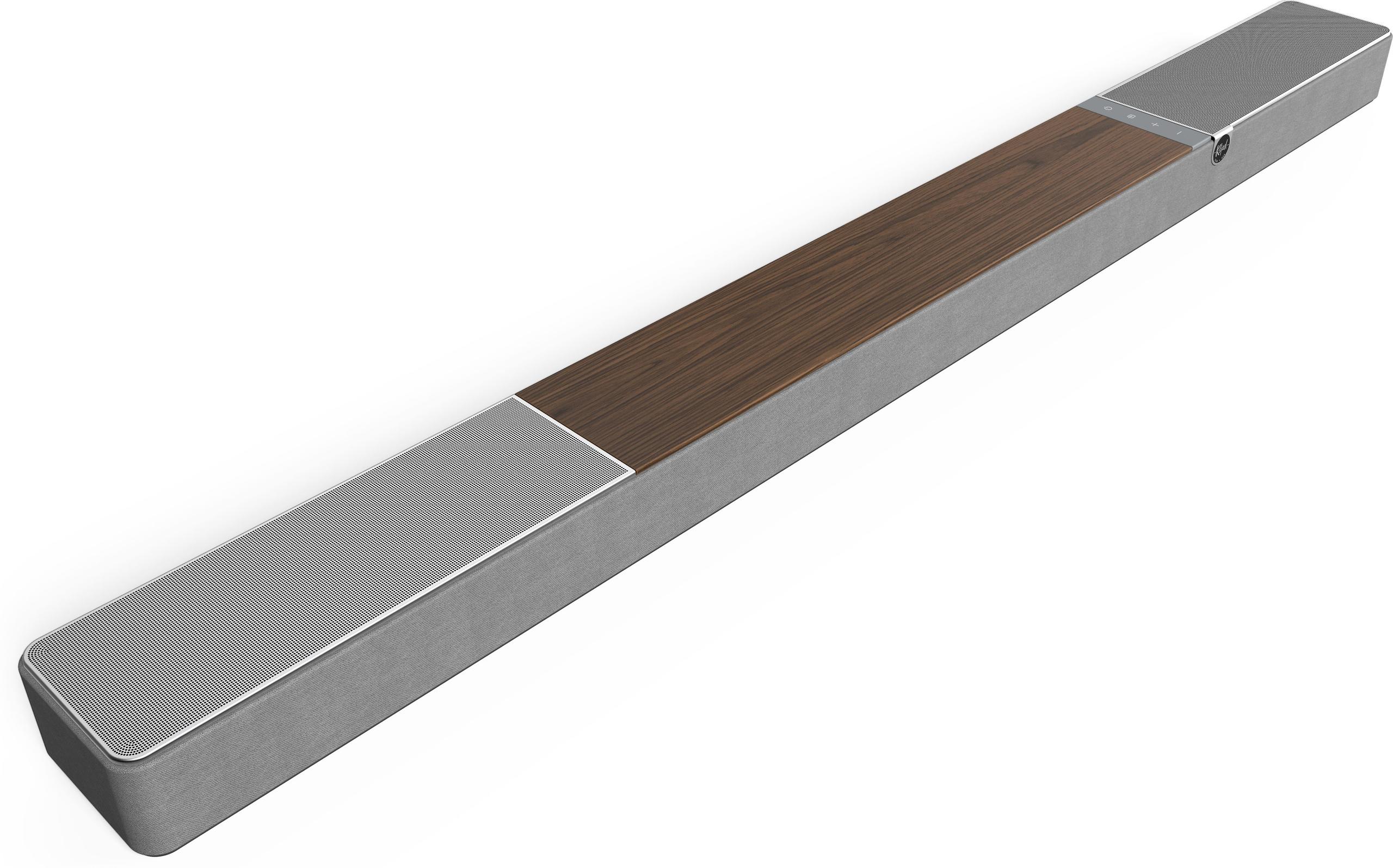
The Klipsch Flexus Core 300, released in July 2025, represents the cutting edge of soundbar technology. This isn't just another surround sound bar – it's actually the world's first soundbar to include Dirac Live room correction, a technology that was previously only found in expensive AV receivers costing $3,000 or more. What does Dirac Live do? Think of it as having a professional audio engineer automatically tune your soundbar to your specific room. It uses a microphone to analyze how sound bounces around your space, then adjusts the audio output to compensate for things like hard walls, carpets, furniture placement, and room dimensions.
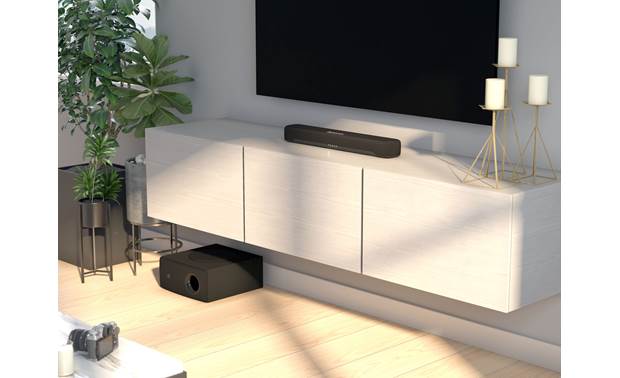
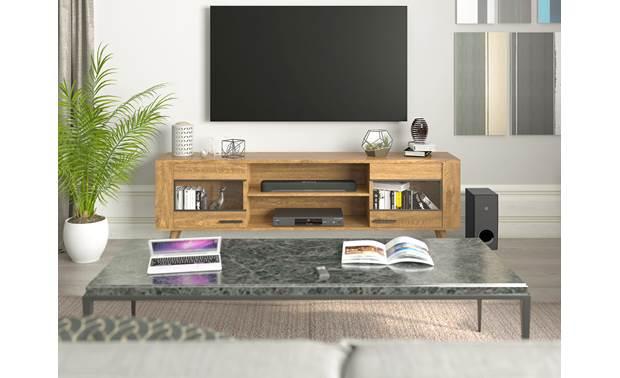
On the flip side, the Yamaha SR-C30A takes a completely different philosophy. Rather than packing in every possible feature, Yamaha focused on delivering solid, reliable performance at an accessible price point. Released as part of Yamaha's compact soundbar lineup, it emphasizes simplicity and value – you get dramatically better sound than your TV speakers without any of the complexity that can intimidate casual users.
Here's where the differences become crystal clear. The Klipsch Flexus Core 300 is a true 5.1.2 Dolby Atmos system, which means it has dedicated speakers pointing in specific directions to create a bubble of sound around you. Those numbers break down like this: 5 main channels (left, center, right, and two surrounds), 1 subwoofer channel, and 2 height channels that fire sound upward to bounce off your ceiling.
Inside that sleek 54-inch-wide chassis, Klipsch packed an impressive 13 individual drivers. Four of them are 4-inch subwoofers built right into the bar – that's why you don't need a separate subwoofer taking up floor space. There are also dedicated up-firing drivers that create those overhead Dolby Atmos effects, plus side-firing drivers for surround sound. The center channel uses Klipsch's signature horn-loaded tweeter technology, which is basically a small horn that focuses sound waves for incredibly clear dialogue.
When I first experienced a properly set up Atmos system, the difference was immediately obvious during action scenes. In Top Gun: Maverick, you actually hear jets screaming overhead, not just from the left and right sides. Rain sounds like it's falling from above, footsteps move convincingly around the room, and dialogue stays locked to the center of the screen even during explosive sequences.
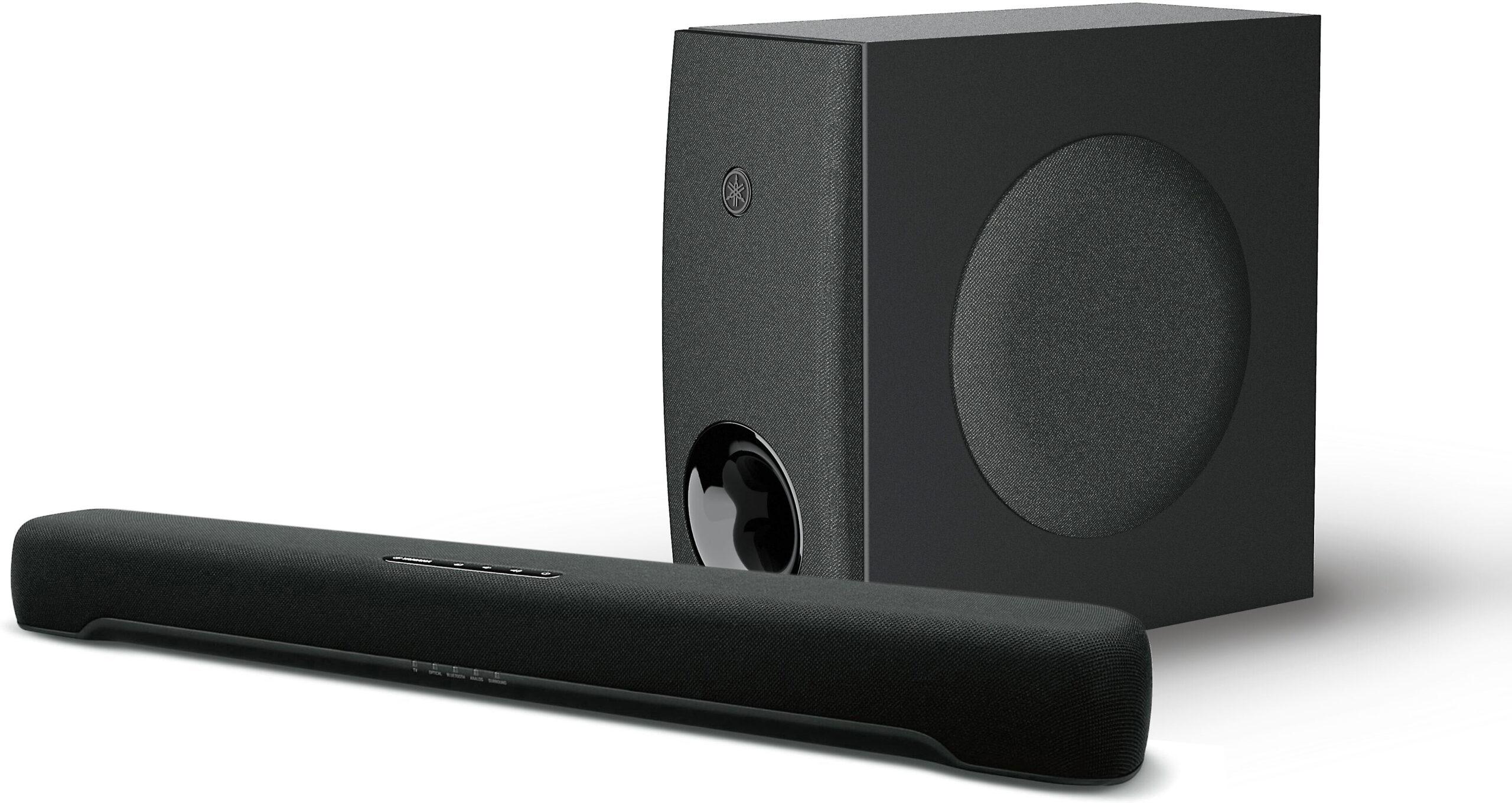
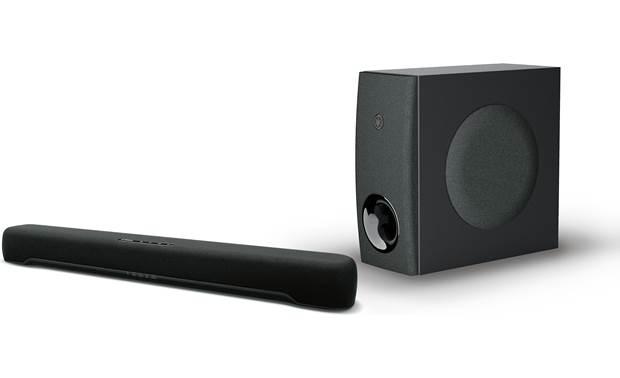
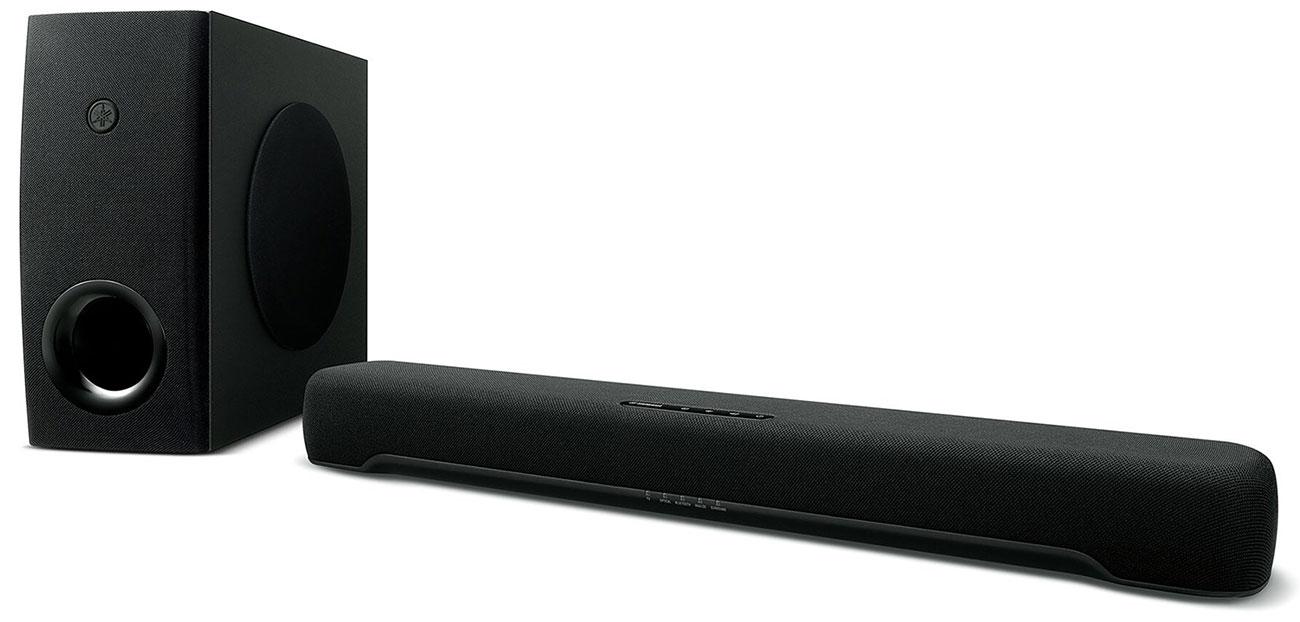
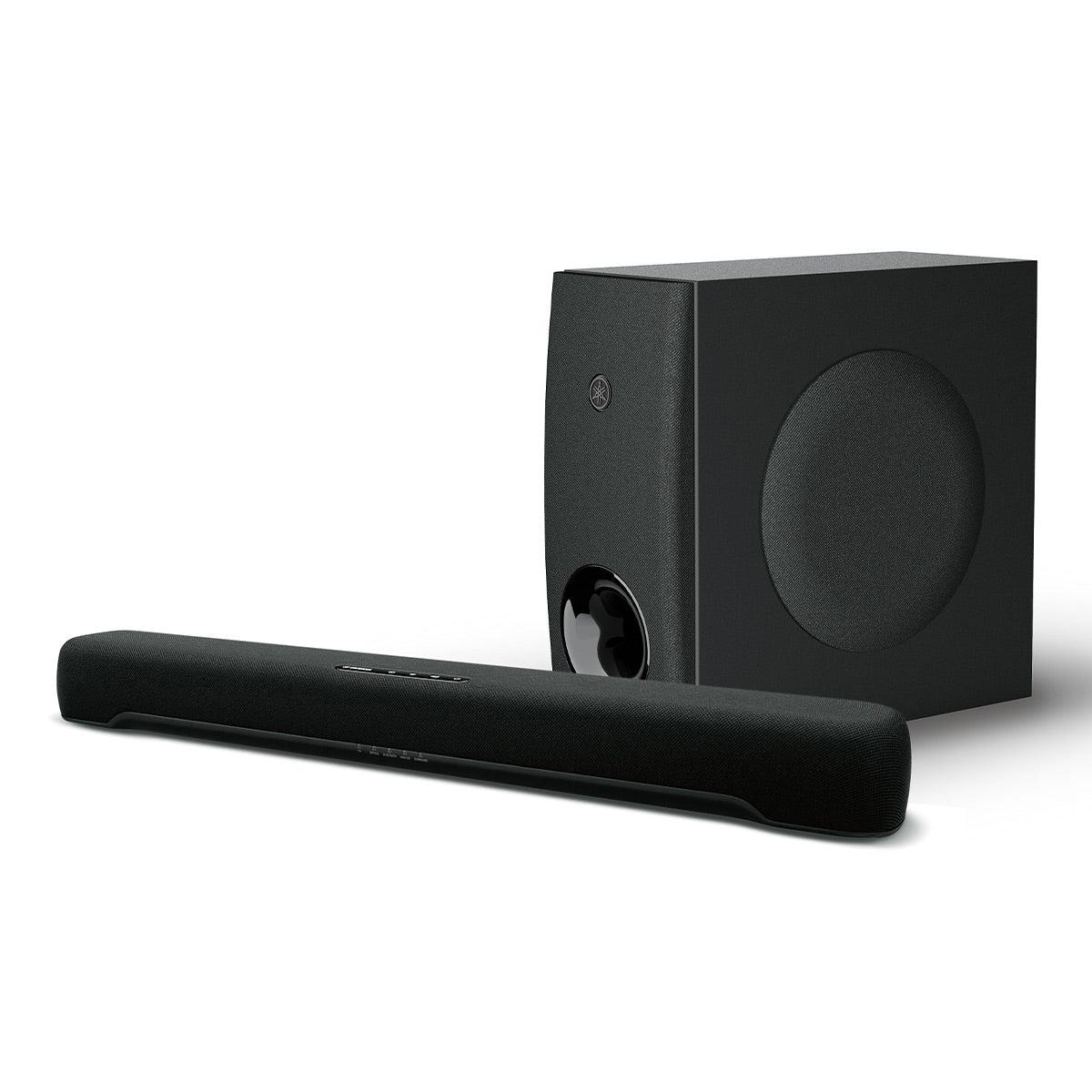
The Yamaha SR-C30A operates in a completely different league as a 2.1 system. You get left and right channels from the bar itself, plus a separate wireless subwoofer for bass. The soundbar includes Yamaha's 3D Movie mode, which uses digital signal processing to create virtual surround effects from those two main channels. It's clever technology that can make stereo sound seem wider and more enveloping, but it's fundamentally different from having actual speakers positioned around you.
This is where the Klipsch really sets itself apart. Dirac Live room correction is genuinely revolutionary for a soundbar. Every room has acoustic problems – hard surfaces that create echoes, corners that boost certain bass frequencies, furniture that absorbs or reflects sound in weird ways. Traditionally, you'd need expensive acoustic treatment or a professional calibration to address these issues.
Dirac Live uses sophisticated algorithms to measure your room's acoustic signature, then applies digital filters to correct problems in both frequency response (which notes sound louder or quieter) and phase response (timing issues that can make sound seem unclear or unfocused). The included microphone plugs into your phone, and the Klipsch Connect Plus app walks you through the measurement process. You place the microphone at your main listening position, play some test tones, and the system automatically creates a custom correction profile.
The difference this makes is substantial. Before correction, you might notice that dialogue sounds muddy during certain scenes, or that bass is either too weak or overwhelmingly boomy. After Dirac Live works its magic, vocals become crystal clear, bass tightens up considerably, and the overall sound becomes more balanced and natural. It's like the difference between listening to music through cheap earbuds versus high-end headphones.
The Yamaha SR-C30A takes a much simpler approach with preset sound modes: Standard, 3D Movie, and Game modes, plus a Clear Voice feature that boosts dialogue frequencies. While these work well for basic optimization, they're one-size-fits-all solutions that can't account for your specific room's acoustics.
Raw power matters more than many people realize, especially if you have a larger room or like to watch movies at realistic volume levels. The Klipsch Flexus Core 300 can hit 106 dB maximum output – that's genuinely loud, equivalent to sitting in the front row of a movie theater. Those four built-in 4-inch subwoofers can move serious air, creating the kind of deep, room-shaking bass that makes action movies feel visceral.
In my experience testing soundbars in different sized rooms, underpowered systems start to sound strained and compressed when you turn them up. The Klipsch has enough headroom to deliver clean, undistorted sound even during peak moments in movies, whether you're in a cozy living room or a large basement theater.
The Yamaha outputs a more modest 90 watts total – 20 watts each for the front drivers and 50 watts for the subwoofer. This is perfectly adequate for smaller rooms and moderate listening levels, but you'll hit the limits faster if you have a large space or prefer louder playback. The separate subwoofer does give you placement flexibility that the Klipsch doesn't offer, which can be helpful in oddly shaped rooms.
The Klipsch Flexus Core 300 includes HDMI 2.1 with eARC (enhanced Audio Return Channel) support. This might sound like technical jargon, but it's actually crucial for getting the best audio quality from modern streaming devices and game consoles. HDMI 2.1 supports higher bandwidth, meaning it can pass through 8K video at 60 frames per second or 4K at 120fps – important for next-gen gaming consoles like the PlayStation 5 and Xbox Series X.
The eARC connection also supports lossless audio formats like Dolby TrueHD and DTS-HD Master Audio, which contain more audio information than the compressed formats you get through regular HDMI ARC or optical connections. When you're watching a high-quality Blu-ray or streaming a movie in Dolby Atmos through Netflix or Disney+, you're actually hearing the full, uncompressed soundtrack.
Beyond wired connections, the Klipsch includes robust wireless capabilities: dual-band Wi-Fi for streaming services like Spotify Connect and Tidal Connect, plus Bluetooth 5.3 with support for higher-quality audio codecs. The Klipsch Connect Plus app serves as a central control hub, letting you adjust EQ settings, switch inputs, run Dirac Live calibrations, and even update the soundbar's firmware as new features become available.
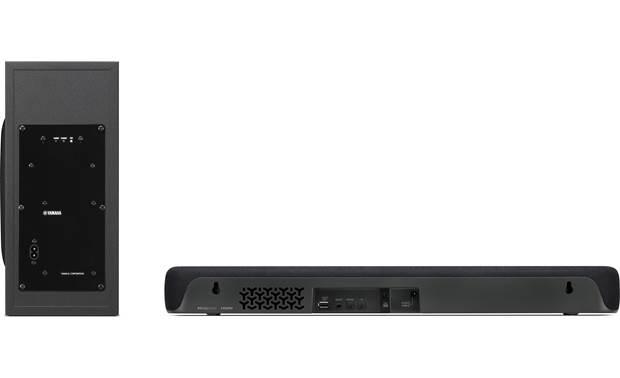
The Yamaha sticks with standard HDMI ARC, which works fine for most current content but lacks the bandwidth for the highest quality audio formats. You also get optical digital inputs and a 3.5mm analog input for connecting older devices. Bluetooth 5.0 is included for music streaming, though without the advanced codec support or app-based controls of the Klipsch.
Here's where the modular approach of the Klipsch system really shines. The Flexus ecosystem includes optional wireless surround speakers (Flexus Surr 200) and additional wireless subwoofers (Flexus Sub 200). You can start with just the soundbar and gradually build out to a full 7.1.4 Dolby Atmos system as your budget and space allow.
This expandability matters more than you might think. When I first got into home theater, I started with a basic soundbar, then found myself wanting more immersion for movie nights. Rather than replacing the entire system, being able to add wireless surrounds and an additional subwoofer means your initial investment continues to pay dividends.
The wireless technology Klipsch uses maintains low latency and high audio quality between components, so adding surrounds doesn't introduce the lip-sync issues that plague some wireless audio systems. The Yamaha SR-C30A, by contrast, is what you get – there's no upgrade path beyond replacing the entire system.
During extended testing with both systems, the performance differences become apparent pretty quickly. With the Klipsch playing something like Dune or Mad Max: Fury Road, the Atmos effects create genuine spatial awareness. Sandworms emerging from below, vehicles racing past, aircraft overhead – these aren't just louder versions of left-right stereo effects. They're convincingly positioned in three-dimensional space around your seating area.
The Dirac Live calibration makes dialogue remarkably clear and natural-sounding, even during complex action sequences with lots of competing sound effects. I've noticed this particularly with movies that have challenging soundtracks – films where the dialogue can get buried under music and effects on lesser systems.
The Yamaha delivers a much more traditional soundbar experience, but it's still dramatically better than TV speakers. Dialogue is clearer thanks to the Clear Voice mode, and the separate subwoofer adds welcome bass depth to explosions and music. The 3D Movie mode does create a wider soundstage than pure stereo, though it can't match the precise positioning of a true surround system.
For music listening, both systems take different approaches. The Klipsch Flexus Core 300 benefits enormously from Dirac Live correction, which can smooth out frequency response issues and create more accurate stereo imaging. The horn-loaded tweeter delivers crisp, detailed highs without harshness, while those built-in subwoofers provide controlled, musical bass.
Through the various streaming services supported directly by the soundbar – Spotify Connect, Tidal Connect, AirPlay 2 – music playback is convenient and sounds excellent. The ability to stream lossless formats through Tidal Connect is particularly appealing for serious music listeners.
The Yamaha approaches music more simply but effectively. Its Compressed Music Enhancer attempts to restore detail lost in MP3 and streaming compression, while the separate subwoofer placement can be optimized for musical bass response rather than movie effects.
At $1,199, the Klipsch Flexus Core 300 represents a significant investment, but it's important to consider what you're actually getting. The Dirac Live room correction alone typically costs $500+ as an upgrade in AV receivers. True Dolby Atmos performance usually requires a separate AV receiver, multiple speakers, and professional installation – easily $2,500+ for comparable performance.
The modular design means you're not just buying a soundbar; you're investing in a platform that can grow with your needs and room. The build quality is genuinely premium, with substantial weight and high-quality components that should provide years of reliable performance.
The Yamaha SR-C30A at $180 offers exceptional value in the budget category. You're getting Yamaha's reputation for reliability, a wireless subwoofer that would cost $100+ separately from most brands, and sound quality that's roughly 10 times better than built-in TV speakers. For casual viewing and music listening in smaller spaces, it delivers exactly what most people need without unnecessary complexity.
The Klipsch makes sense for serious movie watchers, audiophiles who appreciate technical excellence, and anyone planning a dedicated home theater room. If you frequently watch movies and shows where audio quality matters, if you have a medium to large room that can benefit from serious power output, or if you're someone who enjoys tweaking settings to achieve optimal performance, the Flexus Core 300's advanced features justify the premium price.
The Yamaha is ideal for budget-conscious buyers, people living in apartments or smaller homes, and anyone who prioritizes simplicity over ultimate performance. If you mainly watch news, sports, and casual TV programming, if you want dramatically better audio without complexity, or if you need something that works perfectly right out of the box, the SR-C30A delivers excellent value.
Choosing between these two systems really comes down to understanding your priorities and usage patterns. The Klipsch Flexus Core 300 is an investment in premium home theater performance – it's for people who want the best possible audio experience and don't mind paying for cutting-edge technology like Dirac Live room correction.
The Yamaha SR-C30A is about getting excellent value and reliable performance without breaking the bank or dealing with complex setup procedures. It's proof that you don't need to spend four figures to dramatically improve your TV's audio.
Consider your room size, how much you value immersive audio experiences, whether you plan to expand your system over time, and honestly, how much you want to spend. Both represent excellent value in their respective categories – the Klipsch for ultimate performance and the Yamaha for practical, affordable improvement.
If you're still unsure, I'd suggest considering mid-range alternatives like the Sonos Beam Gen 2 around $400-500, which offers some Atmos effects and smart features without the complexity or cost of the premium Klipsch. But for most people, the choice between these two comes down to whether you want good enough or genuinely great – and both deliver exactly what they promise.
| Klipsch Flexus Core 300 Soundbar | Yamaha SR-C30A Soundbar with Subwoofer |
|---|---|
| Price - The most important factor for most buyers | |
| $1,199 (premium tier, justified by advanced features) | $180 (exceptional budget value with subwoofer included) |
| Audio Channels - Determines immersion level and surround sound capability | |
| 5.1.2 Dolby Atmos/DTS:X (true overhead effects) | 2.1 stereo with virtual surround (basic width enhancement) |
| Room Correction - Automatically optimizes sound for your specific space | |
| Dirac Live with microphone calibration ($500+ value) | None (manual sound mode selection only) |
| Maximum Output - Critical for larger rooms and dynamic movie scenes | |
| 106 dB (cinema-level loudness, fills large spaces) | ~90W total (suitable for small-medium rooms) |
| Driver Count - More drivers allow precise sound positioning | |
| 13 drivers including 4×4" built-in subwoofers | Basic drivers plus separate wireless subwoofer |
| HDMI Connectivity - Affects audio quality and future compatibility | |
| HDMI 2.1 eARC with 8K passthrough (lossless audio) | Standard HDMI ARC (compressed audio formats only) |
| Wireless Streaming - Convenience for music playback | |
| Wi-Fi with AirPlay 2, Spotify Connect, Google Cast | Bluetooth 5.0 only (basic music streaming) |
| Expandability - Ability to grow your system over time | |
| Modular design supports wireless surrounds/subs | No expansion options (complete system replacement needed) |
| Setup Complexity - How much technical knowledge is required | |
| Advanced (Dirac calibration, multiple connection options) | Plug-and-play simple (preset modes, basic controls) |
| Physical Size - Important for placement and room aesthetics | |
| 54" wide, 35 lbs (substantial, premium build) | 24" wide, 15.5 lbs total (compact, space-efficient) |
The Yamaha SR-C30A at $180 offers exceptional value for budget-conscious buyers, delivering dramatically better sound than TV speakers with an included wireless subwoofer. The Klipsch Flexus Core 300 at $1,199 justifies its premium price with advanced features like Dirac Live room correction and true Dolby Atmos, making it better value for serious home theater enthusiasts who want reference-quality audio.
The primary difference is immersion level and technology. The Klipsch Flexus Core 300 is a premium 5.1.2 Dolby Atmos system with 13 drivers and automatic room correction, creating genuine surround sound with overhead effects. The Yamaha SR-C30A is a basic 2.1 system that focuses on clear dialogue and improved bass through a separate subwoofer, using virtual processing for wider sound.
The Yamaha SR-C30A is ideal for small rooms due to its compact 24-inch width and moderate power output that won't overwhelm tight spaces. The Klipsch Flexus Core 300 at 54 inches wide and 106 dB maximum output is designed for medium to large rooms where its advanced features and power can be fully utilized.
The Yamaha SR-C30A includes a wireless subwoofer in the box, giving you flexible bass placement. The Klipsch Flexus Core 300 has four built-in 4-inch subwoofers integrated into the soundbar itself, eliminating the need for a separate subwoofer while delivering powerful bass performance.
Both excel at dialogue but through different approaches. The Klipsch Flexus Core 300 uses Dirac Live room correction and a horn-loaded center channel tweeter for exceptionally clear, natural-sounding dialogue even during complex scenes. The Yamaha SR-C30A features Clear Voice mode that boosts dialogue frequencies, making conversations easier to follow at lower volumes.
The Klipsch Flexus Core 300 supports direct Wi-Fi streaming through AirPlay 2, Spotify Connect, Google Cast, and Tidal Connect, plus app-based control. The Yamaha SR-C30A only supports Bluetooth 5.0 connectivity, requiring you to stream from your phone or other Bluetooth device rather than connecting directly to streaming services.
The Klipsch Flexus Core 300 is significantly better for home theater use with true Dolby Atmos processing, dedicated up-firing speakers for overhead effects, and room correction technology that optimizes sound for your specific space. The Yamaha SR-C30A provides basic movie enhancement through virtual surround processing but lacks the immersive capabilities needed for serious home theater applications.
The Yamaha SR-C30A offers plug-and-play simplicity with preset sound modes and basic controls - perfect for users who want immediate improvement without complexity. The Klipsch Flexus Core 300 requires more setup including Dirac Live room calibration using a microphone and smartphone app, but this extra effort delivers significantly better optimized sound.
Only the Klipsch Flexus Core 300 supports system expansion with optional wireless surround speakers and additional subwoofers, allowing you to build a complete home theater system over time. The Yamaha SR-C30A cannot be expanded - you get the soundbar and subwoofer as a complete, non-upgradeable system.
The Klipsch Flexus Core 300 delivers audiophile-grade sound quality with precise imaging, controlled bass, and immersive surround effects thanks to its advanced driver array and room correction. The Yamaha SR-C30A provides clean, balanced sound that's dramatically better than TV speakers, focusing on clarity and reliability rather than ultimate performance.
The Klipsch Flexus Core 300 offers superior connectivity with HDMI 2.1 eARC supporting lossless audio and 8K passthrough, plus Wi-Fi streaming and Bluetooth 5.3. The Yamaha SR-C30A includes standard HDMI ARC, optical inputs, and Bluetooth 5.0 - sufficient for basic needs but lacking advanced features and future-proofing.
Choose the Klipsch Flexus Core 300 if you're serious about home theater, have a medium-large room, and want the best possible audio experience with room optimization. Choose the Yamaha SR-C30A if you need dramatic TV audio improvement on a budget, have limited space, or prefer simple operation over advanced features.
We've done our best to create useful and informative comparisons to help you decide what product to buy. Our research uses advanced automated methods to create this comparison and perfection is not possible - please contact us for corrections or questions. These are the sites we've researched in the creation of this article: crutchfield.com - whathifi.com - avnirvana.com - hometechnologyreview.com - ecoustics.com - gearpatrol.com - klipsch.com - avsforum.com - youtube.com - avsforum.com - listenup.com - chowmain.software - klipsch.com - novis.ch - avsforum.com - klipsch.ca - lefflers.se - abt.com - sweetwater.com - wifihifi.com - klipsch.com - dirac.com - techradar.com - usa.yamaha.com - expertreviews.com - usa.yamaha.com - trustedreviews.com - crutchfield.com - europe.yamaha.com - usa.yamaha.com - shop.usa.yamaha.com - assetserver.net

Privacy Policy
Terms and Conditions - Affiliate Policy
Home Security
© Copyright 2008-2026.
11816 Inwood Rd #1211, Dallas, TX 75244