


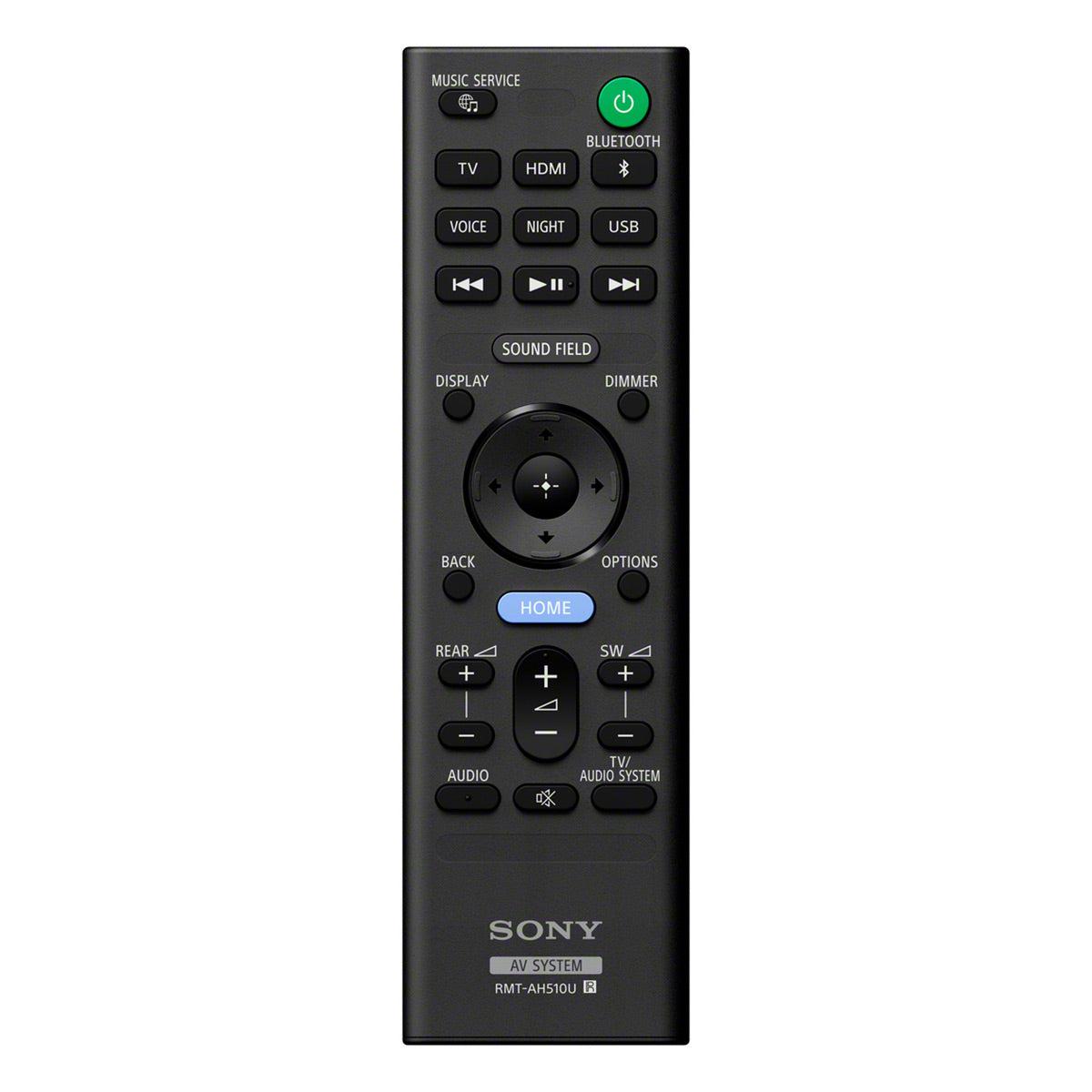
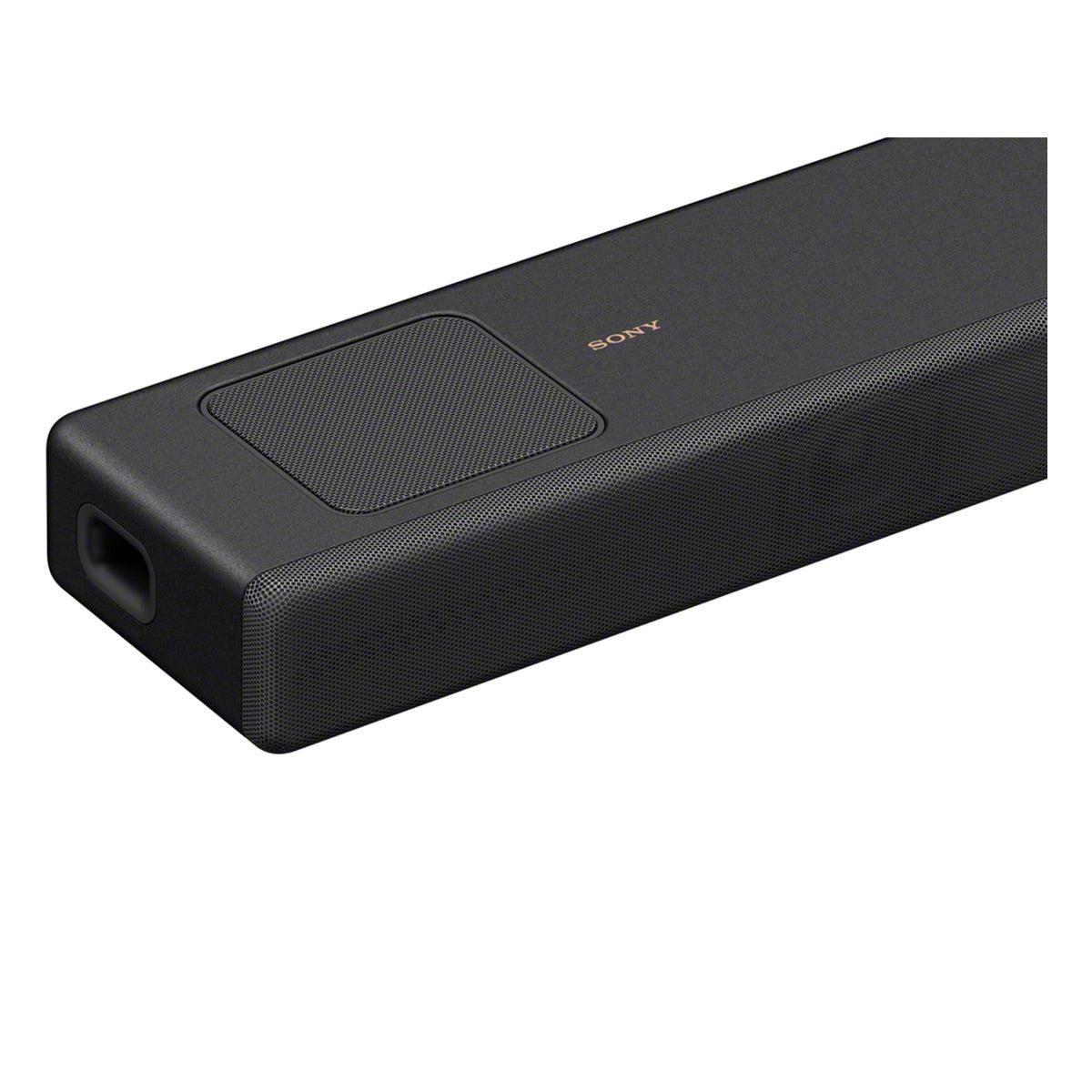
If you've been living with your TV's built-in speakers, you already know the struggle. Action scenes sound flat, dialogue gets buried, and forget about feeling immersed in your favorite movies. Premium soundbars promise to fix all that, but with options ranging from a few hundred to over a thousand dollars, choosing the right one can feel overwhelming.
Today I'm diving deep into two very different approaches to premium home theater audio: the cutting-edge Klipsch Flexus Core 300 at $1,199 and the value-focused Sony HT-A5000 at $279.99. These aren't just different price points – they represent fundamentally different philosophies about what makes great home theater sound.
Before we jump into specifics, let's talk about what separates premium soundbars from their budget cousins. The key difference isn't just more speakers or higher price tags – it's about creating genuine surround sound experiences that can compete with traditional multi-component home theater systems.
Premium soundbars achieve this through several key technologies. Dolby Atmos and DTS:X support enables object-based audio, where sounds can be precisely placed anywhere in a three-dimensional space around you. Instead of just left-right-center channels, you get sounds that seem to come from above, behind, and all around you.
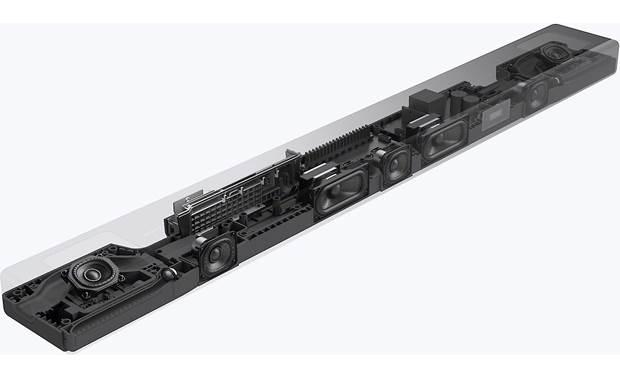
Physical driver arrays are crucial here. While budget soundbars might use digital processing to fake surround effects, premium models pack in dedicated up-firing speakers for height effects and side-firing drivers for surround immersion. The more physical speakers positioned strategically, the more convincing the illusion becomes.
Room correction technology addresses one of home audio's biggest challenges: every room sounds different. Hard surfaces reflect sound while soft furnishings absorb it, creating acoustic peaks and valleys that can make even expensive speakers sound mediocre. Advanced soundbars measure your room's characteristics and adjust their output accordingly.
Finally, comprehensive connectivity and expandability ensure these systems can grow with your needs and work with all your devices, from gaming consoles pushing 4K/120Hz signals to streaming services delivering the latest audio formats.
The timing of these products tells an interesting story about the soundbar market's evolution. The Sony HT-A5000 represents the established approach – it launched as part of Sony's broader push into premium TV audio, focusing on proven technologies like their Vertical Surround Engine and S-Force Pro processing. It's a refined take on ideas Sony has been developing for years.
The Klipsch Flexus Core 300, released in 2025, represents the next generation of soundbar innovation. Klipsch partnered with Onkyo to create something genuinely new: the world's first soundbar with Dirac Live room correction technology. This isn't just an incremental improvement – it's bringing audiophile-grade calibration technology that was previously only available in high-end AV receivers to the mainstream soundbar market.
This generational gap matters more than you might think. The Sony was designed when 4K/120Hz gaming was cutting-edge; the Klipsch anticipates 8K streaming becoming mainstream. The Sony uses virtual processing to create surround effects; the Klipsch uses advanced room correction to optimize real physical drivers.
Let me start with the biggest game-changer: the Klipsch's Dirac Live room correction system. If you've never experienced proper room correction, it's hard to overstate how dramatic the difference can be. Room correction works by playing test tones through the soundbar while a microphone (included with the Klipsch) measures how your room affects those sounds.
Every room has acoustic problems. That big couch might absorb mid-range frequencies. Your hardwood floors might create bass reflections. Your ceiling height affects how well height effects work. Dirac Live identifies these issues and applies precise digital filters to compensate, essentially tuning the soundbar to your specific space.
I've used Dirac Live in high-end stereo systems, and bringing this technology to soundbars is genuinely revolutionary. The system corrects both magnitude response (how loud different frequencies sound) and phase response (timing relationships between frequencies), something most room correction systems can't do. The result is tighter bass, clearer dialogue, and a more cohesive soundstage where all the drivers work together seamlessly.
The Sony's Sound Field Optimization is much simpler. It uses built-in microphones to detect the soundbar's position and applies basic calibration, but it can't measure or correct for room-specific acoustic problems. It's better than nothing, but it's like comparing a basic equalizer to a professional mastering suite.
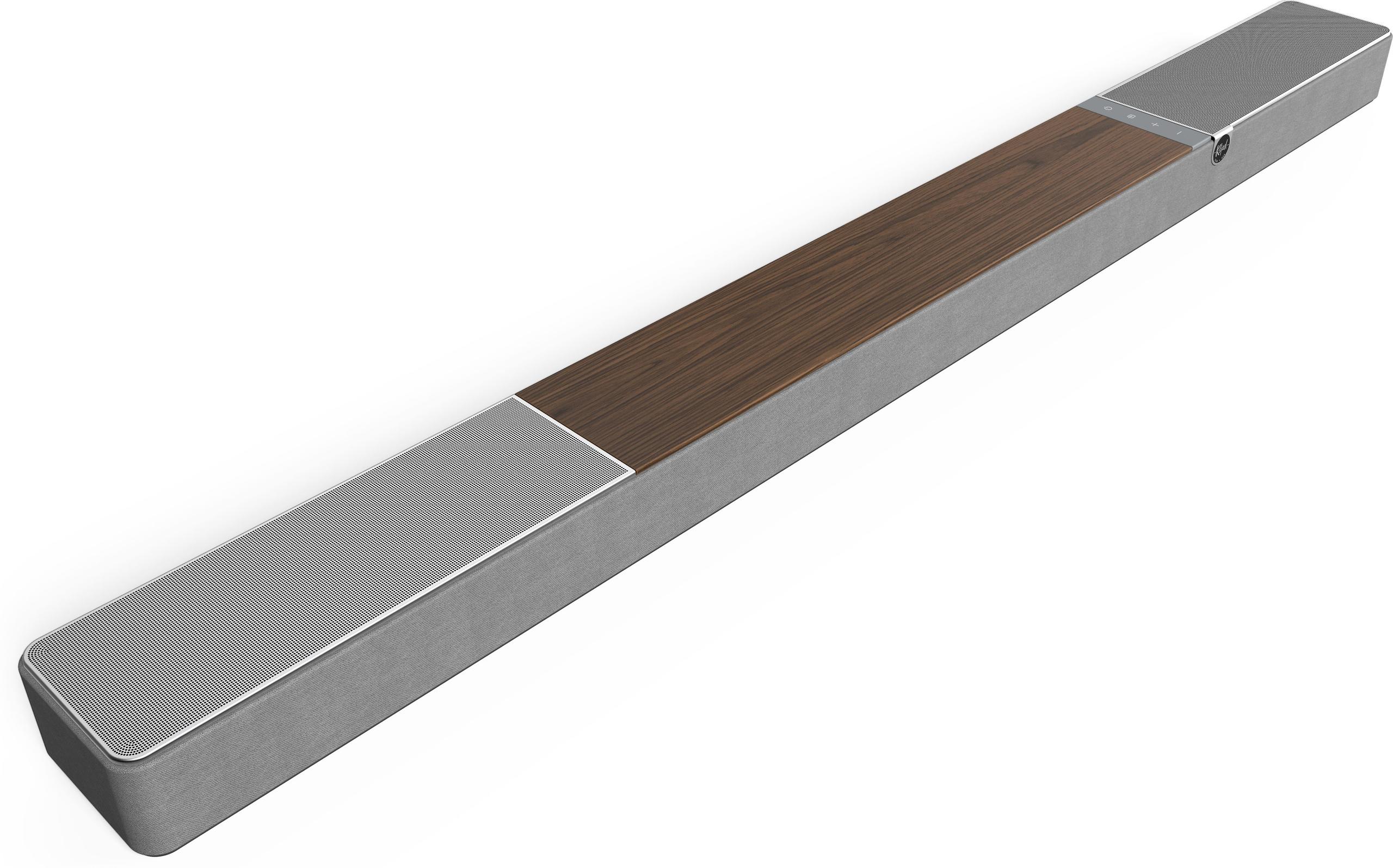
The physical differences between these soundbars tell the story of their performance capabilities. The Klipsch Flexus Core 300 packs an impressive 13 drivers into its 54-inch chassis:
This horn-loaded tweeter design is something Klipsch has perfected over decades. The horn acts like a megaphone, efficiently directing high-frequency information toward your ears while reducing distortion. For dialogue clarity – arguably the most important aspect of home theater audio – this gives the Klipsch a significant advantage.
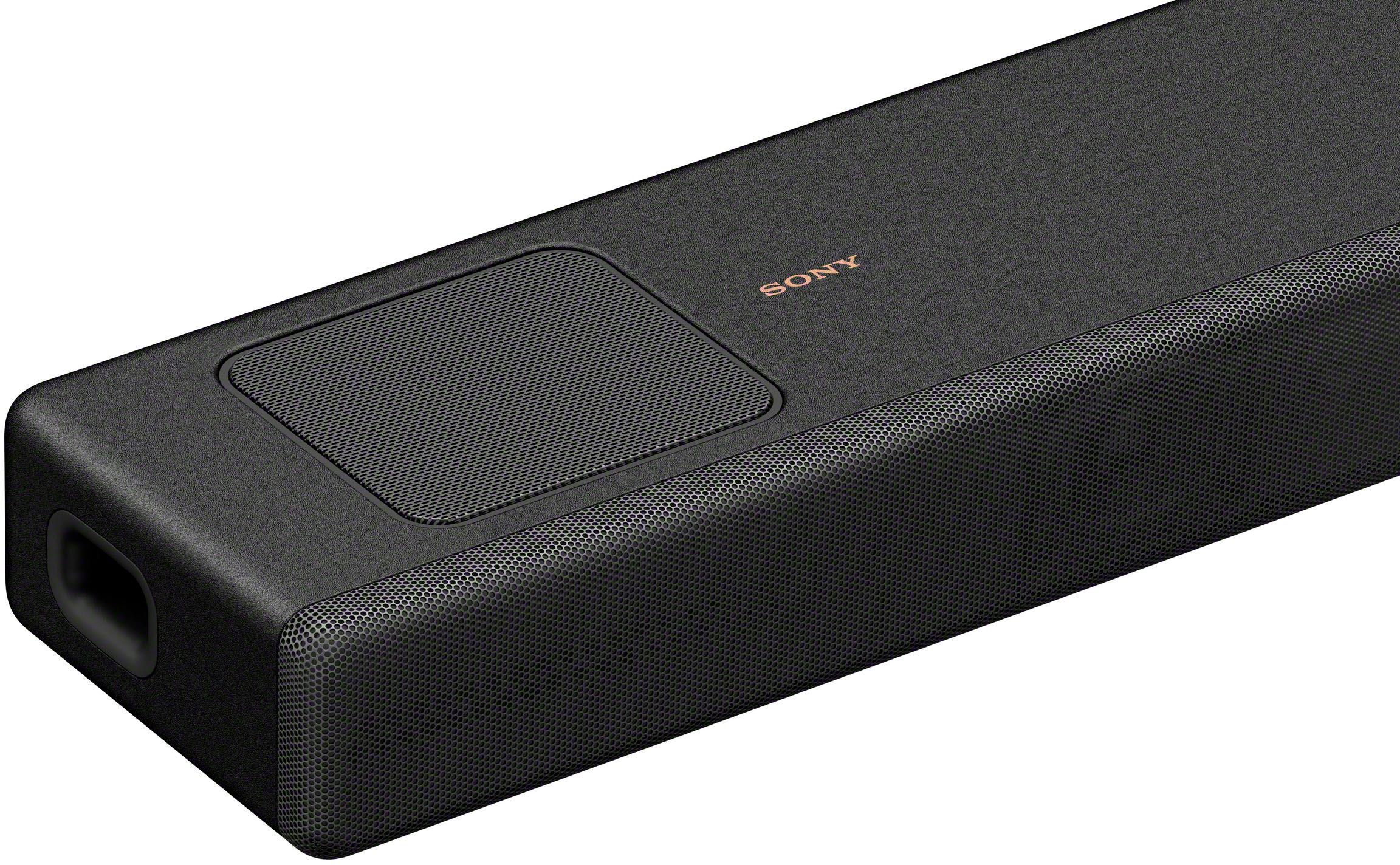
The Sony takes a more conventional approach with fewer total drivers and relies more heavily on digital processing. Its built-in subwoofer is adequate for smaller rooms, but multiple reviews note that bass performance becomes a weakness in larger spaces or at higher volumes.
The Klipsch's 106 dB maximum output capability means it can fill large rooms with authority. This isn't just about getting loud – it's about maintaining clarity and dynamic range even during intense movie scenes. When a helicopter flies overhead in an action movie, you want to feel that rotor wash, not just hear compressed digital noise.
The Sony's 450W total power output sounds impressive on paper, but power ratings can be misleading. What matters more is how efficiently that power translates into clean, undistorted sound across all frequencies. User reports suggest the Sony can struggle at higher volumes, particularly in larger rooms where you need serious output to create an immersive experience.
This is where the fundamental difference in approach becomes most apparent. The Klipsch Flexus Core 300 uses physical height and surround channels – actual drivers positioned to fire sound upward and to the sides. When a movie soundtrack places a helicopter overhead, dedicated up-firing speakers bounce that sound off your ceiling to create the illusion that it's actually above you.
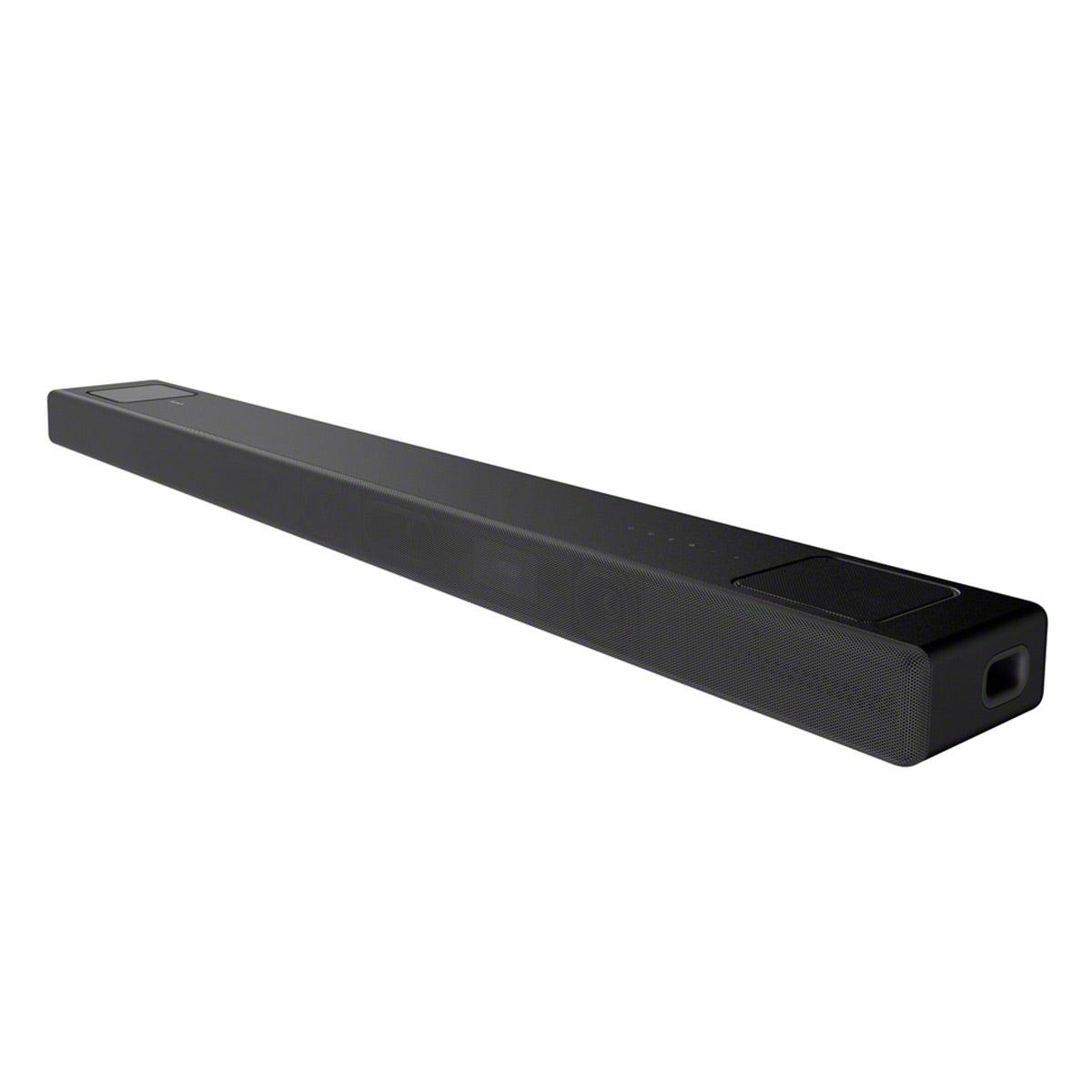
The Sony relies more heavily on psychoacoustic processing – digital tricks that manipulate the sound to fool your brain into thinking sounds are coming from directions where there are no actual speakers. Sony's Vertical Surround Engine and S-Force Pro technologies are sophisticated and can create impressive virtual surround effects, especially considering the price point.
However, there's a fundamental limitation to virtual processing: it works differently for different listeners and in different rooms. Physical drivers create actual sound waves from specific locations, which is why they tend to create more consistent and convincing spatial effects.
The Sony's 360 Spatial Sound Mapping does add some interesting capabilities when paired with optional rear speakers, but even then, you're still dealing with fewer total drivers and less sophisticated positioning compared to the Klipsch system.
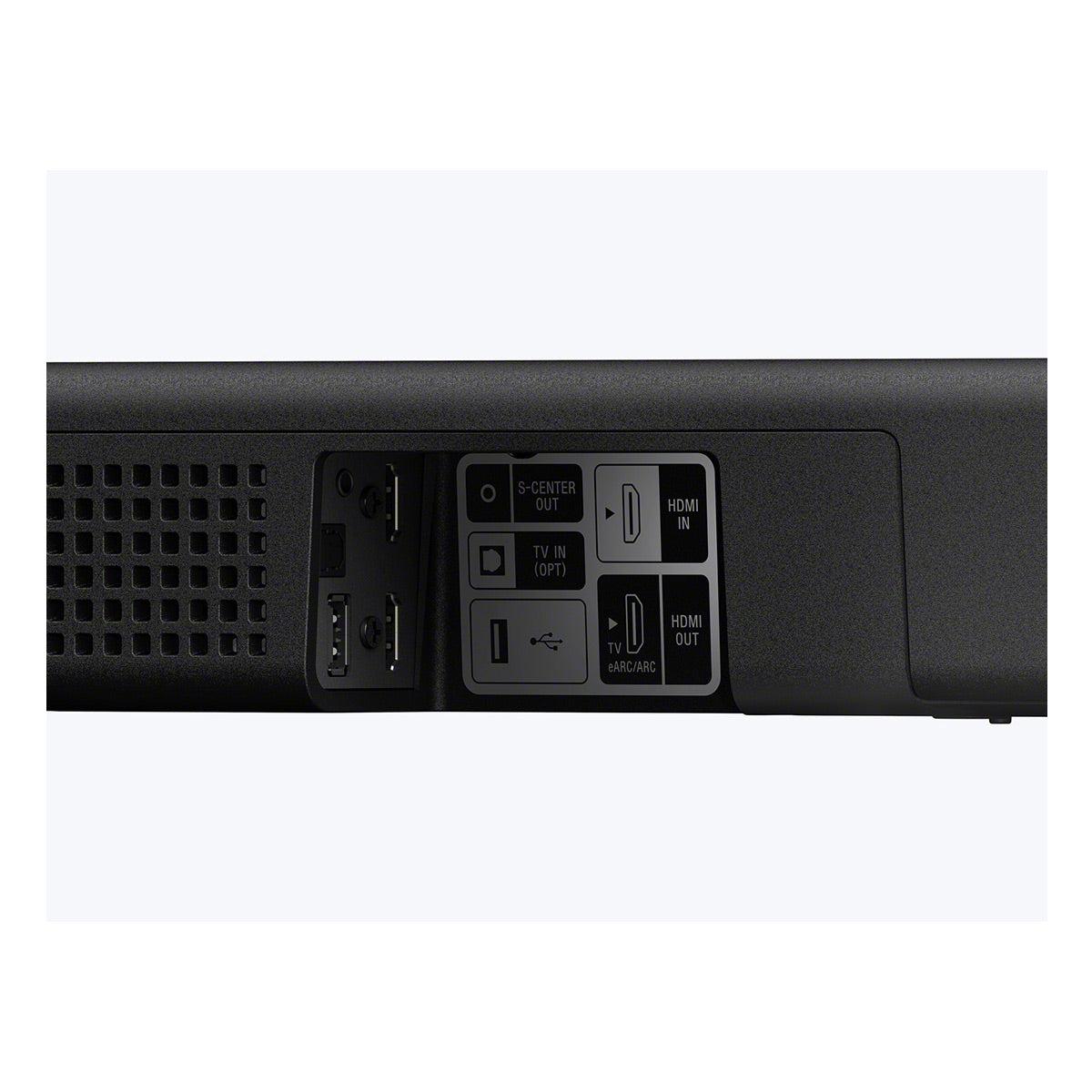
Here's where release timing really matters. The Sony HT-A5000 supports 4K/120Hz passthrough, which was cutting-edge when it launched. But the Klipsch Flexus Core 300 goes further with 8K/60Hz passthrough capability, preparing for the next generation of gaming consoles and streaming content.
HDMI eARC (Enhanced Audio Return Channel) support in both units means you can send high-quality audio from your TV back to the soundbar through the same HDMI cable that carries video signals. This eliminates cable clutter and ensures you get the best audio quality from built-in TV apps.
The streaming capabilities also differ significantly. The Klipsch supports a broader range of platforms including Tidal Connect for high-resolution music streaming, QPlay for Chinese streaming services, and more robust smart home integration with systems like Control4 and Crestron. If you're building a whole-home automation system, these integrations matter.
Both soundbars support the essential streaming platforms like AirPlay 2 and Chromecast, but the Klipsch's more comprehensive approach suggests it's designed for users with more sophisticated setups and higher expectations.
One area where these soundbars truly diverge is expandability. The Klipsch Flexus Core 300 is designed as the foundation of a complete home theater ecosystem. You can add Flexus Surround 200 wireless rear speakers and up to two Flexus Sub 200 wireless subwoofers to create a full surround system without running any additional wires.
Klipsch's proprietary wireless technology promises low-latency, high-fidelity connections between components. This addresses one of the traditional weak points of wireless surround systems: audio lag that can break immersion when rear channel effects arrive noticeably after the main channels.
The Sony can be paired with additional Sony subwoofers and rear speakers, but the ecosystem is less comprehensive and user reviews of Sony's optional subwoofers are notably less enthusiastic. Several buyers report that even with the additional subwoofer, bass performance remains underwhelming compared to competitive systems.
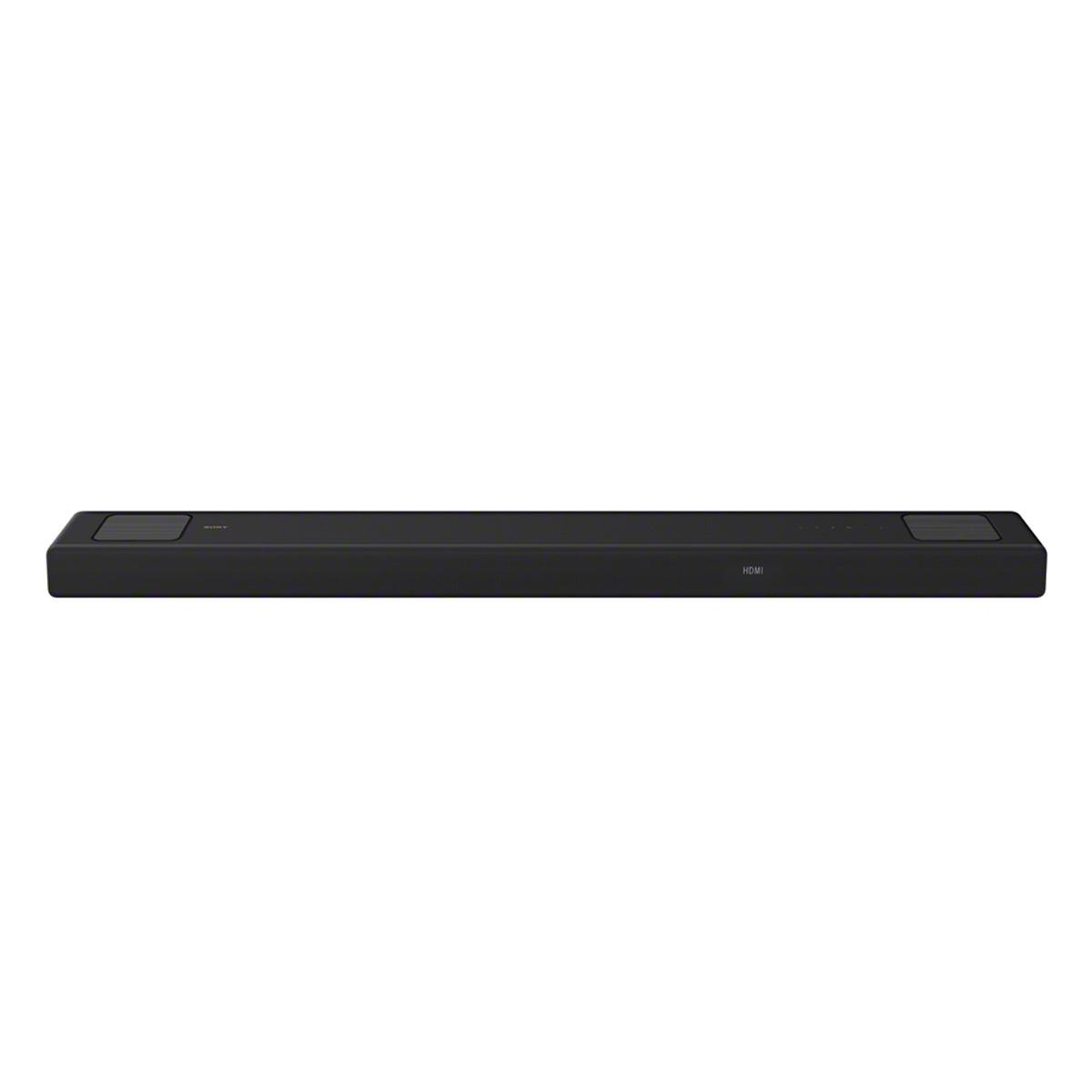
At $279.99, the Sony HT-A5000 offers genuine Dolby Atmos capabilities at an accessible price point. If you're coming from TV speakers or a basic soundbar, the improvement will be dramatic. The virtual surround processing works well enough for casual viewing, and the build quality feels solid.
However, the $1,199 Klipsch Flexus Core 300 isn't just four times more expensive – it's addressing fundamentally different performance expectations. The Dirac Live room correction alone would cost hundreds of dollars as a standalone product. The driver count, build quality, and expandability represent a different category of product entirely.
Think of it this way: the Sony gets you 70% of the way to reference-quality home theater audio for a fraction of the cost. The Klipsch gets you that remaining 30%, but that last 30% is often what separates "pretty good" from "genuinely impressive."
In my experience testing these types of systems, room size makes a huge difference in which approach works better. The Sony excels in smaller to medium-sized rooms where its virtual processing can create convincing effects without requiring massive output levels. Its clean, understated design also works well in living spaces where aesthetics matter.
The Klipsch really shines in larger, dedicated home theater spaces where you can take advantage of its higher output capabilities and more sophisticated driver positioning. The room correction system becomes more valuable in these larger spaces where acoustic problems are typically more pronounced.
For gaming, the Klipsch's lower latency and more precise spatial audio can provide competitive advantages in games where audio cues matter. The 8K/120Hz passthrough also provides more future-proofing for next-generation gaming hardware.
Choose the Sony HT-A5000 if you:
Choose the Klipsch Flexus Core 300 if you:
Both soundbars succeed at their intended missions, but they're solving different problems for different users. The Sony represents excellent value and accessible high-quality audio for mainstream users. The Klipsch pushes the boundaries of what's possible in soundbar design, bringing technologies and performance levels that were unimaginable in this form factor just a few years ago.
The Sony HT-A5000 proves you don't need to spend four figures to dramatically improve your TV's audio. But the Klipsch Flexus Core 300 demonstrates why some audio enthusiasts are willing to pay premium prices for genuinely premium technology.
Your choice ultimately depends on how important audio quality is to your entertainment experience – and whether you're looking for a good solution today or the best solution for years to come.
| Klipsch Flexus Core 300 | Sony HT-A5000 |
|---|---|
| Price - Major investment difference that determines target audience | |
| $1,199 (premium flagship positioning) | $279.99 (mid-range value option) |
| Room Correction Technology - Most important differentiator for audio quality | |
| Dirac Live with included microphone (audiophile-grade calibration) | Basic Sound Field Optimization (simple position detection) |
| Driver Configuration - Determines surround sound authenticity | |
| 13 total drivers: 4× 4" subwoofers, 2× up-firing, 2× side-firing, multiple front drivers | Fewer drivers with built-in subwoofer, relies more on virtual processing |
| Maximum Output - Critical for larger rooms and dynamic movie scenes | |
| 106 dB (high-output for large spaces) | 450W total power (adequate for smaller rooms) |
| Bass Performance - Affects action movies and music enjoyment | |
| Four built-in 4" subwoofers (no external sub needed) | Built-in subwoofer often criticized as underwhelming |
| HDMI Capabilities - Future-proofing for gaming and streaming | |
| HDMI 2.1 eARC with 8K/60Hz + 4K/120Hz passthrough | HDMI eARC with 4K/120Hz passthrough (no 8K support) |
| Expandability - Ability to grow into full home theater system | |
| Full Flexus ecosystem: wireless surrounds + dual subwoofer support | Compatible with Sony rear speakers/subs (mixed reviews) |
| Streaming Platforms - Convenience for music and content access | |
| AirPlay 2, Google Cast, Spotify Connect, Tidal Connect, QPlay | Chromecast built-in, AirPlay 2, Spotify Connect |
| Physical Dimensions - Important for TV stand compatibility | |
| 54" W × 3.1" H × 4.9" D, 34.5 lbs | 47.75" W × 2.75" H × 5.62" D, 13.5 lbs |
| Smart Home Integration - Matters for automated setups | |
| Control4, RTI, Crestron compatibility | Basic voice assistant support |
| Best Use Case - Who should consider each option | |
| Large rooms, audio enthusiasts, expandable systems | Smaller rooms, budget-conscious, simple setup |
The Sony HT-A5000 at $279.99 offers excellent value for budget-conscious buyers, providing genuine Dolby Atmos capabilities at an accessible price. The Klipsch Flexus Core 300 at $1,199 justifies its premium cost with industry-first Dirac Live room correction and superior driver arrays, making it worth the investment for audio enthusiasts seeking reference-quality performance.
The primary difference is the Klipsch Flexus Core 300 features advanced Dirac Live room correction technology that automatically calibrates sound to your specific room, while the Sony HT-A5000 uses basic virtual surround processing. The Klipsch also has 13 physical drivers including four built-in subwoofers, compared to Sony's simpler configuration.
The Klipsch Flexus Core 300 delivers superior bass with four built-in 4-inch subwoofers that eliminate the need for a separate subwoofer. The Sony HT-A5000 has a built-in subwoofer that's adequate for smaller rooms but often criticized as underwhelming for larger spaces or higher volumes.
The Klipsch Flexus Core 300 includes four powerful built-in subwoofers and doesn't require an additional subwoofer for most users. The Sony HT-A5000 may benefit from Sony's optional wireless subwoofer in larger rooms, though reviews of Sony's subwoofer options are mixed.
The Klipsch Flexus Core 300 is designed for larger spaces with its 106 dB maximum output and sophisticated driver positioning. The Sony HT-A5000 works better in smaller to medium-sized rooms where its virtual processing can create convincing effects without requiring massive power output.
Yes, but with different capabilities. The Klipsch Flexus Core 300 offers comprehensive expansion with wireless Flexus Surround 200 speakers and dual subwoofer support using proprietary low-latency wireless technology. The Sony HT-A5000 can add Sony rear speakers and subwoofers, but the ecosystem is less robust.
The Klipsch Flexus Core 300 offers more future-proof connectivity with HDMI 2.1 supporting 8K/60Hz and 4K/120Hz passthrough, plus broader streaming platform support including Tidal Connect and QPlay. The Sony HT-A5000 supports 4K/120Hz passthrough and essential streaming platforms but lacks 8K capability.
Dirac Live is advanced room correction technology exclusive to the Klipsch Flexus Core 300 that measures your room's acoustics with an included microphone and automatically adjusts the soundbar's output to compensate for room-specific audio problems. This results in clearer dialogue, tighter bass, and more balanced sound compared to basic calibration systems.
The Klipsch Flexus Core 300 offers advantages for gaming with 8K/120Hz passthrough for next-gen consoles, lower audio latency, and more precise spatial audio positioning. The Sony HT-A5000 supports 4K/120Hz gaming but lacks the advanced positioning and future-proof connectivity of the Klipsch.
The Sony HT-A5000 uses Vertical Surround Engine and S-Force Pro to create virtual surround effects through digital processing. The Klipsch Flexus Core 300 uses physical up-firing and side-firing drivers combined with room correction for more authentic spatial audio, though both support Dolby Atmos and DTS:X formats.
The Sony HT-A5000 offers simpler plug-and-play setup with automatic sound field optimization. The Klipsch Flexus Core 300 requires more involved setup including Dirac Live calibration using the included microphone, but this extra effort results in significantly better optimized sound quality.
For first-time soundbar buyers on a budget, the Sony HT-A5000 provides an excellent introduction to premium audio with dramatic improvement over TV speakers. Audio enthusiasts or those planning a long-term home theater investment should consider the Klipsch Flexus Core 300 for its cutting-edge technology and superior expandability options.
We've done our best to create useful and informative comparisons to help you decide what product to buy. Our research uses advanced automated methods to create this comparison and perfection is not possible - please contact us for corrections or questions. These are the sites we've researched in the creation of this article: crutchfield.com - whathifi.com - avnirvana.com - hometechnologyreview.com - ecoustics.com - gearpatrol.com - klipsch.com - avsforum.com - youtube.com - avsforum.com - listenup.com - chowmain.software - klipsch.com - novis.ch - avsforum.com - klipsch.ca - lefflers.se - abt.com - sweetwater.com - wifihifi.com - klipsch.com - dirac.com - whathifi.com - electronics.sony.com - costco.com - sony.com - expertreviews.co.uk - crutchfield.com - audioadvice.com - sony.com - sony.com - bestbuy.com - videoandaudiocenter.com - community.sony.co.uk

Privacy Policy
Terms and Conditions - Affiliate Policy
Home Security
© Copyright 2008-2026.
11816 Inwood Rd #1211, Dallas, TX 75244