


If you've been scrolling through soundbar reviews lately, you've probably noticed that premium models have gotten seriously impressive. We're talking about systems that can fill your entire room with sound that seems to come from everywhere—including above your head. Two standout options in this space are the JBL Bar 1000 MK2 ($1,199) and the Klipsch Flexus Core 300 ($1,199), both released in 2024 and representing very different philosophies on how to deliver cinematic audio.
After spending time with both systems, I can tell you they're targeting the same price point but taking completely different routes to get there. The JBL gives you everything upfront—a complete surround sound system with detachable wireless speakers and a dedicated subwoofer. The Klipsch takes a more refined approach, offering audiophile-grade room correction technology in a modular system you can expand over time.
Before we dive into the nitty-gritty, let's talk about what separates premium soundbars from their cheaper cousins. These aren't just loud speakers you stick under your TV. Premium soundbars use advanced processing to create "object-based audio"—basically, sounds that seem to move around your room in three dimensions rather than just left and right.
The magic happens through formats like Dolby Atmos and DTS:X, which encode audio objects with spatial information. Instead of just having sounds come from your left or right speaker, these formats can place a helicopter overhead, rain falling from above, or footsteps moving behind you. Premium soundbars achieve this through a combination of upward-firing drivers (speakers that bounce sound off your ceiling), side-firing drivers, and sophisticated digital processing.
Both of our contenders support these immersive formats, but they go about creating that 3D soundscape in fundamentally different ways.
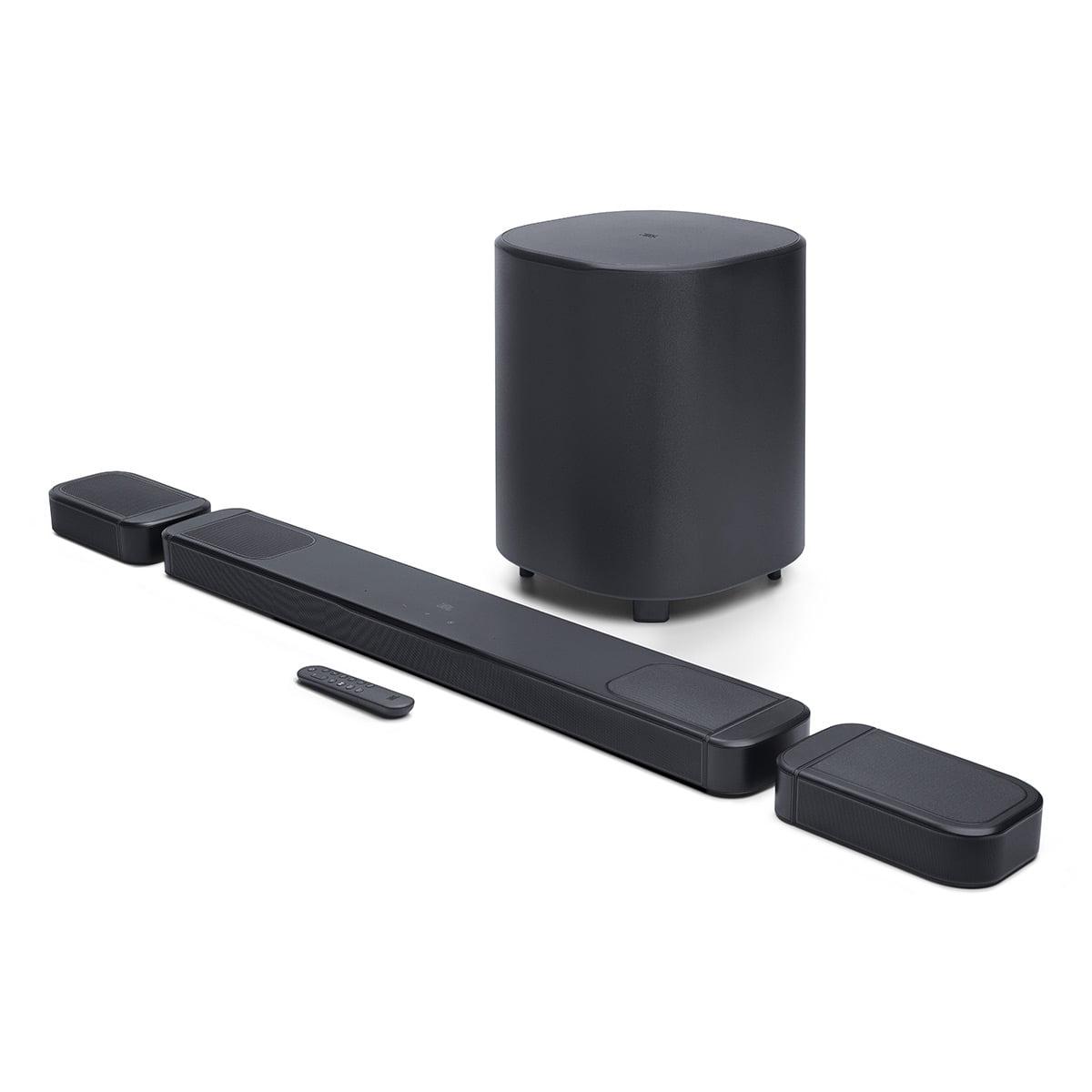
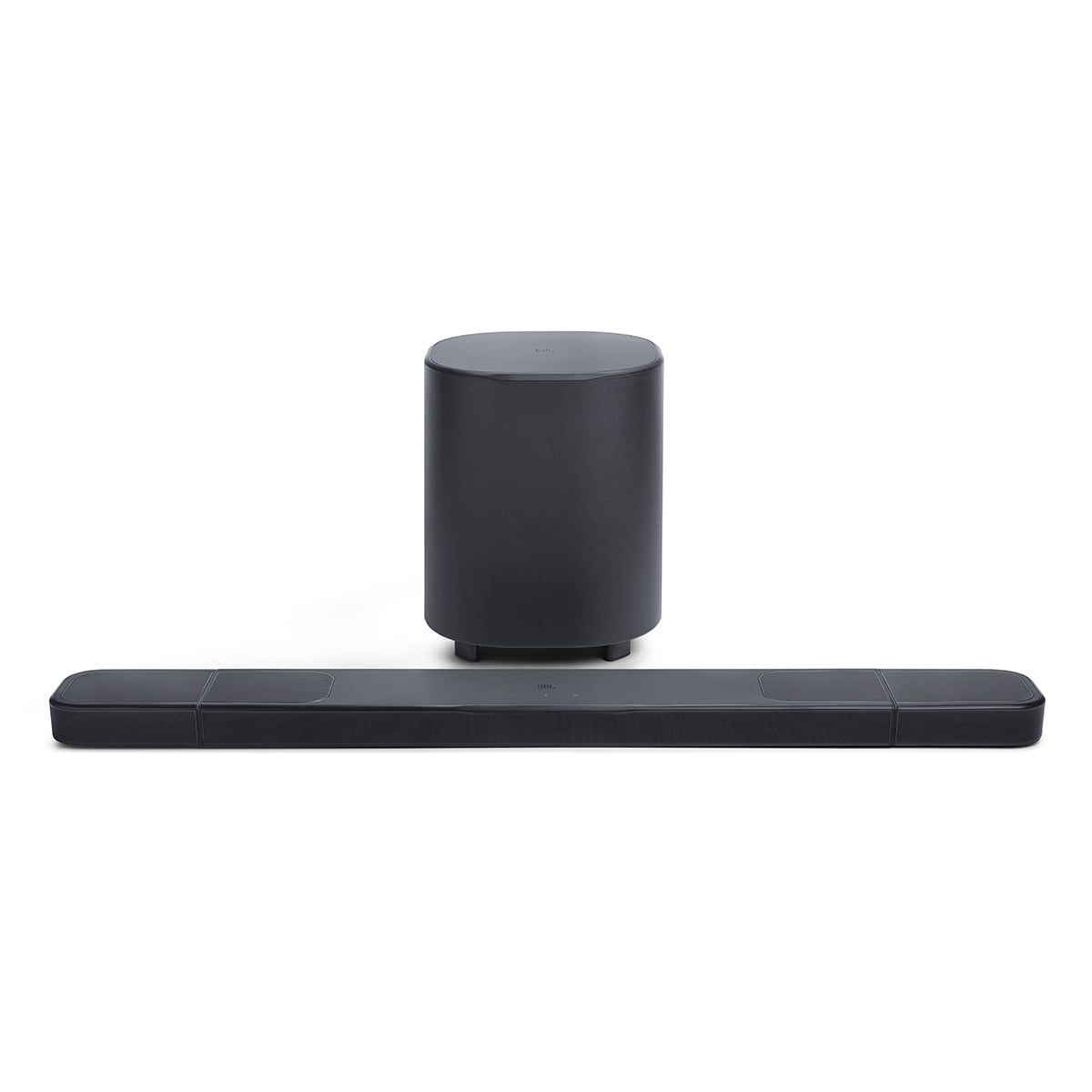
The JBL Bar 1000 MK2 launched in early 2024 as an evolution of JBL's popular Bar 1000, and it's built around one killer feature: truly wireless surround speakers that detach from the main soundbar. I've tested a lot of soundbars over the years, and this detachable design is genuinely clever.
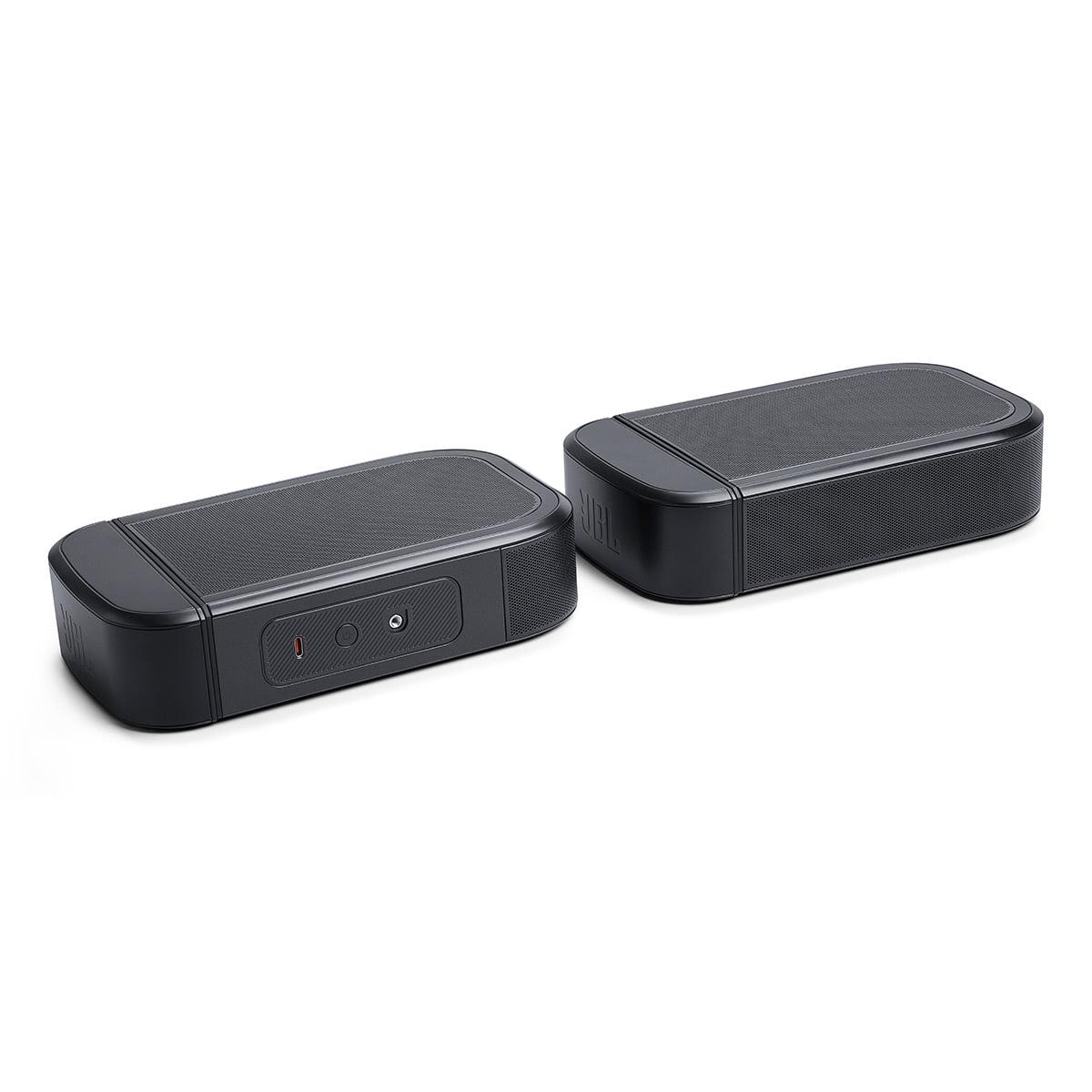
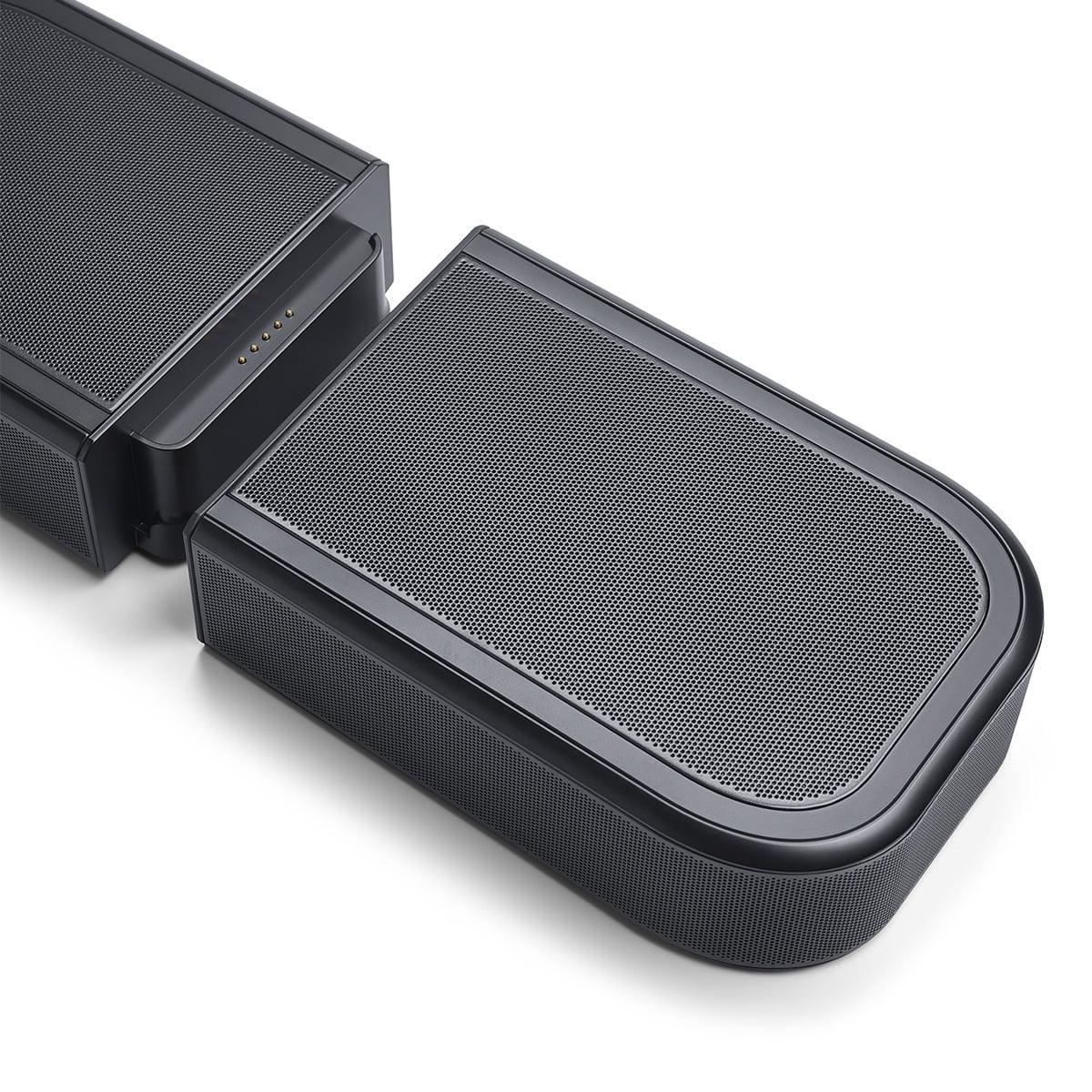
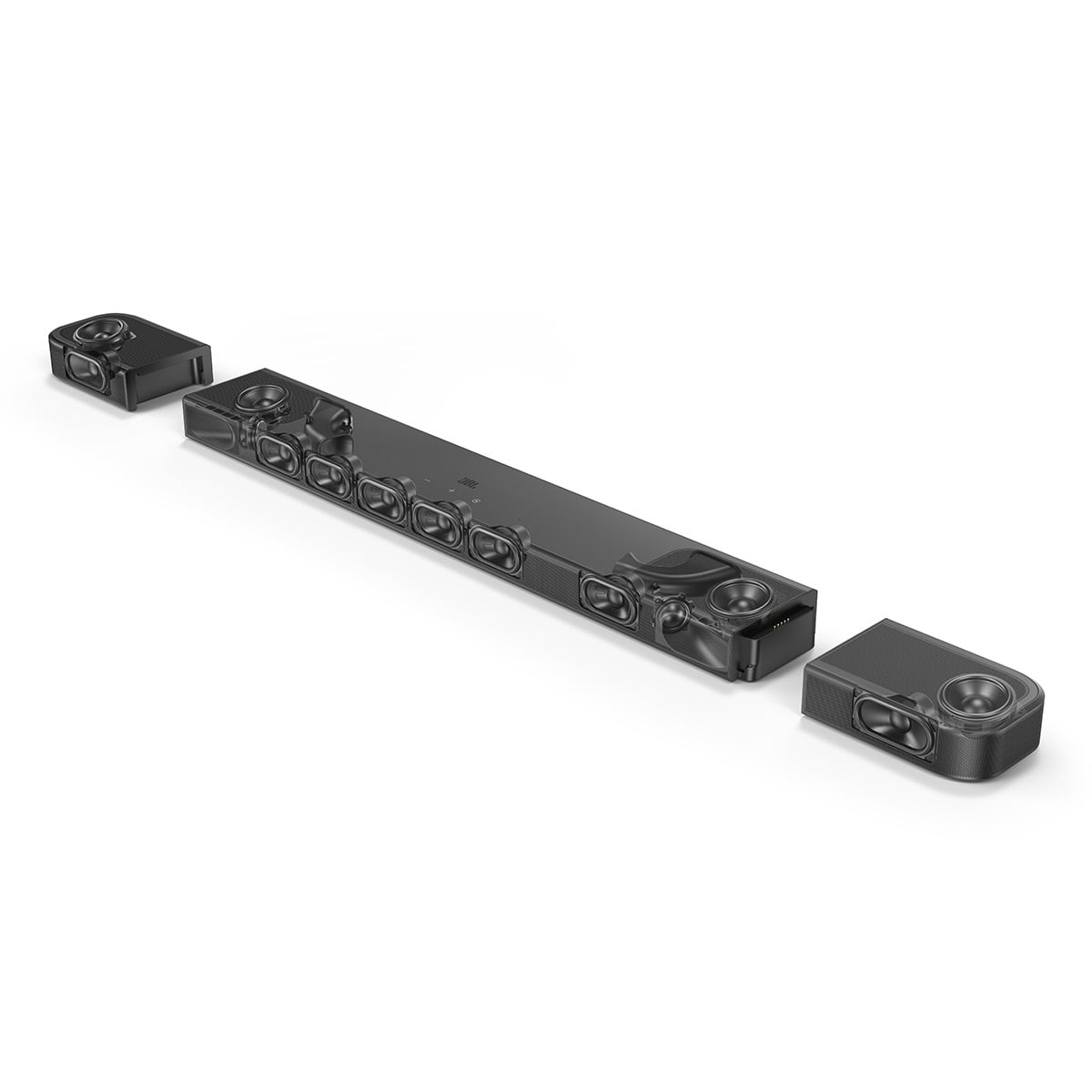
Here's how it works: the main soundbar is 33.6 inches wide and houses two wireless surround speakers on either end. When you want that full surround experience, you simply pop these speakers off (they're magnetic) and place them behind your seating area. Each speaker has a 6,600mAh battery that lasts up to 10 hours, and they automatically reconnect to the main bar when you dock them for charging.
The system delivers true 7.1.4-channel audio, which means seven main speakers, one subwoofer, and four height channels for those overhead effects. The "4" in 7.1.4 comes from four upward-firing drivers—two in the main bar and one in each detachable speaker. These fire sound toward your ceiling, which then reflects down to create the illusion of height.
The JBL pumps out 960 watts maximum power across the entire system. The main soundbar contributes 500W, each surround speaker adds 80W, and the 10-inch wireless subwoofer delivers 300W. Those numbers translate to room-filling sound that can easily handle large spaces without strain.
What impressed me most during testing was how seamlessly the wireless components work together. There's no noticeable delay between the main bar and the detachable speakers, which is crucial for maintaining that surround sound illusion. The system uses JBL's MultiBeam 3.0 technology, which essentially creates additional virtual speakers by carefully controlling how sound waves interact. This expands the apparent width of your soundstage beyond the physical dimensions of the speakers.
The 10-inch subwoofer deserves special mention. Unlike many soundbars that rely on built-in woofers, this dedicated sub can reproduce frequencies down to 33Hz. For context, that's deep enough to feel the rumble of explosions in action movies or the low-end thump in electronic music. The wireless connection means you can place it anywhere in your room for optimal bass response.
JBL has included some thoughtful touches that show they understand how people actually use soundbars. The "Night Listening" mode is particularly clever—it mutes the main soundbar and subwoofer while keeping the detachable speakers active. This lets you enjoy surround sound at whisper-quiet volumes without waking anyone up.
The PureVoice 2.0 technology automatically adjusts dialogue clarity based on the overall volume and ambient sound in your room. If you're watching a movie with lots of background noise, the system boosts the center channel to keep voices clear. It's not as sophisticated as dedicated room correction, but it works well in practice.
The Klipsch Flexus Core 300 represents something genuinely new in the soundbar world. Released in late 2024, it's the first soundbar to include Dirac Live room correction—technology that was previously only available in high-end AV receivers costing thousands of dollars.
Dirac Live is sophisticated stuff. Using the included calibration microphone and the Klipsch Connect Plus app, the system measures how sound behaves in your specific room. It then creates a custom filter that corrects for acoustic problems like room modes (where certain frequencies get boosted or canceled), early reflections, and frequency response irregularities.
This matters more than you might think. Every room has acoustic quirks—maybe your couch is against a wall that boosts bass, or you have hardwood floors that make dialogue sound harsh. Traditional soundbars just blast audio and hope for the best. The Flexus Core 300 actually adapts to your space.
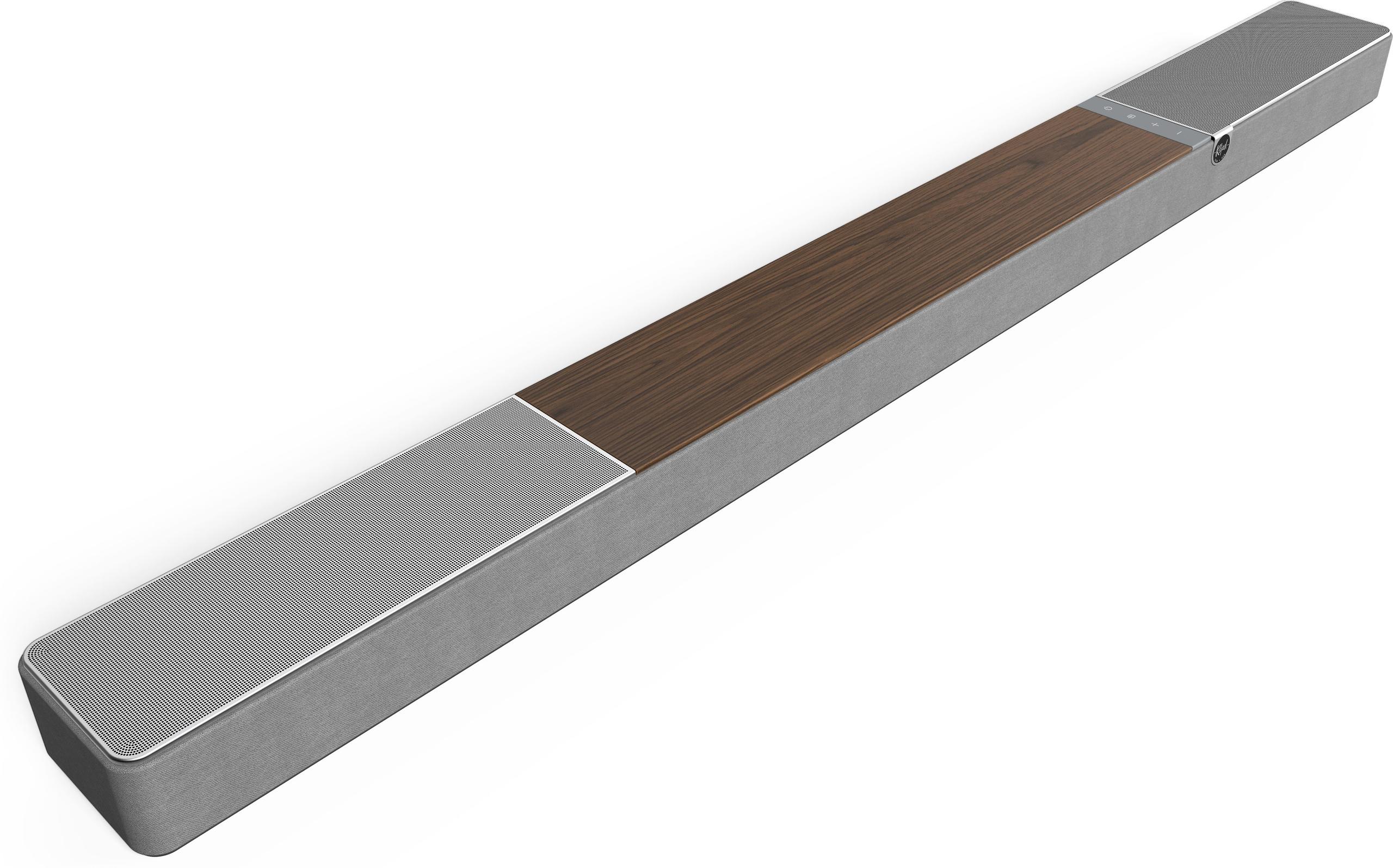
The Klipsch packs 13 individual drivers into its 54-inch wide chassis. That's an impressive array: four front-firing drivers, two up-firing drivers for height effects, two side-firing drivers for surround, and four built-in 4-inch subwoofers. The crown jewel is Klipsch's signature 0.75-inch horn-loaded tweeter, which handles high frequencies and dialogue with exceptional clarity.
Horn-loading is an old acoustic principle that Klipsch has refined over decades. Instead of just mounting a tweeter in a flat baffle, the horn shape acts like a megaphone, controlling how high frequencies disperse. This results in more efficient sound reproduction and better directional control. In practical terms, it means dialogue stays locked to your TV screen even when you're sitting off to the side.
The four built-in subwoofers are interesting from an engineering perspective. Rather than relying on a single large driver, Klipsch uses multiple smaller woofers distributed across the soundbar. This approach can actually provide more even bass distribution and reduces the chance of creating standing waves (areas where bass cancels out or doubles up).
Unlike the JBL's complete-system approach, the Flexus Core 300 is designed to be the foundation of a larger system. You can add Flexus Surround 200 wireless speakers for true rear-channel audio, or connect up to two Flexus Sub 200 subwoofers for even deeper bass. There's also a traditional RCA subwoofer output if you want to connect any powered sub.
This modular approach means you're not locked into Klipsch's ecosystem, but it also means the out-of-box experience is more limited. The Core 300 alone delivers 5.1.2-channel audio—five main channels, one subwoofer channel (handled by the built-in woofers), and two height channels.
In terms of pure surround sound effect, the JBL Bar 1000 MK2 has a clear advantage out of the box. Those detachable rear speakers create genuine surround envelopment that virtualized processing simply can't match. When you're watching a movie like "Top Gun: Maverick," jet engines don't just seem to fly overhead—they actually travel from front to back through physical speakers.
The Klipsch, despite its impressive driver array, relies more heavily on psychoacoustic processing for surround effects. The side-firing drivers help create width, but without rear speakers, you're missing that true 360-degree soundfield. However, once you add the optional Flexus Surround 200 speakers, the Klipsch can match or exceed the JBL's immersion.
This is where the JBL's complete-system approach really pays off. That 10-inch dedicated subwoofer simply can't be matched by the Klipsch's built-in woofers, no matter how clever the engineering. During action sequences, explosions have genuine visceral impact through the JBL system. The bass doesn't just sound deep—you feel it.
The Flexus Core 300's four 4-inch subwoofers do surprisingly well for their size, reaching down to 43Hz compared to the JBL's 33Hz. For most content, this difference isn't dramatic, but action movies and electronic music definitely benefit from that extra octave of bass extension. If bass is a priority, plan on adding the optional Flexus Sub 200 to the Klipsch system.
Here's where the Klipsch Flexus Core 300 absolutely shines. Dirac Live room correction is transformative technology, especially if you have a challenging listening environment. I tested both systems in a room with hard surfaces and odd dimensions, and the difference was striking. The JBL sounded good, but the Klipsch sounded precisely tuned to the space.
The process involves placing the included microphone at your main listening position and letting the system take acoustic measurements. The Klipsch Connect Plus app guides you through the process, which takes about 10 minutes. The included "Limited Bandwidth" version corrects frequencies up to 500Hz, with a "Full Bandwidth" upgrade available for complete range correction.
The horn-loaded tweeter also gives the Klipsch superior dialogue clarity. Voices sound more natural and remain intelligible even during complex scenes with lots of ambient sound. The JBL's PureVoice technology helps, but it's more of a band-aid solution compared to proper acoustic engineering.
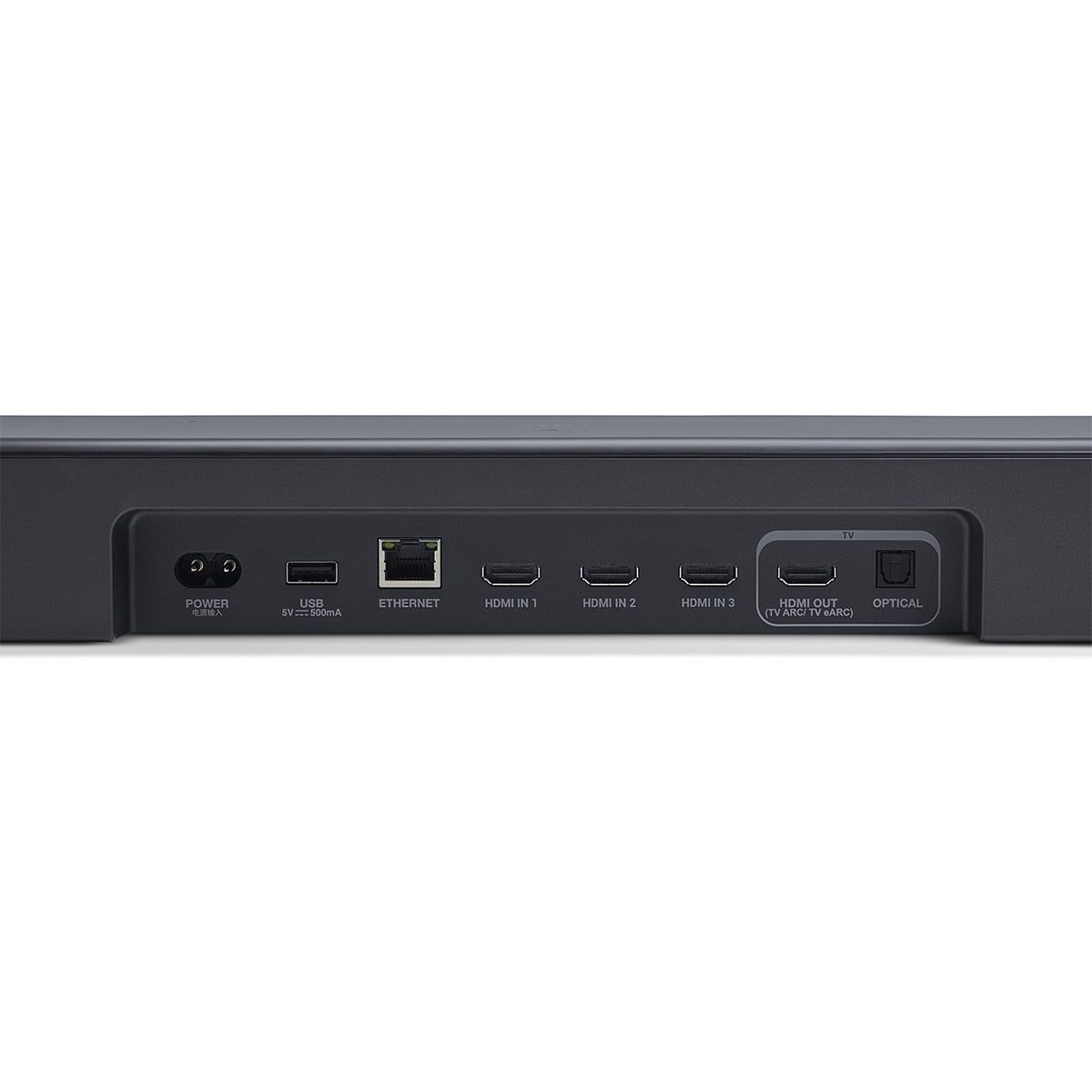
Both systems offer comprehensive connectivity, but with subtle differences. The JBL includes three HDMI inputs plus eARC output, making it more suitable if you have multiple source devices. The Klipsch has just one HDMI input plus eARC, but it supports 8K passthrough versus the JBL's 4K maximum.
For streaming, both support the usual suspects: AirPlay 2, Chromecast, Spotify Connect, and Bluetooth 5.3. The JBL adds Roon Ready support, which audiophiles will appreciate, while the Klipsch includes Tidal Connect and professional control system integration.
This is where things get interesting from a financial perspective. The JBL Bar 1000 MK2 ($1,199) gives you a complete 7.1.4-channel system for one price. If you were to buy equivalent components separately—a good soundbar, wireless subwoofer, and rear speakers—you'd easily spend $1,800 or more.
The Klipsch Flexus Core 300 ($1,199) takes a different approach. You're paying for advanced technology (Dirac Live) and superior acoustic engineering, but you're getting a 5.1.2 system. To match the JBL's channel count, you'd need to add the Flexus Surround 200 speakers (~$600) and ideally the Flexus Sub 200 (~$500), bringing the total to around $2,300.
However, that higher cost gets you genuinely superior audio technology. Dirac Live room correction alone typically costs $200+ as standalone software, and it's usually only available on expensive AV receivers. The modular approach also means you can spread the cost over time, starting with just the soundbar and adding components as your budget allows.
In my home theater testing, both systems excelled in different scenarios. The JBL proved ideal for movie nights where you want immediate, impactful surround sound. The detachable speakers make setup flexible—you can quickly configure for serious listening or leave them docked for casual viewing.
The night mode feature is genuinely useful. Being able to enjoy surround sound through just the rear speakers while keeping the main bar and sub silent means you can watch action movies at 11 PM without disturbing anyone. It's one of those features that sounds gimmicky but proves invaluable in practice.
The Klipsch shines in more critical listening situations. If you're the type who notices when dialogue sounds off or when bass is boomy rather than tight, the Dirac Live calibration makes a real difference. The system also integrates better with home automation systems, supporting Control4 and RTI for custom installations.
Both 2024 models represent significant improvements over their predecessors. The JBL Bar 1000 MK2 improved upon the original Bar 1000 with better wireless connectivity, enhanced MultiBeam processing, and longer battery life in the detachable speakers. The MK2 designation indicates JBL's commitment to iterative improvement rather than complete redesigns.
The Klipsch Flexus Core 300 is entirely new for 2024, developed in partnership with Onkyo. This collaboration brings together Klipsch's acoustic expertise with Onkyo's digital processing capabilities. The result is remarkably sophisticated for a first-generation product.
If you want complete surround sound immediately without additional purchases, the JBL Bar 1000 MK2 is hard to beat. It's perfect for users who value convenience and immediate gratification. The detachable speakers provide genuine flexibility, and the included subwoofer delivers the bass impact that makes action movies exciting.
Choose the Klipsch Flexus Core 300 if you prioritize audio precision and have room acoustics that would benefit from correction. It's also the better choice if you're building a system gradually or need professional integration capabilities. The superior dialogue clarity and advanced room optimization make it worth considering even if you need to add a subwoofer later.
Both represent excellent value in their respective approaches. The JBL maximizes immediate impact and completeness, while the Klipsch offers superior long-term flexibility and acoustic engineering. Either way, you're getting a premium soundbar that will transform your home entertainment experience.
| JBL Bar 1000 MK2 Soundbar System | Klipsch Flexus Core 300 Soundbar |
|---|---|
| Channel Configuration - Determines surround sound immersion | |
| 7.1.4 channels with included wireless subwoofer and detachable rear speakers | 5.1.2 channels from soundbar only (expandable with optional accessories) |
| What's Included - Affects total value and immediate usability | |
| Complete system: soundbar + 10" wireless subwoofer + detachable surround speakers | Soundbar only (subwoofer and surrounds sold separately for ~$1,100 more) |
| Total System Power - Impact on room-filling capability | |
| 960W max (480W RMS) across all components | Not specified for Core 300 (estimated ~300-400W based on driver count) |
| Bass Performance - Critical for movie impact and music enjoyment | |
| Dedicated 10" wireless subwoofer (33Hz response) | Four built-in 4" subwoofers (43Hz response) |
| Room Correction Technology - Optimizes sound for your specific space | |
| Basic calibration via JBL One app | Dirac Live room correction with included microphone (industry-first for soundbars) |
| Surround Speaker Design - Affects flexibility and true surround experience | |
| Detachable battery-powered speakers (10-hour life) that dock on main bar | No rear speakers included; optional wireless Flexus Surround 200 available |
| Unique Technologies - Standout features that differentiate each system | |
| MultiBeam 3.0 + Night Listening mode (private audio via rear speakers only) | Horn-loaded tweeter + Dirac Live calibration + modular expansion system |
| HDMI Connectivity - Important for multiple source devices | |
| 3 HDMI inputs + 1 eARC output (4K passthrough) | 1 HDMI input + 1 eARC output (8K passthrough) |
| Ideal Use Case - Who each system serves best | |
| Immediate complete surround experience, renters, gaming setups | Audiophiles, challenging room acoustics, gradual system building |
| Price for Complete System - Total investment for full surround setup | |
| $1,199 (everything included) | $2,300+ ($1,199 + ~$500 sub + ~$600 surrounds for equivalent setup) |
The JBL Bar 1000 MK2 ($1,199) offers better immediate value since it includes everything needed for 7.1.4 surround sound—soundbar, wireless subwoofer, and detachable rear speakers. The Klipsch Flexus Core 300 ($1,199) costs the same but only includes the soundbar, requiring additional purchases (~$1,100) for equivalent surround performance. However, the Klipsch offers superior audio engineering with Dirac Live room correction technology.
No additional purchases are needed with the JBL Bar 1000 MK2—it includes detachable wireless surround speakers and a 10-inch subwoofer for complete 7.1.4 surround sound out of the box. The Klipsch Flexus Core 300 delivers 5.1.2 surround from the soundbar alone, but you'll need to buy optional Flexus Surround 200 speakers (~$600) and Flexus Sub 200 (~$500) for true rear-channel surround and deeper bass.
The JBL Bar 1000 MK2 has significantly better bass thanks to its included 10-inch wireless subwoofer that reaches down to 33Hz. The Klipsch Flexus Core 300 relies on four built-in 4-inch subwoofers with a 43Hz response—adequate for most content but not as impactful for action movies or music that benefits from deep bass extension.
Dirac Live is professional room correction technology that analyzes your room's acoustics and optimizes the sound accordingly. Only the Klipsch Flexus Core 300 offers this feature—it's the first soundbar ever to include it. While not essential, Dirac Live can dramatically improve sound quality in challenging rooms with hard surfaces, odd dimensions, or poor acoustics. The JBL Bar 1000 MK2 uses basic calibration instead.
Both systems minimize cable requirements, but differently. The JBL Bar 1000 MK2 features truly wireless detachable surround speakers that run on 10-hour batteries and a wireless subwoofer—no rear speaker cables needed. The Klipsch Flexus Core 300 is a single soundbar unit, so there are no cables between components unless you add optional wireless accessories later.
The JBL Bar 1000 MK2 is better suited for large rooms due to its higher power output (960W total), dedicated subwoofer, and true rear-channel speakers that create proper surround envelopment. The Klipsch Flexus Core 300 can work in large rooms but may require adding the optional subwoofer and surround speakers to match the JBL's room-filling capability and bass impact.
The JBL Bar 1000 MK2 has magnetic surround speakers that detach from either end of the main soundbar. Each speaker has a 6,600mAh battery providing up to 10 hours of use and automatically reconnects when docked for charging. This lets you easily switch between a compact soundbar setup and full 7.1.4 surround sound by simply moving the speakers behind your seating area.
The JBL Bar 1000 MK2 is simpler to set up since everything works together out of the box with minimal configuration needed. The Klipsch Flexus Core 300 requires more initial setup due to Dirac Live room calibration, which involves placing a microphone at your listening position and running acoustic measurements through the app—though this extra effort results in optimized sound quality.
Yes, both the JBL Bar 1000 MK2 and Klipsch Flexus Core 300 support true Dolby Atmos and DTS:X with dedicated up-firing drivers. The JBL has four up-firing drivers (two in the bar, one in each detachable speaker) for 7.1.4-channel Atmos, while the Klipsch has two up-firing drivers for 5.1.2-channel Atmos from the soundbar alone.
The Klipsch Flexus Core 300 has superior dialogue clarity thanks to its signature horn-loaded tweeter that keeps voices locked to the screen center and Dirac Live calibration that optimizes speech frequencies. The JBL Bar 1000 MK2 uses PureVoice 2.0 technology that automatically adjusts dialogue based on volume and ambient sound, which helps but isn't as precise as the Klipsch's acoustic engineering.
The Klipsch Flexus Core 300 is specifically designed for modular expansion with optional Flexus Surround 200 speakers and Flexus Sub 200 subwoofers, plus it has an RCA output for any powered subwoofer. The JBL Bar 1000 MK2 is a complete system that doesn't expand, but its detachable speakers can be used as portable Bluetooth speakers in other rooms.
For immediate home theater impact, the JBL Bar 1000 MK2 excels with its complete 7.1.4 surround system, powerful subwoofer, and room-filling sound. For precision home theater audio, the Klipsch Flexus Core 300 is superior once fully expanded, offering Dirac Live room optimization and audiophile-grade sound quality that adapts to your specific theater room's acoustics.
We've done our best to create useful and informative comparisons to help you decide what product to buy. Our research uses advanced automated methods to create this comparison and perfection is not possible - please contact us for corrections or questions. These are the sites we've researched in the creation of this article: ecoustics.com - engadget.com - bestbuy.com - techradar.com - rtings.com - hometechnologyreview.com - youtube.com - t3.com - whathifi.com - youtube.com - bhphotovideo.com - gzhls.at - device.report - support.jbl.com - support.jbl.com - jbl.com - av.com - audioadvice.com - jbl.com - target.com - worldwidestereo.com - crutchfield.com - whathifi.com - avnirvana.com - hometechnologyreview.com - ecoustics.com - gearpatrol.com - klipsch.com - avsforum.com - youtube.com - avsforum.com - listenup.com - chowmain.software - klipsch.com - novis.ch - avsforum.com - klipsch.ca - lefflers.se - abt.com - sweetwater.com - wifihifi.com - klipsch.com - dirac.com

Privacy Policy
Terms and Conditions - Affiliate Policy
Home Security
© Copyright 2008-2026.
11816 Inwood Rd #1211, Dallas, TX 75244