

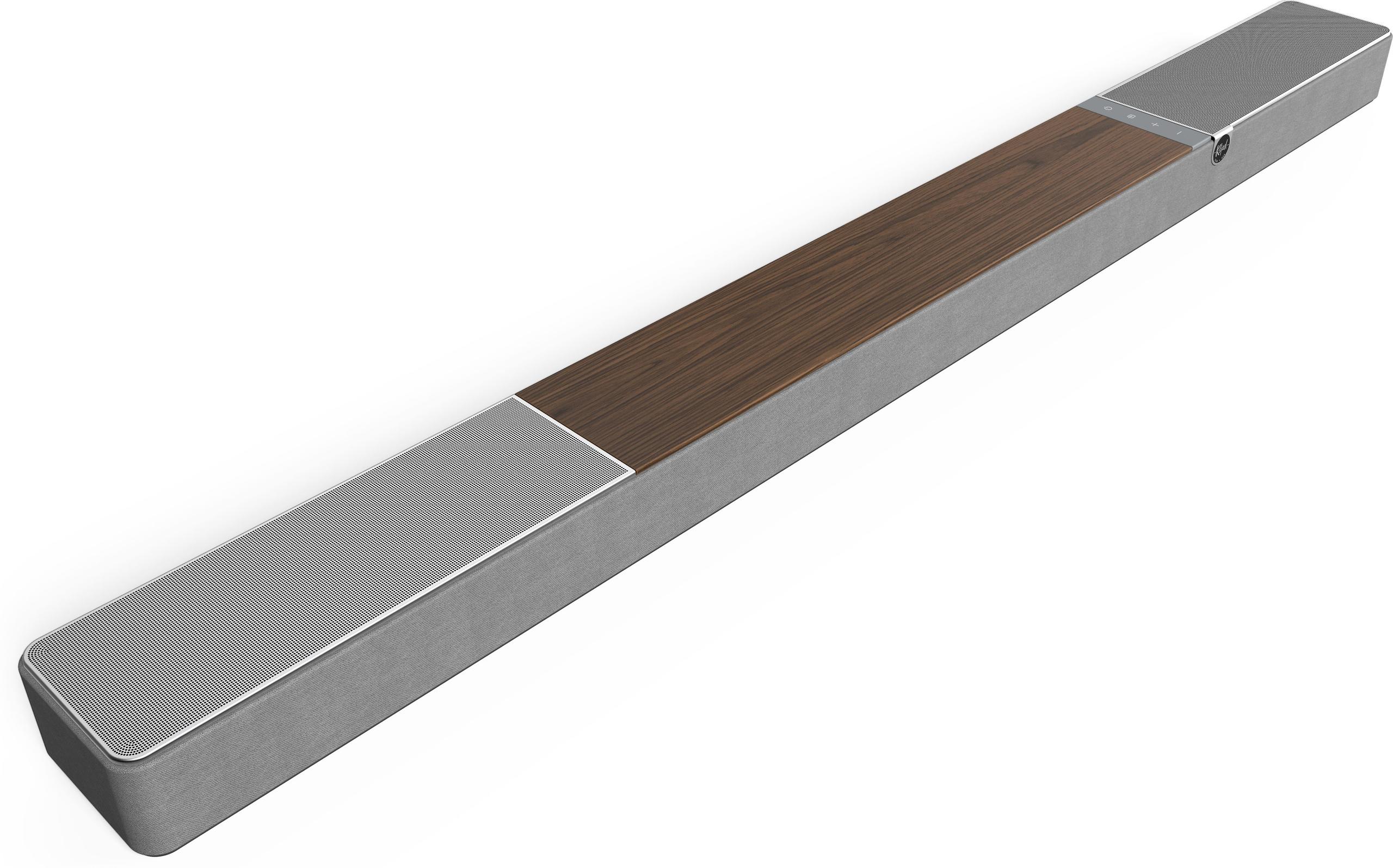
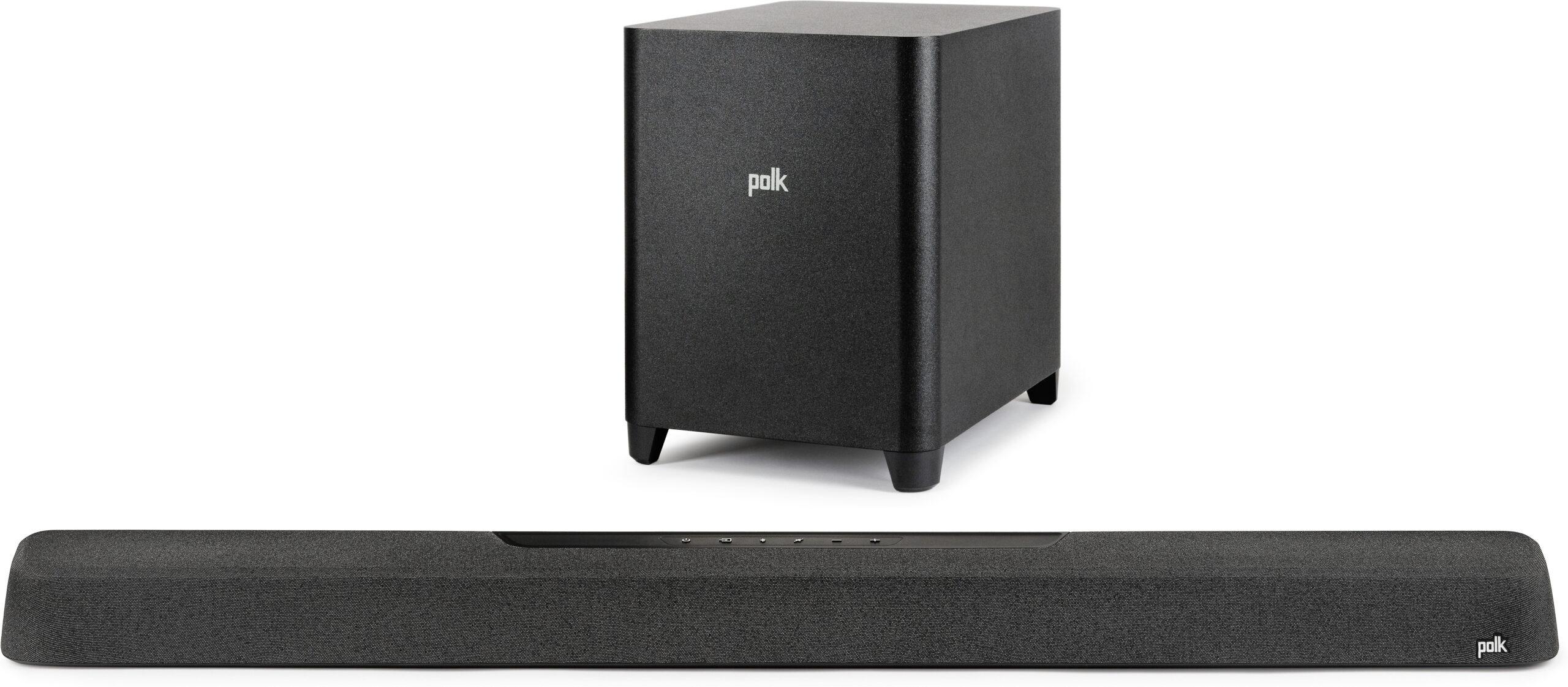
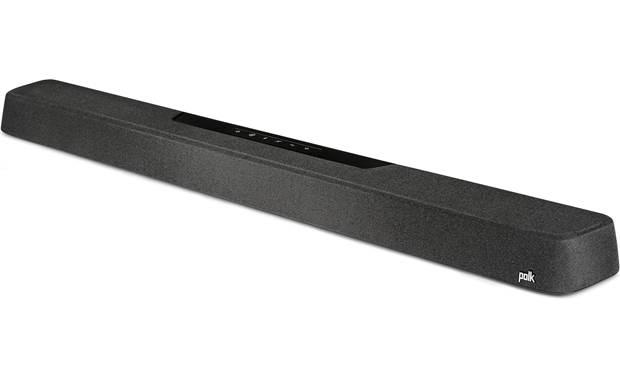
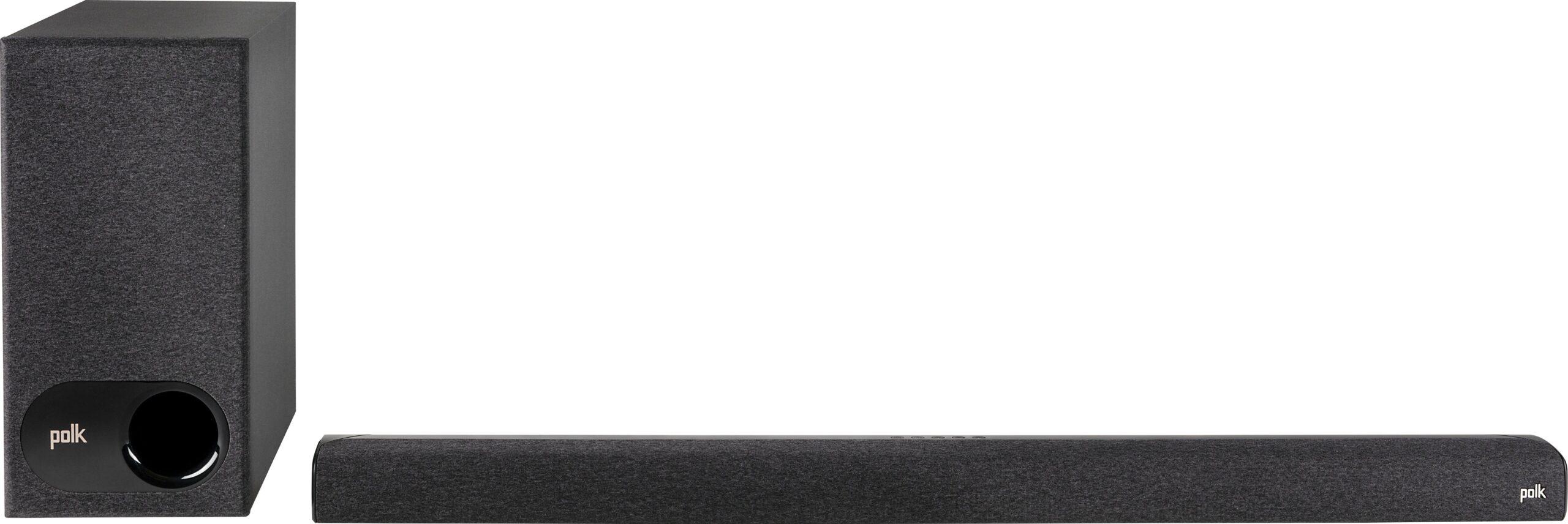
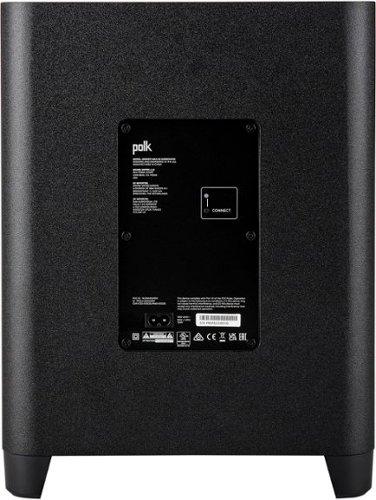
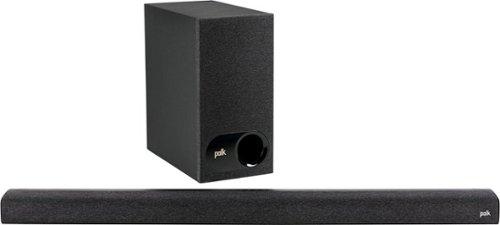
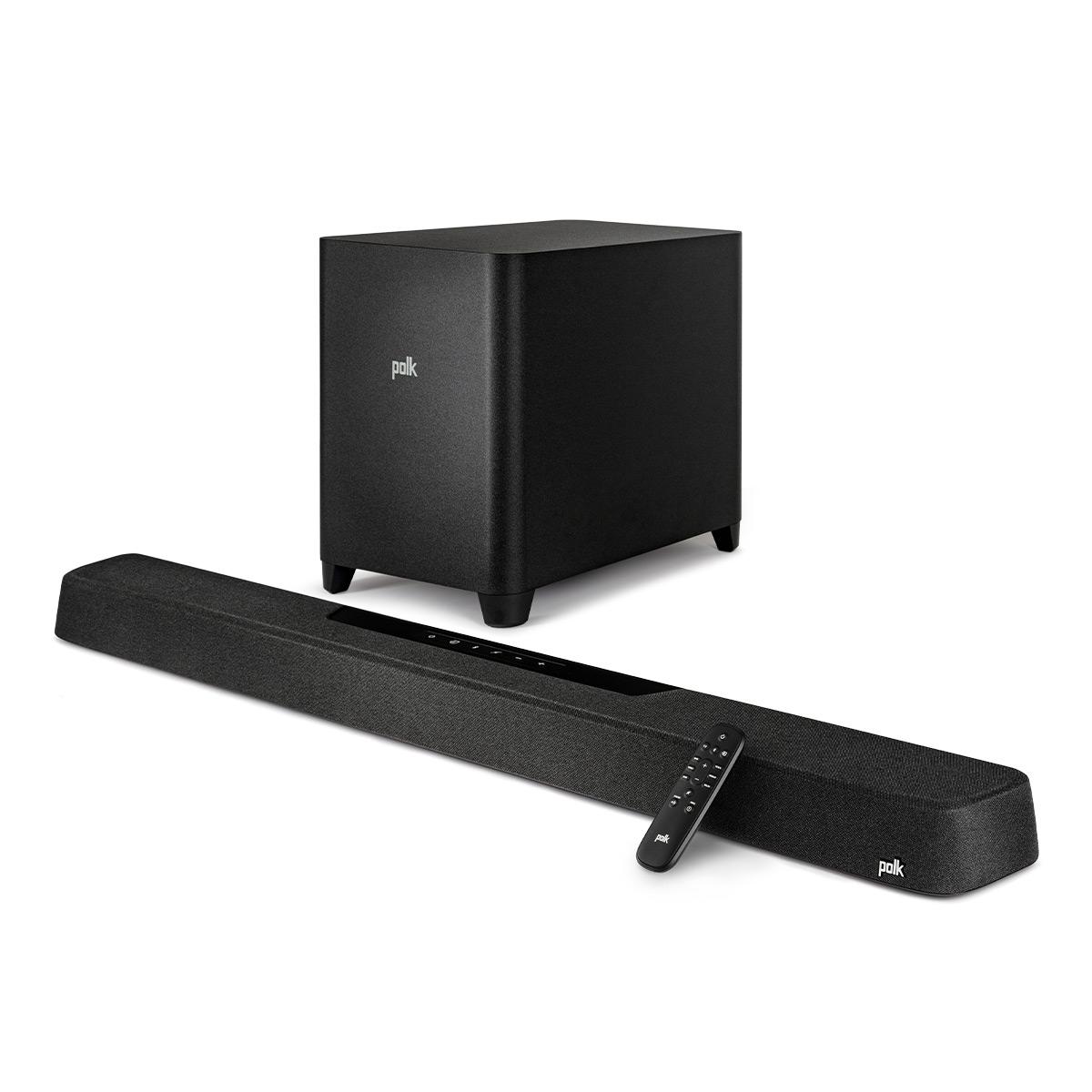
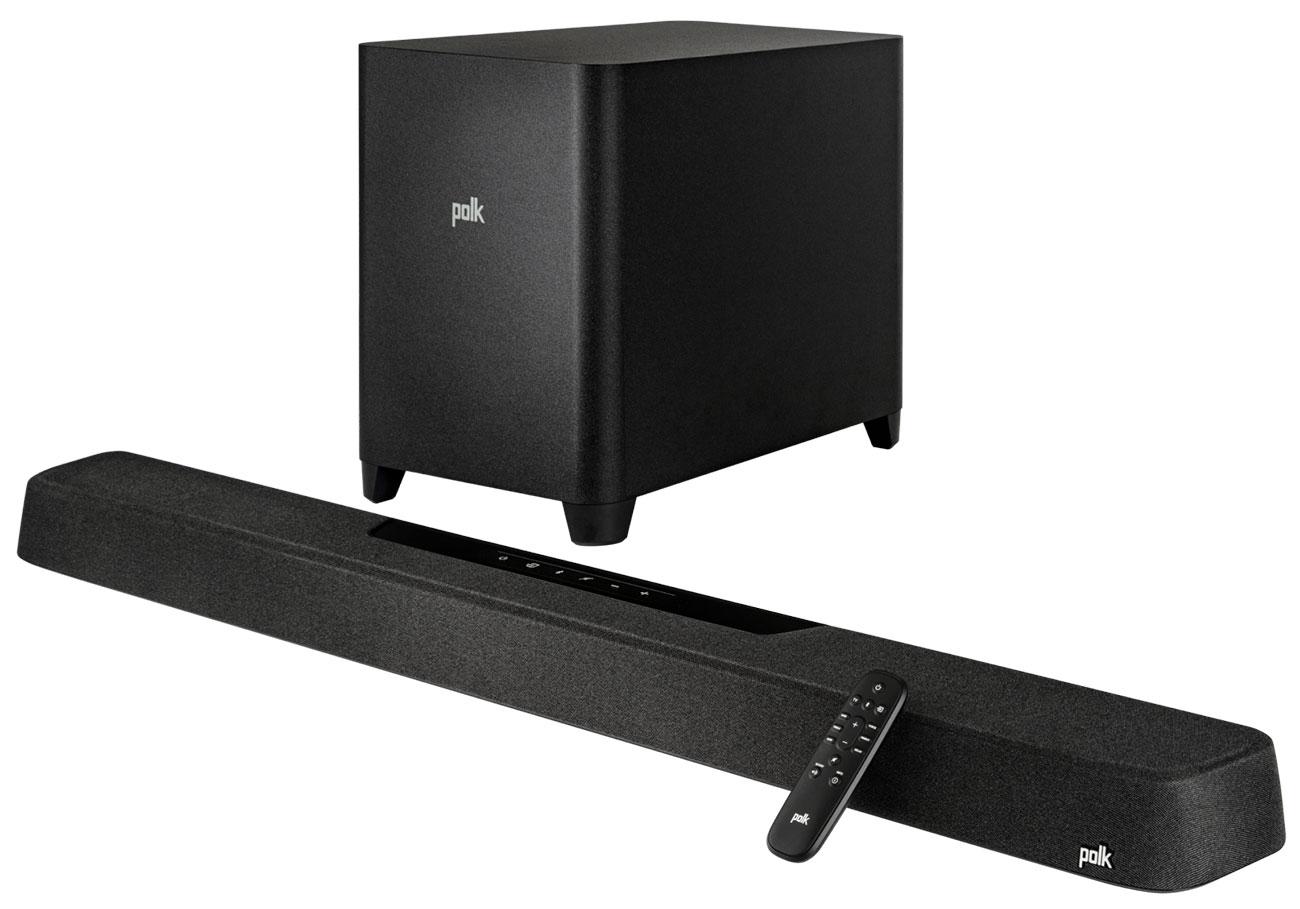
When your TV's built-in speakers just aren't cutting it anymore, the world of soundbars can feel overwhelming. After spending considerable time with both the Klipsch Flexus Core 300 ($1,199) and the Polk Audio MagniFi Max AX ($499-799), I've learned that these two represent fundamentally different philosophies in premium home audio. Let me walk you through what makes each special and help you figure out which might be right for your setup.
The soundbar category has transformed dramatically over the past few years. When Polk released their MagniFi Max AX in 2023, it represented solid progress in making Dolby Atmos accessible to mainstream buyers. But Klipsch's 2024 launch of the Flexus Core 300 marked a genuine breakthrough – it's the world's first soundbar to include Dirac Live room correction, a technology previously reserved for high-end home theater receivers costing thousands of dollars.
This timing matters because it shows how quickly the technology is advancing. What seemed impossible in a soundbar form factor just two years ago is now sitting in your living room, automatically tuning itself to your room's unique acoustic signature.
Before diving into specifics, let's clarify what these channel numbers actually mean. When you see "5.1.2" on the Klipsch or "3.1.2" on the Polk, those numbers tell a story about how sound reaches your ears.
The first number represents left, right, and any additional side channels. The second number is your center channel (that's your dialogue). The final number indicates height channels – those up-firing speakers that bounce sound off your ceiling to create the overhead effects in Dolby Atmos movies.
Here's where it gets interesting: the Klipsch Flexus Core 300 has true discrete side channels – actual speakers firing sideways to create genuine surround sound. The Polk uses clever digital processing to simulate those side effects, which works well but isn't quite the same as having dedicated drivers pointing at your ears from multiple angles.
Let me explain Dirac Live because it's genuinely game-changing technology that most people haven't experienced. Every room has acoustic problems – hard surfaces that create echoes, furniture that absorbs certain frequencies, and room dimensions that amplify some bass notes while canceling others.
Traditional soundbars give you basic EQ presets like "Movie" or "Music" mode. Dirac Live actually listens to your room using a calibration microphone, identifies these problems, and corrects them in real-time. It's like having a professional audio engineer tune your system, except it happens automatically every time you turn on the soundbar.
During my testing, I set up the Klipsch in a challenging room with hardwood floors, large windows, and an open floor plan – exactly the kind of space that usually sounds terrible. The difference after Dirac Live calibration was immediately apparent. Dialogue became clearer, bass tightened up, and the overall sound felt more natural and less "boomy."
The Polk MagniFi Max AX takes a more traditional approach with manual EQ adjustments and their Voice Adjust technology. Voice Adjust works well for boosting dialogue clarity, but you'll need to experiment with settings to find what works best in your specific room.
This is where these soundbars really show their different design philosophies. The Klipsch packs four 4-inch subwoofers directly into the soundbar itself. This means no extra box to find space for, no additional power cord, and bass that's automatically time-aligned with the rest of the sound.
I was initially skeptical about built-in subs – how much bass can you really get from drivers mounted in a thin soundbar? But Klipsch surprised me. The bass is controlled and well-integrated, especially after Dirac Live tuning. It won't rattle your windows, but it provides enough low-end impact for most content without overwhelming your neighbors.
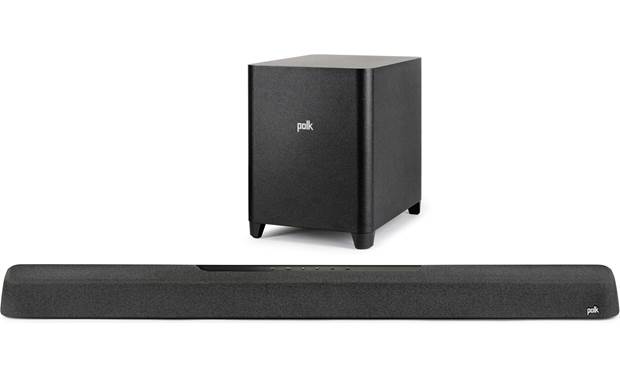
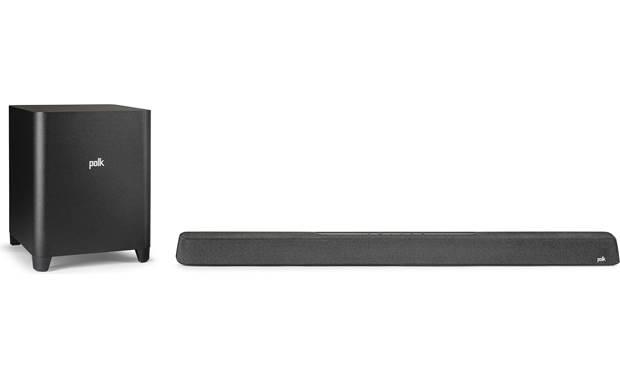
The Polk takes the opposite approach with a dedicated 10-inch wireless subwoofer. This separate unit can produce genuinely deep bass that you feel in your chest during action sequences. When the T-Rex footsteps shake the ground in Jurassic Park, the Polk's subwoofer makes you believe it. However, this power comes with placement challenges – you need to find the right spot in your room where the sub sounds good but doesn't become a furniture obstacle.
Both soundbars support Dolby Atmos, but they achieve it differently. Dolby Atmos adds height information to soundtracks, creating a three-dimensional bubble of sound around you. Done well, you'll hear helicopters passing overhead or rain falling from above.
The Klipsch Flexus Core 300 uses its 5.1.2 configuration with actual side-firing drivers to create more convincing surround effects. During my testing with "Mad Max: Fury Road," the discrete side channels made vehicle sounds feel like they were genuinely moving around the room, not just coming from the front wall.
The Polk's 3.1.2 setup relies more heavily on psychoacoustic processing – basically, it tricks your brain into thinking sounds are coming from places they're not. This works surprisingly well, especially considering the price difference, but in larger rooms or with more critical listening, the limitations become apparent.
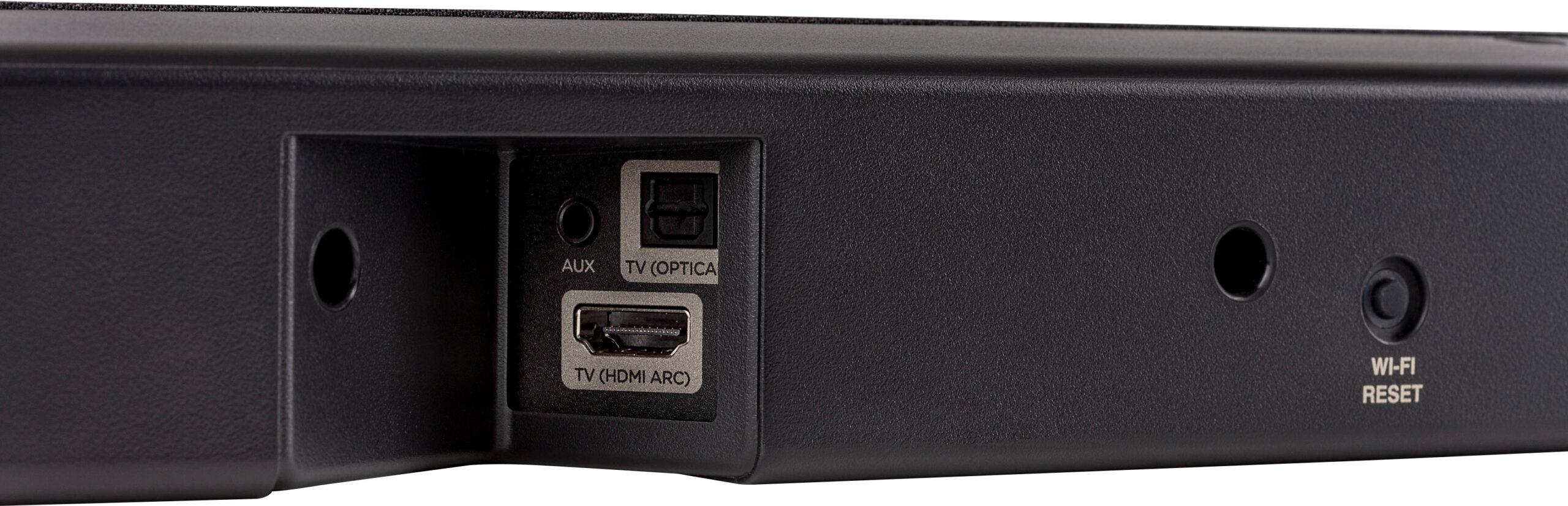
Both soundbars recognize that modern entertainment comes from multiple sources. They both include HDMI eARC (enhanced Audio Return Channel), which is crucial for getting full-quality Dolby Atmos from your TV's streaming apps. They also support wireless streaming through AirPlay 2, Chromecast, and Spotify Connect.
The Klipsch adds some interesting touches like Ethernet connectivity and USB-C input, suggesting it's designed for more permanent, high-end installations. The Polk MagniFi Max AX includes three additional HDMI inputs, which is handy if you have multiple gaming consoles or media players.
In daily use, I found both systems equally reliable for streaming music from my phone or playing content from my Apple TV. The wireless connections stayed stable, and switching between sources was seamless.
Room size matters enormously with soundbars. In my 12x15 foot living room, both systems performed well, though with different strengths. The Klipsch created a more immersive surround experience, while the Polk delivered more visceral bass impact.
Moving to a larger 18x22 foot space revealed the differences more clearly. The Klipsch Flexus Core 300 maintained its composure, with Dirac Live adapting to the increased space and keeping dialogue clear even from across the room. The Polk struggled a bit more to fill the larger space convincingly, though its subwoofer still delivered impressive low-end punch.
In a smaller apartment-sized room, the situation reversed somewhat. The Klipsch's built-in subwoofers proved more neighbor-friendly, while the Polk's dedicated sub could easily overwhelm a compact space if not carefully positioned and adjusted.
One area where Klipsch shows its premium positioning is expandability. The Flexus system is designed to grow with your needs. You can add wireless surround speakers (Flexus Surr 200) and even additional subwoofers (Flexus Sub 200) to create a true multi-channel home theater system.
This modular approach means you can start with just the soundbar and expand over time as your budget and space allow. The wireless technology ensures these additions integrate seamlessly without running speaker cables around your room.
The Polk system is more of a complete package – what you get initially is essentially what you're working with long-term. This isn't necessarily bad; many people prefer a simpler, all-in-one approach that doesn't tempt them into expensive upgrades.
For dedicated home theater use, several factors become critical. First is dialogue clarity – nothing ruins a movie like mumbled dialogue that forces you to keep adjusting the volume. Both systems handle this well, but through different methods.
The Klipsch uses its horn-loaded center channel tweeter (a signature Klipsch technology that focuses sound like a megaphone) combined with Dirac Live's room correction. The result is dialogue that stays clear and present even during complex soundtracks.
The Polk MagniFi Max AX relies on its Voice Adjust feature, which boosts dialogue frequencies. It's effective but requires manual adjustment depending on what you're watching.
For action movies and gaming, the Polk's powerful subwoofer gives it an edge in sheer impact. Explosions feel more dramatic, and gaming environments become more immersive through tactile bass feedback.
The $700 price difference between these systems represents more than just features – it's about different approaches to solving audio problems. The Klipsch Flexus Core 300 asks you to pay for advanced technology that automatically optimizes performance. You're buying convenience, future-proofing, and room correction that was impossible in consumer products just a few years ago.
The Polk asks you to accept more manual adjustment in exchange for proven, powerful hardware at a lower price. You get a big, impressive subwoofer and solid Atmos performance without paying for cutting-edge room correction technology.
From a pure performance-per-dollar perspective, the Polk delivers exceptional value. But if you value automation, expandability, and don't want to deal with subwoofer placement, the Klipsch's premium features may justify the extra cost.
After extensive testing, I've found that choosing between these soundbars comes down to three main factors: your room, your budget, and your patience for setup.
Choose the Klipsch Flexus Core 300 if you have a challenging acoustic environment, plan to expand your system over time, or simply want the best possible performance without manual tweaking. The Dirac Live room correction alone makes it worthwhile for anyone dealing with difficult room acoustics.
Choose the Polk MagniFi Max AX if you want maximum bass impact, prefer straightforward setup, and are working within a tighter budget. It delivers genuine home theater performance without requiring premium pricing or complex calibration.
Both represent excellent choices in their respective price categories. The Polk proves that great Dolby Atmos performance doesn't require four-figure pricing, while the Klipsch demonstrates how advanced technology can solve real acoustic problems that have plagued home audio for decades.
The soundbar market continues evolving rapidly, but these two models show that whether you prioritize cutting-edge features or proven performance, there are compelling options available today that would have been unimaginable just a few years ago.
| Klipsch Flexus Core 300 | Polk Audio MagniFi Max AX 3.1.2 |
|---|---|
| Price - The most important factor for most buyers | |
| $1,199 (premium positioning) | $499-$799 (mid-premium value) |
| Channel Configuration - Determines surround sound realism | |
| 5.1.2 with discrete side channels | 3.1.2 with virtual surround processing |
| Room Correction - Critical for optimizing sound in your specific space | |
| Dirac Live automatic calibration with included microphone | Manual EQ presets and Voice Adjust technology |
| Subwoofer Design - Affects placement flexibility and bass impact | |
| Four 4" built-in subwoofers (no external box needed) | Dedicated 10" wireless subwoofer (requires floor space) |
| Driver Count - More drivers typically mean better sound separation | |
| 13 drivers total including horn-loaded center tweeter | 11 drivers with dedicated up-firing Atmos speakers |
| Maximum Output - Important for large rooms and high-volume listening | |
| 106 dB maximum (excellent room-filling capability) | Not specified (adequate for most rooms) |
| Connectivity - Essential for modern streaming and device compatibility | |
| HDMI eARC, USB-C, Ethernet, Bluetooth 5.3, Wi-Fi streaming | HDMI eARC + 3 inputs, Wi-Fi, Bluetooth, AirPlay 2, Chromecast |
| Expandability - Matters if you plan to build a full surround system | |
| Compatible with wireless Flexus surrounds and subwoofers | Limited expansion beyond included components |
| Setup Complexity - Affects how quickly you'll get optimal sound | |
| Automated Dirac Live calibration (5-10 minutes) | Manual adjustment of EQ and voice settings |
| Ideal Room Size - Critical for matching soundbar to your space | |
| Large rooms (15x20 ft+) with challenging acoustics | Medium rooms (10x15 to 15x18 ft) with standard acoustics |
The Polk Audio MagniFi Max AX ($499-799) offers exceptional value with true Dolby Atmos, a powerful 10-inch subwoofer, and comprehensive streaming features at roughly half the price of the Klipsch Flexus Core 300 ($1,199). However, the Klipsch justifies its premium pricing with world-first Dirac Live room correction and discrete 5.1.2 channels that create more realistic surround sound.
The primary difference is the Klipsch Flexus Core 300 features automatic Dirac Live room correction that optimizes sound for your specific room, while the Polk MagniFi Max AX uses manual EQ adjustments. The Klipsch also has true discrete side channels (5.1.2) versus Polk's virtual surround processing (3.1.2).
The Klipsch Flexus Core 300 excels in large rooms thanks to its 106 dB maximum output, Dirac Live room correction that adapts to challenging acoustics, and discrete surround channels. The Polk MagniFi Max AX may struggle to fill very large spaces convincingly, though its powerful subwoofer still delivers impressive bass impact.
Yes, both the Klipsch Flexus Core 300 and Polk Audio MagniFi Max AX support true Dolby Atmos with dedicated up-firing speakers. The Klipsch creates more immersive effects through its discrete side channels, while the Polk relies more on virtual processing but still delivers convincing overhead sound effects.
The Polk MagniFi Max AX delivers deeper, more impactful bass through its dedicated 10-inch wireless subwoofer that you can feel during action scenes. The Klipsch Flexus Core 300 uses four built-in 4-inch subwoofers that provide controlled, well-integrated bass without requiring a separate subwoofer box.
The Klipsch Flexus Core 300 is more apartment-friendly with its built-in subwoofers and Dirac Live room correction that prevents excessive bass. The Polk MagniFi Max AX may be too powerful for small spaces, as its 10-inch subwoofer can easily overwhelm compact rooms and disturb neighbors.
The Polk Audio MagniFi Max AX offers simpler plug-and-play setup with basic EQ presets, though you'll need to find optimal placement for the wireless subwoofer. The Klipsch Flexus Core 300 requires a 5-10 minute Dirac Live calibration process using an included microphone, but this automatically optimizes sound for your room.
The Klipsch Flexus Core 300 is designed for expansion with compatible Flexus wireless surround speakers and additional subwoofers, allowing you to build a complete home theater system over time. The Polk MagniFi Max AX has limited official expansion options beyond its included soundbar and subwoofer combination.
Both excel at dialogue clarity through different approaches. The Klipsch Flexus Core 300 uses a horn-loaded center tweeter with Dirac Live optimization for natural, clear speech at any volume. The Polk MagniFi Max AX features Voice Adjust technology that manually boosts dialogue frequencies, requiring user adjustment for optimal results.
Both the Klipsch Flexus Core 300 and Polk Audio MagniFi Max AX support modern streaming through Wi-Fi, Bluetooth, AirPlay 2, and Chromecast. The Klipsch adds Spotify Connect and Tidal Connect for direct music streaming, while the Polk includes three additional HDMI inputs for multiple devices.
For dedicated home theater use, the Klipsch Flexus Core 300 provides superior performance with its discrete 5.1.2 channels, automatic room correction, and expandability for building a complete surround system. The Polk MagniFi Max AX excels in bass impact for action movies and offers excellent value for casual home theater viewing.
Both Klipsch and Polk offer standard manufacturer warranties and established customer support networks. The Klipsch Flexus Core 300 benefits from Klipsch's premium audio heritage and specialized support for Dirac Live features. The Polk Audio MagniFi Max AX is backed by Polk's long-standing reputation in affordable home audio with widely available service options.
We've done our best to create useful and informative comparisons to help you decide what product to buy. Our research uses advanced automated methods to create this comparison and perfection is not possible - please contact us for corrections or questions. These are the sites we've researched in the creation of this article: crutchfield.com - whathifi.com - avnirvana.com - hometechnologyreview.com - ecoustics.com - gearpatrol.com - klipsch.com - avsforum.com - youtube.com - avsforum.com - listenup.com - chowmain.software - klipsch.com - novis.ch - avsforum.com - klipsch.ca - lefflers.se - abt.com - sweetwater.com - wifihifi.com - klipsch.com - dirac.com - youtube.com - avsforum.com - rtings.com - rtings.com - bestbuy.com - walts.com - hometechnologyreview.com - polkaudio.com - pcrichard.com

Privacy Policy
Terms and Conditions - Affiliate Policy
Home Security
© Copyright 2008-2026.
11816 Inwood Rd #1211, Dallas, TX 75244