



When your TV's built-in speakers make dialogue sound like it's coming from inside a tin can, upgrading to a soundbar becomes essential. But the soundbar market presents a fascinating puzzle: you can spend around $130 for a complete surround system or drop over $1,000 for a single premium unit. The question isn't just about money—it's about fundamentally different approaches to solving the same problem.
I've been following soundbar development for years, and two products released in recent years perfectly illustrate this divide: the Ultimea Aura A40 U2601 represents the "true surround on a budget" philosophy, while the Klipsch Flexus Core 300 embodies the "premium all-in-one" approach. At the time of writing, these products sit at opposite ends of the price spectrum yet both aim to transform your living room into a mini theater.
Before diving into specifics, let's clarify what we're actually comparing. A soundbar's job is deceptively simple: make your TV sound dramatically better than those pathetic built-in speakers. But the execution involves complex engineering decisions about speaker placement, signal processing, and room acoustics.
The most important performance metric is channel configuration—essentially how many distinct audio streams the system can handle. When you see "5.1" or "7.1," the first number represents main speakers (front left, center, front right, plus surrounds), while the second indicates subwoofers for bass. Newer formats add a third number for height channels, like "5.1.2" for Dolby Atmos (audio that moves around you in three dimensions, including overhead).
Signal processing determines how the soundbar interprets different audio formats. Basic systems handle stereo and basic surround, while premium units decode advanced formats like Dolby Atmos and DTS:X—technologies that place individual sounds at specific locations in your room, creating the illusion that helicopters are flying directly overhead or footsteps are approaching from behind.
Room correction represents the newest frontier in soundbar technology. Every room has unique acoustic properties—hard surfaces reflect sound, soft furnishings absorb it, and room dimensions create standing waves that boost or cancel certain frequencies. Advanced soundbars now include microphones and software to measure these characteristics and automatically adjust their output accordingly.
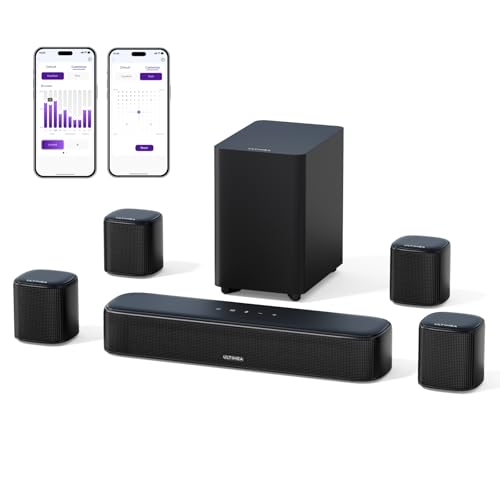
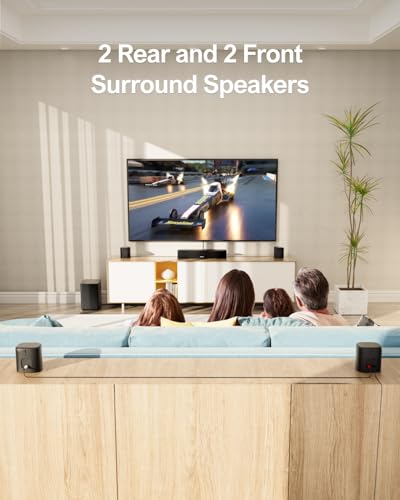
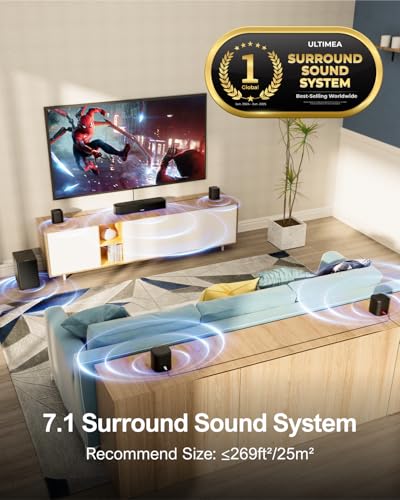
The Ultimea Aura A40 launched in 2023 with a radical proposition: instead of cramming everything into one soundbar, why not include actual surround speakers? This system ships with four separate speakers that you position around your room—two in front, two behind—plus a dedicated subwoofer. It's essentially a traditional 7.1 home theater system, just with smaller, more affordable components.
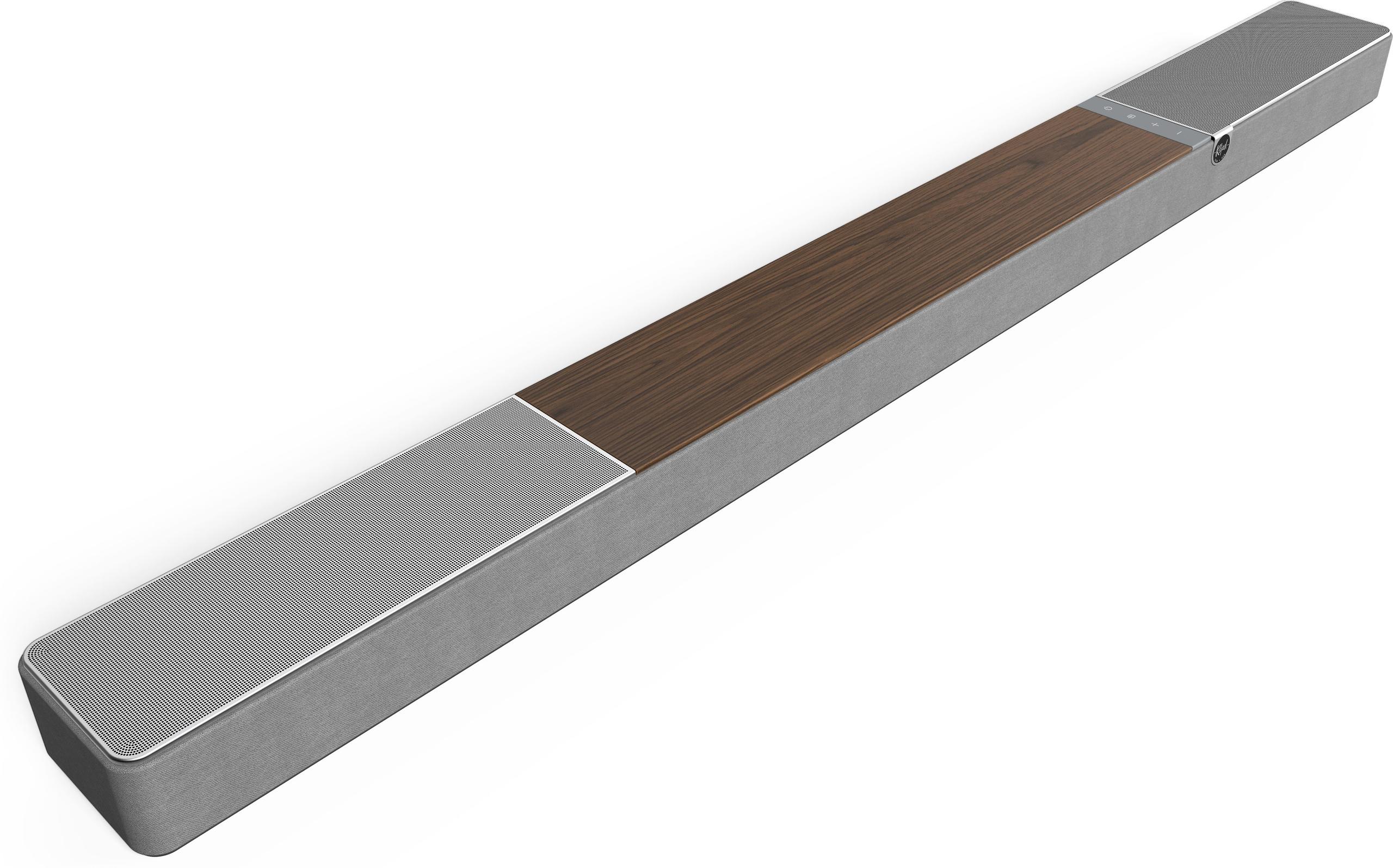
The Klipsch Flexus Core 300, released in 2024, takes the opposite approach. Everything happens within a single 54-inch soundbar packed with 13 individual drivers (the actual speaker cones that create sound). Klipsch partnered with Onkyo, leveraging decades of high-end audio expertise to create what they claim is the most advanced single-unit soundbar available.
These philosophical differences create fascinating trade-offs that directly impact your listening experience.
Here's where things get interesting: the Ultimea system creates genuine surround sound because it literally places speakers around you. When a movie has a car driving from front to back, you hear it move from the front speakers to the rear speakers positioned behind your couch. This physical movement of sound is impossible for any single soundbar to replicate authentically.
The Klipsch Flexus Core 300 compensates with sophisticated virtual surround processing—algorithms that manipulate audio timing and phase relationships to trick your brain into perceiving directional sound from a single location. It works impressively well for side-to-side effects, but physics limits what it can achieve for sounds that should originate behind you.
However, the Klipsch supports Dolby Atmos natively, with dedicated up-firing drivers that bounce sound off your ceiling to create height effects. The Ultimea can't decode these advanced formats directly, instead using its physical speaker placement to create immersive effects through positioning rather than format processing.
Our research into user experiences reveals a clear pattern: people consistently praise the Ultimea's ability to place sounds precisely in space, with many commenting on hearing subtle details like rustling leaves or distant footsteps that seem to come from specific locations. The Klipsch earns praise for its refined processing of advanced audio formats, but users note that rear-positioned sounds still seem to originate from the front of the room.
The Klipsch Flexus Core 300 showcases premium audio engineering with its horn-loaded tweeter technology—a design that uses horn-shaped waveguides to control high-frequency dispersion, resulting in exceptionally clear dialogue reproduction. This matters enormously for TV watching, where understanding speech clearly can make or break your viewing experience.
The system includes a discrete center channel dedicated solely to dialogue, ensuring voices remain locked in position even during explosive action sequences. User feedback consistently highlights this strength, with many noting they can finally understand movie dialogue without constantly adjusting volume levels.
The Ultimea system takes a more straightforward approach, using conventional drivers in its main soundbar while relying on physical positioning for spatial effects. Reviews suggest the sound character requires some optimization through the system's extensive EQ options—121 preset matrices and a 10-band equalizer provide remarkable customization flexibility for a budget system.
Bass performance reveals interesting trade-offs. The Ultimea includes a dedicated 4-inch wired subwoofer that users report provides satisfying low-end impact when properly configured. The Klipsch integrates four 4-inch subwoofers directly into the soundbar, but our research into professional measurements shows limitations—the bass lacks the deep rumble necessary for action movies and can exhibit distortion at higher volumes.
This bass limitation surprised me, given Klipsch's reputation. It appears the engineering challenge of fitting four subwoofers into a slim soundbar enclosure compromises their individual performance compared to a dedicated subwoofer with proper internal volume.
Maximum output capability separates casual listening from true home theater performance. The Ultimea claims 330 watts peak power with over 98 dB sound pressure level capability. While these specifications should be taken with skepticism (marketing often inflates power ratings), user reports suggest adequate headroom for most rooms and content types.
The Klipsch advertises 106 dB maximum output, but independent measurements reveal concerning discrepancies. Actual testing shows 96 dB capability without room correction, dropping to 89-92 dB when Dirac Live room correction is enabled. This reduction occurs because room correction algorithms reduce output to prevent distortion while equalizing frequency response.
Dirac Live represents genuinely cutting-edge technology—the same room correction system used in $10,000+ professional audio equipment. The system uses a calibration microphone to measure your room's acoustic response, then applies digital filters to correct frequency imbalances and timing issues. It's remarkably sophisticated, though the full-featured version requires an additional purchase beyond the included limited bandwidth correction.
However, there's an irony here: enabling this premium feature actually reduces the soundbar's maximum output significantly. For smaller rooms, this trade-off makes sense, but larger spaces might benefit more from the raw output capability.
The connectivity differences reveal each system's target audience clearly. The Klipsch Flexus Core 300 includes HDMI 2.1 eARC with 4K 120Hz passthrough—essential features for modern gaming consoles and streaming devices. This allows the soundbar to function as your entertainment hub, handling both audio and video switching.
The system also includes comprehensive streaming support: AirPlay 2 for Apple devices, Google Cast for Android, plus direct integration with Spotify and Tidal. These features transform the soundbar into a standalone music system capable of high-quality streaming without needing your TV powered on.
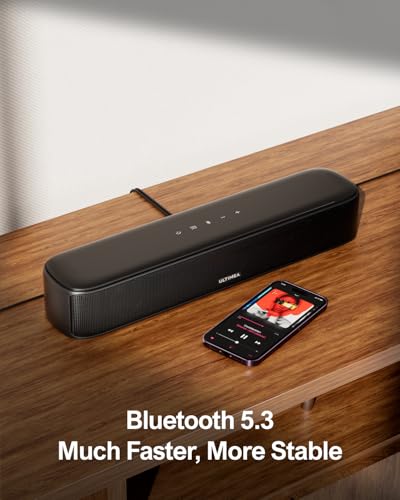
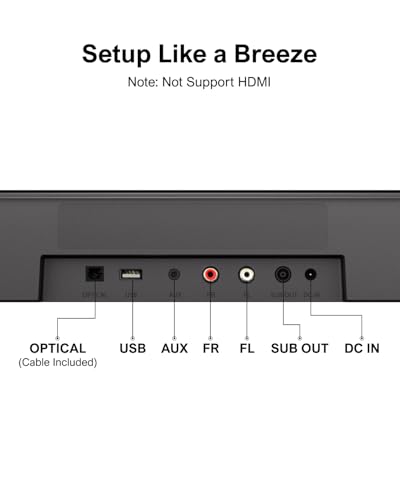
The Ultimea system deliberately omits HDMI, connecting through optical, USB, or Bluetooth 5.3. This limitation reflects its budget positioning but also simplifies compatibility—every TV manufactured in the past decade includes optical output, ensuring universal connectivity without HDMI handshake complications.
For music listening, both systems support Bluetooth, but their approaches differ significantly. The Klipsch treats music as a primary use case, with dedicated EQ modes and high-quality wireless codecs. The Ultimea focuses on providing adequate music performance while excelling at TV and movie content.
Installing the Ultimea system requires planning and patience. You'll run cables to four speaker positions—the included 6-meter rear cable accommodates most room layouts, but you're committed to either visible wiring or wall fishing. The payoff is genuine surround placement, but setup complexity exceeds typical soundbar installation.
The Klipsch offers the opposite experience: unwrap, connect, and calibrate using the included microphone and smartphone app. The Dirac Live setup wizard guides you through room measurement, though achieving optimal results requires understanding acoustic principles and measurement techniques.
Having experienced both approaches, I appreciate the Ultimea's honest complexity—you know exactly what you're getting. The Klipsch promises simplicity but delivers sophisticated technology that requires learning to maximize its potential.
At the time of writing, the price difference between these systems approaches 8-9x, making value comparison challenging. The Ultimea provides complete 7.1 surround sound at budget pricing—an achievement that seemed impossible just a few years ago. The Klipsch targets enthusiasts willing to pay premium prices for advanced features and refined performance.
But value extends beyond initial cost. The Ultimea system includes everything needed for complete surround sound: main soundbar, four positioned speakers, subwoofer, all cables, and wall mounting hardware. The Klipsch provides a foundation that can expand with optional wireless surround speakers and additional subwoofers, but each expansion increases total investment significantly.
Consider long-term satisfaction: budget systems often leave users wanting upgrades within a year or two, while premium systems typically provide satisfaction for many years. However, the Ultimea's genuine surround placement creates experiences that expensive all-in-one soundbars simply cannot replicate.
The Ultimea Aura A40 makes sense for several specific situations. College students or young professionals in apartments will appreciate getting complete surround sound without premium pricing. Gaming enthusiasts benefit enormously from physical surround placement—hearing enemy footsteps approach from behind provides genuine competitive advantages in first-person shooters.
Families watching primarily TV shows and movies will find the system's dialogue clarity and immersive effects transformative compared to TV speakers. The extensive EQ customization accommodates different content types and listening preferences, while the physical surround speakers create experiences that feel genuinely cinematic.
The Klipsch Flexus Core 300 targets different priorities. Home theater enthusiasts who watch content mastered in Dolby Atmos and DTS:X will appreciate the native format support and sophisticated processing. The room correction technology particularly benefits problematic acoustic spaces—rooms with hard surfaces, odd dimensions, or furniture placement that creates acoustic challenges.
Audiophiles who use their soundbar for serious music listening will value the refined drivers, advanced EQ capabilities, and high-quality streaming integration. The system's ability to function as both home theater solution and high-end music system justifies its premium positioning for users with diverse audio needs.
For dedicated home theater use, both systems offer distinct advantages. The Ultimea creates the spatial immersion that transforms movie watching from passive viewing to active experience. Action sequences feel genuinely three-dimensional, with effects moving convincingly through the room.
The Klipsch excels at content fidelity, reproducing the filmmaker's intended audio mix with professional-grade accuracy. The Dirac Live room correction ensures optimal frequency response regardless of room characteristics, while advanced format support future-proofs the investment as streaming services adopt newer audio technologies.
However, the Klipsch's bass limitations become problematic for action-heavy content. Explosive sequences lack the physical impact that defines great home theater experiences, a significant compromise given the system's premium positioning.
Choose the Ultimea Aura A40 if you prioritize surround sound immersion over technical sophistication. This system delivers experiences that premium single-unit soundbars cannot match through pure physics—actual speakers positioned around your room create spatial effects impossible to virtualize convincingly.
The budget-friendly pricing removes financial barriers to complete surround sound, while the physical setup ensures long-term satisfaction. Gaming, movie watching, and general TV viewing all benefit significantly from true surround placement.
Choose the Klipsch Flexus Core 300 if you value technical refinement and future-proofing over spatial immersion. Advanced format support, professional room correction, and premium build quality justify the investment for serious audio enthusiasts.
The streamlined setup and comprehensive connectivity make this system ideal for users who want sophisticated technology without complexity, though the bass limitations require realistic expectations about home theater impact.
Ultimately, both systems succeed at their intended missions. The Ultimea democratizes surround sound by making genuine multichannel audio affordable and accessible. The Klipsch brings professional-grade audio technology to consumer soundbars, advancing the category's capabilities significantly.
Your choice depends on whether you prioritize spatial immersion or technical sophistication—and whether you're willing to pay premium prices for premium features that may not always deliver proportional performance improvements.
| Ultimea Aura A40 U2601 | Klipsch Flexus Core 300 |
|---|---|
| Channel Configuration - Determines surround sound capability | |
| 7.1 virtual surround with 4 physical surround speakers | 5.1.2 Dolby Atmos (expandable to 7.1.4 with optional components) |
| Physical Surround Speakers - Creates genuine directional audio | |
| 4 wired speakers included (2 front, 2 rear) | None included (optional wireless surrounds available separately) |
| Subwoofer - Essential for bass impact in movies | |
| Dedicated 4-inch wired subwoofer included | 4 built-in subwoofers plus optional external subwoofer output |
| Audio Format Support - Compatibility with modern content | |
| Basic formats only (no Dolby Atmos/DTS:X) | Full Dolby Atmos, DTS:X, and advanced format support |
| HDMI Connectivity - Critical for modern TV integration | |
| None (optical, USB, Bluetooth only) | HDMI 2.1 eARC with 4K 120Hz passthrough |
| Room Correction - Optimizes sound for your specific space | |
| Basic 10-band EQ with 121 presets | Professional Dirac Live room correction (full version requires upgrade) |
| Maximum Output - Determines how loud it can play cleanly | |
| 330W peak, >98dB SPL claimed | 96dB measured (drops to 89-92dB with room correction enabled) |
| Setup Complexity - Time and effort required for installation | |
| Moderate (requires running cables to 4 speaker positions) | Simple (single soundbar, optional microphone calibration) |
| Smart Features - Streaming and app control capabilities | |
| Ultimea Smart App with extensive EQ control | AirPlay 2, Google Cast, Spotify Connect, advanced streaming |
| Bass Performance - Critical for action movies and music | |
| Deep, punchy bass when subwoofer properly configured | Limited deep bass, can rattle at high volumes despite premium price |
| Expandability - Future upgrade options | |
| Complete system as shipped, no expansion needed | Can add wireless surrounds and additional subwoofers (sold separately) |
| Value Proposition - Performance per dollar spent | |
| Complete 7.1 system at budget pricing | Premium features and build quality at luxury pricing |
The Ultimea Aura A40 is a complete 7.1 surround system that includes four physical surround speakers you position around your room, plus a dedicated subwoofer. The Klipsch Flexus Core 300 is a premium all-in-one soundbar that uses virtual surround processing and can be expanded with optional wireless components. The Ultimea creates genuine surround sound through speaker placement, while the Klipsch relies on advanced audio processing within a single unit.
The Ultimea Aura A40 works well in apartments because you can adjust the surround levels to match your space size, and the physical speakers create immersive sound even at lower volumes. However, it requires cable management for four speakers. The Klipsch Flexus Core 300 offers simpler installation with just one unit, making it easier for renters who can't run cables. Both work in small spaces, but the Ultimea provides more dramatic surround effects.
The Klipsch Flexus Core 300 fully supports Dolby Atmos and DTS:X with dedicated up-firing drivers for height effects. The Ultimea Aura A40 doesn't support advanced audio formats like Dolby Atmos, instead creating immersive sound through its physical speaker positioning. For streaming content with Atmos soundtracks, the Klipsch will decode and play them properly, while the Ultimea will play them as standard surround sound.
The Ultimea Aura A40 includes a dedicated 4-inch wired subwoofer that delivers deep, punchy bass when properly configured. The Klipsch Flexus Core 300 has four built-in subwoofers but reviews indicate limited deep bass response and potential rattling at high volumes. For bass-heavy content like action movies, the Ultimea typically provides more satisfying low-end impact despite its budget positioning.
The Ultimea Aura A40 requires moderate setup effort—you'll need to position four surround speakers around your room and run the included cables. Setup takes about 30 minutes and requires some planning for speaker placement. The Klipsch Flexus Core 300 offers simple installation as a single unit, with optional room calibration using an included microphone. The Klipsch is significantly easier to install but the Ultimea provides more dramatic results once properly set up.
The Klipsch Flexus Core 300 includes HDMI 2.1 eARC with 4K 120Hz passthrough, making it ideal for PlayStation 5 and Xbox Series X gaming. The Ultimea Aura A40 lacks HDMI inputs, connecting only through optical, USB, or Bluetooth, which limits gaming integration. For serious gaming setups requiring HDMI connectivity and advanced format support, the Klipsch is the clear choice.
Both excel at movies but differently. The Ultimea Aura A40 creates genuine surround sound with effects moving convincingly around your room—helicopters fly overhead, footsteps approach from behind. The Klipsch Flexus Core 300 offers superior dialogue clarity and supports advanced movie audio formats. For immersive action movies, the Ultimea provides more spatial excitement. For dialogue-heavy films and premium audio formats, the Klipsch delivers better clarity and refinement.
The Klipsch Flexus Core 300 excels at music with refined drivers, room correction technology, and high-quality streaming via AirPlay 2 and Google Cast. It can function as a dedicated music system. The Ultimea Aura A40 provides adequate music performance with extensive EQ customization options, but it's primarily designed for TV and movie content. The Klipsch is significantly better for serious music listening.
The Ultimea Aura A40 provides exceptional value, delivering a complete 7.1 surround system with genuine spatial effects at budget pricing. The Klipsch Flexus Core 300 costs significantly more but includes premium features like Dirac Live room correction and advanced format support. The Ultimea offers more performance per dollar spent, while the Klipsch justifies its premium pricing with sophisticated technology and build quality.
The Ultimea Aura A40 comes complete with all components—main soundbar, four surround speakers, and subwoofer—with no expansion options needed or available. The Klipsch Flexus Core 300 is designed for expansion, allowing you to add wireless Flexus Surround 200 speakers and additional Flexus Sub 200 subwoofers. The Klipsch system grows with your needs, while the Ultimea provides everything upfront.
The Klipsch Flexus Core 300 excels at dialogue with its dedicated center channel and horn-loaded tweeter technology, ensuring voices remain clear even during loud action scenes. The Ultimea Aura A40 also provides good dialogue clarity, with users reporting they can understand speech clearly even with background music. Both improve dramatically over TV speakers, but the Klipsch has a slight edge for pure dialogue reproduction.
Choose the Ultimea Aura A40 if you want genuine surround sound immersion and dramatic spatial effects that make movies feel cinematic. The physical speaker placement creates experiences premium single soundbars cannot match. Choose the Klipsch Flexus Core 300 if you prioritize technical sophistication, advanced format support, and professional-grade room correction. The Ultimea delivers more theatrical excitement, while the Klipsch provides more refined audio reproduction for serious home theater enthusiasts.
We've done our best to create useful and informative comparisons to help you decide what product to buy. Our research uses advanced automated methods to create this comparison and perfection is not possible - please contact us for corrections or questions. These are the sites we've researched in the creation of this article: walmart.com - newegg.com - youtube.com - ultimea.com - youtube.com - device.report - ultimea.co - manuals.plus - homestudiobasics.com - youtube.com - bestbuy.com - community.ultimea.com - manuals.plus - eu.ultimea.com - navesapeugeot.com.br - bestbuy.com - images.thdstatic.com - provantage.com - ultimea.com - bestbuy.com - crutchfield.com - whathifi.com - avnirvana.com - hometechnologyreview.com - ecoustics.com - gearpatrol.com - klipsch.com - avsforum.com - youtube.com - avsforum.com - listenup.com - chowmain.software - klipsch.com - novis.ch - avsforum.com - klipsch.ca - lefflers.se - abt.com - sweetwater.com - wifihifi.com - klipsch.com - dirac.com

Privacy Policy
Terms and Conditions - Affiliate Policy
Home Security
© Copyright 2008-2026.
11816 Inwood Rd #1211, Dallas, TX 75244