




When shopping for a soundbar, you'll quickly discover that the market spans an enormous range—from basic models that barely improve on TV speakers to sophisticated systems that rival traditional home theater setups. Today we're comparing two soundbars that represent opposite ends of this spectrum: the Ultimea Poseidon D50, released in 2025, and the Klipsch Flexus Core 300, which arrived in 2024. These products take fundamentally different approaches to solving the same problem: delivering great sound for movies, TV, and music.
The soundbar market has evolved dramatically over the past few years. What used to be simple sound-enhancing bars have transformed into complex audio systems with wireless subwoofers, satellite speakers, and even advanced room correction technology. Understanding where these two products fit in this landscape—and which approach works better for your specific situation—requires looking beyond basic specs to understand what each system actually delivers.
Before diving into specifics, it's worth understanding what separates a great soundbar from a mediocre one. The most important factors are channel configuration (how many separate audio streams the system can handle), driver quality and placement, connectivity options, and any smart features that enhance the listening experience.
Channel configuration is often misunderstood. A "5.1" system means five main speakers (left, center, right, left surround, right surround) plus one subwoofer for bass. True 5.1 systems use separate physical speakers for each channel, while many budget soundbars simulate this effect using digital processing—a significant difference in actual performance.
Driver quality matters enormously. Drivers are the individual speakers that produce sound, and their size, materials, and design directly impact what you hear. Larger drivers generally produce deeper bass, while specialized tweeters (small speakers for high frequencies) handle vocals and sound effects with more clarity.
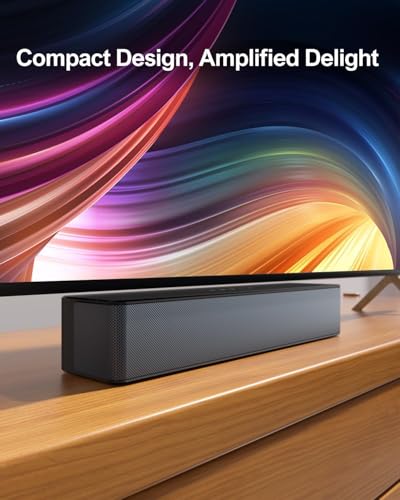
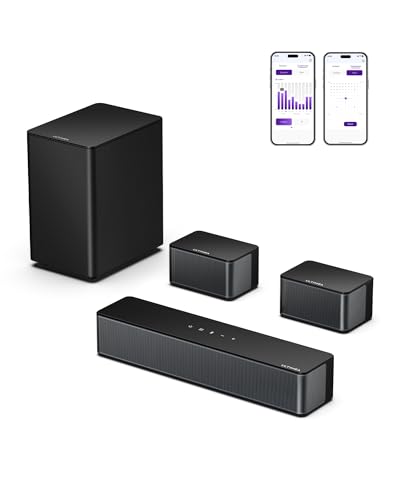
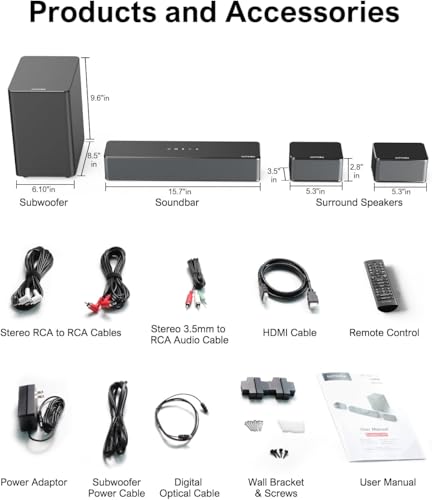
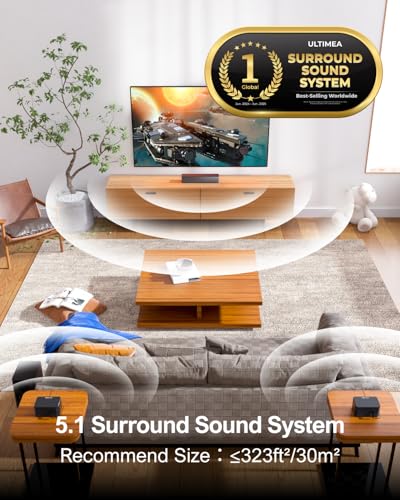
The Ultimea Poseidon D50 takes an increasingly rare approach in the budget soundbar market: it includes actual rear speakers. This 2025 model comes with two satellite speakers that connect via 19-foot cables, creating genuine surround sound rather than relying on digital trickery to simulate the effect.
This matters more than you might think. When you watch an action movie and hear a helicopter circling overhead, systems with real rear speakers can place that sound behind you convincingly. Virtual surround systems, which are far more common at this price point, use complex algorithms to trick your brain into perceiving rear sounds, but the effect varies dramatically based on your room layout and seating position.
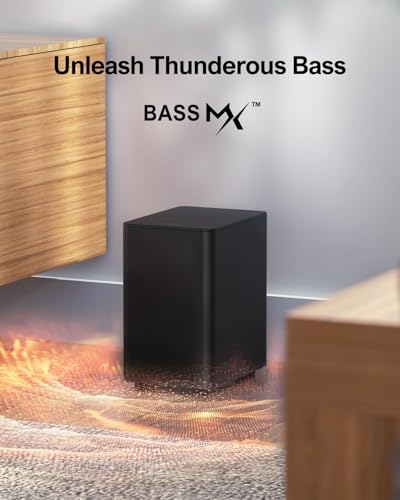
The Poseidon D50 also includes a wireless subwoofer with what Ultimea calls BassMX™ technology. This isn't just marketing speak—the 5.25-inch subwoofer can move its cone (the part that pushes air to create sound) up to 15mm in each direction, which is impressive excursion for this size driver. More excursion generally means deeper, more impactful bass, particularly important for movie soundtracks with explosions, crashes, and dramatic music.
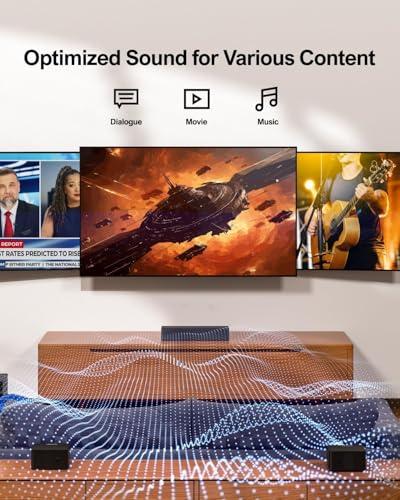
One standout feature is the SurroundX™ technology, which uses a dedicated digital signal processor (DSP) to convert regular stereo sound into multi-channel surround. This means even older movies or TV shows recorded in stereo can benefit from the surround speaker setup, creating a more immersive experience across all your content.
The system also offers extensive customization through its smartphone app, with 121 preset EQ (equalization) matrices and a 10-band manual equalizer. EQ allows you to adjust different frequency ranges—boosting dialog frequencies to make voices clearer, or enhancing bass for more impactful action scenes. Having this level of control at this price point is unusual and valuable.
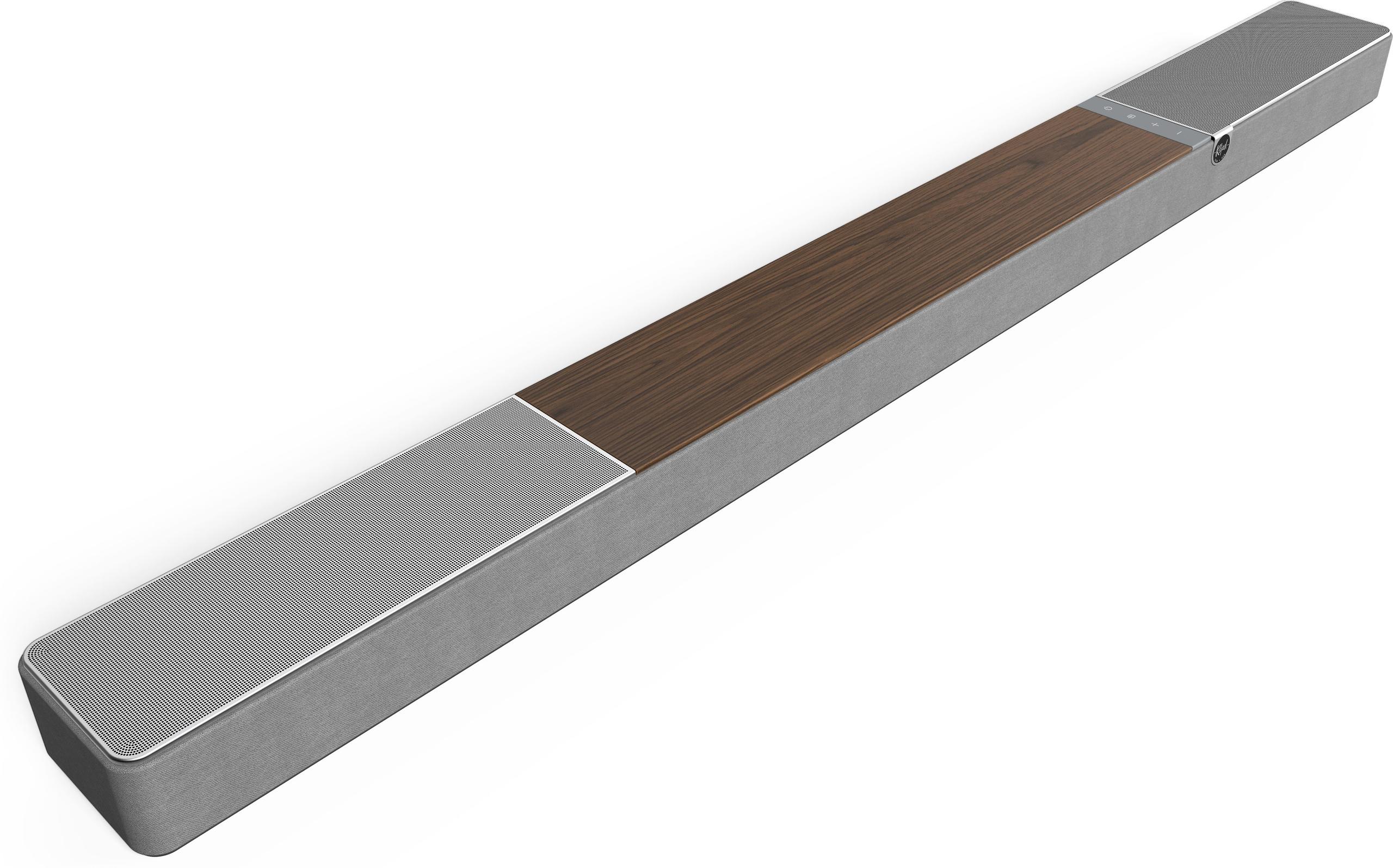
The Klipsch Flexus Core 300, released in 2024, takes a completely different approach. Instead of separate rear speakers, it packs an enormous array of drivers into its 54-inch frame—13 individual speakers working together to create immersive sound.
What makes the Flexus Core 300 truly unique is its inclusion of Dirac Live room correction technology. This represents a major breakthrough in soundbar design, as Dirac Live was previously found only in expensive AV receivers costing thousands of dollars. Here's how it works: using an included microphone, the system analyzes your room's acoustic properties—how sound bounces off walls, furniture, and other surfaces—then automatically adjusts its output to compensate for these imperfections.
This technology addresses a fundamental problem in home audio: every room sounds different. A perfectly tuned speaker system can sound muddy in a room with lots of soft furnishings, or harsh and bright in a room with hard surfaces. Dirac Live measures these characteristics and applies precise corrections, potentially transforming mediocre room acoustics into something approaching studio quality.
The driver array itself is impressive. Four 4-inch subwoofers are built directly into the soundbar—an unusual design that provides substantial bass without requiring a separate subwoofer box. Two up-firing drivers create Dolby Atmos height effects, bouncing sound off your ceiling to simulate overhead audio. Side-firing drivers handle surround effects, while the center channel uses Klipsch's signature horn-loaded tweeter technology for exceptional dialog clarity.
Horn-loaded tweeters deserve special mention. Unlike conventional dome tweeters, horn designs use an acoustic horn to focus and amplify high-frequency sound, resulting in clearer dialog and better long-range projection. It's a technology Klipsch has refined over decades in professional and home audio applications.
This is where the philosophical difference between these systems becomes most apparent. The Ultimea Poseidon D50 creates surround effects by placing actual speakers behind you. When properly positioned, this creates remarkably convincing surround sound that clearly places effects in specific locations around your room.
The Klipsch Flexus Core 300 relies on psychoacoustic processing—using side-firing and up-firing drivers to bounce sound around your room, creating the illusion of surround speakers where none exist. When this works well, it's impressive, but success depends heavily on your room's shape, size, and acoustics. The addition of Dirac Live room correction significantly improves the consistency of this approach.
For smaller rooms with typical furniture arrangements, both approaches can work well. However, if you have an oddly shaped room, very high ceilings, or lots of acoustic damping (heavy curtains, thick carpet, upholstered furniture), the physical rear speakers of the Poseidon D50 will likely provide more reliable surround effects.
Bass reproduction represents another fundamental difference. The Poseidon D50's wireless subwoofer can be positioned anywhere in your room for optimal bass response. This flexibility is valuable because bass performance varies dramatically with subwoofer placement—moving it just a few feet can transform weak, undefined bass into tight, impactful low-frequency effects.
The Flexus Core 300's four built-in subwoofers eliminate placement concerns but limit optimization options. The advantage is convenience and aesthetics—no separate box to hide or connect. The disadvantage is that you can't optimize bass performance for your specific room characteristics.
In our research of user experiences, the built-in subwoofers of the Flexus Core 300 provide impressive output for their size but can exhibit rattling at higher volumes—a common issue with integrated bass systems. The Poseidon D50's separate subwoofer generally provides cleaner bass performance, though it requires more thoughtful placement.
Both systems prioritize dialog clarity, but use different methods. The Poseidon D50 includes a dedicated Dialog mode in its EQ presets, boosting the frequency ranges where human voices are most prominent. This straightforward approach works well for most content.
The Flexus Core 300's horn-loaded center channel tweeter represents a more sophisticated approach. Horn loading naturally emphasizes the frequency ranges where dialog occurs, providing clearer vocals even without special processing modes. Combined with Dirac Live's room correction, this creates exceptionally natural-sounding dialog reproduction.
For users with hearing difficulties or those who frequently watch content with heavy accents or complex audio mixes, the Klipsch's approach offers advantages. However, the Ultimea's dedicated Dialog mode and adjustable EQ provide sufficient customization for most users.
The smart features of these systems reflect their different target audiences. The Poseidon D50 focuses on essential functionality: Bluetooth 5.3 streaming, HDMI eARC connectivity, and comprehensive app control. The app interface provides access to all EQ settings, input selection, and volume controls—everything most users need in a clean, straightforward interface.
The Flexus Core 300 offers more sophisticated integration options. Beyond standard connectivity, it includes Wi-Fi streaming with support for multiple platforms (AirPlay 2, Google Cast, Spotify Connect), HDMI 2.1 with 8K passthrough for gaming, and compatibility with professional control systems like Control4 and Crestron. These features appeal to users building comprehensive smart home systems or those with advanced AV setups.
The Dirac Live room correction deserves special attention. The included Limited Bandwidth version corrects frequencies up to 500 Hz, which covers the critical bass and lower midrange frequencies where room acoustics cause the most problems. A Full Bandwidth upgrade (available for additional cost) extends correction across the entire frequency spectrum. Even the basic version provides meaningful improvements in most rooms.
In typical living rooms, both systems can provide satisfying performance, but with different strengths. The Poseidon D50 excels in these spaces because the rear satellite speakers are closer to listeners, creating more convincing surround effects. The wireless subwoofer can be tucked into a corner or behind furniture without running cables, maintaining a clean appearance.
The Flexus Core 300 may actually be overpowered for smaller rooms. Its 13-driver array and substantial output capability are designed for larger spaces, and in confined areas, the built-in subwoofers can overwhelm listeners or cause rattling problems with nearby furniture or wall decorations.
Larger rooms of 500+ square feet reveal the Flexus Core 300's strengths. The massive driver array provides room-filling sound that the Poseidon D50 may struggle to match. The four built-in subwoofers create more even bass distribution across a large space compared to a single subwoofer, even with optimal placement.
Dirac Live room correction becomes more valuable in larger rooms, which often have more complex acoustics. High ceilings, multiple seating areas, and varying surface materials can create acoustic challenges that benefit from professional-grade room correction.
Both systems handle gaming well, but with different advantages. The Poseidon D50's physical rear speakers provide excellent directional audio cues for gaming—you can hear enemies approaching from specific directions, which is valuable for competitive gaming.
The Flexus Core 300's HDMI 2.1 connectivity supports 4K gaming at 120Hz without compression, important for next-generation gaming consoles. The Dolby Atmos processing adds vertical dimension to games that support it, creating more immersive gaming experiences.
For sports content, the Flexus Core 300's horn-loaded center channel provides exceptional clarity for commentary, while the Poseidon D50's surround speakers help recreate the stadium atmosphere with crowd noise and ambient effects.
At the time of writing, these products represent vastly different value propositions. The Ultimea Poseidon D50 delivers genuine 5.1 surround sound at a price point where most competitors offer only virtual surround processing. For budget-conscious buyers who want authentic home theater sound, it's difficult to find better value.
The Klipsch Flexus Core 300 commands a premium price that reflects its advanced technology and professional-grade components. The inclusion of Dirac Live room correction alone represents significant value for audio enthusiasts, as this technology typically costs hundreds of dollars when purchased separately.
However, value isn't just about initial purchase price. The Poseidon D50 is essentially a complete system—what you buy is what you get, with no meaningful upgrade path. The Flexus Core 300 is designed for expansion, supporting additional wireless surround speakers and subwoofers that can transform it into a full 7.2.2 Dolby Atmos system over time.
The Ultimea Poseidon D50 makes sense for buyers who want the best possible surround sound experience without spending premium prices. It's ideal for people with smaller to medium-sized rooms who value simplicity and immediate satisfaction. If you want to plug in a complete system and enjoy convincing surround sound without complexity or additional purchases, this is your choice.
The Klipsch Flexus Core 300 appeals to audio enthusiasts and those building comprehensive home theater systems. If you have a large room with challenging acoustics, value cutting-edge technology, or plan to expand your system over time, the premium investment makes sense. It's also the better choice for users who prioritize advanced connectivity and smart home integration.
These products solve the same fundamental problem—improving TV audio—through completely different approaches. The Ultimea Poseidon D50 prioritizes authentic surround sound delivery at an accessible price, while the Klipsch Flexus Core 300 focuses on advanced technology and premium performance regardless of cost.
Neither approach is inherently superior—success depends on matching the product to your specific needs, room characteristics, and budget priorities. The Ultimea offers exceptional value for mainstream users seeking genuine home theater sound, while the Klipsch provides cutting-edge technology for enthusiasts willing to invest in premium audio performance.
The decision ultimately comes down to whether you prioritize authentic surround sound delivery at a budget-friendly price, or prefer advanced technology and expandability at a premium cost. Both products deliver on their respective promises, making the choice more about matching your priorities than finding a clear winner.
| Ultimea Poseidon D50 5.1 Soundbar Home Theater (2025) | Klipsch Flexus Core 300 Soundbar |
|---|---|
| Channel Configuration - True surround vs virtual processing affects immersion quality | |
| 5.1 with physical rear satellite speakers | 5.1.2 with virtual surround and Dolby Atmos height channels |
| Total Driver Count - More drivers typically mean better sound distribution | |
| 6 drivers (4 in soundbar, 2 in satellites) | 13 drivers including 4 built-in subwoofers |
| Subwoofer Design - Separate vs integrated affects placement flexibility and bass quality | |
| External wireless 5.25" subwoofer with 15mm excursion | Four built-in 4" subwoofers integrated in soundbar |
| Room Correction Technology - Advanced calibration optimizes sound for your specific space | |
| Manual EQ with 121 presets and 10-band equalizer | Dirac Live room correction (world's first in soundbar) |
| Advanced Audio Formats - Dolby Atmos creates overhead sound effects | |
| Standard surround sound processing | Dolby Atmos and DTS:X with dedicated up-firing drivers |
| Connectivity Options - Modern standards ensure compatibility with latest devices | |
| HDMI eARC, Optical, AUX, USB, Bluetooth 5.3 | HDMI 2.1 eARC (8K passthrough), Optical, Bluetooth 5.3, Wi-Fi, Ethernet |
| Smart Features - App control and streaming affect daily usability | |
| Ultimea app with EQ control and input selection | Klipsch Connect Plus app with Dirac Live setup and multi-platform streaming |
| Physical Size and Weight - Impacts placement options and room compatibility | |
| Compact design suitable for smaller TV stands | 54" wide, 35 lbs - requires substantial mounting/stand space |
| Expandability - Future upgrade options for growing systems | |
| Complete system with no expansion options | Compatible with wireless Flexus surrounds and additional subwoofers |
| Target Room Size - Manufacturer recommendations for optimal performance | |
| 250-380 sq ft (20-35m²) ideal coverage | Large rooms requiring high output levels |
| Rear Speaker Implementation - Physical vs virtual affects surround authenticity | |
| Two wired satellite speakers with 19.6ft cables | Side-firing drivers with virtual surround processing |
| Center Channel Design - Affects dialog clarity and vocal performance | |
| Standard center channel processing | Horn-loaded tweeter technology for enhanced dialog clarity |
The Ultimea Poseidon D50 provides true 5.1 surround sound with physical rear satellite speakers, creating authentic directional audio effects. The Klipsch Flexus Core 300 uses advanced virtual surround processing with side-firing drivers and Dolby Atmos support. For genuine surround placement, the Poseidon D50 excels, while the Flexus Core 300 offers more sophisticated processing and height effects.
The Ultimea Poseidon D50 includes a separate wireless 5.25" subwoofer that can be positioned anywhere for optimal bass response. The Klipsch Flexus Core 300 features four built-in 4" subwoofers integrated directly into the soundbar. The Poseidon D50 offers more placement flexibility, while the Flexus Core 300 provides convenience with no separate subwoofer box.
The Ultimea Poseidon D50 is specifically designed for rooms between 250-380 square feet and won't overpower smaller spaces. The Klipsch Flexus Core 300 is built for larger rooms and may be too powerful for compact spaces, potentially causing rattling or overwhelming sound. For small to medium rooms, the Poseidon D50 is the better choice.
The Klipsch Flexus Core 300 fully supports Dolby Atmos and DTS:X with dedicated up-firing drivers for height effects. The Ultimea Poseidon D50 does not support Dolby Atmos but focuses on delivering excellent traditional 5.1 surround sound. If Atmos is important for your content, the Flexus Core 300 is the clear winner.
The Ultimea Poseidon D50 delivers exceptional value by providing true 5.1 surround sound with physical rear speakers at a budget-friendly price point. The Klipsch Flexus Core 300 commands premium pricing for its advanced Dirac Live room correction and extensive driver array. The Poseidon D50 offers better value for budget-conscious buyers seeking authentic surround sound.
Both soundbars offer HDMI eARC and Bluetooth connectivity. The Ultimea Poseidon D50 includes standard connections like Optical, AUX, and USB. The Klipsch Flexus Core 300 features more advanced connectivity including HDMI 2.1 with 8K passthrough, Wi-Fi streaming, and support for multiple platforms like AirPlay 2 and Google Cast. The Flexus Core 300 provides superior connectivity options.
The Ultimea Poseidon D50 offers simple plug-and-play setup with straightforward cable connections for the rear speakers and wireless subwoofer pairing. The Klipsch Flexus Core 300 requires more complex setup including Dirac Live room calibration using an included microphone. For ease of installation, the Poseidon D50 is more user-friendly.
The Ultimea Poseidon D50 is a complete system with no expansion options - what you purchase is the full setup. The Klipsch Flexus Core 300 is designed for expansion and can add wireless Flexus Surr 200 speakers and additional Flexus Sub 200 subwoofers. For future growth potential, the Flexus Core 300 offers modular expandability.
Both soundbars prioritize clear dialog. The Ultimea Poseidon D50 includes a dedicated Dialog EQ mode and adjustable settings. The Klipsch Flexus Core 300 uses Klipsch's signature horn-loaded tweeter technology in the center channel for superior vocal projection. The Flexus Core 300 provides more advanced dialog enhancement through its specialized driver design.
The Ultimea Poseidon D50 provides manual room tuning through 121 EQ presets and a 10-band equalizer via smartphone app. The Klipsch Flexus Core 300 is the world's first soundbar with Dirac Live room correction, automatically calibrating sound to your room's acoustics. The Flexus Core 300 offers significantly more advanced room optimization technology.
For dedicated home theater setups, the Klipsch Flexus Core 300 excels with Dolby Atmos support, room correction, and expandability options. The Ultimea Poseidon D50 provides excellent home theater performance through authentic surround sound with physical rear speakers at a more accessible price. Both work well for home theater, but the Flexus Core 300 offers more advanced features for serious enthusiasts.
The Ultimea Poseidon D50 app provides essential controls including EQ adjustment, input selection, and volume control with access to all 121 preset configurations. The Klipsch Flexus Core 300 Connect Plus app offers more sophisticated features including Dirac Live calibration, streaming service integration, and advanced system management. The Flexus Core 300 app provides more comprehensive control and customization options.
We've done our best to create useful and informative comparisons to help you decide what product to buy. Our research uses advanced automated methods to create this comparison and perfection is not possible - please contact us for corrections or questions. These are the sites we've researched in the creation of this article: youtube.com - eu.ultimea.com - newegg.com - tvsbook.com - youtube.com - provantage.com - ultimea.com - techradar.com - community.ultimea.com - homedepot.com - community.ultimea.com - ultimea.com - ultimea.de - youtube.com - medisamhealthcenter.com - ultimea.com - youtube.com - walmart.com - crutchfield.com - whathifi.com - avnirvana.com - hometechnologyreview.com - ecoustics.com - gearpatrol.com - klipsch.com - avsforum.com - youtube.com - avsforum.com - listenup.com - chowmain.software - klipsch.com - novis.ch - avsforum.com - klipsch.ca - lefflers.se - abt.com - sweetwater.com - wifihifi.com - klipsch.com - dirac.com

Privacy Policy
Terms and Conditions - Affiliate Policy
Home Security
© Copyright 2008-2026.
11816 Inwood Rd #1211, Dallas, TX 75244