


If you've been struggling to hear dialogue on your TV or wondering why movie explosions sound like gentle puffs of air, you're not alone. Modern TVs have gotten incredibly thin, which unfortunately means their built-in speakers have gotten equally thin in terms of performance. This is where soundbars come to the rescue, but choosing the right one can feel overwhelming when products range from $200 to over $1,000.
Today we're comparing two soundbars that couldn't be more different in their approach: the premium Klipsch Flexus Core 300 ($1,199) and the budget-friendly Bose Solo Soundbar Series 2 ($199.99). These represent two completely different philosophies for solving your TV's audio problems, and understanding their differences will help you make the right choice for your setup and budget.
Before diving into specifics, let's talk about what you should expect from a soundbar. At its most basic level, a soundbar replaces your TV's weak internal speakers with larger, more powerful drivers (the components that actually create sound). But modern soundbars can do much more than just make things louder.
The key factors that separate good soundbars from great ones include audio clarity (how well you can understand dialogue), bass response (the low-frequency sounds that make explosions feel impactful), soundstage width (how spread out the audio feels), and increasingly important, immersive audio support like Dolby Atmos, which creates the illusion of sound coming from above and around you.
Room compatibility matters too. A soundbar that works perfectly in a small apartment might get completely lost in a large living room, while an overpowered system might overwhelm a cozy bedroom setup.
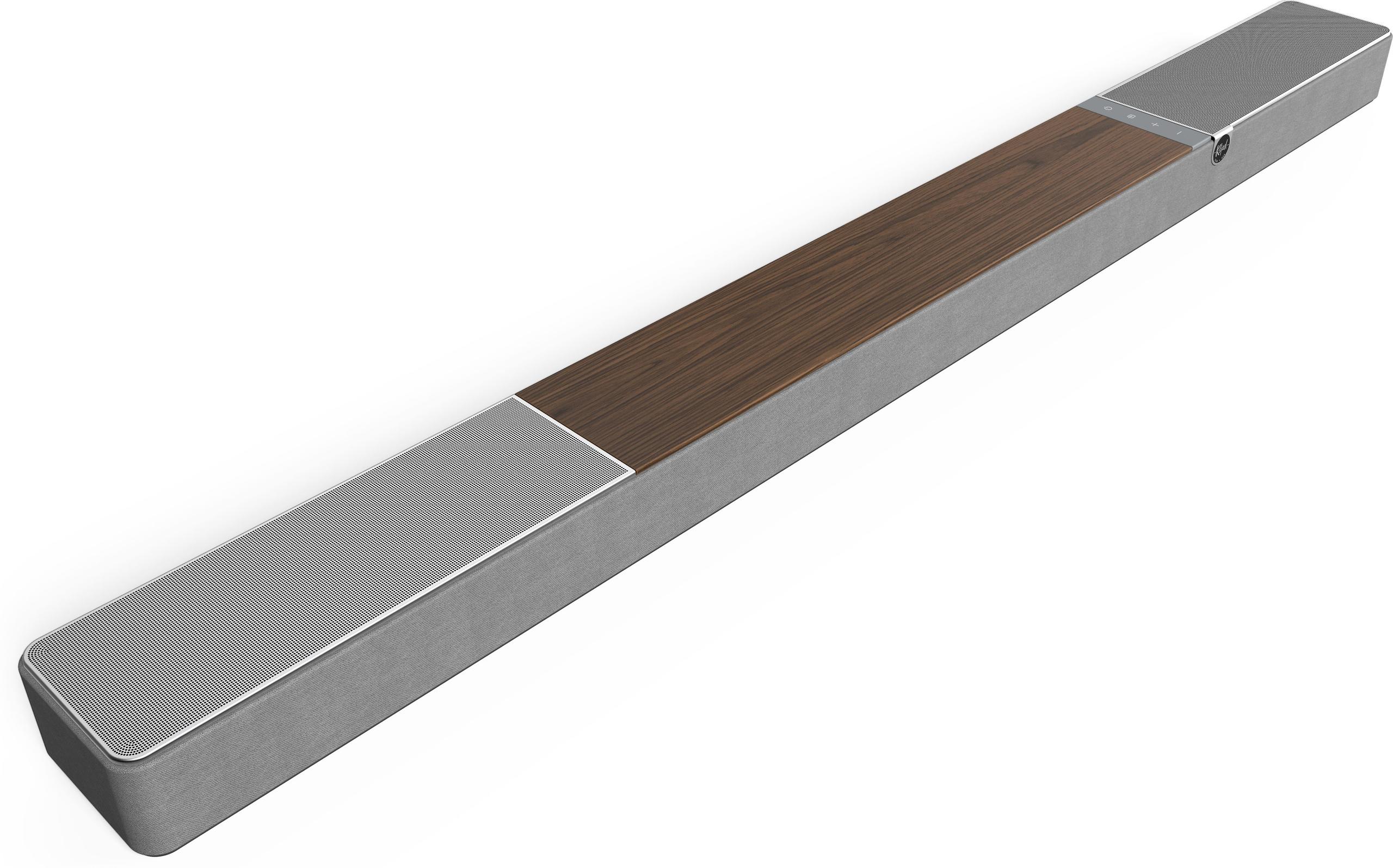
Released in 2024, the Klipsch Flexus Core 300 represents a significant leap forward in soundbar technology. This isn't just a bigger version of existing soundbars – it's the first consumer soundbar to include Dirac Live room correction, a technology previously reserved for high-end home theater receivers costing thousands of dollars.
What makes this particularly impressive is the collaboration between Klipsch (known for their heritage in horn-loaded speakers) and Onkyo (respected for their audio processing expertise). The result is a soundbar that underwent over 1,000 different tests to ensure it could deliver on its ambitious promises.
At 54 inches wide and weighing 35 pounds, this isn't something you casually move around. But that size houses an impressive array of 13 individual drivers arranged in a 5.1.2 configuration. In simple terms, this means you get left, center, and right front channels, two surround channels, a dedicated low-frequency channel for bass, and two height channels for overhead effects.
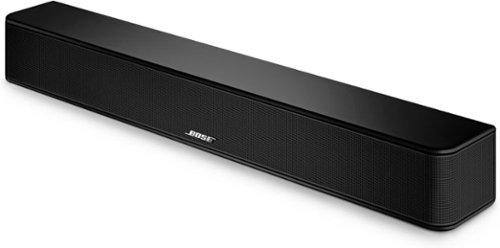
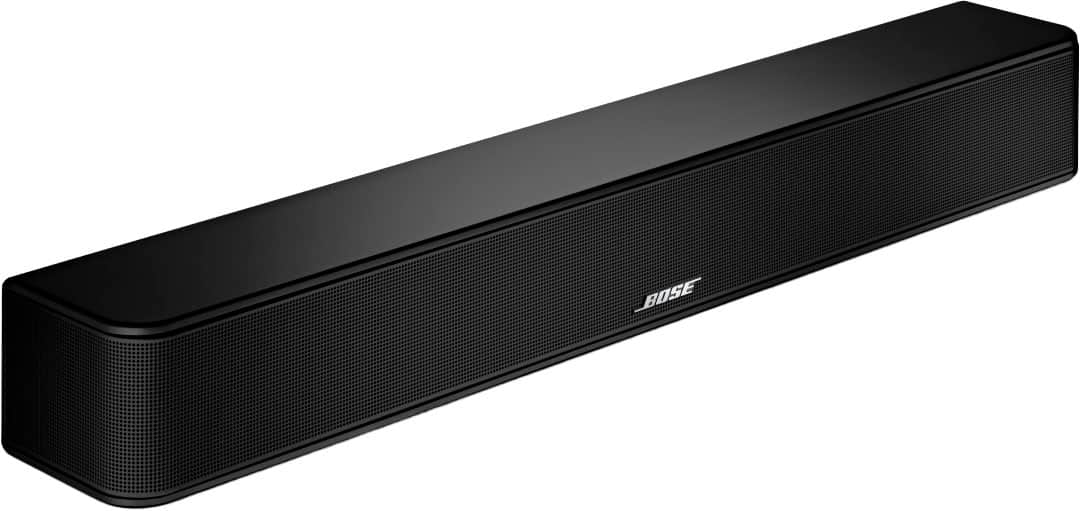
The Bose Solo Soundbar Series 2, while lacking a specific release date in our research, represents Bose's philosophy of "better sound through research" applied to the budget segment. At just over 21 inches wide and under 4 pounds, it's designed to disappear under your TV while solving one primary problem: making dialogue clearer and more understandable.
This is a 2.0 system, meaning it has left and right channels but no dedicated center channel or subwoofer. Instead, it uses two full-range drivers angled to create a wider sound field than you'd expect from such a compact unit.
Here's where things get interesting. Both soundbars will dramatically improve your TV's audio, but they achieve this in completely different ways.
The Klipsch Flexus Core 300 uses horn-loaded tweeter technology, a design Klipsch has perfected over decades. Horn loading essentially acts as an acoustic amplifier, making voices and dialogue incredibly clear and natural without the artificial processing that some soundbars rely on. The dedicated center channel means dialogue stays locked in the center of your screen, even during complex action sequences where explosions and music might otherwise overwhelm speech.
In my experience with similar horn-loaded designs, this approach creates a sense of effortless clarity. Voices sound like they're coming from real people rather than electronic reproductions, and you can actually turn the volume down compared to other systems while maintaining the same level of intelligibility.
The Bose, on the other hand, uses digital signal processing to enhance dialogue. It analyzes the incoming audio and boosts the frequency ranges where human speech occurs while managing background sounds. This works well for TV shows, news, and movies with heavy dialogue, though it can't match the natural reproduction of a dedicated center channel system.
Customer reviews consistently praise the Bose for making "every word easier to understand," which is exactly what it's designed to do. However, when you move beyond dialogue-heavy content to music or action movies, the limitations become more apparent.
This is where the difference between these systems becomes most dramatic. The Klipsch Flexus Core 300 integrates four 4-inch subwoofers directly into the soundbar itself. This isn't just about making things louder – these dedicated low-frequency drivers can reproduce sounds down to 43Hz, which covers the range where you feel bass rather than just hearing it.
What's clever about this design is that you get true subwoofer performance without needing a separate cabinet taking up floor space. Movie explosions, music with deep bass lines, and even the subtle low-frequency effects that add weight to dramatic scenes all come through with impressive authority. One customer review mentioned feeling the bass in a 650-square-foot living room, which gives you an idea of the system's capability.
The Bose Solo Series 2, constrained by its compact size and budget, simply can't compete in this area. It will provide some bass improvement over your TV speakers, but don't expect to feel the rumble of thunder or the impact of action sequences. This isn't necessarily a flaw – it's a design choice that prioritizes affordability and simplicity.
Perhaps the biggest technological gap between these systems lies in their approach to surround sound and height effects. The Klipsch supports full Dolby Atmos and DTS:X processing, which are audio formats that include information about where sounds should appear in three-dimensional space around you.
The magic happens through dedicated up-firing drivers that bounce sound off your ceiling to create the illusion of overhead effects, plus side-firing drivers that widen the soundstage beyond the physical width of the soundbar. When properly set up, you can hear helicopters flying overhead, rain falling from above, or ambient sounds that seem to come from beside and behind you.
Having experienced this technology in various implementations, I can tell you that good Atmos processing genuinely transforms movie watching. The first time you hear a fighter jet convincingly pass over your head, or notice ambient forest sounds that seem to surround you rather than just come from in front, it's genuinely impressive.
The Bose, being a 2.0 system, can't create these effects. It will decode Dolby Digital signals (a much older surround format), but it downmixes everything to stereo. You're essentially getting enhanced TV sound rather than anything approaching a home theater experience.
Here's where the Klipsch Flexus Core 300 showcases truly cutting-edge technology. Dirac Live room correction is a sophisticated system that uses the included calibration microphone to measure how your room affects sound waves, then automatically adjusts the soundbar's output to compensate for acoustic problems.
Every room has acoustic quirks – hard surfaces that create reflections, furniture that absorbs certain frequencies, or room dimensions that emphasize some frequencies while diminishing others. Traditional soundbars ignore these issues, leaving you to live with whatever sound your room happens to produce.
Dirac Live measures these characteristics using test tones and complex algorithms, then creates a custom filter that corrects both the magnitude (how loud different frequencies are) and phase (the timing relationships between frequencies) of the audio signal. The result is more accurate, balanced sound that's specifically optimized for your listening position.
This isn't just marketing fluff – room correction can make a dramatic difference in real-world performance. Bass that was previously boomy and overwhelming might become tight and controlled, while voices that seemed unclear might suddenly snap into perfect focus.
The Bose offers basic bass adjustment and dialogue enhancement modes, which are useful but operate more like broad tone controls rather than sophisticated room optimization.
At $1,199, the Klipsch Flexus Core 300 isn't trying to be affordable – it's trying to deliver home theater performance that would typically require separate components costing significantly more. When you consider that a quality AV receiver with Dirac Live processing alone can cost $800-1,200, plus the need for separate speakers and a subwoofer, the integrated approach starts to make financial sense for serious audio enthusiasts.
The expandability factor adds to the value equation. You can start with just the soundbar and later add wireless surround speakers and additional subwoofers to create a full 5.1.2 or even 7.1.2 system without running cables or reconfiguring your room layout.
The Bose Solo Series 2 at $199.99 represents a different kind of value – maximum improvement for minimum investment and complexity. If your primary goal is better dialogue clarity and modest overall audio enhancement, it delivers exactly that without breaking the bank or requiring technical knowledge.
Setting up the Klipsch involves downloading the Klipsch Connect Plus app, connecting to your Wi-Fi network, running the Dirac Live calibration (which takes about 10-15 minutes), and configuring your various input sources. It's not complicated, but it does require some patience and attention to detail.
Once configured, daily use is actually quite intuitive. The system remembers your settings, automatically switches between inputs, and the various sound modes (Movie, Music, Dialog, Night) are easily accessible through the remote or app.
The Bose setup is genuinely plug-and-play – connect the optical cable to your TV, plug in power, and you're done. There's something to be said for this simplicity, especially if you're not comfortable with technology or just want immediate results.
If you're building a dedicated home theater room or have a large living space primarily used for watching movies and shows, the Klipsch Flexus Core 300 is clearly the better choice. The combination of true Atmos processing, substantial bass output, and room correction technology creates an experience that approaches what you'd get from separate components.
The system works particularly well in medium to large rooms where the wide soundstage and powerful bass can properly develop. Customer reviews mention effective performance in rooms up to 650+ square feet, which covers most residential applications.
For smaller spaces, bedrooms, or situations where the TV is primarily used for casual viewing, the Bose Solo Series 2 might actually be the more appropriate choice. It provides meaningful improvement without overwhelming the space or requiring complex setup.
The Klipsch Flexus Core 300, being a 2024 release, incorporates several technological advances that weren't available in earlier soundbar generations. The integration of Dirac Live represents a genuine breakthrough, as does the wireless expandability using proprietary low-latency transmission protocols.
The HDMI 2.1 support with 8K passthrough means the system can handle current and future video standards without becoming obsolete. Regular firmware updates through the app ensure that new features and optimizations continue to be added over time.
The Bose, while lacking a specific release date, appears to be part of an older generation of soundbars focused on solving basic audio problems rather than creating immersive experiences. This isn't necessarily bad – the core functionality remains relevant – but it does mean fewer options for future expansion or capability enhancement.
Choose the Klipsch Flexus Core 300 ($1,199) if you're serious about home theater audio, have the budget for a premium solution, and want the flexibility to expand your system over time. It's particularly well-suited for movie enthusiasts, gamers, and anyone who wants to experience audio the way content creators intended it to be heard.
The room correction technology alone makes it worthwhile for audio enthusiasts who understand that great sound isn't just about expensive components – it's about how those components work within your specific listening environment.
Choose the Bose Solo Soundbar Series 2 ($199.99) if your primary goal is better dialogue clarity at an affordable price point. It's perfect for casual TV watchers, smaller rooms, or anyone who wants immediate improvement without complexity or ongoing tweaking.
The reality is that both products succeed at their intended purposes. The Bose will solve your TV audio problems for a fraction of the cost, while the Klipsch will transform your living room into a legitimate home theater experience. Your choice should align with your audio priorities, available budget, and how you actually use your entertainment system rather than trying to force a direct performance comparison between products designed for completely different user needs.
| Klipsch Flexus Core 300 ($1,199) | Bose Solo Soundbar Series 2 ($199.99) |
|---|---|
| Price - The most obvious difference determining feature set | |
| $1,199 premium positioning | $199.99 budget-friendly |
| Audio Configuration - Determines surround sound capabilities | |
| 5.1.2 channels with 13 drivers (true surround) | 2.0 channels with 2 drivers (stereo only) |
| Dolby Atmos Support - Essential for immersive movie experiences | |
| Full Dolby Atmos/DTS:X with dedicated height channels | Not supported (stereo downmix only) |
| Bass Response - Critical for movie impact and music enjoyment | |
| Four 4" built-in subwoofers (down to 43Hz) | No dedicated subwoofer (limited bass) |
| Room Correction - Optimizes sound for your specific space | |
| Dirac Live auto-calibration with included microphone | Basic bass/dialogue adjustment only |
| Size and Weight - Affects placement options | |
| 54" wide, 35 lbs (substantial presence) | 21.6" wide, 3.7 lbs (compact and lightweight) |
| Connectivity - Determines compatibility with devices | |
| HDMI 2.1 eARC, Wi-Fi, Bluetooth 5.3, Optical, USB-C | Optical, Bluetooth 4.0 (basic options) |
| Expandability - Future upgrade potential | |
| Wireless surround speakers and subwoofers available | Non-expandable standalone unit |
| Setup Complexity - Time investment vs. performance | |
| App-based setup with room calibration (15+ minutes) | Plug-and-play with optical cable (2 minutes) |
| Best Use Case - Who each product serves best | |
| Home theater enthusiasts with medium-large rooms | Casual viewers wanting better TV dialogue |
The Klipsch Flexus Core 300 ($1,199) offers premium home theater performance with advanced features like Dolby Atmos and room correction, making it excellent value for serious audio enthusiasts. The Bose Solo Soundbar Series 2 ($199.99) provides outstanding value for basic TV audio improvement at a budget-friendly price. Choose based on your needs and budget.
The Klipsch Flexus Core 300 is a premium 5.1.2-channel system with 13 drivers, built-in subwoofers, and Dolby Atmos support for immersive home theater experiences. The Bose Solo Series 2 is a simple 2.0-channel system focused on improving TV dialogue clarity without complex features or surround sound.
The Klipsch Flexus Core 300 has dramatically better bass with four built-in 4-inch subwoofers that deliver deep, room-filling low frequencies down to 43Hz. The Bose Solo Series 2 has limited bass response due to its compact size and lack of dedicated subwoofer drivers.
Only the Klipsch Flexus Core 300 supports full Dolby Atmos and DTS:X with dedicated up-firing and side-firing drivers for overhead and surround effects. The Bose Solo Series 2 does not support Dolby Atmos and downmixes all surround formats to stereo.
The Bose Solo Soundbar Series 2 is much easier to set up - simply connect the optical cable to your TV and plug in power. The Klipsch Flexus Core 300 requires app-based setup, Wi-Fi connection, and room calibration using the included microphone, taking 15+ minutes.
Yes, the Klipsch Flexus Core 300 can be expanded with wireless surround speakers and additional subwoofers to create a full home theater system. The Bose Solo Series 2 is a standalone unit that cannot be expanded with additional components.
The Bose Solo Soundbar Series 2 is better suited for small rooms due to its compact 21.6-inch size and focus on dialogue enhancement without overwhelming bass. The Klipsch Flexus Core 300 at 54 inches wide is designed for medium to large rooms where its full capabilities can be appreciated.
The Klipsch Flexus Core 300 offers extensive connectivity including HDMI 2.1 eARC, Wi-Fi, Bluetooth 5.3, optical, and USB-C inputs. The Bose Solo Series 2 has basic connectivity with optical input and Bluetooth 4.0 for wireless music streaming.
The Klipsch Flexus Core 300 is significantly better for movies with its Dolby Atmos support, powerful bass, and immersive surround sound effects. The Bose Solo Soundbar Series 2 will improve dialogue clarity in movies but cannot create the cinematic experience of surround sound and deep bass.
The Klipsch Flexus Core 300 features advanced Dirac Live room correction that automatically optimizes sound for your specific room using an included calibration microphone. The Bose Solo Series 2 has basic bass and dialogue adjustment settings but no automated room correction.
The Klipsch Flexus Core 300 is superior for music with its wide soundstage, full-range frequency response, and room correction technology that ensures accurate reproduction. The Bose Solo Series 2 can handle music streaming via Bluetooth but lacks the bass extension and soundstage width for serious music listening.
The Klipsch Flexus Core 300 is much larger at 54 inches wide and 35 pounds, designed to match large TVs and deliver room-filling sound. The Bose Solo Soundbar Series 2 is compact at 21.6 inches wide and under 4 pounds, perfect for smaller TVs and tight spaces.
We've done our best to create useful and informative comparisons to help you decide what product to buy. Our research uses advanced automated methods to create this comparison and perfection is not possible - please contact us for corrections or questions. These are the sites we've researched in the creation of this article: crutchfield.com - whathifi.com - avnirvana.com - hometechnologyreview.com - ecoustics.com - gearpatrol.com - klipsch.com - avsforum.com - youtube.com - avsforum.com - listenup.com - chowmain.software - klipsch.com - novis.ch - avsforum.com - klipsch.ca - lefflers.se - abt.com - sweetwater.com - wifihifi.com - klipsch.com - dirac.com - rtings.com - bose.com - bose.com - assets.bose.com - bestbuy.com - youtube.com - pistonheads.com - costco.com - googlenestcommunity.com - youtube.com - discussions.apple.com

Privacy Policy
Terms and Conditions - Affiliate Policy
Home Security
© Copyright 2008-2026.
11816 Inwood Rd #1211, Dallas, TX 75244