



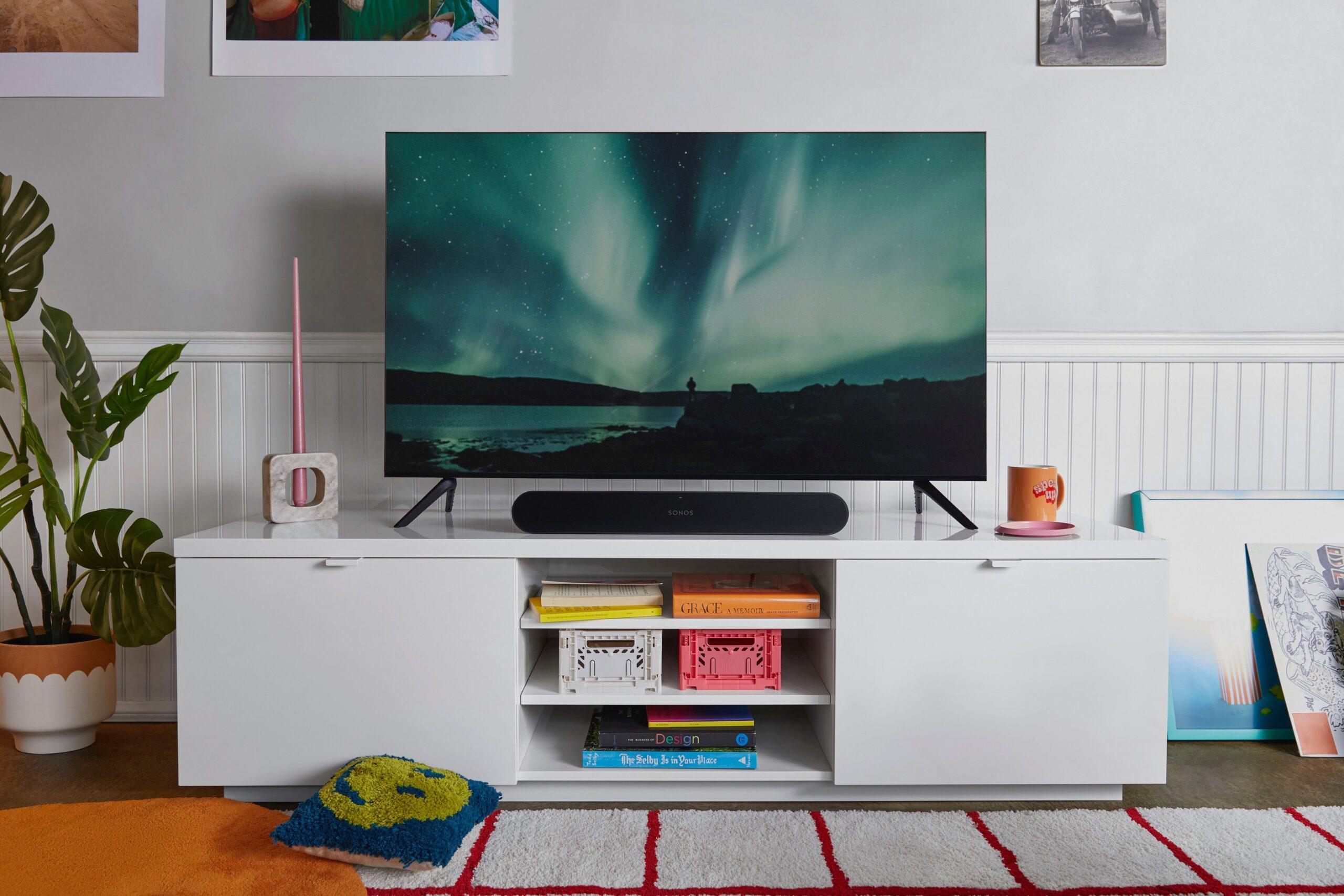
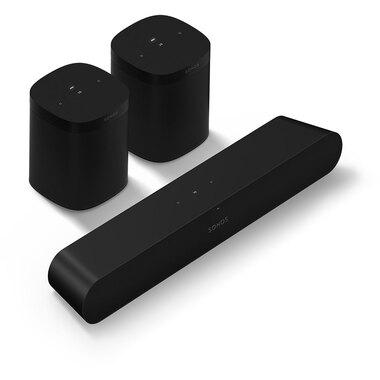
If you've ever watched a movie on your TV and found yourself constantly adjusting the volume—cranking it up for quiet dialogue, then scrambling for the remote when explosions shake the house—you understand why soundbars exist. Modern flat-screen TVs, despite their gorgeous displays, have terrible audio. The speakers are tiny, firing downward or backward, and there's simply no room for proper drivers in those sleek designs.
Soundbars solve this problem, but they come in wildly different flavors. Today, we're comparing two products that couldn't be more different: the Klipsch Flexus Core 300 ($1,199) and the Sonos Ray ($279). One's a premium home theater powerhouse, the other's a compact audio upgrade that prioritizes simplicity. Understanding which approach fits your needs—and budget—will save you from buyer's remorse down the road.
Before diving into specifics, let's establish what separates good soundbars from great ones. The most important factors are audio performance (how many channels, driver quality, bass response), room compatibility (size and acoustic output), connectivity options, and expandability for future upgrades.
Channel configuration is fundamental here. A "2.0" soundbar has two channels (left and right stereo). A "5.1" system adds a center channel for dialogue, two surround channels, and a ".1" subwoofer for bass. "5.1.2" goes further, adding two height channels for Dolby Atmos—that's where sounds can literally come from above you, like helicopters or rain.
Physical room size matters tremendously. A compact soundbar might sound great in a bedroom but get completely overwhelmed in a large living room. Similarly, a massive soundbar could overpower a small space and sound boomy or unbalanced.
The connectivity question has become increasingly important as streaming devices and gaming consoles demand more advanced inputs. HDMI connections support the highest quality audio formats, while optical connections are more limited but work with older equipment.
The Sonos Ray launched in June 2022 as Sonos's most affordable soundbar, designed to bring people into their ecosystem without the complexity of their higher-end models. At $279 (now often available for around $169), it represented a significant shift for Sonos toward accessibility over premium features.
The Klipsch Flexus Core 300, released in 2024, takes the opposite approach. At $1,199, it's positioned as a flagship product that pushes soundbar technology forward. Most notably, it's the world's first soundbar to include Dirac Live room correction—a technology previously reserved for expensive AV receivers costing thousands of dollars.
Since the Ray's 2022 release, the soundbar market has evolved significantly. Dolby Atmos support has become more common even in mid-range products, and room correction technology has started trickling down from high-end separates. The Flexus Core 300 represents this technological advancement, incorporating features that weren't available in soundbars just a few years ago.
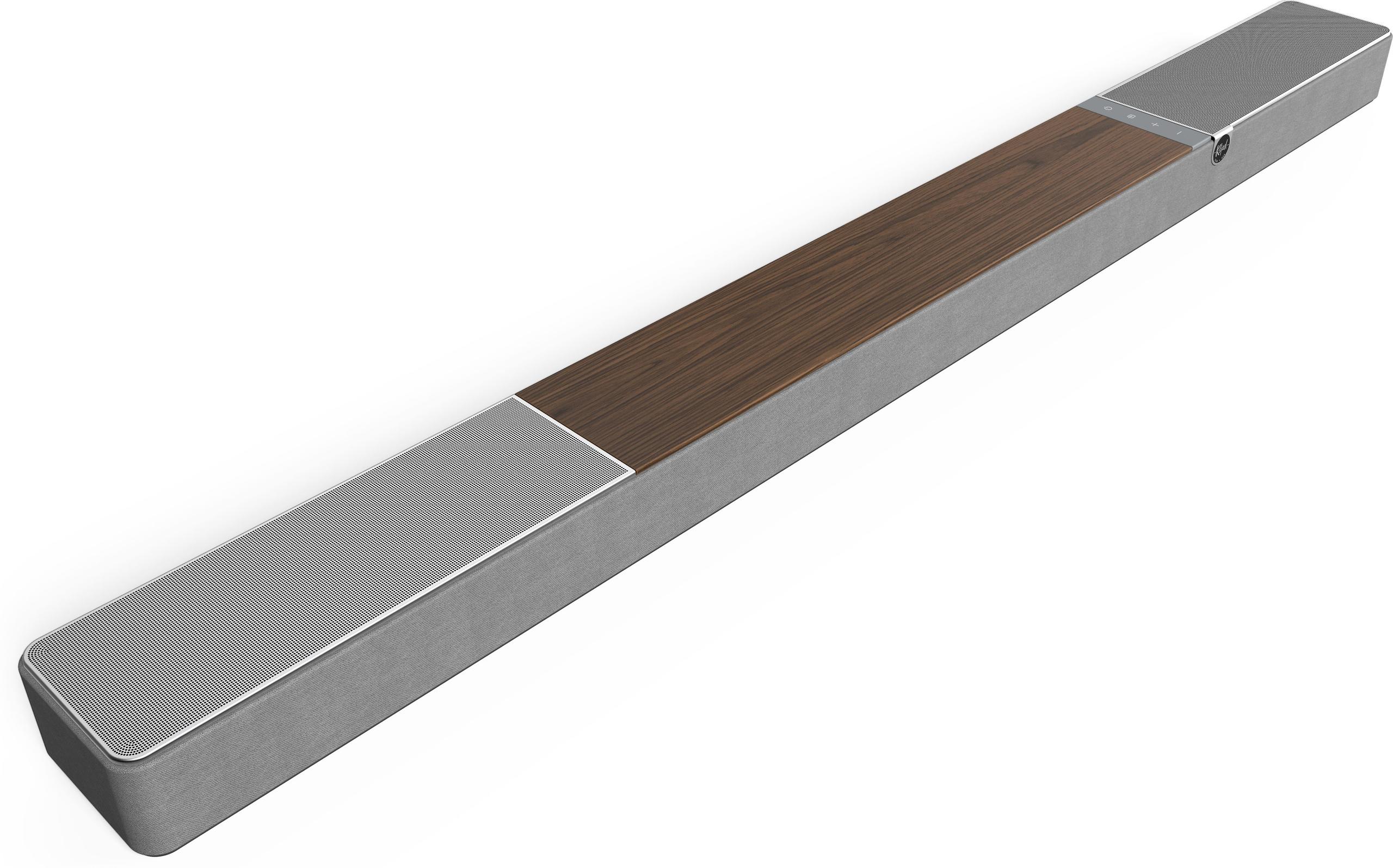
This is where these two products diverge most dramatically. The Klipsch Flexus Core 300 employs a true 5.1.2-channel configuration with 13 individual drivers spread across its 54-inch width. Let me break down what that means in practical terms.
The soundbar includes four front-firing 2.25-inch drivers plus Klipsch's signature horn-loaded tweeter for crystal-clear dialogue. Horn-loading is an old acoustic technique where the tweeter (high-frequency driver) sits behind a horn-shaped waveguide, which amplifies and focuses the sound. This creates exceptional vocal clarity—you'll catch every whisper in a thriller or understand rapid-fire dialogue in comedies without constantly reaching for the remote.
For surround effects, two side-firing drivers bounce sound off your walls to create the impression of speakers behind you. This works surprisingly well in most rooms, though the effect varies depending on your wall materials and furniture placement.
The height channels come from two dedicated up-firing drivers that reflect sound off your ceiling to create Dolby Atmos effects. When done right, this produces genuine overhead audio—rain falling from above, helicopters passing overhead, or debris falling around you during action sequences.
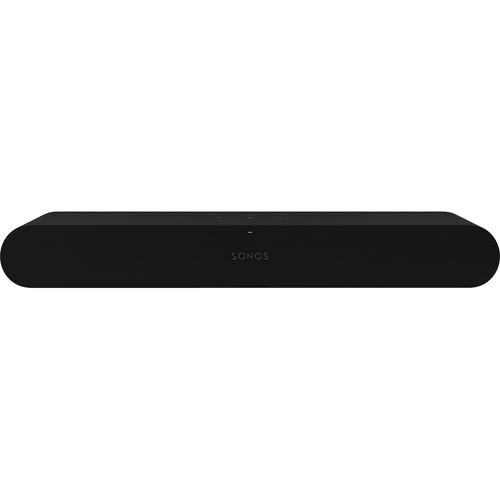
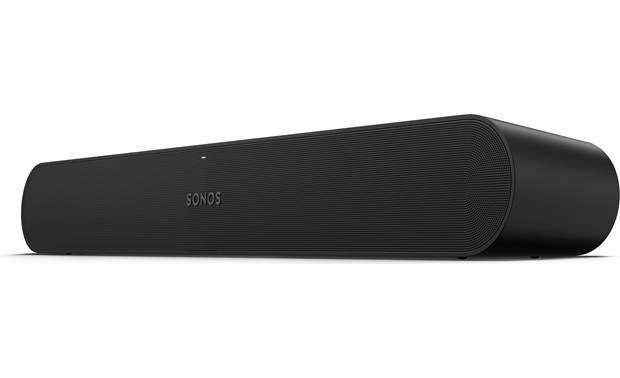
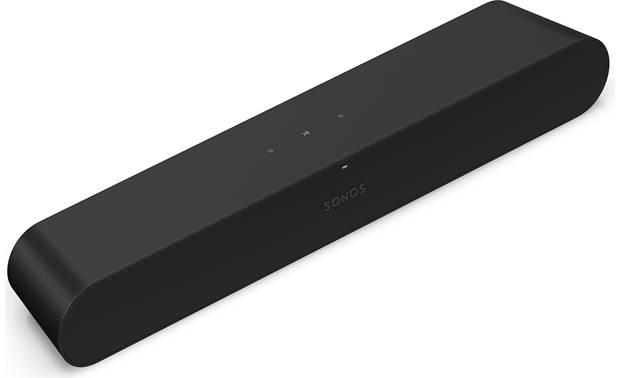
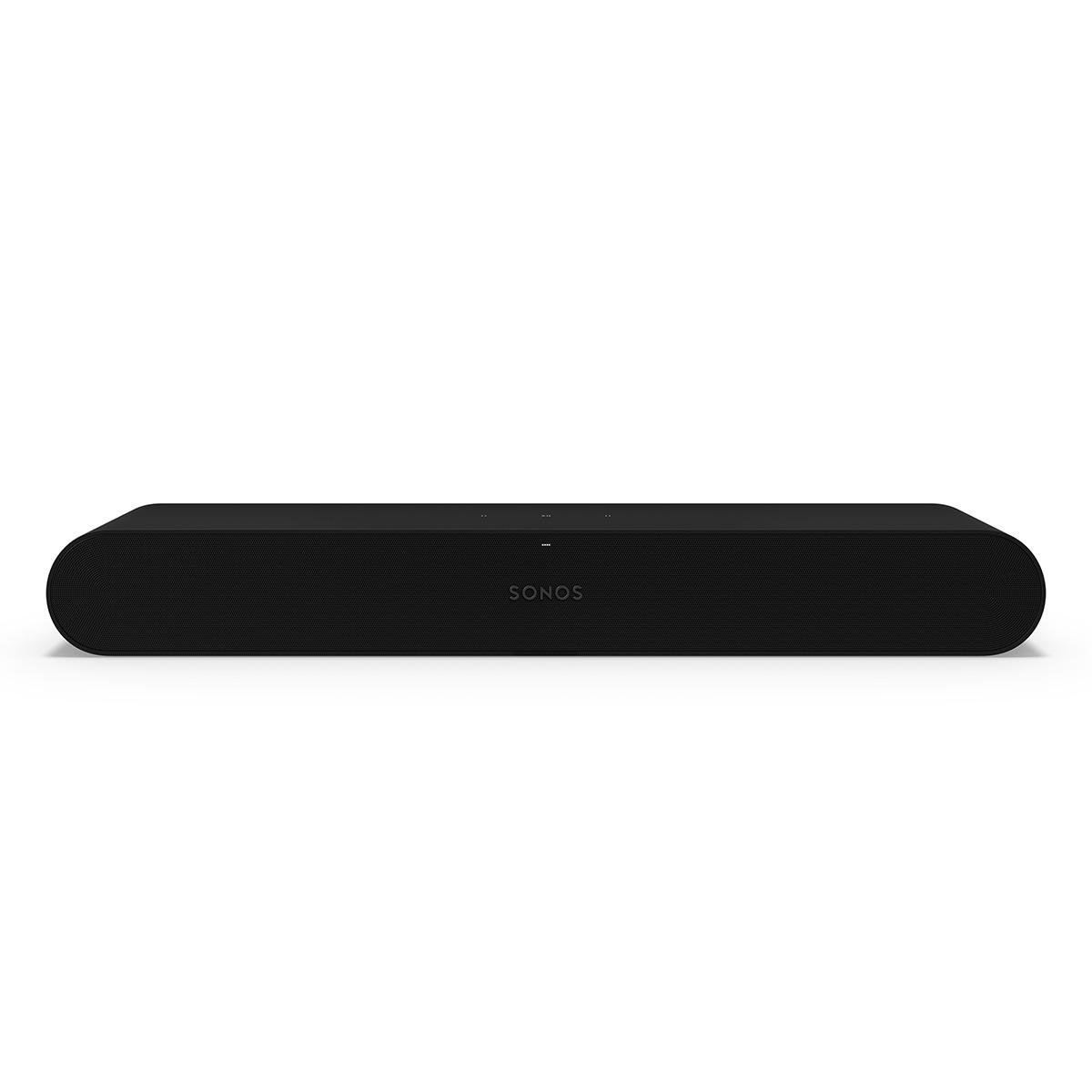
In contrast, the Sonos Ray uses a 2.0 stereo configuration with just four drivers total: two central full-range drivers and two precision-engineered tweeters. There are no dedicated surround or height channels. Instead, Sonos relies on digital signal processing (DSP) to create the illusion of wider sound through psychoacoustic tricks—basically, manipulating phase relationships and frequency response to fool your brain into perceiving sounds coming from locations where there are no actual speakers.
Here's where the difference becomes most apparent. The Klipsch Flexus Core 300 incorporates four built-in 4-inch subwoofers—yes, four separate bass drivers integrated directly into the soundbar. This is unusual and impressive engineering. Most soundbars either skip meaningful bass entirely or require you to place a separate subwoofer somewhere in your room.
These integrated subwoofers extend the frequency response down to 43Hz, which covers most of the bass content in movies and music. For reference, the lowest note on a bass guitar is around 41Hz, so you're getting legitimate deep bass. Users consistently report "chest-thumping" bass that rivals dedicated subwoofer systems, which is remarkable for a single-cabinet solution.
The Sonos Ray, constrained by its compact 22-inch width and 3-inch height, takes a different approach. It includes bass reflex ports—small openings that allow air to move in and out of the cabinet, reinforcing certain bass frequencies through acoustic resonance. Sonos also employs digital processing to enhance perceived bass response.
However, physics is physics. You can't create meaningful bass extension from tiny drivers in a small cabinet. The Ray provides adequate low-end for dialogue and most music, but it won't deliver the visceral impact needed for action movies or bass-heavy music genres. This isn't necessarily a flaw—it depends on your expectations and room size.
The Klipsch Flexus Core 300 supports both Dolby Atmos and DTS:X natively, meaning it can decode these advanced audio formats directly without any external processing. The dedicated up-firing drivers create legitimate height effects that place sounds in three-dimensional space around you.
I've experienced properly calibrated Atmos systems, and when done well, the effect is genuinely immersive. Aircraft fly overhead convincingly, rain seems to fall from above, and even subtle ambient sounds gain spatial placement that draws you deeper into movies. The Flexus Core 300's driver arrangement suggests it can deliver these effects effectively, especially in rooms with standard 8-10 foot ceilings that work well for sound reflection.
The Sonos Ray doesn't support Atmos at all. Its stereo configuration can create some sense of width through processing, but you won't get height effects or true surround sound positioning. This limits its effectiveness with modern movie soundtracks that increasingly use Atmos for creative sound design.
This is perhaps the most significant differentiator between these products. The Klipsch Flexus Core 300 includes Dirac Live room correction technology—a first for any soundbar. Let me explain why this matters.
Every room has acoustic problems. Hard surfaces create reflections, furniture absorbs certain frequencies, and room dimensions cause standing waves (spots where bass sounds louder or quieter). These issues affect how your soundbar actually sounds in your specific space, often dramatically.
Dirac Live uses an included calibration microphone and sophisticated algorithms to measure your room's acoustic response, then applies digital correction to compensate for problems. It adjusts both frequency response (making bass more even, smoothing out harsh frequencies) and timing (ensuring all frequencies arrive at your ears simultaneously).
Professional audio engineers have used Dirac Live in high-end studios and home theaters for years, but it typically costs thousands of dollars when implemented in separate components. Having it built into a soundbar represents a significant technological achievement and provides genuine value for users with challenging room acoustics.
The Sonos Ray includes Trueplay tuning, but only for iPhone users (it uses the iPhone's microphone for measurement). Trueplay provides basic room adaptation—adjusting overall tonal balance based on your room's response—but it's far simpler than Dirac Live's comprehensive correction algorithms.
The connectivity story reveals another fundamental difference in philosophy between these products.
The Klipsch Flexus Core 300 provides comprehensive modern connectivity: HDMI 2.1 with 8K passthrough and eARC (enhanced Audio Return Channel), optical digital input, USB-C, Ethernet, and Bluetooth 5.3. The HDMI 2.1 support is particularly important for gaming, as it enables 4K gaming at 120Hz refresh rates—essential for PlayStation 5 and Xbox Series X owners who want the smoothest possible gaming experience.
eARC (enhanced Audio Return Channel) allows your TV to send high-quality audio back to the soundbar, including lossless formats like Dolby TrueHD and DTS-HD Master Audio. This ensures you get the full audio quality from streaming services and Blu-ray discs.
The Sonos Ray takes a minimalist approach with optical digital input only. This works with virtually any TV made in the last 15 years, ensuring broad compatibility, but it limits audio quality to compressed formats like standard Dolby Digital. You won't get the highest-quality lossless audio that's increasingly available on streaming platforms.
This reflects Sonos's design philosophy: prioritize simplicity and reliability over cutting-edge features. For many users, especially those primarily watching streaming content, this limitation won't matter. But for home theater enthusiasts or gamers, it's a significant constraint.
Both products offer expansion possibilities, but in very different directions.
The Klipsch Flexus Core 300 is designed to grow into a complete home theater system. You can add Flexus Surround 200 wireless speakers for true rear surround sound and up to two Flexus Sub 200 wireless subwoofers for even more bass impact. The system uses Klipsch's proprietary wireless technology to maintain low latency and high audio quality across all components.
This modular approach is brilliant for users who want to start with a soundbar and expand over time. You might begin with just the Core 300, then add surrounds for a 7.1.2 system, then incorporate subwoofers for maximum impact. Each addition enhances the system without requiring you to replace existing components.
The Sonos Ray integrates into the broader Sonos multi-room ecosystem. You can group it with other Sonos speakers throughout your home for synchronized playback, stream different music to different rooms, or use it as part of a whole-home audio system. This is incredibly convenient for users who prioritize multi-room functionality over home theater performance.
However, the Ray can't be expanded with dedicated home theater components. You can't add matching surrounds or a subwoofer specifically designed to work with it for movie watching.
In spacious environments, the Klipsch Flexus Core 300 truly shines. Its maximum output of 106 dB means it can fill large rooms without strain, while the four integrated subwoofers provide the bass impact necessary for cinematic immersion. The Dirac Live calibration becomes especially valuable in larger rooms, which typically have more complex acoustic challenges.
I've experienced similar high-output systems in large rooms, and the difference is immediately apparent. Dialogue remains clear even during explosive action sequences, bass has real impact without becoming boomy, and Atmos effects maintain their precision across a wide seating area.
The Sonos Ray would struggle in such environments. Its drivers simply don't have the output capability or bass extension needed to create convincing cinematic impact in large spaces. You'd find yourself constantly adjusting volume and likely feeling disappointed during action sequences.
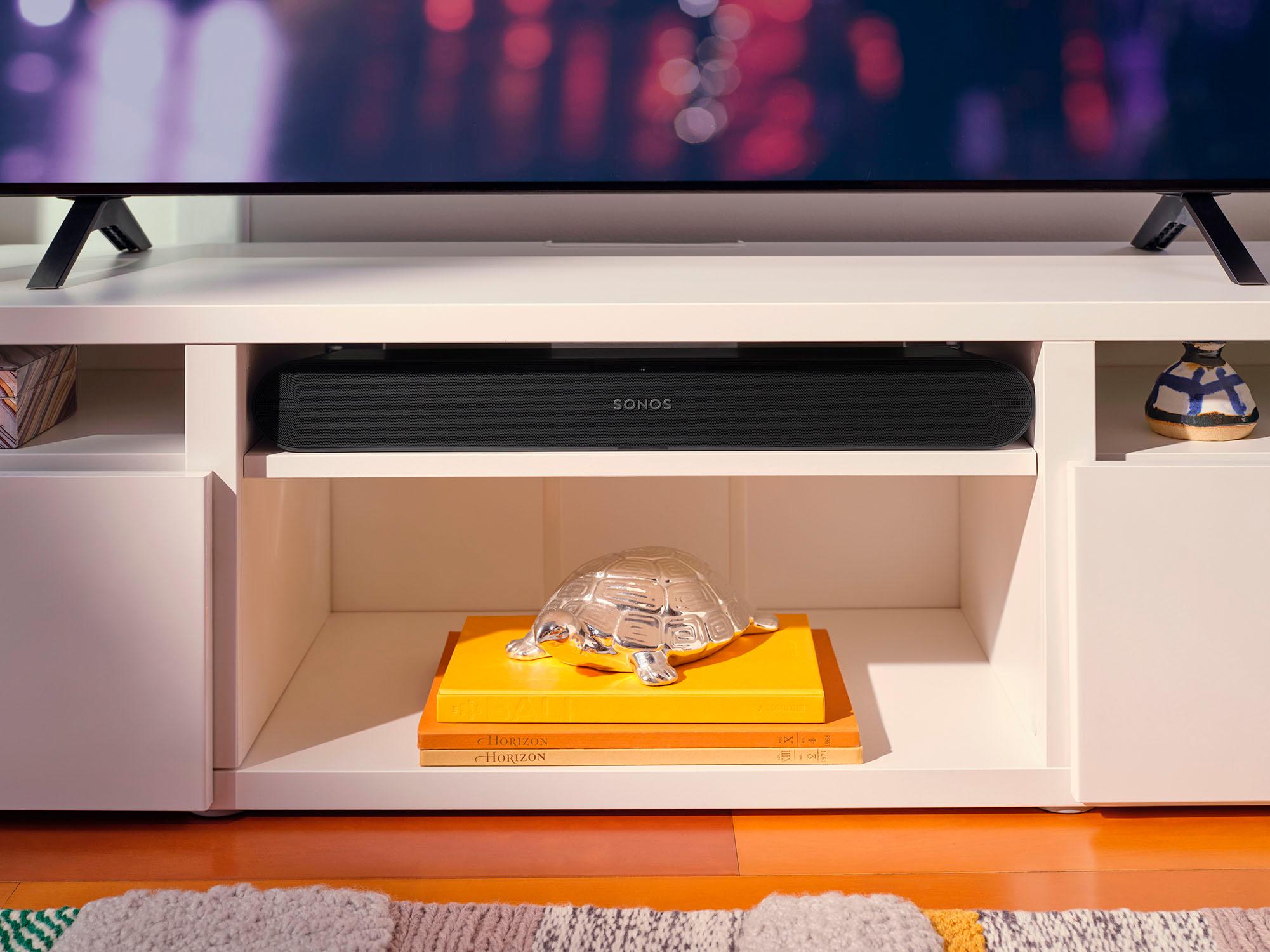
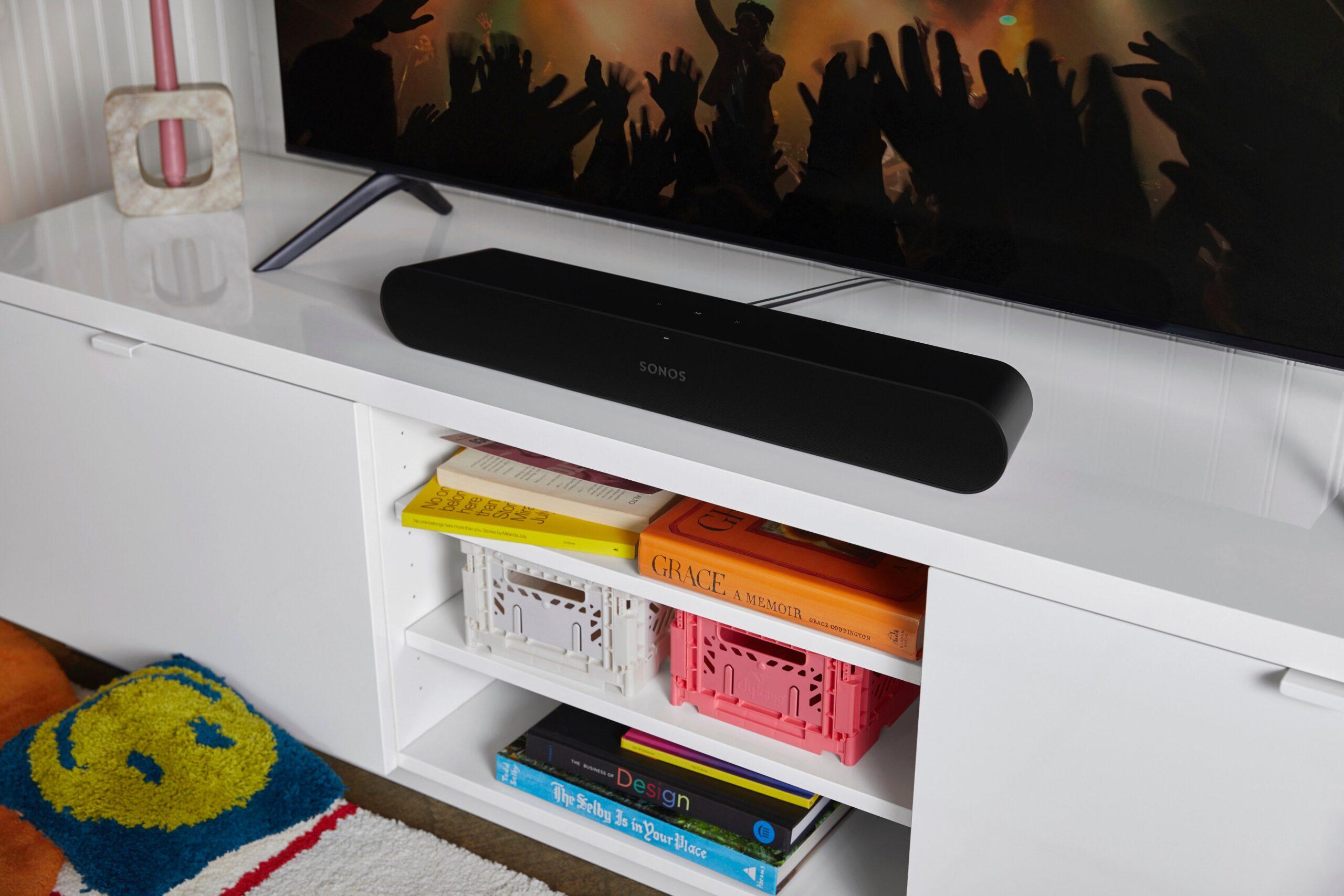
Here, the Sonos Ray finds its sweet spot. In compact spaces, its 22-inch width fits beautifully into most entertainment centers without overwhelming the room visually. Its output capability is perfectly matched to smaller spaces, providing clear dialogue enhancement and satisfying stereo imaging without overpowering the environment.
The Ray's compact design also means it won't create the bass boom that sometimes plagues larger soundbars in small rooms. Its bass response, while limited, is well-balanced for intimate listening.
The Klipsch Flexus Core 300, at 54 inches wide and weighing 35 pounds, might be physically overwhelming in smaller rooms. While its performance would still be superior, you might be paying for capability you can't fully utilize.
If whole-home audio synchronization is your priority, the Sonos Ray provides seamless integration with existing Sonos systems. You can start music in your living room and have it follow you to the kitchen, bedroom, or outdoor speakers without missing a beat. The Sonos app makes this process intuitive and reliable.
The Klipsch Flexus Core 300 supports major streaming platforms (AirPlay 2, Google Cast, Spotify Connect) but lacks the deep multi-room integration that Sonos has perfected over many years.
At $1,199, the Klipsch Flexus Core 300 initially seems expensive, but consider what you're getting: Dirac Live room correction (typically $500-1000 when purchased separately), the equivalent of four subwoofer drivers, dedicated Atmos processing, and build quality that suggests long-term reliability. For dedicated home theater enthusiasts, this represents strong value compared to assembling equivalent performance from separate components.
At $279 (often $169 on sale), the Sonos Ray provides excellent value for its intended purpose: upgrading TV audio with minimal complexity. However, users seeking cinematic performance will quickly outgrow its capabilities, potentially requiring replacement as expectations evolve.
Consider the total cost of ownership. The Klipsch Flexus Core 300 is a long-term investment that can grow with your needs through wireless expansion. The Sonos Ray serves its purpose well but offers limited upgrade paths within the home theater context.
Choose the Klipsch Flexus Core 300 if you have a dedicated home theater or large living space, prioritize immersive Dolby Atmos and deep bass, want audiophile-grade room correction, prefer a complete expandable system, need modern connectivity for gaming or high-quality streaming, and can justify the $1,199 investment for premium performance.
Choose the Sonos Ray if you need a simple TV audio upgrade for small to medium rooms, are already invested in the Sonos ecosystem, prioritize compact size and minimal setup, have budget constraints, value multi-room audio synchronization over home theater performance, and primarily watch dialogue-heavy content rather than action movies.
The fundamental question isn't which product is "better"—they serve entirely different purposes. The Flexus Core 300 is a legitimate home theater system designed for audio enthusiasts who want the best possible performance from a soundbar format. The Ray is an elegant TV audio upgrade that prioritizes simplicity, reliability, and ecosystem integration.
Your choice should align with your room size, performance expectations, budget, and long-term audio goals. Both products excel within their intended niches, but choosing the wrong one for your situation will lead to disappointment. Take time to honestly assess your needs, room characteristics, and how you actually use your entertainment system. The right choice will serve you well for years to come.
| Klipsch Flexus Core 300 ($1,199) | Sonos Ray ($279) |
|---|---|
| Channel Configuration - Determines surround sound capability and immersion | |
| 5.1.2 channels with 13 individual drivers (true Atmos with dedicated height channels) | 2.0 stereo with 4 drivers (no surround or height effects) |
| Bass Performance - Critical for movie impact and music enjoyment | |
| Four built-in 4" subwoofers extending to 43Hz (eliminates need for separate sub) | Bass reflex ports with digital enhancement (adequate for dialogue, limited for action) |
| Dolby Atmos Support - Enables overhead sound effects in modern movies | |
| Native Dolby Atmos/DTS:X with dedicated up-firing drivers | No Atmos support (stereo processing only) |
| Room Correction Technology - Optimizes sound for your specific room acoustics | |
| Dirac Live with included microphone (audiophile-grade calibration) | Trueplay tuning (iOS only, basic room adaptation) |
| Connectivity Options - Determines compatibility with modern devices and audio quality | |
| HDMI 2.1 eARC, 8K passthrough, optical, USB-C, Ethernet, Bluetooth 5.3 | Optical input only (limits audio quality to compressed formats) |
| Physical Size - Important for room fit and visual integration | |
| 54" W × 3" H × 5" D, 35 lbs (requires substantial space) | 22" W × 3" H × 4" D, 4 lbs (fits most TV stands) |
| Maximum Output - Determines room-filling capability | |
| 106 dB (suitable for large rooms 200+ sq ft) | Moderate output (ideal for small-medium rooms under 150 sq ft) |
| Expandability - Ability to upgrade system over time | |
| Wireless surround speakers and up to 2 subwoofers (grows into full theater) | Sonos multi-room integration (whole-home audio, not theater expansion) |
| Best Use Case - Who should buy this product | |
| Large room home theaters, audiophiles wanting premium performance | Small rooms needing simple TV audio upgrade, Sonos ecosystem users |
The Klipsch Flexus Core 300 ($1,199) is significantly better for large rooms. With a maximum output of 106 dB and four built-in 4" subwoofers, it can fill spaces over 200 square feet with rich, room-filling sound. The Sonos Ray ($279) is designed for smaller spaces under 150 square feet and would struggle to provide adequate volume and bass in larger rooms.
No, the Sonos Ray does not support Dolby Atmos. It's a 2.0 stereo soundbar that uses digital processing to create wider sound but cannot produce height effects. The Klipsch Flexus Core 300 offers native Dolby Atmos and DTS:X support with dedicated up-firing drivers for true overhead sound effects.
The Klipsch Flexus Core 300 ($1,199) has dramatically better bass performance with four integrated 4" subwoofers that extend down to 43Hz. This eliminates the need for a separate subwoofer in most rooms. The Sonos Ray ($279) relies on bass reflex ports and digital processing, providing adequate bass for dialogue but limited impact for action movies.
The Klipsch Flexus Core 300 costs $1,199 compared to the Sonos Ray at $279 (often $169 on sale) - about a $1,000 difference. The price gap reflects vastly different capabilities: the Klipsch offers true surround sound, Atmos support, advanced room correction, and premium build quality. The Sonos provides excellent value for basic TV audio improvement but lacks advanced features.
The Sonos Ray ($279) is much easier to set up with just an optical cable connection and simple app-guided configuration. The Klipsch Flexus Core 300 ($1,199) offers more connection options but requires more complex setup, especially when using the Dirac Live room correction feature that involves microphone calibration.
Both can be expanded differently. The Klipsch Flexus Core 300 can add dedicated wireless surround speakers and subwoofers to create a full home theater system. The Sonos Ray integrates into Sonos's multi-room ecosystem for whole-home audio but cannot add theater-specific components like surrounds or subwoofers.
The Sonos Ray ($279) is ideal for small apartments with its compact 22" width and balanced sound output that won't overpower small spaces. The Klipsch Flexus Core 300 ($1,199) at 54" wide might be physically overwhelming in small rooms, though it would still deliver superior performance if space and budget allow.
The Sonos Ray works with virtually any TV from the last 15 years through its optical connection. The Klipsch Flexus Core 300 offers both HDMI and optical connections, so it works with older TVs but you'll get the best performance with newer TVs that support HDMI eARC for high-quality audio formats.
Both excel at dialogue clarity but through different approaches. The Klipsch Flexus Core 300 ($1,199) uses a dedicated center channel with horn-loaded tweeter technology plus Dirac Live room correction for exceptional vocal reproduction. The Sonos Ray ($279) prioritizes dialogue enhancement in its tuning and receives consistent praise for voice clarity despite lacking a dedicated center channel.
The Klipsch Flexus Core 300 features premium construction with metal and wood components, weighing 35 pounds, suggesting robust build quality designed for long-term use. The Sonos Ray at 4 pounds uses quality materials but simpler construction. Both companies offer standard one-year warranties, though Klipsch's higher price point suggests expectations of longer product lifespan.
The Klipsch Flexus Core 300 ($1,199) is significantly better for gaming with HDMI 2.1 support enabling 4K gaming at 120Hz, low-latency audio processing, and immersive Atmos effects that enhance spatial awareness in games. The Sonos Ray ($279) lacks HDMI connectivity and advanced gaming features, though it provides adequate audio improvement for casual gaming.
If you already own Sonos speakers, the Sonos Ray integrates seamlessly for multi-room audio and synchronized playback throughout your home. The Klipsch Flexus Core 300 supports major streaming platforms (AirPlay 2, Google Cast) but lacks deep smart home integration. Choose the Sonos Ray for ecosystem compatibility or the Klipsch Flexus Core 300 for superior home theater performance regardless of existing setup.
We've done our best to create useful and informative comparisons to help you decide what product to buy. Our research uses advanced automated methods to create this comparison and perfection is not possible - please contact us for corrections or questions. These are the sites we've researched in the creation of this article: crutchfield.com - whathifi.com - avnirvana.com - hometechnologyreview.com - ecoustics.com - gearpatrol.com - klipsch.com - avsforum.com - youtube.com - avsforum.com - listenup.com - chowmain.software - klipsch.com - novis.ch - avsforum.com - klipsch.ca - lefflers.se - abt.com - sweetwater.com - wifihifi.com - klipsch.com - dirac.com - techradar.com - soundandvision.com - youtube.com - appleinsider.com - youtube.com - sonos.com - cnet.com - howtogeek.com - pcrichard.com - en.community.sonos.com - epicsystems.tech - en.community.sonos.com - cepro.com - videoandaudiocenter.com

Privacy Policy
Terms and Conditions - Affiliate Policy
Home Security
© Copyright 2008-2026.
11816 Inwood Rd #1211, Dallas, TX 75244