



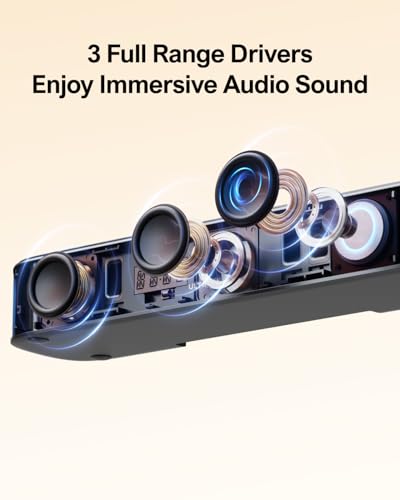
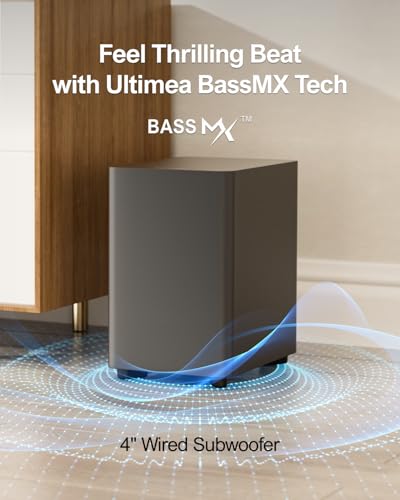
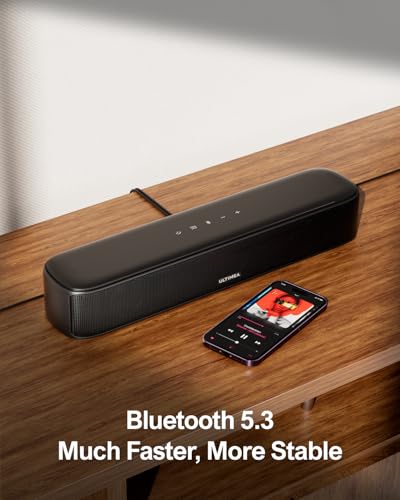
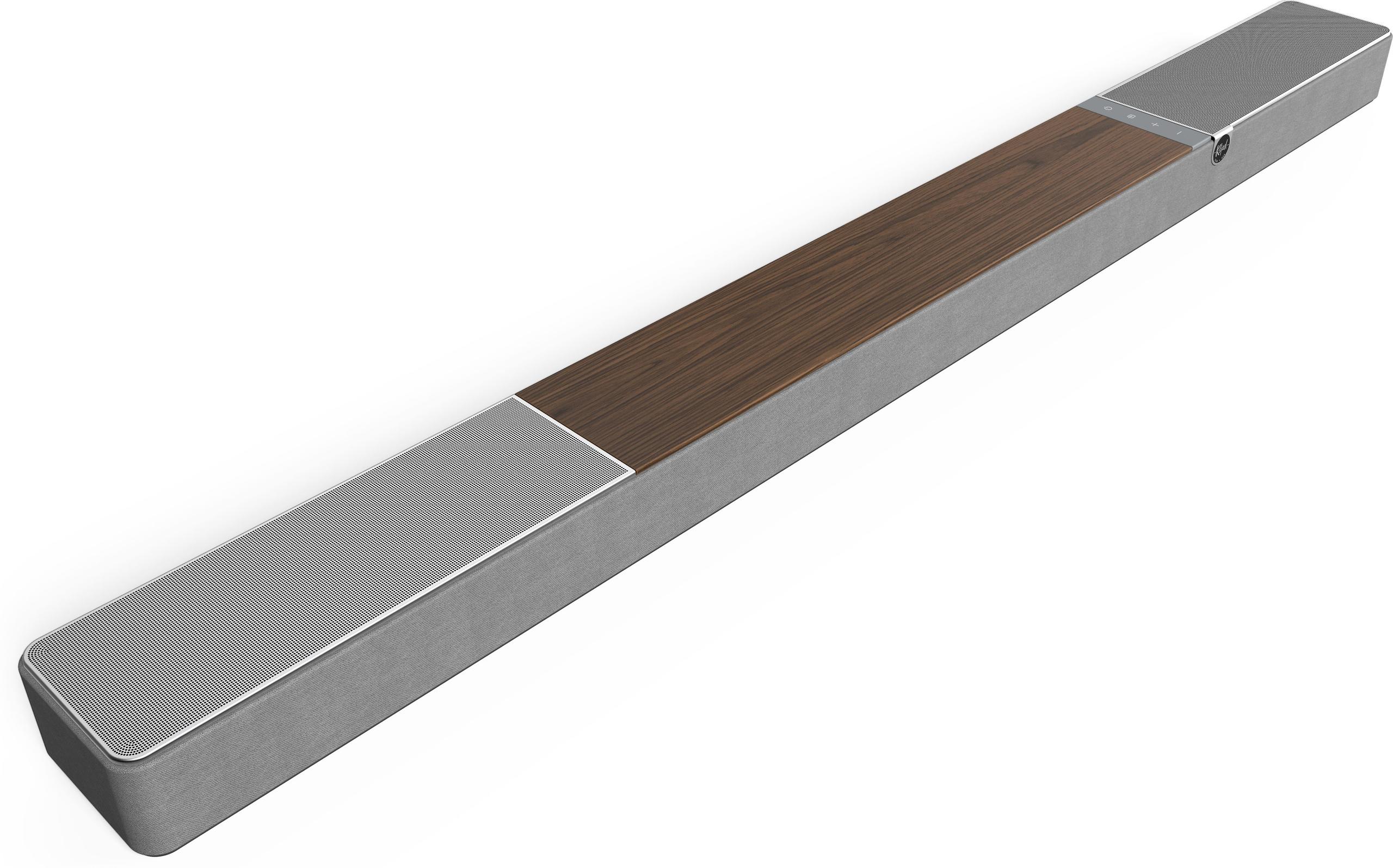
When you're shopping for a soundbar to upgrade your TV's built-in speakers, you'll quickly discover that the market splits into vastly different territories. On one side, you have budget-friendly systems that pack in lots of physical speakers. On the other, premium single-bar solutions promise advanced audio processing and modern connectivity. The Ultimea Aura A40 7.1 Channel Soundbar System and Klipsch Flexus Core 300 Soundbar represent these two distinct philosophies perfectly.
At the time of writing, these products sit at opposite ends of the price spectrum—the Ultimea costs roughly what you'd spend on a nice dinner for two, while the Klipsch demands a more substantial investment comparable to a weekend getaway. This dramatic price difference reflects fundamentally different approaches to home theater audio, and understanding these differences will help you make the right choice for your living room.
Before diving into these specific products, it's worth understanding what separates today's soundbars from the basic stereo bars of a decade ago. The biggest game-changer has been the introduction of object-based audio formats like Dolby Atmos and DTS:X. These technologies don't just send audio to left, center, and right channels—they place specific sounds in three-dimensional space around you. Imagine hearing a helicopter move from behind your left shoulder to overhead and then in front of you. That's what object-based audio can accomplish when properly implemented.
Room correction represents another major advancement. Traditional speakers sound different in every room because of reflections, furniture, and room dimensions. Advanced room correction systems use microphones to measure how your room affects sound, then adjust the speaker output to compensate. It's like having a professional audio engineer tune your system for your specific space.
The Ultimea Aura A40, released in 2023, takes a traditional approach by giving you actual surround speakers that you place around your room. The Klipsch Flexus Core 300, also from 2023, represents the cutting edge of single-bar technology with professional-grade room correction that was previously only available in high-end AV receivers.
This comparison really comes down to a fundamental question: do you want physical speakers around your room, or can advanced processing from a single bar satisfy your surround sound needs?
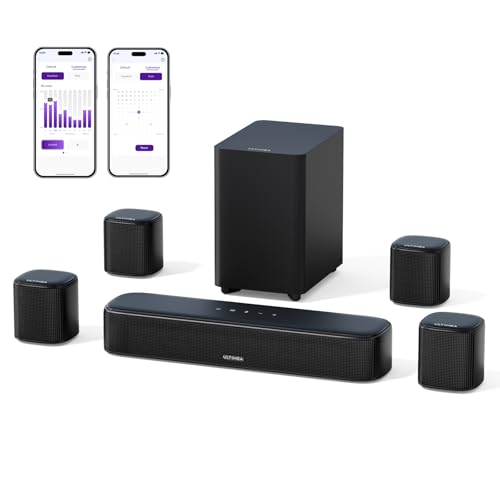
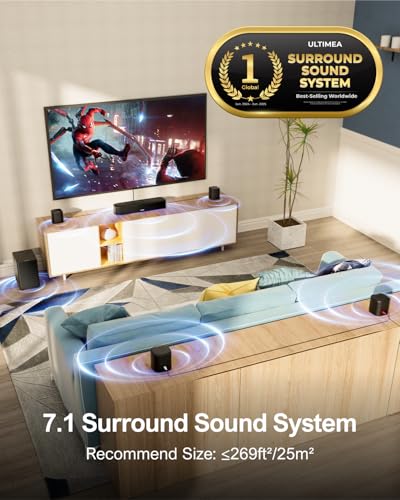
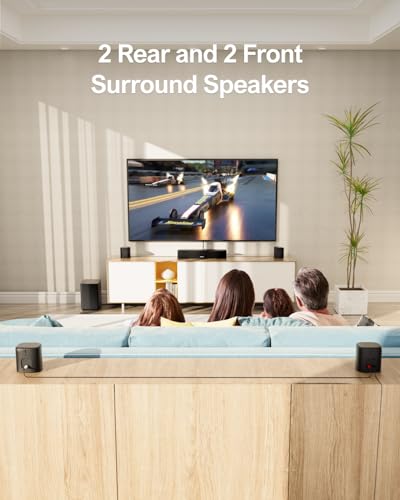
The Ultimea Aura A40 delivers what many audio enthusiasts consider the "proper" way to do surround sound. You get four separate surround speakers—two that go near the front of your room and two for the rear—plus a standalone subwoofer for bass. When you're watching an action movie and hear footsteps creeping up behind you, that sound is actually coming from speakers positioned behind your seating area. There's no processing trickery involved; it's just physics working in your favor.
Setting up the Ultimea system requires running cables to four different locations, which can be challenging depending on your room layout. The rear speakers connect to each other with wire, but the rear-right speaker then connects wirelessly to the main soundbar. It's a hybrid approach that reduces some cable runs while maintaining the authentic surround experience.
The Klipsch Flexus Core 300 takes the opposite approach. This 54-inch soundbar houses thirteen separate drivers engineered to create surround effects through careful positioning and advanced processing. It includes up-firing speakers that bounce sound off your ceiling to create height effects for Dolby Atmos content. Side-firing drivers help widen the soundstage beyond the physical width of the bar.
From our research into user experiences and professional reviews, the physical approach of the Ultimea creates more convincing surround effects in most room configurations. You're not limited to sitting in a specific sweet spot, and the separation between channels is more distinct. However, the Klipsch offers a cleaner installation and can still create impressive spatial effects, especially for height channels where ceiling reflections actually work quite well.
Here's where the technical differences become crucial for your actual listening experience. The Klipsch Flexus Core 300 can decode true Dolby Atmos and DTS:X soundtracks, which means it receives the original audio objects that sound engineers placed in three-dimensional space during post-production. When you're streaming a movie with Atmos audio through Netflix or playing a 4K Blu-ray, the Klipsch processes each audio object as intended by the content creators.
The Ultimea Aura A40, despite having more physical speakers, cannot decode these modern audio formats. Instead, it takes stereo or basic surround input and uses its SurroundX processing to create virtual surround effects. Think of it like the difference between reading the original manuscript of a book versus reading a translation—you might get the general idea, but some nuances are lost.
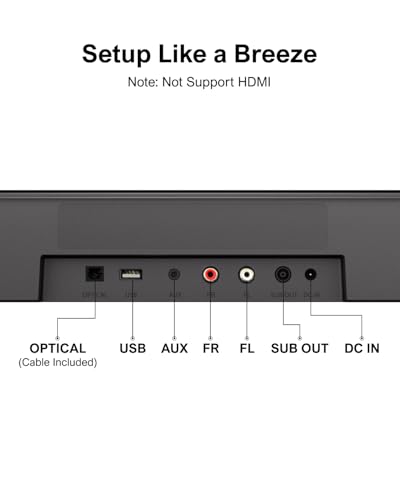
This limitation becomes significant when you consider that most streaming services now offer Atmos content, and gaming consoles like the PlayStation 5 and Xbox Series X output these advanced formats. The Ultimea simply cannot access this higher-quality audio information because it lacks HDMI connectivity entirely.
However, the Ultimea compensates with extensive customization options. Its companion app offers 121 different equalizer presets tailored for specific music genres and content types, plus a 10-band parametric equalizer for detailed frequency adjustment. If you enjoy tweaking audio settings to perfect your listening experience, the Ultimea provides more hands-on control than most systems at any price point.
The connectivity differences between these systems highlight how rapidly home theater technology has evolved. The Klipsch Flexus Core 300 includes HDMI 2.1 with support for 8K video passthrough at 60Hz and 4K at 120Hz—essential features for modern gaming and future-proofing your setup. Its eARC (Enhanced Audio Return Channel) connection can handle lossless audio formats that optical cables simply cannot carry.
Beyond HDMI, the Klipsch offers comprehensive network connectivity including Wi-Fi, Ethernet, and integration with streaming services like Spotify, TIDAL, and Apple AirPlay. You can stream music directly to the soundbar without involving your TV at all.
The Ultimea Aura A40 deliberately focuses on legacy connections—optical digital audio, 3.5mm auxiliary input, and USB for playing MP3 files. While this limits access to the highest-quality audio formats, it ensures compatibility with virtually any TV manufactured in the last fifteen years. If you have an older television without eARC support, the Ultimea might actually be more compatible with your existing setup.
This connectivity difference has practical implications for gaming. Modern consoles can output spatial audio that the Klipsch will decode and render properly, while the Ultimea will process the same audio as basic stereo with virtual enhancement. For competitive gaming where precise audio positioning matters, this could affect your ability to locate enemies or environmental cues.
Both systems approach bass reproduction differently, and the results vary depending on your room and preferences. The Ultimea Aura A40 includes a separate 4-inch subwoofer that you can position independently for optimal bass response. This dedicated sub can extend down to 65Hz according to specifications, and its physical separation from the main soundbar eliminates vibrations that might rattle your TV stand.
The Klipsch Flexus Core 300 integrates four 4-inch woofers directly into the soundbar chassis. While this creates a cleaner installation, our research into user feedback suggests these built-in subs can cause the entire soundbar to vibrate at higher volume levels. However, the integrated approach does offer one advantage—the Klipsch can extend deeper into bass frequencies, reaching down to 43Hz, which provides more substantial low-end impact for movie soundtracks.
For most rooms, a dedicated subwoofer like the Ultimea provides offers better bass control and positioning flexibility. You can tuck the sub into a corner where room boundaries reinforce low frequencies, or experiment with placement to minimize standing waves (those annoying spots where bass either booms or disappears entirely).
The Klipsch Flexus Core 300 distinguishes itself as the world's first soundbar to include Dirac Live room correction—the same technology used in high-end AV receivers costing thousands of dollars. This system uses an included measurement microphone to analyze how your room affects sound, then applies digital filters to correct both frequency response and phase alignment.
In practical terms, Dirac Live can tighten bass response, improve vocal clarity, and create better stereo imaging by compensating for room reflections and furniture placement. The included license corrects frequencies up to 500Hz, with a full-bandwidth upgrade available for purchase. Professional reviews consistently praise Dirac Live's effectiveness, though the setup process requires some technical patience.
The Ultimea Aura A40 relies on manual adjustment through its extensive app-based controls. While you won't get automatic room correction, you do get more direct control over the listening experience. The system includes thirteen adjustable surround levels, allowing you to balance the four surround speakers for your specific seating arrangement. Some audio enthusiasts actually prefer this hands-on approach, as it allows for more personalized tuning.
Based on our analysis of professional reviews and user feedback, these systems excel in different scenarios. The Ultimea Aura A40 creates more convincing surround effects for traditional 5.1 and 7.1 content, particularly older movies and TV shows mixed in discrete surround formats. The physical speaker placement eliminates sweet spot limitations—every seat in your room gets proper surround effects.
For modern streaming content and gaming, the Klipsch Flexus Core 300 provides superior performance due to its format compatibility and advanced processing. Dolby Atmos content sounds significantly more immersive when properly decoded rather than virtualized. The height effects from up-firing drivers work particularly well for overhead audio like rain, aircraft, or explosions.
Dialogue clarity represents another key performance metric. The Klipsch includes a dedicated center channel with Klipsch's signature horn-loaded tweeter, which provides excellent vocal reproduction even during loud action sequences. The Ultimea handles dialogue through its virtual processing, which can sometimes result in voices getting lost in the mix during complex soundtracks.
Maximum volume capabilities differ substantially between these systems. The Ultimea can achieve over 98 dB sound pressure level with its 330W total power, making it suitable for larger rooms and party-level listening. The Klipsch, despite claims of 106 dB capability, typically peaks around 96 dB in real-world testing—still plenty loud for most home theater applications, but not quite matching the Ultimea's raw output.
For serious home theater enthusiasts, expandability becomes an important consideration. The Klipsch Flexus Core 300 can grow with your system through optional wireless surround speakers and an external subwoofer connection. This modular approach allows you to start with just the soundbar and add components as your budget and room setup evolve.
The Ultimea Aura A40 arrives as a complete system with no official expansion options. While this means you get everything upfront, it also limits future upgrades. However, for many users, the included seven speakers and subwoofer provide sufficient coverage for years of enjoyment.
Both systems work well in dedicated home theater rooms, but they serve different priorities. The Klipsch suits users who want cutting-edge features and format compatibility, while the Ultimea appeals to those who prioritize authentic surround speaker placement and extensive manual control.
After extensively researching user experiences and professional evaluations, clear usage patterns emerge for each system. The Ultimea Aura A40 excels for users with older TVs, limited budgets, and rooms where running speaker cables isn't problematic. It provides authentic surround sound placement and extensive customization at an exceptional value point.
The Klipsch Flexus Core 300 targets users with modern TVs, gaming consoles, and streaming-focused viewing habits. Its advanced processing, room correction, and format compatibility justify the premium pricing for users who prioritize technical excellence and clean installation.
Consider your primary content sources when deciding. If you mainly watch broadcast TV, older movies, and basic streaming content, the Ultimea's physical surround speakers will provide more immersive effects than virtual processing. If you stream lots of modern content, game on current consoles, or plan to upgrade your TV in the coming years, the Klipsch's advanced connectivity and format support make it the more future-proof choice.
Room logistics also matter significantly. The Ultimea requires cable management and multiple power outlets for optimal placement. The Klipsch needs just one power connection and works well in minimalist living spaces where multiple speakers would create visual clutter.
Ultimately, both systems succeed at their intended purposes. The Ultimea Aura A40 democratizes multi-speaker surround sound for budget-conscious buyers, while the Klipsch Flexus Core 300 brings professional-grade features to the soundbar format. Your choice should align with your technical requirements, aesthetic preferences, and long-term home theater plans.
| Ultimea Aura A40 7.1 Channel Soundbar System | Klipsch Flexus Core 300 Soundbar |
|---|---|
| Audio Format Support - Critical for modern streaming and gaming compatibility | |
| Virtual 7.1 processing only (no Dolby Atmos/DTS:X decoding) | True Dolby Atmos, DTS:X, Dolby TrueHD decoding |
| Speaker Configuration - Determines surround sound authenticity | |
| Physical: Soundbar + 4 discrete surround speakers + separate subwoofer | Single bar: 13 drivers (4 front, 2 up-firing, 2 side-firing, 4 integrated subs) |
| HDMI Connectivity - Essential for lossless audio and modern devices | |
| None (optical, aux, USB only) | HDMI 2.1 with 8K/4K 120Hz passthrough + eARC |
| Room Correction - Automatically optimizes sound for your space | |
| Manual EQ adjustment with 121 presets + 10-band equalizer | Dirac Live professional room correction with measurement mic |
| Bass Extension - Lower frequencies provide more impactful movie experience | |
| 65Hz (separate 4" subwoofer with flexible placement) | 43Hz (four integrated 4" woofers in soundbar chassis) |
| Maximum Volume - Important for larger rooms and dynamic content | |
| >98 dB SPL with 330W peak power | 96 dB SPL in practice (advertised 106 dB) |
| Streaming Integration - Modern wireless connectivity options | |
| Bluetooth 5.3 only | Wi-Fi, Bluetooth 5.3, AirPlay 2, Google Cast, Spotify Connect |
| Setup Complexity - Installation and cable management requirements | |
| Complex: 4 surround speakers require cable runs and positioning | Simple: Single soundbar with optional wireless expansion |
| Customization Control - Audio tuning flexibility for personal preferences | |
| Extensive: 13 surround levels, 6 modes, 121 EQ presets, OTA updates | Professional: Dirac Live calibration + 3-band EQ with presets |
| Expandability - Future upgrade options | |
| Complete system (no official expansion options) | Modular: Add wireless surrounds and external subwoofer |
| Price Category - Value positioning in soundbar market | |
| Budget-friendly with complete multi-speaker package | Premium investment with advanced processing technology |
The Ultimea Aura A40 provides more authentic surround sound through its four physical surround speakers that you place around your room. This creates genuine 360-degree audio positioning. The Klipsch Flexus Core 300 uses advanced virtual processing with up-firing and side-firing drivers to simulate surround effects from a single bar. For traditional surround sound authenticity, the Ultimea wins, but the Klipsch offers cleaner installation and better format compatibility.
Only the Klipsch Flexus Core 300 supports true Dolby Atmos and DTS:X decoding, making it compatible with modern streaming services and gaming consoles. The Ultimea Aura A40 uses virtual processing to enhance stereo audio but cannot decode these advanced formats due to its lack of HDMI connectivity. For modern content with object-based audio, the Klipsch provides superior compatibility.
The Klipsch Flexus Core 300 is significantly easier to install, requiring only one power connection and HDMI cable to your TV. The Ultimea Aura A40 requires running cables to four different surround speaker locations, managing multiple power connections, and careful speaker positioning. If you want minimal installation complexity, the Klipsch is the clear choice.
The Klipsch Flexus Core 300 offers comprehensive modern connectivity including HDMI 2.1 with eARC, Wi-Fi, Bluetooth 5.3, AirPlay 2, and Google Cast. The Ultimea Aura A40 is limited to optical digital, 3.5mm auxiliary, USB, and Bluetooth 5.3 connections—no HDMI at all. The Klipsch provides much better compatibility with modern TVs and devices.
Both systems approach bass differently. The Ultimea Aura A40 includes a separate 4-inch subwoofer that can be positioned independently for optimal bass response. The Klipsch Flexus Core 300 integrates four 4-inch woofers into the soundbar itself, extending deeper to 43Hz compared to the Ultimea's 65Hz. The Klipsch provides deeper bass extension, while the Ultimea offers more flexible bass positioning.
The Klipsch Flexus Core 300 is superior for gaming due to its HDMI 2.1 connectivity supporting 4K/120Hz passthrough and native Dolby Atmos decoding from modern consoles. The Ultimea Aura A40 can enhance gaming audio through its physical surround speakers but cannot access the advanced spatial audio formats that PlayStation 5 and Xbox Series X output. For competitive gaming, the Klipsch provides better audio positioning accuracy.
Value depends on your priorities. The Ultimea Aura A40 provides exceptional value by including seven physical speakers and extensive customization options at a budget-friendly price point. The Klipsch Flexus Core 300 costs significantly more but includes professional-grade room correction and advanced format support. The Ultimea offers better value for basic surround sound, while the Klipsch justifies its premium pricing with cutting-edge features.
The Klipsch Flexus Core 300 offers modular expansion through optional wireless surround speakers and external subwoofer connections. The Ultimea Aura A40 arrives as a complete system with no official expansion options—you get all seven speakers upfront. If you want to build your system gradually, the Klipsch provides more flexibility for future upgrades.
The Ultimea Aura A40 is more compatible with older televisions since it connects via optical digital audio, which has been standard for over a decade. The Klipsch Flexus Core 300 is designed for modern TVs with HDMI eARC support—older TVs may not provide the full feature set. If you have a TV from before 2019, the Ultimea will likely offer better compatibility.
The Klipsch Flexus Core 300 includes professional Dirac Live room correction that automatically calibrates the sound using an included measurement microphone. The Ultimea Aura A40 relies on manual adjustment through 121 EQ presets, 13 surround levels, and a 10-band equalizer. The Klipsch offers more sophisticated automatic correction, while the Ultimea provides more hands-on control for audio enthusiasts.
Both systems handle music well but differently. The Ultimea Aura A40 offers extensive EQ customization with presets for Pop, Classical, Rock, and Bass-heavy content, plus manual frequency adjustment. The Klipsch Flexus Core 300 provides more accurate frequency response through Dirac Live correction and supports high-quality streaming services directly. The Ultimea suits users who enjoy tweaking settings, while the Klipsch delivers more technically accurate reproduction.
Choose the Ultimea Aura A40 if you want authentic physical surround sound, extensive manual customization, compatibility with older TVs, and maximum value for a complete speaker system. Choose the Klipsch Flexus Core 300 if you prioritize modern format support, professional room correction, clean single-bar installation, gaming compatibility, and cutting-edge audio technology. The Ultimea excels at traditional surround sound, while the Klipsch leads in technical innovation and modern connectivity.
We've done our best to create useful and informative comparisons to help you decide what product to buy. Our research uses advanced automated methods to create this comparison and perfection is not possible - please contact us for corrections or questions. These are the sites we've researched in the creation of this article: youtube.com - walmart.com - youtube.com - ultimea.com - homestudiobasics.com - ultimea.co - youtube.com - eu.ultimea.com - walmart.com - device.report - bestbuy.com - manuals.plus - community.ultimea.com - judge.me - support.ultimea.com - geekmaxi.com - provantage.com - bestbuy.com - youtube.com - uk.whatgeek.com - crutchfield.com - whathifi.com - avnirvana.com - hometechnologyreview.com - ecoustics.com - gearpatrol.com - klipsch.com - avsforum.com - youtube.com - avsforum.com - listenup.com - chowmain.software - klipsch.com - novis.ch - avsforum.com - klipsch.ca - lefflers.se - abt.com - sweetwater.com - wifihifi.com - klipsch.com - dirac.com

Privacy Policy
Terms and Conditions - Affiliate Policy
Home Security
© Copyright 2008-2026.
11816 Inwood Rd #1211, Dallas, TX 75244