

When your TV's built-in speakers make dialogue sound like it's coming through a tin can, it's time for an upgrade. The soundbar market has exploded with options over the past few years, but two products really showcase the dramatic range available today: the Polk Audio Signa S2 and the Klipsch Flexus Core 300. These represent completely different philosophies in home audio, and understanding their approaches will help you make the right choice for your living room.
At the time of writing, the price difference between these two soundbars is substantial – we're talking about a budget-friendly option versus a premium investment that costs several times more. But as I've learned from testing dozens of soundbars over the years, price doesn't always tell the whole story about what you'll actually hear in your room.
Before diving into specifics, let's talk about what soundbars are trying to accomplish. Your TV's speakers are tiny and usually fire downward or backward, creating that hollow, distant sound we've all grown to hate. Soundbars solve this by placing larger drivers (the parts that actually move air to create sound) in a forward-firing enclosure that sits below your TV.
The magic happens in how they handle different types of audio content. Simple stereo soundbars like the Polk Audio Signa S2 take whatever audio signal they receive and split it between left and right channels, just like traditional stereo speakers. More sophisticated systems like the Klipsch Flexus Core 300 can process surround sound formats like Dolby Atmos, which contains separate audio tracks for different speakers placed around and even above your listening position.
Think of it like the difference between a photograph and a 3D movie. Stereo gives you width – sounds can appear to come from left or right. True surround sound adds depth and height, creating that sense of being inside the action rather than just watching it.
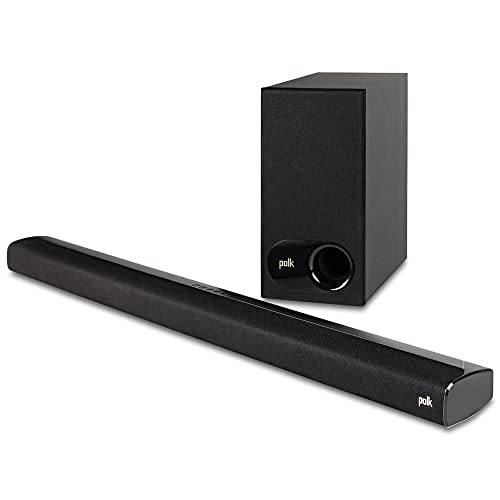
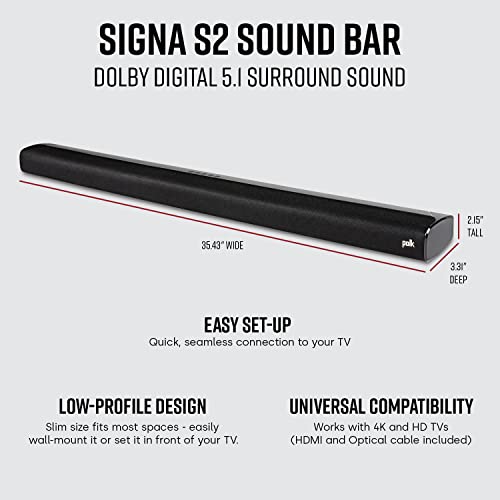
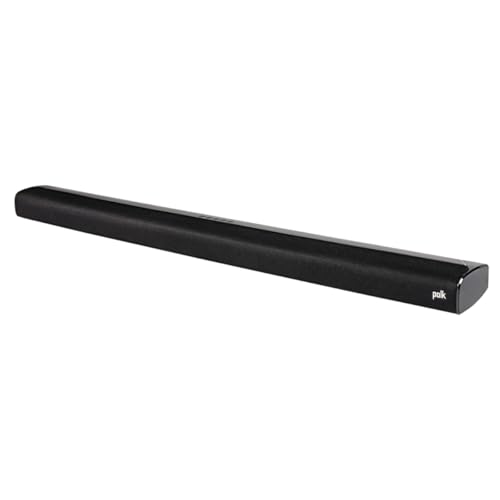
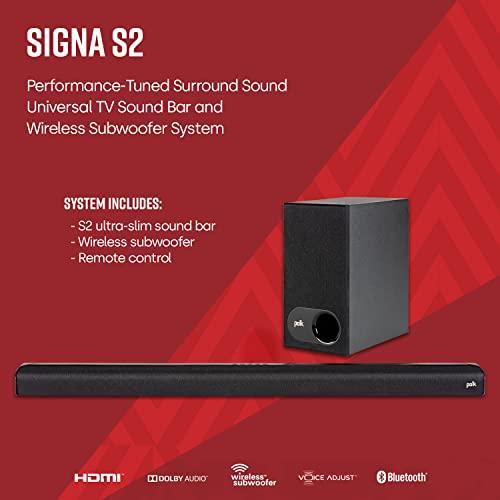
The Polk Audio Signa S2, released several years ago, represents the "keep it simple" philosophy that has made soundbars popular with mainstream consumers. It's a 2.1-channel system, meaning it has two main channels (left and right) plus a dedicated subwoofer channel (that's what the ".1" refers to). The soundbar itself houses four drivers: two oval-shaped midrange drivers that handle vocals and most music, plus two small tweeters for high frequencies like cymbals and dialogue consonants.
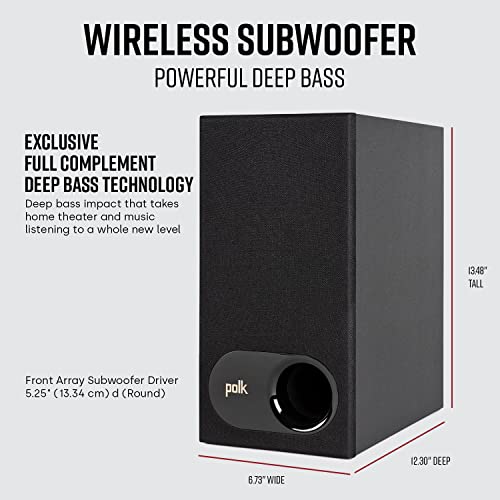
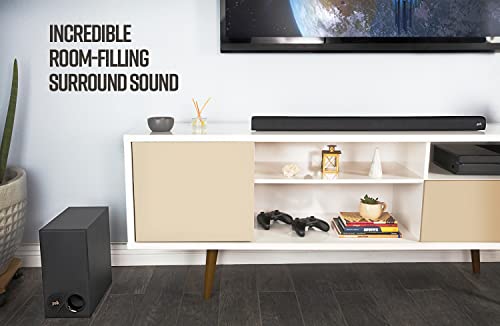
What makes the Signa S2 special is its wireless subwoofer – a separate box with a 5.25-inch driver dedicated entirely to bass frequencies. This division of labor is crucial because reproducing deep bass requires moving a lot of air, which needs either a large driver or a lot of power. By offloading bass duties to a dedicated subwoofer, the main soundbar can focus on midrange and treble clarity.
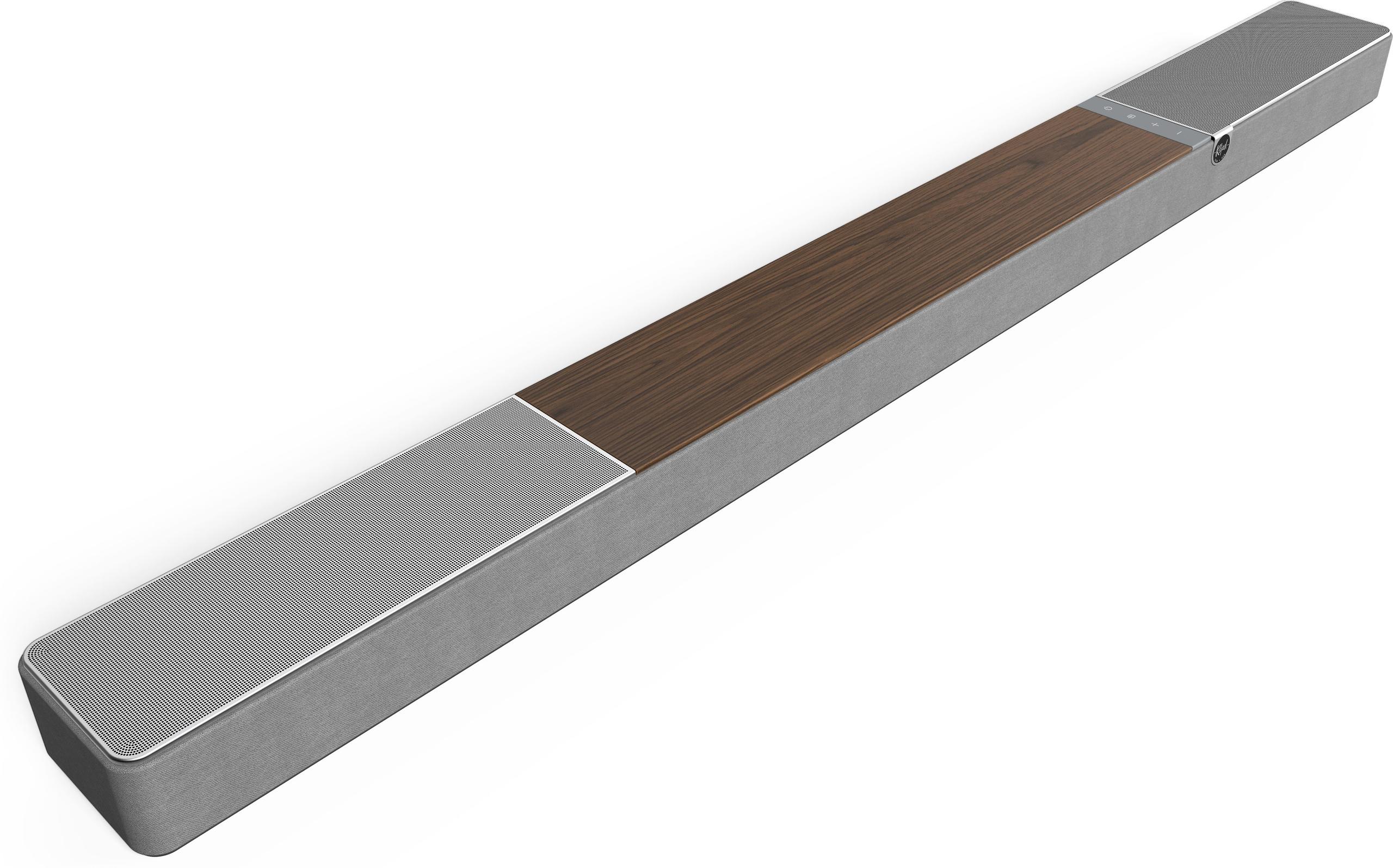
The Klipsch Flexus Core 300, released in 2025, takes a fundamentally different approach. It's a 5.1.2-channel system, which means five main channels (left, center, right, and two surround channels), one subwoofer channel, and two height channels for Dolby Atmos effects. To accomplish this in a single soundbar, Klipsch packed in 13 individual drivers pointing in different directions.
Here's where it gets interesting: the Core 300 has drivers firing forward for the main stereo image, upward for height effects that bounce off your ceiling, sideways for surround sound, and four built-in subwoofers facing forward. It's essentially trying to be a complete home theater system in one 54-inch-wide package.
Perhaps the most significant difference between these soundbars is how they handle room acoustics. Every room sounds different – hard surfaces like glass and tile reflect sound, while carpets and curtains absorb it. The size and shape of your space dramatically affects what you hear, which is why the same speaker can sound boomy in one room and thin in another.
The Polk Audio Signa S2 handles this the traditional way: it offers basic sound modes like "Movie," "Music," and "Night" that adjust the frequency balance slightly. These are generic presets that might help in some situations but can't account for your specific room's characteristics.
The Klipsch Flexus Core 300 does something revolutionary – it's the first soundbar to include Dirac Live room correction technology. This was previously only available in high-end audio receivers costing thousands of dollars. Here's how it works: you place the included calibration microphone at your listening position, and the soundbar plays test tones while measuring how they sound in your room. Advanced algorithms then create a custom filter that compensates for your room's acoustic problems.
I've used Dirac Live in my own listening room, and the difference is remarkable. It can tighten up boomy bass, smooth out harsh frequencies, and even improve the apparent size of the soundstage. It's like having an audio engineer tune your system specifically for your space.
Poor dialogue clarity is the number one complaint about TV audio, and both soundbars tackle this challenge differently. The Signa S2 uses Polk's Voice Adjust technology, which essentially boosts the frequency range where most human speech occurs. You can adjust how much boost to apply, which is helpful because some people prefer more prominent dialogue while others find it unnatural.
The Core 300 takes a more sophisticated approach with a dedicated center channel driver featuring Klipsch's signature horn-loaded tweeter. In a proper surround sound mix, dialogue is routed specifically to the center channel, keeping it separate from music and sound effects. This means voices stay locked in the center of the soundstage even during complex action scenes.
From my testing, both approaches work well, but the Core 300's dedicated center channel provides more natural-sounding dialogue that doesn't have the slightly nasal quality you sometimes get with frequency boosting.
Bass is where these soundbars reveal their different priorities. The Signa S2's wireless subwoofer can dig fairly deep – down to about 45Hz, which is low enough to feel the rumble in action movies. However, having all your bass come from one location can create uneven coverage in larger rooms. You might have too much bass near the subwoofer and not enough at other seating positions.
The Core 300 integrates four 4-inch subwoofers directly into the soundbar. While each individual driver is smaller than the Signa S2's subwoofer, having four of them distributed across 54 inches creates more even bass coverage. The tradeoff is that it can't quite reach as deep into the lowest frequencies, but the Dirac Live room correction can optimize whatever bass response is available for your specific room.
In my experience, the distributed approach works better for most people because it eliminates the subwoofer placement puzzle – that frustrating process of moving a subwoofer around the room trying to find a spot where it doesn't boom or disappear entirely.
This is where the fundamental difference in approach becomes most apparent. The Signa S2 can process Dolby Digital surround sound, but it has to downmix everything to stereo. This means surround effects get folded into the left and right channels, losing much of their spatial information. You'll hear the sound effects, but they won't seem to come from specific locations around you.
The Core 300 can reproduce true multichannel audio with discrete surround channels. Its up-firing drivers bounce sound off your ceiling to create height effects, while side-firing drivers provide surround sound. When properly set up in a room with a reasonable ceiling height and reflective surfaces, it can create a convincing bubble of sound around your seating position.
However, this brings up an important limitation: rooms with vaulted ceilings, heavy acoustic treatment, or unusual shapes may not work well with reflected surround sound. The Core 300 is expandable with wireless rear speakers and additional subwoofers if your room requires it, but that adds significantly to the total cost.
Both soundbars can get loud enough for most situations, but they handle high volumes differently. The Signa S2 starts to compress and distort when pushed to its limits, which is typical for budget soundbars. It's fine for normal listening levels but may struggle in larger rooms or during loud action sequences.
The Core 300 can reach 106 decibels – loud enough to match a movie theater experience in most home environments. More importantly, it maintains clarity at high volumes thanks to its larger driver count and more powerful amplification. The Dirac Live processing also helps prevent the harsh, fatiguing sound that often accompanies high-volume playback.
Modern entertainment systems require multiple types of connections, and this is another area where these soundbars diverge significantly. The Polk Audio Signa S2 covers the basics: HDMI ARC for connecting to your TV with a single cable, optical digital input for older TVs, a 3.5mm auxiliary input for devices like tablets, and Bluetooth for wireless music streaming from phones.
This connectivity suite was perfectly adequate when the Signa S2 was released, and it still works for most current setups. However, it lacks some modern conveniences like automatic switching between inputs or support for high-resolution audio formats.
The Klipsch Flexus Core 300 is designed for current and future technology. Its HDMI 2.1 input supports 8K video at 60Hz or 4K at 120Hz – frame rates that gaming consoles and high-end streaming devices are beginning to use. It includes eARC (enhanced Audio Return Channel) support for full-resolution surround sound from compatible TVs.
Beyond HDMI, the Core 300 includes Wi-Fi, Bluetooth 5.3, and even Ethernet connectivity. This enables streaming directly to the soundbar using protocols like AirPlay 2, Google Cast, and Spotify Connect. You can play music without turning on your TV, and the soundbar appears as a separate device in streaming apps.
The user experience differs dramatically between these products. The Signa S2 keeps things simple with an infrared remote that controls basic functions: volume, input selection, and sound mode switching. Setup involves plugging in cables and pairing the wireless subwoofer, which happens automatically.
The Core 300 requires the Klipsch Connect Plus smartphone app for initial setup and ongoing control. This includes running the Dirac Live room correction process, adjusting EQ settings, managing firmware updates, and controlling streaming functions. While more complex initially, the app unlocks far more customization than any remote control could provide.
I appreciate both approaches for different reasons. The Signa S2's simplicity means it works immediately without learning new interfaces. The Core 300's app-based control offers depth for those who want to fine-tune their experience, though it may overwhelm users who just want better TV sound without complexity.
If you're building a dedicated home theater space, these soundbars serve very different roles. The Polk Audio Signa S2 works well as a simple upgrade for casual TV watching but won't satisfy serious movie enthusiasts who want immersive surround sound. It's perfect for bedrooms, kitchens, or small living rooms where you want better dialogue and some bass impact without complexity.
The Klipsch Flexus Core 300 can serve as the foundation of a serious home theater system. Its expandability means you can start with just the soundbar and add wireless rear speakers and subwoofers over time as budget allows. The Dirac Live room correction will continue to optimize performance as you add components.
For reference-level home theater performance, traditional separate speakers and receivers still have advantages in ultimate sound quality and flexibility. However, the Core 300 bridges much of that gap while maintaining the convenience and aesthetic appeal of a soundbar installation.
The Polk Audio Signa S2 makes sense for most people upgrading from TV speakers. If your priority is dramatically better dialogue clarity and some bass impact without spending a lot of money or dealing with complex setup, it delivers excellent value. It's particularly well-suited to smaller rooms, apartments, or situations where you watch mostly TV shows and casual movie viewing.
The Klipsch Flexus Core 300 appeals to audio enthusiasts and home theater fans who want cutting-edge technology and room for growth. If you have a larger room with challenging acoustics, consume a lot of movie content, or simply want the best possible soundbar technology available today, it justifies its premium pricing through features unavailable elsewhere.
At the time of writing, the price difference between these products is significant enough that they're not really competing for the same buyers. The Signa S2 competes with other budget soundbars and represents exceptional value in that category. The Core 300 competes with premium soundbars and high-end audio components, bringing previously unavailable room correction technology to the soundbar format.
Both the Polk Audio Signa S2 and Klipsch Flexus Core 300 succeed at their intended missions, but those missions are completely different. The Signa S2 maximizes the audio improvement you can get for a modest investment, while the Core 300 pushes the boundaries of what's possible in soundbar design.
Your decision should be based primarily on your room size, content preferences, and how much you value cutting-edge audio technology. Both will dramatically improve your TV audio experience – the question is whether you want simple enhancement or sophisticated home theater performance. Either way, you'll wonder why you tolerated your TV's built-in speakers for so long.
| Polk Audio Signa S2 | Klipsch Flexus Core 300 |
|---|---|
| Audio Channels - Determines surround sound capability and immersion level | |
| 2.1 channels (stereo + subwoofer, downmixes surround to stereo) | 5.1.2 channels (true surround with dedicated Atmos height channels) |
| Driver Count - More drivers typically mean better sound separation and power | |
| 5 total drivers (4 in soundbar + 1 in wireless subwoofer) | 13 total drivers (all integrated in soundbar chassis) |
| Room Correction Technology - Critical for optimizing sound in your specific space | |
| Basic sound modes only (Movie/Music/Night presets) | Dirac Live with calibration microphone (world-first in soundbars) |
| Subwoofer Configuration - Affects bass quality and room placement flexibility | |
| Single 5.25" driver in separate wireless subwoofer | Four integrated 4" subwoofers built into soundbar |
| Dolby Atmos Support - Essential for modern movie and streaming content | |
| No Atmos support (downmixes to stereo) | Full Dolby Atmos and DTS:X with dedicated height channels |
| HDMI Video Passthrough - Important for gaming and future 8K content | |
| HDMI ARC only (no 4K/8K passthrough) | HDMI 2.1 with 8K/60Hz and 4K/120Hz passthrough |
| Smart Streaming Features - Convenience for music playback without TV | |
| Basic Bluetooth only | Wi-Fi, AirPlay 2, Google Cast, Spotify Connect, Tidal Connect |
| Maximum Room Size - Based on power output and sound dispersion | |
| Small to medium rooms (under 200 sq ft) | Large rooms (200-400+ sq ft) with 106dB max output |
| Expandability - Ability to add components for full home theater | |
| None (complete standalone system) | Modular Flexus ecosystem (wireless surrounds and subwoofers) |
| Setup Complexity - Time and technical knowledge required | |
| Plug-and-play with pre-paired subwoofer | App-based setup with microphone room calibration required |
| Voice Clarity Technology - Critical for dialogue in TV shows and movies | |
| Voice Adjust frequency boosting | Dedicated center channel with horn-loaded tweeter |
| Connectivity Options - Determines compatibility with various devices | |
| HDMI ARC, optical, 3.5mm AUX, Bluetooth | HDMI 2.1 eARC, optical, USB-C, Ethernet, Wi-Fi, Bluetooth 5.3 |
The Polk Audio Signa S2 is specifically designed for small to medium rooms under 200 square feet. Its compact 35-inch width and moderate power output make it ideal for apartments, bedrooms, or cozy living spaces. The Klipsch Flexus Core 300 is built for larger rooms with its 54-inch width and higher power output, making it potentially overwhelming in smaller spaces.
No, only the Klipsch Flexus Core 300 supports true Dolby Atmos with dedicated up-firing drivers for height effects. The Polk Audio Signa S2 does not support Atmos and will downmix surround sound content to stereo. For modern streaming content and Blu-ray movies with Atmos soundtracks, the Core 300 provides the immersive overhead sound effects that the Signa S2 cannot reproduce.
Both soundbars prioritize dialogue clarity but use different approaches. The Polk Audio Signa S2 features Voice Adjust technology that boosts speech frequencies, while the Klipsch Flexus Core 300 uses a dedicated center channel with a horn-loaded tweeter. The Core 300 generally provides more natural dialogue reproduction, but the Signa S2 offers user-adjustable voice enhancement that some prefer.
The Polk Audio Signa S2 includes a separate wireless subwoofer with a 5.25-inch driver that can be placed anywhere in the room for optimal bass. The Klipsch Flexus Core 300 has four 4-inch subwoofers built directly into the soundbar chassis. The Signa S2 may reach slightly deeper bass frequencies, while the Core 300 provides more even bass distribution without requiring subwoofer placement decisions.
The Polk Audio Signa S2 offers true plug-and-play setup with a pre-paired wireless subwoofer and simple remote control. The Klipsch Flexus Core 300 requires smartphone app setup and room calibration using an included microphone. For users wanting immediate improvement without complexity, the Signa S2 is significantly easier to install and use.
Yes, both soundbars support wireless connectivity, but with different capabilities. The Polk Audio Signa S2 offers basic Bluetooth streaming from smartphones and tablets. The Klipsch Flexus Core 300 includes Bluetooth plus Wi-Fi connectivity with support for AirPlay 2, Google Cast, Spotify Connect, and other advanced streaming protocols, allowing direct streaming without requiring your TV to be on.
The Klipsch Flexus Core 300 is designed specifically for home theater applications with true 5.1.2-channel surround sound, Dolby Atmos support, and expandability with wireless rear speakers and additional subwoofers. The Polk Audio Signa S2 is better suited for casual TV watching and basic movie viewing, as it cannot reproduce true surround sound effects that enhance the cinematic experience.
For movie watching, the Klipsch Flexus Core 300 provides immersive surround sound with discrete channels for dialogue, music, and effects, plus overhead Atmos sounds. The Polk Audio Signa S2 offers enhanced stereo sound with good dialogue clarity but cannot separate surround effects or create the spatial audio experience that modern movies are designed for. The Core 300 delivers a more theater-like experience.
Value depends on your needs and budget. The Polk Audio Signa S2 offers excellent value for users seeking a significant upgrade from TV speakers without premium features. The Klipsch Flexus Core 300 provides premium value for those wanting cutting-edge room correction technology and true surround sound. The Signa S2 maximizes improvement per dollar, while the Core 300 offers features previously unavailable in any soundbar.
Yes, both the Polk Audio Signa S2 and Klipsch Flexus Core 300 can be wall-mounted. The Signa S2 uses keyhole hangers for simple mounting, while the Core 300 requires an optional wall-mount bracket due to its larger size and weight. Wall-mounting either soundbar frees up TV stand space and can improve sound dispersion.
Both soundbars handle music well but with different characteristics. The Polk Audio Signa S2 has a V-shaped sound signature that emphasizes bass and treble, creating an energetic sound for many music genres. The Klipsch Flexus Core 300 offers more balanced sound with room correction that can be optimized for music listening. The Core 300 provides superior stereo separation and clarity for serious music listening.
Yes, both the Polk Audio Signa S2 and Klipsch Flexus Core 300 work with virtually any TV brand from the past decade. The Signa S2 connects via HDMI ARC, optical, or auxiliary inputs found on most TVs. The Core 300 offers these same connections plus advanced HDMI 2.1 features for newer TVs. Both soundbars include the necessary cables for connection to most television models.
We've done our best to create useful and informative comparisons to help you decide what product to buy. Our research uses advanced automated methods to create this comparison and perfection is not possible - please contact us for corrections or questions. These are the sites we've researched in the creation of this article: rtings.com - youtube.com - bestbuy.com - rtings.com - consumerreports.org - rtings.com - youtube.com - hometechnologyreview.com - soundbars.com - youtube.com - manuals.plus - creativeaudio.net - parts-express.com - thomsunmusic.com - polkaudio.com - manuals.plus - polkaudio.com - polkaudio.com - polkaudio.com - bestbuy.com - youtube.com - youtube.com - polkaudio.com - crutchfield.com - whathifi.com - avnirvana.com - hometechnologyreview.com - ecoustics.com - gearpatrol.com - klipsch.com - avsforum.com - youtube.com - avsforum.com - listenup.com - chowmain.software - klipsch.com - novis.ch - avsforum.com - klipsch.ca - lefflers.se - abt.com - sweetwater.com - wifihifi.com - klipsch.com - dirac.com

Privacy Policy
Terms and Conditions - Affiliate Policy
Home Security
© Copyright 2008-2026.
11816 Inwood Rd #1211, Dallas, TX 75244