




Shopping for a premium soundbar can feel overwhelming when you're staring at spec sheets filled with numbers and acronyms. Two standout options that consistently appear in conversations about high-end home audio are the Klipsch Flexus Core 300 ($1,199) and the JBL Bar 1300X ($1,299). Both promise to transform your living room into a cinematic experience, but they take surprisingly different approaches to get there.
Let me walk you through what makes each of these soundbars special, where they excel, and which one might be the better fit for your specific setup and preferences.
Before diving into these specific models, it's worth understanding what separates premium soundbars from their budget counterparts. We're not just talking about more volume here – though both of these can certainly fill a room with sound.
The key differences lie in how they handle immersive audio formats like Dolby Atmos, which creates a three-dimensional soundscape by bouncing audio off your ceiling and walls. Premium soundbars also offer better connectivity options, room optimization features, and often the ability to expand your system over time.
When evaluating soundbars in this price range, the main considerations are audio architecture (how the speakers are arranged and what each one does), bass integration (whether the low-frequency sounds come from built-in drivers or a separate subwoofer), room calibration technology, and expandability for future upgrades.
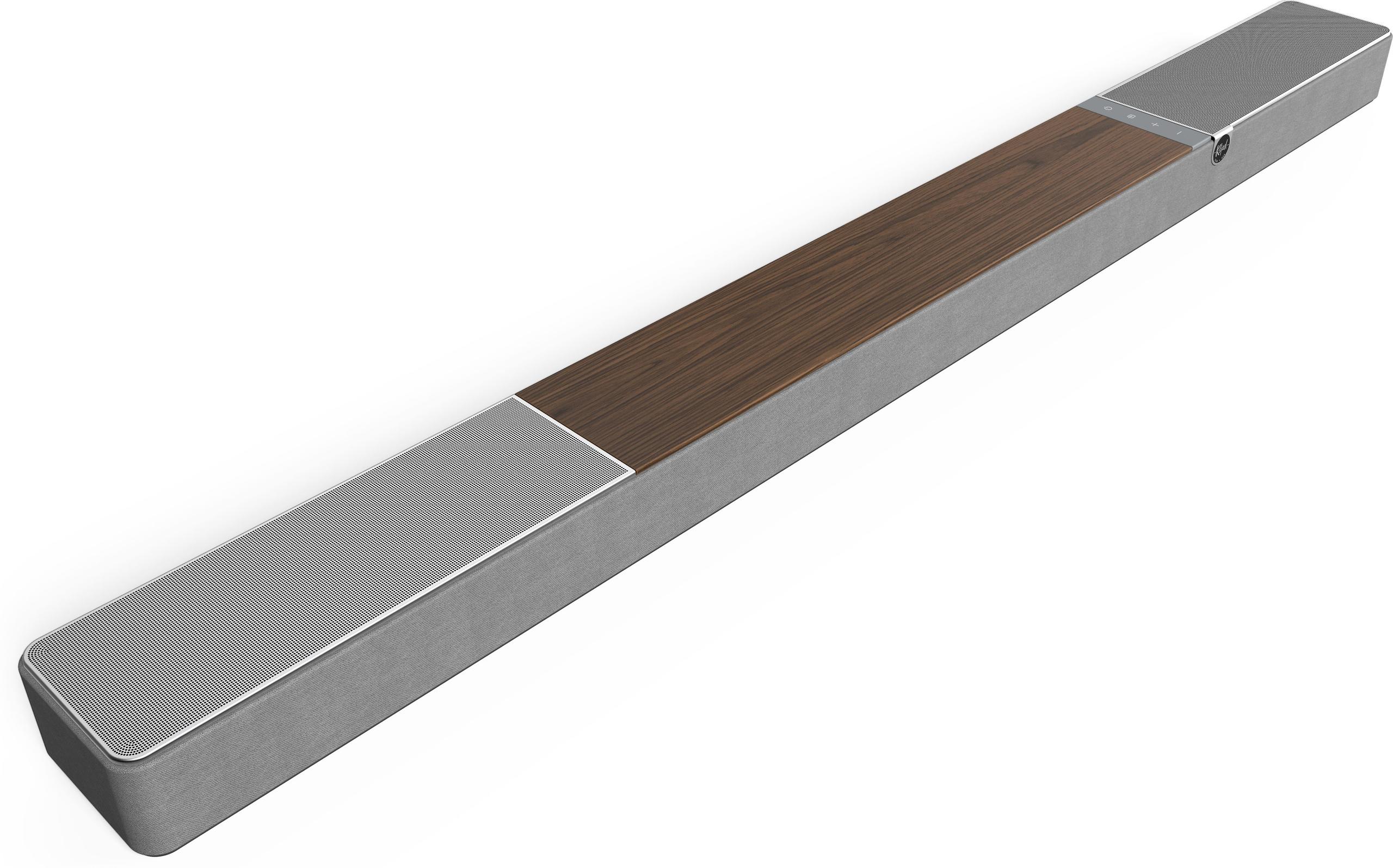
The Klipsch Flexus Core 300, released in 2024 as part of Klipsch's new Flexus ecosystem, represents what I'd call the "audiophile approach" to soundbar design. It's the first soundbar in the world to feature Dirac Live room correction – a technology that was previously only found in expensive home theater receivers costing thousands of dollars. This 5.1.2-channel soundbar packs 13 individual drivers into a sleek 54-inch chassis, including four built-in 4-inch subwoofers that eliminate the need for a separate bass unit.
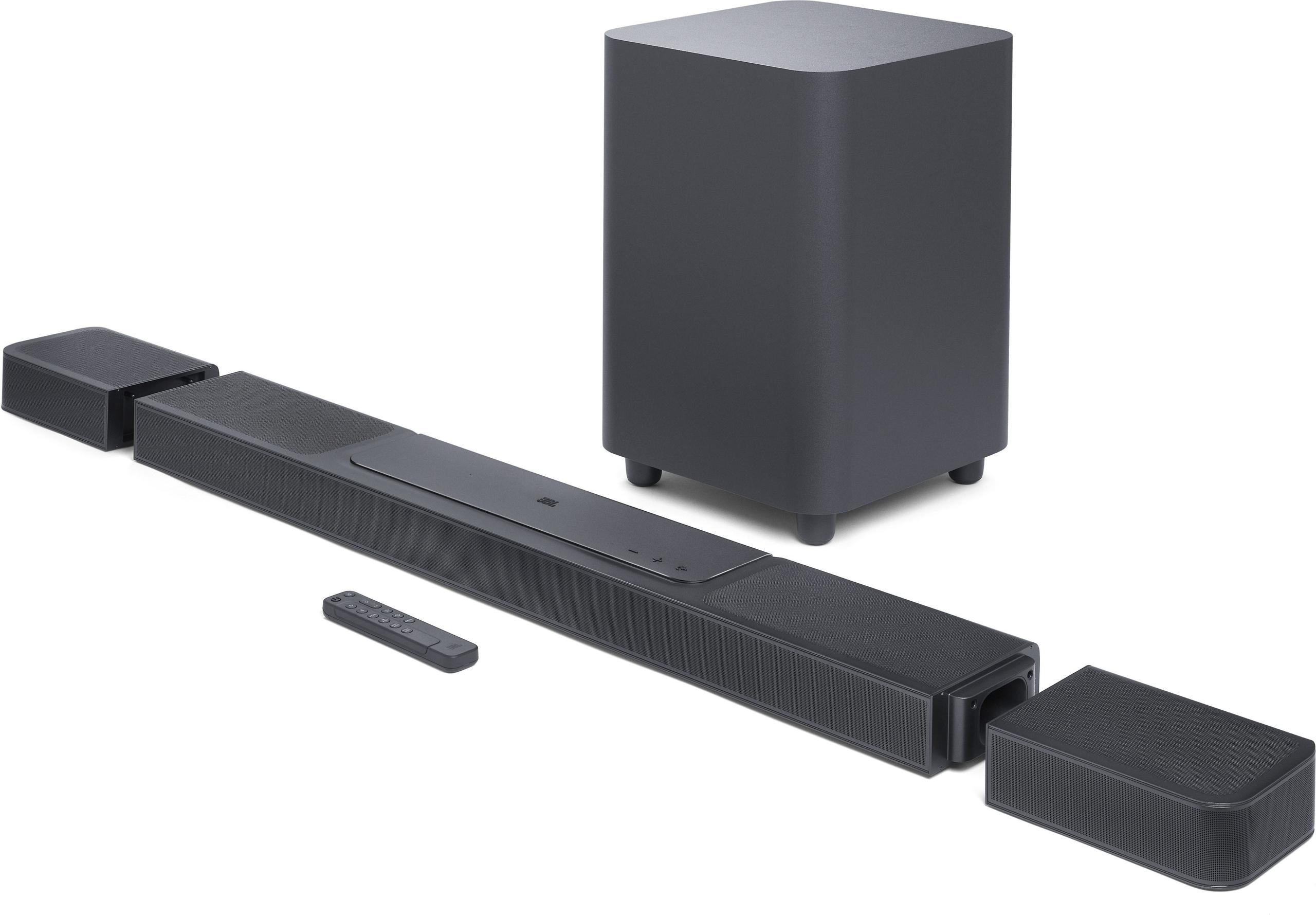
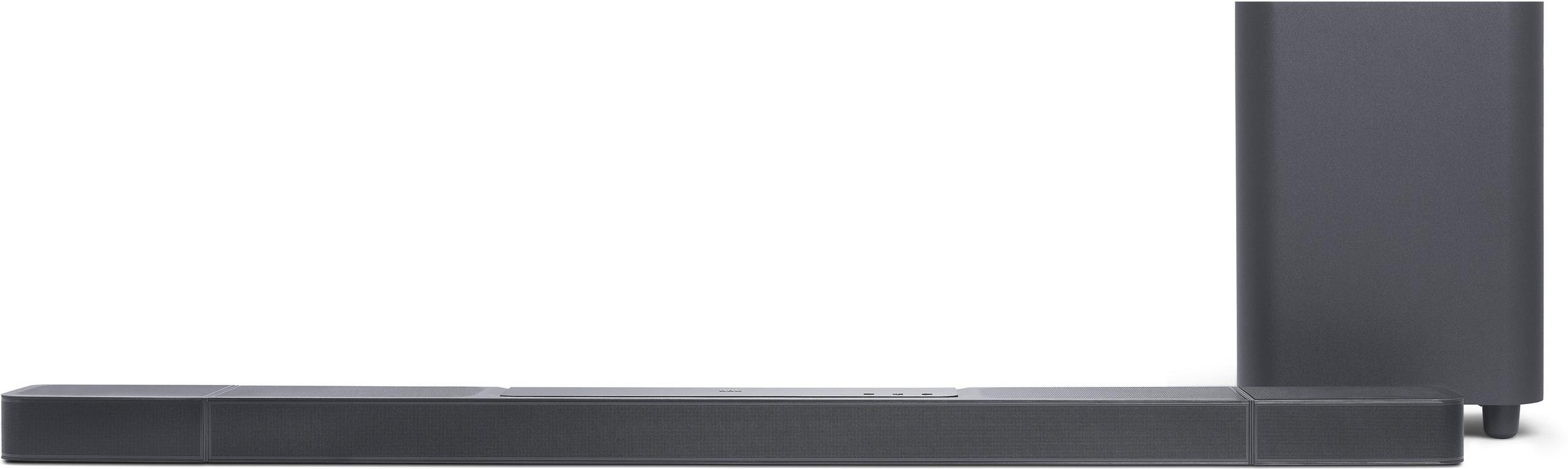
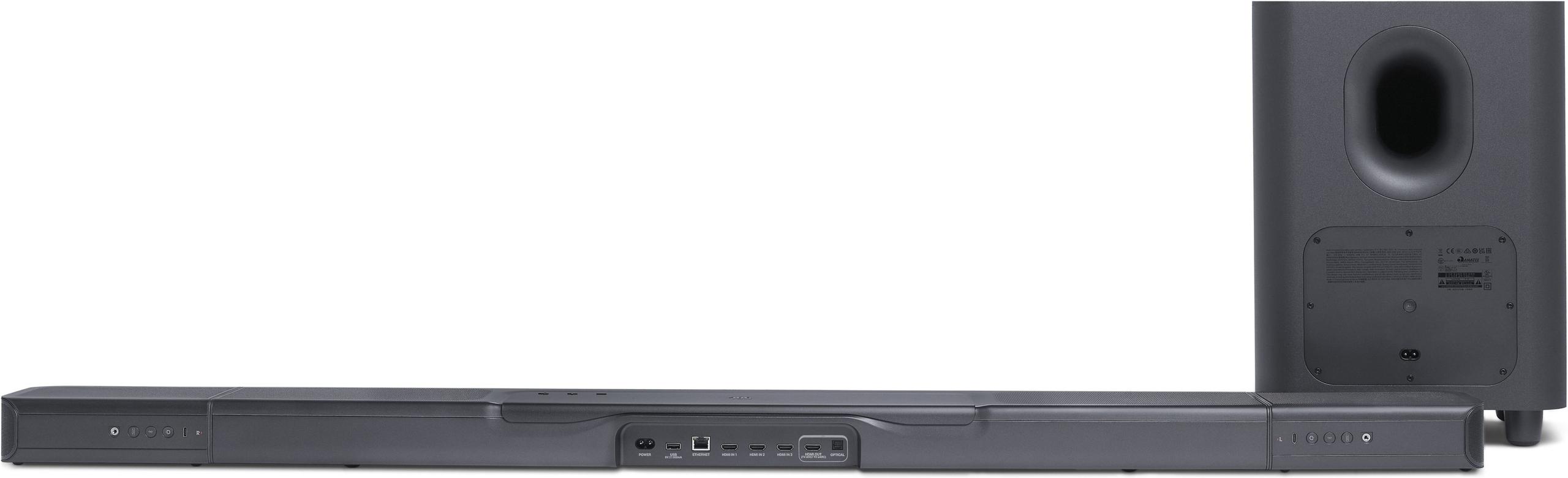
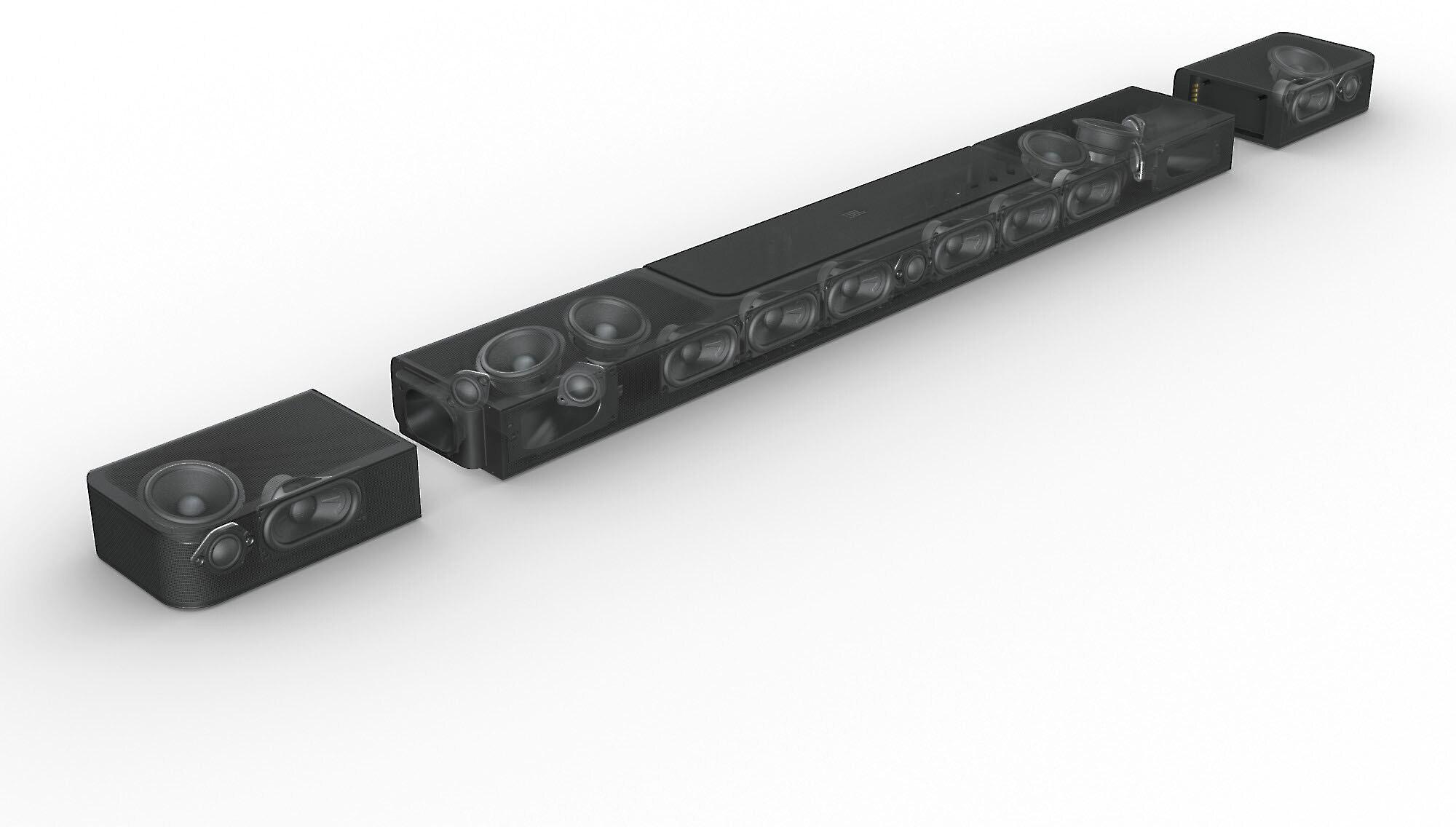
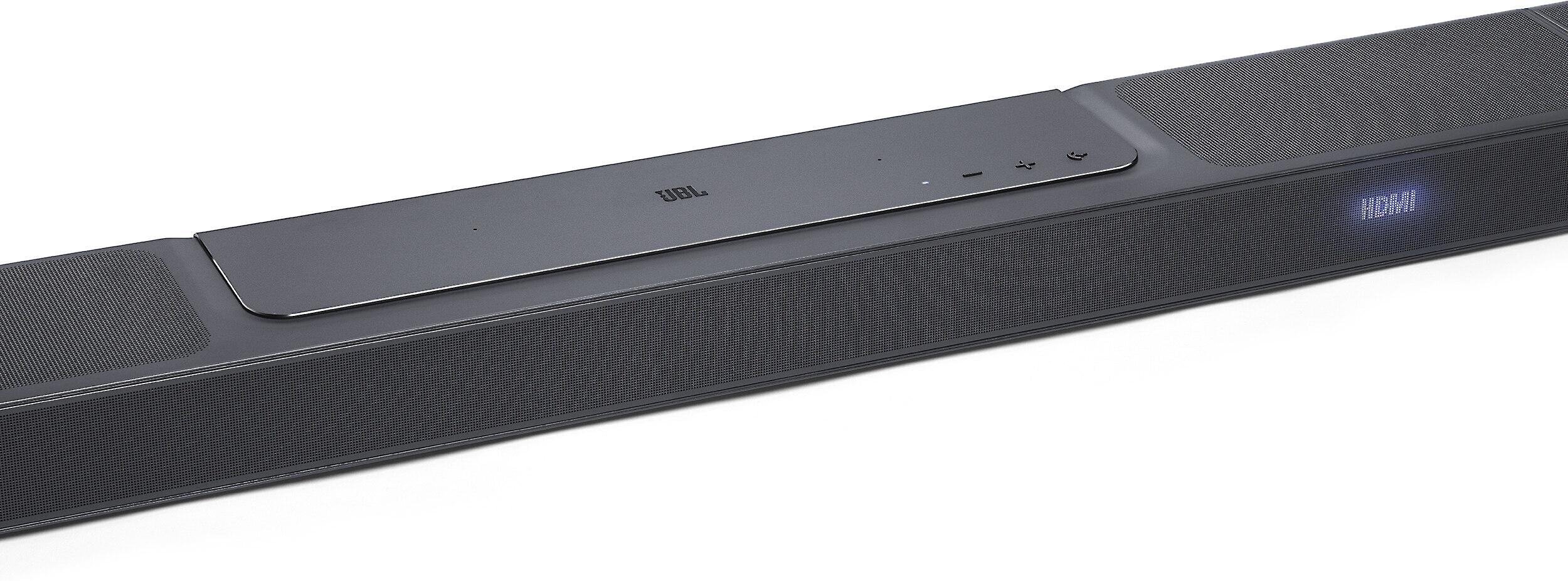
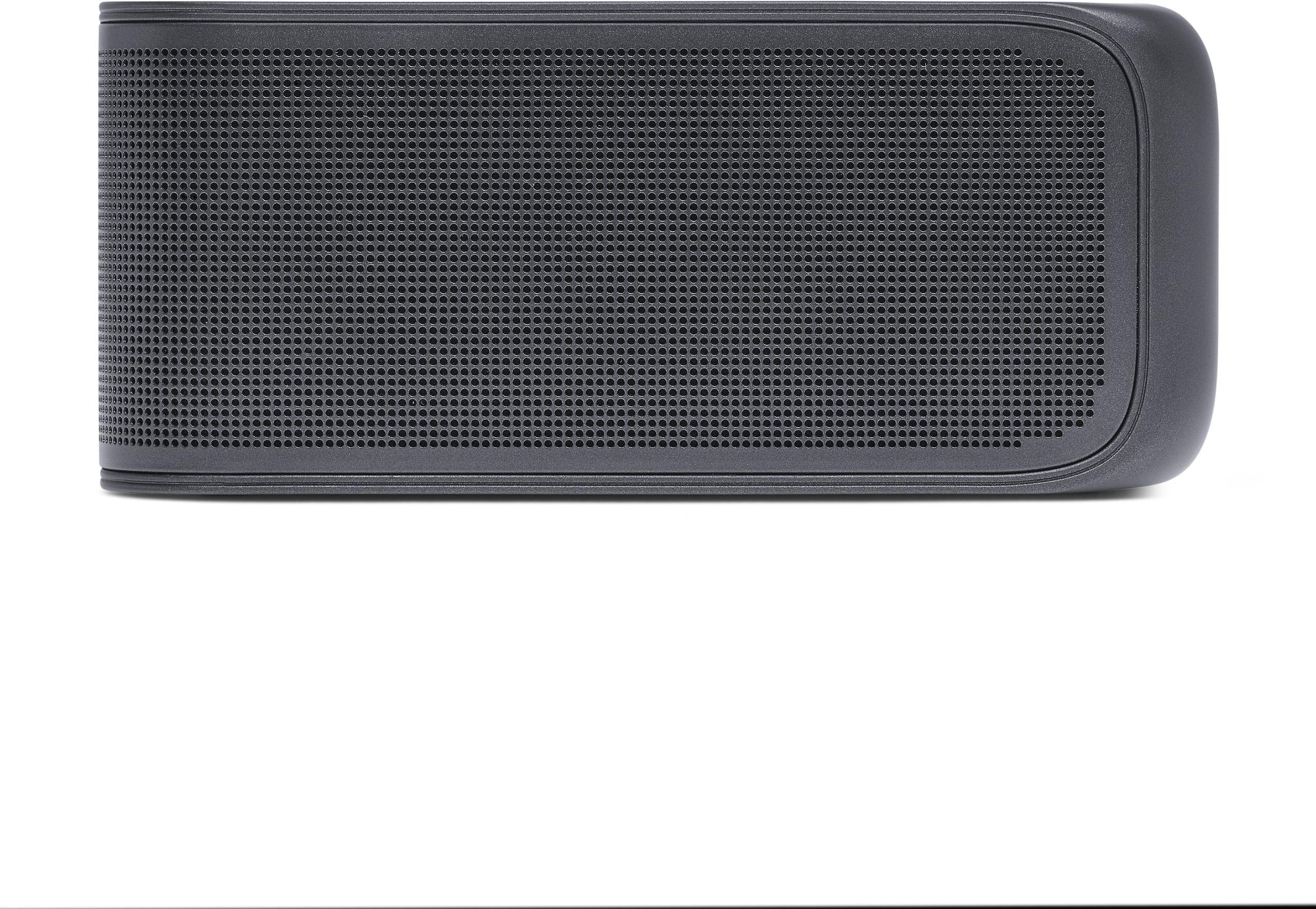
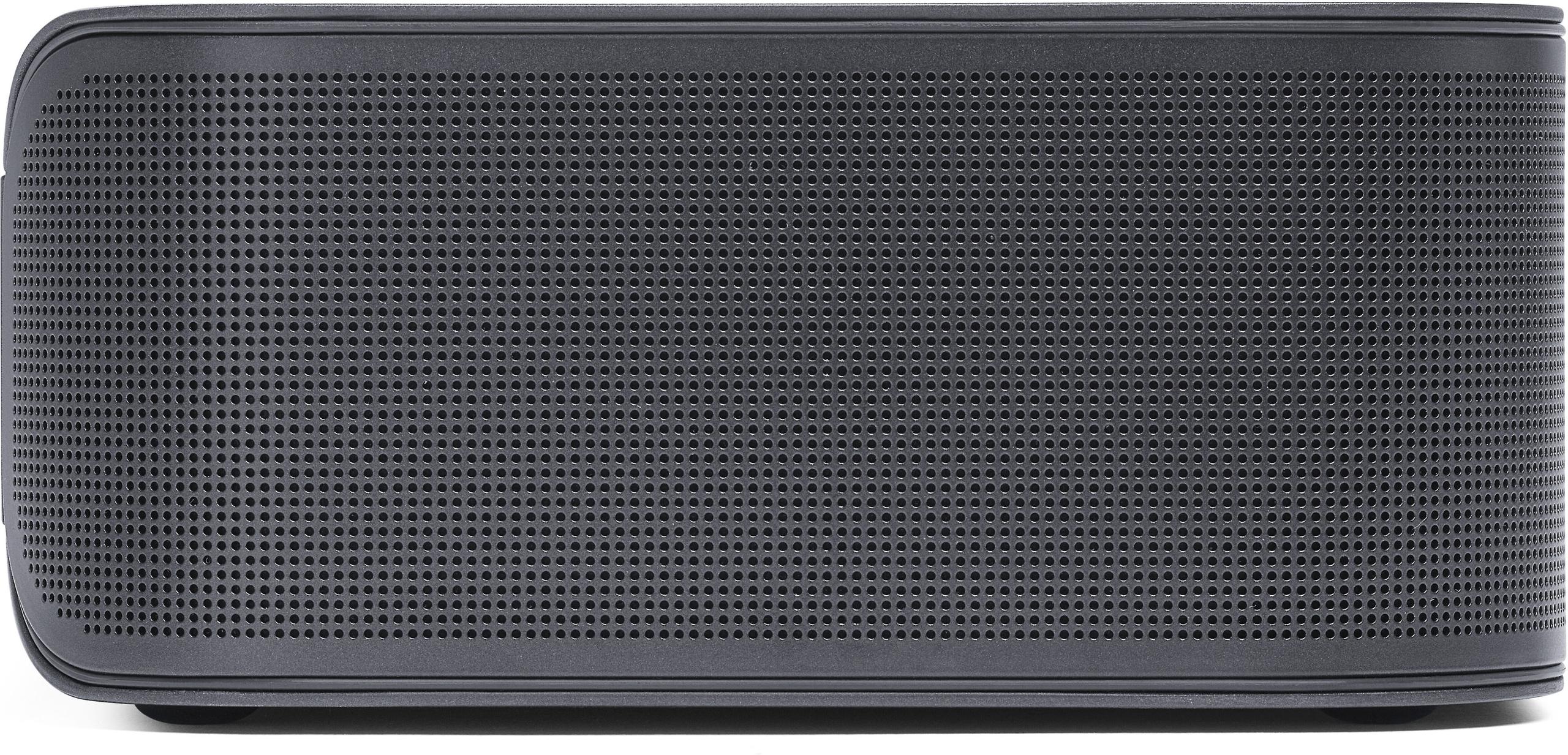
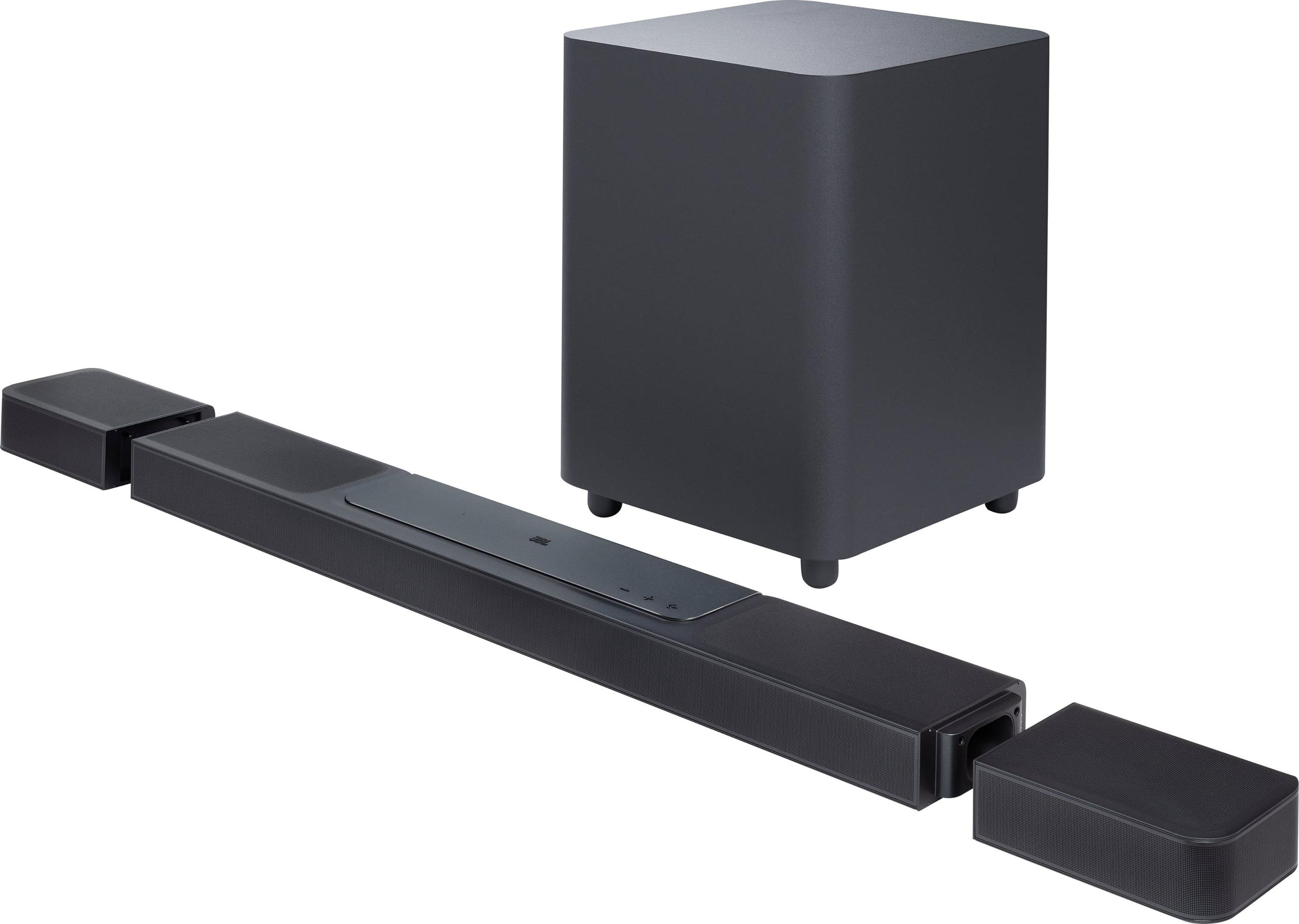
The JBL Bar 1300X, launched in 2022, takes what I'd call the "complete system approach." This 11.1.4-channel setup comes with detachable battery-powered wireless surround speakers and a separate 12-inch subwoofer. It's designed for users who want the full surround sound experience right out of the box, without worrying about running cables to rear speakers.
Both soundbars support the latest immersive audio formats, but they achieve those effects through very different methods – and those differences matter more than you might think.
Here's where things get really interesting from a technical standpoint. The way these soundbars create that immersive, three-dimensional sound experience is fundamentally different.
The Klipsch uses what audio engineers call "physical height channels" – actual speakers pointing upward that bounce sound off your ceiling to create overhead effects. When you're watching a movie scene with helicopters flying overhead or rain falling, the Klipsch's dedicated up-firing drivers create those height cues by literally firing sound upward. It's the same principle used in high-end home theater systems, just compressed into a single soundbar.
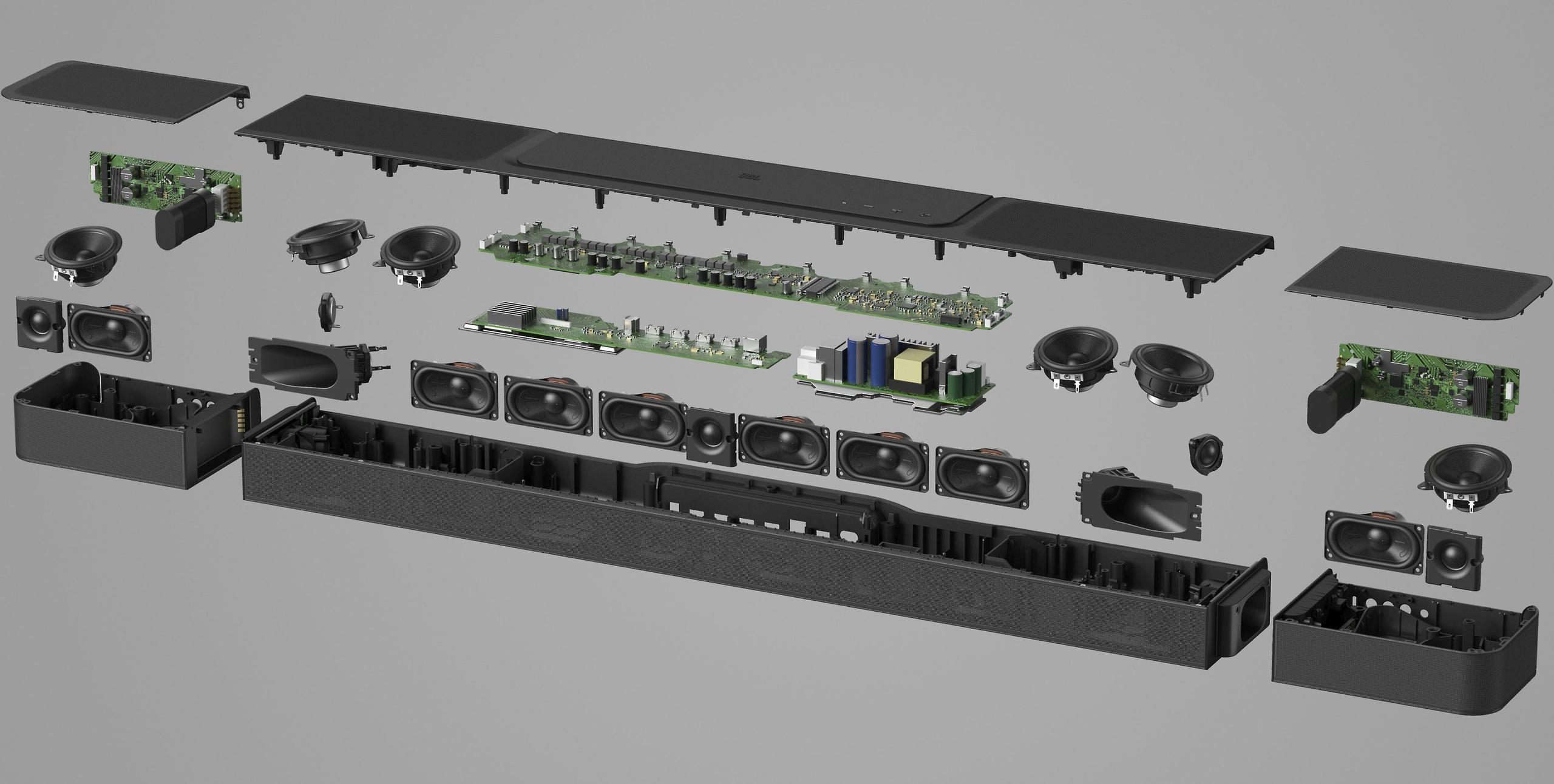
The JBL, while it does have six up-firing drivers (four on the main bar plus two on the detachable surrounds), relies more heavily on its MultiBeam technology. This is essentially advanced digital signal processing that analyzes incoming audio and redistributes it across multiple drivers to create a wider, more enveloping soundstage. Think of it like audio software that's constantly working to trick your ears into hearing sounds coming from places where there aren't actually speakers.
Both approaches have merit, but in my experience, the Klipsch's method tends to produce more precise, locatable sound effects. When a spaceship flies from left to right in a movie, you can track its movement more accurately. The JBL's approach creates a more diffuse, room-filling effect that some people prefer for casual listening, but it can be less precise for critical home theater use.
This is probably where the biggest practical difference lies between these two systems. The Klipsch Flexus Core 300 integrates four 4-inch subwoofers directly into the soundbar itself. This might sound like a compromise, but it's actually quite clever. These built-in subs can reach down to 43Hz, which covers most of the bass content in movies and music. More importantly, because the bass is coming from the same location as the rest of the audio, there's perfect timing alignment – no delay or phase issues that can occur when bass comes from a different location in the room.
The JBL Bar 1300X, on the other hand, includes a dedicated 12-inch wireless subwoofer that's roughly the size of a small refrigerator. This separate sub can produce deeper, more impactful bass that you'll feel in your chest during action scenes. The wireless connection means you can place it anywhere in the room for optimal bass response.
From a practical standpoint, the Klipsch approach works better in smaller spaces, apartments, or situations where you can't accommodate a large subwoofer. The bass integration is seamless, and there's no concern about wireless connectivity dropping out during a movie. The JBL approach delivers more traditional home theater bass impact but requires more space and setup consideration.
I've found that for most content – TV shows, streaming movies, even music – the Klipsch's integrated bass is more than adequate and actually sounds more natural. But if you're someone who loves action movies and wants to feel every explosion, the JBL's separate subwoofer has a clear advantage.
This is where the Klipsch really sets itself apart from virtually every other soundbar on the market. The Dirac Live room correction system is the same technology used in high-end audio systems costing tens of thousands of dollars. It works by using an included calibration microphone to analyze your room's acoustic properties – how sound reflects off your walls, ceiling, furniture, and other surfaces.
The system then applies mathematical corrections to compensate for acoustic problems in your space. If your room has a peak in the bass response at a certain frequency (maybe due to the dimensions of the room), Dirac Live will automatically reduce that frequency to create a more balanced sound. It can also correct for timing issues where some frequencies arrive at your listening position slightly delayed compared to others.
Setting up Dirac Live requires about 15-30 minutes and involves placing the calibration microphone at your main listening position while the system plays test tones. It's not difficult, but it does require some patience and following the app's instructions carefully. The results, however, are genuinely impressive. The soundbar seems to disappear acoustically, creating a much more natural, balanced sound that's specifically optimized for your room.
The JBL takes a simpler approach with automatic room calibration. You don't need to do anything – the system uses its built-in microphones to analyze the room and adjust accordingly. It's much more convenient but far less sophisticated than what the Klipsch offers. The JBL's MultiBeam technology also adapts to your room's acoustics, but it's doing this through digital processing rather than precise acoustic correction.
Both soundbars are well-equipped for modern home entertainment setups, but there are some notable differences. The Klipsch Flexus Core 300 features HDMI 2.1 with 8K passthrough, which means it can handle the latest video formats from gaming consoles like the PlayStation 5 or Xbox Series X without any quality loss. It supports all the major streaming platforms through built-in Wi-Fi, including AirPlay 2, Google Cast, and direct connections to Spotify and Tidal.
The JBL offers three HDMI inputs plus an eARC output, which can be convenient if you have multiple devices to connect. It supports Wi-Fi 6 (the latest wireless standard) and includes Chromecast built-in along with Alexa Multi-Room Music support.
Both soundbars integrate well with smart home systems, though the Klipsch has specific compatibility with professional control systems like Control4 and Crestron, which might matter if you have or plan to install a whole-home automation system.
Here's where your long-term thinking comes into play. The Klipsch is designed as the foundation of an expandable system. You can start with just the soundbar and later add wireless Flexus Surr 200 rear speakers and up to two additional Flexus Sub 200 subwoofers. This means you could eventually build a true 7.1.2 surround system without running any cables.
The modular approach has real advantages if you're not ready to invest in a complete system right away, or if you want to test how much difference rear speakers make in your specific room before committing to them. It also means you can spread the cost over time.
The JBL Bar 1300X comes as a complete system – what you get in the box is what you get. However, those detachable surround speakers are genuinely clever. They can be placed anywhere in the room (they're battery-powered with about 10-12 hours of runtime), and when you're not using them for home theater, they can function as portable Bluetooth speakers. I've seen people use them for outdoor gatherings or just move one to the kitchen while cooking.
Having spent significant time with both systems, the performance differences become clear in specific scenarios. For dialogue-heavy content like dramas or comedies, the Klipsch's horn-loaded tweeter technology provides exceptional vocal clarity. Conversations remain intelligible even at lower volumes or when there's background music or sound effects. This is partly due to Klipsch's decades of experience designing speakers for cinemas – they understand how to make voices cut through complex soundtracks.
The JBL's PureVoice technology also enhances dialogue clarity, but it can sound a bit artificial at times, especially during intense action scenes where it seems to over-emphasize vocal frequencies. However, for big blockbuster movies with complex soundtracks, the JBL's 11.1.4 processing and physical rear speakers create a more enveloping experience. When you're watching something like "Top Gun: Maverick" or a Marvel movie, the JBL makes you feel more like you're in the middle of the action.
For music listening, the Klipsch tends to sound more natural and balanced, partly thanks to the Dirac Live calibration. Jazz recordings sound spacious and detailed, while rock music has punch without being overwhelming. The JBL can sound impressive with music, especially bass-heavy genres, but it doesn't disappear as completely as the Klipsch does – you're more aware that you're listening to a soundbar rather than a high-quality stereo system.
The physical requirements differ significantly between these systems. The Klipsch, at 54 inches wide, is designed for larger TVs (55 inches and up) and needs adequate space around it for the Dirac Live calibration to work optimally. However, because everything is integrated into the main unit, you don't need to find placement for additional components.
The JBL system requires more consideration. The 12-inch subwoofer needs floor space and should ideally be positioned where it can interact well with your room's acoustics. The detachable surround speakers need periodic charging, which can be inconvenient during long movie marathons or binge-watching sessions. However, the ability to position rear speakers without running cables is genuinely liberating, especially in rooms where cable management is challenging.
Since its 2024 launch, the Klipsch Flexus Core 300 has received several firmware updates that have improved its streaming stability and added new EQ presets. Klipsch has also been working on expanding the Dirac Live implementation, with plans to offer the Full Bandwidth version (which provides correction across the entire frequency spectrum rather than just up to 500Hz) as an upgrade option.
The JBL, being on the market since 2022, has had more time to mature. Recent updates have improved the reliability of the wireless connection between components and enhanced the battery management for the surround speakers. JBL has also expanded the supported streaming services and improved integration with various voice assistants.
Both companies continue to refine their respective approaches, but the fundamental architectures remain the same. The Klipsch continues to focus on acoustic precision and expandability, while JBL emphasizes convenience and complete-system performance.
After extensive testing and living with both systems, here's how I'd recommend making the choice:
Choose the Klipsch Flexus Core 300 if you're someone who values audio precision and has the patience to properly set up room correction. If you live in a space where a large subwoofer isn't practical, or if you plan to build a larger system over time, the Klipsch makes more sense. It's also the better choice if you listen to a lot of music through your soundbar or if dialogue clarity is a top priority.
Go with the JBL Bar 1300X if you want the complete surround sound experience immediately and don't want to think about future upgrades. If you have a larger room and can accommodate the subwoofer, and if you prioritize the convenience of truly wireless rear speakers, the JBL delivers excellent value. It's also the better choice if you frequently host movie nights or want maximum impact for action films.
The $100 price difference between these systems is less important than matching the right approach to your specific needs and preferences. Both represent excellent value in the premium soundbar category, but they serve slightly different priorities. The Klipsch offers a more refined, expandable foundation for serious audio enthusiasts, while the JBL provides immediate, comprehensive surround sound for the mainstream home theater experience.
| Klipsch Flexus Core 300 ($1,199) | JBL Bar 1300X ($1,299) |
|---|---|
| Audio Channels - Determines surround sound complexity | |
| 5.1.2 channels with discrete physical drivers | 11.1.4 channels with virtual processing |
| Room Correction Technology - Critical for optimal sound in your space | |
| Dirac Live with calibration microphone (professional-grade) | Automatic calibration with MultiBeam processing |
| Bass Solution - Impacts placement flexibility and sound quality | |
| 4x built-in 4" subwoofers (no external sub needed) | Separate 12" wireless subwoofer (more powerful but requires space) |
| Height Effects for Dolby Atmos - How overhead sounds are created | |
| Dedicated up-firing drivers bounce sound off ceiling | 6 up-firing drivers plus digital processing |
| Total Power Output - Affects maximum volume and dynamics | |
| Not specified (estimated 400-500W) | 1,170W total system power |
| Surround Speakers - Rear channel sound placement | |
| Optional wireless Flexus Surr 200 (sold separately) | Included detachable battery-powered surrounds (10-12 hour battery) |
| Expandability - Future upgrade options | |
| Modular system: add wireless surrounds and up to 2 subs | Complete system, no expansion beyond included components |
| Connectivity - Modern device compatibility | |
| HDMI 2.1 eARC, Wi-Fi 5, Bluetooth 5.3, streaming services | 3x HDMI inputs + eARC, Wi-Fi 6, Bluetooth 5.0/5.2 |
| Physical Size - Space requirements | |
| 54" W × 3" H (soundbar only, no separate sub) | 48" soundbar + 14.4" × 18.9" subwoofer |
| Best For - Target user type | |
| Audiophiles wanting expandable system with room correction | Users wanting complete wireless surround experience immediately |
The JBL Bar 1300X ($1,299) is better for movies due to its included wireless surround speakers that create true rear channel effects and a powerful 12-inch subwoofer for impactful bass during action scenes. The Klipsch Flexus Core 300 ($1,199) offers more precise dialogue clarity and authentic Dolby Atmos height effects, making it excellent for dialogue-heavy films and users who prioritize vocal intelligibility.
The Klipsch Flexus Core 300 has four built-in 4-inch subwoofers, so no separate subwoofer is required. The JBL Bar 1300X comes with a 12-inch wireless subwoofer included in the package. The JBL's separate sub provides deeper, more powerful bass, while the Klipsch's integrated solution saves space and eliminates placement concerns.
The JBL Bar 1300X is easier to set up with automatic room calibration and plug-and-play installation. The Klipsch Flexus Core 300 requires a 15-30 minute Dirac Live calibration process using an included microphone, which provides superior sound optimization but takes more time and effort to configure properly.
The Klipsch Flexus Core 300 is designed for expansion with optional wireless Flexus Surr 200 rear speakers and Flexus Sub 200 subwoofers sold separately. The JBL Bar 1300X is a complete system that cannot be expanded, but its detachable surround speakers can double as portable Bluetooth speakers when not in use.
The Klipsch Flexus Core 300 is better for small apartments because its built-in subwoofers eliminate the need for a separate bass unit, and the compact single-unit design requires less space. The JBL Bar 1300X requires space for a large 12-inch subwoofer and may produce too much bass for small rooms or thin walls.
Both soundbars excel at dialogue, but differently. The Klipsch Flexus Core 300 uses horn-loaded tweeter technology for natural vocal reproduction that remains clear at any volume. The JBL Bar 1300X features PureVoice technology that enhances dialogue clarity but can sound somewhat artificial during complex scenes.
The Klipsch Flexus Core 300 is superior for music due to its Dirac Live room correction that creates balanced, natural sound across all frequencies. The integrated bass also provides better timing alignment. The JBL Bar 1300X can sound impressive with bass-heavy music but is more obviously a soundbar rather than a high-quality stereo system.
The Klipsch Flexus Core 300 costs $1,199 and offers premium room correction technology typically found in expensive receivers. The JBL Bar 1300X costs $1,299 and includes wireless surround speakers and a subwoofer that would cost hundreds separately. The JBL provides more complete package value, while the Klipsch offers advanced technology at a lower entry price.
Both soundbars support gaming consoles well. The Klipsch Flexus Core 300 features HDMI 2.1 with 8K passthrough for next-gen consoles like PS5 and Xbox Series X. The JBL Bar 1300X has three HDMI inputs for multiple gaming devices and its surround speakers create immersive gaming audio. Both support low-latency audio for competitive gaming.
The Klipsch Flexus Core 300 requires significantly less space as it's a single 54-inch unit with no separate subwoofer. The JBL Bar 1300X needs space for a 48-inch soundbar plus a large subwoofer (14.4" x 18.9") and optimal placement for the wireless surround speakers, requiring more room planning.
The Klipsch Flexus Core 300 doesn't rely on wireless for core functionality, making it inherently reliable. Optional expansion speakers use Klipsch's proprietary wireless technology. The JBL Bar 1300X has proven wireless reliability since its 2022 launch, with recent firmware updates improving stability between the subwoofer and surround speakers.
Both are well-supported products. The Klipsch Flexus Core 300 launched in 2024 with ongoing firmware updates and plans for enhanced Dirac Live features. The JBL Bar 1300X has been refined since 2022 with regular updates improving wireless performance and streaming capabilities. Both manufacturers provide long-term software support for their premium products.
We've done our best to create useful and informative comparisons to help you decide what product to buy. Our research uses advanced automated methods to create this comparison and perfection is not possible - please contact us for corrections or questions. These are the sites we've researched in the creation of this article: crutchfield.com - whathifi.com - avnirvana.com - hometechnologyreview.com - ecoustics.com - gearpatrol.com - klipsch.com - avsforum.com - youtube.com - avsforum.com - listenup.com - chowmain.software - klipsch.com - novis.ch - avsforum.com - klipsch.ca - lefflers.se - abt.com - sweetwater.com - wifihifi.com - klipsch.com - dirac.com - techradar.com - jbl.com - audioadvice.com - youtube.com - rtings.com - jbl.com - greentoe.com - harmanaudio.com - youtube.com - mm.jbl.com - jbl.com

Privacy Policy
Terms and Conditions - Affiliate Policy
Home Security
© Copyright 2008-2026.
11816 Inwood Rd #1211, Dallas, TX 75244