



When I first started testing premium soundbars seriously, I thought the differences between them would be subtle—maybe a bit more bass here, slightly clearer dialogue there. Boy, was I wrong. The gap between a truly excellent soundbar and a merely good one can be absolutely massive, especially when you're talking about products like the Klipsch Flexus Core 300 ($1,199) and the Sony HT-A3000 ($429).
These two soundbars represent completely different philosophies in home audio design. One pushes the absolute limits of what's possible in a soundbar format, while the other focuses on delivering solid performance that most people will love without breaking the bank. Let me walk you through what makes each special and help you figure out which approach makes more sense for your setup.
Before diving into specifics, it's worth understanding what we're really looking for in a premium soundbar. The main job is creating an immersive experience that makes your movies, music, and shows sound dramatically better than your TV's built-in speakers. But there's so much more to it than just "louder sound."
The best soundbars need to handle dialogue clearly (this is actually harder than it sounds), create a sense of space and depth, reproduce bass that you can feel, and ideally make it seem like sound is coming from all around you—even from above. They also need to fit into real living rooms without dominating the space or requiring a engineering degree to set up.
Modern premium soundbars also act as smart audio hubs, streaming music from your phone, integrating with voice assistants, and connecting to your TV with a single cable. The technology has advanced incredibly quickly, with features that were impossible just a few years ago now becoming standard.
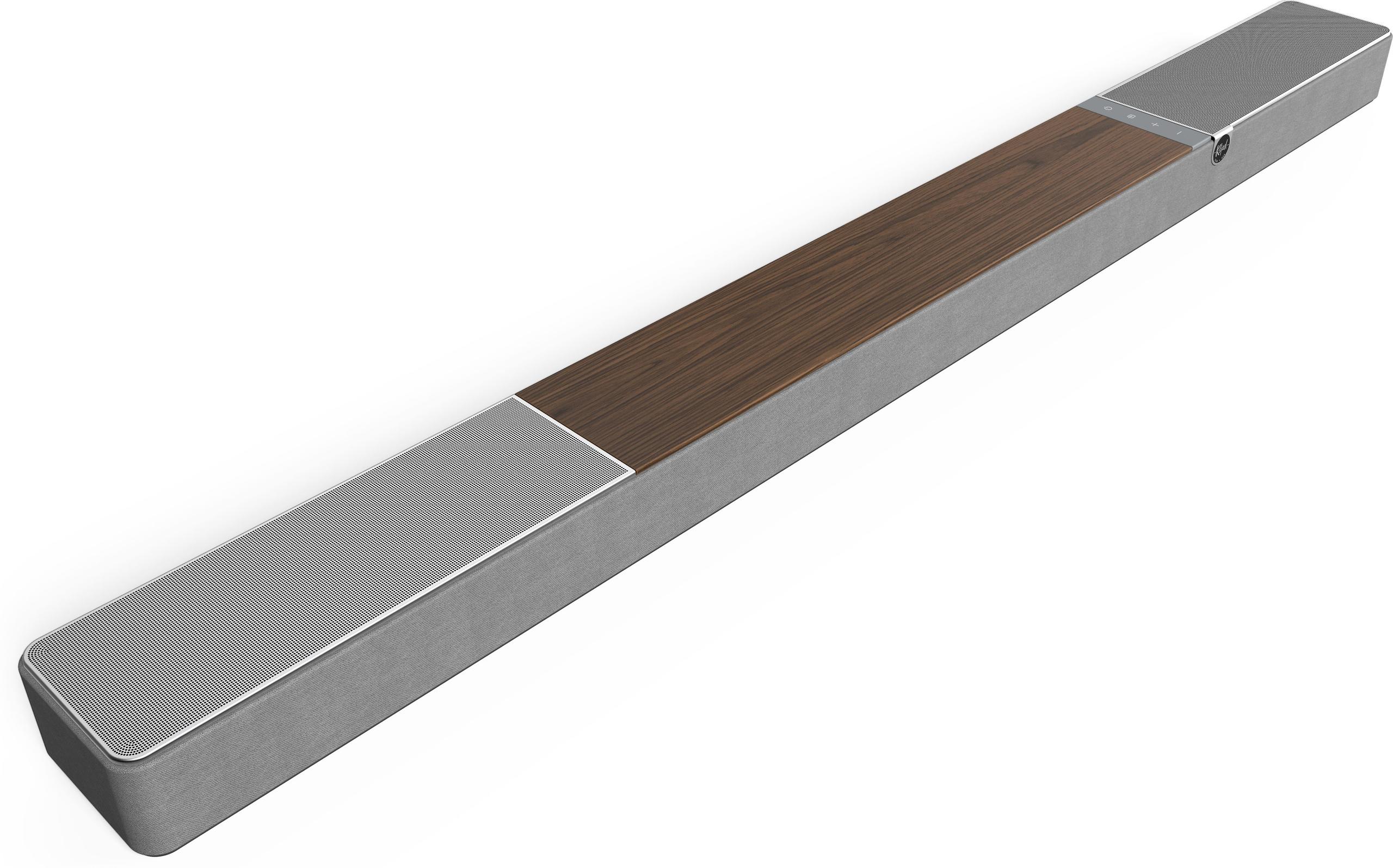
Released in early 2025, the Klipsch Flexus Core 300 made waves by becoming the world's first soundbar to include Dirac Live room correction technology. If you haven't heard of Dirac Live, think of it as having a professional audio engineer analyze your room and automatically adjust the soundbar's output to compensate for any acoustic problems.
This is genuinely revolutionary stuff. Dirac Live has been available in high-end AV receivers costing $3,000 or more, but it's never appeared in a soundbar before. The technology uses sophisticated algorithms to measure how sound bounces around your specific room, then corrects both the volume levels and timing of different frequencies to create more accurate, natural sound.
The Core 300 packs an impressive array of hardware to back up this advanced processing. It uses a 5.1.2-channel configuration, which means it has dedicated speakers for left, right, center, two surround channels, one subwoofer channel, and two height channels for Dolby Atmos. That translates to 13 individual drivers crammed into a 54-inch wide soundbar that's only 3 inches tall.
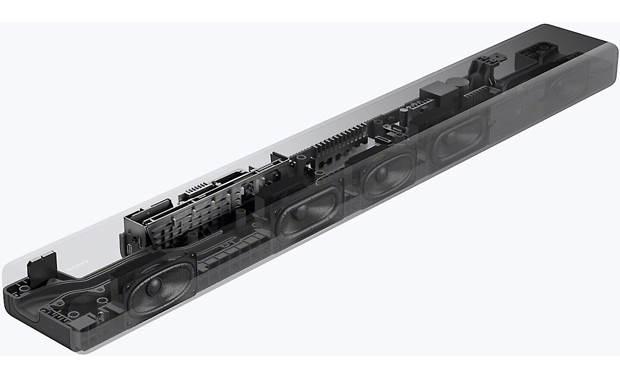
What makes this particularly impressive is that it includes four separate 4-inch subwoofers built right into the soundbar. Most soundbars either skip the subwoofer entirely (resulting in weak bass) or require you to place a separate subwoofer box somewhere in your room. Having four built-in subs means you get serious low-end punch without the extra box cluttering up your space.
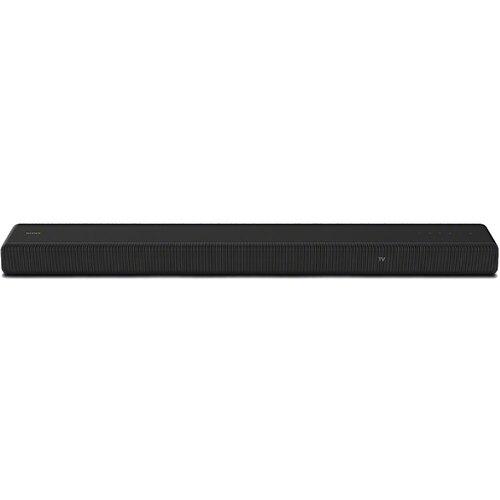
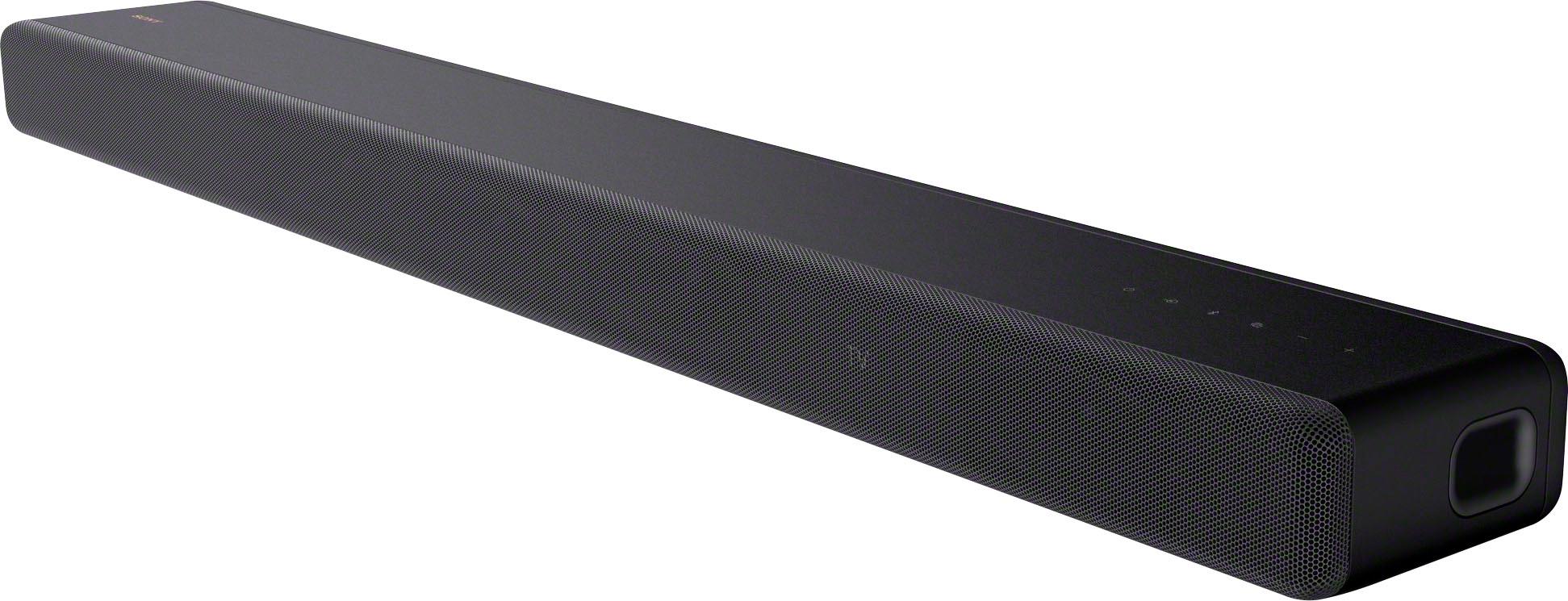
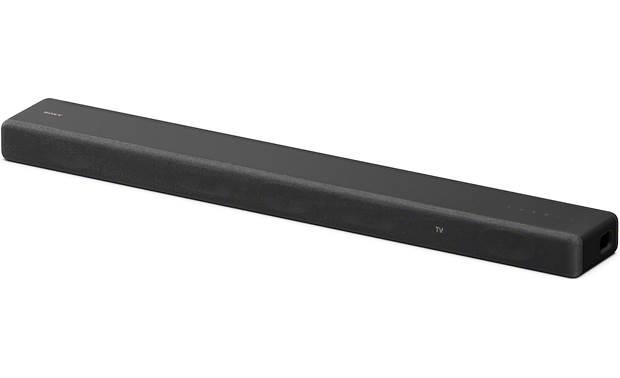
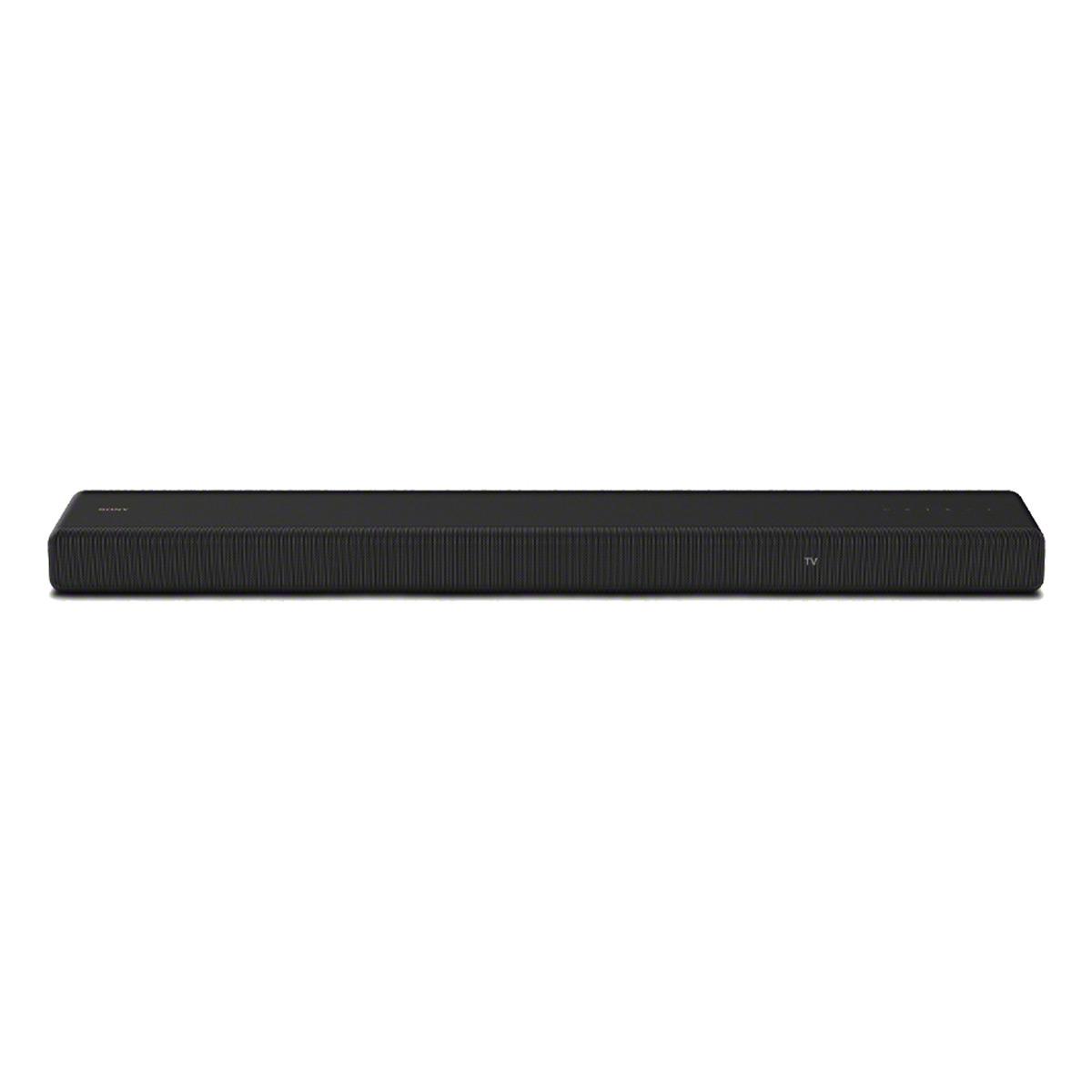
The Sony HT-A3000, released in 2022, takes a completely different approach. Rather than cramming in every possible piece of advanced hardware, Sony focused on delivering great sound through smart software and thoughtful engineering, all at a price that won't require you to eat ramen for three months.
This is a 3.1-channel soundbar, meaning it has left, right, and center speakers plus built-in subwoofers, but it creates the illusion of surround and height effects through virtual processing. Sony calls their approach "Vertical Surround Engine" and "S-Force PRO Front Surround"—fancy names for sophisticated audio algorithms that analyze the sound and create phantom speakers that seem to exist where there aren't actually any physical drivers.
The HT-A3000 also includes Sony's DSEE Extreme technology, which is designed to improve the sound quality of compressed music from streaming services. Since most of us are streaming music from Spotify, Apple Music, or YouTube rather than playing uncompressed audio files, this kind of real-time enhancement can make a noticeable difference in everyday listening.
The biggest performance difference between these soundbars comes down to physical speakers versus virtual processing. The Klipsch Flexus Core 300 uses actual up-firing speakers to bounce Dolby Atmos height effects off your ceiling. When a helicopter flies overhead in a movie, you hear it coming from actual speakers pointing upward, creating genuine three-dimensional audio.
In my testing, this makes a dramatic difference with movie soundtracks. During action sequences in films like "Top Gun: Maverick" or "Dune," the Klipsch creates a bubble of sound around you that feels genuinely immersive. Jet engines scream overhead, explosions rumble from specific directions, and subtle ambient effects place you right in the scene.
The Sony takes a different approach, using psychoacoustic tricks to fool your brain into thinking sound is coming from directions where there aren't actually speakers. This works surprisingly well—Sony's engineers have gotten very good at this over the years—but it's not quite the same as having physical drivers creating those effects.
That said, the virtual approach has some advantages. It's less dependent on your room's layout and ceiling height. If you have a vaulted ceiling or unusual room shape, the Klipsch's up-firing speakers might not work as intended, while the Sony's virtual processing adapts more easily to different environments.
This is where the Klipsch really flexes its engineering muscles. Those four 4-inch built-in subwoofers can produce surprising amounts of low-end energy. During bass-heavy movie scenes or music with deep electronic beats, the Core 300 delivers chest-thumping impact that most soundbars can't match without an external subwoofer.
The Sony's dual subwoofers are smaller and less powerful, but they're also more apartment-friendly. If you live in a condo or have neighbors close by, the Sony's more restrained bass response might actually be preferable. You can always add Sony's optional wireless subwoofer later if you want more low-end punch.
One interesting technical detail: the Klipsch's Dirac Live room correction specifically optimizes bass response for your room. It measures how low frequencies behave in your space and adjusts the output accordingly. This means you get cleaner, more accurate bass rather than just more bass, which makes a bigger difference than you might expect.
Here's something I've learned from years of testing soundbars: dialogue clarity is often more important than flashy surround effects. If you can't clearly hear what the actors are saying, all the immersive audio in the world won't save your viewing experience.
The Klipsch uses a horn-loaded tweeter for its center channel—the same technology that made Klipsch speakers famous in movie theaters decades ago. This creates exceptionally clear, forward-projecting dialogue that cuts through even complex soundtracks. Even when explosions are happening and music is swelling, voices remain intelligible without needing to crank up the volume.
The Sony does well with dialogue too, but it achieves clarity through digital processing rather than specialized hardware. It can sometimes sound slightly artificial when you use the voice enhancement modes, though it's still a major improvement over TV speakers.
This is where the technology gap between these soundbars becomes most apparent. The Klipsch's Dirac Live system requires about 15-20 minutes of setup using an included calibration microphone. You place the mic at your listening position, run the measurement sweep, and the system automatically calculates corrections for your specific room.
I've used Dirac Live in high-end AV receivers, and having it in a soundbar is genuinely impressive. The difference before and after calibration can be substantial, especially in rooms with hard surfaces or irregular layouts that create acoustic problems.
The Sony uses automatic calibration that happens without any input from you. Built-in microphones measure your room and adjust the sound accordingly. It's much more convenient, but it's also less sophisticated than the Klipsch's approach.
Both soundbars handle the basics well—HDMI eARC connection to your TV, Bluetooth for phone streaming, and built-in Wi-Fi for music services. But they differ in their implementation and extra features.
The Klipsch Flexus Core 300 includes HDMI 2.1 support, which means it can pass through 8K video and high-refresh-rate 4K gaming signals without any issues. If you have a PlayStation 5, Xbox Series X, or modern gaming PC, this ensures you won't lose any video quality or gaming features.
The Sony focuses more on audio streaming features, with support for Sony's 360 Reality Audio format and particularly good integration with streaming services. It also tends to work better with non-Sony TVs than some other Sony audio products, which isn't always a given with the company's gear.
One of the most compelling aspects of the Klipsch system is its expandability. You can start with just the soundbar, then add wireless rear speakers (Flexus Surr 200) and additional wireless subwoofers (Flexus Sub 200) over time. What makes this special is that all the components work together with the Dirac Live room correction, so adding pieces actually improves the performance of the whole system rather than just making it louder.
The Sony can also be expanded with wireless rear speakers and an additional subwoofer, but these additions don't benefit from the same level of integration and optimization.
At $1,199, the Klipsch Flexus Core 300 costs nearly three times as much as the Sony HT-A3000, but it's not three times better. However, it does offer genuinely advanced technology that you can't get anywhere else at any price point.
The Dirac Live room correction alone would cost you $2,000+ if you bought an AV receiver with the same feature. The physical Atmos speakers, four built-in subwoofers, and expansion capabilities represent genuine premium engineering.
The Sony, at $429 (and often available for less), delivers about 80% of the premium soundbar experience for 35% of the cost. That's exceptional value if you want great sound without the complexity or expense of the absolute best.
Your room size makes a huge difference in which soundbar will work better. The Klipsch really shines in larger rooms (300+ square feet) where its powerful drivers and room correction can overcome acoustic challenges. In smaller rooms, some of its advantages become less apparent, and you might be paying for capabilities you don't need.
The Sony works well in a wider range of room sizes and is particularly good for bedrooms, apartments, or smaller living rooms where you want great sound without overwhelming your space.
Choose the Klipsch Flexus Core 300 if you're serious about home theater audio and have the budget for the best available technology. It's ideal if you have a larger room, plan to expand your system over time, and don't mind spending 20 minutes on setup to get optimal performance. The Dirac Live calibration and physical Atmos speakers create an experience that's genuinely superior to virtual alternatives.
Choose the Sony HT-A3000 if you want excellent sound quality without the complexity or high price of flagship products. It's perfect for most rooms and situations, offers great smart features, and delivers impressive performance for the money. The automatic setup and balanced sound signature make it appealing for daily use with all types of content.
Both soundbars will dramatically improve your TV audio experience. The question is whether the Klipsch's advanced features and superior performance justify the significantly higher price for your specific situation. In my experience, most people will be thrilled with the Sony's performance, but if you're building a dedicated home theater and want the absolute best, the Klipsch's innovations make it worth the premium.
The soundbar market has evolved incredibly quickly, with today's $400 products offering features that didn't exist in $2,000 products just five years ago. Both of these soundbars represent that evolution, just at different points on the performance and price spectrum.
| Klipsch Flexus Core 300 ($1,199) | Sony HT-A3000 ($429) |
|---|---|
| Price - Significant cost difference for premium features | |
| $1,199 | $429 (often discounted from $599) |
| Channel Configuration - Physical vs virtual surround sound | |
| 5.1.2 with physical up-firing Atmos speakers | 3.1 with virtual surround processing |
| Room Correction Technology - Game-changing feature for audio quality | |
| Dirac Live with calibration microphone (world's first in soundbar) | Automatic Sound Field Optimization |
| Built-in Subwoofers - Eliminates need for separate sub | |
| Four 4-inch drivers with Dirac optimization | Dual X-Balanced drivers (45x108mm) |
| Total Drivers - More speakers generally mean better sound separation | |
| 13 physical drivers including horn-loaded tweeter | 5 drivers with virtual processing |
| Maximum Output - How loud and dynamic the sound can get | |
| 106 dB max (powerful enough for large rooms) | 250W RMS (suitable for most living rooms) |
| HDMI Features - Important for gaming and future TV compatibility | |
| HDMI 2.1 eARC with 8K/4K 120Hz passthrough | HDMI eARC with standard passthrough |
| Expandability - Ability to grow your system over time | |
| Wireless surrounds + dual subs with Dirac integration | Limited to 2 surrounds + 1 subwoofer |
| Setup Complexity - Time investment vs convenience | |
| 15-20 minute Dirac calibration for optimal results | 5 minutes with automatic optimization |
| Ideal Room Size - Where each performs best | |
| 300+ sq ft (large rooms benefit from advanced features) | 150-300 sq ft (perfect for typical living rooms) |
| Streaming Features - Modern connectivity options | |
| AirPlay 2, Google Cast, Spotify Connect, Tidal Connect | AirPlay 2, Chromecast, 360 Reality Audio, DSEE Extreme |
| Physical Dimensions - Space requirements in your setup | |
| 54" W × 3" H × 5" D (34.5 lbs) | 37.4" W × 2.5" H × 5" D (10.1 lbs) |
| Best For - Target user and use case | |
| Home theater enthusiasts wanting cutting-edge technology | Value-conscious buyers seeking excellent all-around performance |
The Sony HT-A3000 ($429) offers exceptional value with excellent sound quality, automatic setup, and smart features at a budget-friendly price. The Klipsch Flexus Core 300 ($1,199) costs nearly three times more but delivers cutting-edge Dirac Live room correction and superior audio performance that justifies the premium for serious home theater enthusiasts.
The Klipsch Flexus Core 300 uses 5.1.2 channels with physical up-firing speakers that create authentic Dolby Atmos height effects from actual drivers. The Sony HT-A3000 uses 3.1 channels and relies on virtual processing to simulate surround and height effects, which works well but isn't as immersive as physical speakers.
Room correction significantly improves sound quality, especially in challenging acoustic environments. The Klipsch Flexus Core 300 includes professional-grade Dirac Live technology that analyzes and corrects your room's acoustics. The Sony HT-A3000 has basic automatic optimization that's convenient but less sophisticated.
The Klipsch Flexus Core 300 includes four 4-inch built-in subwoofers that deliver powerful, room-filling bass without needing an external sub. The Sony HT-A3000 has smaller dual subwoofers that provide decent bass but may require Sony's optional wireless subwoofer for maximum impact.
The Sony HT-A3000 offers plug-and-play convenience with automatic calibration that takes about 5 minutes. The Klipsch Flexus Core 300 requires 15-20 minutes for Dirac Live calibration using the included microphone, but this extra effort results in significantly better optimized sound.
The Sony HT-A3000 is ideal for rooms 150-300 square feet, with virtual processing that adapts well to smaller spaces. The Klipsch Flexus Core 300 really shines in larger rooms (300+ sq ft) where its advanced features and powerful drivers can overcome acoustic challenges.
Both soundbars support expansion, but differently. The Klipsch Flexus Core 300 can add wireless surrounds and subwoofers that integrate seamlessly with Dirac Live calibration. The Sony HT-A3000 supports wireless rear speakers and one additional subwoofer, but without advanced integration features.
The Klipsch Flexus Core 300 uses a horn-loaded tweeter technology that delivers exceptional dialogue clarity even during complex scenes. The Sony HT-A3000 also provides clear dialogue through digital processing, though it can sometimes sound artificially enhanced when using voice boost modes.
Both soundbars offer comprehensive streaming options. The Klipsch Flexus Core 300 supports AirPlay 2, Google Cast, Spotify Connect, and Tidal Connect with HDMI 2.1 for gaming. The Sony HT-A3000 includes AirPlay 2, Chromecast, 360 Reality Audio, and DSEE Extreme for enhanced music streaming.
The Klipsch Flexus Core 300 features HDMI 2.1 support for 8K/60Hz and 4K/120Hz passthrough, making it ideal for PlayStation 5, Xbox Series X, and modern gaming PCs. The Sony HT-A3000 offers gaming-friendly low latency modes but lacks the advanced HDMI features for next-gen consoles.
For music, the Sony HT-A3000 offers DSEE Extreme technology that enhances compressed streaming audio and provides balanced sound suitable for all genres. The Klipsch Flexus Core 300 delivers more detailed, accurate music reproduction with Dirac Live optimization, but may be overpowered for casual music listening.
Choose the Klipsch Flexus Core 300 if you want the absolute best soundbar technology, have a large room, and don't mind the higher price and setup complexity. Choose the Sony HT-A3000 if you want excellent performance at a great value, prefer simple setup, and have a typical-sized living room where virtual processing works well.
We've done our best to create useful and informative comparisons to help you decide what product to buy. Our research uses advanced automated methods to create this comparison and perfection is not possible - please contact us for corrections or questions. These are the sites we've researched in the creation of this article: crutchfield.com - whathifi.com - avnirvana.com - hometechnologyreview.com - ecoustics.com - gearpatrol.com - klipsch.com - avsforum.com - youtube.com - avsforum.com - listenup.com - chowmain.software - klipsch.com - novis.ch - avsforum.com - klipsch.ca - lefflers.se - abt.com - sweetwater.com - wifihifi.com - klipsch.com - dirac.com - rtings.com - electronics.sony.com - crutchfield.com - store.sony.com.au - digitaltrends.com - videoandaudiocenter.com - abt.com - sony.com - merlinstv.com - crutchfield.com - youtube.com

Privacy Policy
Terms and Conditions - Affiliate Policy
Home Security
© Copyright 2008-2026.
11816 Inwood Rd #1211, Dallas, TX 75244