

When you're shopping for a premium soundbar, you're essentially choosing between two different philosophies of home audio. Do you want the ultimate all-in-one experience that delivers everything from a single elegant box, or would you prefer a modular system that starts affordable and grows into something extraordinary? That's the fundamental choice between the Devialet Dione and the Klipsch Flexus Core 300.
Both soundbars launched in 2023-2025 and represent the cutting edge of what's possible in single-chassis audio systems. But they take dramatically different approaches to solving the same problem: how to get truly cinematic sound without the complexity of a traditional surround sound system.
Premium soundbars occupy a unique space in home audio. They're designed for people who want exceptional sound quality but don't want speakers scattered around their living room or the complexity of an AV receiver setup. The best ones can genuinely rival traditional surround systems, but they do it through clever engineering, advanced processing, and sometimes a bit of acoustic wizardry.
When evaluating premium soundbars, the most important factors are bass performance (how deep and powerful the low frequencies sound), dialogue clarity (can you understand every word without cranking the volume?), immersive surround effects (does it actually sound like action is happening around you?), and room adaptation (does it sound good in your specific space?). At this price level, build quality and connectivity options become equally important.
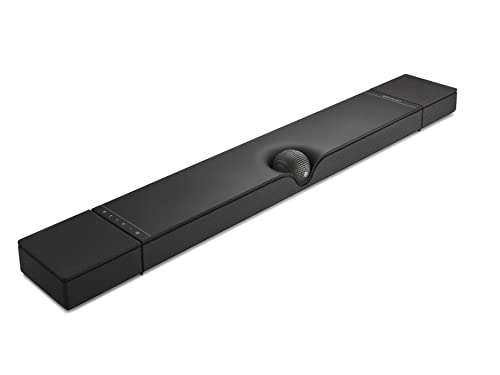
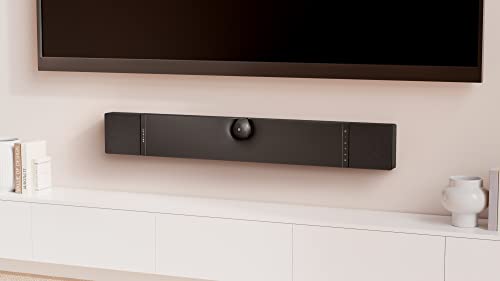
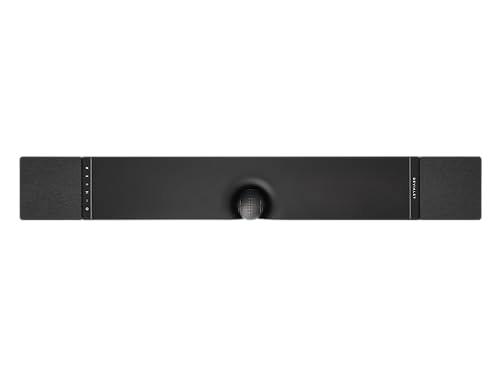
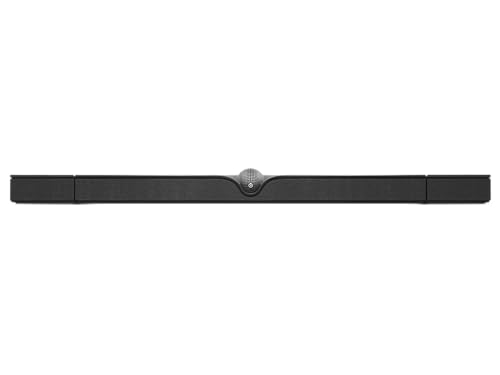
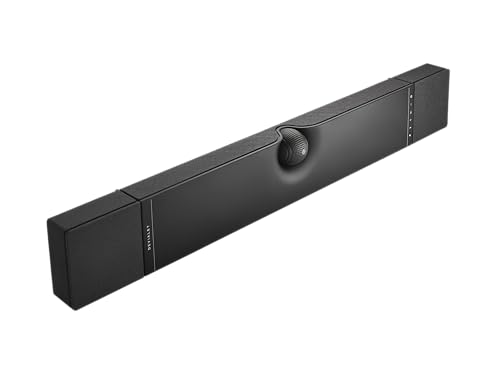
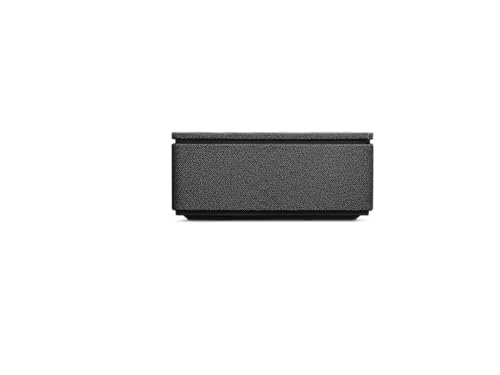
The Devialet Dione represents the luxury approach to soundbar design. Released in 2023, it's essentially a piece of audio jewelry that happens to deliver reference-quality sound. Devialet is known for their ultra-high-end Phantom speakers that can cost more than a car, so the Dione was their attempt to bring that same acoustic philosophy to the soundbar market.
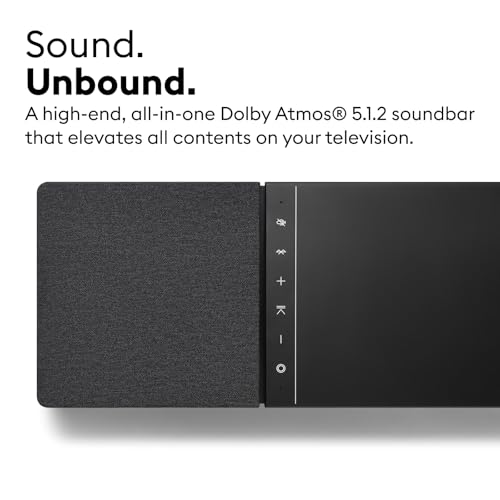
What makes the Dione special is its commitment to being truly all-in-one. Most premium soundbars either lack deep bass or require a separate subwoofer to achieve it. The Dione solves this with eight dedicated 4-inch aluminum subwoofers built directly into the bar, arranged in what Devialet calls a "push-push configuration." This means pairs of woofers face each other and cancel out cabinet vibrations, letting them move more air without the whole soundbar rattling your TV stand.
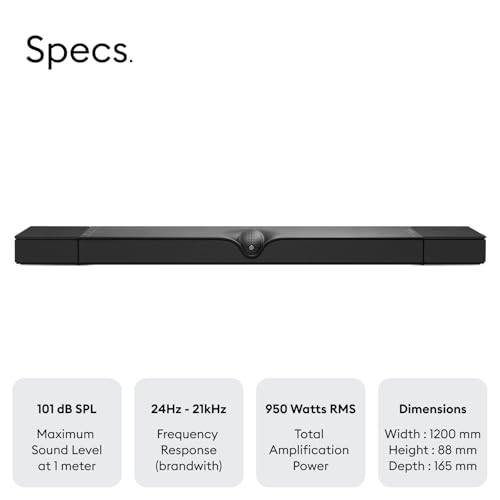
The result is bass that extends down to 24Hz – that's legitimately deep, room-shaking bass that you typically need a large separate subwoofer to achieve. For context, most soundbars without subs struggle to hit 80Hz cleanly, and even good ones rarely go below 50Hz.
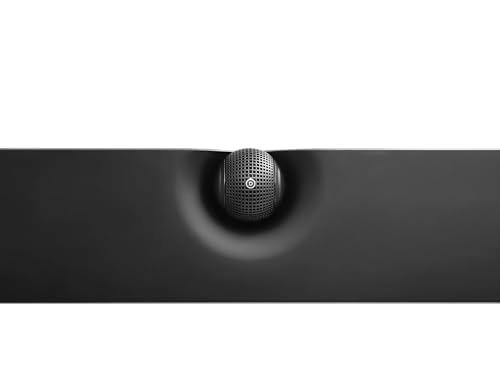
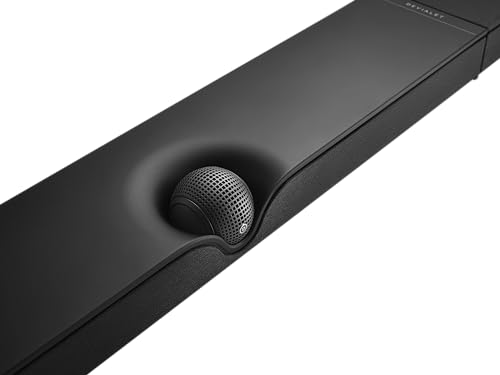
The Dione's most distinctive feature is its rotating ORB center channel – a spherical speaker that can physically rotate to face the listener whether the soundbar is sitting on a TV stand or mounted on the wall. It sounds gimmicky, but it's actually brilliant engineering. The center channel is responsible for dialogue, and having it properly aimed at your ears makes a huge difference in clarity and imaging.
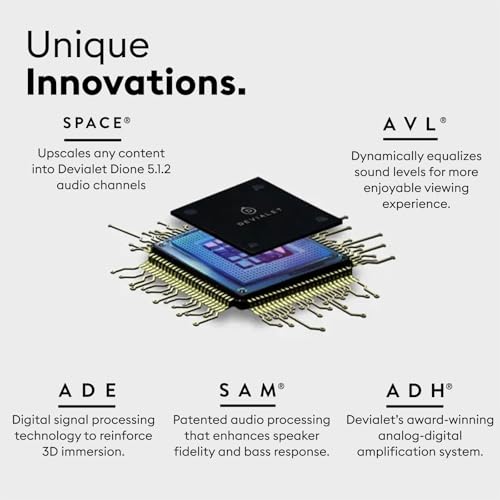
Devialet's ADH (Analog Digital Hybrid) amplification is another standout feature. Without getting too technical, it combines the warmth and precision of analog amplifiers with the efficiency and power of digital ones. The result is 950 watts of extremely clean power driving those 17 drivers with minimal distortion, even at high volumes.
The Dione also includes SAM (Speaker Active Matching) technology, which essentially means the soundbar knows exactly how each driver behaves and compensates for any imperfections in real-time. This is the kind of advanced digital signal processing that typically only exists in very expensive audiophile equipment.
The Klipsch Flexus Core 300, released in 2025, takes a completely different approach. Rather than trying to do everything from one box, it's designed as the foundation of a modular system that can grow over time. But what makes it truly revolutionary is that it's the first soundbar in the world to include Dirac Live room correction.
Dirac Live is professional-grade room correction software that analyzes your room's acoustics and corrects for problems like uneven frequency response and timing issues. Think of it like having a professional audio engineer tune your system specifically for your room. This technology has been available in high-end AV receivers for years, but bringing it to a soundbar is genuinely groundbreaking.
The setup process involves placing a calibration microphone at your listening position and letting the Flexus Core 300 play test tones to map your room's acoustic signature. The system then applies precise digital filters to compensate for room modes, speaker placement issues, and other acoustic problems that can muddy the sound.
The Klipsch also brings the company's horn-loaded tweeter technology to the soundbar world. Klipsch has been making horn-loaded speakers since 1946, and the design is incredibly efficient at directing high frequencies exactly where they need to go. This translates to exceptional dialogue clarity – voices sound natural and intelligible even at low volumes or during complex action scenes.
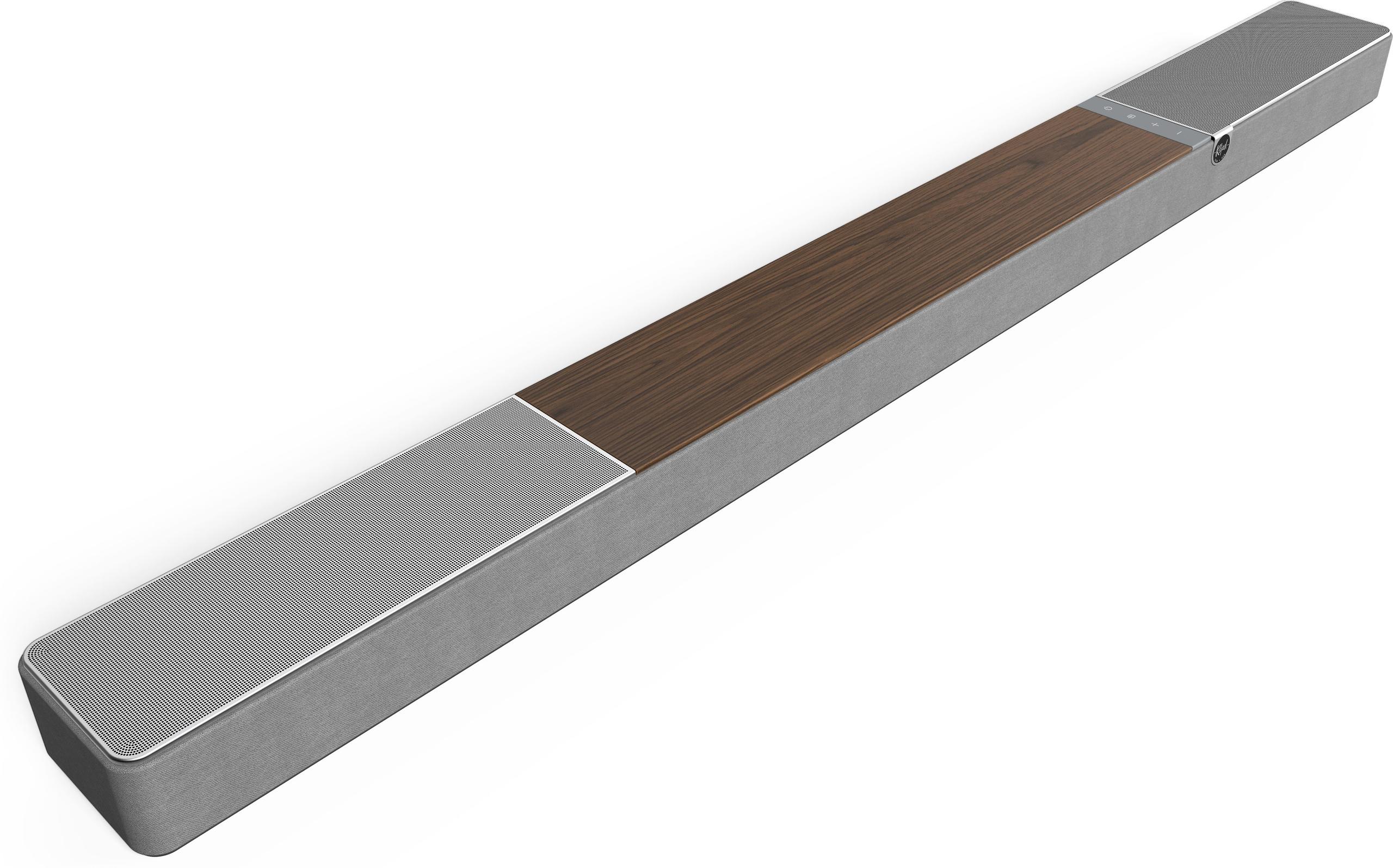
At launch, the Core 300 includes 13 drivers: four front-firing speakers, two side-firing for width, two up-firing for Atmos height effects, one horn-loaded tweeter for clarity, and four built-in subwoofers. While that's fewer drivers than the Dione, the horn-loaded design means each driver works more efficiently.
The modular approach means you can start with just the soundbar and add wireless surround speakers (Flexus Surr 200) and additional subwoofers (Flexus Sub 200) as budget and space allow. Each component connects wirelessly, so there's no need to run cables across your room.
This is where the Devialet Dione truly shines. Those eight internal subwoofers aren't just marketing speak – they deliver bass that genuinely rivals dedicated subwoofers. The 24Hz extension means you'll feel the deep rumble in movie soundtracks and the fundamental frequencies in bass-heavy music that most soundbars simply can't reproduce.
The Klipsch Core 300 takes a more pragmatic approach. Its four built-in subwoofers provide adequate bass for most content, extending down to 43Hz. That's respectable for a standalone soundbar, but it's not going to deliver the chest-thumping impact of the Dione. However, add the optional Flexus Sub 200, and the Klipsch system can match or exceed the Dione's low-end performance.
Both soundbars excel here, but for different reasons. The Dione's rotating ORB ensures the center channel is always optimally positioned, and Devialet's processing keeps voices locked to the screen with impressive clarity.
The Klipsch Core 300 has a natural advantage with its horn-loaded tweeter design. Horn loading is incredibly efficient at directing sound, which means voices cut through even the most complex soundtracks without strain. In our research of user reviews, dialogue clarity is consistently mentioned as the Klipsch's strongest suit.
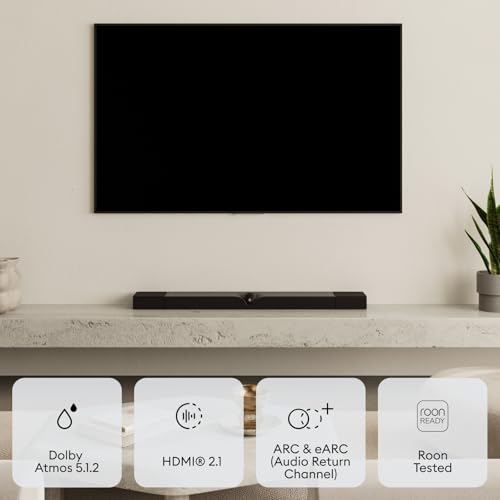
Both soundbars support Dolby Atmos 5.1.2 processing, but they achieve surround effects differently. The Dione uses Advanced Dimensional Experience (ADE) beamforming to create virtual surround channels by bouncing sound off your walls. It's sophisticated processing that works surprisingly well in properly configured rooms.
The Klipsch Core 300 can create convincing surround from its single chassis, but its true potential emerges when you add the wireless surround speakers. Real discrete surround speakers will always beat virtual processing for accuracy and immersion.
One important note: the Klipsch supports DTS:X in addition to Dolby Atmos, while the Dione only supports Dolby formats. This could matter if you have DTS-encoded content, though most streaming services and newer media use Dolby formats.
This is where the Klipsch Flexus Core 300 pulls dramatically ahead. Dirac Live room correction is legitimately transformative technology. Every room has acoustic problems – reflections, resonances, and frequency imbalances that color the sound. Most people just accept this as "how their room sounds," but proper room correction can eliminate many of these issues.
The Dione includes basic room adaptation and Adaptive Volume Level processing, which helps balance dialogue and effects dynamically. It's useful, but it's not in the same league as full room correction.
If you've ever wondered why the same speakers sound different in different rooms, room correction addresses that fundamental issue. The difference can be dramatic, especially in challenging rooms with hard surfaces or irregular shapes.
At the time of writing, these soundbars occupy different price tiers, though the gap narrows when you factor in the Klipsch's modular nature. The Dione costs significantly more upfront but requires no additional purchases to deliver its full performance. It's the luxury approach – pay more initially, but get everything you need immediately.
The Klipsch Core 300 starts at a more accessible price point, but reaching its full potential requires additional components. However, this modular approach means you can spread the investment over time and only buy what you actually need.
For many buyers, the Klipsch represents better value because Dirac Live room correction provides benefits that money can't buy from other systems. Room acoustics affect every aspect of sound reproduction, and addressing them properly can make a modestly priced system sound better than an expensive one in an untreated room.
You want the ultimate plug-and-play experience and have the budget for it. The Dione is perfect for medium to large rooms where you want immediate, reference-quality sound without any setup complexity. It's ideal for music lovers who value bass depth and overall tonal accuracy.
The Dione also makes sense if you're in an apartment or condo where additional subwoofers aren't practical due to noise concerns. Its integrated design delivers deep bass without the room-shaking vibrations that separate subwoofers can create.
From a design perspective, the Dione is genuinely beautiful and distinctive. If your entertainment setup is part of your room's aesthetic, the Dione's unique appearance and premium materials make it as much furniture as audio equipment.
You want cutting-edge technology with room to grow. The Dirac Live room correction alone justifies the Klipsch's existence – it's that significant an advance. If you're in a room with challenging acoustics (lots of hard surfaces, irregular shape, or problematic dimensions), the Core 300's room correction can solve problems that no other soundbar can address.
The modular approach is perfect if you want to start with a capable soundbar and expand over time. You might begin with just the Core 300 and add surrounds for a more immersive experience, then add a subwoofer if you need more bass impact.
The Klipsch also makes sense if you consume content with DTS encoding or prefer the horn-loaded tweeter's characteristic sound signature – it's particularly excellent for dialogue-heavy content like TV shows and podcasts.
Both soundbars represent the current state of the art, but for different reasons. The Devialet Dione is the ultimate expression of the all-in-one philosophy – sophisticated, luxurious, and immediately satisfying. It's audio jewelry that happens to sound incredible.
The Klipsch Flexus Core 300 is more about technological innovation and flexibility. Dirac Live room correction is genuinely revolutionary for soundbars, and the modular design means you're not locked into any particular configuration.
For most buyers, I'd lean toward the Klipsch system. The room correction technology provides benefits that extend beyond just frequency response – it improves imaging, clarity, and overall coherence in ways that matter for both movies and music. The modular design means you can tailor the system to your specific needs and room.
However, if simplicity and immediate gratification matter more than technological flexibility, the Dione delivers an experience that's hard to match from a single box. Its bass performance is genuinely exceptional, and the overall sound quality justifies the premium pricing for those who can afford it.
Either way, both soundbars represent massive upgrades over typical TV audio and most entry-level soundbars. The choice comes down to whether you prefer luxury and simplicity or innovation and flexibility.
| Devialet Dione | Klipsch Flexus Core 300 |
|---|---|
| Bass Extension - Determines how deep and powerful low frequencies sound | |
| 24Hz (exceptional deep bass without external subwoofer) | 43Hz base unit (good but requires Sub 200 for deep bass) |
| Total Drivers - More drivers generally mean better sound distribution | |
| 17 drivers (9 full-range + 8 subwoofers) | 13 drivers (includes horn-loaded tweeter) |
| Room Correction - Critical for optimizing sound in your specific space | |
| Basic room adaptation and AVL processing | Dirac Live professional room correction (industry-leading) |
| System Design Philosophy - Affects expandability and future upgrades | |
| All-in-one complete system | Modular system with wireless expansion options |
| Maximum SPL - How loud the system can play cleanly | |
| 101 dB @ 1 meter | 106 dB (slightly louder maximum output) |
| Audio Format Support - Compatibility with different surround sound formats | |
| Dolby Atmos, Dolby Digital (no DTS support) | Dolby Atmos, DTS:X (broader format compatibility) |
| Amplification Power - Affects dynamic range and headroom | |
| 950W RMS with ADH hybrid amplification | Standard Class D amplification with DSP |
| Center Channel Design - Critical for dialogue clarity | |
| Rotating ORB sphere adapts to placement | Horn-loaded tweeter for superior vocal intelligibility |
| Connectivity Options - Determines what sources you can connect | |
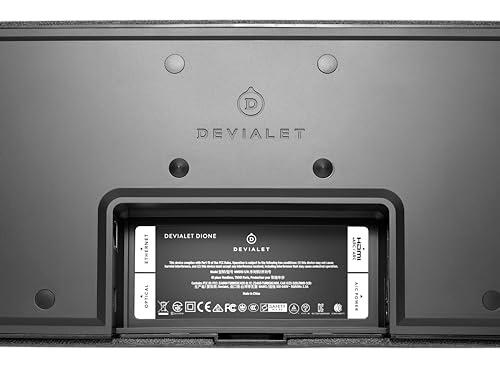
| HDMI 2.1 eARC, Optical, Wi-Fi, Bluetooth 5.0, AirPlay 2 | HDMI 2.1 8K passthrough, USB-C, Optical, Wi-Fi, Bluetooth 5.3, Google Cast |
| Build Quality and Materials - Affects durability and aesthetics | |
| Premium anodized aluminum with acoustic fabric | Wood-textured vinyl with metal grilles and cloth wrap |
| Dimensions - Important for TV stand compatibility | |
| 47" W × 3" H × 6.5" D (12 kg) | 54" W × 3" H × 5" D (34.5 lbs) |
| Expandability Options - Future system growth potential | |
| None (complete as-is) | Add Flexus Surr 200 speakers and Sub 200 subwoofers |
| Setup Complexity - Time and effort required for optimal performance | |
| Plug-and-play with basic room adaptation | Requires Dirac Live calibration for best results |
| Value Positioning - Performance relative to investment | |
| Ultra-premium all-in-one luxury solution | Premium modular system with professional room correction |
The Devialet Dione delivers significantly better bass performance from its single unit, extending down to 24Hz thanks to eight built-in aluminum subwoofers. The Klipsch Flexus Core 300 reaches 43Hz on its own, which is good but not exceptional. For deep, room-filling bass without additional components, the Dione is the clear winner.
The Devialet Dione is a complete all-in-one system that doesn't require any additional purchases. The Klipsch Flexus Core 300 works well on its own but achieves its full potential when paired with optional Flexus surround speakers and subwoofers. The Klipsch offers more flexibility to expand over time.
Both excel at dialogue, but for different reasons. The Klipsch Flexus Core 300 uses horn-loaded tweeter technology that's specifically designed for vocal intelligibility, making it exceptional for TV shows and movies. The Devialet Dione features a rotating center channel that always faces the listener for optimal dialogue positioning.
The Klipsch Flexus Core 300 is the first soundbar with professional Dirac Live room correction, which analyzes and corrects your room's acoustic problems using a calibration microphone. The Devialet Dione includes basic room adaptation but lacks true room correction. This gives the Klipsch a significant advantage in challenging acoustic environments.
The Klipsch Flexus Core 300 supports both Dolby Atmos and DTS:X formats, providing broader compatibility with different content sources. The Devialet Dione only supports Dolby formats (Atmos, Digital, TrueHD) and doesn't decode DTS content, though most modern streaming services use Dolby formats.
Both offer comprehensive modern connectivity including HDMI eARC, Wi-Fi, and Bluetooth. The Klipsch Flexus Core 300 adds USB-C input and Google Cast streaming, while the Devialet Dione focuses on high-quality wireless streaming with AirPlay 2 and Spotify Connect. Both integrate well with modern TVs and streaming setups.
The Devialet Dione offers true plug-and-play simplicity with automatic room adaptation. The Klipsch Flexus Core 300 requires running Dirac Live calibration for optimal performance, which takes about 15 minutes but delivers superior results. The Dione is easier, but the Klipsch setup process provides better long-term performance.
Both soundbars are designed for wall mounting. The Devialet Dione's rotating ORB center channel automatically adjusts when wall-mounted to maintain proper dialogue positioning. The Klipsch Flexus Core 300 works well wall-mounted and its room correction can compensate for placement effects. Both include mounting hardware or recommendations.
The Klipsch Flexus Core 300 typically offers better value, especially considering its Dirac Live room correction technology and expansion options. The Devialet Dione costs significantly more but requires no additional purchases and delivers exceptional bass immediately. Value depends on whether you prefer gradual expansion or immediate premium performance.
Both excel at music but with different strengths. The Devialet Dione delivers audiophile-grade sound quality with exceptional bass depth and clarity, making it excellent for all music genres. The Klipsch Flexus Core 300 provides detailed, dynamic sound with its horn-loaded tweeter, and the room correction ensures optimal performance regardless of room acoustics.
The Klipsch Flexus Core 300 can reach 106 dB maximum output compared to the Devialet Dione's 101 dB. Both are loud enough for large rooms, but the Klipsch has slightly more headroom for very high volume levels. In practice, both provide more than adequate volume for home theater use.
Choose the Devialet Dione if you want immediate premium performance without complexity or future purchases. Choose the Klipsch Flexus Core 300 if you prefer starting with a capable foundation and expanding over time, or if room correction technology is important to you. The Klipsch offers more flexibility, while the Dione provides luxury simplicity.
We've done our best to create useful and informative comparisons to help you decide what product to buy. Our research uses advanced automated methods to create this comparison and perfection is not possible - please contact us for corrections or questions. These are the sites we've researched in the creation of this article: rtings.com - crutchfield.com - devialet.com - ooberpad.com - bhphotovideo.com - kjwestone.co.uk - whathifi.com - devialet.com - devialet.com - sound-advice.online - kjwestone.co.uk - device.report - tmraudio.com - devialet.com - devialetchat.com - projectorscreen.com - soundandvision.com - bestbuy.com - youtube.com - av.com - audiofi.ca - devialet.com - blog.son-video.com - audioconnection.com.au - baybloorradio.com - cdn.abicart.com - smarthomesounds.co.uk - e-piphany.co.za - cloneyaudio.com - devialet.com - catalog.asbis.ee - av.com - soundandvision.com - youtube.com - comparisontabl.es - crutchfield.com - whathifi.com - avnirvana.com - hometechnologyreview.com - ecoustics.com - gearpatrol.com - klipsch.com - avsforum.com - youtube.com - avsforum.com - listenup.com - chowmain.software - klipsch.com - novis.ch - avsforum.com - klipsch.ca - lefflers.se - abt.com - sweetwater.com - wifihifi.com - klipsch.com - dirac.com

Privacy Policy
Terms and Conditions - Affiliate Policy
Home Security
© Copyright 2008-2026.
11816 Inwood Rd #1211, Dallas, TX 75244